1103 Results for "

biosynthesis

" in MedChemExpress (MCE) Product Catalog:
Products (1103)

1103 Results for "biosynthesis" in MCE Product Catalog:

Cat. No.: HY-B1860R
CAS No.: 104098-48-8
Imazapic (Standard) is the analytical standard of Imazapic (HY-B1860). This product is intended for research and analytical applications. Imazapic is an imidazolinone herbicide. Imazapic is an inhibitor of acetolactate synthase, which inhibits branched-chain amino acid biosynthesis, thereby hindering protein synthesis and cell growth and exerting herbicidal activity. Imazapic exerts a lethal effect only on Phelipanche aegyptiaca that has already parasitically attached to tomato roots, and has no inhibitory effect on unattached broomrape seeds and seedlings. Imazapic can control weedy annual grasses, non-grass herbaceous plants, and downy brome, but can damage perennial forage grass species. Imazapic can be used in herbicide-related research .
loading...
    loading...
Cat. No.: HY-W845197
CAS No.: 748757-99-5
Synonyms: (-)-Asparagine-15N2; Asn-15N2; Asparamide-15N2
L-Asparagine- 15N2 ((-)-Asparagine- 15N2) is the 15N-labeled L-Asparagine (HY-N0667). L-Asparagine is an essential amino acid for leukemic cells and a substrate for L-Asparaginase. L-Asparaginase is a potent anti-leukemic enzyme that promotes asparagine (Asn) and glutamine (Gln) depletion and inhibits protein biosynthesis in lymphoblasts. Removal of L-asparagine from plasma by L-Asparaginase results in inhibition of RNA and DNA synthesis and subsequent apoptosis. L-Asparaginase has cell-killing ability in vitro and in vivo, and selectively inhibits the growth of cancer cells with low asparagine synthetase (AASNS) expression. L-Asparagine can be used as a biomarker and sensor for the study of childhood acute lymphoblastic leukemia.
loading...
    loading...
Cat. No.: HY-114296S
Synonyms: Squalene oxide-d6
2,3-Oxidosqualene-d6 (Squalene oxide-d6) is a deuterium labeled 2,3-Oxidosqualene (HY-114296). 2,3-Oxidosqualene (Squalene oxide) is a sterol biosynthesis precursor intermediate.2,3-Oxidosqualene participates in cyclization pathways that form sterols and triterpenes, and contributes to introduction of their characteristic 3-hydroxyl group.2,3-Oxidosqualene forms metabolically from squalene in rat liver homogenates under sterol synthesis conditions.2,3-Oxidosqualene converts to sterols including cholesterol, lathosterol, and lanost-8-en-3β-ol in rat liver homogenates under anaerobic conditions.
loading...
    loading...
Cat. No.: HY-120253
CAS No.: 203313-25-1
Purity:  94.20%
Synonyms: BY-108330
Spirotetramat (BY-108330) is an orally active Insecticide and lipid biosynthesis inhibitor. Spirotetramat regulates the activities of superoxide dismutase (SOD) and glutathione peroxidase (GSH-Px), with short-term exposure increasing their activities and long-term exposure altering their activities. Spirotetramat induces the activity and mRNA expression of carboxylesterase (CarE). Spirotetramat induces oxidative stress and lipid peroxidation in tadpoles. Spirotetramat is toxic to amphibian tadpoles and exhibits sublethal/non-lethal toxicity to amphibians. Spirotetramat causes death in immature psyllids, aphids, scale insects, mealybugs, whiteflies and thrips, and shows a high lethal rate against Cacopsylla pyri nymphs. Spirotetramat reduces the fecundity of Aphis gossypii. Spirotetramat induces tolerance in the offspring of exposed Aphis gossypii, and acts on Myzus persicae, Bemisia tabaci and Tetranychus urticae .
loading...
    loading...
Cat. No.: HY-12040S
Synonyms: STA-4783-d2
Elesclomol-d2 (STA-4783-d2) is a deuterium labeled Elesclomol (HY-12040). Elesclomol (STA-4783) is a potent copper ionophore and promotes copper-dependent cell death (cuproptosis). Elesclomol specifically binds ferredoxin 1 (FDX1) α2/α3 helices and β5 strand. Elesclomol inhibits FDX1-mediated Fe-S cluster biosynthesis. Elesclomol is an oxidative stress inducer that induces cancer cell apoptosis. Elesclomol is a reactive oxygen species (ROS) inducer. Elesclomol can be used for Menkes and associated disorders of hereditary copper deficiency research .
loading...
    loading...
Cat. No.: HY-121139
CAS No.: 756-09-2
Synonyms: 2,2,3,3-Tetrafluoropropionic acid; 3H-Tetrafluoropropionic acid
Target:  

Herbicide

Research Areas:  

Others

Flupropanate (2,2,3,3-Tetrafluoropropionic acid; 3H-Tetrafluoropropionic acid) is a soil-active selective herbicide and plant growth inhibitor that acts by inhibiting radicle growth and lipid biosynthesis in sensitive plants. Flupropanate exhibits high-efficiency control of Stipa weeds (such as Nassella neesiana and N. trichotoma) in pastures, and reduces the coverage of the invasive species Eragrostis curvula. Meanwhile, Flupropanate is sensitive to gramineous plants like ryegrass, but shows good selective tolerance to plantain, chicory and some leguminous plants. Studies show that in the protected area with Mediterranean climate in southwestern Australia, Flupropanate produces no significant non-target effects on native plant communities, functional groups or the endangered species Grevillea curviloba, indicating high ecological safety .
loading...
    loading...
Cat. No.: HY-122129S
CAS No.: 2692624-20-5
Dotriaconta-14,17,20,23,26,29-hexaenoic acid-d6 is deuterium labeled Dotriaconta-14,17,20,23,26,29-hexaenoic acid. Very long chain polyunsaturated fatty acids (VLCPUFA) are present in retina, sperm, and brain. Though little is known of their biosynthesis or functional roles in these tissues, recent studies using the elongation of very long-chain FA-4 protein suggest a unique role for VLCPUFA in retinal development and macular degeneration. Dotriaconta-14,17,20,23,26,29-hexaenoic acid is a C32:6 VLCPUFA whose specific biological actions are largely unknown, but are thought to involve normal photoreceptor cell function in the retina .
loading...
    loading...
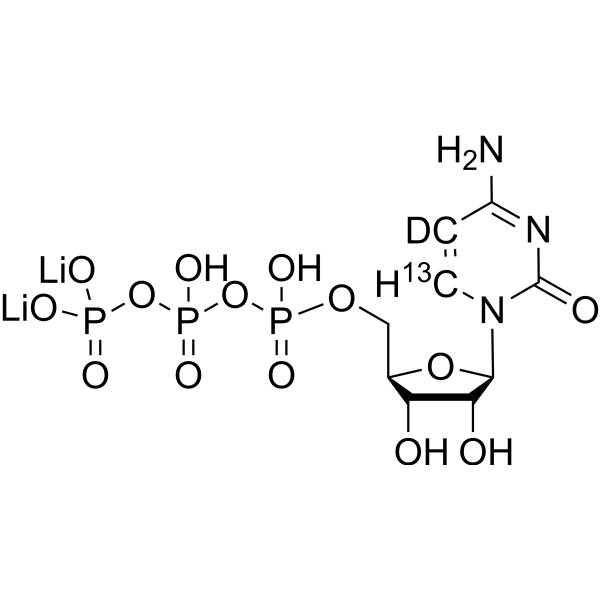
Cat. No.: HY-125818S2
Synonyms: Cytidine triphosphate-13C,d1 dilithium; 5'-CTP-13C,d1 dilithium
Cytidine-5'-triphosphate- 13C,d1 (Cytidine triphosphate- 13C,d1 dilithium; 5'-CTP- 13C,d1) dilithium is deuterium and 13C-labeled Cytidine-5'-triphosphate (HY-125818). Cytidine 5′-triphosphate (Cytidine triphosphate; 5'-CTP) is a nucleoside triphosphate and serves as a building block for nucleotides and nucleic acids, lipid biosynthesis. Cytidine triphosphate synthase can catalyze the formation of cytidine 5′-triphosphate from uridine 5′-triphosphate (UTP). Cytidine 5′-triphosphate is an essential biomolecule in the de novo pyrimidine biosynthetic pathway in T. gondii.
loading...
    loading...
Cat. No.: HY-13568R
CAS No.: 51234-28-7
Synonyms: LRCL 3794 (Standard)
Benoxaprofen (Standard) is the analytical standard of Benoxaprofen. This product is intended for research and analytical applications. Benoxaprofen (LRCL 3794) is a nonsteroidal anti-inflammatory agent that blocks the biosynthesis of inflammatory mediators such as leukotrienes and prostaglandins by inhibiting 5-LOX, PGH2 synthase and cytochrome P-450. Benoxaprofen exhibits significant toxicity: it not only alters cellular redox status, uncouples oxidative phosphorylation and disrupts calcium ion homeostasis, but also causes liver injury through the formation of covalent adducts between its active metabolites and hepatic proteins. Benoxaprofen shows strong phototoxicity under ultraviolet irradiation, and induces erythrocyte lysis, mast cell degranulation and histamine release. Benoxaprofen is widely used in studies of urticaria and related phototoxic mechanisms .
loading...
    loading...
Cat. No.: HY-162386
CAS No.: 324530-92-9
Research Areas:  

Cancer

UM4118 is a potent copper-selective non-genotoxic copper ionophore that induces cuproptosis in acute myeloid leukemia cells. UM4118 exhibits stronger activity against SF3B1G12C mutant acute myeloid leukemia cells. UM4118 transports extracellular copper into cells, elevates intracellular and mitochondrial copper levels, and triggers lipoylated DLAT aggregation, proteotoxic stress, iron-sulfur cluster protein depletion, reduced lipoylated protein levels, and maximal mitochondrial respiratory damage. UM4118 cytotoxicity can be enhanced by supplementation with extracellular copper, abolished by copper chelation, and shows synthetic lethal effects in the absence of iron-sulfur cluster biosynthesis/transport genes. UM4118 can be used for the study of acute myeloid leukemia .
loading...
    loading...
Cat. No.: HY-174423
CAS No.: 1994348-72-9
Synonyms: NC-656
Target:  

Herbicide HPPD

Research Areas:  

Others

Iptriazopyrid is a 4-hydroxyphenylpyruvate dioxygenase (HPPD) inhibitor, with a Ki value of 24.3 nM against Arabidopsis thaliana and 33.3 nM against Oryza sativa. Iptriazopyrid binds to the active pocket of HPPD, occupies the catalytic site, inhibits carotenoid biosynthesis, prevents chloroplast formation, and induces albino and chlorotic symptoms in sensitive plants. Used as a herbicide, Iptriazopyrid can control barnyardgrass when applied alone, and its efficacy does not decrease when mixed with labeled residual herbicides. When Iptriazopyrid is mixed with 2,4-D or triclopyr, its barnyardgrass control effect shows an antagonistic effect. Iptriazopyrid is a triazole carboxamide herbicide that exhibits selectivity for Oryza sativa over Echinochloa crus-galli, and has partial tank-mix compatibility with synthetic auxin herbicides registered for rice .
loading...
    loading...
Cat. No.: HY-181917
Target:  

PANK

Research Areas:  

Metabolic Disease

Pantothenate kinase-IN-3 is an orally active PANK3-selective binder and CoA biosynthesis activator with a human PANK3 Ki of 9.1 nM, human PANK3 Ka of 1.8 nM, human PANK1β Ki of 113 nM, human PANK1β Ka of 23.4 nM, and oral effectiveness.Pantothenate kinase-IN-3 binds PANK3 via a water-mediated interaction between its sulfonamide NH and Gly193, elevates cellular, hepatic, and forebrain CoA levels, and shows improved metabolic stability in mouse and human microsomes.Pantothenate kinase-IN-3 has solubility properties favorable at pH 7.Pantothenate kinase-IN-3 can be used for the research of hepatic metabolic CoA deficiencies (acidemias) .
loading...
    loading...
Cat. No.: HY-183844
CAS No.: 2792206-44-9
Research Areas:  

Cancer

C5F2-HCB is a CYP-mediated inhibitor of the biosynthesis of arachidonic acid epoxygenase product (±) 14,15-EET (HY-150084), with an IC50 of 3.1 μM. C5F2-HCB inhibits EET-driven oxidative phosphorylation (OXPHOS) associated with tumor hypoxia, converting an immunologically "cold" tumor microenvironment into a "hot" one. C5F2-HCB reverses the immune-excluded tumor microenvironment in ER +HER2 − breast cancer allograft models. C5F2-HCB can be used in research related to ER +HER2 − breast cancer .
loading...
    loading...
Cat. No.: HY-188168
CAS No.: 99630-95-2
Synonyms: FMMT
MDL 72394 (FMMT) is an orally active, blood-brain barrier-penetrant amino acid-based prodrug compound. MDL 72394 is decarboxylated by aromatic L-amino acid decarboxylase to generate the active metabolite MDL 72392 (HY-182727), which is a covalent irreversible MAO inhibitor. MDL 72394 is transported into the brain and synaptosomes via the L-neutral amino acid transport system and the norepinephrine transporter. MDL 72394 selectively inhibits MAO in noradrenergic and dopaminergic neurons without inhibiting serotonergic neurons. MDL 72394 increases hypothalamic extracellular 5-HT, tissue 5-HT, and pineal melatonin biosynthesis, and decreases 5-HIAA. MDL 72394 can be used in research related to MAO-mediated diseases, such as depression .
loading...
    loading...
Cat. No.: HY-B0921R
CAS No.: 116-43-8
Synonyms: Succinylsulphathiazole (Standard)
Succinylsulfathiazole (Standard) (Succinylsulphathiazole) is the analytical standard of Succinylsulfathiazole (HY-B0921). This product is intended for research and analytical applications. Succinylsulfathiazole is a long-acting sulfonamide antibiotic with localized gut-specific antibacterial activity and is orally active. Succinylsulfathiazole inhibits bacterial folate synthesis, reduces coliform counts, suppresses intestinal bacterial growth and vitamin biosynthesis, and depletes gut folate-producing bacteria. Succinylsulfathiazole modulates hepatic mTOR signaling, diminishes cecal fermentation, decreases hepatic folate levels and total folate excretion, elevates nitrogen excretion and reduces the fermentability of certain dietary fibers. Succinylsulfathiazole induces folate deficiency and triggers biotin- and folate-related nutritional deficiency symptoms in rats and C57BL/6 mice .
loading...
    loading...
Cat. No.: HY-B0927R
CAS No.: 118-08-1
Synonyms: (-)-β-Hydrastine (Standard); (1R,9S)-β-Hydrastine (Standard)
Hydrastine (Standard) is the analytical standard of Hydrastine (HY-B0927). This product is intended for research and analytical applications. Hydrastine ((-)-β-Hydrastine; (1R,9S)-β-Hydrastine) is a selective competitive inhibitor of tyrosine hydroxylase (TH), inhibiting dopamine biosynthesis (IC50=20.7 μM, PC12 cells). Hydrastine also inhibits the organic cation transporter OCT1 (IC50=6.6 μM). Hydrastine may cause neuronal toxicity through mitochondrial dysfunction rather than oxidative stress damage, and can aggravate cell apoptosis when combined with L-DOPA. Hydrastine can be used to study Parkinson's disease-related dopaminergic neuronal damage .
loading...
    loading...
Cat. No.: HY-B1016
CAS No.: 15421-84-8
Synonyms: AR-12008
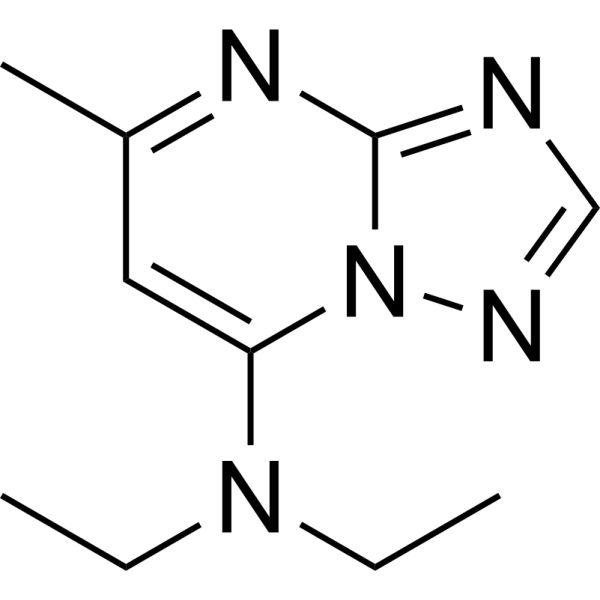
Trapidil (AR-12008) is an orally active vasodilator and antiplatelet agent. Trapidil antagonizes platelet-derived growth factor (PDGF), inhibits phosphodiesterase, thromboxane A2 synthesis and pro-inflammatory cytokine production. Trapidil promotes prostacyclin biosynthesis, reduces lipid peroxidation, regulates nitric oxide metabolism, and inhibits cell proliferation and migration. Trapidil exerts tissue-protective effects, regulates bone turnover, and inhibits pyroptosis via the GPX3/Nrf2 pathway. Trapidil is applicable to research related to renal ischemia-reperfusion injury, chronic stable angina, restenosis, meningioma, diabetic cardiomyopathy and peripheral nerve crush injury .
loading...
    loading...
Cat. No.: HY-D3389
sCy5DL-amide is an amidated fluorescent D-amino acid conjugated to Sulfo-Cyanine 5, and a peptidoglycan labeling agent. sCy5DL-amide incorporates into bacterial peptidoglycan cell wall via transpeptidase-mediated reactions, replacing the fourth or fifth D-amino acid of the peptidoglycan stem peptide for visualization of nascent peptidoglycan biosynthesis. sCy5DL-amide produces clear cell outline, septum labeling, and high localization density in Bacillus subtilis, including a 'V-shape' pattern at cell-cell contact areas. sCy5DL-amide exhibits robust incorporation into Gram-positive bacteria and mycobacteria, with reduced incorporation into Gram-negative bacteria (Ex/Em = 646/666 nm) .
loading...
    loading...
Cat. No.: HY-N0667R
CAS No.: 70-47-3
Synonyms: (-)-Asparagine (Standard); Asn (Standard); Asparamide (Standard)
L-Asparagine (Standard) is the analytical standard of L-Asparagine (HY-N0667). This product is intended for research and analytical applications. L-Asparagine is an essential amino acid for leukemic cells and a substrate for L-Asparaginase. L-Asparaginase is a potent anti-leukemic enzyme that promotes asparagine (Asn) and glutamine (Gln) depletion and inhibits protein biosynthesis in lymphoblasts. Removal of L-asparagine from plasma by L-Asparaginase results in inhibition of RNA and DNA synthesis and subsequent apoptosis. L-Asparaginase has cell-killing ability in vitro and in vivo, and selectively inhibits the growth of cancer cells with low asparagine synthetase (AASNS) expression. L-Asparagine can be used as a biomarker and sensor for the study of childhood acute lymphoblastic leukemia .
loading...
    loading...
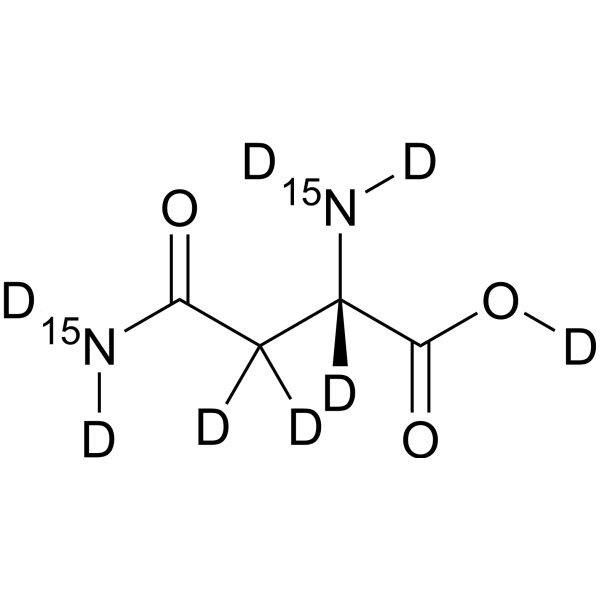
Cat. No.: HY-N0667S1
CAS No.: 1217473-37-4
L-Asparagine- 15N2,d8 is the 15N- and deuterium labeled L-Asparagine (HY-N0667). L-Asparagine is an essential amino acid for leukemic cells and a substrate for L-Asparaginase. L-Asparaginase is a potent anti-leukemic enzyme that promotes asparagine (Asn) and glutamine (Gln) depletion and inhibits protein biosynthesis in lymphoblasts. Removal of L-asparagine from plasma by L-Asparaginase results in inhibition of RNA and DNA synthesis and subsequent apoptosis. L-Asparaginase has cell-killing ability in vitro and in vivo, and selectively inhibits the growth of cancer cells with low asparagine synthetase (AASNS) expression. L-Asparagine can be used as a biomarker and sensor for the study of childhood acute lymphoblastic leukemia .
loading...
    loading...

