


1197 Results for "

nanoparticles

" in MedChemExpress (MCE) Product Catalog:
Products (1197)

1197 Results for "nanoparticles" in MCE Product Catalog:

Cat. No.: HY-D3428
CAS No.: 2863678-02-6
LJ-2P is an NIR-II small-molecule fluorescent probe with fibrin/fibrinogen affinity. LJ-2P can bind coagulation-related proteins and restrict dye molecular motion, thereby enhancing local fluorescence for high-contrast imaging of bleeding and blood clots in vivo. LJ-2P can also co-precipitate with Ca 2+ to form LJ-2P nanoparticles, significantly enhancing NIR-II luminescence through the precipitation-enhanced emission (PEE) mechanism. LJ-2P can be used for research on bleeding disorders and breast cancer. LJ-2P exhibits dual-modal emission properties (Ex/Em ≈740/945 nm or 740/1066 nm) .
loading...
    loading...
Cat. No.: HY-DY1088
CAS No.: 75350-46-8
Synonyms: N-(5-Fluoresceinyl)maleimide (solution)
Fluorescein-5-maleimide (solution) (N-(5-Fluoresceinyl)maleimide (solution)) is a fluorescent dye. Fluorescein-5-maleimide can be used to detect the redox state of thiols in eukaryotic cells. Fluorescein-5-maleimide can label peptides and is used to detect negatively charged nanoparticles. Fluorescein-5-maleimide can also label actin to explore its interaction with cardiac myosin-binding protein C (cMyBP-C), which helps in developing small molecule modulators for heart failure. Fluorescein-5-maleimide can screen mutant proteins that contain cysteine residues. The excitation wavelength of Fluorescein-5-maleimide is 494 nm, and the emission wavelength is 519 nm .

Solvent and concentration: DMSO: 10 mM
loading...
    loading...
Cat. No.: HY-P11490
Target:  

MDM-2/p53

Research Areas:  

Inflammation/Immunology Cancer

DPMI-ω is a dual-specificity d-peptide antagonist of oncogenic proteins MDM2 and MDMX. DPMI-ω, upon fabrication on gold nanoparticles, efficiently traverses tumor cells and kills them by reactivating the p53 signaling pathway. DPMI-ω can disrupte the p53-MDM2/MDMX complex. DPMI-ω can inhibit B16 melanoma growth and induce cells G0/G1 phase arrest. DPMI-ω can augment the efficacy of immunotherapy by expanding CD3 +/CD8 + cytotoxic T cells and suppressing CD4 +/CD25 + regulatory T cells companied with anti-PD1 antibody. DPMI-ω can be used for research of melanoma .
loading...
    loading...
Cat. No.: HY-W012166
CAS No.: 42014-51-7
Synonyms: NHS-Bromoacetate
Research Areas:  

Infection

N-Succinimidyl bromoacetate (NHS-Bromoacetate) is a heterobifunctional crosslinking reagent, mainly used to modify the ɛ-amino group of lysine side chains. By covalently linking its bromoacetyl moiety to the ɛ-amino group of lysine in peptidomimetics, N-Succinimidyl bromoacetate enables their conjugation with thiol-modified nanoparticles via thioether bonds. N-Succinimidyl bromoacetate also performs bromoacetylation modification on carrier proteins, which then forms stable thioether bonds with the thiol groups of cysteine in peptides, thus efficiently preparing soluble peptide-protein conjugates with high substitution ratios. N-Succinimidyl bromoacetate can be used to prepare activated Sepharose derivatives for affinity chromatography, protein affinity labeling reagents, and peptide-protein immunogen conjugates with non-immunogenic linkages. N-Succinimidyl bromoacetate is applicable to studies related to HIV-1 infection and glioblastoma multiforme .
loading...
    loading...
Cat. No.: HY-W1113135
CAS No.: 2828447-14-7
Research Areas:  

Others

Carboxymethyl-β-cyclodextrin sodium salt is a negatively charged β-cyclodextrin derivative, as well as a metal ion chelator and solubilizing reagent. Carboxymethyl-β-cyclodextrin sodium salt forms stable aqueous complexes with Ba 2+, Ca 2+, Cd 2+, Ni 2+, Pb 2+, Sr 2+, and Zn 2+ ions. Carboxymethyl-β-cyclodextrin sodium salt derived hydrogel carriers support oral insulin delivery via paracellular permeation across Caco-2 monolayers and produce sustained hypoglycemic effects in diabetic mice. Carboxymethyl-β-cyclodextrin sodium salt can be conjugated onto folate-modified BSA nanoparticles to boost folate receptor-mediated endocytosis, elevate intracellular anticancer drug uptake and trigger cell apoptosis. Carboxymethyl-β-cyclodextrin sodium salt can be utilized for chiral separation in capillary electrophoresis, development of nanoscale drug carriers and nucleic acid transfection research .
loading...
    loading...
Cat. No.: HY-169480
CAS No.: 3003022-09-8
Target:  

Liposome

Research Areas:  

Infection Cancer

Lipid C2 is an ionizable cationic lipid that has been used in the formation of lipid nanoparticles (LNP) for mRNA delivery in vivo. LNPs containing Lipid C2 and encapsulating an mRNA reporter selectively accumulate in the liver and spleen but not the heart, lungs, or kidneys in mice. LNP containing Lipid C2 and encapsulating mRNA encoding the Epstein-Barr virus (EBV) protein latent membrane protein 2 (LMP-2), in combination with an anti-programmed cell death protein 1 (PD-1) antibody, decrease tumor volume and reverse T cell exhaustion, as well as increase the percentage of CD3 +CD8 + central and CD3 +CD8 + effector memory T cells and decrease the percentage of CD3 + T cells expressing Pd-1, in the spleen in a CT26 murine EBV-infected colon cancer model .
loading...
    loading...
Cat. No.: HY-184607
Nanoclusters are essentially ultrasmall nanomaterials, typically with diameters between 1 and 10 nm, composed of a specific number of metal atoms (approximately 10 to several hundred) and ligands. This structure places their size between that of small molecules and traditional nanoparticles, exhibiting quantum effects. When the size of the metal core approaches the Fermi wavelength of electrons, its band structure transitions from a continuous state to discrete energy levels, thus exhibiting molecular-like properties such as single-electron transitions, multiple absorption bands, and strong photoluminescence. Iron nanoclusters (FeNCs) are a class of ultrasmall fluorescent nanomaterials composed of several to tens of iron atoms. Synthesized using bovine serum albumin (BSA) as a template and protectant via a chemical reduction method, these materials possess excellent optical properties and biocompatibility. Furthermore, they can be functionalized through surface modification, leading to their wide application in fields such as bioanalysis, environmental monitoring, and disease diagnosis.
loading...
    loading...
Cat. No.: HY-184984
CAS No.: 3110372-70-5
Target:  

Topoisomerase

Research Areas:  

Cancer

SN-38-A2 is a topoisomerase I (TOP1) degrader with an IC50 of 6.2 nM in MIA PaCa-2 pancreatic cancer cells. SN-38-A2 mimics protein misfolding via an adamantane hydrophobic tag, hijacks the HSP90 chaperone system, and mediates TOP1 degradation through the ubiquitin-proteasome system. SN-38-A2 assembles with poly β-cyclodextrin to form pH-responsive nanoparticles, enabling site-specific release under the acidic conditions of the tumor microenvironment, and exhibits tumor growth inhibitory effects in MIA PaCa-2 pancreatic cancer and HCT116 colorectal cancer xenograft models. SN-38-A2 can be used in research related to pancreatic cancer, colorectal cancer, and breast cancer .
loading...
    loading...
Cat. No.: HY-187321A
Synonyms: DPPE-PEG2000-Cys-SRNLIDC
Research Areas:  

Cancer

DPPE-PEG2000-LyP-1 is a functionalized PEGylated lipid conjugate composed of three modular components: dipalmitoylphosphatidylethanolamine (DPPE) as the lipid anchoring group, PEG, and LyP-1 peptide (CGNKRTRGC) (HY-P2526) as the terminal targeting/functional ligand. LyP-1 is a cyclic 9-amino acid peptide that specifically binds to p32/gC1qR protein, which is highly expressed on tumor-associated macrophages, lymphatic endothelial cells, and certain tumor cells. DPPE-PEG2000-LyP-1 can be incorporated into liposomes, lipid nanoparticles (LNPs), or other nanocarriers to confer ligand-directed targeting capability against p32/gC1qR protein on the surface of lymphatic vessels, tumor-associated macrophages, and tumor cells.
loading...
    loading...
Cat. No.: HY-187332A
Synonyms: DSG-PEG2000-Cys-SRNLIDC
Research Areas:  

Cancer

DSG-PEG2000-LyP-1 is a functionalized PEGylated lipid conjugate composed of three modular components: distearoylglycerol (DSG) as the lipid anchoring group, PEG, and LyP-1 peptide (CGNKRTRGC) (HY-P2526) as the terminal targeting/functional ligand. LyP-1 is a cyclic 9-amino acid peptide that specifically binds to p32/gC1qR protein, which is highly expressed on tumor-associated macrophages, lymphatic endothelial cells, and certain tumor cells. DSG-PEG2000-LyP-1 can be incorporated into liposomes, lipid nanoparticles (LNPs), or other nanocarriers to confer ligand-directed targeting capability against p32/gC1qR protein on the surface of lymphatic vessels, tumor-associated macrophages, and tumor cells.
loading...
    loading...
Cat. No.: HY-B1325
CAS No.: 64544-07-6
Target:  

Bacterial Antibiotic

Research Areas:  

Infection Inflammation/Immunology

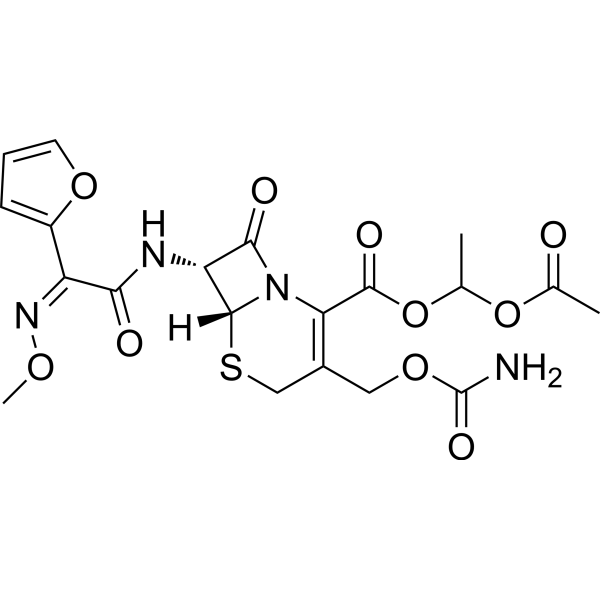
Cefuroxime axetil is an orally effective broad-spectrum β-lactam antibiotic that targets bacterial penicillin-binding proteins (PBPs, such as PBP3 and PBP1). Cefuroxime axetil inhibits cell wall synthesis, leading to bacterial lysis and death, with a minimum inhibitory concentration (MIC) of 0.12-4 mg/L for non-typeable Haemophilus influenzae (NTHi). Cefuroxime axetil is hydrolyzed by esterase to the active ingredient Cefuroxime (HY-B1256A) after oral absorption. Topical administration of Cefuroxime via bioadhesive nanoparticles (BNPs) can prolong the drug's retention time in the middle ear (≥7 days). Cefuroxime axetil can be used in the study of otitis media (especially NTHi infection). Cefuroxime axetil can achieve precise antibacterial effects through oral or topical nano-delivery systems, reducing systemic exposure and the risk of antibiotic resistance .
loading...
    loading...
Cat. No.: HY-D0917
CAS No.: 157199-59-2
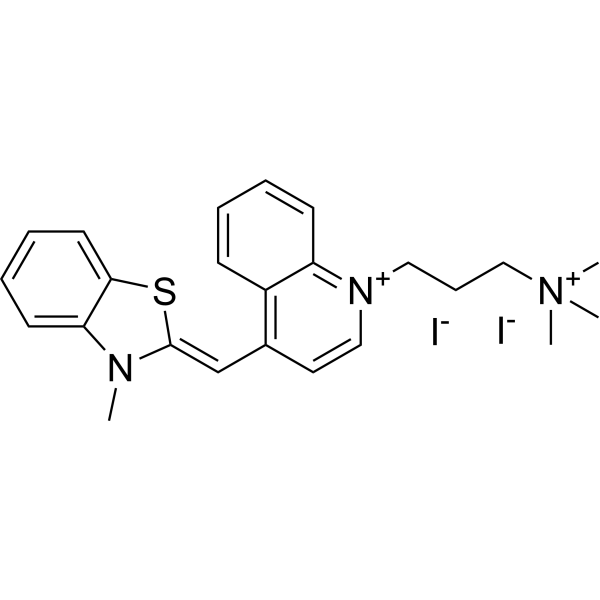
NIR-Red Dead Cell-1 Dye is a DNA-binding fluorescent dye for non-living cells (Ex/Em=515 nm/531 nm). NIR-Red Dead Cell-1 Dye can intercalate into base pairs of double-stranded DNA and produce stronger fluorescence. NIR-Red Dead Cell-1 Dye is suitable for necrotic cells or late apoptotic cells with damaged cell membranes, showing green fluorescence under fluorescence microscopy or flow cytometry. NIR-Red Dead Cell-1 Dye can be used to distinguish live cells from dead cells and distinguish cell membrane integrity. NIR-Red Dead Cell-1 Dye can be attached to the surface of Feraheme (FH) nanoparticles (NPs) to obtain fluorescent dye-functionalized NPs for drug delivery studies .
loading...
    loading...
Cat. No.: HY-P10427
DV1 is a CXCR4 inhibitor with anti-proteolytic properties that specifically blocks the binding of SDF-1α to its receptor. DV1 inhibits the migration of breast cancer cells and enables the targeted delivery of avidin-PLGA nanoparticles to CXCR4-expressing cancer cells. DV1 not only effectively suppresses the progression of metastatic breast cancer in mouse models, but also preferentially accumulates in brain tumor tissues rather than normal brain tissues, showing potential for inhibiting intracranial tumor metastasis. As a humoral immune stimulant, DV1 induces the production of specific IgG, neutralizing antibodies and cellular immune responses, thereby providing the host with protection against lethal challenges. DV1 has been applied to studies on CXCR4-expressing cancers, glioblastoma, dengue fever and other related diseases .
loading...
    loading...
Cat. No.: HY-W1113135A
CAS No.: 2828447-14-7
Research Areas:  

Others

Carboxymethyl-β-cyclodextrin sodium salt, for capillary electrophoresis is a negatively charged β-cyclodextrin derivative, as well as a metal ion chelator and solubilizing reagent. Carboxymethyl-β-cyclodextrin sodium salt, for capillary electrophoresis forms stable aqueous complexes with Ba 2+, Ca 2+, Cd 2+, Ni 2+, Pb 2+, Sr 2+, and Zn 2+ ions. Carboxymethyl-β-cyclodextrin sodium salt derived hydrogel carriers support oral insulin delivery via paracellular permeation across Caco-2 monolayers and produce sustained hypoglycemic effects in diabetic mice. Carboxymethyl-β-cyclodextrin sodium salt can be conjugated onto folate-modified BSA nanoparticles to boost folate receptor-mediated endocytosis, elevate intracellular anticancer drug uptake and trigger cell apoptosis. Carboxymethyl-β-cyclodextrin sodium salt can be utilized for chiral separation in capillary electrophoresis, development of nanoscale drug carriers and nucleic acid transfection research .
loading...
    loading...
Cat. No.: HY-112624E
CAS No.: 9004-54-0
Synonyms: Dextran 0.8; Dextran D0.8; Dextran T0.8(MW 640-960)
Dextran T0.8 (Dextran 0.8; Dextran T0.8(MW 640-960)) is a food additive with a porous network structure that exhibits strong hydration capacity and low browning activity. Dextran T0.8 (MW 800) can improve the coagulation of dairy products and is used as a prebiotic in baked goods. Dextran T0.8 (MW 800) is non-toxic to HeLa cells at a concentration of ~500 μg/mL and has a low relative browning rate in the Maillard reaction. The Dextran series of compounds are also natural polysaccharide drug carriers that can be connected to drugs through covalent bonding methods such as ester bonds, amide bonds or click chemistry, or self-assembled to form carriers such as nanoparticles and hydrogels. Dextran is biodegradable and biocompatible, and can achieve targeted delivery and controlled release of drugs. Dextran derivatives can prolong the half-life of drugs, increase local concentrations, and reduce the activity of immune clearance .
loading...
    loading...
Cat. No.: HY-112624J
CAS No.: 9004-54-0
Synonyms: Dextran 4; Dextran D4; Dextran T4(MW 3200-4800)
Dextran 4,000 is a mucus rheology modifier. The dextran molecules in Dextran 4,000 can reduce the cross-link density of mucus through osmotic effects and hydrogen bond substitution, and reduce viscoelasticity and improve the mucociliary/cough clearance index by destroying the DNA-mucin network structure in mucus. Dextran 4,000 has the ability to improve the rheological properties and clearance ability of cystic fibrosis (CF) sputum, and can be used in the study of inhalation therapy or aerosol delivery of mucostatic respiratory diseases. The Dextran series of compounds are also natural polysaccharide drug carriers that can be connected to drugs through covalent bonding methods such as ester bonds, amide bonds or click chemistry, or self-assembled to form carriers such as nanoparticles and hydrogels. Dextran is biodegradable and biocompatible, and can achieve targeted delivery and controlled release of drugs. Dextran derivatives can prolong the half-life of drugs, increase local concentrations, and reduce the activity of immune clearance .
loading...
    loading...
Cat. No.: HY-150229
CAS No.: 2803699-70-7
Purity:  98.84%
Target:  

Liposome

Research Areas:  

Cancer

306-N16B is a selective lung-targeted lipid nanoparticle that reversibly targets lung endothelial cells and specific immune cells through selective adsorption of a protein corona mediated by differences in tail structure (such as fibrinogen β/γ chain). 306-N16B binds to specific plasma proteins in the blood to form a protein corona, which guides the particles to be enriched in the lungs, releases mRNA and promotes target cell gene expression, exerts efficient lung cell transfection activity, and can precisely regulate gene delivery of different cell types in the lungs (such as endothelial cells and macrophages). 306-N16B can be used in gene therapy technologies for hereditary lung diseases including pulmonary lymphangioleiomyomatosis (LAM), restoring tumor suppressor function by delivering Tsc2 mRNA, and can also be used for lung-specific mRNA vaccines and gene editing therapies .
loading...
    loading...
Cat. No.: HY-154974
CAS No.: 2408140-60-1
Purity:  ≥95.0%
Target:  

Liposome

Research Areas:  

Cancer

LNP Lipid-8 (11-A-M) is an ionizable single-tail multi-head lipid that can be used as a lipid nanoparticle (LNP) to deliver siRNA to T cells without targeting ligands. LNP Lipid-8 is more selective for T cells than other cell types such as hepatocytes. LNP Lipid-8 selectively delivers siRNA/sgRNA to T cells (especially CD8+ T cells) through endogenous lipid transport pathways, and can enter cells and release RNA through endocytosis to achieve gene silencing. LNP Lipid-8 loaded with GFP siRNA (siGFP) significantly led to GFP gene silencing in mouse models. LNP Lipid-8 showed good efficacy and safety in both cells and animals, without obvious liver targeting and toxicity. LNP Lipid-8 can be used for RNA delivery research in the fields of tumor immunotherapy and T cell-mediated autoimmune diseases .
loading...
    loading...
Cat. No.: HY-187243
Synonyms: DMG-PEG1000-Cys-SRNLIDC
Research Areas:  

Cancer

DMG-PEG1000-LyP-1 (DMG-PEG1000-Cys-SRNLIDC) is a functionalized PEGylated lipid conjugate composed of three modular components: dimyristoylglycerol (DMG) as the lipid anchoring group, PEG, and LyP-1 peptide (CGNKRTRGC) (HY-P2526) as the terminal targeting/functional ligand. LyP-1 is a cyclic 9-amino acid peptide that specifically binds to p32/gC1qR protein, which is highly expressed on tumor-associated macrophages, lymphatic endothelial cells, and certain tumor cells. DMG-PEG1000-LyP-1 can be incorporated into liposomes, lipid nanoparticles (LNPs), or other nanocarriers to confer ligand-directed targeting capability against p32/gC1qR protein on the surface of lymphatic vessels, tumor-associated macrophages, and tumor cells.
loading...
    loading...
Cat. No.: HY-187243A
Synonyms: DMG-PEG2000-Cys-SRNLIDC
Research Areas:  

Cancer

DMG-PEG2000-LyP-1 (DMG-PEG2000-Cys-SRNLIDC) is a functionalized PEGylated lipid conjugate composed of three modular components: dimyristoylglycerol (DMG) as the lipid anchoring group, PEG, and LyP-1 peptide (CGNKRTRGC) (HY-P2526) as the terminal targeting/functional ligand. LyP-1 is a cyclic 9-amino acid peptide that specifically binds to p32/gC1qR protein, which is highly expressed on tumor-associated macrophages, lymphatic endothelial cells, and certain tumor cells. DMG-PEG2000-LyP-1 can be incorporated into liposomes, lipid nanoparticles (LNPs), or other nanocarriers to confer ligand-directed targeting capability against p32/gC1qR protein on the surface of lymphatic vessels, tumor-associated macrophages, and tumor cells.
loading...
    loading...

