132 Results for "

hypercholesterolemia

" in MedChemExpress (MCE) Product Catalog:
Products (132)

132 Results for "hypercholesterolemia" in MCE Product Catalog:

Cat. No.: HY-P77735
Purity:  ≥ 95%, as determined by Bis-Tris PAGE.
Synonyms: LDLR; LDL Receptor; Low Density Lipoprotein Receptor; Low-Density Lipoprotein Receptor Class A Domain-Containing Protein 3; Low-Density Lipoprotein Receptor; Familial hypercholesterolemia; LDLCQ2; Low Density Lipoprotein
Species:  
Cynomolgus
Source:  
HEK293
loading...
    loading...
Cat. No.: HY-P78607
Purity:  ≥ 90%, as determined by reducing SDS-PAGE.
Synonyms: LDLR; LDL Receptor; Low Density Lipoprotein Receptor; Low-Density Lipoprotein Receptor Class A Domain-Containing Protein 3; Low-Density Lipoprotein Receptor; Familial hypercholesterolemia; LDLCQ2; Low Density Lipoprotein
Species:  
Rabbit
Source:  
HEK293
loading...
    loading...
Cat. No.: HY-P704757
Purity:  ≥ 95%, as determined by reducing SDS-PAGE.
Synonyms: LDLR; LDL Receptor; Low Density Lipoprotein Receptor; Low-Density Lipoprotein Receptor Class A Domain-Containing Protein 3; Low-Density Lipoprotein Receptor; Familial hypercholesterolemia; LDLCQ2; Low Density Lipoprotein
Species:  
Human
Source:  
HEK293
loading...
    loading...
Cat. No.: HY-P700860
Purity:  ≥ 95%, as determined by reducing SDS-PAGE.
Synonyms: LDLR; LDL Receptor; Low Density Lipoprotein Receptor; Low-Density Lipoprotein Receptor Class A Domain-Containing Protein 3; Low-Density Lipoprotein Receptor; Familial hypercholesterolemia; LDLCQ2; Low Density Lipoprotein
Species:  
Human
Source:  
HEK293
loading...
    loading...
Cat. No.: HY-101812R
CAS No.: 56488-59-6
Terbufibrol (Standard) is the analytical standard of Terbufibrol (HY-101812). This product is intended for research and analytical applications. Terbufibrol is an orally active lipid-lowering agent. Terbufibrol inhibits hepatic Cholesterol 7 alpha-hydroxylase. Terbufibrol blocks a step between Acetate and HMG-CoA in the hepatic cholesterol synthesis process. Terbufibrol reduces serum total cholesterol, HDL, LDL, lipoprotein levels, and the cholesterol/phospholipid ratio, with dose- and sex-dependent changes in lipoprotein components. Terbufibrol exerts sustained cholesterol-lowering activity in baboons and rats. Terbufibrol can be used in research related to hypercholesterolemia .
loading...
    loading...
Cat. No.: HY-P72392
Purity:  ≥ 95%, as determined by reducing SDS-PAGE.
Synonyms: LDLR; LDL Receptor; Low Density Lipoprotein Receptor; Low-Density Lipoprotein Receptor Class A Domain-Containing Protein 3; Low-Density Lipoprotein Receptor; Familial hypercholesterolemia; LDLCQ2; Low Density Lipoprotein
Species:  
Human
Source:  
HEK293
loading...
    loading...
Cat. No.: HY-P11881
IUB288 is a stable and long-acting glucagon-modified peptide, as well as a highly selective Glucagon Receptor agonist. IUB288 stimulates the production of cAMP, increases the expression levels of FGF21 in plasma and liver, regulates bile acid metabolism, and inhibits the expression of hepatic HMGCR. IUB288 improves hypercholesterolemia, enhances insulin sensitivity, increases core body temperature, boosts energy expenditure, suppresses food intake, and can also induce hyperglycemia and glucose intolerance. IUB288 is applicable to the research of diet-induced obesity, type 2 diabetes, and obesity-related glucose intolerance .
loading...
    loading...
Cat. No.: HY-P73838
Purity:  ≥ 90%, as determined by reducing SDS-PAGE.
Synonyms: LDLR; LDL Receptor; Low Density Lipoprotein Receptor; Low-Density Lipoprotein Receptor Class A Domain-Containing Protein 3; Low-Density Lipoprotein Receptor; Familial hypercholesterolemia; LDLCQ2; Low Density Lipoprotein
Species:  
Mouse
Source:  
HEK293
loading...
    loading...
Cat. No.: HY-101354
CAS No.: 2133832-83-2
Purity:  98.76%
Synonyms: PF-00932239
Target:  

PCSK9 Ras MEK ERK NF-κB LDLR

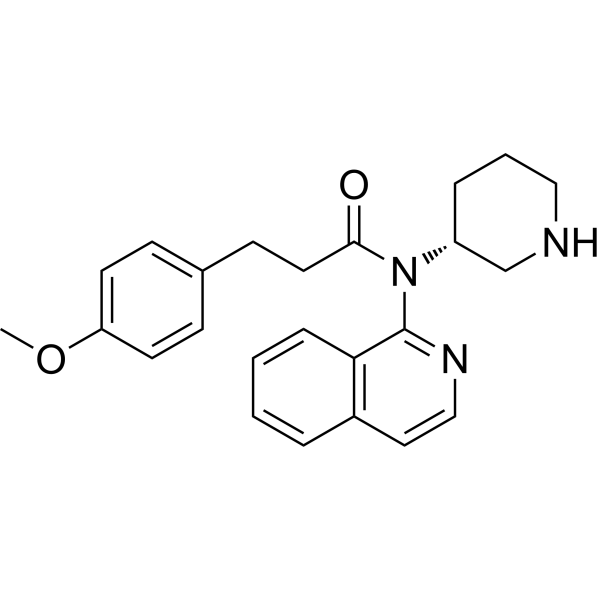
R-IMPP (PF-00932239) is a PCSK9 translation inhibitor and a selective 80S ribosome binder. R-IMPP inhibits the KRAS/MEK/ERK signaling cascade. R-IMPP reduces LPS-induced nuclear translocation of NFkB P65. R-IMPP increases LDL-R levels in cells, promotes LDL-C uptake, and does not alter the secretion of transferrin or albumin. R-IMPP inhibits the growth of colorectal cancer (CRC) cells, organoids and xenografts carrying APC/KRAS mutations, as well as the number and burden of spontaneous mouse tumors. R-IMPP can be used in research related to colorectal cancer with APC/KRAS mutations, hepatic ischemia-reperfusion injury and hypercholesterolemia .
loading...
    loading...
Cat. No.: HY-101354A
CAS No.: 2173005-10-0
Synonyms: PF-00932239 hydrochloride
R-IMPP hydrochloride (PF-00932239 hydrochloride) is a PCSK9 translation inhibitor and a selective 80S ribosome binder. R-IMPP hydrochloride inhibits the KRAS/MEK/ERK signaling cascade. R-IMPP hydrochloride reduces LPS-induced nuclear translocation of NFkB P65. R-IMPP hydrochloride increases LDL-R levels in cells, promotes LDL-C uptake, and does not alter the secretion of transferrin or albumin. R-IMPP hydrochloride inhibits the growth of colorectal cancer (CRC) cells, organoids and xenografts carrying APC/KRAS mutations, as well as the number and burden of spontaneous mouse tumors. R-IMPP hydrochloride can be used in research related to colorectal cancer with APC/KRAS mutations, hepatic ischemia-reperfusion injury and hypercholesterolemia .
loading...
    loading...
Cat. No.: HY-10357
CAS No.: 1032349-93-1
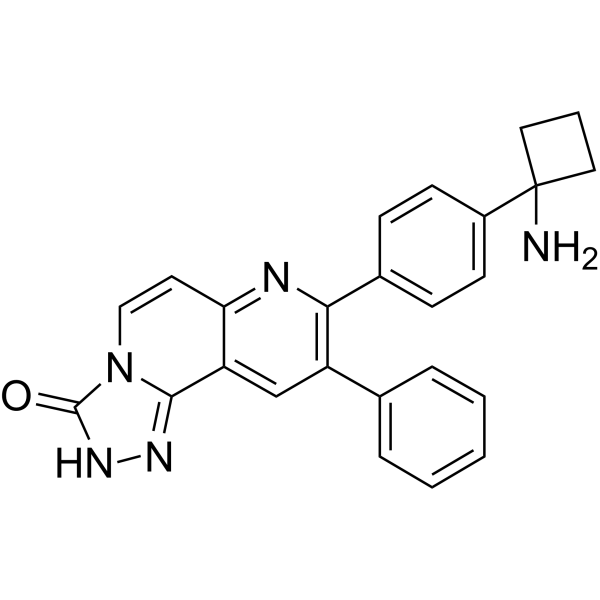
MK-2206 free base is an orally active pan-AKT inhibitor, with IC50 values of 8 nM, 12 nM and 65 nM against AKT1, AKT2 and AKT3, respectively. MK-2206 free base inhibits the Akt/mTOR signaling pathway and reduces the levels of downstream GSK3β and Mcl-1 via proteasomal degradation. MK-2206 free base induces G1-phase cell cycle arrest, apoptosis, epithelial-mesenchymal transition, fibroblast activation and extracellular matrix deposition. MK-2206 free base causes transient hyperglycemia and hyperinsulinemia in animals. MK-2206 free base can be used in research related to solid tumors, renal fibrosis and hypercholesterolemia .
loading...
    loading...
Cat. No.: HY-Y0308D
CAS No.: 7558-79-4
Synonyms: Disodium hydrogen phosphate, meets analytical specification of Ph. Eur. BP USP FCC E339
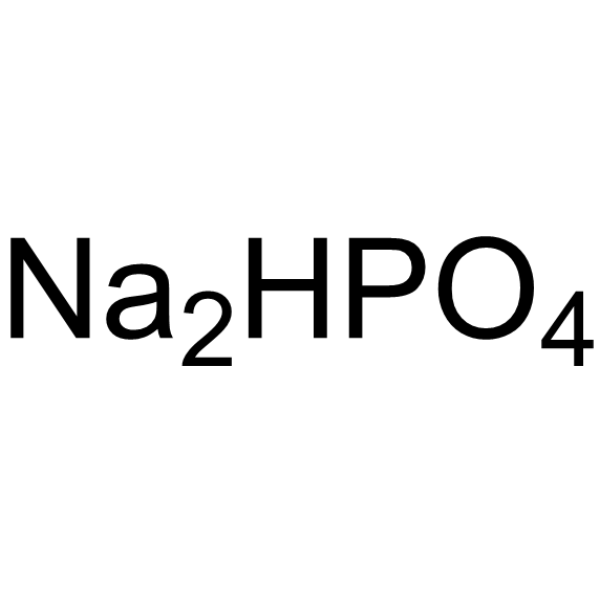
Sodium phosphate dibasic (Disodium hydrogen phosphate), meets analytical specification of Ph. Eur. BP USP FCC E339 is an inorganic dibasic phosphate that functions as an electrolyte supplement, a buffer carrier for injectable drugs, while also exhibiting nephrotoxicity. Sodium phosphate dibasic, meets analytical specification of Ph. Eur. BP USP FCC E339 induces extensive nephrotic syndrome-like changes, including systemic symptoms such as persistent proteinuria, lipemia, hypercholesterolemia, and anemia, and causes severe renal pathological alterations such as renal enlargement, glomerular calcification, podocyte injury, and tubulointerstitial lesions. Sodium phosphate dibasic, meets analytical specification of Ph. Eur. BP USP FCC E339 has the ability to induce phosphate-induced nephropathy and glomerular calcification, and can be widely used in studies on nephrotic syndrome and related renal pathological mechanisms .
loading...
    loading...
Cat. No.: HY-10358R
CAS No.: 1032350-13-2
Synonyms: MK-2206 (2HCl) (Standard)
MK-2206 dihydrochloride (MK-2206 2HCl) (Standard) is the analytical standard of MK-2206 dihydrochloride (HY-10358). This product is intended for research and analytical applications. MK-2206 dihydrochloride is an orally active pan-AKT inhibitor, with IC50 values of 8 nM, 12 nM and 65 nM against AKT1, AKT2 and AKT3, respectively. MK-2206 dihydrochloride inhibits the Akt/mTOR signaling pathway and reduces the levels of downstream GSK3β and Mcl-1 via proteasomal degradation. MK-2206 dihydrochloride induces G1-phase cell cycle arrest, apoptosis, epithelial-mesenchymal transition, fibroblast activation and extracellular matrix deposition. MK-2206 dihydrochloride causes transient hyperglycemia and hyperinsulinemia in animals. MK-2206 dihydrochloride can be used in research related to solid tumors, renal fibrosis and hypercholesterolemia .
loading...
    loading...
Cat. No.: HY-128828
CAS No.: 265989-46-6
Purity:  98.01%
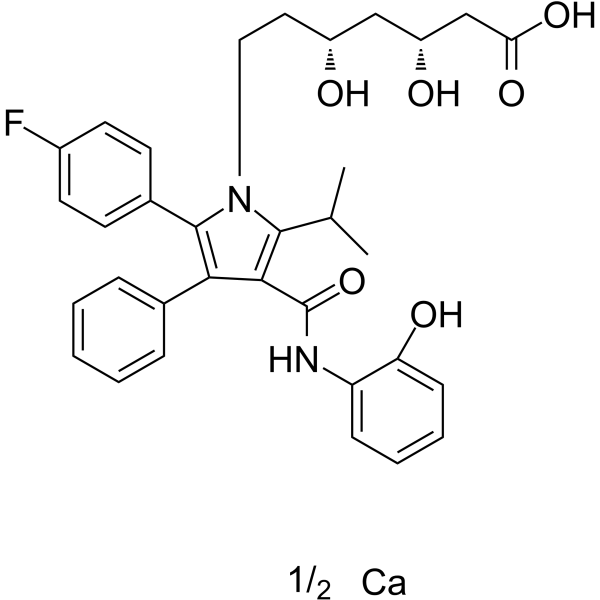
2-Hydroxy atorvastatin calcium salt is an orally active OATP1B1 substrate and inhibitor of 3-hydroxy-3-methylglutaryl-coenzyme A reductase (3-hydroxy-3-methylglutaryl-coenzyme A reductase). 2-Hydroxy atorvastatin calcium salt enters cells via OATP1B1-mediated cellular uptake and inhibits de novo hepatic cholesterol synthesis. As an active metabolite of Atorvastatin (HY-B0589), 2-Hydroxy atorvastatin calcium salt contributes to the inhibitory activity against plasma HMG-CoA reductase. 2-Hydroxy atorvastatin calcium salt can be biotransformed into an inactive lactone form, which can be hydrolyzed back to its active acid form chemically or enzymatically. 2-Hydroxy atorvastatin (calcium salt) can be used in the research of hypercholesterolemia .
loading...
    loading...
Cat. No.: HY-164236S
CAS No.: 2738376-81-1
C22 Glucosylceramide (d18:1/22:0)-d4 is deuterium labeled C22 Glucosylceramide (d18:1/22:0) (HY-164236). C22 Glucosylceramide (d18:1/22:0) is a bioactive sphingolipid composed of a d18:1 sphingoid base and a 22:0 fatty acid chain. C22 Glucosylceramide (d18:1/22:0) specifically exists in Doxorubicin (HY-15142A)-sensitive cancer cells, and its circulating concentration is positively correlated with the incidence of cardiovascular events. C22 Glucosylceramide (d18:1/22:0) has been widely used in research related to cardiovascular diseases, hypercholesterolemia, metabolic syndrome, breast adenocarcinoma and other fields .
loading...
    loading...
Cat. No.: HY-N21887
CAS No.: 105214-48-0
Gypenoside LVI is an orally active dammarane-type triterpenoid compound found in Gynostemma pentaphyllum. Gypenoside LVI inhibits ERK and JNK phosphorylation, the NLRP3 inflammasome, and modulates M1 to M2 microglial polarization. Gypenoside LVI downregulates PCSK9 expression through a SREBP-independent pathway. Gypenoside LVI promotes cholesterol efflux via ABCG1 and SRB1, upregulates LXRα-mediated reverse cholesterol transport, and attenuates foam cell formation by reducing lipid accumulation and cholesterol uptake. Gypenoside LVI inhibits IL-6 and IL-1β secretion, reduces oxidative stress, neuroinflammation, microglial and astrocyte activation, and inhibits LPS-induced microglial proliferation. Gypenoside LVI can be used for research on atherosclerosis, hypercholesterolemia, depression, and non-small cell lung cancer .
loading...
    loading...
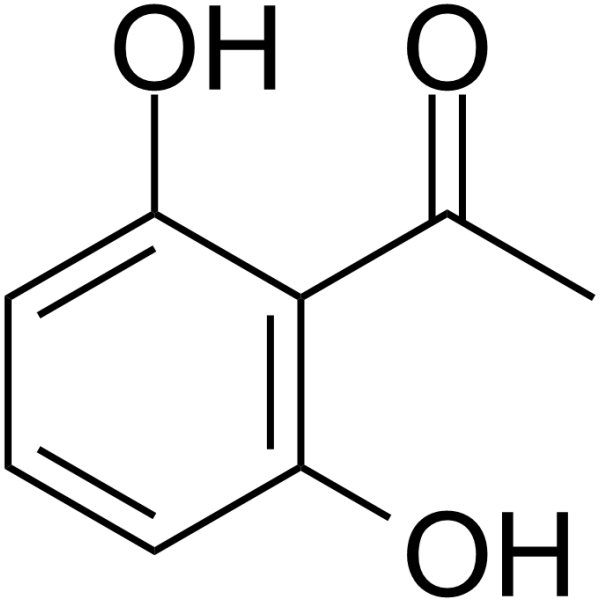
Cat. No.: HY-Y0106
CAS No.: 699-83-2
2,6-Dihydroxyacetophenone, a polyphenolic derivative of Acetophenone (HY-Y0989), is an orally active mTOR inhibitor. 2,6-Dihydroxyacetophenone shows antioxidant activity. 2,6-Dihydroxyacetophenone inhibits cell growth and proliferation in CRC cells. 2,6-Dihydroxyacetophenone arrests at G0/G1 phase of cell cycle, induces apoptosis and suppresses cell migration in CRC cells. 2,6-Dihydroxyacetophenone inhibits xanthine oxidase (XOD) with an IC50 of 1.24 mM. 2,6-dihydroxyacetophenone improves uric acid metabolism in hyperuricemia mice, reduces plasma cholesterol in hypercholesterolemic rats, and inhibits lipid accumulation in HFD-induced obese mice. 2,6-Dihydroxyacetophenone can be used for the study of colorectal cancer (CRC), hyperuricemia and hypercholesterolemia .
loading...
    loading...
Cat. No.: HY-P70966
Purity:  ≥ 95%, as determined by reducing SDS-PAGE.
Synonyms: PCSK9; PC9; Prev. HCHOLA3; hypercholesterolemia, Autosomal Dominant 3; NARC-1; Neural Apoptosis Regulated Convertase 1; Subtilisin/Kexin-Like Protease PC9; Neural Apoptosis-Regulated Convertase 1; FH3; LDLCQ1; Proprotein Convertase 9; FHCL3; NARC1; Propro
Species:  
Others
Source:  
HEK293
loading...
    loading...
Cat. No.: HY-P75958
Purity:  ≥ 95%, as determined by reducing SDS-PAGE.
Synonyms: PCSK9; PC9; Prev. HCHOLA3; hypercholesterolemia, Autosomal Dominant 3; NARC-1; Neural Apoptosis Regulated Convertase 1; Subtilisin/Kexin-Like Protease PC9; Neural Apoptosis-Regulated Convertase 1; FH3; LDLCQ1; Proprotein Convertase 9; FHCL3; NARC1; Propro
Species:  
Rhesus Macaque
Source:  
HEK293
loading...
    loading...
Cat. No.: HY-P78663
Purity:  ≥ 95%, as determined by reducing SDS-PAGE.
Synonyms: PCSK9; PC9; Prev. HCHOLA3; hypercholesterolemia, Autosomal Dominant 3; NARC-1; Neural Apoptosis Regulated Convertase 1; Subtilisin/Kexin-Like Protease PC9; Neural Apoptosis-Regulated Convertase 1; FH3; LDLCQ1; Proprotein Convertase 9; FHCL3; NARC1; Propro
Species:  
Human
Source:  
HEK293
loading...
    loading...

