128 Results for "

prenatal fluoride-induced persistent hyper-osteogenesis

" in MedChemExpress (MCE) Product Catalog:
Products (128)

128 Results for "prenatal fluoride-induced persistent hyper-osteogenesis" in MCE Product Catalog:

Cat. No.: HY-W415856
CAS No.: 7296-64-2
Synonyms: Beta-D-galactose
Target:  

Drug Derivative

Research Areas:  

Others

β-D-galactose (Beta-D-galactose) is one of the two anomers of D-Galactose (HY-N0210). β-D-galactose efficiently binds to and inhibits the galactose repressor (GalR), thereby inducing the expression of the gal regulon. β-D-galactose acts as a persistent induction signal to trigger the synthesis of UDP-galactose for the biosynthetic glycosylation pathway, rather than serving as a carbon source in Yersinia pestis with inactivated GalM .
loading...
    loading...
Cat. No.: HY-W162231
CAS No.: 91216-38-5
Target:  

Bacterial

Research Areas:  

Infection Metabolic Disease

HC102A is an Antibacterial agent and an inhibitor of DosS and DosT histidine sensor kinases, with an IC50 of 1.9 μM against Mycobacterium tuberculosis DosS. HC102A does not alter the heme redox state of sensor kinases. HC102A reduces triacylglycerol synthesis and accumulation, decreases the survival rate of Mtb under non-replicating persistent and hypoxic conditions, and enhances the sensitivity of Mtb to Isoniazid (HY-B0329). HC102A can be used in research related to tuberculosis .
loading...
    loading...
Cat. No.: HY-167075
CAS No.: 851510-67-3
Target:  

Dipeptidyl Peptidase

Research Areas:  

Metabolic Disease

ASP4000 free base is an orally effective dipeptidyl peptidase 4 (DPP4) inhibitor, with an IC50 value of 2.25 nM against human recombinant DPP4, and exhibits hypoglycemic activity. By inhibiting DPP4 activity, ASP4000 free base reduces the degradation of active glucagon-like peptide-1 (GLP-1), thereby persistently increasing postprandial active GLP-1 levels and improving glycemic control. ASP4000 free base can be used in studies related to type 2 diabetes .
loading...
    loading...
Cat. No.: HY-182305
CAS No.: 2411865-57-9
Target:  

Bacterial

Research Areas:  

Infection

VKT-17-P4-23 is a blood-brain barrier-permeable DksA inhibitor. DksA is a highly conserved transcriptional regulator in Gram-negative bacteria, with a Kd of 124 μM. Through the DksA-regulated, SPI-2-dependent survival pathway, VKT-17-P4-23 exhibits antibacterial activity against both planktonic and intracellular pathogens such as Salmonella, and also effectively combats persistent bacteria that are difficult to eliminate. VKT-17-P4-23 can be used in studies of Salmonella infection .
loading...
    loading...
Cat. No.: HY-182336
DeDPP4 is a DPP-4 PROTAC degrader. DeDPP4 induces sustained elevation of glucagon-like peptide-1 (GLP-1), enhances glucose tolerance, causes persistent reduction of blood glucose, and achieves long-term blood glucose regulation in animal models of type 2 diabetes. DeDPP4 mediates dose-dependent DPP-4 depletion in cancer cells, and also targets and degrades DPP-4 in the liver and adipose tissues of animal models with type 2 diabetes. DeDPP4 can be used for the research of type 2 diabetes and non-small cell lung cancer .
loading...
    loading...
Cat. No.: HY-18314B
CAS No.: 504433-24-3
(Z)-GW 441756 is a hepatocyte nuclear factor 4α (HNF4α) activator, with an EC50 of 9.2 μM and a Ka of 4.6 μM in human systems. (Z)-GW 441756 directly interacts with the ligand-binding domain of HNF4α via persistent hydrogen bonds and hydrophobic interactions within the binding pocket. (Z)-GW 441756 reduces the accumulation of triglycerides and total cholesterol. (Z)-GW 441756 inhibits ferroptosis through a non-antioxidant mechanism. (Z)-GW 441756 decreases plasma triglyceride and total cholesterol levels in animal models of hyperlipidemia. (Z)-GW 441756 can be used in studies related to hyperlipidemia .
loading...
    loading...
Cat. No.: HY-121779
CAS No.: 3424-82-6
Synonyms: 2,4'-DDE; 2,4-Dichlorodiphenyldichloroethylene; 2,4'-DDE; o,p'-Dichlorodiphenyldichloroethylene
Target:  

Insecticide

Research Areas:  

Endocrinology

o,p'-DDE (2,4-Dichlorodiphenyldichloroethylene) is a metabolite and degradation product of the organochlorine pesticide DDT. It accumulates in smallmouth buffalo, channel catfish, and largemouth bass, and in sediments from DDT manufacturing plants around the Huntsville Spring Branch-Indian Creek tributary system, where it is considered a persistent organic pollutant (POP). o,p'-DDE inhibits estrogen binding to the rainbow trout estrogen receptor (rtER) with an IC50 value of 3.2 μM. It induces concentration-dependent estradiol secretion in co-cultures of granulosa and theca cells isolated from porcine follicles. In ovo exposure to o,p'-DDE increases follicular degeneration and reduces testis size in Japanese medaka (O. latipes).
loading...
    loading...
Cat. No.: HY-N7402
CAS No.: 6378-65-0
Target:  

Others

Hexyl hexanoate is a fruit aroma component with potential food and beverage additive activity. Hexyl hexanoate is found in alcoholic beverages and is used to blend fruit flavors. Hexyl hexanoate is present in many fruits, Parmesan cheese, alcoholic beverages, and black tea. Hexyl hexanoate is a volatile component produced as a result of fruit ripening. Toxicity assessments of hexyl hexanoate showed that it is not mutagenic and that exposure is below safety thresholds for repeated dose, reproduction, and local respiratory toxicity. Hexyl hexanoate is also below thresholds in skin sensitization assessments, and for phototoxicity and photosensitization, the results showed that it does not present a relevant risk. Hexyl hexanoate is considered non-persistent, non-bioaccumulative, and non-toxic according to the environmental criteria of the International Fragrance Association .
loading...
    loading...
Cat. No.: HY-119417A
CAS No.: 1954-81-0
Target:  

Herbicide

Research Areas:  

Others

Chloramben sodium is a herbicide with anti-growth activity against plants. Chloramben sodium can be effectively removed by photo-Fenton reaction under natural pH conditions, showing good degradation performance. The removal rate of chloramben sodium is consistent with different electrodes, mainly due to the oxidation mediated by the hydroxyl ions formed in the Fenton reaction. Chloramben sodium is almost completely mineralized using IrO2-based electrodes at high current density, indicating that it can be effectively degraded under light. Chloramben sodium leads to the formation of persistent chlorine derivatives in chlorine-containing environments, so the removal rate and mineralization rate are slightly reduced. Chloramben sodium can form intermediates with a variety of aromatic compounds and organic acids, reflecting the complexity of its transformation in the environment .
loading...
    loading...
Cat. No.: HY-164049
CAS No.: 2490544-50-6
Research Areas:  

Inflammation/Immunology

TG8-260 is a second-generation EP2 antagonist developed to alleviate the pathology of central nervous system and peripheral diseases driven by inflammation. TG8-260 can reduce neuroinflammation and gliosis in the hippocampus of rats after pilocarpine-induced persistent epileptic status. Pharmacokinetic data of TG8-260 showed that its plasma half-life was 2.14 hours and its oral bioavailability was 77.3%. TG8-260 is also a potent inhibitor of CYP450 and shows antagonistic activity in inhibiting EP2 receptor-mediated inflammatory gene expression in BV2-hEP2 microglia, which is suitable for studying anti-inflammatory pathways in animal models of peripheral inflammatory diseases .
loading...
    loading...
Cat. No.: HY-P10441
CAS No.: 1240687-76-6
Research Areas:  

Inflammation/Immunology

S-palm P0(180-199) is an S-palmitoylated peptide derived from P0 protein. S-palm P0(180-199) induces IL-17+ cells, macrophage infiltration, and anti-P0 antibodies. S-palm P0(180-199) induces chronic inflammatory demyelinating polyneuropathy in rats via active immunization, manifesting as a relapsing-remitting disease driven by persistent T cells, macrophages, Th17 cells and related cytokines, and P0-specific IgG . S-palm P0(180-199) can be used in research related to chronic inflammatory demyelinating polyneuropathy .
loading...
    loading...
Cat. No.: HY-P11594
Target:  

Neurotensin Receptor

Research Areas:  

Cancer

JMV 7490 is a highly potent and highly hydrophilic neurotensin receptor NTS1 probe that can be successfully labeled with 68Ga and 111In. JMV 7490 acts as an efflux inhibitor to reduce its efflux in NTS1-positive cancer cells; it also serves as an internalization inducer and is efficiently and continuously internalized by NTS1-positive cancer cells. 111In-radiolabeled JMV 7490 shows persistent uptake in NTS1-positive xenografts in nude mice, but no significant uptake in NTS1-negative xenografts. JMV 7490 can be used for in vivo tracer applications of NTS1-positive tumors and supports related research on colorectal cancer .
loading...
    loading...
Cat. No.: HY-P4827
CAS No.: 521986-14-1
Target:  

PTHR

Research Areas:  

Metabolic Disease

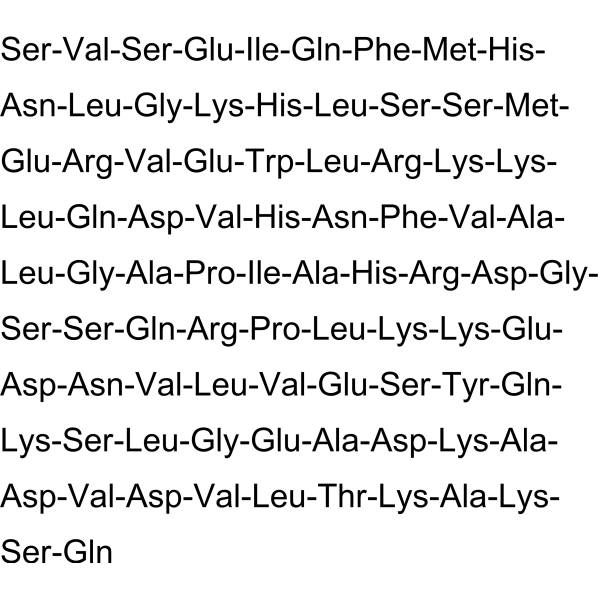
pTH (1-84) dog is a biologically active full-length canine parathyroid hormone, as well as an agonist of PTHR. pTH (1-84) dog can be detected by the "intact" PTH (W-PTH) assay, thus effectively distinguishing inactive C-terminal fragments. In terms of metabolic regulation, it rapidly and persistently stimulates hepatic glucose release, hepatic alanine uptake, and alanine-based gluconeogenesis in conscious fasted dogs, and causes a secondary increase in circulating canine insulin levels due to enhanced glucose release. However, high doses of pTH (1-84) (dog) may induce adverse reactions such as hypercalcemia in dogs. Based on the above characteristics, this hormone can be widely used in studies related to canine hyperadrenocorticism (HAC) .
loading...
    loading...
Cat. No.: HY-W040430R
CAS No.: 494-97-3
(S)-Nornicotine (Standard) is the analytical standard of (S)-Nornicotine (HY-W040430). This product is intended for research and analytical applications. (S)-Nornicotine is a nicotine metabolite that crosses the blood-brain barrier. (S)-Nornicotine weakly inhibits human CYP2A6 with a Ki >300 μM. (S)-Nornicotine promotes dopamine release in rat striatal and nucleus accumbens slices and increases endogenous DOPAC overflow through a calcium-dependent nAChR pathway that is sensitive to Mecamylamine (HY-B1395A). (S)-Nornicotine reduces behavioral responses maintained by nicotine or sucrose, exerts analgesic effects in persistent inflammatory pain and neuropathic pain models, and enhances the analgesic effect of morphine. (S)-Nornicotine is useful for research on tobacco dependence and pain .
loading...
    loading...
Cat. No.: HY-W116336D
CAS No.: 1314-13-2
Zinc oxide, <100 nm particle size is a nitrate reductase modulator and growth promoter with plant stress resistance activity and oral toxicity. Zinc oxide, <100 nm particle size acts as a nutrient source for maize plants. By enhancing nitrate reductase activity and reducing free proline levels, it significantly improves plant height, root length and dry matter weight of maize, and its growth-promoting effect is comparable to that of traditional zinc sulfate fertilizer. Zinc oxide, <100 nm particle size induces anemia-related and persistent tissue inflammatory damage, leading to obvious histopathological adverse reactions in the stomach, pancreas, eyes and prostate of rats. Zinc oxide, <100 nm particle size acts as a non-toxic antibacterial agent and selective cytotoxin against multiple bacteria, fungi and spores .
loading...
    loading...
Cat. No.: HY-170824
CAS No.: 3033586-31-8
Target:  

PROTACs SWI/SNF Complex

Research Areas:  

Cancer

SMD-3236 is a SMARCA2 PROTAC degrader with a DC50 of 0.5 nM, a Dmax of 98%, and an IC50 of 42.2 nM against human SMARCA2. SMD-3236 induces proteasome- and ubiquitin-like modification-dependent degradation of SMARCA2 protein by binding to SMARCA2 and VHL-1. SMD-3236 inhibits the growth of SMARCA4-deficient cancer cells. SMD-3236 induces significant and persistent depletion of SMARCA2 in tumor tissues. SMD-3236 suppresses tumor growth in SMARCA4-deficient human cancer xenograft models. SMD-3236 can be used in research related to SMARCA4-deficient cancers such as melanoma, non-small cell lung cancer, and acute myeloid leukemia .
loading...
    loading...
Cat. No.: HY-182365
EED-IN-4 is an orally active, EZH2-selective immunomodulator and EED-H3K27me3 inhibitor (EED, IC50=28.21 nM) with anti-inflammatory activity. In mouse models, EED-IN-4 preferentially and persistently accumulates in lymph nodes after oral administration. By reducing the H3K27me3 level of dendritic cells and inhibiting their migration, EED-IN-4 reduces the infiltration of immune cells into the central nervous system and effectively alleviates spinal cord inflammation. EED-IN-4 shows weak inhibitory activity against hERG channels and is non-mutagenic, with no obvious toxicity observed upon long-term oral administration. EED-IN-4 can be used for the research of multiple sclerosis .
loading...
    loading...
Cat. No.: HY-W017500
CAS No.: 17833-53-3
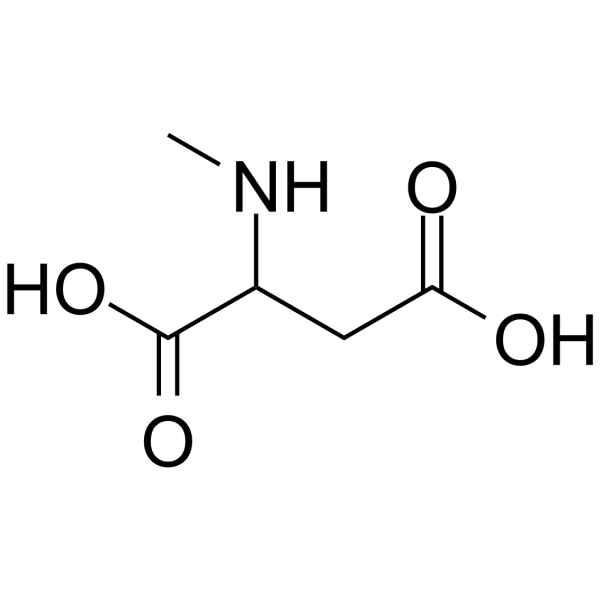
N-Methyl-DL-aspartic acid acts as an agonist for N-methyl-D-aspartic acid receptors and D-isomer-specific aspartate receptors. N-Methyl-DL-aspartic acid activates hypothalamic neurons that regulate gonadotropin-releasing hormone secretion, and stimulates prepubertal male rhesus monkeys to produce sustained intermittent gonadotropin-releasing hormone secretion and pulsatile luteinizing hormone secretion. N-Methyl-DL-aspartic acid activates excitatory effects mediated by N-methyl-D-aspartic acid receptors. N-Methyl-DL-aspartic acid exhibits convulsant effects, inducing clonic convulsions with loss of righting reflex, generalized tonic-clonic seizures or persistent clonic seizures. N-Methyl-DL-aspartic acid causes precocious puberty. N-Methyl-DL-aspartic acid can be used in studies related to convulsions and seizures .
loading...
    loading...
Cat. No.: HY-Y0308D
CAS No.: 7558-79-4
Synonyms: Disodium hydrogen phosphate, meets analytical specification of Ph. Eur. BP USP FCC E339
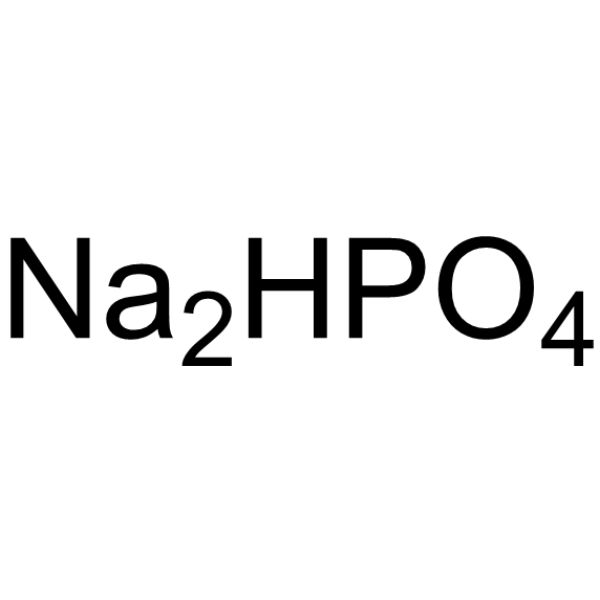
Sodium phosphate dibasic (Disodium hydrogen phosphate), meets analytical specification of Ph. Eur. BP USP FCC E339 is an inorganic dibasic phosphate that functions as an electrolyte supplement, a buffer carrier for injectable drugs, while also exhibiting nephrotoxicity. Sodium phosphate dibasic, meets analytical specification of Ph. Eur. BP USP FCC E339 induces extensive nephrotic syndrome-like changes, including systemic symptoms such as persistent proteinuria, lipemia, hypercholesterolemia, and anemia, and causes severe renal pathological alterations such as renal enlargement, glomerular calcification, podocyte injury, and tubulointerstitial lesions. Sodium phosphate dibasic, meets analytical specification of Ph. Eur. BP USP FCC E339 has the ability to induce phosphate-induced nephropathy and glomerular calcification, and can be widely used in studies on nephrotic syndrome and related renal pathological mechanisms .
loading...
    loading...
Cat. No.: HY-L210
2,023 compounds

Rheumatoid Arthritis (RA) is a autoimmune disease characterized by persistent joint inflammation. The pathology of RA includes immune cell infiltration, synovial lining proliferation, pannus formation, and the destruction of joint cartilage and bone, which is highly disabling. Due to long-term chronic inflammation, RA not only severely affects the quality of life of patients but can also damage multiple organs, leading to lung diseases, cardiovascular diseases, and malignant tumors. The pathogenesis of RA is complex, involving genetic, environmental, and immune factors. With the advancement of high-throughput screening technology, screening for compounds targeting JAK, CCR, MEK, MMP targets may contribute to the development of more effective drugs against Rheumatoid Arthritis (RA).

MCE has collected 2,023 small molecule compounds with definite or potential anti-rheumatoid arthritis activity. This library is of significant value for researching the anti-RA drugs.

