
128 Results for "

prenatal fluoride-induced persistent hyper-osteogenesis

" in MedChemExpress (MCE) Product Catalog:
Products (128)

128 Results for "prenatal fluoride-induced persistent hyper-osteogenesis" in MCE Product Catalog:

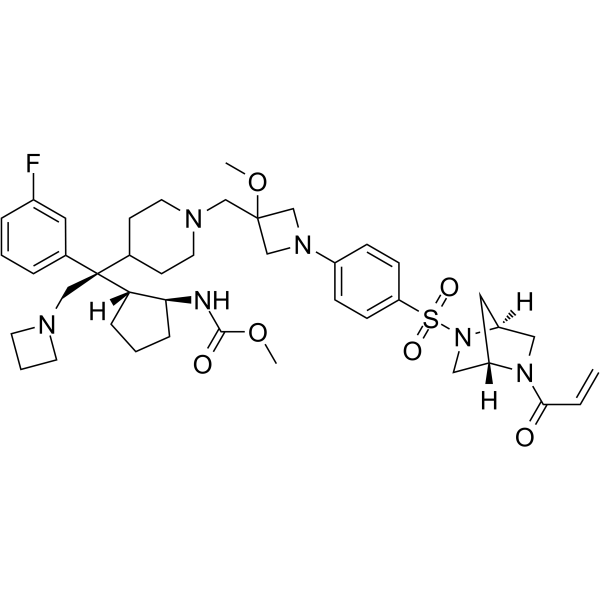
Cat. No.: HY-132234
CAS No.: 2377337-93-2
Purity:  99.29%
Research Areas:  

Cancer

M‑1121 is a covalent and orally active inhibitor of the menin-MLL interaction capable of achieving complete and persistent tumor regression .
loading...
    loading...
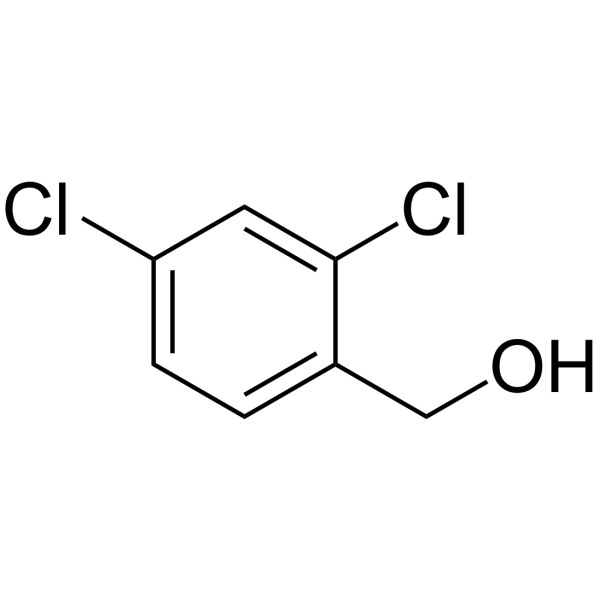
Cat. No.: HY-W039454
CAS No.: 1777-82-8
Research Areas:  

Infection

2,4-Dichlorobenzyl alcohol is an orally active mild antiseptic, with a broad spectrum for bacterial and virus associated with mouth and throat infections. 2,4-Dichlorobenzyl alcohol exhibits prenatal developmental toxicity.2,4-Dichlorobenzyl alcohol can be used in the study of SARS-CoV .
loading...
    loading...
Cat. No.: HY-W099689
CAS No.: 589-98-0
3-Octanol is a fragrance ingredient. 3-octanol not to be persistent, bioaccumulative, and toxic .
loading...
    loading...
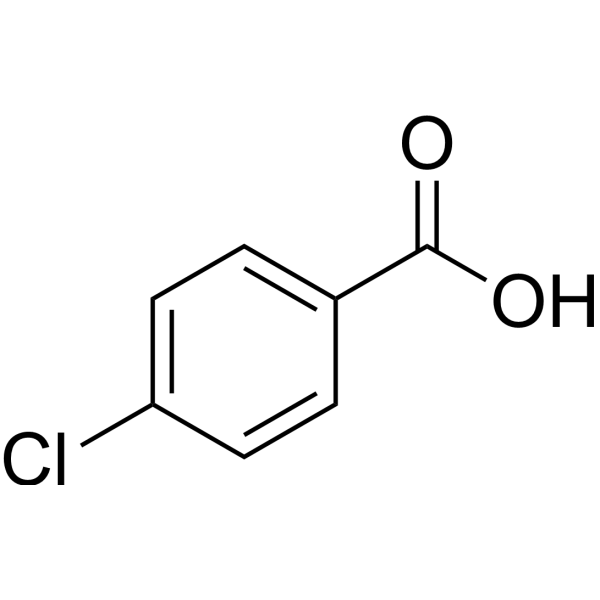
Cat. No.: HY-41465
CAS No.: 74-11-3
4-Chlorobenzoic acid is a halogenated aromatic compound that can be used as an industrial chemical and an intermediate in drug synthesis. 4-Chlorobenzoic acid is a persistent organic micropollutant and can be biodegraded through a direct dehalogenation pathway .
loading...
    loading...
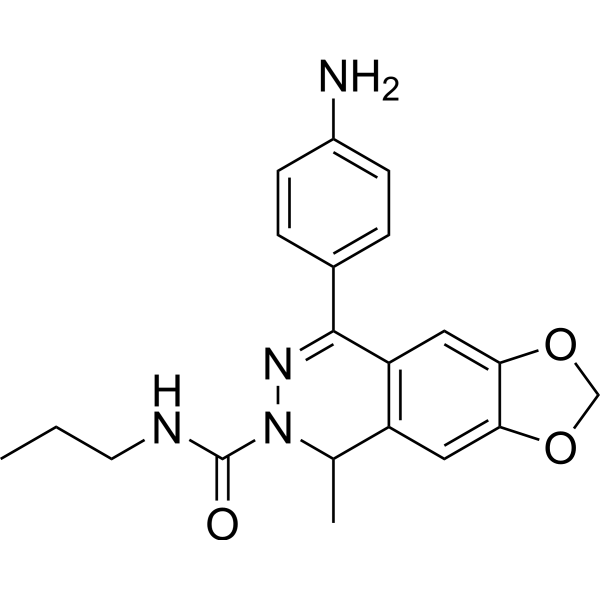
Cat. No.: HY-45509
CAS No.: 1208070-53-4
Synonyms: RAD150
Target:  

Androgen Receptor

Research Areas:  

Neurological Disease

TLB 150 Benzoate (RAD150) is a nonsteroidal androgen receptor modulator with an IC50 value of 0.13 μM. TLB 150 Benzoate spontaneously cyclizes under physiological conditions to form RAD 179, resulting in a persistent, reversible, and slow neuronal conduction blockade. TLB 150 Benzoate can be used for research on neurological diseases .
loading...
    loading...
Cat. No.: HY-W679754
CAS No.: 72629-94-8
Synonyms: PFTrDA
Pentacosafluorotridecanoic Acid (PFTrDA) is a long-chain perfluoroalkyl carboxylic acid with strong endocrine-disrupting activity. Pentacosafluorotridecanoic Acid exhibits estrogenic effects and disrupts vtg1 transcription as well as sex hormone homeostasis in male Danio rerio. Pentacosafluorotridecanoic Acid disturbs steroidogenesis and HPG axis function in a sex-dependent pattern. Pentacosafluorotridecanoic Acid inhibits CYP17A and CYP11A1 to reduce testosterone and increase E2/T ratio in H295R cells. Pentacosafluorotridecanoic Acid triggers gender-specific immunomodulation after prenatal exposure. Pentacosafluorotridecanoic Acid correlates with lower eczema risk in female infants. Pentacosafluorotridecanoic Acid can be used for the research of endocrine disruption and eczema .
loading...
    loading...
Cat. No.: HY-18689
CAS No.: 173952-44-8
Target:  

iGluR

Research Areas:  

Neurological Disease

SYM2206 is a potent and non-competitive AMPA receptor antagonist, with an IC50 of 1.6 μM. SYM2206 blocks Nav1.6-mediated persistent currents .
loading...
    loading...
Cat. No.: HY-129683
CAS No.: 213182-22-0
Purity:  ≥98.0%
Target:  

PPAR

Research Areas:  

Metabolic Disease

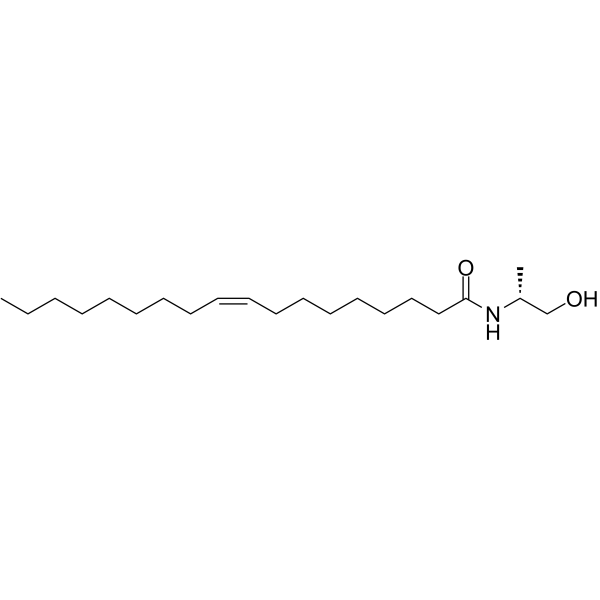
AM3102 is an oleoylethanolamide (OEA) analog. AM3102 is an endogenous high-affinity PPAR-alpha agonist. AM3102 resists enzymatic hydrolysis, activates PPAR-alpha with high potency in vitro, and persistently reduces feeding when administered in vivo either parenterally or orally .
loading...
    loading...
Cat. No.: HY-164793
CAS No.: 733806-89-8
Research Areas:  

Infection

TGFBR1-IN-2 (Compound AQA) is a TGFBR1 inhibitor and an antibacterial agent. TGFBR1-IN-2 is a substrate for cytochrome P450s. TGFBR1-IN-2 contains the pyridyl-6-methyl moiety necessary for Mycobacterium tuberculosis inhibition and has potent inhibitory activity against non-replicating and persistent Mycobacterium tuberculosis .
loading...
    loading...
Cat. No.: HY-13636A
CAS No.: 1316849-17-8
Synonyms: ICI 182780 (S enantiomer); ZD 9238 (S enantiomer); ZM 182780 (S enantiomer)
Research Areas:  

Cancer

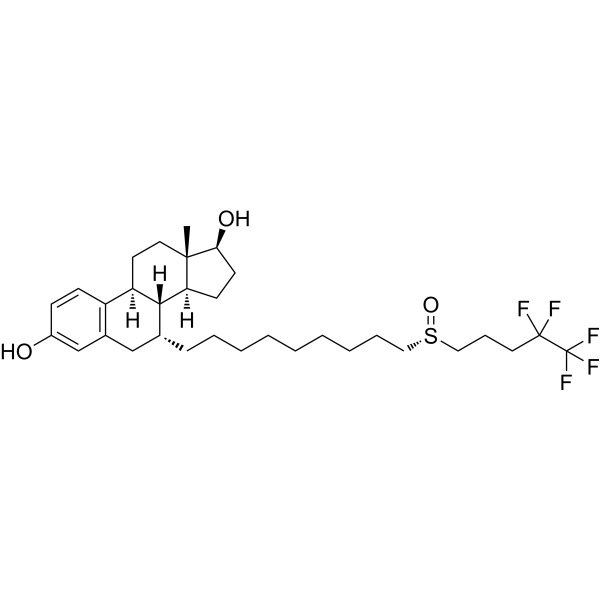
Fulvestrant (ICI 182780; ZD 9238) S enantiomer is the S-enantiomer of Fulvestrant (HY-13636), a potent estrogen receptor inhibitor. Fulvestrant binds to and blocks the estrogen receptor, promotes its degradation, and thereby inhibits receptor dimerization, nucleocytoplasmic shuttling and transcriptional activity. Fulvestrant effectively blocks estrogen signaling, MAPK pathway activation and ER-regulated protein expression. Fulvestrant induces apoptosis, inhibits the proliferation of breast cancer and prolactinoma cells, and reduces the mineralization level, alkaline phosphatase activity and osteocalcin expression of preosteoblasts. Prenatal exposure to Fulvestrant impairs ovarian follicular development and causes ovarian structural damage. Fulvestrant has been widely used in studies related to breast cancer, prolactinoma and other conditions .
loading...
    loading...
Cat. No.: HY-W040430
CAS No.: 494-97-3
(S)-Nornicotine is a nicotine metabolite that crosses the blood-brain barrier. (S)-Nornicotine weakly inhibits human CYP2A6 with a Ki >300 μM. (S)-Nornicotine promotes dopamine release in rat striatal and nucleus accumbens slices and increases endogenous DOPAC overflow through a calcium-dependent nAChR pathway that is sensitive to Mecamylamine (HY-B1395A). (S)-Nornicotine reduces behavioral responses maintained by nicotine or sucrose, exerts analgesic effects in persistent inflammatory pain and neuropathic pain models, and enhances the analgesic effect of morphine. (S)-Nornicotine is useful for research on tobacco dependence and pain .
loading...
    loading...
Cat. No.: HY-108569
CAS No.: 118414-59-8
Purity:  ≥98.0%
Target:  

Antibiotic Bacterial PPAR

Research Areas:  

Infection

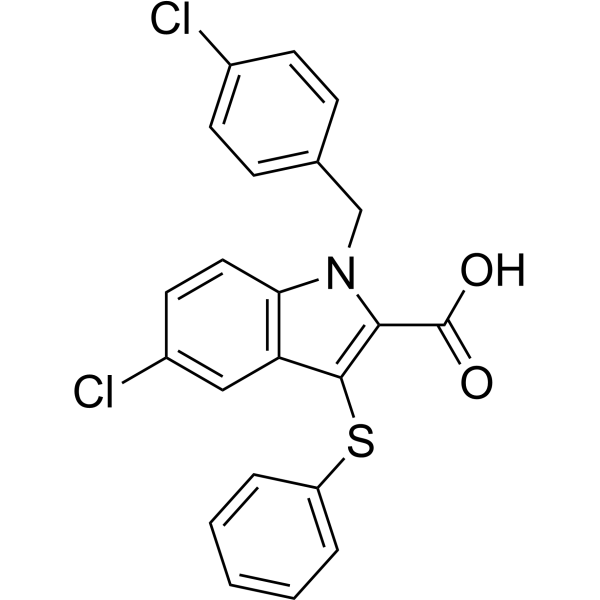
nTZDpa is an antibiotic. nTZDpa is a PPARG partial agonist. nTZDpa has antibacterial activity. nTZDpa is effective against growing and persistent Staphylococcus aureus by lipid bilayer disruption .
loading...
    loading...
Cat. No.: HY-144820
CAS No.: 130727-21-8
Purity:  98.49%
Research Areas:  

Infection

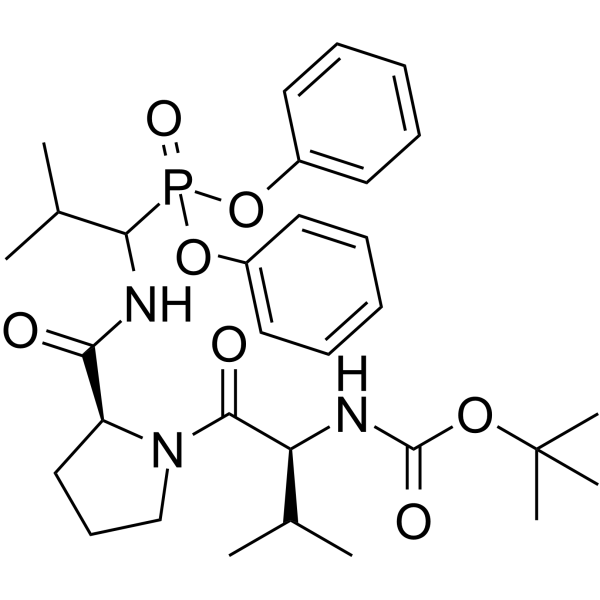
JO146 is an anti-chlamydial agent, Antibacterial agent, and CtHtrA serine protease inhibitor, with an IC50 of 21.86 μM against CtHtrA serine protease. JO146 alters the morphology of chlamydial cells, reduces inclusion vacuoles, decreases the number of infectious progeny, and eliminates viable Chlamydia trachomatis under stress or conditions that reverse persistent infection. JO146 shows no activity against Escherichia coli, Pseudomonas aeruginosa, and Staphylococcus aureus, but exhibits bactericidal activity against Helicobacter pylori. JO146 can be used in research related to Chlamydia trachomatis infection, chlamydial infection in cattle and sheep, and Helicobacter pylori infection .
loading...
    loading...
Cat. No.: HY-13570B
CAS No.: 987-24-6
Purity:  99.38%
Research Areas:  

Others

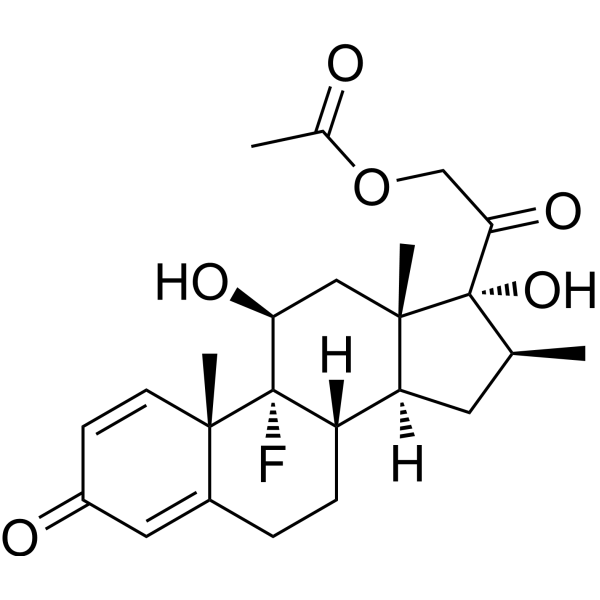
Betamethasone acetate is a glucocorticoid with prenatal application for preventing respiratory distress syndrome (RDS) in premature infants. Betamethasone acetate exhibits dose-dependent effects on somatic and brain development in offspring when administered prenatally to pregnant rats. Betamethasone acetate can be used for the study of antenatal intervention .
loading...
    loading...
Cat. No.: HY-118387
CAS No.: 498577-53-0
Target:  

Potassium Channel

Research Areas:  

Cardiovascular Disease

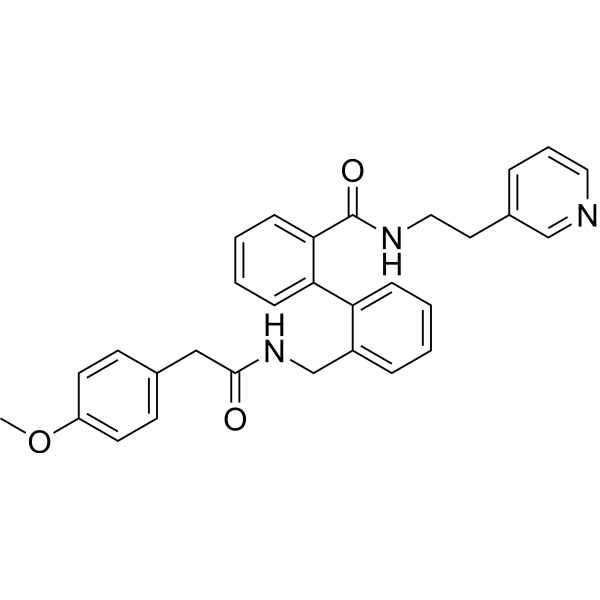
AVE-0118 is a Kv1.5 potassium channel blocker and antiarrhythmic agent. AVE-0118 blocks neuronal Kv1.5 potassium channels, thereby enhancing the release of norepinephrine. AVE-0118 enhances field stimulation-induced neurogenic contraction, an effect sensitive to α1-adrenergic receptor blockade. AVE-0118 terminates persistent atrial fibrillation in some dogs. AVE-0118 is applicable to research related to atrial fibrillation and persistent atrial fibrillation .
loading...
    loading...
Cat. No.: HY-B2058
CAS No.: 131983-72-7
Research Areas:  

Infection

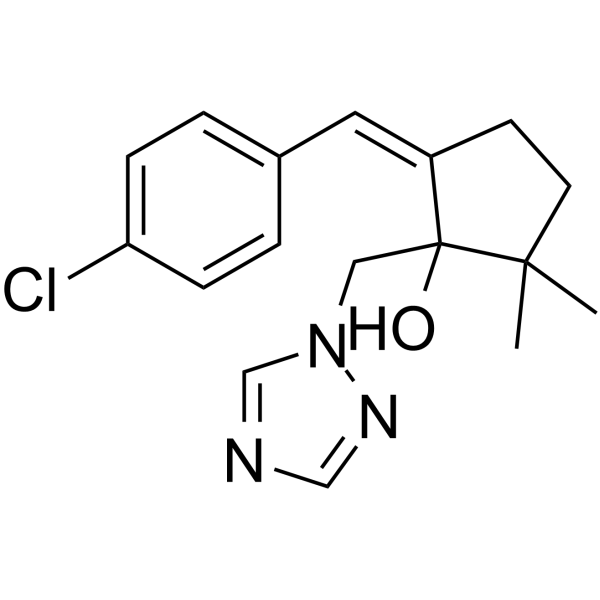
Triticonazole is an orally active triazole fungicide and androgen receptor antagonist. Triticonazole inhibits testosterone-induced androgen receptor activation and reduces basal testosterone secretion. Prenatal exposure to Triticonazole causes shortened anogenital distance in male rat fetuses and induces organ-specific histopathological changes in pigs. Triticonazole can be used for detoxification of seeds contaminated with fungal pathogens, but there is a risk of animal poisoning if the treated seeds are used as animal feed .
loading...
    loading...
Cat. No.: HY-19463A
CAS No.: 470454-73-0
Target:  

Sodium Channel

Research Areas:  

Cardiovascular Disease

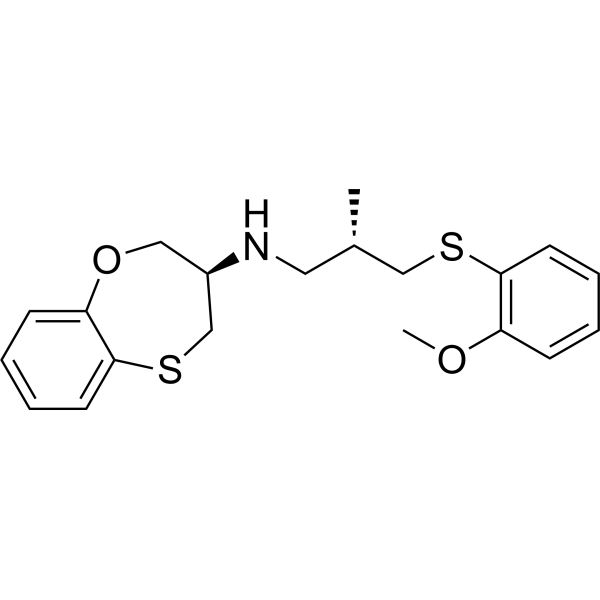
F 15845 is a highly effective persistent sodium current blocker. F 15845 also is a cardioprotective agent, has anti-ischemic activity and exerts short- and long-term cardioprotection after myocardial infarction. F 15845 can be used for the research of myocardium functional impairment .
loading...
    loading...
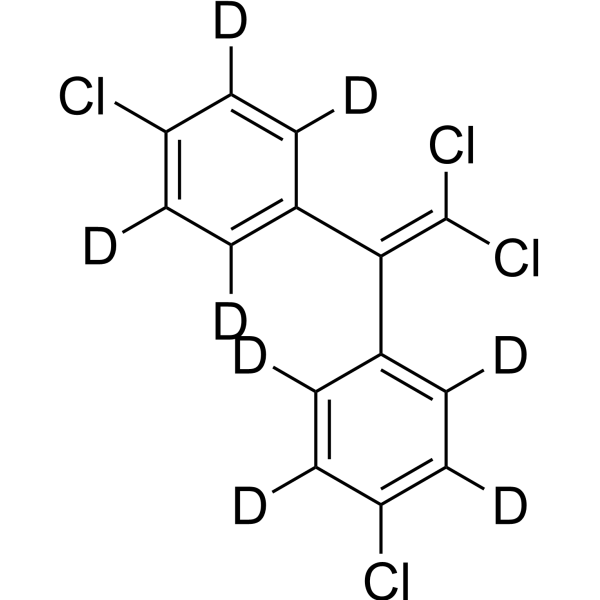
Cat. No.: HY-B1986S
CAS No.: 93952-19-3
Synonyms: 4,4'-DDE-d8; p,p'-Dichlorodiphenyldichloroethylene-d8
p,p'-DDE-d8 is the deuterium labeled p,p'-DDE . p,p'-DDE (4,4'-DDE), a major metabolite of persistent dichlorodiphenyltrichloroethane (DDT), is a potent androgen receptor antagonist, with an IC50 of 5 μM and a Ki of 3.5 μM .
loading...
    loading...
Cat. No.: HY-19463
CAS No.: 866760-23-8
Target:  

Sodium Channel

Research Areas:  

Cardiovascular Disease

F 15845 hydrobromide is a highly effective persistent sodium current blocker. F 15845 hydrobromide is also a cardioprotective agent, has anti-ischemic activity and exerts short- and long-term cardioprotection after myocardial infarction. F 15845 hydrobromide can be used for the research of myocardium functional impairment .
loading...
    loading...
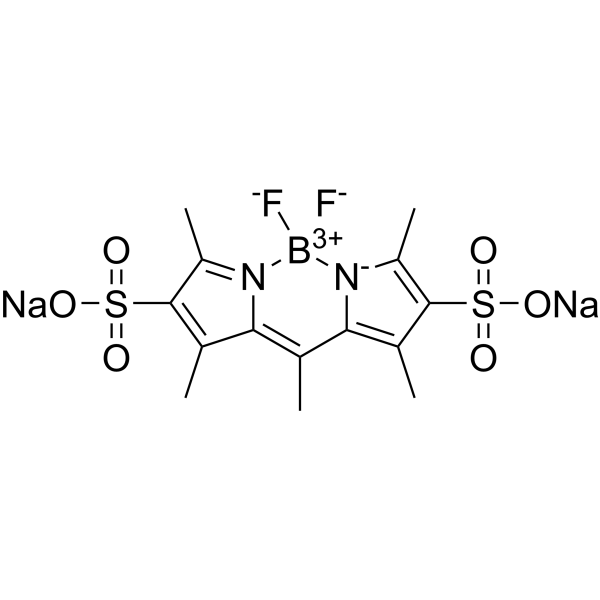
Cat. No.: HY-W248118
CAS No.: 121461-69-6
Synonyms: PM556
Target:  

Fluorescent Dye

Research Areas:  

Others

Pyrromethene 556 (PM556) is a fluorescent dipyrromethene-BF2 complex laser dye. Pyrromethene 556 enables immediate and reversible color changes in conventional glass ionomer restorative materials, while it does not cause persistent, visually detectable color changes in other restorative materials .
loading...
    loading...

