
169 Results for "

Fatty Acid Synthesis

" in MedChemExpress (MCE) Product Catalog:
Products (169)

169 Results for "Fatty Acid Synthesis" in MCE Product Catalog:

Cat. No.: HY-119633
CAS No.: 37924-13-3
Research Areas:  

Others

Perfluidone is a selective 3-ketoacyl-CoA synthase (KCS) inhibitor with IC50s of 0.21 and 7.60 μM for CER6 (KCS6) and FAE1 (KCS18), respectively. Perfluidone significantly inhibits very-long-chain fatty acid (VLCFA) synthesis. Perfluidone has phytotoxic activity and inhibits Lemna paucicostata growth. Perfluidone can be uses as a plant growth regulator and herbicide for agriculture research .
loading...
    loading...
Cat. No.: HY-136373R
CAS No.: 67129-08-2
Synonyms: BAS 479H (Standard)
Metazachlor (Standard) (BAS 479H (Standard)) is the analytical standard of Metazachlor (HY-136373). This product is intended for research and analytical applications. Metazachlor (BAS 479H) is a herbicide belonging to the chloroacetamides class. Metazachlor can inhibit the synthesis of very long chain fatty acids during the germination and emergence of weed seeds, thereby interfering with cell division and tissue differentiation, and thus hindering the normal growth and development of weeds .
loading...
    loading...
Cat. No.: HY-136373S
CAS No.: 1246816-51-2
Synonyms: BAS 479H-d6
Metazachlor-d6 (BAS 479H-d6) is a deuterium labeled Metazachlor (HY-136373). Metazachlor (BAS 479H) is a herbicide belonging to the chloroacetamides class. Metazachlor can inhibit the synthesis of very long chain fatty acids during the germination and emergence of weed seeds, thereby interfering with cell division and tissue differentiation, and thus hindering the normal growth and development of weeds .
loading...
    loading...
Cat. No.: HY-148869
CAS No.: 5060-32-2
Synonyms: R-Hexanoyl-CoA; R-Hexanoyl coenzyme A
Hexanoyl coenzyme A is a short-chain fatty acyl-CoA thioester. Hexanoyl coenzyme A competes with butyryl-CoA to abolish the dehydrogenation effect of medium-chain acyl-CoA dehydrogenase on butyryl-CoA, and does not serve as a substrate for short-chain acyl-CoA dehydrogenase. Hexanoyl coenzyme A acts as a biosynthetic precursor for the synthesis of olivetolic acid and cannabinoids. Hexanoyl coenzyme A is applicable to research related to short-chain acyl-CoA dehydrogenase deficiency .
loading...
    loading...
Cat. No.: HY-W105359
CAS No.: 13019-22-2
Synonyms: ω-Decen-1-ol
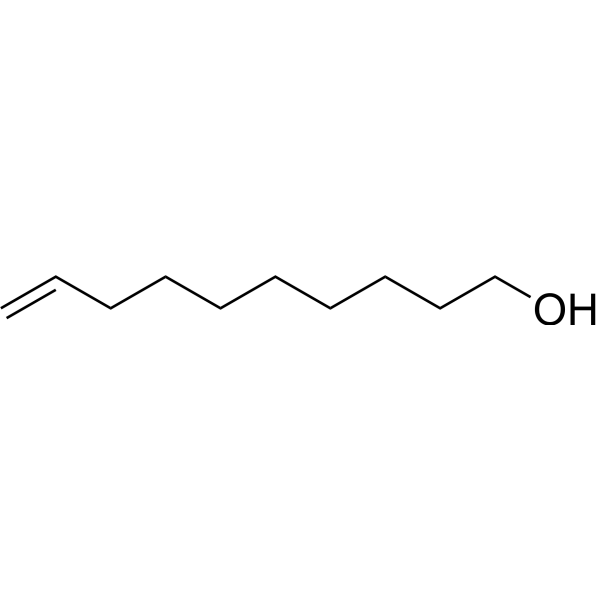
9-Decen-1-ol has a fatty odour. This compound is used in the flavor and fragrance industry for its pleasant smell, which is often described as sweet, floral and fruity. It can also be used as an intermediate in the synthesis of various organic compounds, including medicine, agricultural chemicals and polymer materials. Its unique chemical properties make it an important ingredient in many commercial products, including soaps, detergents and cosmetics.
loading...
    loading...
Cat. No.: HY-111071
CAS No.: 934628-27-0
Purity:  99.58%
Synonyms: CG-400549
Target:  

Antibiotic Bacterial

Research Areas:  

Infection

Nilofabicin (CG-400549) is an anti-bacterialagent that targets FabI. Nilofabicin shows high selectivity for the genus Staphylococcus and weak activity against most Gram-negative bacteria. Nilofabicin inhibits bacterial fatty acid biosynthesis, blocks phospholipid synthesis, and disrupts the structure of bacterial cell membranes. Nilofabicin exhibits in vivo antibacterial efficacy in a mouse model of systemic Staphylococcus aureus infection. Nilofabicin can be used in studies related to bacterial infections .
loading...
    loading...
Cat. No.: HY-113120
CAS No.: 20290-75-9
Purity:  ≥98.0%
Synonyms: 6Z,9Z,12Z,15Z-Octadecatetraenoic Acid
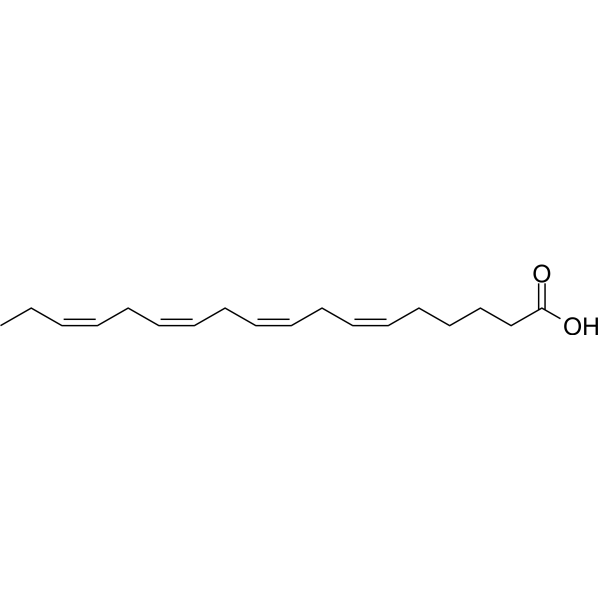
Stearidonic acid (6Z,9Z,12Z,15Z-Octadecatetraenoic acid) is an orally active polyunsaturated fatty acid found in blackcurrant seed oil. Stearidonic acid can inhibit 5-lipoxygenase and reduce leukotriene and 5-HETE synthesis. Stearidonic acid can increase the content of eicosapentaenoic acid (EPA) in red blood cells. Stearidonic acid can be used for the research of metabolic disease .
loading...
    loading...
Cat. No.: HY-113353
CAS No.: 583-08-4
Purity:  99.93%
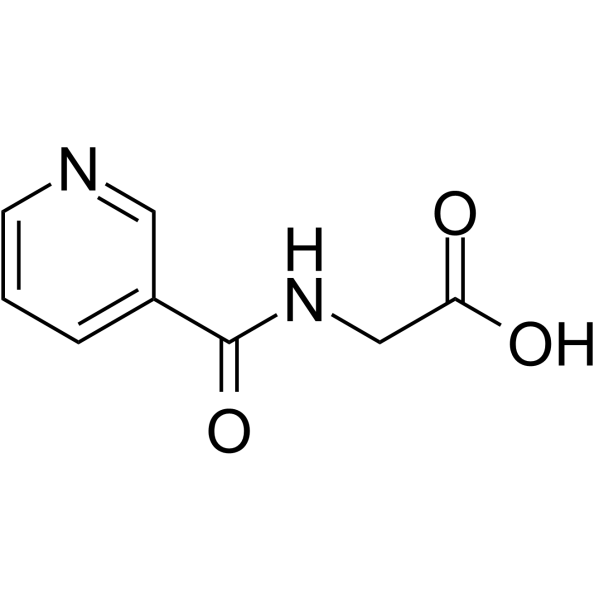
Nicotinuric acid is an acylglycine and the major catabolite of nicotinic acid (HY-B0143). Its urinary levels correlate with body mass index, blood pressure, blood lipid parameters, and high-sensitivity C-reactive protein. Nicotinuric acid participates in coenzyme-related activities including glycolysis, gluconeogenesis, the citric acid cycle, oxidation, and long-chain fatty acid synthesis in various tissues. Nicotinuric acid is associated with the progression of metabolic syndrome to diabetes and atherosclerotic cardiovascular disease [1]
loading...
    loading...
Cat. No.: HY-P2989
CAS No.: 9014-19-1
Target:  

Endogenous Metabolite

Research Areas:  

Metabolic Disease Cancer

Pyruvate carboxylase is a key mitochondrial anaplerotic enzyme that catalyzes the conversion of pyruvate to oxaloacetate. Pyruvate carboxylase not only maintains tricarboxylic acid cycle activity and redox homeostasis, but also drives hepatic gluconeogenesis and fatty acid synthesis. The activity of Pyruvate carboxylase is upregulated in insulin-resistant states, exacerbating hepatic glucose production. Pyruvate carboxylase also shows significantly enhanced expression in early-stage non-small cell lung cancer (NSCLC). Pyruvate carboxylase promotes tumor proliferation by supporting nucleotide and lipid synthesis, and its functional deficiency cannot be compensated by glutaminolysis. Pyruvate carboxylase can be used in the research of prediabetes type 2 and NSCLC .
loading...
    loading...
Cat. No.: HY-122643
CAS No.: 1614262-83-7
Purity:  99.83%
Target:  

Bacterial

Research Areas:  

Infection

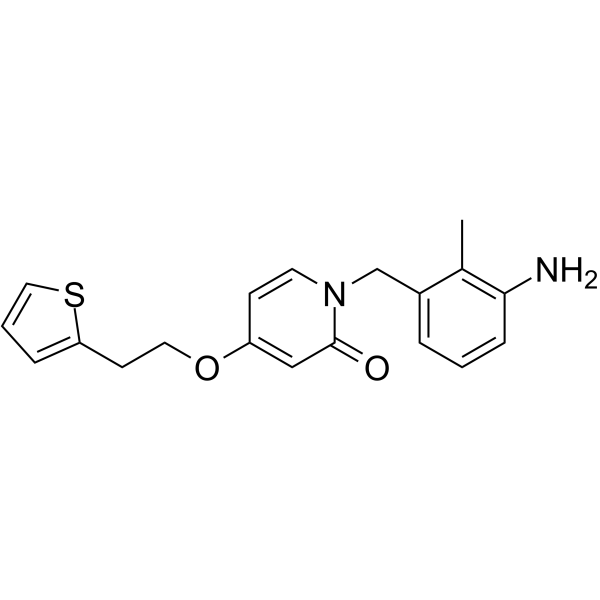
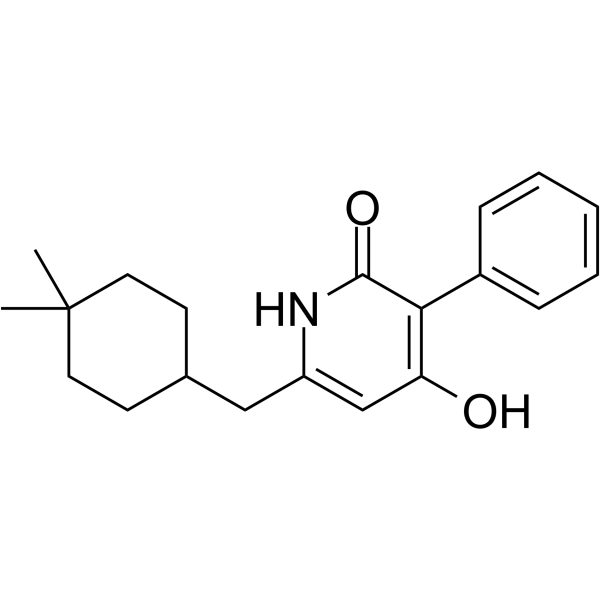
NITD-916, a 4-hydroxy-2-pyridone derivative, is an orally active mycobacterial enoyl reductase InhA inhibitor with an IC50 of 570 nM. NITD-916 forms a ternary complex with InhA and NADH to block access to the fatty acyl substrate binding pocket. NITD-916 inhibition of InhA reduces the synthesis of mycolic acids and results in cell death. NITD-916 has potent anti-tuberculosis effects .
loading...
    loading...
Cat. No.: HY-125507
CAS No.: 306733-22-2
Target:  

MMP

Research Areas:  

Metabolic Disease

F81-1144b is a MMP-1 and MMP-3 inhibitor with IC50 values of 5 nM and 29 nM, respectively. F81-1144b reduces serum and hepatic triacylglycerol levels, decreases the secretion of very-low-density lipoprotein-triacylglycerol, inhibits de novo hepatic fatty acid synthesis, and lowers serum insulin and glucose levels. F81-1144b can be used for the research of hypertriglyceridemia .
loading...
    loading...
Cat. No.: HY-131701
CAS No.: 109785-20-8
Synonyms: C18 Lactosyl(β) Ceramide; Lactosyl Sphingosine; Lyso-Lactosylceramide (synthetic)
Target:  

Endogenous Metabolite

Research Areas:  

Metabolic Disease

Lactosyl-C18-sphingosine (C18 Lactosyl(β) Ceramide; Lactosyl Sphingosine) is a bioactive sphingolipid that is a form of lactosylceramide but lacks the fatty acyl group. Lysolactosylceramide (1-50 μM) reduces the viability of human neutrophils in a concentration-dependent manner. Unlike lactosylceramide, Lactosyl-C18-sphingosine has no effect on protein synthesis and cell proliferation in cardiomyocytes. Lactosyl-C18-sphingosine is a lysoganglioside GM3.
loading...
    loading...
Cat. No.: HY-158575
CAS No.: 2649103-52-4
Synonyms: 14(Z),17(Z),20(Z),23(Z),26(Z),29(Z)-Dotriacontahexaenol
Target:  

Drug Intermediate

Research Areas:  

Others

all-cis-14,17,20,23,26,29-Dotriacontahexaenol (14(Z),17(Z),20(Z),23(Z),26(Z),29(Z)-Dotriacontahexaenol) is a long-chain fatty alcohol. It is an intermediate in the synthesis of the very long-chain PUFA all-cis-14,17,20,23,26,29-dotriacontahexaenoic acid .
loading...
    loading...
Cat. No.: HY-160912
CAS No.: 1135000-36-0
Target:  

ELOVL

Research Areas:  

Metabolic Disease

ELOVL6-IN-5 is an orally active and selective elongase enzyme of long-chain fatty acid family 6 (ELOVL6) inhibitor with IC50 values of 85 nM and 38 nM for human and mouse ELOVL6, respectively. ELOVL6-IN-5 shows >60-fold selectivity over other ELOVL family enzymes (ELOVL1, 2, 3, 5) and no effect on other lipid synthesis enzymes like ACC1, ACC2. ELOVL6-IN-5 reduces hepatic fatty acid composition ratio of C18 to C16 in diet-induced obesity (DIO) and KKAy mice. ELOVL6 inhibition by ELOVL6-IN-5 does not improve insulin resistance. ELOVL6-IN-5 can be used for the research of metabolic disease .
loading...
    loading...
Cat. No.: HY-113202S
CAS No.: 1021439-31-5
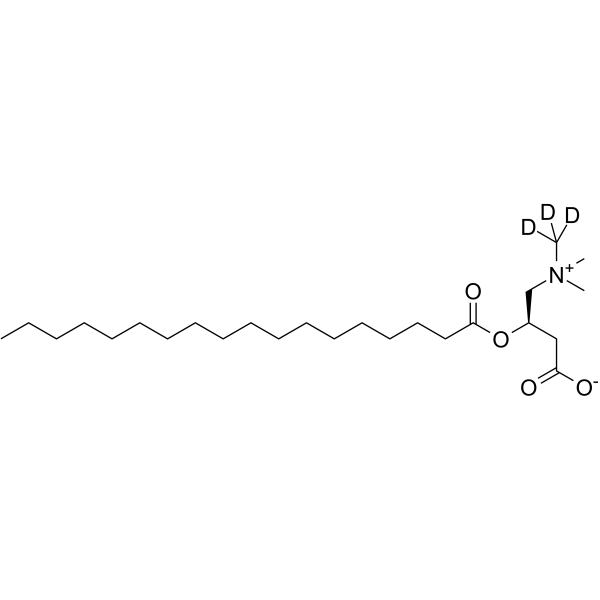
Stearoyl-L-carnitine-d3 is the deuterium labeled Stearoylcarnitine. Stearoylcarnitine, a fatty ester lipid molecule, is an endogenous metabolite. Stearoylcarnitine can be used as PKC inhibitor. Stearoylcarnitine accumulates in β cells, leading to arrest of insulin synthesis and energy deficiency in type 2 diabetes mouse. Stearoylcarnitine inhibits lecithin cholesterol acyltransferase (LCAT) in rat and rabbits plasma. Stearoylcarnitine acts as a metabolomics biomarker for Parkinson’s disease. Stearoylcarnitine is a less potent inhibitor of GlyT2 .
loading...
    loading...
Cat. No.: HY-127055
CAS No.: 6964-20-1
Target:  

Apolipoprotein

Research Areas:  

Metabolic Disease

Tiadenol is an orally effective lipid-lowering compound and peroxisome proliferator. Tiadenol promotes peroxisome-associated fatty acid metabolism, and its induction of the activities of enzymes such as palmitoyl-CoA hydrolase, carnitine acetyl-transferase and catalase is mainly associated with de novo protein synthesis. The triglyceride-lowering effect of Tiadenol is not accompanied by increased activities of lipoprotein lipase (LPL) and hepatic lipase (HL), and it reduces VLDL Apo E. Tiadenol can be used in studies related to lipid metabolism, peroxisome proliferation and hyperlipoproteinemia .
loading...
    loading...
Cat. No.: HY-183279
Target:  

FXR AMPK

Research Areas:  

Metabolic Disease

FXR antagonist 4 (Compound 4l) is an orally active, selective FXR antagonist with an IC50 of 0.70 μM. FXR antagonist 4 binds to FXR, differentially regulates bile acid and lipid transporter genes, and exerts no effect on gluconeogenesis-related genes. FXR modulator 1 activates the AMPK signaling pathway to inhibit fatty acid synthesis. FXR modulator 1 alleviates hepatic steatosis, ballooning degeneration and fibrosis, and improves dyslipidemia. FXR modulator 1 can be used for research on metabolic dysfunction-associated steatohepatitis .
loading...
    loading...
Cat. No.: HY-N10220
CAS No.: 125600-53-5
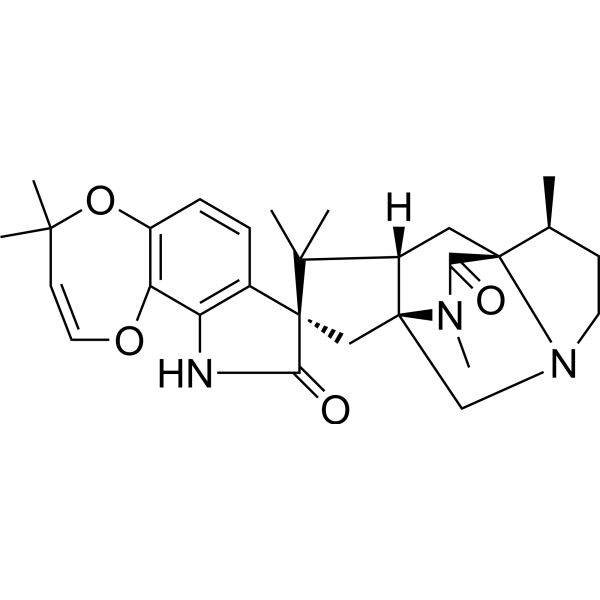
Paraherquamide E is a paraherquamide alkaloid and 14C-deshydroxy paraherquamide analog found in Aspergillus aculeatus GC-147‑5 and Penicillium charlesii, with insecticidal and reproductive toxicant activity, high selectivity, and negligible toxicity to nontarget ladybugs .Paraherquamide E disrupts fatty acid synthesis, inhibits vitellogenin production, alters metabolic homeostasis, induces ovarian abnormalities, and causes Asian citrus psyllid mortality, while remaining inactive against Asian citrus psyllid cholinergic systems .
loading...
    loading...
Cat. No.: HY-Y1139S2
CAS No.: 78629-92-2
Synonyms: Heptanedioic Acid-13C2; 1,5-Pentanedicarboxylic Acid-13C2; 1,7-Heptanedioic Acid--13C2
Pimelic acid- 13C2 (Heptanedioic acid- 13C2) is the 13C-labeled Pimelic acid (HY-Y1139). Pimelic acid (Heptanedioic acid; 1,5-Pentanedicarboxylic acid) is a seven-carbon α,ω-dicarboxylic acid and a downstream product of fatty acid synthesis. Pimelic acid is a key precursor in biotin biosynthesis. Pimelic acid can be converted to pimelic acid-CoA by the BioW enzyme, thereby bypassing exogenous biotin requirements to support growth in various biotinytrophic bacteria and fungi, and reversing antibiotic-induced inhibition of biotin synthesis. Furthermore, Pimelic acid has been proposed as a highly specific biomarker for oxygen-induced retinopathy in mice. Pimelic acid can be used to study retinopathy of preterm infants, oxygen-induced retinopathy, and microbial biotin metabolism .
loading...
    loading...
Cat. No.: HY-113353R
CAS No.: 583-08-4
Nicotinuric acid (Standard) is the analytical standard of Nicotinuric acid (HY-113353). This product is intended for research and analytical applications. Nicotinuric acid is an acylglycine and the major catabolite of nicotinic acid (HY-B0143). Its urinary levels correlate with body mass index, blood pressure, blood lipid parameters, and high-sensitivity C-reactive protein. Nicotinuric acid participates in coenzyme-related activities including glycolysis, gluconeogenesis, the citric acid cycle, oxidation, and long-chain fatty acid synthesis in various tissues. Nicotinuric acid is associated with the progression of metabolic syndrome to diabetes and atherosclerotic cardiovascular disease [1]
loading...
    loading...

