167 Results for "

intercalation

" in MedChemExpress (MCE) Product Catalog:
Products (167)

167 Results for "intercalation" in MCE Product Catalog:

Cat. No.: HY-122462
CAS No.: 171047-47-5
Synonyms: PNU-159548
Target:  

DNA/RNA Synthesis

Research Areas:  

Cancer

Ladirubicin (PNU-159548) is a derivative of Daunorubicin (HY-13062A). Ladirubicin exhibits DNA intercalation and DNA alkylating properties, inhibits DNA replication and transcription, causes DNA damage, and thereby exhibits antitumor efficacy. Ladirubicin exhibits the potential to penetrate the blood-brain barrier (BBB) for its high lipophilicity. Ladirubicin exhibits toxicity through suppression of bone marrow activity .
loading...
    loading...
Cat. No.: HY-146189
CAS No.: 2413901-61-6
Target:  

Topoisomerase Apoptosis

Research Areas:  

Cancer

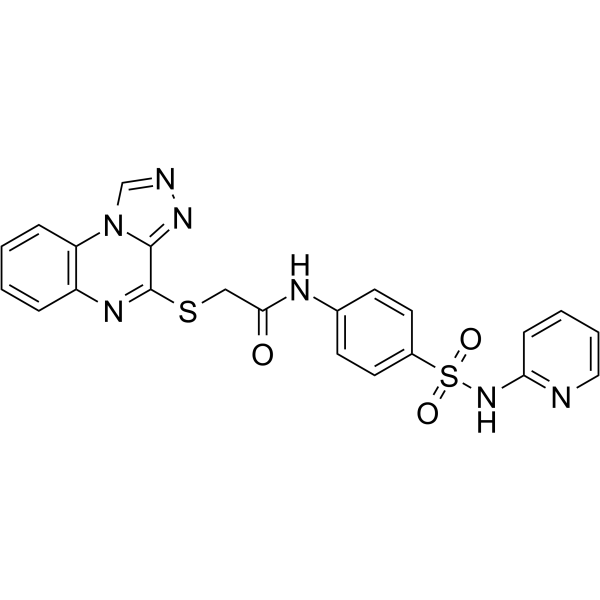
Topoisomerase II inhibitor 9 (Compound 19b) is a Topo II inhibitor with an IC50 of 0.97 μM. Topoisomerase II inhibitor 9 is also a classical DNA-intercalator with an IC50 of 43.51 μM. Topoisomerase II inhibitor 9 arrests the cell cycle at the G2/M phase and induces apoptosis in Hep G‐2 cells .
loading...
    loading...
Cat. No.: HY-N21920
CAS No.: 796062-77-6
Dehydrotrametenonic acid is a DNA topoisomerase II inhibitor with an IC50 of 37.5 μM. Dehydrotrametenonic acid inhibits DNA polymerase α and β with IC50 values of 45.5 and 86.5 μM, respectively. Dehydrotrametenonic acid does not intercalate into DNA and exhibits an inhibitory factor-like Topo II inhibition mechanism. Dehydrotrametenonic acid can be used in DNA replication, cell cycle, and cancer-related research .
loading...
    loading...
Cat. No.: HY-135218
CAS No.: 27296-05-5
Target:  

DNA/RNA Synthesis

Research Areas:  

Cancer

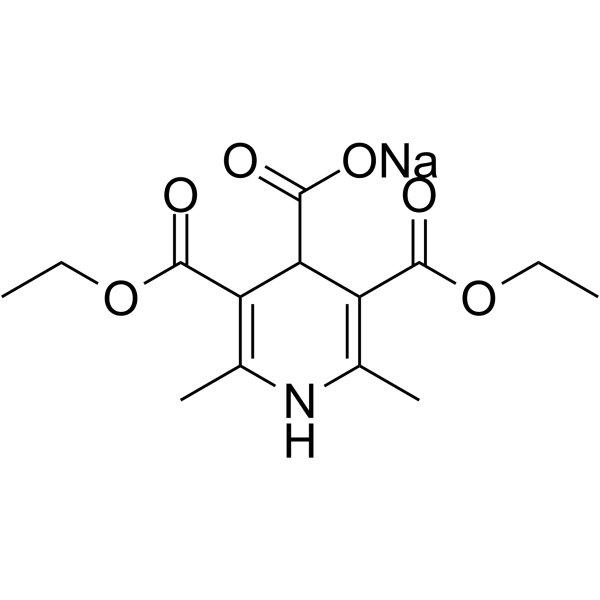
AV-153, a 1,4-dihydropyridine (1,4-DHP) derivative, is an antimutagenic. AV-153 intercalates to DNA in a single strand break and reduces DNA damage, stimulates DNA repair in human cells in vitro. AV-153 interacts with thymine and cytosine and has an influence on poly(ADP)ribosylation. AV-153 has anti-cancer activity .
loading...
    loading...
Cat. No.: HY-146812
CAS No.: 2675490-72-7
Target:  

G-quadruplex

Research Areas:  

Cancer

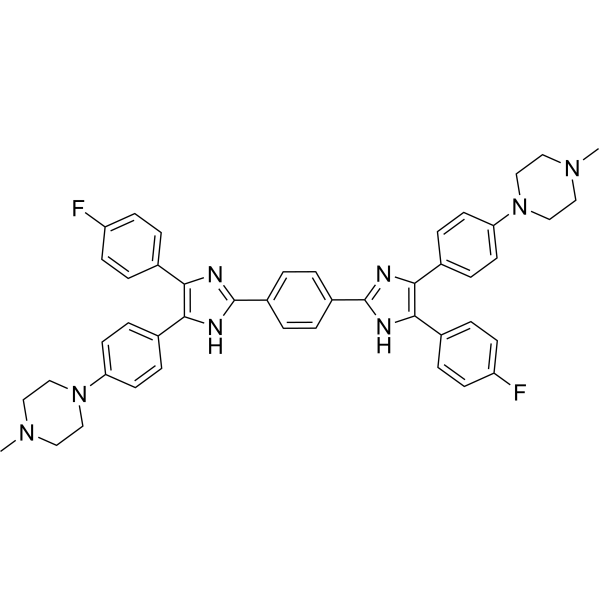
DIZ-3 is a selective multimeric G4 ligand based on a G4-ligand-dimerizing strategy. DIZ-3 intercalates into the G4-G4 interface, stabilizing the higher-order structure. DIZ-3 induces cell cycle arrest and apoptosis, and thus inhibits cell proliferation in alternative lengthening of telomere (ALT) cancer cells .
loading...
    loading...
Cat. No.: HY-168636
Research Areas:  

Cancer

p53 Activator 13 (compound 11) is a 6mA methyltransferase CamA inhibitor and a p53 activator. p53 Activator 13 intercalates into CamA-bound DNA via the minor groove, causing a conformational shift that moves the catalytic domain away from the DNA and elicits DNA damage response via p53 activation. p53 Activator 13 can be utilized in cancer research .
loading...
    loading...
Cat. No.: HY-B0067B
CAS No.: 92395-36-3
Synonyms: (R)-SM-5887
Target:  

Topoisomerase

Research Areas:  

Cancer

(R)-Amrubicin ((R)-SM-5887) is an anthracycline that effectively treats lung cancer by intercalating into DNA and inhibiting topoisomerase II activity, which consequently hampers DNA replication as well as RNA and protein synthesis, leading to cell growth inhibition and apoptosis. This compound exhibits superior anti-tumor efficacy compared to traditional anthracycline drugs while lacking the cumulative cardiac toxicity typically associated with this drug class.
loading...
    loading...
Cat. No.: HY-D0947
CAS No.: 531-53-3
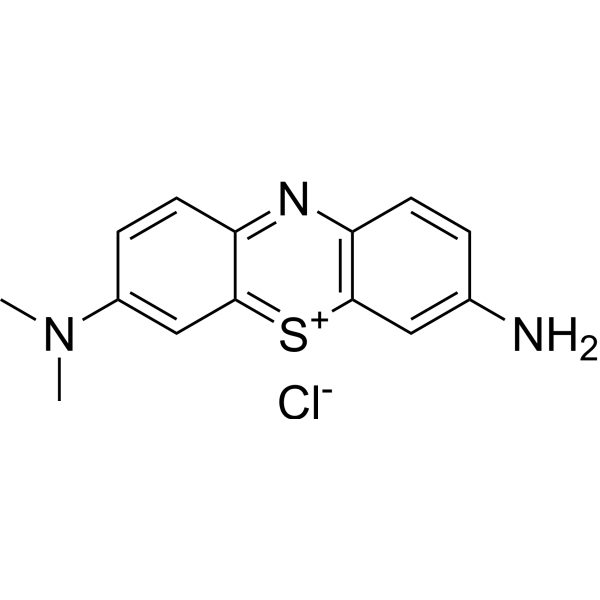
Azure A chloride is a phenothiazine dye. Azure A chloride is an alternative DNA dye used for the separation of DNA and protein fragments in agarose gel electrophoresis and PAGE. Azure A chloride can be chemisorbed on the surface of mild steel according to the Langmuir adsorption isotherm to form a protective film. Azure A chloride binds to double-stranded DNA in a non-cooperative manner via weak intercalation, triggering molecular conformational disturbance, restricted rotational motion, and changes in optical activity .
loading...
    loading...
Cat. No.: HY-W004589
CAS No.: 71071-46-0
Synonyms: 4,4'-Dimethoxycarbonyl-2,2'-bipyridine
Target:  

Drug Intermediate MOFs

Research Areas:  

Others

Dimethyl [2,2'-bipyridine]-4,4'-dicarboxylate (4,4'-Dimethoxycarbonyl-2,2'-bipyridine) is a symmetric bipyridine derivative and metal-organic framework (MOF) ligand, which is applicable to research related to organic synthesis . Dimethyl [2,2'-bipyridine]-4,4'-dicarboxylate serves as a precursor for the preparation of metal complex linkers for oligonucleotide backbone intercalation .
loading...
    loading...
Cat. No.: HY-W020086
CAS No.: 655-86-7
Synonyms: 2,3-Phenazinediamine; NNC39-0028
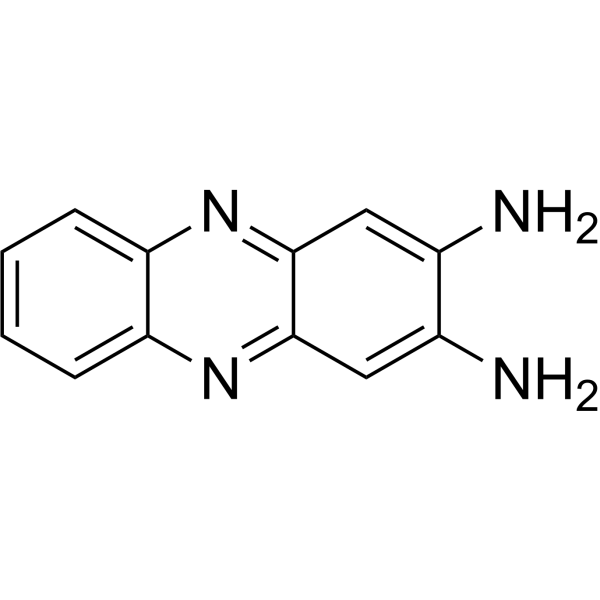
2,3-Diaminophenazine (2,3-Phenazinediamine) is an orally active amino derivative of phenazine. 2,3-Diaminophenazine can intercalate into DNA. 2,3-Diaminophenazine triggers photochemical reactions. 2,3-Diaminophenazine inhibits vascular hypertrophy and tissue AGE deposition in diabetic rats. 2,3-Diaminophenazine can be used for luminescence and diabetes research .
loading...
    loading...
Cat. No.: HY-106991A
CAS No.: 210584-54-6
Purity:  ≥95.0%
Synonyms: S-303 dihydrochloride
Target:  

HIV Bacterial CHIKV

Research Areas:  

Infection

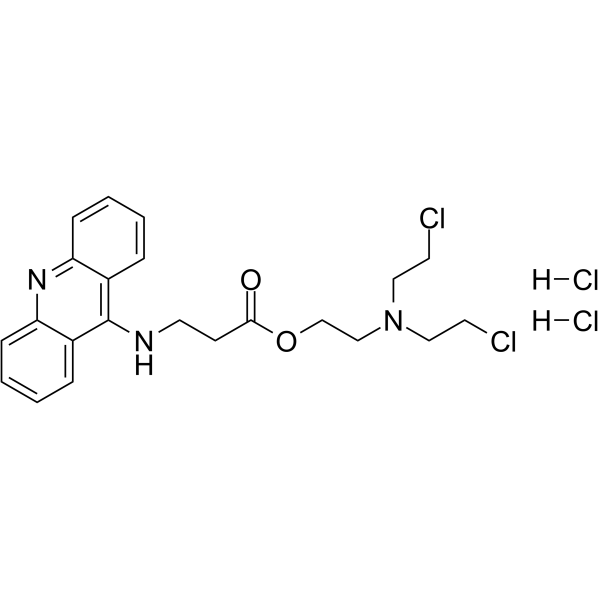
Amustaline (S-303) dihydrochloride, a nucleic acid-targeted alkylator, is an efficient pathogen inactivation agent for blood components containing red blood cells. Amustaline dihydrochloride has three components: an acridine anchor (an intercalator that targets nucleic acids non-covalently), an effector (a bis-alkylator group that reacts with nucleophiles), and a linker (a small flexible carbon chain containing a labile ester bond that hydrolyzes at neutral pH to yield non-reactive breakdown products) .
loading...
    loading...
Cat. No.: HY-162568
Target:  

DNA Stain

Research Areas:  

Cancer

7-tert-Butylfascaplysin (7-TB) is a derivative of Fascaplysin (HY-112328), that can be isolated from Fascaplysinopsis sp.. 7-tert-Butylfascaplysin induces replication stress, leads to toxic DNA double-strand breaks and apoptosis-like cell death, and thus exhibits cytotoxicity in cancer cells in nanomolar levels. 7-tert-Butylfascaplysin exhibits DNA intercalating activity with EC50 of 3.2 μM .
loading...
    loading...
Cat. No.: HY-D0215
CAS No.: 477-73-6
Synonyms: Safranine T
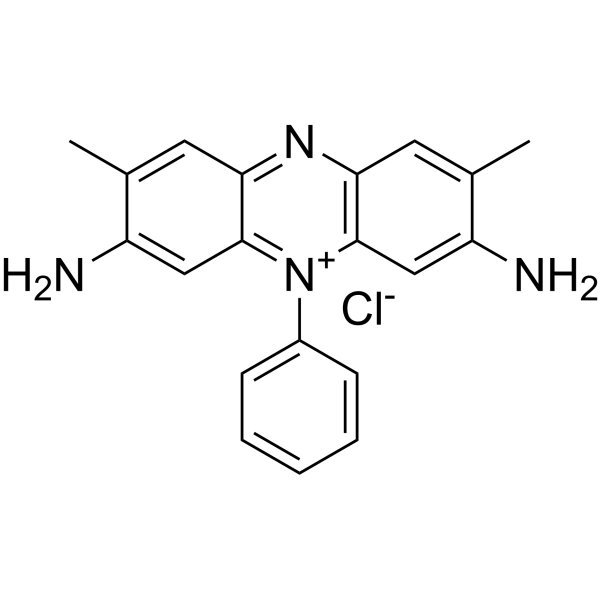
Safranin (Safranin T) is an important and classical phenazinium dye. Safranin has been extensively used in the academic field as a spectroscopic probe and indicator. Safranin possesses a planar structure and cationic charge. Safranin can readily intercalate into biological macromolecules, including DNA and proteins. Safranin has antibacterial effects against gram-positive bacteria (S. aureus). Safranin can be used as a redox indicator in the determination of metal ion concentration .
loading...
    loading...
Cat. No.: HY-15794G
CAS No.: 108852-90-0
Synonyms: Methoxymorpholinyl doxorubicin (GMP); FCE 23762 (GMP); PNU 152243 (GMP)
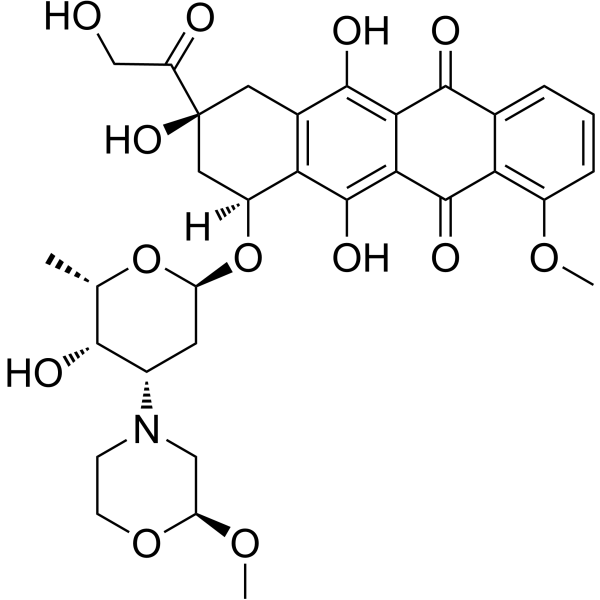
Nemorubicin (Methoxymorpholinyl doxorubicin) GMP is a GMP-class Nemorubicin (HY-15794). Nemorubicin is a Doxorubicin derivative with potent antitumor activity. Nemorubicin is highly cytotoxic to a variety of tumor cell lines presenting a multidrug-resistant phenotype. Nemorubicin not only intercalate into the duplex DNA, but also result in significant ligands for G-quadruplex DNA segments, stabilizing their structure. Nemorubicin requirs an intact nucleotide excision repair (NER) system to exert its activity .
loading...
    loading...
Cat. No.: HY-187163
CAS No.: 78831-35-3
Target:  

DNA/RNA Synthesis

Research Areas:  

Cancer

Anticancer agent 355 is a highly selective and potent anticancer agent, with IC50 values of 64.66 μM and 13.35 μM against HeLa and MDA-MB-231 cancer cells, respectively. Anticancer agent 355 induces plasmid DNA degradation via intercalation or minor groove binding, and disrupts the tertiary structure of BSA by interfering with the interactions of amino acid side chains. Anticancer agent 355 can be used in the research of cervical cancer and breast cancer .
loading...
    loading...
Cat. No.: HY-105904
CAS No.: 54824-20-3
Research Areas:  

Cancer

Pinafide is an orally active anticancer agent. Pinafide binds to double-stranded DNA via intercalation, stabilizes the DNA-topoisomerase II complex, induces photo-induced DNA damage and ROS production, causes lysosomal and mitochondrial dysfunction, impairs DNA and RNA synthesis, and blocks cell growth. Pinafide binds to human serum albumin in vitro, undergoes biotransformation via reduction and acetylation in rats, and can cross the placental barrier of pregnant rats. Pinafide can be used in cancer-related research such as hepatocellular carcinoma .
loading...
    loading...
Cat. No.: HY-12404R
CAS No.: 908-54-3
Synonyms: Diminazene diaceturate (Standard)
Diminazene (aceturate) (Standard) is the analytical standard of Diminazene (aceturate). This product is intended for research and analytical applications. Diminazene aceturate (Diminazene diaceturate) is an anti-trypanosome agent for livestock. The main biochemical mechanism of the trypanocidal actions of Diminazene aceturate is by binding to trypanosomal kinetoplast DNA (kDNA) in a non-intercalative manner through specific interaction with sites rich in adenine-thymine base pairs. Diminazene aceturate is also an angiotensin-converting enzyme 2 (ACE2) activator and has strong and potent anti-inflammatory properties .
loading...
    loading...
Cat. No.: HY-180151
Antibacterial agent 306 (Compound 8c), a lactate dehydrogenase inhibitor, is a highly effective antibacterial agent, especially effective against Gram-positive bacteria. Antibacterial agent 306 exhibits MIC against Staphylococcus aureus of as low as 1 μg/mL. Antibacterial agent 306 can not only damage membrane integrity and block the replication of DNA by intercalation, but also make reactive oxygen species (ROS) burst. Antibacterial agent 306 can be used for research on anti-multi-drug resistant bacteria .
loading...
    loading...
Cat. No.: HY-182027
CAS No.: 3031427-16-1
Antibacterial agent 330 is an antibacterial agent. Antibacterial agent 330 triggers ROS accumulation, forms DNA supramolecular complex by intercalation to block DNA replication and inhibits LDH to
disturb metabolism, and further prompts bacterial cell rupture to induce the leakage of intracellular content, ultimately causing bacterial death. Antibacterial agent 330 displays antibacterial activity and promotes wound healing in both G. Mellonella larval and murine wound infection models. Antibacterial agent 330 can be used for the research of bacterial infections .
loading...
    loading...
Cat. No.: HY-D3430
PTPA-QM is a low-cytotoxicity protein probe that can be used for live-cell imaging and tissue section staining (Lys. Ex/Em = 385/615 nm). PTPA-QM can intercalate into the β-sheet layered structure of β-amyloid fibrils, form intermolecular interactions with amino acid residues, restrict intramolecular rotation and trigger fluorescence activation for imaging purposes. PTPA-QM is applicable to Alzheimer's disease-related research. Maximum excitation/emission wavelength: 448/605 nm .
loading...
    loading...