

174 Results for "

beta-sheet backbone

" in MedChemExpress (MCE) Product Catalog:
Products (174)

174 Results for "beta-sheet backbone" in MCE Product Catalog:

Cat. No.: HY-138577
CAS No.: 161442-19-9
Purity:  99.88%
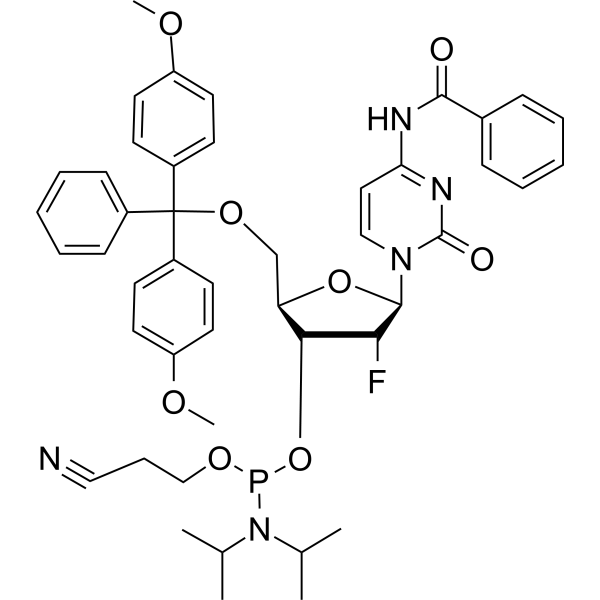
2'-F-Bz-dC Phosphoramidite can be used in the synthesis of oligoribonucleotide (such as DNA and RNA). 2'-F-Bz-dC Phosphoramidite also used for synthesis antiviral agent to inhibit the replication of virus. 2'-F-Bz-dC Phosphoramidite contains a phosphorothioate backbone, to synthesise antisense oligonucleotide analogs to induce apoptosis in cancer cells .
loading...
    loading...
Cat. No.: HY-113319R
CAS No.: 53188-23-1
β-D-Fructose, (Standard) is the analytical standard of β-D-Fructose (HY-113319R). This product is intended for research and analytical applications. β-D-Fructose is a monosaccharide. Derivatives synthesized using β-D-Fructose as the sugar backbone exhibit potent and selective antiproliferative activity against breast cancer MCF-7 cells .
loading...
    loading...
Cat. No.: HY-N20676
CAS No.: 3131756-58-3
Geministatin D is a derivative of Geministatin A that retains the C17 (Z,Z)-diene alkyl side chain but lacks the complete diester backbone. As a chemical degradation fragment of the parent compound, Geministatin D shows weak antibacterial activity against Gram-positive bacteria but exerts mild inhibitory effects on Saccharomyces cerevisiae. Geministatin D can be used in studies on fungal infections caused by Saccharomyces cerevisiae .
loading...
    loading...
Cat. No.: HY-P11681
CAS No.: 163081-03-6
Target:  

DNA/RNA Synthesis

Research Areas:  

Others

Boc-PNA-J(Z)-OH is a protected peptide nucleic acid (PNA) monomer used in solid-phase synthesis. Boc-PNA-J(Z)-OH features a 2,6-diaminopurine (J) base, protected by a carboxybenzyl (Z) group, attached to a Boc-protected aminoethylglycinate backbone. Boc-PNA-J(Z)-OH allows for the synthesis of PNA sequences with enhanced binding affinity and stability.
loading...
    loading...
Cat. No.: HY-W127534R
CAS No.: 621-70-5
Synonyms: Trihexanoin (Standard)
Tricaproin (Standard) is the analytical standard of Tricaproin. This product is intended for research and analytical applications. TricaproinIt is an organic compound belonging to the class of triacylglycerols. It consists of three molecules of caproic acid esterified to the glycerin backbone, with a mild fatty smell. TricaproinIt has a variety of applications in the cosmetic and personal care industries, especially as an emollient and conditioning agent in skin and hair care products. Additionally, it is used as a lubricant and surfactant in industrial settings.
loading...
    loading...
Cat. No.: HY-W142194
CAS No.: 87905-98-4
Target:  

DNA/RNA Synthesis

Research Areas:  

Cancer

Benzyl (5-hydroxypentyl)carbamate is a linker capable of repairing damaged DNA by binding to the 5'-hydroxyl group on the sugar backbone. Benzyl (5-hydroxypentyl)carbamate can also bind to DNA ligands and can inhibit cell proliferation in resistant cell lines. However, Benzyl (5-hydroxypentyl)carbamate is toxic to cells and can also cause DNA damage and strand breakage.
loading...
    loading...
Cat. No.: HY-P4882
CAS No.: 183449-57-2
Target:  

Amyloid-β Tau Protein

Research Areas:  

Neurological Disease

(Pyr3)-Amyloid β-Protein (3-42) is an N-terminally truncated pyroglutamylated β-amyloid peptide. (Pyr3)-Amyloid β-Protein (3-42) forms stable β-sheet structures across different pH values, co-oligomerizes with Aβ1-42 to form cytotoxic oligomers, induces tau-dependent cytotoxicity and neuronal loss, inhibits hippocampal LTP, and exhibits stronger protease resistance. (Pyr3)-Amyloid β-Protein (3-42) exists in the brain tissues of human Alzheimer's disease patients, correlates with the pathogenesis of Alzheimer's disease, and follows a unique, faster oligomerization pathway. (Pyr3)-Amyloid β-Protein (3-42) can be used in Alzheimer's disease-related research .
loading...
    loading...
Cat. No.: HY-P99899
CAS No.: 2052591-32-7
Synonyms: PR-1498487

Target:  

ADC Antibodies

Research Areas:  

Cancer

Samrotamab (PR-1498487) is a humanized IgG1-κ chimeric monoclonal antibody targeting LRRC15, with a Kd of 5.42 nM for human LRRC15. Samrotamab can be used to synthesize antibody-drug conjugates (ADC). Samrotamab disrupts the LRRC15-SCG5 signaling module, binds to a membrane-proximal conformational epitope within the C-terminal leucine-rich repeat region of LRRC15, and binds to the lateral edge of the LRR solenoid while leaving the canonical concave β-sheet surface fully exposed. Samrotamab reduces the viability of bladder cancer cells, inhibits clonogenic growth, impairs cell migration, and compromises cell invasion. Samrotamab induces compensatory upregulation of LRRC15 transcripts while suppressing the expression of SCG5 mRNA. Samrotamab is applicable to research related to urothelial carcinoma, sarcoma, osteosarcoma, and undifferentiated pleomorphic sarcoma .
loading...
    loading...
Cat. No.: HY-Y0982
CAS No.: 76189-56-5
Research Areas:  

Others

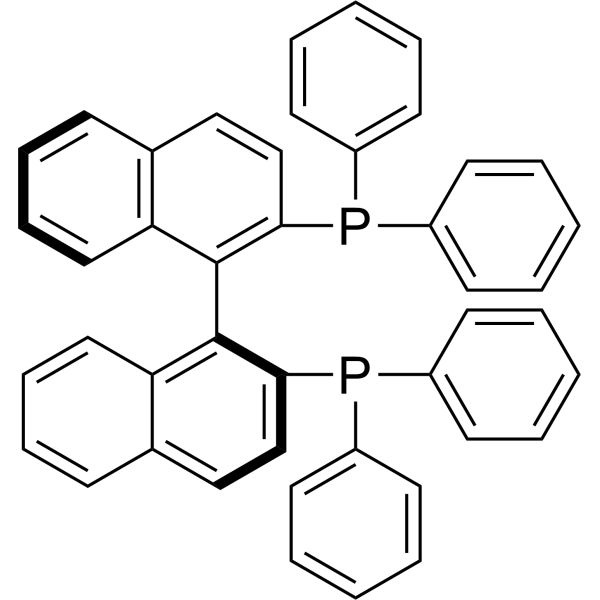
(S)-BINAP is an isomer of (R)-BINAP (HY-W017757), as well as a chiral chelating diphosphine ligand and enantioselective catalyst precursor. (S)-BINAP acts as a bidentate ligand, transferring chiral information via its binaphthyl backbone to achieve stereodiscrimination of substrates. (S)-BINAP is used for the enantioselective hydrogenation of prochiral carboxylic acids, N-acyltetrahydroisoquinolines, allylic alcohols, functionalized ketones, cyclic anhydrides, and styrenes .
loading...
    loading...
Cat. No.: HY-100939
CAS No.: 14279-91-5
Purity:  99.07%
Target:  

Sodium Channel

Research Areas:  

Neurological Disease

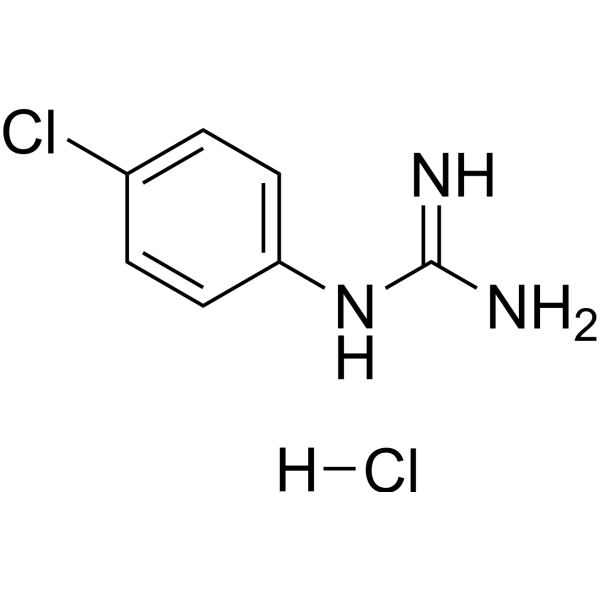
4-Chlorophenylguanidine hydrochloride is an urokinase-type plasminogen activator inhibitor. 4-Chlorophenylguanidine hydrochloride is a potent ASIC3 positive allosteric modulator and reverses the effects of ASIC3 desensitization. 4-Chlorophenylguanidine hydrochloride influences ASIC3 activity through directly activating the channel and increasing proton sensitivity. 4-Chlorophenylguanidine hydrochloride offers a chemical backbone for the design of new ASIC3 ligands to study ASIC3 in vivo .
loading...
    loading...
Cat. No.: HY-125001
CAS No.: 2209084-73-9
Research Areas:  

Cancer

JH-VIII-49 (compound 10) is a potent and selective CDK8 inhibitor (IC50=16 nM) with excellent biological activity. JH-VIII-49 promotes CDK8 inhibition through its steroid backbone design. JH-VIII-49 can be used in the synthesis of PROTAC as a target protein ligand of JH-XI-10-02 (HY-111518) .
loading...
    loading...
Cat. No.: HY-173381A
Synonyms: Cholesteryl biotinyl(polyethyleneglycol)-1000 carbamate
Cholesteryl-PEG1000-Biotin is a lipid product. Cholesteryl-PEG1000-Biotin is a cholesterol backbone attached to one side of a PEG unit and a Biotin unit on the other side. Biotin is an enzyme cofactor that can be used to label proteins, and PEG is a low-toxic, hydrophilic, water-soluble polymer. Cholesteryl-PEG1000-Biotin can be used for drug circulation time studies .
loading...
    loading...
Cat. No.: HY-173385
Research Areas:  

Metabolic Disease

Cholesteryl-PEG1000-Azide is a lipid that can be used for drug delivery. Cholesteryl-PEG1000-Azide is attached to the cholesterol backbone with a PEG unit on one side and an azide unit on the other side of the PEG. Cholesteryl-PEG1000-Azide contains an azide group that can undergo copper-catalyzed azide-alkyne cycloaddition reaction (CuAAc) with molecules containing an alkyne group .
loading...
    loading...
Cat. No.: HY-P11690
CAS No.: 791778-61-5
Research Areas:  

Cancer

Fmoc-Aeg-OBn is a benzyl-protected N-(2-aminoethyl)-glycine PNA backbone derivative. Fmoc-Aeg-OBn serves as a key intermediate for the synthesis of Fmoc-protected PNA monomers with modified nucleobases. Fmoc-Aeg-OBn can be used to prepare PNA with unique physicochemical properties, which is suitable for antisense and gene diagnostic applications. Fmoc-Aeg-OBn is applicable to cancer-related research .
loading...
    loading...
Cat. No.: HY-W004589
CAS No.: 71071-46-0
Synonyms: 4,4'-Dimethoxycarbonyl-2,2'-bipyridine
Target:  

Drug Intermediate MOFs

Research Areas:  

Others

Dimethyl [2,2'-bipyridine]-4,4'-dicarboxylate (4,4'-Dimethoxycarbonyl-2,2'-bipyridine) is a symmetric bipyridine derivative and metal-organic framework (MOF) ligand, which is applicable to research related to organic synthesis . Dimethyl [2,2'-bipyridine]-4,4'-dicarboxylate serves as a precursor for the preparation of metal complex linkers for oligonucleotide backbone intercalation .
loading...
    loading...
Cat. No.: HY-W011103
CAS No.: 3648-21-3
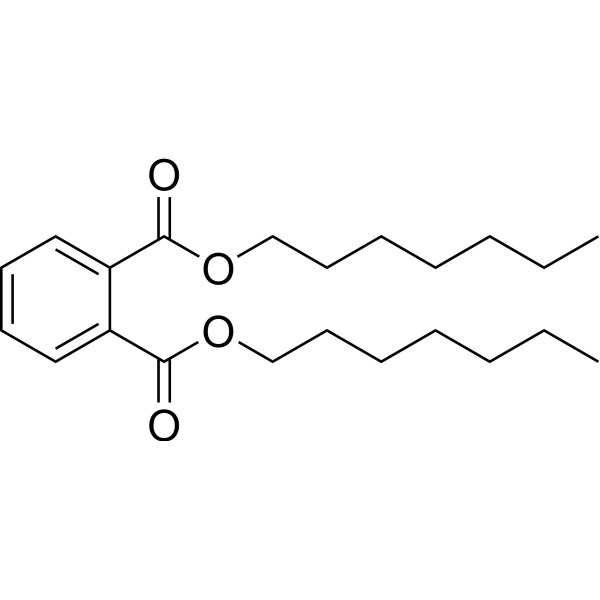
Diheptyl phthalate is a class of phthalates consisting of two heptyl (C7) chains attached to a phthalic acid backbone. This compound is commonly used as a plasticizer in various polymer materials such as PVC to increase flexibility and durability. It can also be used as a lubricant, solvent or additive in various industrial applications such as coatings, adhesives and sealants. However, Diheptyl phthalate has been identified as an environmental pollutant and health hazard due to its potential for endocrine disruption and toxicity.
loading...
    loading...
Cat. No.: HY-151738
CAS No.: 1935981-35-3
Target:  

ADC Linkers

Research Areas:  

Others

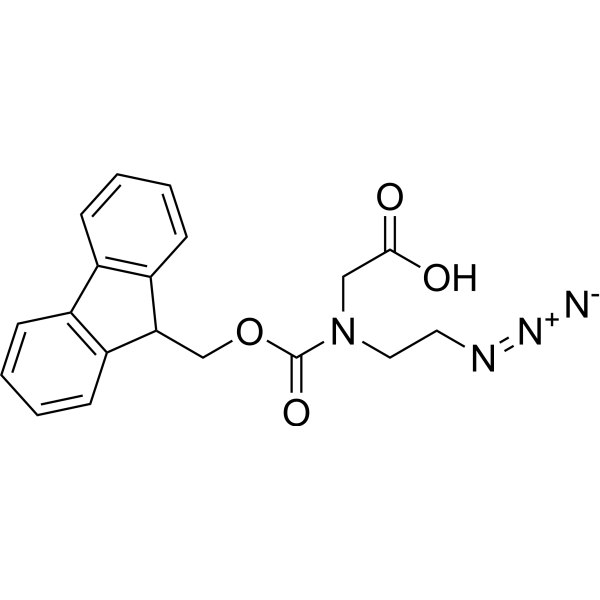
Fmoc-Aeg(N3)-OH is a click chemistry reagent containing an Azide. Alkylating the Nitrogen of an amide bond results in peptoid structures, which leads to conformational restrains, like N-methylation and allows backbone derivatisation. Altering cytotoxicity, bacterial cell selectivity and receptor pharmacology through formation of peptoid derivatives have been published for Cilengitide, Piscidin 1, and MC3, MC4 and MC5 receptor agonist. This building block enables design of macrocycles through intermolecular crosslinking or backbone stabilization through intermolecular ring-closure. This compound is a potential building block for the construction of (customized) peptide nucleic acids (PNAs) and for peptoid synthesis . Fmoc-Aeg(N3)-OH is a click chemistry reagent, it contains an Azide group and can undergo copper-catalyzed azide-alkyne cycloaddition reaction (CuAAc) with molecules containing Alkyne groups. It can also undergo strain-promoted alkyne-azide cycloaddition (SPAAC) reactions with molecules containing DBCO or BCN groups.
loading...
    loading...
Cat. No.: HY-D2264
CAS No.: 1632296-13-9
Target:  

Fluorescent Dye

Research Areas:  

Others

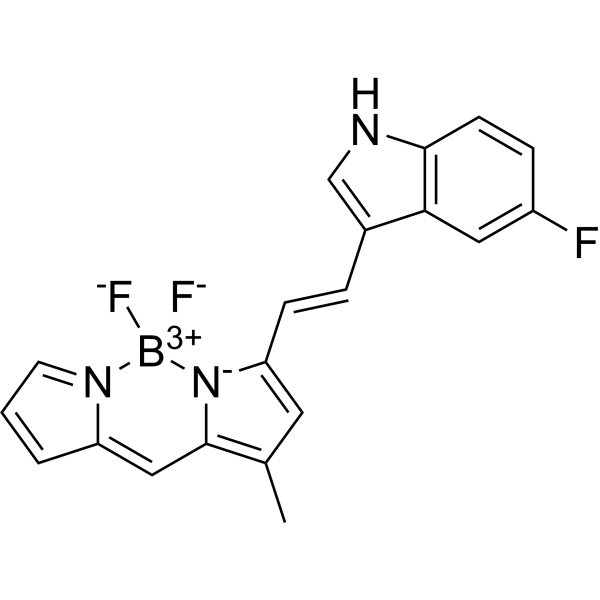
Caffeine Orange (Compound 1) is a fluorescent probe for caffeine detection. Caffeine Orange is a BODIPY backbone-based probe that exhibits a turn-on fluorescence response upon binding to caffeine. The detection mechanism of Caffeine Orange relies on its binding with caffeine in aqueous media, which triggers an increase in fluorescence intensity; under irradiation with a 532 nm light source, the presence of caffeine produces orange fluorescence, with an excitation wavelength of 530 nm and an emission wavelength centered at approximately 620 nm .
loading...
    loading...
Cat. No.: HY-P1889
CAS No.: 721885-31-0
Target:  

Bcl-2 Family Amyloid-β

Research Areas:  

Neurological Disease

Bim BH3, Peptide IV is an Aβ42-binding peptide and the pro-apoptotic BH3 domain of the BIM protein. Bim BH3, Peptide IV binds Aβ42 with a Kd of 7.1 μM. Bim BH3, Peptide IV modulates Aβ42 structure, fibrillization pathways, aggregate morphology, and membrane interactions, inhibiting fibril formation while enhancing protofibril assembly. Bim BH3, Peptide IV promotes Aβ42 β-sheet formation and accelerates aggregation. Bim BH3, Peptide IV enhances Aβ42 membrane internalization and bilayer stiffening. Bim BH3, Peptide IV induces neuronal cell death by enhancing BH3-induced membrane interactions of Aβ42 prefibrillar species. Bim BH3, Peptide IV can be used for research on Alzheimer's disease .
loading...
    loading...
Cat. No.: HY-139282
CAS No.: 1246298-56-5
Synonyms: C16:0 1-Deoxyceramide; C16:0 Ceramide (m18:1/16:0); Cer(m18:1/16:0)
Target:  

Endogenous Metabolite

Research Areas:  

Metabolic Disease

C16 1-Deoxyceramide (m18:1/16:0) (C16:0 1-Deoxyceramide) is a lipid molecule, which is composed of a long-chain fatty acid (16:0) and a 1-deoxysphingoid backbone. Deoxyceramide accumulates under the conditions of obesity and type 2 diabetes (T2D). Deoxyceramide is unable to be further metabolized to more complex sphingolipid, and is toxic when accumulates in the body. Deoxyceramide increases in differentiated adipocytes in vitro .
loading...
    loading...