185 Results for "

A2a

" in MedChemExpress (MCE) Product Catalog:
Products (185)

185 Results for "A2a" in MCE Product Catalog:

Cat. No.: HY-103171R
CAS No.: 910487-58-0
BAY 60-6583 (Standard) is the analytical standard of BAY 60-6583. This product is intended for research and analytical applications. BAY 60-6583 is a potent and high-affinity agonist of adenosine A2B receptor (EC50?= 3 nM) over A1, A2A, and A3 receptors. BAY 60-6583 binds to mouse, rabbit, and dog A2BAR with Ki values of 750 nM, 340 nM and 330 nM, respectively. BAY 60-6583 has a cardioprotective effect in a myocardial ischemia model .
loading...
    loading...
Cat. No.: HY-119191
CAS No.: 206129-88-6
Target:  

Adenosine Receptor

Research Areas:  

Neurological Disease

KF26777 (free base) is a potent and selective adenosine A3 receptor antagonist with an Ki value of 0.2 nM and possesses 9000-, 2350- and 3100-fold selectivity against adenosine A1, A2A and A2B receptors, respectively. KF26777 (free base) potently inhibits the [125I]AB-MECA binding to adenosine A3 receptors. KF26777 (free base) is promising for research of brain ischemia and inflammatory disease including asthma .
loading...
    loading...
Cat. No.: HY-B0228S12
Synonyms: Adenine riboside-d13; D-Adenosine-d13
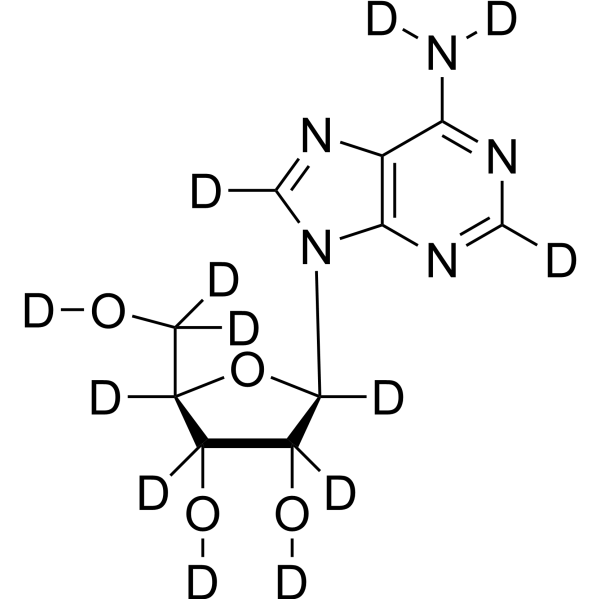
Adenosine-d13 (Adenine riboside-d13; D-Adenosine-d13) is deuterium labeled Adenosine (HY-B0228). Adenosine (Adenine riboside), a ubiquitous endogenous autacoid, acts through the enrollment of four G protein-coupled receptors: A1, A2A, A2B, and A3. Adenosine affects almost all aspects of cellular physiology, including neuronal activity, vascular function, platelet aggregation, and blood cell regulation.
loading...
    loading...
Cat. No.: HY-B0228S13
CAS No.: 1887761-94-5
Synonyms: Adenine riboside-13C10; D-Adenosine-13C10
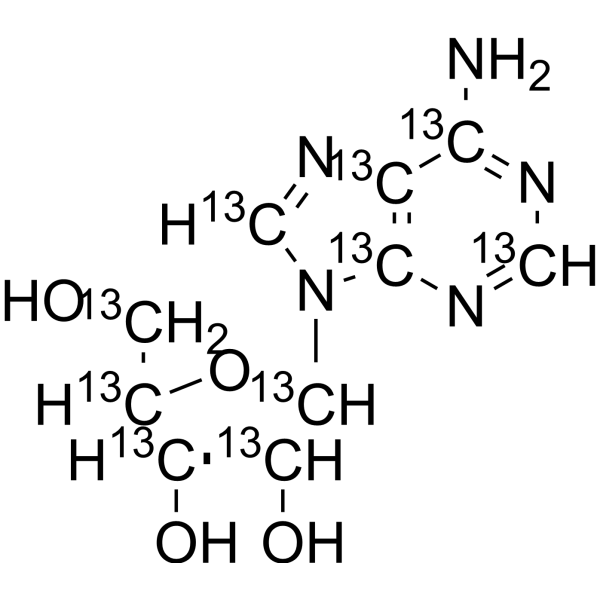
Adenosine- 13C10 (Adenine riboside- 13C10; D-Adenosine- 13C10) is 13C-labeled Adenosine (HY-B0228). Adenosine (Adenine riboside), a ubiquitous endogenous autacoid, acts through the enrollment of four G protein-coupled receptors: A1, A2A, A2B, and A3. Adenosine affects almost all aspects of cellular physiology, including neuronal activity, vascular function, platelet aggregation, and blood cell regulation.
loading...
    loading...
Cat. No.: HY-B0228S9
CAS No.: 202406-75-5
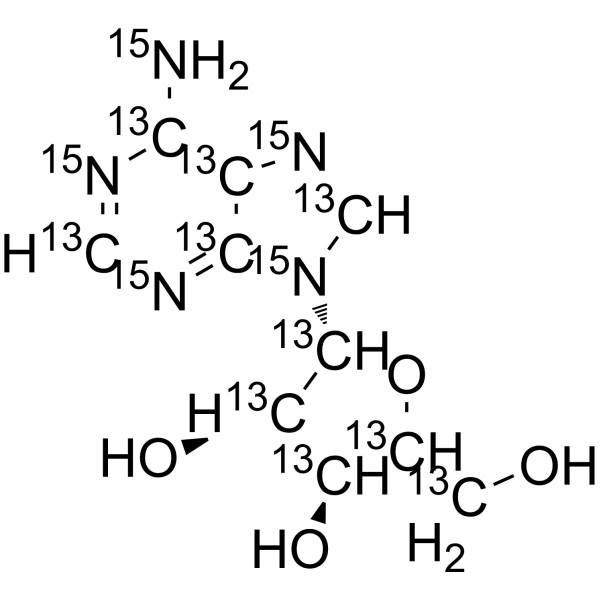
Adenosine- 13C10, 15N5 is the 13C and 15N labeled Adenosine (HY-B0228) . Adenosine (Adenine riboside), a ubiquitous endogenous autacoid, acts through the enrollment of four G protein-coupled receptors: A1, A2A, A2B, and A3. Adenosine affects almost all aspects of cellular physiology, including neuronal activity, vascular function, platelet aggregation, and blood cell regulation [2] .
loading...
    loading...
Cat. No.: HY-109139A
CAS No.: 2253894-81-2
Synonyms: NIR178 mesylate; PBF509 mesylate
Target:  

Adenosine Receptor

Research Areas:  

Cancer

Taminadenant mesylate (NIR178 mesylate) is a potent adenosine A2A receptor antagonist with potential anti-tumor activity. Taminadenant mesylate can selectively bind and inhibit A2AR on T lymphocytes, thereby releasing adenosine/A2AR-mediated inhibition of T lymphocytes and activating T cell-mediated immune responses against tumor cells. Taminadenant mesylate works by reducing the proliferation of susceptible tumor cells. Taminadenant mesylate also showed effectiveness in reversing dyskinesias in Parkinson's disease models and was able to inhibit dyskinesias caused by L-DOPA .
loading...
    loading...
Cat. No.: HY-110279R
CAS No.: 1309198-71-7
Research Areas:  

Neurological Disease

Ogerin (Standard) is the analytical standard of Ogerin (HY-110279). This product is intended for research and analytical applications. Ogerin, a chemical probe, is a selective GPR68 positive aliasing modulator (PAM) (pEC50=6.83) with a moderate antagonistic effect on A2A (Ki=220 nM). Ogerin inhibits the fear conditioning reflex in mice and also inhibits TGF-β-induced myofibroblast differentiation of fibroblasts from multiple organ systems. Ogerin can be used in the studies of fibrotic diseases and neurological disorders [2].
loading...
    loading...
Cat. No.: HY-119413
CAS No.: 2715-68-6
Purity:  99.87%
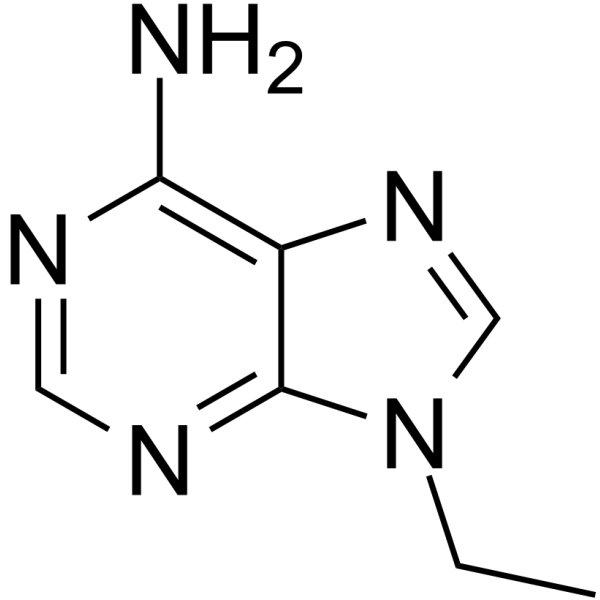
9-Ethyladenine is a precursor of competitive antagonists of adenosine receptors (A1, A2, A3), with no significant inhibitory effect on adenine phosphoribosyltransferase (APRT). 9-Ethyladenine derivatives have high affinity and selectivity for A1 (Ki=27 nM), A2A (Ki=46 nM), and A3 (Ki=86 nM) receptors. 9-Ethyladenine does not inhibit brain APRT activity, can be used in the study of adenosine receptor-related diseases (such as nervous system diseases) models [2].
loading...
    loading...
Cat. No.: HY-B0228S11
CAS No.: 168566-57-2
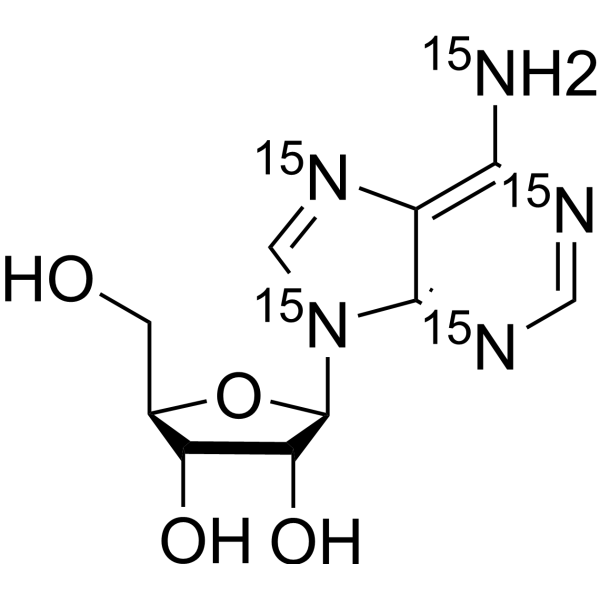
Synonyms: Adenine riboside-15N5; D-Adenosine-15N5
Adenosine- 15N5 (Adenine riboside- 15N5; D-Adenosine- 15N5) is the 15N labled Adenosine (HY-B0228). Adenosine (Adenine riboside), a ubiquitous endogenous autacoid, acts through the enrollment of four G protein-coupled receptors: A1, A2A, A2B, and A3. Adenosine affects almost all aspects of cellular physiology, including neuronal activity, vascular function, platelet aggregation, and blood cell regulation [2].
loading...
    loading...
Cat. No.: HY-111767R
CAS No.: 1699717-32-2
BAY-545 (Standard) is the analytical standard of BAY-545 (HY-111767). This product is intended for research and analytical applications. BAY-545 is a potent and selective A2B adenosine receptor antagonist, with an IC50 of 59 nM. BAY-545 also exhibits IC50s of 66, 400, 280 nM for human, mouse, rat A2B adenosine receptor in cells, respectively, and a Ki of 97 nM for human A2B adenosine receptor, with more selectivity over A1, A2A, and A3 adenosine receptor .
loading...
    loading...
Cat. No.: HY-121119R
CAS No.: 212329-37-8
MRS 1523 (Standard) is the analytical standard of MRS 1523. This product is intended for research and analytical applications. MRS 1523 is a potent and selective adenosine A3 receptor antagonist with Ki values of 18.9 nM and 113 nM for human and rat A3 receptors, respectively. In rat this corresponds to selectivities of 140- and 18-fold vs A1 and A2A receptors, respectively. MRS 1523 can exert antihyperalgesic effect through N-type Ca channel block and action potential inhibition in isolated rat dorsal root ganglion (DRG) neurons [2].
loading...
    loading...
Cat. No.: HY-103181
CAS No.: 41552-82-3
Purity:  99.95%
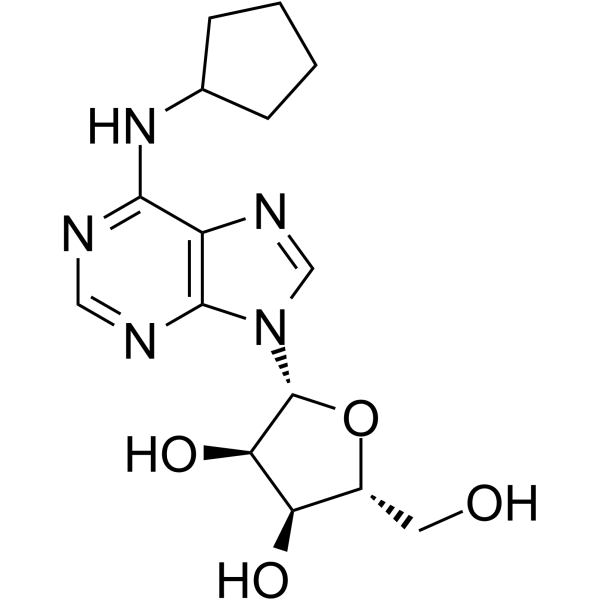
Synonyms: CPA; UK-80882
N6-Cyclopentyladenosine (CPA) is a selective Adenosine A1 receptor agonist, with Ki values of 2.3 nM, 790 nM and 43 nM for human A1, A2A and A3 receptors, respectively. N6-cyclopentyladenosine increases Apoptosis. N6-Cyclopentyladenosine has antitumor activity against leukemia. N6-cyclopentyladenosine improves 5-fluorouracil (HY-90006)-induced hematopoietic damage, regulates sleep, and delays Aminophylline-induced clonic epileptic seizures [2] .
loading...
    loading...
Cat. No.: HY-109139R
CAS No.: 1337962-47-6
Synonyms: NIR178 (Standard); PBF509 (Standard)
Taminadenant (Standard) is the analytical standard of Taminadenant (HY-109139). This product is intended for research and analytical applications. Taminadenant (NIR178; PBF509) is a highly potent and orally active adenosine A2A receptor (A2AR) antagonist. Taminadenant can antagonize A2AR agonist-mediated cAMP accumulation and impedance responses with KB values of 72.8 nM and 8.2 nM, respectively. Taminadenant reverses motor impairments in several rat models of movement disorders, including catalepsy, tremor, and hemiparKinsonism. Taminadenant can also inhibit tumor growth when combined with Spartalizumab (HY-P9972). Taminadenant reactivate the antitumor immune response [2].
loading...
    loading...
Cat. No.: HY-179248
CAS No.: 2570904-69-5
Research Areas:  

Cancer

Adenosine receptor antagonist 7 is an orally active triple A1/A2A/A2B adenosine receptor antagonist with Ki values of 1.5, 0.6 and 21 nM. Adenosine receptor antagonist 7 shows potent inhibitory activity (IC50 = 0.8 nM) of cAMP production in A2AR-HEK293 cells. Adenosine receptor antagonist 7 can enhance infiltration of effector T cells and increase the CD8+/Treg ratio companied with Avelumab (HY-108730). Adenosine receptor antagonist 7can be used for the research of cancer, such as colon cancer .
loading...
    loading...
Cat. No.: HY-175195
CAS No.: 2913578-04-6
Adenosine receptor antagonist 6 is an orally active and selective A2A adenosine receptor (A2AAR) antagonist, with a Ki of 19.18 nM. Adenosine receptor antagonist 6 inhibits 5’-N-ethylcarboxamide adenosine (NECA) (HY-103173)-mediated cAMP production (IC50 = 0.089 μM) and immunosuppression, while promoting IL-2 and IFN-γ secretion. Adenosine receptor antagonist 6 abolishes the immunosuppressive effects of adenosine on T-cell activation and cytokine release. Adenosine receptor antagonist 6 inhibits tumor growth in a CT26/MC38 xenograft model. Adenosine receptor antagonist 6 can be used for the study of colon cancer .
loading...
    loading...
Cat. No.: HY-102086
CAS No.: 261717-23-1
Research Areas:  

Neurological Disease

MSX3 is an orally active, selective A2a adenosine receptor antagonist and a prodrug of MSX2 (HY-117184). MSX3 reduces hyperphosphorylation of Tau at specific epitopes in mice without altering total Tau levels, Tau fragments, or Tau aggregation in these animals. MSX3 enhances spatial memory. MSX3 regulates effort-related decision-making behaviors. MSX3 reverses D2 antagonist-induced suppression of lever pressing, increased Chow feed intake, reduced selection of high-barrier arms, and prolonged response latency, and also slightly attenuates effects induced by D1 antagonists. MSX3 can be used in the research of Tauopathies (Alzheimer's disease-related), depression, and Parkinsonism [2] .
loading...
    loading...
Cat. No.: HY-20176
CAS No.: 16234-14-3
Research Areas:  

Infection

2,4-Dichlorothieno[3,2-d]pyrimidine is a thienopyrimidine scaffold and a key synthetic precursor, which is widely used for constructing 4-arylthieno[3,2-d]pyrimidine compounds. 2,4-Dichlorothieno[3,2-d]pyrimidine serves for the development of 4-arylthieno[3,2-d]pyrimidine-based human adenosine A2a receptor antagonists, as well as thienopyrimidine-based PI3K-α inhibitors. In addition, 2,4-Dichlorothieno[3,2-d]pyrimidine has potential application value in studies related to whipworm disease [2] .
loading...
    loading...
Cat. No.: HY-103181R
CAS No.: 41552-82-3
Synonyms: CPA (Standard); UK-80882 (Standard)
N6-Cyclopentyladenosine (Standard) is the analytical standard of N6-Cyclopentyladenosine (HY-103181). This product is intended for research and analytical applications. N6-Cyclopentyladenosine (CPA) is a selective Adenosine A1 receptor agonist, with Ki values of 2.3 nM, 790 nM and 43 nM for human A1, A2A and A3 receptors, respectively. N6-cyclopentyladenosine increases Apoptosis. N6-Cyclopentyladenosine has antitumor activity against leukemia. N6-cyclopentyladenosine improves 5-fluorouracil (HY-90006)-induced hematopoietic damage, regulates sleep, and delays Aminophylline-induced clonic epileptic seizures [2] .
loading...
    loading...
Cat. No.: HY-N0092R
CAS No.: 58-63-9
Inosine (Standard) is the analytical standard of Inosine. This product is intended for research and analytical applications. Inosine is an endogenous purine nucleoside produced by catabolism of adenosine. Inosine has anti-inflammatory, antinociceptive, immunomodulatory and neuroprotective effects. Inosine is an agonist for adenosine A1 (A1R) and A2A (A2AR) receptors [2] . In Vitro:Inosine dose-dependently stimulates cAMP production mediated through the A2AR [2].
Inosine dose-dependently induces hA2AR-mediated ERK1/2 phosphorylation [2].
Inosine (100 μM; 24 hours) reduces oxidative stress in MES 23.5 cells cultured with astrocytes .
In Vivo:Inosine (10-100 mg/kg; i.p.) exhibits antinociceptive effect in mice [2].
loading...
    loading...
Cat. No.: HY-W250160
CAS No.: 100403-24-5
Synonyms: Polydeoxyribonucleotide
PDRN (Polydeoxyribonucleotide) is a deoxynucleotide polymer mainly derived from the sperm of rainbow trout or salmon. PDRN inhibits pro-inflammatory factors and promotes VEGF expression via the cAMP-PKA pathway by activating the adenosine A2A receptor (A2AR), thereby driving angiogenesis and collagen deposition in fibroblasts. Degradation products of PDRN provide DNA raw materials for proliferating cells through the salvage synthesis pathway, accelerating re-epithelialization. PDRN reduces melanin synthesis and cell apoptosis by upregulating ERK/AKT phosphorylation and inhibiting the activities of MITF and tyrosinase, and resists skin aging by attenuating nuclear autophagy and blocking the interaction between LC3-SIRT1. PDRN is mainly used for wound repair, post-aesthetic surgery recovery and anti-aging research [2] .
loading...
    loading...

