187 Results for "

quinone

" in MedChemExpress (MCE) Product Catalog:
Products (187)

187 Results for "quinone" in MCE Product Catalog:

Art. -Nr.: HY-125365R
CAS. Nr.: 13553-79-2
Rifamycin S (Standard) is the analytical standard of Rifamycin S. This product is intended for research and analytical applications. Rifamycin S, a quinone, is an antibiotic against Gram-positive bacteria (including MRSA). Rifamycin S is the oxidized forms of a reversible oxidation-reduction system involving two electrons. Rifamycin S generates reactive oxygen species (ROS) and inhibits microsomal lipid peroxidation. Rifamycin S can be used for tuberculosis and leprosy .
loading...
    loading...
Art. -Nr.: HY-136913
CAS. Nr.: 69617-84-1
Reinheit:  99.76%
Synonyms: (Rac)-Betuligenol
Target:  

Endogenous Metabolite

Forschungsgebiete:  

Inflammation/Immunology

(Rac)-Rhododendrol ((Rac)-Betuligenol) is an aromatic compound with pro-oxidant activity. (Rac)-Rhododendrol may be useful in the suppression of liver diseases. (Rac)-Rhododendrol can be toxic to melanocytes, leading to cell death. The metabolite of (Rac)-Rhododendrol, RD-quinone, is cytotoxic and causes enzyme inactivation and endoplasmic reticulum stress by binding to thiol proteins. (Rac)-Rhododendrol-derived melanin exhibits potent pro-oxidant activity and may cause oxidative stress .
loading...
    loading...
Art. -Nr.: HY-N16372
CAS. Nr.: 1424195-39-0
Pronqodine A is an Indoleamine 2,3-Dioxygenase (IDO) inhibitor, with an IC50 of 131.5 nM. Pronqodine A inhibits bradykinin-induced release of PGE2, 6-keto-prostaglandin F, PGD2 and induces the production of reactive oxygen species (ROS) in human synovial sarcoma SW982 cells. Pronqodine A is a good substrate for human quinone reductase NQO1. Pronqodine A can be used for the study of inflammation .
loading...
    loading...
Art. -Nr.: HY-N9765
CAS. Nr.: 168393-18-8
threo-Guaiacylglycerol β-coniferyl ether (compound 9) is a potentially active compound, but its inhibitory activity against NF-κB, nitric oxide production, aromatase, quinone reductase 2, and cyclooxygenase (COX-1/-2) is not significant. threo-Guaiacylglycerol β-coniferyl ether can be naturally extracted from the 95% ethanol extract of the whole plant of Lepisorus contortus (Christ) Ching (a plant of the Polypodiaceae family) .
loading...
    loading...
Art. -Nr.: HY-W100491
CAS. Nr.: 935-92-2
Target:  

Drug Derivative

Forschungsgebiete:  

Cancer

Trimethylbenzoquinone (Compound 5) is a methylated benzoquinone. Trimethylbenzoquinone exhibits moderate cytotoxicity against K562 cells, with its IC50 being 0.75 μM. Trimethylbenzoquinone is completely unable to cause inter-strand DNA cross-linking and cannot alkylate DNA guanines. Trimethylbenzoquinone can be used to study the relationship between the nitrogen heterocyclic group and DNA cross-linking .
loading...
    loading...
Art. -Nr.: HY-184847
CAS. Nr.: 2883627-66-3
Target:  

α-synuclein

Forschungsgebiete:  

Neurological Disease

α-Synuclein-IN-25 is a quinone-acid hybrid and also an α-synuclein aggregation inhibitor with an IC50 of 3.0 μM. α-Synuclein-IN-25 dissociates preformed α-Syn aggregates, inhibits their re-aggregation, scavenges reactive oxygen species, and reduces the formation of α-Syn inclusions in neuronal cells. α-Synuclein-IN-25 can be used in the research of Parkinson's disease .
loading...
    loading...
Art. -Nr.: HY-187230
CAS. Nr.: 6373-11-1
Aceanthrenequinone is a polycyclic aromatic hydrocarbon quinone organic compound that belongs to the category of free radical photoinitiators. Aceanthrenequinone serves as an intermediate for dyes and pigments, and also acts as a substrate for organic synthesis and polymer materials. Aceanthrenequinone activates the Aryl Hydrocarbon Receptor pathway, induces the expression of CYP1A protein in the vascular system of zebrafish embryos, and causes the death of embryos at 120 hpf. Aceanthrenequinone is applicable to research related to industrial or biomedical applications .
loading...
    loading...
Art. -Nr.: HY-155107
CAS. Nr.: 2446880-46-0
Reinheit:  98.26%
Forschungsgebiete:  

Infection

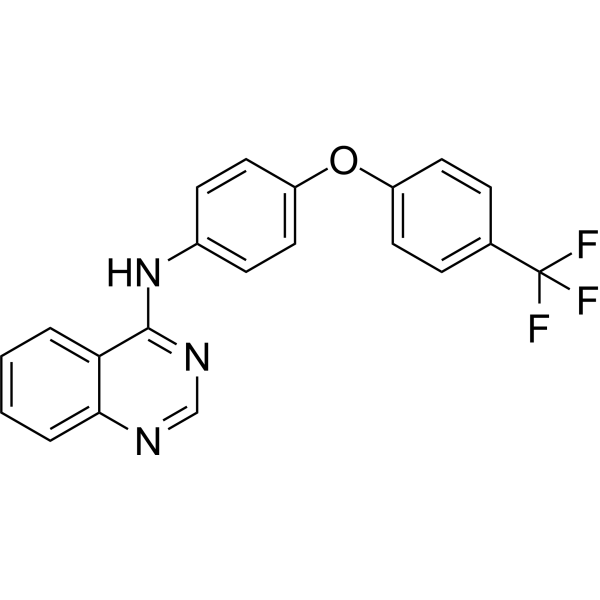
ND-011992 is a reversible, selective quinazoline-type inhibitor targeting quinone reductases and quinol oxidases. ND-011992 inhibits respiratory complex I and bo3 oxidase in addition to bd-I and bd-II oxidases in E. coli strain BL21*Δcyo with the IC50 of 0.12, 2.47, 0.63 and 1.3 μM, respectively. ND-011992 can be used for tuberculosis study .
loading...
    loading...
Art. -Nr.: HY-N6802
CAS. Nr.: 66069-55-4
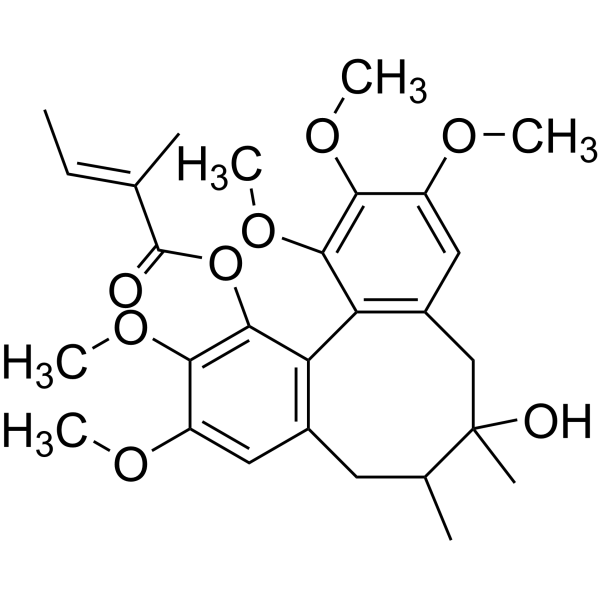
Tigloylgomisin H is a lignan isolated from the fruits of S. chinensis, can induce quinone reductase (QR) activity in Hepa1c1c7 mouse hepatocarcinoma cells. Tigloylgomisin H functions as a monofunctional inducer that specifically upregulates phase II detoxification enzyme NQO1 through the NF-E2-related factor 2 (Nrf2)-ARE pathway, thus represents a potential liver cancer prevention agent .
loading...
    loading...
Art. -Nr.: HY-W112021
CAS. Nr.: 3117-03-1
Synonyms: 2,5-Dimethoxybenzoquinone
Forschungsgebiete:  

Others

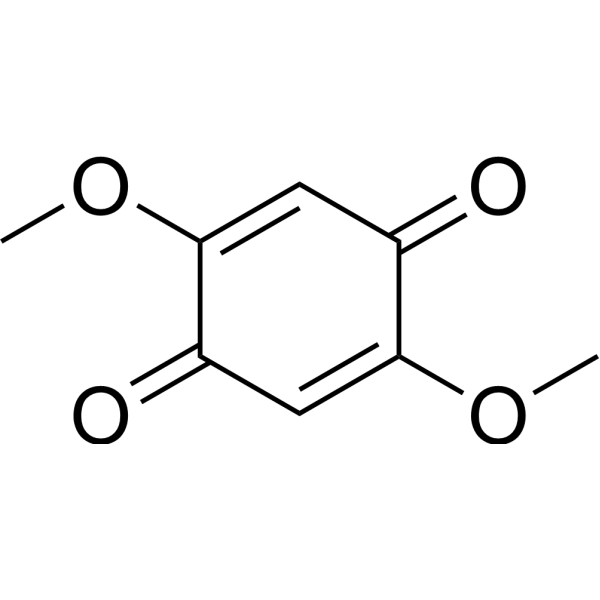
2,5-DMBQ (2,5-Dimethoxybenzoquinone) serves as an extracellular reductant. 2,5-DMBQ is involved in a crucial redox cycle, namely the extracellular hydroquinone-quinone redox cycle. In this cycle, 2,5-DMBQ is capable of reducing extracellular Fe ³⁺ and generating H2O2. 2,5-DMBQ plays a pivotal role in the biodegradation mechanism of brown rot fungal, assisting the fungi in decomposing and utilizing organic matter .
loading...
    loading...
Art. -Nr.: HY-W112021R
CAS. Nr.: 3117-03-1
Synonyms: 2,5-Dimethoxybenzoquinone (Standard)
Forschungsgebiete:  

Others

2,5-DMBQ (2,5-Dimethoxybenzoquinone) serves as an extracellular reductant. 2,5-DMBQ is involved in a crucial redox cycle, namely the extracellular hydroquinone-quinone redox cycle. In this cycle, 2,5-DMBQ is capable of reducing extracellular Fe³⁺ and generating H2O2. 2,5-DMBQ plays a pivotal role in the biodegradation mechanism of brown rot fungal, assisting the fungi in decomposing and utilizing organic matter .
loading...
    loading...
Art. -Nr.: HY-13543R
CAS. Nr.: 21919-05-1
Synonyms: CB 1954 (Standard)
Forschungsgebiete:  

Cancer

Tretazicar (Standard) is the analytical standard of Tretazicar. This product is intended for research and analytical applications. Tretazicar (CB 1954), an antitumor proagent, is highly selective against the Walker 256 rat tumour line. Tretazicar is enzymatically activated to generate a bifunctional agent, which can form DNA-DNA interstrand cross-links. Tretazicar in rat cells involves the reduction of its 4-nitro group to a 4-hydroxylamine by the enzyme NAD(P)H:quinone oxidoreductase 1 (NQO1) .
loading...
    loading...
Art. -Nr.: HY-171035
CAS. Nr.: 2377770-85-7
PRL-295 is an orally active inhibitor targeting Keap1-Nrf2 interaction. PRL-295 increases the thermal stability of Keap1 and disrupts its interaction with Nrf2, thereby activating the Nrf2-dependent transcriptional target NAD(P)H:quinone oxidoreductase 1 (NQO1). PRL-295 protects against Acetaminophen (HY-66005)-induced liver injury in mice .
loading...
    loading...
Art. -Nr.: HY-N3385
CAS. Nr.: 129314-37-0
Synonyms: 7-O-Methyllicorisoflavan B
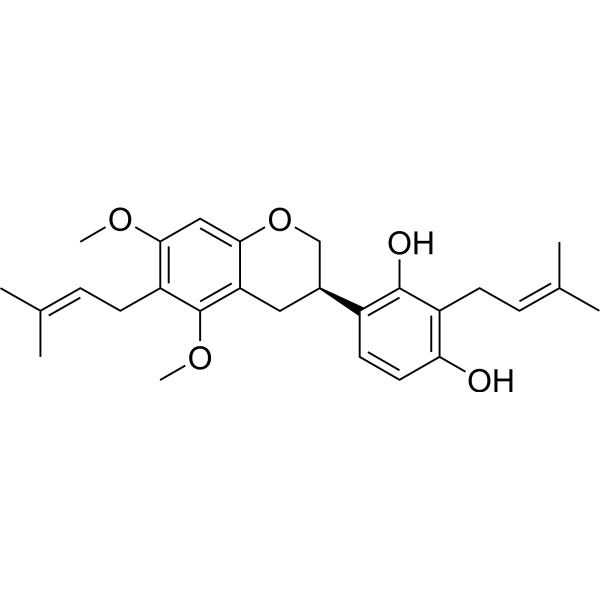
Licorisoflavan A (7-O-Methyllicorisoflavan B) is a isoflavan-quinone, that can be isolated from Glycyrrhiza uralensis . Licorisoflavan A exhibits anti-inflammatory and antimicrobial properties . It can inhibit the secretion of IL-6 and chemokines by LPS-stimulated macrophages in a concentration-dependent manner, and also suppress the secretion of MMP-7, MMP-8, and MMP-9 in macrophages . Licorisoflavan A exertes potent antidepressant-like effects involving BDNF-TrkB pathway and AMPA receptors .
loading...
    loading...
Art. -Nr.: HY-N6724
CAS. Nr.: 56258-32-3
Synonyms: Dihydroalterperylenol; ATX-I
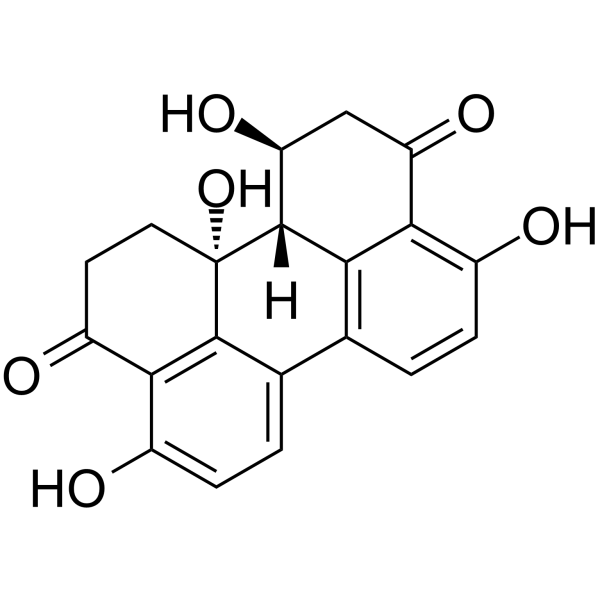
Altertoxin I (Dihydroalterperylenol; ATX-I) is a quinone mycotoxin with immunosuppressive, mutagenic and anticancer activities. Altertoxin I inhibits LPS (HY-D1056)-mediated NF-κB activation and estrogen-dependent alkaline phosphatase activity. Altertoxin I activates the AhR signaling pathway, induces the expression of CYP 1A1/1A2/1B1 and the enzymatic activity of EROD. Altertoxin I can be used in breast cancer research .
loading...
    loading...
Art. -Nr.: HY-N9868
CAS. Nr.: 423170-79-0
(-)-Phaselic acid is a protein protectant that can be isolated from red clover (Trifolium pratense) leaves. (-)-Phaselic acid is synthesized through an acyl transfer reaction between caffeoyl-CoA and malic acid catalyzed by the HCT2 enzyme. As a substrate for endogenous polyphenol oxidase (PPO), its oxidation to o-quinone can inhibit protein degradation during forage storage. (-)-Phaselic acid can be used to improve the protein preservation performance of forage crops such as alfalfa, reducing nutritional losses during storage and environmental nitrogen pollution .
loading...
    loading...
Art. -Nr.: HY-W011956
CAS. Nr.: 2208-41-5
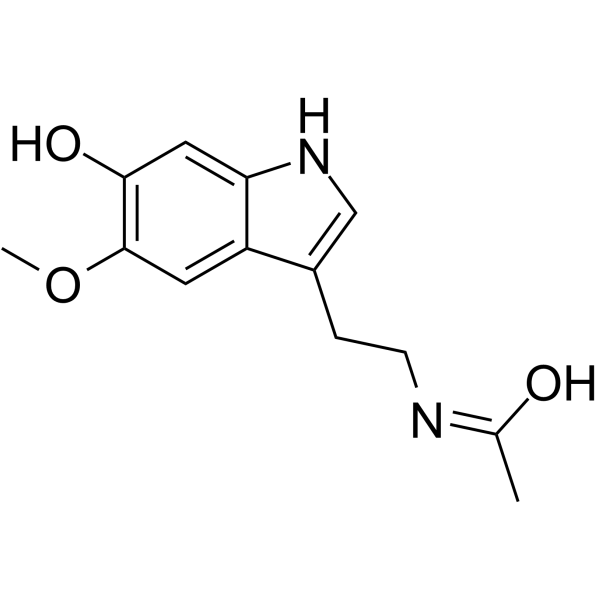
6-Hydroxymelatonin is the main metabolite of melatonin (HY-B0075) after being metabolized by CYP1A2 and can cross the blood-brain barrier. 6-Hydroxymelatonin has strong free radical scavenging ability and antioxidant activity, and can alleviate oxidative damage caused by various neurotoxins. 6-Hydroxymelatonin can cause oxidative DNA damage in the presence of copper ions through a "non-quinone" type redox cycling mechanism .
loading...
    loading...
Art. -Nr.: HY-N17587
CAS. Nr.: 625434-15-3
3,24-Diacetate barbinervic acid is a triterpenoid derivative found in the stems of Coussarea brevicaulis .
loading...
    loading...
Art. -Nr.: HY-128895A
CAS. Nr.: 1800406-26-1
Forschungsgebiete:  

Metabolic Disease

KL1333 hydrochloride is an orally active NAD + modulator that reacts with NAD(P)H:quinone oxidoreductase 1 (NQO1) as a substrate, leading to increased intracellular NAD + levels through NADH oxidation. Elevated NAD + levels trigger activation of SIRT1 and AMPK, and subsequently activate PGC-1α. KL1333 hydrochloride improves energy metabolism and mitochondrial dysfunction in mitochondrial encephalomyopathy, lactic acidosis, and stroke-like episodes (MELAS) fibroblasts. KL1333 hydrochloride protects against cisplatin-induced ototoxicity in mouse cochlear cultures .
loading...
    loading...
Art. -Nr.: HY-117285
CAS. Nr.: 60227-09-0
Synonyms: Lactoquinomycin A; LQM-A
Lactoquinomycin A is a quinone antibiotic. Lactoquinomycin A has the activity of anti-Gram-positive bacteria and some Gram-negative bacteria, but the effect of anti-Gram-negative bacteria is weak and has no effect on fungi. Lactoquinomycin A inhibits a variety of cell lines including lymphoma L5178Y progenitor, Adriamycin resistant, Bleomycin-resistant, human leukemia K562, mouse leukemia L-1210 and mouse leukemia P 388 with ID50 (μg/mL) of 0.02, 0.006, 0.008, 0.033, 0.013 and 0.03, respectively .
loading...
    loading...

