32 Results for "

4T1 breast cancer

" in MedChemExpress (MCE) Product Catalog:
Products (32)

32 Results for "4T1 breast cancer" in MCE Product Catalog:

  • Categories Recommended:
    More
1
1 Cited Publications
Cat. No.: HY-163757
CAS No.: 3052114-77-6
Target:  

PROTACs PD-1/PD-L1

Research Areas:  

Inflammation/Immunology Cancer

PROTAC PD-L1 degrader-1 is a CRBN-based PD-L1-PROTAC degrader with a notable PD-L1 protein degradation capability. PROTAC PD-L1 degrader-1 shows potent PD-L1 degradation in 4T1 cells with a DC50 of 0.609 μM. PROTAC PD-L1 degrader-1 can be used for the study of breast cancer .
loading...
    loading...
Cat. No.: HY-162312
CAS No.: 2758090-62-7
Research Areas:  

Cancer

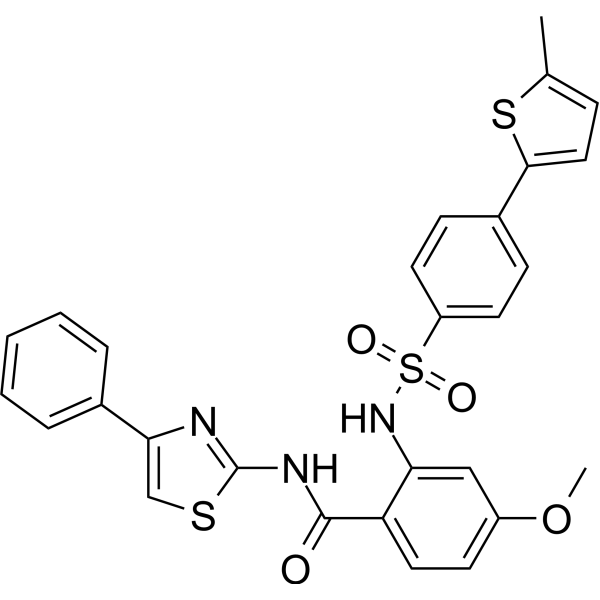
LLK203 is a potent USP2/USP8 dual-target inhibitor with IC50s of 0.89 μM and 0.52 μM, respectively. LLK203 leads a degradation of ERα and induces apoptosis of breast cancer MCF-7 cells. LLK203 demonstrates antitumor activities against the 4T1 tumor mice model .
loading...
    loading...
Cat. No.: HY-156096
CAS No.: 3033039-28-7
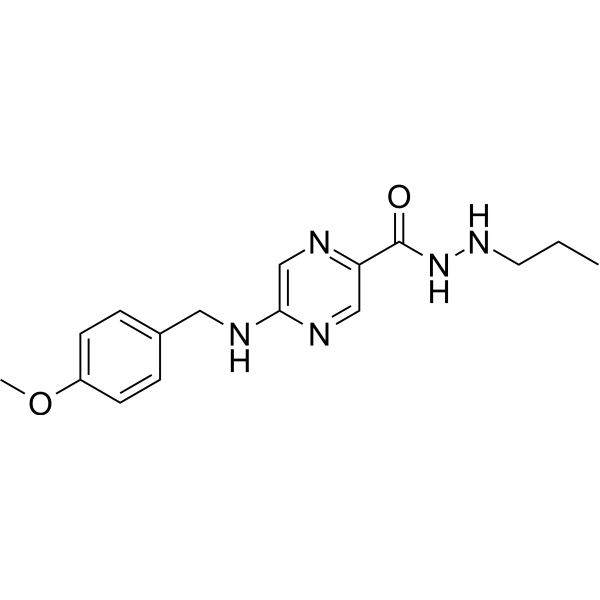
HDAC3-IN-2 (compound 4i) is a pyrazinyl hydrazide-based HDAC3 inhibitor (IC50: 14 nM) that efficiently targets triple-negative breast cancer cells. HDAC3-IN-2 is cytotoxic with an IC50 of 0.55 μM against 4T1 and an IC50 of 0.74 μM against MDA-MB-231. HDAC3-IN-2 has anti-tumor efficacy in vivo in tumor-bearing mouse models, selectively increasing the acetylation levels of H3K9, H3K27 and H4K12, increasing the contents of apoptosis-related caspase-3, caspase-7 and cytochrome c, and reducing Proliferation-related Bcl-2, CD44, EGFR, and Ki-67 levels .
loading...
    loading...
Cat. No.: HY-176869
CAS No.: 1431625-66-9
Target:  

Drug Derivative

Research Areas:  

Cancer

EMC-AANL-DOX is a legumain-activated prodrug conjugate of Doxorubicin (DOX) (HY-15142A). EMC-AANL-DOX shows antitumor activity in mouse models of neuroblastoma (NB), breast cancer (4T1), fibrosarcoma (HT1080), and colorectal cancer liver metastases (CT26). EMC-AANL-DOX can be used for cancer research .
loading...
    loading...
Cat. No.: HY-146231
CAS No.: 2636072-62-1
Target:  

PROTACs MAP4K

Research Areas:  

Inflammation/Immunology Cancer

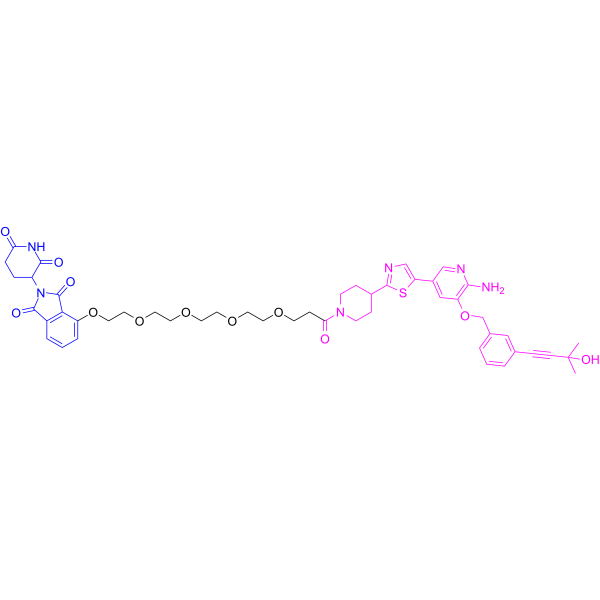
SS47 is a hematopoietic progenitor kinase HPK1 PROTAC-class degrader and immune activator. SS47 promotes the proliferation of CD4+ and CD8+ T cells as well as IFN-γ secretion, and enhances the anti-tumor cytotoxicity and in vivo efficacy of BCMA CAR-T cells. SS47 also inhibits tumor growth in mouse models, and when combined with anti-PD-1 therapy, it improves the immune response of 4T1 tumor-bearing mice. SS47 can be used in breast cancer-related research .
loading...
    loading...
Cat. No.: HY-146231A
Purity:  99.88%
Target:  

PROTACs MAP4K

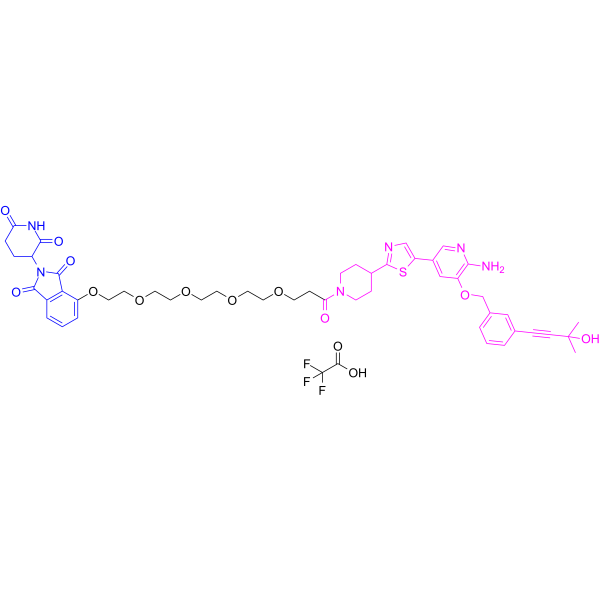
SS47 TFA is a hematopoietic progenitor kinase HPK1 PROTAC-class degrader and immune activator. SS47 TFA promotes the proliferation of CD4+ and CD8+ T cells as well as IFN-γ secretion, and enhances the anti-tumor cytotoxicity and in vivo efficacy of BCMA CAR-T cells. SS47 TFA also inhibits tumor growth in mouse models, and when combined with anti-PD-1 therapy, it improves the immune response of 4T1 tumor-bearing mice. SS47 TFA can be used in breast cancer-related research .
loading...
    loading...
Cat. No.: HY-175478
CAS No.: 3105103-33-8
Enpp-1-IN-27 is a selective ENPP1 inhibitor with an IC50 of 14.68 nM, exhibiting approximately 410-fold selectivity against ENPP2 and 10-fold selectivity against ENPP3. Enpp-1-IN-27 stabilizes cGAMP levels and activates the STING pathway, promoting cytokine release and enhancing innate immune responses. Enpp-1-IN-27 induces ISRE activation and amplified cGAMP-mediated immune responses and shows the desired antitumor efficacy in the 4T1 and CT26 syngeneic mouse models. Enpp-1-IN-27 can used for the studies of breast cancer and colon cancer .
loading...
    loading...
Cat. No.: HY-175846
CAS No.: 2822560-46-1
Research Areas:  

Cancer

TQFL13 is derivative of Thymoquinone (TQ) (HY-D0803) with potent anti-breast cancer activity. TQFL13 exhibits higher cytotoxicity against breast cancer cells (BT549, MDA-MB-231, 4T1). TQFL13 increases apoptosis and blocks the cell cycle at S and G2/G1 phases in breast cancer cells. TQFL13 shows dose-dependent anti-tumor efficacy in mouse breast cancer allograft model. TQFL13 can be used for the study of breast cancer .
loading...
    loading...
Cat. No.: HY-170453
Research Areas:  

Cancer

iHAC is an inhibitor HSP90-anchoring chimera, that covalently binds BRD4 ligand (+)-JQ-1 to HSP90, and inhibits the proliferation of cancer cells. iHAC activates the anti-tumor immune response, inhibits the recurrence and metastasis of 4T1 breast cancer in mouse models .
loading...
    loading...
Cat. No.: HY-175227
Research Areas:  

Cancer

STAT3/NF-κB-IN-1 is a potentSTAT3 and NF-κB inhibitor with IC50s of 5.86 (STAT3) and 4.22 μM (NF-κB) in 4T1 cells. STAT3/NF-κB-IN-1 is able to induce apoptosis via its upregulation on key apoptotic regulators; caspases-3/9, Bax and downregulation of Bcl-2. STAT3/NF-κB-IN-1 exerts considerable anticancer activity against breast cancer cell lines and reduces tumor volume in vivo. STAT3/NF-κB-IN-1 can be used for the study of breast cancer .
loading...
    loading...
Cat. No.: HY-175857
Target:  

HDAC Apoptosis

Research Areas:  

Cancer

HDAC-IN-92 is a pan-HDAC inhibitor with an IC50 of 12.58 µM in A2780 cells. HDAC-IN-92 demonstrates broad-spectrum, notable cytotoxic activity against a range of human cancer cell lines, including ovarian, liver, and breast carcinomas. HDAC-IN-92 causes apoptosis and demonstrates a notable decrease in tumor cell colony formation. HDAC-IN-92 inhibits the formation of blood vessels in the chick chorioallantoic membrane (CAM). HDAC-IN-92 exhibits anti-tumor effect in a 4T1 tumor-bearing mouse model. HDAC-IN-92 can be used for research targeting solid tumor .
loading...
    loading...
Cat. No.: HY-174403
Research Areas:  

Cancer

c-MYC/BCL2 ligand 1 iodide is a dual-targeting c-MYC/Bcl-2 G4 ligand with Kd values of 0.90 μM (c-MYC G4) and 0.56 μM (Bcl-2 G4). c-MYC/BCL2 ligand 1 iodide inhibits c-MYC and Bcl-2 gene transcription by binding to G4-forming sequences and downregulates their protein expression. c-MYC/BCL2 ligand 1 iodide inhibits suppresses migration, induces caspase-dependent apoptosis, and triggers cell cycle G1 arrest in MCF-7 cells. c-MYC/BCL2 ligand 1 iodide significantly suppresses tumor growth in a 4T1 syngeneic model with no observable toxicity. c-MYC/BCL2 ligand 1 iodide can be used for the research of breast cancer.
loading...
    loading...
Cat. No.: HY-175981
Target:  

Drug Derivative

Research Areas:  

Cancer

Paclitaxel-bromothiophene is a semisynthetic taxane analogue of Paclitaxel (HY-B0015). Paclitaxel-bromothiophene exhibits potent antiproliferative activity against 4-T1 breast cancer cells, with an IC50 value of 15.18 nM. Paclitaxel-bromothiophene shows high binding affinity to C5aR1 (Kd = 19.4 μM). Paclitaxel-bromothiophene demonstrates excellent anti-tumor efficacy in 4-T1 breast cancer-bearing mice. Paclitaxel-bromothiophene can be used for the study of breast cancer .
loading...
    loading...
Cat. No.: HY-155745
CAS No.: 2759277-20-6
Target:  

Apoptosis

Research Areas:  

Cancer

Antitumor agent-115 (SS-12) is an effective anti-tumor compound with an IC50 value of 0.34 μM-24.14 μM for cell line 4T1. Antitumor agent-115 can block the cell cycle of mouse breast cancer cell line 4T1, reduce the mitochondrial membrane potential, and induce apoptosis, and the IC50 value is 8-25 μmol/L for cell viability. Antitumor agent-115 can be used for breast cancer research .
loading...
    loading...
Cat. No.: HY-173584
Target:  

Drug Derivative

Research Areas:  

Cancer

GSK484-Ph (compound 15d) is an analog of GSK484 (HY-100514) with potent anticancer effects. GSK484-Ph potently inhibits 4T1 cells and can be used for the study of breast cancer .
loading...
    loading...
Cat. No.: HY-172892
Research Areas:  

Cancer

PI3K-IN-59 (Compound 3d) is a PI3K inhibitor (IC50: 17.44 μM). PI3K-IN-59 has significant antiproliferative activity and exhibits potent inhibitory effects on breast cancer 4T1 cells (IC50: 3.70 μM) and colon cancer CT26 cells (IC50: 1.98 μM) as well as human breast cancer cells (IC50: 19.72 μM). PI3K-IN-59 exerts a dual anti-tumor mechanism by inhibiting PI3Kα enzymatic activity and triggering the Fenton reaction to generate hydroxyl radicals (•OH). PI3K-IN-59 shows promising anti-4T1 tumor effects and is suitable for synergistic targeting studies in breast and colon cancers .
loading...
    loading...
Cat. No.: HY-116904
CAS No.: 1983924-33-9
Target:  

Apoptosis Akt

Research Areas:  

Cancer

Anticancer agent 253 (Compound 26) has anti-cancer activity against breast cancer cells, with IC50s of 6 μM (MCF-7), 10 μM (MDA-MB-231) and 6.4 μM (4T1 cells). Anticancer agent 253 arrests cell cycle and induces mitochondria-mediated apoptosis in cancer cells. Anticancer agent 253 inhibits Akt phosphorylation in human breast and prostate cancer .
loading...
    loading...
Cat. No.: HY-D2620
CAS No.: 3030055-40-1
CAR-2 is a BODIPY-based photosensitizer that induces ferroptosis in photodynamic therapy (PDT) by targeting the endoplasmic reticulum (ER) and lipid droplets (LDs). CAR-2 exhibits phototoxicity in breast cancer cells with IC50 of 0.01-0.02 μM. CAR-2 exhibits antitumor efficacy in 4T1 xenograft mouse models .
loading...
    loading...
Cat. No.: HY-161778
CAS No.: 3049802-32-3
Target:  

HDAC VD/VDR

Research Areas:  

Inflammation/Immunology Cancer

ZG-126 is an agonist for vitamin D receptor (VDR) and an inhibitor for histone deacetylase (HDAC) (IC50=0.63-67.6 μM). ZG-126 exhibits cytotoxicity in cancer cells MDA-MB-231 and 4T1. ZG-126 exhibits antitumor and anti-metastatic efficacy against melanoma and triple-negative breast cancer (TNBC) in mouse models. ZG-126 also exhibits anti-inflammatory activity, through the reduction of macrophage infiltration and immunosuppressive M2-polarization .
loading...
    loading...
Cat. No.: HY-175820
Target:  

VEGFR ERK Apoptosis EGFR

Research Areas:  

Cancer

AGW-11 is a potent dual inhibitor of EGFR (IC50 = 556 nM) and VEGFR2 (IC50 = 289.7 nM). AGW-11 induces apoptosis and suppresses phosphorylation of EGFR, VEGFR2, and ERK1/2 in HUVECs. AGW-11 effectively inhibits cancer cell growth, reduces HUVEC proliferation, tube formation, and invasion, thereby blocking angiogenesis. AGW-11 significantly suppresses tumor growth and decreases lung metastasis in a 4T1 xenograft mouse model. AGW-11 can be used for the study of breast cancer .
loading...
    loading...

