From 11:00 pm to 12:00 pm EST ( 8:00 pm to 9:00 pm PST ) on January 6th, the website will be under maintenance. We are sorry for the inconvenience. Please arrange your schedule properly.
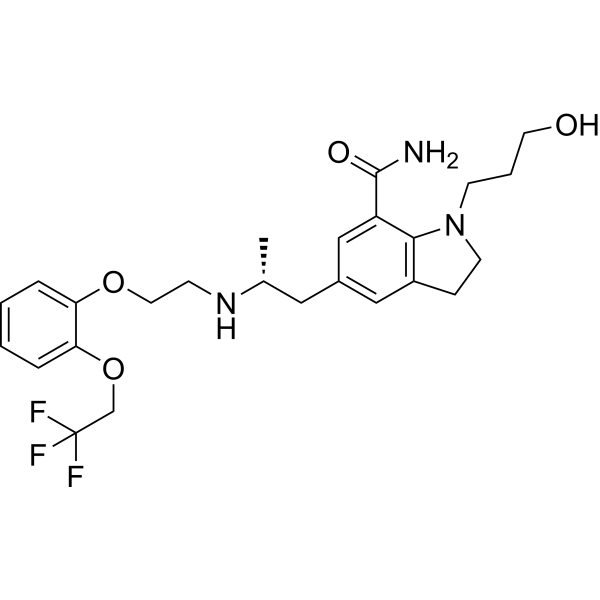
Silodosin (KAD 3213; KMD 3213) is a potent, selective and orally active α1A-adrenergic receptor (α1A-AR) blocker. Silodosin exhibits high affinity for α1A-AR (Ki=0.036 nM), over 162-fold and 50-fold than for α1B-AR and α1D-AR with Ki values of 21 nM and 2.0 nM, respectively. Silodosin is an effective and well-tolerated agent, it can be used for the investigation of LUTS/BPH .
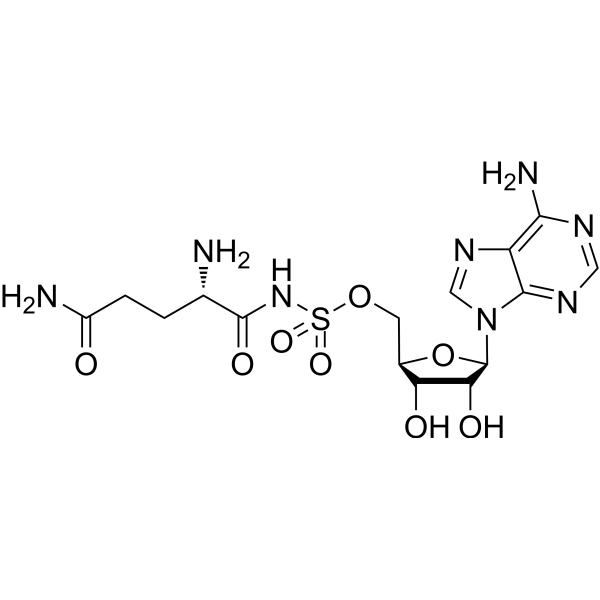
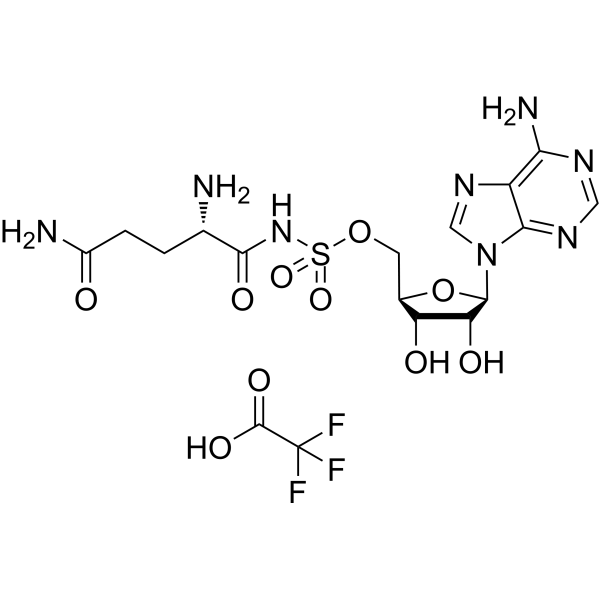
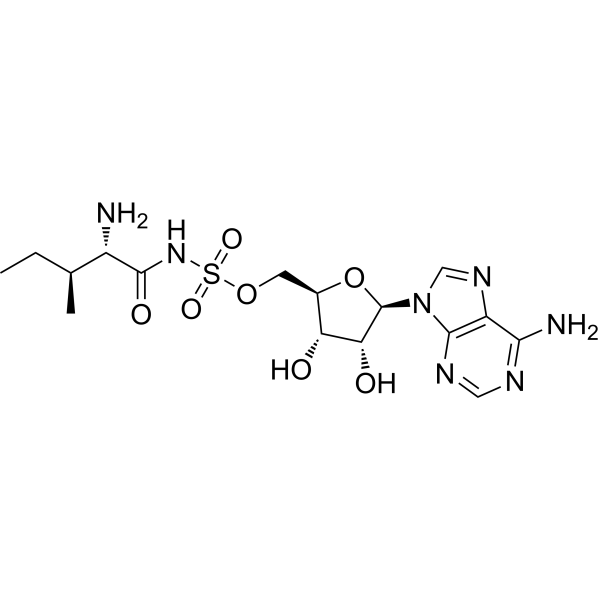
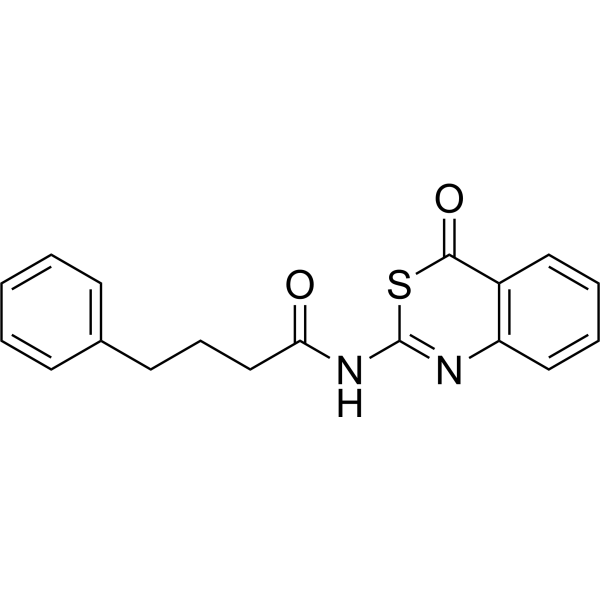
Aminoacyl tRNA synthetase-IN-1 (IleSA) is an inhibitor of bacterial aminoacyl-tRNA synthetase (aaRS). Aminoacyl tRNA synthetase-IN-1 is applicable to studies on bacterial infections .
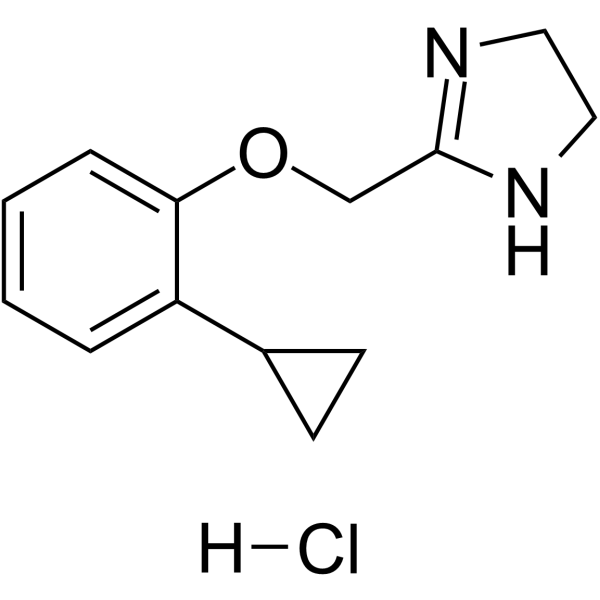
Cirazoline hydrochloride (LD 3098 hydrochloride) is a potent competitive full α1A-adrenergic receptor (α1A-AR) agonist (Ki=120 nM) and only a partial agonist at α1B-AR (Ki= 960 nM) and α1D-AR (Ki=660 nM) .
BMY 7378 is a selective antagonist of α1D-adrenoceptor (α1D-AR). BMY 7378 binds to membranes expressing the cloned rat α1D-AR with a >100-fold higher affinity (Ki=2 nM) than binding to either the cloned rat α1A-AR (Ki=800 nM) or the hamster α1B-AR (Ki=600 nM). BMY 7378 is a 5-HT1A receptor partial agonist .
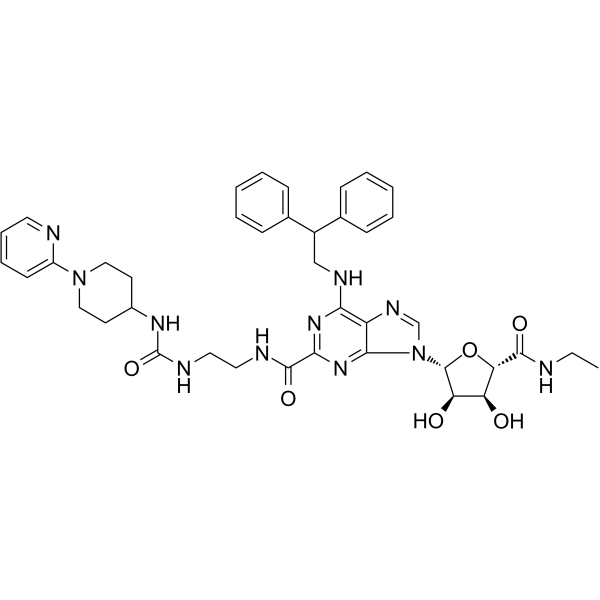
UK-432097 is a highly potent and selective A2AAR agonist with a pKi of 8.4 for human A2AAR. UK-432097 has anti-inflammatory and anti-aggregatory properties. UK-432097 has the potential for COPD (Chronic Obstructive Pulmonary Disease) research .
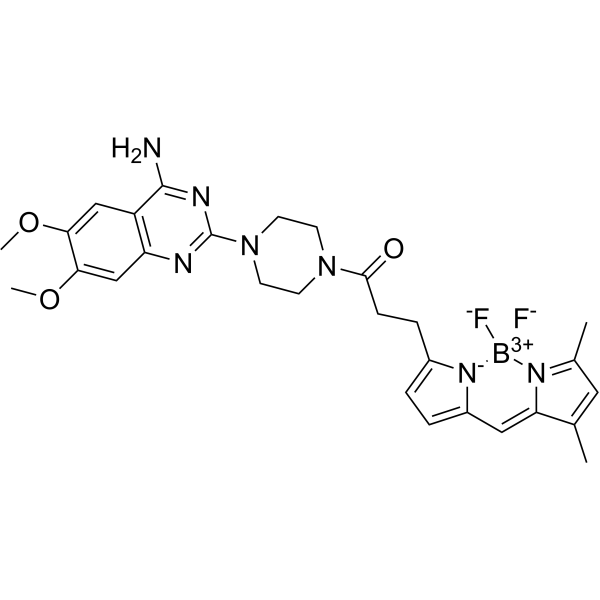
BODIPY FL prazosin is a fluorescent α1-adrenergic antagonist with Ki values of 14.5, 43.3 nM for α1a-AR and α1b-AR, respectively. BODIPY FL prazosin also is a fluorescent ligand with the excitation and emission wavelengths are 485 and 535 nm, respectively. BODIPY FL prazosin can be used for study the differences in the subcellular localization of α1-adrenoceptor subtypes .
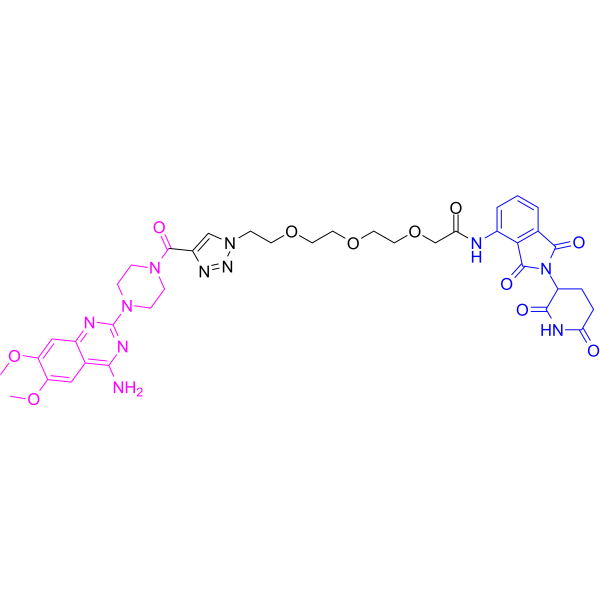
α1A-AR Degrader 9c (compound 9c) is a potent, selective and reversible α1A-AR (Adrenergic receptor) PROTAC degrader, with a DC50 of 2.86 μM. α1A-AR Degrader 9c induces α1A-AR degradation can be attributed to proteasomal degradation. α1A-AR Degrader 9c inhibits the proliferation of PC-3 cells, with an IC50 of 6.12 μM. α1A-AR Degrader 9c shows antitumor activity, and can be used for prostate cancer research .
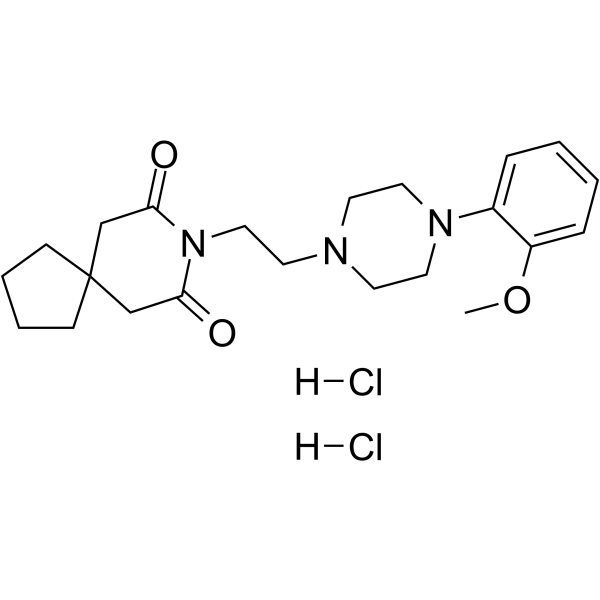
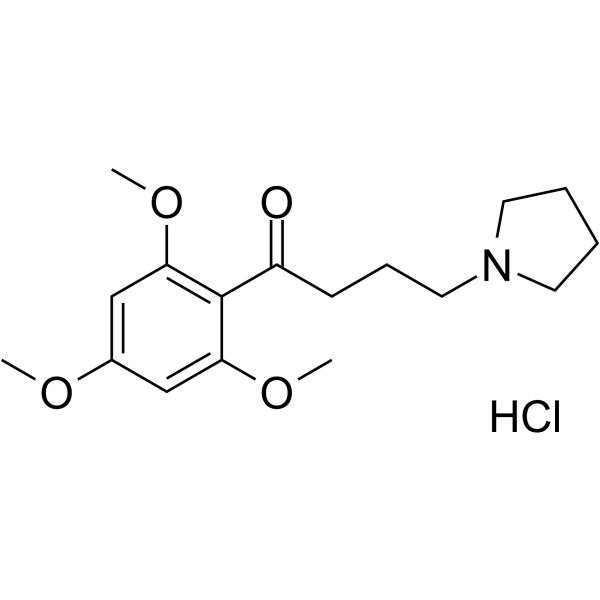
Buflomedil hydrochloride, a vasodilator agent, is an orally active α1A-adrenoceptor antagonist with Kis of 4.06 µM and 6.84 µM for α1A-AR and α1B-AR, respectively. Buflomedil hydrochloride can be used for the study of peripheral circulatory disorders .
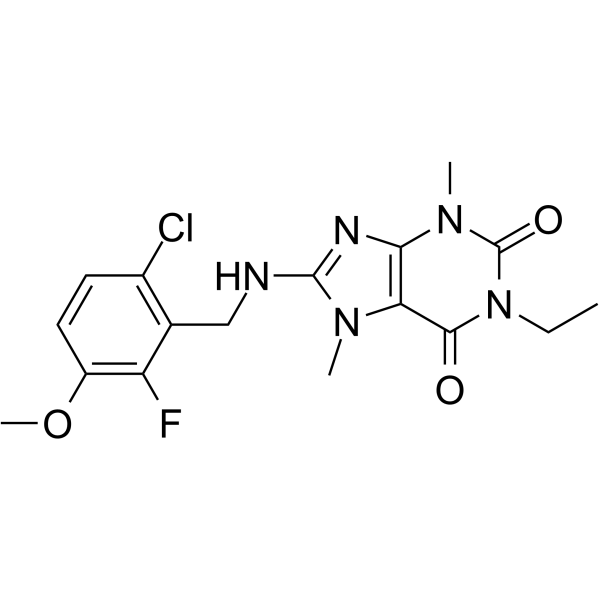
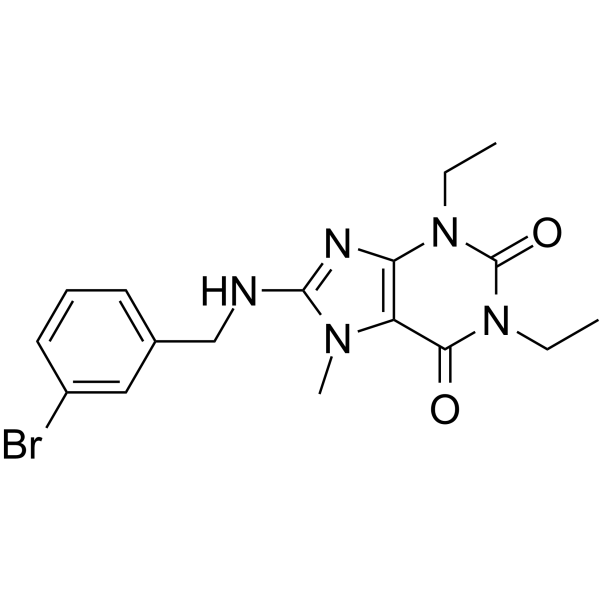
Adenosine receptor inhibitor 1 is a potent and selective adenosine receptor (AR) inhibitor with Ki values of >1000, 68.5, >1000, >1000 nM for A1AR, A2AAR, A2BAR, A3AR, respectively. Adenosine receptor inhibitor 1 shows antinociceptive activity, anti-inflammatory effect and peripheral analgesic effect. Adenosine receptor inhibitor 1 has the potential for the research of cancer or neurodegenerative diseases .
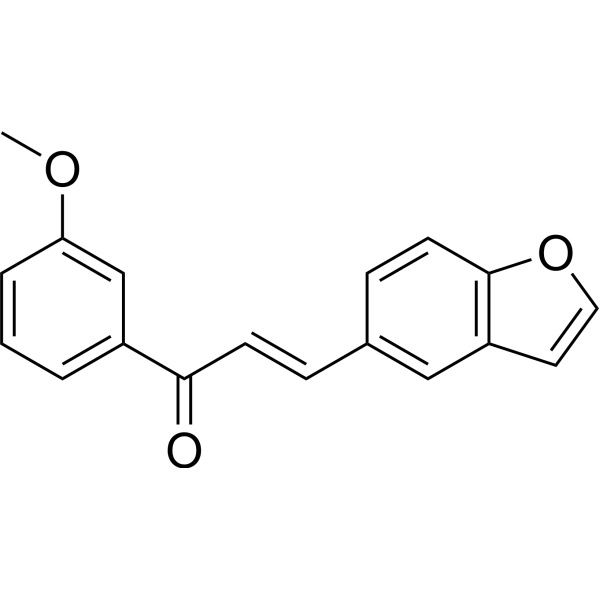
3′-Methoxyfurano[4″,5″:3,4]chalcone (compound 2) is a selective A2AAR antagonist (IC50=33.5 nM) with high affinity. 3′-Methoxyfurano[4″,5″:3,4]chalcone is also a natural product obtained from the bark of Allium cepa L. 3′-Methoxyfurano[4″,5″:3,4]chalcone can promote T cell activation and can be used in cancer immunity research .
AARS1 Human Pre-designed siRNA Set A contains three designed siRNAs for AARS1 gene (Human), as well as a negative control, a positive control, and a FAM-labeled negative control.
AARS2 Human Pre-designed siRNA Set A contains three designed siRNAs for AARS2 gene (Human), as well as a negative control, a positive control, and a FAM-labeled negative control.
Adenosine receptor inhibitor 2 (compound 14b) is a potent AR (adenosine receptor) inhibitor. Adenosine receptor inhibitor 2 shows dual affinity toward A1/A2A ARs with higher affinity for the A1- than the A2AAR. Adenosine receptor inhibitor 2 has Ki values of 52.2 nM for the A1AR and 167 nM for the A2AAR .
A2AAR/hMAO-B-IN-1 (compoudn 17) is a non-xanthine dual-target inhibitor targeting the A2A adenosine receptor (A2AAR) (IC50: 34.9 nM) andMAO-B (Ki: 39.5 nM, human). A2AAR/hMAO-B-IN-1 inhibits A2AAR-induced cAMP accumulation and exhibits competitive, reversible inhibition of MAO-B. A2AAR/hMAO-B-IN-1 can be used in the study of neurodegenerative diseases such as Parkinson's disease (PD) .
Aminoacyl tRNA synthetase-IN-2 (Compound 14) is an aminoacyl-tRNA synthetase (aaRS) inhibitor. Aminoacyl tRNA synthetase-IN-2 can be used for development of a new family of antibiotics .
A2AAR/HDAC-IN-2 is a potent A2AAR/HDAC dual inhibitor, with good binding affinity for A2AAR (Ki=10.3 nM) and good inhibitory activity against HDAC1 (IC50=18.5 nM). A2AAR/HDAC-IN-2 can be used in study of antitumor .
Aars1 Mouse Pre-designed siRNA Set A contains three designed siRNAs for Aars1 gene (Mouse), as well as a negative control, a positive control, and a FAM-labeled negative control.
LJ-4517 is a potent A2AAR antagonist, with a Ki of 18.3 nM. LJ-4517 is potent in displacing the binding of [ 3H]ZM241385 (HY-19532) at WT A2AAR . LJ-4517 is a click chemistry reagent, it contains an Alkyne group and can undergo copper-catalyzed azide-alkyne cycloaddition (CuAAc) with molecules containing Azide groups.
A2AAR antagonist 4 is an orally active A2A Adenosine receptor antagonist with a Ki of 0.36 nM and a KB of 1 nM at hA2AAR. A2AAR antagonist 4 fully inhibits hA2AAR and hA2bAR at 10 μM. A2AAR antagonist 4 can be used for research of cancer, such as MC38 tiumor .
A2AAR antagonist 5 is a selective A2AAR antagonist. A2AAR antagonist 5 inhibits NECA-stimulated adenylyl cyclase activity in hA2AAR-expressing CHO cells with an IC50 value of 1863 nM. A2AAR antagonist 5 possesses strong free radical scavenging activity, with an EC50 value of 22.21 μM in the DPPH assay. A2AAR antagonist 5 exerts notable neuroprotective effects in in vitro cerebral ischemia models. A2AAR antagonist 5 can be used for the study of cerebral ischemia .
A2AAR/HDAC-IN-1 (compound 14c) is an orally active, potent and balanced A2AAR/HDAC dual inhibitor, with a Ki of 163.5 nM for A2AAR and an IC50 of 145.3 nM for HDAC1. A2AAR/HDAC-IN-1 shows anticancer activity .
hA2AAR antagonist 1 (compound 4a) is a highly selective hA2AAR antagonist with a Ki of 5 nM. hA2AAR antagonist 1 can be used in the study of immune-oncology .
A2AAR antagonist 1 (compound 21a) is an A2AAR (adenosine A2A receptor) antagonist with a Ki value of 20 nM. A2AAR antagonist 1 shows high ligand efficiency, and it can be used for the research of neurodegenerative diseases .
AAR2 Human Pre-designed siRNA Set A contains three designed siRNAs for AAR2 gene (Human), as well as a negative control, a positive control, and a FAM-labeled negative control.
Aars2 Rat Pre-designed siRNA Set A contains three designed siRNAs for Aars2 gene (Rat), as well as a negative control, a positive control, and a FAM-labeled negative control.
α2A-AR agonist 1 (Compound B9) is a selective agonist for α2-adrenergic receptor(α2A-AR) with EC50 of 0.23 nM. α2A-AR agonist 1 exhibits a hypnotic effect, with ED50 of 0.138 mg/kg in the loss of righting reflex (LORR) experiment. α2A-AR agonist 1 exhibits metabolic stability in mouse liver microsomes .
Silodosin-d4 is the deuterium labeled Silodosin. Silodosin (KAD 3213) is a potent, selective and orally active α1A-adrenergic receptor (α1A-AR) blocker. Silodosin exhibits high affinity for α1A-AR (Ki=0.036 nM), over 162-fold and 50-fold than for α1B-AR and α1D-AR with Ki values of 21 nM and 2.0 nM, respectively. Silodosin is an effective and well-tolerated agent, it can be used for the investigation of LUTS/BPH .
hA2A/hCA XII modulator 1 (compound 14), a triazolopirazine, is a potent hA2A adenosine receptor (hA2AAR) antagonist with Kis of 6.4 nM, 4.819 μM, >30 μM for hA2AAR, hA1AR, hA3AR, respectively. hA2A/hCA XII modulator 1 is a potent human carbonic anhydrase XII (hCA XII) inhibitor with Kis of 6.2 nM, 46 nM, 466 nM, 8.351 μM for hCA XII, hCA II, hCA IX and hCA I, respectively. hA2A/hCA XII modulator 1 has the potential for cancer research .
Silodosin Glucuronide sodium (Silodosin β-D-glucuronide sodium) is the metabolite of Silodosin (HY-10122). Silodosin is a selective and orally active antagonist for α1A-adrenergic receptor(α1A-AR) with Ki of 0.036 nM .
Silodosin (Standard) is the analytical standard of Silodosin. This product is intended for research and analytical applications. Silodosin (KAD 3213; KMD 3213) is a potent, selective and orally active α1A-adrenergic receptor (α1A-AR) blocker. Silodosin exhibits high affinity for α1A-AR (Ki=0.036 nM), over 162-fold and 50-fold than for α1B-AR and α1D-AR with Ki values of 21 nM and 2.0 nM, respectively. Silodosin is an effective and well-tolerated agent, it can be used for the investigation of LUTS/BPH .
Buflomedil, a vasodilator agent, is an orally active α1A-adrenoceptor antagonist with Kis of 4.06 µM and 6.84 µM for α1A-AR and α1B-AR, respectively. Buflomedil can be used for the study of peripheral circulatory disorders .
Cirazoline (hydrochloride) (Standard) is the analytical standard of Cirazoline (hydrochloride). This product is intended for research and analytical applications. Cirazoline hydrochloride (LD 3098 hydrochloride) is a potent competitive full?α1A-adrenergic receptor (α1A-AR) agonist (Ki=120 nM) and only a partial agonist at α1B-AR (Ki= 960 nM) and α1D-AR (Ki=660 nM) .
Buflomedil hydrochloride (Standard) is the analytical standard of Buflomedil hydrochloride (HY-B0484). This product is intended for research and analytical applications. Buflomedil hydrochloride (Standard), a vasodilator agent, is an orally active α1A-adrenoceptor antagonist with Kis of 4.06 µM and 6.84 µM for α1A-AR and α1B-AR, respectively. Buflomedil hydrochloride can be used for the study of peripheral circulatory disorders .
Adenosine receptor antagonist 6 is an orally active and selective A2A adenosine receptor(A2AAR) antagonist, with a Ki of 19.18 nM. Adenosine receptor antagonist 6 inhibits 5’-N-ethylcarboxamide adenosine (NECA) (HY-103173)-mediated cAMP production (IC50 = 0.089 μM) and immunosuppression, while promoting IL-2 and IFN-γ secretion. Adenosine receptor antagonist 6 abolishes the immunosuppressive effects of adenosine on T-cell activation and cytokine release. Adenosine receptor antagonist 6 inhibits tumor growth in a CT26/MC38 xenograft model. Adenosine receptor antagonist 6 can be used for the study of colon cancer .
β3-AR agonist 1 (compound 15) is a highly potent, selective, and orally available β3-adrenergic receptor (β3-AR) agonist (EC50=18 nM), being inactive to β1-, β2-, and α1A-AR (β1/β3, β2/β3, and α1A/β3>556-fold) .
BMY 7378 (free base) is a selective antagonist of α1D-adrenoceptor (α1D-AR). BMY 7378 (free base) binds to membranes expressing the cloned rat α1D-AR with a >100-fold higher affinity (Ki=2 nM) than binding to either the cloned rat α1A-AR (Ki=800 nM) or the hamster α1B-AR (Ki=600 nM). BMY 7378 (free base) is a 5-HT1A receptor partial agonist .
A2AAR antagonist 3 is a selective and potent A2A adenosine receptor (A2A AR) antagonist with an IC50 of 1.57 nM. A2AAR antagonist 3 demonstrates high and selective binding affinities to the A2A AR. A2AAR antagonist 3 demonstrates favorable stability in rat liver microsomes in vitro and acceptable pharmacokinetic profiles in vivo. A2AAR antagonist 3 can be used in cancer research.
NCP26 is an ATP-competitive ProRS inhibitor (with a KD of 271 nM in the absence of proline, and a KD of 0.35 nM in the presence of 100 μM proline). NCP26 activates AAR, induces G0/G1 phase arrest, Apoptosis, Caspase cleavage, and PARP cleavage. NCP26 downregulates MYC, TCF3, and CCND1. NCP26 inhibits the growth of multiple myeloma cells. NCP26 can be used for the research of multiple myeloma .
Aars1 Rat Pre-designed siRNA Set A contains three designed siRNAs for Aars1 gene (Rat), as well as a negative control, a positive control, and a FAM-labeled negative control.
Aars2 Mouse Pre-designed siRNA Set A contains three designed siRNAs for Aars2 gene (Mouse), as well as a negative control, a positive control, and a FAM-labeled negative control.
ST91 (Standard) is the analytical standard of ST91 (HY-103203). This product is intended for research and analytical applications. ST91 is a α2-adrenoceptor (α2AR) agonist. ST91 activates both α2AAR and non-α2AAR subtypes to produce spinal antinociception .
AR ligand-49 (Compound 4q) is a dual ligand for the adenosine A2A receptor (A2AAR) and the A3 receptor (A3AR). Its Ki values are 15 and 4.5 nM respectively. AR ligand-49 exhibits reverse agonistic activity at hA2AAR and antagonistic activity at hA3AR. AR ligand-49 can be used for the study of the design and development of adenosine receptor ligands .
(Rac)-Silodosin ((Rac)-KAD 3213) is the racemate of Silodosin (HY-10122). Silodosin is a potent, selective and orally active α1A-adrenergic receptor (α1A-AR) blocker .
Aminoacyl tRNA synthetase-IN-1 (Standard) is the analytical standard of Aminoacyl tRNA synthetase-IN-1 (HY-108939). This product is intended for research and analytical applications. Aminoacyl tRNA synthetase-IN-1 is a bacterial aminoacyl tRNA synthetase (aaRS) inhibitor. Aminoacyl tRNA synthetase-IN-1 has inhibitory activity against S. aureus, E. faecalis and E.coli .
A2A/A3 agonist-1 is a dual A2A/A3 adenosine receptor agonist. A2A/A3 agonist-1 has a Ki value of 2.9 nM and an EC50 of 0.51 nM for hA2AAR. A2A/A3 agonist-1 has a Ki of 0.8 nM and an EC50 < 0.10 nM for hA3AR. A2A/A3 agonist-1 possesses anti-inflammatory activity and can be used for the research of inflammatory diseases .
BMY 7378 (Standard) is the analytical standard of BMY 7378 (HY-100554). This product is intended for research and analytical applications. BMY 7378 is a selective antagonist of α1D-adrenoceptor (α1D-AR). BMY 7378 binds to membranes expressing the cloned rat α1D-AR with a >100-fold higher affinity (Ki=2 nM) than binding to either the cloned rat α1A-AR (Ki=800 nM) or the hamster α1B-AR (Ki=600 nM). BMY 7378 is a 5-HT1A receptor partial agonist .
BODIPY FL prazosin is a fluorescent α1-adrenergic antagonist with Ki values of 14.5, 43.3 nM for α1a-AR and α1b-AR, respectively. BODIPY FL prazosin also is a fluorescent ligand with the excitation and emission wavelengths are 485 and 535 nm, respectively. BODIPY FL prazosin can be used for study the differences in the subcellular localization of α1-adrenoceptor subtypes .
3′-Methoxyfurano[4″,5″:3,4]chalcone (compound 2) is a selective A2AAR antagonist (IC50=33.5 nM) with high affinity. 3′-Methoxyfurano[4″,5″:3,4]chalcone is also a natural product obtained from the bark of Allium cepa L. 3′-Methoxyfurano[4″,5″:3,4]chalcone can promote T cell activation and can be used in cancer immunity research .
NA/Neuraminidase Protein is a receptor-destroying enzyme that cleaves terminal sialic acids from cellular receptors, potentially facilitating viral invasion of the upper airways by targeting sialic acid moieties on airway epithelial cell mucin.NA plays a pivotal role in viral propagation by catalyzing the removal of terminal sialic acid residues from both viral and cellular glycoconjugates.Moreover, the sialidase activity in late endosome/lysosome traffic appears to enhance virus replication.NA/Neuraminidase Protein, H7N7 (AAR11367, HEK293) is the recombinant Virus-derived NA/Neuraminidase protein, expressed by HEK293 , with tag free. It originates from cell lysates collected after expressing a DNA sequence encoding the Influenza A virus neuraminidase.
The hemagglutinin HA1 protein is essential for attachment of virions to host cells by binding to sialic acid-containing receptors, inducing virion internalization via clathrin-dependent or clathrin- and caveolin-independent pathways.As a class I viral fusion protein, HA1 determines host range restriction and virulence, mediating fusion between the virion membrane and the endosomal membrane.HA/Hemagglutinin Protein, H7N7 (AAR02640, sf9, His) is the recombinant Virus-derived HA/Hemagglutinin protein, expressed by Sf9 insect cells , with C-His labeled tag.
The hemagglutinin HA1 protein is essential for attachment of virions to host cells by binding to sialic acid-containing receptors, inducing virion internalization via clathrin-dependent or clathrin- and caveolin-independent pathways.As a class I viral fusion protein, HA1 determines host range restriction and virulence, mediating fusion between the virion membrane and the endosomal membrane.HA/Hemagglutinin Protein, H7N7 (AAR02639, sf9, His) is the recombinant Virus-derived HA/Hemagglutinin protein, expressed by Sf9 insect cells , with C-His labeled tag.
NA/Neuraminidase Protein is a receptor-destroying enzyme that cleaves terminal sialic acids from cellular receptors, potentially facilitating viral invasion of the upper airways by targeting sialic acid moieties on airway epithelial cell mucin.NA plays a pivotal role in viral propagation by catalyzing the removal of terminal sialic acid residues from both viral and cellular glycoconjugates.Moreover, the sialidase activity in late endosome/lysosome traffic appears to enhance virus replication.NA/Neuraminidase Protein, H7N7 (AAR11367, HEK293, His) is the recombinant Virus-derived NA/Neuraminidase protein, expressed by HEK293 , with N-His labeled tag.
The hemagglutinin HA1 protein is essential for attachment of virions to host cells by binding to sialic acid-containing receptors, inducing virion internalization via clathrin-dependent or clathrin- and caveolin-independent pathways.As a class I viral fusion protein, HA1 determines host range restriction and virulence, mediating fusion between the virion membrane and the endosomal membrane.HA1/Hemagglutinin Protein, H7N7 (AAR02640, HEK293, His) is the recombinant Virus-derived HA1/Hemagglutinin protein, expressed by HEK293 , with C-His labeled tag.
The hemagglutinin HA1 protein is essential for attachment of virions to host cells by binding to sialic acid-containing receptors, inducing virion internalization via clathrin-dependent or clathrin- and caveolin-independent pathways.As a class I viral fusion protein, HA1 determines host range restriction and virulence, mediating fusion between the virion membrane and the endosomal membrane.HA1/Hemagglutinin Protein, H7N7 (AAR02639, HEK293, His) is the recombinant Virus-derived HA1/Hemagglutinin protein, expressed by HEK293 , with C-His labeled tag.
ADRA2A-VLPs Protein, Human (HEK293, His) is recommended for animal immunization, ELISA. It is not recommended for receptor-ligand interaction detection and SPR/BLI assay since there are other irrelevant membrane proteins of the host on the VLP envelope, and the receptor-ligand interaction will have strong background interference. High requirements for chips and experimental protocols are needed for SPR/BLI assays. If VLP control is required, it is recommended HY-P701236. Tags can only be detected under denaturing conditions.
Silodosin-d4 is the deuterium labeled Silodosin. Silodosin (KAD 3213) is a potent, selective and orally active α1A-adrenergic receptor (α1A-AR) blocker. Silodosin exhibits high affinity for α1A-AR (Ki=0.036 nM), over 162-fold and 50-fold than for α1B-AR and α1D-AR with Ki values of 21 nM and 2.0 nM, respectively. Silodosin is an effective and well-tolerated agent, it can be used for the investigation of LUTS/BPH .
AARS1 Human Pre-designed siRNA Set A contains three designed siRNAs for AARS1 gene (Human), as well as a negative control, a positive control, and a FAM-labeled negative control.
AARS2 Human Pre-designed siRNA Set A contains three designed siRNAs for AARS2 gene (Human), as well as a negative control, a positive control, and a FAM-labeled negative control.
Aars1 Mouse Pre-designed siRNA Set A contains three designed siRNAs for Aars1 gene (Mouse), as well as a negative control, a positive control, and a FAM-labeled negative control.
AAR2 Human Pre-designed siRNA Set A contains three designed siRNAs for AAR2 gene (Human), as well as a negative control, a positive control, and a FAM-labeled negative control.
Aars2 Rat Pre-designed siRNA Set A contains three designed siRNAs for Aars2 gene (Rat), as well as a negative control, a positive control, and a FAM-labeled negative control.
Aars1 Rat Pre-designed siRNA Set A contains three designed siRNAs for Aars1 gene (Rat), as well as a negative control, a positive control, and a FAM-labeled negative control.
Aars2 Mouse Pre-designed siRNA Set A contains three designed siRNAs for Aars2 gene (Mouse), as well as a negative control, a positive control, and a FAM-labeled negative control.
Inquiry Online
Your information is safe with us. * Required Fields.
Western blot analysis of extracts from THP-1(lane 2(20μg), Jurkat (lane 3(20μg) and NIH3T3(lane 4(20μg) using FOXO1A (HY-P80132) Rabbit mAb. Proteins were transferred
to a PVDF membrane and blocked with 5% non-fat milk in TBST for 2 hour at room temperature. The primary antibody (1/1000) and Loading control antibody (Beta Actin, HY-P80438, 1/10000) was
used in 5% non-fat milk in TBST at 4°C overnight. Goat Anti-Mouse/Rabbit IgG-HRP Secondary Antibody (1/10000) was used for 1 hour at room temperature.
Western blot analysis of extracts from THP-1(lane 2(20μg), Jurkat (lane 3(20μg) and NIH3T3(lane 4(20μg) using FOXO1A (HY-P80132) Rabbit mAb. Proteins were transferred
to a PVDF membrane and blocked with 5% non-fat milk in TBST for 2 hour at room temperature. The primary antibody (1/1000) and Loading control antibody (Beta Actin, HY-P80438, 1/10000) was
used in 5% non-fat milk in TBST at 4°C overnight. Goat Anti-Mouse/Rabbit IgG-HRP Secondary Antibody (1/10000) was used for 1 hour at room temperature.
Western blot analysis of extracts from THP-1(lane 2(20μg), Jurkat (lane 3(20μg) and NIH3T3(lane 4(20μg) using FOXO1A (HY-P80132) Rabbit mAb. Proteins were transferred
to a PVDF membrane and blocked with 5% non-fat milk in TBST for 2 hour at room temperature. The primary antibody (1/1000) and Loading control antibody (Beta Actin, HY-P80438, 1/10000) was
used in 5% non-fat milk in TBST at 4°C overnight. Goat Anti-Mouse/Rabbit IgG-HRP Secondary Antibody (1/10000) was used for 1 hour at room temperature.
Western blot analysis of extracts from THP-1(lane 2(20μg), Jurkat (lane 3(20μg) and NIH3T3(lane 4(20μg) using FOXO1A (HY-P80132) Rabbit mAb. Proteins were transferred
to a PVDF membrane and blocked with 5% non-fat milk in TBST for 2 hour at room temperature. The primary antibody (1/1000) and Loading control antibody (Beta Actin, HY-P80438, 1/10000) was
MedchemExpress Validation 03
Western blot analysis of extracts from THP-1(lane 2(20μg), Jurkat (lane 3(20μg) and NIH3T3(lane 4(20μg) using FOXO1A (HY-P80132) Rabbit mAb. Proteins were transferred
MedchemExpress Validation 04
Western blot analysis of extracts from THP-1(lane 2(20μg), Jurkat (lane 3(20μg) and NIH3T3(lane 4(20μg) using FOXO1A (HY-P80132) Rabbit mAb. Proteins were transferred
to a PVDF membrane and blocked with 5% non-fat milk in TBST for 2 hour at room temperature. The primary antibody (1/1000) and Loading control antibody (Beta Actin, HY-P80438, 1/10000) was
used in 5% non-fat milk in TBST at 4°C overnight. Goat Anti-Mouse/Rabbit IgG-HRP Secondary Antibody (1/10000) was used for 1 hour at room temperature.
MedchemExpress Validation
Western blot analysis of extracts from THP-1(lane 2(20μg), Jurkat (lane 3(20μg) and NIH3T3(lane 4(20μg) using FOXO1A (HY-P80132) Rabbit mAb. Proteins were transferred
to a PVDF membrane and blocked with 5% non-fat milk in TBST for 2 hour at room temperature. The primary antibody (1/1000) and Loading control antibody (Beta Actin, HY-P80438, 1/10000) was
used in 5% non-fat milk in TBST at 4°C overnight. Goat Anti-Mouse/Rabbit IgG-HRP Secondary Antibody (1/10000) was used for 1 hour at room temperature.
Western blot analysis of extracts from THP-1(lane 2(20μg), Jurkat (lane 3(20μg) and NIH3T3(lane 4(20μg) using FOXO1A (HY-P80132) Rabbit mAb. Proteins were transferred
to a PVDF membrane and blocked with 5% non-fat milk in TBST for 2 hour at room temperature. The primary antibody (1/1000) and Loading control antibody (Beta Actin, HY-P80438, 1/10000) was
used in 5% non-fat milk in TBST at 4°C overnight. Goat Anti-Mouse/Rabbit IgG-HRP Secondary Antibody (1/10000) was used for 1 hour at room temperature.
MedchemExpress Validation
Western blot analysis of extracts from THP-1(lane 2(20μg), Jurkat (lane 3(20μg) and NIH3T3(lane 4(20μg) using FOXO1A (HY-P80132) Rabbit mAb. Proteins were transferred
to a PVDF membrane and blocked with 5% non-fat milk in TBST for 2 hour at room temperature. The primary antibody (1/1000) and Loading control antibody (Beta Actin, HY-P80438, 1/10000) was
used in 5% non-fat milk in TBST at 4°C overnight. Goat Anti-Mouse/Rabbit IgG-HRP Secondary Antibody (1/10000) was used for 1 hour at room temperature.
MedchemExpress Validation
Western blot analysis of extracts from THP-1(lane 2(20μg), Jurkat (lane 3(20μg) and NIH3T3(lane 4(20μg) using FOXO1A (HY-P80132) Rabbit mAb. Proteins were transferred
to a PVDF membrane and blocked with 5% non-fat milk in TBST for 2 hour at room temperature. The primary antibody (1/1000) and Loading control antibody (Beta Actin, HY-P80438, 1/10000) was
used in 5% non-fat milk in TBST at 4°C overnight. Goat Anti-Mouse/Rabbit IgG-HRP Secondary Antibody (1/10000) was used for 1 hour at room temperature.
MedchemExpress Validation
Western blot analysis of extracts from THP-1(lane 2(20μg), Jurkat (lane 3(20μg) and NIH3T3(lane 4(20μg) using FOXO1A (HY-P80132) Rabbit mAb. Proteins were transferred
to a PVDF membrane and blocked with 5% non-fat milk in TBST for 2 hour at room temperature. The primary antibody (1/1000) and Loading control antibody (Beta Actin, HY-P80438, 1/10000) was
used in 5% non-fat milk in TBST at 4°C overnight. Goat Anti-Mouse/Rabbit IgG-HRP Secondary Antibody (1/10000) was used for 1 hour at room temperature.
MedchemExpress Validation
Western blot analysis of extracts from THP-1(lane 2(20μg), Jurkat (lane 3(20μg) and NIH3T3(lane 4(20μg) using FOXO1A (HY-P80132) Rabbit mAb. Proteins were transferred
to a PVDF membrane and blocked with 5% non-fat milk in TBST for 2 hour at room temperature. The primary antibody (1/1000) and Loading control antibody (Beta Actin, HY-P80438, 1/10000) was
used in 5% non-fat milk in TBST at 4°C overnight. Goat Anti-Mouse/Rabbit IgG-HRP Secondary Antibody (1/10000) was used for 1 hour at room temperature.
MedchemExpress Validation
Western blot analysis of extracts from THP-1(lane 2(20μg), Jurkat (lane 3(20μg) and NIH3T3(lane 4(20μg) using FOXO1A (HY-P80132) Rabbit mAb. Proteins were transferred
to a PVDF membrane and blocked with 5% non-fat milk in TBST for 2 hour at room temperature. The primary antibody (1/1000) and Loading control antibody (Beta Actin, HY-P80438, 1/10000) was
used in 5% non-fat milk in TBST at 4°C overnight. Goat Anti-Mouse/Rabbit IgG-HRP Secondary Antibody (1/10000) was used for 1 hour at room temperature.
MedchemExpress Validation
Western blot analysis of extracts from THP-1(lane 2(20μg), Jurkat (lane 3(20μg) and NIH3T3(lane 4(20μg) using FOXO1A (HY-P80132) Rabbit mAb. Proteins were transferred
to a PVDF membrane and blocked with 5% non-fat milk in TBST for 2 hour at room temperature. The primary antibody (1/1000) and Loading control antibody (Beta Actin, HY-P80438, 1/10000) was
used in 5% non-fat milk in TBST at 4°C overnight. Goat Anti-Mouse/Rabbit IgG-HRP Secondary Antibody (1/10000) was used for 1 hour at room temperature.
MedChemExpress values your privacy and your trust is important to us. We use cookies to enhance your website experience. Some cookies are necessary to run the website.
Privacy and Cookie Policy

