From 11:00 pm to 12:00 pm EST ( 8:00 pm to 9:00 pm PST ) on January 6th, the website will be under maintenance. We are sorry for the inconvenience. Please arrange your schedule properly.
SB-431542 is a TGF-β receptor kinase inhibitor (TRKI). SB-431542 has inhibitory activity for ALK4, ALK5 and ALK7 with IC50 values of 1 μM, 0.75 μM and 2 μM, respectively. SB-431542 also inhibits TGF-β-induced transcription, gene expression, apoptosis, and growth suppression. SB-431542 can be used for the research of cancer and signal transduction pathways .
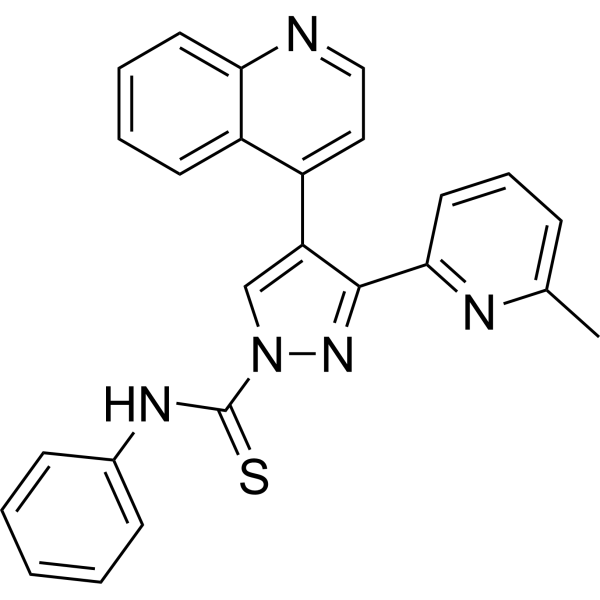
A 83-01 is a potent inhibitor of TGF-β type I receptor ALK5 kinase, type I nodal receptor ALK4 and type I nodal receptor ALK7, with IC50s of 12 nM, 45 nM and 7.5 nM against the transcription induced by ALK5, ALK4 and ALK7, respectively .
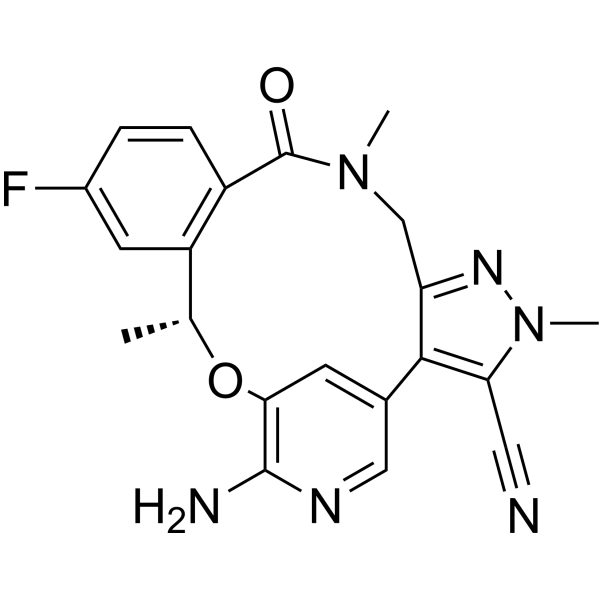
Lorlatinib (PF-06463922) is a selective, orally active, brain-penetrant and ATP-competitive ROS1/ALK inhibitor with anticancer activity. Lorlatinib has Kis of <0.025 nM, <0.07 nM, and 0.7 nM for ROS1, wild type ALK, and ALKL1196M, respectively. Lorlatinib targets to EML4-ALK, and inhibits ALK phosphorylation with IC50s of 15-43 nM (ALKL1196), 14-80 nM (ALKG1269A), 38-50 nM (ALK1151Tins), 77-113 nM (ALKG1202R), respectively .
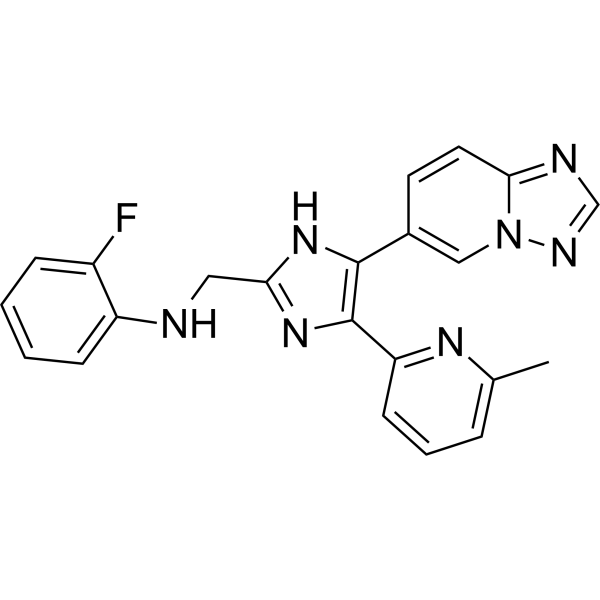
Vactosertib (EW-7197) is a potent, orally active and ATP-competitive activin receptor-like kinase 5 (ALK5) inhibitor with an IC50 of 12.9 nM. Vactosertib also inhibits ALK2 and ALK4 (IC50 of 17.3 nM) at nanomolar concentrations. Vactosertib has potently antimetastatic activity and anticancer effect .
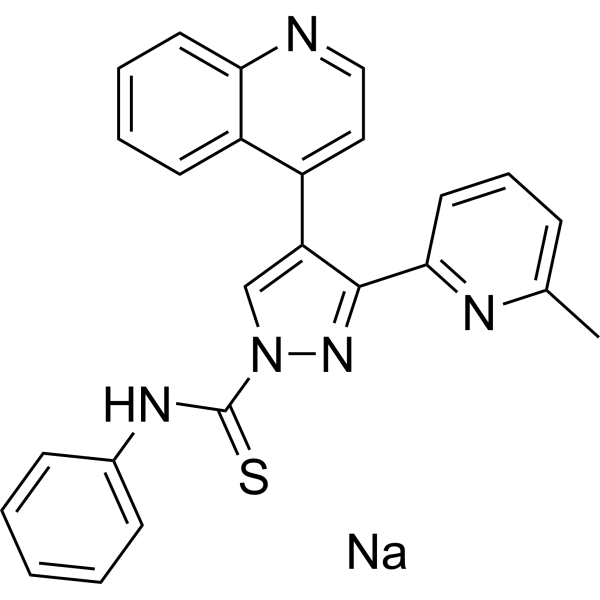
A 83-01 sodium is a potent inhibitor of TGF-β type I receptor ALK5 kinase, ALK4 and ALK7, with IC50s of 12 nM, 45 nM and 7.5 nM against the transcription induced by ALK5, ALK4 and ALK7, respectively .
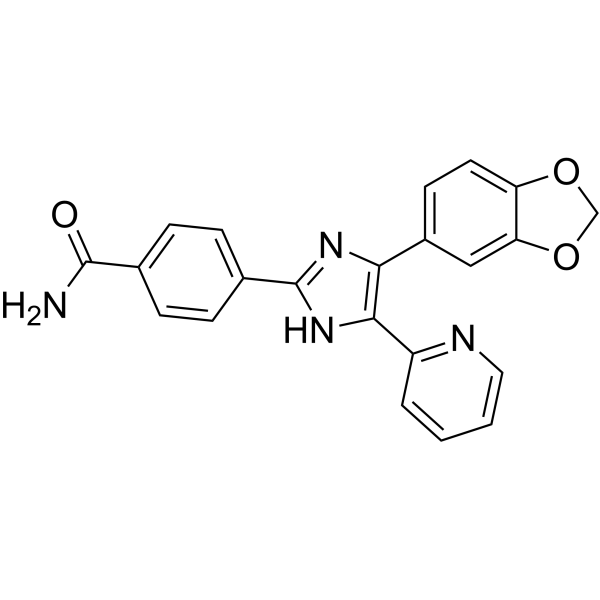
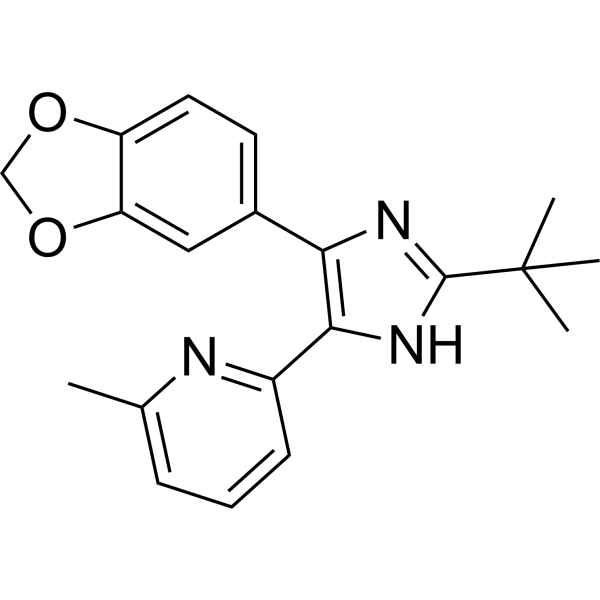
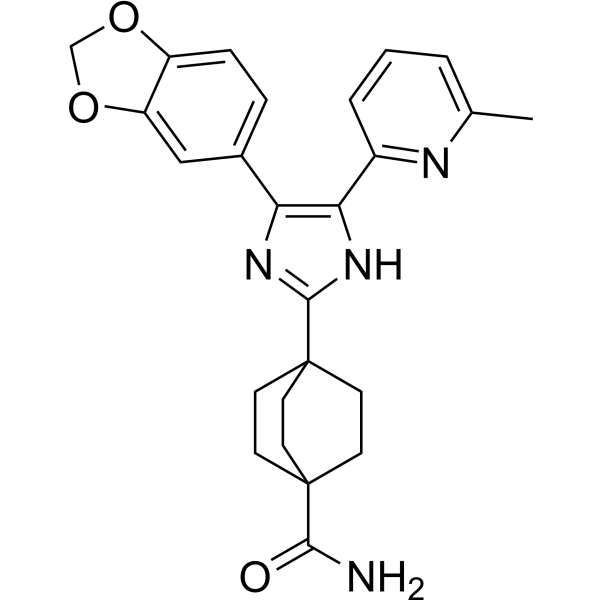
SB-505124 is a selective inhibitor of TGF-β Receptor type I receptors(ALK4,ALK5, ALK7), with IC50s of 129 nM and 47 nM for ALK4, ALK5, respectively, but it does not inhibit ALK1, 2, 3, or 6.
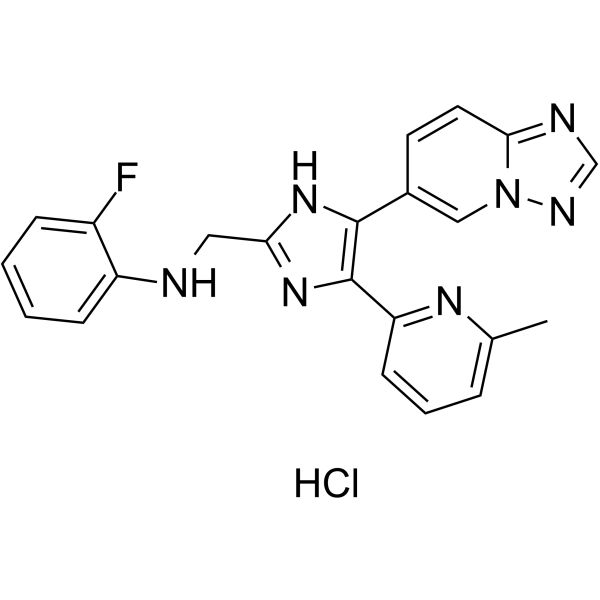
Vactosertib Hydrochloride (EW-7197 Hydrochloride) is a potent, orally active and ATP-competitive activin receptor-like kinase 5 (ALK5) inhibitor with an IC50 of 12.9 nM. Vactosertib Hydrochloride also inhibits ALK2 and ALK4 (IC50 of 17.3 nM) at nanomolar concentrations. Vactosertib Hydrochloride has potently antimetastatic activity and anticancer effect .
A 83-01 (GMP) is A 83-01 (HY-10432) produced by using GMP guidelines. GMP small molecules works appropriately as an auxiliary reagent for cell therapy manufacture. A 83-01 is a potent ALK4/5/7 inhibitor .
SB-431542 (Standard) is the analytical standard of SB-431542. SB-431542 is a TGF-β receptor kinase inhibitor (TRKI). SB-431542 has inhibitory activity for ALK4, ALK5 and ALK7 with IC50 values of 1 μM, 0.75 μM and 2 μM, respectively. SB-431542 also inhibits TGF-β-induced transcription, gene expression, apoptosis, and growth suppression. SB-431542 can be used for the research of cancer and signal transduction pathways .
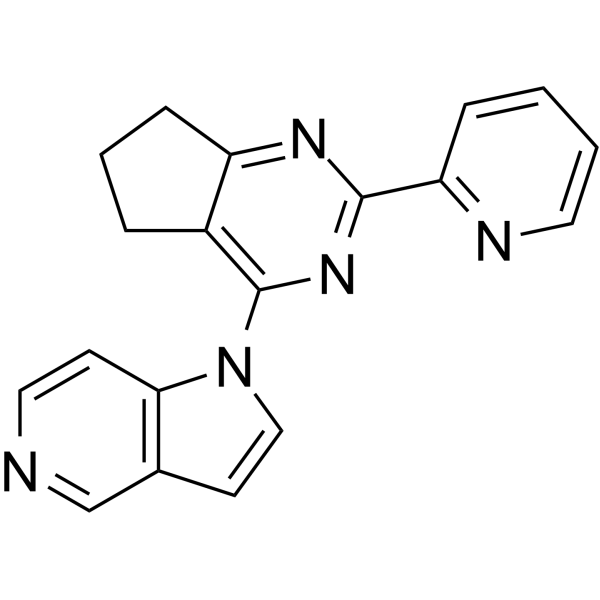
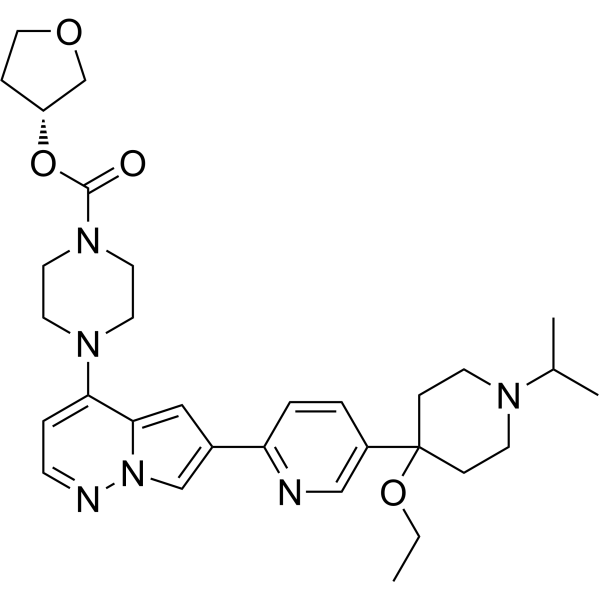
Fidrisertib (BLU-782) is the orally active inhibitor for activin receptor-like kinase 2(ALK2) that inhibits ALK2 R206H, ALK2, ALK1, ALK6, ALK3, ALK4, TGFβR2 and ALK5 with IC50s of 0.2, 0.6, 3, 24, 45, 65, 67 and 155 nM, respectively .
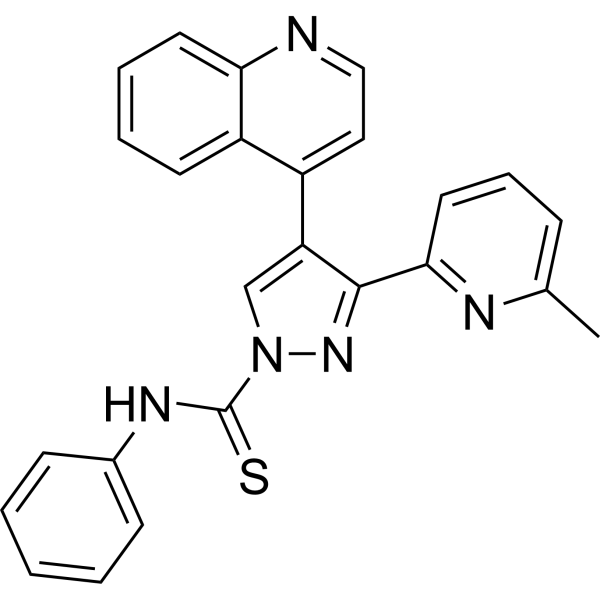
AZ12601011 is an orally active, selective TGFBR1 kinase inhibitor with an IC50 of 18 nM and a Kd of 2.9 nM. AZ12601011 inhibits phosphorylation of SMAD2 via selectively inhibiting ALK4, TGFBR1, and ALK7. AZ12601011 inhibits mammary tumor growth .
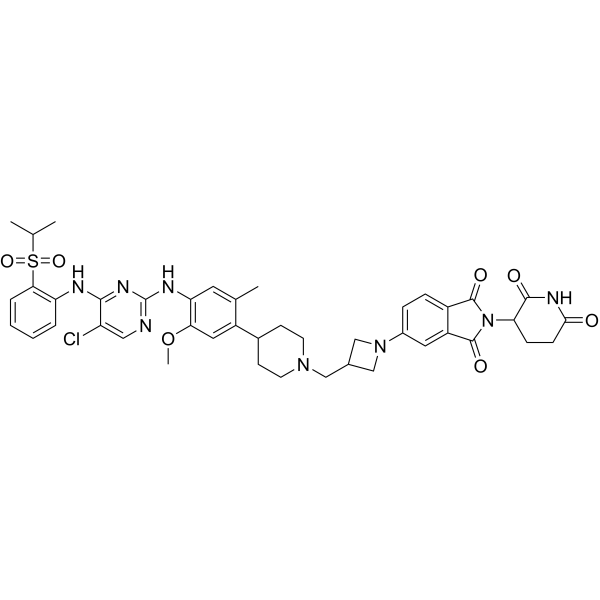
CPD-1224 is an orally effective ALK inhibitor, a derivative of an ALK inhibitor that connects to the cereblon ligand. CPD-1224 targets the EML4-ALK oncogenic fusion protein and degrades both ALK and the mutant forms L1196M/G1202R. CPD-1224 can slow down tumor growth .
Lorlatinib (Standard) is the analytical standard of Lorlatinib. This product is intended for research and analytical applications. Lorlatinib (PF-06463922) is a selective, orally active, brain-penetrant and ATP-competitive ROS1/ALK inhibitor with anticancer activity. Lorlatinib has Kis of <0.025 nM, <0.07 nM, and 0.7 nM for ROS1, wild type ALK, and ALKL1196M, respectively. Lorlatinib targets to EML4-ALK, and inhibits ALK phosphorylation with IC50s of 15-43 nM (ALKL1196), 14-80 nM (ALKG1269A), 38-50 nM (ALK1151Tins), 77-113 nM (ALKG1202R), respectively .
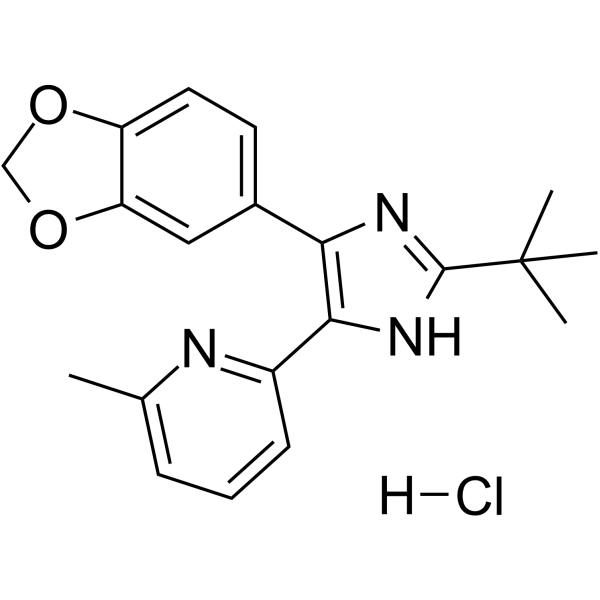
SB-505124 hydrochloride is a selective inhibitor of TGF-β Receptor type I receptor(ALK4,ALK5, ALK7), with IC50s of 129 nM and 47 nM forALK4, ALK5, respectively, but it does not inhibit ALK1, 2, 3, or 6.
A 83-01 (Standard) is the analytical standard of A 83-01 (HY-10432). This product is intended for research and analytical applications. A 83-01 is a potent inhibitor of TGF-β type I receptor ALK5 kinase, type I nodal receptor ALK4 and type I nodal receptor ALK7, with IC50s of 12 nM, 45 nM and 7.5 nM against the transcription induced by ALK5, ALK4 and ALK7, respectively .
JH-VIII-157-02 is a structural analogue of alectinib, acts as an ALK inhibitor, and shows an IC50 of 2 nM for echinoderm microtubule-associated protein-like 4-ALK (EML4-ALK) G1202R in cells.
PROTAC EML4-ALK Degrader-2 (Pro-BA) is a selective and orally active linker-free EML4-ALK PROTAC degrader with the DC50 of 74 nM in H1322 cells (T1/2 = 8 h). PROTAC EML4-ALK Degrader-2 relies on GID4 and proteasome pathways to promote ubiquitination of target proteins, leading to cell apoptosis. PROTAC EML4-ALK Degrader-2 can be used for research on cancer. (Pink: EML4-ALK Ligand (HY-40114); Blue: GID4 Ligand (HY-150908))
XMU-MP-5 is a selective inhibitor for ALK. XMU-MP-5 inhibits ALK-mutated Ba/F3 cell with IC50s of 4-50 nM, and induces apoptosis in EML4-ALK Ba/F3. XMU-MP-5 exhibits antitumor efficacy in mice .
Lorlatinib (PF-06463922) acetate is a selective, orally active, brain-penetrant and ATP-competitive ROS1/ALK inhibitor with anticancer activity. Lorlatinib acetate has Kis of <0.025 nM, <0.07 nM, and 0.7 nM for ROS1, wild type ALK, and ALKL1196M, respectively. Lorlatinib acetate targets to EML4-ALK, and inhibits ALK phosphorylation with IC50s of 15-43 nM (ALKL1196), 14-80 nM (ALKG1269A), 38-50 nM (ALK1151Tins), 77-113 nM (ALKG1202R), respectively .
SB-505124 (hydrochloride) (Standard) is the analytical standard of SB-505124 (hydrochloride). This product is intended for research and analytical applications. SB-505124 hydrochloride is a selective inhibitor of TGF-β Receptor type I receptor (ALK4, ALK5, ALK7), with IC50s of 129 nM and 47 nM for ALK4, ALK5, respectively, but it does not inhibit ALK1, 2, 3, or 6.
SB-505124 (Standard) is the analytical standard of SB-505124. This product is intended for research and analytical applications. SB-505124 is a selective inhibitor of TGF-β Receptor type I receptors (ALK4, ALK5, ALK7), with IC50s of 129 nM and 47 nM for ALK4, ALK5, respectively, but it does not inhibit ALK1, 2, 3, or 6.
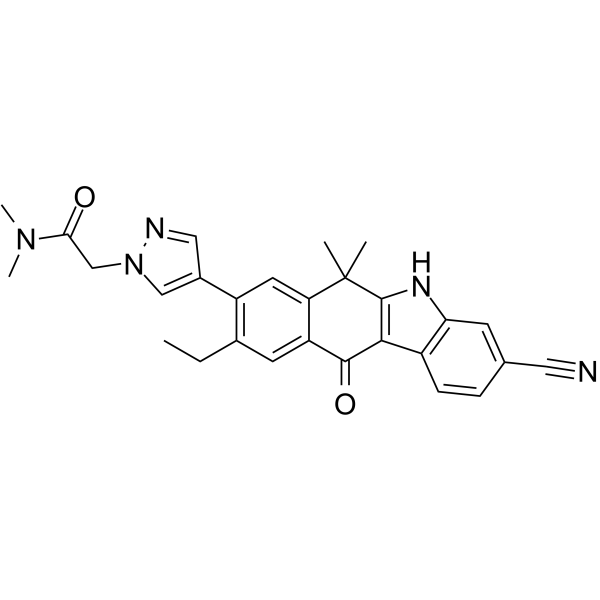
EML4-ALK kinase inhibitor 1 is a potent orally active inhibitor of echinoderm microtubule-associated protein-like 4-anaplastic lymphoma kinase (EML4-ALK), with an IC50 of 1 nM .
EML4-ALK is a fusion-type protein tyrosine kinase produced through gene rearrangement. EML4-ALK can be used for the study of non-small cell lung carcinoma (NSCLC) and neuroblastoma (NB). EML4-ALK has multiple mutants. EML4ALK F1174L Recombinant Human Active Protein Kinase is a recombinant EML4ALK F1174L protein that can be used to study EML4ALK F1174L-related functions .
PROTAC ALK degrader-1 (compound B1) is an ALK degrader based on PROTACs, with the DC50 of 26 nM in H3122 EML4-ALK. PROTAC ALK degrader-1 can be used to synthesis PROTAC ALK degrader-2 (HY-161750) with superior bioavailability .
ALK degrader 1 is a potent, hydrophobic tag (HyT)-based degrader that induces ubiquitin-proteasome system (UPS)-dependent EML4-ALK degradation (DC50 = 0.13 μM). ALK degrader 1 demonstrates potent ALK degradation and antiproliferative effects in ALK-dependent cell lines, while showing minimal cytotoxicity in ALK fusion-negative cells. ALK degrader 1 triggers cell cycle arrest at the G0/G1 phase and stimulates apoptosis. ALK degrader 1 not only facilitates efficient degradation of the ALK protein but also disrupts key downstream effectors, including the STAT3 signaling axis. ALK degrader 1 mediates robust EML4-ALK degradation in vivo. ALK degrader 1 can be used for ALK-related diseases research .
WZH-17-002 is a WZH-15-125-based ALKPROTAC degrader with a DC50 of 25 nM. WZH-17-002 enhances activities against Lorlatinib (HY-12215)-resistant ALK compound mutations. WZH-17-002 significantly reduces drug resistance in ALK-fusion non-small cell lung cancer (NSCLC) and inhibits tumor growth in EML4-ALK G1202R/L1196 M xenograft mice model . Pink: ALK ligand (HY-174314); Blue: CRBN ligase ligand (HY-14658); Black: linker (HY-174316)
KF-20444 is an orally active ALK inhibitor with blood-brain barrier penetration. KF-20444 exhibits strong inhibitory activity against ALK fusion proteins (EML4-ALK) and ALK resistance mutations (including L1196M, G1202R, and F1174L). KF-20444 effectively suppresses the phosphorylation of ALK in ALK-driven cancer cell lines, thereby inhibiting cancer cell proliferation and inducing apoptosis. KF-20444 demonstrates anti-tumor efficacy in mouse models bearing ALK-positive non-small cell lung cancer (NSCLC) or neuroblastoma. KF-20444 can be used for the study of ALK-driven malignancies .
ALK degrader 2 is an orally active ALK degrader that degrades EML4-ALK levels (DC50 = 8 nM) and nucleophosmin (NPM)-ALK protein levels (DC50 = 102 nM). ALK degrader 2 mediates ALK degradation via the Hsp70 chaperone system and ubiquitin-proteasome pathway. ALK degrader 2 induces significant S-phase cell cycle arrest and apoptosis in H3122 cells. ALK degrader 2 shows anti-tumor activity in mice bearing H3122 xenografts. ALK degrader 2 can be used for the study of non-small cell lung cancer (NSCLC). (Pink: ALK ligand (HY-W754809), Blue: Hyt (HY-W013021), Black: Linker (HY-Y1760), ALK ligand-linker conjugate (HY-175528)) .
LDN-193688 (Compound 26) is a ALK2 inhibitor, with IC₅₀ values of 104, 18, 235, 1530, and 1080 nM against ALK1, ALK2, ALK3, ALK4, and ALK5, respectively. LDN-193688 inhibits bone morphogenetic protein 4 (BMP4)-induced phosphorylation of SMAD1/5/8, with an IC₅₀ of 2.6 μM .
ALK5 ligand-1 (a31's ALK5 ligand) is a ligand of Anaplastic lymphoma kinase ALK5 with higher selectivity for ALK5 than for ALK4. ALK5 ligand-1 can be used to synthesize PROTAC degraders targeting ALK5. ALK5 PROTACs induce ALK5 degradation dependent on the ubiquitin-proteasome system and exert antifibrotic activity. ALK5 ligand-1 can be used in studies of pulmonary fibrosis .
Acvr1b Mouse Pre-designed siRNA Set A contains three designed siRNAs for Acvr1b gene (Mouse), as well as a negative control, a positive control, and a FAM-labeled negative control.
ALK5 ligand-1-amine-C2-piperazine-C4-OH is a conjugate of a ligand targeting ALK5 and a PROTAC linker. ALK5 ligand-1-amine-C2-piperazine-C4-OH can be used to synthesize the PROTAC degrader (a31). ALK5 PROTACs induce UPS-dependent and selective degradation of ALK5 over ALK4. ALK5 ligand-1-amine-C2-piperazine-C4-OH can be applied to research on pulmonary fibrosis .
ACVR1B Human Pre-designed siRNA Set A contains three designed siRNAs for ACVR1B gene (Human), as well as a negative control, a positive control, and a FAM-labeled negative control.
EML4-ALK is a fusion-type protein tyrosine kinase produced through gene rearrangement. EML4-ALK is a potential molecular target in non-small cell lung carcinoma (NSCLC). EML4ALK Recombinant Human Active Protein Kinase is a recombinant EML4ALK protein that can be used to study EML4ALK-related functions .
SH-E4A-66 is a C 2-COUPLr (COvalent Protein Ligator) with carbazole scaffold barring heterogeneous cysteine reactive warheads (acrylamide and chloroacetamide). SH-E4A-66 is capable of coupling with EML4-ALK (EC50=1.5 μM) and inhibiting the activity of EML4-ALK kinase (IC50=2.3 μM) .
dALK-3 is an anaplastic lymphoma kinase (ALK) degrader. dALK-3 can effectively induce EML4-ALK degradation with a DC50 of 0.182 μM. dALK-3 has good anti-proliferation activity against H3122 cells and can be used in the study of cancer .
PROTAC ALK degrader-2 (B1-PEG) is an ALK degrader based on PROTACs, with the DC50 of 45 nM in H3122 EML4-ALK DC50 (GSH+). PROTAC ALK degrader-2, through PEGylation, is engineered to self-organize into micelles in water and releases its active form in response to the tumor-specific high GSH environment .
ALK/EGFR-IN-1 (Compound 8l) is an ALK/EGFR dual inhibitor that blocks the phosphorylation of EGFR and ALK. ALK/EGFR-IN-1 inhibits ALK/EGFR mutants respectively, with IC50 of 4.3 nM for EGFR L858R T790M in H1975 cells and EML4-ALK in BaF3 cells, respectively. and 3.6 nM. ALK/EGFR-IN-1 may be used in NSCLC research .
Trk-IN-7 (compound I-6) is a potent TRK inhibitor with IC50s of ranging from 0.25-10 nM for TRKA, TRKB and TRKC, respectively. Trk-IN-7 shows inhibition against EML4-ALK (IC50<15 nM) ALK G1202R, ALK C1156Y, ALK R1275Q, ALK F1174L, ALK L1197M, and ALK G1269A (IC50=5-50 nM) .
PROTAC EML4-ALK Degrader-2 is an EML4-ALKPROTAC degrader. PROTAC EML4-ALK Degrader-2 shows potent selective inhibitory activity to ALK with an IC50 of 1.6 nM. PROTAC EML4-ALK exhibits selectivity over IGF1R, INSR, FLT3, and FGFR2. PROTAC EML4-ALK Degrader-2 shows anti-cancer activities both in vitro and vivo. PROTAC EML4-ALK Degrader-2 can be used for non-small cell lung cancer (NSLC), liver lung and cervical cancer research .
Gly-PEG3-BA is an EML4-ALKPROTAC degrader. Gly-PEG3-BA effectively reduces EML4-ALK with a DC50 value of 0.50 μM in H3122 (EML4-ALK) cells. Gly-PEG3-BA effectively reduces EGFR mutant (L858R/T790M) levels with a DC50 of 20.15 μM in H1975 (EGER-L858R/T790M) cells. Gly-PEG3-BA exerts potent antiproliferation activity in H3122 (EML4-ALK) and H1975 (EGER-L858R/T790M) cells with IC50s value of 0.84 and 20.74 μM. Gly-PEG3-BA can be used for non-small lung cancer research .
PROTAC ALK5 Degrader-1 is a selective ALK5PROTAC degrader. PROTAC ALK5 Degrader-1 induces ALK5 degradation via ALK5 ATP-binding pocket engagement, CRBN recruitment, and the ubiquitin-proteasome system.PROTAC ALK5 Degrader-1 inhibits ALK5 downstream signaling. PROTAC ALK5 Degrader-1 can be used for the research of pulmonary fibrosis .
Lys-PEG3-BA is an EML4-ALK/EGFRPROTAC degrader with DC50 values of 1.32 and 19.66 μM for H3122 (EML4-ALK) and H1975 (EGFR-L858R/T790M) cells, respectively. Lys-PEG3-BA hinders proliferation via rewiring the ubiquitin- proteasome system in vitro. Lys-PEG3-BA can be used for non-small cell lung cancer research .
PROTAC ALK degrader-5 (Compound 17) is an efficient ALK PROTAC degrader, with its inhibitory effects on EML4-ALK and NPM-ALK being 27.4 nM and 116.5 nM respectively. PROTAC ALK degrader-5 exhibits potent anti-proliferative activity against H3122 and Karpas 299. PROTAC ALK degrader-5 effectively inhibits the phosphorylation of ALK and STAT3. PROTAC ALK degrader-5 can be used for the study of ALK-driven malignant tumors, such as human non-small cell lung cancer and anaplastic large cell lymphoma .
Pro-PEG3-BA is an EML4-ALK/EGFRPROTAC degrader, degrading EML4ALK and EGFR mutant (L858R/T790M) with DC 50 values of 0.42 and 13.50 μM, respectively. Pro-PEG3-BA hinders proliferation and induces cell cycle arrest and apoptosis of NSCLC cells in vitro. Pro-PEG3-BA shows safety profile and decreases EML4-ALK protein via rewiring the ubiquitin- proteasome system in vivo. Pro-PEG3-BA can be used for non-small cell lung cancer research .
TD-004 is a potent ALKPROTAC degrader. TD-004 exhibits anti-ALK inhibitory activity with an IC50 of 0.11 µM and selectively inhibits the proliferation of SU-DHL-1 and H3122 cells (ALK-positive cancer cells) with IC50s of 0.058 µM and 0.28 µM, respectively. TD-004 induces degradation of ALK fusion proteins (NPM-ALK and EML4-ALK) via recruitment of the VHL E3 ligase and the proteasome pathway. TD-004 demonstrates significant tumor growth inhibition with a favorable safety profile in vivo. TD-004 can be used for the research of anaplastic large cell lymphoma and non-small cell lung cancer .
A 83-01 (GMP) is A 83-01 (HY-10432) produced by using GMP guidelines. GMP small molecules works appropriately as an auxiliary reagent for cell therapy manufacture. A 83-01 is a potent ALK4/5/7 inhibitor .
Activin RIB, also known as activin receptor type-1B (ACVR1B) or ALK-4, is a type I transmembrane serine/threonine kinase receptor that is part of the TGF-β receptor superfamily. Activin binds to a type II activin receptor (ACVR2or ACVR2B) and then recruits ACVR1B. Activin RIB/ALK-4 Protein, Rat (HEK293, Fc) is produced in HEK293 cells with a C-Terminal Fc-tag. It consists of 126 amino acids (M1-E126).
Activin RIB, also known as activin receptor type-1B (ACVR1B) or ALK-4, is a type I transmembrane serine/threonine kinase receptor that is part of the TGF-β receptor superfamily. Activin binds to a type II activin receptor (ACVR2or ACVR2B) and then recruits ACVR1B. Activin RIB/ALK-4 Protein, Human (HEK293, Fc) is produced in HEK293 cells with a C-Terminal Fc-tag. It consists of 126 amino acids (M1-E126).
Activin RIB, also known as activin receptor type-1B (ACVR1B) or ALK-4, is a type I transmembrane serine/threonine kinase receptor that is part of the TGF-β receptor superfamily. Activin binds to a type II activin receptor (ACVR2or ACVR2B) and then recruits ACVR1B. Activin RIB/ALK-4 Protein, Rhesus Macaque (HEK293, Fc) is produced in HEK293 cells with a C-Terminal Fc-tag. It consists of 100 amino acids (R27-E126).
Activin RIB, also known as activin receptor type-1B (ACVR1B) or ALK-4, is a type I transmembrane serine/threonine kinase receptor that is part of the TGF-β receptor superfamily. Activin binds to a type II activin receptor (ACVR2or ACVR2B) and then recruits ACVR1B. Activin RIB/ALK-4 Protein, Human (HEK293, His) is produced in HEK293 cells with six C-Terminal His-tags. It consists of 103 amino acids (S24-E126).
Activin RIB, also known as activin receptor type-1B (ACVR1B) or ALK-4, is a type I transmembrane serine/threonine kinase receptor that is part of the TGF-β receptor superfamily. Activin binds to a type II activin receptor (ACVR2or ACVR2B) and then recruits ACVR1B. Activin RIB/ALK-4 Protein, Human (HEK293, His-Fc) is produced in HEK293 cells with a C-Terminal His-tag and a C-Terminal Fc-tag. It consists of 126 amino acids (S24-E126).
Activin RIB, also known as activin receptor type-1B (ACVR1B) or ALK-4, is a type I transmembrane serine/threonine kinase receptor that is part of the TGF-β receptor superfamily. Activin binds to a type II activin receptor (ACVR2or ACVR2B) and then recruits ACVR1B. Activin RIB/ALK-4 Protein, Mouse (HEK293, Fc) is produced in HEK293 cells with a C-Terminal Fc-tag. It consists of 95 amino acids (L32-E126).
Activin RIB, also known as activin receptor type-1B (ACVR1B) or ALK-4, is a type I transmembrane serine/threonine kinase receptor that is part of the TGF-β receptor superfamily. Activin binds to a type II activin receptor (ACVR2or ACVR2B) and then recruits ACVR1B. Activin RIB/ALK-4 Protein, Human (Active, sf9, His-GST) is produced in Sf9 insect cells with N-6*His and N-GST tag.
Acvr1b Mouse Pre-designed siRNA Set A contains three designed siRNAs for Acvr1b gene (Mouse), as well as a negative control, a positive control, and a FAM-labeled negative control.
ACVR1B Human Pre-designed siRNA Set A contains three designed siRNAs for ACVR1B gene (Human), as well as a negative control, a positive control, and a FAM-labeled negative control.
A 83-01 (GMP) is A 83-01 (HY-10432) produced by using GMP guidelines. GMP small molecules works appropriately as an auxiliary reagent for cell therapy manufacture. A 83-01 is a potent ALK4/5/7 inhibitor .
Inquiry Online
Your information is safe with us. * Required Fields.
Western blot analysis of extracts from THP-1(lane 2(20μg), Jurkat (lane 3(20μg) and NIH3T3(lane 4(20μg) using FOXO1A (HY-P80132) Rabbit mAb. Proteins were transferred
to a PVDF membrane and blocked with 5% non-fat milk in TBST for 2 hour at room temperature. The primary antibody (1/1000) and Loading control antibody (Beta Actin, HY-P80438, 1/10000) was
used in 5% non-fat milk in TBST at 4°C overnight. Goat Anti-Mouse/Rabbit IgG-HRP Secondary Antibody (1/10000) was used for 1 hour at room temperature.
Western blot analysis of extracts from THP-1(lane 2(20μg), Jurkat (lane 3(20μg) and NIH3T3(lane 4(20μg) using FOXO1A (HY-P80132) Rabbit mAb. Proteins were transferred
to a PVDF membrane and blocked with 5% non-fat milk in TBST for 2 hour at room temperature. The primary antibody (1/1000) and Loading control antibody (Beta Actin, HY-P80438, 1/10000) was
used in 5% non-fat milk in TBST at 4°C overnight. Goat Anti-Mouse/Rabbit IgG-HRP Secondary Antibody (1/10000) was used for 1 hour at room temperature.
Western blot analysis of extracts from THP-1(lane 2(20μg), Jurkat (lane 3(20μg) and NIH3T3(lane 4(20μg) using FOXO1A (HY-P80132) Rabbit mAb. Proteins were transferred
to a PVDF membrane and blocked with 5% non-fat milk in TBST for 2 hour at room temperature. The primary antibody (1/1000) and Loading control antibody (Beta Actin, HY-P80438, 1/10000) was
used in 5% non-fat milk in TBST at 4°C overnight. Goat Anti-Mouse/Rabbit IgG-HRP Secondary Antibody (1/10000) was used for 1 hour at room temperature.
Western blot analysis of extracts from THP-1(lane 2(20μg), Jurkat (lane 3(20μg) and NIH3T3(lane 4(20μg) using FOXO1A (HY-P80132) Rabbit mAb. Proteins were transferred
to a PVDF membrane and blocked with 5% non-fat milk in TBST for 2 hour at room temperature. The primary antibody (1/1000) and Loading control antibody (Beta Actin, HY-P80438, 1/10000) was
MedchemExpress Validation 03
Western blot analysis of extracts from THP-1(lane 2(20μg), Jurkat (lane 3(20μg) and NIH3T3(lane 4(20μg) using FOXO1A (HY-P80132) Rabbit mAb. Proteins were transferred
MedchemExpress Validation 04
Western blot analysis of extracts from THP-1(lane 2(20μg), Jurkat (lane 3(20μg) and NIH3T3(lane 4(20μg) using FOXO1A (HY-P80132) Rabbit mAb. Proteins were transferred
to a PVDF membrane and blocked with 5% non-fat milk in TBST for 2 hour at room temperature. The primary antibody (1/1000) and Loading control antibody (Beta Actin, HY-P80438, 1/10000) was
used in 5% non-fat milk in TBST at 4°C overnight. Goat Anti-Mouse/Rabbit IgG-HRP Secondary Antibody (1/10000) was used for 1 hour at room temperature.
MedchemExpress Validation
Western blot analysis of extracts from THP-1(lane 2(20μg), Jurkat (lane 3(20μg) and NIH3T3(lane 4(20μg) using FOXO1A (HY-P80132) Rabbit mAb. Proteins were transferred
to a PVDF membrane and blocked with 5% non-fat milk in TBST for 2 hour at room temperature. The primary antibody (1/1000) and Loading control antibody (Beta Actin, HY-P80438, 1/10000) was
used in 5% non-fat milk in TBST at 4°C overnight. Goat Anti-Mouse/Rabbit IgG-HRP Secondary Antibody (1/10000) was used for 1 hour at room temperature.
Western blot analysis of extracts from THP-1(lane 2(20μg), Jurkat (lane 3(20μg) and NIH3T3(lane 4(20μg) using FOXO1A (HY-P80132) Rabbit mAb. Proteins were transferred
to a PVDF membrane and blocked with 5% non-fat milk in TBST for 2 hour at room temperature. The primary antibody (1/1000) and Loading control antibody (Beta Actin, HY-P80438, 1/10000) was
used in 5% non-fat milk in TBST at 4°C overnight. Goat Anti-Mouse/Rabbit IgG-HRP Secondary Antibody (1/10000) was used for 1 hour at room temperature.
MedchemExpress Validation
Western blot analysis of extracts from THP-1(lane 2(20μg), Jurkat (lane 3(20μg) and NIH3T3(lane 4(20μg) using FOXO1A (HY-P80132) Rabbit mAb. Proteins were transferred
to a PVDF membrane and blocked with 5% non-fat milk in TBST for 2 hour at room temperature. The primary antibody (1/1000) and Loading control antibody (Beta Actin, HY-P80438, 1/10000) was
used in 5% non-fat milk in TBST at 4°C overnight. Goat Anti-Mouse/Rabbit IgG-HRP Secondary Antibody (1/10000) was used for 1 hour at room temperature.
MedchemExpress Validation
Western blot analysis of extracts from THP-1(lane 2(20μg), Jurkat (lane 3(20μg) and NIH3T3(lane 4(20μg) using FOXO1A (HY-P80132) Rabbit mAb. Proteins were transferred
to a PVDF membrane and blocked with 5% non-fat milk in TBST for 2 hour at room temperature. The primary antibody (1/1000) and Loading control antibody (Beta Actin, HY-P80438, 1/10000) was
used in 5% non-fat milk in TBST at 4°C overnight. Goat Anti-Mouse/Rabbit IgG-HRP Secondary Antibody (1/10000) was used for 1 hour at room temperature.
MedchemExpress Validation
Western blot analysis of extracts from THP-1(lane 2(20μg), Jurkat (lane 3(20μg) and NIH3T3(lane 4(20μg) using FOXO1A (HY-P80132) Rabbit mAb. Proteins were transferred
to a PVDF membrane and blocked with 5% non-fat milk in TBST for 2 hour at room temperature. The primary antibody (1/1000) and Loading control antibody (Beta Actin, HY-P80438, 1/10000) was
used in 5% non-fat milk in TBST at 4°C overnight. Goat Anti-Mouse/Rabbit IgG-HRP Secondary Antibody (1/10000) was used for 1 hour at room temperature.
MedchemExpress Validation
Western blot analysis of extracts from THP-1(lane 2(20μg), Jurkat (lane 3(20μg) and NIH3T3(lane 4(20μg) using FOXO1A (HY-P80132) Rabbit mAb. Proteins were transferred
to a PVDF membrane and blocked with 5% non-fat milk in TBST for 2 hour at room temperature. The primary antibody (1/1000) and Loading control antibody (Beta Actin, HY-P80438, 1/10000) was
used in 5% non-fat milk in TBST at 4°C overnight. Goat Anti-Mouse/Rabbit IgG-HRP Secondary Antibody (1/10000) was used for 1 hour at room temperature.
MedchemExpress Validation
Western blot analysis of extracts from THP-1(lane 2(20μg), Jurkat (lane 3(20μg) and NIH3T3(lane 4(20μg) using FOXO1A (HY-P80132) Rabbit mAb. Proteins were transferred
to a PVDF membrane and blocked with 5% non-fat milk in TBST for 2 hour at room temperature. The primary antibody (1/1000) and Loading control antibody (Beta Actin, HY-P80438, 1/10000) was
used in 5% non-fat milk in TBST at 4°C overnight. Goat Anti-Mouse/Rabbit IgG-HRP Secondary Antibody (1/10000) was used for 1 hour at room temperature.
MedchemExpress Validation
Western blot analysis of extracts from THP-1(lane 2(20μg), Jurkat (lane 3(20μg) and NIH3T3(lane 4(20μg) using FOXO1A (HY-P80132) Rabbit mAb. Proteins were transferred
to a PVDF membrane and blocked with 5% non-fat milk in TBST for 2 hour at room temperature. The primary antibody (1/1000) and Loading control antibody (Beta Actin, HY-P80438, 1/10000) was
used in 5% non-fat milk in TBST at 4°C overnight. Goat Anti-Mouse/Rabbit IgG-HRP Secondary Antibody (1/10000) was used for 1 hour at room temperature.
MedChemExpress values your privacy and your trust is important to us. We use cookies to enhance your website experience. Some cookies are necessary to run the website.
Privacy and Cookie Policy

