
1. Search Result
Search Result
Results for "

Affective Disorder

" in MedChemExpress (MCE) Product Catalog:

27

Inhibitors & Agonists

3

Screening Libraries

6

Natural
Products

3

Isotope-Labeled Compounds

1

Oligonucleotides

Cat. No. Product Name Target Research Areas Chemical Structure
  • HY-B1337
    Choline chloride
    4 Publications Verification

    Environmental Pollutants Endogenous Metabolite nAChR Neurological Disease Inflammation/Immunology Cancer
    Choline chloride is an essential nutrient that activates alpha7 nicotinic receptors and has analgesic and anti-inflammatory activity. Glycerophosphoinositol choline can affect diseases such as liver disease, atherosclerosis and neurological disorders .
    Choline chloride
  • HY-14262
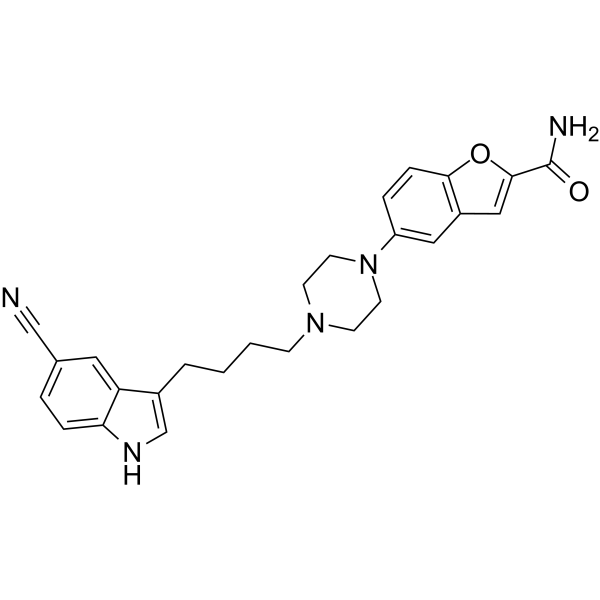
    Vilazodone
    Maximum Cited Publications
    6 Publications Verification

    EMD 68843; SB659746A

    5-HT Receptor Serotonin Transporter Neurological Disease
    Vilazodone (EMD 68843; SB 659746A) is a potent, selective and orally active serotonin reuptake inhibitor (SSRI) and partial 5-HT1A receptor agonist. Vilazodone exhibits antidepressant efficacy in vivo can be used for the research of major depressive disorder (MDD) and affective disorders .
    Vilazodone
  • HY-B1033
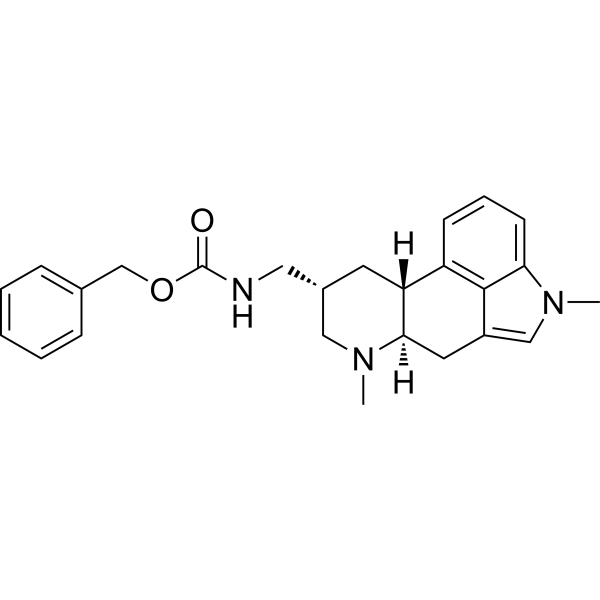
    Metergoline
    2 Publications Verification

    5-HT Receptor Dopamine Receptor Sodium Channel Neurological Disease
    Metergoline is a serotonin (5-HT) receptor and dopamine receptors antagonist, with pKis of 8.64, 8.75 and 8.75 for 5-HT2A, 5-HT2B and 5-HT2C, respectively. Metergoline is a high-affinity ligand for the h5-HT7 receptor, with a Ki of 16 nM. Metergoline is also a reversible neural Na + channels inhibitor. Metergoline is commonly used for the research of seasonal affective disorder, prolactin hormone regulation .
    Metergoline
  • HY-101036
    Choline bitartrate
    4 Publications Verification

    mAChR Endogenous Metabolite Neurological Disease Cancer
    Choline bitartrate is a vitamin-like essential nutrient, can affect diseases such as liver disease, atherosclerosis and neurological disorders . Choline bitartrate is a precursor for the neurotransmitter acetylcholine, as a methyl donor in various metabolic processes, and in lipid metabolism .
    Choline bitartrate
  • HY-B1337B

    nAChR Endogenous Metabolite Cardiovascular Disease Inflammation/Immunology Cancer
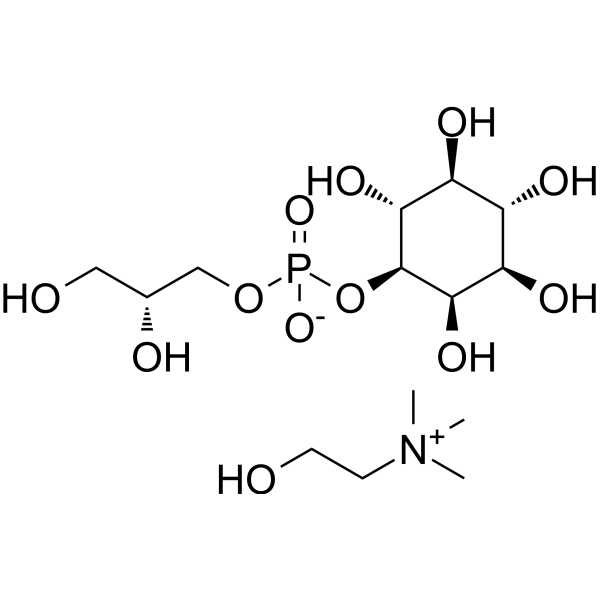
    Glycerophosphoinositol choline is an essential nutrient that activates alpha7 nicotinic receptors and has analgesic and anti-inflammatory activity. Glycerophosphoinositol choline can affect diseases such as liver disease, atherosclerosis and neurological disorders .
    Glycerophosphoinositol choline
  • HY-B1337S5

    nAChR Endogenous Metabolite Cancer
    Choline- 13C2 (chloride) is the 13C labeled Choline chloride . Choline chloride is an essential nutrient that activates alpha7 nicotinic receptors and has analgesic and anti-inflammatory activity. Glycerophosphoinositol choline can affect diseases such as liver disease, atherosclerosis and neurological disorders .
    Choline-13C2 chloride
  • HY-157521

    Acyltransferase Neurological Disease Metabolic Disease
    AANAT-IN-1 is an arylalkylamine N-acetyltransferase (AANAT) inhibitor with a sheep AANAT IC50 of 9.9 μM. AANAT-IN-1 binds to the active site of sheep AANAT, interacting with amino acid residues via hydrogen bonds, hydrophobic interactions, ionic interactions, and water bridges, inhibiting the enzyme's catalytic activity. AANAT-IN-1 can be used for the researches of circadian rhythm-associated neuropsychiatric conditions, seasonal affective disorder, and other diseases associated with abnormally elevated melatonin levels .
    AANAT-IN-1
  • HY-100703

    Floropipamide; McN-JR 3345; R 3345

    5-HT Receptor Dopamine Receptor Neurological Disease
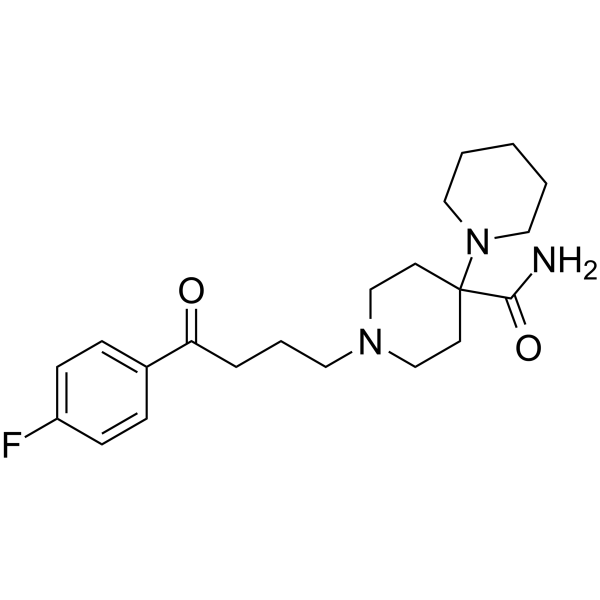
    Pipamperone (Floropipamide) is a butyrophenone derivative and high-affinity antagonist of 5-HT2A receptor (pKi=8.2) and D4 receptor (pKi=8.0). Pipamperone is also a low-affinity antagonist of D2 receptor (pKi=6.7). Pipamperone affects neurotransmitter functions and exerts antipsychotic activity. Pipamperone is used in the research of mental disorders such as autism-related behavioral disorders and Alzheimer's disease .
    Pipamperone
  • HY-173527

    Mitochondrial Metabolism Metabolic Disease
    PSSI-51 is an orally active, peripherally selective inhibitor of succinyl-CoA:3-ketoacid-CoA transferase (SCOT). PSSI-51 inhibits SCOT activity in peripheral tissues (such as muscle and kidney) but does not affect SCOT activity in brain tissue. PSSI-51 reduces ketone body oxidation by inhibiting SCOT, thereby improving obesity-related hyperglycemia. PSSI-51 can be used in the study of type 2 diabetes (T2D) and has the potential to improve obesity-related metabolic disorders .
    PSSI-51
  • HY-154636

    Biochemical Assay Reagents Endocrinology
    Liquid Paraffin is a petroleum-derived mixture of saturated hydrocarbons and an orally active fecal lubricant. Liquid Paraffin is widely used in studies of constipation and fecal incontinence in children through its lubricating effect and the osmotic effect generated by its conversion to hydroxy fatty acids. Liquid Paraffin has high safety, is non-carcinogenic, and does not affect fat-soluble vitamin levels with long-term use. Liquid Paraffin does not cause abdominal pain or electrolyte disorders, but may lead to lipoid pneumonia and granulomas caused by rectal administration. Liquid Paraffin can also be used as a phase change material for thermal energy storage, or combined with nanoparticles to form a protective boundary film to reduce mechanical wear .
    Liquid Paraffin
  • HY-B1337R

    Reference Standards nAChR Endogenous Metabolite Cancer
    Choline (chloride) (Standard) is the analytical standard of Choline (chloride). This product is intended for research and analytical applications. Choline chloride is an essential nutrient that activates alpha7 nicotinic receptors and has analgesic and anti-inflammatory activity. Glycerophosphoinositol choline can affect diseases such as liver disease, atherosclerosis and neurological disorders .
    Choline chloride (Standard)
  • HY-18006
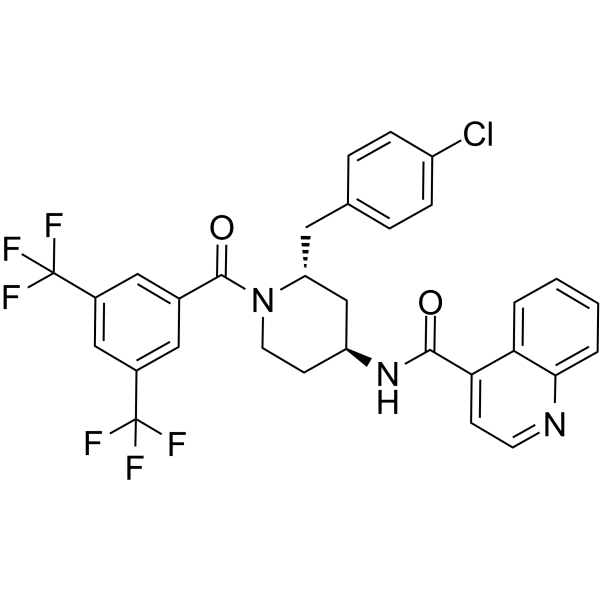
    NKP608
    1 Publications Verification

    Neurokinin Receptor Wnt Bcl-2 Family β-catenin Cyclin G-associated Kinase (GAK) VEGFR Caspase Cadherin Apoptosis Neurological Disease Metabolic Disease Inflammation/Immunology Cancer
    NKP608 is a non-peptidic derivative of 4-aminopiperidine, a highly selective, orally active, neurokinin-1 (NK1) receptor antagonist with IC50 of 2.6 nM. NKP608 is active both in vitro and in vivo, showing extremely low affinity for NK2, NK3 receptors. NKP608 exerts its effects by blocking the NK₁ receptor, regulate cell proliferation and apoptosis, affect neurotransmitter functions and gastric mucosal repair mechanisms, and suppress the Wnt/β-catenin pathway in antitumor research. NKP608 is applicable to research related to various diseases, including cough, anxiety disorders, depression, gastric mucosal injury, and colorectal cancer .
    NKP608
  • HY-101036R

    Reference Standards mAChR Endogenous Metabolite Neurological Disease Cancer
    Choline (bitartrate) (Standard) is the analytical standard of Choline (bitartrate). This product is intended for research and analytical applications. Choline bitartrate is a vitamin-like essential nutrient, can affect diseases such as liver disease, atherosclerosis and neurological disorders . Choline bitartrate is a precursor for the neurotransmitter acetylcholine, as a methyl donor in various metabolic processes, and in lipid metabolism .
    Choline bitartrate (Standard)
  • HY-14262S1

    EMD 68843-d8; SB659746A-d8

    5-HT Receptor Serotonin Transporter Isotope-Labeled Compounds Neurological Disease
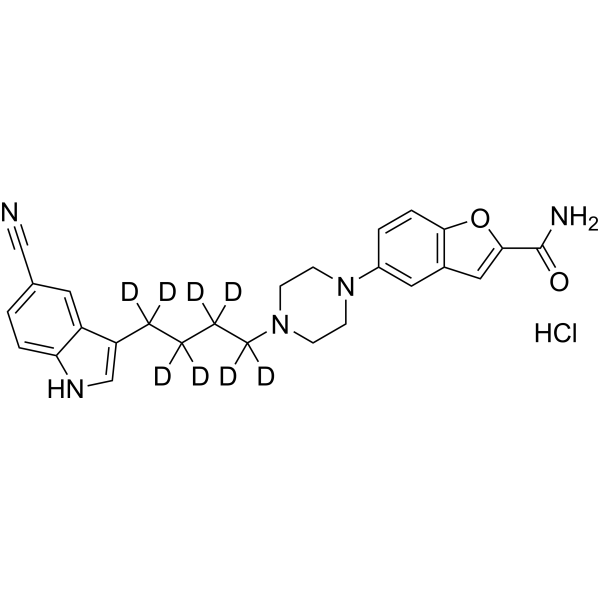
    Vilazodone-d8 hydrochloride is deuterated labeled Vilazodone (HY-14262). Vilazodone (EMD 68843; SB 659746A) is a potent, selective and orally active serotonin reuptake inhibitor (SSRI) and partial 5-HT1A receptor agonist. Vilazodone exhibits antidepressant efficacy in vivo can be used for the research of major depressive disorder (MDD) and affective disorders .
    Vilazodone-d8 hydrochloride
  • HY-153458

    Orexin Receptor (OX Receptor) Cardiovascular Disease Neurological Disease Metabolic Disease
    Orexin receptor modulator-1 is an orexin receptor modulator. Orexin receptor modulator-1 can be used for the research of substance addiction, panic disorder, anxiety, post-traumatic stress disorder, pain, depression, seasonal affective disorder, an eating disorder, or hypertension .
    Orexin receptor modulator-1
  • HY-100703A

    Floropipamide dihydrochloride; McN-JR 3345 dihydrochloride; R 3345 dihydrochloride

    Dopamine Receptor 5-HT Receptor Neurological Disease
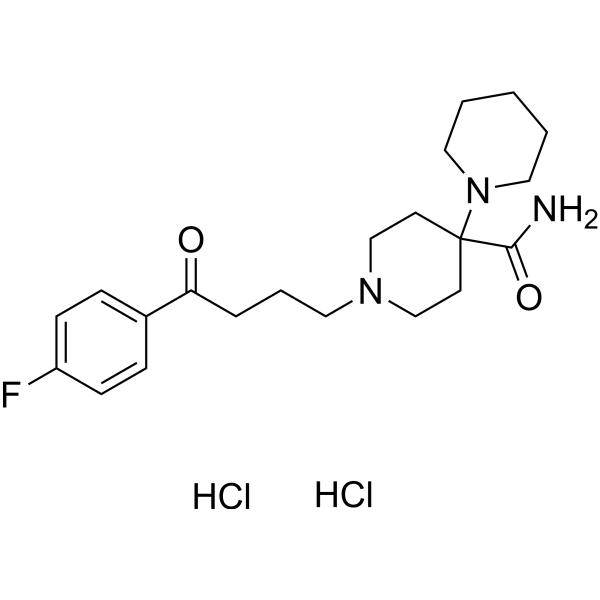
    Pipamperone dihydrochloride (Floropipamide dihydrochloride) is a butyrophenone derivative and high-affinity antagonist of 5-HT2A receptor (pKi=8.2) and D4 receptor (pKi=8.0). Pipamperone dihydrochloride is also a low-affinity antagonist of D2 receptor (pKi=6.7). Pipamperone dihydrochloride affects neurotransmitter functions and exerts antipsychotic activity. Pipamperone dihydrochloride is used in the research of mental disorders such as autism-related behavioral disorders and Alzheimer's disease .
    Pipamperone dihydrochloride
  • HY-14262R

    EMD 68843 (Standard); SB659746A (Standard)

    Reference Standards 5-HT Receptor Serotonin Transporter Neurological Disease
    Vilazodone (Standard) is the analytical standard of Vilazodone. This product is intended for research and analytical applications. Vilazodone (EMD 68843; SB 659746A) is a potent, selective and orally active serotonin reuptake inhibitor (SSRI) and partial 5-HT1A receptor agonist. Vilazodone exhibits antidepressant efficacy in vivo can be used for the research of major depressive disorder (MDD) and affective disorders .
    Vilazodone (Standard)
  • HY-N13041

    Monoamine Oxidase Neurological Disease
    Acacetin 7-O-(6-O-malonylglucoside) is a monoamine oxidase inhibitor with strong inhibitory effects on monoamine oxidase A (MAO-A) and monoamine oxidase B (MAO-B) with IC50 values ​​of 2.34 and 1.87 μM, respectively. Acacetin 7-O-(6-O-malonylglucoside) is a reversible MAO inhibitor that can be used in the research of neurodegenerative diseases and affective disorders .
    Acacetin 7-O-(6-O-malonylglucoside)
  • HY-B1033R

    5-HT Receptor Dopamine Receptor Sodium Channel Reference Standards Neurological Disease
    Metergoline (Standard) is the analytical standard of Metergoline. This product is intended for research and analytical applications. Metergoline is a serotonin (5-HT) receptor and dopamine receptors antagonist, with pKis of 8.64, 8.75 and 8.75 for 5-HT2A, 5-HT2B and 5-HT2C, respectively. Metergoline is a high-affinity ligand for the h5-HT7 receptor, with a Ki of 16 nM. Metergoline is also a reversible neural Na+ channels inhibitor. Metergoline is commonly used for the research of seasonal affective disorder, prolactin hormone regulation .
    Metergoline (Standard)
  • HY-100703S

    Floropipamide-d10 dihydrochloride; McN-JR 3345-d10 dihydrochloride; R 3345-d10 dihydrochloride

    Isotope-Labeled Compounds Dopamine Receptor 5-HT Receptor Neurological Disease
    Pipamperone-d10 (Floropipamide-d10) dihydrochloride is a deuterated Pipamperone dihydrochloride (HY-100703A). Pipamperone dihydrochloride (Floropipamide dihydrochloride) is a butyrophenone derivative and high-affinity antagonist of 5-HT2A receptor (pKi=8.2) and D4 receptor (pKi=8.0). Pipamperone dihydrochloride is also a low-affinity antagonist of D2 receptor (pKi=6.7). Pipamperone dihydrochloride affects neurotransmitter functions and exerts antipsychotic activity. Pipamperone dihydrochloride is used in the research of mental disorders such as autism-related behavioral disorders and Alzheimer's disease .
    Pipamperone-d10 dihydrochloride
  • HY-100703R

    Floropipamide (Standard); McN-JR 3345 (Standard); R 3345 (Standard)

    Reference Standards 5-HT Receptor Dopamine Receptor Neurological Disease
    Pipamperone (Standard) is the analytical standard of Pipamperone (HY-100703). This product is intended for research and analytical applications. Pipamperone (Floropipamide) is a butyrophenone derivative and high-affinity antagonist of 5-HT2A receptor (pKi=8.2) and D4 receptor (pKi=8.0). Pipamperone is also a low-affinity antagonist of D2 receptor (pKi=6.7). Pipamperone affects neurotransmitter functions and exerts antipsychotic activity. Pipamperone is used in the research of mental disorders such as autism-related behavioral disorders and Alzheimer's disease .
    Pipamperone (Standard)
  • HY-106644A

    FG4963

    5-HT Receptor Neurological Disease
    Femoxetine hydrochloride is a serotonin (5-HT) inhibitor with antidepressant properties. Femoxetine hydrochloride increases serotonin levels in the brain by preventing serotonin from being reabsorbed by nerve cells, resulting in increased concentrations of the neurotransmitter in the synaptic gap, which enhances serotonin signaling. Femoxetine hydrochloride can be used to study the role of serotonin in depression and other emotional disorders, and how 5-HT reuptake inhibitors affect mood and behavior .
    Femoxetine hydrochloride
  • HY-106644

    FG4963 free acid

    5-HT Receptor Neurological Disease
    Femoxetine is a serotonin (5-HT) inhibitor with antidepressant properties. Femoxetine increases serotonin levels in the brain by preventing serotonin from being reabsorbed by nerve cells, resulting in increased concentrations of the neurotransmitter in the synaptic gap, which enhances serotonin signaling. Femoxetine can be used to study the role of serotonin in depression and other emotional disorders, and how 5-HT reuptake inhibitors affect mood and behavior .
    Femoxetine
  • HY-110010

    Dopamine Receptor Neurological Disease
    Nafadotride is a dopamine D3 receptor antagonist. Nafadotrode regulates dopamine signaling primarily by antagonizing dopamine D3 receptors. The dopamine D3 receptor plays an important role in regulating emotion, motivation, reward, and certain motor functions. By blocking these receptors, Nafadotrode may affect neurotransmission processes associated with these functions. Nafadotrode can be used to explore the role of dopamine D3 receptors in various behavioral and neuropsychiatric disorders .
    Nafadotride
  • HY-106964A

    5-HT Receptor Neurological Disease
    (Rac)-S 16924 is a partial agonist of the 5-HT1A receptor. (Rac)-S 16924 regulates signaling through its interaction with the 5-HT1A receptor, and (Rac)-S 16924 can stabilize the receptor in its G-protein-coupled conformation without fully activating it, which may affect intracellular signaling pathways associated with this receptor. (Rac)-S 16924 can be used to study the 5-HT1A receptor in mental disorders, especially schizophrenia .
    (Rac)-S 16924
  • HY-W550739

    PD-1/PD-L1 ERK mTOR Autophagy Neurological Disease
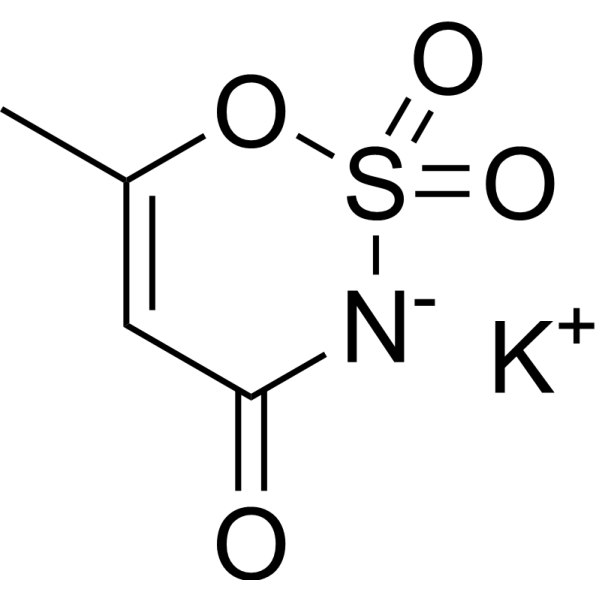
    Acesulfame is a synthetic sweetener. Long-term use of Acesulfame can affect cognitive function, possibly by altering the neurometabolic functions in mice. Acesulfame potassium can suppress autophagic degradation of PD-L1 in RIL-175 and SK-Hep1 cells through the ERK1/2-mTORC1-ULK1 pathway, which may be related to immune evasion in cancer cells. Acesulfame can be used in research on neurological diseases, metabolic disorders, cancer, and immune evasion .
    Acesulfame
  • HY-179397

    Acyltransferase Neurological Disease
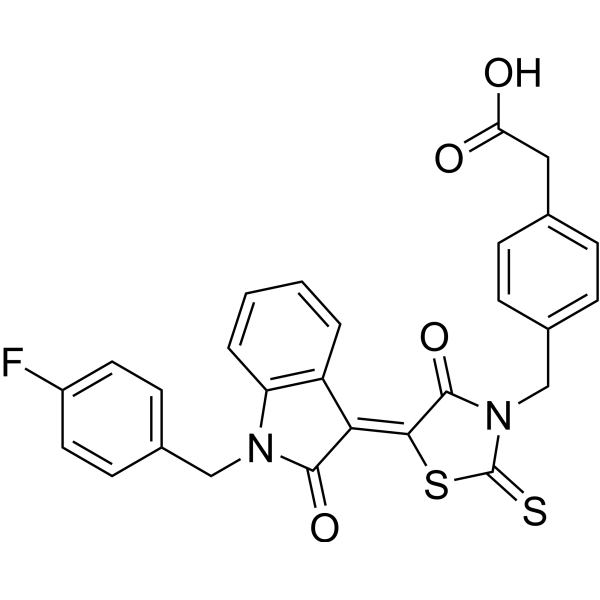
    AANAT-IN-2 (Compound 5g) is a potent and selective AANAT inhibitor, with an IC50 of 1.1 μM. AANAT-IN-2 can be used for the study of seasonal affective disorder (SAD) .
    AANAT-IN-2

Inquiry Online

Your information is safe with us. * Required Fields.

Salutation


Country or Region *

Applicant Name *


Organization Name *

Department *


Email Address *


Product Name *

Cat. No.


Requested quantity *

Phone Number *


Remarks

Inquiry Online

Inquiry Information

Product Name:
Cat. No.:
Quantity:
MCE Japan Authorized Agent:

