69 Results for "

Bifidobacterium animalis subsp. lactis Bl-04

" in MedChemExpress (MCE) Product Catalog:
Products (69)

69 Results for "Bifidobacterium animalis subsp. lactis Bl-04" in MCE Product Catalog:

5
5 Cited Publications
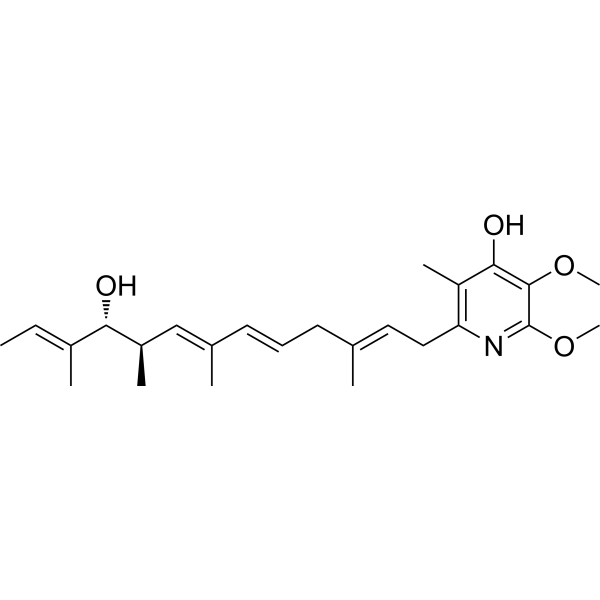
Cat. No.: HY-114936
CAS No.: 2738-64-9
Purity:  ≥99.0%
Synonyms: AR-054
Piericidin A (AR-054) is a natural mitochondrial NADH-ubiquinone oxidoreductase (complex I) inhibitor. Piericidin A is a potent neurotoxin and inhibits mitochondrial respiration by disrupting the electron transport system through its action on NADH-ubiquinone reductase. Piericidin A is also a potential quorum-sensing inhibitor that suppresses the expression of the virulence genes of Erwinia carotovora subsp. atroseptica (Eca). Piericidin A is an ADC cytotoxin and has anti-bacterial, anticancer, insecticidal activity .
loading...
    loading...
2
2 Cited Publications
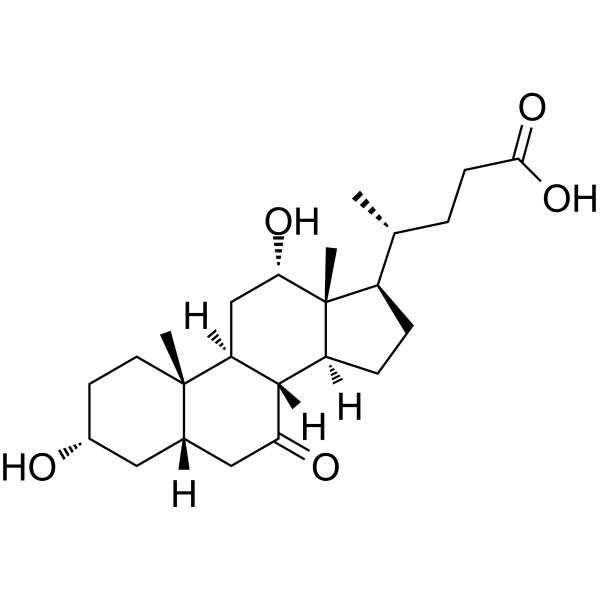
Cat. No.: HY-41324
CAS No.: 911-40-0
7-keto-Deoxycholic acid is a metabolite of bile acids in Clostridium absonum. 7-keto-Deoxycholic acid is also converted from Lactobacillus and Bifidobacterium with specific condition .
loading...
    loading...
1
1 Cited Publications
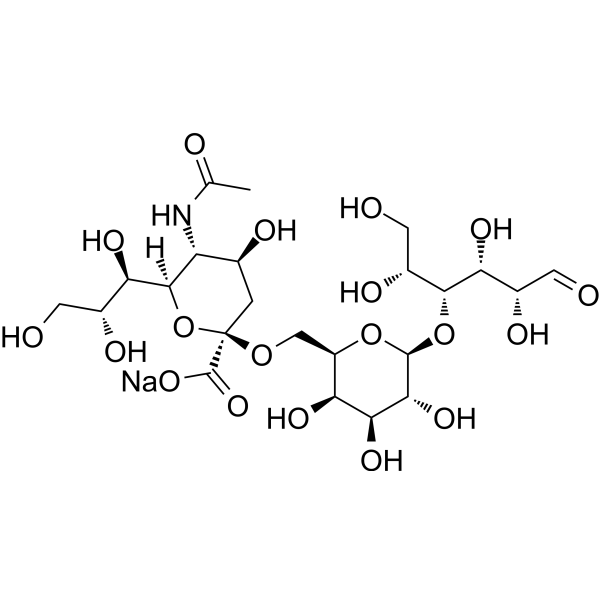
Cat. No.: HY-137335
CAS No.: 157574-76-0
Purity:  ≥98.0%
Target:  

Bacterial VEGFR Akt ERK

Research Areas:  

Infection Inflammation/Immunology

6'-Sialyllactose sodium promotes the growth of beneficial bacteria (such as Bifidobacterium and lactobacillus) and inhibits the proliferation of harmful bacteria. 6'-Sialyllactose sodium exhibits anti-inflammatory and anti-angiogenic activities. 6'-Sialyllactose sodium promotes the muscle health .
loading...
    loading...
1
1 Cited Publications
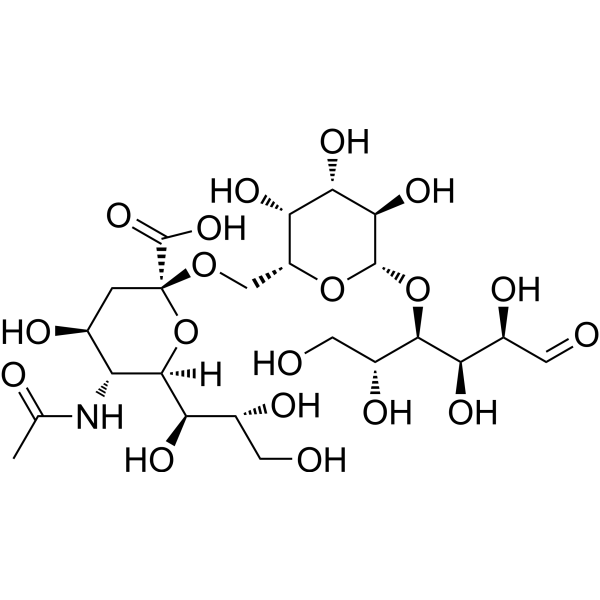
Cat. No.: HY-N10521
CAS No.: 35890-39-2
6'-Sialyllactose promotes the growth of beneficial bacteria (such as Bifidobacterium and lactobacillus) and inhibits the proliferation of harmful bacteria. 6'-Sialyllactose exhibits anti-inflammatory and anti-angiogenic activities. 6'-Sialyllactose promotes the muscle health .
loading...
    loading...
1
1 Cited Publications
Cat. No.: HY-121497
CAS No.: 5813-86-5
Purity:  99.40%
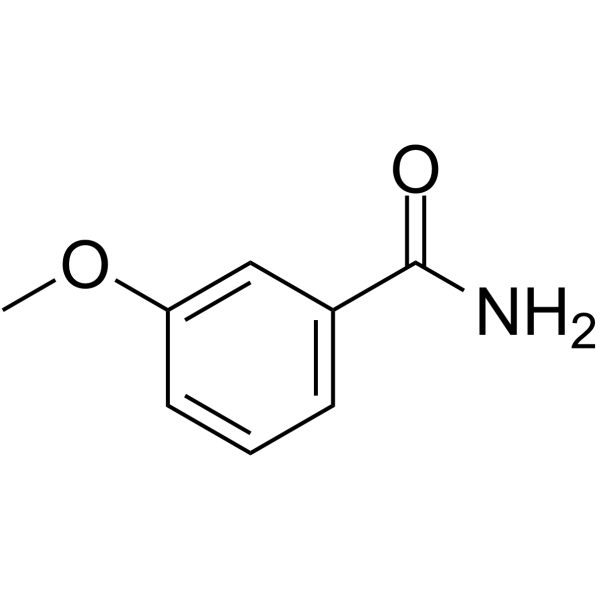
Synonyms: 3-MBA
Target:  

PARP Bacterial

Research Areas:  

Cancer

3-Methoxybenzamide (3-MBA), an inhibitor of ADP-ribosyltransferase (ADPRTs) and PARP, inhibits cell division in Bacillus subtilis, leading to filamentation and eventually lysis of cells . 3-Methoxybenzamide (3-MBA) enhances in vitro plant growth, microtuberization, and transformation efficiency of blue potato (Solanum tuberosum L. subsp. andigenum) .
loading...
    loading...
1
1 Cited Publications
Cat. No.: HY-113133
CAS No.: 2140-29-6
Purity:  99.76%
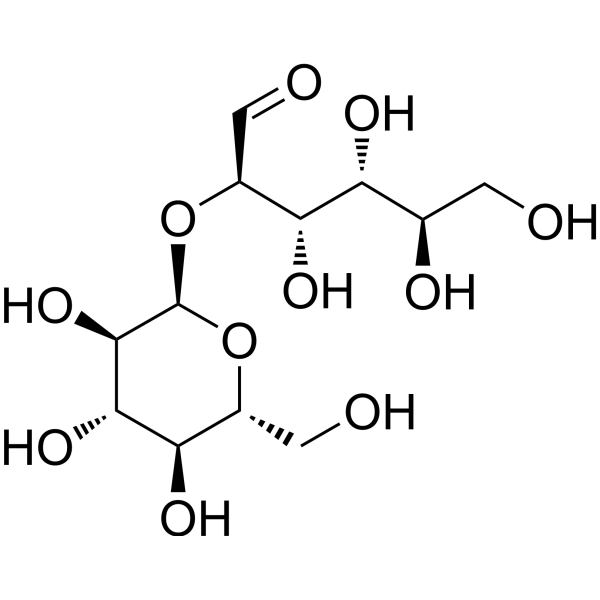
Kojibiose, an orally active prebiotic disaccharide, can specifically inhibit the activity of α-glucosidase I. kojibiose is a proliferation factor for Bifidobacterium, lactic acid bacteria, and eubacteria. kojibiose is a low-calorie sweetener capable of increasing the absorption of iron. Kojibiose exhibits antitoxic activity. Kojibiose reduces hepatic expression of inflammatory markers in vivo .
loading...
    loading...
1
1 Cited Publications
Cat. No.: HY-120536
CAS No.: 13080-21-2
Purity:  ≥98.0%
Target:  

Bacterial

Research Areas:  

Infection

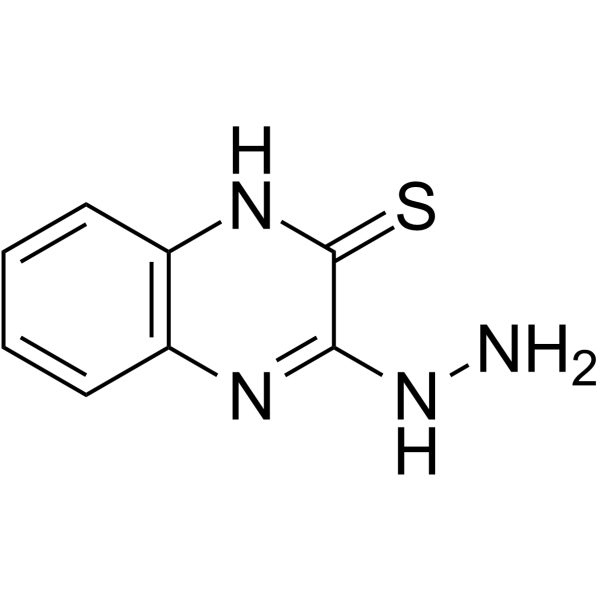
HPi1 is a potent, selective and orally active antimicrobial against Helicobacter pylori with an IC50 of 0.24 μM and an MIC of 0.08-0.16 μg/mL. HPi1 is inactive against other bacteria, including the gut commensals Lactobacillus casei, Lactobacillus reuteri, and Bifidobacterium longum .
loading...
    loading...
Cat. No.: HY-P3752
CAS No.: 92327-84-9
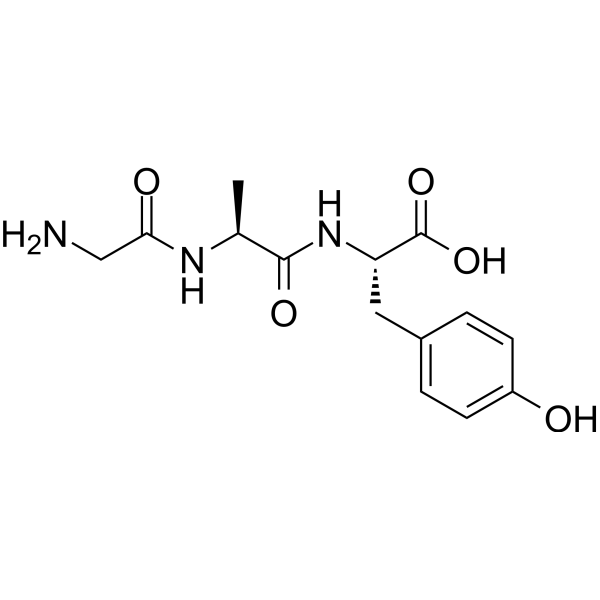
Synonyms: H-Gly-Ala-Tyr-OH
Research Areas:  

Others

Gly-Ala-Tyr (H-Gly-Ala-Tyr-OH) is a tripeptide substrate composed of L-glycine, alanine, and L-tyrosine joined in sequence by peptide linkages. Gly-Ala-Tyr can be hydrolyzed at both extracellular and intracellular levels by Streptococcus thermophilus, Lactobacillus delbrueckii ssp. bulgaricus, Lactobacillus acidophilus, and Bifidobacterium spp. Ala-Gly-Tyr is functionally related to L-alanine, glycine and L-tyrosine. .
loading...
    loading...
Cat. No.: HY-132177C
CAS No.: 9037-65-4
Target:  

Glycosidase

Research Areas:  

Metabolic Disease

α1-3,4 Fucosidase, Bifidobacterium bifidum is a broad specificity exoglycosidase that catalyzes the hydrolysis of terminal, non-reducing α1-3 and α1-4 linked fucose residues from oligosaccharides and glycoproteins .
loading...
    loading...
Cat. No.: HY-132177A
CAS No.: 9037-65-4
Target:  

Glycosidase

Research Areas:  

Metabolic Disease

α1-2 Fucosidase (EC 3.2.1.51) is a highly specific exoglycosidase that catalyzes the hydrolysis of linear α1-2 linked fucose residues from oligosaccharides .
loading...
    loading...
Cat. No.: HY-N1673
CAS No.: 1194-98-5
Synonyms: Gentisaldehyde
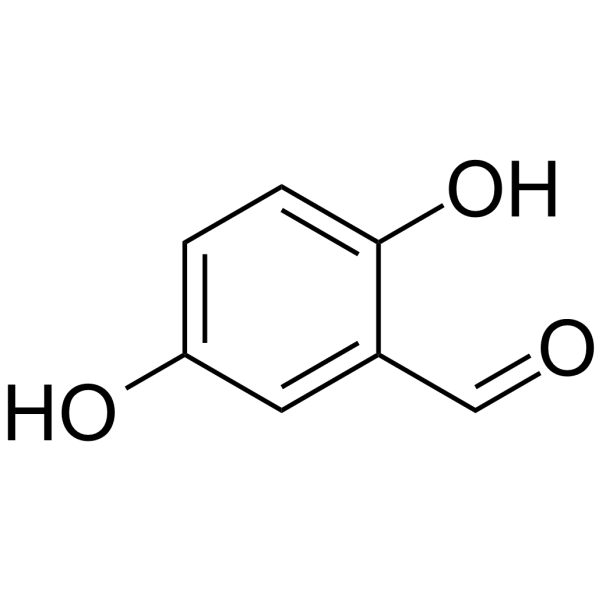
2,5-Dihydroxybenzaldehyde (Gentisaldehyde) is a naturally occurring antimicrobial that inhibits the growth of Mycobacterium avium subsp. paratuberculosis. 2,5-Dihydroxybenzaldehyde is active against S. aureus strains with a MIC50 of 500 mg/L .
loading...
    loading...
Cat. No.: HY-P2988A
CAS No.: 9001-67-6
Target:  

Glycosidase

Research Areas:  

Metabolic Disease

α2-3,6 Neuraminidase, Bifidobacterium infantis is a highly specific exoglycosidase that catalyzes the hydrolysis of non-reducing terminal α2-3 and α2-6 unbranched sialic acid residues from complex carbohydrates and glycoproteins. α2-3,6 Neuraminidase does not exhibit activity on α2-8 or branched sialic acids .
loading...
    loading...
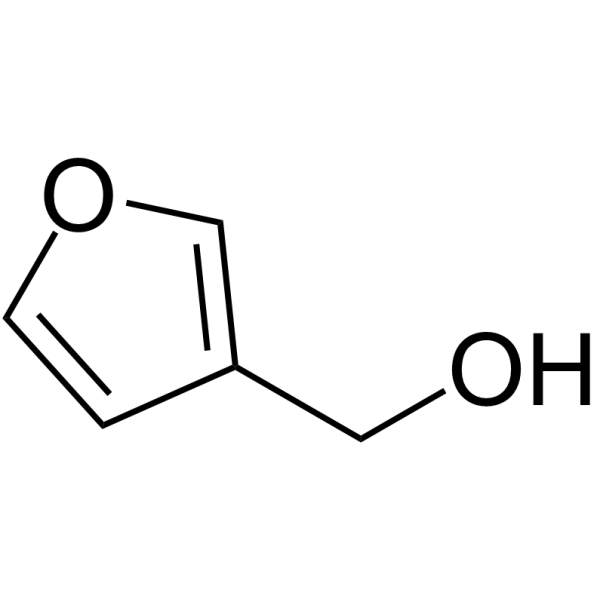
Cat. No.: HY-W007708
CAS No.: 4412-91-3
3-Furanmethanol, a volatile furan compound, can be detected in malt beverages fermented with Bifidobacterium breve. 3-Furanmethanol exhibits roasty, popcorn-like flavors .
loading...
    loading...
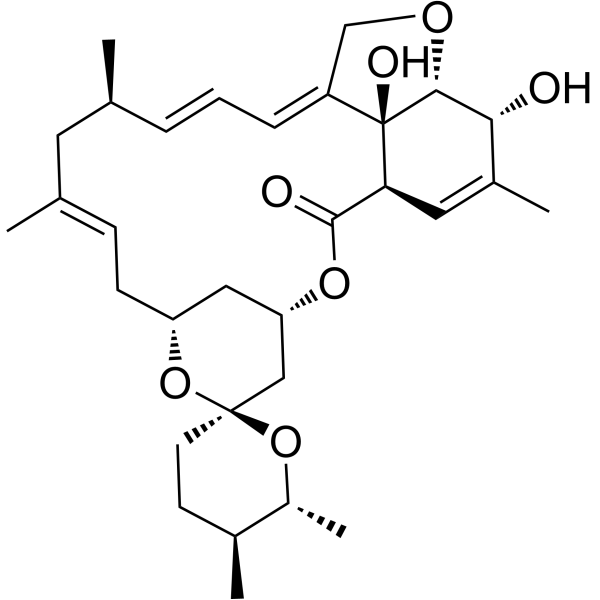
Cat. No.: HY-130423
CAS No.: 51596-10-2
Purity:  99.46%
Target:  

Insecticide

Research Areas:  

Infection

Milbemycin A3 is a 16-membered macrocyclic lactone compound found in the soil bacterium Saccharopolyspora hygroscopicus subsp. aureolacrimosus. Milbemycin A3 enhances the opening of glutamate- and GABA-gated chloride channels and exhibits insecticidal activity. Milbemycin A3 can be used in insect resistance-related research .
loading...
    loading...
Cat. No.: HY-W008030
CAS No.: 2243-47-2
Target:  

Bacterial

Research Areas:  

Infection

3-Aminobiphenyl is a chemical isomer of 4-ABP. 3-Aminobiphenyl can inhibit the growth of human intestinal bacteria Bifidobacterium infantis ATCC 15697, B. bifidium ATCC 11863, Clostridium perfringens ATCC 13124, Escherichia coli ATCC 25922, E. coli ATCC 35218, Enterobacter cloacae ATCC 13047 and Salmonella typhimurium TA98, TA100, YG1041. 3-Aminobiphenyl can be used as a biomarker of exposure to aromatic amines from cigarette smoke .
loading...
    loading...
Cat. No.: HY-113254
CAS No.: 363-23-5
Purity:  96.7%
Research Areas:  

Endocrinology

13,14-Dihydro-15-keto-PGE2 participates in Bifidobacterium animalis F1-7 to alleviate opioid-induced constipation by 5-HT pathway .
loading...
    loading...
Cat. No.: HY-N14690
CAS No.: 83858-82-6
Piperazinomycin is an antifungal and antibacterial antibiotic. Piperazinomycin is isolated from the culture broth of Streptoverticillium olivoreticuli subsp. neoenacticus. Piperazinomycin inhibits the growth of fungi, yeasts and some Mycobacterium species. Piperazinomycin exhibits inhibitory activity against Trichophyton species .
loading...
    loading...
Cat. No.: HY-W011730
CAS No.: 87178-63-0
Synonyms: Leu-Pro hydrochloride
Leucylproline hydrochloride (Leu‑Pro hydrochloride) is a dipeptide composed of L‑leucine and L‑proline, and it is a fecal secondary metabolite associated with the gut microbiota. Leucylproline hydrochloride is taken up by Lactococcus lactis cells via the di‑tripeptide transport system, and mediates transcriptional repression of the prtP/prtM promoter after intracellular accumulation. The content of Leucylproline hydrochloride is significantly decreased in fecal samples related to hepatolenticular degeneration. Leucylproline hydrochloride can be used for the study of metabolism‑related diseases .
loading...
    loading...
Cat. No.: HY-P2957
CAS No.: 37259-53-3
Research Areas:  

Metabolic Disease

Hyaluronate lyase can cleat hyaluronate (HA) and produce unsaturated disaccharides through a β-elimination reaction. The resulting disaccharides further trigger the downstream pathway and catalyze the next reaction. Hyaluronate lyase helps Streptococcus dysgalactiae subsp.equisimilis (SDSE) acquire nutrients from the host, causing bacterial pathogenicity .
loading...
    loading...
Cat. No.: HY-41324R
CAS No.: 911-40-0
7-keto-Deoxycholic acid (Standard) is the analytical standard of 7-keto-Deoxycholic acid. This product is intended for research and analytical applications. 7-keto-Deoxycholic acid is a metabolite of bile acids in Clostridium absonum. 7-keto-Deoxycholic acid is also converted from Lactobacillus and Bifidobacterium with specific condition[1][2].
loading...
    loading...

