Search Result
Results for "
CDK4/6
" in MedChemExpress (MCE) Product Catalog:
6
Isotope-Labeled Compounds
| Cat. No. |
Product Name |
Target |
Research Areas |
Chemical Structure |
-
- HY-16297A
-
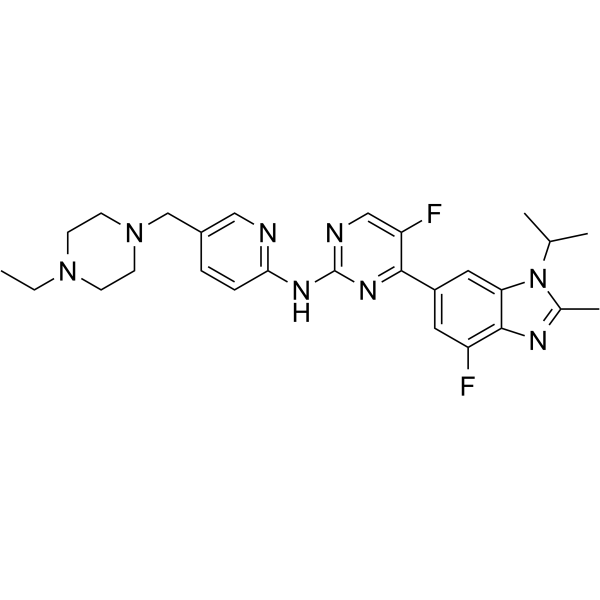
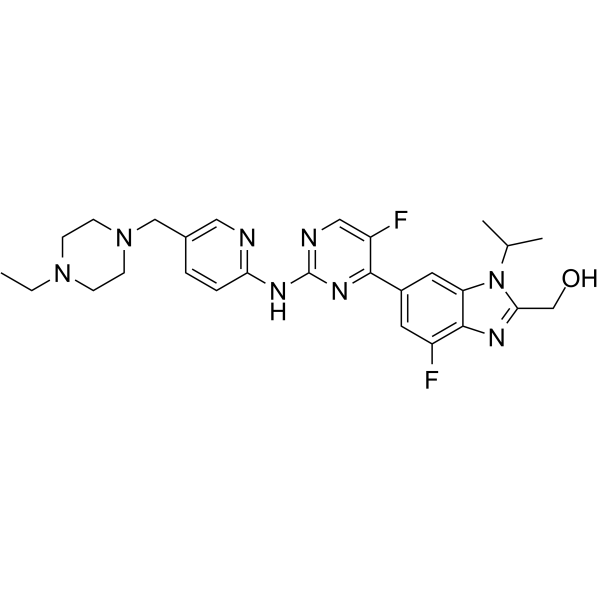
Abemaciclib
Maximum Cited Publications
117 Publications Verification
LY2835219
|
CDK
|
Neurological Disease
Cancer
|
|
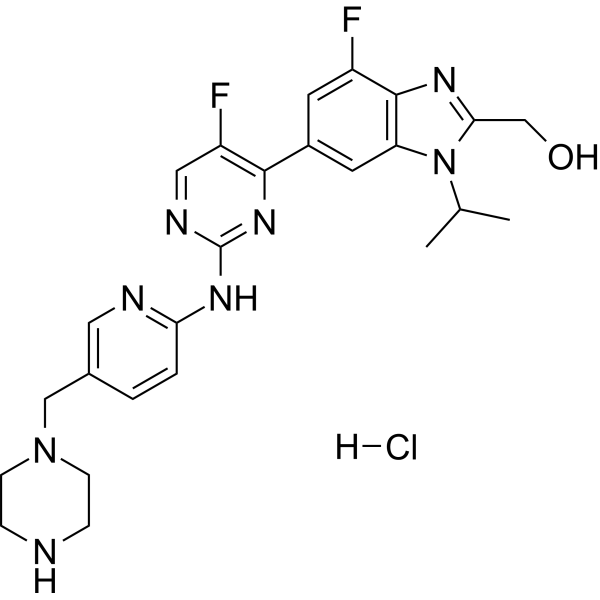
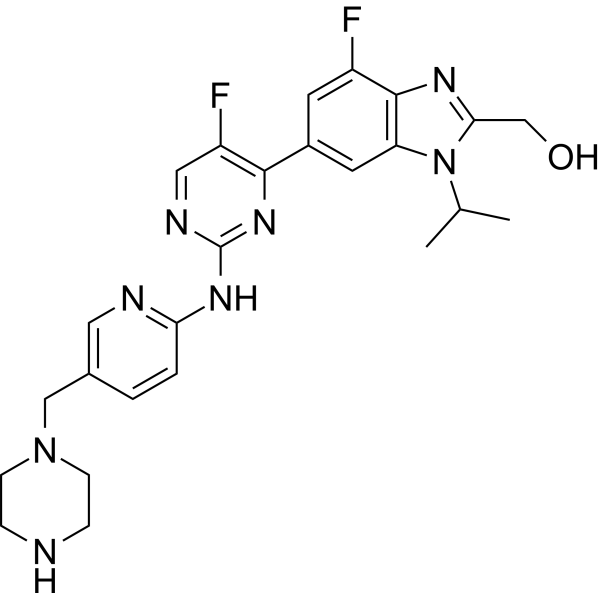
Abemaciclib (LY2835219) is a selective and BBB-permeable CDK4/6 inhibitor with IC50 values of 2 nM and 10 nM for CDK4 and CDK6, respectively.
|
-
-
- HY-15777
-
|
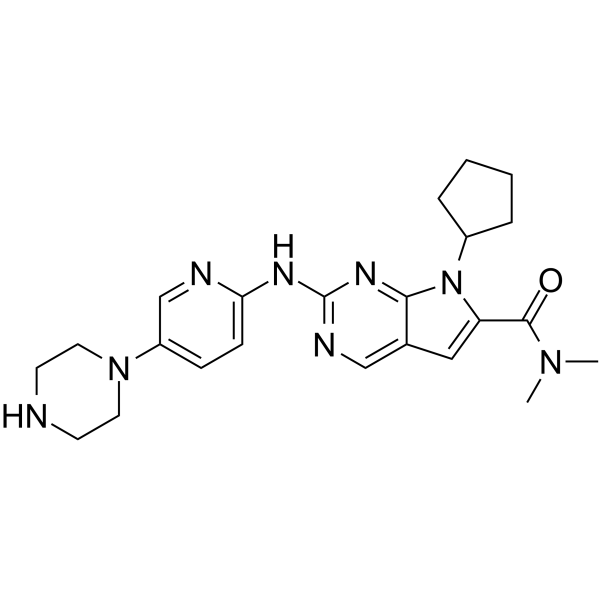
LEE011
|
CDK
|
Neurological Disease
Cancer
|
|
RRibociclib (LEE011) is an ATP-competitive and orally active CDK4/6 inhibitor that crosses the blood-brain barrier with IC50 values of 10 nM and 39 nM, respectively, and is over 1,000-fold less potent against the cyclin B/CDK1 complex .
|
-
-
- HY-16297
-
|
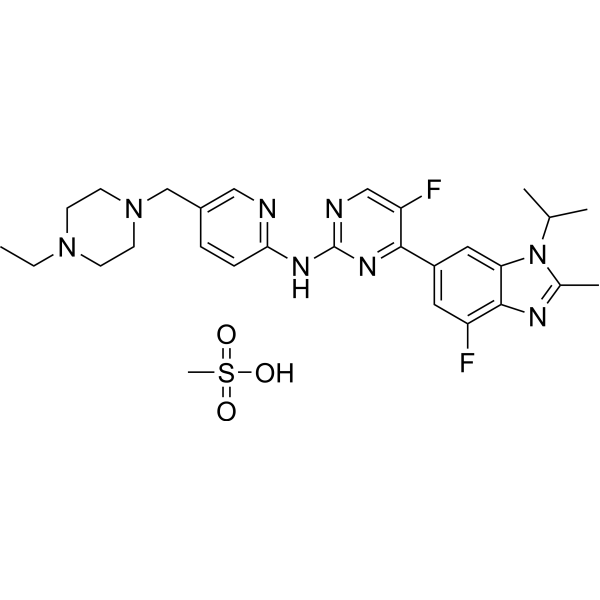
LY2835219 methanesulfonate
|
CDK
|
Cancer
|
|
Abemaciclib methanesulfonate (LY2835219 methanesulfonate) is a selective and BBB-permeable CDK4/6 inhibitor with IC50s of 2 nM and 10 nM for CDK4 and CDK6, respectively .
|
-
-
- HY-15777A
-
|
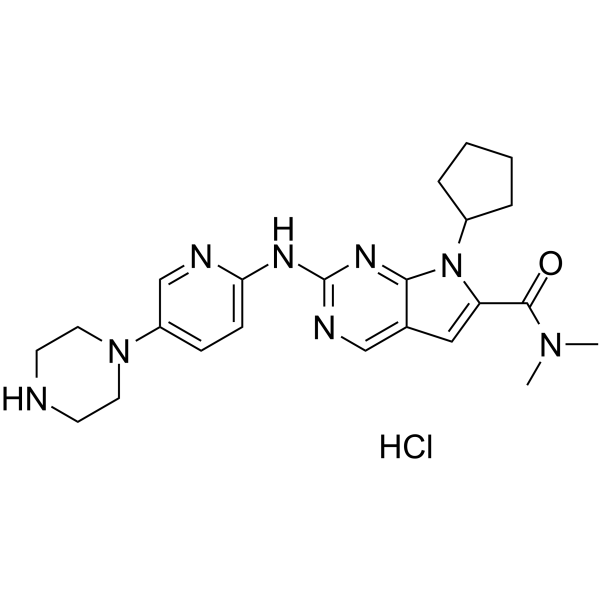
LEE011 hydrochloride
|
CDK
|
Neurological Disease
Cancer
|
|
RRibociclib (LEE011) hydrochloride is an ATP-competitive and orally active CDK4/6 inhibitor that crosses the blood-brain barrier with IC50 values of 10 nM and 39 nM, respectively, and is over 1,000-fold less potent against the cyclin B/CDK1 complex .
|
-
-
- HY-101467
-
|
G1T28
|
CDK
|
Cancer
|
|
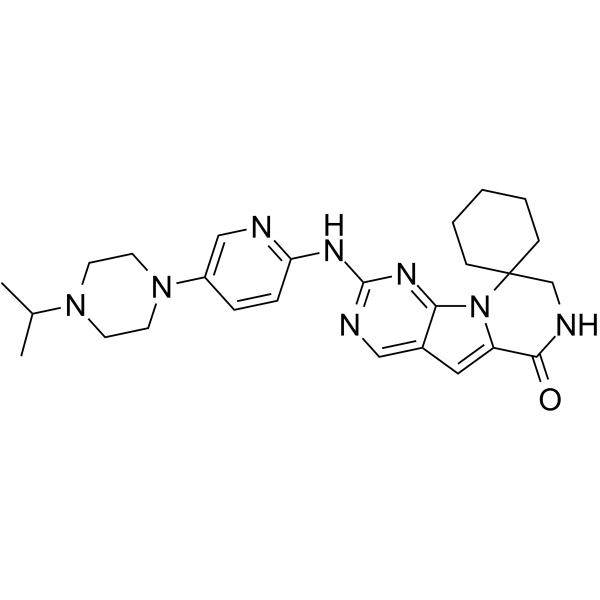
Trilaciclib (G1T28) is an orally active CDK4/6 inhibitor with IC50 values of 1 nM and 4 nM for CDK4 and CDK6, respectively. . Trilaciclib can effectively inhibit tumor cell proliferation and reduce the hematological toxicity caused by chemotherapy. Trilaciclib attenuates apoptosis and myelosuppression induced by 5FU (HY-90006) chemotherapy .
|
-
-
- HY-15777B
-
|
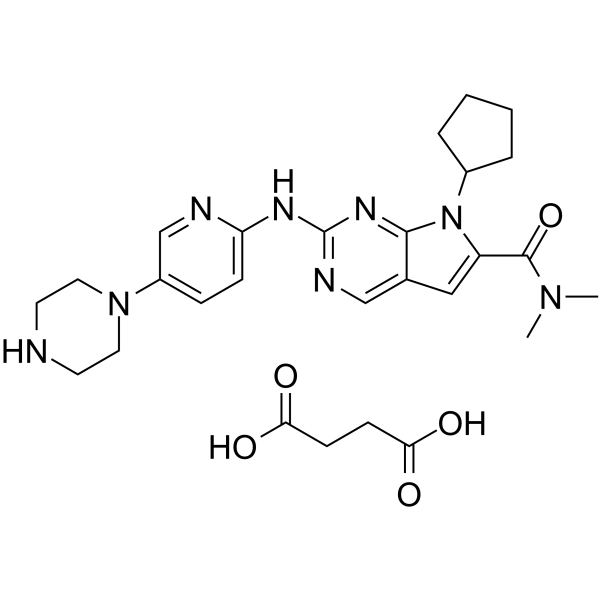
LEE011 succinate
|
CDK
|
Neurological Disease
Cancer
|
|
RRibociclib (LEE011) succinate is an ATP-competitive and orally active CDK4/6 inhibitor that crosses the blood-brain barrier with IC50 values of 10 nM and 39 nM, respectively, and is over 1,000-fold less potent against the cyclin B/CDK1 complex .
|
-
-
- HY-158106
-
AZD8421
1 Publications Verification
|
CDK
|
Cancer
|
|
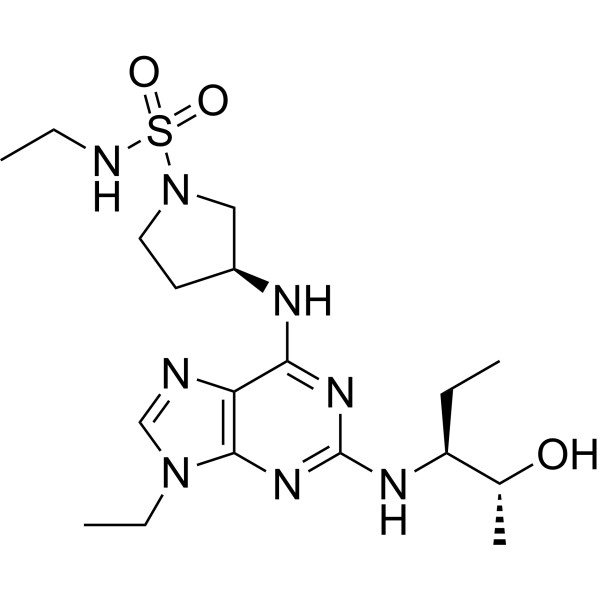
AZD8421 is a selective CDK2 inhibitor (IC50 = 9 nM) as well as achieving CDK family selectivity in cells versus key off-targets (CDK1, CDK4/6, CDK9), AZD8421 had no significant kinase inhibition outside the CDK family. AZD8421 inhibits cancer cell proliferation by inhibiting pRB phosphorylation, inducing cell cycle arrest in G1/S phase and senescence. AZD8421 can be studied in research for breast cancer and ovarian cancer .
|
-
-
- HY-136250
-
|
|
PROTACs
CDK
|
Cancer
|
|
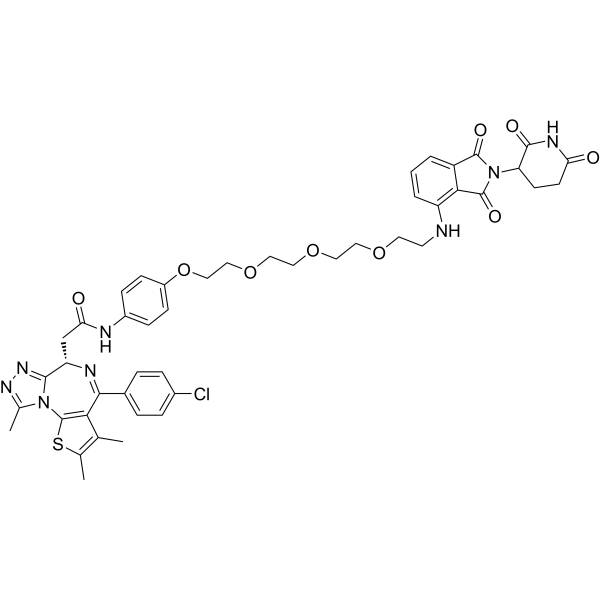
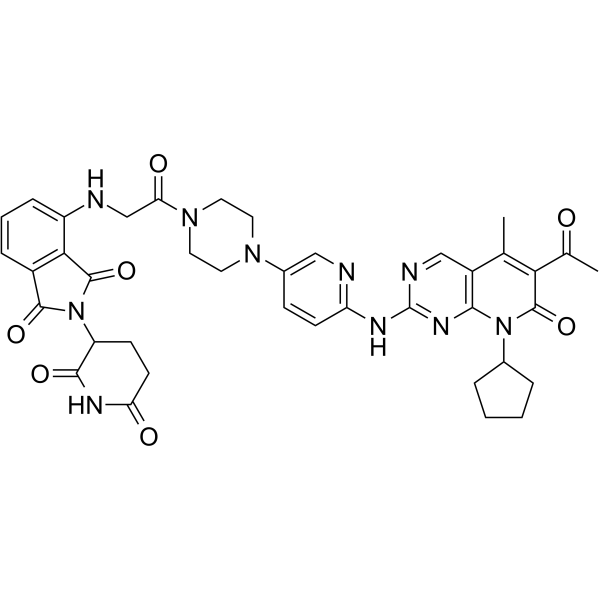
BSJ-03-204 is a PROTAC connected by ligands for Cereblon and CDK. BSJ-03-204 is a potent and selective Palbociclib-based CDK4/6 dual degrader (PROTAC), with IC50s of 26.9 nM and 10.4 nM for CDK4/D1 and CDK6/D1, respectively. BSJ-03-204 does not induce IKZF1/3 degradation and has anti-cancer activity .
|
-
-
- HY-138946
-
|
|
CDK
PROTACs
|
Cancer
|
|
XY028-140 is a PROTAC connected by ligands for Cereblon and CDK. XY028-140 inhibits both CDK4/6 expression and CDK4/6 activity in cancer cells .
|
-
-
- HY-112272
-
|
G1T38
|
CDK
|
Cancer
|
|
Lerociclib (G1T38) is a potent and selective inhibitor of CDK4/6, with IC50s of 1 nM, 2 nM for CDK4/CyclinD1 and CDK6/CyclinD3, respectively.
|
-
-
- HY-129180
-
|
|
PROTACs
CDK
|
Cancer
|
|
XY028-133 (example 14) is a PROTAC-based CDK4/6 degrader with anti-tumor activity, which consists of ligands for von Hippel-Lindau and CDK .
|
-
-
- HY-163786
-
|
|
PROTACs
CDK
Apoptosis
|
Cancer
|
|
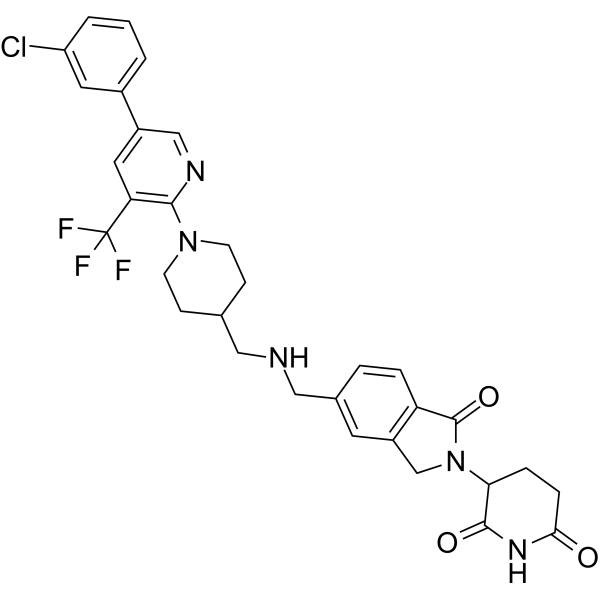
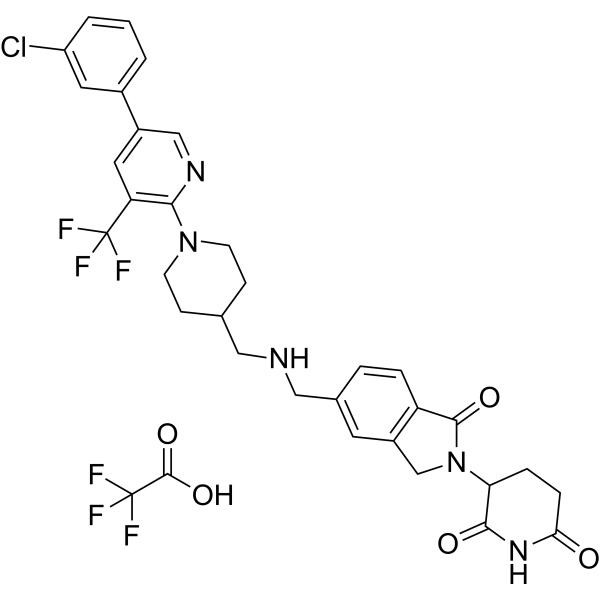
PROTAC CDK4/6 degrader 1 is a CDK4/CDK6 PROTAC degrader, with DC50 values of 10.5 nM and 2.5 nM, respectively. PROTAC CDK4/6 degrader 1 inhibits the proliferation of Jurkat cells (IC50 = 0.18 μM), arrests the cell cycle at the G1 phase, and induces apoptosis. PROTAC CDK4/6 degrader 1 can be used for cancer research.
|
-
-
- HY-162318
-
|
|
Molecular Glues
c-Myc
|
Cancer
|
|
MYC degrader 1 (compound A80.2HCl) is an orally available MYC molecular glues degrader with anti-tumor activity. MYC degrader 1 restores pRB1 protein activity and re-establishes sensitivity of MYC overexpressing cancer cells to CDK4/6 inhibitors .
|
-
-
- HY-112280
-
|
CDK4/6/1 Inhibitor
|
CDK
|
Cancer
|
|
Crozbaciclib (CDK4/6/1 Inhibitor) is a CDK4/6 inhibitor with IC50s of 3 and 1 nM, respectively.
|
-
-
- HY-142076
-
|
|
CDK
|
Cancer
|
|
CDK4/6-IN-15 is an orally active and selective CDK4/6 inhibitor. CDK4/6-IN-15 potently inhibits cancer cells growth. CDK4/6-IN-15 arrests cell cycle at G1 phase and suppresses retinoblastoma tumour suppressor protein (Rb) phosphorylation at S780 and E2 factor (E2F)-regulated gene expression .
|
-
-
- HY-152263
-
|
|
Hsp-targeting Chimeras
CDK
Apoptosis
|
Cancer
|
|
HEMTAC CDK4/6 degrader 1 is a PROTAC connected by ligands for HSP90 and CDK4/6 with a Kd value of 35.7 μM. HEMTAC CDK4/6 degrader 1 induces CDK4/6 degradation in B16F10 melanoma cells. HEMTAC CDK4/6 degrader 1 arrests cell cycle at G0/G1 phase and induces apoptosis. HEMTAC CDK4/6 degrader 1 can be used in research of cancer . HEMTAC CDK4/6 degrader 1 is a click chemistry reagent, it contains an Alkyne group and can undergo copper-catalyzed azide-alkyne cycloaddition (CuAAc) with molecules containing Azide groups.
|
-
-
- HY-16297AR
-
|
LY2835219 (Standard)
|
Reference Standards
CDK
|
Cancer
|
|
Abemaciclib (Standard) is the analytical standard of Abemaciclib. This product is intended for research and analytical applications. Abemaciclib (LY2835219) is a selective and BBB-permeable CDK4/6 inhibitor with IC50 values of 2 nM and 10 nM for CDK4 and CDK6, respectively.
|
-
-
- HY-16297AS
-
|
LY2835219-d8
|
CDK
|
Cancer
|
|
Abemaciclib-d8 is the deuterium labeled Abemaciclib. Abemaciclib (LY2835219) is a selective CDK4/6 inhibitor with IC50 values of 2 nM and 10 nM for CDK4 and CDK6, respectively.
|
-
-
- HY-N0805
-
|
23-Acetylalismol B; 23-O-Acetylalisol B; Alisol B monoacetate
|
Apoptosis
Reactive Oxygen Species (ROS)
CDK
MMP
PARP
FXR
Syk
|
Cardiovascular Disease
Metabolic Disease
Inflammation/Immunology
Cancer
|
|
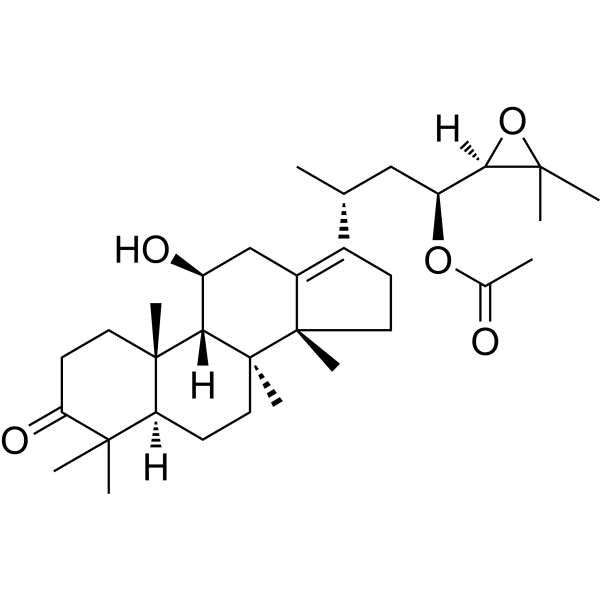
Alisol B 23-acetate is an orally active prototerpane-type triterpenoid. Alisol B 23-acetate can be isolated from Alisma orientalis. Alisol B 23-acetate induces Apoptosis, promotes ROS generation, downregulates CDK4/6, MMP-2/9, upregulates cleaved PARP, activates FXR and inhibits Syk. Alisol B 23-acetate has anti-inflammatory and hepatoprotective activities. Alisol B 23-acetate protects the kidney from ischemia-reperfusion injury. Alisol B 23-acetate has anticancer activity against ovarian cancer, colon cancer, lung cancer, and gastric cancer. Alisol B 23-acetate can be used in the study of atherosclerosis and allergic asthma [4] .
|
-
-
- HY-101467A
-
|
G1T28 hydrochloride
|
CDK
|
Cancer
|
|
Trilaciclib (G1T28) hydrochloride is an orally active CDK4/6 inhibitor with IC50 values of 1 nM and 4 nM for CDK4 and CDK6, respectively. Trilaciclib hydrochloride can effectively inhibit tumor cell proliferation and reduce the hematological toxicity caused by chemotherapy. Trilaciclib hydrochloride attenuates apoptosis and myelosuppression induced by 5FU (HY-90006) chemotherapy .
|
-
-
- HY-126534A
-
|
LSN3106729 hydrochloride
|
Ligands for Target Protein for PROTAC
CDK
|
Cancer
|
|
Abemaciclib metabolite M18 (LSN3106729) hydrochloride, the metabolite of Abemaciclib (HY-16297A), is a CDK inhibitor with antitumor activity. Abemaciclib metabolite M18 hydrochloride and a CRBN ligand have been used to design PROTAC CDK4/6 degrader .
|
-
-
- HY-15777S
-
|
LEE011-d6
|
CDK
|
Cancer
|
|
Ribociclib-d6 (LEE011-d6) is a deuterium labeled Ribociclib (HY-15777). Ribociclib is a highly specific CDK4/6 inhibitor with IC50 values of 10 nM and 39 nM, respectively, and is over 1,000-fold less potent against the cyclin B/CDK1 complex .
|
-
-
- HY-122620
-
|
Hetrombopag (tautomerism); SHR-8735 (tautomerism)
|
Thrombopoietin Receptor
STAT
PI3K
ERK
Apoptosis
CDK
|
Cardiovascular Disease
Inflammation/Immunology
|
|
Rafutrombopag (tautomerism) (Hetrombopag) is an orally active nonpeptide thrombopoietin receptor (TPOR/MPL) agonist. Rafutrombopag can chelate iron and alleviate iron overload while promoting haematopoiesis. Rafutrombopag specifically stimulates proliferation and differentiation of human TPOR‐expressing cells, including 32D‐ MPL and human hematopoietic stem cells through stimulation of STAT, PI3K and ERK signalling pathways. Rafutrombopag effectively up-regulates G1-phase-related proteins, including p-RB, Cyclin D1 and CDK4/6, normalizes progression of the cell cycle, and prevents apoptosis by modulating BCL-XL/BAK expression in 32D-MPL cells. Rafutrombopag protects cardiomyocyte survival from oxidative stress damage as an enhancer of stem cells. Rafutrombopag can be used for the study of immune thrombocytopenia and oxidative stress-related cardiovascular disease .
|
-
-
- HY-144995
-
|
CDK4/6-IN-11
|
PROTACs
CDK
|
Cancer
|
|
CDK4/6-IN-11 is a potent PROTAC CDK4/6 degrader . CDK4/6-IN-11 consists of a thalidomide-based E3 ligase ligand (blue part) Thalidomide-NH-CH2-COOH (HY-131717), a target protein ligand (red part) Palbociclib (HY-50767), and a PROTAC linker (black part) Boc-NH-C4-Br (HY-W007803). E3 ligase ligand and linker can form Thalidomide-NH-amido-C4-Br (HY-170307).
|
-
-
- HY-114339
-
|
|
CDK
|
Cancer
|
|
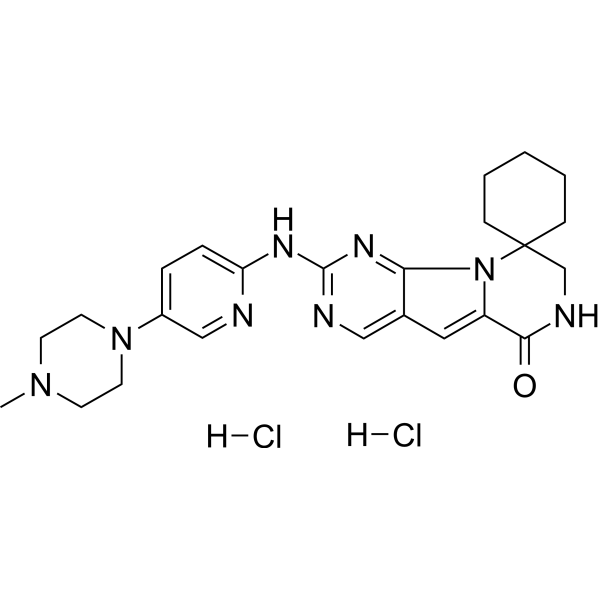
CDK4/6-IN-2 is a potent CDK4 and CDK6 inhibitor extracted from patent US20180000819A1, Compound 1, has IC50s of 2.7 and 16 nM for CDK4 and CDK6, respectively .
|
-
-
- HY-126534
-
|
LSN3106729
|
Ligands for Target Protein for PROTAC
CDK
|
Cancer
|
|
Abemaciclib metabolite M18 (LSN3106729), the metabolite of Abemaciclib (HY-16297A), is a CDK inhibitor with antitumor activity. Abemaciclib metabolite M18 and a CRBN ligand have been used to design PROTAC CDK4/6 degrader .
|
-
-
- HY-136726
-
|
CINK4
|
CDK
|
Cancer
|
|
GP-82996 (CINK4) is a pharmacological inhibitor of CDK4/6. GP-82996 has IC50s of 1.5, 5.6 and 25 μM for CDK4/cyclin D1, CDK6/cyclin D1 and Cdk5/p35, respectively. GP-82996 induces the apoptosis of cancer cells U2OS. GP-82996 can be used in the research of cancer .
|
-
-
- HY-15777C
-
|
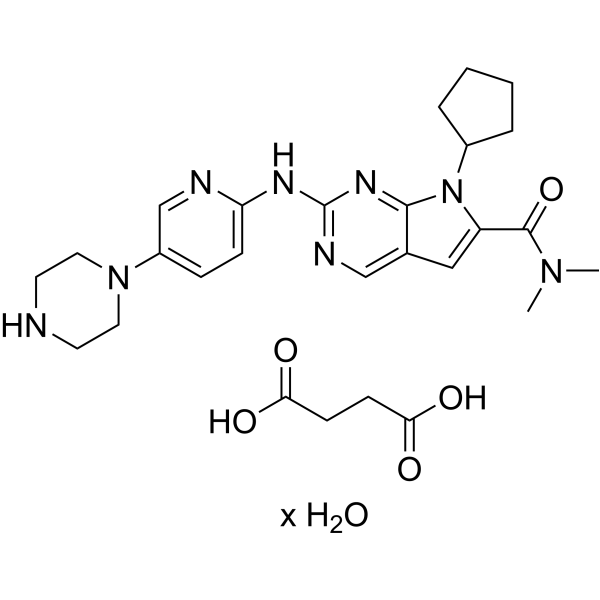
LEE011 succinate hydrate
|
CDK
|
Cancer
|
|
RRibociclib (LEE011) succinate hydrate is an ATP-competitive and orally active CDK4/6 inhibitor that crosses the blood-brain barrier with IC50 values of 10 nM and 39 nM, respectively, and is over 1,000-fold less potent against the cyclin B/CDK1 complex .
|
-
-
- HY-15777R
-
|
LEE011 (Standard)
|
Reference Standards
CDK
|
Cancer
|
|
Ribociclib (Standard) is the analytical standard of Ribociclib. This product is intended for research and analytical applications. Ribociclib (LEE01) is a highly specific CDK4/6 inhibitor with IC50 values of 10 nM and 39 nM, respectively, and is over 1,000-fold less potent against the cyclin B/CDK1 complex .
|
-
-
- HY-146213
-
|
|
CDK
|
Cancer
|
|
CDK4/6-IN-12 is a potent cyclin-dependent kinase 4/6 (CDK4/6) inhibitor. CDK4/6-IN-12 has enzymatic inhibitory activity for CDK4 and CDK6 with IC50 of 592.3 nM and 3090 nM, respectively. CDK4/6-IN-12 can be used for the research of cancer .
|
-
-
- HY-129336
-
|
LSN3106726
|
CDK
|
Cancer
|
|
Abemaciclib metabolite M20 (LSN3106726), the active metabolite of Abemaciclib, is a selective CDK4/6 inhibitor for the treatment of cancer .
|
-
-
- HY-137449
-
|
G1T48
|
Estrogen Receptor/ERR
CDK
|
Cancer
|
|
Rintodestrant (G1T48) is an orally active, non-steroidal and selective estrogen receptor degrader. Rintodestrant (G1T48) is also a CDK4/6 inhibitor .
|
-
-
- HY-15777AS
-
|
LEE011-d6 hydrochloride
|
Isotope-Labeled Compounds
CDK
|
Cancer
|
|
Ribociclib-d6 (LEE011-d6) hydrochloride is a deuterium labeled Ribociclib. Ribociclib is a highly specific CDK4/6 inhibitor with IC50 values of 10 nM and 39 nM, respectively, and is over 1,000-fold less potent against the cyclin B/CDK1 complex .
|
-
-
- HY-115992
-
|
|
CDK
|
Cancer
|
|
CDK4/6-IN-9 (compound 10) is a selective CDK4/6 inhibitor with an IC50 of 905 nM for CDK6/cyclin D1. CDK4/6-IN-9 has the potential for multiple myeloma (MM) research .
|
-
-
- HY-142076A
-
|
|
CDK
|
Cancer
|
|
CDK4/6-IN-15 hydrochloride is an orally active and selective CDK4/6 inhibitor. CDK4/6-IN-15 hydrochloride potently inhibits cancer cells growth. CDK4/6-IN-15 hydrochloride arrests cell cycle at G1 phase and suppresses retinoblastoma tumour suppressor protein (Rb) phosphorylation at S780 and E2 factor (E2F)-regulated gene expression .
|
-
-
- HY-153894
-
|
|
CDK
Epigenetic Reader Domain
PI3K
NF-κB
SARS-CoV
|
Infection
Neurological Disease
Metabolic Disease
Inflammation/Immunology
Cancer
|
|
SRX3177 is a triple inhibitor of CDK4/6, PI3K, and BRD4, with IC50s of <2.5 nM (CDK4), 3.3 nM (CDK6), 33 nM (BRD4 BD1), 89 nM (BRD4 BD2), 79 nM (PI3Kα), 83 nM (PI3Kδ), 3.18 μM (PI3Kγ) , respectively. SRX3177 blocks the interaction between the SARS-CoV-2 E protein and the BRD2/4 BD1 domain, restores E protein-attenuated NF-κB activity. SRX3177 exerts broad cytotoxic activity against cancer cells. SRX3177 can be used for the study of anti-SARS-CoV-2 and cancer .
|
-
-
- HY-169947
-
|
|
CDK
|
Cancer
|
|
DDO-6079 is a potent CDC37 inhibitor. DDO-6079 inhibits HSP90-CDC37 and CDC37-CDK4/6 chaperone complex by binding to an allosteric site on CDC37. DDO-6079 decreases the thermostability of CDK6 .
|
-
-
- HY-153088
-
|
|
CDK
|
Cancer
|
|
CDK4/6-IN-16 (example 195) is a potent CDK4 and CDK6 inhibitor, with an IC50 of 0.013 μM for CDK4. CDK4/6-IN-16 can be used for the research of CDK4-mediated disorders, such as cancer .
|
-
-
- HY-145589
-
|
Hetrombopag; SHR-8735
|
Thrombopoietin Receptor
STAT
PI3K
ERK
Apoptosis
CDK
|
Cardiovascular Disease
Inflammation/Immunology
Cancer
|
|
Rafutrombopag (Hetrombopag) is an orally active nonpeptide thrombopoietin receptor (TPOR/MPL) agonist. Rafutrombopag can chelate iron and alleviate iron overload while promoting haematopoiesis. Rafutrombopag specifically stimulates proliferation and differentiation of human TPOR-expressing cells, including 32D-MPL and human hematopoietic stem cells through stimulation of STAT, PI3K and ERK signalling pathways. Rafutrombopag effectively up-regulates G1-phase-related proteins, including p-RB, Cyclin D1 and CDK4/6, normalizes progression of the cell cycle, and prevents apoptosis by modulating BCL-XL/BAK expression in 32D-MPL cells. Rafutrombopag protects cardiomyocyte survival from oxidative stress damage as an enhancer of stem cells. Rafutrombopag can be used for the study of immune thrombocytopenia and oxidative stress-related cardiovascular disease .
|
-
-
- HY-151898
-
|
|
CDK
|
Cancer
|
|
CDK4/6-IN-14 is a potent and highly selective CDK4 and CDK6 (CDK) inhibitor with IC50s of 10 nM and 16 nM, respectively. CDK4/6-IN-14 exhibits more than 60-fold selectivity over CDKs 1, 2, 7, and 9, and shows high selectivity among other 205 kinases .
|
-
-
- HY-171459
-
|
N-Desmethyl Ribociclib
|
Drug Metabolite
Cytochrome P450
|
Cancer
|
|
LEQ803 (N-Desmethyl Ribociclib) is a drug metabolite of the CDK4/6 inhibitor Ribociclib (HY-15777), which is produced through metabolism by CYP3A4. LEQ803 has potential application value in the field of oncology .
|
-
-
- HY-134303
-
|
PROTAC CDK4/6 degrader 34
|
PROTACs
CDK
|
Cancer
|
|
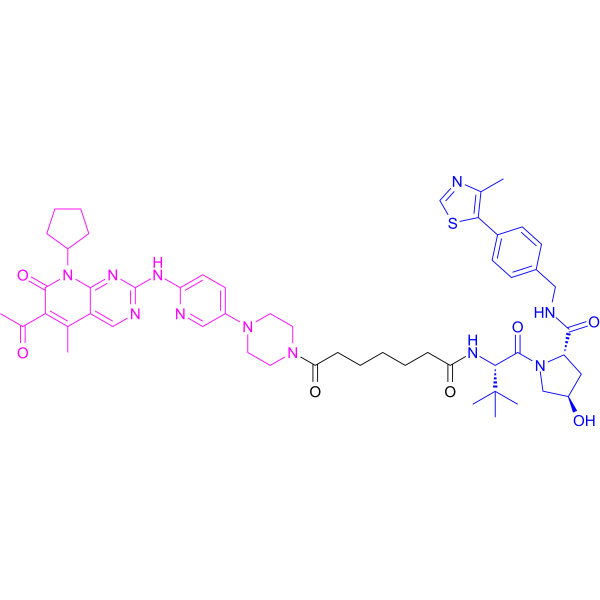
CST651 (PROTAC CDK4/6 degrader 34) is a selective cyclin dependent kinase CDK4/6 PROTAC degrader. CST651 can degrade CDK4 and CDK6 in MM.1S cells with DC50 values of 20 and 5.1 nM. CST651 can inhibit cancer cells proliferation and migration. CST651 can be used for the research of cancer, such as acute lymphoblastic leukemia . (Structure Note: Pink: CDK4/6 ligand (HY-50767); Blue: VHL ligand (HY-125905); Black: linker (HY-W017440))
|
-
-
- HY-136250A
-
|
|
PROTACs
CDK
|
Cancer
|
|
BSJ-03-204 triTFA is a PROTAC connected by ligands for Cereblon and CDK. BSJ-03-204 triTFA is a potent and selective Palbociclib-based CDK4/6 dual degrader (PROTAC), with IC50s of 26.9 nM and 10.4 nM for CDK4/D1 and CDK6/D1, respectively. BSJ-03-204 triTFA does not induce IKZF1/3 degradation and has anti-cancer activity .
|
-
-
- HY-162318A
-
|
|
Molecular Glues
c-Myc
|
Cancer
|
|
MYC degrader 1 TFA (compound A80.2HCl) is an orally available MYC molecular glues degrader with anti-tumor activity. MYC degrader 1 TFA restores pRB1 protein activity and re-establishes sensitivity of MYC overexpressing cancer cells to CDK4/6 inhibitors .
|
-
-
- HY-146214
-
|
|
CDK
|
Cancer
|
|
As a cdk4/6 inhibitor. Compounds 10B and 10C showed low nanomolar activity, ideal antiproliferative activity, excellent metabolic properties and acceptable pharmacokinetics on cdk4/6.
|
-
-
- HY-153336
-
|
|
CDK
|
Cancer
|
|
PRT3645 (Example 20) is a CDK Inhibitor. CDK-IN-12 Inhibits CDK4/6 with IC50 values less than 20 nM .
|
-
-
- HY-178516
-
|
|
CDK
PROTACs
|
Cancer
|
|
PROTAC CDK4/6/9 degrader 2 (Compound P4) is a CDK4/6/9 PROTAC prodrug with oral activity and low toxicity. PROTAC CDK4/6/9 degrader 2 can significantly inhibit tumor growth and suppress tumor lung metastasis. PROTAC CDK4/6/9 degrader 2 can be used in the research of cancer such as breast cancer. (Pink: CDK4/6/9 Ligand (HY-168440); Blue: CRBN Ligand (HY-178517); Black: Linker (HY-178512))
|
-
-
- HY-178452
-
|
|
PROTACs
CDK
Apoptosis
|
Cancer
|
|
PROTAC CDK4/6/9 degrader 1 is a CDK4/6/9 PROTAC degrader. PROTAC CDK4/6/9 degrader 1 degrades CDK4, CDK6, and CDK9 in TNBC cells and inhibits TNBC cell proliferation. PROTAC CDK4/6/9 degrader 1 induces G1 phase arrest, promotes apoptosis, and suppresses cell migration and invasion in TNBC cells. PROTAC CDK4/6/9 degrader 1 can be used for the study of triple-negative breast cancer (TNBC). (Pink: CDK4/6/9 ligand (HY-168440), Blue: CRBN Ligand (HY-14658), Black: Linker (HY-178512), E3 ligase ligand-linker conjugate (HY-178515)) .
|
-
-
- HY-129336S
-
|
LSN3106726-d8
|
CDK
|
Cancer
|
|
Abemaciclib metabolite M20-d8 is the deuterium labeled Abemaciclib metabolite M20. Abemaciclib metabolite M20 (LSN3106726), the active metabolite of Abemaciclib, is a selective CDK4/6 inhibitor .
|
-
-
- HY-15777S1
-
|
LEE011-d8
|
CDK
|
Cancer
|
|
Ribociclib-d8 is the deuterium labeled Ribociclib . Ribociclib (LEE01) is a highly specific CDK4/6 inhibitor with IC50 values of 10 nM and 39 nM, respectively, and is over 1,000-fold less potent against the cyclin B/CDK1 complex .
|
-
- HY-112418
-
|
|
CDK
|
Cancer
|
|
CDK4/6-IN-18 (Example 2BrIC) is a selective CDK4/6 inhibitor. CDK4/6-IN-18 inhibits ionizing radiation (IR)-induced DNA damage in cells .
|
-
- HY-15777AR
-
|
LEE011 hydrochloride (Standard)
|
Reference Standards
CDK
|
Cancer
|
|
Ribociclib (Standard) (LEE011(Standard)) hydrochloride is the analytical standard of Ribociclib hydrochloride (HY-15777A). This product is intended for research and analytical applications. Ribociclib hydrochloride (LEE011 hydrochloride) is a highly specific CDK4/6 inhibitor with IC50 values of 10 nM and 39 nM, respectively, and is over 1,000-fold less potent against the cyclin B/CDK1 complex.
|
-
- HY-176365
-
|
|
Target Protein Ligand-Linker Conjugates
CDK
|
Cancer
|
|
Palbociclib-C4-Boc is a Target Protein Ligand-Linker Conjugate that incorporates a ligand for CDK4/6 Palbociclib (HY-50767) and a PROTAC linker (HY-W007803), which recruits E3 ligases. Palbociclib-C4-Boc can be used for synthesis of PROTAC BSJ-03-204 (HY-136250) .
|
-
- HY-168996
-
|
|
CDK
Apoptosis
|
Cancer
|
|
LA-CB1 is an Abemaciclib (HY-16297A) derivative that targets CDK4/6 and promotes its degradation via the ubiquitin-proteasome pathway, thereby disrupting the CDK4/6-Cyclin D1-Rb-E2F axis and inducing G0/G1 cell cycle arrest and apoptosis. LA-CB1 exhibits antiproliferative activity against MDA-MB-231 cells, with an IC50 of 0.27 µM, and effectively inhibits epithelial-mesenchymal transition (EMT), cell migration, invasion, and angiogenesis. In highly aggressive models such as triple-negative breast cancer (TNBC), LA-CB1 significantly suppresses tumor growth in a dose-dependent manner. LA-CB1 holds potential for research in the field of breast cancer .
|
-
- HY-175187
-
|
|
CDK
E1/E2/E3 Enzyme
|
Cancer
|
|
LO-3-63, a Ribociclib (HY-15777) analog bearing a truncated fumaramide handle, is a PROTAC-like CDK4/6 degrader. LO-3-63 induces CUL4 DCAF16-dependent degradation of CDK4/6 in cells .
|
-
- HY-174088
-
|
|
CDK
Discoidin Domain Receptor
Apoptosis
Reactive Oxygen Species (ROS)
DNA/RNA Synthesis
|
Cancer
|
|
CDK4/6/BRD4-IN-2 (Compound PJ2) is a dual inhibitor of CDK4/6 and BRD4 with IC50 values for CDK4, CDK6, BRD4 (BD1), and BRD4 (BD2) of 168.75, 292.45, 23.17, and 3.12 nM respectively. CDK4/6/BRD4-IN-2 has a strong inhibitory effect on non-small cell lung cancer (NSCLC) cell lines. CDK4/6/BRD4-IN-2 induces cell cycle arrest, senescence and apoptosis through ROS-mediated DNA damage. CDK4/6/BRD4-IN-2 can also effectively inhibit the migration and invasion of NCI-H358 cells. CDK4/6-IN-2 can be used for the study of KRAS-mutated NSCLC .
|
-
- HY-155736
-
|
|
p38 MAPK
EGFR
Raf
CDK
c-Met/HGFR
|
Cancer
|
|
MAPK-IN-2 (compound 3h) is a potent MAPK inhibitor with antineoplastic activity. MAPK-IN-2 inhibits cancer cell proliferation among serval cancer cell lines, and suppresses MAPK pathway with potant efficacy (EGFR WT IC50=281 nM, c-MET IC50=205 nM, B-RAF WT IC50=112 nM, and CDK4/6 IC50=95 and 184 nM, respectively). MAPK-IN-2 even shows a remarkable potency against mutated EGFR and B-RAF (EGFR T790M IC50=69 nM and B-RAF V600E IC50=83 nM) .
|
-
- HY-131890
-
|
|
E3 Ligase Ligand-Linker Conjugates
|
Cancer
|
|
VH032 amide-PEG1-acid (Linker 10) is an E3 ligase ligand-linker conjugate comprising an E3 ligase ligand and a PEG1 linker terminated with a carboxylic acid group. VH032 amide-PEG1-acid can be used for the synthesis of CDK4/6-targeting PROTACs .
|
-
- HY-126244
-
|
|
CDK
|
Cancer
|
|
CDK4/6-IN-3 is a brain-penetrant CDK4/CDK6 inhibitor with Kis of <0.3 nM and 2.2 nM, respectively. CDK4/6-IN-3 inhibits CDK1 with a Ki of 110 nM. CDK4/6-IN-3 can be used for the treatment of glioblastoma .
|
-
- HY-115993
-
|
|
CDK
Apoptosis
|
Cancer
|
|
CDK4/6-IN-10 is a potent, selective and orally active CDK4 and CDK6 inhibitor with IC50s of 22 nM and 10 nM, respectively. CDK4/6-IN-10 shows antitumor activity. CDK4/6-IN-10 has the potential for the research of Multiple myeloma (MM) .
|
-
- HY-16297R
-
|
LY2835219 methanesulfonate (Standard)
|
Reference Standards
CDK
|
Cancer
|
|
Abemaciclib (methanesulfonate) (Standard) is the analytical standard of Abemaciclib (methanesulfonate). This product is intended for research and analytical applications. Abemaciclib methanesulfonate (LY2835219 methanesulfonate) is a selective CDK4/6 inhibitor with IC50s of 2 nM and 10 nM for CDK4 and CDK6, respectively .
|
-
- HY-162530
-
|
|
CDK
|
Cancer
|
|
CDK4/6-IN-20 (Compound II-5) is a CDK4/CDK6 inhibitor with IC50 values of 1.9, 14.2 nM, respectively. CDK4/6-IN-20 also inhibits cell proliferation and can be used in cancer research .
|
-
- HY-164376A
-
|
|
CDK
|
Cancer
|
|
CDK4/6-IN-21 maleate (compound I-52) is a CDK4/6 inhibitor with IC50 values of 3.88 and 3.31 nM for CDK4 and CDK6, respectively. CDK4/6-IN-21 maleate has antitumor activity .
|
-
- HY-164376
-
|
|
CDK
|
Cancer
|
|
CDK4/6-IN-21 (compound I-52) is a CDK4/6 inhibitor with IC50 values of 3.88 and 3.31 nM for CDK4 and CDK6, respectively. CDK4/6-IN-21 has antitumor activity .
|
-
- HY-172146
-
|
|
CDK
|
Cancer
|
|
CDK4/6-IN-24 (Compound A) is the inhibitor for CDK4/6. CDK4/6-IN-24 exhibits board-spectrum antitumor activity that inhibits multi cancer cells with IC50 of submicromolar levels .
|
-
- HY-143257
-
|
|
CDK
|
Cancer
|
|
CDK4/6-IN-7 is a potent, selective and orally active CDK4/6 inhibitor, with IC50s of 1.58 and 4.09 nM, respectively. CDK4/6-IN-7 can be used for the research of breast cancer .
|
-
- HY-153704
-
|
|
CDK
|
Cancer
|
|
CDK4/6-IN-17 (compound 12) is an orally active CDK4/6 inhibitor with IC50 ranging of 10-100 nM in BE(2) cells. CDK4/6-IN-17 inhibits tumor growth in COLO205 xenograft model .
|
-
- HY-168444
-
|
|
CDK
|
Cancer
|
|
CDK4/6-IN-23 (Compound 42) is a potent and selective CDK4/6 inhibitor, with an IC50 of 11 nM for CDK6. CDK4/6-IN-23 can significantly activate immune cells and promote the production of IL-3. CDK4/6-IN-23 has dual myeloprotective and immunomodulatory effects in 5-FU (HY-90006) chemotherapy mice .
|
-
- HY-108420
-
|
|
CDK
|
Cancer
|
|
INK4C-IN-2 is a p18 INK4C inhibitor. NK4C-IN-2 promotes hematopoietic stem cells (HSCs) division by inhibiting INK4C and activating CDK4/6, with an ED50 of 5.21 nM. INK4C-IN-2 shows no cytotoxic to normal 32D cells, HSCs, leukemia cell lines and myeloma cell lines .
|
-
- HY-170651
-
|
|
CDK
HDAC
Apoptosis
|
Cancer
|
|
CDK4/6/HDAC-IN-1 (Compound N14) is a dual-targeting inhibitor of CDK4/6 and HDAC (IC50: CDK4 = 7.23 nM, CDK6 = 13.20 nM, HDAC1 = 55.66 nM, HDAC6 = 48.38 nM). CDK4/6/HDAC-IN-1 induces cell Apoptosis and G0/G1 phase arrest through HDAC-p21-CDK signaling pathway. CDK4/6/HDAC-IN-1 inhibits hepatocellular carcinoma .
|
-
- HY-163787
-
|
|
CDK
|
Cancer
|
|
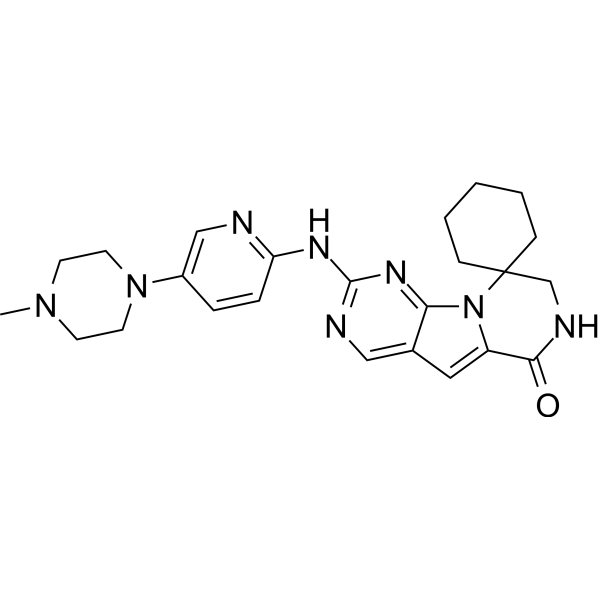
YY173 is a dual inhibitor for CDK4 and CDK6 with IC50 of 7.7 and 88 nM. YY173 inhibits the proliferation of cell Jurkat with an IC50 of 1.46 μM. YY173 can be used for synthesis of PROTAC CDK4/6 degrader 1 (HY-163786) .
|
-
- HY-114338B
-
|
SHR-6390 isethionate
|
CDK
|
Cancer
|
|
Dalpiciclib (isethionate) is a CDK4/6 inhibitor. Dalpiciclib (isethionate) inhibits the kinase activity of CDK4 and CDK6, thereby blocking the G1-to-S phase transition of the cell cycle and suppressing abnormal cell proliferation. Dalpiciclib (isethionate) can be used for the study of breast cancer .
|
-
- HY-162529
-
|
|
CDK
|
Cancer
|
|
CDK4/6-IN-19 (Compound II-7) is a CDK4/CDK6 inhibitor with IC50 values of 0.2, 5.0 nM, respectively. CDK4/6-IN-19 also inhibits cell proliferation and can be used in cancer research .
|
-
- HY-161978
-
|
|
CDK
|
Cancer
|
|
CDK4/6-IN-22 (Compound 1-A) is a CDK4 and CDK6 dual inhibitor .
|
-
- HY-143258
-
|
|
CDK
|
Cancer
|
|
CDK4/6-IN-8 (Compound 7p) is a selective CDK4 and CDK6 inhibitor with IC50 values of 5.01 nM and 3.97 nM, respectively .
|
-
- HY-139449
-
|
|
CDK
|
Cancer
|
|
CDK4/6-IN-5 is a potent CDK4 and CDK6 inhibitor with Kis of 0.2 and 4.4 nM for CDK4/Cyclin D1 and CDK6/Cyclin D3, respectively . (from patent WO2019207463A1 example A93).
|
-
- HY-173237
-
|
|
CDK
Epigenetic Reader Domain
|
Cancer
|
CDK4/6/BRD4-IN-1 (B15) is an inhibitor of CDK4, CDK6 and BRD4, with IC50 values of 220 nM, 146 nM, 106 nM and 85 nM for BRD4-BD2, BRD4-BD1, CDK6 and CDK4, respectively. CDK4/6/BRD4-IN-1 (B15) can be used in the study of NSCLC (Non-Small Cell Lung Cancer). CDK4/6/BRD4-IN-1 (B15) induces cell cycle arrest and apoptosis .
|
-
- HY-185487
-
|
|
CDK
|
Cancer
|
|
CDK4/6-IN-27 (Example 12) is a CDK4/6 inhibitor. CDK4/6-IN-27 can be used for researching diseases such as cancer .
|
-
- HY-15777BR
-
|
LEE011 succinate (Standard)
|
CDK
Reference Standards
|
Cancer
|
|
Ribociclib succinate (Standard) is the analytical standard of Ribociclib succinate. This product is intended for research and analytical applications. Ribociclib succinate (LEE011 succinate) is a highly specific CDK4/6 inhibitor with IC50 values of 10 nM and 39 nM, respectively, and is over 1,000-fold less potent against the cyclin B/CDK1 complex.
|
-
- HY-126534S
-
|
LSN3106729-d8
|
CDK
Ligands for Target Protein for PROTAC
|
Cancer
|
|
Abemaciclib metabolite M18-d8 is the deuterium labeled Abemaciclib metabolite M18. Abemaciclib metabolite M18 (LSN3106729), the metabolite of Abemaciclib (HY-16297A), is a CDK inhibitor with antitumor activity. Abemaciclib metabolite M18 and a CRBN ligand have been used to design PROTAC CDK4/6 degrader .
|
-
- HY-183771
-
|
|
CDK
Apoptosis
Reactive Oxygen Species (ROS)
Mitochondrial Metabolism
Bcl-2 Family
Caspase
|
Cancer
|
|
CDK4/6-IN-28 is a potent, orally active, and selective CDK4/6 inhibitor IC50 values of 14.02 and 10.03 nM, respectively. CDK4/6-IN-28 inhibits breast cancer cell colony formation, migration, and proliferation. CDK4/6-IN-28 induces G1-phase cell cycle arrest and apoptosis in breast cancer cells. CDK4/6-IN-28 exhibits tumor inhibitory activity in breast cancer xenograft mouse models. CDK4/6-IN-28 can be used for the research of breast cancer .
|
-
- HY-178512
-
|
|
PROTAC Linkers
|
Cancer
|
|
Piperazine-CO-C1-Azacyclohexane-C1-Piperazine is a PROTAC linker can be used in the synthesis of PROTACs, such as PROTAC CDK4/6/9 degrader 1 (HY-178452) .
|
-
- HY-178350
-
|
|
CDK
HDAC
Apoptosis
Histamine Receptor
|
Cancer
|
|
MFDCH016 is a potent HDAC1/6 (IC50 = 38/59 nM) and CDK4/6 (IC50 = 680/720 nM) inhibitor. MFDCH016 induces apoptosis and cell cycle arrest in G2/M and G0/G1 phases in MCF-7 cells. MFDCH016 can modulate the HDAC-p21-CDK signaling pathway, increasing the levels of acetylated H3 and p21. MFDCH016 can be used for the study of breast cancer .
|
-
- HY-112280A
-
|
|
CDK
|
Cancer
|
|
Crozbaciclib fumarate is a CDK4/6 inhibitor with IC50s of 3 and 1 nM, respectively.
|
-
- HY-124398
-
|
|
PAK
|
Cancer
|
|
GL-1196 is an inhibitor of PAK4. GL-1196 can suppress the proliferation and invasion of gastric cancer cells. GL-1196 inhibits PAK4-mediated signaling pathways. GL-1196 can hinder the proliferation of human gastric cancer cells through suppressing PAK4/c-Src/EGFR/CyclinD1 and CDK4/6. GL-1196 can reduce filamentous pseudopodia formation and induce filamentous pseudopodia formation and promote cell elongation in SGC7901 and BGC823 cells. GL-1196 can be studied in anti-cancer research .
|
-
- HY-101467AR
-
|
G1T28 hydrochloride (Standard)
|
Reference Standards
CDK
|
Cancer
|
|
Trilaciclib (hydrochloride) (Standard) is the analytical standard of Trilaciclib (hydrochloride). This product is intended for research and analytical applications. Trilaciclib hydrochloride (G1T28 hydrochloride) is a CDK4/6 inhibitor with IC50s of 1 nM and 4 nM for CDK4 and CDK6, respectively .
|
-
- HY-179151
-
|
|
CDK
Reactive Oxygen Species (ROS)
SOD
|
Cancer
|
|
CDK4/6-IN-26 is a carbamate derivative that targets CDK4/CDK6. CDK4/6-IN-26 reduces CDK4/CDK6 levels, resulting in cell cycle arrest in the G0/G1 phase and in the S phase. CDK4/6-IN-26 exhibits high potency against SW480 cells (IC50 = 6.3 μM). CDK4/6-IN-26 affects ROS levels by increasing the expression of SOD2/MnSOD. CDK4/6-IN-26 establishes several interactions with the amino acids of the CDK6 active site. CDK4/6-IN-26 can be used for the research of colorectal cancer .
|
-
- HY-146276
-
|
|
HDAC
CDK
Apoptosis
|
Cancer
|
|
CDK/HDAC-IN-2 is a potent HDAC/CDK dual inhibitor with IC50 of 6.4, 0.25, 45, >1000, 8.63, 0.30, >1000 nM for HDAC1, HDAC2, HDAC3, HDAC6,8, CDK1, CDK2, CDK4,6,7, respectively. CDK/HDAC-IN-2 shows excellent antiproliferative activities. CDK/HDAC-IN-2 induces apoptosis and cell cycle arrest at G2/M phase. CDK/HDAC-IN-2 shows potent antitumor efficacy .
|
-
- HY-178518
-
|
|
E3 Ligase Ligand-Linker Conjugates
E1/E2/E3 Enzyme
|
Cancer
|
|
Thalidomide-C1-O-CO-C2-Piperazine-CO-C1-Azacyclohexane-C1-Piperazine is an E3 ligase ligand-linker conjugate containing a cereblon (CRBN) ligand for E3 ubiquitin ligase and a linker. Thalidomide-C1-O-CO-C2-Piperazine-CO-C1-Azacyclohexane-C1-Piperazine can be used to synthesize PROTAC CDK4/6/9 degrader 2 (HY-178516) .
|
-
- HY-161847
-
|
|
Ser/Thr Protease
|
Cancer
|
|
HZ1 is an orally active first-in-class cyclin-dependent kinase like 3 (CDKL3)-specific inhibitor. HZ1 shows a strong tumor-suppressing effect, and has the potential to overcome the resistance of CDK4/6 inhibitor .
|
-
- HY-162985
-
|
|
CDK
|
Cancer
|
|
JHD205 is a CDK4/6 inhibitor that induces apoptosis and DNA damage. JHD205 inhibits DNA repair by upregulating Caspase3 and p-H2AX. JHD205 has superior potency to Abemaciclib (HY-16297A) in a xenograft chick embryo breast cancer model. .
|
-
- HY-183571
-
|
|
CDK
|
Others
|
|
JD128 (Compound 22) is a CDK4/6 inhibitor .
|
-
- HY-178515
-
|
|
E3 Ligase Ligand-Linker Conjugates
|
Cancer
|
|
Thalidomide-piperazine-CO-C-azacyclohexane-C1-piperazine is a synthesized E3 ligase ligand-linker conjugate. Thalidomide-piperazine-CO-C-azacyclohexane-C1-piperazine can be used for synthesizing PROTAC CDK4/6/9 degrader 1 (HY-178452) .
|
-
- HY-178517
-
|
|
E1/E2/E3 Enzyme
Ligands for E3 Ligase
|
Cancer
|
|
Thalidomide-C1-O-CO-C11 is a ligand for E3 ubiquitin ligase. Thalidomide-C1-O-CO-C11 can be connected to Aurora-A ligand 1 (HY-168440) by a linker (HY-178512) to form PROTAC CDK4/6/9 degrader 2 (HY-178516) .
|
-
- HY-175638
-
|
|
Carbonic Anhydrase
Apoptosis
Bcl-2 Family
CDK
|
Cancer
|
|
Carbonic anhydrase-IN-35 is a selective carbonic anhydrase (CA) inhibitor. Carbonic anhydrase-IN-35 potently inhibits tumor-associated hCA IX (Ki = 0.6 nM) and hCA XII (Ki = 2.2 nM). Carbonic anhydrase-IN-35 induces apoptosis in MCF-7 cells by elevating Bax, reducing Bcl-2, and downregulating CDK4/6. Carbonic anhydrase-IN-35 exhibits potent cytotoxicity against MCF-7 (IC50 = 0.3975 μM normoxic/0.6575 μM hypoxic), MCF-7-ADR (IC50> = 0.3975 μM normoxic/4.488 μM hypoxic), MDA-MB-231, and 4T1 breast cancer cells. Carbonic anhydrase-IN-35 can be used for the study of breast cancer .
|
-
- HY-N0805R
-
|
23-Acetylalismol B (Standard); 23-O-Acetylalisol B (Standard); Alisol B monoacetate (Standard)
|
Reference Standards
Apoptosis
Reactive Oxygen Species (ROS)
CDK
MMP
PARP
FXR
Syk
|
Cardiovascular Disease
Metabolic Disease
Inflammation/Immunology
Cancer
|
|
Alisol B 23-acetate (Standard) is the analytical standard of Alisol B 23-acetate (HY-N0805). This product is intended for research and analytical applications. Alisol B 23-acetate is an orally active prototerpane-type triterpenoid. Alisol B 23-acetate can be isolated from Alisma orientalis. Alisol B 23-acetate induces Apoptosis, promotes ROS generation, downregulates CDK4/6, MMP-2/9, upregulates cleaved PARP, activates FXR and inhibits Syk. Alisol B 23-acetate has anti-inflammatory and hepatoprotective activities. Alisol B 23-acetate protects the kidney from ischemia-reperfusion injury. Alisol B 23-acetate has anticancer activity against ovarian cancer, colon cancer, lung cancer, and gastric cancer. Alisol B 23-acetate can be used in the study of atherosclerosis and allergic asthma [4] .
|
-
- HY-180574
-
|
|
DYRK
|
Cancer
|
TSL2109 is an orally active and selective DYRK2 and CDK4/6 inhibitor with an IC50 value of 22 nM for DYRK2. TSL2109 exhibits high kinase selectivity over 93%. TSL2109 arrests cell cycle and induces apoptosis in virto. TSL2109 effectively overcomes Enzalutamide (HY-70002) resistance by suppressing tumor growth in vivo and virto. TSL2109 also shows CDK4/6 inhibitor resistance.TSL2109 demonstrates safety profile. TSL2109 can be used for prostate cancer research and breast cancer [1][2].
|
-
- HY-101467R
-
|
G1T28 (Standard)
|
CDK
Reference Standards
|
Cancer
|
|
Trilaciclib (Standard) is the analytical standard of Trilaciclib (HY-101467). This product is intended for research and analytical applications. Trilaciclib (G1T28) is an orally active CDK4/6 inhibitor with IC50 values of 1 nM and 4 nM for CDK4 and CDK6, respectively. . Trilaciclib can effectively inhibit tumor cell proliferation and reduce the hematological toxicity caused by chemotherapy. Trilaciclib attenuates apoptosis and myelosuppression induced by 5FU (HY-90006) chemotherapy .
|
-
- HY-182468
-
|
|
Histone Acetyltransferase
Estrogen Receptor/ERR
CDK
|
Cancer
|
|
OP-3136 is a selective KAT6 inhibitor. OP-3136 reduces the proliferative capacity of cancer cells and inhibits cell growth in ER + breast cancer cell models with overexpressed KAT6. When combined with ER antagonists/degraders or CDK4/6 inhibitors, OP-3136 exhibits synergistic anti-tumor activity in mouse xenograft models. OP-3136 can be used in studies related to HR +/HER2 - breast cancer .
|
-
- HY-179375
-
|
|
CDK
Aurora Kinase
|
Cancer
|
|
LCI133 is afirst-in-class,nanomolar-potent, selective multikinase inhibitor targeting CDK4/6/9 and AURKA/B (IC50 = 4.7/10.2/4.1 nM and 2.8/10.6 nM). LCI133 induces S/G2 cell-cycle arrest and robust apoptosis in MYCN-amplified neuroblastoma BE(2)-C cells. LCI133 demonstrates significant antitumor efficacy in a BE(2)-C neuroblastoma xenograft model .
|
-
- HY-182902
-
|
|
BMX Kinase
Apoptosis
|
Cancer
|
|
IHMT-15137 is a BMX inhibitor with an IC50 of 26.97 nM. IHMT-15137 covalently binds to BMX Cys496 within the ATP-binding pocket, inhibits BMX phosphorylation at Tyr566, and disrupts the BMX-ERK1/2-Cyclin D1/CDK4/6-E2F1 signaling axis. IHMT-15137 reduces E2F1 protein stability via decreased Ser332/337 phosphorylation, increased ubiquitination, and ubiquitin-proteasome pathway degradation. IHMT-15137 induces cell cycle arrest, apoptosis, DNA damage, and suppresses cell migration and invasion. IHMT-15137 can be used for the research of small cell lung cancer .
|
-
| Cat. No. |
Product Name |
Category |
Target |
Chemical Structure |
-
- HY-N0805
-
-
-
- HY-N0805R
-
|
23-Acetylalismol B (Standard); 23-O-Acetylalisol B (Standard); Alisol B monoacetate (Standard)
|
Triterpenes
Structural Classification
Alisma plantago-aquatica Linn.
Terpenoids
Alismataceae
Plants
Source Classification
|
Reference Standards
Apoptosis
Reactive Oxygen Species (ROS)
CDK
MMP
PARP
FXR
Syk
|
|
Alisol B 23-acetate (Standard) is the analytical standard of Alisol B 23-acetate (HY-N0805). This product is intended for research and analytical applications. Alisol B 23-acetate is an orally active prototerpane-type triterpenoid. Alisol B 23-acetate can be isolated from Alisma orientalis. Alisol B 23-acetate induces Apoptosis, promotes ROS generation, downregulates CDK4/6, MMP-2/9, upregulates cleaved PARP, activates FXR and inhibits Syk. Alisol B 23-acetate has anti-inflammatory and hepatoprotective activities. Alisol B 23-acetate protects the kidney from ischemia-reperfusion injury. Alisol B 23-acetate has anticancer activity against ovarian cancer, colon cancer, lung cancer, and gastric cancer. Alisol B 23-acetate can be used in the study of atherosclerosis and allergic asthma [4] .
|
-
| Cat. No. |
Product Name |
Chemical Structure |
-
- HY-16297AS
-
|
|
|
Abemaciclib-d8 is the deuterium labeled Abemaciclib. Abemaciclib (LY2835219) is a selective CDK4/6 inhibitor with IC50 values of 2 nM and 10 nM for CDK4 and CDK6, respectively.
|
-
-
- HY-15777S
-
|
|
|
Ribociclib-d6 (LEE011-d6) is a deuterium labeled Ribociclib (HY-15777). Ribociclib is a highly specific CDK4/6 inhibitor with IC50 values of 10 nM and 39 nM, respectively, and is over 1,000-fold less potent against the cyclin B/CDK1 complex .
|
-
-
- HY-15777AS
-
|
|
|
Ribociclib-d6 (LEE011-d6) hydrochloride is a deuterium labeled Ribociclib. Ribociclib is a highly specific CDK4/6 inhibitor with IC50 values of 10 nM and 39 nM, respectively, and is over 1,000-fold less potent against the cyclin B/CDK1 complex .
|
-
-
- HY-129336S
-
|
|
|
Abemaciclib metabolite M20-d8 is the deuterium labeled Abemaciclib metabolite M20. Abemaciclib metabolite M20 (LSN3106726), the active metabolite of Abemaciclib, is a selective CDK4/6 inhibitor .
|
-
-
- HY-15777S1
-
|
|
|
Ribociclib-d8 is the deuterium labeled Ribociclib . Ribociclib (LEE01) is a highly specific CDK4/6 inhibitor with IC50 values of 10 nM and 39 nM, respectively, and is over 1,000-fold less potent against the cyclin B/CDK1 complex .
|
-
-
- HY-126534S
-
|
|
|
Abemaciclib metabolite M18-d8 is the deuterium labeled Abemaciclib metabolite M18. Abemaciclib metabolite M18 (LSN3106729), the metabolite of Abemaciclib (HY-16297A), is a CDK inhibitor with antitumor activity. Abemaciclib metabolite M18 and a CRBN ligand have been used to design PROTAC CDK4/6 degrader .
|
-
| Cat. No. |
Product Name |
|
Classification |
-
- HY-152263
-
|
|
|
PROTAC Synthesis
|
|
HEMTAC CDK4/6 degrader 1 is a PROTAC connected by ligands for HSP90 and CDK4/6 with a Kd value of 35.7 μM. HEMTAC CDK4/6 degrader 1 induces CDK4/6 degradation in B16F10 melanoma cells. HEMTAC CDK4/6 degrader 1 arrests cell cycle at G0/G1 phase and induces apoptosis. HEMTAC CDK4/6 degrader 1 can be used in research of cancer . HEMTAC CDK4/6 degrader 1 is a click chemistry reagent, it contains an Alkyne group and can undergo copper-catalyzed azide-alkyne cycloaddition (CuAAc) with molecules containing Azide groups.
|
Your information is safe with us. * Required Fields.
Inquiry Information
- Product Name:
- Cat. No.:
- Quantity:
- MCE Japan Authorized Agent:

