
103 Results for "

Cardiac arrhythmias.

" in MedChemExpress (MCE) Product Catalog:
Products (103)

103 Results for "Cardiac arrhythmias." in MCE Product Catalog:

52
52 Publications Verification
Cat. No.: HY-B0573
CAS No.: 318-98-9
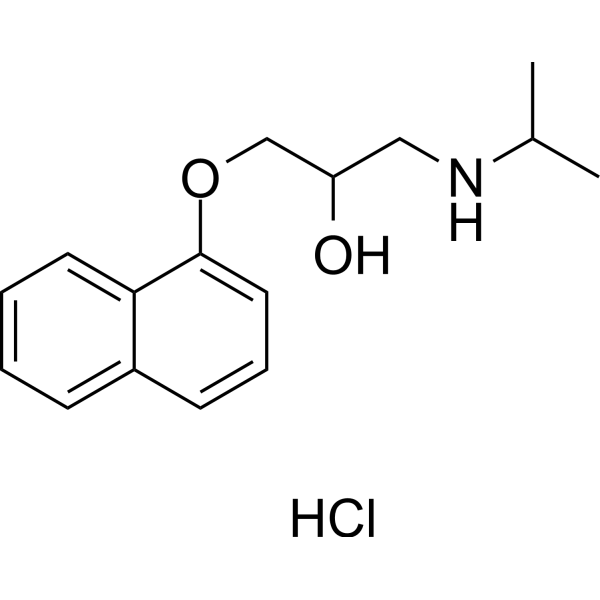
Propranolol hydrochloride is a nonselective and BBB-permeableβ-adrenergic receptor (βAR) antagonist, has high affinity for the β1AR and β2AR with Ki values of 1.8 nM and 0.8 nM, respectively. Propranolol hydrochloride inhibits [ 3H]-DHA binding to rat brain membrane preparation with an IC50 of 12 nM. Propranolol hydrochloride is used for study of hypertension, pheochromocytoma, myocardial infarction, cardiac arrhythmias, angina pectoris, and hypertrophic cardiomyopathy .
loading...
    loading...
52
52 Publications Verification
Cat. No.: HY-B0573B
CAS No.: 525-66-6
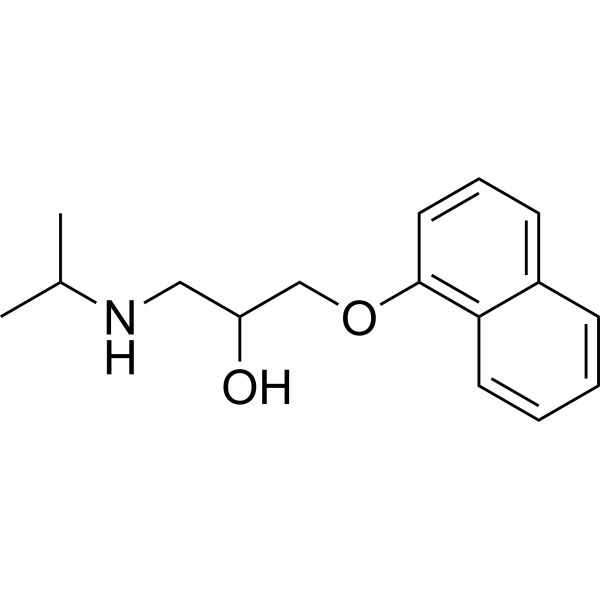
Propranolol is a nonselective and BBB-permeable β-adrenergic receptor (βAR) antagonist, has high affinity for the β1AR and β2AR with Ki values of 1.8 nM and 0.8 nM, respectively . Propranolol inhibits [ 3H]-DHA binding to rat brain membrane preparation with an IC50 of 12 nM . Propranolol is used for the study of hypertension, pheochromocytoma, myocardial infarction, cardiac arrhythmias, angina pectoris, and hypertrophic cardiomyopathy .
loading...
    loading...
10
10 Cited Publications
Cat. No.: HY-B0632
CAS No.: 42399-41-7
Target:  

Calcium Channel

Research Areas:  

Cardiovascular Disease Cancer

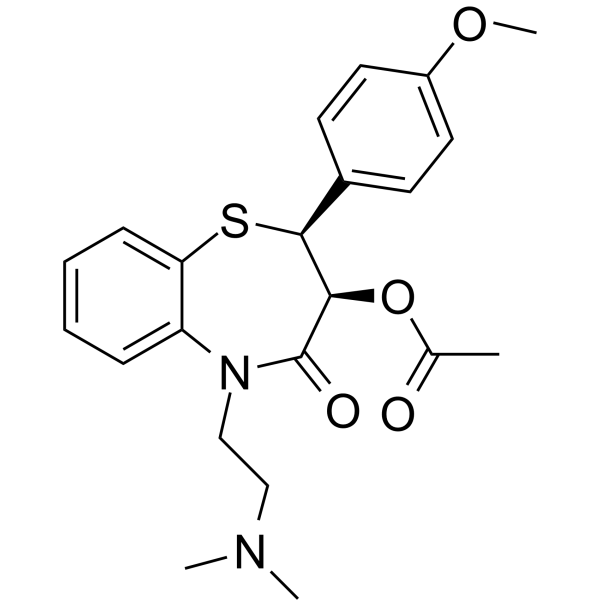
Diltiazem is an orally active L-type Ca 2+ channel blocker. Diltiazem shows antihypertensive and antiarrhythmic effects. Diltiazem can be used for the research of cardiac arrhythmia, hypertension, and angina pectoris .
loading...
    loading...
9
9 Cited Publications
Cat. No.: HY-103315
CAS No.: 68099-86-5
Purity:  99.98%
Synonyms: CERM 1978; Org 5730 hydrochloride
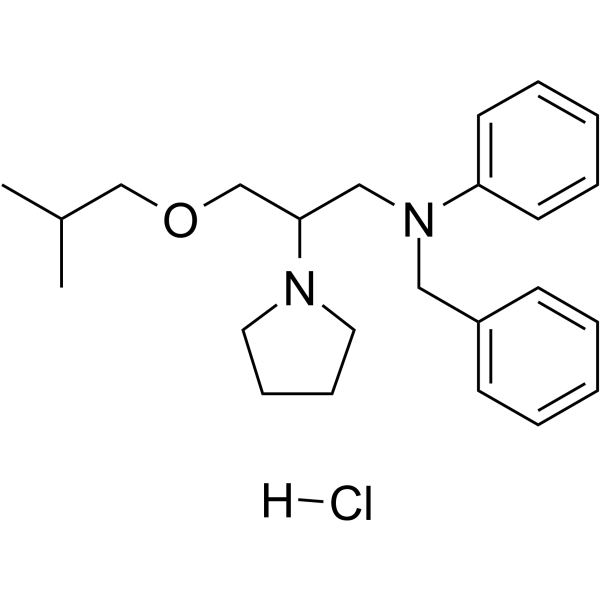
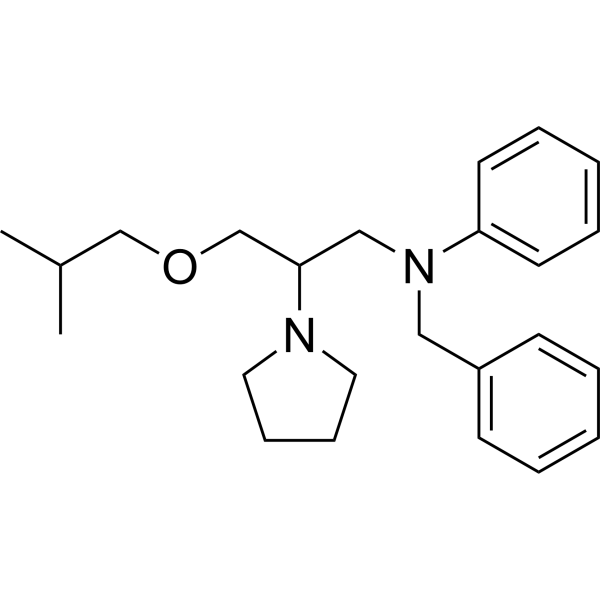
Bepridil hydrochloride (CERM 1978; Org 5730 hydrochloride) is an orally active non-selective calcium channel antagonist with multi-ion channel blocking activity. Bepridil hydrochloride modulates Calmodulin, the 20S proteasome, T-type/L-type calcium channels, cardiac sodium channels, multiple potassium channels, γ-secretase, β-secretase, and mitoKATP/sarcKATP channels. Bepridil hydrochloride acts as a hydroxyl radical scavenger, regulates mitochondrial and intracellular calcium handling, and exerts antiarrhythmic, antianginal, and cardioprotective effects. Bepridil hydrochloride alters amyloid precursor protein processing, reduces β-amyloid and thalamic calcium levels, restores seladin-1/DHCR24 expression, and improves sensorimotor recovery after cerebral ischemia. Bepridil hydrochloride also exhibits potent inhibitory effects on SARS-CoV-2 replication. Bepridil hydrochloride is used in studies related to stable angina, arrhythmias, cerebral ischemia, Alzheimer's disease, and SARS-CoV-2 infection .
loading...
    loading...
9
9 Cited Publications
Cat. No.: HY-16952
CAS No.: 64706-54-3
Synonyms: CERM 1978 free base; Org 5730
Bepridil (CERM 1978 (free base); Org 5730) is an orally active non-selective calcium channel antagonist with multi-ion channel blocking activity. Bepridil modulates Calmodulin, the 20S proteasome, T-type/L-type calcium channels, cardiac sodium channels, multiple potassium channels, γ-secretase, β-secretase, and mitoKATP/sarcKATP channels. Bepridil acts as a hydroxyl radical scavenger, regulates mitochondrial and intracellular calcium handling, and exerts antiarrhythmic, antianginal, and cardioprotective effects. Bepridil alters amyloid precursor protein processing, reduces β-amyloid and thalamic calcium levels, restores seladin-1/DHCR24 expression, and improves sensorimotor recovery after cerebral ischemia. Bepridil also exhibits potent inhibitory effects on SARS-CoV-2 replication. Bepridil is used in studies related to stable angina, arrhythmias, cerebral ischemia, Alzheimer's disease, and SARS-CoV-2 infection .
loading...
    loading...
9
9 Cited Publications
Cat. No.: HY-16952A
CAS No.: 74764-40-2
Synonyms: CERM 1978 hydrate; Org 5730 hydrochloride hydrate
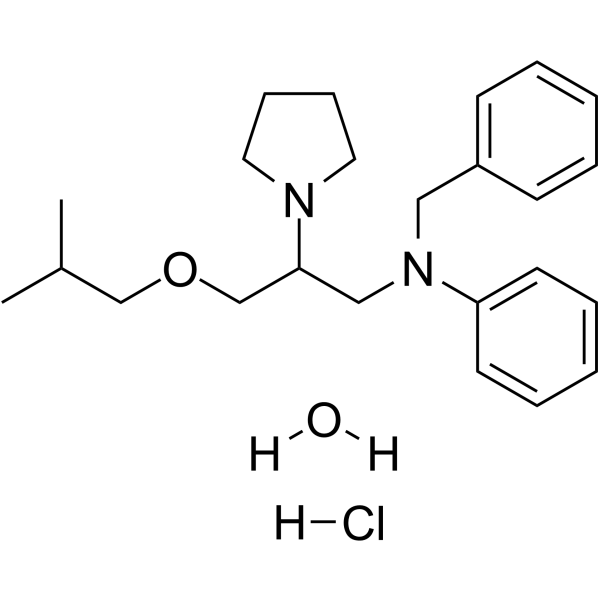
Bepridil hydrochloride hydrate (CERM 1978 hydrate; Org 5730 hydrochloride hydrate) is an orally active non-selective calcium channel antagonist with multi-ion channel blocking activity. Bepridil hydrochloride hydrate modulates Calmodulin, the 20S proteasome, T-type/L-type calcium channels, cardiac sodium channels, multiple potassium channels, γ-secretase, β-secretase, and mitoKATP/sarcKATP channels. Bepridil hydrochloride hydrate acts as a hydroxyl radical scavenger, regulates mitochondrial and intracellular calcium handling, and exerts antiarrhythmic, antianginal, and cardioprotective effects. Bepridil hydrochloride hydrate alters amyloid precursor protein processing, reduces β-amyloid and thalamic calcium levels, restores seladin-1/DHCR24 expression, and improves sensorimotor recovery after cerebral ischemia. Bepridil hydrochloride hydrate also exhibits potent inhibitory effects on SARS-CoV-2 replication. Bepridil hydrochloride hydrate is used in studies related to stable angina, arrhythmias, cerebral ischemia, Alzheimer's disease, and SARS-CoV-2 infection .
loading...
    loading...
7
7 Cited Publications
Cat. No.: HY-B1030
CAS No.: 17575-22-3
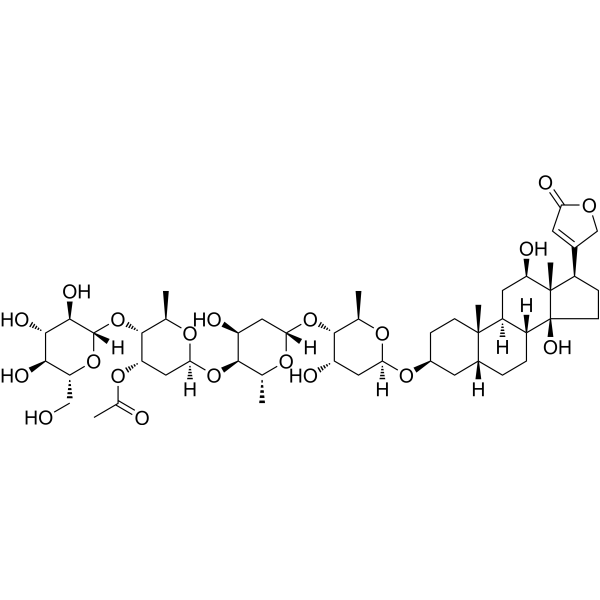
Lanatoside C is a cardiac glycoside, can be used in the treatment of congestive heart failure and cardiac arrhythmia.Lanatoside C has an IC50 of 0.19 μM for dengue virus infection in HuH-7 cells. Lanatoside C can effectively inhibit all four serotypes of dengue virus, flavivirus Kunjin, alphavirus Chikungunya, Sindbis virus and the human enterovirus 71 .
loading...
    loading...
6
6 Cited Publications
Cat. No.: HY-N0430A
CAS No.: 1198398-71-8
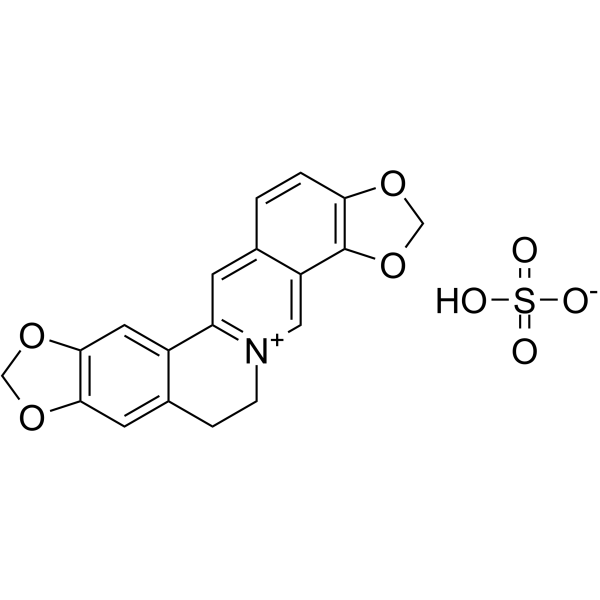
Coptisine Sulfate is an orally active and brain-penetrant alkaloid found in Coptis chinensis. Coptisine Sulfate is a reversible, uncompetitive IDO inhibitor with a Ki of 5.8 μM and an IC50 of 6.3 μM. Coptisine Sulfate suppresses neuroinflammation, reduces Aβ plaque burden and shows neuroprotective activity. Coptisine Sulfate shows anti-inflammation activity by blocking NF-κB, MAPK, and PI3K/Akt activation. Coptisine Sulfate inhibits cancer cells proliferation, induces DNA damage, G2/M phase cell cycle arrest, apoptosis, ROS production and mitochondrial dysfunction. Coptisine Sulfate inhibits Rho/ROCK pathway activation, reduces arrhythmia, limits cardiac injury marker release, reduces infarct size, and preserves cardiac function in rat myocardial ischemia/reperfusion models. Coptisine Sulfate downregulates HMGCR and upregulates LDLR and CYP7A1 to modulate cholesterol metabolism, reduces abnormal serum lipid levels, and promotes fecal bile acid excretion. Coptisine Sulfate be used for the research of cancer, hypercholesterolemia, Alzheimer’s disease, inflammatory disorders and cardiovascular disease .
loading...
    loading...
3
3 Cited Publications
Cat. No.: HY-17429
CAS No.: 54143-56-5
Synonyms: R-818
Target:  

Sodium Channel

Research Areas:  

Cardiovascular Disease

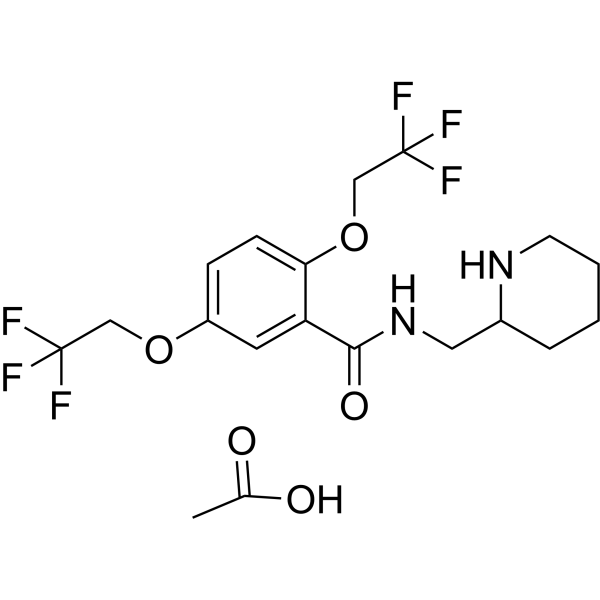
Flecainide acetate (R-818) is a class 1C antiarrhythmic agent especially used for the management of supraventricular arrhythmia; works by blocking the Nav1.5 sodium channel in the heart, causing prolongation of the cardiac action potential.
loading...
    loading...
3
3 Cited Publications
Cat. No.: HY-17497A
CAS No.: 34381-68-5
Target:  

Adrenergic Receptor

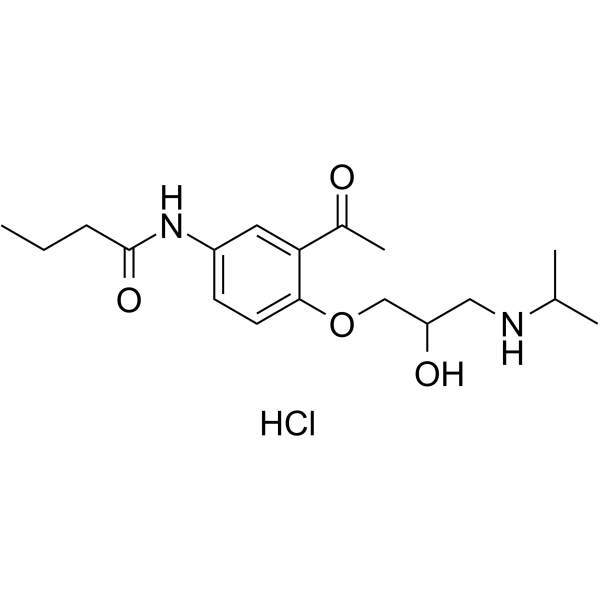
Acebutolol hydrochloride is an orally active β1 adrenergic receptor (β1AR) antagonist. Acebutolol hydrochloride is used in the treatment of hypertension, angina pectoris and cardiac arrhythmias .
loading...
    loading...
3
3 Cited Publications
Cat. No.: HY-B1392
CAS No.: 81161-17-3
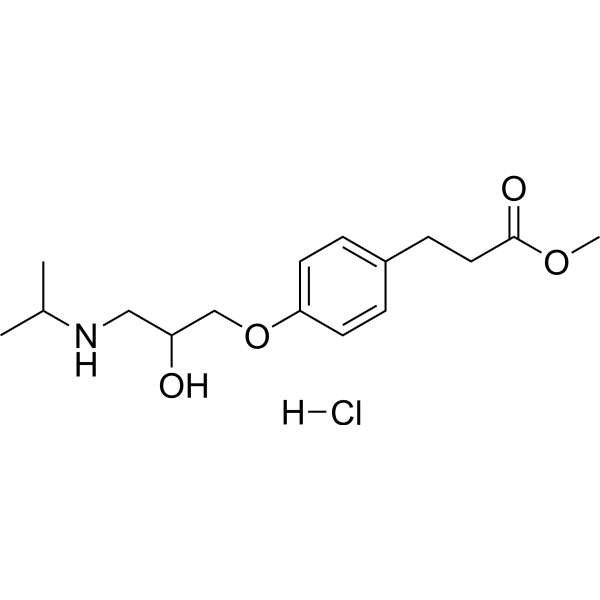
Esmolol hydrochloride is an ultra-short-acting cardioselective β1-adrenergic blocker. Esmolol hydrochloride exerts its antiarrhythmic effect by activating Neurokinin 1 Receptor. Esmolol hydrochloride attenuates post resuscitation myocardial dysfunction. Esmolol hydrochloride improves diabetic wound healing by inhibiting aldose reductase and the production of advanced glycation end products and promoting fibroblast migration. Esmolol hydrochloride can be used to study cardiac diseases such as arrhythmias and diabetic foot ulcers .
loading...
    loading...
3
3 Cited Publications
Cat. No.: HY-12533
CAS No.: 3737-09-5
Purity:  99.93%
Synonyms: Dicorantil; SC-7031
Research Areas:  

Cardiovascular Disease

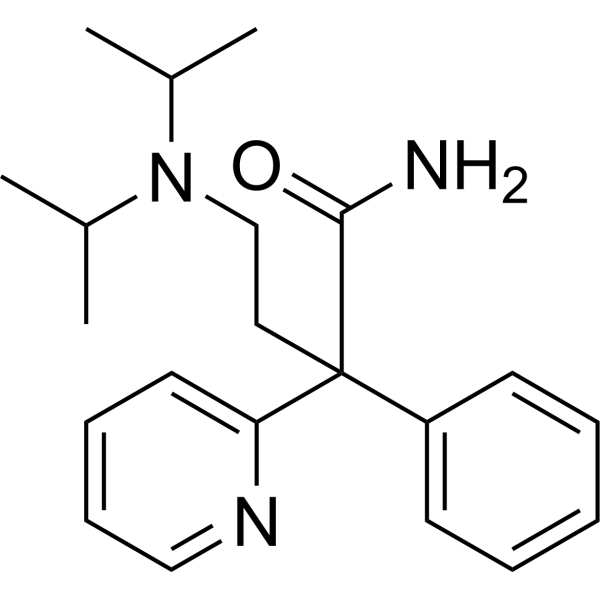
Disopyramide (Dicorantil) is a class IA antiarrhythmic agent with efficacy in ventricular and atrial arrhythmias. Disopyramide blocks the fast inward sodium current of cardiac muscle and prolongs the duration of cardiac action potentials. Disopyramide inhibits HERG encoded potassium channels. Disopyramide also exhibits complex protein binding, and has a potent negative inotropic action .
loading...
    loading...
3
3 Cited Publications
Cat. No.: HY-12533A
CAS No.: 22059-60-5
Purity:  99.85%
Synonyms: Dicorantil phosphate; SC-7031 phosphate
Research Areas:  

Cardiovascular Disease

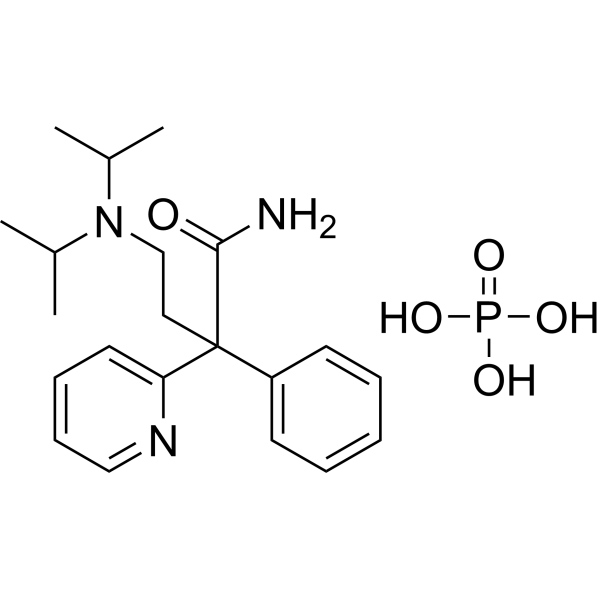
Disopyramide phosphate is a class IA antiarrhythmic agent with efficacy in ventricular and atrial arrhythmias. Disopyramide phosphate blocks the fast inward sodium current of cardiac muscle and prolongs the duration of cardiac action potentials. Disopyramide phosphate inhibits HERG encoded potassium channels. Disopyramide phosphate also exhibits complex protein binding, and has a potent negative inotropic action .
loading...
    loading...
3
3 Cited Publications
Cat. No.: HY-17497
CAS No.: 37517-30-9
Target:  

Adrenergic Receptor

Research Areas:  

Cardiovascular Disease

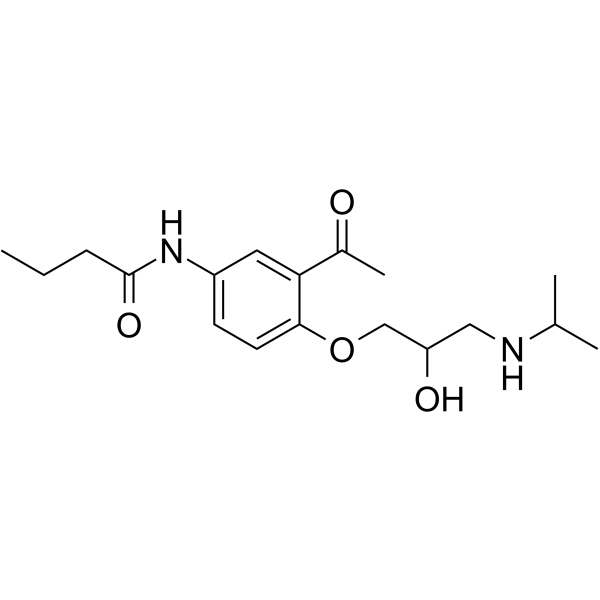
Acebutolol is an orally active β1 adrenergic receptor (β1AR) antagonist. Acebutolol is used for hypertension, angina pectoris and cardiac arrhythmias research .
loading...
    loading...
2
2 Cited Publications
Cat. No.: HY-15292
CAS No.: 927871-76-9
Purity:  99.77%
Target:  

Calcium Channel

Research Areas:  

Cardiovascular Disease

S107 is an orally available, blood brain barrier-permeable compound, which stabilizes RyR2 channels by enhancing the binding of calstabin 2 to the mutant Ryr2-R2474S channel. S107 inhibits Ca 2+ leakage from the sarcoplasmic reticulum (SR) and prevents cardiac arrhythmias and raises the seizure threshold .
loading...
    loading...
2
2 Cited Publications
Cat. No.: HY-16738A
CAS No.: 1448754-43-5
Synonyms: GS 6615 hydrochloride
Research Areas:  

Cardiovascular Disease

Eleclazine (GS 6615) hydrochloride is a selective cardiac late sodium current inhibitor and a weak inhibitor of potassium current with IC50 value of <1 μM and approximately 14.2 μM, respectively. Eleclazine hydrochloride shows concurrent protection against autonomically induced atrial premature beats, repolarization alternans and heterogeneity, and atrial fibrillation in porcine model. Eleclazine hydrochloride can be used to research cardiac arrhythmias .
loading...
    loading...
2
2 Cited Publications
Cat. No.: HY-16738
CAS No.: 1443211-72-0
Synonyms: GS-6615
Research Areas:  

Cardiovascular Disease

Eleclazine (GS 6615) is a selective cardiac late sodium current inhibitor and a weak inhibitor of potassium current with IC50 of <1 μM and approximately 14.2 μM, respectively. Eleclazine shows concurrent protection against autonomically induced atrial premature beats, repolarization alternans and heterogeneity, and atrial fibrillation in porcine model. Eleclazine can be used to research cardiac arrhythmias .
loading...
    loading...
1
1 Cited Publications
Cat. No.: HY-106225
CAS No.: 355151-12-1
Purity:  99.50%
Synonyms: ZP123
Target:  

Gap Junction Protein

Research Areas:  

Cardiovascular Disease

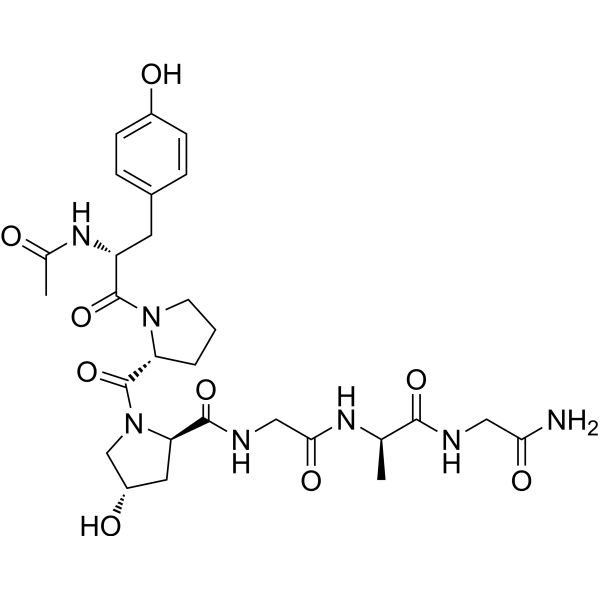
Rotigaptide (ZP123) is a novel and specific modulator of connexin 43 (Cx43). Rotigaptide prevents the uncoupling of Cx43-mediated gap junction communication and normalizes cell-to-cell communication during acute metabolic stress. Rotigaptide is a potent antiarrhythmic peptide (AAP) with improved stability and has the potential for the investigation of cardiac arrhythmias-specifically atrial fibrillation .
loading...
    loading...
1
1 Cited Publications
Cat. No.: HY-124702
CAS No.: 316146-57-3
Purity:  99.25%
Target:  

Potassium Channel

Research Areas:  

Cardiovascular Disease

ICA-105574 is a potent and efficacious hERG channel activator. The primary mechanism by which ICA-105574 potentiates hERG channel activity is by removing hERG channel inactivation. ICA-105574 steeply potentiates current amplitudes more than 10-fold with an EC50 value of 0.5 +/- 0.1 μM and a Hill slope (n(H)) of 3.3 +/- 0.2. ICA-105574 can prevent arrhythmias induced by cardiac delayed repolarization. ICA-105574 shortens action potential duration in ventricular myocytes concentration-dependently .
loading...
    loading...
Cat. No.: HY-107754
CAS No.: 7647-17-8
Purity:  99.93%
Cesium chloride is a blocker of potassium channel. Cesium chloride prevents the decrease of Na + transport produced by Alloxan . Cesium chloride has induced cardiac arrhythmias, including torsade de pointes in animal models .
loading...
    loading...

