1. Search Result
Search Result
Results for "

Chemo-Optical Modulation of Epigenetically-regulated Transcription’ (COMET)

" in MedChemExpress (MCE) Product Catalog:

1554

Inhibitors & Agonists

18

Screening Libraries

15

Fluorescent Dyes

34

Biochemical Assay Reagents

84

Peptides

6

MCE Kits

8

Inhibitory Antibodies

220

Natural
Products

66

Recombinant Proteins

90

Isotope-Labeled Compounds

321

Antibodies

8

Click Chemistry

86

Oligonucleotides

5

GMP Molecules

Cat. No. 상품명 Target 연구분야 Chemical Structure
  • HY-141644
    PY-60
    15+ Cited Publications

    Annexin A YAP Inflammation/Immunology
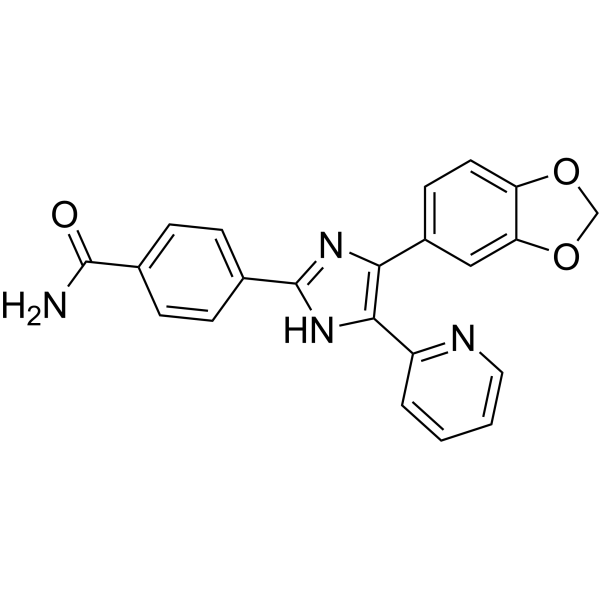
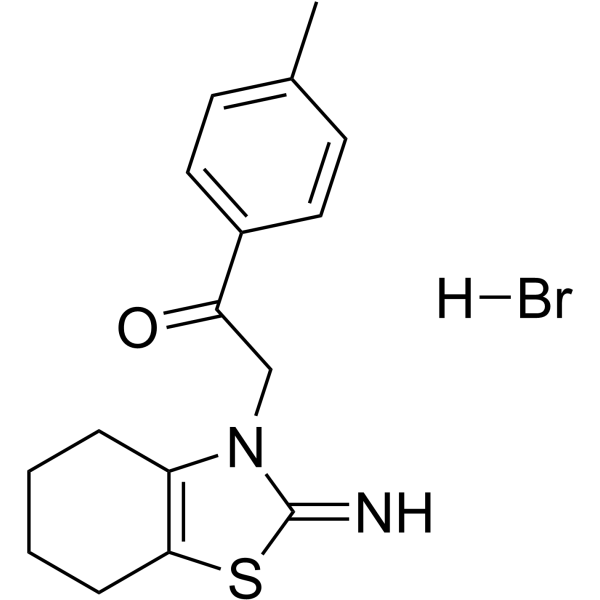
    PY-60 is a robust and specific activator of YAP transcriptional activity that targets annexin A2 (ANXA2) with a Kd of 1.4 µM. PY-60 directly binds to ANXA2 and antagonizes its normal cellular function of repressing YAP activity .
    PY-60
  • HY-113679

    Telomerase Metabolic Disease Endocrinology
    Ceramides Mixture is an endogenous ceramide and consists of hydroxy and non-hydroxy fatty acid-containing ceramides. Ceramides Mixture is a main lipid component of the permeability barrier in epidermis. Ceramides Mixture is involved in the regulation of growth inhibition, cell cycle arrest, and modulation of telomerase activity .
    Ceramides Mixture
  • HY-P3465
    Bulevirtide
    5+ Cited Publications

    Myrcludex B

    HBV Infection
    Bulevirtide (Myrcludex B) is a NTCP inhibitor, a linear lipopeptide of 47 amino acids. Bulevirtide inhibits HBV and HDV entry into liver cells, blocks HBV infection in hepatocytes, and participates in HBV transcriptional suppression. Bulevirtide can be used in HDV infection and compensated cirrhosis research .
    Bulevirtide
  • HY-12484
    BMH-21
    10+ Cited Publications

    DNA/RNA Synthesis Cancer
    BMH-21 is a first-in-class DNA intercalator which inhibits RNA polymerase I (Pol I) transcription. BMH-21 possesses anticancer activity .
    BMH-21
  • HY-122122
    ML-60218
    5+ Cited Publications

    DNA/RNA Synthesis Infection Cancer
    ML-60218 is a broad-spectrum RNA pol III inhibitor, with IC50s of 32 and 27 μM for Saccharomyces cerevisiae and human. ML-60218 disrupts already assembled viroplasms and to hamper the formation of new ones without the need for de novo transcription of cellular RNAs .
    ML-60218
  • HY-18930

    CDK Cancer
    NU6300 is a covalent, irreversible and ATP-competitive CDK2 inhibitor with an IC50 value of 0.16 μM. NU6300 can be used for the research of eukaryotic cell cycle- and transcription-related .
    NU6300
  • HY-175759

    Molecular Glues IFNAR Inflammation/Immunology
    EN1033 is a covalent immune regulatory transcription factor 5/8 (IRF5/8) molecular glue degrader. EN1033 degrades IRF5 in a proteasome-dependent manner. EN1033 engages and degrades IRF8 more robustly and rapidly. EN1033 covalently targets C28 and C223 to destabilize and degrade IRF5 and IRF8 respectively, thereby inhibiting their pro-inflammatory transcriptional activity. EN1033 serves as a promising tool for the study of autoimmune and inflammatory disorders .
    EN1033
  • HY-134761
    EN4
    2 Publications Verification

    c-Myc Cancer
    EN4 is a covalent ligand that targets cysteine 171 (C171) of MYC. EN4 is selective for c-MYC over N-MYC and L-MYC. EN4 inhibits MYC transcriptional activity, downregulates MYC targets, and impairs tumorigenesis .
    EN4
  • HY-10072

    NF-κB AP-1 Inflammation/Immunology
    SPC 839 (compound 10) is an orally active inhibitor of AP-1 and NF-kB mediated transcriptional activation with IC50 of 0.008 μM .
    SPC 839
  • HY-120855
    CCG-100602
    2 Publications Verification

    Ras Cardiovascular Disease
    CCG-100602 is a specific inhibitor of myocardin-related transcription factor A/serum response factor (MRTF-A/SRF) signaling. CCG-100602 specifically block MRTF-A nuclear localization and thus inhibit the fibrogenic transcription factor SRF .
    CCG-100602
  • HY-137206

    Molecular Glues Ligands for E3 Ligase Cancer
    ALV2 is a potent and selective Helios molecular glue degrader. ALV2 binds CRBN, with an IC50 of 0.57 μM. Helios is the zinc-finger transcription factor that can maintain a stable Treg cell phenotype in the inflammatory tumor microenvironment .
    ALV2
  • HY-147228

    Checkpoint Kinase (Chk) Inflammation/Immunology Cancer
    NR2F6 modulator-1 is a potent nuclear receptor subfamily 2, group F, member 6 (NR2F6) modulator. NR2F6 modulator-1 can be used for researching immune modulation and modulation of cancer stem cell activity .
    NR2F6 modulator-1
  • HY-139100B

    m7GpppA diammonium; N7-Methyl-guanosine-5'-triphosphate-5'-adenosine diammonium

    DNA/RNA Synthesis Infection
    m7G(5')ppp(5')A (m7GpppA) diammonium is a dinucleotide cap analog that can be used for in vitro RNA transcription .
    m7G(5')ppp(5')A diammonium
  • HY-111630
    PluriSIn #2
    3 Publications Verification

    Topoisomerase Cancer
    PluriSIn #2 is a selective transcriptional inhibitor of topoisomerase II α (TOP2A). PluriSIn #2 is a compound that selectively eliminates undifferentiated human pluripotent stem cells (hPSCs) .
    PluriSIn #2
  • HY-133987
    AP-1/NF-κB activation inhibitor 1
    3 Publications Verification

    NF-κB Inflammation/Immunology
    AP-1/NF-κB activation inhibitor 1 is a potent AP-1 and NF-κB mediated transcriptional activation inhibitor (IC50=1 μM), without blocking basal transcription driven by the β-actin promoter. AP-1/NF-κB activation inhibitor 1 has a similar inhibitory effect on the production of IL-2 and IL-8 levels in stimulated cells .
    AP-1/NF-κB activation inhibitor 1
  • HY-141567A

    Pseudo-UTP trisodium solution (100 mM)

    DNA/RNA Synthesis Infection
    Pseudouridine 5'-triphosphate (Pseudo-UTP) trisodium solution (100 mM) is a modified ribonucleoside triphosphate and uracil base-modified UTP derivative. Pseudouridine 5'-triphosphate trisodium solution (100 mM) enhances translational properties and stability of mRNA, reduces innate immune responses in mammalian cells, and inhibits signal-dependent transcription termination of vaccinia virus early gene transcription while supporting transcription elongation. Pseudouridine 5'-triphosphate trisodium solution (100 mM) can be used for the research of vaccinia virus infection .
    Pseudouridine 5'-triphosphate trisodium solution (100 mM)
  • HY-164404

    Notch Cancer
    NADI-351 is an orally active and potent Notch1 inhibitor that selectively disrupts Notch1 transcription complexes and reduces Notch1 recruitment to target genes. NADI-351 can be utilized in cancer research .
    NADI-351
  • HY-112648

    STAT Others
    Stafib-2 is a potent and selctive inhibitor of the transcription factor STAT5b, with an IC50 of 82 nM and 1.7 μM for STAT5b and STAT5a, respectively. Stafib-2 exhibits poor cell permeability .
    Stafib-2
  • HY-135572

    Orphan Nuclear Receptor Neurological Disease Cancer
    TLX agonist 1 (ccrp2) is an orphan nuclear receptor tailless (TLX, NR2E1) modulator (EC50=1μM; Kd= 650 nM). TLX agonist 1 potentiates TLX transcriptional repressive activity .
    TLX agonist 1
  • HY-172663A

    DNA/RNA Synthesis Apoptosis Cancer
    Trabectedin derivative 1 TFA is a selective DNA minor groove binder. Trabectedin derivative 1 TFA inhibits DNA transcription and repair to induce tumor cell apoptosis. Trabectedin derivative 1 TFA is promising for research of solid tumors such as soft tissue sarcoma and ovarian cancer .
    Trabectedin derivative 1 TFA
  • HY-100277
    Mifobate
    1 Publications Verification

    SR-202

    PPAR Metabolic Disease
    Mifobate (SR-202) is a potent and specific PPARγ antagonist. Mifobate (SR-202) selectively inhibits Thiazolidinedione (TZD)-induced PPARγ transcriptional activity (IC50=140 μM). Mifobate (SR-202) does not affect basal or ligand-stimulated transcriptional activity of PPARα, PPARβ, or the farnesoid X receptor (FXR). Mifobate (SR-202) shows antiobesity and antidiabetic effects .
    Mifobate
  • HY-N1196

    NF-κB Inflammation/Immunology
    Suberosin, isolated from Plumbago zeylanica, exhibits anti-inflammatory and anticoagulant activity. Suberosin suppresses PHA-induced PBMC proliferation and arrested cell cycle progression from the G1 transition to the S phase through the modulation of the transcription factors NF-AT and NF-κB .
    Suberosin
  • HY-N7439

    PGC-1α Metabolic Disease
    Mogroside VI B, a cucurbitane glucoside, separated from the crude extract of Siraitia grosvenorii. Mogroside VI B shows effect on activating PGC-1α transcription .
    Mogroside VI B
  • HY-146185

    Molecular Glues Bcl-2 Family Cancer
    CCT373566 is a potent and orally active molecular glue degrader of transcriptional repressor BCL6, with an IC50 of 2.2 nM. CCT373566 shows strong antiproliferative efficacy in vitro and reduction in tumor growth in vivo .
    CCT373566
  • HY-D1686

    Biotin-16-UTP tetralithium

    DNA Stain Others
    Biotin-16-UTP is an active substrate for RNA polymerase. Biotin-16-UTP can replace UTP in the in vitro transcription reaction for RNA labeling .
    Biotin-16-UTP
  • HY-144339
    AhR agonist 2
    1 Publications Verification

    Aryl Hydrocarbon Receptor Others
    AhR agonist 2 (Compound 12a) is a potent agonist of aryl hydrocarbon receptor (AhR) with an EC50 of 0.03 nM. AhR agonist 2 induces rapid nuclear enrichment of AhR, triggers the transcription of downstream genes and promote skin barrier repair. AhR agonist 2 has the potential for the research of psoriasis .
    AhR agonist 2
  • HY-N2509

    Iristectrigenin B

    LXR Cardiovascular Disease
    Iristectorigenin B (Iristectrigenin B) is a liver X receptor (LXR) modulator. Iristectrigenin B stimulates the transcriptional activity of both LXR-α and LXR-β .
    Iristectorigenin B
  • HY-N2625A

    Cytochrome P450 Cancer
    Harmalol hydrochloride, a beta carboline alkaloid, presents in several medicinal plants such as Peganum harmala. Harmalol hydrochloride, main metabolite of Harmaline, significantly inhibits the dioxin-mediated induction of CYP1A1 at the transcriptional and posttranslational levels. Harmalol hydrochloride possesses antioxidant and hydroxyl radical-scavenging properties .
    Harmalol hydrochloride
  • HY-147088

    YAP Cancer
    TEAD-IN-2 is a novel, orally active inhibitor of transcriptional enhancer associate domain (TEAD) and modulates TEAD by ubiquitination and/or degradation by compounds. TEAD-IN-2 can be used for the research of a variety of diseases, disorders or conditions associated with TEAD .
    TEAD-IN-2
  • HY-124337

    HDAC Cancer
    BG48 is a potent HDAC inhibitor. BG48 inhibits the enzymatic activity of HDAC1 and HDAC2 .
    BG48
  • HY-124644

    HIV Phosphatase Infection
    1E7-03, a low MW tetrahydroquinoline derivative targeting protein phosphatase-1, can inhibit HIV-1 transcription .
    1E7-03
  • HY-141567

    Pseudo-UTP

    DNA/RNA Synthesis Infection
    Pseudouridine 5'-triphosphate (Pseudo-UTP) is a modified ribonucleoside triphosphate and uracil base-modified UTP derivative. Pseudouridine 5'-triphosphate enhances translational properties and stability of mRNA, reduces innate immune responses in mammalian cells, and inhibits signal-dependent transcription termination of vaccinia virus early gene transcription while supporting transcription elongation. Pseudouridine 5'-triphosphate can be used for the research of vaccinia virus infection .
    Pseudouridine 5'-triphosphate
  • HY-126030
    (+)-Syringaresinol
    1 Publications Verification

    Nuclear Factor of activated T Cells (NFAT) Cancer
    (+)-Syringaresinol, a lignan, is a NFAT transcription factor inhibitor, with an IC50 of 329.4 μM. (+)-Syringaresinol also can be used for the research of lymphocytic leukemia .
    (+)-Syringaresinol
  • HY-122716

    PPAR Others
    PTGR2-IN-1 is a potent PTGR2 inhibitor with an IC50 of ~0.7 μM. PTGR2-IN-1 increases 15-keto-PGE2-dependent PPARγ transcriptional activity in PTGR2-transfected HEK293T cells .
    PTGR2-IN-1
  • HY-147600

    CDK Cancer
    CDK7-IN-15 (Compound 8) is a selective CDK7 inhibitor with an IC50 greater than 10 nM and less than or equal to 100 nM. CDK7-IN-15 is applicable to the research of cancers associated with transcriptional dysregulation .
    CDK7-IN-15
  • HY-119383

    Wnt β-catenin Cancer
    iCRT-5 is a β-catenin-regulated transcription (CRT) inhibitor. iCRT-5 can block Wnt/β-catenin reporter activity and down regulate β-catenin expression. iCRT-5 can be used for the research of multiple myeloma .
    iCRT-5
  • HY-126979

    c-Myc Cancer
    Mycro2 is an inhibitor of c-Myc/Max dimer and DNA binding, with an IC50 value of 23 μM for the inhibition of Myc/Max DNA binding activity. Mycro2 can inhibit c-myc-dependent cell proliferation, gene transcription and oncogenic transformation .
    Mycro2
  • HY-134001

    Keap1-Nrf2 Metabolic Disease
    CBR-470-2, a glycine-substituted analog, can activate NRF2 signaling. CBR-470-2 can be used for the research of modulation glycolysis .
    CBR-470-2
  • HY-W012037
    8-Hydroxyquinoline hemisulfate
    1 Publications Verification

    8-Quinolinol hemisulfate

    Environmental Pollutants Antibiotic Bacterial Infection
    8-Hydroxyquinoline hemisulfate (8-Quinolinol hemisulfate) is a monoprotic bidentate chelating agent, exhibits antiseptic, disinfectant, and pesticide properties, functioning as a transcription inhibitor.
    8-Hydroxyquinoline hemisulfate
  • HY-D1686B

    DNA Stain Others
    Biotin-16-UTP tetrasodium is an active substrate for RNA polymerase. Biotin-16-UTP tetrasodium can replace UTP in the in vitro transcription reaction for RNA labeling .
    Biotin-16-UTP tetrasodium
  • HY-147597

    CDK Cancer
    CDK7-IN-13 is a potent inhibitor of CDK7. CDK7-IN-13 is a pyrimidinyl derivative compound. CDK7-IN-13 has the potential for the research of various cancers, especially the cancer with transcriptional dysregulation (extracted from patent CN114249712A, compound 1) .
    CDK7-IN-13
  • HY-P3843

    Mas-related G-protein-coupled Receptor (MRGPR) Neuropeptide Y Receptor Neurological Disease
    Neuropeptide AF (cattle), an amidated octadecapeptide, is RFamide neuropeptide. Neuropeptide AF (cattle) acts as a ligand of Mas-related gene receptor A4 (MrgprA4) (Mas-related G-protein-coupled Receptor (MRGPR)) (EC50 of ~60 nM) and MrgprC11 (EC50 of ~300 nM). Neuropeptide AF (cattle) also activate to the G protein-coupled receptors NPFF1 (Neuropeptide Y Receptor) (EC50 of ~25-325 nM) and NPFF2 (EC50 of ~1-5 nM). Neuropeptide AF (cattle) shows anti-opiate and related pain modulation effects .
    Neuropeptide AF (cattle)
  • HY-142683

    Phosphatase Neurological Disease Cancer
    SCP1-IN-2 (Compound SH T-65) is a potent and selective covalent inhibitor against SCP1. SCP1-IN-2 promotes REST degradation and reduces transcriptional activity. A high level of REST protein drives the tumor growth in some glioblastoma cells. SCP1-IN-2 has the potential for the research of glioblastoma whose growth is driven by REST transcription activity .
    SCP1-IN-2
  • HY-W012037R

    8-Quinolinol hemisulfate (Standard)

    Reference Standards Bacterial Antibiotic Infection
    8-Hydroxyquinoline (hemisulfate) (Standard) is the analytical standard of 8-Hydroxyquinoline (hemisulfate). This product is intended for research and analytical applications. 8-Hydroxyquinoline hemisulfate (8-Quinolinol hemisulfate) is a monoprotic bidentate chelating agent, exhibits antiseptic, disinfectant, and pesticide properties, functioning as a transcription inhibitor.
    8-Hydroxyquinoline hemisulfate (Standard)
  • HY-139099

    Gp3G

    Nucleoside Antimetabolite/Analog DNA/RNA Synthesis Cancer
    Diguanosine 5′-triphosphate (Gp3G) is a dinucleoside triphosphates. Diguanosine 5′-triphosphate also is a virus-specific oligonucleotide. Diguanosine 5′-triphosphate is needed for the synthesis of RNA during the transcription process .
    Diguanosine 5′-triphosphate
  • HY-147598

    CDK Cancer
    CDK7-IN-14 is a potent inhibitor of CDK7. CDK7-IN-14 is a pyrimidinyl derivative compound. CDK7-IN-14 has the potential for the research of various cancers, especially the cancer with transcriptional dysregulation (extracted from patent CN114249712A, compound 3) .
    CDK7-IN-14
  • HY-173631

    PROTACs Cancer
    (S)-dHTC1 is a molecular glue degrader targeting the transcriptional co-activator ENL. (S)-dHTC1 binds the ligase with high affinity only after forming the ENL:dHTC1 complex with an IC50 value of 93 nM. (S)-dHTC1 degrades ENL in MV4;11 cells with a DC50 value of 26 nM. (S)-dHTC1 can be used for acute myeloid leukemia study .
    (S)-dHTC1
  • HY-174384

    c-Met/HGFR Apoptosis G-quadruplex Cancer
    MET Transcription-IN-1 (Compound C3) is an orally active MET transcription inhibitor. MET Transcription-IN-1 can efficiently bind and stabilize the G-quadruplex in the MET promoter region, thereby inhibiting c-Met expression. MET Transcription-IN-1 can also overcome drug resistance caused by specific c-Met mutations. MET Transcription-IN-1 is capable of inhibiting tumor cell proliferation, migration, and invasion, as well as inducing cell cycle arrest and apoptosis. MET Transcription-IN-1 has antitumor activity, and can be used in the research of tumors such as non-small cell lung cancer .
    MET Transcription-IN-1
  • HY-162294

    c-Myc Cancer
    c-Myc inhibitor 13 (compound A6) is a c-MYC transcription inhibitor. c-Myc inhibitor 13 selectively stabilizes c-MYC G4 and inhibits G4-associated c-MYC transcription .
    c-Myc inhibitor 13
  • HY-112778

    Interleukin Related Inflammation/Immunology
    NFAT Transcription Factor Regulator-1 is an IL-2 synthesis inhibitor with an IC50 of 182 nM.
    NFAT Transcription Factor Regulator-1

온라인 문의

Your information is safe with us. * Required Fields.

호칭


Country or Region *

고객명 *


회사명 *

Department *


메일주소 *


상품명 *

Cat. No.


Requested quantity *

전화번호 *


비고

온라인 문의

Inquiry Information

상품명:
Cat. No.:
수량:
MCE Japan Authorized Agent:

