Search Result
Results for "
Coccidiosis
" in MedChemExpress (MCE) Product Catalog:
6
Isotope-Labeled Compounds
| Cat. No. |
Product Name |
Target |
Research Areas |
Chemical Structure |
-
- HY-19285
-
|
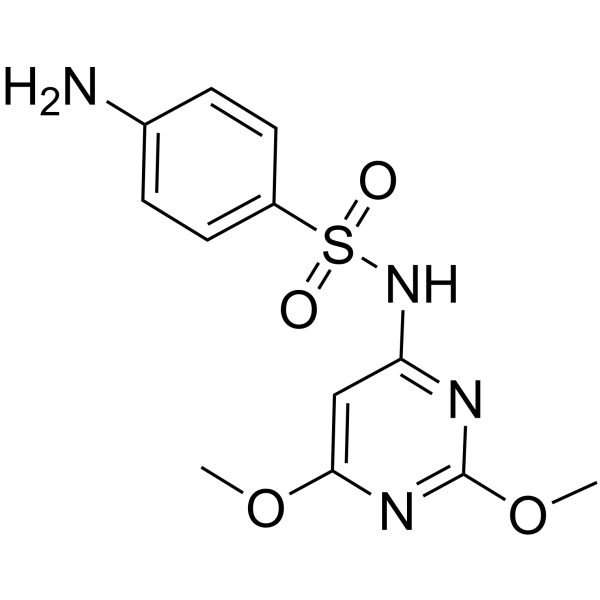
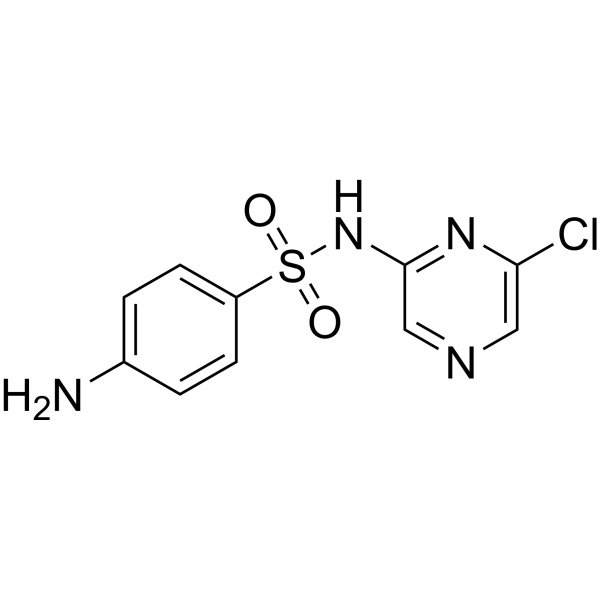
Sulfachloropyrazine
|
Bacterial
Parasite
Antibiotic
|
Infection
|
|
Sulfaclozine (Sulfachloropyrazine) is an efficacious sulphonamide derivative with antibacterial and anticoccidial effects. Sulfaclozine is commonly used for the treatment of various poultry diseases (particularly, collibacteriosis, fowl cholera and coccidiosis) .
|
-
-
- HY-B0357
-
|
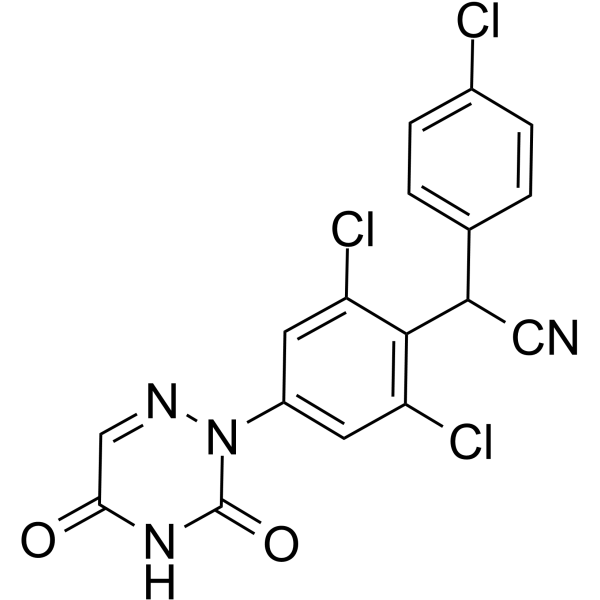
R-64433
|
Parasite
Antibiotic
|
Infection
|
|
Diclazuril (R-64433), a benzeneacetonitrile derivative, is a potent and orally active anticoccidial agent. Diclazuril can be used for the research of certain infectious and parasitic diseases, including coccidiosis, acute toxoplasmosis, equine protozoal pyoencephalitis (EPM) et.al .
|
-
-
- HY-B0357S
-
|
R-64433-d4
|
Isotope-Labeled Compounds
Parasite
Antibiotic
|
Infection
|
|
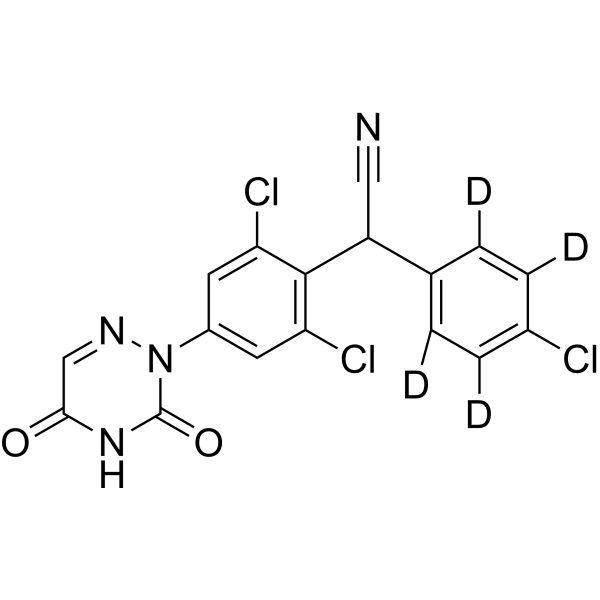
Diclazuril-d4 is deuterium labeled Diclazuril. Diclazuril (R-64433), a benzeneacetonitrile derivative, is a potent and orally active anticoccidial agent. Diclazuril can be used for the research of certain infectious and parasitic diseases, including coccidiosis, acute toxoplasmosis, equine protozoal pyoencephalitis (EPM) et.al .
|
-
-
- HY-B1088
-
-
-
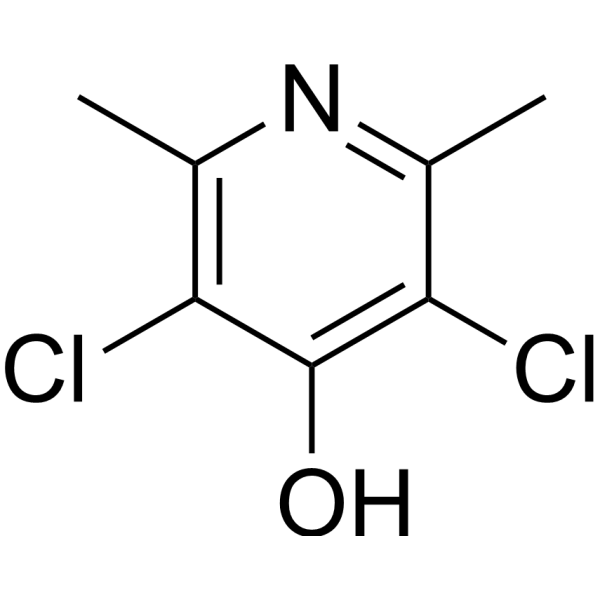
- HY-B1282
-
-
-
- HY-17008
-
|
Ponazuril
|
Parasite
|
Infection
|
|
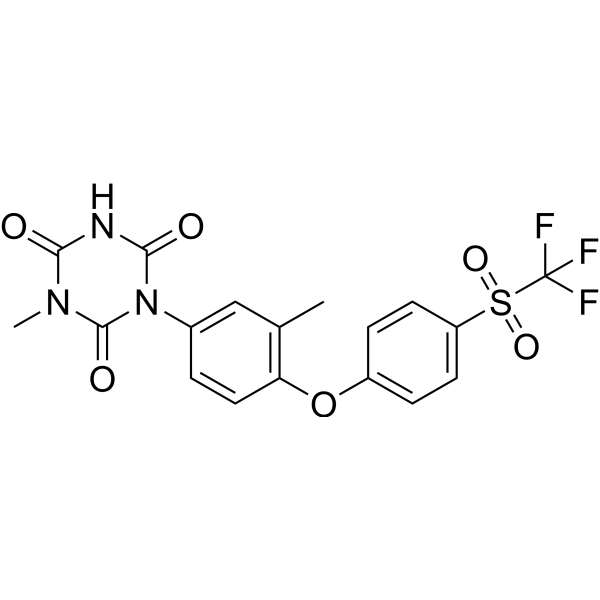
Toltrazuril sulfone (Ponazuril) is a metabolite of Toltrazuril (HY-B0175), with antiprotozoal activity. Toltrazuril sulfone is a triazine anticoccidial that is developed to prevent coccidiosis in poultry .
|
-
-
- HY-19285A
-
|
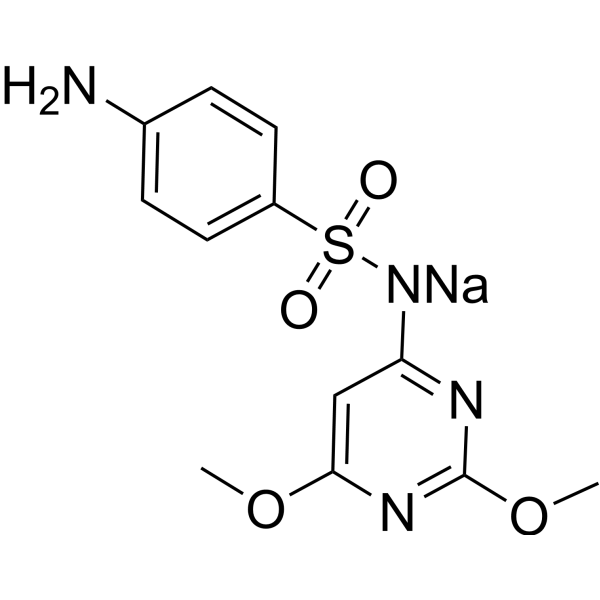
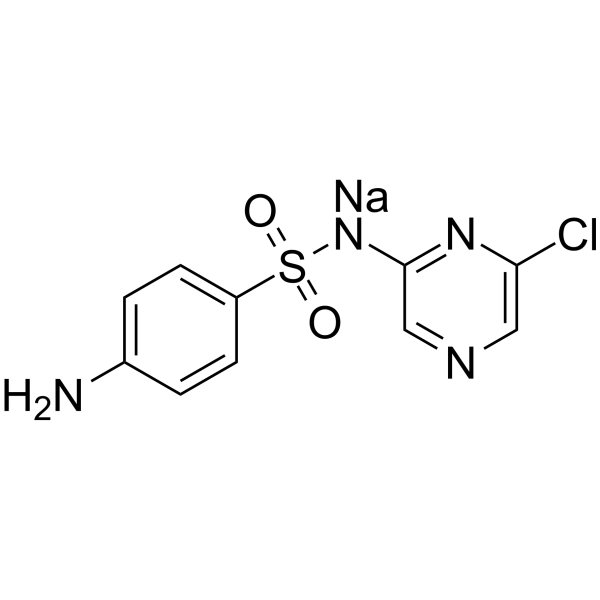
Sulfachloropyrazine sodium
|
Bacterial
Parasite
Antibiotic
|
Infection
|
|
Sulfaclozine sodium (Sulfachloropyrazine sodium) is an efficacious sulphonamide derivative with antibacterial and anticoccidial effects. Sulfaclozine sodium is commonly used for the treatment of various poultry diseases (particularly, collibacteriosis, fowl cholera and coccidiosis) .
|
-
-
- HY-119826
-
|
WIN-40014
|
Parasite
|
Infection
|
|
Quinfamide (WIN-40014) is an orally active class of dichloroacetyl derivative with significant anti-intestinal protozoan, particularly mmoeba histolytica activity. Quinfamide exhibits antiamoebic activity under solvent-free conditions with an IC50 of 28.15 μg/mL in a suspension condition. Quinfamide particles are actively engulfed by the amoebas, then cells are affected, and finally, amoebas are killed and lysed, and this process directly relies on the physical intake of the drug particles. Quinfamide can be used in the research of tropical parasitic infections such as amoebiasis and helminthiasis .
|
-
-
- HY-121410
-
Narasin
2 Publications Verification
|
Bacterial
Apoptosis
Parasite
NF-κB
Antibiotic
|
Infection
Cancer
|
|
Narasin is a cationic ionophore antibiotic and coccidiostat agent. Narasin inhibits NF-κB signaling and induces tumor cells apoptosis. Narasin has antimicrobial, antiviral anticancer activity. Narasin inhibits tumor metastasis and growth of ERα‑positive breast cancer cells by inactivation of the TGF-β/SMAD3 and IL‑6/STAT3 signaling pathways .
|
-
-
- HY-N7071A
-
|
Maduramycin ammonium
|
Bacterial
Apoptosis
Antibiotic
Autophagy
AMPK
Eukaryotic Initiation Factor (eIF)
|
Infection
Cardiovascular Disease
|
|
Maduramicin ammonium (Maduramycin ammonium) is isolated from the actinomycete Actinomadura rubra. Maduramicin ammonium (Maduramycin ammonium) is an anticoccidial agent for the the treatment of Eimeria spp., E. adenoeides, E. gallopavonis, and E. dispersa infection . Maduramicin ammonium (Maduramycin ammonium) induces cell apoptosis in chicken myocardial cells via intrinsic and extrinsic pathways .
|
-
-
- HY-B1036
-
|
|
Parasite
|
Infection
|
|
Decoquinate is an orally active, selective inhibitor of the mitochondrial bc1 complex, targeting Eimeria spp. sporozoites and first generation schizonts, and Plasmodium spp. Decoquinate inhibits electron transfer by competitively binding to the mitochondrial cytochrome b system, blocking the parasite's energy metabolism, thereby inhibiting its development and reproduction. Decoquinate has significant anticoccidial activity, preventing intestinal damage and improving host growth performance, and also has inhibitory effects on the liver and blood stages of Plasmodium. Decoquinate is mainly used in veterinary research to prevent and treat coccidiosis in ruminants and poultry .
|
-
-
- HY-106662
-
|
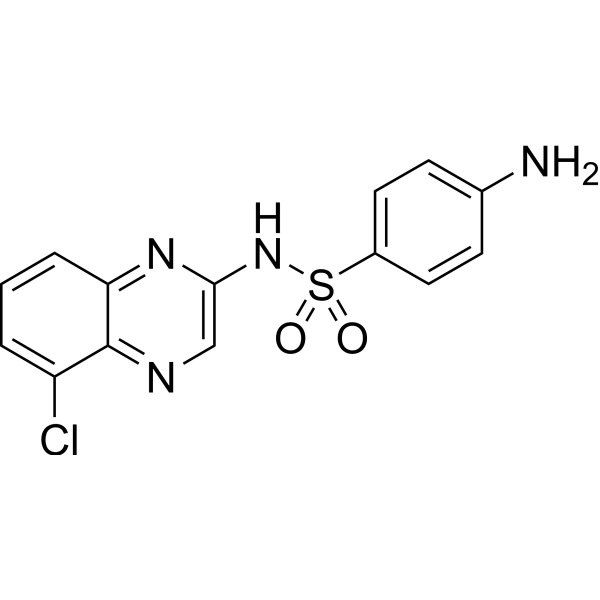
Chloroquinoxaline; NSC-339004
|
Molecular Glues
Topoisomerase
Parasite
|
Infection
Cancer
|
|
Chloroquinoxaline sulfonamide (Chloroquinoxaline), a structural analogue of sulfaquinoxaline, is a topoisomerase II alpha/beta poison. Chloroquinoxaline sulfonamide is used to control coccidiosis in poultry, rabbit, sheep, and cattle . Antitumor activity .
|
-
-
- HY-B1094
-
|
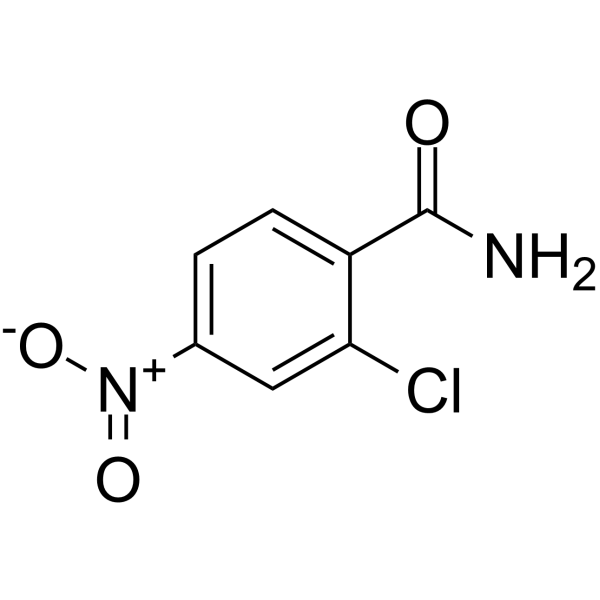
2-Chloro-4-nitrobenzamide
|
Environmental Pollutants
Parasite
|
Infection
|
|
Aklomide (2-Chloro-4-nitrobenzamide) is a coccidiostat agent. Aklomide can be used for the prevention and control of coccidiosis in chickens .
|
-
-
- HY-U00131
-
|
N 3517; Sulfabromomethazine
|
Bacterial
|
Infection
|
|
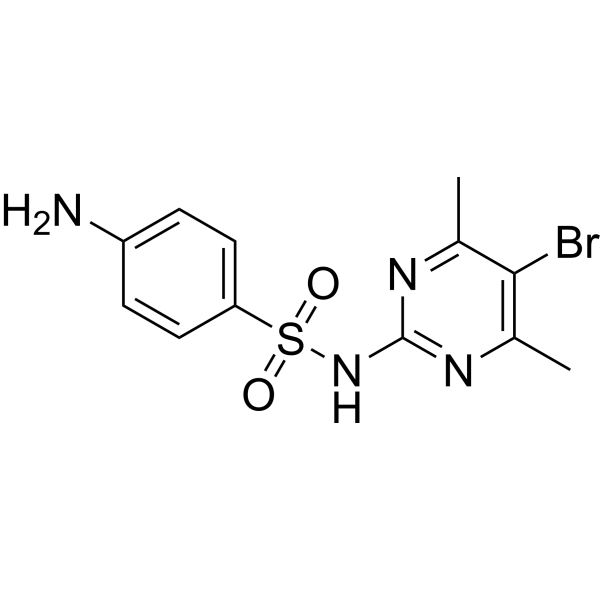
Sulfabrom (N 3517; Sulfabromomethazine) is a long-acting Sulfonamide that is used for the treatment of coccidiosis and various bacterial infections in the poultry, swine and cattle.
|
-
-
- HY-B1282A
-
|
|
Bacterial
Parasite
Antibiotic
|
Infection
|
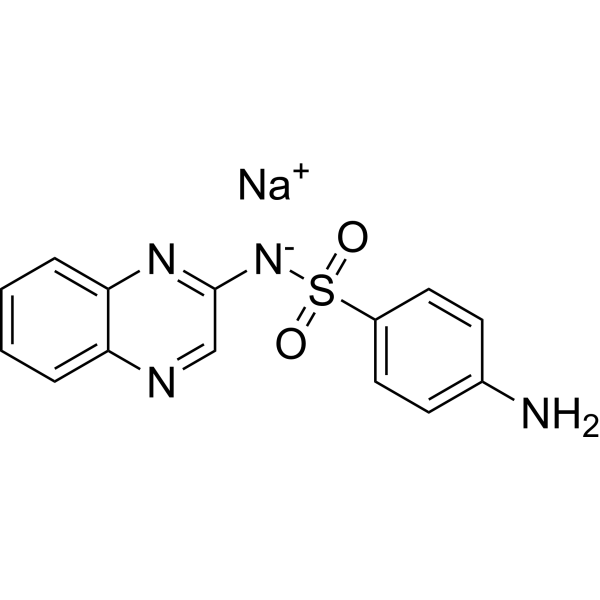
|
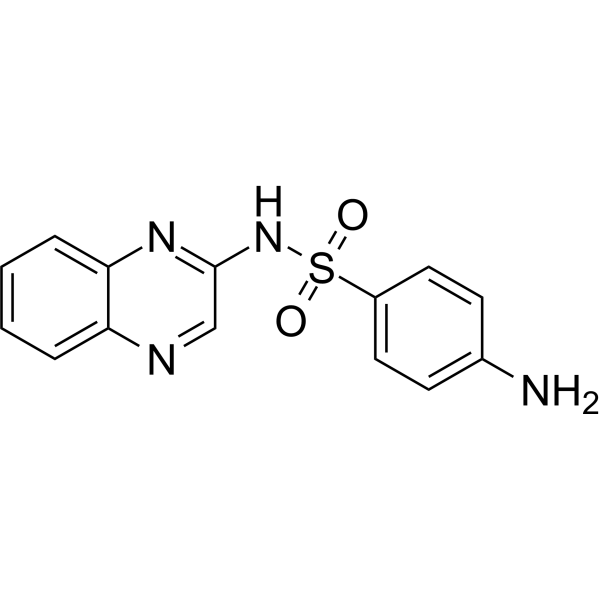
Sulfaquinoxaline sodium salt is an antimicrobial for veterinary use, with activity against a broad spectrum of Gram-negative and Gram-positive bacteria. Sulfaquinoxaline is used to prevent coccidiosis and bacterial infections .
|
-
-
- HY-B2138
-
|
Ethyl pabate
|
Parasite
|
Infection
|
|
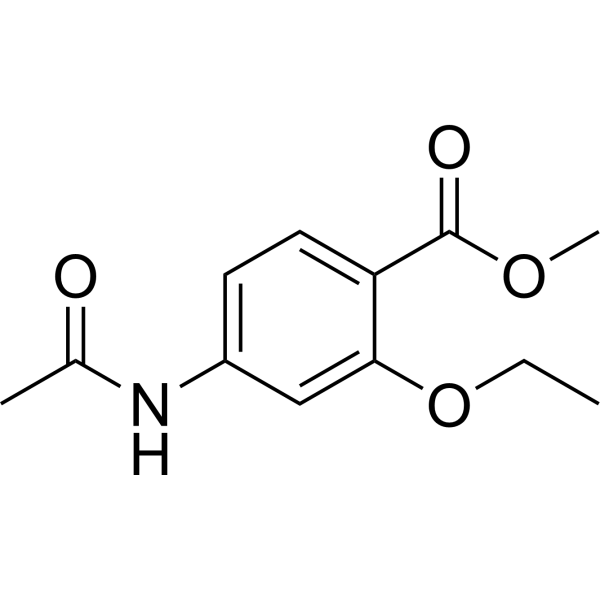
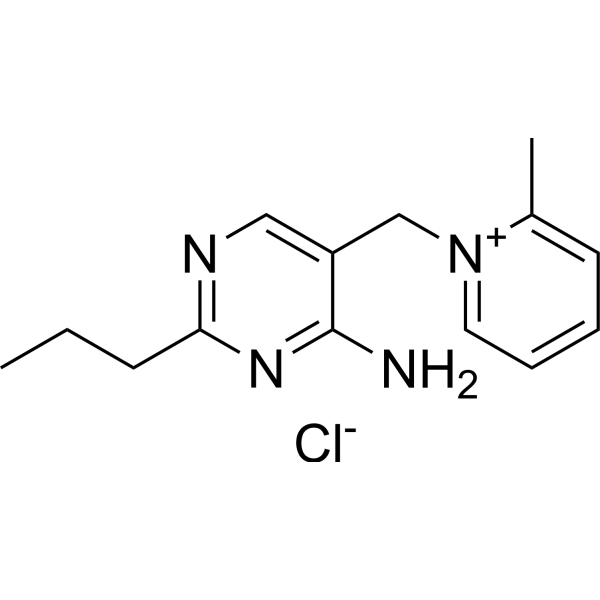
Ethopabate (Ethyl pabate) is an orally active antiparasitic agent. Ethopabate is often used in combination with Amprolium hydrochloride (HY-B0937A) and others to prevent and treat poultry coccidiosis, leucosis, and other diseases .
|
-
-
- HY-B0337B
-
|
Sulphadimethoxine 1000 µg/mL in methanol
|
Antibiotic
Parasite
Environmental Pollutants
|
Infection
|
|
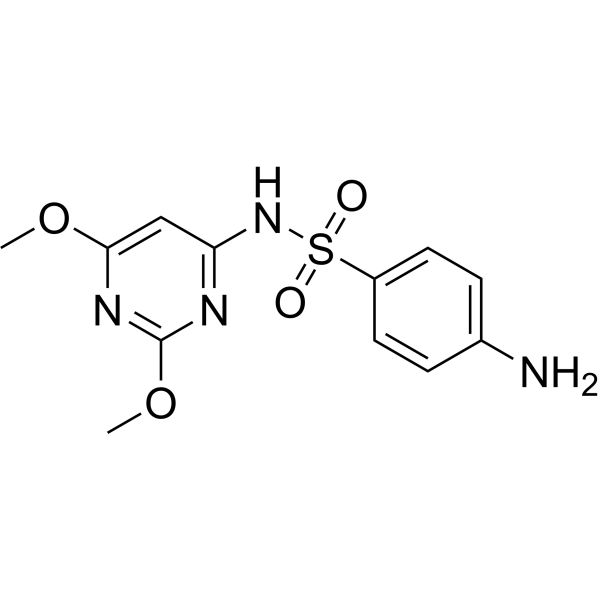
Sulfadimethoxine (Sulphadimethoxine) 1000 µg/mL in methanol is an orally active sulfonamide antibiotic. Sulfadimethoxine 1000 µg/mL in methanol reduces Eimeria-related mortality, weight loss, and lesions. Sulfadimethoxine 1000 µg/mL in methanol can be used for the research of avian coccidiosis .
|
-
-
- HY-116021
-
|
|
Parasite
|
Infection
|
|
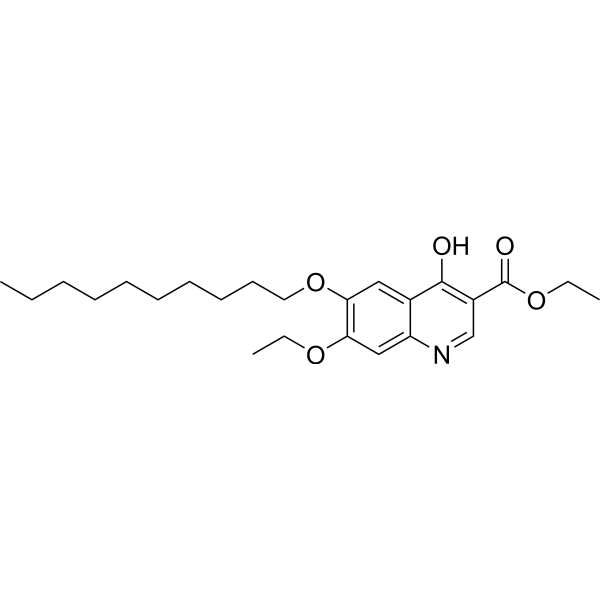
Buquinolate is a quinoline derivative. Buquinolate is effective in preventing coccidiosis of chickens .
|
-
-
- HY-116433
-
-
-
- HY-B1282S
-
|
|
Isotope-Labeled Compounds
Bacterial
Parasite
Antibiotic
|
Infection
|
|
Sulfaquinoxaline-d4 is the deuterium labeled Sulfaquinoxaline. Sulfaquinoxaline is an antimicrobial for veterinary use, with activity against a broad spectrum of Gram-negative and Gram-positive bacteria. Sulfaquinoxaline is used to prevent coccidiosis and bacterial infections .
|
-
-
- HY-B1036R
-
|
|
Reference Standards
Parasite
|
Infection
|
|
Decoquinate (Standard) is the analytical standard of Decoquinate. This product is intended for research and analytical applications. Decoquinate is a quinolone derivative that can be used for research of coccidiosis in domestic ruminants. Decoquinate also has potent activity against both Plasmodium hepatic development and red cell replication .
|
-
-
- HY-N7071
-
|
Maduramycin
|
Antibiotic
Apoptosis
|
Infection
|
|
Maduramicin (Maduramycin) is isolated from the actinomycete Actinomadura rubra. Maduramicin is an anticoccidial agent for the the treatment of Eimeria spp., E. adenoeides, E. gallopavonis, and E. dispersa infection . Maduramicin induces cell apoptosis in chicken myocardial cells via intrinsic and extrinsic pathways .
|
-
-
- HY-W097570
-
|
|
Antibiotic
Bacterial
|
Infection
Neurological Disease
|
|
Sulfamonomethoxine sodium is an orally active broad-spectrum synthetic sulfonamide antibiotic that inhibits dihydropteroate synthetase. Sulfamonomethoxine sodium increases blood glucose levels, induces anxiety-related activities and impairs spatial learning and memory. Sulfamonomethoxine sodium can be used for the research of anxiety, spatial memory impairment, colisepticemia, salmonellosis, and staphylococcus infection .
|
-
-
- HY-116021S
-
|
|
Isotope-Labeled Compounds
Parasite
|
Infection
|
|
Buquinolate-13C3 is the 13C3 labeled Buquinolate. Buquinolate is a quinoline derivative, which is developed as a coccidiostat for the prevention of coccidiosis in poultry .
|
-
-
- HY-B1088R
-
|
WR-61112 (Standard)
|
Reference Standards
Parasite
Antibiotic
|
Infection
Cardiovascular Disease
|
|
Clopidol (Standard) is the analytical standard of Clopidol. This product is intended for research and analytical applications. Clopidol (WR-61112) is an anticoccidial agent which is used as feed additive to control coccidiosis in chickens. Clopidol inhibits the sporulation of Eimeria tenella oocysts .
|
-
-
- HY-106662R
-
|
|
Molecular Glues
Topoisomerase
Parasite
|
Infection
Cancer
|
|
Chloroquinoxaline sulfonamide (Standard) is the analytical standard of Chloroquinoxaline sulfonamide. This product is intended for research and analytical applications. Chloroquinoxaline sulfonamide (Chloroquinoxaline), a structural analogue of sulfaquinoxaline, is a topoisomerase II alpha/beta poison. Chloroquinoxaline sulfonamide is used to control coccidiosis in poultry, rabbit, sheep, and cattle . Antitumor activity .
|
-
-
- HY-B0357A
-
|
R-64433 potassium
|
Antibiotic
Parasite
|
Infection
|
|
Diclazuril (R-64433) potassium, a benzeneacetonitrile derivative, is a potent and orally active anticoccidial agent. Diclazuril potassium can be used for the research of certain infectious and parasitic diseases, including coccidiosis, acute toxoplasmosis, equine protozoal pyoencephalitis (EPM) et.al .
|
-
-
- HY-B0357R
-
|
R-64433 (Standard)
|
Antibiotic
Parasite
Reference Standards
|
Infection
|
|
Diclazuril (Standard) is the analytical standard of Diclazuril. This product is intended for research and analytical applications. Diclazuril (R-64433), a benzeneacetonitrile derivative, is a potent and orally active anticoccidial agent. Diclazuril can be used for the research of certain infectious and parasitic diseases, including coccidiosis, acute toxoplasmosis, equine protozoal pyoencephalitis (EPM) et.al .
|
-
-
- HY-116724
-
|
|
Parasite
|
Infection
|
|
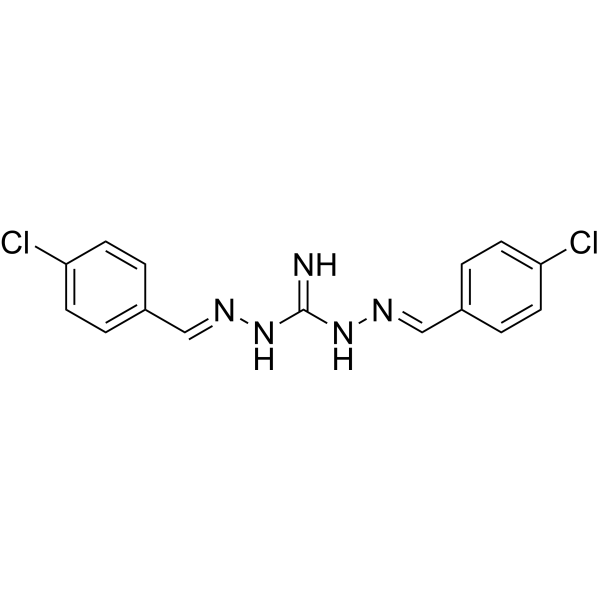
Robenidine is a coccidiostat agent that can be used for the research of coccidiosis caused by parasites in the Eimeria genus .
|
-
-
- HY-116433R
-
|
|
Reference Standards
Parasite
Xanthine Oxidase
|
Infection
Metabolic Disease
|
|
Nequinate (Standard) is the analytical standard of Nequinate. This product is intended for research and analytical applications. Nequinate, a quinoline compound, is an anticoccidial agent against cecal coccidiosis (Eimeria tenella) infections . Nequinate inhibits xanthine oxidoreductase (XOD) activity .
|
-
-
- HY-U00131S
-
|
N 3517-d4; Sulfabromomethazine-d4
|
Isotope-Labeled Compounds
|
Others
|
|
Sulfabrom-d4 (N 3517-d4) is is the deuterium labeled Sulfabrom (HY-U00131). Sulfabrom is a long-acting Sulfonamide that is used for the treatment of coccidiosis and various bacterial infections in the poultry, swine and cattle .
|
-
-
- HY-19285AR
-
|
Sulfachloropyrazine sodium (Standard)
|
Reference Standards
Bacterial
Parasite
Antibiotic
|
Infection
|
|
Sulfaclozine (sodium) (Standard) is the analytical standard of Sulfaclozine (sodium). This product is intended for research and analytical applications. Sulfaclozine sodium (Sulfachloropyrazine sodium) is an efficacious sulphonamide derivative with antibacterial and anticoccidial effects. Sulfaclozine sodium is commonly used for the treatment of various poultry diseases (particularly, collibacteriosis, fowl cholera and coccidiosis) .
|
-
-
- HY-19285R
-
|
Sulfachloropyrazine (Standard)
|
Reference Standards
Bacterial
Parasite
Antibiotic
|
Infection
|
|
Sulfaclozine (Standard) is the analytical standard of Sulfaclozine. This product is intended for research and analytical applications. Sulfaclozine (Sulfachloropyrazine) is an efficacious sulphonamide derivative with antibacterial and anticoccidial effects. Sulfaclozine is commonly used for the treatment of various poultry diseases (particularly, collibacteriosis, fowl cholera and coccidiosis) .
|
-
-
- HY-B1282R
-
|
|
Reference Standards
Bacterial
Parasite
Antibiotic
|
Infection
|
|
Sulfaquinoxaline (Standard) is the analytical standard of Sulfaquinoxaline. This product is intended for research and analytical applications. Sulfaquinoxaline is an antimicrobial for veterinary use, with activity against a broad spectrum of Gram-negative and Gram-positive bacteria. Sulfaquinoxaline is used to prevent coccidiosis and bacterial infections .
|
-
-
- HY-17008R
-
|
Ponazuril (Standard)
|
Reference Standards
Parasite
|
Infection
|
|
Toltrazuril (sulfone) (Standard) is the analytical standard of Toltrazuril (sulfone). This product is intended for research and analytical applications. Toltrazuril sulfone (Ponazuril) is a metabolite of Toltrazuril (HY-B0175), with antiprotozoal activity. Toltrazuril sulfone is a triazine anticoccidial that is developed to prevent coccidiosis in poultry .
|
-
-
- HY-B2138R
-
|
Ethyl pabate (Standard)
|
Reference Standards
Parasite
|
Infection
|
|
Ethopabate (Standard) is the analytical standard of Ethopabate (HY-B2138). This product is intended for research and analytical applications. Ethopabate (Ethyl pabate) is an orally active antiparasitic agent. Ethopabate is often used in combination with Amprolium hydrochloride (HY-B0937A) and others to prevent and treat poultry coccidiosis, leucosis, and other diseases .
|
-
-
- HY-W702966
-
|
Ethyl pabate-d5
|
Isotope-Labeled Compounds
Parasite
|
Infection
|
|
Ethopabate-d5 (Ethyl pabate-d5) is the deuterium labeled Ethopabate (HY-B2138). Ethopabate (Ethyl pabate) is an orally active antiparasitic agent. Ethopabate is often used in combination with Amprolium hydrochloride (HY-B0937A) and others to prevent and treat poultry coccidiosis, leucosis, and other diseases .
|
-
-
- HY-W654156
-
|
|
Isotope-Labeled Compounds
Parasite
Antibiotic
|
Infection
|
|
Diclazuril- 13C3, 15N 2 is 13C and 15N labeled Diclazuril. Diclazuril (R-64433), a benzeneacetonitrile derivative, is a potent and orally active anticoccidial agent. Diclazuril can be used for the research of certain infectious and parasitic diseases, including coccidiosis, acute toxoplasmosis, equine protozoal pyoencephalitis (EPM) et.al .
|
-
-
- HY-N7071AR
-
|
Maduramycin ammonium (Standard)
|
Reference Standards
Bacterial
Apoptosis
Antibiotic
|
Infection
|
|
Maduramicin (ammonium) (Standard) is the analytical standard of Maduramicin (ammonium). This product is intended for research and analytical applications. Maduramicin ammonium (Maduramycin ammonium) is isolated from the actinomycete Actinomadura rubra. Maduramicin ammonium (Maduramycin ammonium) is an anticoccidial agent for the the treatment of Eimeria spp., E. adenoeides, E. gallopavonis, and E. dispersa infection . Maduramicin ammonium (Maduramycin ammonium) induces cell apoptosis in chicken myocardial cells via intrinsic and extrinsic pathways .
|
-
-
- HY-B0357B
-
|
R-64433 sodium
|
Parasite
Antibiotic
|
Infection
|
|
Diclazuril sodium (R-64433 sodium) is an anticoccidial agent active in preventing parasitic contamination of livestock and poultry feed. Evaluation of the efficacy of Diclazuril sodium in the treatment of Eimeria infection showed poor performance in sustained levels of oocyst excretion compared with controls. Diclazuril sodium has a significant impact on the pathological effects of young animals in clinical applications .
|
-
-
- HY-183528
-
|
|
Parasite
|
Infection
|
|
Anticoccidial agent-1 is an imidazopyridine anticoccidial agent with an IC50 of 0.044. Anticoccidial agent-1 can be used for the research of coccidiosis .
|
-
-
- HY-183532
-
|
|
Parasite
|
Infection
|
|
Anticoccidial agent-2 is an orally effective imidazole-based anticoccidial agent. Anticoccidial agent-2 exhibits activity against Eimeria tenella in chickens. Anticoccidial agent-2 can be used in research related to chicken cecal coccidiosis .
|
-
-
- HY-114625
-
|
|
Parasite
Mitochondrial Metabolism
|
Infection
|
|
Amquinate is a coccidiostat and a cytochrome b inhibitor. Amquinate blocks cytochrome-mediated electron transport near cytochrome b in mitochondria, acting downstream of coenzyme Q without affecting succinate dehydrogenase or NADH dehydrogenase. Amquinate inhibits succinate- and malate plus pyruvate-supported mitochondrial respiration in Eimeria tenella and does not affect L-ascorbate-supported respiration or any mitochondrial respiration in chicken liver mitochondria. Amquinate exhibits selective anticoccidial activity against wild-type Eimeria tenella. Amquinate can be used for the research of coccidiosis (Eimeria tenella infection) .
|
-
-
- HY-N14010
-
|
|
Bacterial
|
Infection
|
|
Cationomycin inhibits the activity of Gram-positive bacteria and mycobacterium, but has no effect on Gram-negative bacteria, yeast and fungi. The feed containing 50-100 ppm Cationomycin could effectively prevent coccidiosis of chicken .
|
-
| Cat. No. |
Product Name |
Category |
Target |
Chemical Structure |
-
- HY-N7071A
-
-
-
- HY-N7071
-
-
-
- HY-N7071AR
-
|
Maduramycin ammonium (Standard)
|
Structural Classification
Microorganisms
Ketones, Aldehydes, Acids
Source Classification
|
Reference Standards
Bacterial
Apoptosis
Antibiotic
|
|
Maduramicin (ammonium) (Standard) is the analytical standard of Maduramicin (ammonium). This product is intended for research and analytical applications. Maduramicin ammonium (Maduramycin ammonium) is isolated from the actinomycete Actinomadura rubra. Maduramicin ammonium (Maduramycin ammonium) is an anticoccidial agent for the the treatment of Eimeria spp., E. adenoeides, E. gallopavonis, and E. dispersa infection . Maduramicin ammonium (Maduramycin ammonium) induces cell apoptosis in chicken myocardial cells via intrinsic and extrinsic pathways .
|
-
-
- HY-114625
-
|
|
Structural Classification
Human Gut Microbiota Metabolites
Ketones, Aldehydes, Acids
Endogenous metabolite
Source Classification
|
Parasite
Mitochondrial Metabolism
|
|
Amquinate is a coccidiostat and a cytochrome b inhibitor. Amquinate blocks cytochrome-mediated electron transport near cytochrome b in mitochondria, acting downstream of coenzyme Q without affecting succinate dehydrogenase or NADH dehydrogenase. Amquinate inhibits succinate- and malate plus pyruvate-supported mitochondrial respiration in Eimeria tenella and does not affect L-ascorbate-supported respiration or any mitochondrial respiration in chicken liver mitochondria. Amquinate exhibits selective anticoccidial activity against wild-type Eimeria tenella. Amquinate can be used for the research of coccidiosis (Eimeria tenella infection) .
|
-
-
- HY-N14010
-
|
|
Natural Products
Microorganisms
Source Classification
|
Bacterial
|
|
Cationomycin inhibits the activity of Gram-positive bacteria and mycobacterium, but has no effect on Gram-negative bacteria, yeast and fungi. The feed containing 50-100 ppm Cationomycin could effectively prevent coccidiosis of chicken .
|
-
| Cat. No. |
Product Name |
Chemical Structure |
-
- HY-B0357S
-
|
|
|
Diclazuril-d4 is deuterium labeled Diclazuril. Diclazuril (R-64433), a benzeneacetonitrile derivative, is a potent and orally active anticoccidial agent. Diclazuril can be used for the research of certain infectious and parasitic diseases, including coccidiosis, acute toxoplasmosis, equine protozoal pyoencephalitis (EPM) et.al .
|
-
-
- HY-B1282S
-
|
|
|
Sulfaquinoxaline-d4 is the deuterium labeled Sulfaquinoxaline. Sulfaquinoxaline is an antimicrobial for veterinary use, with activity against a broad spectrum of Gram-negative and Gram-positive bacteria. Sulfaquinoxaline is used to prevent coccidiosis and bacterial infections .
|
-
-
- HY-116021S
-
|
|
|
Buquinolate-13C3 is the 13C3 labeled Buquinolate. Buquinolate is a quinoline derivative, which is developed as a coccidiostat for the prevention of coccidiosis in poultry .
|
-
-
- HY-U00131S
-
|
|
|
Sulfabrom-d4 (N 3517-d4) is is the deuterium labeled Sulfabrom (HY-U00131). Sulfabrom is a long-acting Sulfonamide that is used for the treatment of coccidiosis and various bacterial infections in the poultry, swine and cattle .
|
-
-
- HY-W702966
-
|
|
|
Ethopabate-d5 (Ethyl pabate-d5) is the deuterium labeled Ethopabate (HY-B2138). Ethopabate (Ethyl pabate) is an orally active antiparasitic agent. Ethopabate is often used in combination with Amprolium hydrochloride (HY-B0937A) and others to prevent and treat poultry coccidiosis, leucosis, and other diseases .
|
-
-
- HY-W654156
-
|
|
|
Diclazuril- 13C3, 15N 2 is 13C and 15N labeled Diclazuril. Diclazuril (R-64433), a benzeneacetonitrile derivative, is a potent and orally active anticoccidial agent. Diclazuril can be used for the research of certain infectious and parasitic diseases, including coccidiosis, acute toxoplasmosis, equine protozoal pyoencephalitis (EPM) et.al .
|
-
Your information is safe with us. * Required Fields.
Inquiry Information
- Product Name:
- Cat. No.:
- Quantity:
- MCE Japan Authorized Agent:

