


1. Search Result
Search Result
Results for "

Cornea

" in MedChemExpress (MCE) Product Catalog:

21

Inhibitors & Agonists

1

Biochemical Assay Reagents

6

Peptides

3

Natural
Products

1

Isotope-Labeled Compounds

Cat. No. Product Name Target Research Areas Chemical Structure
  • HY-P1222
    LL-37, human
    Maximum Cited Publications
    6 Publications Verification

    Bacterial Infection
    LL-37, human is a 37-residue, amphipathic, cathelicidin-derived antimicrobial peptide, which exhibits a broad spectrum of antimicrobial activity. LL-37, human could help protect the cornea from infection and modulates wound healing .
    LL-37, human
  • HY-B0577
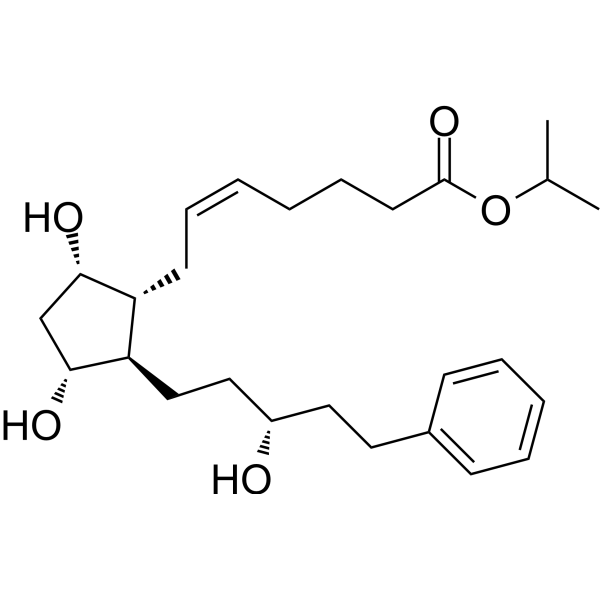
    Latanoprost
    4 Publications Verification

    PHXA41

    Prostaglandin Receptor Cardiovascular Disease Others
    Latanoprost (PHXA41) is a prostaglandin F2α analogue and can be used for glaucoma research. Latanoprost can effectively pass through cornea and be hydrolyzed by esterase to latanoprost acid. latanoprost acid is an F-prostaglandin (FP) receptor agonist, and can effectively reduce intraocular pressure (IOP) by increasing the outflow of aqueous humor through uvea .
    Latanoprost
  • HY-P1222A
    LL-37, human TFA
    Maximum Cited Publications
    6 Publications Verification

    Bacterial Infection
    LL-37, human TFA is a 37-residue, amphipathic, cathelicidin-derived antimicrobial peptide, which exhibits a broad spectrum of antimicrobial activity. LL-37, human TFA could help protect the cornea from infection and modulates wound healing .
    LL-37, human TFA
  • HY-112531B

    Biochemical Assay Reagents Others
    Poly(2-hydroxyethyl methacrylate) (Mv 300000) is a biocompatible, optically transparent, hydrophilic, and non-degradable polymer with excellent cytocompatibility, eliciting a minimal immunological response from host tissue. Poly(2-hydroxyethyl methacrylate) (Mv 300000) can be used for different biomedical applications, such as bone tissue regeneration, wound dressings and drug delivery .
    Poly(2-hydroxyethyl methacrylate) (Mv 300000)
  • HY-P1222B
    LL-37, human acetate
    Maximum Cited Publications
    6 Publications Verification

    Bacterial Infection Inflammation/Immunology
    LL-37, human acetate is a 37-residue, amphipathic, cathelicidin-derived antimicrobial peptide, which exhibits a broad spectrum of antimicrobial activity. LL-37, human acetate could help protect the cornea from infection and modulates wound healing .
    LL-37, human acetate
  • HY-B1288

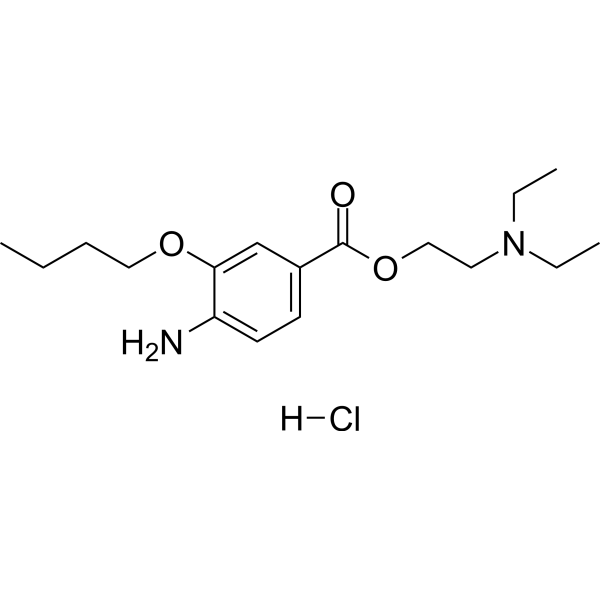
    Benoxinate hydrochloride

    Sodium Channel Neurological Disease
    Oxybuprocaine hydrochloride (Benoxinate hydrochloride) reversibly blocks sodium channels and prevents propagation of painful nerve impulses in the cornea, conjunctiva, and sclera. Oxybuprocaine hydrochloride is used especially in ophthalmology and otolaryngology .
    Oxybuprocaine hydrochloride
  • HY-B1323

    Dipivefrine hydrochloride

    Endogenous Metabolite Neurological Disease
    Dipivefrin hydrochloride (Dipivefrine hydrochloride) is an antiglaucoma proagent that is hydrolyzed to the active compound, epinephrine, by esterases in the cornea .
    Dipivefrin hydrochloride
  • HY-P1194

    Neurokinin Receptor Inflammation/Immunology
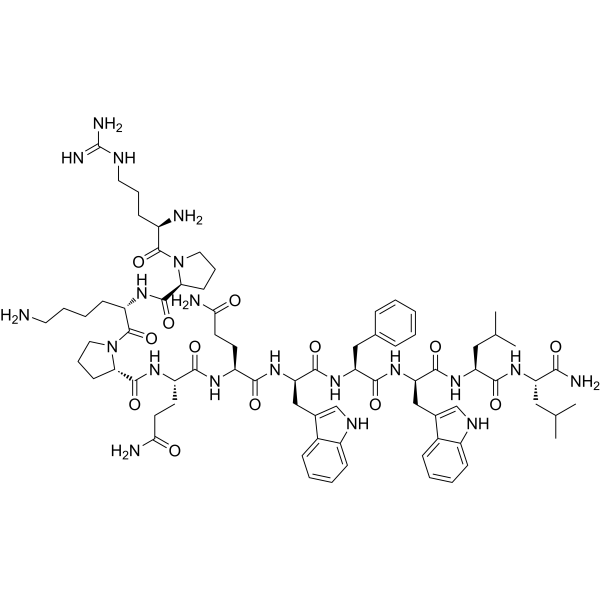
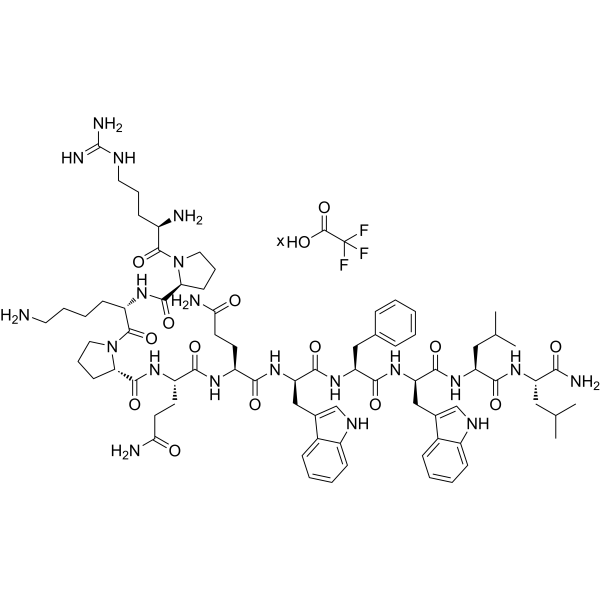
    Spantide I, a substance P analog, is a selective NK1 receptor antagonist, with Ki values of 230 nM and 8150 nM for NK1 and NK2 receptor, respectively. Spantide I provides an approach to reduce type 1 and enhance the type 2 cytokine IL-10 in the infected cornea, leading to a significant reduction in corneal perforation .
    Spantide I
  • HY-P4846
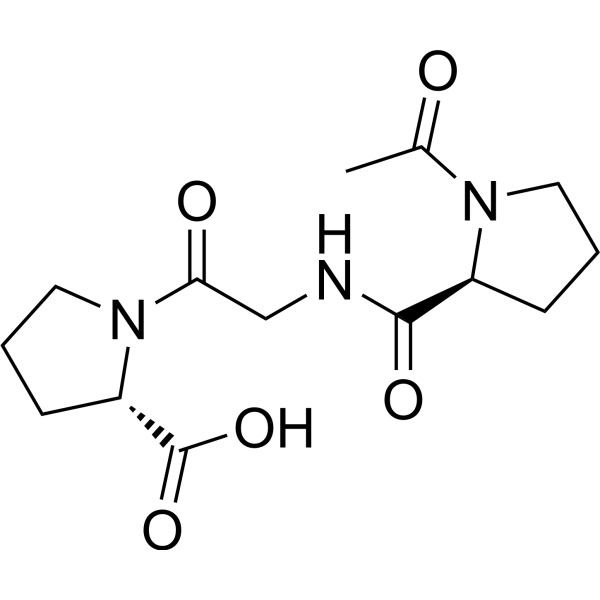
    Ac-Pro-Gly-Pro-OH
    2 Publications Verification

    CXCR Apoptosis IFNAR TNF Receptor Interleukin Related Infection Inflammation/Immunology
    Ac-Pro-Gly-Pro-OH is an endogenous degradation product of extracellular collagen and acts as a CXCR2 agonist . Ac-Pro-Gly-Pro-OH exerts bactericidal activity by generating hydrogen peroxide, inhibits pulmonary inflammation, and reduces immune cell apoptosis (apoptosis). Ac-Pro-Gly-Pro-OH promotes the production of IFN-γ and inhibits the production of TNF-α and IL-6 in leukocytes. Ac-Pro-Gly-Pro-OH increases the survival rate of mice in sepsis models, enhances the bactericidal activity of neutrophils, acts as a neutrophil chemoattractant, induces neutrophil polarization, and regulates inflammatory and repair processes. Ac-Pro-Gly-Pro-OH induces chronic inflammation and tissue remodeling through sustained action. Ac-Pro-Gly-Pro-OH is released via alkaline hydrolysis of corneal proteins in alkali-injured eyes, thereby driving the early infiltration of neutrophils into the cornea. Ac-Pro-Gly-Pro-OH is applicable to research related to sepsis, chronic obstructive pulmonary disease, cystic fibrosis, bronchiolitis obliterans syndrome, severe asthma, idiopathic pulmonary fibrosis, and corneal ulcer .
    Ac-Pro-Gly-Pro-OH
  • HY-P2738A

    MMP Inflammation/Immunology
    Type I collagen peptide is a fibrillar form of collagen that promotes the activation and growth of epithelial cells . This product is an enzymatically hydrolyzed collagen short peptide.
    Collagen petide Type I
  • HY-124404

    Aryl Hydrocarbon Receptor Na+/K+ ATPase Prostaglandin Receptor Inflammation/Immunology
    12(R)-HETE is a CYP-dependent arachidonic acid metabolite that acts as a proinflammatory lipid mediator. 12 (R)-HETE widely exists in various tissues including the eye, skin and liver. In the cornea, 12(R)-HETE is metabolized via pathways such as β-oxidation into the precursor of 12(R)-HETrE. Without direct receptor binding, 12(R)-HETE indirectly activates AHR-mediated target gene transcription, while inhibiting the enzymatic activity of Na+,K+-ATPase and the intracellular calcium elevation induced by TP agonists. 12(R)-HETE also possesses multiple physiological effects such as chemotaxis, proangiogenesis, vasodilation, natriuresis, diuresis and intraocular pressure reduction, and can be widely used in studies related to psoriasis, inflammatory skin diseases and ocular inflammation .
    12(R)-HETE
  • HY-B1471
    Fluorometholone acetate
    1 Publications Verification

    Carbonic Anhydrase Inflammation/Immunology
    Fluorometholone acetate is a synthetic glucocorticoid corticosteroid and a corticosteroid ester. Fluorometholone acetate potently inhibits carbonic anhydrase (CA) with IC50s of 2.18 μM and 17.5 μM for hCA-I and hCA-II, respectively. Fluorometholone acetate has anti-inflammatory effect and has the potential for external ocular inflammation research .
    Fluorometholone acetate
  • HY-155238

    GABA Receptor Neurological Disease
    E2730 is a noncompetitive but selective inhibitor of gamma-aminobutyric acid (GABA) transporter 1 (GAT1) with orally available and antiepileptic activity. E2730-mediated GAT1 inhibition is positively correlated with environmental GABA levels and selectively inhibits GAT1-mediated GABA uptake. E2730 (5-50 mg/kg; po) in rat amygdala ignition model, and in mouse cornea ignition (5-50 mg/kg), drug resistance 6Hz-44mA has demonstrated in vivo efficacy in models of psychomotor epilepsy (5-50 mg/kg), fragile X syndrome (2.5-300 mg/kg), and Dravet syndrome (10 mg/kg, 20 mg/kg) .
    E2730
  • HY-B1288R

    Benoxinate hydrochloride (Standard)

    Reference Standards Sodium Channel Neurological Disease
    Oxybuprocaine (hydrochloride) (Standard) is the analytical standard of Oxybuprocaine (hydrochloride). This product is intended for research and analytical applications. Oxybuprocaine hydrochloride (Benoxinate hydrochloride) reversibly blocks sodium channels and prevents propagation of painful nerve impulses in the cornea, conjunctiva, and sclera. Oxybuprocaine hydrochloride is used especially in ophthalmology and otolaryngology .
    Oxybuprocaine hydrochloride (Standard)
  • HY-B1323S

    Dipivefrine-d6 hydrochloride

    Isotope-Labeled Compounds Endogenous Metabolite Neurological Disease
    Dipivefrin-d6 (hydrochloride) is deuterium labeled Dipivefrin (hydrochloride). Dipivefrin hydrochloride (Dipivefrine hydrochloride) is an antiglaucoma proagent that is hydrolyzed to the active compound, epinephrine, by esterases in the cornea .
    Dipivefrin-d6 hydrochloride
  • HY-B1323R

    Dipivefrine hydrochloride (Standard)

    Reference Standards Endogenous Metabolite Neurological Disease
    Dipivefrin (hydrochloride) (Standard) is the analytical standard of Dipivefrin (hydrochloride). This product is intended for research and analytical applications. Dipivefrin hydrochloride (Dipivefrine hydrochloride) is an antiglaucoma proagent that is hydrolyzed to the active compound, epinephrine, by esterases in the cornea .
    Dipivefrin hydrochloride (Standard)
  • HY-B1471R

    Reference Standards Carbonic Anhydrase Inflammation/Immunology
    Fluorometholone acetate (Standard) is the analytical standard of Fluorometholone acetate. This product is intended for research and analytical applications. Fluorometholone acetate is a synthetic glucocorticoid corticosteroid and a corticosteroid ester. Fluorometholone acetate potently inhibits carbonic anhydrase (CA) with IC50s of 2.18 μM and 17.5 μM for hCA-I and hCA-II, respectively. Fluorometholone acetate has anti-inflammatory effect and has the potential for external ocular inflammation research .
    Fluorometholone acetate (Standard)
  • HY-P1194A

    Neurokinin Receptor Inflammation/Immunology
    Spantide I TFA, a substance P analog, is a selective NK1 receptor antagonist, with Ki values of 230 nM and 8150 nM for NK1 and NK2 receptor, respectively. Spantide I provides an approach to reduce type 1 and enhance the type 2 cytokine IL-10 in the infected cornea, leading to a significant reduction in corneal perforation .
    Spantide I TFA
  • HY-N15633

    HLNL

    Others
    Hydroxylysinonorleucine is a covalent immature collagen fibrils cross links molecule. Hydroxylysinonorleucine can be isolated from reduced native collagen in rat tail tendons, cornea and skine. Hydroxylysinonorleucine is assembled to complex structures and confers mechanical stability, strength and toughness to tissues .
    Hydroxylysinonorleucine
  • HY-171925

    Cathepsin Neurological Disease
    BI-1124 is a cathepsin S inhibitor that exhibits simulated sufficient ocular pharmacokinetic-pharmacodynamic coverage in rabbit models via topical ocular administration. BI-1124 can be used for the research of age-related dry eye disease .
    BI-1124
  • HY-185643

    Prostaglandin Receptor Neurological Disease
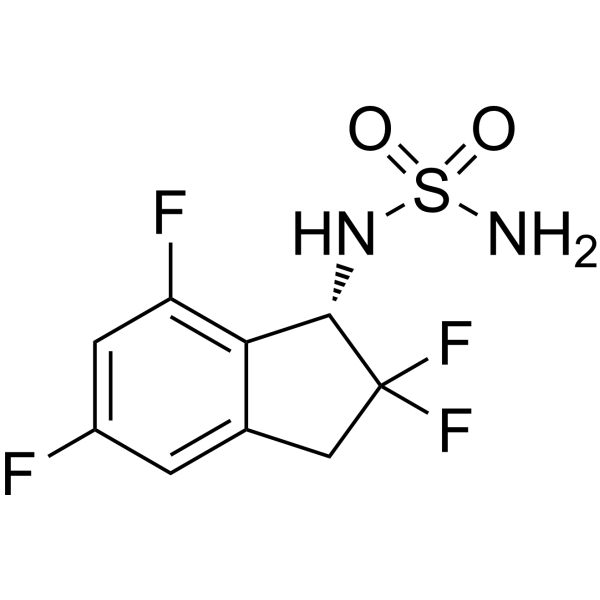
    PF-04475270 is a prodrug of CP-734432 (HY-119236), as well as an agonist of the EP4 prostaglandin receptor, with IC50 values of 2 nM and 8 nM against human and canine sources, respectively. PF-04475270 is rapidly hydrolyzed into its active metabolite CP-734432 by ocular esterases or corneal homogenate, stimulates cAMP production, and activates cAMP response element-mediated β-lactamase activity in cells expressing EP4. PF-04475270 can be used in research related to glaucoma .
    PF-04475270

Inquiry Online

Your information is safe with us. * Required Fields.

Salutation


Country or Region *

Applicant Name *


Organization Name *

Department *


Email Address *


Product Name *

Cat. No.


Requested quantity *

Phone Number *


Remarks

Inquiry Online

Inquiry Information

Product Name:
Cat. No.:
Quantity:
MCE Japan Authorized Agent:

