


1. Search Result
Search Result
Results for "

Distribution

" in MedChemExpress (MCE) Product Catalog:

240

Inhibitors & Agonists

5

Screening Libraries

19

Fluorescent Dye

21

Biochemical Assay Reagents

14

Peptides

2

MCE Kits

2

Inhibitory Antibodies

19

Natural
Products

1

Recombinant Proteins

11

Isotope-Labeled Compounds

1

Click Chemistry

72

Oligonucleotides

Cat. No. Product Name Target Research Areas Chemical Structure
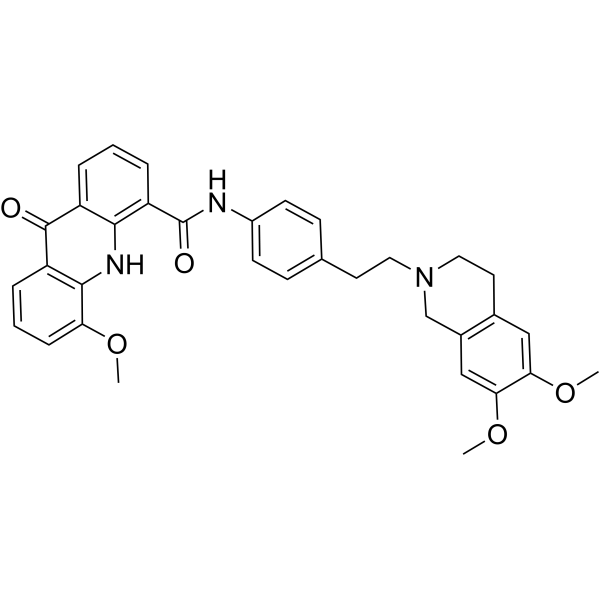
  • HY-50879
    Elacridar
    Maximum Cited Publications
    31 Publications Verification

    GF120918; GW0918; GG918; GW120918

    P-glycoprotein BCRP Cancer
    Elacridar is an orally active P-glycoprotein (Pgp) and breast cancer resistance protein (BCRP) inhibitor. Elacridar can be used to examine the influence of efflux transporters on agent distribution to brain and the research of cancer .
    Elacridar
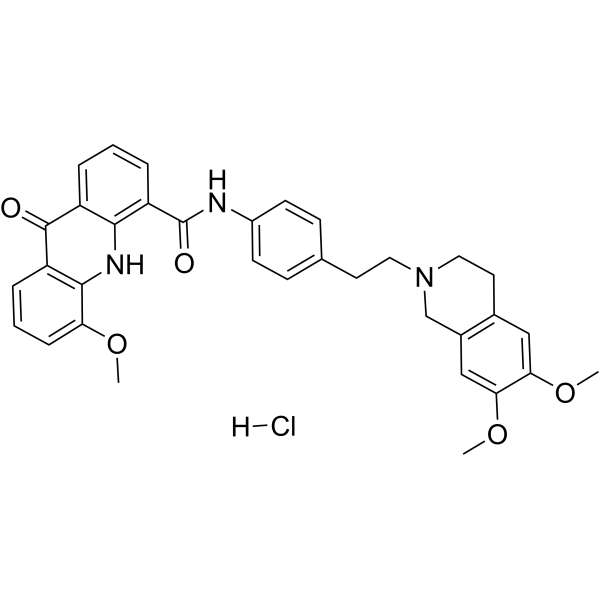
  • HY-50880
    Elacridar hydrochloride
    Maximum Cited Publications
    31 Publications Verification

    GF120918A

    P-glycoprotein BCRP Cancer
    Elacridar hydrochloride (GF120918A) is an orally active P-glycoprotein (P-gp) and breast cancer resistance protein (BCRP) inhibitor. Elacridar hydrochloride can be used to examine the influence of efflux transporters on agent distribution to brain and it can be used for the research of cancer .
    Elacridar hydrochloride
  • HY-D1913
    Fe2Orange
    Maximum Cited Publications
    25 Publications Verification

    Fluorescent Dye Others
    Fe2Orange is a Fe 2+ selective probe with an excitation wavelength of 543 nm and an emission wavelength of 580 nm. Fe2Orange emits fluorescence after binding to intracellular Fe 2+, thereby achieving specific labeling of Fe 2+. Fe2Orange is used to detect the content and distribution of Fe 2+ in cells .
    Fe2Orange
  • HY-Y1316
    Sodium benzoate
    2 Publications Verification

    Environmental Pollutants Biochemical Assay Reagents Apoptosis NF-κB Inflammation/Immunology Cancer
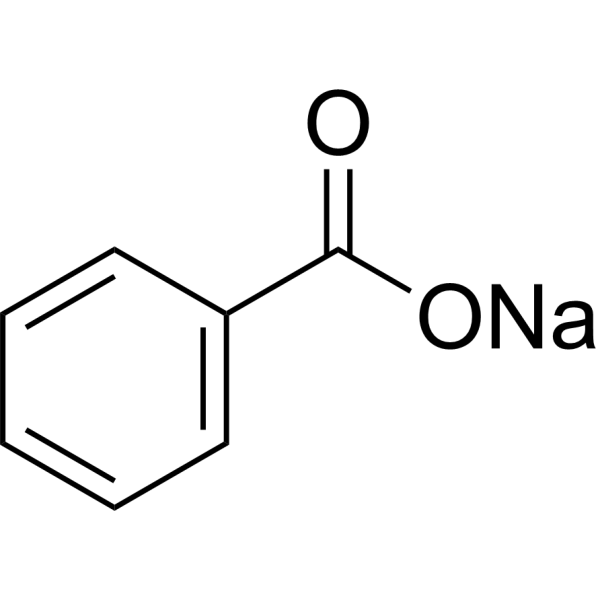
    Sodium benzoate is an orally active pharmaceutical excipient, such as an antibacterial agent, preservative, lubricant, etc. Pharmaceutical excipients, or pharmaceutical auxiliaries, refer to other chemical substances used in the pharmaceutical process other than pharmaceutical ingredients. Pharmaceutical excipients generally refer to inactive ingredients in pharmaceutical preparations, which can improve the stability, solubility and processability of pharmaceutical preparations. Pharmaceutical excipients also affect the absorption, distribution, metabolism, and elimination (ADME) processes of co-administered drugs.Sodium benzoate activates NF-κB and induces Apoptosis. Sodium benzoate induces immune suppression and produces reproductively toxic. Sodium benzoate can be used for colon cancer and immune disease research .
    Sodium benzoate
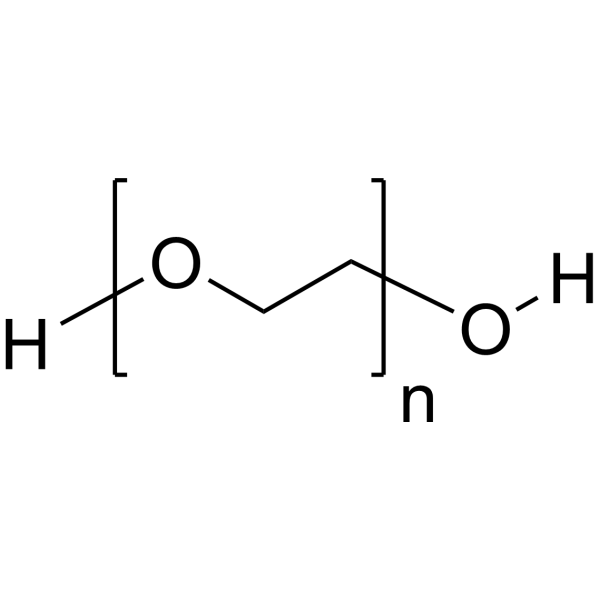
  • HY-Y0873F

    Polyethylene glycol 600

    Environmental Pollutants Biochemical Assay Reagents Others
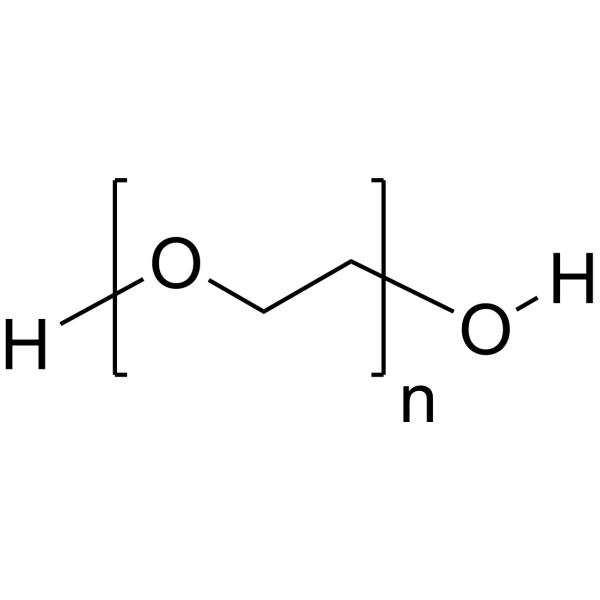
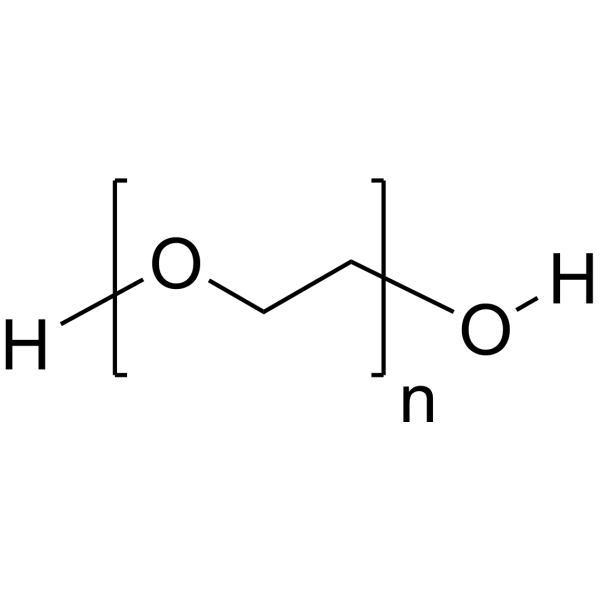
    PEG600 can be used as an excipient, such as ointment base, lubricant. Pharmaceutical excipients, or pharmaceutical auxiliaries, refer to other chemical substances used in the pharmaceutical process other than pharmaceutical ingredients. Pharmaceutical excipients generally refer to inactive ingredients in pharmaceutical preparations, which can improve the stability, solubility and processability of pharmaceutical preparations. Pharmaceutical excipients also affect the absorption, distribution, metabolism, and elimination (ADME) processes of co-administered drugs .
    PEG600
  • HY-W250795

    Maltodextrin; Dextrin maize starch

    Environmental Pollutants Biochemical Assay Reagents Others
    Maltodextrin, dextrose equivalent 16.5-19.5 can be used as an excipient. Pharmaceutical excipients, or pharmaceutical auxiliaries, refer to other chemical substances used in the pharmaceutical process other than pharmaceutical ingredients. Pharmaceutical excipients generally refer to inactive ingredients in pharmaceutical preparations, which can improve the stability, solubility and processability of pharmaceutical preparations. Pharmaceutical excipients also affect the absorption, distribution, metabolism, and elimination (ADME) processes of co-administered drugs .
    Maltodextrin, dextrose equivalent 16.5-19.5
  • HY-W051271

    Titanium dioxide

    Environmental Pollutants Reactive Oxygen Species (ROS) Photosensitizer Others
    Titanium(IV) oxide is a photosensitizer and photocatalyst. Titanium(IV) oxide can be used as a pharmaceutical excipient such as a flow aid, coating agent, sunscreen, colorant, etc. Pharmaceutical excipients or pharmaceutical excipients refer to other chemical substances used in the pharmaceutical process other than the drug ingredients. Pharmaceutical excipients generally refer to inactive ingredients in pharmaceutical preparations that can improve the stability, solubility and processability of pharmaceutical preparations. Pharmaceutical excipients also affect the absorption, distribution, metabolism and elimination (ADME) process of co-administered drugs. Titanium(IV) oxide can use light energy to generate electron-hole pairs to degrade pollutants. Photons excite electrons in TiO2 to generate active oxygen species (such as ·OH and ·O2 -), thereby oxidizing and mineralizing pollutants such as organic compounds and heavy metals. TiO2 can be used in the research of environmental remediation fields such as water treatment, air purification and self-cleaning materials .
    Titanium(IV) oxide
  • HY-Y0873E

    Polyethylene glycol 1500

    Environmental Pollutants Biochemical Assay Reagents Others
    PEG1500 can be used as an excipient, such as ointment base, lubricant. Pharmaceutical excipients, or pharmaceutical auxiliaries, refer to other chemical substances used in the pharmaceutical process other than pharmaceutical ingredients. Pharmaceutical excipients generally refer to inactive ingredients in pharmaceutical preparations, which can improve the stability, solubility and processability of pharmaceutical preparations. Pharmaceutical excipients also affect the absorption, distribution, metabolism, and elimination (ADME) processes of co-administered drugs .
    PEG1500
  • HY-Y1054

    Stearic Acid Magnesium(II) Salt

    Environmental Pollutants Biochemical Assay Reagents Others
    Magnesium stearate is a commonly used pharmaceutical lubricant. But Magnesium stearate leads to an adverse effect on bonding between particles. Magnesium stearate can be used as an excipient, such as lubricant. Pharmaceutical excipients, or pharmaceutical auxiliaries, refer to other chemical substances used in the pharmaceutical process other than pharmaceutical ingredients. Pharmaceutical excipients generally refer to inactive ingredients in pharmaceutical preparations, which can improve the stability, solubility and processability of pharmaceutical preparations. Pharmaceutical excipients also affect the absorption, distribution, metabolism, and elimination (ADME) processes of co-administered drugs .
    Magnesium stearate
  • HY-N0335
    Indigo
    1 Publications Verification

    Fluorescent Dye Others
    Indigo is a blue dye. Indigo stains cellulose fibers such as cotton. Indigo stains food or biological samples to visualize and quantify the uptake or distribution of substances by organisms .
    Indigo
  • HY-N11684

    Biochemical Assay Reagents Others
    Cocoa butter can be used as an excipient, such as lubricants, suppository bases. Pharmaceutical excipients, or pharmaceutical auxiliaries, refer to other chemical substances used in the pharmaceutical process other than pharmaceutical ingredients. Pharmaceutical excipients generally refer to inactive ingredients in pharmaceutical preparations, which can improve the stability, solubility and processability of pharmaceutical preparations. Pharmaceutical excipients also affect the absorption, distribution, metabolism, and elimination (ADME) processes of co-administered drugs .
    Cocoa butter
  • HY-W011426

    Propan-2-yl hexadecanoate

    Environmental Pollutants Biochemical Assay Reagents Liposome Others
    Isopropyl palmitate is an fatty acid ester. Isopropyl palmitate can be used for design and characterization of bioactive bilayer films. The bilayer membrane not only has the ability to scavenge free radicals and inhibit lipid peroxidation, but also can inhibit the growth of known foodborne pathogens. Isopropyl palmitate can be used as an excipient, such as lubricant, oily carrier, solvent, controlled-release transdermal film. Pharmaceutical excipients, or pharmaceutical auxiliaries, refer to other chemical substances used in the pharmaceutical process other than pharmaceutical ingredients. Pharmaceutical excipients generally refer to inactive ingredients in pharmaceutical preparations, which can improve the stability, solubility and processability of pharmaceutical preparations. Pharmaceutical excipients also affect the absorption, distribution, metabolism, and elimination (ADME) processes of co-administered drugs .
    Isopropyl palmitate
  • HY-111647
    N2-Methylguanosine
    1 Publications Verification

    Nucleoside Antimetabolite/Analog Endogenous Metabolite Others
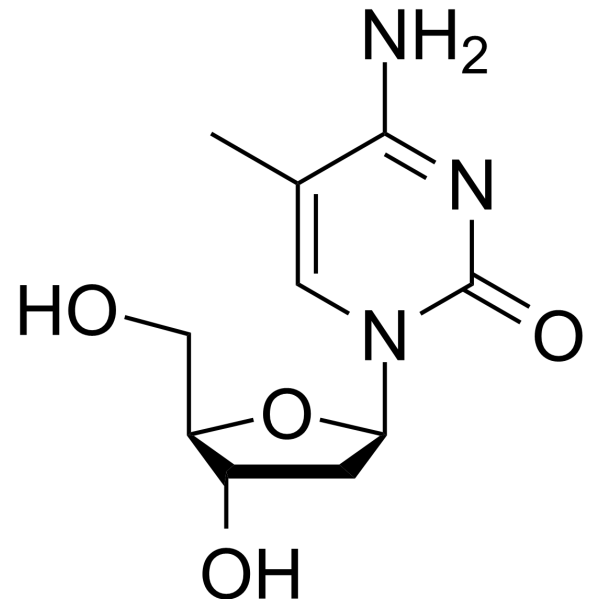
    N2-Methylguanosine is a commonly modified nucleoside in rRNA and tRNA, with specific distributions in both E. coli rRNA and eukaryotic tRNA. N2-Methylguanosine can be found in urine. N2-Methylguanosine affects the structure and stability of RNA .
    N2-Methylguanosine
  • HY-D1098
    SYBR Green II
    3 Publications Verification

    Fluorescent Dye Others
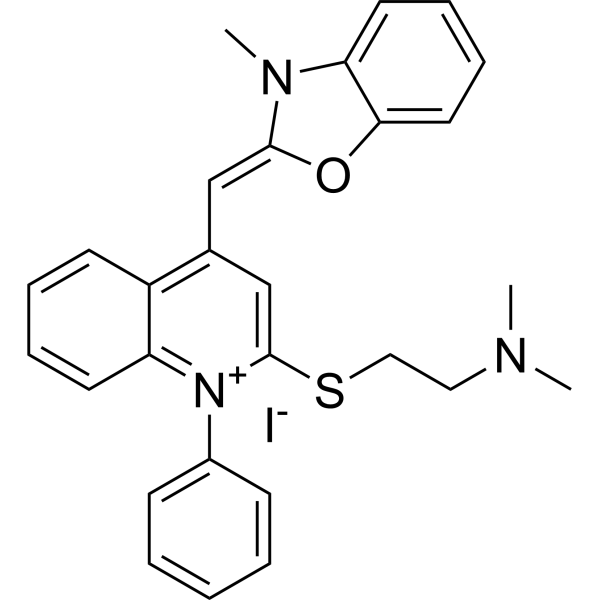
    SYBR Green II is a fluorescent nucleic acid dye that mainly binds single-stranded nucleotides. SYBR Green II is sensitive to oligonucleotides or larger nucleic acid polymers in a variety of cells and gels. SYBR Green II can be used to study cell structure, membrane integrity or function, and cell cycle distribution. Wavelength 484/515 nm .
    SYBR Green II
  • HY-W422419

    Cetostearyl alcohol

    Biochemical Assay Reagents Others
    Cetearyl alcohol can be used as an excipient. Pharmaceutical excipients, or pharmaceutical auxiliaries, refer to other chemical substances used in the pharmaceutical process other than pharmaceutical ingredients. Pharmaceutical excipients generally refer to inactive ingredients in pharmaceutical preparations, which can improve the stability, solubility and processability of pharmaceutical preparations. Pharmaceutical excipients also affect the absorption, distribution, metabolism, and elimination (ADME) processes of co-administered drugs .
    Cetearyl alcohol
  • HY-112624F1

    Fluorescent Dye Others
    CY5-Dextran (MW 4000) is a fluorescent dye CY5 (HY-D0821)-labeled Dextran (HY-112624). Dextran-CY5 (MW 4000) can be used to visualize the specific subcellular distribution of dextran at the nanoscale .
    CY5-Dextran (MW 4000)
  • HY-154696

    Biochemical Assay Reagents Others
    Ferric oxide, yellow can be used as an excipient, such as colorant. Pharmaceutical excipients, or pharmaceutical auxiliaries, refer to other chemical substances used in the pharmaceutical process other than pharmaceutical ingredients. Pharmaceutical excipients generally refer to inactive ingredients in pharmaceutical preparations, which can improve the stability, solubility and processability of pharmaceutical preparations. Pharmaceutical excipients also affect the absorption, distribution, metabolism, and elimination (ADME) processes of co-administered drugs .
    Ferric oxide, yellow
  • HY-Y0708

    Calcium phosphate dihydrate

    Biochemical Assay Reagents Others
    Calcium hydrogen phosphate dihydrate (Calcium phosphate dihydrate) can be found quite frequently in urinary calculi stones. Calcium hydrogen phosphate dihydrate can be used as an excipient, such as diluent, adsorbent. Pharmaceutical excipients, or pharmaceutical auxiliaries, refer to other chemical substances used in the pharmaceutical process other than pharmaceutical ingredients. Pharmaceutical excipients generally refer to inactive ingredients in pharmaceutical preparations, which can improve the stability, solubility and processability of pharmaceutical preparations. Pharmaceutical excipients also affect the absorption, distribution, metabolism, and elimination (ADME) processes of co-administered drugs .
    Calcium hydrogen phosphate dihydrate
  • HY-D1903
    Fura Red AM
    1 Publications Verification

    Fluorescent Dye Others
    Fura Red AM is a fluorescent probe that can be used to visualize Ca 2+ distribution in the cytoplasm of undifferentiated cells. Fura Red AM operates at an excitation wavelength of 488 nm .
    Fura Red AM
  • HY-154696A

    Biochemical Assay Reagents Others
    Ferric oxide, red can be used as an excipient, such as colorant. Pharmaceutical excipients, or pharmaceutical auxiliaries, refer to other chemical substances used in the pharmaceutical process other than pharmaceutical ingredients. Pharmaceutical excipients generally refer to inactive ingredients in pharmaceutical preparations, which can improve the stability, solubility and processability of pharmaceutical preparations. Pharmaceutical excipients also affect the absorption, distribution, metabolism, and elimination (ADME) processes of co-administered drugs .
    Ferric oxide, red
  • HY-154630

    Biochemical Assay Reagents Others
    Polyoxypropylene stearyl ether can be used as an excipient, such as surfactant, softener, lubricating, wetting, plasticizing, solubilizing and dispersing properties. Pharmaceutical excipients, or pharmaceutical auxiliaries, refer to other chemical substances used in the pharmaceutical process other than pharmaceutical ingredients. Pharmaceutical excipients generally refer to inactive ingredients in pharmaceutical preparations, which can improve the stability, solubility and processability of pharmaceutical preparations. Pharmaceutical excipients also affect the absorption, distribution, metabolism, and elimination (ADME) processes of co-administered drugs .
    Polyoxypropylene stearyl ether
  • HY-W115716

    Span 85

    Environmental Pollutants Biochemical Assay Reagents Others
    Sorbitan trioleate is an orally active nonionic surfactant with low toxicity (LD≥200 mg/kg). Sorbitan trioleate can be used as an excipient, such as surfactant, emulsifier, lubricant, wetting agent, dispersant, thickener, defoamer. Pharmaceutical excipients, or pharmaceutical auxiliaries, refer to other chemical substances used in the pharmaceutical process other than pharmaceutical ingredients. Pharmaceutical excipients generally refer to inactive ingredients in pharmaceutical preparations, which can improve the stability, solubility and processability of pharmaceutical preparations. Pharmaceutical excipients also affect the absorption, distribution, metabolism, and elimination (ADME) processes of co-administered drugs .
    Sorbitan trioleate
  • HY-134098

    Adipic acid diisopropyl ester

    Environmental Pollutants TRP Channel Others
    Diisopropyl adipate is an alternative plasticizer and a TRPA1 activator. Diisopropyl adipate activates TRPA1 and enhances FITC-induced contact hypersensitivity (CHS).Diisopropyl adipate also serves as an ingredient in cosmetics and drug formulations topically applied to the skin. Diisopropyl adipate can be used as an excipient, such as emollients, plasticizers. Pharmaceutical excipients, or pharmaceutical auxiliaries, refer to other chemical substances used in the pharmaceutical process other than pharmaceutical ingredients. Pharmaceutical excipients generally refer to inactive ingredients in pharmaceutical preparations, which can improve the stability, solubility and processability of pharmaceutical preparations. Pharmaceutical excipients also affect the absorption, distribution, metabolism, and elimination (ADME) processes of co-administered drugs .
    Diisopropyl adipate
  • HY-P1242
    NEP(1-40)
    2 Publications Verification

    Transmembrane Glycoprotein Inflammation/Immunology
    NEP(1-40) is a Nogo-66 receptor (NgR) antagonist peptide, reversing the injury-induced shift in distribution of microglia morphologies by limiting myelin-based inhibition .
    NEP(1-40)
  • HY-D2465

    Fluorescent Dye Others
    CY5-Dextran is a fluorescent dye CY5 (HY-D0821)- labeled Dextran (HY-112624). CY5 exhibits a maximal excitation wavelength of 633 nm, and a maximal emission wavelength of 670 nm. Dextran-CY5 can be used to visualize the specific subcellular distribution of dextran at the nanoscale .
    CY5-Dextran (MW60-80k)
  • HY-10545A

    HBV HCV Infection
    Taribavirin hydrochloride is an orally active inosine monophosphate dehydrogenase inhibitor, has activity against a wide range of viruses, especially the hepatitis C virus and influenza virus. Taribavirin hydrochloride is a Ribavirin proagent, is designed to concentrate within the liver to target HCV-infected hepatocytes while minimizing distribution within red blood cells (RBCs) and the development of hemolytic anemia .
    Taribavirin hydrochloride
  • HY-W013482

    Benzyl Paraben

    Biochemical Assay Reagents Others
    Benzyl 4-hydroxybenzoate is a prominent material. Benzyl 4-hydroxybenzoate can be used as an excipient, such as bacteriostatic agent, preservative. Pharmaceutical excipients, or pharmaceutical auxiliaries, refer to other chemical substances used in the pharmaceutical process other than pharmaceutical ingredients. Pharmaceutical excipients generally refer to inactive ingredients in pharmaceutical preparations, which can improve the stability, solubility and processability of pharmaceutical preparations. Pharmaceutical excipients also affect the absorption, distribution, metabolism, and elimination (ADME) processes of co-administered drugs .
    Benzyl 4-hydroxybenzoate
  • HY-154739A

    Biochemical Assay Reagents Others
    Amorphous silica can be used as an excipient, such as viscosifier, suspending agent, tablet disintegrating agent, adsorbent dispersing agent as liquid in powders. Pharmaceutical excipients, or pharmaceutical auxiliaries, refer to other chemical substances used in the pharmaceutical process other than pharmaceutical ingredients. Pharmaceutical excipients generally refer to inactive ingredients in pharmaceutical preparations, which can improve the stability, solubility and processability of pharmaceutical preparations. Pharmaceutical excipients also affect the absorption, distribution, metabolism, and elimination (ADME) processes of co-administered drugs .
    Amorphous silica
  • HY-N10616
    Pseudobaptigenin
    1 Publications Verification

    Others Metabolic Disease
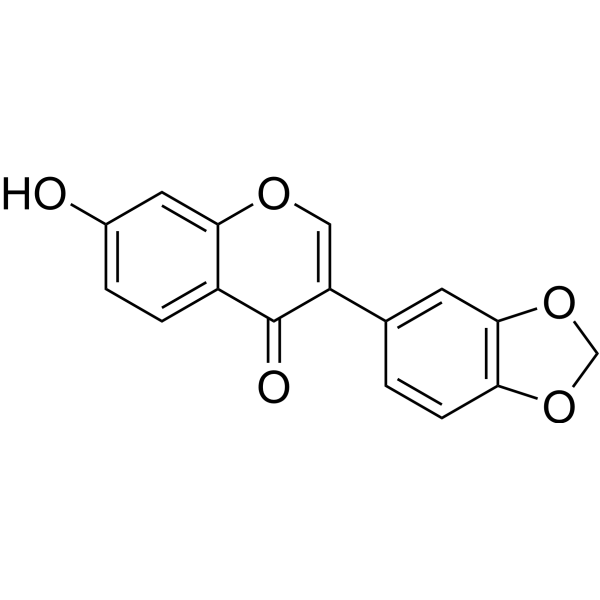
    Pseudobaptigenin is a flavonoid. Pseudobaptigenin shows very good anticataract activity. Pseudobaptigenin has good binding affinity for the inhibition of glycation against γ-crystallin protein. Pseudobaptigenin also has good ADMET (Absorption, Distribution, Metabolism, Excretion and Toxicity) property .
    Pseudobaptigenin
  • HY-D2849

    Fluorescent Dye Others
    Heparin-Cy5 is a fluorescent dye composed of CY5 (HY-D0821) and heparin. Heparin-CY5 is used to study the localization and distribution of heparin in vivo and its interaction with other biomolecules (Ex/Em = 633/670 nm).
    Heparin-Cy5
  • HY-50879R

    GF120918 (Standard); GW0918 (Standard); GG918 (Standard); GW120918 (Standard)

    P-glycoprotein BCRP Reference Standards Cancer
    Elacridar (Standard) is the analytical standard of Elacridar. This product is intended for research and analytical applications. Elacridar is an orally active P-glycoprotein (Pgp) and breast cancer resistance protein (BCRP) inhibitor. Elacridar can be used to examine the influence of efflux transporters on agent distribution to brain and the research of cancer .
    Elacridar (Standard)
  • HY-D1098A

    Fluorescent Dye Others
    SYBR Green II (Ionic form) is a fluorescent nucleic acid dye that mainly binds single-stranded nucleotides. SYBR Green II is sensitive to oligonucleotides or larger nucleic acid polymers in a variety of cells and gels. SYBR Green II can be used to study cell structure, membrane integrity or function, and cell cycle distribution. Wavelength 484/515 nm .
    SYBR Green II (Ionic form)
  • HY-W020027

    2-Methylacrylamide

    Environmental Pollutants Biochemical Assay Reagents Others
    Methacrylamide can be used as an excipient. Pharmaceutical excipients, or pharmaceutical auxiliaries, refer to other chemical substances used in the pharmaceutical process other than pharmaceutical ingredients. Pharmaceutical excipients generally refer to inactive ingredients in pharmaceutical preparations, which can improve the stability, solubility and processability of pharmaceutical preparations. Pharmaceutical excipients also affect the absorption, distribution, metabolism, and elimination (ADME) processes of co-administered drugs .
    Methacrylamide
  • HY-154636A

    Biochemical Assay Reagents Others
    Light Liquid Paraffin can be used as an excipient, such as excipient, lubricant. Pharmaceutical excipients, or pharmaceutical auxiliaries, refer to other chemical substances used in the pharmaceutical process other than pharmaceutical ingredients. Pharmaceutical excipients generally refer to inactive ingredients in pharmaceutical preparations, which can improve the stability, solubility and processability of pharmaceutical preparations. Pharmaceutical excipients also affect the absorption, distribution, metabolism, and elimination (ADME) processes of co-administered drugs .
    Light Liquid Paraffin
  • HY-W016187

    2-Naphthylacetic acid

    Biochemical Assay Reagents Metabolic Disease
    2-(Naphthalen-2-yl)acetic acid (2-Naphthylacetic acid) is a plant growth regulator that can improve the quality and yield of crops such as bean sprouts. In addition, 2-(Naphthalen-2-yl)acetic acid can be used as a probe to study the distribution of amino acid conjugation mechanisms in different species .
    2-(Naphthalen-2-yl)acetic acid
  • HY-101530A

    PEG 8 stearate

    Biochemical Assay Reagents Others
    Polyoxyl 8 stearate can be used as an excipient. Pharmaceutical excipients, or pharmaceutical auxiliaries, refer to other chemical substances used in the pharmaceutical process other than pharmaceutical ingredients. Pharmaceutical excipients generally refer to inactive ingredients in pharmaceutical preparations, which can improve the stability, solubility and processability of pharmaceutical preparations. Pharmaceutical excipients also affect the absorption, distribution, metabolism, and elimination (ADME) processes of co-administered drugs .
    Polyoxyl 8 stearate
  • HY-W127624A

    Biochemical Assay Reagents Others
    PEG 18 cetostearyl ether can be used as an excipient. Pharmaceutical excipients, or pharmaceutical auxiliaries, refer to other chemical substances used in the pharmaceutical process other than pharmaceutical ingredients. Pharmaceutical excipients generally refer to inactive ingredients in pharmaceutical preparations, which can improve the stability, solubility and processability of pharmaceutical preparations. Pharmaceutical excipients also affect the absorption, distribution, metabolism, and elimination (ADME) processes of co-administered drugs .
    PEG 18 cetostearyl ether
  • HY-154634

    Biochemical Assay Reagents Others
    Cyclomethicone can be used as an excipient, such as emollients, humectants, thickeners. Pharmaceutical excipients, or pharmaceutical auxiliaries, refer to other chemical substances used in the pharmaceutical process other than pharmaceutical ingredients. Pharmaceutical excipients generally refer to inactive ingredients in pharmaceutical preparations, which can improve the stability, solubility and processability of pharmaceutical preparations. Pharmaceutical excipients also affect the absorption, distribution, metabolism, and elimination (ADME) processes of co-administered drugs .
    Cyclomethicone
  • HY-154635

    Biochemical Assay Reagents Others
    Oxidized paraffin (calcium) can be used as an excipient, such as ointment base, hardening agent. Pharmaceutical excipients, or pharmaceutical auxiliaries, refer to other chemical substances used in the pharmaceutical process other than pharmaceutical ingredients. Pharmaceutical excipients generally refer to inactive ingredients in pharmaceutical preparations, which can improve the stability, solubility and processability of pharmaceutical preparations. Pharmaceutical excipients also affect the absorption, distribution, metabolism, and elimination (ADME) processes of co-administered drugs .
    Oxidized paraffin calcium
  • HY-154739

    Biochemical Assay Reagents Others
    Cristobalite can be used as an excipient, such as disintegrants, anti-adhesives, glidants, suspending agents, thickeners, defoamers. Pharmaceutical excipients, or pharmaceutical auxiliaries, refer to other chemical substances used in the pharmaceutical process other than pharmaceutical ingredients. Pharmaceutical excipients generally refer to inactive ingredients in pharmaceutical preparations, which can improve the stability, solubility and processability of pharmaceutical preparations. Pharmaceutical excipients also affect the absorption, distribution, metabolism, and elimination (ADME) processes of co-administered drugs .
    Cristobalite
  • HY-Y1316R

    Biochemical Assay Reagents Reference Standards Others
    Sodium benzoate (Standard) is the analytical standard of Sodium benzoate. This product is intended for research and analytical applications. Sodium benzoate can be used as an excipient, such as antimicrobial agent, preservative, lubricant. Pharmaceutical excipients, or pharmaceutical auxiliaries, refer to other chemical substances used in the pharmaceutical process other than pharmaceutical ingredients. Pharmaceutical excipients generally refer to inactive ingredients in pharmaceutical preparations, which can improve the stability, solubility and processability of pharmaceutical preparations. Pharmaceutical excipients also affect the absorption, distribution, metabolism, and elimination (ADME) processes of co-administered drugs .
    Sodium benzoate (Standard)
  • HY-W115818

    Environmental Pollutants Biochemical Assay Reagents Others
    Polyoxyethylene Sorbitan Monostearate is an ester of the saturated fatty acid stearic acid (C18:0). Polyoxyethylene Sorbitan Monostearate can be used as an excipient, such as surfactant, emulsifier, solubilizer, wetting agent. Pharmaceutical excipients, or pharmaceutical auxiliaries, refer to other chemical substances used in the pharmaceutical process other than pharmaceutical ingredients. Pharmaceutical excipients generally refer to inactive ingredients in pharmaceutical preparations, which can improve the stability, solubility and processability of pharmaceutical preparations. Pharmaceutical excipients also affect the absorption, distribution, metabolism, and elimination (ADME) processes of co-administered drugs .
    Polyoxyethylene Sorbitan Monostearate
  • HY-Y1054R

    Stearic Acid Magnesium(II) Salt (Standard)

    Biochemical Assay Reagents Reference Standards Others
    Magnesium stearate (Standard) is the analytical standard of Magnesium stearate. This product is intended for research and analytical applications. Magnesium stearate is a commonly used pharmaceutical lubricant. But Magnesium stearate leads to an adverse effect on bonding between particles. Magnesium stearate can be used as an excipient, such as lubricant. Pharmaceutical excipients, or pharmaceutical auxiliaries, refer to other chemical substances used in the pharmaceutical process other than pharmaceutical ingredients. Pharmaceutical excipients generally refer to inactive ingredients in pharmaceutical preparations, which can improve the stability, solubility and processability of pharmaceutical preparations. Pharmaceutical excipients also affect the absorption, distribution, metabolism, and elimination (ADME) processes of co-administered drugs .
    Magnesium stearate (Standard)
  • HY-D1083

    Fluorescent Dye Others
    7-Methoxycoumarin-3-carboxylic acid, SE can be used for the synthesis of hydrophilic dye compound 12. Compound 12 shows a homogeneous distribution inside the cell and represents a suitable probe for viscosity measurements in the cytoplasm .
    7-Methoxycoumarin-3-carboxylic acid, SE
  • HY-103329

    MM22; Biotinylated N-arachidonoylethanolamine

    Cannabinoid Receptor Others
    b-AEA (MM22) is a biotinylated endocannabinoid analog with probe activity. b-AEA is able to accumulate intracellularly in a similar manner to the parent compound AEA. b-AEA does not interact with other components of the endocannabinoid system and therefore does not interfere with their function. b-AEA can be used to visualize the accumulation and intracellular distribution of endocannabinoids .
    b-AEA
  • HY-10545

    HBV HCV Infection
    Taribavirin is an orally active inosine monophosphate dehydrogenase inhibitor, has activity against a wide range of viruses, especially the hepatitis C virus and influenza virus. Taribavirin, is a ribavirin proagent, is designed to concentrate within the liver to target HCV-infected hepatocytes while minimizing distribution within red blood cells (RBCs) and the development of hemolytic anemia .
    Taribavirin
  • HY-157695

    C18(Plasm)-22:6-PC; PC(P-18:0/22:6); 18:0p/22:6-PC

    Endogenous Metabolite Others
    1-(1Z-Octadecenyl)-2-docosahexaenoyl-sn-glycero-3-phosphocholine (C18(Plasm)-22:6-PC) is a phospholipid identified in fish viscera by lipidomics strategy. It has different content and distribution in different fish species and can be used as an indicator of fish species differentiation.
    1-(1Z-Octadecenyl)-2-docosahexaenoyl-sn-glycero-3-phosphocholine
  • HY-165116

    18:0p/22:6-PE; C18(Plasm)-22:6-PE; PE(P-18:0/22:6)

    Endogenous Metabolite Others
    1-1(Z)-Octadecenyl-2-docosahexaenoyl-sn-glycero-3-PE (18:0p/22:6-PE) is a lipid identified in rat brain tissue by mass spectrometry imaging with specific structural and distribution characteristics, and isomers of different fatty acid chains can be identified by improved methods.
    1-1(Z)-Octadecenyl-2-docosahexaenoyl-sn-glycero-3-PE
  • HY-B2150

    4-Hydroxyphenazone; NSC 174055

    Drug Metabolite Others
    4-Hydroxyantipyrine (4-Hydroxyphenazone; NSC 174055) is the major metabolite of Antipyrine (HY-B0171), can be as a biodistribution promoter. 4-Hydroxyantipyrine can increase distribution of concentration ratio of Citicoline and Antipyrine in the brain .
    4-Hydroxyantipyrine
  • HY-W127624C

    Biochemical Assay Reagents Others
    PEG 20 cetostearyl ether can be used as an excipient. Pharmaceutical excipients, or pharmaceutical auxiliaries, refer to other chemical substances used in the pharmaceutical process other than pharmaceutical ingredients. Pharmaceutical excipients generally refer to inactive ingredients in pharmaceutical preparations, which can improve the stability, solubility and processability of pharmaceutical preparations. Pharmaceutical excipients also affect the absorption, distribution, metabolism, and elimination (ADME) processes of co-administered drugs .
    PEG 20 cetostearyl ether

Inquiry Online

Your information is safe with us. * Required Fields.

Salutation


Country or Region *

Applicant Name *


Organization Name *

Department *


Email Address *


Product Name *

Cat. No.


Requested quantity *

Phone Number *


Remarks

Inquiry Online

Inquiry Information

Product Name:
Cat. No.:
Quantity:
MCE Japan Authorized Agent:

