12 Results for "

ERK1/ERK2 phosphorylation

" in MedChemExpress (MCE) Product Catalog:
Products (12)

12 Results for "ERK1/ERK2 phosphorylation" in MCE Product Catalog:

3
3 Cited Publications
Cat. No.: HY-108330
CAS No.: 118409-62-4
Purity:  ≥98.0%
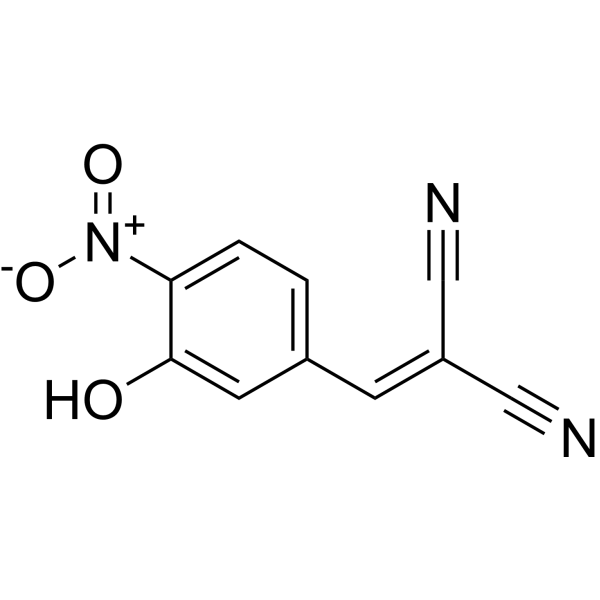
Synonyms: Tyrphostin AG126
Target:  

ERK Mitosis

Research Areas:  

Inflammation/Immunology

AG126 is a tyrosine kinase inhibitor, can inhibit the phosphorylation of ERK1 and ERK2 at 25-50 μM. AG126 can be used in meiosis, mitosis, and postmitotic research .
loading...
    loading...
1
1 Cited Publications
Cat. No.: HY-P1342
CAS No.: 196391-82-9
Research Areas:  

Neurological Disease

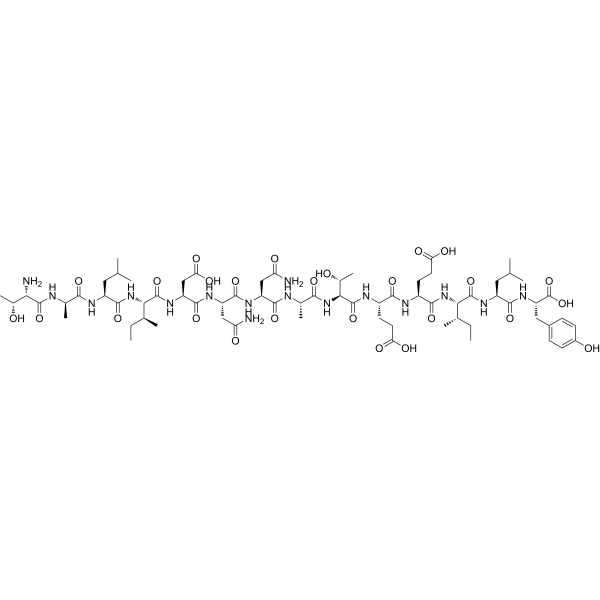
Prosaptide Tx14(A), a prosaposin-derived peptide, is a potent GPR37L1 and GPR37 agonist with EC50s of 5 and 7 nM, respectively. Prosaptide Tx14(A) increases both ERK1 and ERK2 phosphorylation in Schwann cells .
loading...
    loading...
1
1 Cited Publications
Cat. No.: HY-14604
CAS No.: 90494-79-4
Purity:  98.57%
Synonyms: SR57746A; SR57746 hydrochloride
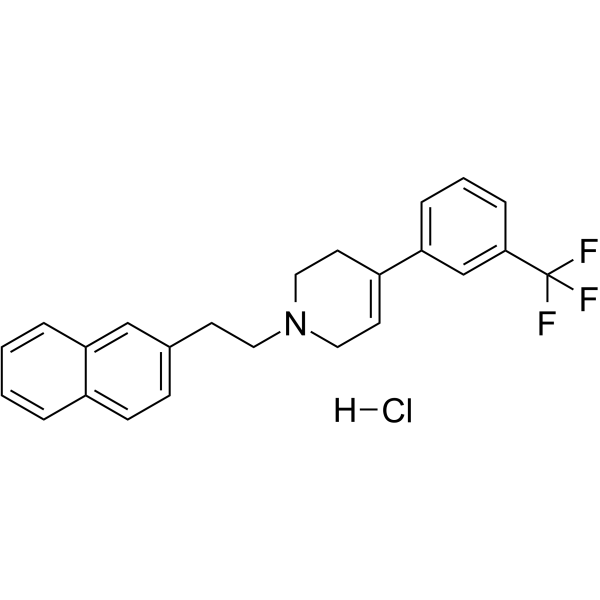
Xaliproden (SR57746) hydrochloride (SR57746A) is an orally active, highly selective 5-HT1A receptor agonist. Xaliproden hydrochloride activates pertussis toxin-sensitive G protein-coupled signaling cascades, as well as the PKC, ERK1/ERK2, Akt and p21 Ras/MEK-1 pathways. Xaliproden hydrochloride also downregulates the JNK/p66/c-Jun signaling pathway, induces phosphorylation of the shc adaptor protein, regulates extracellular dopamine and 5-HT levels, and induces [ 35S]GTPγS labeling in rat brain structures rich in 5-HT1A receptors. Xaliproden hydrochloride exerts neurotrophic, neuroprotective, renoprotective, anti-inflammatory, anti-apoptotic, anti-fibrotic and analgesic effects. Xaliproden hydrochloride also enhances NGF-induced neurite outgrowth, promotes motor neuron survival, attenuates renal tubular injury and inhibits chemotherapy-induced mechanical allodynia, without activating or altering NGF-induced TrkA receptor activation. Xaliproden hydrochloride can be used in the research of motor neuron disease, diabetic nephropathy, chemotherapy-induced peripheral neuropathy, amyotrophic lateral sclerosis, Alzheimer's disease, acute tonic nociceptive pain, inflammatory pain, depression and anxiety .
loading...
    loading...
1
1 Cited Publications
Cat. No.: HY-107579
CAS No.: 72420-38-3
Purity:  99.25%
Synonyms: AY 25712
Target:  

GPR109A ERK

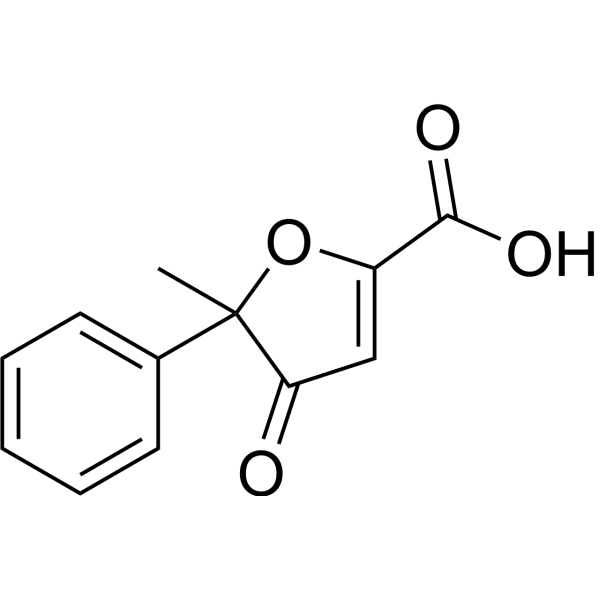
Acifran (AY 25712) is an orally active, full GPR109A and GPR109B agonist and hypolipidemic agent. Acifran reduces Forskolin (HY-15371)-induced cAMP elevation, triggers ERK1/ERK2 phosphorylation, and inhibits lipolysis in adipose tissue through Gi-coupled GPCR activation. Acifran is used for research on atherosclerosis, hyperlipidemia, and type 2 diabetes .
loading...
    loading...
1
1 Cited Publications
Cat. No.: HY-P1342A
Target:  

ERK

Research Areas:  

Neurological Disease

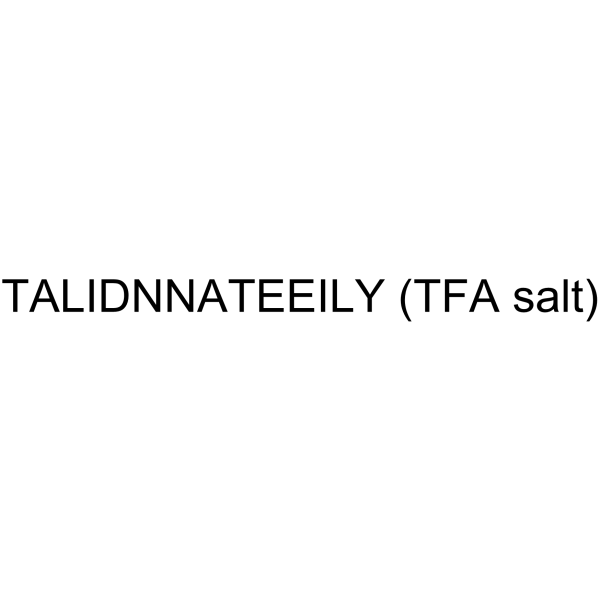
Prosaptide Tx14(A) TFA, a prosaposin-derived peptide, is a potent GPR37L1 and GPR37 agonist with EC50s of 5 and 7 nM, respectively. Prosaptide Tx14(A) TFA increases both ERK1 and ERK2 phosphorylation in Schwann cells .
loading...
    loading...
Cat. No.: HY-150700
CAS No.: 2784577-71-3
Purity:  99.79%
Target:  

ERK

Research Areas:  

Metabolic Disease

RLX-33 is a potent, selective and blood-brain barrier (BBB) penetrant relaxin family peptide 3 (RXFP3) antagonist, also blocks relaxin-3-induced ERK1/2 phosphorylation, with IC50 values of 2.36 μM for RXFP3, 7.82 and 13.86 μM for ERK1 and ERK2 phosphorylation, respectively. RLX-33 can block the stimulation of food intake induced by the RXFP3-selective agonist R3/I5 in rats. RLX-33 can be used for the research of metabolic syndrome .
loading...
    loading...
Cat. No.: HY-162460
CAS No.: 3056077-07-4
Target:  

ERK

Research Areas:  

Cancer

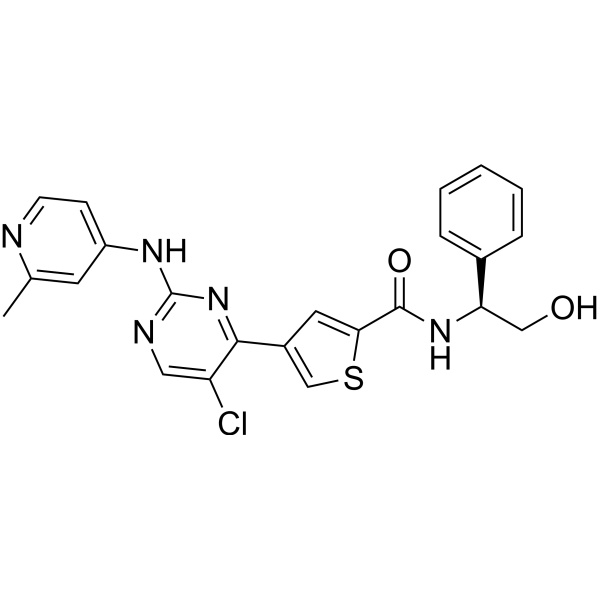
ERK1/2 inhibitor 10 (Compound 36c) is a potent ERK1 and ERK2 inhibitor (IC50: 0.11 and 0.08 nM respectively). ERK1/2 inhibitor 10 inhibits ERK1/2 and blocks the phosphorylation expression of their downstream substrates p90RSK and c-Myc. ERK1/2 inhibitor 10 induces cell apoptosis and incomplete autophagy-related cell death. ERK1/2 inhibitor 10 shows potent antitumor efficacy against triple-negative breast cancer and colorectal cancer models harboring BRAF and RAS mutations .
loading...
    loading...
Cat. No.: HY-108330R
CAS No.: 118409-62-4
Synonyms: Tyrphostin AG126 (Standard)
Research Areas:  

Inflammation/Immunology

AG126 (Standard) is the analytical standard of AG126. This product is intended for research and analytical applications. AG126 is a tyrosine kinase inhibitor, can inhibit the phosphorylation of ERK1 and ERK2 at 25-50 μM. AG126 can be used in meiosis, mitosis, and postmitotic research .
loading...
    loading...
Cat. No.: HY-107579R
CAS No.: 72420-38-3
Synonyms: AY 25712 (Standard)
Acifran (Standard) (AY 25712 (Standard)) is the analytical standard of Acifran (HY-107579). This product is intended for research and analytical applications. Acifran (AY 25712) is an orally active, full GPR109A and GPR109B agonist and hypolipidemic agent. Acifran reduces Forskolin (HY-15371)-induced cAMP elevation, triggers ERK1/ERK2 phosphorylation, and inhibits lipolysis in adipose tissue through Gi-coupled GPCR activation. Acifran is used for research on atherosclerosis, hyperlipidemia, and type 2 diabetes .
loading...
    loading...
Cat. No.: HY-119820
CAS No.: 135354-02-8
Synonyms: SR57746A free base
Xaliproden (SR57746) free base is an orally active, highly selective 5-HT1A receptor agonist. Xaliproden free base activates pertussis toxin-sensitive G protein-coupled signaling cascades, as well as the PKC, ERK1/ERK2, Akt and p21 Ras/MEK-1 pathways. Xaliproden free base also downregulates the JNK/p66/c-Jun signaling pathway, induces phosphorylation of the shc adaptor protein, regulates extracellular dopamine and 5-HT levels, and induces [ 35S]GTPγS labeling in rat brain structures rich in 5-HT1A receptors. Xaliproden free base exerts neurotrophic, neuroprotective, renoprotective, anti-inflammatory, anti-apoptotic, anti-fibrotic and analgesic effects. Xaliproden free base also enhances NGF-induced neurite outgrowth, promotes motor neuron survival, attenuates renal tubular injury and inhibits chemotherapy-induced mechanical allodynia, without activating or altering NGF-induced TrkA receptor activation. Xaliproden free base can be used in the research of motor neuron disease, diabetic nephropathy, chemotherapy-induced peripheral neuropathy, amyotrophic lateral sclerosis, Alzheimer's disease, acute tonic nociceptive pain, inflammatory pain, depression and anxiety .
loading...
    loading...
Cat. No.: HY-184501
CAS No.: 486440-74-8
Research Areas:  

Cancer

UE01 is an orally active, selective small-molecule modulator targeting both ULK1/ERK1/2. UE01 activates hULK1 with an EC50 of 695.30 nM and a KD of 114.3 nM for ULK1; it inhibits hERK1 with an IC50 of 179.90 nM and a KD of 114 nM for ERK1; it shows weak binding to ERK2 with a KD of 2.8 mM. UE01 induces the conformational transition of ULK1 from an inactive to an active state, enhances the phosphorylation of ULK1 Ser317 and mAtg13 Ser355, and reduces the phosphorylation of ULK1 Ser757. UE01 competitively occupies the ATP-binding pocket of ERK1, inhibits ERK1 kinase activity, and reduces the activity of the ERK1/2 signaling pathway. UE01 induces complete autophagy flux and apoptosis, upregulates Atg5, Atg7, LC3-II/LC3-I, Bax, cytochrome C (Cyt c), Cleaved-Caspase 3, Cleaved-PARP1 and E-cadherin, downregulates p62, Bcl-2, MMP-2 and MMP-9, reduces the phosphorylation of Exo70 Ser250, and promotes the proteasome-dependent degradation of Cav-1, thereby inhibiting EMT-related phenotypes and extracellular matrix degradation. UE01 can be used in studies related to triple-negative breast cancer .
loading...
    loading...
Cat. No.: HY-14604R
CAS No.: 90494-79-4
Synonyms: SR57746A (Standard); SR57746 hydrochloride (Standard)
Xaliproden (hydrochloride) (Standard) is the analytical standard of Xaliproden (hydrochloride). This product is intended for research and analytical applications. Xaliproden (SR57746) hydrochloride (SR57746A) is an orally active, highly selective 5-HT1A receptor agonist. Xaliproden hydrochloride activates pertussis toxin-sensitive G protein-coupled signaling cascades, as well as the PKC, ERK1/ERK2, Akt and p21 Ras/MEK-1 pathways. Xaliproden hydrochloride also downregulates the JNK/p66/c-Jun signaling pathway, induces phosphorylation of the shc adaptor protein, regulates extracellular dopamine and 5-HT levels, and induces [ 35S]GTPγS labeling in rat brain structures rich in 5-HT1A receptors. Xaliproden hydrochloride exerts neurotrophic, neuroprotective, renoprotective, anti-inflammatory, anti-apoptotic, anti-fibrotic and analgesic effects. Xaliproden hydrochloride also enhances NGF-induced neurite outgrowth, promotes motor neuron survival, attenuates renal tubular injury and inhibits chemotherapy-induced mechanical allodynia, without activating or altering NGF-induced TrkA receptor activation. Xaliproden hydrochloride can be used in the research of motor neuron disease, diabetic nephropathy, chemotherapy-induced peripheral neuropathy, amyotrophic lateral sclerosis, Alzheimer's disease, acute tonic nociceptive pain, inflammatory pain, depression and anxiety .
loading...
    loading...
  • 1

