


Search Result
Results for "
Glycoconjugates
" in MedChemExpress (MCE) Product Catalog:
13
Biochemical Assay Reagents
| Cat. No. |
Product Name |
Target |
Research Areas |
Chemical Structure |
-
- HY-N7033
-
|
Uridine 5'-diphosphoglucuronic acid trisodium salt
|
Drug Intermediate
|
Metabolic Disease
|
|
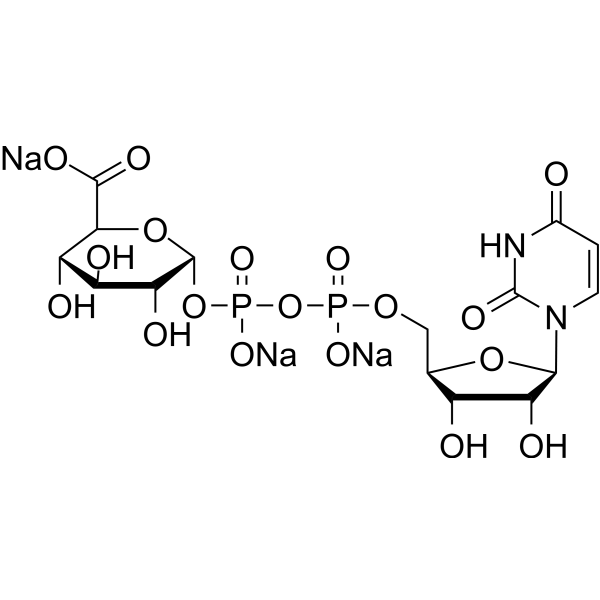
UDP-glucuronic acid trisodium (Uridine-5'-diphosphoglucuronic acid trisodium salt) is a critical precursor for essential glycoconjugates across biological kingdoms, ranging from mammalian glycosaminoglycans and plant cell wall polysaccharides to bacterial capsule glycoglycerolipids.
|
-
-
- HY-B0481
-
|
BAY1099; BAY-m1099
|
Glycosidase
AMPK
Reactive Oxygen Species (ROS)
|
Metabolic Disease
|
|
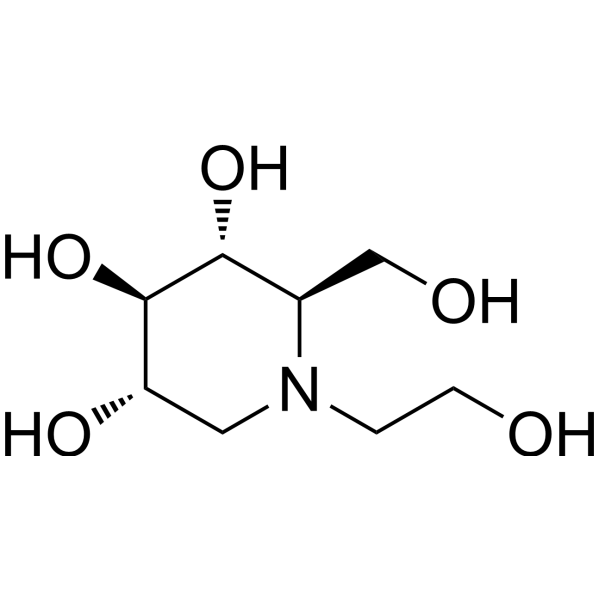
Miglitol (BAY-m1099) is an orally active antidiabetic compound that inhibits the breakdown of glycoconjugates into glucose. Miglitol inhibits glycoside hydrolase enzymes called α-glucosidases. Miglitol inhibits oxidative stress-induced apoptosis and mitochondrial ROS over-production in endothelial cells by enhancement of AMP-activated protein kinase. Dietary supplementation with Miglitol from pre-onset stage in OLETF rats delays the onset and development of diabetes and preserves the insulin secretory function of pancreatic islets .
|
-
-
- HY-E70024
-
|
|
Sialyltransferase
|
Others
|
|
CMP-sialic acid synthetase (NmCSS) is an essential enzyme involved in the biosynthesis of carbohydrates and glycoconjugates containing sialic acids. CMP-sialic acid synthetase (NmCSS) activates free Sia, converting it to CMP-Sia, which is the only donor substrate for all sialyltransferases .
|
-
-
- HY-147168
-
|
|
Biochemical Assay Reagents
|
Others
|
|
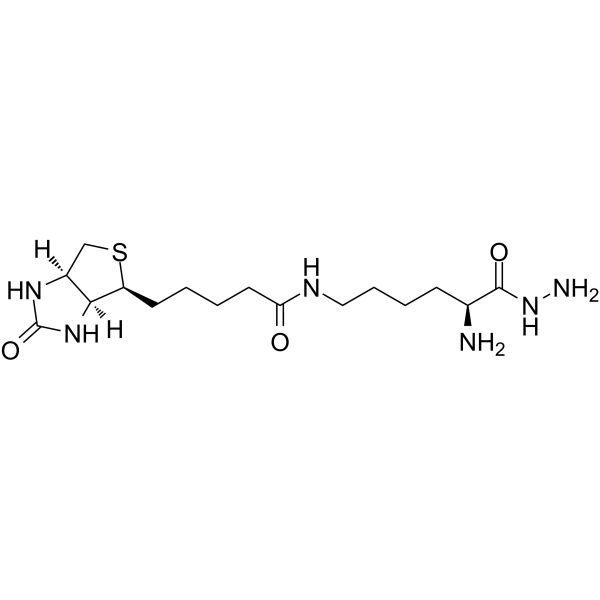
Biocytin hydrazide is a long-chain biotin-containing hydrazide, serving as a biotin-derived active coupling reagent, selective labeling agent and biotinylating reagent. Biocytin hydrazide targets aldehyde, carboxyl, amino and guanidino groups to biotinylate glycoconjugates, K99 lectin, peptides and proteins through its hydrazide moiety, and achieves nonradioactive detection of sialic acid- and galactose-containing glycoconjugates via the avidin–biotin system .
|
-
-
- HY-114354
-
|
BOD FL alkyne
|
Fluorescent Dye
|
Inflammation/Immunology
|
|
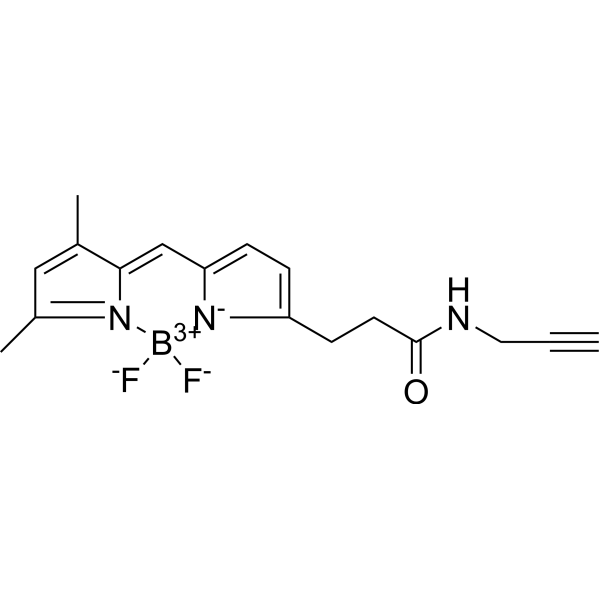
BODIPY (BOD) FL alkyne is an alkyne-containing BODIPY fluorophore derivative. BODIPY FL alkyne is a bioorthogonal labeling reagent with low toxicity and extremely low non-specific reactivity, and it is widely used in fluorescent bioimaging. BODIPY FL alkyne specifically labels azide groups on intracellular glycoconjugates mainly via strain-promoted azide-alkyne cycloaddition (SPAAC), or mediates site-specific conjugation with proteins such as IL-33, and supports positive cross-linking with other probes (e.g., DBCO-SCy5) for dual labeling. With the advantages of high specificity and low background interference, BODIPY FL alkyne can be used in the research of related diseases such as asthma, atopic dermatitis and inflammatory bowel disease .
|
-
-
- HY-P2988B
-
|
|
Bacterial
HIV
|
Infection
|
|
Neuraminidase, arthrobacter ureafaciens is a neuraminidase derived from Arthrobacter ureafaciens. Neuraminidase, arthrobacter ureafaciens catalyzes the removal of sialic acid residues from cell surfaces and viral glycoconjugates. Neuraminidase, arthrobacter ureafaciens enhances HIV-1-mediated syncytium formation and promotes the viral binding and entry steps in the HIV-1 replication cycle .
|
-
-
- HY-P3443
-
|
PNA
|
Biochemical Assay Reagents
|
Cancer
|
|
Peanut agglutinin (PNA) is a carbohydrate-recognition protein that binds competitively and irreversibly to cell-surface β-D-Gal (1-3)-GalNAc, and this binding can be inhibited by D-galactose and asialofetuin. Peanut agglutinin recognizes exposed glycoepitopes and reflects the glycosylation status of cells. Peanut agglutinin can label glycoconjugates at neuromuscular junctions to safely visualize synaptic structures. Peanut agglutinin can be used to synthesize dyes to distinguish between normal and tumor tissues. Peanut agglutinin provides support for research on leukemia, Burkitt's tumors, and cutaneous squamous lesions .
|
-
-
- HY-NP0190
-
|
UEA I (Biotinylated)
|
Fluorescent Dye
|
Others
|
|
Ulex Europaeus Agglutinin I Biotinylated (UEA I Biotinylated) is a biotinylated lectin that binds to α1,2-fucosylated proteins and cell-surface glycoconjugates containing α-L-fucose. Ulex Europaeus Agglutinin I Biotinylated serves as a histochemical marker for endothelial cells .
|
-
-
- HY-134853
-
|
|
Biochemical Assay Reagents
|
Cancer
|
|
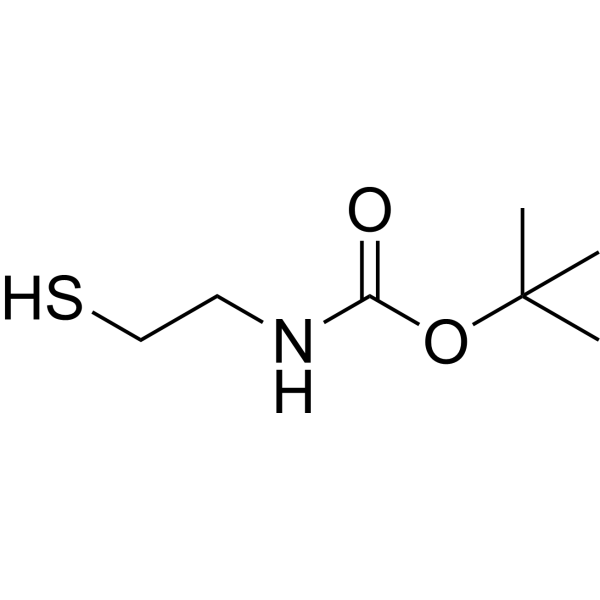
2-(Boc-amino)ethanethiol (compound 35) is a bifunctional cross-linker that can be used in the synthesis of bifunctional azobenzene glycoconjugates .
|
-
-
- HY-W142618
-
|
|
Biochemical Assay Reagents
|
Others
|
|
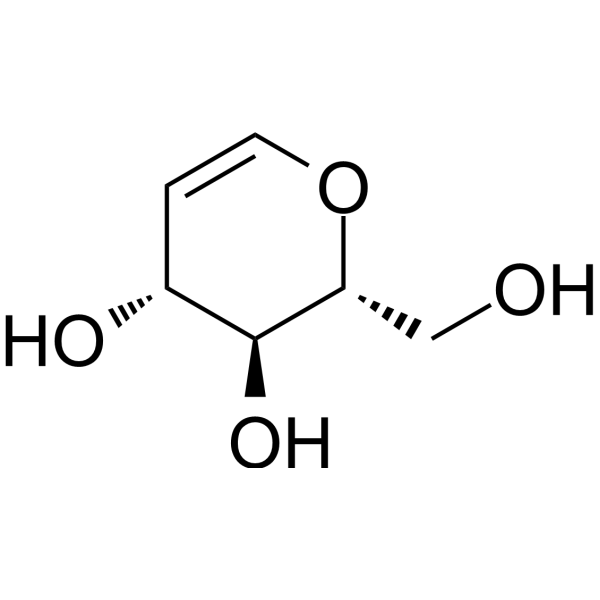
D-Glucal is an organic compound belonging to the family of aldoses, which are monosaccharides containing an aldehyde functional group. It has a six-carbon structure and is derived from glucose by oxidation of the primary alcohol group at carbon 1 to an aldehyde group. D-Glucal is a white crystalline solid that is soluble in water and has a sweet taste. It is an important intermediate in the chemical synthesis of a wide variety of compounds, including pharmaceuticals, agrochemicals, and natural products. D-Glucal can be converted into other carbohydrate derivatives such as glycosides, glycoconjugates and amino sugars. It also plays a role in the study of carbohydrate chemistry, where it is used as a chiral building block for the synthesis of complex structures.
|
-
-
- HY-N7033R
-
|
Uridine 5'-diphosphoglucuronic acid trisodium salt (Standard)
|
Reference Standards
Drug Intermediate
|
Metabolic Disease
|
|
UDP-glucuronic acid (trisodium) (Standard) is the analytical standard of UDP-glucuronic acid (trisodium). This product is intended for research and analytical applications. UDP-?glucuronic acid trisodium (Uridine-5'-diphosphoglucuronic acid trisodium salt) is a critical precursor for essential glycoconjugates across biological kingdoms, ranging from mammalian glycosaminoglycans and plant cell wall polysaccharides to bacterial capsule glycoglycerolipids.
|
-
-
- HY-NP0158
-
|
UEA I (Rhodamine)
|
Fluorescent Dye
|
Others
|
|
Ulex Europaeus Agglutinin I Rhodamine (UEA I Rhodamine) is a fluorescently labeled lectin. Ulex Europaeus Agglutinin I Rhodamine exhibits specificity for cell surface glycoconjugates containing α-L-fucosyl groups. Ulex Europaeus Agglutinin I Rhodamine can be used in combination with other lectins for double staining .
|
-
-
- HY-150177
-
|
|
Drug Intermediate
|
Metabolic Disease
|
|
Mannose 6 phosphate is an essential precursor for mannosyl glycoconjugates, including lipid-linked oligosaccharides (LLO; glucose3mannose9GlcNAc2-P-P-dolichol) used for protein N-glycosylation. Mannose 6 phosphate causes specific LLO cleavage. Mannose 6 phosphate causes specific degradation of G3M9Gn2-P-P-Dol. Complexes containing Mannose 6 phosphate can remodel the dermal collagen network, improve skin biomechanical properties, and reverse visible signs of aging. Mannose 6 phosphate can be used in research related to skin aging .
|
-
-
- HY-158253
-
|
|
Biochemical Assay Reagents
|
Others
|
|
Helix pomatia lectin, biotin conjugate, is a carbohydrate-binding protein that is widely found in fungi, plants, and animals. Helix pomatia lectin, biotin conjugate is commonly used for characterizing, imaging, or targeting glycoconjugates, and is also a very useful tool for glycomics analysis .
|
-
-
- HY-NP0144
-
|
WGA (Fluorescein)
|
Fluorescent Dye
|
Others
|
|
Succinylated Wheat Germ Agglutinin (Fluorescein) (WGA (Fluorescein)) is a fluorescent lectin that acts as a probe to specifically bind biomolecules. Succinylated Wheat Germ Agglutinin (Fluorescein) binds to cell surface glycoconjugates containing N-acetylglucosamine. Succinylated Wheat Germ Agglutinin (Fluorescein) is a selective agglutinating agent targeting specific red blood cells, thymocytes, splenocytes and lymphocytes. Succinylated Wheat Germ Agglutinin (Fluorescein) binds to fibroblasts and lymphocytes via dual binding sites in a temperature-dependent, saturable manner. Succinylated Wheat Germ Agglutinin (Fluorescein) can be used for quantitative studies of cell surface receptor glycoconjugates (Ex=495 nm, Em=515 nm) .
|
-
-
- HY-W039917
-
|
|
Biochemical Assay Reagents
|
Others
|
|
2-Azido-2-deoxy-D-galactose, 98% can be applied in glycobiology, can be glycosylated by glycopeptides, and can be used for the synthesis of glycoconjugates.
|
-
-
- HY-W010751
-
|
2,3,4,6-Tetrakis-O-(phenylmethyl)-D-glucopyranose
|
Drug Intermediate
|
Others
|
|
2,3,4,6-Tetra-O-benzyl-D-glucopyranose is a glucose derivative that serves as an important intermediate in the synthesis of complex glycoconjugates, oligosaccharides, and glycosylated drug molecules .
|
-
-
- HY-145781
-
|
|
Drug Intermediate
|
Metabolic Disease
|
|
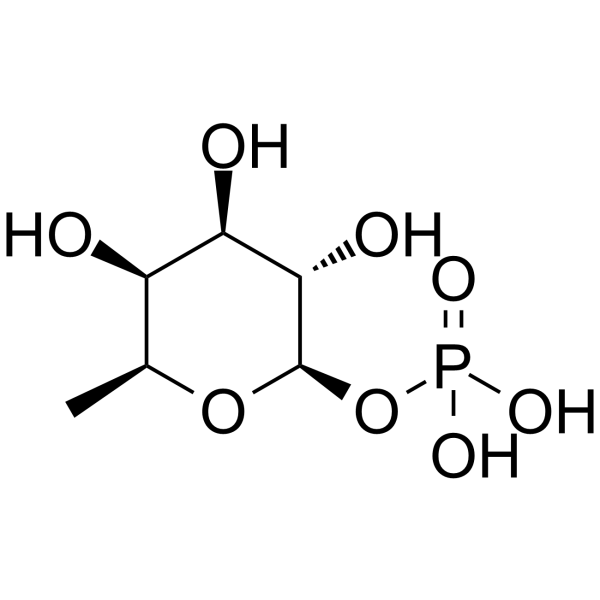
β-L-Fucopyranosyl phosphate can be used for the research of carbohydrate metabolism. Glycosyl phosphates play crucial roles in carbohydrate metabolism as metabolic regulators or ubiquitous intermediates for glycoconjugate biosynthesis .
|
-
-
- HY-143291
-
|
|
Cholinesterase (ChE)
|
Neurological Disease
|
|
AChE-IN-9 is a Tacrine (HY-111338) glycoconjugate tethered with acetylated β-Glucose. AChE-IN-9 is also an AChE inhibitor with an IC50 value of 0.4 μM, with lower hepatotoxicity on healthy cells. Tacrine is used in Alzheimer's research .
|
-
-
- HY-D1598
-
|
|
Fluorescent Dye
|
Others
|
|
Sulfo-CY3 tetrazine potassium is a sulfo-Cyanine3 derivative that contains methyltetrazine moiety (Ex=548 nm, Em=563 nm). Sulfo-CY3 tetrazine potassium can be used for the labeling of metabolically engineered cell-surface glycoconjugates . Sulfo-CY3 tetrazine (potassium) is a click chemistry reagent, it contains a Tetrazine group that can undergo an inverse electron demand Diels-Alder reaction (iEDDA) with molecules containing TCO groups.
|
-
-
- HY-156518
-
|
|
Biochemical Assay Reagents
|
Metabolic Disease
|
|
Glucose-malemide is a glycoconjugate consisting of a glucose molecule and a maleimide group of a linker molecule. Glucose-malemide can be used in the preparation of glucose-responsive insulin delivery compositions, thereby conjugating glucose to insulin .
|
-
-
- HY-E70031
-
|
GDP-MP; GDPMP; GMPase
|
Endogenous Metabolite
|
Others
|
|
GDP-mannose pyrophosphorylase (ManC) (GDP-MP) is a cytoplasmic protein that catalyzes the formation of GDP-mannose. GDP-mannose pyrophosphorylase (ManC) is the precursor for the mannose residues in glycoconjugates, using mannose 1-phosphate and GTP as substrates .
|
-
-
- HY-146094
-
|
|
Topoisomerase
|
Cancer
|
|
Antitumor agent-63 (Compound 40), a 20 (S)-O-linked camptothecin (CPT) glycoconjugate, is an antitumor agent without toxicity towards normal cells. Antitumor agent-63 shows high stability and very weak direct topoisomerase I (Topo I) inhibition .
|
-
-
- HY-175472
-
|
|
Phosphatase
Apoptosis
|
Cancer
|
|
(GalNAc)3-CPT is a glycoconjugate prodrug that targets the asialoglyco-protein receptor (ASGR) overexpressed on hepatocytes. (GalNAc)3-CPT exhibits significant antitumor activity (IC50 value of 3.07 μM in HepG2 cells) by activating the cGAS-STING pathway and promoting CD8+ T cell infiltration into tumors, thereby inducing tumor cell apoptosis .
|
-
-
- HY-W145552
-
|
4-Methoxyphenyl 3-O-allyl-beta-D-galactopyranoside
|
Biochemical Assay Reagents
|
Others
|
|
4-Methoxyphenyl 3-O-Allyl-β-D-galactopyranoside is an organic compound belonging to the family of galactopyranosides. It is often used as a building block for the synthesis of more complex glycosides and glycoconjugates. 4-Methoxyphenyl 3-O-Allyl-β-D-galactopyranoside has various applications in biochemical research, especially in the study of carbohydrate metabolism and protein-carbohydrate interactions. This compound contains an allyl protecting group that can be selectively removed using palladium-catalyzed conditions to reveal hydroxyl functionality for further chemical modification.
|
-
-
- HY-NP186
-
|
|
Biochemical Assay Reagents
|
Cancer
|
|
Helix pomatia Agglutinin is a N-acetylgalactosamine (GalNAc) binding lectin, found in the reproductive gland of a Roman snail. Helix pomatia Agglutinin binds with high affinity (kD = 1.9-2.4 μM) steroid hormones: testosterone and progesterone. Helix pomatia Agglutinin interacts with adenine (kD = 5.4 μM) and arylaminonaphthalene sulfonate TNS (kD = 12 μM). Helix pomatia Agglutinin is commonly used for characterizing, imaging, or targeting glycoconjugates, and is also a very useful tool for glycomics analysis . Helix pomatia Agglutinin can be used for cancer prognosis study .
|
-
-
- HY-W753481
-
|
|
Drug Derivative
|
Others
|
|
Guaiacol rutinoside (compound GuRG) is a guaiacol glycoconjugate (rutinoside form) that can be found in the fruit, leaves, and shoots of Vitis vinifera cv. Monastrell .
|
-
-
- HY-174672
-
|
|
mRNA
|
Cancer
|
|
Human GLB1 mRNA encodes the human Galactosidase beta 1 (GLB1) protein, a member of the glycosyl hydrolase 35 family of proteins. This enzyme catalyzes the hydrolysis of a terminal beta-linked galactose residue from ganglioside substrates and other glycoconjugates.
|
-
-
- HY-180781
-
|
|
ADAMTS
|
Inflammation/Immunology
Cancer
|
|
ADAMTS-5-IN-4 (Compound 4b) is a selective ADAMTS5 inhibitor with an IC₅₀ of 9.4 μM. ADAMTS-5-IN-4 significantly inhibits the degradation of Aggrecan in the implants of the osteoarthritis model. ADAMTS-5-IN-4 effectively inhibits the pseudopod elongation and directional migration of ovarian cancer cells. ADAMTS-5-IN-4 shows significant cytotoxicity to HEK293T cells, human chondrocytes, and porcine chondrocyte implants. ADAMTS-5-IN-4 can be used for the study of osteoarthritis and ovarian cancer .
|
-
-
- HY-164396
-
|
|
Drug Intermediate
LYTACs
|
Cancer
|
|
Allyl-mannose-6-phosphonate (M6Pn; Compound 6) is a stable analogue of mannose-6-phosphate (M6P). Allyl-mannose-6-phosphonate can be used to synthesize M6Pn-peptide conjugates and construct lysosome-targeting chimeras (LYTAC) .
|
-
-
- HY-NP216
-
|
LecB
|
Integrin
Endogenous Metabolite
Bacterial
|
Infection
|
|
PA-IIL (LecB) is a lectin produced by Pseudomonas aeruginosa. PA-IIL binds to glycosylated β1-integrin, fucose-containing glycosphingolipids, fucosylated/mannosylated neutrophil glycoconjugates, and pre-formed neutrophil extracellular traps. PA-IIL disrupts host defenses: it creates favorable conditions for Pseudomonas aeruginosa infection and dissemination by modulating the bactericidal activity of neutrophils, impairing the trafficking and recruitment of immune cells, and compromising the repair capacity of epithelial barriers. PA-IIL can be used in studies related to Pseudomonas aeruginosa infection .
|
-
| Cat. No. |
Product Name |
Type |
-
- HY-114354
-
|
BOD FL alkyne
|
Fluorescent Dye
|
|
BODIPY (BOD) FL alkyne is an alkyne-containing BODIPY fluorophore derivative. BODIPY FL alkyne is a bioorthogonal labeling reagent with low toxicity and extremely low non-specific reactivity, and it is widely used in fluorescent bioimaging. BODIPY FL alkyne specifically labels azide groups on intracellular glycoconjugates mainly via strain-promoted azide-alkyne cycloaddition (SPAAC), or mediates site-specific conjugation with proteins such as IL-33, and supports positive cross-linking with other probes (e.g., DBCO-SCy5) for dual labeling. With the advantages of high specificity and low background interference, BODIPY FL alkyne can be used in the research of related diseases such as asthma, atopic dermatitis and inflammatory bowel disease .
|
-
- HY-D1598
-
|
|
Fluorescent Dye
|
|
Sulfo-CY3 tetrazine potassium is a sulfo-Cyanine3 derivative that contains methyltetrazine moiety (Ex=548 nm, Em=563 nm). Sulfo-CY3 tetrazine potassium can be used for the labeling of metabolically engineered cell-surface glycoconjugates . Sulfo-CY3 tetrazine (potassium) is a click chemistry reagent, it contains a Tetrazine group that can undergo an inverse electron demand Diels-Alder reaction (iEDDA) with molecules containing TCO groups.
|
| Cat. No. |
Product Name |
Type |
-
- HY-P3443
-
|
PNA
|
Biochemical Assay Reagents
|
|
Peanut agglutinin (PNA) is a carbohydrate-recognition protein that binds competitively and irreversibly to cell-surface β-D-Gal (1-3)-GalNAc, and this binding can be inhibited by D-galactose and asialofetuin. Peanut agglutinin recognizes exposed glycoepitopes and reflects the glycosylation status of cells. Peanut agglutinin can label glycoconjugates at neuromuscular junctions to safely visualize synaptic structures. Peanut agglutinin can be used to synthesize dyes to distinguish between normal and tumor tissues. Peanut agglutinin provides support for research on leukemia, Burkitt's tumors, and cutaneous squamous lesions .
|
-
- HY-NP0190
-
|
UEA I (Biotinylated)
|
Biochemical Assay Reagents
|
|
Ulex Europaeus Agglutinin I Biotinylated (UEA I Biotinylated) is a biotinylated lectin that binds to α1,2-fucosylated proteins and cell-surface glycoconjugates containing α-L-fucose. Ulex Europaeus Agglutinin I Biotinylated serves as a histochemical marker for endothelial cells .
|
-
- HY-W142618
-
|
|
Biochemical Assay Reagents
|
|
D-Glucal is an organic compound belonging to the family of aldoses, which are monosaccharides containing an aldehyde functional group. It has a six-carbon structure and is derived from glucose by oxidation of the primary alcohol group at carbon 1 to an aldehyde group. D-Glucal is a white crystalline solid that is soluble in water and has a sweet taste. It is an important intermediate in the chemical synthesis of a wide variety of compounds, including pharmaceuticals, agrochemicals, and natural products. D-Glucal can be converted into other carbohydrate derivatives such as glycosides, glycoconjugates and amino sugars. It also plays a role in the study of carbohydrate chemistry, where it is used as a chiral building block for the synthesis of complex structures.
|
-
- HY-NP0158
-
|
UEA I (Rhodamine)
|
Biochemical Assay Reagents
|
|
Ulex Europaeus Agglutinin I Rhodamine (UEA I Rhodamine) is a fluorescently labeled lectin. Ulex Europaeus Agglutinin I Rhodamine exhibits specificity for cell surface glycoconjugates containing α-L-fucosyl groups. Ulex Europaeus Agglutinin I Rhodamine can be used in combination with other lectins for double staining .
|
-
- HY-158253
-
|
|
Biochemical Assay Reagents
|
|
Helix pomatia lectin, biotin conjugate, is a carbohydrate-binding protein that is widely found in fungi, plants, and animals. Helix pomatia lectin, biotin conjugate is commonly used for characterizing, imaging, or targeting glycoconjugates, and is also a very useful tool for glycomics analysis .
|
-
- HY-NP0144
-
|
WGA (Fluorescein)
|
Biochemical Assay Reagents
|
|
Succinylated Wheat Germ Agglutinin (Fluorescein) (WGA (Fluorescein)) is a fluorescent lectin that acts as a probe to specifically bind biomolecules. Succinylated Wheat Germ Agglutinin (Fluorescein) binds to cell surface glycoconjugates containing N-acetylglucosamine. Succinylated Wheat Germ Agglutinin (Fluorescein) is a selective agglutinating agent targeting specific red blood cells, thymocytes, splenocytes and lymphocytes. Succinylated Wheat Germ Agglutinin (Fluorescein) binds to fibroblasts and lymphocytes via dual binding sites in a temperature-dependent, saturable manner. Succinylated Wheat Germ Agglutinin (Fluorescein) can be used for quantitative studies of cell surface receptor glycoconjugates (Ex=495 nm, Em=515 nm) .
|
-
- HY-W039917
-
|
|
Biochemical Assay Reagents
|
|
2-Azido-2-deoxy-D-galactose, 98% can be applied in glycobiology, can be glycosylated by glycopeptides, and can be used for the synthesis of glycoconjugates.
|
-
- HY-W010751
-
|
2,3,4,6-Tetrakis-O-(phenylmethyl)-D-glucopyranose
|
Biochemical Assay Reagents
|
|
2,3,4,6-Tetra-O-benzyl-D-glucopyranose is a glucose derivative that serves as an important intermediate in the synthesis of complex glycoconjugates, oligosaccharides, and glycosylated drug molecules .
|
-
- HY-E70180
-
|
EC:3.2.1.22; GLA
|
Biochemical Assay Reagents
|
|
alpha-Galactosidase A is a lysosomal exoglycosidase and hydrolyses the terminal α-galactosyl moieties of glycoconjugates .
|
-
- HY-E70151
-
|
ST6GALNAC2
|
Biochemical Assay Reagents
|
|
ST6 Sialyltransferase 2 (EC:2.4.3.3, ST6GALNAC2) add sialic acids to the nonreducing ends of glycoconjugates .
|
-
- HY-W145552
-
|
4-Methoxyphenyl 3-O-allyl-beta-D-galactopyranoside
|
Biochemical Assay Reagents
|
|
4-Methoxyphenyl 3-O-Allyl-β-D-galactopyranoside is an organic compound belonging to the family of galactopyranosides. It is often used as a building block for the synthesis of more complex glycosides and glycoconjugates. 4-Methoxyphenyl 3-O-Allyl-β-D-galactopyranoside has various applications in biochemical research, especially in the study of carbohydrate metabolism and protein-carbohydrate interactions. This compound contains an allyl protecting group that can be selectively removed using palladium-catalyzed conditions to reveal hydroxyl functionality for further chemical modification.
|
-
- HY-NP186
-
|
|
Biochemical Assay Reagents
|
|
Helix pomatia Agglutinin is a N-acetylgalactosamine (GalNAc) binding lectin, found in the reproductive gland of a Roman snail. Helix pomatia Agglutinin binds with high affinity (kD = 1.9-2.4 μM) steroid hormones: testosterone and progesterone. Helix pomatia Agglutinin interacts with adenine (kD = 5.4 μM) and arylaminonaphthalene sulfonate TNS (kD = 12 μM). Helix pomatia Agglutinin is commonly used for characterizing, imaging, or targeting glycoconjugates, and is also a very useful tool for glycomics analysis . Helix pomatia Agglutinin can be used for cancer prognosis study .
|
-
- HY-NP216
-
|
LecB
|
Biochemical Assay Reagents
|
|
PA-IIL (LecB) is a lectin produced by Pseudomonas aeruginosa. PA-IIL binds to glycosylated β1-integrin, fucose-containing glycosphingolipids, fucosylated/mannosylated neutrophil glycoconjugates, and pre-formed neutrophil extracellular traps. PA-IIL disrupts host defenses: it creates favorable conditions for Pseudomonas aeruginosa infection and dissemination by modulating the bactericidal activity of neutrophils, impairing the trafficking and recruitment of immune cells, and compromising the repair capacity of epithelial barriers. PA-IIL can be used in studies related to Pseudomonas aeruginosa infection .
|
| Cat. No. |
Product Name |
Category |
Target |
Chemical Structure |
| Cat. No. |
Product Name |
|
Classification |
-
- HY-W039917
-
|
|
|
Azide
|
|
2-Azido-2-deoxy-D-galactose, 98% can be applied in glycobiology, can be glycosylated by glycopeptides, and can be used for the synthesis of glycoconjugates.
|
-
- HY-D1598
-
|
|
|
Labeling and Fluorescence Imaging
Tetrazine
|
|
Sulfo-CY3 tetrazine potassium is a sulfo-Cyanine3 derivative that contains methyltetrazine moiety (Ex=548 nm, Em=563 nm). Sulfo-CY3 tetrazine potassium can be used for the labeling of metabolically engineered cell-surface glycoconjugates . Sulfo-CY3 tetrazine (potassium) is a click chemistry reagent, it contains a Tetrazine group that can undergo an inverse electron demand Diels-Alder reaction (iEDDA) with molecules containing TCO groups.
|
| Cat. No. |
Product Name |
|
Classification |
-
- HY-174672
-
|
|
|
mRNA
|
|
Human GLB1 mRNA encodes the human Galactosidase beta 1 (GLB1) protein, a member of the glycosyl hydrolase 35 family of proteins. This enzyme catalyzes the hydrolysis of a terminal beta-linked galactose residue from ganglioside substrates and other glycoconjugates.
|
Your information is safe with us. * Required Fields.
Inquiry Information
- Product Name:
- Cat. No.:
- Quantity:
- MCE Japan Authorized Agent:

