11 Results for "

HEPES buffer

" in MedChemExpress (MCE) Product Catalog:
Products (11)

11 Results for "HEPES buffer" in MCE Product Catalog:

11
11 Publications Verification
Cat. No.: HY-D0857
CAS No.: 7365-45-9
Research Areas:  

Others

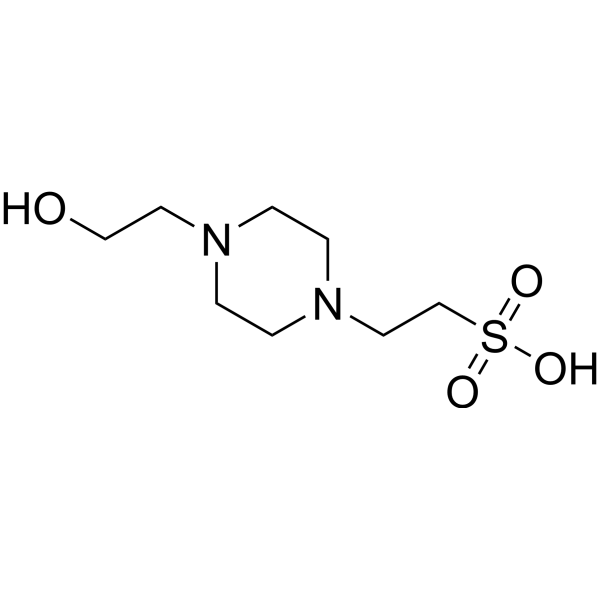
HEPES, a nonvolatile zwitterionic chemical buffering agent, is broadly applied in cell culture. HEPES is effective at pH 6.8 to 8.2. HEPES is also a potent inducer of lysosome biogenesis .
loading...
    loading...
11
11 Publications Verification
Cat. No.: HY-108535
CAS No.: 75277-39-3
Purity:  99.88%
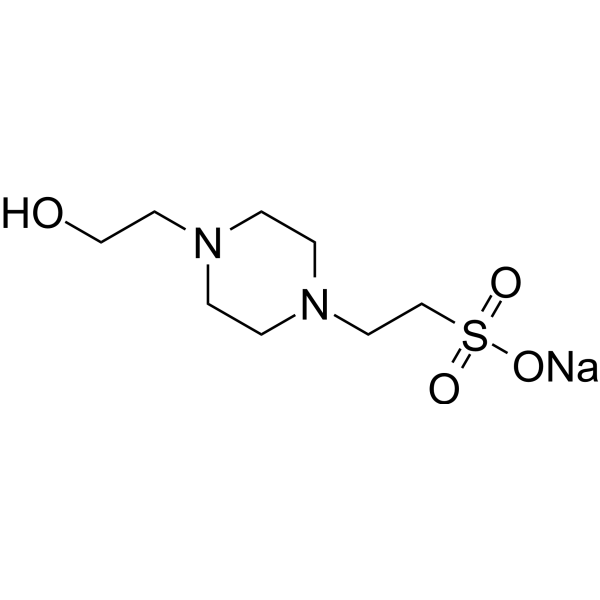
HEPES sodium, a nonvolatile zwitterionic chemical buffering agent, is broadly applied in cell culture. HEPES sodium is effective at pH 6.8 to 8.2. HEPES sodium is also a potent inducer of lysosome biogenesis .
loading...
    loading...
11
11 Publications Verification
Cat. No.: HY-W129509
CAS No.: 103404-87-1
Research Areas:  

Others

HEPES hemisodium salt, 99%(T) is used as a buffer.
loading...
    loading...
1
1 Cited Publications
Cat. No.: HY-D0857S
CAS No.: 203805-87-2
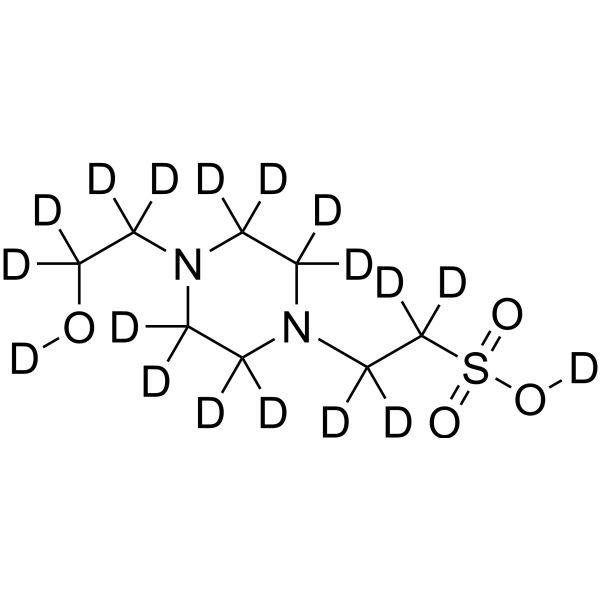
HEPES-d18 is the deuterium labeled HEPES . HEPES, a nonvolatile zwitterionic chemical buffering agent, is broadly applied in cell culture. HEPES is effective at pH 6.8 to 8.2. HEPES is also a potent inducer of lysosome biogenesis .
loading...
    loading...
Cat. No.: HY-D0856
CAS No.: 6976-37-0
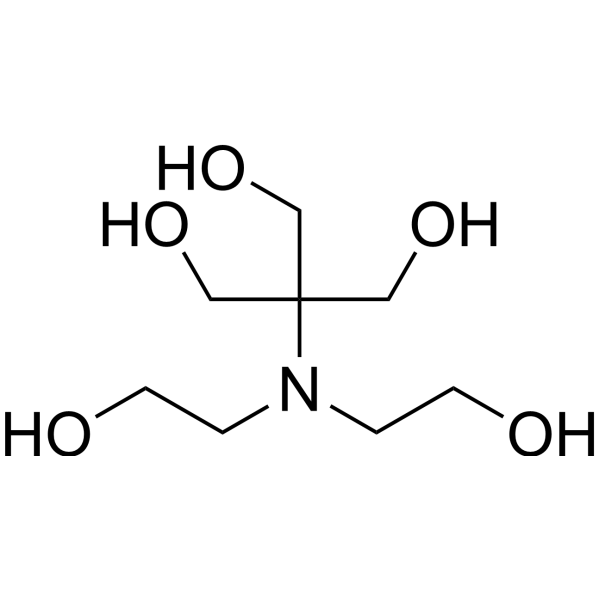
Bis-Tris is an amine buffer suitable for protein and nucleic acid systems with a pH buffer range of 5.8-7.2. Bis-Tris can also be mixed with HEPES and cacodylic acid buffer to create a pH 8 environment and monitor fluorescence emission intensity at 305 nm. Gels formulated with Bis-Tris also avoid protein degradation in samples prepared at higher pH (pH 8.5) .
loading...
    loading...
Cat. No.: HY-150350
The 20 mM HEPES, 150 mM NaCl, 240 mM Sucrose, pH 7.2 buffer is a physiological buffer composed of 20 mM HEPES, 150 mM NaCl and 240 mM Sucrose, adjusted to pH 7.2, which is used to resuspend human erythrocyte ghost preparations .
loading...
    loading...
Cat. No.: HY-W105681
CAS No.: 124763-51-5
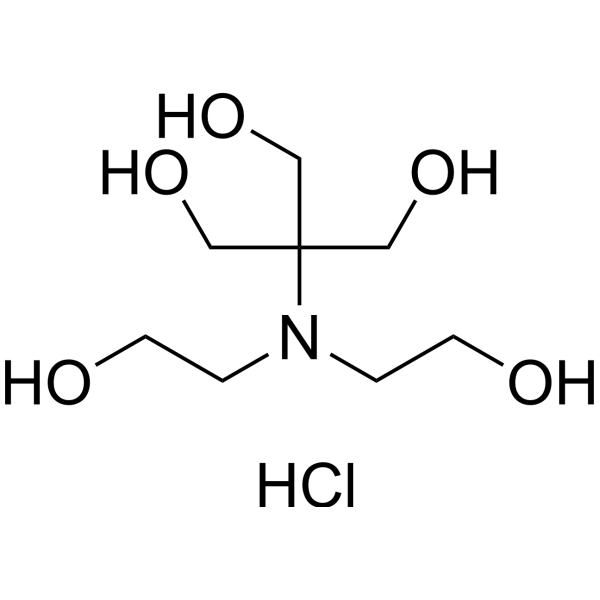
Bis-Tris hydrochloride is an amine buffer suitable for protein and nucleic acid systems with a pH buffer range of 5.8-7.2. Bis-Tris hydrochloride can also be mixed with HEPES and cacodylic acid buffer to create a pH 8 environment and monitor fluorescence emission intensity at 305 nm. Gels formulated with Bis-Tris also avoid protein degradation in samples prepared at higher pH (pH 8.5) .
loading...
    loading...
Cat. No.: HY-D0856R
CAS No.: 6976-37-0
Bis-Tris (Standard) is the analytical standard of Bis-Tris. This product is intended for research and analytical applications. Bis-Tris is an amine buffer suitable for protein and nucleic acid systems with a pH buffer range of 5.8-7.2. Bis-Tris can also be mixed with HEPES and cacodylic acid buffer to create a pH 8 environment and monitor fluorescence emission intensity at 305 nm. Gels formulated with Bis-Tris also avoid protein degradation in samples prepared at higher pH (pH 8.5) .
loading...
    loading...
Cat. No.: HY-D0856S1
Bis-Tris-d14 is the deuterium labeled Bis-Tris (HY-D0856). Bis-Tris is an amine buffer suitable for protein and nucleic acid systems with a pH buffer range of 5.8-7.2. Bis-Tris can also be mixed with HEPES and cacodylic acid buffer to create a pH 8 environment and monitor fluorescence emission intensity at 305 nm. Gels formulated with Bis-Tris also avoid protein degradation in samples prepared at higher pH (pH 8.5) .
loading...
    loading...
Cat. No.: HY-108535R
CAS No.: 75277-39-3
HEPES sodium (Standard) is the analytical standard of HEPES (sodium) (HY-108535). This product is intended for research and analytical applications. HEPES sodium, a nonvolatile zwitterionic chemical buffering agent, is broadly applied in cell culture. HEPES sodium is effective at pH 6.8 to 8.2. HEPES sodium is also a potent inducer of lysosome biogenesis .
loading...
    loading...
Cat. No.: HY-K3036

MCE IMDM (Iscove's Modified Dulbecco's Medium) is an enriched formulation modified from DMEM, containing high concentrations of glucose, sodium pyruvate, amino acids, vitamins, HEPES buffer, selenium, and other essential nutrients. It is designed to meet the nutritional requirements for rapid cell proliferation and high-density culture, supporting a variety of cell types, including Jurkat cells, COS-7 cells, and macrophages. The product specifications are based on the 500 mL format, and larger volume packages are provided as multiples of this standard specification.

loading...
    loading...
  • 1

