59 Results for "

HSL

" in MedChemExpress (MCE) Product Catalog:
Products (59)

59 Results for "HSL" in MCE Product Catalog:

6
6 Publications Verification
Cat. No.: HY-102056
CAS No.: 654059-21-9
Purity:  99.75%
Target:  

Lipase

Research Areas:  

Metabolic Disease

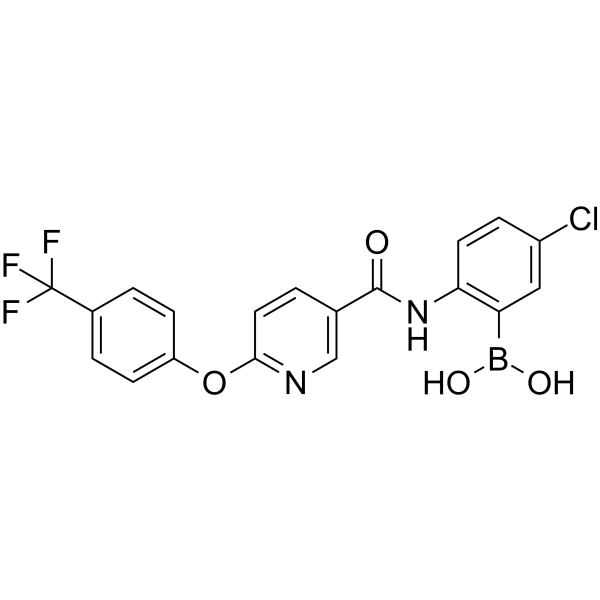
BAY 59-9435 is a potent and selective inhibitor of Hormone Sensitive Lipase (HSL), with an IC50 of 0.023 μM.
loading...
    loading...
3
3 Cited Publications
Cat. No.: HY-114816
CAS No.: 67605-85-0
Purity:  98.77%
Synonyms: C4-HSL; N-Butyryl-L-homoserine lactone
Target:  

ADC Linkers Bacterial

Research Areas:  

Infection Inflammation/Immunology

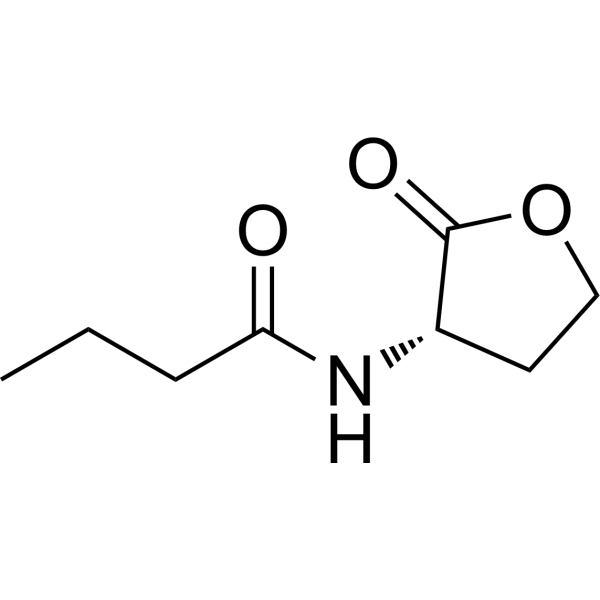
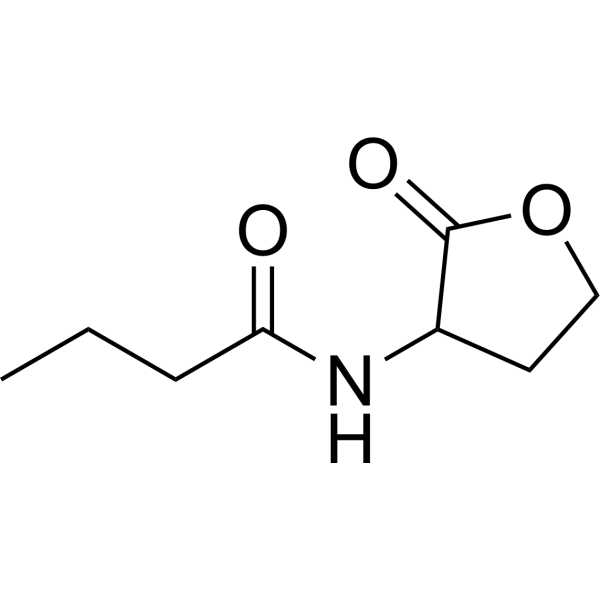
N-Butanoyl-L-homoserine lactone (C4-HSL) is a cleavable ADC linker used in the synthesis of antibody-drug conjugates (ADCs). N-Butanoyl-L-homoserine lactone has antibacterial activity and is used in antibacterial biofilm . N-Butanoyl-L-homoserine lactone aptamers blocks qurom sensing and inhibits biofilm formation in Pseudomonas aeruginosa .
loading...
    loading...
3
3 Cited Publications
Cat. No.: HY-15483
CAS No.: 95167-41-2
Purity:  99.22%
Synonyms: GSK 9089
Research Areas:  

Endocrinology Cancer

DY131 (GSK 9089) is a potent and selective ERRγ and ERRβ agonist. DY131displays inactive against ERRα, ERα and ERβ . DY131 also inhibits Smo signaling .
loading...
    loading...
3
3 Cited Publications
Cat. No.: HY-101509
CAS No.: 2095156-13-9
Purity:  99.65%
Target:  

Lipase

Research Areas:  

Metabolic Disease

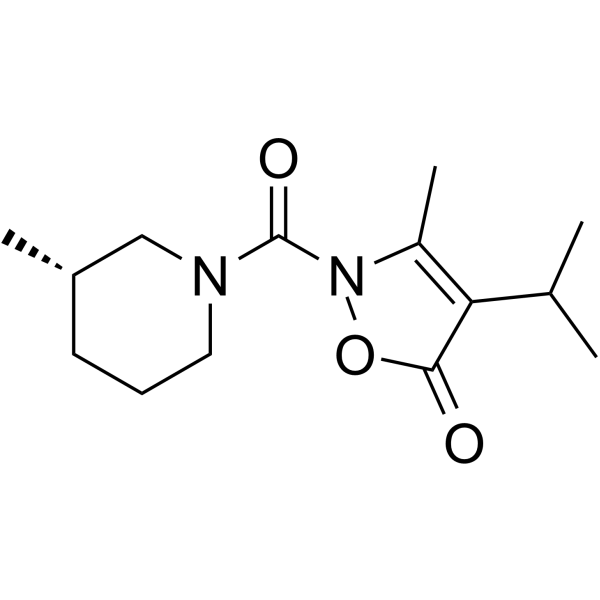
HSL-IN-1 (compound 24b) is a potent and orally active hormone sensitive lipase (HSL) inhibitor (IC50=2 nM) with a significantly reduced reactive metabolite liability .
loading...
    loading...
2
2 Cited Publications
Cat. No.: HY-114544A
CAS No.: 168982-69-2
Purity:  ≥98.0%
Synonyms: OdDHL
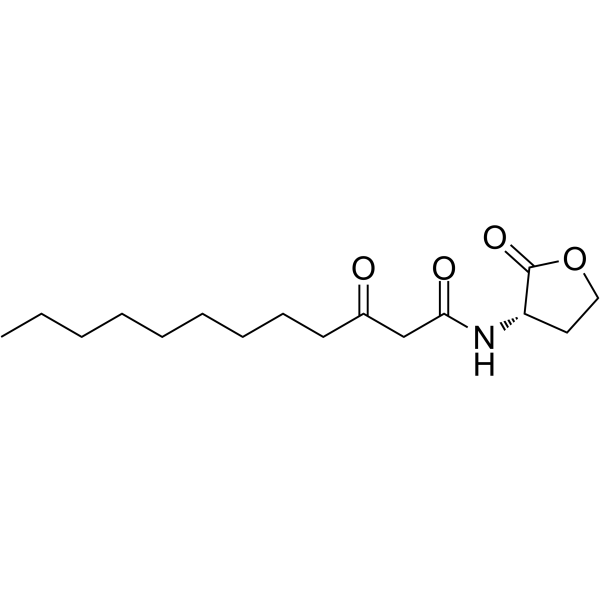
N-3-oxo-dodecanoyl-L-Homoserine lactone (3-oxo-C12-HSL) is a bacterial quorum-sensing signaling molecule produced by P. aeruginosa and strains of the B. cepacia complex .Quorum sensing is a regulatory system used by bacteria for controlling gene expression in response to increasing cell density.N-3-oxo-dodecanoyl-L-Homoserine lactone induces the production of IL-8 in 16HBE human bronchial epithelial cells .
loading...
    loading...
1
1 Cited Publications
Cat. No.: HY-N1420
CAS No.: 3615-41-6
Synonyms: L-Rhamnose
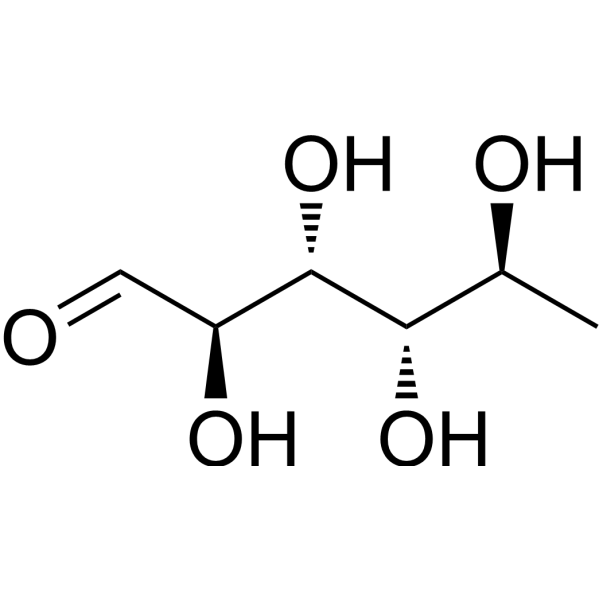
Rhamnose (L-Rhamnose ) is an orally active deoxysugar. Rhamnose can inhibit levels of pro-inflammatory interleukin and matrix metalloproteinases (MMPs) in skin aging models. Rhamnose can promote the phosphorylation levels of PKA substrates and HSL in SVF-derived adipocytes, stimulating PKA signaling. Rhamnose can act against obesity in mice by stimulating fat dopamine receptors and inducing thermogenesis. Rhamnose shows anti-aging effects. Rhamnose monohydrate can be used in the study of Ehrlich’s solid tumors and sarcomas .
loading...
    loading...
1
1 Cited Publications
Cat. No.: HY-N1420A
CAS No.: 10030-85-0
Synonyms: L-Rhamnose monohydrate
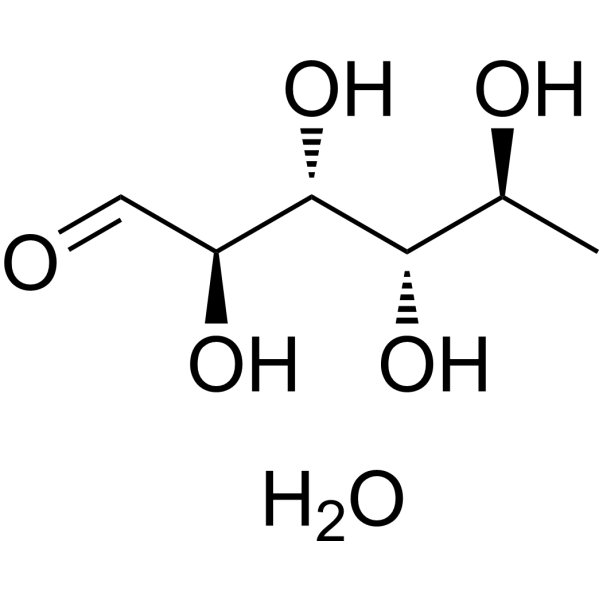
Rhamnose monohydrate (L-Rhamnose monohydrate) is an orally active deoxysugar. Rhamnose monohydrate can inhibit levels of pro-inflammatory interleukin and matrix metalloproteinases (MMPs) in skin aging models. Rhamnose can promote the phosphorylation levels of PKA substrates and HSL in SVF-derived adipocytes, stimulating PKA signaling. Rhamnose monohydrate can act against obesity in mice by stimulating fat dopamine receptors and inducing thermogenesis. Rhamnose monohydrate shows anti-aging effects. Rhamnose monohydrate can be used in the study of Ehrlich’s solid tumors and sarcomas .
loading...
    loading...
1
1 Cited Publications
Cat. No.: HY-118697
CAS No.: 137173-46-7
Purity:  ≥98.0%
Synonyms: C12-HSL
Target:  

Bacterial

Research Areas:  

Infection

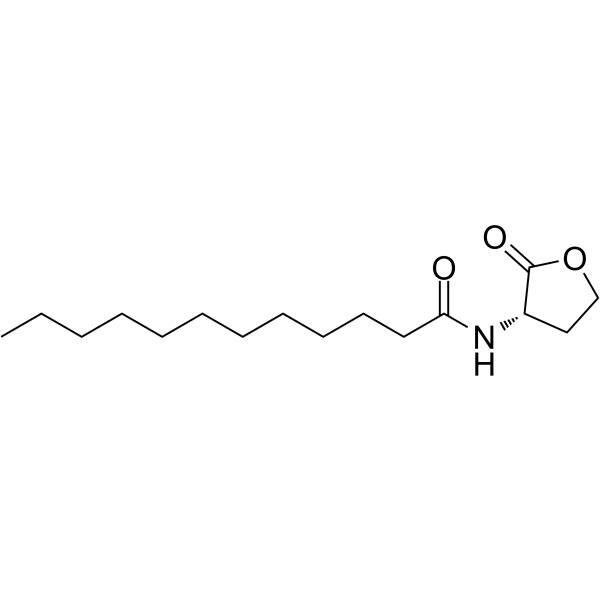
N-dodecanoyl-L-Homoserine lactone (C12-HSL) is a quorum sensing (QS) signaling molecule. N-dodecanoyl-L-Homoserine lactone (C12-HSL) aptamers blocks qurom sensing and inhibits biofilm formation in Pseudomonas aeruginosa .
loading...
    loading...
1
1 Cited Publications
Cat. No.: HY-23524
CAS No.: 346656-34-6
Target:  

Lipase

Research Areas:  

Metabolic Disease

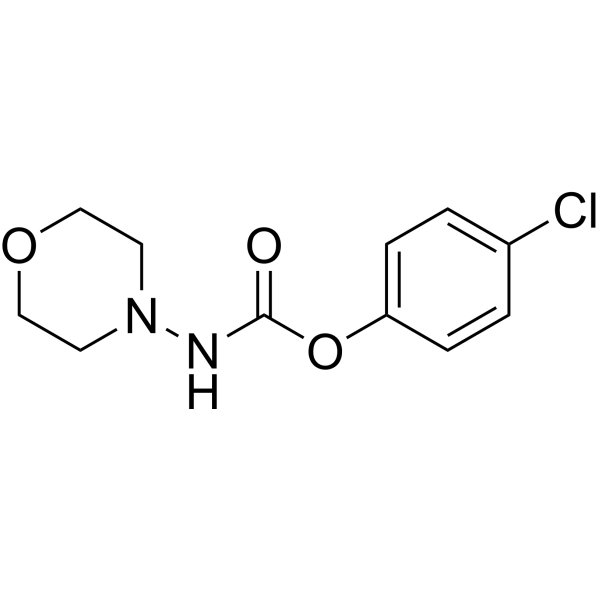
HSL-IN-3 is a HSL inhibitor. HSL-IN-3 serves as an important intermediate for the synthesis of PARP-1 inhibitors. HSL-IN-3 can be used in studies related to lipid metabolism .
loading...
    loading...
1
1 Cited Publications
Cat. No.: HY-153523
CAS No.: 374567-94-9
Purity:  99.90%
Synonyms: NNC0076-0079; 76-0079
Target:  

Lipase

Research Areas:  

Metabolic Disease

Hi 76-0079 (NNC0076-0079; 76-0079) is a lipase inhibitor that specifically targets hormone-sensitive lipase (HSL). Hi 76-0079 inhibits PNPB Hydrolysis in cell lysates of HEK293A cells overexpressing Lipe with an IC50 value of 0.1 μM. Hi 76-0079 synergizes with the ATGL inhibitor Atglistatin (HY-15859) to block lipolysis in vitro. Hi 76-0079 can be used for the study of lipid metabolism .
loading...
    loading...
1
1 Cited Publications
Cat. No.: HY-164714
CAS No.: 308830-70-8
Target:  

Lipase

HSL-IN-5 (Example 21) is a hormone sensitive lipase (HSL) inhibitor (IC50: 0.25 μM). HSL-IN-5 can be used for diabetes research .
loading...
    loading...
Cat. No.: HY-133685
CAS No.: 147852-83-3
Purity:  98.82%
Synonyms: C6-HSL
Target:  

Bacterial

Research Areas:  

Infection Metabolic Disease

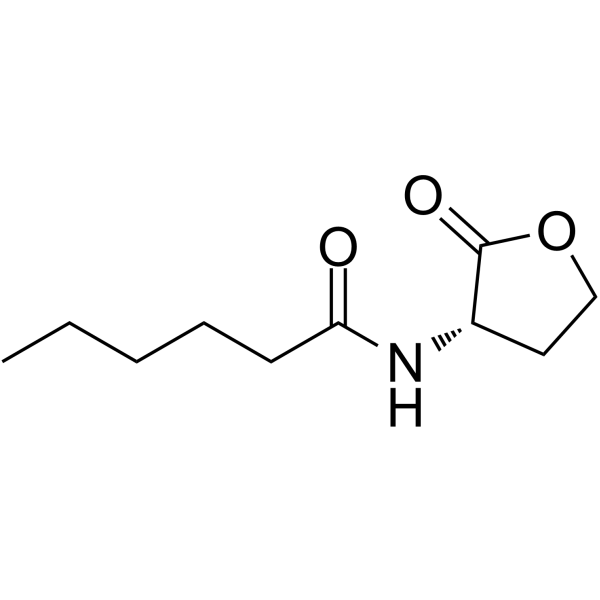
N-Hexanoyl-L-homoserine lactone is a short-chained N-acyl homoserine lactone (AHL). N-hexanoyl-L-homoserine lactone is also a mediator of bacterial quorum-sensing regulation. N-hexanoyl-L-homoserine lactone promotes lipid accumulation in algae. AHL is an intercellular communication signal molecule in the quorum sensing system of Gram-negative bacteria and a medium for mediating information exchange between eukaryotic plants and prokaryotic bacteria. AHL can affect bacteria activities, such as biofilm formation, pigment synthesis, and antibiotic synthesis .
loading...
    loading...
Cat. No.: HY-D0846
CAS No.: 1609-47-8
Diethyl pyrocarbonate is a potent, orally active, non-specific chemical inhibitor of RNase. Diethyl pyrocarbonate has been useful in vitro as an agent relatively specific for binding to imidazole of histidine. Diethyl pyrocarbonate inhibits central chemosensitivity in rabbits. Diethyl pyrocarbonate can modify Ser, Thr, His and Tyr residues. Diethyl pyrocarbonate can be used for modeling .
loading...
    loading...
Cat. No.: HY-136409
CAS No.: 177315-87-6
Purity:  99.43%
Synonyms: C10-HSL
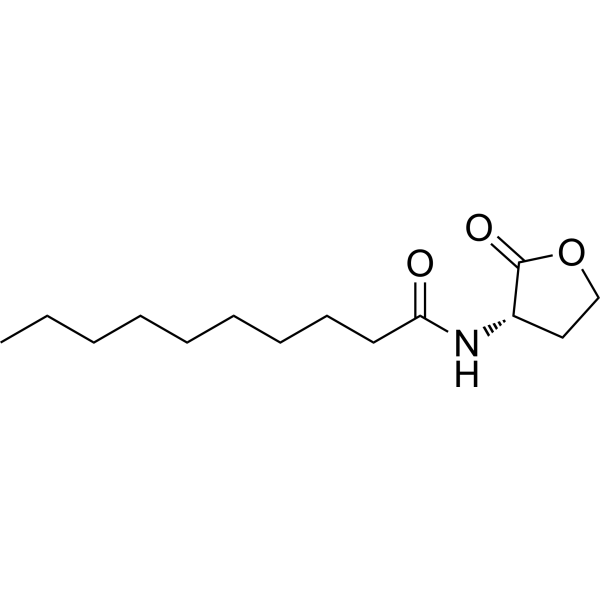
N-decanoyl-L-homoserine lactone (C10-HSL) is a N-acyl-homoserine lactone (AHL) N-decanoyl-L-homoserine lactone can inhibit primary root growth in Arabidopsis. N-decanoyl-L-homoserine lactone triggers a transient and immediate increase in the concentrations of cytosolic free Ca 2+ and reactive oxygen species (ROS), increases the activity of mitogen-activated protein kinase 6 (MPK6), and induces nitric oxide (NO) production in Arabidopsis roots .
loading...
    loading...
Cat. No.: HY-124237A
CAS No.: 147852-84-4
Purity:  99.58%
Synonyms: C8-HSL
Target:  

Bacterial

Research Areas:  

Infection Inflammation/Immunology

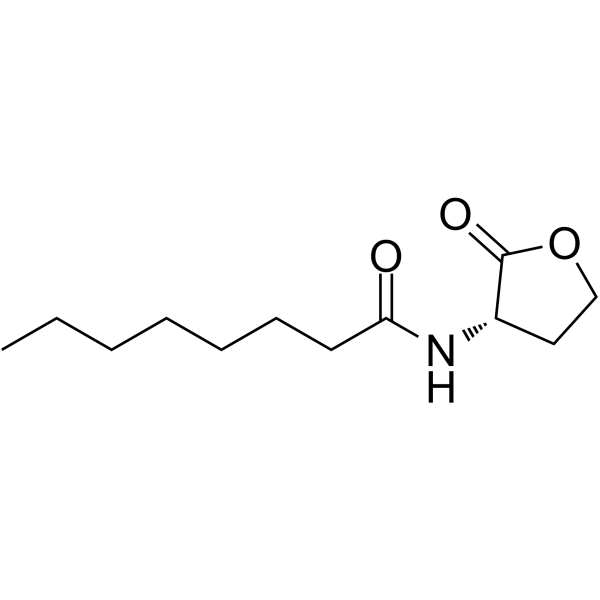
N-Octanoyl-L-homoserine lactone (C8-HSL) is an autoinducer. It mainly serves as a key inter- and intra-species communication medium or "signal molecule" in Gram-negative bacteria. N-Octanoyl-L-homoserine lactone microparticles exhibit adjuvant potential when used in combination with various particulate vaccines .
loading...
    loading...
Cat. No.: HY-114816R
CAS No.: 67605-85-0
Synonyms: C4-HSL (Standard); N-Butyryl-L-homoserine lactone (Standard)
N-Butanoyl-L-homoserine lactone (Standard) (C4-HSL (Standard)) is the analytical standard of N-Butanoyl-L-homoserine lactone (HY-114816). This product is intended for research and analytical applications. N-Butanoyl-L-homoserine lactone (C4-HSL) is a cleavable ADC linker used in the synthesis of antibody-drug conjugates (ADCs). N-Butanoyl-L-homoserine lactone has antibacterial activity and is used in antibacterial biofilm. N-Butanoyl-L-homoserine lactone aptamers blocks qurom sensing and inhibits biofilm formation in Pseudomonas aeruginosa.
loading...
    loading...
Cat. No.: HY-113764
CAS No.: 98426-48-3
Purity:  ≥98.0%
Synonyms: (Rac)-C4-HSL
Target:  

Bacterial

Research Areas:  

Infection Inflammation/Immunology

N-Butanoyl-DL-homoserine lactone ((Rac)-C4-HSL) is a racemic mixture of N-Butanoyl-D-homoserine lactone and N-Butanoyl-L-homoserine lactone. N-Butanoyl-L-homoserine lactone is a cleavable ADC linker used in the synthesis of antibody-drug conjugates (ADCs). N-Butanoyl-L-homoserine lactone has antibacterial activity and is used in antibacterial biofilm. N-Butanoyl-L-homoserine lactone aptamers blocks qurom sensing and inhibits biofilm formation in Pseudomonas aeruginosa .
loading...
    loading...
Cat. No.: HY-W685561
CAS No.: 216596-70-2
Synonyms: N-(3-Oxooctanoyl)-l-homoserine lactone
Research Areas:  

Infection

3-Oxo-C8-HSL (N-(3-Oxooctanoyl)-l-homoserine lactone) is an autoinducer pheromone. 3-Oxo-C8-HSL is a TraR-regulated promoter. 3-Oxo-C8-HSL significantly stimulates tra gene expression .
loading...
    loading...
Cat. No.: HY-158730
CAS No.: 1325550-06-8
Purity:  99.87%
Synonyms: 3-OH-C4-HSL; N-3-Hydroxybutanoyl-L-homoserine lactone; N-3-Hydroxybutyryl-L-HSL
Target:  

Bacterial

Research Areas:  

Infection

N-3-Hydroxybutyryl-L-homoserine lactone (3-OH-C4-HSL) is an acyl-homoserine lactone, that can be isolated from Vibrionaceae. N-3-Hydroxybutyryl-L-homoserine lactone is a signaling molecule that is involved in bacterial quorum sensing (QS). N-3-Hydroxybutyryl-L-homoserine lactone senses the density of bacterial population, regulates the cellular process, such as bioluminescence, biofilm formation, and exo-enzyme production .
loading...
    loading...
Cat. No.: HY-134560
CAS No.: 147795-40-2
Purity:  99.62%
Synonyms: 3-Oxo-C10-HSL
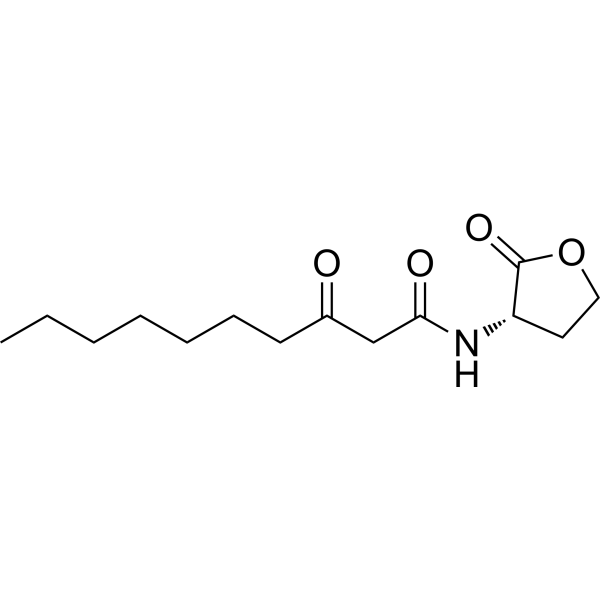
N-(3-Oxodecanoyl)-L-homoserine lactone (3-Oxo-C10-HSL) is a bacterial signaling molecule with quorum-sensing agonistic activity and competitive antagonistic activity against short-chain AHLs. N-(3-Oxodecanoyl)-L-homoserine lactone binds to VanR to form a complex, activates the transcription of the vanI gene, and establishes an autoregulatory loop for its own synthesis. N-(3-Oxodecanoyl)-L-homoserine lactone inhibits the synthesis of violacein induced by short-chain AHLs. N-(3-Oxodecanoyl)-L-homoserine lactone serves as the sole carbon and nitrogen source for Rhodococcus erythropolis W2 and can be completely degraded. N-(3-Oxodecanoyl)-L-homoserine lactone can be used in studies related to bacterial infections .
loading...
    loading...

