Search Result
Results for "
HT-29
" in MedChemExpress (MCE) Product Catalog:
2
Biochemical Assay Reagents
| Cat. No. |
Product Name |
Target |
Research Areas |
Chemical Structure |
-
- HY-139206
-
-
-
- HY-12855A
-
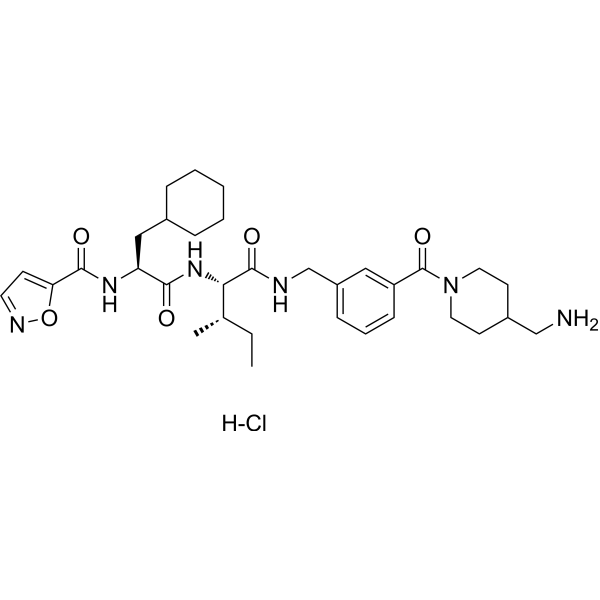
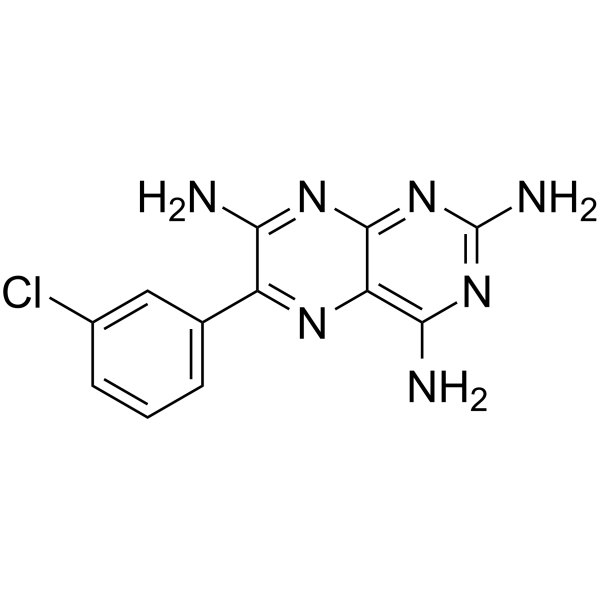
Lys05
4 Publications Verification
Lys01 trihydrochloride
|
Autophagy
|
Cancer
|
|
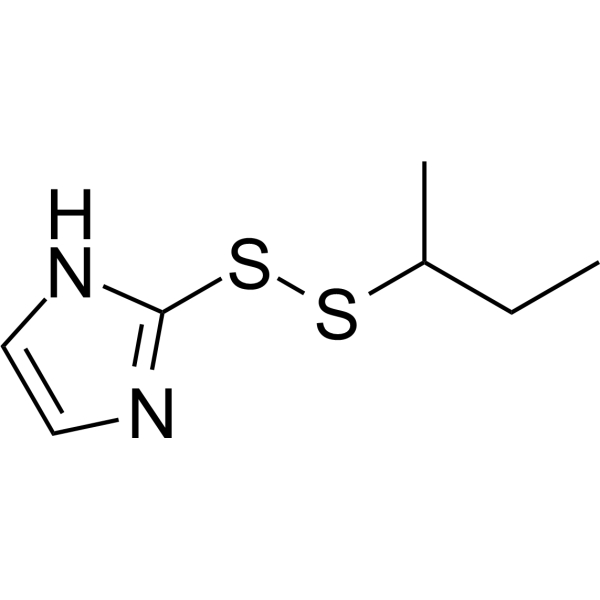
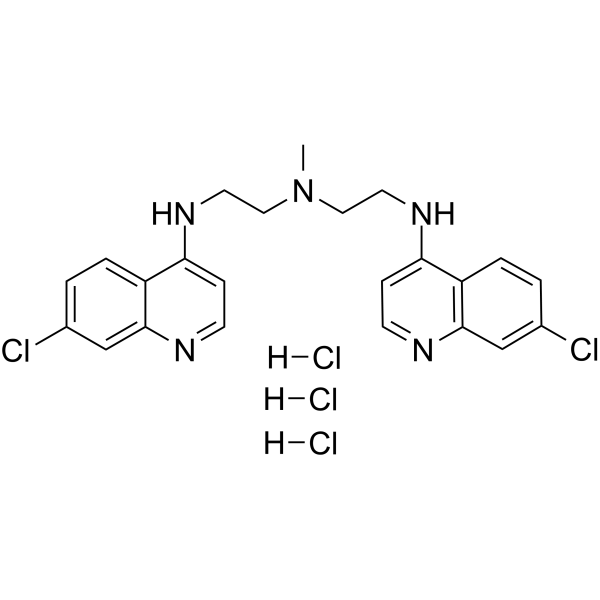
Lys05 (Lys01 trihydrochloride) is a novel lysosomal autophagy inhibitor with IC50 values of 3.6, 3.8, 6 and 7.9 μM for 1205Lu, c8161, LN229 and HT-29 cell line in the MTT assay.
|
-
-
- HY-101524
-
TC13172
3 Publications Verification
|
Mixed Lineage Kinase
|
Cancer
|
|
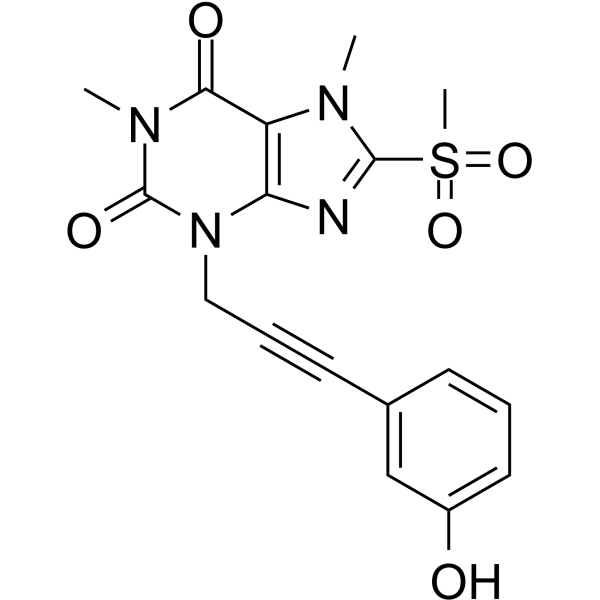
TC13172 is a mixed lineage kinase domain-like protein (MLKL) inhibitor with an EC50 value of 2 nM for HT-29 cells .
|
-
-
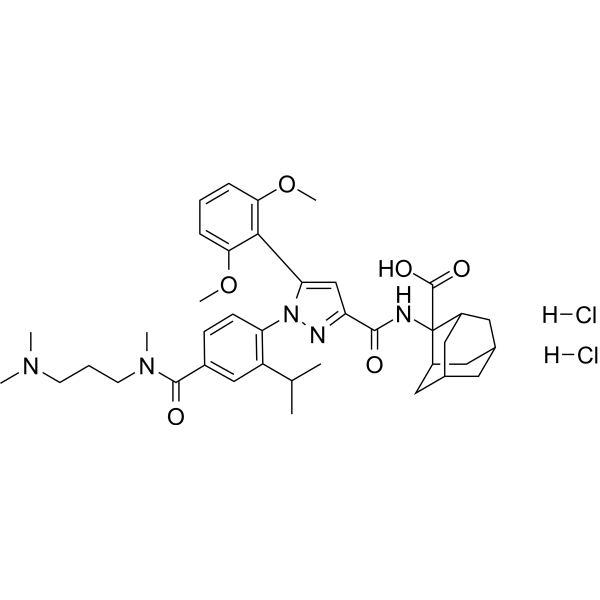
- HY-P10761
-
|
|
Radionuclide-Drug Conjugates (RDCs)
Carbonic Anhydrase
|
Cancer
|
|
DPI-4452 is a CAIX-targeting cyclic peptide with a DOTA cage, and can be chelated with radionuclide for CAIX-expressing tumor PET-CT imaging and study. DPI-4452 specifically and selectively binds CAIX without interaction with an in vitro off-target receptor panel of 55 targets (IC50 for recombinant hCAIX: 130 nM). Radiolabeled DPI-4452 inhibits tumor growth in HT-29 and SK-RC-52 xenograft mouse models . DPI-4452 can be used for the synthesis/research of Radionuclide-Drug Conjugates (RDCs).
|
-
-
- HY-13734
-
|
IV-2
|
Apoptosis
|
Cancer
|
|
PX-12(IV-2) is an irreversible inhibitor of Thioredoxin-1 (Trx-1); inhibits the growth of MCF-7 and HT-29 cells with IC50 values of 1.9 and 2.9 μM, respectively.
|
-
-
- HY-14444
-
|
NPI-2358
|
Microtubule/Tubulin
|
Cancer
|
|
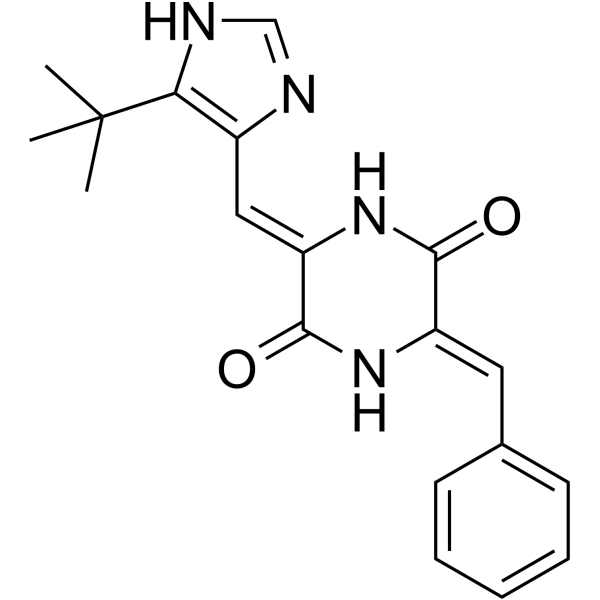
Plinabulin (NPI-2358) is a vascular disrupting agen (VDA) against tubulin-depolymerizing with an IC50 of 9.8 nM against HT-29 cells . Plinabulin binds the colchicine binding site of β-tubulin preventing polymerization and has potent inhibitory to tumor cells .
|
-
-
- HY-107664
-
|
|
Neurotensin Receptor
|
Neurological Disease
|
|
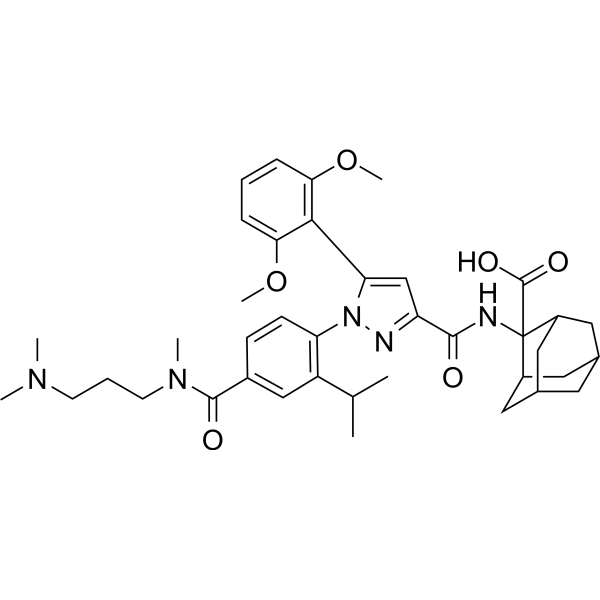
SR 142948 is an orally active and selective non-peptide neurotensin receptor (NT) antagonist with IC50s of 1.19 nM, 0.32 nM, 3.96 nM in h-NTR1-CHO cells, HT-29 cells, and adult rat brain, respectively. SR 142948 antagonizes NT-induced inositol monophosphate formation in HT-29 cells with an IC50 of 3.9 nM. SR 142948 blocks hypothermia, analgesia and steering behavior induced by NT in vivo. SR 142948 shows blood-brain permeability and can be used in study of psychiatric disorders .
|
-
-
- HY-N6002
-
|
|
Apoptosis
Autophagy
|
Cancer
|
|
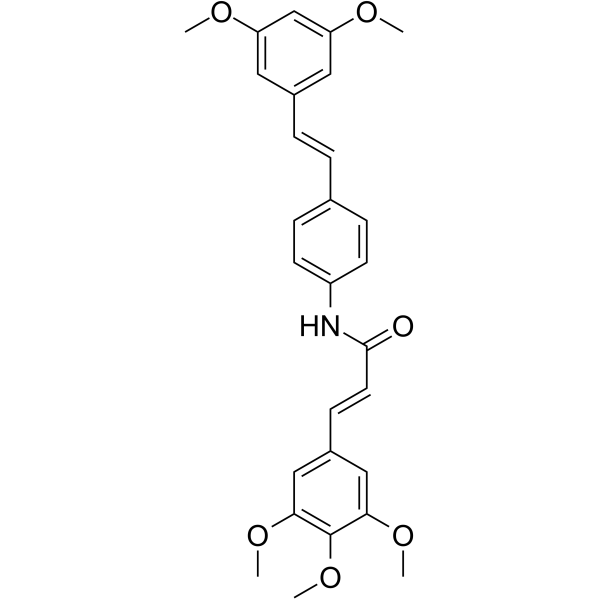
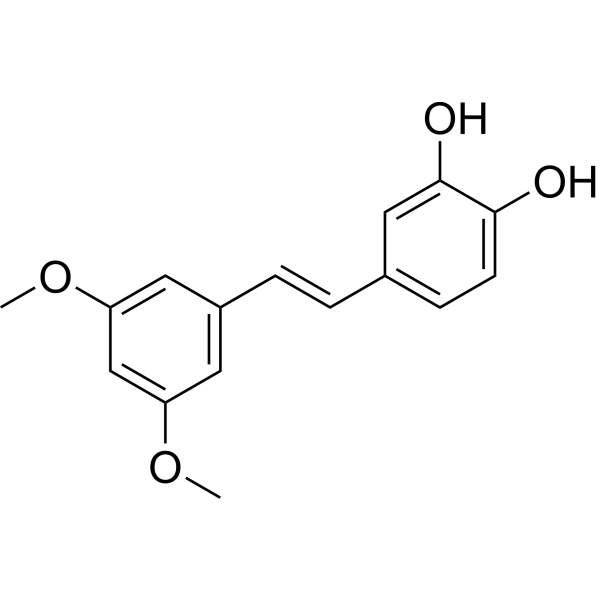
3'-Hydroxypterostilbene is a Pterostilbene (HY-N0828) analogue. 3'-Hydroxypterostilbene inhibits the growth of COLO 205, HCT-116 and HT-29 cells with IC50s of 9.0, 40.2 and 70.9 μM, respectively. 3'-Hydroxypterostilbene significantly down-regulates PI3K/Akt and MAPKs signaling pathways and effectively inhibits the growth of human colon cancer cells by inducing apoptosis and autophagy. 3'-Hydroxypterostilbene can be used for the research of cancer .
|
-
-
- HY-126779
-
|
|
Fungal
|
Cancer
|
|
Stictic acid is a secondary metabolite that can be isolated from the lichen Lobaria pulmonaria (L.) Hoffm. Stictic acid inhibits growth of human colon adenocarcinoma HT-29 cells (IC50: 29.29 μg/mL) .
|
-
-
- HY-164350
-
|
|
Ras
ERK
p38 MAPK
|
Cancer
|
|
KRAS inhibitor-27 (Compound 15h) is the inhibitor for KRAS. KRAS inhibitor-27 inhibits KRAS G12D/G12V mutated cells AsPC-1, SW620 and KRAS wildtype cell HT-29 with IC50 of 378, 0.6 and 3230 nM, respectively. KRAS inhibitor-27 inhibits ERK phosphorylation (IC50 in cell AsPC-1 and SW620 is 0.6 nM and 1 nM), reduces the expression of DUSP4, thereby inhibiting MAPK signaling pathway .
|
-
-
- HY-N8225
-
|
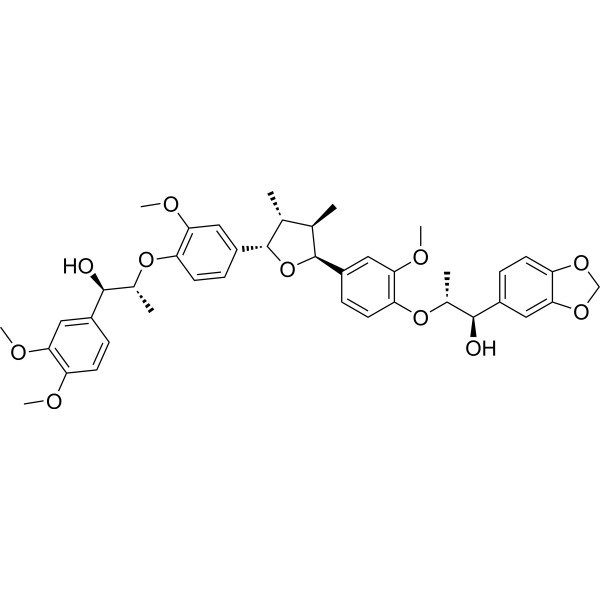
(-)-Manassantin B
|
Others
|
Others
|
|
Manassantin B (compound 6) is a kind of lignan. Manassantin B can be isolated from the ethyl acetate extract of the roots of Saururus chinensis. Manassantin B has cytotoxicities against HT-29 with an IC50 value of 12 μM .
|
-
-
- HY-75564
-
|
|
Endogenous Metabolite
|
Cancer
|
|
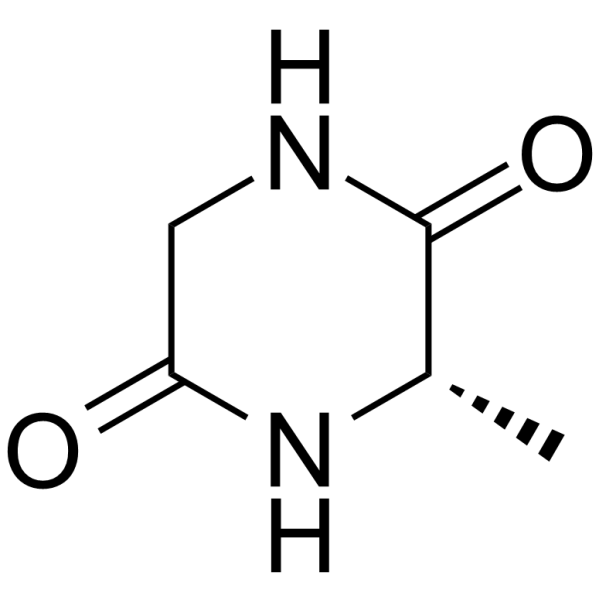
Cyclo(Ala-Gly), a metabolite of a mangrove endophytic fungus, Penicillium thomi, exhibits cytotoxicity against A549, HepG2 and HT29 cells. The IC50 values range from 9.5 to 18.1 μM .
|
-
-
- HY-13620
-
|
LU 79553
|
Topoisomerase
|
Cancer
|
|
Elinafide is an anticancer agent with a naphthalimide structure that targets DNA. Elinafide interferes with cell metabolism by inserting a planar ring into the DNA double helix and interacting with enzymes through its side chain.LU-79553 is a DNA-binding topoisomerase II inhibitor. The IC50 value of Elinafide for HT-29 cells is 0.014 μM .
|
-
-
- HY-157516
-
|
|
CDK
|
Cancer
|
|
CDK2-IN-22 (compound 7I) is a potent CDK2 inhibitor with an IC50 of 64.42 nM. CDK2-IN-22 presents a broad antiproliferative efficacy toward diverse cancer cells MV4-11, HT-29, MCF-7, and HeLa with IC50 values of 0.83 μM, 2.12 μM, 3.12 μM, and 8.61 μM, respectively .
|
-
-
- HY-N3057
-
|
|
Others
|
Cancer
|
|
Pinostrobin chalcone is found to be potent natural cytotoxic compounds against MDA-MB-231 and HT-29 colon cancer cell lines(IC50 = 20.42±2.23 and 22.51±0.42 μg/mL) .
|
-
-
- HY-147348
-
|
|
Biochemical Assay Reagents
|
Cancer
|
|
4-Formylcolchicine is a potent anticancer agent. 4-Formylcolchicine shows cytotoxicity activity with IC50 values of 1.007, 0.128, 0.054 μM for A549, HT-29, HCT116 cells, respectively .
|
-
-
- HY-P3116
-
|
|
Bacterial
|
Cancer
|
|
Thiocoraline is a depsipeptide that can be isolated by marine Micromonospora. Thiocoraline has antitumor activity with IC50s of 0.002, 0.002, 0.01 and 0.002 μg/mL in P388, A549, HT-29 and MEL-28 cells, respectively. Thiocoraline also a strong antimicrobial activity against Gram-positive microorganisms .
|
-
-
- HY-121199
-
|
|
Apoptosis
|
Cancer
|
|
Germanicol is a selective antineoplastic agent against human colon cancer cell lines HCT-116 and HT29 . Germanicol induces apoptosis via chromatin condensation and DNA damage .
|
-
-
- HY-176279
-
|
|
HSP
|
Cancer
|
|
Hsp90-IN-42 (Compound 13l) is a potent heat shock protein 90 (Hsp90) inhibitor (IC50=15.65 nM). Hsp90-IN-42 reduces the stability of the epidermal growth factor receptor (EGFR), suppressing the activation of the EGFR-Akt signaling pathway, inducing G0/G1 phase arrest in colorectal cancer cells (such as HT-29 cells), and slightly triggering apoptosis. Hsp90-IN-42 also inhibits cell proliferation and migration by down-regulating the expression of CDK12, CDK13, and Bcl-2 proteins, and up-regulating the expression of Bax protein. Hsp90-IN-42 is promising for research of colorectal cancer .
|
-
-
- HY-122675
-
|
|
Choline Kinase
|
Cancer
|
|
ACG416B (compound 18) is a potent inhibitor of ChoK (choline kinase) with an IC50 of 0.4 μM. ACG416B renders higher ChoK inhibitory and antiproliferative activities against the HT-29 human colon cancer cell .
|
-
-
- HY-160811
-
|
|
VEGFR
|
Cancer
|
|
hVEGF-IN-3 (compound 9) is a potent hVEGF inhibitor. hVEGF-IN-3 inhibits HT-29, MCF-7, and HEK-293 cells proliferation with IC50s of 61, 142, and 114 μM .
|
-
-
- HY-N8491
-
|
|
Others
|
Cancer
|
|
Dihydrocarveol is an anticancer agent. Dihydrocarveol shows inhibitory activity against human colon adenocarcinoma cells (HCT-116, HT-29, COLO320DM) with an IC50 value of 28.31 μM in HCT-116 cells. Dihydrocarveol is promising for research of colon cancer .
|
-
-
- HY-107664A
-
|
|
Neurotensin Receptor
|
Neurological Disease
|
|
SR 142948 dihydrochloride is an orally active and selective non-peptide neurotensin receptor (NT) antagonist with IC50s of 1.19 nM, 0.32 nM, 3.96 nM in h-NTR1-CHO cells, HT-29 cells, and adult rat brain, respectively. SR 142948 dihydrochloride antagonizes NT-induced inositol monophosphate formation in HT-29 cells with an IC50 of 3.9 nM. SR 142948 dihydrochloride blocks hypothermia, analgesia and steering behavior induced by NT in vivo. SR 142948 dihydrochloride shows blood-brain permeability and can be used in study of psychiatric disorders .
|
-
-
- HY-171745
-
|
|
ATM/ATR
|
Cancer
|
|
ATR-IN-32 is an orally active ATR inhibitor. ATR-IN-32 potently inhibits the proliferation of MIA PaCa-2 cells. ATR-IN-32 exerts significant tumor growth inhibition in mice bearing LOVO and HT-29 xenografts. ATR-IN-32 can be used for the study of cancers mediated by ATR protein kinase, such as colorectal cancer, pancreatic cancer .
|
-
-
- HY-170982
-
|
|
MEK
PROTACs
|
Cancer
|
|
MS910 is an efficient and selective MEK1/2 PROTAC degrader. MS910 exhibits effective MEK1/2 degradation ability and anti proliferative activity in various cancer cells, such as HT-29 (MEK1 DC50 = 118 nM, MEK2 DC50 = 55 nM) and SK-MEL-28 (MEK1 DC50 = 94 nM, MEK2 DC50 = 38 nM) cells. MS910 is commonly used in cancer research. (Pink: MEK1/2 Ligand (HY-10254); Blue: CRBN Ligand (HY-W087383); Black: Linker (HY-W022240))
|
-
-
- HY-P10994
-
|
Eps8(327-335)
|
EGFR
IFNAR
Interleukin Related
TNF Receptor
Complement System
Apoptosis
|
Inflammation/Immunology
Cancer
|
|
Eps8 peptide 327 is an HLA-A*2402-restricted peptide antigen derived from Eps8 protein. Eps8 peptide 327 has potent antitumor activity with significant cytotoxicity. Eps8 peptide 327 effectively inhibits cancer cells proliferation, induces apoptosis and disrupts EGFR signal pathway by inhibiting downstream signals (such as IL-2, TNF-α and IFN-γ) expression and the Eps8/EGFR interaction. Eps8 peptide 327 significantly inhibits tumor growth in HT-29 xenograft mcie models .
|
-
-
- HY-121458
-
|
|
Apoptosis
|
Cancer
|
|
Nemorosone is the main component of the floral resin of Clusia rosea. Nemorosone has an antiproliferative effect on cancer cells. Nemorosone induces apoptosis in HT-29 and LoVo cells .
|
-
-
- HY-W727999
-
|
|
Apoptosis
|
Cancer
|
|
Koenimbine is an anticancer agent that can be obtained from the leaves and fruits of Murraya koenigii. Koenimbine can induce apoptosis and necrosis in HT-29 and SW48 cells. Koenimbine can be used in the research of cancer .
|
-
-
- HY-157085
-
|
|
HSP
|
Cancer
|
|
BX-2819 is a Hsp90 inhibitor with an IC50 value of 41 nM. BX-2819 inhibits the proliferation of cancer cells. BX-2819 can significantly inhibit the growth of NCI-N87 and HT-29 tumors in nude mice .
|
-
-
- HY-N1631
-
|
1-Hydroxyrutaecarpine
|
Drug Derivative
|
Others
|
|
1-Hydroxyrutaecarpine (compound 1a) is a hydroxy-derivative of rutaecarpine. 1-Hydroxyrutaecarpine shows cytotoxicities with ED50s of 3.72, 7.44 µg/mL for P-388 and HT-29 cells, respectively. 1-Hydroxyrutaecarpine shows antiplatelet activity .
|
-
-
- HY-149952
-
|
|
ATM/ATR
|
Cancer
|
|
ATR-IN-23 (Compound 34) is a potent and selective ATR inhibitor with an IC50 of 1.5 nM. ATR-IN-23 has potent antiproliferative effects on LoVo cells and synthetic lethality on HT-29 cells, and can be used in the study of DNA damage response (DDR)-deficient cancers .
|
-
-
- HY-N1655
-
|
|
Others
|
Cancer
|
|
2,3-Dihydroamentoflavone 7,4'-dimethyl ether is a biflavonoid, which can be isolated from the aerial parts of Selaginella delicatula. 2,3-Dihydroamentoflavone 7,4'-dimethyl ether exhibits cytotoxicities against P-388 and HT-29 cell lines, with ED50 (median effective dose) values of 3.50 and 5.25 µg/mL, respectively .
|
-
-
- HY-139062
-
|
C6 Ceramide (d18:1/6:0) Urea; Cer(d18:1/6:0) Urea; D-erythro-Urea-C6-Ceramide
|
Apoptosis
Ceramidase
Autophagy
β-catenin
|
Cancer
|
|
C6 Urea Ceramide (Cer(d18:1/6:0) Urea) is an inhibitor of neutral ceramidase. C6 Urea Ceramide increases total ceramide levels in wild-type mouse embryonic fibroblasts (MEFs) and HT-29 colon cancer cells. C6 Urea Ceramide (5-10 μM) inhibits proliferation of HT-29 cells and induces apoptosis and autophagy, but is not toxic to non-cancerous cells. C6 Urea Ceramide decreases total and phosphorylated β-catenin levels in HT-29 and HCT116 cells, and induces colocalization of β-catenin with the 20S proteasome. C6 Urea Ceramide (1.25, 2.5, and 5 mg/kg) reduced tumor growth and increased C16, C18, C20, and C24 ceramide levels in tumor tissues in the HT-29 mouse xenograft model.
|
-
-
- HY-157740
-
|
|
HDAC
|
Cancer
|
|
XSJ-10 is a HDAC inhibitor containing a RAS/RAF protein interfering unit, with IC50s of 0.05 and 0.04 μM in PANC-1 cells and HT-29 cells. XSJ-10 can effectively induce the apoptosis of cancer cells and suppress the tumor by strongly inhibiting the RAS-RAF-MEK-ERK signaling pathway and the acetylation level of HDAC3 .
|
-
-
- HY-151542
-
|
|
Mixed Lineage Kinase
Necroptosis
RIP kinase
|
Neurological Disease
|
|
MLKL-IN-4 (compound 56) is a potent MLKL (Mixed lineage kinase domain-like protein) inhibitor. MLKL-IN-4 inhibits necroptosis in HT-29 cells and acts downstream of MLKL phosphorylation, with EC50 of 82 nM . MLKL-IN-4 is a click chemistry reagent, it contains an Alkyne group and can undergo copper-catalyzed azide-alkyne cycloaddition (CuAAc) with molecules containing Azide groups.
|
-
-
- HY-151541
-
|
|
Mixed Lineage Kinase
Necroptosis
|
Neurological Disease
|
|
MLKL-IN-3 (compound 66) is a potent MLKL (Mixed lineage kinase domain-like protein) inhibitor. MLKL-IN-3 inhibits necroptosis in HT-29 cells and acts downstream of MLKL phosphorylation, with EC50 of 31 nM . MLKL-IN-3 is a click chemistry reagent, it contains an Alkyne group and can undergo copper-catalyzed azide-alkyne cycloaddition (CuAAc) with molecules containing Azide groups.
|
-
-
- HY-179464
-
|
|
PI3K
mTOR
|
Cancer
|
|
CC-M-1 is a potent and selective PI3K/mTOR inhibitor. CC-M-1 inhibits PI3Kα/β/γ/δ and mTOR with IC50 values of 0.68, 1.02, 1.03, 8.03, and 15 nM, respectively. CC-M-1 inhibits the proliferation of colorectal cancer cell lines, including HCT-116 (IC50 = 0.38 μM) and HT-29 (IC50 = 1.70 μM). CC-M-1 can be used for colorectal cancer (CRC) research .
|
-
-
- HY-149511
-
|
|
c-Met/HGFR
Apoptosis
PDGFR
|
Cancer
|
|
MET/PDGFRA-IN-2 (compound 8h) is a MET and PDGFRA protein inhibitor. MET/PDGFRA-IN-2 induces cell apoptosis. MET/PDGFRA-IN-2 inhibits proliferation of MET-positive cells (IC50s: 9.7, 6.1, 12.0, 11.5, 8.6, 34.4 μM for AsPc-1, EBC-1, MKN-45, Mia-Paca-2, HT-29, K562 cells respectively) .
|
-
-
- HY-149510
-
|
|
c-Met/HGFR
Apoptosis
PDGFR
|
Cancer
|
|
MET/PDGFRA-IN-1 (compound 8c) is a MET and PDGFRA protein inhibitor (IC50: 36 μM for MET). MET/PDGFRA-IN-1 inhibits MET phosphorylation and induces cell apoptosis. MET/PDGFRA-IN-1 inhibits proliferation of MET-positive cells (IC50s: 15.3, 19.0, 22.0, 25.6, 21.0, 31.5 μM for AsPc-1, EBC-1, MKN-45, Mia-Paca-2, HT-29, K562 cells respectively) .
|
-
-
- HY-107664B
-
|
|
Neurotensin Receptor
|
Neurological Disease
|
|
SR 142948 TFA is an orally active and selective non-peptide neurotensin receptor (NT) antagonist with IC50s of 1.19 nM, 0.32 nM, 3.96 nM in h-NTR1-CHO cells, HT-29 cells, and adult rat brain, respectively. SR 142948 TFA antagonizes NT-induced inositol monophosphate formation in HT-29 cells with an IC50 of 3.9 nM. SR 142948 TFA blocks hypothermia, analgesia and steering behavior induced by NT in vivo. SR 142948 TFA shows blood-brain permeability and can be used in study of psychiatric disorders .
|
-
-
- HY-N8934
-
|
|
Others
|
Cancer
|
|
6β-Hydroxytomentosin, a sesquiterpenoid, can be found in flowers of Inula japonica. 6β-Hydroxytomentosin exhibits weak cytotoxicities against A549, SK-OV-3, HepG-2 and HT-29 cell lines .
|
-
-
- HY-175205
-
|
|
TGF-beta/Smad
|
Cancer
|
|
TGF-β2-IN-1 is a selective TGF-β2 inhibitor. TGF-β2-IN-1 exhibits potent antiproliferative effects on HCT-116, Caco-2 and HT-29 with IC50 values of 6.84, 10.21, and 9.47 μM, respectively. TGF-β2-IN-1 inhibits TGF-β2 signaling in a dose-dependent manner by suppressing both receptor and cytokine expression.TGF-β2-IN-1 can be used for the study of colorectal cancer .
|
-
-
- HY-180895
-
|
|
Polo-like Kinase (PLK)
|
Cancer
|
|
Y207–5465 is a potent and highly selective PLK2 inhibitor with an IC50 value of 584.3 nM. Y207–5465 shows only limited anti-cancer activity in HT-29 and HCT-116 cells. Y207–5465 can be used in cancer research .
|
-
-
- HY-175540
-
|
|
PDGFR
|
Cardiovascular Disease
Cancer
|
|
PDGFRα kinase-IN-2 is a potent PDGFR-α inhibitor with an IC50 of 2.1 nM. PDGFRα kinase-IN-2 exhibits anticancer activity against human colon cancer HT-29 cell with an IC50 of 1.48 μM. PDGFRα kinase-IN-2 has anti-angiogenic activity in zebrafish models and low embryonic lethality. PDGFRα kinase-IN-2 can used for the studies of colon cancer and anti-angiogenesis .
|
-
-
- HY-14909R
-
|
CDDO (Standard); RTA 401 (Standard)
|
Keap1-Nrf2
Necroptosis
SARS-CoV
Virus Protease
Reference Standards
|
Infection
Cardiovascular Disease
Inflammation/Immunology
|
|
Bardoxolone (Standard) is the analytical standard of Bardoxolone (HY-14909). This product is intended for research and analytical applications. Bardoxolone is an orally active activator of nuclear regulatory factor (NRf-2) and an inhibitor of SARS-CoV-2 3CL protease. Bardoxolone inhibits SARS-CoV-2 3CL protease with an EC50 value of 0.43 μM in vero cells. Bardoxolone also inhibits necroptosis in HT-29 cells with an EC50 value of 1.30 μM by blocking necrosome formation through inhibiting phosphorylation of RIPK1 and RIPK3. Bardoxolone can be used in research on COVID-19, TNF-induced systemic inflammatory response syndrome (SIRS), and cerebral ischemia-reperfusion injury .
|
-
-
- HY-161361
-
|
|
Mixed Lineage Kinase
|
Cancer
|
|
MLKL-IN-7 (compound 9) is a MLKL inhibitor, and shows anti-necroptosis activity in HT-29 cells with the IC50 of 148.4 nM .
|
-
-
- HY-146274
-
|
|
c-Met/HGFR
Apoptosis
|
Cancer
|
|
c-Met-IN-10 (compound 26a) is a highly potent c-Met kinase inhibitor with an IC50 value of 16 nM. c-Met-IN-10 has inhibitory activity against cancer cells A549, H460 and HT-29 with IC50s of 0.56 ~ 1.59 μM. c-Met-IN-10 suppresses the colony formation on HT-29 cells, induces HT-29 and A549 cells apoptosis, and inhibits A549 cells motility. c-Met-IN-10 can be used for researching anticancer .
|
-
-
- HY-N3123
-
|
Dihydrooxochelerythrine
|
Others
|
Cancer
|
|
Oxychelerythrine is an alkaloid that can be isolated from Zanthoxylum integrifoliolum. Oxychelerythrine exhibits cytotoxicity against P-388 and HT-29 cell lines with ED50s of 3.25 and 5.48 μg/mL, respectively .
|
-
-
- HY-173445
-
|
|
RIP kinase
|
Inflammation/Immunology
|
|
RIPK1-IN-30 (compound 24) is a potent RIPK1 inhibitor with an IC50 of 2.01 μM. RIPK1-IN-30 exhibits protective effects in HT-29 cell model of TSZ-induced necroptosis with an EC50 of 6.77 μM .
|
-
-
- HY-161614
-
|
|
Microtubule/Tubulin
|
Cancer
|
|
Tubulin inhibitor 44 (Compound 26r) is an inhibitor for tubullin. Tubulin inhibitor 44 exhibits cytotoxicity in cancer cells NCI-H460, BxPC-3 and HT-29, with IC50s of 0.96, 0.66 and 0.61 nM, respectively .
|
-
- HY-178417
-
|
|
Microtubule/Tubulin
Apoptosis
|
Cancer
|
|
Angustilongine M is a microtubule-targeting antitumor alkaloid (IC50=0.2 μM against HT-29 cells). Angustilongine M induces G0/G1 cell cycle arrest and mitochondrial apoptosis via tubulin polymerization promotion. Angustilongine M is promising for research of colorectal cancer and other solid tumors .
|
-
- HY-N10132
-
|
|
nAChR
|
Infection
Neurological Disease
|
|
Microgrewiapine A is an antagonist of nAChR. Microgrewiapine A inhibits hα4β2 and hα3β4 activity with 60% and 70% inhibition, respectively. Microgrewiapine A has selective cytotoxic against HT-29 human colon cancer cells with an IC50 of 6.8 μM .
|
-
- HY-12855
-
|
|
Autophagy
|
Cancer
|
|
Lys01, a dimeric form of Chloroquine (HY-17589A), is an autophagy inhibitor. Lys01 inhibits cell viability of 1205Lu, c8161, LN229, HT-29 cells with IC50s of 3.6, 3.8, 7.9, 6.0 μM. Lys01 can be used for anticancer research .
|
-
- HY-147725
-
|
|
Microtubule/Tubulin
|
Cancer
|
|
Microtubule inhibitor 4 (compound 2) is a potent microtubule inhibitor. Microtubule inhibitor 4 shows cytotoxicity with IC50s of 4.0, 3.2, 2.1 nM for NCI-H460, BxPC-3, HT-29 cells, respectively. Microtubule inhibitor 4 shows the inhibition of tubulin polymerization .
|
-
- HY-147727
-
|
|
Microtubule/Tubulin
|
Cancer
|
|
Microtubule inhibitor 6 (compound 17o) is a potent microtubule inhibitor. Microtubule inhibitor 6 shows cytotoxicity with IC50s of 14.0, 6.6, 7.0 nM for NCI-H460, BxPC-3, HT-29 cells, respectively. Microtubule inhibitor 6 efficiently inhibits microtubule polymerization .
|
-
- HY-173074
-
|
|
Microtubule/Tubulin
MDM-2/p53
Apoptosis
|
Cancer
|
|
Microtubulin-IN-1 (Compound 8g) is the inhibitor for microtubulin that targets colchicine-binding site, disrupts the microtubulin integrity, and induces the upregulation of p53. Microtubulin-IN-1 exhibits antiproliferative activity in a variety of cancer cell lines (IC50 for NCI-H460, BxPC-3 and HT-29 is 2.4, 1.6 and 2.07 nM, respectively), arrests the cell cycle at G2/M phase, and induces apoptosis in NCI-H460 .
|
-
- HY-163806
-
|
|
HDAC
|
Neurological Disease
Cancer
|
|
NT376 is a high potency and selectivity inhibitor of class-IIa Histone deacetylases (HDAC) with an IC50 value of 32 nM, similar to NT160 (HY-149285) (IC50= 46 nM) in HT-29 cells. NT376 is proming for research of various cancers and in the diseases of the central nervous system (CNS) such as Alzheimer’s and Huntington’s diseases .
|
-
- HY-161282
-
|
|
Carbonic Anhydrase
|
Neurological Disease
Cancer
|
|
hCAII-IN-10 (compound 11d) is hCA II inhibitor with the IC50s of 14 nM and 29.2 μM for hCA II and hCA I, respectively. hCAII-IN-10 inhibits cell growth against HT-29 cells with the IC50 of 74 μM. hCAII-IN-10 shows strongly lowered intraocular pressure in the glaucomatous rabbit eye model .
|
-
- HY-163390
-
|
|
RIP kinase
Necroptosis
|
Inflammation/Immunology
Cancer
|
|
RIP1 kinase inhibitor 9 (compound SY-1) is a selective RIP kinase inhibitor. RIP1 kinase inhibitor 9 effectively suppresses the central inflammatory response induced by epilepsy. RIP1 kinase inhibitor 9 inhibits Z-VAD-FMK (HY-16658B)-induced necroptosis in HT-29 cells with an EC50 of 7.04 nM .
|
-
- HY-169652
-
|
|
Reactive Oxygen Species (ROS)
AMPK
|
Cancer
|
|
NPC26 is a small molecule mitochondrial disruptor with anti-tumor activity. NPC-26 shows significant anti-proliferative and cytotoxic effects on CRC cell lines (HCT-116, DLD-1, and HT-29). NPC26 can damage mitochondrial function, leading to the opening of the mitochondrial permeability transition pore (mPTP) and the production of reactive oxygen species, ultimately inducing cell death. NPC-26 can kill CRC cells by activating the AMP-activated protein kinase (AMPK) signaling pathway .
|
-
- HY-P10995
-
|
|
EGFR
IFNAR
Interleukin Related
TNF Receptor
Complement System
Apoptosis
|
Inflammation/Immunology
Cancer
|
|
TAT-327 is cell-penetrating peptide. TAT-327 selectively inserts into cancer cell membranes and shows potent antitumor activity. TAT-327 effectively inhibits cancer cells proliferation, induces apoptosis and disrupts EGFR signal pathway by inhibiting downstream signals (such as IL-2, TNF-α and IFN-γ) expression and the Eps8/EGFR interaction. TAT-327 significantly inhibits tumor growth in HT-29 xenograft mcie models .
|
-
- HY-156375
-
|
|
Pyruvate Kinase
PDK-1
|
Cancer
|
|
PKM2 activator 6 (Compound Z10) is a PKM2 activator and PDK1 inhibitor (KD: 121 and 19.6 μM respectively). PKM2 activator 6 induces colorectal cell apoptosis, and inhibits cell proliferation and migration . PKM2 activator 6 inhibits glycolysis. PKM2 activator 6 inhibits proliferation of DLD-1, HCT-8, HT-29, MCF-10A cells (IC50: 10.04, 2.16, 3.57, 66.39 μM) .
|
-
- HY-139248
-
|
|
Drug Derivative
|
Cancer
|
|
Paclitaxel octadecanedioate (compound PTX-FA18) is comprised of Paclitaxel (HY-B0015) conjugated to 1,18-octadecanedioic acid (HY-W005178). Paclitaxel octadecanedioate mixed with human serum albumin (HAS) is cytotoxic to HT-1080, PANC-1, HT-29 and Hela cells (IC50s = 12, 2.48, 8.62, and 64.42 nM, respectively) .
|
-
- HY-123707
-
|
|
Microtubule/Tubulin
|
Cancer
|
|
KPU-300 (compound 6b) is a tubulin inhibitor. KPU-300 has potent cytotoxicity with an IC50 value of 7.0 nM against HT-29 cells .
|
-
- HY-W928623
-
|
ATTSC
|
Bacterial
|
Infection
Cancer
|
|
2-Acetylthiophene thiosemicarbazone is an antibacterial agent. 2-Acetylthiophene thiosemicarbazone exhibits anticancer activity, with an IC50 value of 8.6 μM against HT-29 cells .
|
-
- HY-169735
-
|
|
Aurora Kinase
|
Cancer
|
|
Aurora A inhibitor 4 (compound C9) is a potent inhibitor of Aurora A, with the GI50 of 4.26 and 7.08 μM in DU 145 cells and HT-29 cells, respectively .
|
-
- HY-N12430
-
|
|
Others
|
Cancer
|
|
Marsdenoside A (compound 7) is a Marsdenoside isolated from Alocasia genus. Marsdenoside A has a weak growth inhibitory effect on two tumor cell lines, MGC-803 and HT-29, with IC50 >50 μg/mL.
|
-
- HY-163692
-
|
|
Microtubule/Tubulin
Apoptosis
|
Cancer
|
|
Tubulin polymerization-IN-64 (Compound 8a) is an inhibitor for tubulin polymerization by occupying the colchicine binding site of tubulin, with IC50 of 6.9 μM. Tubulin polymerization-IN-64 inhibits proliferations of cancer cells A549, HeLa, HCT116 and HT-29, with IC50s of 2.42, 10.33, 6.28, 5.33 μM, respectively. Tubulin polymerization-IN-64 arrests cell cycle at G2/M phase, induces apoptosis in A549 .
|
-
- HY-157963
-
-
- HY-N12820
-
|
|
Others
|
Cancer
|
|
3-O-6-Deoxy-3-O-methyl-β-D-allopyranosyl-(1→4)-β-D-oleandropyranosyl-tenacigenin C can be isolated from Alocasia cucullata (Lour.) G. Don. 3-O-6-Deoxy-3-O-methyl-β-D-allopyranosyl-(1→4)-β-D-oleandropyranosyl-tenacigenin C has moderate tumor cells inhibitory activity against MGC-803 and HT-29 cells with IC50 values of 45.6 and 28.4 μg/mL, respectively .
|
-
- HY-N12437
-
|
|
Others
|
Cancer
|
|
Marsdenoside B (compound 8) is a Marsdenoside isolated from Alocasia genus. Marsdenoside B inhibits the growth of tumor cell lines MGC-803 and HT-29 with IC50s of 25.6 μg/mL and 32.4 μg/mL, respectively.
|
-
- HY-160170
-
|
|
Necroptosis
|
Cancer
|
|
Necrosis inhibitor 3 (compound B3) is a poteng inhibitor of necrosis, with the IC50 value of 0.29 nM in HT29 cells .
|
-
- HY-161852
-
|
|
PI3K
Apoptosis
|
Cancer
|
|
PI3K-IN-55 (Compound 6a) is a potent inhibitor for PI3K. PI3K-IN-55 affects PI3K/Akt/p53 signaling pathway, inhibits the proliferation of cancer cells A549, Hela, HepG2, MCF-7 and HT-29, with IC50s of 1.03-6.78 μM. PI3K-IN-55 induces apoptosis in cell MCF-7 .
|
-
- HY-179140
-
|
|
EGFR
VEGFR
Apoptosis
|
Cancer
|
|
EGFR/VEGFR2-IN-8 (compound 10k) is a dual EGFR/VEGFR-2 inhibitor (EGFR IC50 = 57 nM, VEGFR-2 IC50 = 21 nM). EGFR/VEGFR2-IN-8 has anti proliferative activity against various tumor cells, such as MCF-7 (IC50 = 20 nM), Panc-1 (IC50 = 22 nM), A-549 (IC50 = 23 nM), HT-29 (IC50 = 23 nM) cells. EGFR/VEGFR2-IN-8 has antioxidant and apoptosis inducing activity. EGFR/VEGFR2-IN-8 can be used for research on various types of cancer .
|
-
- HY-156775
-
|
|
Drug Derivative
|
Cancer
|
|
Antitumor agent-119 (compound 13K) is a 2-benzoxazolyl hydrazone derivative with anticancer activities. Antitumor agent-119 inhibits the cell growth of Butkitt, CCRF-CEM, HeLa, and HT-29 with IC50 values of 30 nM, 140 nM, 100 nM, and 40 nM, respectively .
|
-
- HY-173227
-
|
|
Trk Receptor
|
Cancer
|
|
TrkC-IN-1 (Compound 6c) is an inhibitor of TrkC. The IC50 values for EBC-1 and HT-29 cells are 3.3-7.1 and 7.3-10.2 μΜ, respectively. TrkC-IN-1 is expected to be used in the research of the anti-cancer field .
|
-
- HY-N14603
-
|
|
Fungal
|
Infection
|
|
Chandrananimycin A has anti-mucor activity, as well as anti-tumor cell activity such as CCL HT29, MFXF 529L, MACL McF-7 .
|
-
- HY-169074
-
|
|
E3 Ligase Ligand-Linker Conjugates
|
Cancer
|
|
Thalidomide-N-methylpiperazine is an E3 Ligase Ligand-Linker Conjugate. Thalidomide-N-methylpiperazine can be used to synthesize PROTAC MLKL Degrader-2 (HY-169072) to exhibit antinecroptotic activity on human cell lines and effectively degrade MLKL in the HT-29 xenograft mouse model .
|
-
- HY-161628
-
|
|
Topoisomerase
|
Cancer
|
|
Tapcin is a dual inhibitor for topoisomerase I and topoisomerase II, with IC50 of 203 and 71 nM. Tapcin inhibits proliferations of cancer cells A-375, HeLa, Huh7.5, U2-OS, A549, Caco-2 and HT29, with IC50s of 441, 1.04, 40.5, 0.002, 0.006, 0.287 and 0.842 nM, respectively. Tapcin exhibits antitumor activity in HT29 xenograft model .
|
-
- HY-N3057R
-
|
|
Reference Standards
Others
|
Cancer
|
|
Pinostrobin chalcone (Standard) is the analytical standard of Pinostrobin chalcone. This product is intended for research and analytical applications. Pinostrobin chalcone is found to be potent natural cytotoxic compounds against MDA-MB-231 and HT-29 colon cancer cell lines(IC50 = 20.42±2.23 and 22.51±0.42 μg/mL) .
|
-
- HY-175852
-
|
|
Ferroptosis
Glutathione Peroxidase
Reactive Oxygen Species (ROS)
|
Cancer
|
|
Ferroptosis inducer-11 is a ferroptosis inducer. Ferroptosis inducer-11 exhibits potent cytotoxicity against HCT-116, NCM-60 and HT-29 cells with IC50 values of 0.43 μM, 3.14 μM and 0.48 μM, respectively. Ferroptosis inducer-11 strongly suppresses GPX4 enzymatic activity with an IC50 of 1.86 μM. Ferroptosis inducer-11 induces ferroptosis, as well as increases intracellular lipid ROS, malondialdehyde (MDA), and Fe 2+ levels, while decreasing glutathione (GSH) levels in colon cancer cells. Ferroptosis inducer-11 can be used for the study of colon cancer .
|
-
- HY-179021
-
|
|
COX
Lipoxygenase
|
Cancer
|
|
COX-2/15-LOX-IN-7 is a potent, selective and orally active dual inhibitor of COX-2 and 15-LOX with IC50 values of 0.022 and 1.19 μM. COX-2/15-LOX-IN-7 also inhibits COX-1 with an IC50 value of 28.081μM. COX-2/15-LOX-IN-7 has low cytotoxicity against human colorectal cancer HT-29 and HCT116 cell lines (IC50 >100 μM for both). COX-2/15-LOX-IN-7 exhibits non-ulcerogenic performance. COX-2/15-LOX-IN-7 can be used for the research of cancer .
|
-
- HY-13734R
-
|
IV-2 (Standard)
|
Apoptosis
Reference Standards
|
Cancer
|
|
PX-12 (Standard) is the analytical standard of PX-12. This product is intended for research and analytical applications. PX-12(IV-2) is an irreversible inhibitor of Thioredoxin-1 (Trx-1); inhibits the growth of MCF-7 and HT-29 cells with IC50 values of 1.9 and 2.9 μM, respectively.
|
-
- HY-156098
-
|
|
c-Met/HGFR
|
Cancer
|
|
c-Met-IN-19 (Compound 21j) is a c-Met inhibitor (IC50: 1.99 nM). c-Met-IN-19 shows cytotoxicity against A549, HT-29, SGC-7901, MDA-MB-231 cells with IC50s of 0.25, 0.36, 0.98, 0.76 μM .
|
-
- HY-155240
-
|
|
Tyrosinase
|
Cancer
|
|
Tyrosinase-IN-13 (compound 3c), a derivative of Flurbiprofen (HY-10582), is a potent, non-competitive tyrosinase inhibitor (IC50=68 μM; Ki=36.3 μM). Tyrosinase-IN-13 is cytotoxic against hepatocellular carcinoma (HepG2), colorectal cancer (HT-29), and melanoma (B16F10) .
|
-
- HY-B1714A
-
|
|
Drug Derivative
|
Cancer
|
|
NSC 601980 is an anti-tumor compound. In yeast screening experiments, NSC 601980 inhibits cell proliferation in COLO205 and HT29 cell lines with LogGI50 of -6.6 and -6.9, respectively.
|
-
- HY-169938
-
|
|
HDAC
Histone Demethylase
Apoptosis
|
Cancer
|
|
LSD1/HDAC-IN-2 (Compound 20c) is the inhibitor for LSD and HDAC, that inhibits LSD1, HDAC1, HDAC2, HDAC3, HDAC6, and HDAC8, with IC50s of 39.0, 1.4, 1.0, 1.3, 2.9 and 16.0 nM, respectively. LSD1/HDAC-IN-2 inhibits the proliferation of cancer cells, especially the colorectal cancer cells. LSD1/HDAC-IN-2 arrests the cell cycle at G2/M phase, inhibits cell migration, and induces apoptosis in HCT-116 and HT-29 cells. LSD1/HDAC-IN-2 exhibits antitumor efficacy in mouse model without significant toxicity .
|
-
- HY-155152
-
|
|
P-glycoprotein
BCRP
|
Cancer
|
|
P-gp/BCRP-IN-2 (compound 15) is an oxadiazole derivative and a dual inhibitor of the ABC transporter P-glycoprotein (IC50: 1.6 nM) and BCRP (IC50: 600 nM). P-gp/BCRP-IN-2 also enhances the anti-proliferative effects of Doxorubicin (HY-15142A) in drug-resistant human adenocarcinoma colon cancer cell lines HT29/DX and MDCK-MDR1 cells .
|
-
- HY-N8025
-
|
|
Others
|
Cancer
|
|
Nephthenol is a terpenoid that can be isolated from Nephthea brassica. Nephthenol exhibits cytotoxicity in cells A549, HT-29, KB and P-388 with IC50s of 2.72, 3.01, 1.84, and 0.42 µg/mL, respectively .
|
-
- HY-170834
-
|
|
Microtubule/Tubulin
|
Cancer
|
|
Antiproliferative agent-66 (Compound B3) is an antiproliferative agent that induces apoptosis and cell cycle arrest with IC50 values in the range of 2.03-3.6 µM against SH-SY5Y neuroblastoma, HT-29 colorectal adenocarcinoma, and fibroblast cells. Antiproliferative agent-66 is also a tubulin polymerization inhibitor with an IC50 of 0.79 µM .
|
-
- HY-169409
-
|
|
VEGFR
|
Cancer
|
|
VEGFR-2-IN-59 (Compound 3h) is an inhibitor for VEGFR2 with an IC50 of 3.73 µM. VEGFR-2-IN-59 exhibits cytotoxicity in cancer cell A549, HT-29, A375, MCF7 and NHDF with IC50 of 20.91, 19.70, 9.63, 17.43 and 20.71 μM. VEGFR-2-IN-59 inhibits formation of tubular structure and exhibits anti-angiogenic property .
|
-
- HY-173166
-
|
|
PPAR
|
Cancer
|
|
PPARγ agonist 17 (Compound C1) is a PPARγ agonist. PPARγ agonist 17 enhances PPARγ activity and blocks the cell cycle in G2/M phase, inhibits cell migration and induces apoptosis in HT-29 cells. PPARγ agonist 17 has a broad spectrum anti-proliferative activity in cancer cells with relatively low toxicity in normal cells which cannot cross the blood-brain barrier .
|
-
- HY-N17610
-
|
|
Others
|
Cancer
|
|
2',4'-Dihydroxydihydrochalcone exhibits cytotoxic activity against HT-29 colon adenocarcinoma cells (IC50 = 1.8 μM). 2',4'-Dihydroxydihydrochalcone may be used in research on cancers such as colon adenocarcinoma .
|
-
- HY-101524R
-
|
|
Mixed Lineage Kinase
Reference Standards
|
Cancer
|
|
TC13172 (Standard) is the analytical standard of TC13172 (HY-101524). This product is intended for research and analytical applications. TC13172 is a mixed lineage kinase domain-like protein (MLKL) inhibitor with an EC50 value of 2 nM for HT-29 cells .
|
-
- HY-107664R
-
|
|
Reference Standards
Neurotensin Receptor
|
Neurological Disease
|
|
SR 142948 (Standard) is the analytical standard of SR 142948 (HY-107664). This product is intended for research and analytical applications. SR 142948 is an orally active and selective non-peptide neurotensin receptor (NT) antagonist with IC50s of 1.19 nM, 0.32 nM, 3.96 nM in h-NTR1-CHO cells, HT-29 cells, and adult rat brain, respectively. SR 142948 antagonizes NT-induced inositol monophosphate formation in HT-29 cells with an IC50 of 3.9 nM. SR 142948 blocks hypothermia, analgesia and steering behavior induced by NT in vivo. SR 142948 shows blood-brain permeability and can be used in study of psychiatric disorders .
|
-
- HY-N14604
-
|
|
Fungal
|
Infection
|
|
Chandrananimycin B has anti-mucor activity, as well as anti-tumor cell activity such as CCL HT29, MFXF 529L, MACL McF-7 .
|
-
- HY-180806
-
|
|
RIP kinase
Apoptosis
|
Cardiovascular Disease
Neurological Disease
|
|
RIPK1-IN-39 (compound 2) is a potent and selective RIPK1 inhibitor (IC50 = 69.40 nM) exhibiting >100-fold selectivity over RIPK3 (IC50 = 6946 nM). RIPK1-IN-39 protects HT-22 and HT-29 cells from necroptosis by inhibiting the phosphorylation and activation of the RIPK1-RIPK3-MLKL pathway. RIPK1-IN-39 demonstrates neuroprotective effects in a rat model of middle cerebral artery occlusion (MCAO). RIPK1-IN-39 can be used for acute ischemic stroke (AIS) research .
|
-
- HY-180329
-
|
|
Ligands for E3 Ligase
ERK
Raf
|
|
|
CG 858-Neg (compound 13) is a negative control for Thalidomide (HY-14658)-derived PROTAC degraders, targeting BRAF and BRAF V600E with Ki values of 9.5 nM and 14.4 nM, respectively. CG 858-Neg inhibits downstream ERK phosphorylation and suppresses BRAF V600E-driven melanoma (e.g., A375 cells, IC50=492 nM) and colorectal cancer (e.g., HT-29 cells, IC50=459 nM) cells. CG 858-Neg can be used in research related to melanoma and colorectal cancer .
|
-
- HY-N6002R
-
|
|
Apoptosis
Reference Standards
Autophagy
|
Cancer
|
|
3'-Hydroxypterostilbene (Standard) is the analytical standard of 3'-Hydroxypterostilbene (HY-N6002). This product is intended for research and analytical applications. 3'-Hydroxypterostilbene is a Pterostilbene (HY-N0828) analogue. 3'-Hydroxypterostilbene inhibits the growth of COLO 205, HCT-116 and HT-29 cells with IC50s of 9.0, 40.2 and 70.9 μM, respectively. 3'-Hydroxypterostilbene significantly down-regulates PI3K/Akt and MAPKs signaling pathways and effectively inhibits the growth of human colon cancer cells by inducing apoptosis and autophagy. 3'-Hydroxypterostilbene can be used for the research of cancer .
|
-
- HY-N1632
-
|
|
Drug Derivative
|
Cancer
|
|
1-Isomangostin hydrate is a semi-synthetic cyclized xanthone derivative of α-mangostin (HY-N0328), exhibiting weak cytotoxicity against HT-29 human colon cancer cells (ED50 > 20 μM). 1-Isomangostin hydrate can be used in research on colon cancer and other tumors. The natural precursor of 1-isomangostin hydrate, α-mangostin, is derived from the stem of Cratoxylum cochinchinense (a plant of the Cratoxylum genus in the Clusiaceae family) .
|
-
- HY-N1261
-
|
|
Others
|
Cancer
|
|
Scutebarbatine B shows significant cytotoxic activities against three human cancer lines, namely, HONE-1 nasopharyngeal, KB oral epidermoid carcinoma, and HT29 colorectal carcinoma cells, with IC50 values in the range 3.5-8.1 mM [1]<
|
-
- HY-B1714
-
|
|
Drug Derivative
|
Cancer
|
|
NSC 601980 analog is an analogue of NSC601980. In yeast screening experiments, NSC 601980 exhibited antitumor activity, effectively inhibiting cell proliferation in both COLO 205 and HT29 cell lines, with Log GI 50 values of -6.6 and -6.9, respectively.
|
-
- HY-169239
-
|
|
MAGL
|
Cancer
|
|
MAGL-IN-20 (compound ±34) is a reversible monoacylglycerol lipase (MAGL) inhibitor. MAGL-IN-20 exhibits appreciable antiproliferative activities against several cancer cells, including H460, HT29, CT-26, Huh7 and HCCLM-3. .
|
-
- HY-P1435
-
|
|
NADPH Oxidase
|
Cardiovascular Disease
Cancer
|
|
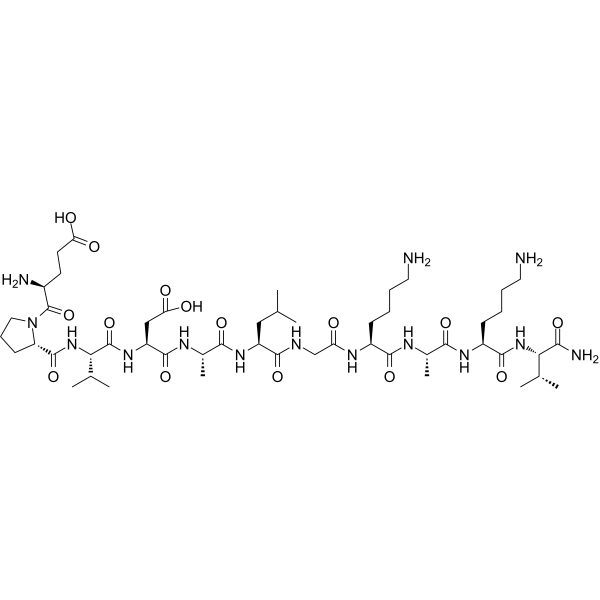
NoxA1ds is a potent and highly selective NADPH oxidase 1 (NOX1) inhibitor (IC50=20 nM). NoxA1ds inhibits NOX1-derived O 2- production in HT-29 human colon cancer cells. NoxA1ds attenuates VEGF-induced human pulmonary artery endothelial cell migration under hypoxic conditions in vitro. NoxA1ds can be used in the study of hypertension, atherosclerosis and tumors .
|
-
- HY-120528A
-
-
- HY-115949
-
|
|
HSP
|
Cancer
|
|
Antitumor agent-47 (Compound 3e) is a silibinin derivative with an antitumor activity. Antitumor agent-47 shows cytotoxic activity against NCI-H1299 and HT29 cells with IC50 values of 8.07 µM and 6.27 µM, respectively .
|
-
- HY-120528
-
-
- HY-N8387
-
|
|
Ras
|
Cancer
|
|
Neogrifolin is an inhibitor of KRAS. Neogrifolin suppress KRAS expression in human colon cancer cells. Neogrifolin has anti-cell viability activity against HeLa, SW480 and HT29 cells wih IC50s of 24.3, 34.6, and 30.1 μM, respectively .
|
-
- HY-146778
-
|
|
Microtubule/Tubulin
|
Cancer
|
|
Tubulin inhibitor 25 is a potent tubulin inhibitor with an IC50 value of 0.98 μM. Tubulin inhibitor 25 exhibits remarkable activity against cancer cell line HT29. Tubulin inhibitor 25 displays the potent inhibition on cell migration and tube formation that contributes to the anti-angiogenesis .
|
-
- HY-P1435A
-
|
|
NADPH Oxidase
|
Cardiovascular Disease
Cancer
|
|
NoxA1ds TFA is a potent and highly selective NADPH oxidase 1 (NOX1) inhibitor (IC50=20 nM). NoxA1ds TFA inhibits NOX1-derived O 2- production in HT-29 human colon cancer cells. NoxA1ds TFA attenuates VEGF-induced human pulmonary artery endothelial cell migration under hypoxic conditions in vitro. NoxA1ds TFA can be used in the study of hypertension, atherosclerosis and tumors .
|
-
- HY-180244
-
|
|
Protease Activated Receptor (PAR)
p38 MAPK
|
Cancer
|
|
P2L-003 is a selective PAR2 antagonist with an IC50 of 0.62 μM in HT-29 cells. P2L-003 blocks PAR2-mediated Ca 2+ mobilization without affecting PAR1, PAR4, or ATP-mediated signaling and dose-dependently suppresses the downstream MAPK signaling cascades, including ERK1/2 and p38 phosphorylation. P2L-003 can be used for colon cancer research .
|
-
- HY-180449
-
|
|
Microtubule/Tubulin
Wnt
|
Cancer
|
|
Anticancer agent 291 (Compound 2406) is an anti-cancer agent. Anticancer agent 291 interferes with the integrity of the β-tubulin cytoskeleton and inhibits the Wnt/β-catenin signal transduction. Anticancer agent 291 significantly inhibits the invasion, migration and colony formation of tumor cells. Anticancer agent 291 induces the cell cycle of EC-9706 and HT-29 cells to arrest at the G2/M phase and inhibits cell proliferation. Anticancer agent 291 can be used for the study of gastrointestinal cancer .
|
-
- HY-159795
-
|
PF-07799933; ARRY-440
|
Raf
PERK
|
Cancer
|
|
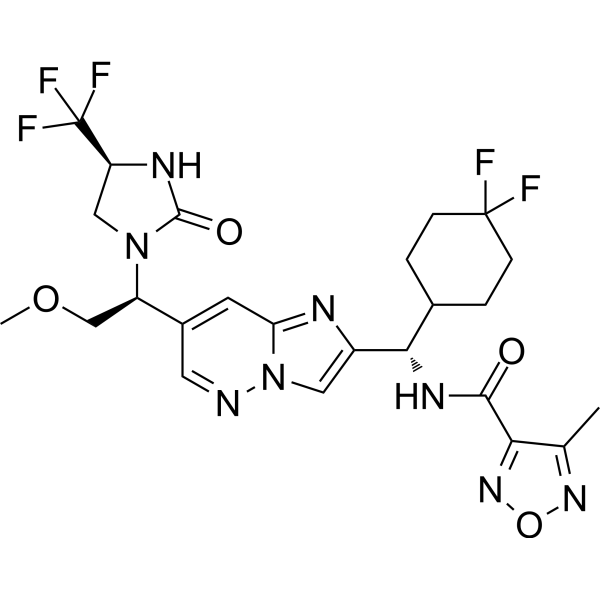
Claturafenib ( PF-07799933) is an orally active inhibitor of pan-mutant BRAF. Claturafenib inhibits pERK in cells (IC50 value of 1.6 nM in HT29 cells). Claturafenib has anticancer activity against BRAF G469A mutant NSCLC and BRAF K601E mutant melanoma .
|
-
- HY-N8462
-
|
Scutebatin C
|
Others
|
Cancer
|
|
6-O-Nicotinoylscutebarbatine G is an alkaloid that can be isolated from Scutellaria barbata.6-O-Nicotinoylscutebarbatine has cytotoxic activities against HONE-1, KB and HT29 cells with IC50s of 3.1, 2.1 and 5.7 μM, respectively .
|
-
- HY-177224
-
|
|
Drug Derivative
|
Cancer
|
|
Antitumor agent-205 (compound 9), an Ecteinascidin derivative, is an antitumor agent. Antitumor agent-205 exhibits anti-proliferation activity against A549 and HT29 cells , with GI50 values of 16.4 nM for each cell line. Antitumor agent-205 can be used for lung and colon cancer research .
|
-
- HY-N14415
-
|
|
Bacterial
|
Infection
Cancer
|
|
Cochleamycin A showed strong inhibitory activity against tumor cells, with IC50s (μg/mL) of P388, HL60, K562, COL0205 and HT29 cells of 1.6, 14.0, 6.2, 16.5 and 19.1, respectively. Cochleamycin A also has anti-Gram-positive bacteria activity .
|
-
- HY-130602
-
|
|
PROTACs
MEK
|
Cancer
|
|
MS432 is a first-in-class and highly selective PD0325901-based von Hippel-Lindau-recruiting PROTAC degrader for MEK1 and MEK2. MS432 displays good plasma exposure in mice, exhibiting DC50 values of 31 nM and 17 nM for MEK1, MEK2 in HT29 cells respectively .
|
-
- HY-100753
-
|
|
STAT
Apoptosis
|
Cancer
|
|
STAT3-IN-1 (compound 7d) is an excellent, selective and orally active STAT3 inhibitor, with IC50 values of 1.82 μM and 2.14 μM in HT29 and MDA-MB 231 cells, respectively. STAT3-IN-1 (compound 7d) induces tumor cells apoptosis .
|
-
- HY-179706
-
|
|
YAP
|
Cancer
|
|
VS3 is a YAP-TEAD interaction inhibitor. VS3 directly disrupts the interaction between YAP-TEAD by binding to TEAD4 Interface 3 (Kd = 6 μM) on the surface. VS3 exhibits anti-proliferative activity against HT29, HCT116, and A2780. VS3 can be used for research on colorectal adenocarcinoma and ovarian cancer .
|
-
- HY-146505
-
|
|
Microtubule/Tubulin
Apoptosis
Reactive Oxygen Species (ROS)
|
Cancer
|
|
Tubulin polymerization-IN-6 (compound 5f) is a potent tubulin polymerization inhibitor, with an IC50 of 1.09 μM. Tubulin polymerization-IN-6 inhibits cell migration and tube formation and contributes to the anti-angiogenesis. Tubulin polymerization-IN-6 can greatly inhibit tumor growth on HT29 xenograft Balb/c nude mice .
|
-
- HY-75564R
-
|
|
Reference Standards
Endogenous Metabolite
|
Cancer
|
|
Cyclo(Ala-Gly) (Standard) is the analytical standard of Cyclo(Ala-Gly). This product is intended for research and analytical applications. Cyclo(Ala-Gly), a metabolite of a mangrove endophytic fungus, Penicillium thomi, exhibits cytotoxicity against A549, HepG2 and HT29 cells. The IC50 values range from 9.5 to 18.1 μM[1].
|
-
- HY-178511
-
|
|
Kinesin
|
Cancer
|
|
KIF18A-IN-17 (Example 37A) is a KIF18A inhibitor with racemic form with an IC50 of 48 nM. KIF18A-IN-17 exhibits anti-proliferative activity against HT29 cells. KIF18A-IN-17 can be used for the study of cancers such as breast cancer and ovarian cancer .
|
-
- HY-164467
-
|
|
Wnt
|
Cancer
|
|
CCT070535 blocks TCF-dependent transcription at the TCF level, with GI50 values of 17.6 μM, 11.1 μM, 11.8 μM and 13.4 μM in HT29 (APC mutant), HCT116 (oncogenic β-catenin), SW480 (APC mutant) and SNU475 (Axin mutant) cells, respectively .
|
-
- HY-118899
-
|
|
Endogenous Metabolite
|
Cancer
|
|
XR5944 is an anti-tumor compound with DNA-targeting activity. As a topoisomerase inhibitor, XR5944 can effectively inhibit the activities of topoisomerase I and II. XR5944 shows excellent anti-tumor activity against human and mouse tumor cells in vitro and in vivo. XR5944 exhibits significant potency in multiple cell lines, with IC50 values of 0.04-0.4 nM. XR5944 is not affected by atypical drug resistance in cells and remains significantly active even in cells overexpressing P-glycoprotein or multidrug resistance-related proteins. XR5944 showed anti-tumor efficacy in human tumor models of H69 small cell lung cancer and HT29 colon cancer, inducing tumor regression in most animals in the HT29 model. XR5944 can be used to study biological processes related to colon and lung cancer .
|
-
- HY-161900
-
|
|
Wnt
Apoptosis
|
Cancer
|
|
Apoptosis inducer 22 (QR-5) is an apoptosis inducer with IC50 values of 63.1 and 46.5 μM for colon cancer cell lines SW480 and HT29, respectively. Apoptosis inducer 22 induces apoptosis by inhibiting the Wnt/β-catenin axis in colon cancer cells. Apoptosis inducer 22 can be used in anti-colon cancer research.
|
-
- HY-156792
-
|
|
RIO Kinase
|
Cancer
|
|
RIOK2-IN-1 (com 4) is a potent and selective RIOK2 inhibitor (Kd=150 nM), but has low cellular activity (IC50=14,600 nM). RIOK2 is an atypical kinase associated with a variety of human cancers and is involved in ribosome maturation and cell cycle progression. The small molecule inhibitor CQ211 (HY-147655), an improvement of RIOK2-IN-1 as the lead compound, has good in vivo and in vitro activity, inhibits the proliferation of MKN-1 and HT-29 cancer cells, and can xenograft MKN in mice -1 model inhibits tumor progression .
|
-
- HY-115950
-
|
|
Drug Derivative
|
Cancer
|
|
Antitumor agent-48 (Compound 4a) is a 2,3-dehydrosilybin derivative with an antitumor activity. Antitumor agent-48 shows cytotoxic activity against MCF-7, NCI-H1299, HepG2 and HT29 cells with IC50 values of 8.06 µM, 13.1 µM, 16.51 µM and 12.44 µM, respectively .
|
-
- HY-119992
-
|
|
PARP
|
Cancer
|
|
CEP-6800 is an inhibitor of PARP-1 with chemopotentiating ability. CEP-6800 attenuates irinotecan (HY-16562)- and Temozolomide (HY-17364)-induced poly(ADP-ribose) accumulation in LoVo as well as HT29 xenografts. CEP-6800 can suppress Calu-6 tumor growth. CEP-6800 can be studied in anti-cancer research .
|
-
- HY-173124
-
|
|
CDK
VEGFR
PDGFR
Apoptosis
|
Cancer
|
|
CDK2/FLT4/PDGFRA-IN-1 (Compound 4a) is a potent inhibitor of CDK2/cyclin A, FLT4 (VEGFR3) and PDGFRA, with IC50s of 1.672, 0.554, and 0.629 μM, respectively. CDK2/FLT4/PDGFRA-IN-1 exhibits potent antiproliferative effects against cancer cells (lung EBC-1, pancreatic ductal adenocarcinoma AsPC-1, colorectal HT-29 cells). CDK2/FLT4/PDGFRA-IN-1 can also induce apoptosis in cancer cells .
|
-
- HY-160066
-
|
|
Transmembrane Glycoprotein
|
Cancer
|
|
SYL3C aptamer sodium is a DNA aptamer that targets epithelial cell adhesion molecule (EpCAM) on the surface of cancer cells. SYL3C aptamer sodium targets a variety of human cancer cell lines including MDA-MB-231, Kato III, HT-29, T47D and SW480. The Kd values of SYL3C aptamer sodium against breast cancer cell line MDA-MB-231 and gastric cancer cell line Kato III are 38 nM and 67 nM, respectively. SYL3C aptamer sodium possesses stability, high binding affinity and selectivity, and can be used for targeted cancer cell imaging and circulating tumor cell detection .
|
-
- HY-174448
-
|
|
Wee1
|
Cancer
|
|
WEE1-IN-12 (Compound 87) is a Wee1 kinase inhibitor with an IC50 of 2.0 nM. WEE1-IN-12 can inhibit the proliferation of HT29 cells (IC50: 1.07 μM), and when used in combination with Gemcitabine (HY-17026), the effect is better (IC50: 0.34 μM). WEE1-IN-12 can be used in the research of tumors such as colon cancer .
|
-
- HY-149302
-
MC4033
1 Publications Verification
|
Apoptosis
Autophagy
Histone Acetyltransferase
|
Cancer
|
MC4033 shows IC50s of 39.4 μM, 52.1 μM, 41 μM and 30.1 μM in HCT116, H1299, A549 and U937, respectively .
MC4033 (25, 50, 100, and 200 μM, 72 h) reduces the level of H4K16Ac in HT29 cells, suggesting its ability to inhibit KAT8 in cells .
|
-
- HY-171906
-
|
1-Arachidonoyl-sn-glycerol 3-phosphate; 1-Arachidonoyl LPA; LPA (20:4)
|
LPL Receptor
|
Inflammation/Immunology
|
|
1-Arachidonoyl-2-hydroxy-sn-glycero-3-PA is a phospholipid containing arachidonic acid at the sn-1 position. It is a precursor to 1-arachidonoyl glycerol (1-Monoarachidin; HY-130567) . 1-Arachidonoyl-2-hydroxy-sn-glycero-3-PA binds to the LPA2/EDG4 receptor with an EC50 value of approximately 10 nM . It prevents TNF-α and IL-6 secretion in wild-type but not Lpa2-/- dendritic cells stimulated by LPS . It also decreases differentiation of HT-29 human colon carcinoma cells to goblet cells in the presence of sodium butyrate .
|
-
- HY-136420
-
|
|
PROTACs
Raf
Apoptosis
|
Inflammation/Immunology
Cancer
|
|
SJF-0628 is a RAF PROTAC degrader. SJF-0628 induces targeted degradation of BRAF in various cancer cell lines (colorectal cancer cell lines (Colo-205, LS-411N, HT-29, RKO) and triple-negative breast cancer cell line DU-4475). SJF-0628 decreases pMEK and pErk levels in DU-4475 cells. SJF-0628 has anti-tumor activity. SJF-0628 can be used for research of colorectal cancer and triple-negative breast cancer. (Pink: RAF ligand (HY-12057), Blue: VHL Ligand ( HY-125845), Black: Linker (HY-B0912)) .
|
-
- HY-170966
-
|
|
HDAC
|
Cancer
|
|
HDAC1-IN-9 (13c) is a HDAC1 inhibitor. HDAC1-IN-9 inhibits HDAC1 enzyme with an IC50 of 1.07 µM. HDAC1-IN-9 exhibits the highest anti-proliferative effect against HT-29 (human colon adenocarcinoma), with anIC50 of 1.78 μM. HDAC1-IN-9 induces substantial Apoptosis in HCT-116 (human colon cancer) cells. HDAC1-IN-9 possesses antiangiogenic property. HDAC1-IN-9 reduces the expression levels of VEGFR-2 and phosphorylated VEGFR-2 (pVEGFR-2) by approximately 80 % .
|
-
- HY-147825
-
|
|
EGFR
Raf
Apoptosis
|
Cancer
|
|
EGFR/BRAFV600E-IN-1 (Compound 23) is a potent EGFR and BRAF V600E dual inhibitor with IC50s of 0.08 and 0.15 µM, respectively. EGFR/BRAFV600E-IN-1 induces apoptosis and cell cycle arrest in both pre-G1 and G2/M phases. EGFR/BRAFV600E-IN-1 exhibits antiproliferative activity againist A-549, MCF-7, Panc-1, HT-29 with IC50s of 1.2, 0.79, 1.3, and 1.23 µM, respectively .
|
-
- HY-103387
-
DuP-697
1 Publications Verification
|
COX
Apoptosis
|
Inflammation/Immunology
Cancer
|
|
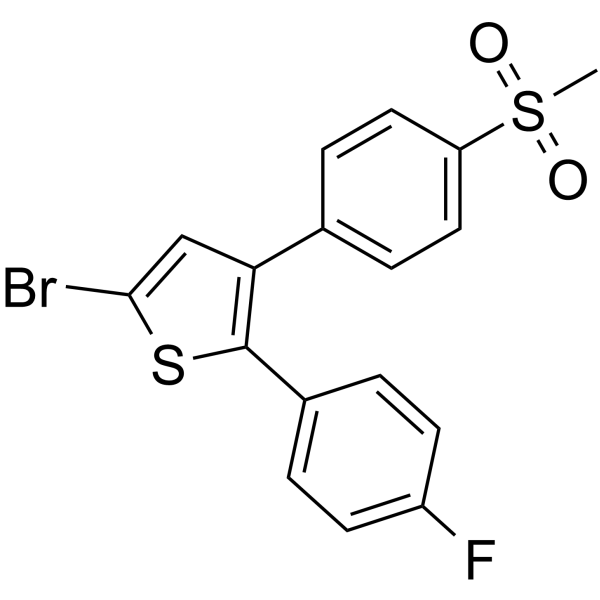
DuP-697 is a member of the vicinal diaryl heterocycles and a potent, irreversible, selective and orally active COX-2 inhibitor (IC50 of 10 nM and 800 nM for human COX-2 and COX-1, respectively). DuP-697 exerts antiproliferative (IC50 of 42.8 nM), antiangiogenic and apoptotic effects on HT29 colorectal cancer cells. DuP-697 inhibits prostaglandin synthesis and has anti-inflammatory, anticancer and antipyretic effects .
|
-
- HY-124007
-
|
ISAHA
|
HDAC
|
Cancer
|
|
4-Iodo-SAHA (1k) is an orally active class I and class II histone deacetylase (HDAC) inhibitor with EC50s of 1.1, 0.95, 0.12, 0.24, 0.85 and 1.3 μM for Skbr3, HT29, U937, JA16 and HL60 cell lines, respectively. 4-Iodo-SAHA (1k) can be used for the research of cancer .
|
-
- HY-177914
-
|
|
MEK
|
Cancer
|
|
MEK-IN-7 (compound WX086) is potent, orally active and selective MEK inhibitor (MEK1 IC50 = 29.62 nM). MEK-IN-7 inhibits HT29 and A375 cell proliferation with IC50s of 0.62 and 0.40 nM. MEK-IN-7 inhibits tumor growth in a HL-29 xenograft mouse model. MEK-IN-7 can be used for melanoma and colon cancer research .
|
-
- HY-162721
-
|
|
Biochemical Assay Reagents
|
Cancer
|
|
Anticancer agent 242 (7) possesses anticancer activity in A2780 (IC50 = 0.24 μM, ovarian adenocarcinoma), A2780cis (IC50 = 0.45 μM, resistant derivative of A2780), CCD18Co (IC50 = 0.59 μM, non-malignant human fibroblasts), A549 (IC50 = 0.32 μM, lung carcinoma), HT29 (IC50 = 0.26 μM, colorectal adenocarcinoma), and MCF7 (IC50 = 0.55 μM, breast adenocarcinoma) .
|
-
- HY-155203
-
|
|
Apoptosis
Reactive Oxygen Species (ROS)
Ferroptosis
|
Cancer
|
|
Anticancer agent 154 (Compound 8h) increases the levels of reactive oxygen species and leads to mitochondrial damage. Anticancer agent 154 induces cell apoptosis and DNA damage. Anticancer agent 154 also induces ferroptosis by reducing the GSH level and GPX4 expression and increasing the lipid peroxidation level. Anticancer agent 154 inhibits cancer cell (HT29, H1975, A549, and MCF-7) proliferation with IC50s of 1.0-1.9 μM .
|
-
- HY-155780
-
|
|
COX
|
Inflammation/Immunology
|
|
Anti-inflammatory agent 52 (compound 7j) is an orally active selective COX-2 inhibitor. Anti-inflammatory agent 52 has anti-HT29 transfer activity, which leads to periodic arrest in G2/M phase. Anti-inflammatory agent 52 has safety, moderate ability to suppress inflammation. Anti-inflammatory agent 52 has a rare property of suppressing the development of tumor in mouse model, showing anti-cancer activity .
|
-
- HY-N7175
-
|
9,11-Dehydroergosterol peroxide; 9(11)-DHEP
|
Apoptosis
Endogenous Metabolite
|
Cancer
|
|
5,8-Epidioxyergosta-6,9(11),22-trien-3-ol (9,11-Dehydroergosterol peroxide), an important steroid from medicinal mushroom, exerts antitumor activity in several tumor types. 5,8-Epidioxyergosta-6,9(11),22-trien-3-ol inhibits HT29 cell growth by inducing CDKN1A expression, thus causing cell cycle arrest and apoptosis .
|
-
- HY-146366
-
|
|
Microtubule/Tubulin
|
Cancer
|
|
Tubulin inhibitor 26 (compound 3c) is a potent inhibitor of tubulin. Tubulin inhibitor 26 is an indazole derivative compound. Tubulin inhibitor 26 shows noteworthy low nanomolar potency against HepG2, HCT116, SW620, HT29 and A549 cancer cell lines. Tubulin inhibitor 26 arrests tumor cell in G2/M phase and induced cell apoptosis. Tubulin inhibitor 26 suppresses tumor growth in vivo without affecting the mice body weight .
|
-
- HY-155781
-
|
|
COX
|
Inflammation/Immunology
|
|
Anti-inflammatory agent 53 (compound 7c) is an orally active selective COX-2 inhibitor. Anti-inflammatory agent 52 has anti-HT29 transfer activity, which leads to periodic arrest in S phase and G2/M phase. Anti-inflammatory agent 52 has safety, moderate ability to suppress inflammation. Anti-inflammatory agent 52 has a rare property of suppressing the development of tumor in mouse model, showing anti-cancer activity .
|
-
- HY-100753R
-
|
|
STAT
Reference Standards
Apoptosis
|
Cancer
|
|
STAT3-IN-1 (Standard) is the analytical standard of STAT3-IN-1 (HY-100753). This product is intended for research and analytical applications. STAT3-IN-1 (compound 7d) is an excellent, selective and orally active STAT3 inhibitor, with IC50 values of 1.82 μM and 2.14 μM in HT29 and MDA-MB 231 cells, respectively. STAT3-IN-1 (compound 7d) induces tumor cells apoptosis .
|
-
- HY-172617
-
|
|
BMI1
Microtubule/Tubulin
Apoptosis
|
Cancer
|
|
APD-94 is a dual inhibitor targeting tubulin and Bmi-1. APD-94 interfers tubulin normal polymerization. APD-94 suppresses the expression of Bmi-1. APD-94 causes cell cycle arrest at the G2/M phase in cancer cells and induces apoptosis, thus inhibiting cancer cell proliferation. APD-94 represses the growth of HT29 cell xenografts in NOD/SCID mice. APD-94 can be used for colorectal cancer study .
|
-
- HY-123237
-
|
|
c-Met/HGFR
FLT3
Trk Receptor
Apoptosis
Autophagy
|
Cancer
|
|
KRC-108, an aminopyridine, is an orally active multiple kinase inhibitor with IC50s of 80 nM, 23 nM, 3 nM, 70 nM, 30 nM, 39 nM for c-Met, c-Met M1250T, c-Met Y1230D, Ron, Flt3 and TrkA, respectively. KRC-108 induces cell cycle arrest, apoptotic cell death, and autophagy. KRC-108 exhibits anti-tumor activity in vivo in HT29 colorectal cancer, NCI-H441 lung cancer xenograft models in athymic BALB/c nu/nu mice .
|
-
- HY-149523
-
|
|
Apoptosis
NO Synthase
Caspase
|
Inflammation/Immunology
Cancer
|
|
Anticancer agent 157 (compound 15) is a NO inhibitor (IC50=0.62 μg/mL) with anti-inflammatory and anticancer activities. Anticancer agent 157 can bind to iNOS (inducible NO synthase) and caspase 8, causing nuclear fragmentation and chromatin condensation, inducing apoptosis. Anticancer agent 157 inhibits HT29 colon cancer cells (IC50=2.45 μg/mL), Hep-G2 liver cancer cells (IC50=3.25 μg/mL), and B16-F10 murine melanoma cells (IC50=3.84 μg/mL) .
|
-
- HY-125387
-
|
|
Src
|
Inflammation/Immunology
|
|
TOP1210 is a narrow-spectrum tyrosine kinase inhibitor with potent inhibitory activity against P38α, Src, and Syk kinases. TOP1210 effectively reduced proinflammatory cytokines released by peripheral blood monocytes, primary macrophages, HT29 cells, inflammatory cells in ulcerative colitis (UC) biopsies, and myofibroblasts isolated from inflamed colonic UC mucosa. TOP1210 showed significant anti-inflammatory effects in cell experiments and UC biopsies, superior to some selective kinase inhibitors. The multi-kinase inhibition of TOP1210 provides the possibility of obtaining a wider range of therapeutic effects, especially in the regulation of autoimmune responses .
|
-
- HY-178960
-
|
|
Microtubule/Tubulin
Apoptosis
|
Cancer
|
|
Tubulin-IN-59 (Compound 8g) is an orally active Tubulin inhibitor. Tubulin-IN-59 exhibits potent anti-proliferative activity against HCT116 colorectal cancer, HeLa cervical cancer, and HepG2 liver cancer cell lines, with its IC₅₀ value ranging from 16 to 35 nM. Tubulin-IN-59 arrests HeLa cells in the G2/M phase and induces cell apoptosis. Tubulin-IN-59 demonstrates significant anti-tumor activity in the HT29 human colon cancer mouse xenograft model. Tubulin-IN-59 can be used for the study of colorectal cancer and cervical cancer .
|
-
- HY-170932
-
|
|
EGFR
COX
Apoptosis
|
Cancer
|
|
EGFR/COX-2-IN-1 is an EGFR/COX-2 inhibitor. EGFR/COX-2-IN-1 inhibits EGFR WT, EGFR T790M, COX-1 and COX-2 with IC50s of 0.12, 0.076, 20.1 and 1.52 μM respectively. EGFR/COX-2-IN-1 inhibits and with IC50s of , respectively. EGFR/COX-2-IN-1 inhibits MCF-7, HT-29 and A-549 with IC50s of 1.20, 5.14 and 14.81 μM, respectively. EGFR/COX-2-IN-1 displays Apoptosis induction by up-regulating Bax and down-regulating Bcl-2 protein levels. EGFR/COX-2-IN-1 results in a significant increase in the percentage of cells at the G2/M in MFC-7 cells. EGFR/COX-2-IN-1 exhibits broad-spectrum antitumor effects .
|
-
- HY-161863
-
|
|
Microtubule/Tubulin
Reactive Oxygen Species (ROS)
Apoptosis
|
Cancer
|
|
Tubulin polymerization-IN-67 (Compound 5h) is an inhibitor for tubulin polymerization on colchicine binding site with an IC50 of 2.92 μM. Tubulin polymerization-IN-67 inhibits the proliferation of cancer cells HT29, A549, U2OS, MG-63 and HeLa with IC50s of 0.12-4.13 μM. Tubulin polymerization-IN-67 arrests the cell cycle at G2/M phase, induces apoptosis in cell U2OS, inhibits the cell migration of A549. Tubulin polymerization-IN-67 reduces the mitochondrial membrane potential (MMP) and increase intracellular ROS, inhibits the angiogenesis in HUVECs. Tubulin polymerization-IN-67 exhibits antitumor efficacy in mice
|
-
- HY-171906A
-
|
1-Arachidonoyl-sn-glycerol 3-phosphate sodium; 1-Arachidonoyl LPA sodium; LPA (20:4) sodium
|
LPL Receptor
|
Cancer
|
|
1-Arachidonoyl-2-hydroxy-sn-glycero-3-PA (sodium) (1-Arachidonoyl-sn-glycerol 3-phosphate (sodium)) is a phospholipid with arachifonic acid at the sn-1 position. 1-Arachidonoyl-2-hydroxy-sn-glycero-3-PA (sodium) binds to the LPA2/EDG4 receptor (EC50 of 10 nM). 1-Arachidonoyl-2-hydroxy-sn-glycero-3-PA (sodium) can be found in rat brain as 37% of the arachidoinic acid-containing lysophosphatidic acid species. 1-Arachidonoyl-2-hydroxy-sn-glycero-3-PA (sodium) is the precursor to 1-arachidonoyl glycerol. 1-Arachidonoyl-2-hydroxy-sn-glycero-3-PA (sodium) can prevent TNF-α and IL-6 secretion in wild type LPS-stimulated dendritic cells. 1-Arachidonoyl-2-hydroxy-sn-glycero-3-PA (sodium) reduces differentiation of HT-29 colon carcinoma cells into goblet cells when sodium butyrate is present .
|
-
- HY-162927
-
|
|
MDM-2/p53
Apoptosis
|
Cancer
|
|
p53-MDM2-IN-6 (Compound 10a), a LSM-83177 hydrazone analog, is a potent p53-MDM2 inhibitor with an IC50 value of 11.08 µg/mL. p53-MDM2-IN-6 arrests the cell cycle in the S phase and induces early and late Apoptosis with antiproliferative activity against HT29 cell lines with an IC50 value of 10.44 µg/mL. p53-MDM2-IN-6 inhibits p53-MDM2 interaction with increment in p-53 level and decrease the expression of GST enzymes. p53-MDM2-IN-6 is promising for research of colorectal cancer .
|
-
- HY-120339
-
|
|
Microtubule/Tubulin
FAK
MEK
ERK
MMP
Caspase
PARP
Apoptosis
MDM-2/p53
|
Cancer
|
|
STK899704 is a tubulin polymerization inhibitor. STK899704 exhibits broad-spectrum inhibitory activity against various cancer cell lines with IC50 values ranging from 0.2 to 1.0 μM. STK899704 disrupts the mitotic spindle structure, inducing G2/M phase cell cycle arrest. STK899704 inhibits the migration ability of HT29 cells by downregulating the FAK-MEK-ERK signaling pathway, thereby suppressing the expression and activity of MMP-2 and MMP-9. STK899704 activates caspase-3/7/8/9, leading to PARP cleavage and inducing apoptosis. STK899704 induces cellular senescence through the p53 pathway. STK899704 can be used in research on skin cancer, lung cancer, colon cancer, and other cancers .
|
-
- HY-131438
-
|
|
Topoisomerase
|
Cancer
|
|
GI-149893 is a selective topoisomerase I (TopoI) inhibitor. GI-149893 prevents DNA religation and induces irreversible DNA damage in tumor cells. GI-149893 is promising for research of cancers (e.g., colon carcinoma HT-29/SW-48, breast MX-1, prostate PC-3 xenografts) .
|
-
- HY-147655
-
|
|
RIO Kinase
|
Cancer
|
|
CQ211 is a potent and selective RIOK2 inhibitor with a Kd of 6.1 nM. CQ211 exhibits potent proliferation inhibition activity against multiple cancer cell lines .
|
-
- HY-147799
-
|
|
Carbonic Anhydrase
|
Cancer
|
|
hCA XII/II/IX-IN-1 (Compound 3) is a potent human carbonic anhydrase (hCA) inhibitor with IC50 values of 2.6, 0.004, 0.005 and 0.001 μM against hCA I, hCA II, hCA IX and hCA XII, respectively. hCA XII/II/IX-IN-1 shows anticancer activity .
|
-
- HY-N9650
-
|
Mammea A/AD cyclo D
|
Drug Derivative
|
Cancer
|
|
Mesuagin (Mammea A/AD cyclo D) shows anticancer activity and can be isolated from the Mammea americana L. seeds .
|
-
- HY-148052
-
|
|
RIP kinase
|
Cancer
|
|
RIPK3-IN-2 is a RIP3 inhibitor. RIPK3-IN-2 can be used in diseases caused by or associate with activated necrotic pathways research .
|
-
- HY-N15227
-
|
|
Others
|
Cancer
|
|
(+)-N-Methylhernovine is an aporphine alkaloid that can be isolated from Hernandia nymphaeifolia. (+)-N-Methylhernovine exhibits slight cytotoxicity in cancer cells .
|
-
- HY-146014
-
-
- HY-33351
-
Eugenin
1 Publications Verification
|
Others
|
Cardiovascular Disease
Cancer
|
|
Eugenin is a chromone that can be isolated from Formosan Peucedanum japonicum and has an effective antiplatelet aggregation effect. In addition, Eugenin has certain cytotoxicity against tumor cells .
|
-
- HY-125850
-
-
- HY-131446
-
|
|
Checkpoint Kinase (Chk)
|
Cancer
|
|
Chk1-IN-5 is a potent checkpoint kinase 1 (Chk1) inhibitor. Chk1-IN-5 inhibits Chk1 phosphorylation and inhibits tumor growth in colon cancer xenograft model .
|
-
- HY-N0278
-
|
Pulsatilla camphor; Anemonine; trans-Anemonin
|
PKC
NO Synthase
|
Inflammation/Immunology
|
|
Anemonin (Pulsatilla camphor), a selective iNOS inhibitor, is also a PKC-θ inhibitor. Anemonin can significantly inhibit the translation or protein stability of PKC-θ protein. Anemonin also ameliorates dextran sodium sulfate-induced acute ulcerative colitis (UC) in mice. Anemonin can be used in the research of inflammation-related diseases .
|
-
- HY-N15413
-
|
|
Parasite
|
Infection
|
|
Thalidasine (compound 3) is a bisbenzyltetrahydroisoquinoline alkaloid. Thalidasine is a anticancer agent against human colon adenocarcinoma cells. Thalidasine exhibits antileishmanial activity and can be used for Leishmania infection research research .
|
-
- HY-119356
-
|
|
Drug Derivative
|
Cancer
|
|
S 23906-1 is an orally active Acronycine derivative. S 23906-1 has anti-cancer activity against colon cancer and lung cancer .
|
-
- HY-144277
-
-
- HY-171837
-
|
|
Caspase
|
Cancer
|
|
c9,t11,c15-CLNA is a conjugated linolenic acid (CLNA) isomer produced by Lactobacillus plantarum ZS2058. c9,t11,c15-CLNA has significant anti-proliferation activity against colon cancer cells (IC50: 18.26 μM). c9,t11,c15-CLNA induces pyroptosis by activating the canonical pyroptosis pathway mediated by caspase-1. c9,t11,c15-CLNA can be used in the study of colon cancer .
|
-
- HY-100429
-
CAN508
1 Publications Verification
|
CDK
|
Cancer
|
|
CAN508 is a potent, ATP-competitive CDK9/cyclin T1 inhibitor with an IC50 of 0.35 μM. CAN508 exhibits a 38-fold selectivity for CDK9/cyclin T over other CDK/cyclin complexes. Antitumor activity .
|
-
- HY-153400
-
|
|
ATM/ATR
|
Cancer
|
|
ATR-IN-22 (Compound 34) is an orally active ATR inhibitor. ATR-IN-22 inhibits MIAPaCa-2 proliferation (IC50 <1 μM). ATR-IN-22 shows anti-tumor activity in colon cancer .
|
-
- HY-N0777
-
|
|
Others
PERK
ERK
Akt
PI3K
Lipase
|
Metabolic Disease
|
|
Isorhamnetin-3-O-glucoside is an orally active natural compound. Isorhamnetin 3-O-glucoside increases P-ERK, ERK, P-Akt (Ser473), P-PI3K, and PDX-1. Isorhamnetin 3-O-glucoside downregulates C/EBPα and inhibits lipase. Isorhamnetin 3-O-glucoside reduces lipids and inhibits obesity .
|
-
- HY-135549
-
-
- HY-161383
-
|
|
Checkpoint Kinase (Chk)
|
Cancer
|
|
CHK1-IN-9 (compound 11) is an orally active CHK1 inhibitor with an IC50 value of 0.55 nM. CHK1-IN-9 can enhance the effect of DNA-damaging drugs on tumor cells. CHK1-IN-9 has synergistic anticancer effects with Gemcitabine (HY-17026) .
|
-
- HY-136464
-
|
|
β-catenin
|
Cancer
|
|
β-catenin-IN-2 (Compound H1B1) is a potent β-catenin inhibitor. β-catenin-IN-2 can be used for the study of colorectal cancer .
|
-
- HY-146367
-
|
|
VEGFR
Apoptosis
Reactive Oxygen Species (ROS)
|
Cancer
|
|
VEGFR-2-IN-19 (Compound 15b) is a potent VEGFR2 inhibitor. VEGFR-2-IN-19 induces cell apoptosis and increases intracellular reactive oxygen species level. VEGFR-2-IN-19 can be used as an anticancer agent .
|
-
- HY-128766A
-
|
|
Checkpoint Kinase (Chk)
|
Cancer
|
|
CHK1-IN-4 hydrochloride is a selective checkpoint kinase 1 (Chk1) inhibitor with an IC50 ≤ 1 nM. The IC50 value of CHK1-IN-4 hydrochloride against Chk2 ranges from 50 to 100 nM. CHK1-IN-4 hydrochloride inhibits cancer cell proliferation and exhibits antitumor activity in colon cancer xenograft models. CHK1-IN-4 hydrochloride can be used for the research of colon cancer and breast cancer .
|
-
- HY-152238
-
|
|
PI3K
mTOR
|
Cancer
|
|
PI3K/mTOR Inhibitor-12 is a potent, orally active and selective PI3K/mTOR inhibitor with IC50 values of 0.06 nM and 3.12 nM for PI3Kα and mTOR, respectively. PI3K/mTOR Inhibitor-12 has antitumor activity. PI3K/mTOR Inhibitor-12 has lower liver toxicity .
|
-
- HY-130978
-
|
|
DNA Alkylator/Crosslinker
ADC Payload
|
Cancer
|
|
Duocarmycin DM, a DNA minor-groove alkylator, is an antibody agent conjugates (ADCs) toxin. Duocarmycin DM is based on its characteristic curved indole structure and a spirocyclopropylcyclohexadienone electrophile to act anticancer activity .
|
-
- HY-128915
-
|
|
DNA Alkylator/Crosslinker
ADC Payload
|
Cancer
|
|
Duocarmycin DM free base, a DNA minor-groove alkylator, is an antibody agent conjugates (ADCs) toxin. Duocarmycin DM free base is based on its characteristic curved indole structure and a spirocyclopropylcyclohexadienone electrophile to act anticancer activity .
|
-
- HY-117295A
-
|
|
Arrestin
|
Inflammation/Immunology
Cancer
|
|
7-Fluorotryptamine hydrochloride is a potent agonist of GPRC5A. 7-Fluorotryptamine hydrochloride induces GPRC5A-mediated β-arrestin recruitment. 7-Fluorotryptamine hydrochloride can be used for research of immune and cancer signaling .
|
-
- HY-137487
-
|
|
PROTACs
Raf
|
Cancer
|
|
PROTAC BRAF-V600E degrader-1 (compound 23) is a potent PROTAC BRAF-V600E degrader whlie no degradation activity against BRAF-WT. PROTAC BRAF-V600E degrader-1 exhibits Kd values of 2.4 nM and 2 nM for BRAF and BRAF-V600E, respectively. PROTAC BRAF-V600E degrader-1 degrades BRAF-V600E via the ubiquitin-proteasome system (UPS) and inhibits the growth of melanoma cells . (In the molecular structure, target protein ligand: BI-882370 (HY-107779), red part; E3 ubiquitin enzyme ligand: Pomalidomide (HY-10984), blue part; PROTAC linker: G007-LK (HY-12438), black part.
|
-
- HY-161459
-
|
|
Apoptosis
Hedgehog
Gli
|
Cancer
|
|
GLI1-IN-1 (CBC-1) is a GLI-1 inhibitor with excellent water solubility and anticancer activity. GLI1-IN-1 can induce apoptosis and suppress the growth of colorectal cancer by inhibiting the Hedgehog(HH) (IC50=1.3 μM) pathway .
|
-
- HY-147812
-
|
|
DNA/RNA Synthesis
|
Cancer
|
|
POLA1 inhibitor 1 (Compound 12) is an orally active POLA1 inhibitor. POLA1 inhibitor 1 shows antitumor activity against several tumor histotypes and Adarotene-resistant cell line .
|
-
- HY-163797
-
|
|
DNA/RNA Synthesis
|
Cancer
|
|
WRN inhibitor 10 (Compound P24) is an inhibitor for the Werner helicase WRN with an IC50 of 1.1 nM. WRN inhibitor 10 inhibits the proliferation of cancer cell SW48 with IC50 of 39 nM. WRN inhibitor 10 exhibits good liver microsomal stability and film permeability. WRN inhibitor 10 exhibits good pharmacokinetic characteristics in CD-1 mice .
|
-
- HY-146743
-
|
|
Apoptosis
|
Cancer
|
|
Antitumor agent-53 is a potent antitumor agent. Antitumor agent-53 induces cell cycle arrest at the G2/M phase. Antitumor agent-53 inhibits the PI3K/AKT pathway to induce the apoptosis of HGC-27 cells. Antitumor agent-53 has the potential for the research of gastrointestinal tumors .
|
-
- HY-W265314
-
|
|
NF-κB
Interleukin Related
|
Inflammation/Immunology
|
|
Arvelexin is a biologically active compound. Arvelexin can be found in Brassica rapa L. (Brassicaceae). Arvelexin inhibits NF-κB activation and the expressions of IL-8. Arvelexin inhibits colonic inflammation .
|
-
- HY-P2729
-
|
EC 3.4.21.14
|
Ser/Thr Protease
Apoptosis
Interleukin Related
Bacterial
|
Inflammation/Immunology
Cancer
|
|
Subtilisin (EC 3.4.21.14) is a bacterial serine protease. Subtilisin induces Apoptosis. Subtilisin stimulates the expression of pro-allergic cytokines (IL-1α, IL-33). Subtilisin induces prototypic allergic lung inflammation. Subtilisin exhibits anticancer activity against breast and colon cancer. Subtilisin shows antifouling activity. Subtilisin can be used as a detergent additive .
|
-
- HY-Y0396
-
|
|
Biochemical Assay Reagents
Survivin
Bcl-2 Family
Caspase
Apoptosis
mTOR
Akt
|
Cancer
|
|
N-Hydroxyphthalimide is a blocking agent and catalyst. N-Hydroxyphthalimide promotes oxidation reactions by generating PINO free radicals and activating hydrogen atom transfer processes. N-Hydroxyphthalimide reduces the expression of anti-apoptotic proteins Survivin and Bcl-xL and activates caspase 9 and caspase 3. N-Hydroxyphthalimide induces Apoptosis. N-Hydroxyphthalimide inhibits the phosphorylation of mTOR (Ser2448, Ser2481) and Akt (Ser473). N-Hydroxyphthalimide has anticancer effects against breast and colon cancer .
|
-
- HY-138962
-
|
K-Carrageenan Karra Type
|
Apoptosis
|
Inflammation/Immunology
Cancer
|
|
κ-Carrageenan is a natural polymer which predominantly available in red seaweeds. κ-Carrageenan is an effective agent carrier to deliver curcumin in cancer cells and to induce apoptosis. κ-carrageenan serves as a potential inflammatory agent that magnifies existing intestinal inflammation .
|
-
- HY-N12686
-
|
|
Bacterial
Apoptosis
Reactive Oxygen Species (ROS)
Mitochondrial Metabolism
|
Infection
Cancer
|
|
Dichamanetin, a C-benzylated flavanone that can be isolated from Piper sarmentosum, is a potent antibacterial and anticancer agent. Dichamanetin displays antibacterial activity against a panel of Gram-positive strains, including resistant S. aureus strains with MIC values in the range of 1-7.5 μg/mL. Dichamanetin inhibits cancer cell growth by affecting ROS-related signaling components via mitochondrial-mediated apoptosis. Dichamanetin can be used for colon, prostate, breast cancer and infection research .
|
-
- HY-170366
-
|
|
VEGFR
Apoptosis
|
Cancer
|
|
VEGFR-2-IN-58 (Compound 7b) inhibits VEGFR-2 with an IC50 of 42.5 nM. VEGFR-2-IN-58 displays selective cytotoxicity against cancer cells. VEGFR-2-IN-58 shows cellular growth arrest at the G2/M phase in cancer cells. VEGFR-2-IN-58 induces cancer cells Apoptosis, increasing BAX expression and reducing Bcl2 expression. VEGFR-2-IN-58 inhibits wound closure in cancer cells .
|
-
- HY-113099R
-
|
Indole-3-lactic acid (Standard)
|
Reference Standards
Endogenous Metabolite
|
Inflammation/Immunology
|
|
Indolelactic acid (Standard) is the analytical standard of Indolelactic acid. This product is intended for research and analytical applications. Indolelactic acid (Indole-3-lactic acid) is a tryptophan (Trp) catabolite in Azotobacter vinelandii cultures. Indolelactic acid has anti-inflammation and potential anti-viral activity[1][3][4].
|
-
- HY-113099
-
|
Indole-3-lactic acid
|
Endogenous Metabolite
|
Inflammation/Immunology
|
|
Indolelactic acid (Indole-3-lactic acid) is a tryptophan (Trp) catabolite in Azotobacter vinelandii cultures. Indolelactic acid has anti-inflammation and potential anti-viral activity .
|
-
- HY-161060
-
|
|
RIP kinase
STAT
|
Inflammation/Immunology
Cancer
|
|
Zharp1-211 is a RIPK1 kinase inhibitor with an EC50 of 53 nM and a Kd of 8.7 nM. Zharp1-211 reduces IFN-γ-induced STAT1 activation. Zharp1-211 can be used in the research of graft-versus-host disease and colon cancer .
|
-
- HY-179516
-
|
|
Akt
Microtubule/Tubulin
Apoptosis
|
Cancer
|
|
AKT1-IN-11, a Podophyllotoxin (HY-15552) derivative, is a AKT1/tubulin dual inhibitor. AKT1-IN-11 down-regulates the phosphorylation level of AKT kinase in tumor cells, disrupting cell proliferation, causeing G2/M phase arrest and inducing apoptosis. AKT1-IN-11 also promotes tubulin depolymerization. AKT1-IN-11 can be used for the research of colorectal cancer .
|
-
- HY-146210
-
|
|
EGFR
|
Cancer
|
|
EGFR-IN-50 (Compound 9h) is a potent EGFR inhibitor against L858R resistance mutation (TEL-EGFR-L858R-BaF3: GI50=8 nM, TEL-EGFR-T790M-L858R-BaF3: GI50=6.03 μM). EGFR-IN-50 shows anti-proliferative activity to cancer cells .
|
-
- HY-170958
-
|
|
Src
Apoptosis
|
Cancer
|
Scr-IN-1 (Compound 4e) is a Tyrosine kinase inhibitor. Scr-IN-1 inhibits HCT-116 cells and MIA-PaCa-2 cells with IC50s of 0.16 μM and 1.16 μM, respectively. Scr-IN-1 displays selectivity profile on HCT-116 cells and MIA-PaCa-2 cells with SI > 625 and SI > 86, respectively. Scr-IN-1 induces Apoptosis in HCT-116 colon cancer cell and does not cause any change in the rate of necrotic cells. Scr-IN-1 is a novel SRC kinase inhibitor candidate for HCT-116 cells. Scr-IN-1 is potential for cancer research .
|
-
- HY-B1787
-
|
|
mTOR
Drug Metabolite
|
Cancer
|
|
Sulindac sulfone is an mTORC1 pathway inhibitor and a metabolite of Sulindac. Sulindac sulfone inhibits colon cancer cell growth and induces cell cycle arrest. Sulindac sulfone is used in cancer research .
|
-
- HY-177132
-
|
WX001
|
ERK
|
Cancer
|
|
Sonvuterkib (WX001) is a potent and orally active extracellular signal-regulated kinases (ERK) inhibitor with IC50 values of 1.4, 0.54 nM for ERK1, ERK2, respectively. Sonvuterkib inhibits cell proliferation. Sonvuterkib shows anticancer activity .
|
-
- HY-108352
-
|
VCE 004
|
Topoisomerase
|
Cancer
|
|
HU 331 (HU 331) is a highly specific Topoisomerase II inhibitor with anticancer activity. HU 331 has shown promising inhibitory effects on human cancer cell lines in vitro and human tumor xenografts in nude mice in vivo .
|
-
- HY-159483
-
|
|
Topoisomerase
Autophagy
Glutathione Peroxidase
|
Cancer
|
|
SelB-1 serves as a dual inhibitor for Topoisomerase I/II. SelB-1 possesses anticancer activity and can be utilized in the research of prostate cancer and colon cancer. Furthermore, SelB-1 is also capable of inducing autophagy gene expression and lipid peroxidation, while simultaneously reducing the level of GSH .
|
-
- HY-175853
-
|
|
Topoisomerase
Apoptosis
Caspase
|
Cancer
|
|
Topoisomerase II-IN-24 is a Topoisomerase IIα inhibitor with an IC50 of 41.67 μM. Topoisomerase II-IN-24 can inhibit cancer cells proliferation, induce G2/M phase arrest and induce apoptosis. Topoisomerase II-IN-24 can be used for the research of cancer, such as colon cancer .
|
-
- HY-157387
-
|
|
c-Met/HGFR
Apoptosis
|
Cancer
|
|
c-Met-IN-22 (compound 51am) is an orally active inhibitor against c-Met with an IC50 value of 2.54 nM. c-Met-IN-22 has antiproliferative and antitumor activities. c-Met-IN-22 induces cell apoptosis .
|
-
- HY-N2518R
-
-
- HY-N2518
-
-
- HY-131421
-
|
8-Piperidino-cyclic AMP
|
PKA
|
Cancer
|
|
8-PIP-cAMP is a selective cAMP-dependent protein kinase activator and can be used for study of cancer .
|
-
- HY-W250111
-
|
|
Biochemical Assay Reagents
Apoptosis
Reactive Oxygen Species (ROS)
Bcl-2 Family
Caspase
|
Cancer
|
|
Carboxymethyl chitosan is a derivative of chitosan. Carboxymethyl chitosan inhibits Apoptosis and ROS. Carboxymethyl chitosan increases the expression of Bcl-2 and reduces the expression of Bax, cytochrome c and caspase-3. Carboxymethyl chitosan inhibits the migration of various cells. Carboxymethyl chitosan exerts antitumor effects on Lewis tumors and hepatocarcinoma .
|
-
- HY-N3376
-
|
Spermatheridine; VLT045
|
Apoptosis
|
Cancer
|
|
Liriodenine (Spermatheridine; VLT045) is an aporphine alkaloid isolated from the plant?Mitrephora sirikitiae?and has anti-cancer activities . Liriodenine induces cell apoptosis, activates the intrinsic pathway by induction of caspase-3 and caspase-9 .
|
-
- HY-173330
-
|
|
HDAC
|
Cancer
|
|
HDAC-IN-89 is an inhibitor of HDAC1 (IC50: 0.95 nM), HDAC2 (IC50: 0.86 nM), HDAC3 (IC50: 1.06 nM) and HDAC8 (IC50: 4.24 nM). HDAC-IN-89 blocks the cell cycle and induces apoptosis. HDAC-IN-89 has anti-tumor activity .
|
-
- HY-P11845
-
|
|
Radionuclide-Drug Conjugates (RDCs)
Neurotensin Receptor
|
Cancer
|
|
DOTA-NT-20.3-IPBA is a Neurotensin receptor 1 (NTR1)-targeting albumin binder with specific high-affinity binding to NTR1. DOTA-NT-20.3-IPBA is formed by the conjugation of DOTA-NT-20.3 and IPBA. DOTA-NT-20.3-IPBA can be used for positron emission tomography (PET) imaging following labeling with [ 68Ga]Ga .
|
-
- HY-151613A
-
|
|
PROTACs
Akt
|
Cancer
|
|
MS15 TFA is a potent and selective AKT PROTAC degrader. MS15 TFA inhibits the AKT1, -2, and -3 activities, with IC50 values of 798 nM, 90 nM, and 544 nM, respectively .
|
-
- HY-171837A
-
|
|
TNF Receptor
Interleukin Related
SOD
|
Inflammation/Immunology
|
|
t9,t11,c15-CLNA is a conjugated linolenic acid (CLNA) isomer produced by Lactobacillus plantarum ZS2058. t9,t11,c15-CLNA has the main activities of anti-inflammatory, antioxidant and improving intestinal barrier function. The regulatory mechanism of t9,t11,c15-CLNA includes upregulation of tight junction proteins, inhibition of pro-inflammatory cytokines (such as TNF-α, IL-6) and activation of antioxidant enzymes (such as SOD, CAT). t9,t11,c15-CLNA can be used in the study of inflammatory bowel diseases (such as colitis) .
|
-
- HY-162809
-
|
|
Ras
|
Cancer
|
|
XMU-MP-9 is a bifunctional compound that binds to the C2 domain of Nedd4-1 and the allosteric site of K-Ras. XMU-MP-9 enhances the interaction between Nedd4-1 and K-Ras, induces conformational changes in the Nedd4-1/K-Ras complex, promotes the ubiquitination and degradation of multiple K-Ras mutants, and inhibits the proliferation of cells carrying K-Ras mutants. XMU-MP-9 can be used for the study of colon, lung and pancreatic cancer .
|
-
- HY-13661
-
|
UCN-01; KRX-0601
|
PKC
CDK
Apoptosis
Cadherin
|
Neurological Disease
Cancer
|
|
7-Hydroxystaurosporine (UCN-01), a derivative of Staurosporine (HY-15141), is a selective protein kinase C (PKC) inhibitor with antitumor activity. 7-hydroxystaurosporine induces apoptosis and inhibits cell proliferation in colon carcinoma and leukemia cells, suppresses invasion and migration in glioblastoma cells. 7-Hydroxystaurosporine exhibits efficacy in breast cancer xenograft mouse models. 7-Hydroxystaurosporine can be used for colon carcinoma, breast cancer, glioblastoma and leukemia research .
|
-
- HY-143317
-
|
|
Epigenetic Reader Domain
|
Cancer
|
|
XY153 (compound 8l) is a BD2-selective BET inhibitor and selectively binds to BRD4 BD2. XY153 binds to BRD4 BD2, BRD3 BD2 and BRD2 BD2 with IC50s of 0.79, 5.31 and 5.09 nM, respectively. XY153 shows potent antiproliferative activity against multiple tumor cell lines. XY153 can be used for the research of acute myeloid leukemia (AML) and cancer .
|
-
- HY-N9481
-
-
- HY-160833
-
|
|
Carbonic Anhydrase
|
Cancer
|
|
hCAIX/XII-IN-12 (Compound 6) is a potent and highly selective dual inhibitor of hCA IX and hCA XII, with Ki values of 8.2 and 5.6 nM respectively. hCAIX/XII-IN-12 exhibits significant anti-proliferative activity against colon cancer cells, and this activity remains effective under hypoxic conditions. hCAIX/XII-IN-12 can be used for research on colon cancer .
|
-
- HY-P1791
-
|
Lactoferricin B; Lfcin B
|
Bacterial
Fungal
Apoptosis
|
Infection
Cancer
|
|
Lactoferrin 17-41 (Lactoferricin B), a peptide corresponding to residues 17-41 of bovine lactoferrin, has antimicrobial activity against a wide range of microorganisms, including Gram-positive and Gramnegative bacteria, viruses, protozoa, and fungi. Lactoferrin 17-41 has antitumor activities .
|
-
- HY-151613
-
|
|
PROTACs
Akt
|
Cancer
|
|
MS15 is a potent and selective AKT PROTAC degrader. MS15 inhibits the AKT1, -2, and -3 activities, with IC50 values of 798 nM, 90 nM, and 544 nM, respectively .
|
-
- HY-173164
-
|
|
EGFR
Raf
Apoptosis
|
Cancer
|
|
EGFR/BRAFV600E-IN-4 (Compound 10f) is a dual EGFR and BRAF V600E inhibitor with IC50 values of 61 nM and 43 nM, respectively. EGFR/BRAFV600E-IN-4 arrests cell cycle, induces apoptosis in both early and late stages and inhibits cancer cells growth in vitro, and has a broad anticancer activity .
|
-
- HY-P1791B
-
|
Lactoferricin B acetate; Lfcin B acetate
|
Bacterial
Fungal
Apoptosis
|
Infection
Cancer
|
|
Lactoferrin 17-41 (Lactoferricin B) acetate, a peptide corresponding to residues 17-41 of bovine lactoferrin, has antimicrobial activity against a wide range of microorganisms, including Gram-positive and Gramnegative bacteria, viruses, protozoa, and fungi. Lactoferrin 17-41 acetate has antitumor activities .
|
-
- HY-149393
-
|
|
Mixed Lineage Kinase
RIP kinase
|
Cancer
|
|
RIPK3-IN-3 (compound 20) is a selective inhibitor of RIP kinase RIPK3 (IC50=10 nM). RIPK3 mediates the phosphorylation of Mixed Lineage Kinase (MLKL) and causes necroptosis, while RIPK3-IN-3 inhibits p-MLKL oligomerization and thereby inhibits necroptosis. RIPK3-IN-3 also downregulates CXCL5 secretion and inhibits AsPC-1 cell migration and invasion .
|
-
- HY-N18952
-
|
|
Interleukin Related
|
Inflammation/Immunology
|
|
Heparin disaccharide II-S trisodium (Compound HSH-9) is a heparin-derived disaccharide. Heparin disaccharide II-S trisodium inhibits the spontaneous secretion of proinflammatory mediators IL-8 and IL-1β in intestinal epithelial cells at the post-transcriptional stage .
|
-
- HY-N0596R
-
|
20(R)-Panaxadiol (Standard)
|
Reference Standards
PD-1/PD-L1
HIF/HIF Prolyl-Hydroxylase
STAT
|
Cancer
|
|
Panaxadiol (Standard) is the analytical standard of Panaxadiol. This product is intended for research and analytical applications. Panaxadiol (20(R)-Panaxadiol) is an orally active HIF-1α/STAT3 inhibitor. Panaxadiol can suppress HIF-1α and STAT3 then lead to downregulation of programmed cell death-ligand 1 (PD-L1) expression. Panaxadiol shows anticancer, cardioprotective, anti-arrhythmic, and antioxidative activities .
|
-
- HY-N0596
-
|
20(R)-Panaxadiol
|
PD-1/PD-L1
HIF/HIF Prolyl-Hydroxylase
STAT
|
Cancer
|
|
Panaxadiol (20(R)-Panaxadiol) is an orally active HIF-1α/STAT3 inhibitor. Panaxadiol can suppress HIF-1α and STAT3 then lead to downregulation of programmed cell death-ligand 1 (PD-L1) expression. Panaxadiol shows anticancer, cardioprotective, anti-arrhythmic, and antioxidative activities .
|
-
- HY-120027
-
|
|
Microtubule/Tubulin
Apoptosis
|
Cancer
|
|
Kribb3 is an inhibitor for microtubule. KRIBB3 inhibits the proliferation of cancer cells with GI50 of 0.2-2.5 μM, arrests cell cycle at G2/M phase, and induces apoptosis in HCT-116. Kribb3 exhibits antitumor activity in mouse models .
|
-
- HY-N0743
-
|
|
α-synuclein
|
Neurological Disease
Inflammation/Immunology
Cancer
|
|
Senkyunolide A is a phthalide, anti-tumor cell proliferation agent with anticancer activity. Senkyunolide A protects neurons from corticosterone (HY-B1618)-induced apoptosis by decreasing protein phosphatase PP2A and α-synuclein phosphorylation and protein level. Senkyunolide A also inhibits osteoarthritis through the NLRP3 signaling pathway and suppresses the expression of CD137, a diagnostic biomarker for atherosclerosis .
|
-
- HY-150026
-
|
|
VEGFR
PDGFR
FGFR
c-Kit
Akt
Src
Apoptosis
|
Cancer
|
|
Multi-kinase-IN-2 (compound 7h) is an orally active and potent angiokinase inhibitor. Multi-kinase-IN-2 exhibits excellent inhibitory activity against angiokinases including VEGFR-1/2/3, PDGFRα/β, and FGFR-1, as well as LYN and c-KIT kinases. Multi-kinase-IN-2 significantly attenuates phosphorylation of AKT and ERK proteins. Multi-kinase-IN-2 induces cell apoptosis. Multi-kinase-IN-2 shows anticancer activity .
|
-
- HY-179016
-
|
|
Ferroptosis
Apoptosis
Mitochondrial Metabolism
Calcium Channel
|
Cancer
|
|
Ferroptosis/apoptosis inducer-3 (Compound 34) is a Ferroptosis and Apoptosis inducer. Ferroptosis/apoptosis inducer-3 induces both Ferroptosis and Apoptosis by causing G2/M phase cell cycle arrest, disrupting mitochondrial membrane potentials, promoting lipid peroxidation, and increasing the levels of Ca 2+ and Fe 2+ through the activation of calcium/calmodulin signaling. Ferraplasm/apoptosis inducer-3 shows anticancer effects against cervical cancer, adenocarcinoma, breast cancer, colon cancer, and colorectal carcinoma .
|
-
- HY-150027
-
|
|
VEGFR
PDGFR
|
Cancer
|
|
Multi-kinase-IN-3 (compound 2) is a potent angiokinase inhibitor. Multi-kinase-IN-3 shows inhibition activity against VEGFR-2 and PDGFRβ, with IC50 values of 58.3 and 55 nM, respectively .
|
-
- HY-139901
-
|
|
Checkpoint Kinase (Chk)
|
Cancer
|
|
Chk1-IN-6 is a selective and orally active Chk1 inhibitor with an IC50 of 16.1 nM. Chk1-IN-6 shows antiproliferative activity of MV-4-11 cells. Chk1-IN-6 exerts effective response in the MV-4-11 xenograft mouse model. Chk1-IN-6 exhibits synergistic anticancer effect with Gemcitabine (HY-17026). Chk1-IN-6 can be used in the research of cancers such as acute myeloid leukemia and colorectal adenocarcinoma .
|
-
- HY-143241
-
|
|
HDAC
MDM-2/p53
Apoptosis
|
Cancer
|
|
HDAC-IN-34 (compound 27) is a potent HDAC inhibitor, with IC50 values of 0.022 and 0.45 μM for HDAC1 and HDAC6, respectively. HDAC-IN-34 can bind to DNA and cause DNA damage. HDAC-IN-34 causes cells apoptosis through p53 signaling pathway. HDAC-IN-34 exhibits significant anti-proliferation effect against HCT-116 cells, with an IC50 of 1.41 μM .
|
-
- HY-N7890
-
|
|
Proteasome
|
Cancer
|
|
Isomoreollic acid is a cage xanthonoid. Isomoreollic acid exhibits cytotoxicity against colon cancer cells, with an IC50 > 10 μM for proteasome inhibition. Isomoreollic acid is present in the stem bark of Garcinia lateriflora. Isomoreollic acid can be used in colon cancer research .
|
-
- HY-P99492
-
|
SB-408075; huC242-DM1
|
Antibody-Drug Conjugates (ADCs)
Microtubule/Tubulin
|
Cancer
|
|
Cantuzumab mertansine (SB-408075; huC242-DM1), an ADC, is an immunoconjugate of the potent maytansine derivative (DM1 (HY-19792)) and the humanized monoclonal antibody (huC242) directed to CanAg. Cantuzumab mertansine has cytotoxic toward colon cancer cells and has broad antitumor efficacy against a range of CanAg-positive human tumor xenografts .
|
-
- HY-172146
-
|
|
CDK
|
Cancer
|
|
CDK4/6-IN-24 (Compound A) is the inhibitor for CDK4/6. CDK4/6-IN-24 exhibits board-spectrum antitumor activity that inhibits multi cancer cells with IC50 of submicromolar levels .
|
-
- HY-N11060A
-
|
(±)-PBI 344
|
Others
|
Cancer
|
|
(±)-Dehydrovomifoliol ((±)-PBI 344) is a norisoprenoid found in the rhizomes of Sinomenium acutum. (±)-Dehydrovomifoliolshows no significant cytotoxic activity against cancer cells .
|
-
- HY-15883
-
|
|
Checkpoint Kinase (Chk)
Apoptosis
|
Cancer
|
|
GNE-900 is a an ATP-competitive, selective, and orally active ChK1 inhibitor with IC50s of 0.0011, 1.5 μM for ChKl, ChK2, respectively. GNE-900 abrogates the G2-M checkpoint, enhances DNA damage, and induces Apoptosis. Gemcitabine (HY-17026) and GNE-900 administration shows anti-tumor activity .
|
-
- HY-N18954
-
|
|
Interleukin Related
|
Inflammation/Immunology
|
|
Heparin disaccharide III-S trisodium (Compound SHH-7) is a heparin-derived disaccharide. Heparin disaccharide III-S trisodium acts as an inhibitor of spontaneous IL-8 and IL-1β secretion by intestinal epithelial cells. Heparin disaccharide III-S trisodium functions at the post-translational stage and does not reduce mRNA or intracellular mediator levels .
|
-
- HY-181944
-
|
|
RIP kinase
Necroptosis
|
Cancer
|
|
RIPK1-IN-40 (Compound 51) is a RIPK1 inhibitor and anti-necroptotic agent (with an EC50 of 0.07 μM against necroptosis). RIPK1-IN-40 binds to the kinase domain of RIPK1, forms hydrogen bond interactions with Met95, and establishes additional polar contacts with Asp156 to stabilize binding, thereby inhibiting necroptosis. RIPK1-IN-40 can be used for the research of colorectal cancer .
|
-
- HY-163402
-
|
|
EGFR
Apoptosis
|
Cancer
|
|
EGFR-IN-108 chloride (Compound Ru3S) is an EGFR inhibitor with an IC50 value of 5.8 nM for hEGFR. EGFR-IN-108 chloride induces apoptosis and has anti-proliferative activity against cancer cells. EGFR-IN-108 chloride also has anti-angiogenic effects .
|
-
- HY-181836
-
|
|
IKK
Topoisomerase
Apoptosis
NF-κB
Reactive Oxygen Species (ROS)
Bcl-2 Family
|
Cancer
|
|
IKKβ-IN-6 is an antitumor agent. IKKβ-IN-6 inhibits IKKβ (IC50: 18.24 μM), thereby suppressing the phosphorylation of p65 and IκBα, blocking the nuclear translocation of p65, and subsequently regulating genes controlled by NF-κB. IKKβ-IN-6 also targets topoisomerase I (Topo I), induces DNA damage, ROS accumulation, loss of mitochondrial membrane potential, and S-phase arrest. IKKβ-IN-6 is applicable to related research on colorectal cancer .
|
-
- HY-16594
-
|
|
Proteasome
Cathepsin
Apoptosis
|
Cardiovascular Disease
Infection
Neurological Disease
Cancer
|
|
Lactacystin is a potent, orally active, irreversible, cell-permeable, selective 20S proteasome inhibitor (IC50 = 4.8 μM). Lactacystin also inhibits the lysosomal enzyme cathepsin A. Lactacystin inhibits cell growth and induces apoptosisand cell cycle arrest, and has antiviral and antioxidative activity. Lactacystin induces neurite outgrowth and hypertension. Lactacystin has the potential for the research of cancer, Neurological Disease, hypertension and Malaria, and so on [2] [6] .
|
-
- HY-146209
-
|
|
Microtubule/Tubulin
Apoptosis
|
Cancer
|
|
Tubulin polymerization-IN-13 (Compound 4f) is a tubulin polymerization inhibitor (IC50=0.37 μM). Tubulin polymerization-IN-13 shows anti-proliferative activity against cancer cells, induces apoptosis and potential antivascular activity .
|
-
- HY-N2071
-
-
- HY-N19852
-
|
|
Biochemical Assay Reagents
|
Cancer
|
|
Mammea E/BA is a prenylated coumarin anticancer agent that can be isolated from the seeds of Mammea americana. Mammea E/BA scavenges DPPH free radicals. Mammea E/BA induces cytotoxicity in colon cancer cells. Mammea E/BA can be used for the research of colon cancer .
|
-
- HY-N19850
-
|
|
Biochemical Assay Reagents
|
Cancer
|
|
Mammea B/BD is an anticancer antioxidant that can be isolated from the seeds of Mammea americana. Mammea B/BD exhibits antiproliferative effects on colon cancer cells. Mammea B/BD scavenges DPPH free radicals. Mammea B/BD can be used in colon cancer research .
|
-
- HY-146884
-
|
|
c-Met/HGFR
VEGFR
|
Cancer
|
|
MET kinase-IN-3 (compound 8) is an orally active and potent MET inhibitor, with an IC50 of 9.8 nM. MET kinase-IN-3 shows good and broad-spectrum antiproliferative activity against cancer cell lines .
|
-
- HY-N18953
-
|
|
Interleukin Related
|
Inflammation/Immunology
|
|
Heparin disaccharide I-H trisodium (Compound SHS-5) is a heparin-derived disaccharide. Heparin disaccharide I-H trisodium blocks the spontaneous secretion of IL-8 and IL-1β in intestinal epithelial cells at the post-translational stage without reducing mRNA expression levels or intracellular contents. Heparin disaccharide I-H trisodium exhibits dose-dependent anti-inflammatory activity in intestinal epithelial cell models .
|
-
- HY-176404
-
|
|
HSP
|
Cancer
|
|
DDO-6691 is a heat shock protein 90 (HSP90) inhibitor. DDO-6691 has antiproliferative effects on a variety of tumor cells, with HCT-116 colon cancer cells being the most sensitive (IC50: 1.08 μM). DDO-6691 exhibits potent tumor growth inhibition in the HCT-116 xenograft mouse model .
|
-
- HY-B0714
-
|
Dexketoprofen tromethamine salt
|
COX
|
Neurological Disease
Inflammation/Immunology
Cancer
|
|
Dexketoprofen trometamol (Dexketoprofen tromethamine salt) is an orally active non-selective COX inhibitor. Dexketoprofen trometamol has a pain-relieving effect, anti-inflammatory effect and anti-cancer effect .
|
-
- HY-181448
-
|
Inositol hexaphosphate hexalithium; SNF472 hexalithium
|
Endogenous Metabolite
Amyloid-β
Autophagy
|
Cardiovascular Disease
Neurological Disease
Metabolic Disease
Cancer
|
|
Phytic acid (Inositol hexaphosphate hexalithium) hexalithium is an orally active compound. Phytic acid hexalithium can be derived from the seeds of legumes. Phytic acid is a [PO4] 3- storage depot and precursor for other inositol phosphates and pyrophosphates. Phytic acid hexalithium attenuates Aβ oligomers and upregulates Autophagy protein. Phytic acid hexalithium can be used in cardiovascular disease, metabolic disease, nervous system disease and cancer research .
|
-
- HY-W018158
-
|
5,6-Dihydroxyindole-2-carboxylic acid
|
Endogenous Metabolite
GPR35
Arrestin
DNA/RNA Synthesis
Drug Intermediate
SOD
|
Cancer
|
|
DHICA (5,6-Dihydroxyindole-2-carboxylic acid) is an eumelanin building block, GPR35 agonist and melanin synthesis intermediate. DHICA activates GPR35, triggering dynamic mass redistribution and β-arrestin translocation. DHICA interacts with DNA and interferes with Fpg activity . DHICA promotes the generation of single-strand breaks in plasmid DNA. DHICA increases the activity and expression levels of SOD and Catalase. DHICA is applicable to research related to skin cancer and colon cancer .
|
-
- HY-111033
-
|
|
MEK
ERK
Apoptosis
p38 MAPK
CDK
PARP
|
Inflammation/Immunology
Cancer
|
|
RO5068760 is a potent, orally active and selective non-ATP-competitive MEK1/2 inhibitor with an IC50 of 0.025 μM for MEK1. RO5068760 significantly inhibits MAPK pathway activity, thereby inducing G1 cell cycle arrest and apoptosis to inhibit cancer cell growth. RO5068760 exhibits significant efficacy in a broad spectrum of tumors with aberrant MAPK pathway activation. RO5068760 can be used for melanoma, colorectal cancer, non-small cell lung cancer (NSCLC), and pancreatic cancer research .
|
-
- HY-134050
-
|
Apt-1
|
RIP kinase
Autophagy
Apoptosis
Beclin1
Necroptosis
|
Inflammation/Immunology
|
|
Apostatin-1 (Apt-1) is a potent TRADD inhibitor. Apostatin-1 can bind with TRADD-N (KD=2.17 μM), disrupting its binding to both TRADD-C and TRAF2. Apostatin-1 modulates the ubiquitination of RIPK1 and beclin 1. Apostatin-1 blocks apoptosis and restores cellular homeostasis by activating autophagy in cells with accumulated mutant tau, α-synuclein, or huntingtin .
|
-
- HY-100685
-
MS-444
2 Publications Verification
BE-34776
|
HuR
Apoptosis
COX
|
Neurological Disease
Cancer
|
|
MS-444 (BE-34776) is a HuR (ELAVL1) inhibitor that blocks the cytoplasmic translocation of HuR and inhibits its dimerization. MS-444 reduces cytoplasmic HuR levels by preventing the binding of HuR to ARE-mRNA, without altering the total expression of HuR. MS-444 induces apoptosis, inhibits cell growth, angiogenesis and invasion, and also regulates immune function and microbiota. MS-444 effectively alters the number, size and invasiveness of tumors in various cancer models. MS-444 is tolerable to intraperitoneal injection in vivo and can be applied to research related to colorectal cancer, familial adenomatous polyposis, colitis-associated cancer and glioblastoma .
|
-
- HY-122650
-
|
|
Autophagy
|
Cancer
|
|
PHY34 is an inhibitor that inhibits ATP6V0A2 and CAS thereby inhibiting autophagy, and has a nanomolar effect. PHY34 inhibits cancer cell growth by inducing apoptosis and inhibits tumor growth in xenograft models. PHY34 can be used for research on high grade serous ovarian cancer .
|
-
- HY-W505771
-
-
- HY-183351
-
|
|
Cathepsin
DNA/RNA Synthesis
Autophagy
Apoptosis
|
Cancer
|
|
GN-604 is a targeted drug conjugate (Targeted Drug Conjugate, TDC) formed by conjugation of GNS561 (HY-137978) with DN604, a Pt (II) complex. GN-604 selectively inhibits PPT1, induces lysosomal dysfunction, suppresses autophagy and triggers apoptosis. GN-604 promotes the targeted sequestration of Pt (II) inside cells, induces DNA damage and inhibits the proliferation of malignant cells. GN-604 is applicable to research related to triple-negative breast cancer .
|
-
- HY-168565
-
|
|
Apoptosis
Microtubule/Tubulin
Reactive Oxygen Species (ROS)
|
Cancer
|
|
Tubulin polymerization-IN-70 (compound Q19) is a potent tubulin polymerization inhibitor. Tubulin polymerization-IN-70 shows antiproliferative activity. Tubulin polymerization-IN-70 target the colchicine binding site of tubulin and inhibited tubulin polymerization. Tubulin polymerization-IN-70 induces apoptosis and cell cycle arrest at G2/M phase. Tubulin polymerization-IN-70 induces mitochondrial membrane potential decrease and increases the levels of reactive oxygen species (ROS). Tubulin polymerization-IN-70 shows antiangiogenic and anticancer activity .
|
-
- HY-181793
-
|
|
VEGFR
HDAC
Microtubule/Tubulin
|
Cancer
|
|
VEGFR2/HDAC-IN-1 is a dual selective enzymatic inhibitor of VEGFR2 kinase and HDAC6 with oral activity. VEGFR2/HDAC-IN-1 has an IC50 of 19.19 nM for VEGFR2 and 0.165 μM for HDAC6. VEGFR2/HDAC-IN-1 increases α-tubulin acetylation, exerts antiproliferative effects, inhibits tumor growth, and exhibits antiangiogenic activity. VEGFR2/HDAC-IN-1 can be used for the research of colorectal carcinoma and hepatocellular carcinoma .
|
-
- HY-161059
-
|
|
RIP kinase
Necroptosis
|
Infection
Inflammation/Immunology
|
|
ZB-R-55 is an orally active and selective dual-mode RIPK1 inhibitor with RIPK1 IC50 values of 5.7 nM. ZB-R-55 occupies both the allosteric and ATP binding sites of RIPK1. ZB-R-55 inhibits necroptosis in cancer cells. ZB-R-55 can be used for the research of systemic inflammatory response syndrome and sepsis .
|
-
- HY-159480
-
|
|
Src
ATM/ATR
Apoptosis
mTOR
AMPK
|
Cancer
|
|
AD1058 is an orally active, selective, and BBB-permeable inhibitor of ATR (IC50: 1.6 nM). AD1058 exhibits anticancer activity by inhibiting tumor cell proliferation, inducing cell cycle arrest, and promoting apoptosis. AD1058 is suitable for research on advanced malignancies and brain metastases .
|
-
- HY-180157
-
|
|
CDK
|
Cancer
|
|
CDK2-IN-51 is a pyrazolopyridine derivative, a CDK2 inhibitor with an IC50 of 23.47 nM. CDK2-IN-51 does not have a pro-apoptotic effect and had no significant effect on CDK2 protein expression. CDK2-IN-51 reduces expression of DNA replication factors (Polα, MCM7, ORC2, and ORC4) and pre-G1 cell cycle arrest. CDK2-IN-51 can be used for the research of colorectal cancer .
|
-
- HY-181059
-
|
|
Drug Derivative
mTOR
AMPK
|
Metabolic Disease
Inflammation/Immunology
Cancer
|
|
AMPK/mTOR modulator-1, Ginsenoside derivative, is an orally active mTOR inhibitor and AMPK activator. AMPK/mTOR modulator-1 activates AMPK signaling with a Kd of 4.759 μM. AMPK/mTOR modulator-1 promotes M1-like tumor-associated macrophage polarization while suppressing M2-like polarization. AMPK/mTOR modulator-1 can enhance glycolysis. AMPK/mTOR modulator-1 significantly inhibits tumor progression and shows anti-inflammation activity. AMPK/mTOR modulator-1 can be used for the research of colorectal cancer .
|
-
- HY-18174A
-
|
LY2606368 dihydrochloride
|
Checkpoint Kinase (Chk)
Apoptosis
|
Cancer
|
|
Prexasertib dihydrochloride (LY2606368 dihydrochloride) is a selective, ATP-competitive second-generation checkpoint kinase 1 (CHK1) inhibitor with a Ki of 0.9 nM and an IC50 of <1 nM. Prexasertib dihydrochloride inhibits CHK2 (IC50=8 nM) and RSK1 (IC50=9 nM). Prexasertib dihydrochloride causes double-stranded DNA breakage and replication catastrophe resulting in apoptosis. Prexasertib dihydrochloride shows potent anti-tumor activity .
|
-
- HY-132302A
-
|
|
Akt
PKA
PKC
ROCK
Ribosomal S6 Kinase (RSK)
SGK
|
Cancer
|
|
Hu7691 free base is an orally active, selective Akt inhibitor with IC50s of 4.0 nM, 97.5 nM, 28 nM for Akt1, Akt2 and Akt3, respectively. Hu7691 free base inhibits tumor growth and enables decrease of cutaneous toxicity in mice .
|
-
- HY-132302
-
|
|
Akt
PKA
PKC
ROCK
Ribosomal S6 Kinase (RSK)
SGK
|
Cancer
|
|
Hu7691 is an orally active, selective Akt inhibitor with IC50s of 4.0 nM, 97.5 nM, 28 nM for Akt1, Akt2 and Akt3, respectively. Hu7691 inhibits tumor growth and enables decrease of cutaneous toxicity in mice .
|
-
- HY-N9330
-
|
|
Xanthine Oxidase
|
Cancer
|
|
Broussoflavonol F is a HER2-RAS-MEK-ERK signaling pathway modulator and mushroom tyrosinase inhibitor, with an IC50 of 82.3 μM against mushroom tyrosinase. Broussoflavonol F reduces the protein expression levels of RAS, HER2, phosphorylated BRAF, phosphorylated MEK and phosphorylated Erk. It induces cell apoptosis, triggers G0/G1 phase cell cycle arrest, and exhibits cytotoxicity against colon cancer cells. Broussoflavonol F is applicable to related research on colon cancer .
|
-
- HY-18174H
-
|
LY2606368 lactate
|
Checkpoint Kinase (Chk)
Apoptosis
DNA/RNA Synthesis
|
Cancer
|
|
Prexasertib lactate (LY2606368 lactate) is the lactate form of Prexasertib (HY-18174). Prexasertib lactate is a selective, ATP-competitive second-generation checkpoint kinase 1 (CHK1) inhibitor with a Ki of 0.9 nM and an IC50 of <1 nM. Prexasertib lactate inhibits CHK2 (IC50=8 nM) and RSK1 (IC50=9 nM). Prexasertib lactate causes double-stranded DNA breakage and replication catastrophe resulting in apoptosis. Prexasertib lactate shows potent anti-tumor activity .
|
-
- HY-W1129940
-
|
|
Radionuclide-Drug Conjugates (RDCs)
|
Cancer
|
|
p-SCN-Macropa is a bifunctional macrocyclic chelator featuring macrocyclic polyamine skeletons and thiocyanate (-SCN) reactive moieties. p-SCN-Macropa can conjugate with monoclonal antibodies including Nimotuzumab (HY-P9968), Rituximab (HY-P9913) and Trastuzumab (HY-P9907)-PEG6-DM1 for 225Ac radiolabeling to construct radioimmunoconjugates. p-SCN-Macropa is applicable for the research of colorectal cancer, HER2-positive breast cancer, TROP-2-positive cancers, and PSMA-positive cancers .
|
-
- HY-175615
-
|
|
ADC Payload
Glutathione Peroxidase
Ferroptosis
|
Cancer
|
|
RSL3-NH2 is a GPX4 inhibitor and ferroptosis inducer. RSL3-NH2 triggers the iron-dependent cell death pathway associated with lipid peroxidation by inhibiting GPX4 activity. RSL3-NH2 exhibits significant cytotoxicity against colorectal cancer cells and effectively induces their ferroptosis. RSL3-NH2 can serve as a ADC payload for synthesizing antibody-drug conjugates (ADC) and be used in colorectal cancer-related research .
|
-
- HY-18174B
-
|
LY2606368 Mesylate Hydrate; LY2940930
|
Checkpoint Kinase (Chk)
Apoptosis
|
Cancer
|
|
Prexasertib Mesylate Hydrate (LY2606368 Mesylate Hydrate) is a selective, ATP-competitive second-generation checkpoint kinase 1 (CHK1) inhibitor with a Ki of 0.9 nM and an IC50 of <1 nM. Prexasertib Mesylate Hydrate inhibits CHK2 (IC50=8 nM) and RSK1 (IC50=9 nM). Prexasertib Mesylate Hydrate causes double-stranded DNA breakage and replication catastrophe resulting in apoptosis. Prexasertib Mesylate Hydrate shows potent anti-tumor activity .
|
-
- HY-183338
-
|
|
Apoptosis
SphK
|
Cancer
|
|
SphK2-IN-4 is a selective SphK2 inhibitor (IC50=6.2 μM) with extremely low activity against SphK1 (IC50 > 50 μM). SphK2-IN-4 exhibits broad-spectrum antiproliferative activity against colorectal cancer cells and induces apoptosis .
|
-
- HY-18174E
-
|
LY2606368 dimesylate
|
Checkpoint Kinase (Chk)
Apoptosis
|
Cancer
|
|
Prexasertib dimesylate (LY2606368 dimesylate) is a selective, ATP-competitive second-generation checkpoint kinase 1 (CHK1) inhibitor with a Ki of 0.9 nM and an IC50 of <1 nM. Prexasertib dimesylate inhibits CHK2 (IC50=8 nM) and RSK1 (IC50=9 nM). Prexasertib dimesylate causes double-stranded DNA breakage and replication catastrophe resulting in apoptosis. Prexasertib dimesylate shows potent anti-tumor activity .
|
-
- HY-18174
-
Prexasertib
Maximum Cited Publications
33 Publications Verification
LY2606368
|
Checkpoint Kinase (Chk)
Apoptosis
|
Cancer
|
|
Prexasertib (LY2606368) is a selective, ATP-competitive second-generation checkpoint kinase 1 (CHK1) inhibitor with a Ki of 0.9 nM and an IC50 of <1 nM. Prexasertib inhibits CHK2 (IC50=8 nM) and RSK1 (IC50=9 nM). Prexasertib causes double-stranded DNA breakage and replication catastrophe resulting in apoptosis. Prexasertib shows potent anti-tumor activity .
|
-
- HY-157941
-
|
|
ATM/ATR
Checkpoint Kinase (Chk)
DNA/RNA Synthesis
|
Cancer
|
|
ART0380 is a potent, selective and orally active ATR kinase inhibitor. ART0380 potently inhibits human ATR-ATRIP complex with an IC50 of 51.7 nM. ART0380 binds the ATP pocket of the ATR-ATRIP complex, blocks ATR-dependent Chk1 serine 345 phosphorylation, and induces cell cycle disorder and DNA damage. ART0380 demonstrates potent and selective antitumor activity in preclinical models with varying types of ataxia-telangiectasia mutated (ATM) gene aberrancy. ART0380 can be used for the research of cancer, such as colorectal cancer and prostate cancer .
|
-
- HY-181832
-
|
|
AMPK
Apoptosis
|
Cancer
|
|
ASS1 activator 1 (Compound 10f) is a ASS1 activator with an EC50 of 1.90 μM. ASS1 activator 1 enhances the activity of ASS1 and promotes AMPK phosphorylation. ASS1 activator 1 induces cell Apoptosis. ASS1 activator 1 exhibits anticancer activity against triple-negative breast cancer, colorectal cancer and liver cancer .
|
-
- HY-18174C
-
|
LY2606368 mesylate
|
Checkpoint Kinase (Chk)
DNA/RNA Synthesis
Apoptosis
|
Cancer
|
|
Prexasertib mesylate (LY2606368 mesylate) is a selective, ATP-competitive second-generation checkpoint kinase 1 (CHK1) inhibitor with a Ki of 0.9 nM and an IC50 of <1 nM. Prexasertib mesylate inhibits CHK2 (IC50=8 nM) and RSK1 (IC50=9 nM). Prexasertib mesylate causes double-stranded DNA breakage and replication catastrophe resulting in apoptosis. Prexasertib mesylate shows potent anti-tumor activity .
|
-
- HY-N16816
-
|
|
Others
|
Others
|
|
Rubescensin J is a known ent-abietane diterpenoid that can be found in the leaves of Isodon rubescens var. rubescens and is inactive in cytotoxicity against cancer cells .
|
-
- HY-A0012
-
|
UK-88525 hydrobromide
|
mAChR
p38 MAPK
Akt
|
Neurological Disease
Metabolic Disease
Cancer
|
|
Darifenacin (UK-88525) hydrobromide is a selective and orally active M3 muscarinic receptor (M3R) antagonist with a pKi of 8.9. Darifenacin hydrobromide binds >20-fold more specifically to M3R than to other muscarinic receptors. Darifenacin hydrobromide can be used in the study of urinary incontinence and other symptoms of overactive bladder. Darifenacin hydrobromide inhibits tumor growth in colorectal cancer cells and has anti-tumor effects .
|
-
- HY-149052
-
|
|
RIP kinase
Mixed Lineage Kinase
Necroptosis
|
Inflammation/Immunology
|
|
SZM-1209 is an orally active, potent and specific RIPK1 inhibitor, with a Kd of 85 nM. SZM-1209 exhibits high anti-necroptotic activity (EC50=22.4 ± 8.1 nM). SZM-1209 shows anti-SIRS (systemic inflammatory response syndrome), and anti-ALI (acute lung injury) effects .
|
-
- HY-A0033
-
|
UK-88525
|
mAChR
p38 MAPK
Akt
|
Neurological Disease
Metabolic Disease
Cancer
|
|
Darifenacin (UK-88525) is a selective and orally active M3 muscarinic receptor (M3R) antagonist with a pKi of 8.9. Darifenacin binds >20-fold more specifically to M3R than to other muscarinic receptors. Darifenacin can be used in the study of urinary incontinence and other symptoms of overactive bladder. Darifenacin inhibits tumor growth in colorectal cancer cells and has anti-tumor effects .
|
-
- HY-183289
-
|
|
Ferroptosis
Reactive Oxygen Species (ROS)
Drug Derivative
|
Neurological Disease
|
|
Ferroptosis-IN-25, Trolox (HY-101445) derivative, is a selective ferroptosis inhibitor. Ferroptosis-IN-25 selectively inhibits ferroptosis by scavenging ROS and suppressing lipid peroxidation independently of glutathion. Ferroptosis-IN-25 reduces corneal neovascularization and edema in murine corneal alkali burn models via topical administration.Ferroptosis-IN-25 can be used for the research of ocular surface diseases .
|
-
- HY-D2826
-
|
|
Fluorescent Dye
|
Others
|
|
FITC-Chitosan (MW 100000) is a chitosan (Chitosan) (HY-B2144A) labeled with FITC (HY-66019). FITC-Chitosan (MW 100000) combines the biological and physicochemical properties of chitosan (such as biocompatibility, positive charge, and nanoparticle-forming ability) with the fluorescent visibility of FITC (Ex/Em = ~485/535 nm) .
|
-
- HY-A0012R
-
|
UK-88525 hydrobromide (Standard)
|
Reference Standards
mAChR
p38 MAPK
Akt
|
Neurological Disease
Metabolic Disease
Cancer
|
|
Darifenacin (hydrobromide) (Standard) is the analytical standard of Darifenacin (hydrobromide). This product is intended for research and analytical applications. Darifenacin (hydrobromide) is a selective and orally active M3 muscarinic receptor (M3R) antagonist with a pKi of 8.9. Darifenacin (hydrobromide) binds >20-fold more specifically to M3R than to other muscarinic receptors. Darifenacin (hydrobromide) can be used in the study of urinary incontinence and other symptoms of overactive bladder. Darifenacin (hydrobromide) inhibits tumor growth in colorectal cancer cells and has anti-tumor effects .
|
-
- HY-153863
-
|
|
PROTACs
MEK
Raf
|
Cancer
|
|
MS934 is a novel improved VHL-recruiting MEK 1/2 PROTAC degrader. MS934 also degrades CRAF. MS934 can be used for the research of variety of human cancers, such as melanoma, nonsmall cell lung cancer (NSCLC), colorectal cancer, primary brain tumors, and hepatocellular carcinoma (Pink: Target protein ligand (HY-168288); Black: linker (HY-168289); Blue: E3 ligase ligand (HY-112078)) .
|
-
- HY-P11594
-
|
|
Neurotensin Receptor
|
Cancer
|
|
JMV 7490 is a highly potent and highly hydrophilic neurotensin receptor NTS1 probe that can be successfully labeled with 68Ga and 111In. JMV 7490 acts as an efflux inhibitor to reduce its efflux in NTS1-positive cancer cells; it also serves as an internalization inducer and is efficiently and continuously internalized by NTS1-positive cancer cells. 111In-radiolabeled JMV 7490 shows persistent uptake in NTS1-positive xenografts in nude mice, but no significant uptake in NTS1-negative xenografts. JMV 7490 can be used for in vivo tracer applications of NTS1-positive tumors and supports related research on colorectal cancer .
|
-
- HY-N8210
-
|
|
Drug Metabolite
Autophagy
Apoptosis
Reactive Oxygen Species (ROS)
Keap1-Nrf2
MMP
Caspase
PARP
MDM-2/p53
|
Neurological Disease
Inflammation/Immunology
Cancer
|
|
Homoeriodictyol is an orally active, bitter-tasting flavanone that can penetrate the blood-brain barrier. Homoeriodictyol enhances synaptic-related protein expression through NCOA4-mediated ferritin autophagy. Homoeriodictyol improves memory impairment in mice by inhibiting the NLRP3 inflammasome. Homoeriodictyol protects human endothelial cells from oxidative damage by activating Nrf2 and inhibiting mitochondrial dysfunction. Homoeriodictyol enhances ROS activity and induces apoptosis, exhibiting anticancer effects. Homoeriodictyol inhibits the survival and migration of androgen-resistant prostate cancer cells in vitro. Homoeriodictyol exerts antinociceptive activity in mice in vivo .
|
-
- HY-D3352
-
|
AGSCYCSGPPRFECWCYETEGT-Cy5
|
Fluorescent Dye
c-Met/HGFR
|
Cancer
|
|
EMI-137 (AGSCYCSGPPRFECWCYETEGT-Cy5) is a fluorescent imaging agent targeting the c-Met receptor. EMI-137 specifically binds to the extracellular domain of the c-Met receptor and is used for fluorescent visualization of c-Met-expressing cells and tissues. EMI-137 can be applied to research related to colorectal cancer .
|
-
- HY-182014
-
|
|
LXR
|
Cardiovascular Disease
Metabolic Disease
|
|
TLC-2716 is an orally available, gut- and liver-restricted inhibitor against LXRα and LXRβ, with EC50 values of 7 nM and 15 nM, respectively. TLC-2716 represses LXRα/β transcriptional activity, downregulates genes involved in lipogenesis, lipid absorption and lipoprotein metabolism, and preserves peripheral reverse cholesterol transport. TLC-2716 reduces lipid accumulation, suppresses inflammation and fibrotic gene expression, enhances triglyceride-rich lipoprotein clearance, and improves glucose homeostasis and insulin sensitivity. TLC-2716 lowers serum and hepatic triglycerides, plasma cholesterol and other atherogenic lipid profiles in experimental models and humanized liver mice. TLC-2716 can be used for the research of dyslipidemia and related cardiometabolic disorders .
|
-
- HY-181886
-
|
|
IRE1
PDGFR
c-Kit
|
Others
|
|
AK177 is an allosteric activator of IRE1α ribonuclease, with values of 480 nM and 180 nM against non-phosphorylated and phosphorylated IRE1α, respectively. AK177 promotes IRE1α-mediated cleavage of XBP1 mRNA probe in a concentration-dependent manner and binds stably to its kinase domain. However, AK177 shows poor kinase selectivity, and due to poor membrane permeability at the cellular level, it induces no significant downstream pathway activation or antiproliferative activity .
|
-
- HY-D2363
-
|
|
Radionuclide-Drug Conjugates (RDCs)
FAP
Prolyl Endopeptidase (PREP)
|
Cancer
|
|
DOTA.SA.FAPi TFA is a selective FAP inhibitor with an IC50 value of 0.9 nM against FAP. DOTA.SA.FAPi TFA forms stable complexes with 68Ga and serves as a PET radiotracer for preclinical imaging of FAP-expressing tumors. DOTA.SA.FAPi TFA can be used in the research of colorectal adenocarcinoma and various other cancers .
|
-
- HY-17598
-
|
|
Oxidative Phosphorylation
Parasite
p38 MAPK
Raf
Apoptosis
|
Infection
Cancer
|
|
Rafoxanide is a poent, orally active halogenated salicylaniline agent with antiparasitic activity. Rafoxanide interferes with energy metabolism in trematodes by uncoupling oxidative phosphorylation. Rafoxanide is also found to be a potent inhibitor of the BRAF V600E mutant protein, which is important in colorectal cancer. Rafoxanide can be used for the control of infestation with Hemonchus species or Fasciola species in sheep and cattle as well as Oestrus ovis in sheep. Rafoxanide can also be used for cancer research .
|
-
- HY-181267
-
-
- HY-P991646
-
|
heMab
|
Transmembrane Glycoprotein
|
Cancer
|
|
ING-1 (heMab) is a high-affinity humanized monoclonal antibody against epithelial cell adhesion molecule (Ep-CAM). ING-1 is a transmembrane glycoprotein mediating Ca 2+. ING-1 binds to Ep-CAM on tumor cells and exhibits potent in vitro activity, targeting and inhibiting tumor growth and metastasis in mouse cancer models. ING-1 is useful in the research of breast, colorectal, and lung cancers, among other cancers .
|
-
- HY-N8250
-
|
|
Topoisomerase
PEPCK
|
Metabolic Disease
|
|
cis-THSG is a selective and orally active DNA topoisomerase II inhibitor with no activity against DNA topoisomerase I. cis-THSG suppresses transcription of PEPCK. cis-THSG reduces blood glucose levels, ameliorates glucose intolerance, and alleviates insulin resistance in high fat diet-induced diabetic male CF-1 mice. cis-THSG can be used for the research of type 2 diabetes mellitus .
|
-
- HY-Y0966R
-
|
|
Reference Standards
Endogenous Metabolite
iGluR
VEGFR
|
Neurological Disease
|
|
Glycine (Standard) is the analytical standard of Glycine. This product is intended for research and analytical applications. Glycine is an inhibitory neurotransmitter in the CNS and also acts as a co-agonist along with glutamate, facilitating an excitatory potential at the glutaminergic N-methyl-D-aspartic acid (NMDA) receptors. Glycine is orally active. Glycine can be used to study cell protection, cancer, neurological diseases, and angiogenesis .
|
-
- HY-Y0966
-
-
- HY-N8420
-
|
|
Fungal
|
Infection
Cancer
|
|
Thalifoline is an isoquinoline alkaloid. Thalifoline exerts cytotoxic effects on cancer cells. Thalifoline inhibits the growth of Fusarium oxysporum f. sp. lycopersici. Thalifoline can be used in research related to lung adenocarcinoma, colon cancer, oral epidermoid carcinoma, and fungal infections .
|
-
- HY-181659
-
|
|
EGFR
Apoptosis
Akt
ERK
Caspase
Bcl-2 Family
|
Cancer
|
|
EGFR-IN-201 is a potent EGFR inhibitor, with an IC50 of 0.091 μM against wild-type EGFR; for mutant EGFR variants, the IC50 values of EGFR T790M, EGFR L858R and EGFR C797S are 0.147 μM, 0.221 μM and 0.703 μM, respectively. EGFR-IN-201 inhibits EGFR downstream signaling proteins AKT1 (IC50 = 0.225 μg/mL) and ERK1 (IC50 = 0.705 μg/mL). EGFR-IN-201 induces G0/G1 cell cycle arrest, apoptosis and low-level necrosis in cancer cells. EGFR-IN-201 is applicable to research on cancers such as colon cancer .
|
-
- HY-W695425
-
|
|
Amino acid Transporter
|
Cancer
|
|
Creatine transporter-IN-1 is a synthetic creatine transporter (CT1/SLC6A8) inhibitor. Creatine transporter-IN-1 inhibits creatine uptake and shows anticancer activity against cancer cells .
|
-
- HY-133849
-
|
|
Sirtuin
|
Cancer
|
|
Aristoforin, a hypericin derivative, inhibits the activities of SIRT1 and SIRT2. Aristoforin induces G1 phase cell cycle arrest, scavenges hydroxyl free radicals, and exhibits protective activity against Fe 2+-induced DNA breakage. Aristoforin can be used in studies related to breast cancer and colon adenocarcinoma .
|
-
- HY-DY1092
-
|
Ce6 (solution)
|
Caspase
Apoptosis
Fluorescent Dye
PARP
Bcl-2 Family
|
Cancer
|
Chlorin e6 (solution) (Ce6 (solution)) is a photosensitizer and has strong absorption peaks at wavelength of 402 and 662 nm, as well as exhibiting intense fluorescence at 668 nm. Chlorin e6 has antimicrobial efficacy and anticancer activity. Chlorin e6 induces cell apoptosis via caspase-3 activation and can be used for the research of cancer . Solvent and concentration: DMSO: 10 mM The 1 mL volume is defined as the base specification. All larger sizes correspond to incremental volumes of this base.
|
-
- HY-P992005
-
|
|
Transmembrane Glycoprotein
|
Cancer
|
|
DS-1055a is an anti-human GARP antibody. DS-1055a effectively depletes GARP-positive regulatory T cells in the tumor microenvironment, and activates effector T cells. DS-1055a exhibits antitumor activity and can be used for the research of cancer, such as colon cancer .
|
-
- HY-P991196
-
|
|
Transmembrane Glycoprotein
|
Cancer
|
|
Anti-CD24 Antibody (SWA11) is a human IgG1 monoclonal antibody (mAb) targeting CD24, with high affinity and specificity for tumor cells expressing CD24. Anti-CD24 Antibody (SWA11) binds to CD24 on tumor cells, triggers endocytosis, alters STAT3-dependent gene expression, regulates Src phosphorylation, and blocks CD24-mediated signaling pathways. Anti-CD24 Antibody (SWA11) exhibits anticancer effects, such as against lung cancer and ovarian cancer. Recommended isotype control: Human IgG1 kappa, Isotype Control (HY-P99001).
|
-
- HY-N7114A
-
|
|
Bacterial
P2Y Receptor
Succinate Dehydrogenase
Drug Intermediate
|
Infection
Inflammation/Immunology
|
|
Chloramphenicol succinate sodium is a prodrug of Chloramphenicol (HY-B0239), acting as a P2Y14R inhibitor with an IC50 of 1.585 nM. Chloramphenicol succinate sodium serves as a competitive substrate and inhibitor of succinate dehydrogenase (SDH), which may account for its toxicity. Chloramphenicol succinate sodium exerts a significant inhibitory effect on colitis. Chloramphenicol succinate sodium can be used in research related to myelosuppression, gray baby syndrome, aplastic anemia, bacterial meningitis and inflammatory bowel disease .
|
-
- HY-13594
-
|
Ce6
|
MOFs
Bcl-2 Family
Caspase
PARP
Apoptosis
Fluorescent Dye
|
Infection
Cancer
|
|
Chlorin e6 is a photosensitizer and has strong absorption peaks at wavelength of 402 and 662 nm, as well as exhibiting intense fluorescence at 668 nm. Chlorin e6 has antimicrobial efficacy and anticancer activity. Chlorin e6 induces cell apoptosis via caspase-3 activation and can be used for the research of cancer .
|
-
- HY-W100150
-
|
|
Biochemical Assay Reagents
|
Cancer
|
|
N-((6-Methylpyridin-2-yl) carbamothioyl) benzamide (Compound L3) is a thiourea ligand and monodentate ligand. The IC50 of N-((6-Methylpyridin-2-yl) carbamothioyl) benzamide in tested cell lines is > 100 μM. N-((6-Methylpyridin-2-yl) carbamothioyl) benzamide shows no activity against colorectal cancer cells and pancreatic cancer cells .
|
-
- HY-182053
-
|
|
Apoptosis
Drug Derivative
NF-κB
Wnt
|
Cancer
|
|
Antiproliferative agent-76 (Compound II-2) is an 8-sulfonamidoquinoline derivative and a selective anticancer agent. Antiproliferative agent-76 blocks the NF-κB and WNT signaling pathways. Antiproliferative agent-76 promotes cancer cell Apoptosis. Antiproliferative agent-76 exhibits anticancer activity against colorectal cancer and leukemia .
|
-
- HY-N2445
-
|
|
Apoptosis
Akt
JNK
PERK
Caspase
PARP
MDM-2/p53
IAP
Reactive Oxygen Species (ROS)
SOD
FABP
Autophagy
AMPK
mTOR
GLUT
EGFR
PI3K
HSP
VEGFR
FAK
|
Cancer
|
|
Flavokawain C is an orally active natural chalcone. Flavokawain C inhibits the proliferation of various cancer cells. Flavokawain C upregulates GADD153 in cancer cells, inhibits the phosphorylation of Akt and JNK, suppresses early ERK phosphorylation, activates late ERK phosphorylation, activates caspase related subtypes, induces PARP-1 cleavage, causes upregulation of p21 and p27, downregulation of mutant p53 and anti-apoptotic IAP proteins, elevates intracellular ROS levels, reduces SOD activity, and induces apoptosis. Flavokawain C downregulates FABP4, induces autophagy in cancer cells, and activates the AMPK/mTOR pathway . Flavokawain C decreases the expression of glycolysis-related proteins GLUT1 and HK2, and inhibits glycolysis in nasopharyngeal carcinoma cells. Flavokawain C inhibits the activation of the EGFR/PI3K/Akt/mTOR signaling pathway and reduces the expression of HSP90B1. Flavokawain C inhibits angiogenesis by decreasing the expression of angiogenic proteins Ang-1 and VEGF in human umbilical vein endothelial cells. Flavokawain C increases γ-H2AX levels in cells, inhibits the phosphorylation of FAK, PI3K and AKT in cells, and induces DNA damage in cells. Flavokawain C exerts anti-tumor activity in multiple tumor xenograft mouse models. Flavokawain C is applicable to research related to colorectal cancer, colon adenocarcinoma, nephroblastoma, nasopharyngeal carcinoma and liver cancer .
|
-
- HY-14543R
-
-
- HY-P991980
-
|
H2Mab-141, H2Mab-19
|
EGFR
|
Cancer
|
|
H2Mab-139 (H2Mab-141;H2Mab-19) is an anti-HER2 monoclonal antibody. H2Mab-139 specifically binds to HER2 on various cancer cells. H2Mab-139 can detect HER2 overexpression in colorectal cancer via flow cytometry and immunohistochemical analysis. H2Mab-139 exhibits anti-tumor activity in mouse oral cancer and breast cancer xenografts. H2Mab-139 is applicable to research related to multiple cancers including colon cancer, oral cancer, and breast cancer .
|
-
- HY-14543
-
-
- HY-181720
-
|
|
Caspase
PARP
Apoptosis
|
Cancer
|
|
Antitumor agent-214 is a chalcone analogue with anti-tumor activity. Antitumor agent-214 induces cell cycle arrest and apoptosis in tumor cells, disrupts mitochondrial metabolism, and upregulates the expression of caspase 3, caspase 7 and caspase 9, downregulates PARP1. Antitumor agent-214 can be used for anti-tumor research related to colorectal cancer, breast cancer, lung cancer, and cervical cancer .
|
-
| Cat. No. |
Product Name |
Type |
-
- HY-D2826
-
|
|
Fluorescent Dye
|
|
FITC-Chitosan (MW 100000) is a chitosan (Chitosan) (HY-B2144A) labeled with FITC (HY-66019). FITC-Chitosan (MW 100000) combines the biological and physicochemical properties of chitosan (such as biocompatibility, positive charge, and nanoparticle-forming ability) with the fluorescent visibility of FITC (Ex/Em = ~485/535 nm) .
|
-
- HY-D3352
-
|
AGSCYCSGPPRFECWCYETEGT-Cy5
|
Fluorescent Dye
|
|
EMI-137 (AGSCYCSGPPRFECWCYETEGT-Cy5) is a fluorescent imaging agent targeting the c-Met receptor. EMI-137 specifically binds to the extracellular domain of the c-Met receptor and is used for fluorescent visualization of c-Met-expressing cells and tissues. EMI-137 can be applied to research related to colorectal cancer .
|
-
- HY-DY1092
-
|
Ce6 (solution)
|
Fluorescent Dye
|
Chlorin e6 (solution) (Ce6 (solution)) is a photosensitizer and has strong absorption peaks at wavelength of 402 and 662 nm, as well as exhibiting intense fluorescence at 668 nm. Chlorin e6 has antimicrobial efficacy and anticancer activity. Chlorin e6 induces cell apoptosis via caspase-3 activation and can be used for the research of cancer . Solvent and concentration: DMSO: 10 mM The 1 mL volume is defined as the base specification. All larger sizes correspond to incremental volumes of this base.
|
| Cat. No. |
Product Name |
Type |
-
- HY-W250111
-
|
|
Biochemical Assay Reagents
|
|
Carboxymethyl chitosan is a derivative of chitosan. Carboxymethyl chitosan inhibits Apoptosis and ROS. Carboxymethyl chitosan increases the expression of Bcl-2 and reduces the expression of Bax, cytochrome c and caspase-3. Carboxymethyl chitosan inhibits the migration of various cells. Carboxymethyl chitosan exerts antitumor effects on Lewis tumors and hepatocarcinoma .
|
-
- HY-Y0396
-
|
|
Biochemical Assay Reagents
|
|
N-Hydroxyphthalimide is a blocking agent and catalyst. N-Hydroxyphthalimide promotes oxidation reactions by generating PINO free radicals and activating hydrogen atom transfer processes. N-Hydroxyphthalimide reduces the expression of anti-apoptotic proteins Survivin and Bcl-xL and activates caspase 9 and caspase 3. N-Hydroxyphthalimide induces Apoptosis. N-Hydroxyphthalimide inhibits the phosphorylation of mTOR (Ser2448, Ser2481) and Akt (Ser473). N-Hydroxyphthalimide has anticancer effects against breast and colon cancer .
|
| Cat. No. |
Product Name |
Target |
Research Area |
-
- HY-P10761
-
|
|
Radionuclide-Drug Conjugates (RDCs)
Carbonic Anhydrase
|
Cancer
|
|
DPI-4452 is a CAIX-targeting cyclic peptide with a DOTA cage, and can be chelated with radionuclide for CAIX-expressing tumor PET-CT imaging and study. DPI-4452 specifically and selectively binds CAIX without interaction with an in vitro off-target receptor panel of 55 targets (IC50 for recombinant hCAIX: 130 nM). Radiolabeled DPI-4452 inhibits tumor growth in HT-29 and SK-RC-52 xenograft mouse models . DPI-4452 can be used for the synthesis/research of Radionuclide-Drug Conjugates (RDCs).
|
-
- HY-D2363
-
|
|
Radionuclide-Drug Conjugates (RDCs)
FAP
Prolyl Endopeptidase (PREP)
|
Cancer
|
|
DOTA.SA.FAPi TFA is a selective FAP inhibitor with an IC50 value of 0.9 nM against FAP. DOTA.SA.FAPi TFA forms stable complexes with 68Ga and serves as a PET radiotracer for preclinical imaging of FAP-expressing tumors. DOTA.SA.FAPi TFA can be used in the research of colorectal adenocarcinoma and various other cancers .
|
-
- HY-P1791
-
|
Lactoferricin B; Lfcin B
|
Bacterial
Fungal
Apoptosis
|
Infection
Cancer
|
|
Lactoferrin 17-41 (Lactoferricin B), a peptide corresponding to residues 17-41 of bovine lactoferrin, has antimicrobial activity against a wide range of microorganisms, including Gram-positive and Gramnegative bacteria, viruses, protozoa, and fungi. Lactoferrin 17-41 has antitumor activities .
|
-
- HY-75564
-
|
|
Endogenous Metabolite
|
Cancer
|
|
Cyclo(Ala-Gly), a metabolite of a mangrove endophytic fungus, Penicillium thomi, exhibits cytotoxicity against A549, HepG2 and HT29 cells. The IC50 values range from 9.5 to 18.1 μM .
|
-
- HY-P1435
-
|
|
NADPH Oxidase
|
Cardiovascular Disease
Cancer
|
|
NoxA1ds is a potent and highly selective NADPH oxidase 1 (NOX1) inhibitor (IC50=20 nM). NoxA1ds inhibits NOX1-derived O 2- production in HT-29 human colon cancer cells. NoxA1ds attenuates VEGF-induced human pulmonary artery endothelial cell migration under hypoxic conditions in vitro. NoxA1ds can be used in the study of hypertension, atherosclerosis and tumors .
|
-
- HY-P1791B
-
|
Lactoferricin B acetate; Lfcin B acetate
|
Bacterial
Fungal
Apoptosis
|
Infection
Cancer
|
|
Lactoferrin 17-41 (Lactoferricin B) acetate, a peptide corresponding to residues 17-41 of bovine lactoferrin, has antimicrobial activity against a wide range of microorganisms, including Gram-positive and Gramnegative bacteria, viruses, protozoa, and fungi. Lactoferrin 17-41 acetate has antitumor activities .
|
-
- HY-P3116
-
|
|
Bacterial
|
Cancer
|
|
Thiocoraline is a depsipeptide that can be isolated by marine Micromonospora. Thiocoraline has antitumor activity with IC50s of 0.002, 0.002, 0.01 and 0.002 μg/mL in P388, A549, HT-29 and MEL-28 cells, respectively. Thiocoraline also a strong antimicrobial activity against Gram-positive microorganisms .
|
-
- HY-P10994
-
|
Eps8(327-335)
|
EGFR
IFNAR
Interleukin Related
TNF Receptor
Complement System
Apoptosis
|
Inflammation/Immunology
Cancer
|
|
Eps8 peptide 327 is an HLA-A*2402-restricted peptide antigen derived from Eps8 protein. Eps8 peptide 327 has potent antitumor activity with significant cytotoxicity. Eps8 peptide 327 effectively inhibits cancer cells proliferation, induces apoptosis and disrupts EGFR signal pathway by inhibiting downstream signals (such as IL-2, TNF-α and IFN-γ) expression and the Eps8/EGFR interaction. Eps8 peptide 327 significantly inhibits tumor growth in HT-29 xenograft mcie models .
|
-
- HY-P10995
-
|
|
EGFR
IFNAR
Interleukin Related
TNF Receptor
Complement System
Apoptosis
|
Inflammation/Immunology
Cancer
|
|
TAT-327 is cell-penetrating peptide. TAT-327 selectively inserts into cancer cell membranes and shows potent antitumor activity. TAT-327 effectively inhibits cancer cells proliferation, induces apoptosis and disrupts EGFR signal pathway by inhibiting downstream signals (such as IL-2, TNF-α and IFN-γ) expression and the Eps8/EGFR interaction. TAT-327 significantly inhibits tumor growth in HT-29 xenograft mcie models .
|
-
- HY-P1435A
-
|
|
NADPH Oxidase
|
Cardiovascular Disease
Cancer
|
|
NoxA1ds TFA is a potent and highly selective NADPH oxidase 1 (NOX1) inhibitor (IC50=20 nM). NoxA1ds TFA inhibits NOX1-derived O 2- production in HT-29 human colon cancer cells. NoxA1ds TFA attenuates VEGF-induced human pulmonary artery endothelial cell migration under hypoxic conditions in vitro. NoxA1ds TFA can be used in the study of hypertension, atherosclerosis and tumors .
|
-
- HY-144277
-
-
- HY-P11845
-
|
|
Radionuclide-Drug Conjugates (RDCs)
Neurotensin Receptor
|
Cancer
|
|
DOTA-NT-20.3-IPBA is a Neurotensin receptor 1 (NTR1)-targeting albumin binder with specific high-affinity binding to NTR1. DOTA-NT-20.3-IPBA is formed by the conjugation of DOTA-NT-20.3 and IPBA. DOTA-NT-20.3-IPBA can be used for positron emission tomography (PET) imaging following labeling with [ 68Ga]Ga .
|
-
- HY-P11594
-
|
|
Neurotensin Receptor
|
Cancer
|
|
JMV 7490 is a highly potent and highly hydrophilic neurotensin receptor NTS1 probe that can be successfully labeled with 68Ga and 111In. JMV 7490 acts as an efflux inhibitor to reduce its efflux in NTS1-positive cancer cells; it also serves as an internalization inducer and is efficiently and continuously internalized by NTS1-positive cancer cells. 111In-radiolabeled JMV 7490 shows persistent uptake in NTS1-positive xenografts in nude mice, but no significant uptake in NTS1-negative xenografts. JMV 7490 can be used for in vivo tracer applications of NTS1-positive tumors and supports related research on colorectal cancer .
|
| Cat. No. |
Product Name |
Target |
Research Area |
Image |
-
- HY-P99492
-
|
SB-408075; huC242-DM1
|
Antibody-Drug Conjugates (ADCs)
Microtubule/Tubulin
|
Cancer
|
|
Cantuzumab mertansine (SB-408075; huC242-DM1), an ADC, is an immunoconjugate of the potent maytansine derivative (DM1 (HY-19792)) and the humanized monoclonal antibody (huC242) directed to CanAg. Cantuzumab mertansine has cytotoxic toward colon cancer cells and has broad antitumor efficacy against a range of CanAg-positive human tumor xenografts .
|
-
(5)
-
- HY-P991196
-
|
|
Transmembrane Glycoprotein
|
Cancer
|
|
Anti-CD24 Antibody (SWA11) is a human IgG1 monoclonal antibody (mAb) targeting CD24, with high affinity and specificity for tumor cells expressing CD24. Anti-CD24 Antibody (SWA11) binds to CD24 on tumor cells, triggers endocytosis, alters STAT3-dependent gene expression, regulates Src phosphorylation, and blocks CD24-mediated signaling pathways. Anti-CD24 Antibody (SWA11) exhibits anticancer effects, such as against lung cancer and ovarian cancer. Recommended isotype control: Human IgG1 kappa, Isotype Control (HY-P99001).
|
-
(5)
-
- HY-P991646
-
|
heMab
|
Transmembrane Glycoprotein
|
Cancer
|
|
ING-1 (heMab) is a high-affinity humanized monoclonal antibody against epithelial cell adhesion molecule (Ep-CAM). ING-1 is a transmembrane glycoprotein mediating Ca 2+. ING-1 binds to Ep-CAM on tumor cells and exhibits potent in vitro activity, targeting and inhibiting tumor growth and metastasis in mouse cancer models. ING-1 is useful in the research of breast, colorectal, and lung cancers, among other cancers .
|
-
(5)
-
- HY-P992005
-
|
|
Transmembrane Glycoprotein
|
Cancer
|
|
DS-1055a is an anti-human GARP antibody. DS-1055a effectively depletes GARP-positive regulatory T cells in the tumor microenvironment, and activates effector T cells. DS-1055a exhibits antitumor activity and can be used for the research of cancer, such as colon cancer .
|
-
(5)
-
- HY-P991980
-
|
H2Mab-141, H2Mab-19
|
EGFR
|
Cancer
|
|
H2Mab-139 (H2Mab-141;H2Mab-19) is an anti-HER2 monoclonal antibody. H2Mab-139 specifically binds to HER2 on various cancer cells. H2Mab-139 can detect HER2 overexpression in colorectal cancer via flow cytometry and immunohistochemical analysis. H2Mab-139 exhibits anti-tumor activity in mouse oral cancer and breast cancer xenografts. H2Mab-139 is applicable to research related to multiple cancers including colon cancer, oral cancer, and breast cancer .
|
-
(5)
| Cat. No. |
Product Name |
Category |
Target |
Chemical Structure |
-
- HY-113099
-
-
-
- HY-Y0966
-
-
-
- HY-16594
-
|
|
Structural Classification
Microorganisms
Antibiotics
Other Antibiotics
Source Classification
|
Proteasome
Cathepsin
Apoptosis
|
|
Lactacystin is a potent, orally active, irreversible, cell-permeable, selective 20S proteasome inhibitor (IC50 = 4.8 μM). Lactacystin also inhibits the lysosomal enzyme cathepsin A. Lactacystin inhibits cell growth and induces apoptosisand cell cycle arrest, and has antiviral and antioxidative activity. Lactacystin induces neurite outgrowth and hypertension. Lactacystin has the potential for the research of cancer, Neurological Disease, hypertension and Malaria, and so on [2] [6] .
|
-
-
- HY-125850
-
-
-
- HY-N9481
-
-
-
- HY-N0777
-
-
-
- HY-N0596
-
-
-
- HY-Y0966R
-
-
-
- HY-N0743
-
-
-
- HY-N2518
-
-
-
- HY-N9330
-
-
-
- HY-N7114A
-
-
-
- HY-N6002
-
-
-
- HY-138962
-
-
-
- HY-N3376
-
-
-
- HY-N2071
-
-
-
- HY-126779
-
-
-
- HY-N2445
-
|
|
Structural Classification
Classification of Application Fields
Piperaceae
Plants
Chalcones
Flavonoids
other families
Phenols
Polyphenols
Piper methysticum G.Forst.
Disease Research Fields
Source Classification
Cancer
|
Apoptosis
Akt
JNK
PERK
Caspase
PARP
MDM-2/p53
IAP
Reactive Oxygen Species (ROS)
SOD
FABP
Autophagy
AMPK
mTOR
GLUT
EGFR
PI3K
HSP
VEGFR
FAK
|
|
Flavokawain C is an orally active natural chalcone. Flavokawain C inhibits the proliferation of various cancer cells. Flavokawain C upregulates GADD153 in cancer cells, inhibits the phosphorylation of Akt and JNK, suppresses early ERK phosphorylation, activates late ERK phosphorylation, activates caspase related subtypes, induces PARP-1 cleavage, causes upregulation of p21 and p27, downregulation of mutant p53 and anti-apoptotic IAP proteins, elevates intracellular ROS levels, reduces SOD activity, and induces apoptosis. Flavokawain C downregulates FABP4, induces autophagy in cancer cells, and activates the AMPK/mTOR pathway . Flavokawain C decreases the expression of glycolysis-related proteins GLUT1 and HK2, and inhibits glycolysis in nasopharyngeal carcinoma cells. Flavokawain C inhibits the activation of the EGFR/PI3K/Akt/mTOR signaling pathway and reduces the expression of HSP90B1. Flavokawain C inhibits angiogenesis by decreasing the expression of angiogenic proteins Ang-1 and VEGF in human umbilical vein endothelial cells. Flavokawain C increases γ-H2AX levels in cells, inhibits the phosphorylation of FAK, PI3K and AKT in cells, and induces DNA damage in cells. Flavokawain C exerts anti-tumor activity in multiple tumor xenograft mouse models. Flavokawain C is applicable to research related to colorectal cancer, colon adenocarcinoma, nephroblastoma, nasopharyngeal carcinoma and liver cancer .
|
-
-
- HY-33351
-
-
-
- HY-N8225
-
-
-
- HY-N8210
-
-
-
- HY-75564
-
-
-
- HY-N3057
-
-
-
- HY-113099R
-
-
-
- HY-W505771
-
-
-
- HY-N8420
-
-
-
- HY-121199
-
-
-
- HY-N8491
-
-
-
- HY-N0278
-
|
Pulsatilla camphor; Anemonine; trans-Anemonin
|
Natural Products
Ranunculaceae
Clematis crassifolia Benth.
Plants
Source Classification
|
PKC
NO Synthase
|
|
Anemonin (Pulsatilla camphor), a selective iNOS inhibitor, is also a PKC-θ inhibitor. Anemonin can significantly inhibit the translation or protein stability of PKC-θ protein. Anemonin also ameliorates dextran sodium sulfate-induced acute ulcerative colitis (UC) in mice. Anemonin can be used in the research of inflammation-related diseases .
|
-
-
- HY-W265314
-
-
-
- HY-N1261
-
-
-
- HY-121458
-
-
-
- HY-W727999
-
-
-
- HY-N9650
-
-
-
- HY-N1655
-
-
-
- HY-N8934
-
-
-
- HY-N3123
-
-
-
- HY-N10132
-
-
-
- HY-N15413
-
-
-
- HY-N2518R
-
-
-
- HY-N12430
-
-
-
- HY-N12820
-
-
-
- HY-N12437
-
-
-
- HY-N14603
-
-
-
- HY-N3057R
-
-
-
- HY-N8387
-
-
-
- HY-N8462
-
-
-
- HY-N14415
-
-
-
- HY-N7175
-
|
9,11-Dehydroergosterol peroxide; 9(11)-DHEP
|
Classification of Application Fields
Solanum lyratum Thunberg
Solanaceae
Plants
Disease Research Fields
Steroids
Source Classification
Cancer
|
Apoptosis
Endogenous Metabolite
|
|
5,8-Epidioxyergosta-6,9(11),22-trien-3-ol (9,11-Dehydroergosterol peroxide), an important steroid from medicinal mushroom, exerts antitumor activity in several tumor types. 5,8-Epidioxyergosta-6,9(11),22-trien-3-ol inhibits HT29 cell growth by inducing CDKN1A expression, thus causing cell cycle arrest and apoptosis .
|
-
-
- HY-N8025
-
-
- HY-N0596R
-
-
- HY-N17610
-
-
- HY-N14604
-
-
- HY-N6002R
-
-
- HY-N1632
-
-
- HY-75564R
-
-
- HY-N15227
-
-
- HY-N12686
-
-
- HY-N18952
-
-
- HY-N7890
-
-
- HY-N11060A
-
-
- HY-N18954
-
-
- HY-N19852
-
-
- HY-N19850
-
-
- HY-N18953
-
|
|
Structural Classification
Natural Products
Endogenous metabolite
Source Classification
|
Interleukin Related
|
|
Heparin disaccharide I-H trisodium (Compound SHS-5) is a heparin-derived disaccharide. Heparin disaccharide I-H trisodium blocks the spontaneous secretion of IL-8 and IL-1β in intestinal epithelial cells at the post-translational stage without reducing mRNA expression levels or intracellular contents. Heparin disaccharide I-H trisodium exhibits dose-dependent anti-inflammatory activity in intestinal epithelial cell models .
|
-
- HY-N16816
-
-
- HY-N8250
-
-
| Cat. No. |
Compare |
Product Name |
Species |
Source |
Image |
Compare Products
|
| Products |
|
| Cat. No. |
|
| Species |
|
| Source |
|
| Tag |
|
| Accession |
|
| Gene ID |
|
| Molecular Weight |
|
| Purity |
|
| Endotoxin Level |
|
| Biological Activity |
|
| Appearance |
|
| Formulation |
|
| Storage & Stability |
|
| Shipping |
|
| Free Sample |
Yes
No
|
| Size |
* This product has been "discontinued".
Optimized version of product available:
|
| Cat. No. |
Product Name |
|
Classification |
-
- HY-175852
-
|
|
|
Alkynes
|
|
Ferroptosis inducer-11 is a ferroptosis inducer. Ferroptosis inducer-11 exhibits potent cytotoxicity against HCT-116, NCM-60 and HT-29 cells with IC50 values of 0.43 μM, 3.14 μM and 0.48 μM, respectively. Ferroptosis inducer-11 strongly suppresses GPX4 enzymatic activity with an IC50 of 1.86 μM. Ferroptosis inducer-11 induces ferroptosis, as well as increases intracellular lipid ROS, malondialdehyde (MDA), and Fe 2+ levels, while decreasing glutathione (GSH) levels in colon cancer cells. Ferroptosis inducer-11 can be used for the study of colon cancer .
|
-
- HY-125387
-
|
|
|
Alkynes
|
|
TOP1210 is a narrow-spectrum tyrosine kinase inhibitor with potent inhibitory activity against P38α, Src, and Syk kinases. TOP1210 effectively reduced proinflammatory cytokines released by peripheral blood monocytes, primary macrophages, HT29 cells, inflammatory cells in ulcerative colitis (UC) biopsies, and myofibroblasts isolated from inflamed colonic UC mucosa. TOP1210 showed significant anti-inflammatory effects in cell experiments and UC biopsies, superior to some selective kinase inhibitors. The multi-kinase inhibition of TOP1210 provides the possibility of obtaining a wider range of therapeutic effects, especially in the regulation of autoimmune responses .
|
| Cat. No. |
Product Name |
|
Classification |
-
- HY-Y0966
-
|
|
|
Fillers
|
|
Glycine is an inhibitory neurotransmitter in the CNS and also acts as a co-agonist along with glutamate, facilitating an excitatory potential at the glutaminergic N-methyl-D-aspartic acid (NMDA) receptors. Glycine is orally active. Glycine inhibits the membrane aggregation of NINJ1 and prevents plasma membrane rupture during cell death. Glycine can be used to study cell protection, cancer, neurological diseases, and angiogenesis .
|
-
- HY-160066
-
|
|
|
Aptamers
|
|
SYL3C aptamer sodium is a DNA aptamer that targets epithelial cell adhesion molecule (EpCAM) on the surface of cancer cells. SYL3C aptamer sodium targets a variety of human cancer cell lines including MDA-MB-231, Kato III, HT-29, T47D and SW480. The Kd values of SYL3C aptamer sodium against breast cancer cell line MDA-MB-231 and gastric cancer cell line Kato III are 38 nM and 67 nM, respectively. SYL3C aptamer sodium possesses stability, high binding affinity and selectivity, and can be used for targeted cancer cell imaging and circulating tumor cell detection .
|
Your information is safe with us. * Required Fields.
Inquiry Information
- Product Name:
- Cat. No.:
- Quantity:
- MCE Japan Authorized Agent:

