
1. Search Result
Search Result
Results for "

Initiation complex

" in MedChemExpress (MCE) Product Catalog:

17

Inhibitors & Agonists

1

Biochemical Assay Reagents

1

Peptides

3

Oligonucleotides

Cat. No. Product Name Target Research Areas Chemical Structure
  • HY-112163
    Zotatifin
    Maximum Cited Publications
    9 Publications Verification

    eFT226

    Eukaryotic Initiation Factor (eIF) SARS-CoV Apoptosis Infection Cancer
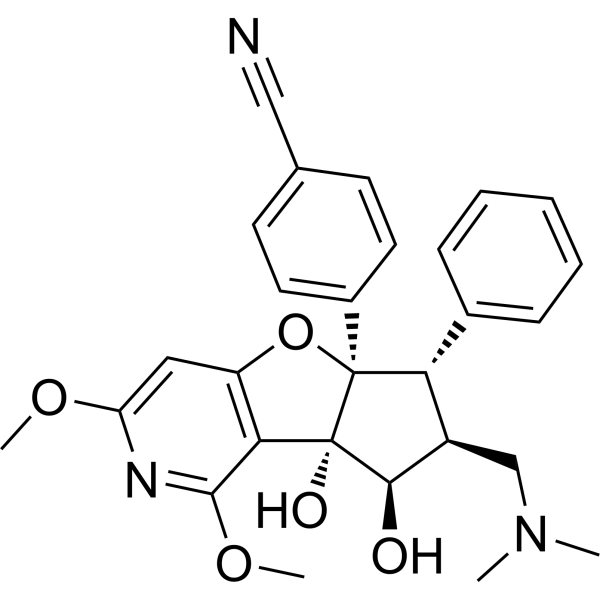
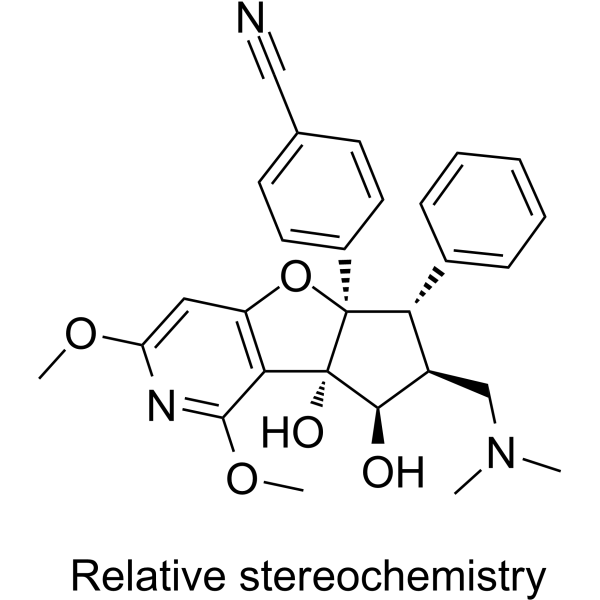
    Zotatifin (eFT226) is a potent, selective, and well-tolerated eIF4A inhibitor. Zotatifin promotes eIF4A binding to specific mRNA sequences with recognition motifs in the 5’-UTRs (IC50=2 nM) and interferes with the assembly of the eIF4F initiation complex . Zotatifin shows robust antiviral effects, it effectively reduces viral infectivity by inhibiting SARS-CoV-2 NP protein biogenesis (IC90=37 nM) . Zotatifin induces cell apoptosis .
    Zotatifin
  • HY-153399A

    ABBV-CLS-7262 THAM sodium

    Eukaryotic Initiation Factor (eIF) Neurological Disease Cancer
    Fosigotifator (ABBV-CLS-7262) THAM sodium is a brain penetrant, orally active EIF2b (eukaryotic initiation factor) activator. Fosigotifator THAM sodium stabilizes the elF2B complex and boosts the activity, including that of complexes carrying pathogenic vanishing white matter (VWM) mutations. Fosigotifator THAM sodium is an integrated stress response inhibitor (ISRI). Fosigotifator THAM sodium can be used for amyotrophic lateral sclerosis research .
    Fosigotifator THAM sodium
  • HY-148448

    Eukaryotic Initiation Factor (eIF) Cancer
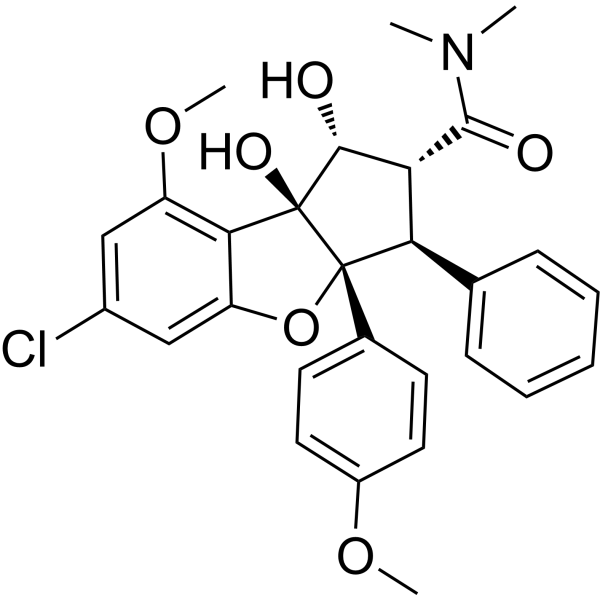
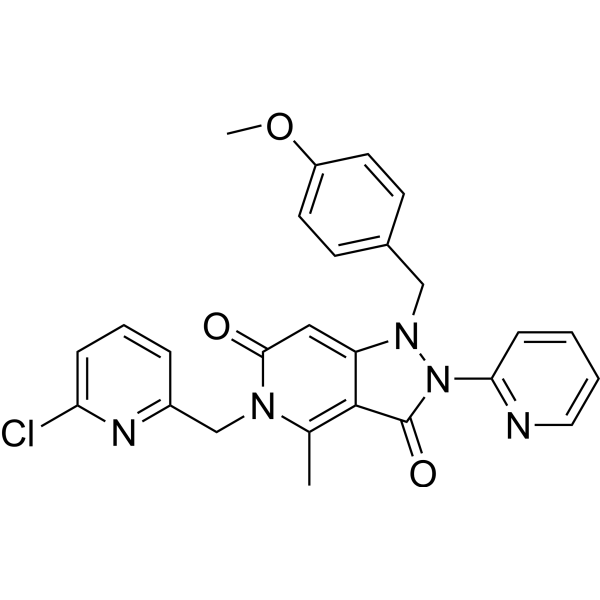
    eIF4A3-IN-9 is a Rocaglate analog. eIF4A3-IN-9 interferes with the assembly of the eIF4F translation complex, with EC50 values of 40 nM and > 2000 nM against myc-LUC and tub-LUC, respectively. eIF4A3-IN-9 can be used for the research of tumor pathogenesis .
    eIF4A3-IN-14
  • HY-148447

    Eukaryotic Initiation Factor (eIF) Cancer
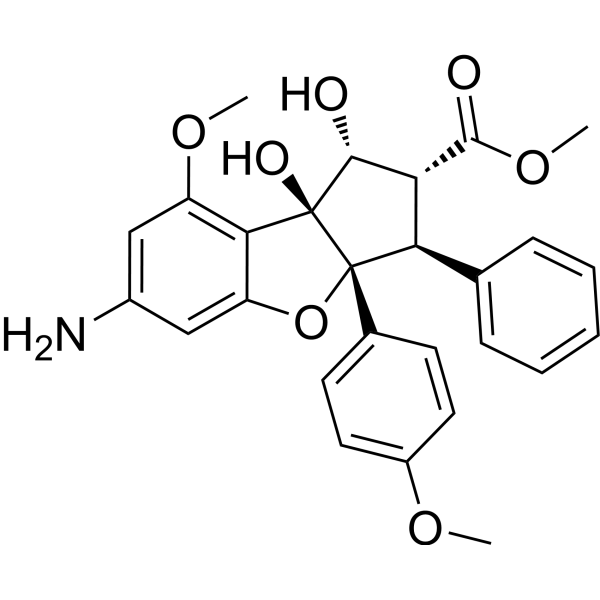
    eIF4A-IN-3, Silvestrol (HY-13251) analogue, is an eIF4A inhibitor. eIF4A-IN-3 blocks protein translation initiation by interfering with eIF4F complex assembly, preferentially inhibiting translation of mRNAs with long, highly structured 5'-untranslated regions. eIF4A-IN-3 inhibits proliferation of human breast cancer cells. eIF4A-IN-3 has moderate apical to basolateral permeability in intestinal cell monolayers and a low efflux ratio .
    eIF4A-IN-3
  • HY-112163A

    rel-eFT226

    Eukaryotic Initiation Factor (eIF) SARS-CoV Apoptosis Infection Cancer
    rel-Zotatifin is the racemic isomer of Zotatifin, acts as an eIF4A inhibitor with activity less than Zotatifin. Zotatifin (eFT226) is a potent, selective, and well-tolerated eIF4A inhibitor. Zotatifin promotes eIF4A binding to specific mRNA sequences with recognition motifs in the 5’-UTRs (IC50=2 nM) and interferes with the assembly of the eIF4F initiation complex .
    rel-Zotatifin
  • HY-122587

    DNA/RNA Synthesis RSV Infection
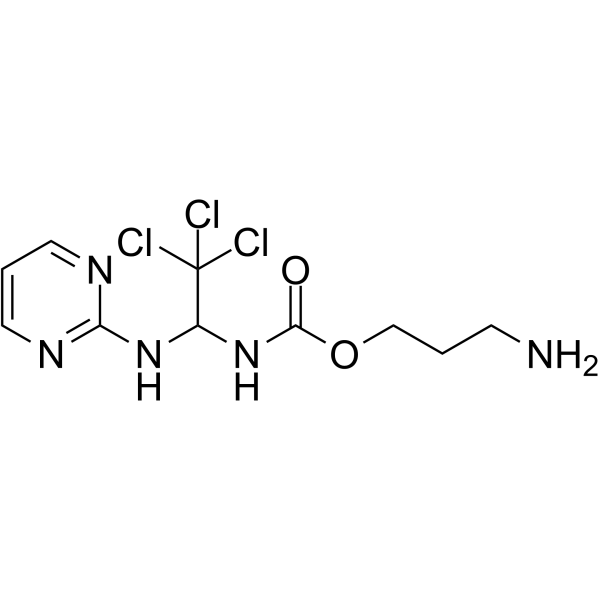
    AVG-233 is a potent, orally active RNA dependent RNA polymerase (RdRp) inhibitor. AVG-233 prevents initiation of the viral polymerase complex at the promoter. AVG-233 binding site is present in the L1-1749 fragment. AVG-233 has nanomolar activity against both RSV strains and clinical RSV isolates (EC50=0.14-0.31 μM). AVG-233 can be used for research of respiratory syncytial virus (RSV) .
    AVG-233
  • HY-130841

    APC Ligands for Target Protein for PROTAC Cancer
    Apcin-A is a small molecule inhibitor that selectively targets the cell division cycle protein Cdc20 and is a derivative of Apcin (HY-110287). Apcin-A competitively binds to the D-box binding pocket of Cdc20 and inhibits substrate ubiquitination mediated by the anaphase promoting complex APC/C-Cdc20. Apcin-A also blocks the binding of Cdc20 to substrates (such as securin and cyclin B1), inhibiting anaphase initiation and cell cycle exit. Apcin-A can promote or prolong mitotic slippage in coordination with p31 comet under conditions of high spindle assembly checkpoint (SAC) activity. Apcin-A can be used to develop anti-mitotic drugs and overcome tumor chemotherapy resistance. Apcin-A can be used to synthesize PROTAC CP5V (HY-130257)[1][2][3].
    Apcin-A
  • HY-148062

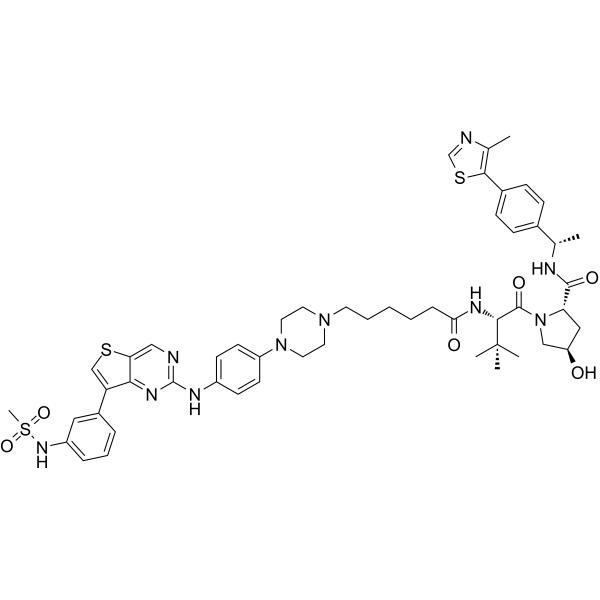
    PROTACs CDK AAK1 Cyclin G-associated Kinase (GAK) Salt-inducible Kinase (SIK) LIM Kinase (LIMK) Wee1 SnRK Others
    RSS0680 is a small noncoding RNA (sRNA) targeting the mRNA ribosome binding site (RBS) and a PROTAC with protein kinase degradation activity (Pink: FLT3-IN-17 (HY-148070); Black: Linker (HY-W041970); Blue: E3 ligase Ligand (HY-112078)). RSS0680 competitively binds to RBS through the conserved CCUCCUCCC anti-Shine-Dalgarno (aSD) sequence and inhibits the translation initiation of target genes. RSS0680 can interact with the DUF1127 protein CcaF1, regulate its own stability and participate in bacterial oxidative stress defense, enhancing the host's resistance to heat shock and oxidative damage by affecting pathways such as C1 metabolism and pyruvate dehydrogenase complex. RSS0680 degrades AAK1, CDK1, CDK16, CDK2, CDK4, CDK6, EIF2AK4, GAK, LATSl, LIMK2, MAPK6, MAPKAPK5, MARK2, MARK4, MKNK2, NEK9, RPS6KB1, SIK2, SNRK, STK17A, STK17B, STK35, and WEEl. RSS0680 can be used to study diseases or disorders mediated by aberrant kinase activity and regulatory mechanisms of noncoding RNAs in α-proteobacteria[1][2].
    RSS0680
  • HY-139098

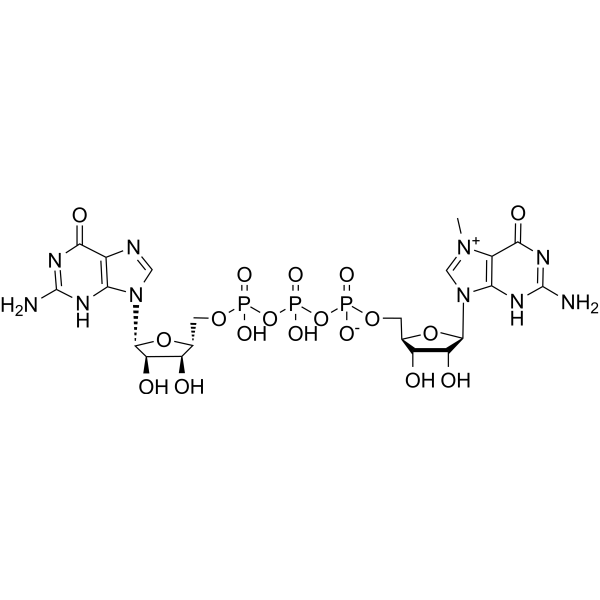
    m7Gp3G

    DNA/RNA Synthesis Others
    7-Methyl-diguanosine triphosphate (m7Gp3G) is an mRNA cap structure analog that inhibits in vitro protein synthesis by binding to the translation initiation complex. 7-Methyl-diguanosine triphosphate binds to eIF4E, promotes cap-dependent translation initiation, stabilizes mRNA, and acts as a translation enhancer. 7-Methyl-diguanosine triphosphate can be used to prepare synthetic capped RNA transcripts for studies related to mRNA translation, splicing, turnover, and intracellular transport .
    7-Methyl-diguanosine triphosphate
  • HY-153480A
    ARC19499 sodium
    1 Publications Verification

    BAX499 sodium

    Factor Xa Factor VIIa Tissue Factor Pathway Inhibitor (TFPI) Others
    ARC19499 sodium is an aptamer that inhibits tissue factor pathway inhibitor (TFPI) , thereby enabling clot initiation and propagation via the extrinsic pathway. The core aptamer binds tightly and specifically to TFPI. ARC19499 sodium blocks TFPI inhibition of both factor Xa and the TF/factor VIIa complex. ARC19499 sodium corrects thrombin generation in hemophilia A and B plasma and restores clotting in FVIII-neutralized whole blood.
    ARC19499 sodium
  • HY-W348485

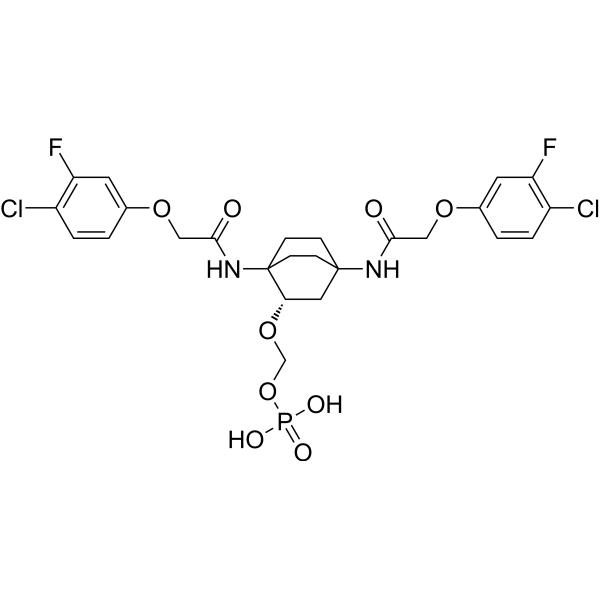
    mTOR Cancer
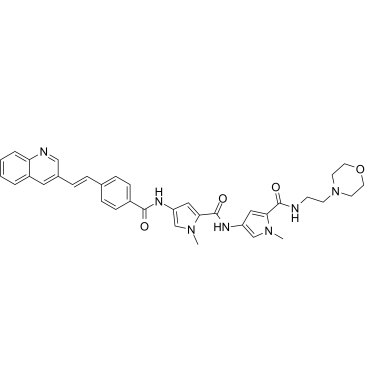
    WRX606 is an orally active nonrapalog inhibitor for mTOR complex 1 (mTORC1M). WRX606 inhibits the phosphorylation of mTORC1 substrate S6 kinase 1 (S6K1) (IC50 = 10 nM) and eukaryotic translation initiation factor 4E binding protein (p-4E-BP1) (IC50 = 0.27 μM) in MCF-7 cells. WRX606 suppresses tumor growth in mice without promotion of metastasis. WRX606 can be studied in research as an antitumor agent .
    WRX606
  • HY-153399

    ABBV-CLS-7262

    Eukaryotic Initiation Factor (eIF) Neurological Disease
    Fosigotifator (ABBV-CLS-7262) is a brain penetrant, orally active EIF2b (eukaryotic initiation factor) activator. Fosigotifator stabilizes the elF2B complex and boosts the activity, including that of complexes carrying pathogenic vanishing white matter (VWM) mutations. Fosigotifator is an integrated stress response inhibitor (ISRI). Fosigotifator can be used for amyotrophic lateral sclerosis research .
    Fosigotifator
  • HY-153480

    BAX499

    Factor Xa Factor VIIa Tissue Factor Pathway Inhibitor (TFPI) Others
    ARC19499 is an aptamer that inhibits tissue factor pathway inhibitor (TFPI) , thereby enabling clot initiation and propagation via the extrinsic pathway. The core aptamer binds tightly and specifically to TFPI. ARC19499 blocks TFPI inhibition of both factor Xa and the TF/factor VIIa complex. ARC19499 corrects thrombin generation in hemophilia A and B plasma and restores clotting in FVIII-neutralized whole blood.
    ARC19499
  • HY-P11006

    Bacterial Infection
    Onc112 is a proline-rich antimicrobial peptide that displays potent activity against Gram-negative bacteria. Onc112 inhibits translation by blocking and destabilizing the initiation complex .
    Onc112
  • HY-164524

    Eukaryotic Initiation Factor (eIF) Akt NF-κB Cancer
    SBI-0640726 is an eIF4G1 inhibitor with antiproliferative activity in melanoma. SBI-0640726 disrupts the eIF4F translation initiation complex by inhibiting AKT and NF-kB signaling pathways. SBI-0640726 inhibits the growth of NRAS and BRAF mutant melanoma in vitro .
    SBI-0640726
  • HY-102072

    Bacterial DNA/RNA Synthesis Infection
    GKL003 is a bacterial transcription inhibitor that targets the RNAP-σ interaction interface, with a Ki of 5.79 nM. GKL003 specifically binds to the RNAP β' clamp helix region at the σ A factor binding site, blocks the formation of RNAP holoenzyme, and inhibits the formation of bacterial transcription initiation complexes. GKL003 inhibits the growth of both Gram-positive and Gram-negative bacterial cells, and also exhibits activity against drug-resistant strains .
    GKL003
  • HY-E71047

    DNA/RNA Synthesis Others
    DNA Polymerase Alpha, Human (EC 2.7.7.7) is an enzyme complex found in eukaryotes that is involved in initiation of DNA replication. The DNA polymerase alpha complex consists of 4 subunits: POLA1, POLA2, PRIM1, and PRIM2.
    DNA Polymerase Alpha, Human

Inquiry Online

Your information is safe with us. * Required Fields.

Salutation


Country or Region *

Applicant Name *


Organization Name *

Department *


Email Address *


Product Name *

Cat. No.


Requested quantity *

Phone Number *


Remarks

Inquiry Online

Inquiry Information

Product Name:
Cat. No.:
Quantity:
MCE Japan Authorized Agent:

