57 Results for "

LBD

" in MedChemExpress (MCE) Product Catalog:
Products (57)

57 Results for "LBD" in MCE Product Catalog:

12
12 Publications Verification
Cat. No.: HY-B1322
CAS No.: 6398-98-7
Synonyms: Amodiaquin dihydrochloride dihydrate
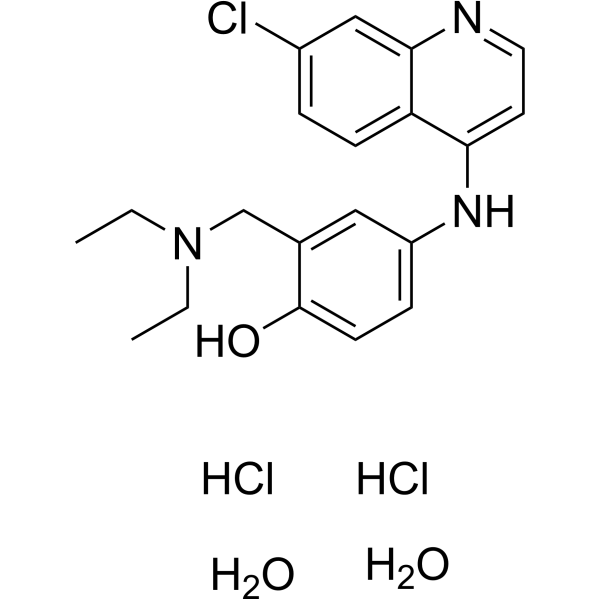
Amodiaquine dihydrochloride dihydrate (Amodiaquin dihydrochloride dihydrate), a 4-aminoquinoline class of antimalarial agent, is a potent and orally active histamine N-methyltransferase inhibitor. Amodiaquine dihydrochloride dihydrate is also a Nurr1 agonist and specifically binds to Nurr1-LBD (ligand binding domain) with an EC50 of ~20 μM. Anti-inflammatory effect .
loading...
    loading...
12
12 Publications Verification
Cat. No.: HY-B1322A
CAS No.: 86-42-0
Synonyms: Amodiaquin
Amodiaquine (Amodiaquin), a 4-aminoquinoline class of antimalarial agent, is a potent and orally active histamine N-methyltransferase inhibitor. Amodiaquine is also a Nurr1 agonist and specifically binds to Nurr1-LBD (ligand binding domain) with an EC50 of ~20 μM. Anti-inflammatory effect .
loading...
    loading...
12
12 Publications Verification
Cat. No.: HY-B1322B
CAS No.: 69-44-3
Synonyms: Amodiaquin dihydrochloride
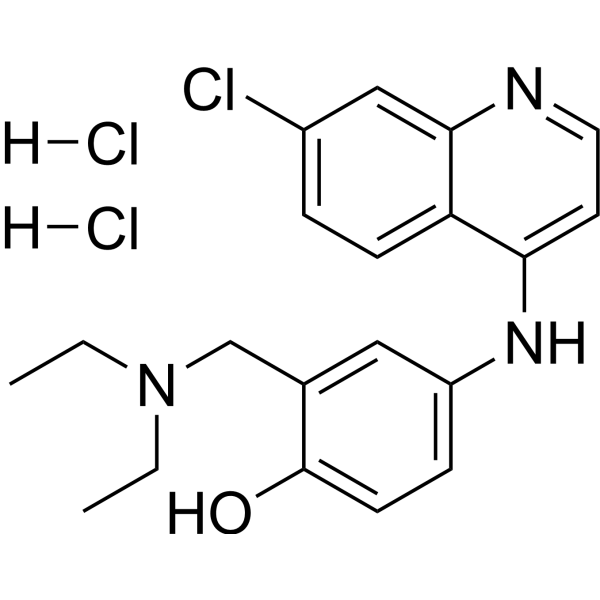
Amodiaquine dihydrochloride (Amodiaquin dihydrochloride), a 4-aminoquinoline class of antimalarial agent, is a potent and orally active histamine N-methyltransferase inhibitor with a Ki of 18.6 nM. Amodiaquine dihydrochloride is also a Nurr1 agonist and specifically binds to Nurr1-LBD (ligand binding domain) with an EC50 of ~20 μM. Anti-inflammatory effect .
loading...
    loading...
8
8 Cited Publications
Cat. No.: HY-P7999
Purity:  ≥ 90%, as determined by reducing SDS-PAGE.
Synonyms: PPAR-γ-LBD
Species:  
Source:  
loading...
    loading...
4
4 Cited Publications
Cat. No.: HY-10291
CAS No.: 51543-40-9
Purity:  99.58%
Synonyms: (R)-Flurbiprofen; MPC7869
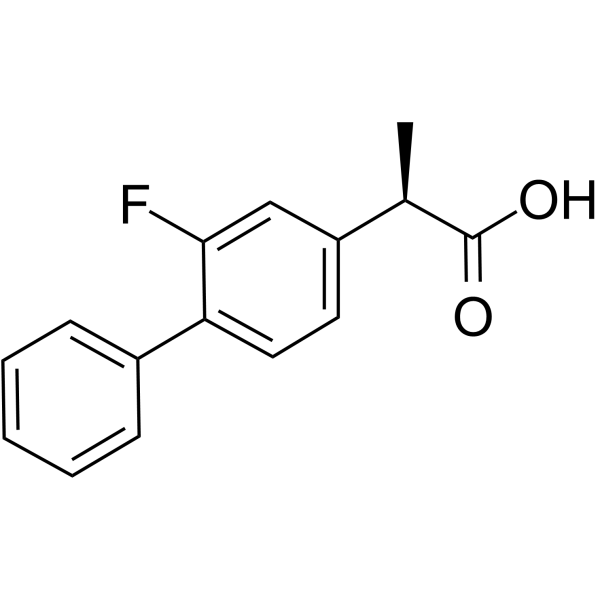
Tarenflurbil ((R)-Flurbiprofen) is the R-enantiomer of the racemate NSAID Flurbiprofen, Tarenflurbil ((R)-Flurbiprofen) inhibits the binding of [ 3H]9-cis-RA to RXRα LBD with IC50 of 75 μM. Tarenflurbil can be used for Alzheimer's disease research.
loading...
    loading...
2
2 Cited Publications
Cat. No.: HY-112895
CAS No.: 2031161-35-8
Purity:  99.55%
Target:  

Androgen Receptor

Research Areas:  

Cancer

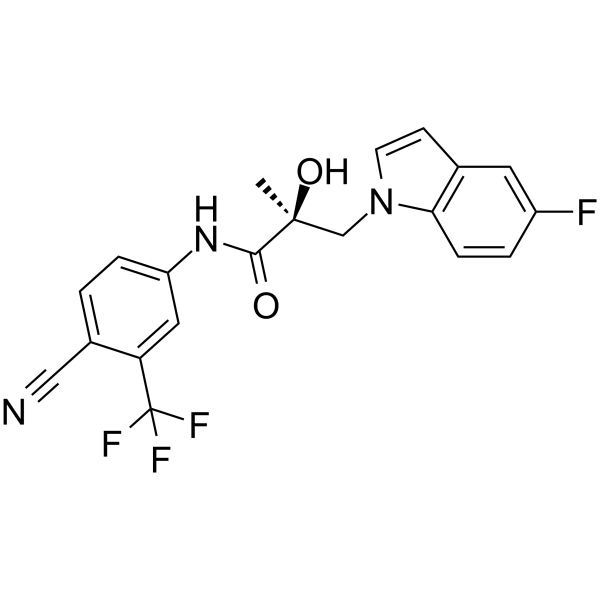
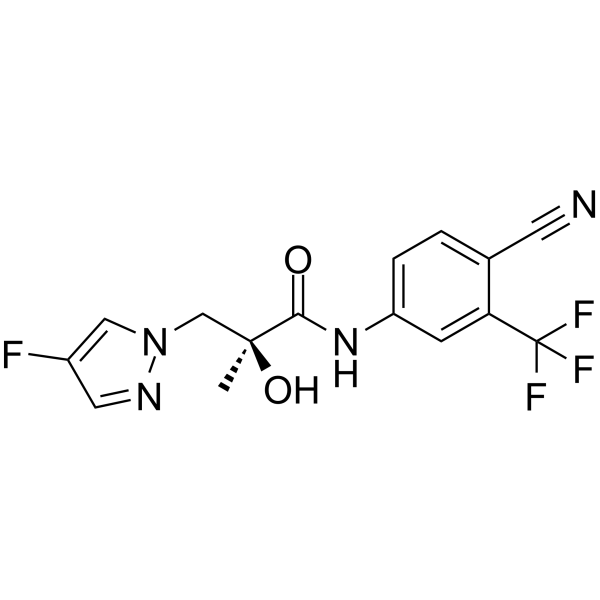
UT-155 is a selective and potent androgen receptor (AR) antagonist, with a Ki of 267 nM for UT-155 binding to AR-LBD.
loading...
    loading...
1
1 Cited Publications
Cat. No.: HY-W017113
CAS No.: 149-30-4
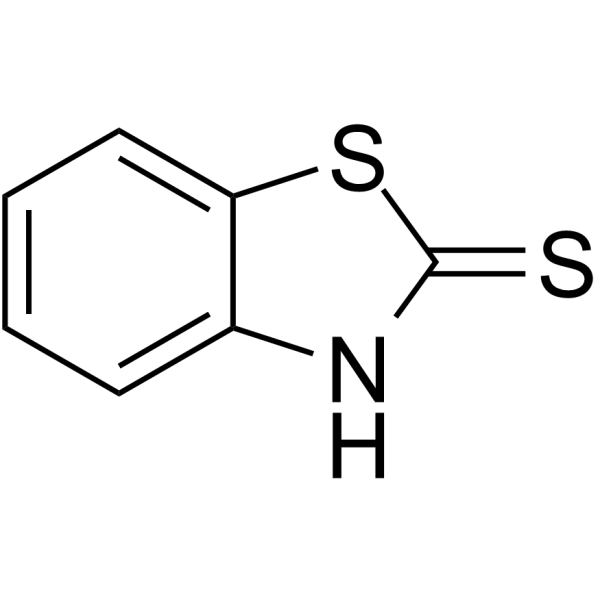
2-Mercaptobenzothiazole is an activator of the aryl hydrocarbon receptor (AhR) , inhibiting thyroid hormone synthesis and dopamine beta-hydroxylase activity . 2-Mercaptobenzothiazole promotes bladder cancer cell invasion by altering the conformation of the AhR ligand binding domain (LBD), activating AhR transcription, and upregulating the mRNA and protein expression of target genes CYP1A1 and CYP1B1 . 2-Mercaptobenzothiazole inhibits thyroid peroxidase (TPO) with an IC50 value of 11.5 μM, induces histological changes such as follicular cell hypertrophy in Xenopus laevis tadpoles, delaying metamorphosis . 2-Mercaptobenzothiazole increases chromosomal aberrations and sister chromatid exchanges (SCEs) in Chinese hamster ovary (CHO) cells, and enhances carcinogenicity in F344/N rats . 2-Mercaptobenzothiazole inhibits norepinephrine synthesis in mice and completely blocks the conversion of exogenous dopamine to norepinephrine in rat cardiomyocytes .
loading...
    loading...
1
1 Cited Publications
Cat. No.: HY-155659
Purity:  99.86%
Research Areas:  

Neurological Disease

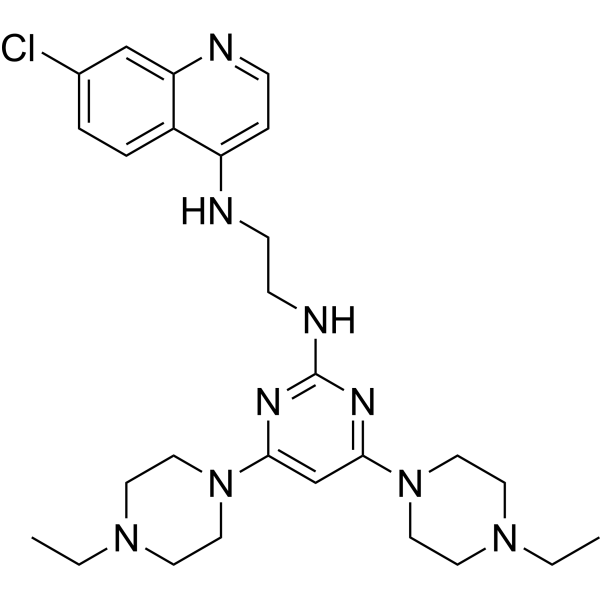
4A7C-301 is a blood-brain barrier-permeable Nurr1 agonist, with IC50 values of 48.22 nM and 107.71 nM for binding to Nurr1-LBD in the [ 3H]-CQ competition assay and TR-FRET assay, respectively. The EC50 of 4A7C-301 for activating Nurr1 transcriptional activity is 6.53 μM, and its EC50 in N27-A dopaminergic cells is approximately 0.2 μM. 4A7C-301 binds directly to Nurr1-LBD, enhances the transcriptional function of Nurr1, and restores the reduction of Nurr1 protein induced by MPP + or αSyn. 4A7C-301 alleviates oxidative stress and mitochondrial dysfunction, protects midbrain dopaminergic neurons, inhibits microglial activation, and restores impaired autophagic flux. 4A7C-301 can be used in studies related to neuroprotection and Parkinson's disease .
loading...
    loading...
Cat. No.: HY-113238A
CAS No.: 64936-81-8
Purity:  99.93%
Synonyms: Sulfolithocholic acid disodium; LCAS disodium
Lithocholic acid 3-sulfate disodium is a GPR39 agonist, with EC50 values of 41 μM and 42.4 μM in M39-20 and hGPR39-2 cells, respectively, in the absence of Zn 2+, and 0.88 μM and 0.97 μM in the presence of Zn 2+. Lithocholic acid 3-sulfate disodium acts as a RORγt ligand. Lithocholic acid 3-sulfate disodium stimulates the GPR39 receptor to initiate intracellular calcium signaling, independent of the Zn 2+-binding sites H17 and H19. LCA-3-S selectively inhibits Th17 cell differentiation by targeting RORγt. Lithocholic acid 3-sulfate disodium can be used in the research of cholestatic liver diseases .
loading...
    loading...
Cat. No.: HY-132205
CAS No.: 2735803-28-6
Purity:  99.18%
Target:  

Estrogen Receptor/ERR

Research Areas:  

Metabolic Disease

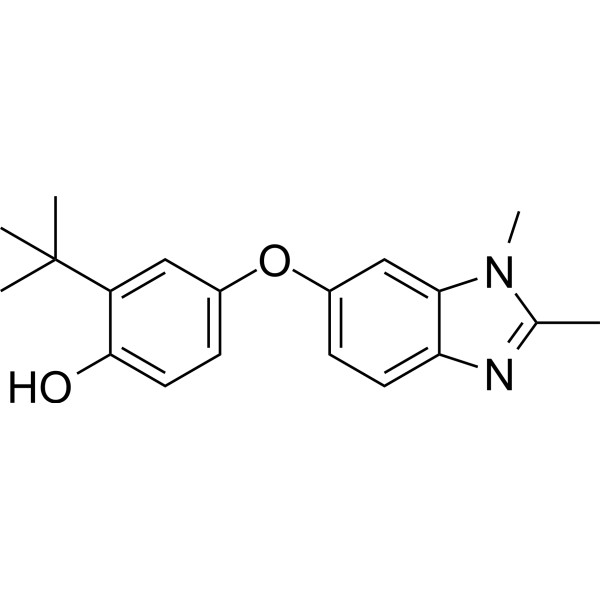
DS45500853 is an estrogen-related receptor α (ERRα) agonist. DS45500853 inhibits the binding between receptor-interacting protein 140 (RIP140) corepressor peptide (10 nM) and GST-ERRα ligand-binding domain (LBD; 1.2 μM) with an IC50 value of 0.80 μM. DS45500853 can be used for the research of metabolic disorders, including type 2 diabetes mellitus (T2DM) .
loading...
    loading...
Cat. No.: HY-136242
CAS No.: 2168525-92-4
Purity:  98.09%
Target:  

Estrogen Receptor/ERR

Research Areas:  

Endocrinology Cancer

UT-34 is a potent, selective, orally bioactive second-generation pan-androgen receptor (AR) antagonist and degrader, with IC50 values of 211.7 nM, 262.4 nM, and 215.7 nM for wild-type AR, F876L-AR, and W741L-AR, respectively. UT-34 binds to the ligand-binding domain (LBD) and functional 1 (AF-1) domain of AR and requires the ubiquitin-proteasome pathway for AR degradation. UT-34 has anti-prostate cancer effects.
loading...
    loading...
Cat. No.: HY-117727A
CAS No.: 146062-46-6
Purity:  99.64%
Synonyms: MIN-102 hydrochloride; Hydroxypioglitazone hydrochloride
Leriglitazone (MIN-102; Hydroxypioglitazone) hydrochloride is an orally active and a BBB-penetrable PPARγ agonist with an EC50 of 9 μM. Leriglitazone hydrochloride, as a regulator of mitochondrial function, has neuroprotective, anti-inflammatory and antioxidant effects. Leriglitazone hydrochloride can be used in the study of neuroinflammatory and neurodegenerative diseases .
loading...
    loading...
Cat. No.: HY-P3717
CAS No.: 3031514-44-7
Target:  

Ephrin Receptor

Research Areas:  

Cancer

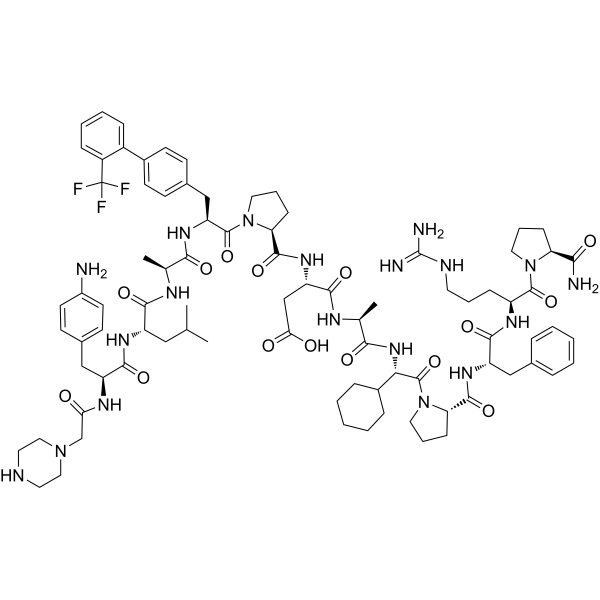
Targefrin is a potent EphA2-targeting agent, acts as an antagonist. Targefrin binds EphA2-LBD with 21 nM dissociation constant and an IC50 value of 10.8 nM. Targefrin induces cellular receptor internalization and degradation in several pancreatic cancer cell lines .
loading...
    loading...
Cat. No.: HY-134462
CAS No.: 1276664-14-2
Research Areas:  

Metabolic Disease Cancer

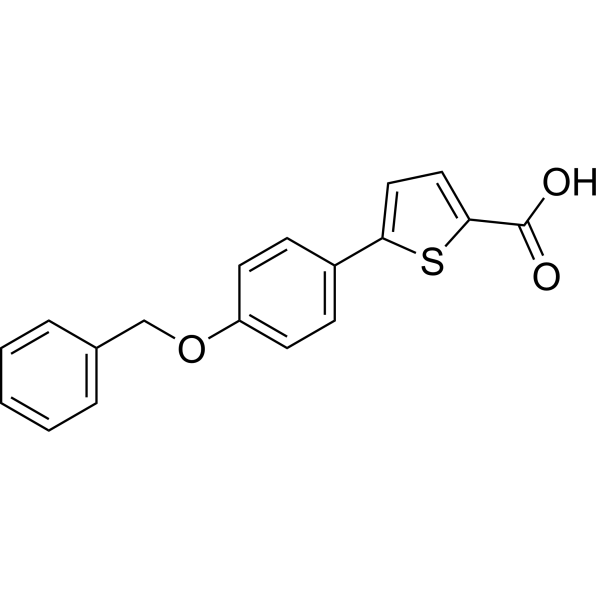
RJW103 is an acid-stable SF-1 (NR5A1) and LRH-1 agonist with pEC50 values of 6.5 and 5.9, respectively. RJW103 activates SF-1- and LRH-1-mediated transcription of endogenous target genes. RJW103 can be used in research on cancer, endocrinology and metabolic diseases, such as adrenocortical tumors .
loading...
    loading...
Cat. No.: HY-120210
CAS No.: 1873358-87-2
Purity:  99.68%
Target:  

ROR

Research Areas:  

Inflammation/Immunology Cancer

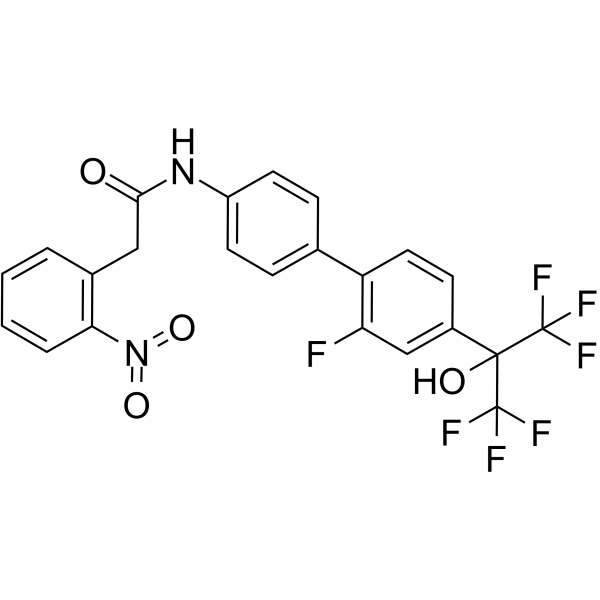
XY018 is a potent ROR-γ-selective antagonist. XY018 inhibits ROR-γ constitutive activity in 293T cells with high potency (EC50, 190 nM). XY018 binds to the ROR-γ hydrophobic ligand binding domain (LBD) .
loading...
    loading...
Cat. No.: HY-122742
CAS No.: 489408-02-8
Purity:  99.83%
Target:  

iGluR

Research Areas:  

Neurological Disease

HBT1 is an effective AMPA receptor AMPA-R potentiator. HBT1 specifically binds to the ligand-binding domain (LBD) of AMPAR and enhances receptor activity only when AMPA is present., HBT1 has almost no agonistic effect (i.e., reaching the optimal concentration, and then the efficacy decreases as the concentration continues to increase) compared with traditional AMPA-R potentiator, avoiding the bell-shaped reaction of brain-derived neurotrophic factor (BDNF) production in primary neurons. HBT1 can be applicable to a wider range of neurological and psychiatric diseases (such as depression, Alzheimer's disease, etc.) .
loading...
    loading...
Cat. No.: HY-W677684
CAS No.: 742058-34-0
Research Areas:  

Others

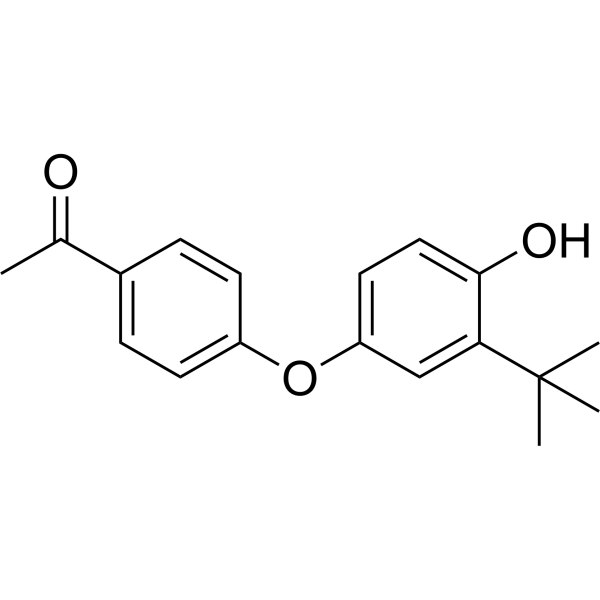
Nurr1 agonist 2 (Compound 7) is a Nurr1 agonist (EC50: 0.07 μM). Nurr1 agonist 2 binds to the recombinant Nurr1 ligand binding domain (LBD) with a Kd value of 0.14 μM. Nurr1 agonist 2 increases the Nurr1-regulated genes tyrosine hydroxylase (TH) and vesicular amino acid transporter 2 (VMAT2) mRNA expression .
loading...
    loading...
Cat. No.: HY-143201
CAS No.: 2735803-20-8
Purity:  99.34%
Target:  

Estrogen Receptor/ERR

Research Areas:  

Metabolic Disease

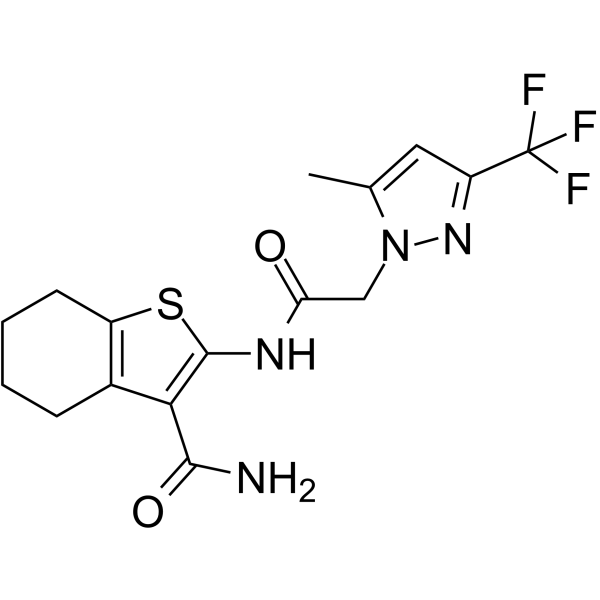
DS20362725 is an estrogen-related receptor α (ERRα) agonist. DS20362725 inhibits the binding between receptor-interacting protein 140 (RIP140) corepressor peptide (10 nM) and GST-ERRα ligand-binding domain (LBD; 1.2 μM) with an IC50 value of 0.6 μM. DS20362725 can be used for the research of metabolic disorders, including type 2 diabetes mellitus (T2DM) .
loading...
    loading...
Cat. No.: HY-113827
CAS No.: 100079-26-3
Purity:  98.00%
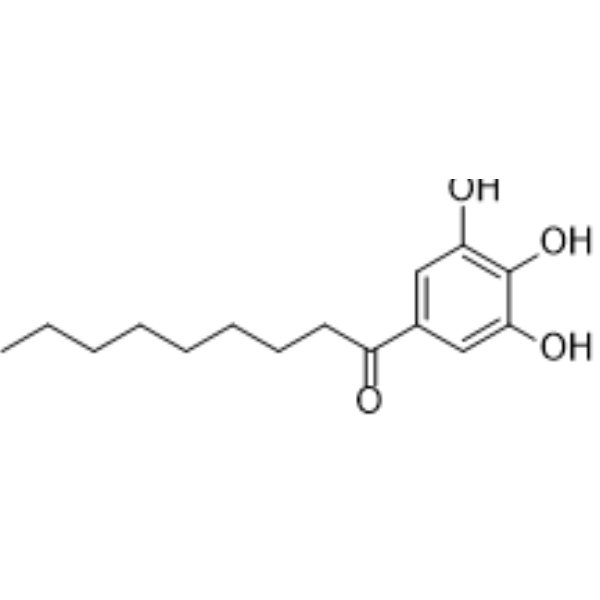
THPN is a potent Nur77 agonist. THPN specifically binds the LBD of Nur77 (TR3) but not that of retinoic acid receptor α and PPARγ with a Kd of 270 nM. THPN leads to Nur77 translocation to the mitochondria to induce autophagic cell death in melanoma .
loading...
    loading...
Cat. No.: HY-164552
CAS No.: 920915-26-0
Research Areas:  

Cancer

ZNU-IMB-Z15 (Compound Z15) is an antagonist of the androgen receptor (AR) and also a selective degrader of AR and ARV7. ZNU-IMB-Z15 can directly bind to the ligand-binding domain (LBD) and activation function-1 region of AR, and promote AR degradation through the proteasome pathway. ZNU-IMB-Z15 effectively inhibits the transcriptional activity of AR, AR mutants, and AR splice variants (ARVs), downregulating the mRNA and protein levels of AR downstream target genes, thereby overcoming the resistance to second-generation antiandrogen drugs induced by AR LBD mutations, AR amplification, and ARVs in castration-resistant prostate cancer (CRPC). ZNU-IMB-Z15 can inhibit the proliferation of AR-positive CRPC cell lines and induce their apoptosis, demonstrating anticancer activity both in vivo and in vitro .
loading...
    loading...

