21 Results for "

Lipid Acyl Chain

" in MedChemExpress (MCE) Product Catalog:
Products (21)

21 Results for "Lipid Acyl Chain" in MCE Product Catalog:

12
12 Cited Publications
Cat. No.: HY-N6707
CAS No.: 76896-80-5
Synonyms: WS 1228A; FR 900190
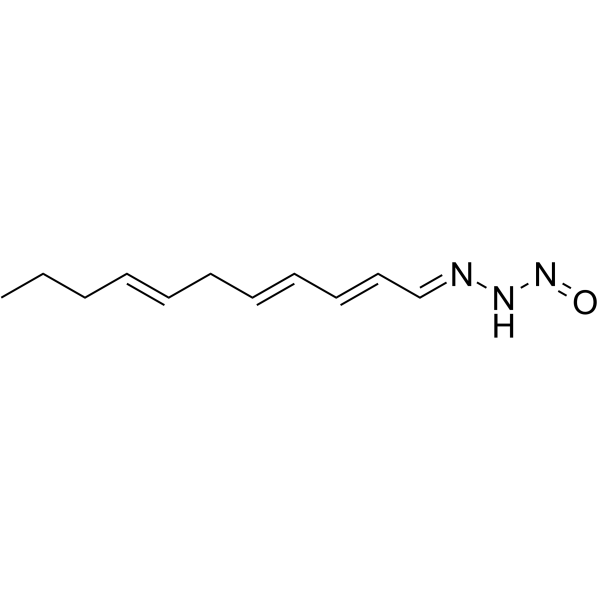
Triacsin C (WS 1228A), is an orally active and intracellular long-chain acyl-CoA synthetases (ACSL) inhibitor, which can be isolated from Streptomyces aureofaciens. Triacsin C inhibits TAG accumulation into lipid droplets (LD) by suppressing ACSL activity . Triacsin C exhibits highly inhibitory effect against rotavirus replication .
loading...
    loading...
Cat. No.: HY-133685
CAS No.: 147852-83-3
Purity:  98.82%
Synonyms: C6-HSL
Target:  

Bacterial

Research Areas:  

Infection Metabolic Disease

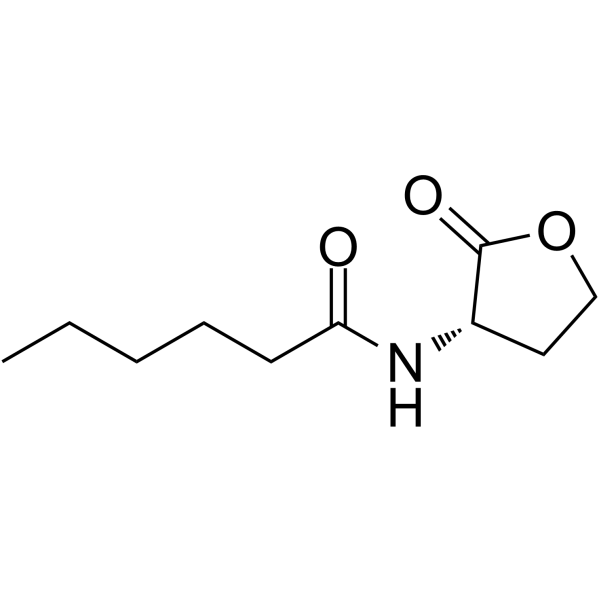
N-Hexanoyl-L-homoserine lactone is a short-chained N-acyl homoserine lactone (AHL). N-hexanoyl-L-homoserine lactone is also a mediator of bacterial quorum-sensing regulation. N-hexanoyl-L-homoserine lactone promotes lipid accumulation in algae. AHL is an intercellular communication signal molecule in the quorum sensing system of Gram-negative bacteria and a medium for mediating information exchange between eukaryotic plants and prokaryotic bacteria. AHL can affect bacteria activities, such as biofilm formation, pigment synthesis, and antibiotic synthesis .
loading...
    loading...
Cat. No.: HY-W127499
CAS No.: 51779-95-4
Synonyms: DEPC; L-Dierucoyl lecithin; Dierucoyllecithin
Target:  

Liposome

Research Areas:  

Others

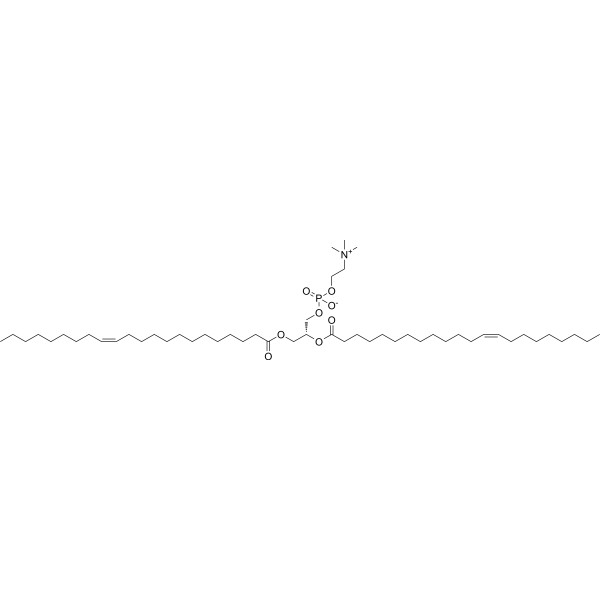
1,2-Dierucoyl-sn-glycero-3-phosphocholine (DEPC) is the composition of liposome membrane. 1,2-Dierucoyl-sn-glycero-3-phosphocholine is used for the preparation of liposomes and studying the properties of lipid bilayers. The GO (glucose oxidase) in the 1,2-Dierucoyl-sn-glycero-3-phosphocholine liposome shows the high activity .
loading...
    loading...
Cat. No.: HY-112747
CAS No.: 97281-51-1
Synonyms: LPI; PE (soy)
Target:  

Phospholipase

Research Areas:  

Infection

Soy PE (LPI) is the most abundant phospholipid in prokaryotes and the second most abundant found in the membrane of mammalian, plant, and yeast cells, comprising approximately 25% of total mammalian phospholipids. In the brain, phosphatidylethanolamine comprises almost half of the total phospholipids. It is synthesized mainly through the cytidine diphosphate-ethanolamine and phosphatidylserine decarboxylation pathways, which occur in the endoplasmic reticulum (ER) and mitochondrial membranes, respectively. It is a precursor in the synthesis of phosphatidylcholine and arachidonoyl ethanolamide and is a source of ethanolamine used in various cellular functions. In E.coli, phosphatidylethanolamine deficiency prevents proper assembly of lactose permease, suggesting a role as a lipid chaperone. It is a cofactor in the propagation of prions in vitro and can convert recombinant mammalian proteins into infectious molecules even in the absence of RNA. This product contains phosphatidylethanolamine molecular species with variable fatty acyl chain lengths at the sn-1 and sn-2 positions .
loading...
    loading...
Cat. No.: HY-W714524
CAS No.: 321863-21-2
Synonyms: 16:0-18:1 PS (POPS)
1-Palmitoyl-2-oleoyl-sn-glycero-3-PS sodium (16:0-18:1 PS (POPS)) is an anionic phosphatidylserine phospholipid with 16:0 (palmitoyl) and 18:1 (oleoyl) acyl chains. It serves as a component of biomimetic inner plasma membrane models and membrane vesicles for hemostatic response studies. 1-Palmitoyl-2-oleoyl-sn-glycero-3-PS sodium regulates membrane electrical properties by forming tethered bilayer lipid membranes. It enhances the stability of sHDL particles without altering the cholesterol efflux capacity of sHDL. 1-Palmitoyl-2-oleoyl-sn-glycero-3-PS sodium acts synergistically with phosphatidylcholine to support prothrombin activation. It serves as a component of the 4:1 POPC/POPS binary lipid bilayer model. 1-Palmitoyl-2-oleoyl-sn-glycero-3-PS sodium is applicable to research related to atherosclerosis .
loading...
    loading...
Cat. No.: HY-162160
CAS No.: 1221739-85-0
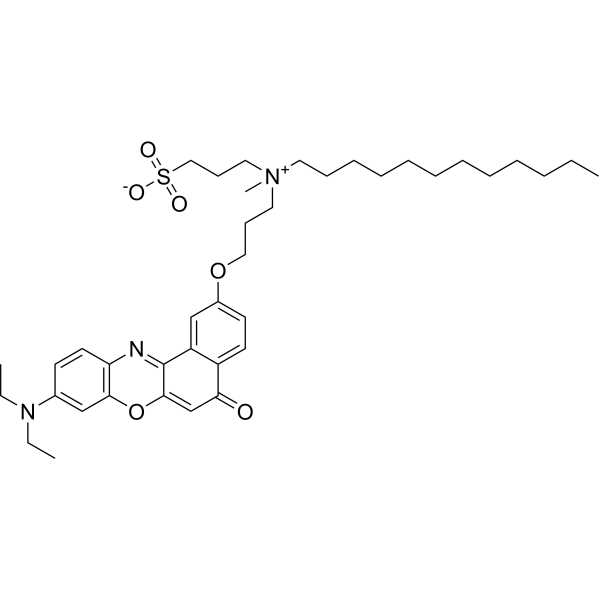
NR12S is a fluorescent probe that specifically binds to the outer leaflet of membranes. NR12S exhibits phase-sensitive red edge excitation shift, emission wavelength shift and lifetime changes, which depend on membrane phase, cholesterol content and lipid acyl chain properties. NR12S can be used to study cholesterol and lipid order in biological membranes .
loading...
    loading...
Cat. No.: HY-131303
CAS No.: 3546-17-6
Purity:  ≥97.0%
Synonyms: Heptadecanoyl-CoA
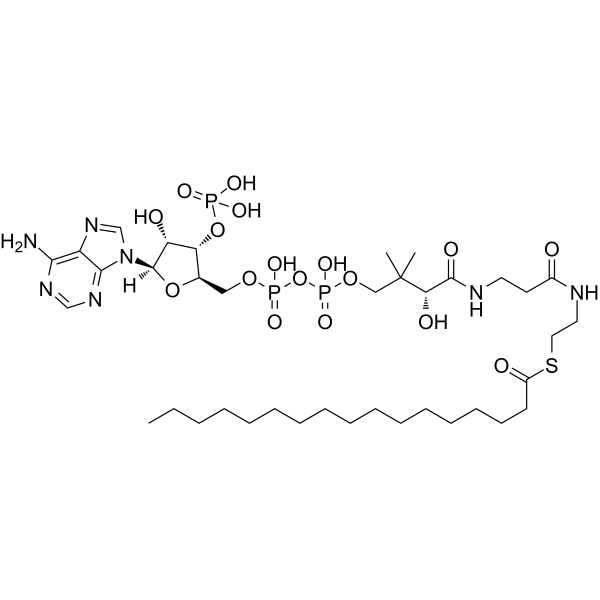
Heptadecanoyl Coenzyme A (Heptadecanoyl-CoA), long-chain acyl-coenzymes A (acyl-CoAs) (LCACoA), is an intermediate in lipid metabolism. Heptadecanoyl Coenzyme A can be used for the research of glucose metabolism .
loading...
    loading...
Cat. No.: HY-E70523
CAS No.: 4752-33-4
Synonyms: Valeryl-CoA; Valeryl-coenzyme A; Pentanoyl coenzyme A free acid
Target:  

Endogenous Metabolite

Research Areas:  

Metabolic Disease

Pentanoyl coenzyme A (Valeryl-CoA) is a short-chain fatty acyl-CoA that functions as an intermediate in mitochondrial β-oxidation and related metabolic pathways. Pentanoyl coenzyme A results from the formal condensation of the thiol group of coenzyme A with the carboxy group of pentanoic acid. Pentanoyl coenzyme A's levels can reflect changes in lipid metabolism under different physiological and pathological conditions. Pentanoyl coenzyme A can be used for research on lipid metabolism .
loading...
    loading...
Cat. No.: HY-W800805
CAS No.: 2295813-15-7
Target:  

Liposome

Research Areas:  

Cancer

DOPE-Mal is an N-maleimide-derived phosphatidylethanolamine. DOPE-Mal does not interfere with fatty acyl chains or alter lipid bilayer permeability; it increases lipid bilayer order, reduces fluidity, induces conformational changes in phospholipid polar heads and enhances their hydration. DOPE-Mal can be used as a component to prepare maleimide-displaying liposomes, enabling peptide conjugation via maleimide-thiol coupling. DOPE-Mal can be used to prepare Liposomes for delivering Doxorubicin (HY-15142A) to hepatocytes. DOPE-Mal is applicable to research related to hepatocellular carcinoma and lung cancer .
loading...
    loading...
Cat. No.: HY-124081
CAS No.: 107743-37-3
Purity:  ≥99.0%
Target:  

Apoptosis

Research Areas:  

Metabolic Disease

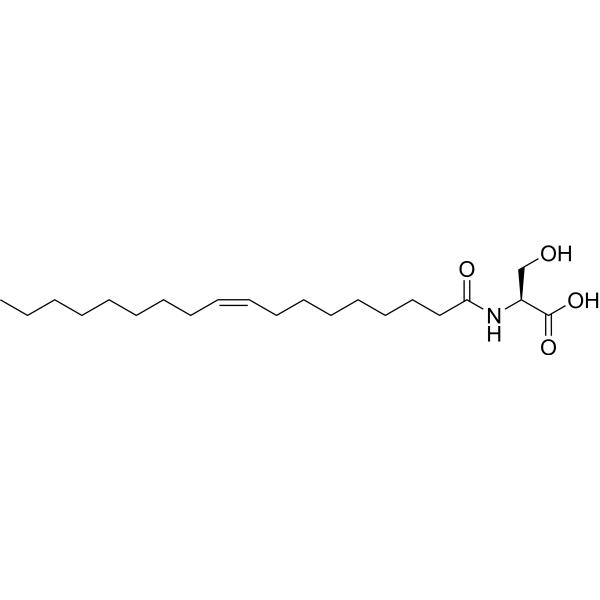
N-Oleoyl-L-Serine is an endogenous amide of long-chain fatty acids with ethanolamine (N-acyl amides). N-Oleoyl-L-Serine is a lipid regulator of bone remodeling and stimulates osteoclast apoptosis. N-Oleoyl-L-Serine can be used for antiosteoporotic drug discovery development .
loading...
    loading...
Cat. No.: HY-166119
CAS No.: 6709-57-5
Synonyms: Linoleoyl Coenzyme A; 9(Z),12(Z)-Octadecadienoyl Coenzyme A; 9Z,12Z-Octadecadienoyl-CoA; 9Z,12Z-Octadecadienoyl-coenzyme A
Research Areas:  

Metabolic Disease

Linoleoyl-CoA (Linoleoyl Coenzyme A) is a long-chain acyl-CoA ester formed from linoleic acid and coenzyme A. Linoleoyl-CoA serves as a key activated fatty acid intermediate involved in lipid biosynthesis, fatty acid β-oxidation and the regulation of cellular metabolism. Elevated levels of Linoleoyl-CoA in skeletal muscle correlate with increased lipid availability, insulin resistance and metabolic dysregulation and can be used for activity assays of acyl-CoA synthetases, acyltransferases and fatty acid metabolic enzymes .
loading...
    loading...
Cat. No.: HY-148977
CAS No.: 474943-18-5
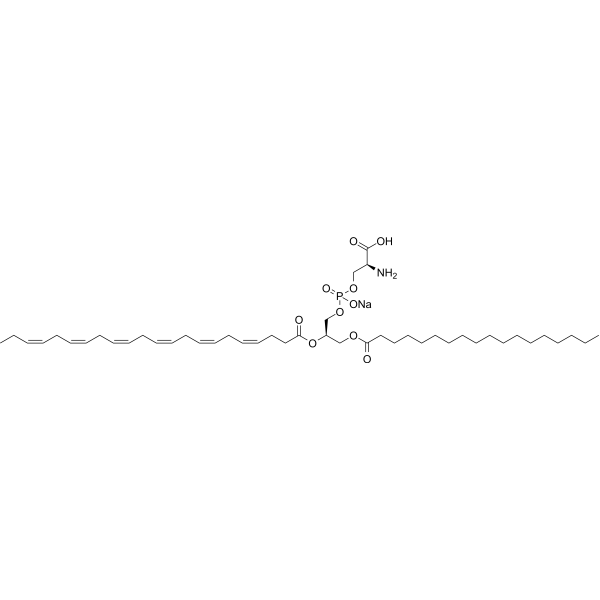
18:0,22:6 PS sodium is a sodium-form phosphatidylserine lipid. 18:0,22:6 PS sodium is found in rat brain and heart tissues, where it accounts for a considerable proportion of the total phosphatidylserine content in these tissues. 18:0,22:6 PS sodium contains 18:0 and 22:6 n-3 fatty acyl chains. 18:0,22:6 PS sodium is also used in research related to liposome preparation .
loading...
    loading...
Cat. No.: HY-133685R
CAS No.: 147852-83-3
Synonyms: C6-HSL (Standard)
Research Areas:  

Infection Metabolic Disease

N-Hexanoyl-L-homoserine lactone (Standard) is the analytical standard of N-Hexanoyl-L-homoserine lactone (HY-133685). This product is intended for research and analytical applications. N-Hexanoyl-L-homoserine lactone is a short-chained N-acyl homoserine lactone (AHL). N-hexanoyl-L-homoserine lactone is also a mediator of bacterial quorum-sensing regulation. N-hexanoyl-L-homoserine lactone promotes lipid accumulation in algae. AHL is an intercellular communication signal molecule in the quorum sensing system of Gram-negative bacteria and a medium for mediating information exchange between eukaryotic plants and prokaryotic bacteria. AHL can affect bacteria activities, such as biofilm formation, pigment synthesis, and antibiotic synthesis.
loading...
    loading...
Cat. No.: HY-P10536
CAS No.: 1802175-40-1
Target:  

Bacterial

Research Areas:  

Infection

Temporin SHF is a broad-spectrum antimicrobial peptide that is active against Gram-positive and Gram-negative bacteria and yeasts, but does not have hemolytic activity. Temporin SHF disrupts the acyl chain stacking of anionic lipid bilayers, leading to cracks and disintegration of microbial membranes. Temporin SHF can be used in the development of antimicrobial drugs .
loading...
    loading...
Cat. No.: HY-173379
Synonyms: 1,2-didecanoyl-rac-glycero-3-methoxypolyethylene glycol-2000
C10 DG PEG 2000 (1,2-didecanoyl-rac-glycero-3-methoxypolyethylene glycol-2000) is a PEG lipid consisting of a glycerol backbone with two C10 acyl chains and PEG 2000 units. C10 DG PEG 2000 can be used for lipid nanoparticle and liposome formation.
loading...
    loading...
Cat. No.: HY-173380
Synonyms: 1,2-dioctanoyl-rac-glycero-3-methoxypolyethylene glycol-2000
C8 DG PEG 2000 (1,2-dioctanoyl-rac-glycero-3-methoxypolyethylene glycol-2000) is a PEG lipid consisting of a glycerol backbone with two C8 acyl chains and PEG 2000 units. C10 DG PEG 2000 can be used for lipid nanoparticle and liposome formation.
loading...
    loading...
Cat. No.: HY-E70523A
Synonyms: Valeryl-CoA sodium; Valeryl-coenzyme A sodium
Target:  

Endogenous Metabolite

Research Areas:  

Metabolic Disease

Pentanoyl coenzyme A (Valeryl-CoA) sodium is a short-chain fatty acyl-CoA that functions as an intermediate in mitochondrial β-oxidation and related metabolic pathways. Pentanoyl coenzyme A sodium results from the formal condensation of the thiol group of coenzyme A with the carboxy group of pentanoic acid. Pentanoyl coenzyme A sodium's levels can reflect changes in lipid metabolism under different physiological and pathological conditions. Pentanoyl coenzyme A sodium can be used for research on lipid metabolism .
loading...
    loading...
Cat. No.: HY-N15834
CAS No.: 600177-67-1
BbGL-1 is a glycosylated sterol lipid containing saturated acyl chains .
loading...
    loading...
Cat. No.: HY-N16320
Target:  

Liposome

Research Areas:  

Others

C12 DG PEG2000 is a PEG lipid that consists of a glycerol back bone with two C12 acyl chains and a PEG 2000 unit. C12 DG PEG2000 can be used to prepare lipid nanoparticles for drug delivery.
loading...
    loading...
Cat. No.: HY-N15775
CAS No.: 2260670-55-9
Synonyms: Azo-Cer
ACe-1 is a ceramide derivative with an azobenzene moiety to allow for optical control of the N-acyl chain. ACe-1 is capable of reversibly switching lipid domains in a raft-like bilayer membrane .
loading...
    loading...

