
34 Results for "

Molecular Docking

" in MedChemExpress (MCE) Product Catalog:
Products (34)

34 Results for "Molecular Docking" in MCE Product Catalog:

1
1 Cited Publications
Cat. No.: HY-W440835
Target:  

Liposome

Research Areas:  

Inflammation/Immunology

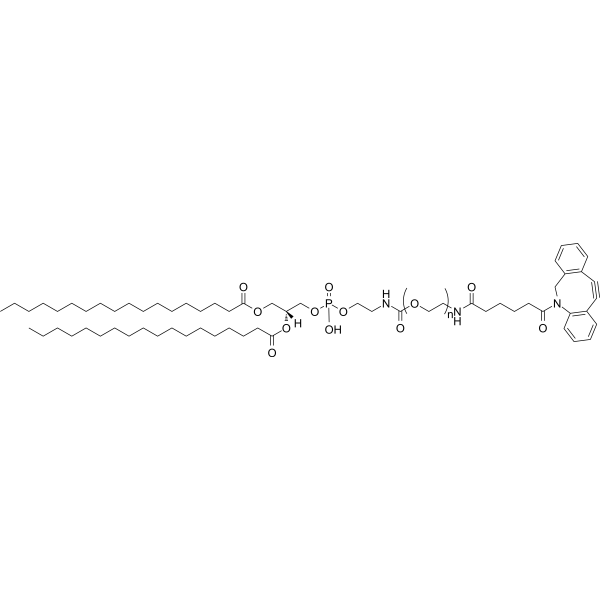
DSPE-PEG2000-DBCO is a phospholipid PEG polymer that combines a hydrophobic phospholipid (DSPE), a hydrophilic polyethylene glycol spacer with a molecular weight of 1000 Da, and a reactive click chemistry terminal group (DBCO). DSPE-PEG2000-DBCO migrates to lymph nodes via the endogenous albumin transport system, implants bioorthogonal DBCO docking sites, and enables the enrichment of azide-functionalized vesicles in lymph nodes mediated by click chemistry. DSPE-PEG2000-DBCO can be used in studies related to atherosclerosis .
loading...
    loading...
Cat. No.: HY-136177
CAS No.: 95906-11-9
Purity:  99.81%
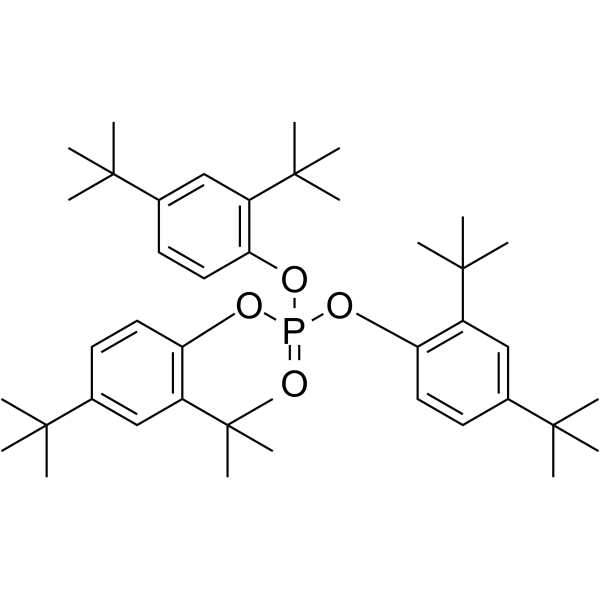
Tris(2,4-di-tert-butylphenyl)phosphate is an active compound from the leaves of Vitex negundo L. shows anti-inflammatory activity with evidence of inhibition for secretory Phospholipase A2 (sPLA2) through molecular docking .
loading...
    loading...
Cat. No.: HY-W440835E
Research Areas:  

Inflammation/Immunology

DSPE-PEG5000-DBCO is a phospholipid PEG polymer that combines a hydrophobic phospholipid (DSPE), a hydrophilic polyethylene glycol spacer with a molecular weight of 5000 Da, and a reactive click chemistry terminal group (DBCO). DSPE-PEG-DBCO migrates to lymph nodes via the endogenous albumin transport system, implants bioorthogonal DBCO docking sites, and enables the enrichment of azide-functionalized vesicles in lymph nodes mediated by click chemistry. DSPE-PEG-DBCO can be used in studies related to atherosclerosis .
loading...
    loading...
Cat. No.: HY-N16395
CAS No.: 96573-43-2
Jensenone is an acylphloroglucinol derivative. Jensenone binds to COVID-19 proteinase in molecular docking studies. Jensenone can be used as a COVID-19 Mpro inhibitor .
loading...
    loading...
Cat. No.: HY-Y0260
CAS No.: 13790-39-1
Target:  

Cholinesterase (ChE)

Research Areas:  

Neurological Disease

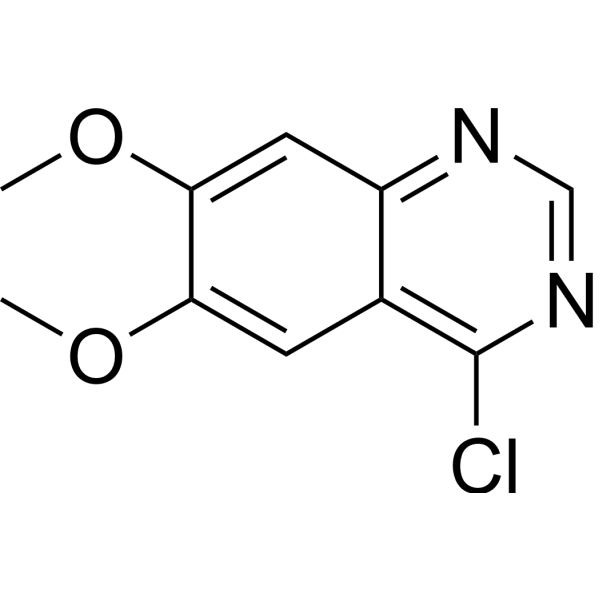
4-Chloro-6,7-dimethoxyquinazoline is a quinazoline derivative. 4-Chloro-6,7-dimethoxyquinazoline exhibits a significant interaction with the AChE protein (as demonstrated by molecular docking analysis). 4-Chloro-6,7-dimethoxyquinazoline is applicable to research related to Alzheimer's disease .
loading...
    loading...
Cat. No.: HY-N10336
CAS No.: 87741-77-3
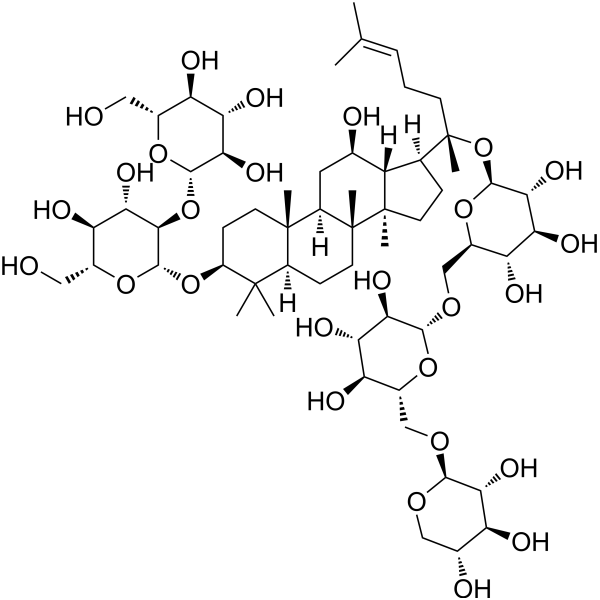
Notoginsenoside R4 is a ginsenoside that can be isolated from ginseng roots. In the molecular docking results, Notoginsenoside R4 can target STAT3, AKT1, HRAS, VEGFA and CASP3 .
loading...
    loading...
Cat. No.: HY-W017194
CAS No.: 90-27-7
2-Phenylbutanoic acid is a sterically hindered carboxylic acid. 2-Phenylbutanoic acid exhibits anticancer activity through molecular docking interactions with cytochrome P450 proteins. 2-Phenylbutanoic acid can be used in research on malignant lymphoma .
loading...
    loading...
Cat. No.: HY-P10424
CAS No.: 2378606-21-2
Target:  

PD-1/PD-L1

Research Areas:  

Cancer

OPBP-1 is a D-peptide obtained by phage display screening, molecular docking and molecular dynamics simulation. OPBP-1 has high stability and strong antitumor and oral activity. OPBP-1 can selectively bind PD-L1 protein, significantly block the interaction between PD-1 and PD-L1, and this blocking effect helps to restore and improve the function of T lymphocytes and reduce the proportion of bone marrow derived suppressor cells (MDSCs) to combat tumor-induced immune escape. OPBP-1 can be used in cancer immunotherapy research .
loading...
    loading...
Cat. No.: HY-19371
CAS No.: 917393-39-6
Target:  

GABA Receptor

Research Areas:  

Neurological Disease

Lorediplon is a binder predicted via molecular docking to bind SYT1 and SYN2, with affinity for both targets, and it forms stable complexes to regulate protein function. Lorediplon is also a non-benzodiazepine compound that modulates the GABA receptor and exhibits differential activity toward the α1 subunit. Lorediplon can be used in Alzheimer's disease research .
loading...
    loading...
Cat. No.: HY-W087019
CAS No.: 23680-84-4
Synonyms: 4-Amino-2-chloro-6,7-dimethoxyquinazoline
Target:  

Drug Intermediate

Research Areas:  

Neurological Disease

ACDQ (4-Amino-2-chloro-6,7-dimethoxyquinazoline) is a pharmaceutical intermediate that can be used for the synthesis of quinazoline-based antibacterial agents. Molecular docking results of ACDQ indicate that it possesses potential acetylcholinesterase inhibitory activity, and it can be applied to Alzheimer's disease-related research .
loading...
    loading...
Cat. No.: HY-136177R
CAS No.: 95906-11-9
Tris(2,4-di-tert-butylphenyl)phosphate (Standard) is the analytical standard of Tris(2,4-di-tert-butylphenyl)phosphate. This product is intended for research and analytical applications. Tris(2,4-di-tert-butylphenyl)phosphate is an active compound from the leaves of Vitex negundo L. shows anti-inflammatory activity with evidence of inhibition for secretory Phospholipase A2 (sPLA2) through molecular docking .
loading...
    loading...
Cat. No.: HY-W440835D
Research Areas:  

Inflammation/Immunology

DSPE-PEG3400-DBCO is a phospholipid PEG polymer that combines a hydrophobic phospholipid (DSPE), a hydrophilic polyethylene glycol spacer with a molecular weight of 3400 Da, and a reactive click chemistry terminal group (DBCO). DSPE-PEG-DBCO migrates to lymph nodes via the endogenous albumin transport system, implants bioorthogonal DBCO docking sites, and enables the enrichment of azide-functionalized vesicles in lymph nodes mediated by click chemistry. DSPE-PEG-DBCO can be used in studies related to atherosclerosis .
loading...
    loading...
Cat. No.: HY-120465
CAS No.: 1174905-91-9
Target:  

HIV

Research Areas:  

Infection

ZINC36617540 is a novel Nef protein inhibitor with anti-HIV activity. ZINC36617540 exhibits superior binding affinity by binding to Nef protein. ZINC36617540 shows a similar binding mode to the prototype molecule B9 in molecular docking. The mechanism of action of ZINC36617540 mainly depends on its hydrophobic and electrostatic interactions with Nef protein .
loading...
    loading...
Cat. No.: HY-159081
CAS No.: 3052008-10-0
Target:  

Cholinesterase (ChE)

Research Areas:  

Neurological Disease

AChE/BChE-IN-20 (compound 3m) is an acetylcholinesterase (AChE, IC50=34.81 μM) and butylcholinesterase (BChE, IC50=20.66 μM) inhibitor, which has been demonstrated to have affinity for key enzyme pockets and favorable interaction profiles by molecular docking and kinetic simulations, and can be used in the study of Alzheimer's disease .
loading...
    loading...
Cat. No.: HY-W017194S
CAS No.: 1189708-92-6
2-Phenylbutyric acid-d5 is the deuterated-labeled 2-Phenylbutanoic acid (HY-W017194). 2-Phenylbutanoic acid is a sterically hindered carboxylic acid. 2-Phenylbutanoic acid exhibits anticancer activity through molecular docking interactions with cytochrome P450 proteins. 2-Phenylbutanoic acid can be used in research on malignant lymphoma .
loading...
    loading...
Cat. No.: HY-W017194R
CAS No.: 90-27-7
2-Phenylbutanoic acid (Standard) is the analytical standard of 2-Phenylbutanoic acid (HY-W017194). This product is intended for research and analytical applications. 2-Phenylbutanoic acid is a sterically hindered carboxylic acid. 2-Phenylbutanoic acid exhibits anticancer activity through molecular docking interactions with cytochrome P450 proteins. 2-Phenylbutanoic acid can be used in research on malignant lymphoma .
loading...
    loading...
Cat. No.: HY-159920
PSB-22269 is a GPR17 antagonist with a Ki value of 8.91 nM. PSB-22269 further demonstrated significant inhibitory effects in cAMP and G protein activation assays. Molecular docking studies revealed that the binding site of PSB-22269 contains positively charged arginine residues and a hydrophobic pocket. PSB-22269 provides a strategy to promote remyelination and holds promise for research in the field of multiple sclerosis .
loading...
    loading...
Cat. No.: HY-W440835C
Research Areas:  

Inflammation/Immunology

DSPE-PEG1000-DBCO is a phospholipid PEG polymer that combines a hydrophobic phospholipid (DSPE), a hydrophilic polyethylene glycol spacer with a molecular weight of 1000 Da, and a reactive click chemistry terminal group (DBCO). DSPE-PEG-DBCO migrates to lymph nodes via the endogenous albumin transport system, implants bioorthogonal DBCO docking sites, and enables the enrichment of azide-functionalized vesicles in lymph nodes mediated by click chemistry. DSPE-PEG-DBCO can be used in studies related to atherosclerosis .
loading...
    loading...
Cat. No.: HY-W440835A
Research Areas:  

Inflammation/Immunology

DSPE-PEG400-DBCO is a phospholipid PEG polymer that combines a hydrophobic phospholipid (DSPE), a hydrophilic polyethylene glycol spacer with a molecular weight of 400 Da, and a reactive click chemistry terminal group (DBCO). DSPE-PEG-DBCO migrates to lymph nodes via the endogenous albumin transport system, implants bioorthogonal DBCO docking sites, and enables the enrichment of azide-functionalized vesicles in lymph nodes mediated by click chemistry. DSPE-PEG-DBCO can be used in studies related to atherosclerosis .
loading...
    loading...
Cat. No.: HY-W440835B
Research Areas:  

Inflammation/Immunology

DSPE-PEG600-DBCO is a phospholipid PEG polymer that combines a hydrophobic phospholipid (DSPE), a hydrophilic polyethylene glycol spacer with a molecular weight of 600 Da, and a reactive click chemistry terminal group (DBCO). DSPE-PEG-DBCO migrates to lymph nodes via the endogenous albumin transport system, implants bioorthogonal DBCO docking sites, and enables the enrichment of azide-functionalized vesicles in lymph nodes mediated by click chemistry. DSPE-PEG-DBCO can be used in studies related to atherosclerosis .
loading...
    loading...

