1. Search Result
Search Result
Results for "

Multitarget agents

" in MedChemExpress (MCE) Product Catalog:

23

Inhibitors & Agonists

1

Screening Libraries

1

Peptides

3

Natural
Products

2

Isotope-Labeled Compounds

Cat. No. Product Name Target Research Areas Chemical Structure
  • HY-B1227
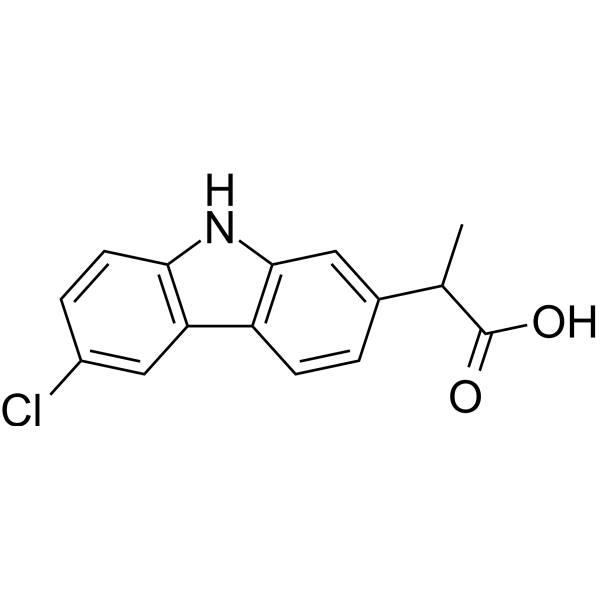
    Carprofen
    5+ Cited Publications

    COX FAAH Autophagy Endogenous Metabolite Inflammation/Immunology
    Carprofen is a nonsteroid anti-inflammatory agent, acts as a multi-target FAAH/COX inhibitor, with IC50s of 3.9 μM, 22.3 μM and 78.6 μM for COX-2, COX-1 and FAAH, respectively.
    Carprofen
  • HY-N12586

    ERK Reactive Oxygen Species (ROS) COX PGE synthase STAT HCV HCV Protease Infection Neurological Disease Cancer
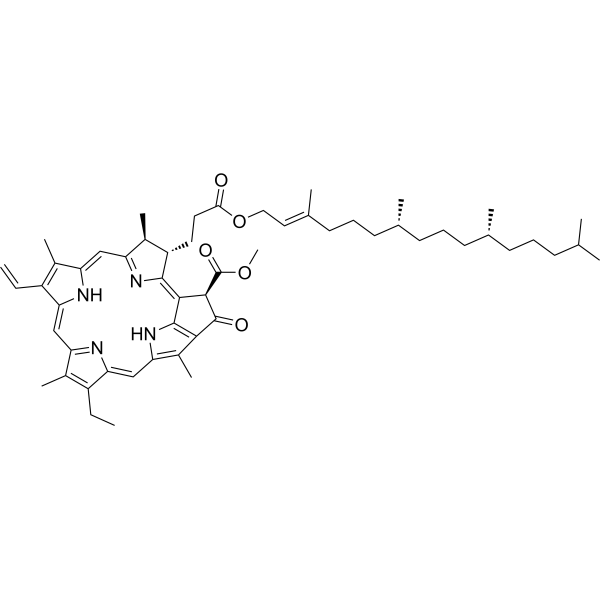
    Pheophytin a is a multi-target inhibitor, anticancer agent, antioxidant and antiviral agent. Pheophytin a directly binds to and inhibits HCV-NS3/4A protease (IC50=0.89 μM) to block viral replication. Pheophytin a also scavenges free radicals, reduces ferric ions, and exhibits cytotoxic activity against breast cancer cells. Pheophytin a effectively inhibits LPS-induced production of nitric oxide, prostaglandin E2, NOS2 and COX-2, as well as various pro-inflammatory cytokines, by downregulating the transcription levels of inflammatory mediators and blocking the ERK1/2 and STAT-1 pathways. In a low nerve growth factor environment, Pheophytin a also enhances ERK1/2 phosphorylation and synergistically promotes neurite outgrowth through MAPK pathway. Pheophytin a can be used to investigate the pathogenic mechanisms of diseases including chronic hepatitis C, sepsis, breast cancer and Alzheimer's disease .
    Pheophytin a
  • HY-B1227R

    Reference Standards COX FAAH Autophagy Endogenous Metabolite Inflammation/Immunology
    Carprofen (Standard) is the analytical standard of Carprofen. This product is intended for research and analytical applications. Carprofen is a nonsteroid anti-inflammatory agent, acts as a multi-target FAAH/COX inhibitor, with IC50s of 3.9 μM, 22.3 μM and 78.6 μM for COX-2, COX-1 and FAAH, respectively.
    Carprofen (Standard)
  • HY-B1227S

    COX FAAH Autophagy Endogenous Metabolite Inflammation/Immunology
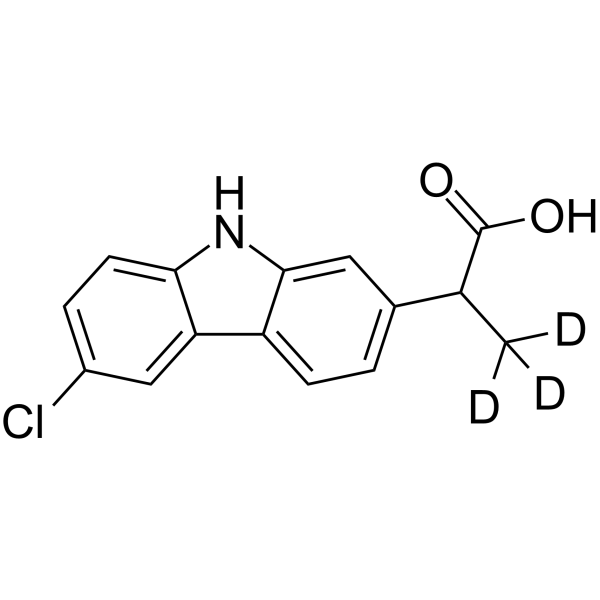
    Carprofen-d3 is the deuterium labeled Carprofen. Carprofen is a nonsteroid anti-inflammatory agent, acts as a multi-target FAAH/COX inhibitor, with IC50s of 3.9 μM, 22.3 μM and 78.6 μM for COX-2, COX-1 and FAAH, respectively.
    Carprofen-d3
  • HY-178454

    Monoamine Oxidase Amyloid-β Mitochondrial Metabolism Apoptosis Reactive Oxygen Species (ROS) COX NF-κB Neurological Disease
    Multitarget AD-IN-3 is a brain-penetrant neuroprotective agent. Multitarget AD-IN-3 can selectively inhibit MAO-B with an IC50 of 4.42 μM and a SI of 18.12. Multitarget AD-IN-3 can eliminate ROS. Multitarget AD-IN-3 Multitarget AD-IN-3 can inhibit 1-42 self-aggregation and can reverse Aβ1-42-induced mitochondrial membrane depolarization and inhibit apoptosis. Multitarget AD-IN-3 can be used for the research of neurological disease, such as Alzheimer’s disease .
    Multitarget AD-IN-3
  • HY-179098

    Raf c-Met/HGFR Pim EGFR VEGFR Apoptosis Cancer
    Multi-target kinase-IN-8 (3d) is an anti-cancer agent. Multi-target kinase-IN-8 exhibits inhibitory activity against various protein kinases (B-Raf V600E (IC50 = 0.078 µg/mL), c-Met (IC50 = 0.405 µg/mL), Pim-1 (IC50 = 1.053 µg/mL), EGFR WT (IC50 = 0.177 µg/mL), VEGFR-2 (IC50 = 0.275 µg/mL)). Multi-target kinase-IN-8 can induce cell cycle arrest and promote early and late apoptosis. Multi-target kinase-IN-8 is commonly used in cancer research .
    Multi-target kinase-IN-8
  • HY-175171

    Topoisomerase VEGFR c-Met/HGFR EGFR Estrogen Receptor/ERR Cancer
    Anticancer agent 276 (Compound 5) is a multi-target anticancer agent. Anticancer agent 276 has a potent anticancer activity against human tumor cells with IC50s of 6.90 and 4.48 μM for HEPG2 and MCF7 cells, respectively. Anticancer agent 276 shows strong and stable interactions across multiple targets, including Topoisomerase II, VEGFR2, c-Met, EGFR and ERα .
    Anticancer agent 276
  • HY-165527

    Dopamine Receptor 5-HT Receptor Neurological Disease
    S18327 is a multi-target antipsychotic agent. S18327 exerts its efficacy by acting on multiple neurotransmitter systems in the brain, and it has antagonistic effects on dopamine receptors (particularly the D2 receptor) and 5-hydroxytryptamine 2A receptors (5-HT2A receptor). S18327 can counteract excessive dopamine activity and hypo-function of glutamate. S18327 exhibits a multi-parameter pharmacological profile that is highly similar to that of Clozapine (HY-14539). S18327 can produce the same discriminative stimulus as Clozapine, improve cognitive filtering deficits associated with schizophrenia, and display anxiolytic properties. S18327 has relatively weak affinity for histaminergic receptors and muscarinic receptors, which avoids the side effects of Clozapine .
    S18327
  • HY-155546

    Bacterial Infection
    Antimicrobial agent-22 (THI 6c) is a multi-target broad-spectrum antibacterial agent. Antimicrobial agent-22 has low cytotoxicity, hemolytic property, rapid bactericidal ability and good anti-biofilm activity .
    Antimicrobial agent-22
  • HY-128346

    Amyloid-β Neurological Disease
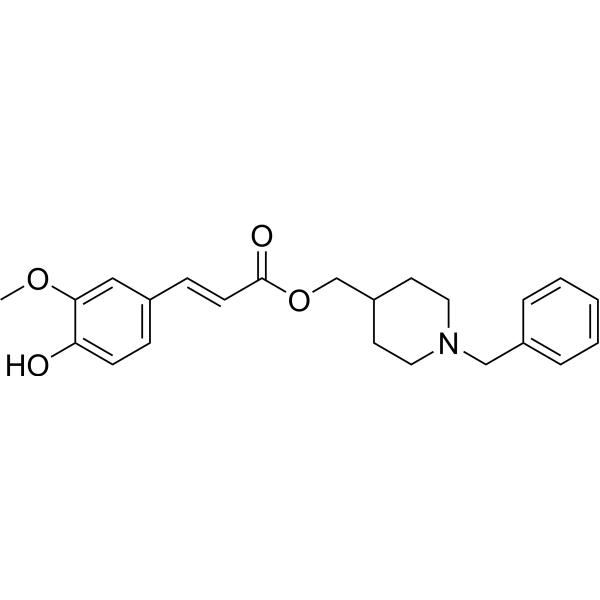
    PQM130, a Feruloyl-Donepezil Hybrid compound with brain penatration, is a multitarget agent candidate against the neurotoxicity induced by Aβ1-42 oligomer (AβO) and shows anti-inflammatory activity. PQM130 acts as a neuroprotective compound for anti-AD agent development .
    PQM130
  • HY-178487

    HDAC DNA/RNA Synthesis NO Synthase Apoptosis Cancer
    anti-TNBC agent-12 (Compound 23a) is a multi-target antitumor agent targeting HDAC6 (IC50=30.3 nM), DNA, and inducing nitric oxide (NO) release. anti-TNBC agent-12 induces tumor cell apoptosis and G2/M phase cell cycle arrest. anti-TNBC agent-12 is promising for research of triple-negative breast cancer (TNBC) .
    anti-TNBC agent-12
  • HY-162092

    NF-κB IKK Cancer
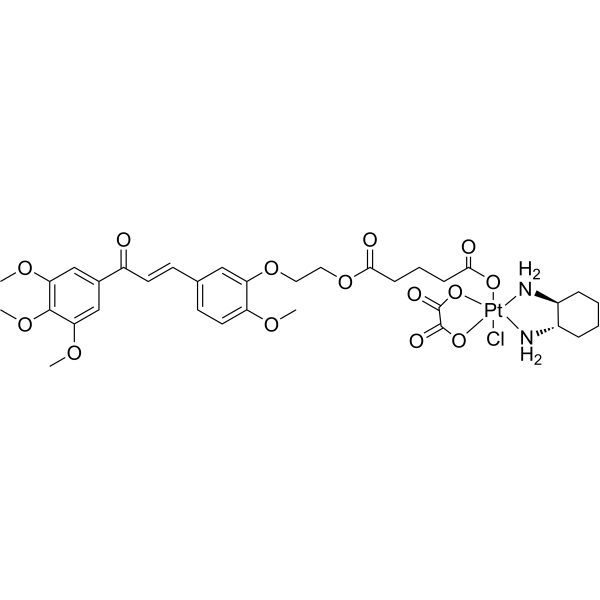
    Multi-target Pt (IV), an antitumor agent, suppresses the IKKβ phosphorylation, IκBα phosphorylation and NF-κB p65 phosphorylation and nuclear translocation, leading to blocked the NF-kB signal pathway .
    Multi-target Pt
  • HY-143499

    Monoamine Oxidase Neurological Disease
    hMAO-B-IN-3 (Compound 15) is a potent inhibitor of hMAO-B with an IC50 of 47.4 nM. hMAO-B-IN-3 is playing favourable agent-like properties and a broad safety window. hMAO-B-IN-3 is thus a suitable candidate for lead optimization and the development of multitarget-directed ligands .
    hMAO-B-IN-3
  • HY-173413

    Insecticide Cholinesterase (ChE) nAChR Sodium Channel GABA Receptor Others
    Insecticidal agent 21 (Compound 6) is an insecticide that is effective against Culex pipiens larvae (LC50: 0.4 μg/mL). Insecticidal agent 21 achieves multi-target neurotoxicity by inhibiting acetylcholinesterase (AChE) and simultaneously targeting other neural receptors (nicotinic acetylcholine receptors (nAChR), voltage-gated sodium channels (VGSC), and γ-aminobutyric acid receptors (GABAAR)). Insecticidal agent 21 has a strong insecticidal effect and can be used in the development of new insecticides to address the problem of mosquito resistance to traditional insecticides .
    Insecticidal agent 21
  • HY-161823

    Bacterial Infection
    Anti-MRSA agent 13 (Compound 9b) is an agent against methicillin-resistant Staphylococcus aureus (MRSA), exhibiting a minimum inhibitory concentration (MIC) of 0.5–2 μg/mL against clinically isolated MRSA strains. Anti-MRSA agent 13 possesses favorable biosafety, plasma tolerance stability, and a low tendency to develop resistance. Anti-MRSA agent 13 disrupts cell walls and membranes, reduces metabolic activity, causes oxidative damage, affects DNA function, and ultimately leads to MRSA death through multi-target synergies .
    Anti-MRSA agent 13
  • HY-B1227S1

    FAAH COX Autophagy Endogenous Metabolite Inflammation/Immunology
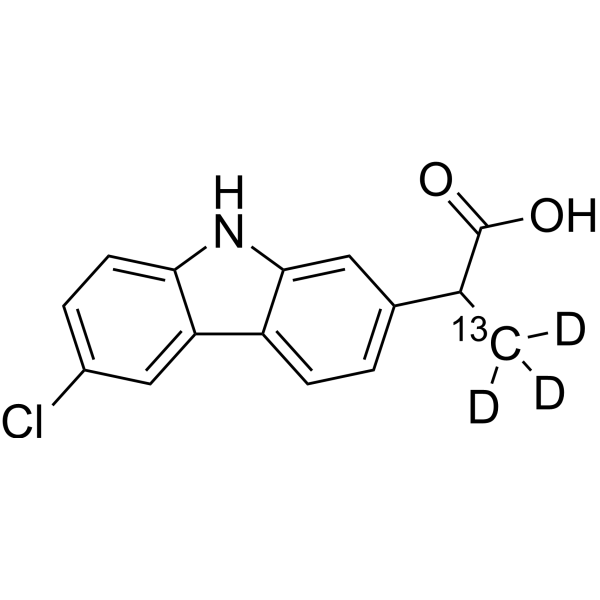
    Carprofen- 13C,d3 is the deuterium and 13C labeled Carprofen . Carprofen is a nonsteroid anti-inflammatory agent, acts as a multi-target FAAH/COX inhibitor, with IC50s of 3.9 μM, 22.3 μM and 78.6 μM for COX-2, COX-1 and FAAH, respectively .
    Carprofen-13C,d3
  • HY-155178

    EGFR Cancer
    Antiproliferative agent-34 (Compound A14) is a multi-target kinase inhibitor, with an IC50 of 177 nM and 1567 nM for EGFR L858R/T790M and EGFR WT. Antiproliferative agent-34 also inhibits JAK2, ROS1, FLT3, FLT4, PDGFRα with IC50 of 30.93, 106.90, 108.00, 226.60, 42.53 nM. Antiproliferative agent-34 inhibits H1975 and HCC827 cells proliferation with IC50 values below 40 nM under normoxic condition, and the anti-proliferation potency achieves 4–6-fold improvement (IC50 values < 10 nM) under hypoxic condition .
    Antiproliferative agent-34
  • HY-181041

    Drug Derivative Cholinesterase (ChE) Monoamine Oxidase Amyloid-β Neurological Disease
    Multitarget AD-IN-5 (Compound 20), 9-Aminoacridine (HY-B1422) derivative, is a neuroprotective agent. Multitarget AD-IN-5 shows IC50 values of 0.614, 0.448, 3.73 and 1.55 μM for hAChE, hBChE, hMAO-A and hMAO-B. Multitarget AD-IN-5 can reduce length and diameter of 42 fibers, and decrease the number of fibers per unit area. Multitarget AD-IN-5 can be used for research of Alzheimer's disease .
    Multitarget AD-IN-5
  • HY-181683

    Metabolic Disease
    Antidiabetic agent 8 is an orally active multi-target inhibitor, with IC50 values of 9.79, 6.36 and 19.08 μM against α-glucosidase, α-amylase and PTP1B, respectively. Antidiabetic agent 8 reduces postprandial blood glucose elevation. Antidiabetic agent 8 can be used in the research of type 2 diabetes .
    Antidiabetic agent 8
  • HY-182245

    Microtubule/Tubulin Carbonic Anhydrase Apoptosis MDM-2/p53 Cancer
    Anticancer agent 314 is a multi-target anticancer agent with tubulin polymerization inhibitory activity (IC50 = 6.35 μM) and human carbonic anhydrase IX (Ki = 27.1 nM) and XII (Ki 20.9 = nM) inhibitory activity. Anticancer agent 314 binds to the colchicine-binding pocket of tubulin and inhibits tumor-associated carbonic anhydrase isoforms via zinc coordination within enzyme active sites. Anticancer agent 314 induces G2/M phase cell cycle arrest, apoptosis via p53-dependent signaling, and broad-spectrum antiproliferative activity across multiple cancer cells. Anticancer agent 314 can be used for the research of cancer, such as leukemia, melanoma, ovarian cancer .
    Anticancer agent 314
  • HY-183090

    VEGFR Apoptosis Topoisomerase EGFR Cancer
    EGFR/VEGFR2-IN-13 is a multi-target inhibitor, with an IC50 of 0.98 µM against VEGFR-2, 1.01 µM against EGFR, and 1.94 µM against topoisomerase II. EGFR/VEGFR2-IN-13 induces cell cycle arrest and apoptosis in tumor cells. As an anticancer agent, EGFR/VEGFR2-IN-13 exhibits cytotoxicity against cancer cells. EGFR/VEGFR2-IN-13 can be used in research related to breast cancer, colon cancer, and liver cancer .
    EGFR/VEGFR2-IN-13
  • HY-179711

    Cholinesterase (ChE) Amyloid-β Neurological Disease
    AChE/BChE-IN-32 (Compound 4a) is an AChE and BChE inhibitor, with Ki values of 2.48 and 0.696 μM respectively. AChE/BChE-IN-32 inhibits aggregation and exhibits a strong ABTS•+ scavenging ability (TEAC = 2.40). AChE/BChE-IN-32 shows significant neuroprotective activity in glutamate and hydrogen peroxide-induced oxidative stress models. AChE/BChE-IN-32 can be used for the study of Alzheimer's disease .
    AChE/BChE-IN-32
  • HY-P11617

    NF-κB ERK JNK p38 MAPK Interleukin Related Inflammation/Immunology
    CLP-d2 is a multi-target anti-inflammatory agent, osteoclastogenesis inhibitor and immunomodulator with superior pharmacokinetic properties to Daptomycin (HY-B0108) and good safety profiles. CLP-d2 inhibits the NF-κB and MAPK signaling pathways by reducing the expression levels of c-Fos and NFATc1, and decreasing the phosphorylation levels of IκBα, p65, ERK and JNK, thereby reducing the secretion of pro-inflammatory cytokines such as IL-6, TNF-α and IL-1β to exert anti-inflammatory activity. CLP-d2 inhibits intra-articular osteoclastogenesis in mice, alleviates bone erosion and joint swelling, reduces synovial hyperplasia and inflammatory cell infiltration, and decreases serum rheumatoid factor (RF) levels. CLP-d2 is applicable to related research on rheumatoid arthritis .
    CLP-d2

Inquiry Online

Your information is safe with us. * Required Fields.

Salutation


Country or Region *

Applicant Name *


Organization Name *

Department *


Email Address *


Product Name *

Cat. No.


Requested quantity *

Phone Number *


Remarks

Inquiry Online

Inquiry Information

Product Name:
Cat. No.:
Quantity:
MCE Japan Authorized Agent:

