31 Results for "

NAC

" in MedChemExpress (MCE) Product Catalog:
Products (31)

31 Results for "NAC" in MCE Product Catalog:

  • Targets Recommended:
735
735 Publications Verification
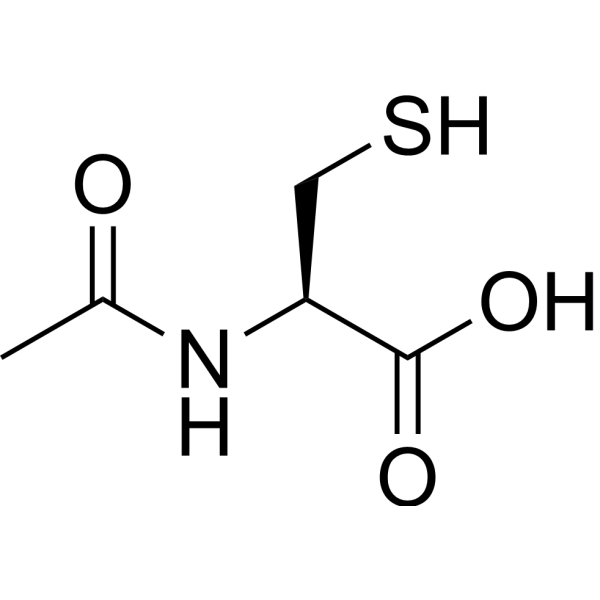
Cat. No.: HY-B0215
CAS No.: 616-91-1
Synonyms: N-Acetylcysteine; N-Acetyl-L-cysteine; NAC
Acetylcysteine (N-Acetylcysteine) is a mucolytic agent that can cross the blood-brain barrier, which reduces the thickness of the mucus. Acetylcysteine is a ROS inhibitor. Acetylcysteine is a cysteine precursor, prevents hemin-induced ferroptosis by neutralizing toxic lipids generated by arachidonate-dependent activity of 5-lipoxygenases. Acetylcysteine induces cell apoptosis. Acetylcysteine also has anti-influenza virus activities. In addition, Acetylcysteine ​​is the most stable form of cysteine ​​during drug delivery and can be used in disulfidptosis studies .
loading...
    loading...
13
13 Cited Publications
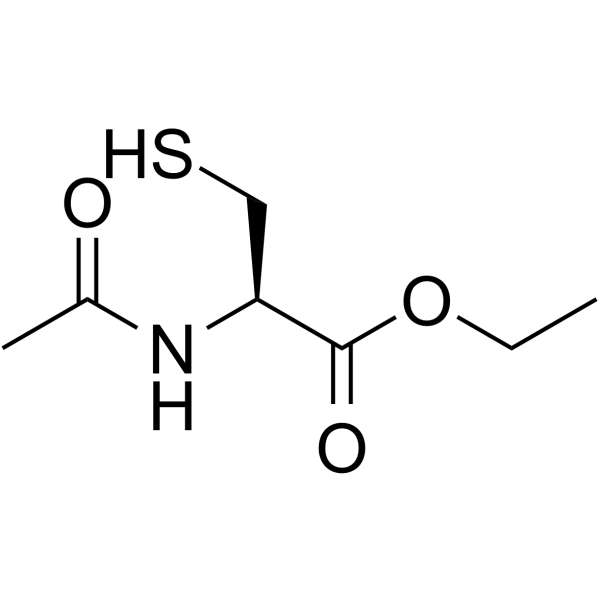
Cat. No.: HY-134495
CAS No.: 59587-09-6
Purity:  98.26%
Synonyms: N-Acetylcysteine ethyl ester; NACET
Research Areas:  

Metabolic Disease

N-Acetyl-L-cysteine ethyl ester is an esterified form of N-acetyl-L-cysteine (NAC). N-Acetyl-L-cysteine ethyl ester exhibits enhanced cell permeability, and produce NAC and cysteine. N-Acetyl-L-cysteine ethyl ester increases circulating hydrogen sulfide (H2S) and can be used as an H2S producer. N-Acetyl-L-cysteine ethyl ester has the potential to substitute NAC as a mucolytic agent, and as a GSH-related antioxidant .
loading...
    loading...
3
3 Cited Publications
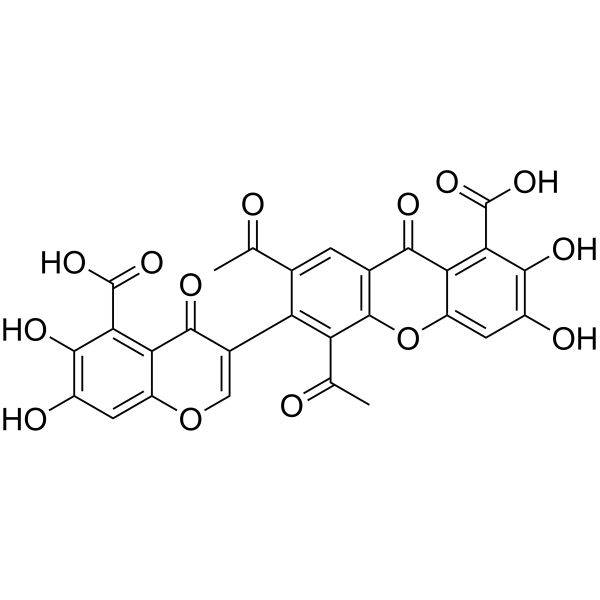
Cat. No.: HY-N9480
CAS No.: 133293-89-7
Synonyms: SM-345431
Vinaxanthone (SM-345431) is a potent and selective semaphorin3A, phospholipase C (PLC) and FabI inhibitor, with IC50s of 0.1-0.2 μM and 0.9 mM for semaphorin3A and FabI. Vinaxanthone inhibits the substrate (t-o-NAC thioester) and the cofactor (NADPH) with Kis of 3.1 μM and 1.0 μM, respectively. Vinaxanthone can be used to handle infections caused by multidrug-resistant pathogens .
loading...
    loading...
2
2 Cited Publications
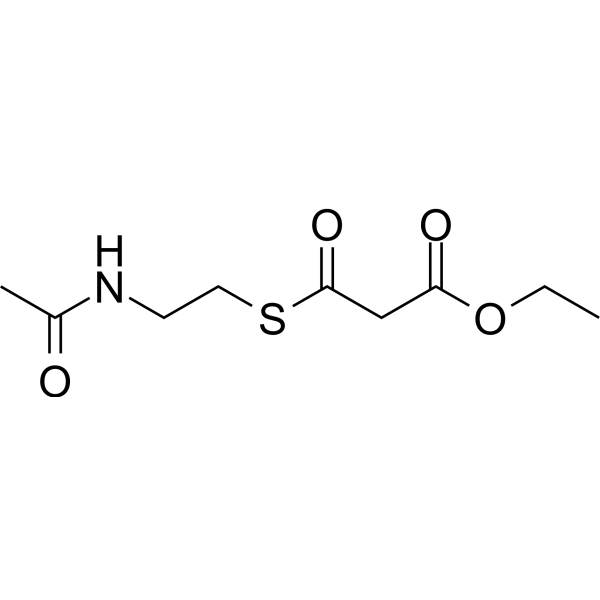
Cat. No.: HY-157395
CAS No.: 2361327-06-0
Purity:  98.59%
Target:  

Pyruvate Kinase

Research Areas:  

Cancer

malonyl-NAC increases cellular propylation, resulting in reduced endogenous GAPDH activity. malonyl-NAC increases GAPDH malonylation in cells and inhibits pyruvate kinase activity. In addition, malonyl-NAC limits the metabolism and proliferation of a highly glycolytic kidney cancer cell line harboring a tricarboxylic acid cycle mutation .
loading...
    loading...
1
1 Cited Publications
Cat. No.: HY-128577
CAS No.: 494830-67-0
Purity:  99.80%
Target:  

BTB/POZ Family

Research Areas:  

Cancer

NIC3 is a selective nucleus accumbens-associated protein-1 (NAC1) inhibitor, binds to the conserved Leu-90 of NAC1, prevents its homodimerization, and leads to proteasomal NAC1 degradation. Anti-cancer activity .
loading...
    loading...
Cat. No.: HY-132242
CAS No.: 334829-66-2
Purity:  ≥99.0%
Synonyms: SFN-NAC
Research Areas:  

Cancer

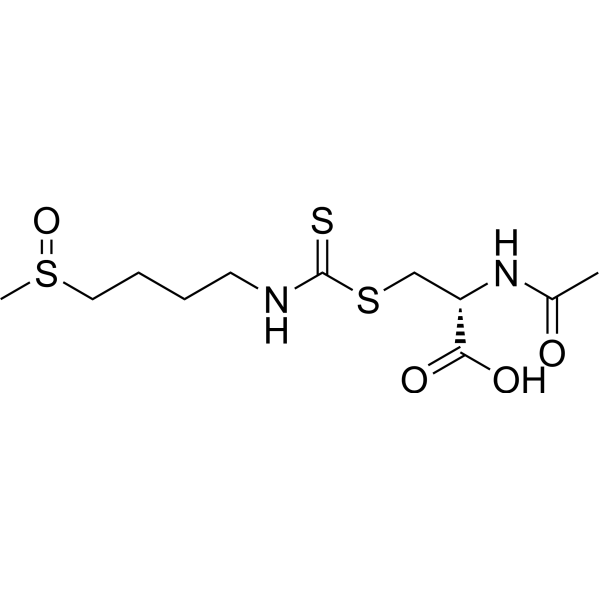
DL-Sulforaphane N-acetyl-L-cysteine (SFN-NAC) is an orally active HDAC inhibitor and metabolite of sulforaphane (HY-13755) with longer half-life and better blood-brain barrier permeability. DL-Sulforaphane N-acetyl-L-cysteine activates autophagy-mediated downregulation of α-tubulin expression through the ERK pathway and can be used in cancer research .
loading...
    loading...
Cat. No.: HY-124619
CAS No.: 186452-09-5
Purity:  99.79%
Target:  

EAAT HIV

Research Areas:  

Neurological Disease

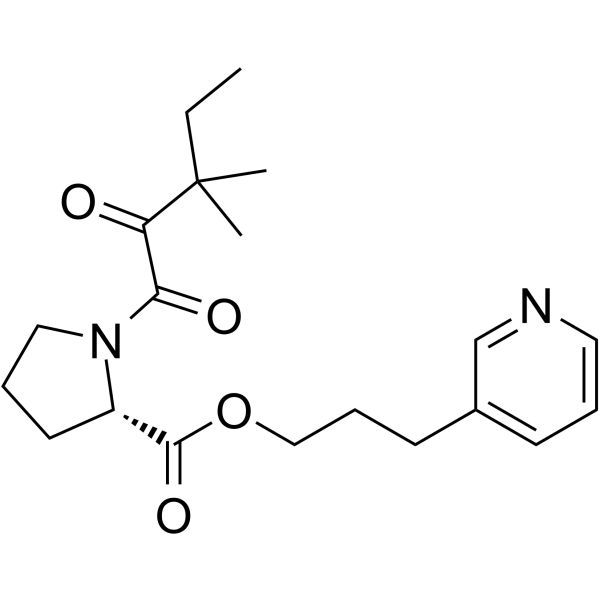
GPI-1046 is an orally active, antibiotic-free immunophilin ligand that reduces ethanol intake by upregulating glutamate transporter 1 (GLT1) in the prefrontal cortex (PFC) and nucleus accumbens core (NAc-core). GPI-1046 improves human immunodeficiency virus (HIV)-associated sensory neuropathy (HIV-SN) by attenuating store-operated calcium (SOC) entry. GPI-1046 has neuroprotective activity .
loading...
    loading...
Cat. No.: HY-B0215S
CAS No.: 131685-11-5
Synonyms: N-Acetylcysteine-d3; N-Acetyl-L-cysteine-d3; NAC-d3
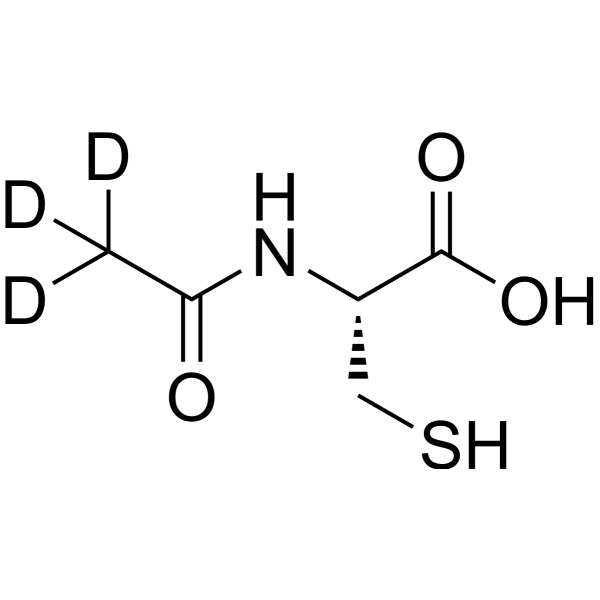
Acetylcysteine-d3 is the deuterium labeled Acetylcysteine. Acetylcysteine (N-Acetylcysteine) is a mucolytic agent which reduces the thickness of the mucus. Acetylcysteine is a ROS inhibitor. Acetylcysteine is a cysteine precursor, prevents hemin-induced ferroptosis by neutralizing toxic lipids generated by arachidonate-dependent activity of 5-lipoxygenases. Acetylcysteine induces cell apoptosis. Acetylcysteine also has anti-influenza virus activities. In addition, Acetylcysteine is the most stable form of cysteine during drug delivery and can be used in disulfidptosis studies .
loading...
    loading...
Cat. No.: HY-153340
CAS No.: 311343-11-0
Purity:  98.78%
Target:  

Keap1-Nrf2

Research Areas:  

Metabolic Disease

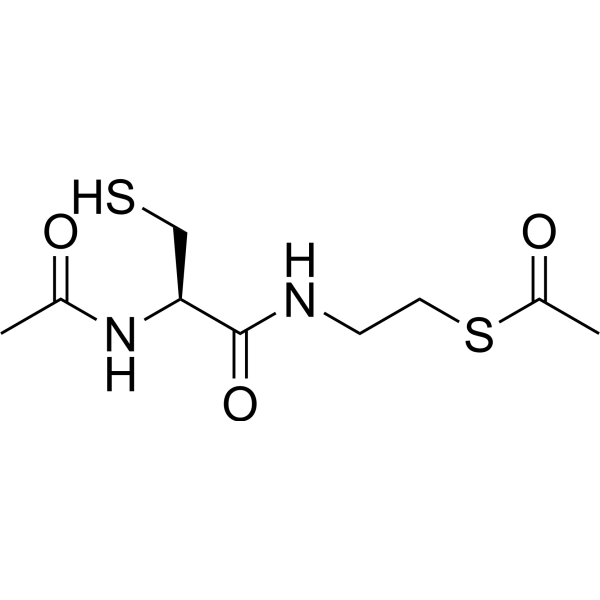
I-152 is a conjugate containing N-acetyl-cysteine (NAC) and cysteamine (MEA). I-152 activates NRF2 and ATF4 signals. I-152 has anti-proliferative properties .
loading...
    loading...
Cat. No.: HY-B0215R
CAS No.: 616-91-1
Synonyms: N-Acetylcysteine (Standard); N-Acetyl-L-cysteine (Standard); NAC (Standard)
Acetylcysteine (Standard) is the analytical standard of Acetylcysteine. This product is intended for research and analytical applications. Acetylcysteine (N-Acetylcysteine) is a mucolytic agent which reduces the thickness of the mucus. Acetylcysteine is a ROS inhibitor . Acetylcysteine is a cysteine precursor, prevents hemin-induced ferroptosis by neutralizing toxic lipids generated by arachidonate-dependent activity of 5-lipoxygenases . Acetylcysteine induces cell apoptosis . Acetylcysteine also has anti-influenza virus activities . In addition, Acetylcysteine is the most stable form of cysteine during drug delivery and can be used in disulfidptosis studies .
loading...
    loading...
Cat. No.: HY-117902
CAS No.: 1940118-04-6
Purity:  99.89%
Target:  

Dopamine Transporter

Research Areas:  

Neurological Disease

SRI-31142 is a putative, brain-penetrant allosteric inhibitor of the dopamine transporter (DAT). In behavioral studies using intracranial self-stimulation (ICSS), SRI-31142 did not produce the abuse-related effects seen with cocaine and GBR-12935, but instead reduced ICSS responses and dopamine levels in the nucleus accumbens (NAc) at effective doses. SRI-31142 also blocked cocaine-induced increases in ICSS and NAc dopamine .
loading...
    loading...
Cat. No.: HY-RS09349
Research Areas:  

Others

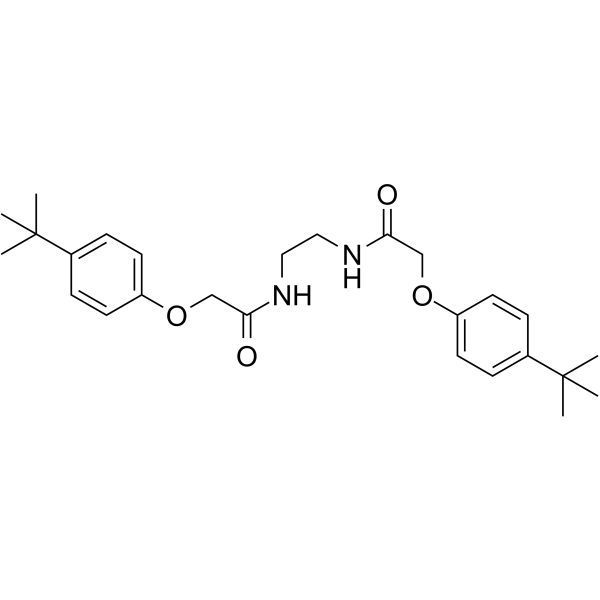
NLRP1 Human Pre-designed siRNA Set A contains three designed siRNAs for NLRP1 gene (Human), as well as a negative control, a positive control, and a FAM-labeled negative control.

loading...
    loading...
Cat. No.: HY-157779
Research Areas:  

Metabolic Disease

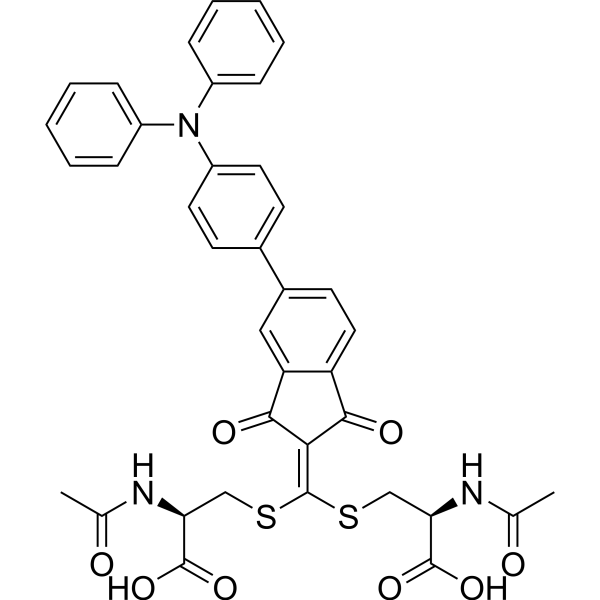
TPA-NAC is a nonfluorogenic prodrug by introducing N-acetyl-L-cysteine (NAC) into a conjugated acceptor skeleton. TPA-NAC is capable of fluorogenic selective labeling of HSA .
loading...
    loading...
Cat. No.: HY-W129441
CAS No.: 91281-32-2
Synonyms: N-Ac-4-S-CAP
Research Areas:  

Others

N-Acetyl-4-S-mercaptoaminophenol (N-Ac-4-S-CAP) is a compound that is selectively cytotoxic to melanocytes of black mouse hair follicles. It can cause 98% depigmentation of black mouse hair follicles. N-Ac-4-S-CAP can produce visible changes in hair follicle melanocytes 4 hours after intraperitoneal injection, including aggregation of melanin granules and nuclear condensation. Electron microscopy observations showed that it caused progressive destruction of melanocytes, including swelling of membranous organelles, nuclear condensation, and cytoplasmic vacuolation, ultimately leading to complete cell necrosis. N-Ac-4-S-CAP has a specific cytotoxic effect on melanocytes that actively produce eumelanin, but may not affect precursor or dormant melanocytes. These properties suggest that N-Ac-4-S-CAP may have potential application value in the treatment of melanoma or skin whitening.
loading...
    loading...
Cat. No.: HY-107055
CAS No.: 204069-50-1
Target:  

Dopamine Transporter

Research Areas:  

Neurological Disease

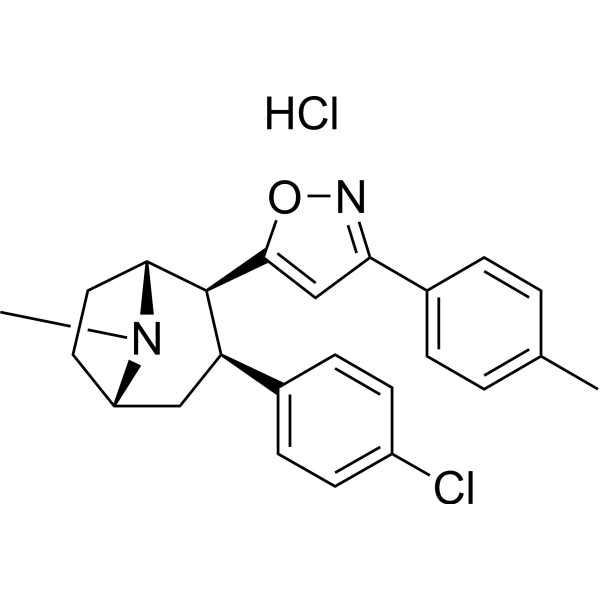
RTI 336 is a phenyltropane analog, as well as a potent and selective dopamine transporter (DAT) inhibitor. RTI 336 inhibits addictive agent induced locomotor activity and self-administration in Lewis rats. RTI 336 exhibits inhibitory effects depending on inherent NAc DAT levels .
loading...
    loading...
Cat. No.: HY-B0215S1
Synonyms: N-Acetylcysteine-15N; N-Acetyl-L-cysteine-15N; NAC-15N
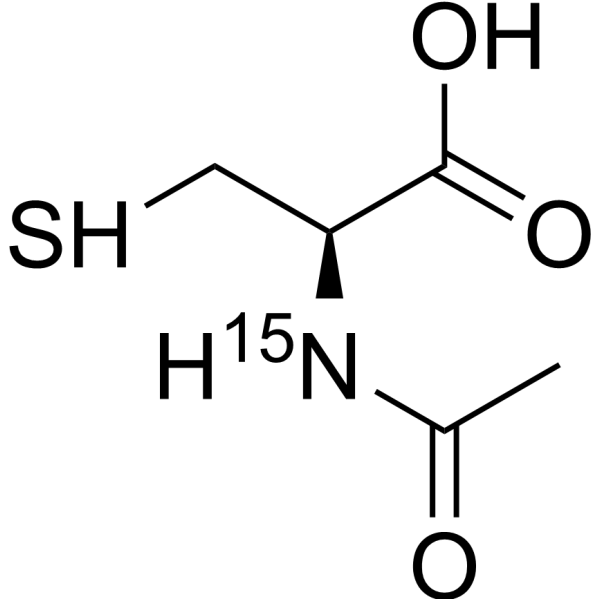
Acetylcysteine- 15N (N-Acetylcysteine- 15N) is the 15N-labeled Acetylcysteine. Acetylcysteine (N-Acetylcysteine) is a mucolytic agent which reduces the thickness of the mucus. Acetylcysteine is a ROS inhibitor. Acetylcysteine is a cysteine precursor, prevents hemin-induced ferroptosis by neutralizing toxic lipids generated by arachidonate-dependent activity of 5-lipoxygenases. Acetylcysteine induces cell apoptosis. Acetylcysteine also has anti-influenza virus activities. In addition, Acetylcysteine is the most stable form of cysteine during drug delivery and can be used in disulfidptosis studies .
loading...
    loading...
Cat. No.: HY-RS15878
Research Areas:  

Others

XK Human Pre-designed siRNA Set A contains three designed siRNAs for XK gene (Human), as well as a negative control, a positive control, and a FAM-labeled negative control.

loading...
    loading...
Cat. No.: HY-RS09354
Research Areas:  

Others

Nlrp1a Mouse Pre-designed siRNA Set A contains three designed siRNAs for Nlrp1a gene (Mouse), as well as a negative control, a positive control, and a FAM-labeled negative control.

loading...
    loading...
Cat. No.: HY-132242R
CAS No.: 334829-66-2
Synonyms: SFN-NAC (Standard)
Research Areas:  

Cancer

Pipemidic acid (trihydrate) (Standard) is the analytical standard of Pipemidic acid (trihydrate). This product is intended for research and analytical applications. Pipemidic acid trihydrate, a derivative of Piromidic acid, is an antibacterial agent. Pipemidic acid trihydrate inhibits DNA gyrase. Pipemidic acid trihydrate is active against gram-negative bacteria including Pseudomonas aeruginosa as well as some gram-positive bacteria. Pipemidic acid trihydrate can be used for the research of intestinal, urinary, and biliary tract infections .
loading...
    loading...
Cat. No.: HY-169433
Naph-Se-TMZ is a PROTAC-like HDAC1 degrader. Naph-Se-TMZ induces ROS-dependent reduction in HDAC1 protein expression and total HDAC activity, and decreases cell viability in a dose-dependent manner. Naph-Se-TMZ exhibits activity in both TMZ-sensitive and TMZ-resistant glioma cells, and its cytotoxicity is reversed by the ROS scavenger N-acetylcysteine (HY-B0215). Naph-Se-TMZ can be used in studies related to glioblastoma .
Naph-Se-TMZ consists of a target protein ligand (red segment): Temozolomide (HY-17364), a DNA intercalator (blue segment): Nitro-Naphthalimide-C2-acylamide (HY-169437), and a molecular linker (black segment). Meanwhile, the activity control for the target protein ligand is Temozolomide-amino hydrochloride (HY-169439), and the DNA intercalator+linker is NNISC-2 (HY-169438).
loading...
    loading...

