218 Results for "

NAV1

" in MedChemExpress (MCE) Product Catalog:
Products (218)

218 Results for "NAV1" in MCE Product Catalog:

28
28 Publications Verification
Cat. No.: HY-100001
CAS No.: 130495-35-1
Purity:  ≥99.01%
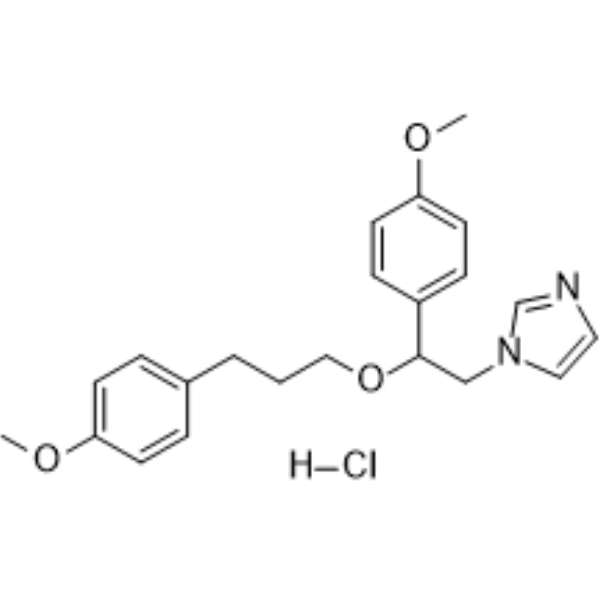
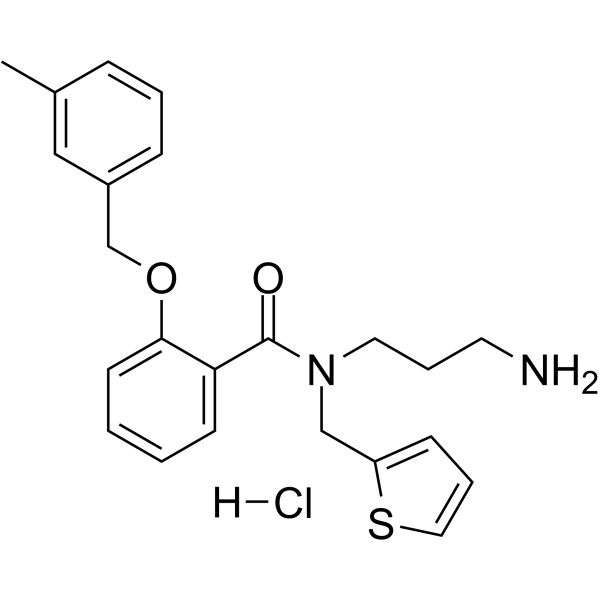
SKF-96365 hydrochloride is a TRPC channel antagonist and store-operated calcium entry (SOCE) inhibitor. SKF-96365 hydrochloride reduces calcium ion influx by inhibiting the activity and expression of TRPC6, STIM1 and Orai1. SKF-96365 hydrochloride inhibits voltage-gated sodium current (cardiac INa/NaV1.5) and slows myocardial conduction. SKF-96365 hydrochloride inhibits phosphorylation/activation of CaMKIIγ and suppresses the downstream AKT signaling pathway. SKF-96365 hydrochloride induces G2/M phase cell cycle arrest, apoptosis and cytoprotective autophagy in colorectal cancer cells. SKF-96365 hydrochloride alleviates allergic rhinitis symptoms by reducing inflammatory cytokine levels. SKF-96365 hydrochloride reduces intracellular calcium overload, inhibits Homer1 expression, prevents nuclear damage and suppresses apoptosis. SKF-96365 hydrochloride inhibits the growth of colorectal cancer xenografts in nude mice . SKF-96365 hydrochloride is applicable to research related to allergic rhinitis, colorectal cancer, Parkinson's disease, persistent spontaneous nociception and hyperalgesia [1] .
loading...
    loading...
28
28 Publications Verification
Cat. No.: HY-125942
CAS No.: 162849-90-3
SKF-96365 is a TRPC channel antagonist and store-operated calcium entry (SOCE) inhibitor. SKF-96365 reduces calcium ion influx by inhibiting the activity and expression of TRPC6, STIM1 and Orai1. SKF-96365 inhibits voltage-gated sodium current (cardiac INa/NaV1.5) and slows myocardial conduction. SKF-96365 inhibits phosphorylation/activation of CaMKIIγ and suppresses the downstream AKT signaling pathway. SKF-96365 induces G2/M phase cell cycle arrest, apoptosis and cytoprotective autophagy in colorectal cancer cells. SKF-96365 alleviates allergic rhinitis symptoms by reducing inflammatory cytokine levels. SKF-96365 reduces intracellular calcium overload, inhibits Homer1 expression, prevents nuclear damage and suppresses apoptosis. SKF-96365 inhibits the growth of colorectal cancer xenografts in nude mice . SKF-96365 is applicable to research related to allergic rhinitis, colorectal cancer, Parkinson's disease, persistent spontaneous nociception and hyperalgesia [1] .
loading...
    loading...
6
6 Cited Publications
Cat. No.: HY-148800
CAS No.: 2649467-58-1
Purity:  99.96%
Synonyms: VX-548
Target:  

Sodium Channel

Research Areas:  

Neurological Disease

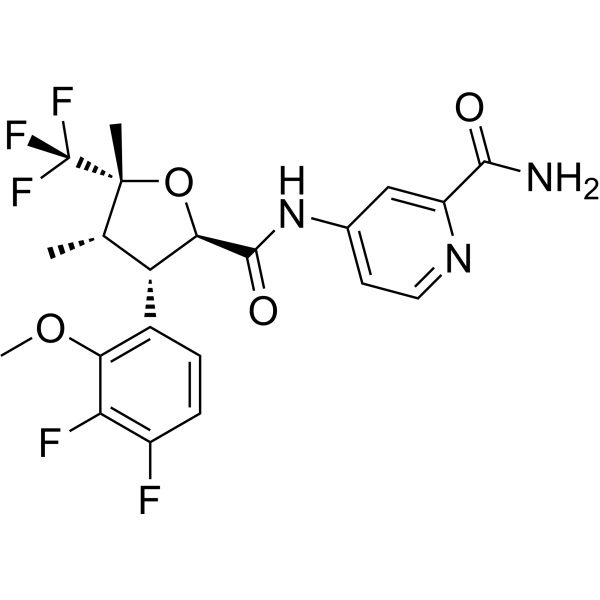
Suzetrigine (VX-548) is an orally active and highly selective NaV1.8 inhibitor that acts as an analgesic. Suzetrigine is also a blocker of sodium channel protein type 10 subunit alpha. Suzetrigine is promising for research of acute pain after abdominoplasty and bunionectomy [1] .
loading...
    loading...
4
4 Cited Publications
Cat. No.: HY-16787
CAS No.: 313254-51-2
Target:  

Sodium Channel

Research Areas:  

Cardiovascular Disease

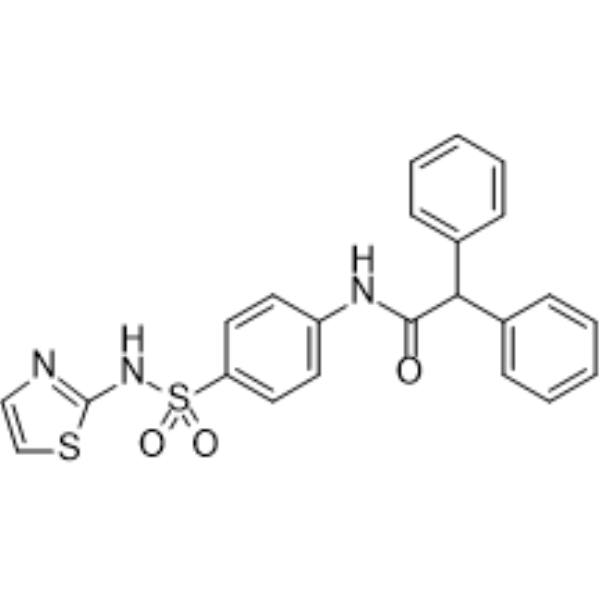
ICA-121431 is a nanomolar potent and broad-spectrum voltage-gated sodium channel (Nav) blocker, shows equipotent selectivity for human Nav1.1 and Nav1.3 subtypes with IC50 values of 13 nM and 23 nM, respectively. ICA-121431 shows less potent inhibition of Nav1.2 (IC50=240 nM) and 1,000 fold selectivity against Nav1.4, Nav1.6, and the TTX-resistant human Nav1.5 and Nav1.8 channels (IC50s >10 μM).
loading...
    loading...
4
4 Cited Publications
Cat. No.: HY-N6691
CAS No.: 71-62-5
Synonyms: 3-Veratroylveracevine
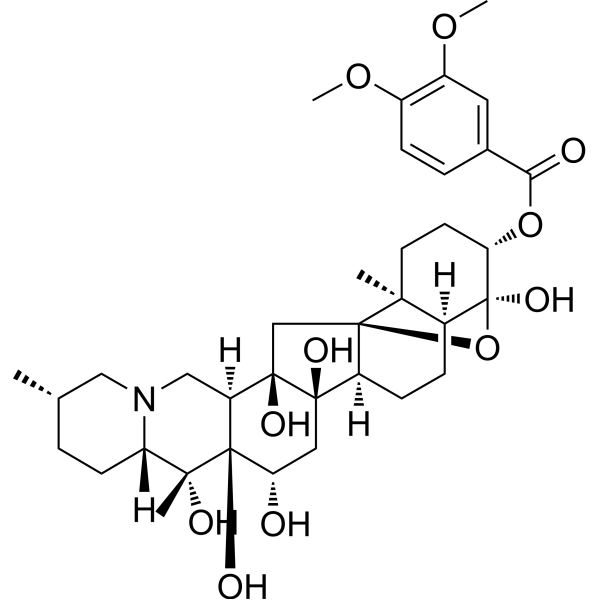
Veratridine (3-Veratroylveracevine) is a plant neurotoxin, a voltage-gated sodium channels (VGSCs) agonist. Veratridine inhibits the peak current of Nav1.7, with an IC50 of 18.39 µM. Veratridine regulates sodium ion channels mainly by activating sodium ion channels, preventing channel inactivation and increasing sodium ion flow [1] .
loading...
    loading...
4
4 Cited Publications
Cat. No.: HY-12883
CAS No.: 1235403-62-9
Purity:  99.87%
Target:  

Sodium Channel

Research Areas:  

Neurological Disease

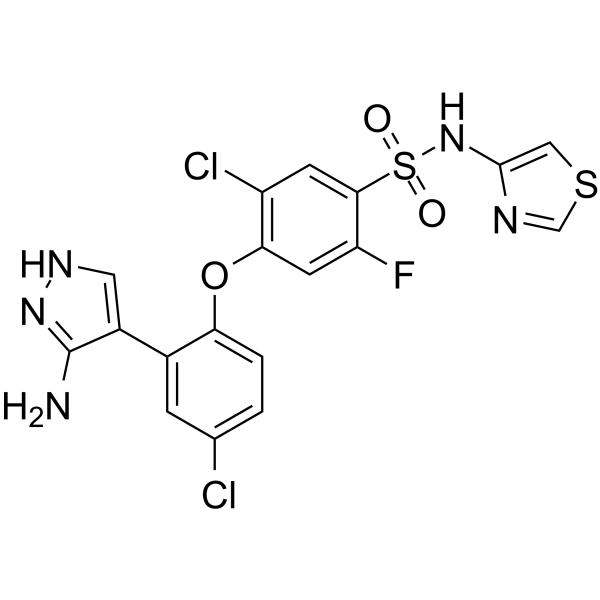
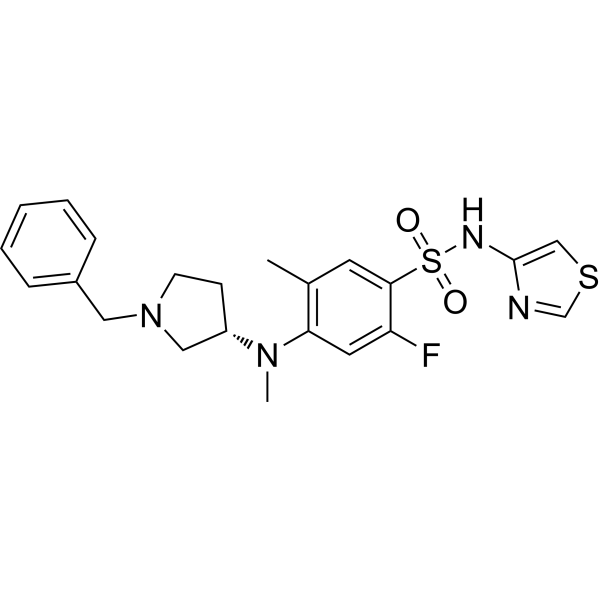
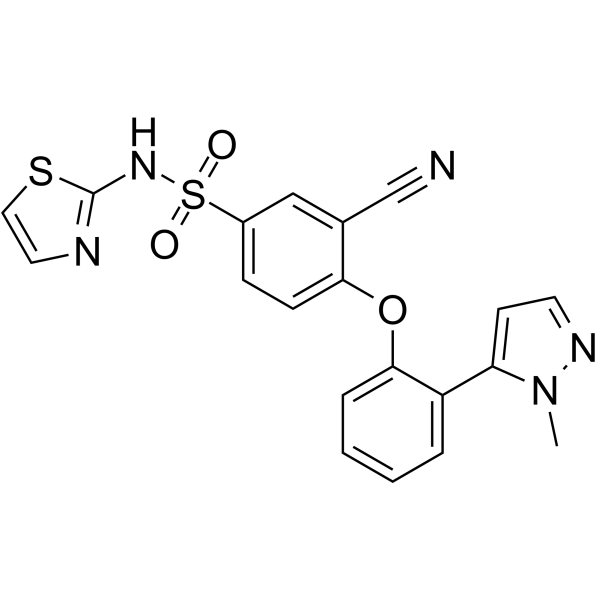
PF 05089771 is a potent, orally active and selective arylsulfonamide Nav1.7 inhibitor, with IC50 values of 11 nM, 12 nM, 13 nM, 171 nM and 8 nM for hNav1.7, cynNav1.7, dogNav1.7, ratNav1.7, and musNav1.7, respectively. PF 05089771 is under the study for pain and diabetic neuropathy [1] .
loading...
    loading...
3
3 Cited Publications
Cat. No.: HY-P10234A
Target:  

Sodium Channel

Research Areas:  

Neurological Disease

Poneratoxin acetate is the acetate salt form of Poneratoxin (HY-P10234). Poneratoxin acetate is the modulator for voltage-gated sodium channel (NaV, EC50 for NaV1.6 and NaV1.7 is 97 nM and 2.3 µM), that lowers the voltage threshold for activation and inhibits the inactivation of channels, enhances the excitability of neurons, and leads to the transmission of pain signals [1].
loading...
    loading...
3
3 Cited Publications
Cat. No.: HY-17429
CAS No.: 54143-56-5
Synonyms: R-818
Target:  

Sodium Channel

Research Areas:  

Cardiovascular Disease

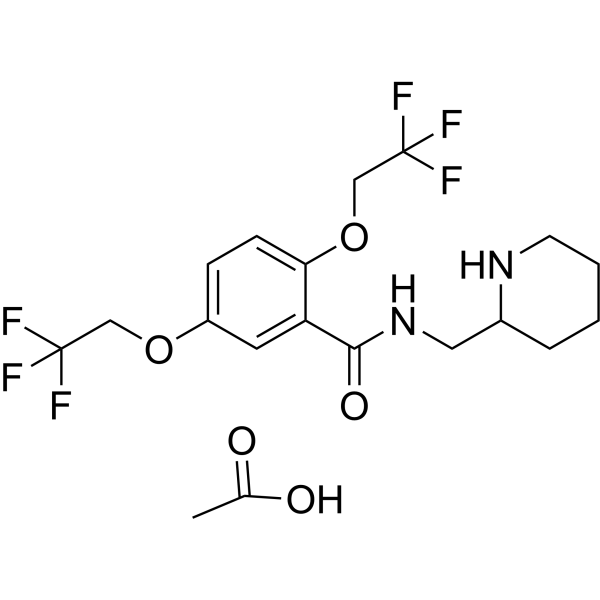
Flecainide acetate (R-818) is a class 1C antiarrhythmic agent especially used for the management of supraventricular arrhythmia; works by blocking the Nav1.5 sodium channel in the heart, causing prolongation of the cardiac action potential.
loading...
    loading...
3
3 Cited Publications
Cat. No.: HY-11079
CAS No.: 944261-79-4
Purity:  99.09%
A-803467 is a potent and selective tetrodotoxin-resistant Nav1.8 sodium channel blocker (IC50=8 nM). A-803467 has shown significant anti-nociception in neuropathic and inflammatory pain models. A-803467 enhances the chemosensitivity of conventional anticancer agents through interaction with the ATP-binding cassette subfamily G member 2 (ABCG2) transporter [1] .
loading...
    loading...
2
2 Cited Publications
Cat. No.: HY-105285
CAS No.: 946846-83-9
Purity:  99.54%
Synonyms: Neu-P11
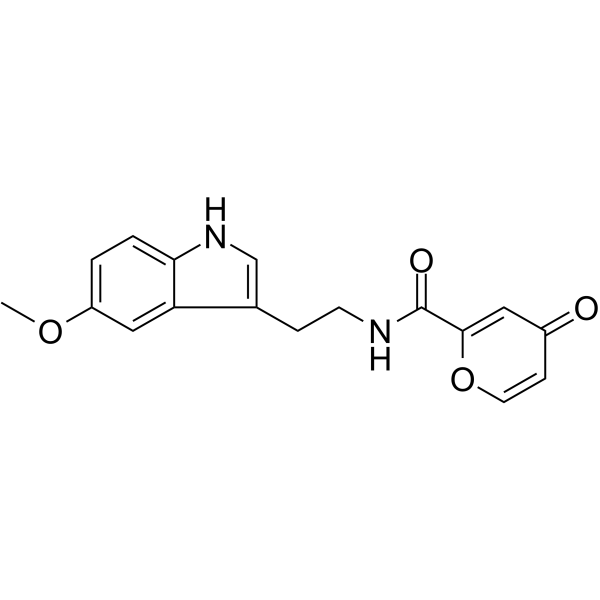
Piromelatine (Neu-P11) is a melatonin MT1/MT2 receptor agonist, serotonin 5-HT1A/5-HT1D agonist, and serotonin 5-HT2B antagonist. Piromelatine (Neu-P11) possesses sleep promoting, analgesic, anti-neurodegenerative, anxiolytic and antidepressant potentials. Piromelatine (Neu-P11) also possesses pain-related P2X3, TRPV1, and Nav1.7 channel-inhibition capacities [1] .
loading...
    loading...
2
2 Cited Publications
Cat. No.: HY-17355A
CAS No.: 104632-27-1
Synonyms: (R)-Pramipexole dihydrochloride; R-(+)-Pramipexole dihydrochloride; KNS-760704 dihydrochloride
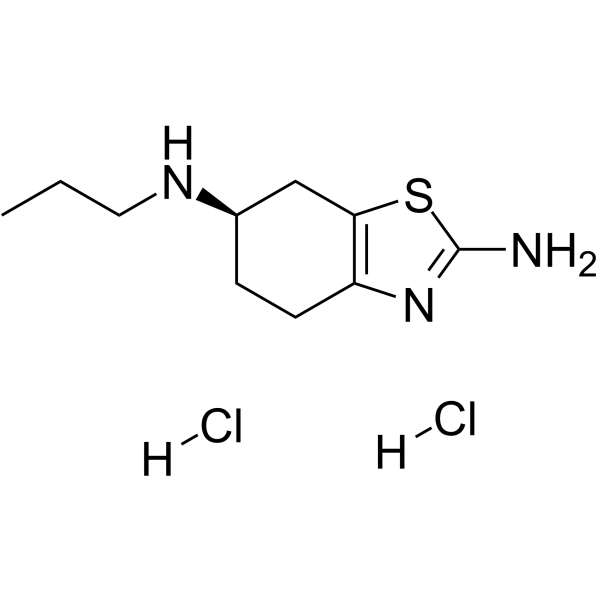
Dexpramipexole ((R)-Pramipexole) dihydrochloride is an orally active, blood-brain barrier permeable mitochondrial protective agent. Dexpramipexole dihydrochloride upregulates the expression of Parkin, PINK1, GPX4 and FSP1; binds to mitochondrial F1/Fo-ATP synthase; blocks the Nav1.8 sodium channel; and inhibits the activation of the NLRP3 inflammasome. Dexpramipexole dihydrochloride induces mitophagy, inhibits ferroptosis, pyroptosis, apoptosis, neuroinflammation and eosinophilopoiesis; maintains mitochondrial function and redox homeostasis; reduces reactive oxygen species production; and decreases myocardial infarct size. Dexpramipexole dihydrochloride is applicable to studies on eosinophilic asthma, myocardial ischemia/reperfusion injury, sepsis-associated encephalopathy, analgesia, and more [1] .
loading...
    loading...
2
2 Cited Publications
Cat. No.: HY-17355B
CAS No.: 104632-28-2
Synonyms: (R)-Pramipexole; R-(+)-Pramipexole; KNS-760704
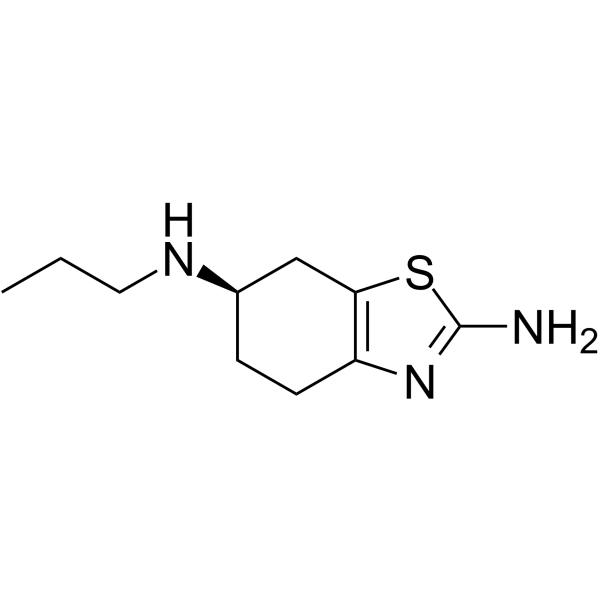
Dexpramipexole ((R)-Pramipexole) is an orally active, blood-brain barrier permeable mitochondrial protective agent. Dexpramipexole upregulates the expression of Parkin, PINK1, GPX4 and FSP1; binds to mitochondrial F1/Fo-ATP synthase; blocks the Nav1.8 sodium channel; and inhibits the activation of the NLRP3 inflammasome. Dexpramipexole induces mitophagy, inhibits ferroptosis, pyroptosis, apoptosis, neuroinflammation and eosinophilopoiesis; maintains mitochondrial function and redox homeostasis; reduces reactive oxygen species production; and decreases myocardial infarct size. Dexpramipexole is applicable to studies on eosinophilic asthma, myocardial ischemia/reperfusion injury, sepsis-associated encephalopathy, analgesia, and more [1] .
loading...
    loading...
2
2 Cited Publications
Cat. No.: HY-100345
CAS No.: 926023-82-7
Purity:  99.18%
Target:  

TRP Channel

Research Areas:  

Neurological Disease Cancer

AMTB hydrochloride is a selective TRPM8 channel blocker. AMTB hydrochloride inhibits icilin-induced TRPM8 channel activation with a pIC50 of 6.23. AMTB hydrochloride can be used for the research of the overactive bladder and painful bladder syndrome. AMTB hydrochloride is a non-selective inhibitor of voltage-gated sodium channels (NaV) .
loading...
    loading...
1
1 Cited Publications
Cat. No.: HY-147423
CAS No.: 2154406-04-7
Purity:  99.28%
Synonyms: NBI-921352; XEN901
Target:  

Sodium Channel

Research Areas:  

Neurological Disease

Zandatrigine (NBI-921352; XEN901) is a selective, orally active, voltage-gated sodium channel NaV1.6/SCN8A inhibitor that can penetrate the blood-brain barrier. Zandatrigine inhibits sodium influx by non-covalently binding to the VSD4 structure of NaV1.6, blocking the persistent and resuscitative currents under pathological conditions. Zandatrigine can reduce neuronal hyperexcitability and reduce epileptic seizures. Zandatrigine is 134-756-fold selective for other isoforms such as NaV1.1 and NaV1.2, and has minimal effect on NaV1.1 expressed by inhibitory interneurons. Zandatrigine can be used to study NaV1.6-mediated neuroexcitability diseases such as SCN8A-related developmental epileptic encephalopathy (SCN8A-DEE) and adult focal epilepsy [1] .
loading...
    loading...
1
1 Cited Publications
Cat. No.: HY-B0262
CAS No.: 532-03-6
Target:  

Sodium Channel

Research Areas:  

Neurological Disease

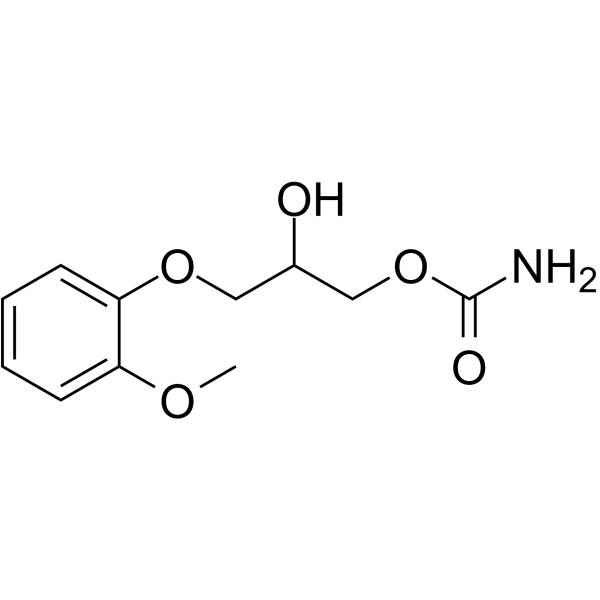
Methocarbamol is an orally active central muscle relaxant and blocks muscular Nav1.4 channel. Methocarbamol reversibly affects voltage dependence of inactivation of Nav1.4 channel. Methocarbamol has the potential for muscle spasms and pain syndromes research [1] .
loading...
    loading...
1
1 Cited Publications
Cat. No.: HY-101383
CAS No.: 875051-72-2
Purity:  99.63%
Target:  

Sodium Channel

Research Areas:  

Neurological Disease

PF-01247324 is a selective and orally bioavailable Nav1.8 channel blocker with an IC50 of 196 nM for recombinant human Nav1.8 channel.
loading...
    loading...
1
1 Cited Publications
Cat. No.: HY-12811
CAS No.: 1235397-05-3
Purity:  99.29%
Target:  

Sodium Channel

Research Areas:  

Neurological Disease

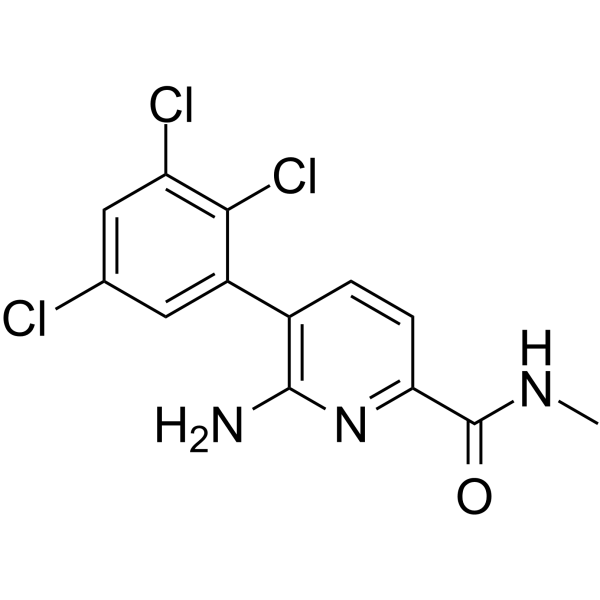
PF-04856264 is a potent and selective Nav1.7 inhibitor, with IC50s of 28, 131, 19, and 42 nM for human, mouse, cynomolgus monkey and dog Nav1.7, respectively. PF-04856264 has low potency against the rat Nav1.7 channel. PF-04856264 shows analgesic effect [1] .
loading...
    loading...
1
1 Cited Publications
Cat. No.: HY-133910
CAS No.: 849000-18-6
Purity:  98.02%
Target:  

Sodium Channel

Research Areas:  

Neurological Disease

Lu AE98134, an activator of voltage-gated sodium channels, acts as a partly selective Nav1.1 channels positive modulator. Lu AE98134 also increases the activity of Nav1.2 and Nav1.5 channels but not of Nav1.4, Nav1.6 and Nav1.7 channels. Lu AE98134 can be used to analyze pathophysiological functions of the Nav1.1 channel in various central nervous system diseases, including cognitive restoring in schizophrenia, et al [1].
loading...
    loading...
1
1 Cited Publications
Cat. No.: HY-128772
CAS No.: 2230144-21-3
Purity:  98.85%
Target:  

Sodium Channel

Research Areas:  

Neurological Disease

XPC-6444 is a highly potent, isoform-selective, and CNS-penetrant NaV1.6 inhibitor (IC50=41 nM for hNaV1.6). XPC-6444 also displays potent block of NaV1.2 (IC50=125 nM). XPC-6444 shows anticonvulsant activity [1].
loading...
    loading...
1
1 Cited Publications
Cat. No.: HY-100727
CAS No.: 1443373-17-8
Purity:  98.06%
Target:  

Sodium Channel

Research Areas:  

Neurological Disease

AM-2099 is a potent and selective inhibitor of voltage-gated sodium channel Nav1.7 with an IC50 of 0.16 μM for human Nav1.7.
loading...
    loading...

