Search Result
Results for "
NIR imaging
" in MedChemExpress (MCE) Product Catalog:
| Cat. No. |
Product Name |
Target |
Research Areas |
Chemical Structure |
-
- HY-111653
-
CycLuc1
2 Publications Verification
|
Reactive Oxygen Species (ROS)
|
Others
|
|
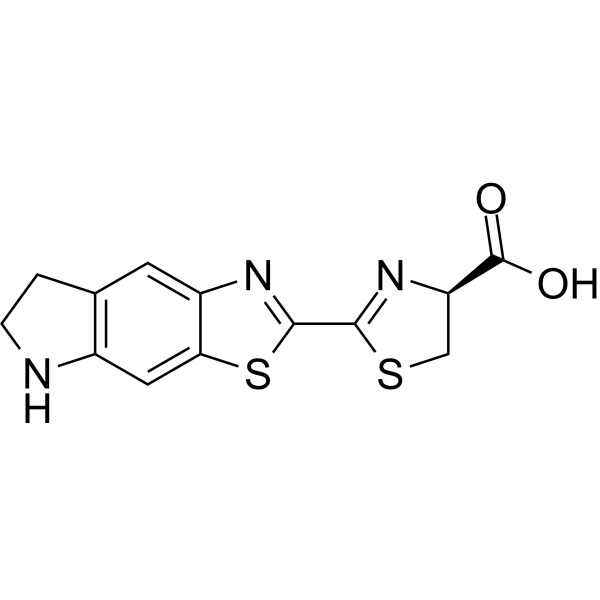
CycLuc1 is a blood-brain barrier permeable luciferase substrate that displays near-infrared (NIR) emission with a peak luminescence wavelength of 599 nm. CycLuc1 can be used for in vivo bioluminescence imaging .
|
-
-
- HY-D1389
-
|
Sulfo-Cyanine5.5 NHS ester tripotassium
|
Fluorescent Dye
|
Others
|
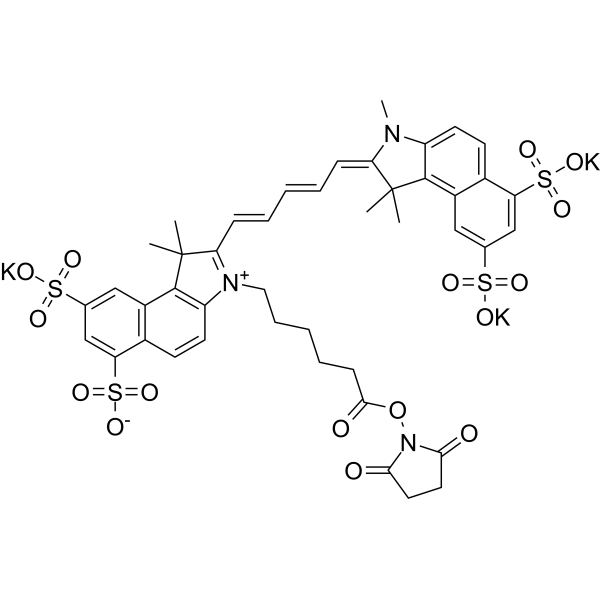
Sulfo-CY-5.5 NHS ester (Sulfo-Cyanine5.5 NHS ester) tripotassium is an amine-reactive ester of sulfonated far-red Cyanine5.5 fluorophore, which can be used to label antibodies, proteins, etc., as well as for in vivo NIR imaging .
|
-
-
- HY-D1540
-
|
Cy 5.5 amine; Lumiprobe Cy 5.5 amine
|
Fluorescent Dye
|
Others
|
|
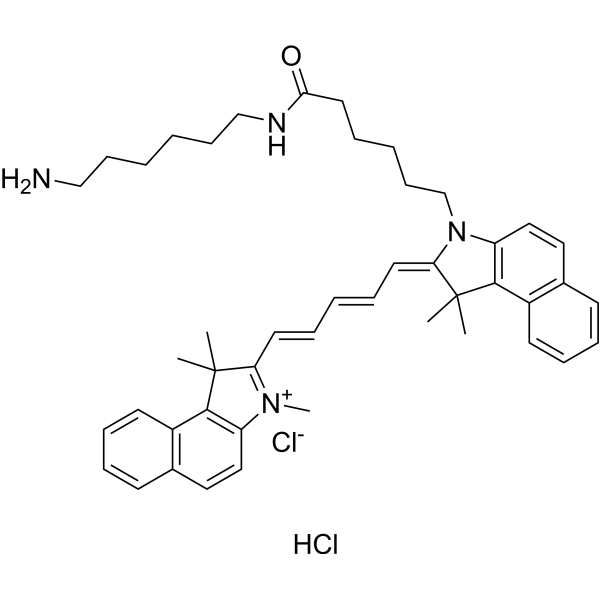
Cyanine5.5 amine (Cy 5.5 amine), a Cy5.5 Analogue, is a near-infrared (NIR) fluorescent dye (Ex=648 nm, Em=710 nm). Cyanine5.5 amine can be used in the preparation of Cy5.5-labeled nanoparticles, which can be tracked and imaged with low fluorescence background using confocal microscopy .
|
-
-
- HY-133852
-
FD-1080
1 Publications Verification
|
Fluorescent Dye
MOFs
|
Others
|
|
FD-1080 is a fluorophore with both excitation and emission in the NIR-II region (Ex=1064 nm, Em=1080 nm). FD-1080 can be used for in vivo imaging .
|
-
-
- HY-D1583
-
|
DBCO-Cy5 hexafluorophosphate; Cyanine5 dibenzocyclooctyne hexafluorophosphate
|
Fluorescent Dye
|
Others
|
|
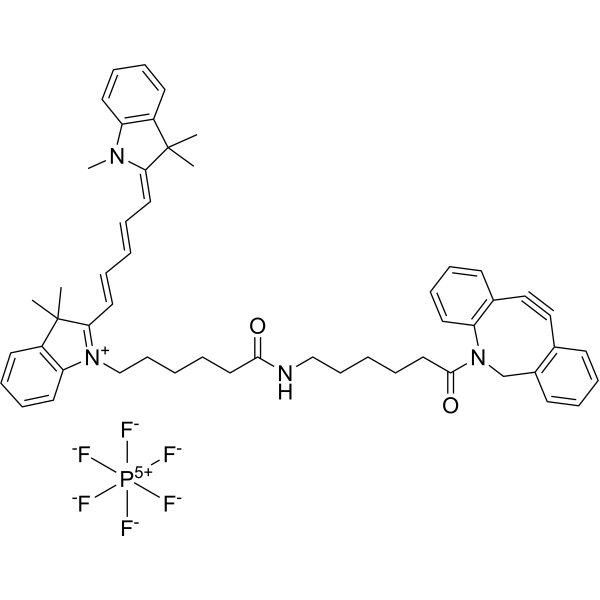
Cyanine5 DBCO (DBCO-Cy5) hexafluorophosphate is a low-toxicity azide reactive probe (NIR fluorescent dye), for imaging azide-labeled biomolecules via a copper-free "click-through" reaction. Cyanine5 DBCO hexafluorophosphate has no apparent cytotoxicity or animal toxicity and shows no damage to the physiological functions of cells other than the target cells (azide-labeled cells). Cyanine5 DBCO hexafluorophosphate can be used to label and track cells in vitro and in vivo (Ex=635 nm, Em=650-700 nm) .
|
-
-
- HY-D1464
-
CH1055
1 Publications Verification
|
Fluorescent Dye
|
Cancer
|
|
CH1055 is a near-infrared II (NIR-II) fluorescent dye that can be used as a fluorescent probe for in vivo imaging. CH1055 can be conjugated with antibodies or ligands for specific imaging (for example the tumor imaging) .
|
-
-
- HY-133852A
-
|
|
Fluorescent Dye
|
Others
|
|
FD-1080 free acid is a fluorophore with both excitation and emission in the NIR-II region (Ex=1064 nm, Em=1080 nm). FD-1080 free acid can be used for in vivo imaging .
|
-
-
- HY-D1873
-
|
|
Fluorescent Dye
|
Others
|
|
800CW acid is an orally active near-infrared (NIR) dye (excitation/emission 774/789 nm). 800CW acid can be used for intestinal permeability testing. 800CW acid can be used for in vivo imaging studies .
|
-
-
- HY-D1716
-
|
|
Fluorescent Dye
Drug Intermediate
|
Cancer
|
|
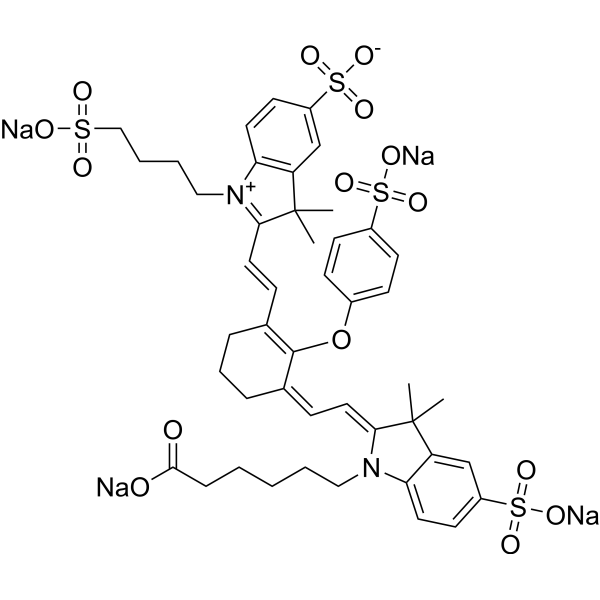
S0456 is a raw material that plays a crucial role in the construction of the folate receptor-targeted near-infrared dye OTL 38 (HY-139579). S0456 is connected to the modified folic acid to form OTL 38, endowing OTL 38 with good optical properties, high affinity, and specificity. S0456 can be used in the research of tumor optical imaging agents .
|
-
-
- HY-D1321
-
|
Cyanine5 amine hydrochloride
|
Fluorescent Dye
|
Others
|
|
Cyanine5 amine hydrochloride is a potent fluorescent dye. Cyanine5 amine hydrochloride can be reacted with terminal alkynes via a copper-catalyzed click reaction (CuAAC). (λex=646 nm, λem=662 nm) .
|
-
-
- HY-D1719
-
Cypate
1 Publications Verification
|
Fluorescent Dye
|
Others
|
|
Cypate, a cyanine dye, is a near infrared (NIR) fluorescent probe for in vivo tumor imaging .
|
-
-
- HY-D1568
-
|
|
Fluorescent Dye
|
Others
|
|
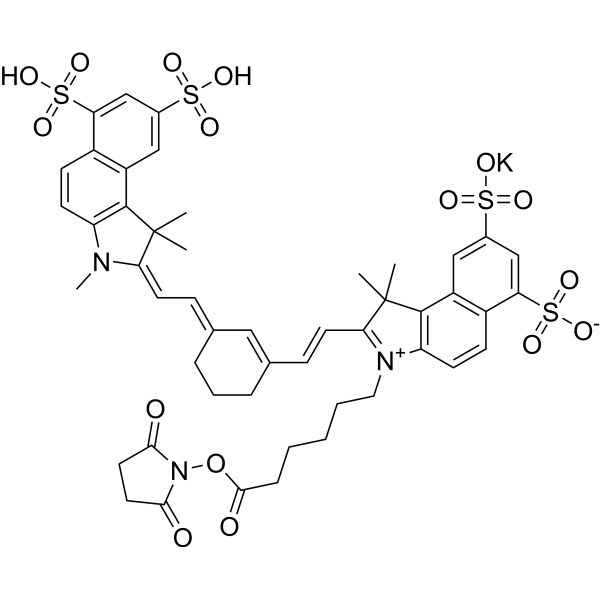
Sulfo-Cy7.5 NHS ester is a near infrared water soluble hydrophilic dye, also is an NHS ester for the modification of amine groups. Sulfo-Cy7.5 NHS ester contains a trimeth ylene bridge and has a linker arm for its attachment to proteins, peptides, and other molecules. Sulfo-Cy7.5 NHS ester can be used for the research of NIR imaging applications .
|
-
-
- HY-P5287
-
|
|
Integrin
|
Cancer
|
|
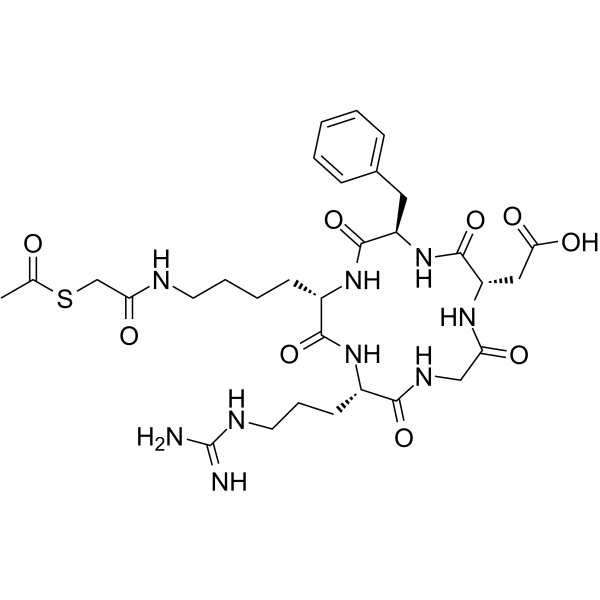
cRGDfK-thioacetyl ester is a bioactive polypeptide molecule. cRGDfK peptide has a selective affinity for integrins. cRGDfK peptide can modify NIR fluorescent probes for cancer targeting imaging .
|
-
-
- HY-D1320
-
|
|
Fluorescent Dye
|
Others
|
|
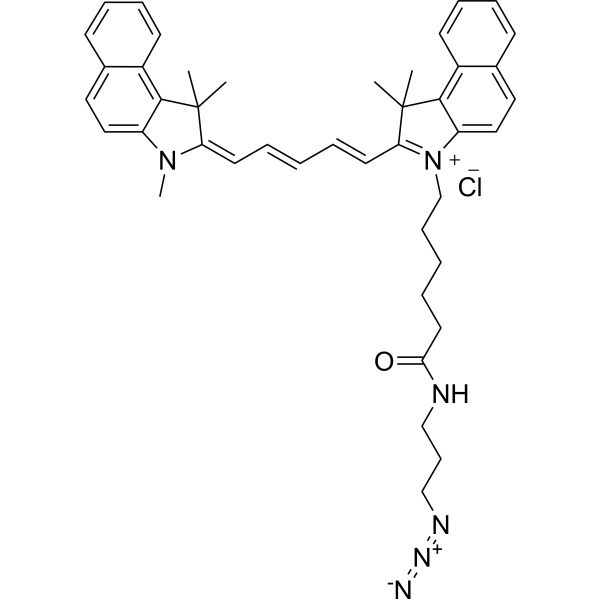
Cyanine5 azide chloride is a potent fluorescent dye. Cyanine5 azide chloride can be reacted with terminal alkynes via a copper-catalyzed click reaction (CuAAC). (λex=646 nm, λem=662 nm) . It contains an azide group and can undergo copper-catalyzed azide-alkyne cycloaddition (CuAAc) with molecules containing alkyne groups. It can also undergo ring strain-promoted alkyne-azide cycloaddition (SPAAC) with molecules containing DBCO or BCN groups.
|
-
-
- HY-D1539
-
|
CY 5.5 azide; Lumiprobe CY 5.5 azide
|
Fluorescent Dye
|
Others
|
|
Cyanine 5.5 azide (CY 5.5 azide) is a potent fluorescent dye. Cyanine 5.5 azide can label DNA. Cyanine 5.5 azide can be used for NIR live organism imaging. (λex=684 nm, λem=710 nm) . Cyanine 5.5 azide is a click chemistry reagent, it contains an Azide group and can undergo copper-catalyzed azide-alkyne cycloaddition reaction (CuAAc) with molecules containing Alkyne groups. It can also undergo strain-promoted alkyne-azide cycloaddition (SPAAC) reactions with molecules containing DBCO or BCN groups.
|
-
-
- HY-177435
-
|
|
FAP
|
Inflammation/Immunology
|
|
FAPI-800CW is a near-infrared (NIR) fluorescent-labeled fibroblast activation protein (FAP) inhibitor. FAPI-800CW shows specific uptake in inflamed paws in collagen-induced arthritis (CIA) model mice. FAPI-800CW can be used for in vivo molecular imaging of FAP expression in inflammatory diseases such as rheumatoid arthritis (RA) to monitor joint inflammation and disease activity .
|
-
-
- HY-D1464A
-
|
|
Fluorescent Dye
|
Cancer
|
|
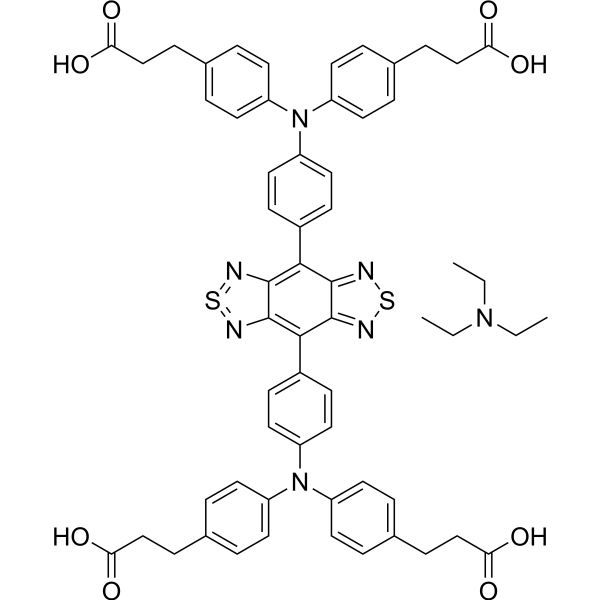
CH1055 triethylamine is a near-infrared II (NIR-II) fluorescent dye that can be used as a fluorescent probe for in vivo imaging. CH1055 triethylamine can be conjugated with antibodies or ligands for specific imaging (for example the tumor imaging) .
|
-
-
- HY-D1450
-
|
S01448
|
Fluorescent Dye
|
Cancer
|
|
IR-1048 is a nitroreductase (NTR)-responsive near-infrared fluorescence (NIR)/photoacoustic (PA) imaging probe and photothermal agent. IR-1048 is coupled with a nitroimidazole group to form IR-1048-MZ. IR-1048-MZ is catalytically reduced by NTR in a hypoxic environment, restoring strong near-infrared absorption and fluorescence emission (NIR II window), while activating the photothermal effect. IR-1048 relies on NTR-mediated electron transfer to relieve intramolecular fluorescence quenching, achieving specific imaging and photothermal ablation of tumor hypoxic areas. IR-1048 is mainly used for high-contrast NIR II/photoacoustic imaging and photothermal therapy research and tumor diagnosis of the tumor hypoxic microenvironment .
|
-
-
- HY-D2907
-
|
DBCO-Cy5; Cyanine5 dibenzocyclooctyne
|
Fluorescent Dye
|
Others
|
|
Cyanine5 DBCO (DBCO-Cy5) is a low-toxicity azide reactive probe (NIR fluorescent dye), for imaging azide-labeled biomolecules via a copper-free "click-through" reaction. Cyanine5 DBCO has no apparent cytotoxicity or animal toxicity and shows no damage to the physiological functions of cells other than the target cells (azide-labeled cells). Cyanine5 DBCO can be used to label and track cells in vitro and in vivo (Ex=635 nm, Em=650-700 nm) .
|
-
-
- HY-D1376A
-
|
|
Fluorescent Dye
|
Others
|
|
Sulfo-Cyanine5.5 amine consists of four sulfonate groups and has highly hydrophilic. Sulfo-Cyanine5.5 amine is an amine-containing fluorescent dye, the aliphatic primary amine group can be coupled with various electrophiles (activated esters, epoxides, etc). Sulfo-Cyanine5.5 amine can be used for the research of far red/NIR applications (such as in vivo imaging) and also can be used for enzymatic transamination labeling .
|
-
-
- HY-149298
-
|
|
PSMA
|
Cancer
|
|
PSMA-IN-2 is an inhibitor of PSMA with a Ki value of 1.07 nM. PSMA-IN-2 displays favorable in vivo NIR imaging (λEM = 1088 nm, λex = 808 nm), and can be used for NIRII image-guided tumor resection surgery in PSMA-positive tumor-bearing mice .
|
-
-
- HY-D1065
-
|
|
Fluorescent Dye
|
Inflammation/Immunology
|
|
NIR-H2O2 is a cell-permeable near-infrared (NIR) fluorescent turn-on sensor. NIR-H2O2 has both absorption and emission in the NIR region. NIR-H2O2 responds to H2O2 with a large turn-on NIR fluorescence signal upon excitation in the NIR region. NIR-H2O2 is capable of imaging endogenously produced H2O2 in living cells and mice .
|
-
-
- HY-163618
-
|
|
Fluorescent Dye
Monoamine Oxidase
|
Cancer
|
|
DHMQ is a NIR fluorescent probe that binds to the propylamino group of monoamine oxidase A (MAO-A). DHMQ tracks MAO-A activity in real-time by using fluorescence imaging on mice and cells .
|
-
-
- HY-165424
-
|
|
Fluorescent Dye
Glycosidase
|
Cardiovascular Disease
Cancer
|
|
NIR-BG2 is a near-infrared fluorescent probe targeting senescence-associated β-galactosidase (SA-β-Gal). NIR-BG2 is activated by SA-β-Gal and undergoes hydrolysis to release electrophilic quinone methide that covalently binds to surrounding proteins for in situ labeling, with a 16-fold enhancement of fluorescence signal at 709 nm . NIR-BG2 is promising for research of vivo imaging of cellular senescence .
|
-
-
- HY-P5287A
-
|
|
Integrin
|
Cancer
|
|
cRGDfK-thioacetyl ester TFA is a bioactive polypeptide molecule. cRGDfK peptide has a selective affinity for integrins. cRGDfK peptide can modify NIR fluorescent probes for cancer targeting imaging .
|
-
-
- HY-D3000
-
|
|
Fluorescent Dye
|
Metabolic Disease
|
|
NIR-RED ROS-H2O2 Probe is a near-infrared fluorescent probe used for detecting hydrogen peroxide (H₂O₂) and featuring dual-modal fluorescence/photoacoustic imaging capabilities. NIR-RED ROS-H2O2 Probe successfully detects the upregulated fluorescence signal of H₂O₂ in HepG2 cells and a mouse liver injury model. NIR-RED ROS-H2O2 Probe can be used as a biomarker detection tool for drug-induced liver injury (DILI) .
|
-
-
- HY-DY1068
-
|
|
Fluorescent Dye
|
Others
|
Cyanine5 DBCO (DBCO-Cy5) hexafluorophosphate (solution) is a low-toxicity azide reactive probe (NIR fluorescent dye) , for imaging azide-labeled biomolecules via a copper-free "click-through" reaction. Cyanine5 DBCO hexafluorophosphate has no apparent cytotoxicity or animal toxicity and shows no damage to the physiological functions of cells other than the target cells (azide-labeled cells). Cyanine5 DBCO hexafluorophosphate can be used to label and track cells in vitro and in vivo (Ex=635 nm, Em=650-700 nm) . Solvent and concentration: DMSO: 10 mM
|
-
-
- HY-P5520
-
|
|
Bombesin Receptor
Radionuclide-Drug Conjugates (RDCs)
|
Cancer
|
|
GB-6 is a short linear peptide that targets the gastrin releasing peptide receptor (GRPR). GRPR is overexpressed in pancreatic cancer. Based on the tumor selectivity and tumor-specific accumulation properties of GB-6, GB-6 labeled with near infrared (NIR) fluorescent dyes or radionuclide netium-99m (99mTc) can be used as a high-contrast imaging probe. GB-6 has excellent in vivo stability, with tumor to pancreatic and intestinal fluorescence signal ratios of 5.2 and 6.3, respectively, in SW199 0 subcutaneous xenograft models. GB-6 can rapidly target tumors and accurately delineate tumor boundaries, which has broad application prospects .
|
-
-
- HY-D1394
-
|
AgAuSe
|
Fluorescent Dye
|
Others
|
|
AgAuSe QDs (AgAuSe) is a near infrared (NIR) fluorescent quantum dots (QDs), with a bright emission from 820 to 1170 nm. AgAuSe QDs can be used for the research in biomedical imaging and NIR devices .
|
-
-
- HY-D1066
-
|
|
Fluorescent Dye
|
Others
|
|
NIR-Thiol dinitrobenzenesulfonate has both absorption and emission in the NIR region. NIR-Thiol dinitrobenzenesulfonate responds to thiol with a large turn-on NIR fluorescence signal upon excitation in the NIR region. NIR-Thiol dinitrobenzenesulfonate is capable of imaging endogenously produced thiol in living cells and mice .
|
-
-
- HY-149835
-
|
|
Fluorescent Dye
|
Others
|
|
TTX-P is a fluorescent probe. TTX-P responds in situ to the overexpressed alkaline phosphatase (ALP) in liver, imaging of diabetic liver injury in the near-infrared second-window (NIR-II) region .
|
-
-
- HY-152102
-
|
|
Fluorescent Dye
|
Cancer
|
|
BTCy is a near-infrared (NIR) fluorescence probe with polarity-responsive and cell plasma membrane-targeting properties. BTCy can be used for in vivo imaging of tumor tissue (λex = 561 nm, λem = 600-700 nm) .
|
-
-
- HY-149765
-
|
|
Fluorescent Dye
|
Others
|
|
Bone-1064 is a EuK-based PSMA tetramer bone probe for high-contrast visualization of bone in surrounding tissue. Bone-1064 specifically binds hydroxyapatite in bone tissue and can be used for NIR-II fluorescence imaging in animal models .
|
-
-
- HY-112641
-
|
|
Fluorescent Dye
|
Cancer
|
|
AkaLumine is a D-luciferin (HY-12591A) analogue with a Km of 2.06 μM for recombinant firefly luciferase (Fluc) protein. AkaLumine emits near-infrared (NIR) light (λmax=677 nm) in reactions with native Fluc. AkaLumine has high tissue-penetration and increases detection sensitivity from deep-tissue targets .
|
-
-
- HY-155383
-
|
|
Tau Protein
|
Neurological Disease
Cancer
|
|
TNIR7-1A is a fused cycloheptatriene–BODIPY derivative that displays properties favorable for near-infrared (NIR) imaging (Ex/Em = 600/774 nm in PBS) with high affinity and specificity to Neurofibrillary tangles (NFTs) in vitro. TNIR7-1A effectively penetrated the blood–brain barrier .
|
-
-
- HY-149203
-
|
|
Fluorescent Dye
|
Others
|
|
MQA-P is a multifunctional near-infrared (NIR) fluorescent probe for simultaneously detecting ONOO -, viscosity, and polarity within mitochondria. MQA-P exhibits a remarkable turn-on response to ONOO - (λem=645 nm) and is highly sensitive to viscosity/polarity in the NIR channel with λem>704 nm. MQA-P exhibits excited-state intramolecular charge transfer (ESICT) feature that is highly polarity-sensitive by engineering N,N-dimethylamino as the electron donor and a quinoline cationic unit as the electron acceptor. MQA-P is used for ferroptosis or cancer diagnosis in vitro and in vivo via dual-channel images .
|
-
-
- HY-149203A
-
|
|
Fluorescent Dye
|
Others
|
|
MQA-P is a multifunctional near-infrared (NIR) fluorescent probe that simultaneously detects ONOO -, viscosity, and polarity within mitochondria. MQA-P exhibits significant response to ONOO -, λem=645 nm; and NIR channel at λem>704 nm Medium is highly sensitive to viscosity/polarity. MQA-P possesses excited-state intramolecular charge transfer (ESICT) properties that are highly sensitive to polarity by designing the N,N-dimethylamino group as the electron donor and the quinoline cation unit as the electron acceptor. MQA-P is used for ferroptosis or cancer diagnosis in vitro and in vivo via dual-channel images .
|
-
-
- HY-D1568A
-
|
|
Fluorescent Dye
|
Others
|
|
Sulfo-Cy7.5 NHS ester tripotassium is a near infrared water soluble hydrophilic dye, also is an NHS ester for the modification of amine groups. Sulfo-Cy7.5 NHS ester tripotassium contains a trimeth ylene bridge and has a linker arm for its attachment to proteins, peptides, and other molecules. Sulfo-Cy7.5 NHS ester tripotassium can be used for the research of NIR imaging applications .
|
-
-
- HY-W878608
-
|
|
Fluorescent Dye
|
Others
|
|
Cyanine7 azide is a potent fluorescent dye. Cyanine7 azide can be used for NIR live organism imaging (λex=756 nm, λem=779 nm). Cyanine7 azide is a click chemistry reagent, it contains an Azide group and can undergo copper-catalyzed azide-alkyne cycloaddition reaction (CuAAc) with molecules containing Alkyne groups. It can also undergo strain-promoted alkyne-azide cycloaddition (SPAAC) reactions with molecules containing DBCO or BCN groups .
|
-
-
- HY-D3214
-
|
|
Fluorescent Dye
|
Others
|
|
NIR-Cu (Ⅱ) is a near-infrared fluorescent Cu 2+ probe. NIR-Cu (Ⅱ) enables fluorescence imaging of Cu 2+ in living mice. NIR-Cu (Ⅱ) reduces self-absorption and exhibits minimal photobleaching, thus supporting in vivo imaging applications .
|
-
-
- HY-D3199
-
|
|
Fluorescent Dye
GLUT
|
Metabolic Disease
|
|
NIR-fluorescent glucose is a functional glucose-based fluorescent imaging agent. Conjugated with the nitrobenzoselenadiazole-based SCOTfluor (compound 9), NIR-fluorescent glucose acts as a substrate for GLUT4 and GLUT2 transporters. NIR-fluorescent glucose enables the visualization of glucose uptake in live cells and in vivo .
|
-
-
- HY-D3222
-
|
|
Fluorescent Dye
|
Neurological Disease
|
|
NIR-PN1 is a blood-brain barrier-permeable near-infrared fluorescent indicator targeting peroxynitrite anion (ONOO −) (Ex/Em = 510 nm/670 nm). NIR-PN1 reacts with ONOO − to trigger a strong near-infrared fluorescence enhancement, enabling the detection of ONOO − flux. NIR-PN1 allows the imaging of ONOO − flux in various Parkinson's disease models. NIR-PN1 is applicable to Parkinson's disease-related research .
|
-
-
- HY-D3004
-
|
|
Fluorescent Dye
|
Others
|
|
GSH Tracker Probe (CPDSA) is a cyanine-based fluorescent probe with a NIR emission that is specific for GSH (excitation: 635 nm; emission: 655-755 nm). CPDSA can monitor and image GSH levels in live cells and in vivo .
|
-
-
- HY-D3242
-
|
FD-1080-MAL
|
Fluorescent Dye
|
Others
|
|
FD-1080 Maleimide (FD-1080-MAL) is a fluorophore with both excitation and emission in the NIR-II region (Ex=1064 nm, Em=1080 nm). FD-1080 can be used for in vivo imaging .
|
-
-
- HY-D2998
-
|
|
Fluorescent Dye
|
Others
|
|
ONOO-LysopH is a new Rhodamine-based near-infrared fluorescent probe. ONOO-LysopH is acid-sensitive, exhibiting rapid near-infrared fluorescence enhancement around 686 nm under acidic pH conditions. ONOO-LysopH also displays a rapid NIR turn-on fluorescence around 678 nm for ONOO− at physiological pH. ONOO-LysopH can target lysosomes to track lysosomal pH changes and image endogenous/exogenous ONOO− in live cells. ONOO-LysopH is applicable for cell imaging ONOO− and tracking lysosomal pH changes .
|
-
| Cat. No. |
Product Name |
Type |
-
- HY-111653
-
CycLuc1
2 Publications Verification
|
Fluorescent Dye
|
|
CycLuc1 is a blood-brain barrier permeable luciferase substrate that displays near-infrared (NIR) emission with a peak luminescence wavelength of 599 nm. CycLuc1 can be used for in vivo bioluminescence imaging .
|
-
- HY-D1389
-
|
Sulfo-Cyanine5.5 NHS ester tripotassium
|
Fluorescent Dye
|
Sulfo-CY-5.5 NHS ester (Sulfo-Cyanine5.5 NHS ester) tripotassium is an amine-reactive ester of sulfonated far-red Cyanine5.5 fluorophore, which can be used to label antibodies, proteins, etc., as well as for in vivo NIR imaging .
|
-
- HY-D1540
-
|
Cy 5.5 amine; Lumiprobe Cy 5.5 amine
|
Fluorescent Dye
|
|
Cyanine5.5 amine (Cy 5.5 amine), a Cy5.5 Analogue, is a near-infrared (NIR) fluorescent dye (Ex=648 nm, Em=710 nm). Cyanine5.5 amine can be used in the preparation of Cy5.5-labeled nanoparticles, which can be tracked and imaged with low fluorescence background using confocal microscopy .
|
-
- HY-133852
-
FD-1080
1 Publications Verification
|
Fluorescent Dye
|
|
FD-1080 is a fluorophore with both excitation and emission in the NIR-II region (Ex=1064 nm, Em=1080 nm). FD-1080 can be used for in vivo imaging .
|
-
- HY-D1583
-
|
DBCO-Cy5 hexafluorophosphate; Cyanine5 dibenzocyclooctyne hexafluorophosphate
|
Fluorescent Dye
|
|
Cyanine5 DBCO (DBCO-Cy5) hexafluorophosphate is a low-toxicity azide reactive probe (NIR fluorescent dye), for imaging azide-labeled biomolecules via a copper-free "click-through" reaction. Cyanine5 DBCO hexafluorophosphate has no apparent cytotoxicity or animal toxicity and shows no damage to the physiological functions of cells other than the target cells (azide-labeled cells). Cyanine5 DBCO hexafluorophosphate can be used to label and track cells in vitro and in vivo (Ex=635 nm, Em=650-700 nm) .
|
-
- HY-D1464
-
CH1055
1 Publications Verification
|
Fluorescent Dye
|
|
CH1055 is a near-infrared II (NIR-II) fluorescent dye that can be used as a fluorescent probe for in vivo imaging. CH1055 can be conjugated with antibodies or ligands for specific imaging (for example the tumor imaging) .
|
-
- HY-D1873
-
|
|
Fluorescent Dye
|
|
800CW acid is an orally active near-infrared (NIR) dye (excitation/emission 774/789 nm). 800CW acid can be used for intestinal permeability testing. 800CW acid can be used for in vivo imaging studies .
|
-
- HY-D1716
-
|
|
Fluorescent Dye
|
|
S0456 is a raw material that plays a crucial role in the construction of the folate receptor-targeted near-infrared dye OTL 38 (HY-139579). S0456 is connected to the modified folic acid to form OTL 38, endowing OTL 38 with good optical properties, high affinity, and specificity. S0456 can be used in the research of tumor optical imaging agents .
|
-
- HY-D1321
-
|
Cyanine5 amine hydrochloride
|
Fluorescent Dye
|
|
Cyanine5 amine hydrochloride is a potent fluorescent dye. Cyanine5 amine hydrochloride can be reacted with terminal alkynes via a copper-catalyzed click reaction (CuAAC). (λex=646 nm, λem=662 nm) .
|
-
- HY-D1568
-
|
|
Fluorescent Dye
|
|
Sulfo-Cy7.5 NHS ester is a near infrared water soluble hydrophilic dye, also is an NHS ester for the modification of amine groups. Sulfo-Cy7.5 NHS ester contains a trimeth ylene bridge and has a linker arm for its attachment to proteins, peptides, and other molecules. Sulfo-Cy7.5 NHS ester can be used for the research of NIR imaging applications .
|
-
- HY-D1320
-
|
|
Fluorescent Dye
|
|
Cyanine5 azide chloride is a potent fluorescent dye. Cyanine5 azide chloride can be reacted with terminal alkynes via a copper-catalyzed click reaction (CuAAC). (λex=646 nm, λem=662 nm) . It contains an azide group and can undergo copper-catalyzed azide-alkyne cycloaddition (CuAAc) with molecules containing alkyne groups. It can also undergo ring strain-promoted alkyne-azide cycloaddition (SPAAC) with molecules containing DBCO or BCN groups.
|
-
- HY-D1539
-
|
CY 5.5 azide; Lumiprobe CY 5.5 azide
|
Fluorescent Dye
|
|
Cyanine 5.5 azide (CY 5.5 azide) is a potent fluorescent dye. Cyanine 5.5 azide can label DNA. Cyanine 5.5 azide can be used for NIR live organism imaging. (λex=684 nm, λem=710 nm) . Cyanine 5.5 azide is a click chemistry reagent, it contains an Azide group and can undergo copper-catalyzed azide-alkyne cycloaddition reaction (CuAAc) with molecules containing Alkyne groups. It can also undergo strain-promoted alkyne-azide cycloaddition (SPAAC) reactions with molecules containing DBCO or BCN groups.
|
-
- HY-D1464A
-
|
|
Fluorescent Dye
|
|
CH1055 triethylamine is a near-infrared II (NIR-II) fluorescent dye that can be used as a fluorescent probe for in vivo imaging. CH1055 triethylamine can be conjugated with antibodies or ligands for specific imaging (for example the tumor imaging) .
|
-
- HY-D2907
-
|
DBCO-Cy5; Cyanine5 dibenzocyclooctyne
|
Fluorescent Dye
|
|
Cyanine5 DBCO (DBCO-Cy5) is a low-toxicity azide reactive probe (NIR fluorescent dye), for imaging azide-labeled biomolecules via a copper-free "click-through" reaction. Cyanine5 DBCO has no apparent cytotoxicity or animal toxicity and shows no damage to the physiological functions of cells other than the target cells (azide-labeled cells). Cyanine5 DBCO can be used to label and track cells in vitro and in vivo (Ex=635 nm, Em=650-700 nm) .
|
-
- HY-D1376A
-
|
|
Fluorescent Dye
|
|
Sulfo-Cyanine5.5 amine consists of four sulfonate groups and has highly hydrophilic. Sulfo-Cyanine5.5 amine is an amine-containing fluorescent dye, the aliphatic primary amine group can be coupled with various electrophiles (activated esters, epoxides, etc). Sulfo-Cyanine5.5 amine can be used for the research of far red/NIR applications (such as in vivo imaging) and also can be used for enzymatic transamination labeling .
|
-
- HY-D1065
-
|
|
Fluorescent Dye
|
|
NIR-H2O2 is a cell-permeable near-infrared (NIR) fluorescent turn-on sensor. NIR-H2O2 has both absorption and emission in the NIR region. NIR-H2O2 responds to H2O2 with a large turn-on NIR fluorescence signal upon excitation in the NIR region. NIR-H2O2 is capable of imaging endogenously produced H2O2 in living cells and mice .
|
-
- HY-D3000
-
|
|
Fluorescent Dye
|
|
NIR-RED ROS-H2O2 Probe is a near-infrared fluorescent probe used for detecting hydrogen peroxide (H₂O₂) and featuring dual-modal fluorescence/photoacoustic imaging capabilities. NIR-RED ROS-H2O2 Probe successfully detects the upregulated fluorescence signal of H₂O₂ in HepG2 cells and a mouse liver injury model. NIR-RED ROS-H2O2 Probe can be used as a biomarker detection tool for drug-induced liver injury (DILI) .
|
-
- HY-DY1068
-
|
|
Fluorescent Dye
|
Cyanine5 DBCO (DBCO-Cy5) hexafluorophosphate (solution) is a low-toxicity azide reactive probe (NIR fluorescent dye) , for imaging azide-labeled biomolecules via a copper-free "click-through" reaction. Cyanine5 DBCO hexafluorophosphate has no apparent cytotoxicity or animal toxicity and shows no damage to the physiological functions of cells other than the target cells (azide-labeled cells). Cyanine5 DBCO hexafluorophosphate can be used to label and track cells in vitro and in vivo (Ex=635 nm, Em=650-700 nm) . Solvent and concentration: DMSO: 10 mM
|
-
- HY-D1394
-
|
AgAuSe
|
Fluorescent Dye
|
|
AgAuSe QDs (AgAuSe) is a near infrared (NIR) fluorescent quantum dots (QDs), with a bright emission from 820 to 1170 nm. AgAuSe QDs can be used for the research in biomedical imaging and NIR devices .
|
-
- HY-D1066
-
|
|
Fluorescent Dye
|
|
NIR-Thiol dinitrobenzenesulfonate has both absorption and emission in the NIR region. NIR-Thiol dinitrobenzenesulfonate responds to thiol with a large turn-on NIR fluorescence signal upon excitation in the NIR region. NIR-Thiol dinitrobenzenesulfonate is capable of imaging endogenously produced thiol in living cells and mice .
|
-
- HY-149835
-
|
|
Fluorescent Dye
|
|
TTX-P is a fluorescent probe. TTX-P responds in situ to the overexpressed alkaline phosphatase (ALP) in liver, imaging of diabetic liver injury in the near-infrared second-window (NIR-II) region .
|
-
- HY-112641
-
|
|
Fluorescent Dye
|
|
AkaLumine is a D-luciferin (HY-12591A) analogue with a Km of 2.06 μM for recombinant firefly luciferase (Fluc) protein. AkaLumine emits near-infrared (NIR) light (λmax=677 nm) in reactions with native Fluc. AkaLumine has high tissue-penetration and increases detection sensitivity from deep-tissue targets .
|
-
- HY-155383
-
|
|
Fluorescent Dye
|
|
TNIR7-1A is a fused cycloheptatriene–BODIPY derivative that displays properties favorable for near-infrared (NIR) imaging (Ex/Em = 600/774 nm in PBS) with high affinity and specificity to Neurofibrillary tangles (NFTs) in vitro. TNIR7-1A effectively penetrated the blood–brain barrier .
|
-
- HY-149203
-
|
|
Fluorescent Dye
|
|
MQA-P is a multifunctional near-infrared (NIR) fluorescent probe for simultaneously detecting ONOO -, viscosity, and polarity within mitochondria. MQA-P exhibits a remarkable turn-on response to ONOO - (λem=645 nm) and is highly sensitive to viscosity/polarity in the NIR channel with λem>704 nm. MQA-P exhibits excited-state intramolecular charge transfer (ESICT) feature that is highly polarity-sensitive by engineering N,N-dimethylamino as the electron donor and a quinoline cationic unit as the electron acceptor. MQA-P is used for ferroptosis or cancer diagnosis in vitro and in vivo via dual-channel images .
|
-
- HY-D1568A
-
|
|
Fluorescent Dye
|
|
Sulfo-Cy7.5 NHS ester tripotassium is a near infrared water soluble hydrophilic dye, also is an NHS ester for the modification of amine groups. Sulfo-Cy7.5 NHS ester tripotassium contains a trimeth ylene bridge and has a linker arm for its attachment to proteins, peptides, and other molecules. Sulfo-Cy7.5 NHS ester tripotassium can be used for the research of NIR imaging applications .
|
-
- HY-D3214
-
|
|
Fluorescent Dye
|
|
NIR-Cu (Ⅱ) is a near-infrared fluorescent Cu 2+ probe. NIR-Cu (Ⅱ) enables fluorescence imaging of Cu 2+ in living mice. NIR-Cu (Ⅱ) reduces self-absorption and exhibits minimal photobleaching, thus supporting in vivo imaging applications .
|
-
- HY-D3199
-
|
|
Fluorescent Dye
|
|
NIR-fluorescent glucose is a functional glucose-based fluorescent imaging agent. Conjugated with the nitrobenzoselenadiazole-based SCOTfluor (compound 9), NIR-fluorescent glucose acts as a substrate for GLUT4 and GLUT2 transporters. NIR-fluorescent glucose enables the visualization of glucose uptake in live cells and in vivo .
|
-
- HY-D3222
-
|
|
Fluorescent Dye
|
|
NIR-PN1 is a blood-brain barrier-permeable near-infrared fluorescent indicator targeting peroxynitrite anion (ONOO −) (Ex/Em = 510 nm/670 nm). NIR-PN1 reacts with ONOO − to trigger a strong near-infrared fluorescence enhancement, enabling the detection of ONOO − flux. NIR-PN1 allows the imaging of ONOO − flux in various Parkinson's disease models. NIR-PN1 is applicable to Parkinson's disease-related research .
|
-
- HY-D3004
-
|
|
Fluorescent Dye
|
|
GSH Tracker Probe (CPDSA) is a cyanine-based fluorescent probe with a NIR emission that is specific for GSH (excitation: 635 nm; emission: 655-755 nm). CPDSA can monitor and image GSH levels in live cells and in vivo .
|
-
- HY-D3242
-
|
FD-1080-MAL
|
Fluorescent Dye
|
|
FD-1080 Maleimide (FD-1080-MAL) is a fluorophore with both excitation and emission in the NIR-II region (Ex=1064 nm, Em=1080 nm). FD-1080 can be used for in vivo imaging .
|
-
- HY-D2998
-
|
|
Fluorescent Dye
|
|
ONOO-LysopH is a new Rhodamine-based near-infrared fluorescent probe. ONOO-LysopH is acid-sensitive, exhibiting rapid near-infrared fluorescence enhancement around 686 nm under acidic pH conditions. ONOO-LysopH also displays a rapid NIR turn-on fluorescence around 678 nm for ONOO− at physiological pH. ONOO-LysopH can target lysosomes to track lysosomal pH changes and image endogenous/exogenous ONOO− in live cells. ONOO-LysopH is applicable for cell imaging ONOO− and tracking lysosomal pH changes .
|
| Cat. No. |
Product Name |
Target |
Research Area |
-
- HY-P5287
-
|
|
Integrin
|
Cancer
|
|
cRGDfK-thioacetyl ester is a bioactive polypeptide molecule. cRGDfK peptide has a selective affinity for integrins. cRGDfK peptide can modify NIR fluorescent probes for cancer targeting imaging .
|
-
- HY-P5287A
-
|
|
Integrin
|
Cancer
|
|
cRGDfK-thioacetyl ester TFA is a bioactive polypeptide molecule. cRGDfK peptide has a selective affinity for integrins. cRGDfK peptide can modify NIR fluorescent probes for cancer targeting imaging .
|
-
- HY-P5520
-
|
|
Bombesin Receptor
Radionuclide-Drug Conjugates (RDCs)
|
Cancer
|
|
GB-6 is a short linear peptide that targets the gastrin releasing peptide receptor (GRPR). GRPR is overexpressed in pancreatic cancer. Based on the tumor selectivity and tumor-specific accumulation properties of GB-6, GB-6 labeled with near infrared (NIR) fluorescent dyes or radionuclide netium-99m (99mTc) can be used as a high-contrast imaging probe. GB-6 has excellent in vivo stability, with tumor to pancreatic and intestinal fluorescence signal ratios of 5.2 and 6.3, respectively, in SW199 0 subcutaneous xenograft models. GB-6 can rapidly target tumors and accurately delineate tumor boundaries, which has broad application prospects .
|
| Cat. No. |
Product Name |
Category |
Target |
Chemical Structure |
| Cat. No. |
Product Name |
|
Classification |
-
- HY-D1583
-
|
DBCO-Cy5 hexafluorophosphate; Cyanine5 dibenzocyclooctyne hexafluorophosphate
|
|
DBCO
|
|
Cyanine5 DBCO (DBCO-Cy5) hexafluorophosphate is a low-toxicity azide reactive probe (NIR fluorescent dye), for imaging azide-labeled biomolecules via a copper-free "click-through" reaction. Cyanine5 DBCO hexafluorophosphate has no apparent cytotoxicity or animal toxicity and shows no damage to the physiological functions of cells other than the target cells (azide-labeled cells). Cyanine5 DBCO hexafluorophosphate can be used to label and track cells in vitro and in vivo (Ex=635 nm, Em=650-700 nm) .
|
-
- HY-D1320
-
|
|
|
Azide
Labeling and Fluorescence Imaging
|
|
Cyanine5 azide chloride is a potent fluorescent dye. Cyanine5 azide chloride can be reacted with terminal alkynes via a copper-catalyzed click reaction (CuAAC). (λex=646 nm, λem=662 nm) . It contains an azide group and can undergo copper-catalyzed azide-alkyne cycloaddition (CuAAc) with molecules containing alkyne groups. It can also undergo ring strain-promoted alkyne-azide cycloaddition (SPAAC) with molecules containing DBCO or BCN groups.
|
-
- HY-D1539
-
|
CY 5.5 azide; Lumiprobe CY 5.5 azide
|
|
Azide
Labeling and Fluorescence Imaging
|
|
Cyanine 5.5 azide (CY 5.5 azide) is a potent fluorescent dye. Cyanine 5.5 azide can label DNA. Cyanine 5.5 azide can be used for NIR live organism imaging. (λex=684 nm, λem=710 nm) . Cyanine 5.5 azide is a click chemistry reagent, it contains an Azide group and can undergo copper-catalyzed azide-alkyne cycloaddition reaction (CuAAc) with molecules containing Alkyne groups. It can also undergo strain-promoted alkyne-azide cycloaddition (SPAAC) reactions with molecules containing DBCO or BCN groups.
|
-
- HY-W878608
-
|
|
|
Azide
|
|
Cyanine7 azide is a potent fluorescent dye. Cyanine7 azide can be used for NIR live organism imaging (λex=756 nm, λem=779 nm). Cyanine7 azide is a click chemistry reagent, it contains an Azide group and can undergo copper-catalyzed azide-alkyne cycloaddition reaction (CuAAc) with molecules containing Alkyne groups. It can also undergo strain-promoted alkyne-azide cycloaddition (SPAAC) reactions with molecules containing DBCO or BCN groups .
|
Your information is safe with us. * Required Fields.
Inquiry Information
- Product Name:
- Cat. No.:
- Quantity:
- MCE Japan Authorized Agent:

