18 Results for "

PIT

" in MedChemExpress (MCE) Product Catalog:
Products (18)

18 Results for "PIT" in MCE Product Catalog:

Cat. No.: HY-108662
CAS No.: 56583-49-4
Purity:  98.57%
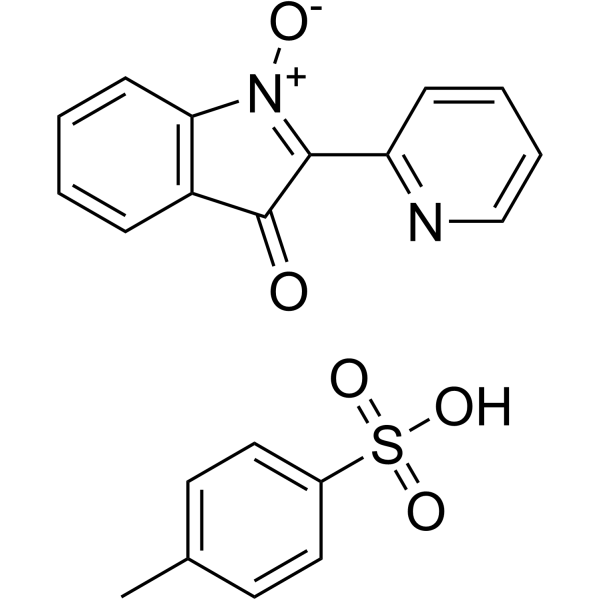
Synonyms: 2,2'-Pyridylisatogen tosylate
Target:  

P2Y Receptor

Research Areas:  

Inflammation/Immunology Cancer

PIT (2,2'-Pyridylisatogen tosylate) is a selective and non-competitive antagonist of P2Y1 receptor with an IC50 value of 0.14 μM for human P2Y1 receptor. PIT antagonizes P2Y1 receptor signaling without affecting nucleotide binding. PIT is an irreversible antagonist of responses to ATP at metabotropic purinoceptors (of the P2Y family) in some smooth muscles. PIT can be used for the research of chronic bronchitis and asthma .
loading...
    loading...
7
7 Publications Verification
Cat. No.: HY-B0561
CAS No.: 52-01-7
Synonyms: SC9420
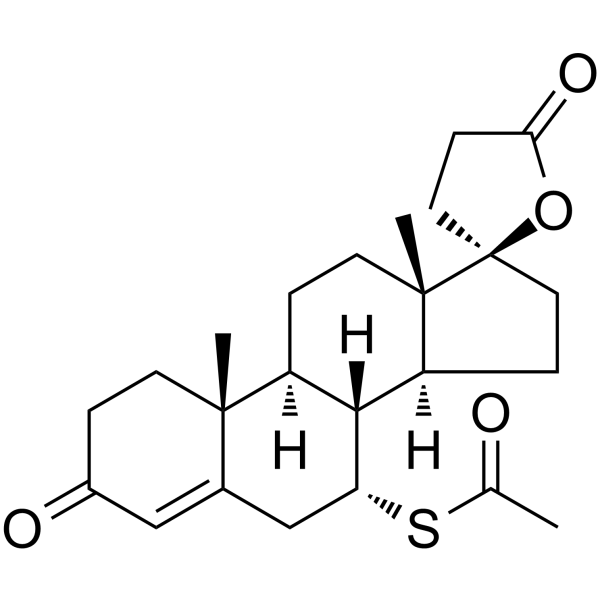
Spironolactone is an aldosterone antagonist that acts on the aldosterone mineralocorticoid receptor (IC50=24 nM) and androgen receptor (IC50=77 nM), promotes podocyte autophagy and regulates pain. Spironolactone improves hypertension-related vascular hypertrophy and remodeling by reducing angiotensin II (Ang II)-induced inflammation, reduces aldosterone-induced vascular and soft tissue calcification through PIT1-dependent signaling, and alleviates vascular dysfunction in type II diabetic mice by reducing oxidative stress and restoring NO/GC signaling; at low concentrations, it and its metabolites can interfere with aldosterone biosynthesis in the adrenal cortex and inhibit voltage-dependent Ca 2+ channels to exert antihypertensive effects .
loading...
    loading...
1
1 Cited Publications
Cat. No.: HY-N0805A
CAS No.: 18649-93-9
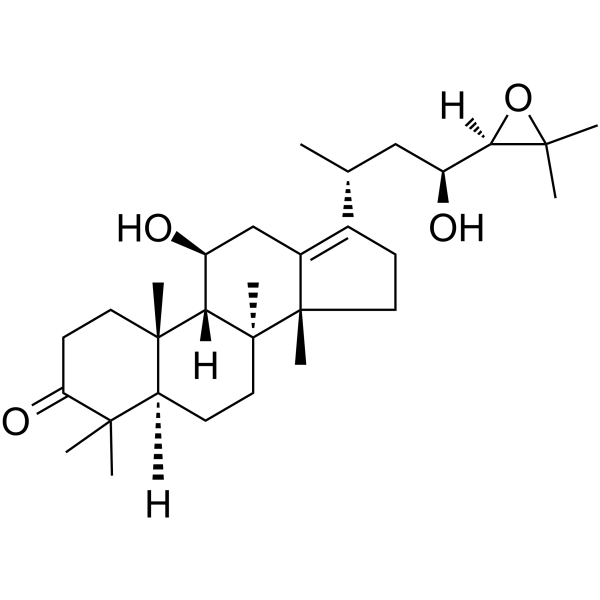
Alisol B is a triterpene with diverse biological activities. Alisol B binds human soluble epoxide hydrolase (sEH) with a Ki of 5.97 μM and reduces sEH activity. Alisol B inhibits RANKL-induced JNK phosphorylation, NFATc1 and c-Fos expression, osteoclast formation, mature osteoclast pit-forming and actin ring activity, and SERCA pump activity. Alisol B induces calcium mobilization, CaMKK-AMPK-mTOR pathway activation, autophagic flux, autophagosome formation, G1 phase cell cycle arrest, endoplasmic reticulum stress, unfolded protein responses, and cancer cell apoptosis. Alisol B can be used for the research of hypercalcemia, osteoporosis, rheumatoid arthritis, periodontitis, acute kidney injury, and breast cancer .
loading...
    loading...
1
1 Cited Publications
Cat. No.: HY-P82917
Synonyms: anti-Interferon regulatory factor 6; anti-IRF 6; anti-LPS; anti-OFC 6; anti-PIT; anti-PPS; anti-PPS1; anti-VWS; anti-VWS1; Interferon regulatory factor 6 antibody; IRF 6 antibody; LPS antibody; OFC 6 antibody; PIT antibody; PPS antibody; PPS1 antibody; VWS antibody; VWS1 antibody;

Host:  

Rabbit

Application:  

WB, IHC-P, ICC/IF

Reactivity:  

Human, Mouse, Rat

loading...
    loading...
Cat. No.: HY-103224
CAS No.: 53501-41-0
Purity:  98.56%
Target:  

PI3K

Research Areas:  

Cancer

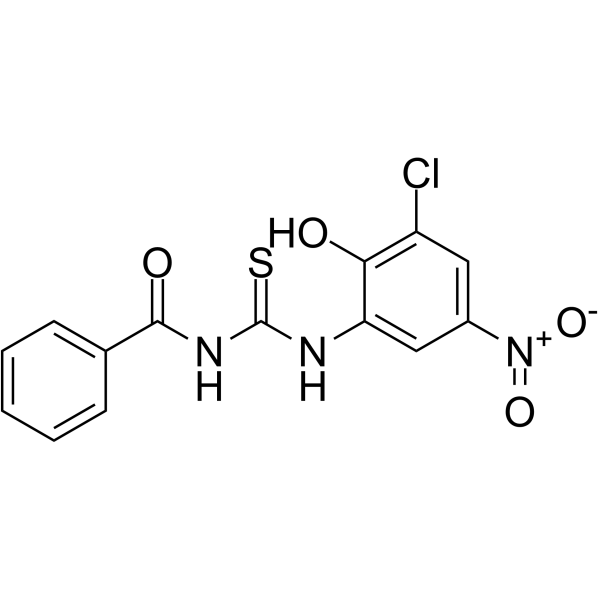
PIT-1 is a selective PIP3 (phosphatidylinositol 3,4,5-trisphosphate) antagonist. PIT-1 inhibits cancer cell survival and induces apoptosis by inhibition of PIP3 dependent PI3K / Akt signaling. PIT-1 exhibits antitumor activity in vivo .
loading...
    loading...
Cat. No.: HY-N7646
CAS No.: 143601-09-6
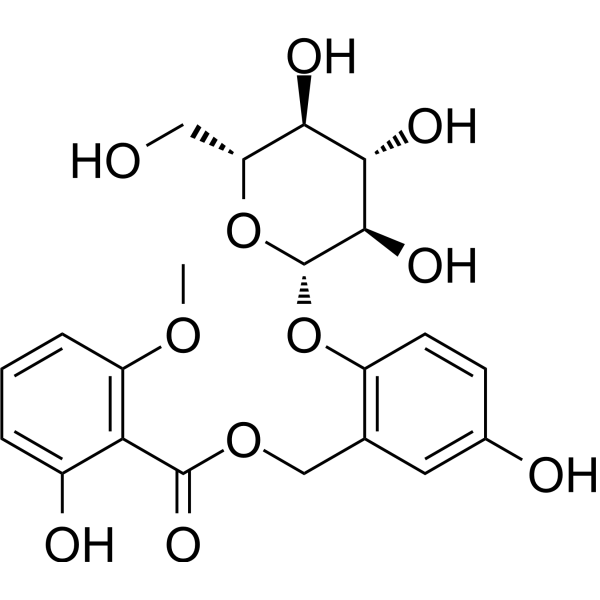
Curculigoside B, a phenolic glycoside isolated from Curculigo orchioides, enhances the osteoblast proliferation, decreases the area of bone resorption pit, osteoclastic formation and TRAP activity. Antiosteoporotic and antioxidative activities .
loading...
    loading...
Cat. No.: HY-124348
CAS No.: 701947-53-7
Synonyms: 3,5-Dimethyl PIT-1
Target:  

PI3K

Research Areas:  

Cancer

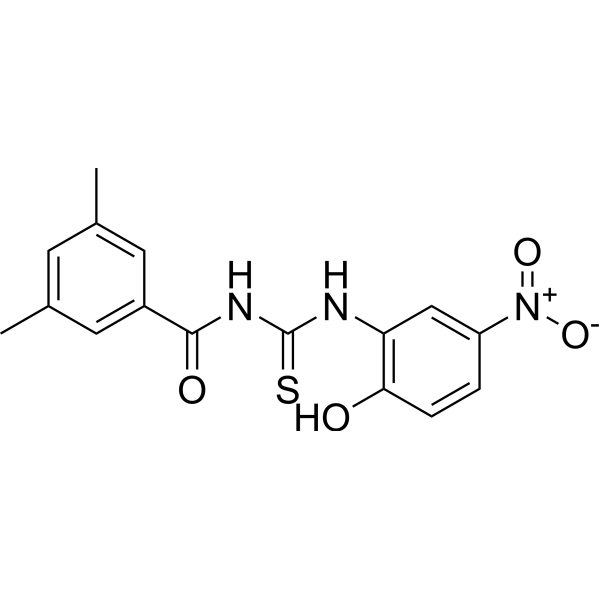
DM-PIT-1 is a PIP3/PH (phosphatidylinositol-3,4,5-triphosphate/Pleckstrin) interaction inhibitor. DM-PIT-1 decreases he expression of P-Akt, P-GSK-3-β, P-p70S6K, P-S6, P-4E-BP1. DM-PIT-1 induces apoptosis and shows anticancer activity. DM-PIT-1 has the potential for the research of ovarian cancer .
loading...
    loading...
Cat. No.: HY-B0561S4
Spironolactone-d6-1 is the deuterium labeled Spironolactone (HY-B0561). Spironolactone is an aldosterone antagonist that acts on the aldosterone mineralocorticoid receptor (IC50=24 nM) and androgen receptor (IC50=77 nM), promotes podocyte autophagy and regulates pain. Spironolactone improves hypertension-related vascular hypertrophy and remodeling by reducing angiotensin II (Ang II)-induced inflammation, reduces aldosterone-induced vascular and soft tissue calcification through PIT1-dependent signaling, and alleviates vascular dysfunction in type II diabetic mice by reducing oxidative stress and restoring NO/GC signaling; at low concentrations, it and its metabolites can interfere with aldosterone biosynthesis in the adrenal cortex and inhibit voltage-dependent Ca 2+ channels to exert antihypertensive effects .
loading...
    loading...
Cat. No.: HY-RS06910
Research Areas:  

Others

IRF6 Human Pre-designed siRNA Set A contains three designed siRNAs for IRF6 gene (Human), as well as a negative control, a positive control, and a FAM-labeled negative control.

loading...
    loading...
Cat. No.: HY-103224R
CAS No.: 53501-41-0
Research Areas:  

Cancer

PIT-1 (Standard) is the analytical standard of PIT-1. This product is intended for research and analytical applications. PIT-1 is a selective PIP3 (phosphatidylinositol 3,4,5-trisphosphate) antagonist. PIT-1 inhibits cancer cell survival and induces apoptosis by inhibition of PIP3 dependent PI3K / Akt signaling. PIT-1 exhibits antitumor activity in vivo .
loading...
    loading...
Cat. No.: HY-108662R
CAS No.: 56583-49-4
Synonyms: 2,2'-Pyridylisatogen tosylate (Standard)
PIT (Standard) is the analytical standard of PIT (HY-108662). This product is intended for research and analytical applications. PIT (2,2'-Pyridylisatogen tosylate) is a selective and non-competitive antagonist of P2Y1 receptor with an IC50 value of 0.14 μM for human P2Y1 receptor. PIT antagonizes P2Y1 receptor signaling without affecting nucleotide binding. PIT is an irreversible antagonist of responses to ATP at metabotropic purinoceptors (of the P2Y family) in some smooth muscles. PIT can be used for the research of chronic bronchitis and asthma .
loading...
    loading...
Cat. No.: HY-N0805AR
CAS No.: 18649-93-9
Alisol B (Standard) is the analytical standard of Alisol B (HY-N0805A). This product is intended for research and analytical applications. Alisol B is a triterpene with diverse biological activities. Alisol B binds human soluble epoxide hydrolase (sEH) with a Ki of 5.97 μM and reduces sEH activity. Alisol B inhibits RANKL-induced JNK phosphorylation, NFATc1 and c-Fos expression, osteoclast formation, mature osteoclast pit-forming and actin ring activity, and SERCA pump activity. Alisol B induces calcium mobilization, CaMKK-AMPK-mTOR pathway activation, autophagic flux, autophagosome formation, G1 phase cell cycle arrest, endoplasmic reticulum stress, unfolded protein responses, and cancer cell apoptosis. Alisol B can be used for the research of hypercalcemia, osteoporosis, rheumatoid arthritis, periodontitis, acute kidney injury, and breast cancer.
loading...
    loading...
Cat. No.: HY-159978
CAS No.: 1628848-73-6
Synonyms: EOS789
Atidafonat is an orally active sodium-dependent phosphate transporter inhibitor, with IC50 values of 6.8, 1.5, and 1.7 μM against human NaPi-IIb, PiT-1, PiT-2, respectively; and IC50 values of 3.9, 1.9, and 1.7 μM against rat NaPi-IIb, PiT-1, PiT-2, respectively. Atidafonat inhibits intestinal phosphate absorption, increases fecal phosphate excretion, reduces urinary phosphate excretion, and decreases the levels of serum phosphate, FGF23, and adult parathyroid hormone. Atidafonat ameliorates ectopic thoracic aortic calcification, renal injury and hyperphosphatemia, and inhibits the expression of fibrosis markers. Atidafonat can be used for the research of hyperphosphatemia and chronic kidney disease-mineral and bone disorder (CKD-MBD) .
loading...
    loading...
Cat. No.: HY-DY2038
Target:  

Fluorescent Dye

Research Areas:  

Infection

Lignin Staining Solution (Pianeze Method) is a multichromatic staining solution for plant histology composed of malachite green, Martius yellow and acid fuchsin. Lignin Staining Solution (Pianeze Method) enables lignified secondary walls to appear bright green, non-lignified secondary walls to appear red, and tracheid pit membranes to appear pale red after long-time immersion. Lignin Staining Solution (Pianeze Method) can be used to distinguish lignified cell walls from non-lignified structures and observe the morphology of pit membranes in plant tissue sections such as fern rhizomes. Lignin Staining Solution (Pianeze Method) can be applied to relevant studies on flax wilt and root rot .
loading...
    loading...
Cat. No.: HY-D3432
WazaGaY-1 is an aza-BODIPY derivative, functions as a NIR-I/NIR-II fluorescent contrast agent. WazaGaY-1 undergoes internalization into tumor cells predominantly via clathrin-coated pits. WazaGaY-1 can be used for the research of glioblastoma, ovarian carcinoma and melanoma (Ex/Em = 685/820 nm) .
loading...
    loading...
Cat. No.: HY-P702038
Purity:  ≥ 90%, as determined by reducing SDS-PAGE.
Synonyms: SLC20A2; Phosphate Transporter 2; Prev. GLVR2; Epididymis Secretory Sperm Binding Protein; Prev. MLVAR; Phosphate Transporter; Sodium-Dependent Phosphate Transporter 2; GLVR-2; PIT-2; IBGC1; PIT2; IBGC2; Gibbon Ape Leukemia Virus Receptor 2; IBGC3; Glvr-2
Species:  
Human
Source:  
Sf9 insect cells
loading...
    loading...
Cat. No.: HY-W747074
CAS No.: 71781-66-3
Target:  

Endogenous Metabolite

Research Areas:  

Metabolic Disease

Tauroursodeoxycholic acid-3-sulfate disodium is a taurine-conjugated 3-sulfated bile acid that belongs to endogenous sulfated bile acid metabolites and is detectable in human and animal serum, urine, bile, and metabolomics panels. Tauroursodeoxycholic acid-3-sulfate disodium occurs at higher concentrations in the gallbladder of hibernating snakes of the five-paced pit viper species than in active snakes. Tauroursodeoxycholic acid-3-sulfate disodium can serve as a biochemical indicator in research related to hepatobiliary diseases .
loading...
    loading...
Cat. No.: HY-P11797
Research Areas:  

Cardiovascular Disease

EP9 is a peptide targeting CD63. EP9 binds specifically to the extracellular region of CD63, including a groove in the large extracellular loop (EC2) or the extracellular end of CD63’s central cavity, triggering endocytosis of decorated nanoemulsions/liposomes into cells. EP9 promotes cellular uptake of decorated nanoemulsions/liposomes into activated cardiac fibroblasts and epicardial stromal cells via caveolae and/or clathrin-coated pits. EP9 can be used for the research of myocardial infarction, cardiac fibrosis .
loading...
    loading...
  • 1

