12 Results for "

Protamine

" in MedChemExpress (MCE) Product Catalog:
Products (12)

12 Results for "Protamine" in MCE Product Catalog:

3
3 Cited Publications
Cat. No.: HY-107911
CAS No.: 9009-65-8
Purity:  99.99%
Target:  

Thrombin

Research Areas:  

Metabolic Disease

Protamine sulfate, polycationic peptide and a antiheparin agent, could neutralize the anticoagulant action of heparin and enhances lipid-mediated gene transfer .
loading...
    loading...
Cat. No.: HY-U00153
CAS No.: 2470-73-7
Target:  

Drug Derivative

Research Areas:  

Neurological Disease

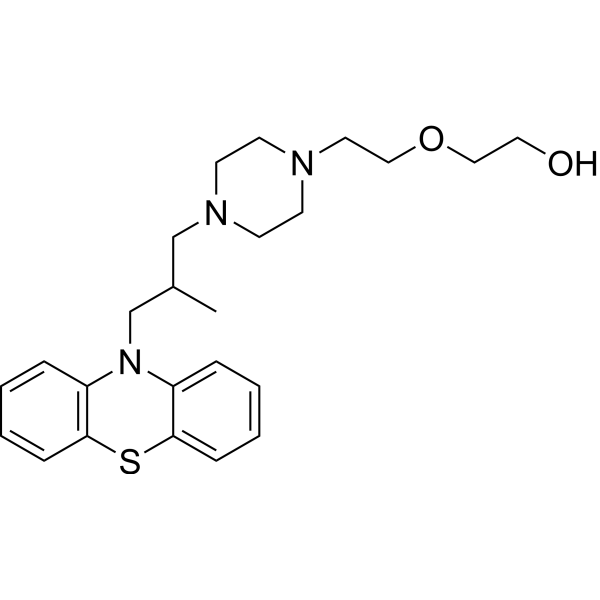
Dixyrazine, a phenothiazine derivative, can prevent brain oedema induced by intracarotid injection of protamine sulphate.
loading...
    loading...
Cat. No.: HY-133012
CAS No.: 2304549-73-1
Purity:  99.74%
Target:  

TRP Channel

Research Areas:  

Neurological Disease

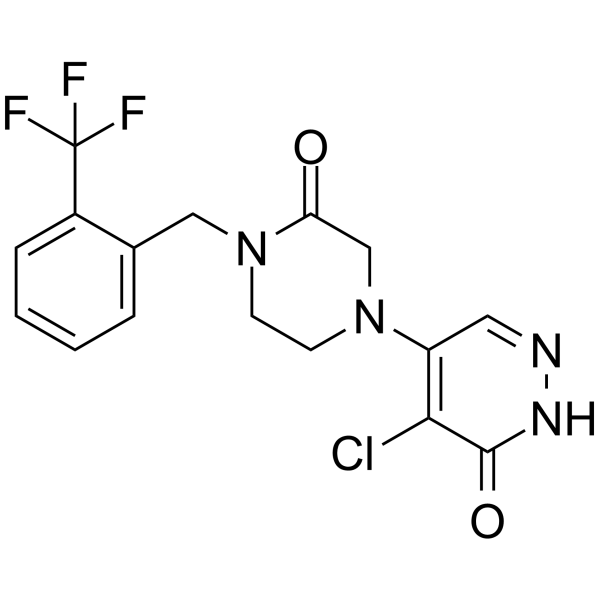
GFB-8438 is a potent and subtype selective TRPC5 inhibitor, with IC50s of 0.18 and 0.29 μM of hTRPC5 and hTRPC4, respectively. GFB-8438 shows excellent selectivity against TRPC6, other TRP family members, NaV 1.5, as well as limited activity against the hERG channel. GFB-8438 protects mouse podocytes from injury induced by protamine sulfate model .
loading...
    loading...
Cat. No.: HY-P2920
CAS No.: 9012-00-4
Protamine from salmon is a biochemical agent with antioxidant, antiheparin and antimicrobial activities. Protamine from salmon neutralizes the anticoagulant effect of heparin, thereby preventing the formation of antithrombin complexes in canine samples pretreated with heparin in vitro .
loading...
    loading...
Cat. No.: HY-158082B
Synonyms: Tetramethyl rhodamine isothiocyanate glucan, MW 40000
TRITC-dextran (Tetramethyl rhodamine isothiocyanate glucan), MW 40000 is a TRITC (HY-D0791)-labeled neutral 40 kDa fluorescent polysaccharide probe. TRITC-dextran, MW 40000 forms a membrane layer on the surface of protocells composed of protamine/folate condensates, and is used to assess membrane fluidity via fluorescence recovery after photobleaching. TRITC-dextran, MW 40000 can also be used to evaluate the anti-bacterial invasion ability and colloidal stability of coated condensates, as well as analyze the permeability of vascular and lymphatic endothelial cell layers .
loading...
    loading...
Cat. No.: HY-P5107
CAS No.: 121052-30-0
Synonyms: LMWP; TDSP5
Target:  

VEGFR

Research Areas:  

Cancer

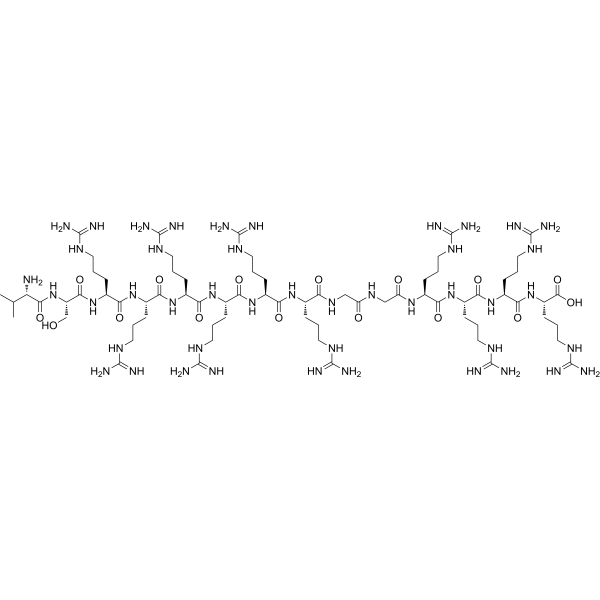
Low molecular weight protamine (LMWP;TDSP5) is a truncated arginine-rich protamine peptide, as well as a heparin/low-molecular-weight heparin antidote and a cell-penetrating delivery carrier. Low molecular weight protamine neutralizes heparin-induced anticoagulant activities, including aPTT, anti-Xa and anti-IIa activities, and also neutralizes anti-Xa activity of commercially available low-molecular-weight heparin preparations. Low molecular weight protamine translocates across mammalian cell membranes, delivers conjugated impermeable molecules across tumor tissues, enhances skin permeability of conjugated epidermal growth factor, and accelerates wound healing when conjugated with epidermal growth factor. Low molecular weight protamine retains the in vitro cell proliferation activity of conjugated EGF, and also enables site-specific conjugation with peptides or proteins via genetic recombination. Low molecular weight protamine can be used in studies related to colon adenocarcinoma, skin wounds and diabetic skin wounds .
loading...
    loading...
Cat. No.: HY-P5107A
Synonyms: LMWP acetate; TDSP5 acetate
Target:  

VEGFR

Research Areas:  

Cancer

Low molecular weight protamine acetate (LMWP acetate;TDSP5 acetate) is a truncated arginine-rich protamine peptide, which also acts as an antidote for heparin/low molecular weight heparin and a cell-penetrating delivery vector. Low molecular weight protamine acetate neutralizes heparin-induced anticoagulant activities, including aPTT, anti-Xa and anti-IIa activities. Low molecular weight protamine acetate translocates across mammalian cell membranes, delivers conjugated impermeable molecules through tumor tissues, enhances the skin permeability of conjugated epidermal growth factor, and accelerates wound healing when conjugated with epidermal growth factor. Low molecular weight protamine acetate retains the in vitro cell proliferation activity of conjugated EGF, and also enables site-specific conjugation with peptides or proteins via genetic recombination. Low molecular weight protamine acetate can be used in studies related to colon cancer, skin wounds and diabetic skin wounds .
loading...
    loading...
Cat. No.: HY-P5552
Target:  

Bacterial Parasite Fungal

Research Areas:  

Infection

Melimine is a hybrid antimicrobial peptide of Melittin (HY-P0233) and Protamine. Melimine is active against P. aeruginosa and S. aureus. Melimine has broad spectrum activity against bacteria, fungi and protozoa .
loading...
    loading...
Cat. No.: HY-157930
Research Areas:  

Cardiovascular Disease

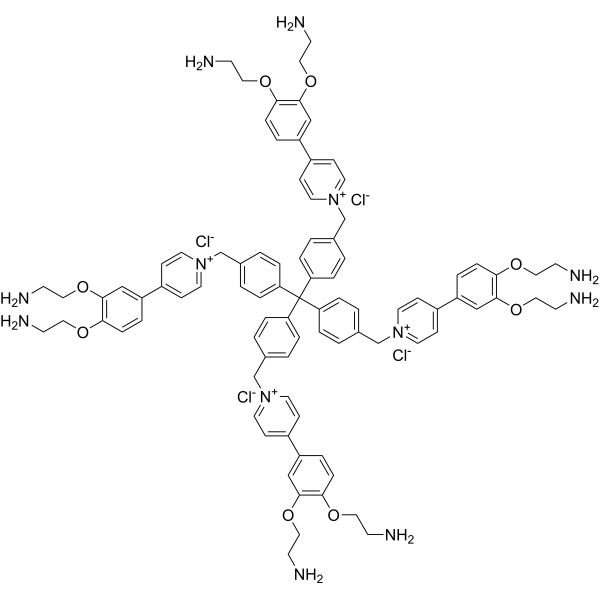
TP-2, a caltrop-like multicationic small molecule, is an antidote that can completely neutralize both unfractionated heparin (UFH) and low-molecular-weight heparins (LMWHs). TP-2 is not only superior to protamine, has higher neutralization activity, but is also biocompatible .
loading...
    loading...
Cat. No.: HY-U00153R
CAS No.: 2470-73-7
Research Areas:  

Neurological Disease

Dixyrazine (Standard) is the analytical standard of Dixyrazine. This product is intended for research and analytical applications. Dixyrazine, a phenothiazine derivative, can prevent brain oedema induced by intracarotid injection of protamine sulphate.
loading...
    loading...
Cat. No.: HY-120463
CAS No.: 119306-51-3
Target:  

PKC

Research Areas:  

Cancer

R8605 is an inhibitor for PKC with an IC50 of 65 μM for PKC in rat brain. R8605 inhibits calcium/phospholipid-independent phosphorylation of protamine with IC50 of 70 μM and 100 μM. R8605 can be used in cancer research .
loading...
    loading...
T18.3 aptamer sodium
0 Images
RNA, 5'-GGAfCfUfUGGAfUAAfCfCfUfCAfCfCGfCAAfUGGfCGGfCfUfUGfUfCAGAfCGAfCfUfCGfCfUGAGGAfUfCfCGAG-3', sodium salt
Cat. No.: HY-160067
T18.3 aptamer sodium is an anticoagulant RNA aptamer targeting FV/Va and eliminates the interaction of FV/FVa with phospholipid membranes. T18.3 aptamer sodium exhibits clinically relevant anticoagulant activity in plasma and whole blood and acts synergistically with low molecular weight heparin. The anticoagulant activity of T18.3 aptamer sodium is effectively and rapidly reversed by protamine sulfate .
loading...
    loading...
  • 1

