From 11:00 pm to 12:00 pm EST ( 8:00 pm to 9:00 pm PST ) on January 6th, the website will be under maintenance. We are sorry for the inconvenience. Please arrange your schedule properly.
Y-27632 dihydrochloride (GMP) is the GMP level of Y-27632 dihydrochloride (HY-10583). GMP guidelines are used to produce Y-27632 dihydrochloride (GMP). GMP small molecules works appropriately as an auxiliary reagent for cell research manufacture. Y-27632 dihydrochloride is an orally active and ATP-competitive ROCK (Rho-kinase) inhibitor with antiepileptic effect .
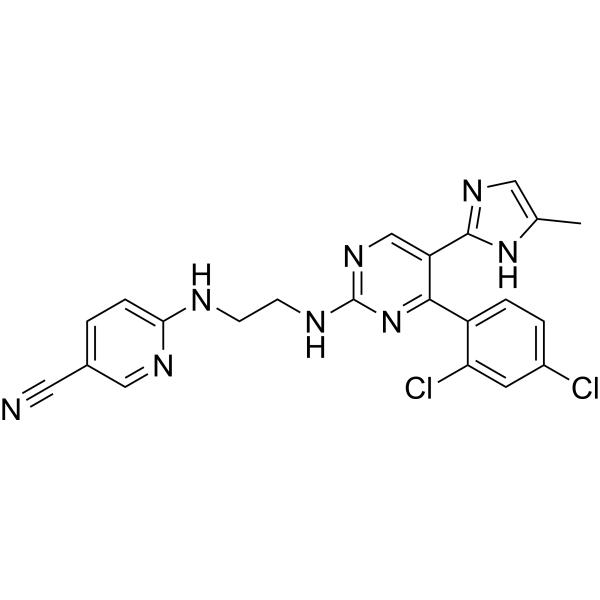
Laduviglusib (CHIR-99021) (GMP) is Laduviglusib (HY-10182) produced by using GMP guidelines. GMP small molecules works appropriately as an auxiliary reagent for cell therapy manufacture. Laduviglusib is a potent, orally active and selective GSK-3α/β inhibitor.
SB-431542 (GMP) is SB-431542 (HY-10431) produced by using GMP guidelines. GMP small molecules works appropriately as an auxiliary reagent for cell therapy manufacture. SB-431542 is a TGF-β receptor kinase inhibitor (TRKI) in SMAD signaling .
RepSox (E-616452) (GMP) is a RepSox (HY-13012) produced by using GMP guidelines. GMP small molecules works appropriately as an auxiliary reagent for cell therapy manufacture. RepSox is a potent and selective TGF-β-RI/ALK5 inhibitor .
Retinoic acid (Vitamin A acid) (GMP) is Retinoic acid (HY-14649) produced by using GMP guidelines. GMP small molecules works appropriately as an auxiliary reagent for cell therapy manufacture. Retinoic acid is an agonist of RAR nuclear receptors .
L-Ascorbic acid (L-Ascorbate) (GMP) is Ascorbic acid (HY-B0166) produced by using GMP guidelines. GMP small molecules works appropriately as an auxiliary reagent for cell therapy manufacture. L-Ascorbic acid is an inhibitor of Cav 3.2 channels .
Monomethyl auristatin E (MMAE) (GMP) is Monomethyl auristatin E (HY-15162) produced by using GMP guidelines. Monomethyl auristatin E is a tubulin polymerization inhibitor .
Exatecan mesylate (DX8951f ) GMP is a GMP-class Exatecan (HY-13631). Exatecan is a DNA topoisomerase I inhibitor, with an IC50 of 2.2 μM (0.975 μg/mL), and can be used in cancer research .
Dexamethasone (Hexadecadrol) (GMP) is Dexamethasone (HY-14648) produced by using GMP guidelines. GMP small molecules works appropriately as an auxiliary reagent for cell therapy manufacture. Dexamethasone is an agonist of glucocorticoid receptor .
Prostaglandin E2 (GMP) is Prostaglandin E2 (HY-101952) produced by using GMP guidelines. GMP small molecules work appropriately as an auxiliary reagent for cell therapy manufacture. Prostaglandin E2, an inflammatory mediator, is a endogenous hormone-like substance that participate in a wide range of body functions .
Liothyronine (Triiodothyronine) (GMP) is the Liothyronine (HY-A0070A) produced by using GMP guidelines. GMP small molecules work appropriately as an auxiliary reagent for cell therapy manufacture. Liothyronine is a potent thyroid hormone receptors TRα and TRβ agonist with Kis of 2.33 nM for hTRα and hTRβ, respectively .
Deruxtecan (GMP) (MC-GGFG-DXD (GMP)) is Deruxtecan (HY-13631E) in GMP grade. GMP-grade small molecules can be used as auxiliary reagents in cell therapy. Deruxtecan is an ADC drug-linker conjugate composed of an DX-8951 derivative (DXd) and a maleimide-GGFG peptide linker, used for synthesizing Trastuzumab deruxtecan (HY-138298A) and Patritumab deruxtecan (HY-P99813) .
Mirdametinib (PD0325901) (GMP) is Mirdametinib (HY-10254) produced by using GMP guidelines. GMP small molecules works appropriately as an auxiliary reagent for cell therapy manufacture. Mirdametinib is an orally active, selective and non-ATP-competitive MEK inhibitor .
DAPT (GSI-IX) (GMP) is DAPT (HY-13027) produced by using GMP guidelines. GMP small molecules works appropriately as an auxiliary reagent for cell therapy manufacture. DAPT is a potent and orally active γ-secretase inhibitor .
Stemregenin 1 (SR1) (GMP) is a GMP-grade Stemregenin 1 (HY-15001). GMP-grade small molecules can be used as adjuvants in cell therapy. Stemregenin 1 is a potent aryl hydrocarbon receptor (AhR) antagonist with an IC50 of 127 nM. Stemregenin 1 (GMP) can competitively bind to AhR and inhibit its nuclear translocation, inhibiting osteoclastogenesis and promoting hematopoietic progenitor cell expansion by blocking the AhR-c-src-NF-κB/p-ERK MAPK-NFATc1 signaling pathway. Stemregenin 1 (GMP) can be used for the study of osteoporosis, in vitro expansion of hematopoietic stem cells, and the study of the mechanism of bone metabolic diseases .
Resiquimod (R848) (GMP) is Resiquimod (HY-13740) produced by using GMP guidelines. GMP small molecules work appropriately as an auxiliary reagent for cell therapy manufacture. Resiquimod is a Toll-like receptor 7 and 8 (TLR7/TLR8) agonist. Resiquimod (GMP) can induce human mMDSC to mature into inflammatory macrophages .
IBMX (3-Isobutyl-1-methylxanthine) (GMP) is IBMX (HY-12318) produced by using GMP guidelines. GMP small molecules works appropriately as an auxiliary reagent for cell therapy manufacture. IBMX is a broad-spectrum phosphodiesterase (PDE) inhibitor .
Thiazovivin (GMP) is Thiazovivin (HY-13257) produced by using GMP guidelines. GMP small molecules work appropriately as an auxiliary reagent for cell therapy manufacture. Thiazovivin is a potent ROCK inhibitor .
Wnt-C59 (C59) GMP is a GMP grade Wnt-C59 (HY-15659). GMP small molecules works appropriately as an auxiliary reagent for cell therapy manufacture. Wnt-C59 (C59) is a highly potent and oral porcupine (PORCN) inhibitor with an IC50 of 74 pM.
A 83-01 (GMP) is A 83-01 (HY-10432) produced by using GMP guidelines. GMP small molecules works appropriately as an auxiliary reagent for cell therapy manufacture. A 83-01 is a potent ALK4/5/7 inhibitor .
Staurosporine (AM-2282) (GMP) is Staurosporine (HY-15141) produced by using GMP guidelines. GMP small molecules works appropriately as an auxiliary reagent for cell therapy manufacture. Staurosporine is a potent, ATP-competitive and non-selective inhibitor of protein kinases .
Rapamycin (Sirolimus) (GMP) is Rapamycin (HY-10219) produced by using GMP guidelines. GMP small molecules works appropriately as an auxiliary reagent for cell therapy manufacture. Rapamycin (Sirolimus; AY 22989) is a potent and specific mTOR inhibitor with an IC50 of 0.1 nM in HEK293 cells. Rapamycin binds to FKBP12 and specifically acts as an allosteric inhibitor of mTORC1 . Rapamycin is an autophagy activator, an immunosuppressant .
XAV-939 (GMP) is XAV-939 (HY-15347) produced by using GMP guidelines. GMP small molecules works appropriately as an auxiliary reagent for cell therapy manufacture. XAV-939 is a tankyrase inhibitor .
Quercetin GMP is Quercetin (HY-18085) produced by using GMP guidelines. GMP small molecules works appropriately as an auxiliary reagent for cell therapy manufacture. Quercetin is a flavonoid antioxidant, a PI3K inhibitor and a SIRT1 Activator .
IWP-2 (GMP) is >IWP-2 (HY-13912) produced by using GMP guidelines. GMP small molecules work appropriately as an auxiliary reagent for cell therapy manufacture. IWP-2 is an inhibitor of Wnt processing and secretion with an IC50 of 27 nM. IWP-2 targets the membrane-bound O-acyltransferase porcupine (Porcn) and blocks Wnt ligand palmitoylation .
Dorsomorphin dihydrochloride (GMP) is the GMP level of Dorsomorphin dihydrochloride (HY-13418). GMP guidelines are used to produce Dorsomorphin dihydrochloride (GMP). GMP small molecules works appropriately as an auxiliary reagent for cell research manufacture. Dorsomorphin dihydrochloride (GMP) is a potent, selective and ATP-competitive AMPK inhibitor. Dorsomorphin dihydrochloride (GMP) can be used for the research of induced differentiation of pluripotent stem cells (PSCs) .
TTNPB (Ro 13-7410) (GMP) is TTNPB (HY-15682) produced by using GMP guidelines. GMP small molecules work appropriately as an auxiliary reagent for cell therapy manufacture. TTNPB is a highly potent retinoic acid receptor (RAR) agonist .
Purmorphamine (GMP) is Purmorphamine (HY-15108) produced by using GMP guidelines. GMP small molecules work appropriately as an auxiliary reagent for cell therapy manufacture. Purmorphamine is a smoothened/Smo receptor agonist with an EC50 of 1 μM .
DMH-1 (GMP) is GMP grade DMH-1 (HY-12273). DMH-1 (GMP) is a selective BMP inhibitor. DMH-1 (GMP) upregulates the expression of SOX1. DMH-1 (GMP) increases cardiomyocyte progenitor cells and promotes the differentiation of mouse embryonic stem cells into cardiomyocytes. DMH-1 (GMP) induces the differentiation of hiPSC-derived neural progenitor cells into β3-tubulin-positive neurons .
Forskolin (Coleonol) (GMP) is a potent adenylate cyclase activator with an IC50 of 41 nM and an EC50 of 0.5 μM for type I adenylyl cyclase . Forskolin (GMP) is also an inducer of intracellular cAMP formation . Forskolin (GMP) induces differentiation of various cell types and activates pregnane X receptor (PXR) and FXR . Forskolin (GMP) exerts a inotropic effect on the heart, and has platelet antiaggregatory and antihypertensive actions. Forskolin (GMP) also induces autophagy .
DMOG (GMP) is the GMP level of DMOG (HY-15893). GMP small molecules works appropriately as an auxiliary reagent for cell therapy manufacture. DMOG (GMP) is a HIF-1α stabilizer. DMOG (GMP) promotes the osteogenic, angiogenic, and chondrogenic differentiation of stem cells by stabilizing the expression of HIF-1α. DMOG (GMP) can enhance the osteogenic and angiogenic differentiation potential of stem cells, thereby improving bone regeneration in bone defects. DMOG (GMP) can be used in the research of bone defect repair, vascularized bone regeneration, and the treatment of bone-related diseases (such as osteoporosis and femoral head necrosis) .
MMAF (Monomethylauristatin F) GMP is a GMP grade MMAF (HY-15579). GMP small molecules works appropriately as an auxiliary reagent for cell therapy manufacture. MMAF (Monomethylauristatin F) is a potent tubulin polymerization inhibitor and is used as a antitumor agent. MMAF (Monomethylauristatin F) is widely used as a cytotoxic component of antibody-drug conjugates (ADCs) such as vorsetuzumab mafodotin and SGN-CD19A .
SAG (GMP) is SAG (HY-12848) in GMP grade. GMP-grade small molecules can be used as auxiliary reagents in cell therapy. SAG is a potent Smoothened (Smo) receptor agonist (EC50=3 nM; Kd=59 nM). SAG activates the Hedgehog signaling pathway and counteracts Cyclopamine (HY-17024) inhibition of Smo .
M344 (GMP) (D 237) (GMP) is the GMP level of M344 (HY-13506). GMP level of small molecules can be used as auxiliary reagents in cell therapy. M344 is a kind of histone acetylation enzyme inhibitor .
Harmine (GMP) (Telepathine (GMP)) is Harmine (HY-N0737A) produced by using GMP guidelines. GMP small molecules works appropriately as an auxiliary reagent for cell therapy manufacture. Harmine is a natural dual-specificity tyrosine phosphorylation-regulated kinase (DYRK) inhibitor with anticancer and anti-inflammatory activities. Harmine has a high affinity of 5-HT2A serotonin receptor, with an Ki of 397 nM .
Tranylcypromine (SKF 385) hydrochloride (GMP) is Tranylcypromine hydrochloride (HY-17447A) produced by using GMP guidelines. GMP small molecules work appropriately as an auxiliary reagent for cell therapy manufacture. Tranylcypromine hydrochloride is a potent monoamine oxidase (MAO) inhibitor .
Sobetirome (GMP) is Sobetirome (HY-14823) produced by using GMP guidelines. GMP small molecules works appropriately as an auxiliary reagent for cell therapy manufacture. Sobetirome (GC-1) is a thyroid hormone receptor β (TRβ)-specific agonist which bind selectively to TRβ-1 with an EC50 of 0.16 μM .
Butyzamide (GMP) is Butyzamide (HY-148748) produced by using GMP guidelines. GMP small molecules works appropriately as an auxiliary reagent for cell therapy manufacture. Butyzamide is an orally active activator of Mpl, a thrombopoietin (TPO) receptor. Butyzamide increases the phosphorylation level of JAK2, STAT3, STAT5 and MAPK. Butyzamide increases the level of platelets in mouse xenotransplantation assay .
Sodium butyrate (GMP) refers to Sodium butyrate (HY-B0350A) of GMP grade. Small molecules of GMP grade can be used as adjuvants in cell therapy. Sodium Butyrate (sodium butanoate) is an inhibitor of HDAC, possessing anti-tumor activity .
YO-01027 (Dibenzazepine) (GMP) is YO-01027 (HY-13526) produced by using GMP guidelines. GMP small molecules work appropriately as an auxiliary reagent for cell therapy manufacture. YO-01027 is a potent γ-secretase inhibitor .
AM580 (CD336) (GMP) is AM580= (HY-10475) produced by using GMP guidelines. GMP small molecules works appropriately as an auxiliary reagent for cell therapy manufacture. AM580 is a selective RARα agonist .
Gefitinib (ZD1839) (GMP) is Gefitinib (HY-50895) produced by using GMP guidelines. GMP small molecules work appropriately as an auxiliary reagent for cell therapy manufacture. Gefitinib is a potent, selective and orally active EGFR tyrosine kinase inhibitor .
Linifanib (ABT-869) (GMP) is Linifanib (HY-50751) produced by using GMP guidelines. GMP small molecules work appropriately as an auxiliary reagent for cell therapy manufacture. Linifanib is a potent and orally active multi-target inhibitor of VEGFR and PDGFR family with IC50s of 4, 3, 66, and 4 nM for KDR, FLT1, PDGFRβ, and FLT3, respectively. Linifanib (GMP) promotes the generation and reprogramming of iPSCs from somatic cells .
Ribavirin (GMP) is Ribavirin (HY-B0434) produced by using GMP guidelines. GMP small molecules work appropriately as an auxiliary reagent for cell therapy manufacture. Ribavirin (ICN-1229) is an antiviral agent against a broad spectrum of viruses including HCV, HIVl, and RSV. Ribavirin also has anti-orthopoxvirus and anti-variola activities.
Phorbol 12,13-dibutyrate (Phorbol dibutyrate) (GMP) is Phorbol 12,13-dibutyrate (HY-18985) produced by using GMP guidelines. GMP small molecules works appropriately as an auxiliary reagent for cell therapy manufacture. Phorbol 12,13-dibutyrate is a PKC activator and a potent skin tumor promoter .
Nedisertib (GMP) (Peposertib (GMP)) is Nedisertib (HY-101570) produced by using GMP guidelines. GMP small molecules works appropriately as an auxiliary reagent for cell therapy manufacture. Nedisertib is an orally active selective DNA-dependent protein kinase (DNA-PK) inhibitor with an IC50 value of less than 3 nM. Nedisertib also acts as a modulator of ABCG2, capable of reversing ABCG2-mediated multidrug resistance (MDR), thus providing new strategies for combination therapy. By inhibiting DNA double-strand break repair, Nedisertib can enhance the efficacy of chemotherapy and radiotherapy. Nedisertib exhibits antitumor activity .
Bortezomib (GMP) (PS-341 (GMP)) is Bortezomib (HY-10227) produced by using GMP guidelines. GMP small molecules works appropriately as an auxiliary reagent for cell therapy manufacture. Bortezomib (PS-341) is a reversible and selective proteasome inhibitor, and potently inhibits 20S proteasome (Ki=0.6 nM) by targeting a threonine residue. Bortezomib disrupts the cell cycle, induces apoptosis, and inhibits NF-κB. Bortezomib is the first proteasome inhibitor anticancer agent. Bortezomib can be used for the study of multiple myeloma (MM) . Bortezomib effectively inhibits TREM2 expression in tumor-associated macrophages (TAMs) .
A 419259 GMP is the GMP grade A 419259 (HY-15764), inducing cell apoptosis. GMP-grade small molecules can be used as auxiliary reagents in cell therapy. A 419259 (RK-20449) is a broad-spectrum pyrrole-pyrimidine inhibitor targeting Src, Lck, and Lyn with IC50s of 9 nM, <3 nM, and <3 nM, respectively .
SANT-1 (GMP) is SANT-1 (HY-100224) produced by using GMP guidelines. GMP small molecules works appropriately as an auxiliary reagent for cell therapy manufacture. SANT-1, a potent Smo antagonist, inhibits Hedgehog signaling .
Romidepsin (GMP) (FK 228 (GMP)) is Romidepsin (HY-15149) produced by using GMP guidelines. GMP small molecules works appropriately as an auxiliary reagent for cell therapy manufacture. Romidepsin (FK 228) is a Histone deacetylase (HDAC) inhibitor with anti-tumor activities. Romidepsin (FK 228) inhibits HDAC1, HDAC2, HDAC4, and HDAC6 with IC50s of 36 nM, 47 nM, 510 nM and 1.4 μM, respectively . Romidepsin (FK 228) is produced by Chromobacterium violaceum, induces cell G2/M phase arrest and apoptosis .
JNK-IN-8 (JNK Inhibitor XVI) (GMP) is JNK-IN-8 (HY-13319) produced by using GMP guidelines. GMP small molecules work appropriately as an auxiliary reagent for cell therapy manufacture. JNK-IN-8 is a potent JNK inhibitor with IC50s of 4.7 nM, 18.7 nM, and 1 nM for JNK1, JNK2, and JNK3, respectively .
Dap-NE hydrochloride (GMP) is Dap-NE hydrochloride (HY-78932A) produced by using GMP guidelines. Dap-NE hydrochloride is an intermediate used in the synthesis of antibody-drug conjugates (ADCs) .
Val-cit-PAB-OH GMP is a GMP grade Val-cit-PAB-OH (HY-12362). GMP small molecules works appropriately as an auxiliary reagent for cell therapy manufacture. Val-cit-PAB-OH is a degradable ADC linker.
AZD-7648 (GMP) is AZD-7648 (HY-111783) produced by using GMP guidelines. GMP small molecules works appropriately as an auxiliary reagent for cell therapy manufacture. AZD-7648 is a potent, orally active, selective DNA-PK inhibitor with an IC50 of 0.6 nM. AZD-7648 induces apoptosis and shows antitumor activity .
MG-132 (GMP) (Z-Leu-Leu-Leu-al (GMP)) is MG-132 (HY-13259) produced by using GMP guidelines. GMP small molecules works appropriately as an auxiliary reagent for cell therapy manufacture. MG-132 (Z-Leu-Leu-Leu-al) is a potent proteasome and calpain inhibitor with IC50s of 100 nM and 1.2 μM, respectively. MG-132 effectively blocks the proteolytic activity of the 26S proteasome complex. MG-132, a peptide aldehyde, also is an autophagy activator. MG-132 also induces apoptosis .
Compound E (GMP) is a GMP-grade Compound E (HY-14176). GMP-grade small molecules can be used as adjuvant reagents in cell therapy. Compound E is a γ-secretase inhibitor. Compound E inhibits β-amyloid(40), β-amyloid(42), and Notch γ-secretase cleavage with IC50 values of 0.24, 0.37, and 0.32 nM, respectively .
Betulin (GMP) (Trochol (GMP)) is Betulin (HY-N0083) produced by using GMP guidelines. GMP small molecules works appropriately as an auxiliary reagent for cell therapy manufacture. Betulin (Trochol), is a sterol regulatory element-binding protein (SREBP) inhibitor with an IC50 of 14.5 μM in K562 cell line.
Eprenetapopt (GMP) (APR-246(GMP)) is Eprenetapopt (HY-19980) in GMP grade. GMP small molecules works appropriately as an auxiliary reagent for cell therapy manufacture. Eprenetapopt (APR-246) is a first-in-class, small molecule that restores wild-type p53 functions in TP53-mutant cells. Eprenetapopt triggers apoptosis in tumor cells. Eprenetapopt also targets the selenoprotein thioredoxin reductase 1 (TrxR1), a key regulator of cellular redox balance .
(-)-Blebbistatin (GMP) is (-)-Blebbistatin (HY-13441) produced by using GMP guidelines. (-)-Blebbistatin (GMP) is a selective inhibitor of the ATPase activity of non-muscle myosin II .
3-Deazaneplanocin A (DZNep) hydrochloride (GMP) is 3-Deazaneplanocin A hydrochloride (HY-12186) produced by using GMP guidelines. GMP small molecules work appropriately as an auxiliary reagent for cell therapy manufacture. 3-Deazaneplanocin A hydrochloride is a potent histone methyltransferase EZH2 inhibitor .
Vorinostat (GMP) is a GMP grade Vorinosta (HY-10221). GMP-grade small molecules can be used as auxiliary agents in cell therapy. Vorinostat is a potent, orally available HDAC1, HDAC2, HDAC3 (Class I), HDAC6 and Inhibitors of HDAC7 (Class II) and Class IV (HDAC11) .
Celastrol (GMP) (Tripterine (GMP)) is Celastrol (HY-10227) produced by using GMP guidelines. GMP small molecules works appropriately as an auxiliary reagent for cell therapy manufacture. Celastrol (Tripterine;Tripterin) is a proteasome inhibitor which potently and preferentially inhibits the chymotrypsin-like activity of a purified 20S proteasome with IC50 of 2.5 μM. In addition, Celastrol is also an antibiotic with potent antimicrobial activity against standard and clinical methicillin-resistant Staphylococcus aureus (MRSA) strains, inducing oxidative stress and inhibiting DNA synthesis by binding to P5CDH .
Oltipraz (GMP) is Oltipraz (HY-12519) produced by using GMP guidelines. GMP small molecules works appropriately as an auxiliary reagent for cell therapy manufacture. Oltipraz has an inhibitory effect on HIF-1α activation. Oltipraz is a potent Nrf2 activator .
Celecoxib (GMP) is Celecoxib (HY-14398) produced by using GMP guidelines. GMP small molecules work appropriately as an auxiliary reagent for cell therapy manufacture. Celecoxib,a selective non-steroidal anti-inflammatory drug (NSAID), is a selective COX-2 inhibitor with an IC50 of 40 nM.
MG-101 (GMP) (Calpain inhibitor I (GMP)) is MG-101 (HY-18964) produced by using GMP guidelines. GMP small molecules works appropriately as an auxiliary reagent for cell therapy manufacture. MG-101 (ALLN) is an inhibitor of cysteine proteases which inhibits calpain I, calpain II, cathepsin B and cathepsin L with Kis of 190, 220, 150 and 500 pM, respectively. MG-101 induces apoptosis and inhibits tumor growth, it can be used for the research of colon cancer .
NX-1607 (Cbl-b-IN-3) (GMP) is a GMP-grade NX-1607 (HY-141432). GMP-grade small molecules can be used as adjuvant agents in cell therapy. NX-1607 (GMP) enhances antigen recall, reduces T cell exhaustion and increases cytokine production. NX-1607 is an inhibitor of Cbl-b (an E3 enzyme) .
TA-316 (GMP) is TA-316 (HY-112486) produced by using GMP guidelines. GMP grade small molecules can be used as auxiliary agents in cell therapy. TA-316 is a c-MPL agonist and a thrombopoietin (TPO) receptor agonist .
WIKI4 (GMP) is WIKI4 (HY-16910) produced by using GMP guidelines. GMP small molecules work appropriately as an auxiliary reagent for cell therapy manufacture. WIKI4 is a potent tankyrase inhibitor .
Trolox (GMP) is Trolox (HY-101445) produced by using GMP guidelines. GMP small molecules works appropriately as an auxiliary reagent for cell therapy manufacture. Trolox is an analogue of vitamin E with a powerful antioxidant effect. Trolox is also a powerful inhibitor of membrane damage .
Maleimide-DOTA (Maleimido-mono-amide-DOTA) (GMP) is Maleimide-DOTA (HY-133540) produced by using GMP guidelines. GMP small molecules works appropriately as an auxiliary reagent for cell therapy manufacture. Maleimide-DOTA is a non-cleavable ADC linker used in the synthesis of antibody-drug conjugates (ADCs) .
Indomethacin (GMP) is Indomethacin (HY-14397) produced by using GMP guidelines. GMP small molecules work appropriately as an auxiliary reagent for cell therapy manufacture. Indomethacin (Indometacin) is a potent, orally active COX1/2 inhibitor with IC50 values of 18 nM and 26 nM for COX-1 and COX-2, respectively. Indomethacin has anticancer activity and anti-infective activity. Indomethacin can be used for cancer, inflammation and viral infection research .
NVP-TNKS656 (GMP) is NVP-TNKS656 (HY-13990) produced by using GMP guidelines. GMP small molecules works appropriately as an auxiliary reagent for cell therapy manufacture. NVP-TNKS656 is a highly potent, selective, and orally active TNKS2 inhibitor with IC50 of 6 nM, and is > 300 fold selectivity against PARP1 and PARP2.
Lidocaine (GMP) is Lidocaine (HY-B0185) produced by using GMP guidelines. GMP small molecules work appropriately as an auxiliary reagent for cell therapy manufacture. Lidocaine inhibits sodium channels involving complex voltage and using dependence . Lidocaine decreases growth, migration and invasion of gastric carcinoma cells via up-regulating miR-145 expression and further inactivation of MEK/ERK and NF-κB signaling pathways. Lidocaine is an amide derivative and has potential for the research of ventricular arrhythmia .
Tesirine (GMP) (SG3249 (GMP)) is Tesirine (HY-128952) produced by using GMP guidelines. GMP small molecules works appropriately as an auxiliary reagent for cell therapy manufacture. Tesirine (SG3249) is an antibody-drug conjugate (ADC) pyrrolobenzodiazepine (PBD) dimer payload. Tesirine combines potent antitumor activity with desirable physicochemical properties such as favorable hydrophobicity and improved conjugation characteristics. SG3199 (HY-101161) is the released warhead component of the ADC payload Tesirine. SG3199 retains picomolar activity in a panel of cancer cell lines. PBD dimers are highly efficient DNA minor groove cross-linking agents with potent cytotoxicity .
Hydrocortisone hemisuccinate GMP (Hydrocortisone 21-hemisuccinate GMP) is a GMP-grade version of Hydrocortisone hemisuccinate (HY-B1402). GMP-grade small molecules can be used as auxiliary reagents in cell therapy. Hydrocortisone hemisuccinate (Hydrocortisone 21-hemisuccinate), a glucocorticoid, is an orally active steroidal anti-inflammatory agent (SAID) with anti-inflammatory and immunomodulatory activities. Hydrocortisone hemisuccinate inhibits the bioactivity of IL-6 and IL-3 with IC50 values of 6.7 and 21.4 μM, respectively. Hydrocortisone hemisuccinate can be used in the study of ulcerative colitis (UC) and recurrent oral ulcers . .
Bemcentinib (R428) GMP is Bemcentinib (HY-15150) in GMP grade. GMP-grade small molecules can be used as auxiliary reagents in cell therapy.Bemcentinib (R428) is a selective and orally active Axl inhibitor with an IC50 of 14 nM. Bemcentinib retards cancer cell migration and invasion. Bemcentinib exhibits >100-fold selectivity for Axl versus Abl and 50- and >100-fold selectivity over TAM family kinases Mer and Tyro3, respectively, in cells. Bemcentinib blocks tumor spread and prolongs survival in models of metastatic breast cancer .
Letermovir (GMP) is the GMP grade of Letermovir (HY-15233). GMP small molecules works appropriately as an auxiliary reagent for cell therapy manufacture. Letermovir (GMP) is an orally active CMV inhibitor. Letermovir (GMP) targets the CMV terminase complex rather than CMV DNA polymerase and exerts its antiviral activity. Letermovir (GMP) can be used in the study of CMV infection .
Famotidine GMP (MK-208 GMP) is Famotidine (HY-B0377) produced in GMP guideline. Famotidine GMP is a competitive histamine H2-receptor antagonist, inhibits gastric secretion, activates the gastric mucosal defensive mechanisms. Famotidine GMP ameliorates peptic ulcer disease (PUD) and gastroesophageal reflux disease (GERD/GORD) in rats model .
Malic acid (GMP) is Malic acid (HY-Y1311) in GMP grade. GMP-grade small molecules can be used as auxiliary reagents in cell therapy. Malic acid (Hydroxybutanedioic acid) is a dicarboxylic acid that occurs naturally in fruits like apples and pears with oral activities. Malic acid plays a role in many sour or tangy foods. Malic acid is an intermediate in the citric acid cycle .
IWP L6 (GMP) (Porcn Inhibitor III (GMP)) is IWP L6 (HY-15825) produced by using GMP guidelines. GMP small molecules works appropriately as an auxiliary reagent for cell therapy manufacture. IWP L6 (Porcn Inhibitor III) is a Porcupine (Porcn) inhibitor with an EC50 of 0.5 nM. IWP L6 disrupts well-established Wnt-dependent developmental processes of embryonic and juvenile zebrafish .
GYY4137 (GMP) is the GMP-grade version of GYY4137 (HY-107632). Small molecules of GMP grade can be used as adjuvant reagents in cell therapy. GYY4137 (GMP) is a sustained-release H2S donor possessing vasodilatory, antihypertensive, and anti-inflammatory activities. GYY4137 (GMP) can inhibit cell growth, induce apoptosis, and cause cell cycle arrest by blocking the STAT3 pathway, demonstrating potent anticancer activity .
DOTAM-Maleimide triTFA (GMP) is DOTAM-Maleimide triTFA (HY-171561) produced by using GMP guidelines. GMP small molecules works appropriately as an auxiliary reagent for cell therapy manufacture. DOTAM-Maleimide triTFA is a bifunctional chelator .
GSK-1070916 (GMP) is GSK-1070916 (HY-70044) produced by using GMP guidelines. GMP small molecules works appropriately as an auxiliary reagent for cell therapy manufacture. GSK-1070916 is a potent and selective ATP-competitive inhibitor of aurora B and aurora C with Kis of 0.38 and 1.5 nM, respectively, and is >250- fold selective over Aurora A .
Ciclopirox (olamine) (GMP) is Ciclopirox olamine (HY-B0450A) produced by using GMP guidelines. GMP small molecules work appropriately as an auxiliary reagent for cell therapy manufacture. Ciclopirox (HOE296b) is a synthetic antifungal agent that can be used for superficial mycoses reseaech. Ciclopirox olamine has a very broad spectrum of activity and inhibits dermatophytes, yeasts, molds, and many Gram-positive and Gram-negative species pathogenic .
BBIQ (GMP) is BBIQ (HY-111582) produced by using GMP guidelines. GMP small molecules works appropriately as an auxiliary reagent for cell therapy manufacture. BBIQ is a potent and selectively toll-like receptor 7 (TLR7) agonist with an EC50 of 59.1 nM. BBIQ is a powerful vaccine adjuvant that enhances innate immune responses .
L-Carnitine (GMP) is L-Carnitine (HY-B0399) produced by using GMP guidelines. GMP small molecules work appropriately as an auxiliary reagent for cell therapy manufacture. L-Carnitine, a highly polar, small zwitterion, is an essential co-factor for the mitochondrial β-oxidation pathway. L-Carnitine functions to transport long chain fatty acyl-CoAs into the mitochondria for degradation by β-oxidation. L-Carnitine is an antioxidant. L-Carnitine can ameliorate metabolic imbalances in many inborn errors of metabolism .
Niclosamide (GMP) is Niclosamide (HY-B0497) produced by using GMP guidelines. GMP small molecules work appropriately as an auxiliary reagent for cell therapy manufacture. Niclosamide (BAY2353) is an orally active antihelminthic agent used in parasitic infection research . Niclosamide is a STAT3 inhibitor with an IC50 of 0.25 μM in HeLa cells . Niclosamide has biological activities against cancer, inhibits DNA replication in Vero E6 cells .
2-Ketoglutaric acid (Alpha-Ketoglutaric acid) Sodium (GMP) is 2-Ketoglutaric acid Sodium (HY-W013636A) produced by using GMP guidelines. GMP small molecules work appropriately as an auxiliary reagent for cell therapy manufacture. 2-Ketoglutaric acid Sodium is an intermediate in the production of ATP or GTP in the Krebs cycle. 2-Ketoglutaric acid Sodium also acts as the major carbon skeleton for nitrogen-assimilatory reactions. 2-Ketoglutaric acid Sodium is a reversible inhibitor of tyrosinase (IC50=15 mM) .
MMAF sodium GMP is a GMP grade MMAF (sodium) (HY-15579B). MMAF sodium (Monomethylauristatin F sodium) is a potent tubulin polymerization inhibitor and is used as a antitumor agent. MMAF sodium (Monomethylauristatin F sodium) is widely used as a cytotoxic component of antibody-drug conjugates (ADCs) such as Vorsetuzumab mafodotin and SGN-CD19A .
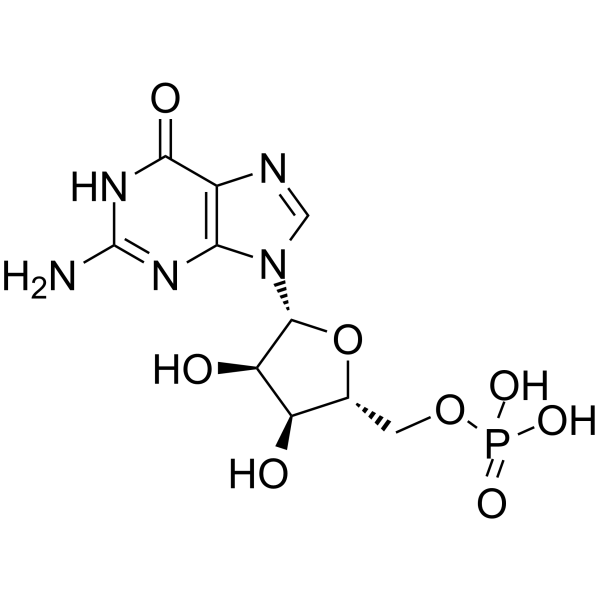
6-T-5'-GMP (6-Thioguanosine monophosphate) is an analogue of guanosine-5'-O-monophosphate (5'-GMP) and a metabolite of an immunosuppressive drug, Azathioprine (HY-B0256) .
Acefylline (Theophyllineacetic acid) (GMP), a xanthine derivative, is an Adenosine Receptor antagonist. Acefylline (GMP) is a peptidylarginine deiminase (PAD) activator. Acefylline (GMP) is also a bronchodilator and cardiac stimulant that inhibits rat lung cAMP phosphodiesterase isoenzymes. Acefylline (GMP) can be used in asthma research .
Nicotinamide (GMP) (Niacinamide (GMP)) is the GMP level of Nicotinamide (HY-B0150). GMP guidelines are used to produce Nicotinamide (GMP). GMP small molecules works appropriately as an auxiliary reagent for cell research manufacture. Nicotinamide is a form of vitamin B3 or niacin. Nicotinamide Hydrochloride inhibits SIRT2 activity (IC50: 2 μM). Nicotinamide also inhibits SIRT1. Nicotinamide increases cellular NAD+, ATP, ROS levels. Nicotinamide inhibits tumor growth and improves survival. Nicotinamide also has anti-HBV activity .
SMCC (GMP) is the GMP level of SMCC (HY-42360). GMP guidelines are used to produce SMCC (HY-42360) (GMP). GMP small molecules works appropriately as an auxiliary reagent for cell research manufacture. SMCC (GMP) is a protein crosslinker. SMCC (GMP) contains an amine-reactive N-hydroxysuccinimide ester and a sulfhydryl-reactive maleimide group that can be used in the conjugation of proteins. SMCC-conjugated antigen coupled spleen cells to induce antigen-specific immune responses.
Lipoic acid (GMP) ((R)-(+)-α-Lipoic acid (GMP)) is Lipoic acid (HY-18733) produced by using GMP guidelines. GMP small molecules works appropriately as an auxiliary reagent for cell therapy manufacture. Lipoic acid ((R)-(+)-α-Lipoic acid) is an antioxidant, which is an essential cofactor of mitochondrial enzyme complexes. (R)-(+)-α-Lipoic acid is more effective than racemic Lipoic acid.
Cyclic AMP (GMP) (Cyclic adenosine monophosphate (GMP)) is Cyclic AMP (HY-B1511) produced by using GMP guidelines. GMP small molecules works appropriately as an auxiliary reagent for cell therapy manufacture. Cyclic AMP (Cyclic adenosine monophosphate), adenosine triphosphate derivative, is an intracellular signaling molecule responsible for directing cellular responses to extracellular signals. Cyclic AMP is an important second messenger in many biological processes .
SD-208 (GMP) is SD-208 (HY-13227) produced by using GMP guidelines. GMP small molecules works appropriately as an auxiliary reagent for cell therapy manufacture. SD-208 is a selective TGF-βRI (ALK5) inhibitor with IC50 of 48 nM, and > 100-fold selectivity over TGF-βRII.
Dasatinib (BMS-354825) (GMP) is a GMP-grade Dasatinib (HY-10181). GMP-grade small molecules can be used as adjuvant agents in cell therapy. Dasatinib (BMS-354825) is an orally active, ATP-competitive, dual Src/Bcr-Abl inhibitor with potent antitumor activity. The Ki values for Src and Bcr-Abl are 16 pM and 30 pM, respectively. Dasatinib inhibits Bcr-Abl and Src with IC50 values of less than 1.0 nM and 0.5 nM, respectively. Dasatinib also induces apoptosis and autophagy .
LY2090314 (GMP) is LY2090314 (HY-16294) produced by using GMP guidelines. GMP small molecules works appropriately as an auxiliary reagent for cell therapy manufacture. LY2090314 is a potent inhibitor of glycogen synthase kinase-3 (GSK-3) with IC50 values of 1.5 nM and 0.9 nM for GSK-3α and GSK-3β, respectively.
Meglumine (GMP Like) (Methylglucamine (GMP Like)) is the GMP Like class Meglumine (HY-B0342) that can be used as pharmaceutical excipients. Meglumine (Methylglucamine) is an orally active amino sugar derived from sorbitol. Meglumine has anti-inflammatory and antitumor activity. Meglumine is often used as an excipient in active molecules and with iodinated compounds in contrast agents such as meglumine and meglumine iodide .
Calcium phosphate (GMP Like) (Secondary calcium (GMP Like)) is the GMP Like class Calcium phosphate (HY-B2242) that can be used as pharmaceutical excipients. Calcium phosphate is a biochemical reagent that can be used as a biological material or organic compound for life science related research.
McMMAF GMP is a GMP grade McMMAF (HY-15578). McMMAF is a protective group (maleimidocaproyl)-conjugated MMAF, which is a potent tubulin polymerization inhibitor. McMMAF can be used as a agent-linker for antibody-drug conjugates (ADC). McMMAF is uncleavable, and must be internalized and degraded within a cell, releasing cysteine-McMMAF as the active agent .
SU 5402 (GMP) is SU 5402 (HY-10407) produced by using GMP guidelines. GMP small molecules work appropriately as an auxiliary reagent for cell therapy manufacture. SU 5402 is a potent multi-targeted receptor tyrosine kinase inhibitor with IC50 of 20 nM, 30 nM, and 510 nM for VEGFR2, FGFR1, and PDGFRβ, respectively .
AS1842856 (GMP) is AS1842856 (HY-100596) produced by using GMP guidelines. GMP small molecules works appropriately as an auxiliary reagent for cell therapy manufacture. AS1842856, a specific Foxo1 inhibitor (IC50=30 nM), potently suppresses autophagy . AS1842856 reduces Foxo1 activity and, to a lesser extent, inhibits Foxo1 protein expression by simply binding to Foxo1 .
LDN193189 GMP is LDN193189 (HY-12071) produced by using GMP guidelines. GMP small molecules works appropriately as an auxiliary reagent for cell therapy manufacture. LDN193189 (DM-3189) is a potent selective BMP type I receptor (BMP I) inhibitor. LDN193189 efficiently inhibits transcriptional activity of the BMP type I receptors ALK2 and ALK3 with IC50 values of 5 nM and 30 nM, respectively. LDN193189 can be used for the research of bone morphogenetic protein signalling, such as fibrodysplasia ossificans progressiva .
Sucralose (GMP Like) (E955 (GMP Like)) is the GMP Like class Sucralose (HY-N0614) that can be used as pharmaceutical excipients. Sucralose (E955; Trichlorosucrose) is a non-nutritive artificial sweetener and sugar substitute. Sucralose can activate a conserved neural fasting response and thereby exerts an appetite-stimulating effect in rodents .
AGN 193109 (GMP) is AGN 193109 (HY-U00449) produced by using GMP guidelines. GMP small molecules works appropriately as an auxiliary reagent for cell therapy manufacture. AGN 193109 is a specific and highly effective retinoic acid receptor (RAR) antagonist . AGN 193109 (GMP) is a click chemistry reagent, it contains an Alkyne group and can undergo copper-catalyzed azide-alkyne cycloaddition (CuAAc) with molecules containing Azide groups. AGN 193109 is the antidote for retinoic acidosis, that ameliorates the skin and mucosal toxicity.
SM-102 (GMP) is SM-102 (HY-134541) produced by using GMP guidelines. GMP small molecules works appropriately as an auxiliary reagent for cell therapy manufacture. SM-102 is an amino cationic lipid useful in the formation of lipid nanoparticles (LNPs). SM-102 has higher transfection efficiency. SM-102 plays an important role in the effectiveness of lipid nanoparticles (LNPs) in delivering mRNA therapeutics and vaccines .
ART558 (GMP) is ART558 (HY-141520) produced by using GMP guidelines. GMP small molecules works appropriately as an auxiliary reagent for cell therapy manufacture. ART558 is a potent, selective and allosteric DNA polymerase theta (Polθ) inhibitor (IC50=7.9 nM). ART558 elicits BRCA-gene synthetic lethality and DNA damage. ART558 can be used for the research of cancer, such as breast cancer .
TL8-506 (GMP) is TL8-506 (HY-20457) produced by using GMP guidelines. GMP small molecules work appropriately as an auxiliary reagent for cell therapy manufacture. TL8-506 is a specific TLR8 agonist with an EC50 of 30?nM. TL8-506 has immunomodulatory effects and can be used in the study of tuberculosis and cancer immunotherapy .
Adjuvant-4 (GMP) is a GMP grade Adjuvant-4. Adjuvant-4 is a vaccine adjuvant that enhances antigen-specific antibody titers and cytotoxic T lymphocyte (CTL) responses . Adjuvant is generally an oil-in-water emulsifier of mineral oil and mannitol monooleate.
Resveratrol (GMP) is Resveratrol (HY-16561) produced by using GMP guidelines. GMP small molecules work appropriately as an auxiliary reagent for cell therapy manufacture. Resveratrol (trans-Resveratrol; SRT501), a natural polyphenolic phytoalexin that possesses anti-oxidant, anti-inflammatory, cardioprotective, and anti-cancer properties. Resveratrol (SRT 501) has a wide spectrum of targets including mTOR, JAK, β-amyloid, Adenylyl cyclase, IKKβ, DNA polymerase. Resveratrol also is a specific SIRT1 activator . Resveratrol is a potent pregnane X receptor (PXR) inhibitor . Resveratrol is an Nrf2 activator, ameliorates aging-related progressive renal injury in mice model . Resveratrol increases production of NO in endothelial cells .
Fmoc-Val-Cit-PAB GMP is a GMP grade Fmoc-Val-Cit-PAB (HY-19318). Fmoc-Val-Cit-PAB is a cleavable antibody-conjugated active molecule (ADC) commonly used linker.
BI 2536 (GMP) is BI 2536 (HY-50698) produced by using GMP guidelines. GMP small molecules works appropriately as an auxiliary reagent for cell therapy manufacture. BI 2536 is a dual PLK1 and BRD4 inhibitor with IC50s of 0.83 and 25 nM, respectively . BI-2536 suppresses IFNB (encoding IFN-β) gene transcription .
NAD+ (GMP Like) is NAD+ (HY-B0445) produced by using GMP like guidelines. GMP Like small molecules works appropriately as an auxiliary reagent for cell therapy manufacture. NAD+ is a coenzyme composed of ribosylnicotinamide 5'-diphosphate coupled to adenosine 5'-phosphate by pyrophosphate linkage.
Tubastatin A (GMP) is the Tubastatin A (HY-13271A) produced by using GMP guidelines. GMP small molecules work appropriately as an auxiliary reagent for cell therapy manufacture. Tubastatin A is a potent and selective HDAC6 inhibitor with an IC50 of 15 nM in a cell-free assay, and is selective (1000-fold more) against all other isozymes except HDAC8 (57-fold more). Tubastatin A also inhibits HDAC10 and metallo-β-lactamase domain-containing protein 2 (MBLAC2).
RG108 (GMP) is RG108 (HY-13642) produced by using GMP guidelines. GMP small molecules works appropriately as an auxiliary reagent for cell therapy manufacture. RG108 (N-Phthalyl-L-tryptophan) is a non-nucleoside DNA methyltransferases (DNMTs) inhibitor (IC50=115 nM) that blocks the DNMTs active site. RG108 (N-Phthalyl-L-tryptophan) causes demethylation and reactivation of tumor suppressor genes, but it does not affect the methylation of centromeric satellite sequences .
SP600125 (GMP) is SP600125 (HY-12041) produced by using GMP guidelines. GMP small molecules works appropriately as an auxiliary reagent for cell therapy manufacture. SP600125 is an orally active, reversible, and ATP-competitive JNK inhibitor with IC50s of 40, 40 and 90 nM for JNK1, JNK2 and JNK3, respectively. SP600125 is a potent ferroptosis inhibitor. SP600125 induces the transformation of bladder cancer cells from autophagy to apoptosis .
SKL2001 (GMP) is SKL2001 (HY-101085) produced by using GMP guidelines. SKL2001 is an agonist of the Wnt/β-catenin pathway, with anti-cancer activity. SKL2001 stabilizes intracellular β-catenin via disruption of the Axin/β-catenin interaction .
Fenofibrate (GMP) is Fenofibrate (HY-17356) produced by using GMP guidelines. GMP small molecules work appropriately as an auxiliary reagent for cell therapy manufacture. Fenofibrate is a selective PPARα agonist with an EC50 of 30 μM. Fenofibrate also inhibits human cytochrome P450 isoforms, with IC50s of 0.2, 0.7, 9.7, 4.8 and 142.1 μM for CYP2C19, CYP2B6, CYP2C9, CYP2C8, and CYP3A4, respectively.
Dabogratinib (TYRA-300) (GMP) is Dabogratinib (HY-159642) produced by using GMP guidelines. GMP small molecules work appropriately as an auxiliary reagent for cell therapy manufacture. Dabogratinib is an orally active, selective FGFR3 inhibitor with an IC50 of 11 nM. Dabogratinib exhibits antitumor activity against urothelial carcinoma and solid tumors. Dabogratinib downregulates the FGFR3 and ERK1/2 signaling pathways, and induces tumor growth inhibition and regression in FGFR3-altered xenograft models. Dabogratinib promotes chondrocyte proliferation and differentiation, drives endochondral bone formation and overall body growth, partially restores long bone proportions, and improves craniofacial and spinal morphology. Dabogratinib can be used for the research of metastatic urothelial carcinoma, achondroplasia and hypochondroplasia .
K02288 (GMP) is K02288 (HY-12278) produced by using GMP guidelines. GMP small molecules works appropriately as an auxiliary reagent for cell therapy manufacture. K02288 is a potent bone morphogenetic protein (BMP) type I receptor inhibitor with IC50s of 1.8, 1.1, 6.4 nM for ALK1, ALK2 and ALK6, respectively. K02288 shows slightly weaker inhibition against ALK3 and ALK6 with IC50s of of 5-34 nM.
Mc-Val-Cit-PABC-PNP GMP is a GMP grade Mc-Val-Cit-PABC-PNP (HY-20336). GMP small molecules works appropriately as an auxiliary reagent for cell therapy manufacture. Mc-Val-Cit-PABC-PNP is a cathepsin cleavable ADC linker. Mc-Val-Cit-PABC-PNP can be used in the synthesis of antibody-drug conjugates (ADCs) .
4-Arm PEG5000-NH2 (GMP) (4-Arm PEG5000-amine (GMP)) is 4-Arm PEG-NH2 (HY-W1048843A) produced by using GMP guidelines. GMP small molecules works appropriately as an auxiliary reagent for cell therapy manufacture. 4-Arm PEG5000-NH2 is a multi-arm PEG derivative with amine groups at each end of four arms attached to a pentaerythritol core. The reactive primary amine or NH2 groups can react rapidly with activated carboxylic acids such as NHS esters to form stable amide bonds .
Cyclic GMP sodium (Standard) is the analytical standard of Cyclic GMP sodium (HY-113469A). This product is intended for research and analytical applications. Cyclic GMP (cGMP) sodium, an important second messenger, is a major intracellular mediator of extracellular signals such as nitric oxide (NO) and natriuretic peptides (NPs). Effects of Cyclic GMP sodium occur through three main groups of cellular targets: cGMP-dependent protein kinases (PKGs), cGMP-gated cation channels, and PDEs. Cyclic GMP can inhibit both platelet adhesion and aggregation. cGAMP (Cyclic-GMP-AMP) (HY-12512), a conjugate of Cyclic GMP and AMP, can induce IRF3 phosphorylation and nuclear translocation, enhancing antiviral immune responses .
Cyclic GMP (Standard) is the analytical standard of Cyclic GMP (HY-113469). This product is intended for research and analytical applications. Cyclic GMP (cGMP), an important second messenger, is a major intracellular mediator of extracellular signals such as nitric oxide (NO) and natriuretic peptides (NPs). Effects of Cyclic GMP occur through three main groups of cellular targets: cGMP-dependent protein kinases (PKGs), cGMP-gated cation channels, and PDEs. Cyclic GMP can inhibit both platelet adhesion and aggregation. cGAMP (Cyclic-GMP-AMP) (HY-12512), a conjugate of Cyclic GMP and AMP, can induce IRF3 phosphorylation and nuclear translocation, enhancing antiviral immune responses .
Cyclic GMP (cGMP) sodium, an important second messenger, is a major intracellular mediator of extracellular signals such as nitric oxide (NO) and natriuretic peptides (NPs). Effects of Cyclic GMP sodium occur through three main groups of cellular targets: cGMP-dependent protein kinases (PKGs), cGMP-gated cation channels, and PDEs. Cyclic GMP can inhibit both platelet adhesion and aggregation. cGAMP (Cyclic-GMP-AMP) (HY-12512), a conjugate of Cyclic GMP and AMP, can induce IRF3 phosphorylation and nuclear translocation, enhancing antiviral immune responses .
Cyclic GMP (cGMP), an important second messenger, is a major intracellular mediator of extracellular signals such as nitric oxide (NO) and natriuretic peptides (NPs). Effects of Cyclic GMP occur through three main groups of cellular targets: cGMP-dependent protein kinases (PKGs), cGMP-gated cation channels, and PDEs. Cyclic GMP can inhibit both platelet adhesion and aggregation. cGAMP (Cyclic-GMP-AMP) (HY-12512), a conjugate of Cyclic GMP and AMP, can induce IRF3 phosphorylation and nuclear translocation, enhancing antiviral immune responses .
Nemorubicin (Methoxymorpholinyl doxorubicin) GMP is a GMP-class Nemorubicin (HY-15794). Nemorubicin is a Doxorubicin derivative with potent antitumor activity. Nemorubicin is highly cytotoxic to a variety of tumor cell lines presenting a multidrug-resistant phenotype. Nemorubicin not only intercalate into the duplex DNA, but also result in significant ligands for G-quadruplex DNA segments, stabilizing their structure. Nemorubicin requirs an intact nucleotide excision repair (NER) system to exert its activity .
DOPE (GMP Like) is the GMP Like class DOPE (HY-112005), and can be used as pharmaceutical excipients. GMP small molecules works appropriately as an auxiliary reagent for cell therapy manufacture. DOPE is a neutral helper lipid for cationic liposome and combines with cationic phospholipids to improve transfection efficiency of naked siRNA .
DBCO-amine (GMP) is a GMP grade DBCO-amine (HY-W000423). DBCO-amine is a click chemistry reagent, it contains a DBCO group that can undergo strain-promoted alkyne-azide cycloaddition (SPAAC) with molecules containing Azide groups. DBCO-amine is used in the synthesis of antibody-drug conjugates (ADCs) .
Val-Cit-PAB-OSBT GMP is a GMP grade Val-Cit-PAB-OSBT (HY-78736). Val-Cit-PAB-OSBT is a degradable ADC linker, which is composed of the polypeptide Val-Cit-PAB and OSBT groups coupled together .
DOTAGA-anhydride (GMP) is DOTAGA-anhydride (HY-W087187) produced by using GMP guidelines. GMP small molecules works appropriately as an auxiliary reagent for cell therapy manufacture. DOTAGA-anhydride is a DOTA-based metal chelator that can bind to radionuclides and is used to prepare radionuclide drug conjugates (RDCs). DOTAGA-anhydride has been successfully used for labeling antibodies (e.g., Trastuzumab (HY-P9907)). DOTAGA-anhydride can be used for the synthesis of a bimodal tag for Single-photon emission computed tomography (SPECT) or PET/optical imaging .
Rapamycin (Sirolimus) GMP Like is Rapamycin (HY-10219) produced by using GMP like guidelines. GMP Like small molecules works appropriately as an auxiliary reagent for cell therapy manufacture. Rapamycin (Sirolimus; AY 22989) is a potent and specific mTOR inhibitor with an IC50 of 0.1 nM in HEK293 cells. Rapamycin binds to FKBP12 and specifically acts as an allosteric inhibitor of mTORC1 . Rapamycin is an autophagy activator, an immunosuppressant .
Ravoxertinib GMP is Ravoxertinib (HY-15947) produced by using GMP guidelines. GMP small molecules works appropriately as an auxiliary reagent for cell therapy manufacture. Ravoxertinib (GDC-0994) is an orally active ERK1/2 inhibitor. Ravoxertinib inhibits the ERK1/2 MAPK signaling pathway and reduces the expression levels of c-Myc, HK2 and LDHA. Ravoxertinib decreases mammosphere formation, and exerts additive and/or superadditive cytotoxicity when combined with Ipatasertib (HY-15186) in 3D tumor sphere models. Ravoxertinib can be used in research related to various cancers including breast cancer, melanoma, head and neck cancer, non-small cell lung cancer, ovarian cancer and Merkel cell carcinoma .
Q-VD-OPh (GMP) is Q-VD-OPh (HY-12305) produced by using GMP guidelines. GMP small molecules works appropriately as an auxiliary reagent for cell therapy manufacture. Q-VD-OPh is an irreversible pan-caspase inhibitor with potent antiapoptotic properties; inhibits caspase 7 with an IC50 of 48 nM and 25-400 nM for other caspases including caspase 1, 3, 8, 9, 10, and 12. Q-VD-OPh can inhibits HIV infection. Q-VD-OPh is able to cross the blood-brain barrier.
Fmoc-Gly-NH-CH2-acetyloxy GMP is a GMP grade Fmoc-Gly-NH-CH2-acetyloxy (HY-44980). GMP small molecules works appropriately as an auxiliary reagent for cell therapy manufacture. Fmoc-Gly-NH-CH2-acetyloxy is a cleavable linker that can be used to synthesize antiboy-drug Conjugates (ADCs).
Fmoc-Gly-Gly-Phe-OH GMP is a GMP grade Fmoc-Gly-Gly-Phe-OH (HY-131833). Fmoc-Gly-Gly-Phe-OH is a cleavable ADC linker used in the synthesis of antibody-drug conjugates (ADCs) .
DOTAP chloride (GMP Like) is the GMP Like class DOTAP chloride (HY-112754A). GMP small molecules works appropriately as an auxiliary reagent for cell therapy manufacture. DOTAP chloride is a cationic lipid with good membrane fusion ability and biocompatibility. DOTAP chloride (GMP Like) can be used as an excipient for transient and stable transfection DNA (plasmids, bacmids) and modified nucleic acids (antisense oligonucleotides) without the use of helper lipid .
Polyvinyl alcohol, MW 64000 (GMP Like) (PVA, MW 64000 (GMP Like)) is the GMP Like class Polyvinyl alcohol, MW 64000 that can be used as pharmaceutical excipients.
Dasatinib (GMP Like) (BMS-354825 (GMP Like)) is Dasatinib (HY-10181) produced by using GMP like guidelines. GMP Like small molecules works appropriately as an auxiliary reagent for cell therapy manufacture. Dasatinib (BMS-354825) is a highly potent, ATP competitive, orally active dual Src/Bcr-Abl inhibitor with potent antitumor activity. The Kis are 16 pM and 30 pM for Src and Bcr-Abl, respectively. Dasatinib inhibits Bcr-Abl and Src with IC50s of <1.0 nM and 0.5 nM, respectively . Dasatinib also induces apoptosis and autophagy.
Boc-Dap-NE (GMP) is Boc-Dap-NE (HY-78931) produced by using GMP guidelines. Boc-Dap-NE is an intermediate in the synthesis of Monomethyl auristatin E (HY-15162), which is an inhibitor of tubulin polymerization. Monomethyl auristatin E can be used to synthesize Antibody-Drug Conjugates (ADCs) as ADC Cytotoxin.
Cholicamideβ (GMP) is a GMP grade of Cholicamideβ. Cholicamideβ (compound 6) is a self-assembling, small molecule, cancer vaccine adjuvant. Cholicamideβ can form virus-like particles with low cytotoxicity. Cholicamideβ, upon binding to peptide antigens, enhances antigen presentation by dendritic cells and induces antigen-specific T cells. Cholicamideβ can induce apoptosis and necrosis .
KP-457 (GMP) is KP-457 (HY-110397) produced by using GMP guidelines. GMP small molecules work appropriately as an auxiliary reagent for cell therapy manufacture.KP-457 is a selective a disintegrin and metalloproteinase 17 (ADAM17) inhibitor, with higher selectivity for ADAM17 than for other MMPs and ADAM10, and IC50s are 11.1 nM (ADAM17), 748 nM (ADAM10), 717 nM (MMP2), 9760 nM (MMP3), 2200 nM (MMP8), 5410 nM (MMP9), 930 nM (MMP13), 2140 nM (MMP14), and 7100 nM (MMP17), respectively .
Ciprofloxacin GMP is Ciprofloxacin (HY-B0356) produced by using GMP guidelines. GMP small molecules works appropriately as an auxiliary reagent for cell therapy manufacture. Ciprofloxacin (Bay-09867) is an orally active, blood-brain barrier permeable fluoroquinolone antibacterial agent. Ciprofloxacin exerts bactericidal effects primarily by inhibiting topoisomeraseII and IV. Ciprofloxacin inhibits the proliferation of human dental pulp stem cells and chondrocytes from young rats, and also activates the Akt signaling pathway and upregulates markers such as β-catenin and Nanog to maintain the morphological characteristics of stem cells. Ciprofloxacin induces significant neurotoxicity and tissue damage, including reducing serotonin and glutathione levels in the brain, inducing oxidative stress and depression-like behaviors, and causing articular cartilage damage. Ciprofloxacin can be applied to research related to infections of necrotic young permanent teeth and neurotoxicity .
MC-Val-Cit-PAB GMP is a GMP grade MC-Val-Cit-PAB (HY-78738). MC-Val-Cit-PAB is an intermediate in the synthesis of VcMMAE (HY-15575), which is a Drug-Linker Conjugates for ADC. Monomethyl auristatin E can be used to inhibit Microtubule/Tubulin as ADC Cytotoxin.
Cyclic GMP (cGMP) TBAOH, an important second messenger, is a major intracellular mediator of extracellular signals such as nitric oxide (NO) and natriuretic peptides (NPs). Effects of Cyclic GMP TBAOH occur through three main groups of cellular targets: cGMP-dependent protein kinases (PKGs), cGMP-gated cation channels, and PDEs. Cyclic GMP can inhibit both platelet adhesion and aggregation. cGAMP (Cyclic-GMP-AMP) (HY-12512), a conjugate of Cyclic GMP and AMP, can induce IRF3 phosphorylation and nuclear translocation, enhancing antiviral immune responses .
Celecoxib (SC 58635) GMP Like is a GMP-class Celecoxib (HY-14398). Celecoxib, a selective non-steroidal anti-inflammatory drug (NSAID), is a selective COX-2 inhibitor with an IC50 of 40 nM.
IWR-1 (IWR-1-endo) (GMP) is the IWR-1 (HY-12238) produced by using GMP guidelines. GMP small molecules work appropriately as an auxiliary reagent for cell therapy manufacture. IWR-1 (IWR-1-endo) is a tankyrase inhibitor targeting Wnt/β-catenin (IC50 = 180 nM). IWR-1 compromises critical steps of the canonical Wnt signaling, namely translocation of β-catenin to the nucleus and subsequent TCF/LEF activation and expression of Wnt/β-catenin downstream targets. IWR-1 promotes β-catenin phosphorylation by promoting stability of Axin-scaffolded destruction complexes. IWR-1 can be studied in research for anti-tumor purposes, and diseases such as osteosarcoma, colorectal cancer and psoriasis .
PNU-159682 GMP is a GMP grade PNU-159682 (HY-16700). PNU-159682, a metabolite of the anthracycline Nemorubicin, is a highly potent DNA topoisomerase II inhibitor with excellent cytotoxicity. PNU-159682 acts as a more potent and tolerated ADC cytotoxin than Doxorubicin for ADC synthesis. PNU-159682 can be used in EDV-nanocell technology to overcome agent resistance.
DBCO-acid GMP is a GMP grade DBCO-acid (HY-42972). DBCO-acid is a click chemistry reagent used in the synthesis of ADC linker DBCO-NHS ester ((HY-115524) and (HY-115545)), and agent-linker conjugates DBCO-PEG-MMAE (HY-111012 and HY-126690). DBCO-acid contains a DBCO group that can undergo strain-promoted alkyne-azide cycloaddition (SPAAC) with molecules containing Azide groups .
Doramapimod GMP (BIRB 796 GMP) is an orally active inhibitor for p38 MAPK, with IC50s of 38, 65, 200 and 520 nM, for p38α, p38β, p38γ, p38δ. Doramapimod exhibits cytotoxicity and antitumor activity against multiple myeloma, synergizes with multidrug resistance protein 1 (ABCB1) and aurora kinase inhibitor VX680, promoting their antitumor efficacy against oral epidermoid carcinoma and cervical cancer. Doramapimod also exhibits anti-inflammatory activity .
SR11237 GMP is SR11237 (HY-107413) produced by using GMP guidelines. GMP small molecules works appropriately as an auxiliary reagent for cell therapy manufacture. SR11237 is a RXR activator and lipid metabolism regulator that promotes the differentiation of induced neural stem cells into dopaminergic (TH-positive) neurons. SR11237 induces transcriptional regulation of lipogenic genes and cholesterol transporters, increases glycosaminoglycan release, and elevates total cellular triglyceride levels. SR11237 promotes heterodimerization of RXR with Nurr1, thereby enhancing tyrosine hydroxylase expression and facilitating dopamine release. SR11237 produces a synergistic effect when used in combination with bFGF/EGF. SR11237 is mainly used in studies related to osteoarthritis and Parkinson's disease .
DOPE GMP is DOPE (HY-112005) produced by using GMP guidelines. GMP small molecules works appropriately as an auxiliary reagent for cell therapy manufacture. DOPE (Dioleoylphosphatidylethanolamine; 1,2-Dioleoyl-sn-glycero-3-phosphoethanolamine) is an orally active inhibitor of ferroptosis with anti-inflammatory and intestinal barrier maintenance activities. DOPE regulates the expression of ACSL4, SLC7A11 and GPX4 to restore the redox system balance, thereby reducing the levels of lipid peroxides, iron ions and intestinal inflammatory factors (IL-1β and IL-6). DOPE promotes the migration and proliferation of intestinal epithelial cells and increases the level of tight junction proteins; it also destabilizes endosomal membranes, mediates the conjugation of RVG peptides with mesenchymal stem cell-derived exosomes to enhance brain targeting. DOPE can be applied to research related to neonatal necrotizing enterocolitis and Alzheimer's disease .
ALC-0159 (GMP Like) is the GMP Like class ALC-0159 (HY-138300). GMP small molecules works appropriately as an auxiliary reagent for cell therapy manufacture. ALC-0159, a polyethylene glycol (PEG) lipid conjugate, could be used as vaccine excipient .
Val-Cit-PAB-MMAE GMP is a GMP grade Val-Cit-PAB-MMAE (HY-100374). Val-Cit-PAB-MMAE is a agent-linker conjugate for ADC. Val-Cit-PAB-MMAE contains the ADCs linker (peptide Val-Cit-PAB) and a potent tubulin inhibitor MMAE (HY-15162). MMAE a potent mitotic inhibitor by inhibiting tubulin polymerization.
Cyclic GMP sodium- 13C5 is the 13C-labeled Cyclic GMP sodium (HY-113469A). Cyclic GMP (cGMP) sodium, an important second messenger, is a major intracellular mediator of extracellular signals such as nitric oxide (NO) and natriuretic peptides (NPs). Effects of Cyclic GMP sodium occur through three main groups of cellular targets: cGMP-dependent protein kinases (PKGs), cGMP-gated cation channels, and PDEs. Cyclic GMP can inhibit both platelet adhesion and aggregation. cGAMP (Cyclic-GMP-AMP) (HY-12512), a conjugate of Cyclic GMP and AMP, can induce IRF3 phosphorylation and nuclear translocation, enhancing antiviral immune responses .
Bucladesine (Dibutyryl cAMP; DBcAMP) sodium (GMP) is a Bucladesine sodium (HY-B0764) produced by using GMP guidelines. Bucladesine (Dibutyryl cAMP; DBcAMP) is a membrane-permeable 3′, 5′-cyclic adenosine monophosphate (cAMP) analog. Bucladesine selectively activates cAMP dependent protein kinase (PKA) by increasing the intracellular level of cAMP. Bucladesine significantly attenuates MDMA-induced increases in hippocampal mitochondrial ROS formation, mitochondrial outer membrane damage, cytochrome c release, and hippocampal ADP/ATP ratio, thereby improving spatial learning and memory impairments. Bucladesine exhibit anti-nociceptive and anti-inflammation effect. Bucladesine can inhibit cancer cells proliferation, induce apoptosis. Bucladesine can be used for the researches of neurological disease, cancer, inflammation .
GSK-3484862 GMP is GSK-3484862 (HY-135146) produced by using GMP guidelines. GMP small molecules works appropriately as an auxiliary reagent for cell therapy manufacture. GSK-3484862 is a highly potent non-covalent inhibitor and demethylating agent of DNMT1. GSK-3484862 induces genome-wide DNA demethylation, including the regulatory elements of DNMT3B and the promoter region of TERT, and significantly inhibits cell viability, growth, proliferation and self-renewal. GSK-3484862 blocks the transformation of young AT2 cells, induces apoptosis, and generates transcriptomic features similar to those of senescent cells. GSK-3484862 is widely used in studies related to lung cancer, oral squamous cell carcinoma and lung adenocarcinoma .
ara-GMP (ara-G monophosphate) is a metabolite of Arabinosylguanine (ara-G) (HY-N0097A). ara-GMP incorporates into replicating DNA , initiates S phase-specific apoptosis. ara-GMP can be used for the research of cancer, such as T-cell acute lymphoblastic leukemia .
PD173074 GMP is PD173074 (HY-10321) produced by using GMP guidelines. GMP small molecules works appropriately as an auxiliary reagent for cell therapy manufacture. PD173074 is an orally active FGFR inhibitor that targets the transphosphorylation of FGFR1 and FGFR2 and blocks the FGF signaling pathway. By reducing the phosphorylation level of SMAD2 and altering the expression of Nodal/Activin target genes, PD173074 eliminates endothelial differentiation potential, thereby inhibiting the formation of capillary-like structures. PD173074 blocks the proliferation and colony formation of tumor cells and increases intratumoral cell apoptosis. PD173074 successfully reverses FGF-2-induced chemoresistance to enhance the effect of cisplatin (HY-17394) in small cell lung cancer models. PD173074 can be applied to research related to critical limb ischemia and small cell lung cancer .
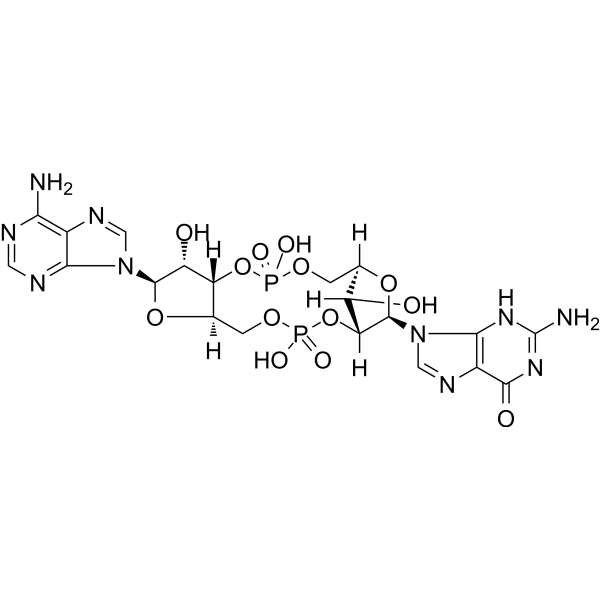
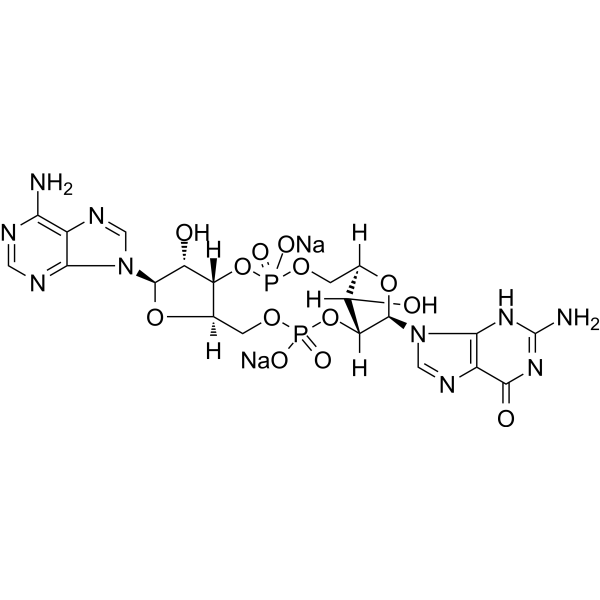
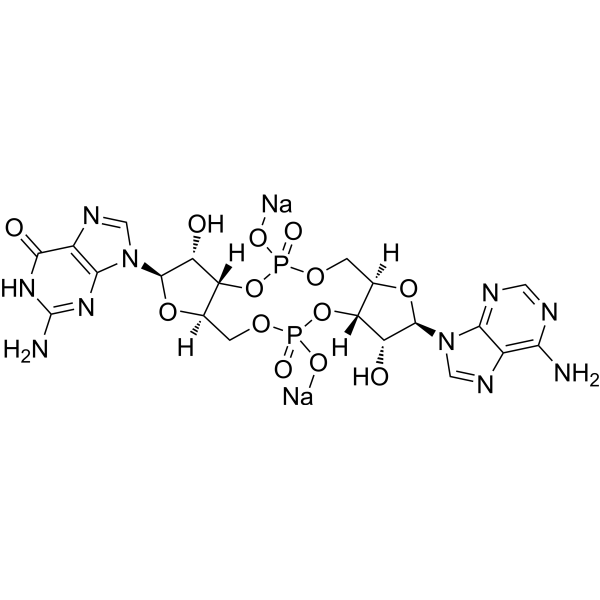
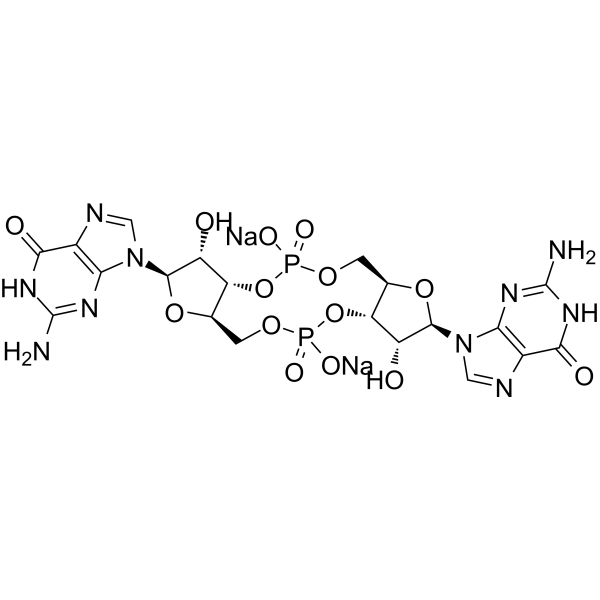
Cyclic-di-GMP sodium is a STING agonist and a bacterial second messenger that coordinates different aspects of bacterial growth and behavior, including motility, virulence, biofilm formation, and cell cycle progression. Cyclic-di-GMP sodium has anti-cancer cell proliferation activity and also induces elevated CD4 receptor expression and cell cycle arrest. Cyclic-di-GMP sodium can be used in cancer research .
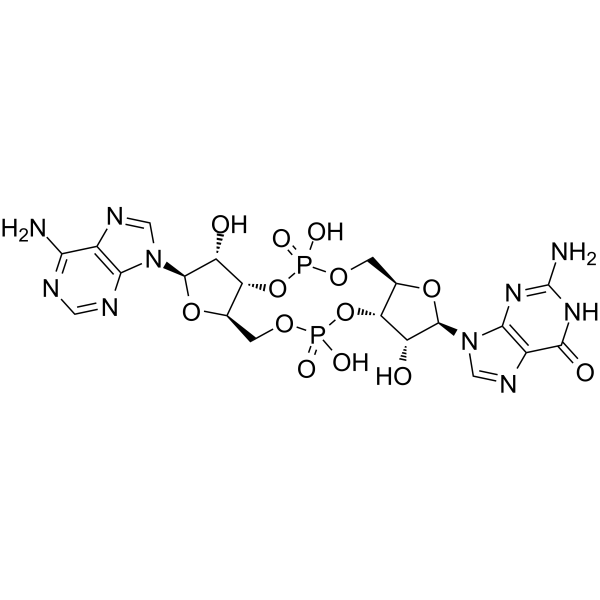
Cyclic-di-GMP is a STING agonist and a bacterial second messenger that coordinates different aspects of bacterial growth and behavior, including motility, virulence, biofilm formation, and cell cycle progression. Cyclic-di-GMP has anti-cancer cell proliferation activity and also induces elevated CD4 receptor expression and cell cycle arrest. Cyclic-di-GMP can be used in cancer research .
WH-4-023 GMP is WH-4-023 (HY-12299) produced by using GMP guidelines. GMP small molecules works appropriately as an auxiliary reagent for cell therapy manufacture. WH-4-023 (Dual LCK/SRC inhibitor) is a Lck/Src dual target inhibitor with functions in stem cell maintenance and differentiation regulation. WH-4-023 blocks epithelial-mesenchymal transition, supports the self-renewal of porcine embryonic stem cells, and inhibits their differentiation into mesoderm and endoderm. WH-4-023 is a key component of 3i/LAF medium, and enables the stable establishment and long-term maintenance of porcine pre-gastrulation epiblast stem cell lines. Removal of WH-4-023 reduces the expression of pluripotency factors in porcine and human extended pluripotent stem cells. WH-4-023 can be applied to relevant studies such as non-small cell lung cancer resistant to EGFR-TKIs .
1-Oleoyl lysophosphatidic acid sodium (GMP) is the GMP-grade form of 1-Oleoyl lysophosphatidic acid sodium (HY-107614). GMP-grade small molecules serve as auxiliary reagents in cell therapy. 1-Oleoyl lysophosphatidic acid sodium is a bioactive lipid signaling molecule. 1-Oleoyl lysophosphatidic acid sodium inhibits lysoPLD-catalyzed hydrolysis of lysophosphatidylcholine and FS-3. 1-Oleoyl lysophosphatidic acid sodium activates LPA1 and LPA2, thereby triggering calcium mobilization, NFATc1 translocation, Rho/ROCK activation, Smad2/3 phosphorylation and c-Fos expression. 1-Oleoyl lysophosphatidic acid sodium induces anxiety-like, depression-like and hypoactivity phenotypes, regulates osteoclast cytoskeleton and viability, reduces osteoclast bone resorptive activity, and drives mesenchymal stem cell differentiation into myofibroblast-like cells. 1-Oleoyl lysophosphatidic acid sodium stimulates the secretion of transforming growth factor-β1 and stromal cell-derived factor-1. 1-Oleoyl lysophosphatidic acid sodium is applicable to research related to anxiety, depression and ovarian cancer .
Rolipram GMP is Rolipram (HY-16900) produced by using GMP guidelines. GMP small molecules works appropriately as an auxiliary reagent for cell therapy manufacture. Rolipram is a PDE4 inhibitor, with blood-brain barrier permeability, that reverses β-amyloid-induced learning and memory impairment in rats. Rolipram elevates intracellular cAMP and clevels and regulates the cAMP/CREB signaling pathway, thereby alleviating neuroinflammation and apoptotic responses. Rolipram promotes neuronal differentiation of human bone marrow mesenchymal stem cells and inhibits Methamphetamine- and morphine-induced hyperlocomotion in mice. Rolipram also reduces the viability of glioblastoma stem-like cells and enhances Bevacizumab (HY-P9906)-induced cell death. Rolipram inhibits the expression of proinflammatory cytokines and enhances central noradrenergic transmission. Rolipram is mainly used in studies related to various central nervous system diseases including Alzheimer's disease, major depressive disorder, glioblastoma multiforme, and multiple sclerosis .
N1-Methylpseudouridine-5′-triphosphate (GMP like) (1-Methylpseudouridine-5′-triphosphate (GMP like)) is N1-Methylpseudouridine-5′-triphosphate (HY-112582A) produced by using GMP like guidelines. GMP Like small molecules works appropriately as an auxiliary reagent for cell therapy manufacture. N1-Methylpseudouridine-5′-triphosphate (1-Methylpseudouridine-5′-triphosphate) is a nucleobase-modified nucleotide, used for synthesizing mRNA with reduced immunogenicity and improved stability.
L-Glutamine GMP is L-Glutamine (HY-N0390) produced by using GMP guidelines. GMP small molecules works appropriately as an auxiliary reagent for cell therapy manufacture. L-Glutamine is an orally active nutritional agent and cellular metabolism regulator. L-Glutamine is taken up in a Na +-dependent manner and targets multiple key molecules including glutaminase, mTORC1, NF-κB, STAT-3 and HIF-1α. L-Glutamine enhances glutaminolytic catabolism, drives the conversion of glutamate to α-ketoglutarate, thereby regulating gene expression, integrating metabolic signals, mediating glutamine flux and maintaining redox homeostasis. L-Glutamine also promotes cell proliferation, osteogenic differentiation and fracture healing, exerts neuroprotective and cardioprotective effects, and inhibits osteoarthritis. L-Glutamine can be applied to research related to osteoporosis, osteoarthritis, ischemic stroke and acute cantharidin-induced cardiotoxicity .
SB-590885 GMP is SB-590885 (HY-10966) produced by using GMP guidelines. GMP small molecules works appropriately as an auxiliary reagent for cell therapy manufacture. SB-590885 is a BRAF/c-Raf kinase inhibitor that selectively targets B-Raf, and it amplifies the ERK/MAPK signaling pathway in RAS-activated cells. SB-590885 effectively inhibits the malignant proliferation, transformation and tumorigenicity of oncogenic B-Raf cells; it also induces the proliferation of erythroid progenitor cells, delays their differentiation and promotes hemoglobin synthesis, thereby improving ineffective erythropoiesis and reducing apoptosis. SB-590885 exerts a synergistic effect with TGF-β inhibitors and glucocorticoids, significantly promoting the formation of erythroid colonies in cells from patients with Diamond-Blackfan anemia (DBA). SB-590885 is mainly used in relevant studies on DBA, cisplatin-induced myelosuppression-related anemia, and pan-cancers such as melanoma and colorectal cancer .
AS2863619 GMP is AS2863619 (HY-126675) produced by using GMP guidelines. GMP small molecules works appropriately as an auxiliary reagent for cell therapy manufacture. AS2863619 is an orally active CDK8/19 inhibitor that also inhibits BMP2, MDA5 and RIG-I receptors. AS2863619 targets Stat5a-CDK8/19 to promote the differentiation of CD4 + T cells into regulatory T cells and induce FOXP3 expression, thereby restoring immune homeostasis and establishing transplant immune tolerance. AS2863619 also enhances the BMP2/SMAD signaling pathway to promote osteogenic differentiation and inhibit adipogenic differentiation. AS2863619 exerts osteoprotective effects by alleviating inflammation-induced impairment of osteogenic function and inducing neutrophil apoptosis (apoptosis). AS2863619 can be applied to research in related fields such as periodontitis-induced bone defects .
D-Sorbitol, M150 (GMP Like) is the GMP Like class D-Sorbitol, M150 that can be used as pharmaceutical excipients. D-Sorbitol (Sorbitol) is a six-carbon sugar alcohol and can used as a sugar substitute. D-Sorbitol can be used as a stabilizing excipient and/or isotonicity agent, sweetener, humectant, thickener and dietary supplement .
DSPC (GMP Like) (1,2-Distearoyl-sn-glycero-3-phosphorylcholine) is DSPC (HY-W040193) produced by using GMP like guidelines. GMP Like small molecules works appropriately as an auxiliary reagent for cell therapy manufacture. DSPC (1,2-Distearoyl-sn-glycero-3-phosphorylcholine) is a cylindrical-shaped lipid. DSPC is used to synthesize liposomes, and is the lipid component in the lipid nanoparticle (LNP) system .
SM-102 (GMP Like) is SM-102 (HY-134541) produced by using GMP like guidelines. GMP Like small molecules works appropriately as an auxiliary reagent for cell therapy manufacture. SM-102 is an amino cationic lipid useful in the formation of lipid nanoparticles (LNPs). SM-102 has higher transfection efficiency. SM-102 plays an important role in the effectiveness of lipid nanoparticles (LNPs) in delivering mRNA therapeutics and vaccines .
Doxycycline hydrochloride GMP is Doxycycline (hydrochloride) (HY-N0565A) produced by using GMP guidelines. GMP small molecules works appropriately as an auxiliary reagent for cell therapy manufacture. Doxycycline hydrochloride is an orally active highly lipophilic, tissue-permeable MMP inhibitor with broad-spectrum antibacterial activity. Doxycycline hydrochloride is also a semi-synthetic antibiotic with chelating properties, which blocks bacterial protein synthesis and inhibits extracellular matrix degradation through interactions with zinc and calcium atoms. Doxycycline hydrochloride also inhibits mitochondrial biogenesis, translation, and the expression of respiratory chain proteins. Doxycycline hydrochloride induces apoptosis, inhibits autophagy and EMT, downregulates stem cell markers, and activates the PI3K-AKT pathway, thereby effectively inhibiting the viability and proliferation of cancer cells such as breast cancer cells. Doxycycline hydrochloride also promotes the survival and self-renewal of embryonic stem cells and neural stem cells, and reduces the frequency of medium changes in culture. Doxycycline hydrochloride has been applied in studies related to breast cancer, prostate cancer, bladder cancer, and other cancers .
Alpelisib GMP is Alpelisib (HY-15244) produced by using GMP guidelines. GMP small molecules works appropriately as an auxiliary reagent for cell therapy manufacture. Alpelisib (BYL-719) is an orally active PI3Kα-selective inhibitor that blocks the conversion of PIP2 to PIP3, thereby inhibiting pathways including PI3K/AKT/mTOR, MAPK/ERK, Notch and JAK-STAT. Alpelisib also induces apoptosis, G0/G1 phase arrest and senescence; it significantly inhibits the proliferation, self-renewal, stemness and epithelial-mesenchymal transition (EMT) of tumor cells, reduces cancer stem cell populations and decreases the expression of stem cell markers. Alpelisib not only enhances the sensitivity to Eribulin (HY-13442) and exerts a synergistic effect with Paclitaxel (HY-B0015), but may also induce drug resistance by upregulating the SGK3/GSK3β/β-catenin signaling pathway. Alpelisib can be applied to research related to breast cancer, gastric cancer and lipomas associated with PTEN hamartoma tumor syndrome .
Cholesterol (GMP Like) is Cholesterol (HY-N0322) produced by using GMP like guidelines. GMP Like small molecules works appropriately as an auxiliary reagent for cell therapy manufacture. Cholesterol is the major sterol in mammals. It is making up 20-25% of structural component of the plasma membrane. Plasma membranes are highly permeable to water but relatively impermeable to ions and protons. Cholesterol plays an important role in determining the fluidity and permeability characteristics of the membrane as well as the function of both the transporters and signaling proteins . Cholesterol is also an endogenous estrogen-related receptor α (ERRα) agonist .
L-Ascorbic acid (GMP Like) is the GMP Like class L-Ascorbic acid (HY-B0166). L-Ascorbic acid (L-Ascorbate, Vitamin C), an electron donor, is an endogenous antioxidant agent. L-Ascorbic acid inhibits selectively Cav3.2 channels with an IC50 of 6.5 μM. L-Ascorbic acid is also a collagen deposition enhancer and an elastogenesis inhibitor . L-Ascorbic acid exhibits anti-cancer effects through the generation of reactive oxygen species (ROS) and selective damage to cancer cells .
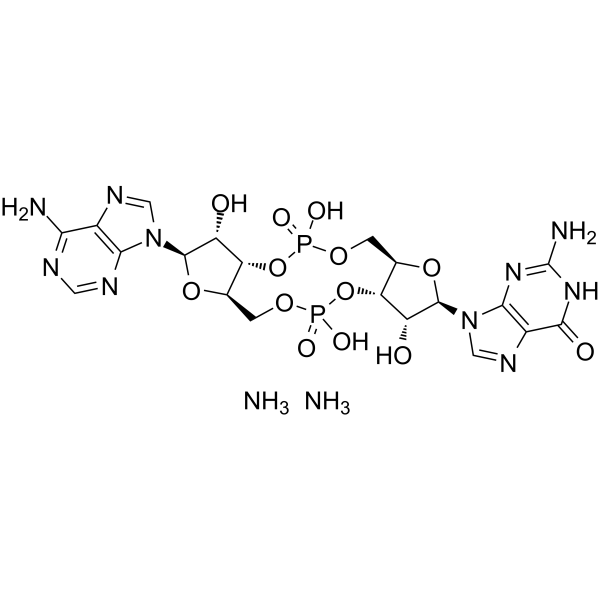
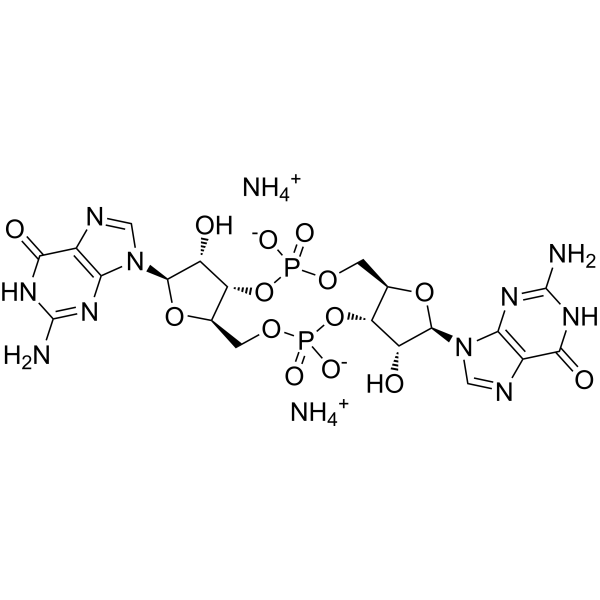
Cyclic-di-GMP diammonium is a STING agonist and a bacterial second messenger that coordinates different aspects of bacterial growth and behavior, including motility, virulence, biofilm formation, and cell cycle progression. Cyclic-di-GMP diammonium has anti-cancer cell proliferation activity and also induces elevated CD4 receptor expression and cell cycle arrest. Cyclic-di-GMP diammonium can be used in cancer research .
Cyclic-di-GMP disodium is a STING agonist and a bacterial second messenger that coordinates different aspects of bacterial growth and behavior, including motility, virulence, biofilm formation, and cell cycle progression. Cyclic-di-GMP disodium has anti-cancer cell proliferation activity and also induces elevated CD4 receptor expression and cell cycle arrest. Cyclic-di-GMP disodium can be used in cancer research .
XL177A GMP is XL177A (HY-138794) produced by using GMP guidelines. GMP small molecules works appropriately as an auxiliary reagent for cell therapy manufacture. XL177A is a covalent USP7 inhibitor that blocks the deubiquitinase activity of USP7. XL177A destabilizes non-canonical PRC1 complexes or KDM6A and reduces chromatin deposition of H2AK119Ub, thereby relieving the repression of neuronal differentiation programs. Meanwhile, XL177A also regulates the ELOF1-UVSSA-USP7-nuclear β-catenin axis, decreasing the transcription levels of related proteins and the accumulation of nuclear β-catenin. XL177A exerts antiviral effects by reducing the expression levels of coronavirus receptors, and exhibits inhibitory activity against APC-mutated colorectal cancer cells, neuroblastoma, and coronaviruses including SARS-CoV-2 variants. XL177A is mainly used in studies related to colorectal cancer, neuroblastoma, and coronavirus infections .
IWP-4 (GMP) is the GMP-grade form of IWP-4 (HY-12879). IWP-4 is a Wnt inhibitor with an IC50 of 25 nM. IWP-4 specifically inhibits casein kinase 1δ/ε (CK1δ/ε), with an IC50 of 1.06 μM against wild-type CK1δ, 1.02 μM against the CK1δ kinase domain, and 7.07 μM against CK1ε; it shows enhanced inhibitory activity against the M82F CK1δ mutant (IC50 = 0.14 μM). IWP-4 is applicable to research related to cancer, Alzheimer's disease (AD), and heart failure .
D-Lin-MC3-DMA (GMP Like) is the GMP Like class D-Lin-MC3-DMA (HY-112251). GMP small molecules works appropriately as an auxiliary reagent for cell therapy manufacture. D-Lin-MC3-DMA, an ionizable cationic lipid, is a potent siRNA delivery vehicle.
ALC-0315 (GMP Like) is ALC-0315 (HY-138170) produced by using GMP like guidelines. GMP Like small molecules works appropriately as an auxiliary reagent for cell therapy manufacture. ALC-0315 is an ionisable aminolipid that is responsible for mRNA compaction and aids mRNA cellular delivery and its cytoplasmic release through suspected endosomal destabilization. ALC-0315 can be used to form lipid nanoparticle (LNP) delivery vehicles. Lipid-Nanoparticles have been used in the research of mRNA COVID-19 vaccine .
4-Arm PEG5000-NH2 (GMP Like) (4-Arm PEG5000-amine (GMP Like)) is 4-Arm PEG-NH2 (HY-W1048843A) produced by using GMP like guidelines. GMP like small molecules works appropriately as an auxiliary reagent for cell therapy manufacture. 4-Arm PEG5000-NH2 is a multi-arm PEG derivative with amine groups at each end of four arms attached to a pentaerythritol core. The reactive primary amine or NH2 groups can react rapidly with activated carboxylic acids such as NHS esters to form stable amide bonds .
D-Mannitol, M200 (GMP Like) (Mannitol, M200 (GMP Like)) is the GMP Like class D-Mannitol that can be used as pharmaceutical excipients. D-Mannitol (Mannitol) is an oral, resistant sugar widely used in the food and pharmaceutical industries to promote the absorption and retention of calcium and magnesium through cecal fermentation, while acting as a osmotic diuretic to reduce tissue edema. D-Mannitol can enhance brown fat formation, improve insulin effect, reduce blood sugar levels, And through the start the β3-adrenergic receptor (β3-AR), PGC1α and PKA induced by means of white fat cells into brown fat cells .
D-Mannitol, M100 (GMP Like) (Mannitol, M100 (GMP Like)) is the GMP Like class D-Mannitol that can be used as pharmaceutical excipients. D-Mannitol (Mannitol) is an oral, resistant sugar widely used in the food and pharmaceutical industries to promote the absorption and retention of calcium and magnesium through cecal fermentation, while acting as a osmotic diuretic to reduce tissue edema. D-Mannitol can enhance brown fat formation, improve insulin effect, reduce blood sugar levels, And through the start the β3-adrenergic receptor (β3-AR), PGC1α and PKA induced by means of white fat cells into brown fat cells .
IM-12 GMP is IM-12 (HY-12292) produced by using GMP guidelines. GMP small molecules works appropriately as an auxiliary reagent for cell therapy manufacture. IM-12 is an orally active anti-inflammatory agent that targets and inhibits the NF-κB and STAT3 signaling pathways. IM-12 activates the Wnt signaling pathway and promotes the nuclear translocation of β-catenin by inhibiting GSK3β, while also blocking the tyrosine kinase activity of p210BCR/ABL. IM-12 reduces the levels of IL-6, IL-17, NO, prostaglandin E2, iNOS and COX-2, and induces ER stress, Ca 2+ release, autophagy and apoptosis. IM-12 is heat-sensitive and does not induce autophagy in IM-resistant p210BCR/ABL T315I mutant cells. IM-12 is also a component of the 5iLA medium used for naive pluripotent stem cell research. IM-12 has been applied in studies related to carrageenan (HY-125474)-induced hind paw edema, TNBS-induced colitis, and acute and chronic myeloid leukemia .
Dimethyl sulfoxide (DMSO) (GMP Like) is the GMP Like class Dimethyl sulfoxide (HY-Y0320C). Dimethyl sulfoxide is an aprotic solvent that can dissolve water-insoluble therapeutic and toxic agents. Dimethyl sulfoxide has a strong affinity for water and has the ability to rapidly penetrate or enhance the penetration of other substances through biological membranes. Dimethyl sulfoxide also has potential free radical scavenging and anticholinesterase effects and may affect coagulation activity. Dimethyl sulfoxide also induces histamine release from mast cells but is thought to have low systemic toxicity .
Neotame (GMP Like) is the GMP Like class Neotame (HY-W011053) that can be used as pharmaceutical excipients. Neotame is a derivative of Aspartame (HY-B0361) and is a flavor enhancer and low-caloric, non-nutritive, high-intensity artificial sweetener that is 7000-13,000 times sweeter than sugar. Neotame causes intestinal epithelial cell death at high concentrations. Neotame induces Apoptosis of Caco-2 cells .
Go 6983 GMP is Go 6983 (HY-13689) produced by using GMP guidelines. GMP small molecules works appropriately as an auxiliary reagent for cell therapy manufacture. Go 6983 is a dual inhibitor targeting Suv39h1/2 (KMT1A/KMT1B) and PKC, as well as a transcriptional activator capable of inducing DNA hypomethylation. Go 6983 stimulates the transcription of Prdm14 by reducing Suv39h1/2 protein levels, decreasing histone modifications in the Prdm14 promoter region, and increasing the recruitment of RNA polymerase II. Go 6983 induces genome-wide DNA hypomethylation by inhibiting de novo methyltransferase expression and increasing Tet1/Tet2 levels, thereby promoting self-renewal and pluripotency maintenance of stem cells. Meanwhile, Go 6983 can block PKC-mediated signaling pathways to reduce the expression of EMT-related genes and eliminate the upregulation of antioxidant genes downstream of NRF2. Go 6983 is mainly used in mechanism studies related to myocardial ischemia/reperfusion injury .
D-Sorbitol, M400 (GMP Like) is the GMP Like class D-Sorbitol, M400 that can be used as pharmaceutical excipients. D-Sorbitol (Sorbitol) is a six-carbon sugar alcohol and can used as a sugar substitute. D-Sorbitol can be used as a stabilizing excipient and/or isotonicity agent, sweetener, humectant, thickener and dietary supplement .
D-Sorbitol, M200 (GMP Like) is the GMP Like class D-Sorbitol, M200 that can be used as pharmaceutical excipients. D-Sorbitol (Sorbitol) is a six-carbon sugar alcohol and can used as a sugar substitute. D-Sorbitol can be used as a stabilizing excipient and/or isotonicity agent, sweetener, humectant, thickener and dietary supplement .
Polyinosinic-polycytidylic acid (Poly(I:C)) (GMP Like) is the GMP Like class Polyinosinic-polycytidylic acid (HY-107202), and can be used as pharmaceutical excipients. Polyinosinic-polycytidylic acid (Poly(I:C)) is a synthetic analog of double-stranded RNA and an agonist of toll-like receptor 3 (TLR3) and retinoic acid inducible gene I (RIG-I)-like receptors (RIG-I and MDA5). Polyinosinic-polycytidylic acid can be used as a vaccine adjuvant to enhance innate and adaptive immune responses, and to alter the tumor microenvironment. Polyinosinic-polycytidylic acid can directly trigger cancer cells to undergo apoptosis .
DMG-PEG 2000 (GMP Like) is DMG-PEG 2000 (HY-112764) produced by using GMP like guidelines. GMP Like small molecules works appropriately as an auxiliary reagent for cell therapy manufacture. DMG-PEG 2000 is used for the preparation of liposome for siRNA delivery with improved transfection efficiency in vitro. DMG-PEG 2000 is also used for the lipid nanoparticle for an oral plasmid DNA delivery approach in vivo through a facile surface modification to improve the mucus permeability and delivery efficiency of the nanoparticles .
Endo S2, Streptococcus pyogenes (GMP Like) is Endo S2, Streptococcus pyogenes (HY-E70069) produced by using GMP like guidelines. Endo-β-N-acetylglucosaminidase (Endo S2) is a key enzyme involved in the processing of free oligosaccharides in the cytosol. Endo-β-N-acetylglucosaminidase catalyzes hydrolysis of N-linked oligosaccharides .
MC-Gly-Gly-Phe-Gly-NH-CH2-O-CH2COOH GMP is a GMP grade MC-Gly-Gly-Phe-Gly-NH-CH2-O-CH2COOH (HY-131990). MC-Gly-Gly-Phe-Gly-NH-CH2-O-CH2COOH is a cleavable ADC linker used in the synthesis of antibody-drug conjugates (ADCs) .
Gly-Gly-Phe-Gly-NH-CH2-O-CH2COOH GMP is a GMP grade Gly-Gly-Phe-Gly-NH-CH2-O-CH2COOH (HY-45672). Gly-Gly-Phe-Gly-NH-CH2-O-CH2COOH is an ADC Linker that can be used to synthesize Drug-Linker Conjugates for ADC. Especially for the synthesis of Deruxtecan (HY-13631E), a toxic drug-linker conjugate .
13C20, 15N10-Cyclic di-GMP ( 13C20, 15N10-c-di-GMP) is 13C and 15N labeled Cyclic-di-GMP (disodium). Cyclic-di-GMP disodium is a STING agonist and a bacterial second messenger that coordinates different aspects of bacterial growth and behavior, including motility, virulence, biofilm formation, and cell cycle progression. Cyclic-di-GMP disodium has anti-cancer cell proliferation activity and also induces elevated CD4 receptor expression and cell cycle arrest. Cyclic-di-GMP disodium can be used in cancer research .
Cyclic GMP- 13C, 15N2 is 13C and 15N labeled Cyclic GMP (HY-113469). Cyclic GMP (cGMP), an important second messenger, is a major intracellular mediator of extracellular signals such as nitric oxide (NO) and natriuretic peptides (NPs). Effects of Cyclic GMP occur through three main groups of cellular targets: cGMP-dependent protein kinases (PKGs), cGMP-gated cation channels, and PDEs. Cyclic GMP can inhibit both platelet adhesion and aggregation. cGAMP (Cyclic-GMP-AMP) (HY-12512), a conjugate of Cyclic GMP and AMP, can induce IRF3 phosphorylation and nuclear translocation, enhancing antiviral immune responses .
5'-Guanylic acid- 13C10 (5'-GMP- 13C10 dilithium; 5'-guanosine monophosphate- 13C10) dilithium is 13C-labeled 5'-Guanylic acid (HY-N5134). 5'-Guanylic acid (5'-GMP) is involved in several metabolic disorders, including the AICA-ribosiduria pathway, adenosine deaminase deficiency, adenine phosphoribosyltransferase deficiency (aprt), and the 2-hydroxyglutric aciduria pathway.
3'-O-Methylguanosine-5'-monophosphate (3'-OMe-GMP) is a biochemical reagent that can be used as a biological material or organic compound for life science related research.
5'-Guanylic acid-d12(5'-GMP-d12 dilithium; 5'-guanosine monophosphate-d12) dilithium is deuterium labeled 5'-Guanylic acid (HY-N5134). 5'-Guanylic acid (5'-GMP) is involved in several metabolic disorders, including the AICA-ribosiduria pathway, adenosine deaminase deficiency, adenine phosphoribosyltransferase deficiency (aprt), and the 2-hydroxyglutric aciduria pathway.
cGAMP (Cyclic GMP-AMP) functions as an endogenous second messenger in metazoans and triggers interferon production in response to cytosolic DNA. cGAMP activates stimulator of interferon genes (STING), which activates a signaling cascade leading to the production of type I interferons and other immune mediators .
2',3'-cGAMP sodium (2'-3'-cyclic GMP-AMP sodium) is a endogenous cGAMP in mammalian cells. 2',3'-cGAMP sodium binds to STING with a high affinity and is a potent inducer of interferon-β (IFNβ). 2',3'-cGAMP sodium is produced in mammalian cells in response to DNA in the cytoplasm .
2',3'-cGAMP (2'-3'-cyclic GMP-AMP) is a endogenous cGAMP in mammalian cells. 2',3'-cGAMP binds to STING with a high affinity and is a potent inducer of interferon-β (IFNβ). 2',3'-cGAMP is produced in mammalian cells in response to DNA in the cytoplasm .
5'-Guanylic acid- 15N5,d12 (5'-GMP- 15N5,d12 dilithium; 5'-guanosine monophosphate- 15N5,d12) dilithium is deuterium and 15N labeled 5'-Guanylic acid (HY-N5134). 5'-Guanylic acid (5'-GMP) is involved in several metabolic disorders, including the AICA-ribosiduria pathway, adenosine deaminase deficiency, adenine phosphoribosyltransferase deficiency (aprt), and the 2-hydroxyglutric aciduria pathway.
5'-Guanylic acid- 13C10, 15N5 (5'-GMP- 13C10, 15N5 dilithium; 5'-guanosine monophosphate- 13C10, 15N5) dilithium is 13C and 15N-labeled 5'-Guanylic acid (HY-N5134). 5'-Guanylic acid (5'-GMP) is involved in several metabolic disorders, including the AICA-ribosiduria pathway, adenosine deaminase deficiency, adenine phosphoribosyltransferase deficiency (aprt), and the 2-hydroxyglutric aciduria pathway.
cGAMP (Cyclic GMP-AMP) disodium functions as an endogenous second messenger in metazoans and triggers interferon production in response to cytosolic DNA. cGAMP diammonium activates stimulator of interferon genes (STING), which activates a signaling cascade leading to the production of type I interferons and other immune mediators .
cGAMP (Cyclic GMP-AMP) diammonium functions as an endogenous second messenger in metazoans and triggers interferon production in response to cytosolic DNA. cGAMP diammonium activates stimulator of interferon genes (STING), which activates a signaling cascade leading to the production of type I interferons and other immune mediators .
Valproic acid (Sodium Valproate) sodium is an orally active HDAC inhibitor, with IC50 in the range of 0.5 and 2 mM, also inhibits HDAC1 (IC50, 400 μM), and induces proteasomal degradation of HDAC2. Valproic acid sodium activates Notch1 signaling and inhibits proliferation in small cell lung cancer (SCLC) cells. Valproic acid sodium is used in the treatment of epilepsy, bipolar disorder, metabolic disease, HIV infection and prevention of migraine headaches .
5'-GMPS is an analogue of 5'-GMP and a substrate, competitive inhibitor or regulator of enzymes that interact with 5'-GMP. 5'-GMPS is suitable as a primer of RNA synthesis by T7 RNA polymerase .
Z-VAD-FMK is a pan-caspase inhibitor and also an ICE-like protease inhibitor, which inhibits apoptosis by preventing the processing of CPP32 to its active form. Z-VAD-FMK sensitivity varies primarily due to differential expression of receptor-interacting protein 1 (RIP1). Z-VAD-FMK limits the cryopreservation-induced apoptosis by reducing caspase-3 activity of in vitro produced bovine embryos. Z-VAD-FMK is immunosuppressive in vitro and inhibits T cell proliferation without blocking the processing of caspase-8 and caspase-3. Z-VAD-FMK leads to a decrease in intracellular glutathione (GSH) with a concomitant increase in reactive oxygen species (ROS) levels in activated T cells. Z-VAD-FMK is due to oxidative stress via the depletion of GSH. Z-VAD-FMK can be used for the study of acute pancreatitis .
Gmps Mouse Pre-designed siRNA Set A contains three designed siRNAs for Gmps gene (Mouse), as well as a negative control, a positive control, and a FAM-labeled negative control.
GMPS Human Pre-designed siRNA Set A contains three designed siRNAs for GMPS gene (Human), as well as a negative control, a positive control, and a FAM-labeled negative control.
Gmps Rat Pre-designed siRNA Set A contains three designed siRNAs for Gmps gene (Rat), as well as a negative control, a positive control, and a FAM-labeled negative control.
L-Ascorbic acid (GMP Like) (Standard) is the analytical standard of L-Ascorbic acid (GMP Like). This product is intended for research and analytical applications. L-Ascorbic acid (GMP Like) is the GMP Like class L-Ascorbic acid (HY-B0166). L-Ascorbic acid (L-Ascorbate, Vitamin C), an electron donor, is an endogenous antioxidant agent. L-Ascorbic acid inhibits selectively Cav3.2 channels with an IC50 of 6.5 μM. L-Ascorbic acid is also a collagen deposition enhancer and an elastogenesis inhibitor . L-Ascorbic acid exhibits anti-cancer effects through the generation of reactive oxygen species (ROS) and selective damage to cancer cells .
cGAS-IN-3 (compound 30d-S) is an orally active cyclic GMP-AMP synthase (Cyclic GMP-AMP Synthase/cGAS) inhibitor with good plasma exposure and low clearance. cGAS-IN-3 has anti-inflammatory activity and can significantly reduce lung inflammation in rats .
HA-1004 hydrochloride is a selective inhibitor of PKA, which can inhibit lipolysis and induce vascular relaxation. HA-1004 hydrochloride is also a dual inhibitor of cyclic GMP-dependent protein kinase and cyclic AMP-dependent protein (Cyclic GMP-AMP Synthase), and is involved in smooth muscle, second messenger, cyclic AMP and cyclic GMP regulation mechanisms. HA-1004 hydrochloride an antagonist for calcium, that can be used as a vasodilator to inhibit the contraction of rabbit aortic strips, or to antagonize ERK and tyrosine hydroxylase (TH) phosphorylation in morphine abstinence rat models .
Cholicamideβ (GMP) is a GMP grade of Cholicamideβ. Cholicamideβ (compound 6) is a self-assembling, small molecule, cancer vaccine adjuvant. Cholicamideβ can form virus-like particles with low cytotoxicity. Cholicamideβ, upon binding to peptide antigens, enhances antigen presentation by dendritic cells and induces antigen-specific T cells. Cholicamideβ can induce apoptosis and necrosis .
3-Methylxanthine, a xanthine derivative, is a cyclic guanosine monophosphate (GMP) inhibitor, with an IC50 of 920 μM on guinea-pig isolated trachealis muscle.
5'-Guanylic acid is a purine nucleotide that participates in physiological processes such as energy metabolism, signal transduction, and gene expression regulation. 5'-Guanylic acid regulates the expression of genes related to fatty acid metabolism. 5'-Guanylic acid is the weak agonist for ionotropic glutamate receptors (iGluR), reduces the activity of the glutamatergic system and exhibits neuroprotective effect. 5'-Guanylic acid also causes neuronal cell death at high concentrations .
GRP (14-27) (human, porcine, canine) is a bombesin receptor ligand. The specific binding of GRP (14-27) is inhibited by GTP and GDP, whereas GMP was without effect .
Terrein is a melanogenesis inhibitor . Terrein induces apoptosis in breast cancer cell lines . Terrein is an inhibitor of quorum sensing and c-di-GMP in Pseudomonas aeruginosa .
SR11237 (BMS-649) GMP is SR11237 (HY-107413) produced by using GMP guidelines. GMP small molecules works appropriately as an auxiliary reagent for cell therapy manufacture. SR11237 is a RXR activator and lipid metabolism regulator that promotes the differentiation of induced neural stem cells into dopaminergic (TH-positive) neurons. SR11237 induces transcriptional regulation of lipogenic genes and cholesterol transporters, increases glycosaminoglycan release, and elevates total cellular triglyceride levels. SR11237 promotes heterodimerization of RXR with Nurr1, thereby enhancing tyrosine hydroxylase expression and facilitating dopamine release. SR11237 produces a synergistic effect when used in combination with bFGF/EGF. SR11237 is mainly used in studies related to osteoarthritis and Parkinson's disease .
DMH-1 (GMP) is GMP grade DMH-1 (HY-12273). DMH-1 is a selective BMP inhibitor. DMH-1 upregulates the expression of SOX1. DMH-1 increases cardiomyocyte progenitor cells and promotes the differentiation of mouse embryonic stem cells into cardiomyocytes. DMH-1 induces the differentiation of hiPSC-derived neural progenitor cells into β3-tubulin-positive neurons .
D(+)-Raffinose pentahydrate is an orally active inhibitor of LecA (Kd = 32 μM) and GtfC. D(+)-Raffinose pentahydrate reduces cyclic diguanylate (c-di-GMP) by increased activity of a c-di-GMP specific phosphodiesterase. D(+)-Raffinose pentahydrate interferes with GTF function. D(+)-Raffinose pentahydrate decreases IL-4 and IL-5 mRNA. D(+)-Raffinose pentahydrate exhibits biofilm-inhibitory activity against Pseudomonas aeruginosa and Streptococcus mutans and inhibits allergic airway eosinophilia .
Guanylate kinase is a central enzyme in the guanine salvage pathway. Guanylate kinase catalyses the reversible Mg 2+-dependent transfer of the terminal phosphoryl group from ATP to GMP, or dGMP .
HA-1004 is a selective inhibitor of PKA, which can inhibit lipolysis and induce vascular relaxation. HA-1004 is also a dual inhibitor of cyclic GMP-dependent protein kinase and cyclic AMP-dependent protein, and is involved in smooth muscle, second messenger, cyclic AMP and cyclic GMP regulation mechanisms. HA-1004 is an antagonist for calcium, that can be used as a vasodilator to inhibit the contraction of rabbit aortic strips, or to antagonize ERK and tyrosine hydroxylase (TH) phosphorylation in morphine abstinence rat models .
HA-1004 dihydrochloride is a selective inhibitor of PKA, which can inhibit lipolysis and induce vascular relaxation. HA-1004 dihydrochloride is also a dual inhibitor of cyclic GMP-dependent protein kinase and cyclic AMP-dependent protein, and is involved in smooth muscle, second messenger, cyclic AMP and cyclic GMP regulation mechanisms. HA-1004 dihydrochloride is an antagonist for calcium, that can be used as a vasodilator to inhibit the contraction of rabbit aortic strips, or to antagonize ERK and tyrosine hydroxylase (TH) phosphorylation in morphine abstinence rat models .
(R)-cGAS-IN-4 (Compound 77A*) is the R-enantiomer of cGAS-IN-4 (HY-170362). cGAS-IN-4 is an orally active inhibitor for cyclic GMP-AMP synthase (cGAS) .
L-Arginyl-L-alanine is a dipeptide, is a vascular smooth muscle-derived relaxing factor. L-Arginyl-L-alanine increases the smooth muscle levels of cyclic GMP and nitrite in endothelium-denuded arterial rings .
Phensuximide is an orally active succinimide antiepileptic and anticonvulsant agent. Phensuximide inhibits cyclic AMP and cyclic GMP accumulation in depolarized brain tissue. Phensuximide can be used for the study of seizure and petit mal .
5'-Guanylic acid disodium salt is the disodium salt form of 5'-Guanylic acid (HY-N5134). 5'-Guanylic acid disodium salt is a purine nucleotide that participates in physiological processes such as energy metabolism, signal transduction, and gene expression regulation. 5'-Guanylic acid disodium salt regulates the expression of genes related to fatty acid metabolism. 5'-Guanylic acid disodium salt is the weak agonist for ionotropic glutamate receptors (iGluR), reduces the activity of the glutamatergic system and exhibits neuroprotective effect. 5'-Guanylic acid disodium salt also causes neuronal cell death at high concentrations .
5'-Guanylic acid is a purine nucleotide that participates in physiological processes such as energy metabolism, signal transduction, and gene expression regulation. 5'-Guanylic acid regulates the expression of genes related to fatty acid metabolism. 5'-Guanylic acid is the weak agonist for ionotropic glutamate receptors (iGluR), reduces the activity of the glutamatergic system and exhibits neuroprotective effect. 5'-Guanylic acid also causes neuronal cell death at high concentrations .
2′-Deoxy-GDP (dGDP) trisodium, a guanosine monophosphate (GMP) analogue, is a hypoxanthine phosphoribosyltransferase (HGPRT) inhibitor with an IC50 of 12.5 μM. HGPRT is a central enzyme in the purine recycling pathway of all protozoan parasites .
CU-76 is an inhibitor for human cyclic GMP-AMP synthase (hcGAS) with an IC50 of 0.24 μM. CU-76 selectively inhibits the DNA pathway in human cells, and can be used in autoimmune research .
Psicofuramine a nucleoside antibiotic and has the inhibition of xanthosine 5'-phosphate aminase. Psicofuranine also specifically inhibits GMP synthase, and interrupts parasite growth. Psicofuranine exhibits a dose-dependent inhibition of P. falciparum growth .
G140 is a potent and selective inhibitor of cyclic GMP-AMP synthase (cGAS), with IC50s of 14.0 nM and 442 nM for h-cGAS and m-cGAS, respectively. G140 has anti-inflammatory activity .
Biotin-HPDP is a biochemical reagent. Biotin-HPDP can couple with GMPS and label free protein thiols. Biotin-HPDP can be used as a biological material or organic compound for life science related research .
G150 is a highly selective human cyclic GMP-AMP synthase (h-cGAS) inhibitor with an IC50 of 10.2 nM. G150 represses dsDNA-triggered interferon expression, and G150 can be used for the research of inflammatory .
Guanylate Kinase, Porcine (EC 2.7.4.8), is an enzyme that transfers phosphorus-containing groups (phosphotransferases) using phosphate groups as acceptors. Guanylate Kinase is involved in purine metabolism. Its two substrates are ATP and GMP, and its two products are ADP and GDP.
SDZ-MKS 492 (MKS 492) is a selective inhibitor of cyclic GMP-inhibited phosphodiesterase (type III PDE). SDZ-MKS 492 inhibits antigen- or platelet activating factor (PAF)-induced bronchoconstriction and allergic reactions in guinea pigs and rats .
Kaurenoic acid (Standard) is the analytical standard of Kaurenoic acid. This product is intended for research and analytical applications. Kaurenoic acid is a diterpene from Sphagneticola trilobata, inhibits Inflammatory Pain by the inhibition of cytokine production and activation of the NO–cyclic GMP–PKG–ATP-sensitive potassium channel signaling pathway .
Guanylin(human), a 15-amino acid peptide, is an endogenous intestinal guanylate cyclase activator. Guanylin(human) is mainly found in gastrointestinal tract which regulates electrolytead water transport in intestinal and renal epithelia through cyclic GMP-dependent mechanism .
3-Methylxanthine (Standard) is the analytical standard of 3-Methylxanthine. This product is intended for research and analytical applications. 3-Methylxanthine, a xanthine derivative, is a cyclic guanosine monophosphate (GMP) inhibitor, with an IC50 of 920 μM on guinea-pig isolated trachealis muscle.
3-Methylxanthine-d3 is deuterated labeled 3-Methylxanthine (HY-50723). 3-Methylxanthine, a xanthine derivative, is a cyclic guanosine monophosphate (GMP) inhibitor, with an IC50 of 920 μM on guinea-pig isolated trachealis muscle.
Ataciguat (HMR-1766) is a nitric oxide-independent soluble guanylate cyclase (sGC) activator. Ataciguat is able to activate the ferric heme-iron redox form of sGC that stimulate the production of cyclic GMP (cGMP). Ataciguat exhibits vasodilator effects .
cGAS-IN-7 is a cyclic GMP-AMP synthase (cGAS) inhibitor with an IC50 of 0.66 μM for human cGAS. cGAS-IN-7 modestly decreases cGAMP levels in THP1 cells. cGAS-IN-7 can be used for the research of Alzheimer's disease .
Guanylin(human) TFA, a 15-amino acid peptide, is an endogenous intestinal guanylate cyclase activator. Guanylin(human) TFA is mainly found in gastrointestinal tract which regulates electrolytead water transport in intestinal and renal epithelia through cyclic GMP-dependent mechanism .
5-Methyluridine 5′-triphosphate (5-Methyl-UTP) is a UTP (HY-107372) analog. 5-Methyluridine 5′-triphosphate stimulates incorporation of [ 3H]-GMP by RNA polymerase I much better than UTP .
Phensuximide (Standard) is the analytical standard of Phensuximide. This product is intended for research and analytical applications. Phensuximide is an orally active succinimide antiepileptic and anticonvulsant agent. Phensuximide inhibits cyclic AMP and cyclic GMP accumulation in depolarized brain tissue. Phensuximide can be used for the study of seizure and petit mal .
5'-Phosphoguanylyl-(3',5')-guanosine (pGpG) is an intermediate molecule produced by the pathway for enzymatic cyclic diguanylate (c-di-GMP) degradation. 5'-Phosphoguanylyl-(3',5')-guanosine can be used to detect the metabolism of nucleic acids .
5'-Phosphoguanylyl-(3',5')-guanosine trisodium (pGpG trisodium) is an intermediate molecule produced by the pathway for enzymatic cyclic diguanylate (c-di-GMP) degradation. 5'-Phosphoguanylyl-(3',5')-guanosine trisodium can be used to detect the metabolism of nucleic acids .
MY-5445 is a specific inhibitor of the cyclic GMP phosphodiesterase, phosphodiesterase type 5 (PDE5), with a Ki of 1.3 μM. MY-5445 inhibits human platelet aggregation. MY-5445 is a selective modulator of ATP-binding cassette (ABC) transporter ABCG2, with anti-proliferative effect .
2'-O-MB-cGMP (2′-O-Monobutyryl-cGMP) sodium is a cyclic GMP-specific phosphodiesterase inhibitor with an I50 value of 35 µM. 2'-O-MB-cGMP (2′-O-Monobutyryl-cGMP) sodium inhibits Ca 2+ dependent phosphodiesterase hydrolysis using cAMP or cGMP as substrate .
5'-Biotin-G-monophosphate (lithium soluton) (100 mM) (5'-Biotin-G-monophosphate lithium soluton (100 mM)) is a monomeric raw material that can be used for nucleic acid synthesis.
cGAS-IN-1 (Compound C20) is a cyclic GMP-AMP synthase (cGAS) inhibitor with IC50s of 2.28 μM (human cGAS, h-cGAS FL) and 1.44 μM (mouse cGAS, m-cGAS CD). cGAS-IN-1 can be used for the studies of autoimmune diseases and chronic inflammation .
cGAS-IN-8 is an indazole cyclic GMP-AMP synthase (cGAS) inhibitor with an IC50 of 6 nM for human cGAS. cGAS-IN-8 inhibits cGAMP production in THP-1 cells with an IC50 of 0.12 µM. cGAS-IN-8 does not inhibits hERG activity. cGAS-IN-8 can be used for the research of autoimmune diseases .
IRAK4-IN-4 (Compound 15) is an interleukin-1 receptor-associated kinase 4 (IRAK4) inhibitor, with an IC50 of 2.8 nM. IRAK4-IN-4 also inhibits cyclic GMP-AMP synthase (cGAS) with an IC50 of 2.1 nM. IRAK4-IN-4 can be used for research of autoimmune diseases .
RU.521 (RU320521) is a potent and selective cyclic GMP-AMP synthase (cGAS) inhibitor and inhibits cGAS-mediated interferon upregulation. RU.521 suppresses dsDNA-activated reporter activity with an IC50 of 0.7 μM. RU.521 reduces constitutive expression of interferon in macrophages from a mouse model of Aicardi-Goutières syndrome (AGS) .
OP-2507 is a prostacyclin analog. OP-2507 can increase brain glucose levels in mice, suppress the breakdown of energy metabolism under hypoxic conditions, and has a protective effect against changes in cyclic nucleotides in hypoxic brain tissue (specifically, an increase in cyclic AMP and a decrease in cyclic GMP). OP-2507 provides protective effects against brain hypoxia and edema .
SDZ-MKS 492 (Standard) is the analytical standard of SDZ-MKS 492 (HY-100164). This product is intended for research and analytical applications. SDZ-MKS 492 (MKS 492) is a selective inhibitor of cyclic GMP-inhibited phosphodiesterase (type III PDE). SDZ-MKS 492 inhibits antigen- or platelet activating factor (PAF)-induced bronchoconstriction and allergic reactions in guinea pigs and rats .
Antibiofilm agent-19 is an antibiofilm agent with iron-chelating activity. Antibiofilm agent-19 potently inhibits biofilm formation by wild-type PAO1 and the hyper-biofilm mutant strain PAO1-ΔwspF. Antibiofilm agent-19 promotes the formation of c-di-GMP G-quadruplexes and disrupts iron acquisition systems. It can be used in studies on antibacterial adjuvants .
Calmodulin antagonist-1 (A-5) is a calmodulin (CaM) antagonist. Calmodulin antagonist-1 inhibits calmodulin-activated Ca 2+-phosphodiesterase (PDE) (IC50=66 μM). Calmodulin antagonist-1 also inhibits trypsin-treated Ca 2+-PDE (IC50=560 μM) in a competitive fashion with respect to cyclic GMP .
Cladophorol A is a cyclic GMP-AMP synthase (cGAS) inhibitor. Cladophorol A binds to the conserved adenosine nucleobase binding site within the cGAS active site to inhibit its catalytic activity. Cladophorol A effectively inhibits the overactivation of the cGAS-STING pathway with an IC50 of 370 nM. Cladophorol A inhibits asexual blood-stage Plasmodium falciparum with an EC50 of 0.7 μg/mL. Cladophorol A can be used for the researches of inflammatory disease and malaria .
Ribonulease T1, Aspergillus oryzae (Rnase T1), is commonly used in biochemical research. Ribonuclease T1 is an endonuclease that can specifically degrade single stranded RNA. Ribonuclease T1 can form nucleoside 2 ', 3 '-cyclic phosphoric acid intermediates to cut the phosphodiester bond between 3' -guanosine residues and adjacent nucleoside 5 '-OH groups to produce 3' -GMP terminal oligonucleotides .
KMUP-1 is a xanthine derivative with vasodilator activity. KMUP-1 is a inhibitor of phosphodiesterase (PDE) and activator of soluble guanylyl cyclase (sGC). KMUP-1 stimulates NO/sGC/cyclic GMP pathway. KMUP-1 has K + channels opening activity. KMUP-1 ameliorates ischemia-induced cardiomyocyte apoptosis. KMUP-1 can be used for cardiovascular and anti-inflammatory study .
eIF4E-IN-6(compound 4b) is a GMP analogs synthesized to targeteIF4Eand restrain its binding to cap mRNA.eIF4E-IN-6shows cell cytotoxicity against Caco-2, HepG-2,and MCF-7 cells, withIC50values of 31, 27, and 21 μM, respectively .
Rp-8-Br-cGMPS (Rp-8-bromo-Cyclic GMPS) sodium salt is a potent Ca 2+-ATPase activator. Rp-8-Br-cGMPS is also an agonist of the rod CNG channel and an inhibitor of PKG. Rp-8-Br-cGMPS sodium salt mediates cytosolic Ca 2+ reduction by activating Ca 2+-ATPase and subsequently removing Ca 2+ from the cell .
Ribonuclease T1 (animal free) (Rnase T1 (animal free)) (EC 4.6.1.24) is an endonuclease that specifically degrades single-stranded RNA. Ribonuclease T1 forms a nucleoside 2′, 3′-cyclic phosphate intermediate to cleave the phosphodiester bond between the 3′-guanosine residue and the 5′-OH group of the adjacent nucleoside to produce a 3′-GMP-terminated oligonucleotide. This product does not contain ingredients of animal origin .
Rp-8-Br-cGMPS (Rp-8-bromo-Cyclic GMPS) sodium salt is a potent Ca 2+-ATPase activator. Rp-8-Br-cGMPS is also an agonist of the rod CNG channel and an inhibitor of PKG. Rp-8-Br-cGMPS sodium salt mediates cytosolic Ca 2+ reduction by activating Ca 2+-ATPase and subsequently removing Ca 2+ from the cell .
8-CPT-Cyclic AMP (8-CPT-cAMP) sodium is a selective activator of cyclic AMP-dependent protein kinase (PKA). 8-CPT-Cyclic AMP sodium is also a potent inhibitor of the cyclic GMP-specific phosphodiesterase (PDE VA) with an IC50 of 0.9 μM. 8-CPT-Cyclic AMP sodium also inhibits PDE III and PDE IV with IC50Epac and is a potent Epac activator .
cGAS-IN-4 (Compound 36) is an orally active inhibitor for cyclic GMP-AMP synthase (cGAS) with IC50 of 32 nM and 5.8 nM for h-cGAS and m-cGAS. cGAS-IN-4 inhibits the cGAMP in THP-1 cell with an IC50 of 60 nM, which improves the cellular potency. cGAS-IN-4 exhibits anti-inflammatory efficacy in Concanavalin A (HY-P2149)-induced acute liver injury in mouse models .
orally active, THP-1, C57Bl/6 mouse, orally active
Guanosine (Standard) is the analytical standard of Guanosine. This product is intended for research and analytical applications. Guanosine (DL-Guanosine) is a purine nucleoside comprising guanine attached to a ribose (ribofuranose) ring via a β-N9-glycosidic bond. Guanosine possesses anti-HSV activity.
In Vitro: Guanosine can be phosphorylated to become guanosine monophosphate (GMP), cyclic guanosine monophosphate (cGMP), guanosine diphosphate (GDP), and guanosine triphosphate (GTP). These forms play important roles in various biochemical processes such as synthesis of nucleic acids and proteins, photosynthesis, muscle contraction, and intracellular signal transduction (cGMP).
3’,5’-DiOA-dC is a hydrophobic nucleotide lipid and a ligand for the STING agonist c-di-GMP (CDG). 3’,5’-DiOA-dC can assemble with CDG and form stable cyclic dinucleotide nanoparticles via various supramolecular forces driven by molecular recognition. 3’,5’-DiOA-dC can decrease tumor weight and volume, increase CD8 T cell, neutrophils as well as NK cell counts in tumor microenvironment in combination with CDG. 3’,5’-DiOA-dC also increases the levels of TNF-α and IFN-γ in murine melanoma model .
XL-3158 is a selective and cross-species Cyclic GMP-AMP synthase (cGAS) inhibitor (IC50: 11.1 μM for human cGAS, 2.19 μM for mouse cGAS). XL-3158 simultaneously occupy allosteric and orthosteric sites, stabilizing the activation loop in a closed, inactive conformation and thereby attenuating the cGAS-DNA interactions. XL-3158 inhibits cGAS by targeting phase separation. XL-3158 efficiently penetrates cells by inhibiting aggregate formation, effectively reducing the local concentration of cGAS within cells. XL-3158 can be used for the study of cGAS-dependent inflammatory diseases.
Rp-8-Br-PET-cGMPS sodium (Rp-8-Bromo-PET-cGMPS) is an analog of cyclic GMP (cGMP). It is a cell permeable, competitive, and reversible inhibitor of cGMP-dependent protein kinases (cGKs) that blocks activation of cGKI and cGKII by cGMP (Kis=35 and 30 nM). It less potently inhibits protein kinase A (Ki=11 μM) and cGMP-induced activation of cyclic nucleotide-gated channels (IC50=25 μM). In the absence of cGMP stimulation, Rp-8-bromo-PET-cGMPS can act as a partial agonist of cGKI (Ki=1 μM). Rp-8-bromo-PET-cGMPS is resistant to hydrolysis by phosphodiesterase 11.
Tosylate-DPA-714 is a GMP-grade precursor for the radiosynthesis of DPA-714 (HY-122607). It crosses the blood-brain barrier and exhibits steroidogenic activity. DPA-714 is a specific ligand for the 18 kDa translocator protein (TSPO) with a Ki of 7.0 nM. Tosylate-DPA-714 is safe and does not bind to central benzodiazepine receptors (benzodiazepine receptor). As a radiolabeling precursor, Tosylate-DPA-714 reacts with 18F via nucleophilic aliphatic substitution to form 18F-DPA-714, enabling specific targeted binding to TSPO. 18F-DPA-714 accurately reflects the level of neuroinflammation mediated by microglial activation, and is used for PET molecular imaging of neurological diseases such as Alzheimer's disease and multiple sclerosis .
NS-2028 is a highly selective soluble Guanylyl Cyclase (sGC) inhibitor with IC50 values of 30 nM and 200 nM for basal and NO-stimulated enzyme activity . NS-2028 inhibits soluble Guanylyl Cyclase activity in homogenates of mouse cerebellum and neuronal NO synthase with IC50 values of 17 nM and 20 nM . NS-2028 inhibits 3-morpholino-sydnonimine (SIN-1)-elicited formation of cyclic GMP in human cultured umbilical vein endothelial cells with an IC50 of 30 nM . NS-2028 is commonly used in the research of nitric oxide signaling pathways, it inhibits NO-dependent relaxant responses in non-vascular smooth muscle completely (1 μM) . NS-2028 reduces vascular endothelial growth factor-induced angiogenesis and permeability .
LYPLAL1-IN-1 (compound 11) is a selective, covalent, and irreversible inhibitor of the lysophospholipase-like enzyme LYPLAL1 (IC50 = 6 nM). LYPLAL1-IN-1 shows selectivity against other serine hydrolases such as carboxylesterase CES1 (IC50 > 50 μM for CES1). LYPLAL1-IN-1 inhibits the depalmitoylation function of LYPLAL1, blocking its depalmitoylation modification of cyclic GMP-AMP synthase (cGAS), thereby promoting cGAS dimerization and activation, and initiating the cGAS-STING pathway-mediated innate immune response. LYPLAL1-IN-1 can enhance DNA-induced type I interferon production, upregulate PD-L1 expression in tumor cells, and promote the accumulation of tumor-infiltrating CD8 + T cells, with the core function of strengthening the anti-tumor immune response. LYPLAL1-IN-1 is primarily used in tumor immunology research, especially in combination with PD-1/PD-L1 inhibitors .
Y-27632 dihydrochloride (GMP) is the GMP level of Y-27632 dihydrochloride (HY-10583). GMP guidelines are used to produce Y-27632 dihydrochloride (GMP). GMP small molecules works appropriately as an auxiliary reagent for cell research manufacture. Y-27632 dihydrochloride is an orally active and ATP-competitive ROCK (Rho-kinase) inhibitor with antiepileptic effect .
Laduviglusib (CHIR-99021) (GMP) is Laduviglusib (HY-10182) produced by using GMP guidelines. GMP small molecules works appropriately as an auxiliary reagent for cell therapy manufacture. Laduviglusib is a potent, orally active and selective GSK-3α/β inhibitor.
SB-431542 (GMP) is SB-431542 (HY-10431) produced by using GMP guidelines. GMP small molecules works appropriately as an auxiliary reagent for cell therapy manufacture. SB-431542 is a TGF-β receptor kinase inhibitor (TRKI) in SMAD signaling .
RepSox (E-616452) (GMP) is a RepSox (HY-13012) produced by using GMP guidelines. GMP small molecules works appropriately as an auxiliary reagent for cell therapy manufacture. RepSox is a potent and selective TGF-β-RI/ALK5 inhibitor .
Retinoic acid (Vitamin A acid) (GMP) is Retinoic acid (HY-14649) produced by using GMP guidelines. GMP small molecules works appropriately as an auxiliary reagent for cell therapy manufacture. Retinoic acid is an agonist of RAR nuclear receptors .
L-Ascorbic acid (L-Ascorbate) (GMP) is Ascorbic acid (HY-B0166) produced by using GMP guidelines. GMP small molecules works appropriately as an auxiliary reagent for cell therapy manufacture. L-Ascorbic acid is an inhibitor of Cav 3.2 channels .
Monomethyl auristatin E (MMAE) (GMP) is Monomethyl auristatin E (HY-15162) produced by using GMP guidelines. Monomethyl auristatin E is a tubulin polymerization inhibitor .
Exatecan mesylate (DX8951f ) GMP is a GMP-class Exatecan (HY-13631). Exatecan is a DNA topoisomerase I inhibitor, with an IC50 of 2.2 μM (0.975 μg/mL), and can be used in cancer research .
Dexamethasone (Hexadecadrol) (GMP) is Dexamethasone (HY-14648) produced by using GMP guidelines. GMP small molecules works appropriately as an auxiliary reagent for cell therapy manufacture. Dexamethasone is an agonist of glucocorticoid receptor .
Prostaglandin E2 (GMP) is Prostaglandin E2 (HY-101952) produced by using GMP guidelines. GMP small molecules work appropriately as an auxiliary reagent for cell therapy manufacture. Prostaglandin E2, an inflammatory mediator, is a endogenous hormone-like substance that participate in a wide range of body functions .
Liothyronine (Triiodothyronine) (GMP) is the Liothyronine (HY-A0070A) produced by using GMP guidelines. GMP small molecules work appropriately as an auxiliary reagent for cell therapy manufacture. Liothyronine is a potent thyroid hormone receptors TRα and TRβ agonist with Kis of 2.33 nM for hTRα and hTRβ, respectively .
Deruxtecan (GMP) (MC-GGFG-DXD (GMP)) is Deruxtecan (HY-13631E) in GMP grade. GMP-grade small molecules can be used as auxiliary reagents in cell therapy. Deruxtecan is an ADC drug-linker conjugate composed of an DX-8951 derivative (DXd) and a maleimide-GGFG peptide linker, used for synthesizing Trastuzumab deruxtecan (HY-138298A) and Patritumab deruxtecan (HY-P99813) .
Mirdametinib (PD0325901) (GMP) is Mirdametinib (HY-10254) produced by using GMP guidelines. GMP small molecules works appropriately as an auxiliary reagent for cell therapy manufacture. Mirdametinib is an orally active, selective and non-ATP-competitive MEK inhibitor .
DAPT (GSI-IX) (GMP) is DAPT (HY-13027) produced by using GMP guidelines. GMP small molecules works appropriately as an auxiliary reagent for cell therapy manufacture. DAPT is a potent and orally active γ-secretase inhibitor .
Stemregenin 1 (SR1) (GMP) is a GMP-grade Stemregenin 1 (HY-15001). GMP-grade small molecules can be used as adjuvants in cell therapy. Stemregenin 1 is a potent aryl hydrocarbon receptor (AhR) antagonist with an IC50 of 127 nM. Stemregenin 1 (GMP) can competitively bind to AhR and inhibit its nuclear translocation, inhibiting osteoclastogenesis and promoting hematopoietic progenitor cell expansion by blocking the AhR-c-src-NF-κB/p-ERK MAPK-NFATc1 signaling pathway. Stemregenin 1 (GMP) can be used for the study of osteoporosis, in vitro expansion of hematopoietic stem cells, and the study of the mechanism of bone metabolic diseases .
Resiquimod (R848) (GMP) is Resiquimod (HY-13740) produced by using GMP guidelines. GMP small molecules work appropriately as an auxiliary reagent for cell therapy manufacture. Resiquimod is a Toll-like receptor 7 and 8 (TLR7/TLR8) agonist. Resiquimod (GMP) can induce human mMDSC to mature into inflammatory macrophages .
IBMX (3-Isobutyl-1-methylxanthine) (GMP) is IBMX (HY-12318) produced by using GMP guidelines. GMP small molecules works appropriately as an auxiliary reagent for cell therapy manufacture. IBMX is a broad-spectrum phosphodiesterase (PDE) inhibitor .
Thiazovivin (GMP) is Thiazovivin (HY-13257) produced by using GMP guidelines. GMP small molecules work appropriately as an auxiliary reagent for cell therapy manufacture. Thiazovivin is a potent ROCK inhibitor .
Wnt-C59 (C59) GMP is a GMP grade Wnt-C59 (HY-15659). GMP small molecules works appropriately as an auxiliary reagent for cell therapy manufacture. Wnt-C59 (C59) is a highly potent and oral porcupine (PORCN) inhibitor with an IC50 of 74 pM.
A 83-01 (GMP) is A 83-01 (HY-10432) produced by using GMP guidelines. GMP small molecules works appropriately as an auxiliary reagent for cell therapy manufacture. A 83-01 is a potent ALK4/5/7 inhibitor .
Staurosporine (AM-2282) (GMP) is Staurosporine (HY-15141) produced by using GMP guidelines. GMP small molecules works appropriately as an auxiliary reagent for cell therapy manufacture. Staurosporine is a potent, ATP-competitive and non-selective inhibitor of protein kinases .
Rapamycin (Sirolimus) (GMP) is Rapamycin (HY-10219) produced by using GMP guidelines. GMP small molecules works appropriately as an auxiliary reagent for cell therapy manufacture. Rapamycin (Sirolimus; AY 22989) is a potent and specific mTOR inhibitor with an IC50 of 0.1 nM in HEK293 cells. Rapamycin binds to FKBP12 and specifically acts as an allosteric inhibitor of mTORC1 . Rapamycin is an autophagy activator, an immunosuppressant .
XAV-939 (GMP) is XAV-939 (HY-15347) produced by using GMP guidelines. GMP small molecules works appropriately as an auxiliary reagent for cell therapy manufacture. XAV-939 is a tankyrase inhibitor .
Quercetin GMP is Quercetin (HY-18085) produced by using GMP guidelines. GMP small molecules works appropriately as an auxiliary reagent for cell therapy manufacture. Quercetin is a flavonoid antioxidant, a PI3K inhibitor and a SIRT1 Activator .
IWP-2 (GMP) is >IWP-2 (HY-13912) produced by using GMP guidelines. GMP small molecules work appropriately as an auxiliary reagent for cell therapy manufacture. IWP-2 is an inhibitor of Wnt processing and secretion with an IC50 of 27 nM. IWP-2 targets the membrane-bound O-acyltransferase porcupine (Porcn) and blocks Wnt ligand palmitoylation .
Dorsomorphin dihydrochloride (GMP) is the GMP level of Dorsomorphin dihydrochloride (HY-13418). GMP guidelines are used to produce Dorsomorphin dihydrochloride (GMP). GMP small molecules works appropriately as an auxiliary reagent for cell research manufacture. Dorsomorphin dihydrochloride (GMP) is a potent, selective and ATP-competitive AMPK inhibitor. Dorsomorphin dihydrochloride (GMP) can be used for the research of induced differentiation of pluripotent stem cells (PSCs) .
TTNPB (Ro 13-7410) (GMP) is TTNPB (HY-15682) produced by using GMP guidelines. GMP small molecules work appropriately as an auxiliary reagent for cell therapy manufacture. TTNPB is a highly potent retinoic acid receptor (RAR) agonist .
Purmorphamine (GMP) is Purmorphamine (HY-15108) produced by using GMP guidelines. GMP small molecules work appropriately as an auxiliary reagent for cell therapy manufacture. Purmorphamine is a smoothened/Smo receptor agonist with an EC50 of 1 μM .
DMH-1 (GMP) is GMP grade DMH-1 (HY-12273). DMH-1 (GMP) is a selective BMP inhibitor. DMH-1 (GMP) upregulates the expression of SOX1. DMH-1 (GMP) increases cardiomyocyte progenitor cells and promotes the differentiation of mouse embryonic stem cells into cardiomyocytes. DMH-1 (GMP) induces the differentiation of hiPSC-derived neural progenitor cells into β3-tubulin-positive neurons .
Forskolin (Coleonol) (GMP) is a potent adenylate cyclase activator with an IC50 of 41 nM and an EC50 of 0.5 μM for type I adenylyl cyclase . Forskolin (GMP) is also an inducer of intracellular cAMP formation . Forskolin (GMP) induces differentiation of various cell types and activates pregnane X receptor (PXR) and FXR . Forskolin (GMP) exerts a inotropic effect on the heart, and has platelet antiaggregatory and antihypertensive actions. Forskolin (GMP) also induces autophagy .
DMOG (GMP) is the GMP level of DMOG (HY-15893). GMP small molecules works appropriately as an auxiliary reagent for cell therapy manufacture. DMOG (GMP) is a HIF-1α stabilizer. DMOG (GMP) promotes the osteogenic, angiogenic, and chondrogenic differentiation of stem cells by stabilizing the expression of HIF-1α. DMOG (GMP) can enhance the osteogenic and angiogenic differentiation potential of stem cells, thereby improving bone regeneration in bone defects. DMOG (GMP) can be used in the research of bone defect repair, vascularized bone regeneration, and the treatment of bone-related diseases (such as osteoporosis and femoral head necrosis) .
MMAF (Monomethylauristatin F) GMP is a GMP grade MMAF (HY-15579). GMP small molecules works appropriately as an auxiliary reagent for cell therapy manufacture. MMAF (Monomethylauristatin F) is a potent tubulin polymerization inhibitor and is used as a antitumor agent. MMAF (Monomethylauristatin F) is widely used as a cytotoxic component of antibody-drug conjugates (ADCs) such as vorsetuzumab mafodotin and SGN-CD19A .
SAG (GMP) is SAG (HY-12848) in GMP grade. GMP-grade small molecules can be used as auxiliary reagents in cell therapy. SAG is a potent Smoothened (Smo) receptor agonist (EC50=3 nM; Kd=59 nM). SAG activates the Hedgehog signaling pathway and counteracts Cyclopamine (HY-17024) inhibition of Smo .
M344 (GMP) (D 237) (GMP) is the GMP level of M344 (HY-13506). GMP level of small molecules can be used as auxiliary reagents in cell therapy. M344 is a kind of histone acetylation enzyme inhibitor .
Harmine (GMP) (Telepathine (GMP)) is Harmine (HY-N0737A) produced by using GMP guidelines. GMP small molecules works appropriately as an auxiliary reagent for cell therapy manufacture. Harmine is a natural dual-specificity tyrosine phosphorylation-regulated kinase (DYRK) inhibitor with anticancer and anti-inflammatory activities. Harmine has a high affinity of 5-HT2A serotonin receptor, with an Ki of 397 nM .
Tranylcypromine (SKF 385) hydrochloride (GMP) is Tranylcypromine hydrochloride (HY-17447A) produced by using GMP guidelines. GMP small molecules work appropriately as an auxiliary reagent for cell therapy manufacture. Tranylcypromine hydrochloride is a potent monoamine oxidase (MAO) inhibitor .
Sobetirome (GMP) is Sobetirome (HY-14823) produced by using GMP guidelines. GMP small molecules works appropriately as an auxiliary reagent for cell therapy manufacture. Sobetirome (GC-1) is a thyroid hormone receptor β (TRβ)-specific agonist which bind selectively to TRβ-1 with an EC50 of 0.16 μM .
Butyzamide (GMP) is Butyzamide (HY-148748) produced by using GMP guidelines. GMP small molecules works appropriately as an auxiliary reagent for cell therapy manufacture. Butyzamide is an orally active activator of Mpl, a thrombopoietin (TPO) receptor. Butyzamide increases the phosphorylation level of JAK2, STAT3, STAT5 and MAPK. Butyzamide increases the level of platelets in mouse xenotransplantation assay .
Sodium butyrate (GMP) refers to Sodium butyrate (HY-B0350A) of GMP grade. Small molecules of GMP grade can be used as adjuvants in cell therapy. Sodium Butyrate (sodium butanoate) is an inhibitor of HDAC, possessing anti-tumor activity .
YO-01027 (Dibenzazepine) (GMP) is YO-01027 (HY-13526) produced by using GMP guidelines. GMP small molecules work appropriately as an auxiliary reagent for cell therapy manufacture. YO-01027 is a potent γ-secretase inhibitor .
AM580 (CD336) (GMP) is AM580= (HY-10475) produced by using GMP guidelines. GMP small molecules works appropriately as an auxiliary reagent for cell therapy manufacture. AM580 is a selective RARα agonist .
Gefitinib (ZD1839) (GMP) is Gefitinib (HY-50895) produced by using GMP guidelines. GMP small molecules work appropriately as an auxiliary reagent for cell therapy manufacture. Gefitinib is a potent, selective and orally active EGFR tyrosine kinase inhibitor .
Linifanib (ABT-869) (GMP) is Linifanib (HY-50751) produced by using GMP guidelines. GMP small molecules work appropriately as an auxiliary reagent for cell therapy manufacture. Linifanib is a potent and orally active multi-target inhibitor of VEGFR and PDGFR family with IC50s of 4, 3, 66, and 4 nM for KDR, FLT1, PDGFRβ, and FLT3, respectively. Linifanib (GMP) promotes the generation and reprogramming of iPSCs from somatic cells .
Ribavirin (GMP) is Ribavirin (HY-B0434) produced by using GMP guidelines. GMP small molecules work appropriately as an auxiliary reagent for cell therapy manufacture. Ribavirin (ICN-1229) is an antiviral agent against a broad spectrum of viruses including HCV, HIVl, and RSV. Ribavirin also has anti-orthopoxvirus and anti-variola activities.
Phorbol 12,13-dibutyrate (Phorbol dibutyrate) (GMP) is Phorbol 12,13-dibutyrate (HY-18985) produced by using GMP guidelines. GMP small molecules works appropriately as an auxiliary reagent for cell therapy manufacture. Phorbol 12,13-dibutyrate is a PKC activator and a potent skin tumor promoter .
Bortezomib (GMP) (PS-341 (GMP)) is Bortezomib (HY-10227) produced by using GMP guidelines. GMP small molecules works appropriately as an auxiliary reagent for cell therapy manufacture. Bortezomib (PS-341) is a reversible and selective proteasome inhibitor, and potently inhibits 20S proteasome (Ki=0.6 nM) by targeting a threonine residue. Bortezomib disrupts the cell cycle, induces apoptosis, and inhibits NF-κB. Bortezomib is the first proteasome inhibitor anticancer agent. Bortezomib can be used for the study of multiple myeloma (MM) . Bortezomib effectively inhibits TREM2 expression in tumor-associated macrophages (TAMs) .
A 419259 GMP is the GMP grade A 419259 (HY-15764), inducing cell apoptosis. GMP-grade small molecules can be used as auxiliary reagents in cell therapy. A 419259 (RK-20449) is a broad-spectrum pyrrole-pyrimidine inhibitor targeting Src, Lck, and Lyn with IC50s of 9 nM, <3 nM, and <3 nM, respectively .
SANT-1 (GMP) is SANT-1 (HY-100224) produced by using GMP guidelines. GMP small molecules works appropriately as an auxiliary reagent for cell therapy manufacture. SANT-1, a potent Smo antagonist, inhibits Hedgehog signaling .
Romidepsin (GMP) (FK 228 (GMP)) is Romidepsin (HY-15149) produced by using GMP guidelines. GMP small molecules works appropriately as an auxiliary reagent for cell therapy manufacture. Romidepsin (FK 228) is a Histone deacetylase (HDAC) inhibitor with anti-tumor activities. Romidepsin (FK 228) inhibits HDAC1, HDAC2, HDAC4, and HDAC6 with IC50s of 36 nM, 47 nM, 510 nM and 1.4 μM, respectively . Romidepsin (FK 228) is produced by Chromobacterium violaceum, induces cell G2/M phase arrest and apoptosis .
JNK-IN-8 (JNK Inhibitor XVI) (GMP) is JNK-IN-8 (HY-13319) produced by using GMP guidelines. GMP small molecules work appropriately as an auxiliary reagent for cell therapy manufacture. JNK-IN-8 is a potent JNK inhibitor with IC50s of 4.7 nM, 18.7 nM, and 1 nM for JNK1, JNK2, and JNK3, respectively .
Dap-NE hydrochloride (GMP) is Dap-NE hydrochloride (HY-78932A) produced by using GMP guidelines. Dap-NE hydrochloride is an intermediate used in the synthesis of antibody-drug conjugates (ADCs) .
Val-cit-PAB-OH GMP is a GMP grade Val-cit-PAB-OH (HY-12362). GMP small molecules works appropriately as an auxiliary reagent for cell therapy manufacture. Val-cit-PAB-OH is a degradable ADC linker.
AZD-7648 (GMP) is AZD-7648 (HY-111783) produced by using GMP guidelines. GMP small molecules works appropriately as an auxiliary reagent for cell therapy manufacture. AZD-7648 is a potent, orally active, selective DNA-PK inhibitor with an IC50 of 0.6 nM. AZD-7648 induces apoptosis and shows antitumor activity .
MG-132 (GMP) (Z-Leu-Leu-Leu-al (GMP)) is MG-132 (HY-13259) produced by using GMP guidelines. GMP small molecules works appropriately as an auxiliary reagent for cell therapy manufacture. MG-132 (Z-Leu-Leu-Leu-al) is a potent proteasome and calpain inhibitor with IC50s of 100 nM and 1.2 μM, respectively. MG-132 effectively blocks the proteolytic activity of the 26S proteasome complex. MG-132, a peptide aldehyde, also is an autophagy activator. MG-132 also induces apoptosis .
Compound E (GMP) is a GMP-grade Compound E (HY-14176). GMP-grade small molecules can be used as adjuvant reagents in cell therapy. Compound E is a γ-secretase inhibitor. Compound E inhibits β-amyloid(40), β-amyloid(42), and Notch γ-secretase cleavage with IC50 values of 0.24, 0.37, and 0.32 nM, respectively .
McMMAF GMP is a GMP grade McMMAF (HY-15578). McMMAF is a protective group (maleimidocaproyl)-conjugated MMAF, which is a potent tubulin polymerization inhibitor. McMMAF can be used as a agent-linker for antibody-drug conjugates (ADC). McMMAF is uncleavable, and must be internalized and degraded within a cell, releasing cysteine-McMMAF as the active agent .
Betulin (GMP) (Trochol (GMP)) is Betulin (HY-N0083) produced by using GMP guidelines. GMP small molecules works appropriately as an auxiliary reagent for cell therapy manufacture. Betulin (Trochol), is a sterol regulatory element-binding protein (SREBP) inhibitor with an IC50 of 14.5 μM in K562 cell line.
Eprenetapopt (GMP) (APR-246(GMP)) is Eprenetapopt (HY-19980) in GMP grade. GMP small molecules works appropriately as an auxiliary reagent for cell therapy manufacture. Eprenetapopt (APR-246) is a first-in-class, small molecule that restores wild-type p53 functions in TP53-mutant cells. Eprenetapopt triggers apoptosis in tumor cells. Eprenetapopt also targets the selenoprotein thioredoxin reductase 1 (TrxR1), a key regulator of cellular redox balance .
(-)-Blebbistatin (GMP) is (-)-Blebbistatin (HY-13441) produced by using GMP guidelines. (-)-Blebbistatin (GMP) is a selective inhibitor of the ATPase activity of non-muscle myosin II .
3-Deazaneplanocin A (DZNep) hydrochloride (GMP) is 3-Deazaneplanocin A hydrochloride (HY-12186) produced by using GMP guidelines. GMP small molecules work appropriately as an auxiliary reagent for cell therapy manufacture. 3-Deazaneplanocin A hydrochloride is a potent histone methyltransferase EZH2 inhibitor .
Vorinostat (GMP) is a GMP grade Vorinosta (HY-10221). GMP-grade small molecules can be used as auxiliary agents in cell therapy. Vorinostat is a potent, orally available HDAC1, HDAC2, HDAC3 (Class I), HDAC6 and Inhibitors of HDAC7 (Class II) and Class IV (HDAC11) .
Celastrol (GMP) (Tripterine (GMP)) is Celastrol (HY-10227) produced by using GMP guidelines. GMP small molecules works appropriately as an auxiliary reagent for cell therapy manufacture. Celastrol (Tripterine;Tripterin) is a proteasome inhibitor which potently and preferentially inhibits the chymotrypsin-like activity of a purified 20S proteasome with IC50 of 2.5 μM. In addition, Celastrol is also an antibiotic with potent antimicrobial activity against standard and clinical methicillin-resistant Staphylococcus aureus (MRSA) strains, inducing oxidative stress and inhibiting DNA synthesis by binding to P5CDH .
Oltipraz (GMP) is Oltipraz (HY-12519) produced by using GMP guidelines. GMP small molecules works appropriately as an auxiliary reagent for cell therapy manufacture. Oltipraz has an inhibitory effect on HIF-1α activation. Oltipraz is a potent Nrf2 activator .
Celecoxib (GMP) is Celecoxib (HY-14398) produced by using GMP guidelines. GMP small molecules work appropriately as an auxiliary reagent for cell therapy manufacture. Celecoxib,a selective non-steroidal anti-inflammatory drug (NSAID), is a selective COX-2 inhibitor with an IC50 of 40 nM.
MG-101 (GMP) (Calpain inhibitor I (GMP)) is MG-101 (HY-18964) produced by using GMP guidelines. GMP small molecules works appropriately as an auxiliary reagent for cell therapy manufacture. MG-101 (ALLN) is an inhibitor of cysteine proteases which inhibits calpain I, calpain II, cathepsin B and cathepsin L with Kis of 190, 220, 150 and 500 pM, respectively. MG-101 induces apoptosis and inhibits tumor growth, it can be used for the research of colon cancer .
NX-1607 (Cbl-b-IN-3) (GMP) is a GMP-grade NX-1607 (HY-141432). GMP-grade small molecules can be used as adjuvant agents in cell therapy. NX-1607 (GMP) enhances antigen recall, reduces T cell exhaustion and increases cytokine production. NX-1607 is an inhibitor of Cbl-b (an E3 enzyme) .
TA-316 (GMP) is TA-316 (HY-112486) produced by using GMP guidelines. GMP grade small molecules can be used as auxiliary agents in cell therapy. TA-316 is a c-MPL agonist and a thrombopoietin (TPO) receptor agonist .
WIKI4 (GMP) is WIKI4 (HY-16910) produced by using GMP guidelines. GMP small molecules work appropriately as an auxiliary reagent for cell therapy manufacture. WIKI4 is a potent tankyrase inhibitor .
Trolox (GMP) is Trolox (HY-101445) produced by using GMP guidelines. GMP small molecules works appropriately as an auxiliary reagent for cell therapy manufacture. Trolox is an analogue of vitamin E with a powerful antioxidant effect. Trolox is also a powerful inhibitor of membrane damage .
Maleimide-DOTA (Maleimido-mono-amide-DOTA) (GMP) is Maleimide-DOTA (HY-133540) produced by using GMP guidelines. GMP small molecules works appropriately as an auxiliary reagent for cell therapy manufacture. Maleimide-DOTA is a non-cleavable ADC linker used in the synthesis of antibody-drug conjugates (ADCs) .
Indomethacin (GMP) is Indomethacin (HY-14397) produced by using GMP guidelines. GMP small molecules work appropriately as an auxiliary reagent for cell therapy manufacture. Indomethacin (Indometacin) is a potent, orally active COX1/2 inhibitor with IC50 values of 18 nM and 26 nM for COX-1 and COX-2, respectively. Indomethacin has anticancer activity and anti-infective activity. Indomethacin can be used for cancer, inflammation and viral infection research .
NVP-TNKS656 (GMP) is NVP-TNKS656 (HY-13990) produced by using GMP guidelines. GMP small molecules works appropriately as an auxiliary reagent for cell therapy manufacture. NVP-TNKS656 is a highly potent, selective, and orally active TNKS2 inhibitor with IC50 of 6 nM, and is > 300 fold selectivity against PARP1 and PARP2.
Lidocaine (GMP) is Lidocaine (HY-B0185) produced by using GMP guidelines. GMP small molecules work appropriately as an auxiliary reagent for cell therapy manufacture. Lidocaine inhibits sodium channels involving complex voltage and using dependence . Lidocaine decreases growth, migration and invasion of gastric carcinoma cells via up-regulating miR-145 expression and further inactivation of MEK/ERK and NF-κB signaling pathways. Lidocaine is an amide derivative and has potential for the research of ventricular arrhythmia .
Tesirine (GMP) (SG3249 (GMP)) is Tesirine (HY-128952) produced by using GMP guidelines. GMP small molecules works appropriately as an auxiliary reagent for cell therapy manufacture. Tesirine (SG3249) is an antibody-drug conjugate (ADC) pyrrolobenzodiazepine (PBD) dimer payload. Tesirine combines potent antitumor activity with desirable physicochemical properties such as favorable hydrophobicity and improved conjugation characteristics. SG3199 (HY-101161) is the released warhead component of the ADC payload Tesirine. SG3199 retains picomolar activity in a panel of cancer cell lines. PBD dimers are highly efficient DNA minor groove cross-linking agents with potent cytotoxicity .
Hydrocortisone hemisuccinate GMP (Hydrocortisone 21-hemisuccinate GMP) is a GMP-grade version of Hydrocortisone hemisuccinate (HY-B1402). GMP-grade small molecules can be used as auxiliary reagents in cell therapy. Hydrocortisone hemisuccinate (Hydrocortisone 21-hemisuccinate), a glucocorticoid, is an orally active steroidal anti-inflammatory agent (SAID) with anti-inflammatory and immunomodulatory activities. Hydrocortisone hemisuccinate inhibits the bioactivity of IL-6 and IL-3 with IC50 values of 6.7 and 21.4 μM, respectively. Hydrocortisone hemisuccinate can be used in the study of ulcerative colitis (UC) and recurrent oral ulcers . .
Bemcentinib (R428) GMP is Bemcentinib (HY-15150) in GMP grade. GMP-grade small molecules can be used as auxiliary reagents in cell therapy.Bemcentinib (R428) is a selective and orally active Axl inhibitor with an IC50 of 14 nM. Bemcentinib retards cancer cell migration and invasion. Bemcentinib exhibits >100-fold selectivity for Axl versus Abl and 50- and >100-fold selectivity over TAM family kinases Mer and Tyro3, respectively, in cells. Bemcentinib blocks tumor spread and prolongs survival in models of metastatic breast cancer .
Letermovir (GMP) is the GMP grade of Letermovir (HY-15233). GMP small molecules works appropriately as an auxiliary reagent for cell therapy manufacture. Letermovir (GMP) is an orally active CMV inhibitor. Letermovir (GMP) targets the CMV terminase complex rather than CMV DNA polymerase and exerts its antiviral activity. Letermovir (GMP) can be used in the study of CMV infection .
Famotidine GMP (MK-208 GMP) is Famotidine (HY-B0377) produced in GMP guideline. Famotidine GMP is a competitive histamine H2-receptor antagonist, inhibits gastric secretion, activates the gastric mucosal defensive mechanisms. Famotidine GMP ameliorates peptic ulcer disease (PUD) and gastroesophageal reflux disease (GERD/GORD) in rats model .
Malic acid (GMP) is Malic acid (HY-Y1311) in GMP grade. GMP-grade small molecules can be used as auxiliary reagents in cell therapy. Malic acid (Hydroxybutanedioic acid) is a dicarboxylic acid that occurs naturally in fruits like apples and pears with oral activities. Malic acid plays a role in many sour or tangy foods. Malic acid is an intermediate in the citric acid cycle .
IWP L6 (GMP) (Porcn Inhibitor III (GMP)) is IWP L6 (HY-15825) produced by using GMP guidelines. GMP small molecules works appropriately as an auxiliary reagent for cell therapy manufacture. IWP L6 (Porcn Inhibitor III) is a Porcupine (Porcn) inhibitor with an EC50 of 0.5 nM. IWP L6 disrupts well-established Wnt-dependent developmental processes of embryonic and juvenile zebrafish .
DOTAM-Maleimide triTFA (GMP) is DOTAM-Maleimide triTFA (HY-171561) produced by using GMP guidelines. GMP small molecules works appropriately as an auxiliary reagent for cell therapy manufacture. DOTAM-Maleimide triTFA is a bifunctional chelator .
GSK-1070916 (GMP) is GSK-1070916 (HY-70044) produced by using GMP guidelines. GMP small molecules works appropriately as an auxiliary reagent for cell therapy manufacture. GSK-1070916 is a potent and selective ATP-competitive inhibitor of aurora B and aurora C with Kis of 0.38 and 1.5 nM, respectively, and is >250- fold selective over Aurora A .
Ciclopirox (olamine) (GMP) is Ciclopirox olamine (HY-B0450A) produced by using GMP guidelines. GMP small molecules work appropriately as an auxiliary reagent for cell therapy manufacture. Ciclopirox (HOE296b) is a synthetic antifungal agent that can be used for superficial mycoses reseaech. Ciclopirox olamine has a very broad spectrum of activity and inhibits dermatophytes, yeasts, molds, and many Gram-positive and Gram-negative species pathogenic .
BBIQ (GMP) is BBIQ (HY-111582) produced by using GMP guidelines. GMP small molecules works appropriately as an auxiliary reagent for cell therapy manufacture. BBIQ is a potent and selectively toll-like receptor 7 (TLR7) agonist with an EC50 of 59.1 nM. BBIQ is a powerful vaccine adjuvant that enhances innate immune responses .
L-Carnitine (GMP) is L-Carnitine (HY-B0399) produced by using GMP guidelines. GMP small molecules work appropriately as an auxiliary reagent for cell therapy manufacture. L-Carnitine, a highly polar, small zwitterion, is an essential co-factor for the mitochondrial β-oxidation pathway. L-Carnitine functions to transport long chain fatty acyl-CoAs into the mitochondria for degradation by β-oxidation. L-Carnitine is an antioxidant. L-Carnitine can ameliorate metabolic imbalances in many inborn errors of metabolism .
Niclosamide (GMP) is Niclosamide (HY-B0497) produced by using GMP guidelines. GMP small molecules work appropriately as an auxiliary reagent for cell therapy manufacture. Niclosamide (BAY2353) is an orally active antihelminthic agent used in parasitic infection research . Niclosamide is a STAT3 inhibitor with an IC50 of 0.25 μM in HeLa cells . Niclosamide has biological activities against cancer, inhibits DNA replication in Vero E6 cells .
Vaccine adjuvant-1 GMP is Vaccine adjuvant-1 produced by using GMP guidelines. GMP small molecules works appropriately as an auxiliary reagent for cell therapy manufacture. Vaccine adjuvant-1 is an vaccine adjuvant is a vaccine adjuvant containing an oil phase, emulsifying agent and water .
2-Ketoglutaric acid (Alpha-Ketoglutaric acid) Sodium (GMP) is 2-Ketoglutaric acid Sodium (HY-W013636A) produced by using GMP guidelines. GMP small molecules work appropriately as an auxiliary reagent for cell therapy manufacture. 2-Ketoglutaric acid Sodium is an intermediate in the production of ATP or GTP in the Krebs cycle. 2-Ketoglutaric acid Sodium also acts as the major carbon skeleton for nitrogen-assimilatory reactions. 2-Ketoglutaric acid Sodium is a reversible inhibitor of tyrosinase (IC50=15 mM) .
MMAF sodium GMP is a GMP grade MMAF (sodium) (HY-15579B). MMAF sodium (Monomethylauristatin F sodium) is a potent tubulin polymerization inhibitor and is used as a antitumor agent. MMAF sodium (Monomethylauristatin F sodium) is widely used as a cytotoxic component of antibody-drug conjugates (ADCs) such as Vorsetuzumab mafodotin and SGN-CD19A .
Meglumine (GMP Like) (Methylglucamine (GMP Like)) is the GMP Like class Meglumine (HY-B0342) that can be used as pharmaceutical excipients. Meglumine (Methylglucamine) is an orally active amino sugar derived from sorbitol. Meglumine has anti-inflammatory and antitumor activity. Meglumine is often used as an excipient in active molecules and with iodinated compounds in contrast agents such as meglumine and meglumine iodide .
Calcium phosphate (GMP Like) (Secondary calcium (GMP Like)) is the GMP Like class Calcium phosphate (HY-B2242) that can be used as pharmaceutical excipients. Calcium phosphate is a biochemical reagent that can be used as a biological material or organic compound for life science related research.
Acefylline (Theophyllineacetic acid) (GMP), a xanthine derivative, is an Adenosine Receptor antagonist. Acefylline (GMP) is a peptidylarginine deiminase (PAD) activator. Acefylline (GMP) is also a bronchodilator and cardiac stimulant that inhibits rat lung cAMP phosphodiesterase isoenzymes. Acefylline (GMP) can be used in asthma research .
Nicotinamide (GMP) (Niacinamide (GMP)) is the GMP level of Nicotinamide (HY-B0150). GMP guidelines are used to produce Nicotinamide (GMP). GMP small molecules works appropriately as an auxiliary reagent for cell research manufacture. Nicotinamide is a form of vitamin B3 or niacin. Nicotinamide Hydrochloride inhibits SIRT2 activity (IC50: 2 μM). Nicotinamide also inhibits SIRT1. Nicotinamide increases cellular NAD+, ATP, ROS levels. Nicotinamide inhibits tumor growth and improves survival. Nicotinamide also has anti-HBV activity .
SMCC (GMP) is the GMP level of SMCC (HY-42360). GMP guidelines are used to produce SMCC (HY-42360) (GMP). GMP small molecules works appropriately as an auxiliary reagent for cell research manufacture. SMCC (GMP) is a protein crosslinker. SMCC (GMP) contains an amine-reactive N-hydroxysuccinimide ester and a sulfhydryl-reactive maleimide group that can be used in the conjugation of proteins. SMCC-conjugated antigen coupled spleen cells to induce antigen-specific immune responses.
Lipoic acid (GMP) ((R)-(+)-α-Lipoic acid (GMP)) is Lipoic acid (HY-18733) produced by using GMP guidelines. GMP small molecules works appropriately as an auxiliary reagent for cell therapy manufacture. Lipoic acid ((R)-(+)-α-Lipoic acid) is an antioxidant, which is an essential cofactor of mitochondrial enzyme complexes. (R)-(+)-α-Lipoic acid is more effective than racemic Lipoic acid.
Cyclic AMP (GMP) (Cyclic adenosine monophosphate (GMP)) is Cyclic AMP (HY-B1511) produced by using GMP guidelines. GMP small molecules works appropriately as an auxiliary reagent for cell therapy manufacture. Cyclic AMP (Cyclic adenosine monophosphate), adenosine triphosphate derivative, is an intracellular signaling molecule responsible for directing cellular responses to extracellular signals. Cyclic AMP is an important second messenger in many biological processes .
SD-208 (GMP) is SD-208 (HY-13227) produced by using GMP guidelines. GMP small molecules works appropriately as an auxiliary reagent for cell therapy manufacture. SD-208 is a selective TGF-βRI (ALK5) inhibitor with IC50 of 48 nM, and > 100-fold selectivity over TGF-βRII.
LY2090314 (GMP) is LY2090314 (HY-16294) produced by using GMP guidelines. GMP small molecules works appropriately as an auxiliary reagent for cell therapy manufacture. LY2090314 is a potent inhibitor of glycogen synthase kinase-3 (GSK-3) with IC50 values of 1.5 nM and 0.9 nM for GSK-3α and GSK-3β, respectively.
SU 5402 (GMP) is SU 5402 (HY-10407) produced by using GMP guidelines. GMP small molecules work appropriately as an auxiliary reagent for cell therapy manufacture. SU 5402 is a potent multi-targeted receptor tyrosine kinase inhibitor with IC50 of 20 nM, 30 nM, and 510 nM for VEGFR2, FGFR1, and PDGFRβ, respectively .
AS1842856 (GMP) is AS1842856 (HY-100596) produced by using GMP guidelines. GMP small molecules works appropriately as an auxiliary reagent for cell therapy manufacture. AS1842856, a specific Foxo1 inhibitor (IC50=30 nM), potently suppresses autophagy . AS1842856 reduces Foxo1 activity and, to a lesser extent, inhibits Foxo1 protein expression by simply binding to Foxo1 .
LDN193189 GMP is LDN193189 (HY-12071) produced by using GMP guidelines. GMP small molecules works appropriately as an auxiliary reagent for cell therapy manufacture. LDN193189 (DM-3189) is a potent selective BMP type I receptor (BMP I) inhibitor. LDN193189 efficiently inhibits transcriptional activity of the BMP type I receptors ALK2 and ALK3 with IC50 values of 5 nM and 30 nM, respectively. LDN193189 can be used for the research of bone morphogenetic protein signalling, such as fibrodysplasia ossificans progressiva .
Sucralose (GMP Like) (E955 (GMP Like)) is the GMP Like class Sucralose (HY-N0614) that can be used as pharmaceutical excipients. Sucralose (E955; Trichlorosucrose) is a non-nutritive artificial sweetener and sugar substitute. Sucralose can activate a conserved neural fasting response and thereby exerts an appetite-stimulating effect in rodents .
AGN 193109 (GMP) is AGN 193109 (HY-U00449) produced by using GMP guidelines. GMP small molecules works appropriately as an auxiliary reagent for cell therapy manufacture. AGN 193109 is a specific and highly effective retinoic acid receptor (RAR) antagonist . AGN 193109 (GMP) is a click chemistry reagent, it contains an Alkyne group and can undergo copper-catalyzed azide-alkyne cycloaddition (CuAAc) with molecules containing Azide groups. AGN 193109 is the antidote for retinoic acidosis, that ameliorates the skin and mucosal toxicity.
SM-102 (GMP) is SM-102 (HY-134541) produced by using GMP guidelines. GMP small molecules works appropriately as an auxiliary reagent for cell therapy manufacture. SM-102 is an amino cationic lipid useful in the formation of lipid nanoparticles (LNPs). SM-102 has higher transfection efficiency. SM-102 plays an important role in the effectiveness of lipid nanoparticles (LNPs) in delivering mRNA therapeutics and vaccines .
ART558 (GMP) is ART558 (HY-141520) produced by using GMP guidelines. GMP small molecules works appropriately as an auxiliary reagent for cell therapy manufacture. ART558 is a potent, selective and allosteric DNA polymerase theta (Polθ) inhibitor (IC50=7.9 nM). ART558 elicits BRCA-gene synthetic lethality and DNA damage. ART558 can be used for the research of cancer, such as breast cancer .
TL8-506 (GMP) is TL8-506 (HY-20457) produced by using GMP guidelines. GMP small molecules work appropriately as an auxiliary reagent for cell therapy manufacture. TL8-506 is a specific TLR8 agonist with an EC50 of 30?nM. TL8-506 has immunomodulatory effects and can be used in the study of tuberculosis and cancer immunotherapy .
Adjuvant-4 (GMP) is a GMP grade Adjuvant-4. Adjuvant-4 is a vaccine adjuvant that enhances antigen-specific antibody titers and cytotoxic T lymphocyte (CTL) responses . Adjuvant is generally an oil-in-water emulsifier of mineral oil and mannitol monooleate.
Resveratrol (GMP) is Resveratrol (HY-16561) produced by using GMP guidelines. GMP small molecules work appropriately as an auxiliary reagent for cell therapy manufacture. Resveratrol (trans-Resveratrol; SRT501), a natural polyphenolic phytoalexin that possesses anti-oxidant, anti-inflammatory, cardioprotective, and anti-cancer properties. Resveratrol (SRT 501) has a wide spectrum of targets including mTOR, JAK, β-amyloid, Adenylyl cyclase, IKKβ, DNA polymerase. Resveratrol also is a specific SIRT1 activator . Resveratrol is a potent pregnane X receptor (PXR) inhibitor . Resveratrol is an Nrf2 activator, ameliorates aging-related progressive renal injury in mice model . Resveratrol increases production of NO in endothelial cells .
Fmoc-Val-Cit-PAB GMP is a GMP grade Fmoc-Val-Cit-PAB (HY-19318). Fmoc-Val-Cit-PAB is a cleavable antibody-conjugated active molecule (ADC) commonly used linker.
BI 2536 (GMP) is BI 2536 (HY-50698) produced by using GMP guidelines. GMP small molecules works appropriately as an auxiliary reagent for cell therapy manufacture. BI 2536 is a dual PLK1 and BRD4 inhibitor with IC50s of 0.83 and 25 nM, respectively . BI-2536 suppresses IFNB (encoding IFN-β) gene transcription .
NAD+ (GMP Like) is NAD+ (HY-B0445) produced by using GMP like guidelines. GMP Like small molecules works appropriately as an auxiliary reagent for cell therapy manufacture. NAD+ is a coenzyme composed of ribosylnicotinamide 5'-diphosphate coupled to adenosine 5'-phosphate by pyrophosphate linkage.
Tubastatin A (GMP) is the Tubastatin A (HY-13271A) produced by using GMP guidelines. GMP small molecules work appropriately as an auxiliary reagent for cell therapy manufacture. Tubastatin A is a potent and selective HDAC6 inhibitor with an IC50 of 15 nM in a cell-free assay, and is selective (1000-fold more) against all other isozymes except HDAC8 (57-fold more). Tubastatin A also inhibits HDAC10 and metallo-β-lactamase domain-containing protein 2 (MBLAC2).
RG108 (GMP) is RG108 (HY-13642) produced by using GMP guidelines. GMP small molecules works appropriately as an auxiliary reagent for cell therapy manufacture. RG108 (N-Phthalyl-L-tryptophan) is a non-nucleoside DNA methyltransferases (DNMTs) inhibitor (IC50=115 nM) that blocks the DNMTs active site. RG108 (N-Phthalyl-L-tryptophan) causes demethylation and reactivation of tumor suppressor genes, but it does not affect the methylation of centromeric satellite sequences .
SP600125 (GMP) is SP600125 (HY-12041) produced by using GMP guidelines. GMP small molecules works appropriately as an auxiliary reagent for cell therapy manufacture. SP600125 is an orally active, reversible, and ATP-competitive JNK inhibitor with IC50s of 40, 40 and 90 nM for JNK1, JNK2 and JNK3, respectively. SP600125 is a potent ferroptosis inhibitor. SP600125 induces the transformation of bladder cancer cells from autophagy to apoptosis .
SKL2001 (GMP) is SKL2001 (HY-101085) produced by using GMP guidelines. SKL2001 is an agonist of the Wnt/β-catenin pathway, with anti-cancer activity. SKL2001 stabilizes intracellular β-catenin via disruption of the Axin/β-catenin interaction .
Fenofibrate (GMP) is Fenofibrate (HY-17356) produced by using GMP guidelines. GMP small molecules work appropriately as an auxiliary reagent for cell therapy manufacture. Fenofibrate is a selective PPARα agonist with an EC50 of 30 μM. Fenofibrate also inhibits human cytochrome P450 isoforms, with IC50s of 0.2, 0.7, 9.7, 4.8 and 142.1 μM for CYP2C19, CYP2B6, CYP2C9, CYP2C8, and CYP3A4, respectively.
Dabogratinib (TYRA-300) (GMP) is Dabogratinib (HY-159642) produced by using GMP guidelines. GMP small molecules work appropriately as an auxiliary reagent for cell therapy manufacture. Dabogratinib is an orally active, selective FGFR3 inhibitor with an IC50 of 11 nM. Dabogratinib exhibits antitumor activity against urothelial carcinoma and solid tumors. Dabogratinib downregulates the FGFR3 and ERK1/2 signaling pathways, and induces tumor growth inhibition and regression in FGFR3-altered xenograft models. Dabogratinib promotes chondrocyte proliferation and differentiation, drives endochondral bone formation and overall body growth, partially restores long bone proportions, and improves craniofacial and spinal morphology. Dabogratinib can be used for the research of metastatic urothelial carcinoma, achondroplasia and hypochondroplasia .
K02288 (GMP) is K02288 (HY-12278) produced by using GMP guidelines. GMP small molecules works appropriately as an auxiliary reagent for cell therapy manufacture. K02288 is a potent bone morphogenetic protein (BMP) type I receptor inhibitor with IC50s of 1.8, 1.1, 6.4 nM for ALK1, ALK2 and ALK6, respectively. K02288 shows slightly weaker inhibition against ALK3 and ALK6 with IC50s of of 5-34 nM.
Mc-Val-Cit-PABC-PNP GMP is a GMP grade Mc-Val-Cit-PABC-PNP (HY-20336). GMP small molecules works appropriately as an auxiliary reagent for cell therapy manufacture. Mc-Val-Cit-PABC-PNP is a cathepsin cleavable ADC linker. Mc-Val-Cit-PABC-PNP can be used in the synthesis of antibody-drug conjugates (ADCs) .
4-Arm PEG5000-NH2 (GMP) (4-Arm PEG5000-amine (GMP)) is 4-Arm PEG-NH2 (HY-W1048843A) produced by using GMP guidelines. GMP small molecules works appropriately as an auxiliary reagent for cell therapy manufacture. 4-Arm PEG5000-NH2 is a multi-arm PEG derivative with amine groups at each end of four arms attached to a pentaerythritol core. The reactive primary amine or NH2 groups can react rapidly with activated carboxylic acids such as NHS esters to form stable amide bonds .
Nemorubicin (Methoxymorpholinyl doxorubicin) GMP is a GMP-class Nemorubicin (HY-15794). Nemorubicin is a Doxorubicin derivative with potent antitumor activity. Nemorubicin is highly cytotoxic to a variety of tumor cell lines presenting a multidrug-resistant phenotype. Nemorubicin not only intercalate into the duplex DNA, but also result in significant ligands for G-quadruplex DNA segments, stabilizing their structure. Nemorubicin requirs an intact nucleotide excision repair (NER) system to exert its activity .
DOPE (GMP Like) is the GMP Like class DOPE (HY-112005), and can be used as pharmaceutical excipients. GMP small molecules works appropriately as an auxiliary reagent for cell therapy manufacture. DOPE is a neutral helper lipid for cationic liposome and combines with cationic phospholipids to improve transfection efficiency of naked siRNA .
DBCO-amine (GMP) is a GMP grade DBCO-amine (HY-W000423). DBCO-amine is a click chemistry reagent, it contains a DBCO group that can undergo strain-promoted alkyne-azide cycloaddition (SPAAC) with molecules containing Azide groups. DBCO-amine is used in the synthesis of antibody-drug conjugates (ADCs) .
Val-Cit-PAB-OSBT GMP is a GMP grade Val-Cit-PAB-OSBT (HY-78736). Val-Cit-PAB-OSBT is a degradable ADC linker, which is composed of the polypeptide Val-Cit-PAB and OSBT groups coupled together .
DOTAGA-anhydride (GMP) is DOTAGA-anhydride (HY-W087187) produced by using GMP guidelines. GMP small molecules works appropriately as an auxiliary reagent for cell therapy manufacture. DOTAGA-anhydride is a DOTA-based metal chelator that can bind to radionuclides and is used to prepare radionuclide drug conjugates (RDCs). DOTAGA-anhydride has been successfully used for labeling antibodies (e.g., Trastuzumab (HY-P9907)). DOTAGA-anhydride can be used for the synthesis of a bimodal tag for Single-photon emission computed tomography (SPECT) or PET/optical imaging .
Rapamycin (Sirolimus) GMP Like is Rapamycin (HY-10219) produced by using GMP like guidelines. GMP Like small molecules works appropriately as an auxiliary reagent for cell therapy manufacture. Rapamycin (Sirolimus; AY 22989) is a potent and specific mTOR inhibitor with an IC50 of 0.1 nM in HEK293 cells. Rapamycin binds to FKBP12 and specifically acts as an allosteric inhibitor of mTORC1 . Rapamycin is an autophagy activator, an immunosuppressant .
Ravoxertinib GMP is Ravoxertinib (HY-15947) produced by using GMP guidelines. GMP small molecules works appropriately as an auxiliary reagent for cell therapy manufacture. Ravoxertinib (GDC-0994) is an orally active ERK1/2 inhibitor. Ravoxertinib inhibits the ERK1/2 MAPK signaling pathway and reduces the expression levels of c-Myc, HK2 and LDHA. Ravoxertinib decreases mammosphere formation, and exerts additive and/or superadditive cytotoxicity when combined with Ipatasertib (HY-15186) in 3D tumor sphere models. Ravoxertinib can be used in research related to various cancers including breast cancer, melanoma, head and neck cancer, non-small cell lung cancer, ovarian cancer and Merkel cell carcinoma .
Q-VD-OPh (GMP) is Q-VD-OPh (HY-12305) produced by using GMP guidelines. GMP small molecules works appropriately as an auxiliary reagent for cell therapy manufacture. Q-VD-OPh is an irreversible pan-caspase inhibitor with potent antiapoptotic properties; inhibits caspase 7 with an IC50 of 48 nM and 25-400 nM for other caspases including caspase 1, 3, 8, 9, 10, and 12. Q-VD-OPh can inhibits HIV infection. Q-VD-OPh is able to cross the blood-brain barrier.
Fmoc-Gly-NH-CH2-acetyloxy GMP is a GMP grade Fmoc-Gly-NH-CH2-acetyloxy (HY-44980). GMP small molecules works appropriately as an auxiliary reagent for cell therapy manufacture. Fmoc-Gly-NH-CH2-acetyloxy is a cleavable linker that can be used to synthesize antiboy-drug Conjugates (ADCs).
Fmoc-Gly-Gly-Phe-OH GMP is a GMP grade Fmoc-Gly-Gly-Phe-OH (HY-131833). Fmoc-Gly-Gly-Phe-OH is a cleavable ADC linker used in the synthesis of antibody-drug conjugates (ADCs) .
DOTAP chloride (GMP Like) is the GMP Like class DOTAP chloride (HY-112754A). GMP small molecules works appropriately as an auxiliary reagent for cell therapy manufacture. DOTAP chloride is a cationic lipid with good membrane fusion ability and biocompatibility. DOTAP chloride (GMP Like) can be used as an excipient for transient and stable transfection DNA (plasmids, bacmids) and modified nucleic acids (antisense oligonucleotides) without the use of helper lipid .
Polyvinyl alcohol, MW 64000 (GMP Like) (PVA, MW 64000 (GMP Like)) is the GMP Like class Polyvinyl alcohol, MW 64000 that can be used as pharmaceutical excipients.
Dasatinib (GMP Like) (BMS-354825 (GMP Like)) is Dasatinib (HY-10181) produced by using GMP like guidelines. GMP Like small molecules works appropriately as an auxiliary reagent for cell therapy manufacture. Dasatinib (BMS-354825) is a highly potent, ATP competitive, orally active dual Src/Bcr-Abl inhibitor with potent antitumor activity. The Kis are 16 pM and 30 pM for Src and Bcr-Abl, respectively. Dasatinib inhibits Bcr-Abl and Src with IC50s of <1.0 nM and 0.5 nM, respectively . Dasatinib also induces apoptosis and autophagy.
Boc-Dap-NE (GMP) is Boc-Dap-NE (HY-78931) produced by using GMP guidelines. Boc-Dap-NE is an intermediate in the synthesis of Monomethyl auristatin E (HY-15162), which is an inhibitor of tubulin polymerization. Monomethyl auristatin E can be used to synthesize Antibody-Drug Conjugates (ADCs) as ADC Cytotoxin.
Cholicamideβ (GMP) is a GMP grade of Cholicamideβ. Cholicamideβ (compound 6) is a self-assembling, small molecule, cancer vaccine adjuvant. Cholicamideβ can form virus-like particles with low cytotoxicity. Cholicamideβ, upon binding to peptide antigens, enhances antigen presentation by dendritic cells and induces antigen-specific T cells. Cholicamideβ can induce apoptosis and necrosis .
KP-457 (GMP) is KP-457 (HY-110397) produced by using GMP guidelines. GMP small molecules work appropriately as an auxiliary reagent for cell therapy manufacture.KP-457 is a selective a disintegrin and metalloproteinase 17 (ADAM17) inhibitor, with higher selectivity for ADAM17 than for other MMPs and ADAM10, and IC50s are 11.1 nM (ADAM17), 748 nM (ADAM10), 717 nM (MMP2), 9760 nM (MMP3), 2200 nM (MMP8), 5410 nM (MMP9), 930 nM (MMP13), 2140 nM (MMP14), and 7100 nM (MMP17), respectively .
Ciprofloxacin GMP is Ciprofloxacin (HY-B0356) produced by using GMP guidelines. GMP small molecules works appropriately as an auxiliary reagent for cell therapy manufacture. Ciprofloxacin (Bay-09867) is an orally active, blood-brain barrier permeable fluoroquinolone antibacterial agent. Ciprofloxacin exerts bactericidal effects primarily by inhibiting topoisomeraseII and IV. Ciprofloxacin inhibits the proliferation of human dental pulp stem cells and chondrocytes from young rats, and also activates the Akt signaling pathway and upregulates markers such as β-catenin and Nanog to maintain the morphological characteristics of stem cells. Ciprofloxacin induces significant neurotoxicity and tissue damage, including reducing serotonin and glutathione levels in the brain, inducing oxidative stress and depression-like behaviors, and causing articular cartilage damage. Ciprofloxacin can be applied to research related to infections of necrotic young permanent teeth and neurotoxicity .
MC-Val-Cit-PAB GMP is a GMP grade MC-Val-Cit-PAB (HY-78738). MC-Val-Cit-PAB is an intermediate in the synthesis of VcMMAE (HY-15575), which is a Drug-Linker Conjugates for ADC. Monomethyl auristatin E can be used to inhibit Microtubule/Tubulin as ADC Cytotoxin.
Celecoxib (SC 58635) GMP Like is a GMP-class Celecoxib (HY-14398). Celecoxib, a selective non-steroidal anti-inflammatory drug (NSAID), is a selective COX-2 inhibitor with an IC50 of 40 nM.
IWR-1 (IWR-1-endo) (GMP) is the IWR-1 (HY-12238) produced by using GMP guidelines. GMP small molecules work appropriately as an auxiliary reagent for cell therapy manufacture. IWR-1 (IWR-1-endo) is a tankyrase inhibitor targeting Wnt/β-catenin (IC50 = 180 nM). IWR-1 compromises critical steps of the canonical Wnt signaling, namely translocation of β-catenin to the nucleus and subsequent TCF/LEF activation and expression of Wnt/β-catenin downstream targets. IWR-1 promotes β-catenin phosphorylation by promoting stability of Axin-scaffolded destruction complexes. IWR-1 can be studied in research for anti-tumor purposes, and diseases such as osteosarcoma, colorectal cancer and psoriasis .
PNU-159682 GMP is a GMP grade PNU-159682 (HY-16700). PNU-159682, a metabolite of the anthracycline Nemorubicin, is a highly potent DNA topoisomerase II inhibitor with excellent cytotoxicity. PNU-159682 acts as a more potent and tolerated ADC cytotoxin than Doxorubicin for ADC synthesis. PNU-159682 can be used in EDV-nanocell technology to overcome agent resistance.
DBCO-acid GMP is a GMP grade DBCO-acid (HY-42972). DBCO-acid is a click chemistry reagent used in the synthesis of ADC linker DBCO-NHS ester ((HY-115524) and (HY-115545)), and agent-linker conjugates DBCO-PEG-MMAE (HY-111012 and HY-126690). DBCO-acid contains a DBCO group that can undergo strain-promoted alkyne-azide cycloaddition (SPAAC) with molecules containing Azide groups .
SR11237 GMP is SR11237 (HY-107413) produced by using GMP guidelines. GMP small molecules works appropriately as an auxiliary reagent for cell therapy manufacture. SR11237 is a RXR activator and lipid metabolism regulator that promotes the differentiation of induced neural stem cells into dopaminergic (TH-positive) neurons. SR11237 induces transcriptional regulation of lipogenic genes and cholesterol transporters, increases glycosaminoglycan release, and elevates total cellular triglyceride levels. SR11237 promotes heterodimerization of RXR with Nurr1, thereby enhancing tyrosine hydroxylase expression and facilitating dopamine release. SR11237 produces a synergistic effect when used in combination with bFGF/EGF. SR11237 is mainly used in studies related to osteoarthritis and Parkinson's disease .
DOPE GMP is DOPE (HY-112005) produced by using GMP guidelines. GMP small molecules works appropriately as an auxiliary reagent for cell therapy manufacture. DOPE (Dioleoylphosphatidylethanolamine; 1,2-Dioleoyl-sn-glycero-3-phosphoethanolamine) is an orally active inhibitor of ferroptosis with anti-inflammatory and intestinal barrier maintenance activities. DOPE regulates the expression of ACSL4, SLC7A11 and GPX4 to restore the redox system balance, thereby reducing the levels of lipid peroxides, iron ions and intestinal inflammatory factors (IL-1β and IL-6). DOPE promotes the migration and proliferation of intestinal epithelial cells and increases the level of tight junction proteins; it also destabilizes endosomal membranes, mediates the conjugation of RVG peptides with mesenchymal stem cell-derived exosomes to enhance brain targeting. DOPE can be applied to research related to neonatal necrotizing enterocolitis and Alzheimer's disease .
ALC-0159 (GMP Like) is the GMP Like class ALC-0159 (HY-138300). GMP small molecules works appropriately as an auxiliary reagent for cell therapy manufacture. ALC-0159, a polyethylene glycol (PEG) lipid conjugate, could be used as vaccine excipient .
Val-Cit-PAB-MMAE GMP is a GMP grade Val-Cit-PAB-MMAE (HY-100374). Val-Cit-PAB-MMAE is a agent-linker conjugate for ADC. Val-Cit-PAB-MMAE contains the ADCs linker (peptide Val-Cit-PAB) and a potent tubulin inhibitor MMAE (HY-15162). MMAE a potent mitotic inhibitor by inhibiting tubulin polymerization.
GSK-3484862 GMP is GSK-3484862 (HY-135146) produced by using GMP guidelines. GMP small molecules works appropriately as an auxiliary reagent for cell therapy manufacture. GSK-3484862 is a highly potent non-covalent inhibitor and demethylating agent of DNMT1. GSK-3484862 induces genome-wide DNA demethylation, including the regulatory elements of DNMT3B and the promoter region of TERT, and significantly inhibits cell viability, growth, proliferation and self-renewal. GSK-3484862 blocks the transformation of young AT2 cells, induces apoptosis, and generates transcriptomic features similar to those of senescent cells. GSK-3484862 is widely used in studies related to lung cancer, oral squamous cell carcinoma and lung adenocarcinoma .
PD173074 GMP is PD173074 (HY-10321) produced by using GMP guidelines. GMP small molecules works appropriately as an auxiliary reagent for cell therapy manufacture. PD173074 is an orally active FGFR inhibitor that targets the transphosphorylation of FGFR1 and FGFR2 and blocks the FGF signaling pathway. By reducing the phosphorylation level of SMAD2 and altering the expression of Nodal/Activin target genes, PD173074 eliminates endothelial differentiation potential, thereby inhibiting the formation of capillary-like structures. PD173074 blocks the proliferation and colony formation of tumor cells and increases intratumoral cell apoptosis. PD173074 successfully reverses FGF-2-induced chemoresistance to enhance the effect of cisplatin (HY-17394) in small cell lung cancer models. PD173074 can be applied to research related to critical limb ischemia and small cell lung cancer .
WH-4-023 GMP is WH-4-023 (HY-12299) produced by using GMP guidelines. GMP small molecules works appropriately as an auxiliary reagent for cell therapy manufacture. WH-4-023 (Dual LCK/SRC inhibitor) is a Lck/Src dual target inhibitor with functions in stem cell maintenance and differentiation regulation. WH-4-023 blocks epithelial-mesenchymal transition, supports the self-renewal of porcine embryonic stem cells, and inhibits their differentiation into mesoderm and endoderm. WH-4-023 is a key component of 3i/LAF medium, and enables the stable establishment and long-term maintenance of porcine pre-gastrulation epiblast stem cell lines. Removal of WH-4-023 reduces the expression of pluripotency factors in porcine and human extended pluripotent stem cells. WH-4-023 can be applied to relevant studies such as non-small cell lung cancer resistant to EGFR-TKIs .
1-Oleoyl lysophosphatidic acid sodium (GMP) is the GMP-grade form of 1-Oleoyl lysophosphatidic acid sodium (HY-107614). GMP-grade small molecules serve as auxiliary reagents in cell therapy. 1-Oleoyl lysophosphatidic acid sodium is a bioactive lipid signaling molecule. 1-Oleoyl lysophosphatidic acid sodium inhibits lysoPLD-catalyzed hydrolysis of lysophosphatidylcholine and FS-3. 1-Oleoyl lysophosphatidic acid sodium activates LPA1 and LPA2, thereby triggering calcium mobilization, NFATc1 translocation, Rho/ROCK activation, Smad2/3 phosphorylation and c-Fos expression. 1-Oleoyl lysophosphatidic acid sodium induces anxiety-like, depression-like and hypoactivity phenotypes, regulates osteoclast cytoskeleton and viability, reduces osteoclast bone resorptive activity, and drives mesenchymal stem cell differentiation into myofibroblast-like cells. 1-Oleoyl lysophosphatidic acid sodium stimulates the secretion of transforming growth factor-β1 and stromal cell-derived factor-1. 1-Oleoyl lysophosphatidic acid sodium is applicable to research related to anxiety, depression and ovarian cancer .
Rolipram GMP is Rolipram (HY-16900) produced by using GMP guidelines. GMP small molecules works appropriately as an auxiliary reagent for cell therapy manufacture. Rolipram is a PDE4 inhibitor, with blood-brain barrier permeability, that reverses β-amyloid-induced learning and memory impairment in rats. Rolipram elevates intracellular cAMP and clevels and regulates the cAMP/CREB signaling pathway, thereby alleviating neuroinflammation and apoptotic responses. Rolipram promotes neuronal differentiation of human bone marrow mesenchymal stem cells and inhibits Methamphetamine- and morphine-induced hyperlocomotion in mice. Rolipram also reduces the viability of glioblastoma stem-like cells and enhances Bevacizumab (HY-P9906)-induced cell death. Rolipram inhibits the expression of proinflammatory cytokines and enhances central noradrenergic transmission. Rolipram is mainly used in studies related to various central nervous system diseases including Alzheimer's disease, major depressive disorder, glioblastoma multiforme, and multiple sclerosis .
L-Glutamine GMP is L-Glutamine (HY-N0390) produced by using GMP guidelines. GMP small molecules works appropriately as an auxiliary reagent for cell therapy manufacture. L-Glutamine is an orally active nutritional agent and cellular metabolism regulator. L-Glutamine is taken up in a Na +-dependent manner and targets multiple key molecules including glutaminase, mTORC1, NF-κB, STAT-3 and HIF-1α. L-Glutamine enhances glutaminolytic catabolism, drives the conversion of glutamate to α-ketoglutarate, thereby regulating gene expression, integrating metabolic signals, mediating glutamine flux and maintaining redox homeostasis. L-Glutamine also promotes cell proliferation, osteogenic differentiation and fracture healing, exerts neuroprotective and cardioprotective effects, and inhibits osteoarthritis. L-Glutamine can be applied to research related to osteoporosis, osteoarthritis, ischemic stroke and acute cantharidin-induced cardiotoxicity .
SB-590885 GMP is SB-590885 (HY-10966) produced by using GMP guidelines. GMP small molecules works appropriately as an auxiliary reagent for cell therapy manufacture. SB-590885 is a BRAF/c-Raf kinase inhibitor that selectively targets B-Raf, and it amplifies the ERK/MAPK signaling pathway in RAS-activated cells. SB-590885 effectively inhibits the malignant proliferation, transformation and tumorigenicity of oncogenic B-Raf cells; it also induces the proliferation of erythroid progenitor cells, delays their differentiation and promotes hemoglobin synthesis, thereby improving ineffective erythropoiesis and reducing apoptosis. SB-590885 exerts a synergistic effect with TGF-β inhibitors and glucocorticoids, significantly promoting the formation of erythroid colonies in cells from patients with Diamond-Blackfan anemia (DBA). SB-590885 is mainly used in relevant studies on DBA, cisplatin-induced myelosuppression-related anemia, and pan-cancers such as melanoma and colorectal cancer .
AS2863619 GMP is AS2863619 (HY-126675) produced by using GMP guidelines. GMP small molecules works appropriately as an auxiliary reagent for cell therapy manufacture. AS2863619 is an orally active CDK8/19 inhibitor that also inhibits BMP2, MDA5 and RIG-I receptors. AS2863619 targets Stat5a-CDK8/19 to promote the differentiation of CD4 + T cells into regulatory T cells and induce FOXP3 expression, thereby restoring immune homeostasis and establishing transplant immune tolerance. AS2863619 also enhances the BMP2/SMAD signaling pathway to promote osteogenic differentiation and inhibit adipogenic differentiation. AS2863619 exerts osteoprotective effects by alleviating inflammation-induced impairment of osteogenic function and inducing neutrophil apoptosis (apoptosis). AS2863619 can be applied to research in related fields such as periodontitis-induced bone defects .
D-Sorbitol, M150 (GMP Like) is the GMP Like class D-Sorbitol, M150 that can be used as pharmaceutical excipients. D-Sorbitol (Sorbitol) is a six-carbon sugar alcohol and can used as a sugar substitute. D-Sorbitol can be used as a stabilizing excipient and/or isotonicity agent, sweetener, humectant, thickener and dietary supplement .
DSPC (GMP Like) (1,2-Distearoyl-sn-glycero-3-phosphorylcholine) is DSPC (HY-W040193) produced by using GMP like guidelines. GMP Like small molecules works appropriately as an auxiliary reagent for cell therapy manufacture. DSPC (1,2-Distearoyl-sn-glycero-3-phosphorylcholine) is a cylindrical-shaped lipid. DSPC is used to synthesize liposomes, and is the lipid component in the lipid nanoparticle (LNP) system .
SM-102 (GMP Like) is SM-102 (HY-134541) produced by using GMP like guidelines. GMP Like small molecules works appropriately as an auxiliary reagent for cell therapy manufacture. SM-102 is an amino cationic lipid useful in the formation of lipid nanoparticles (LNPs). SM-102 has higher transfection efficiency. SM-102 plays an important role in the effectiveness of lipid nanoparticles (LNPs) in delivering mRNA therapeutics and vaccines .
Doxycycline hydrochloride GMP is Doxycycline (hydrochloride) (HY-N0565A) produced by using GMP guidelines. GMP small molecules works appropriately as an auxiliary reagent for cell therapy manufacture. Doxycycline hydrochloride is an orally active highly lipophilic, tissue-permeable MMP inhibitor with broad-spectrum antibacterial activity. Doxycycline hydrochloride is also a semi-synthetic antibiotic with chelating properties, which blocks bacterial protein synthesis and inhibits extracellular matrix degradation through interactions with zinc and calcium atoms. Doxycycline hydrochloride also inhibits mitochondrial biogenesis, translation, and the expression of respiratory chain proteins. Doxycycline hydrochloride induces apoptosis, inhibits autophagy and EMT, downregulates stem cell markers, and activates the PI3K-AKT pathway, thereby effectively inhibiting the viability and proliferation of cancer cells such as breast cancer cells. Doxycycline hydrochloride also promotes the survival and self-renewal of embryonic stem cells and neural stem cells, and reduces the frequency of medium changes in culture. Doxycycline hydrochloride has been applied in studies related to breast cancer, prostate cancer, bladder cancer, and other cancers .
Alpelisib GMP is Alpelisib (HY-15244) produced by using GMP guidelines. GMP small molecules works appropriately as an auxiliary reagent for cell therapy manufacture. Alpelisib (BYL-719) is an orally active PI3Kα-selective inhibitor that blocks the conversion of PIP2 to PIP3, thereby inhibiting pathways including PI3K/AKT/mTOR, MAPK/ERK, Notch and JAK-STAT. Alpelisib also induces apoptosis, G0/G1 phase arrest and senescence; it significantly inhibits the proliferation, self-renewal, stemness and epithelial-mesenchymal transition (EMT) of tumor cells, reduces cancer stem cell populations and decreases the expression of stem cell markers. Alpelisib not only enhances the sensitivity to Eribulin (HY-13442) and exerts a synergistic effect with Paclitaxel (HY-B0015), but may also induce drug resistance by upregulating the SGK3/GSK3β/β-catenin signaling pathway. Alpelisib can be applied to research related to breast cancer, gastric cancer and lipomas associated with PTEN hamartoma tumor syndrome .
Cholesterol (GMP Like) is Cholesterol (HY-N0322) produced by using GMP like guidelines. GMP Like small molecules works appropriately as an auxiliary reagent for cell therapy manufacture. Cholesterol is the major sterol in mammals. It is making up 20-25% of structural component of the plasma membrane. Plasma membranes are highly permeable to water but relatively impermeable to ions and protons. Cholesterol plays an important role in determining the fluidity and permeability characteristics of the membrane as well as the function of both the transporters and signaling proteins . Cholesterol is also an endogenous estrogen-related receptor α (ERRα) agonist .
L-Ascorbic acid (GMP Like) is the GMP Like class L-Ascorbic acid (HY-B0166). L-Ascorbic acid (L-Ascorbate, Vitamin C), an electron donor, is an endogenous antioxidant agent. L-Ascorbic acid inhibits selectively Cav3.2 channels with an IC50 of 6.5 μM. L-Ascorbic acid is also a collagen deposition enhancer and an elastogenesis inhibitor . L-Ascorbic acid exhibits anti-cancer effects through the generation of reactive oxygen species (ROS) and selective damage to cancer cells .
XL177A GMP is XL177A (HY-138794) produced by using GMP guidelines. GMP small molecules works appropriately as an auxiliary reagent for cell therapy manufacture. XL177A is a covalent USP7 inhibitor that blocks the deubiquitinase activity of USP7. XL177A destabilizes non-canonical PRC1 complexes or KDM6A and reduces chromatin deposition of H2AK119Ub, thereby relieving the repression of neuronal differentiation programs. Meanwhile, XL177A also regulates the ELOF1-UVSSA-USP7-nuclear β-catenin axis, decreasing the transcription levels of related proteins and the accumulation of nuclear β-catenin. XL177A exerts antiviral effects by reducing the expression levels of coronavirus receptors, and exhibits inhibitory activity against APC-mutated colorectal cancer cells, neuroblastoma, and coronaviruses including SARS-CoV-2 variants. XL177A is mainly used in studies related to colorectal cancer, neuroblastoma, and coronavirus infections .
IWP-4 (GMP) is the GMP-grade form of IWP-4 (HY-12879). IWP-4 is a Wnt inhibitor with an IC50 of 25 nM. IWP-4 specifically inhibits casein kinase 1δ/ε (CK1δ/ε), with an IC50 of 1.06 μM against wild-type CK1δ, 1.02 μM against the CK1δ kinase domain, and 7.07 μM against CK1ε; it shows enhanced inhibitory activity against the M82F CK1δ mutant (IC50 = 0.14 μM). IWP-4 is applicable to research related to cancer, Alzheimer's disease (AD), and heart failure .
D-Lin-MC3-DMA (GMP Like) is the GMP Like class D-Lin-MC3-DMA (HY-112251). GMP small molecules works appropriately as an auxiliary reagent for cell therapy manufacture. D-Lin-MC3-DMA, an ionizable cationic lipid, is a potent siRNA delivery vehicle.
ALC-0315 (GMP Like) is ALC-0315 (HY-138170) produced by using GMP like guidelines. GMP Like small molecules works appropriately as an auxiliary reagent for cell therapy manufacture. ALC-0315 is an ionisable aminolipid that is responsible for mRNA compaction and aids mRNA cellular delivery and its cytoplasmic release through suspected endosomal destabilization. ALC-0315 can be used to form lipid nanoparticle (LNP) delivery vehicles. Lipid-Nanoparticles have been used in the research of mRNA COVID-19 vaccine .
4-Arm PEG5000-NH2 (GMP Like) (4-Arm PEG5000-amine (GMP Like)) is 4-Arm PEG-NH2 (HY-W1048843A) produced by using GMP like guidelines. GMP like small molecules works appropriately as an auxiliary reagent for cell therapy manufacture. 4-Arm PEG5000-NH2 is a multi-arm PEG derivative with amine groups at each end of four arms attached to a pentaerythritol core. The reactive primary amine or NH2 groups can react rapidly with activated carboxylic acids such as NHS esters to form stable amide bonds .
D-Mannitol, M200 (GMP Like) (Mannitol, M200 (GMP Like)) is the GMP Like class D-Mannitol that can be used as pharmaceutical excipients. D-Mannitol (Mannitol) is an oral, resistant sugar widely used in the food and pharmaceutical industries to promote the absorption and retention of calcium and magnesium through cecal fermentation, while acting as a osmotic diuretic to reduce tissue edema. D-Mannitol can enhance brown fat formation, improve insulin effect, reduce blood sugar levels, And through the start the β3-adrenergic receptor (β3-AR), PGC1α and PKA induced by means of white fat cells into brown fat cells .
D-Mannitol, M100 (GMP Like) (Mannitol, M100 (GMP Like)) is the GMP Like class D-Mannitol that can be used as pharmaceutical excipients. D-Mannitol (Mannitol) is an oral, resistant sugar widely used in the food and pharmaceutical industries to promote the absorption and retention of calcium and magnesium through cecal fermentation, while acting as a osmotic diuretic to reduce tissue edema. D-Mannitol can enhance brown fat formation, improve insulin effect, reduce blood sugar levels, And through the start the β3-adrenergic receptor (β3-AR), PGC1α and PKA induced by means of white fat cells into brown fat cells .
IM-12 GMP is IM-12 (HY-12292) produced by using GMP guidelines. GMP small molecules works appropriately as an auxiliary reagent for cell therapy manufacture. IM-12 is an orally active anti-inflammatory agent that targets and inhibits the NF-κB and STAT3 signaling pathways. IM-12 activates the Wnt signaling pathway and promotes the nuclear translocation of β-catenin by inhibiting GSK3β, while also blocking the tyrosine kinase activity of p210BCR/ABL. IM-12 reduces the levels of IL-6, IL-17, NO, prostaglandin E2, iNOS and COX-2, and induces ER stress, Ca 2+ release, autophagy and apoptosis. IM-12 is heat-sensitive and does not induce autophagy in IM-resistant p210BCR/ABL T315I mutant cells. IM-12 is also a component of the 5iLA medium used for naive pluripotent stem cell research. IM-12 has been applied in studies related to carrageenan (HY-125474)-induced hind paw edema, TNBS-induced colitis, and acute and chronic myeloid leukemia .
Neotame (GMP Like) is the GMP Like class Neotame (HY-W011053) that can be used as pharmaceutical excipients. Neotame is a derivative of Aspartame (HY-B0361) and is a flavor enhancer and low-caloric, non-nutritive, high-intensity artificial sweetener that is 7000-13,000 times sweeter than sugar. Neotame causes intestinal epithelial cell death at high concentrations. Neotame induces Apoptosis of Caco-2 cells .
Go 6983 GMP is Go 6983 (HY-13689) produced by using GMP guidelines. GMP small molecules works appropriately as an auxiliary reagent for cell therapy manufacture. Go 6983 is a dual inhibitor targeting Suv39h1/2 (KMT1A/KMT1B) and PKC, as well as a transcriptional activator capable of inducing DNA hypomethylation. Go 6983 stimulates the transcription of Prdm14 by reducing Suv39h1/2 protein levels, decreasing histone modifications in the Prdm14 promoter region, and increasing the recruitment of RNA polymerase II. Go 6983 induces genome-wide DNA hypomethylation by inhibiting de novo methyltransferase expression and increasing Tet1/Tet2 levels, thereby promoting self-renewal and pluripotency maintenance of stem cells. Meanwhile, Go 6983 can block PKC-mediated signaling pathways to reduce the expression of EMT-related genes and eliminate the upregulation of antioxidant genes downstream of NRF2. Go 6983 is mainly used in mechanism studies related to myocardial ischemia/reperfusion injury .
D-Sorbitol, M400 (GMP Like) is the GMP Like class D-Sorbitol, M400 that can be used as pharmaceutical excipients. D-Sorbitol (Sorbitol) is a six-carbon sugar alcohol and can used as a sugar substitute. D-Sorbitol can be used as a stabilizing excipient and/or isotonicity agent, sweetener, humectant, thickener and dietary supplement .
D-Sorbitol, M200 (GMP Like) is the GMP Like class D-Sorbitol, M200 that can be used as pharmaceutical excipients. D-Sorbitol (Sorbitol) is a six-carbon sugar alcohol and can used as a sugar substitute. D-Sorbitol can be used as a stabilizing excipient and/or isotonicity agent, sweetener, humectant, thickener and dietary supplement .
Polyinosinic-polycytidylic acid (Poly(I:C)) (GMP Like) is the GMP Like class Polyinosinic-polycytidylic acid (HY-107202), and can be used as pharmaceutical excipients. Polyinosinic-polycytidylic acid (Poly(I:C)) is a synthetic analog of double-stranded RNA and an agonist of toll-like receptor 3 (TLR3) and retinoic acid inducible gene I (RIG-I)-like receptors (RIG-I and MDA5). Polyinosinic-polycytidylic acid can be used as a vaccine adjuvant to enhance innate and adaptive immune responses, and to alter the tumor microenvironment. Polyinosinic-polycytidylic acid can directly trigger cancer cells to undergo apoptosis .
DMG-PEG 2000 (GMP Like) is DMG-PEG 2000 (HY-112764) produced by using GMP like guidelines. GMP Like small molecules works appropriately as an auxiliary reagent for cell therapy manufacture. DMG-PEG 2000 is used for the preparation of liposome for siRNA delivery with improved transfection efficiency in vitro. DMG-PEG 2000 is also used for the lipid nanoparticle for an oral plasmid DNA delivery approach in vivo through a facile surface modification to improve the mucus permeability and delivery efficiency of the nanoparticles .
Endo S2, Streptococcus pyogenes (GMP Like) is Endo S2, Streptococcus pyogenes (HY-E70069) produced by using GMP like guidelines. Endo-β-N-acetylglucosaminidase (Endo S2) is a key enzyme involved in the processing of free oligosaccharides in the cytosol. Endo-β-N-acetylglucosaminidase catalyzes hydrolysis of N-linked oligosaccharides .
MC-Gly-Gly-Phe-Gly-NH-CH2-O-CH2COOH GMP is a GMP grade MC-Gly-Gly-Phe-Gly-NH-CH2-O-CH2COOH (HY-131990). MC-Gly-Gly-Phe-Gly-NH-CH2-O-CH2COOH is a cleavable ADC linker used in the synthesis of antibody-drug conjugates (ADCs) .
Gly-Gly-Phe-Gly-NH-CH2-O-CH2COOH GMP is a GMP grade Gly-Gly-Phe-Gly-NH-CH2-O-CH2COOH (HY-45672). Gly-Gly-Phe-Gly-NH-CH2-O-CH2COOH is an ADC Linker that can be used to synthesize Drug-Linker Conjugates for ADC. Especially for the synthesis of Deruxtecan (HY-13631E), a toxic drug-linker conjugate .
Valproic acid (Sodium Valproate) sodium is an orally active HDAC inhibitor, with IC50 in the range of 0.5 and 2 mM, also inhibits HDAC1 (IC50, 400 μM), and induces proteasomal degradation of HDAC2. Valproic acid sodium activates Notch1 signaling and inhibits proliferation in small cell lung cancer (SCLC) cells. Valproic acid sodium is used in the treatment of epilepsy, bipolar disorder, metabolic disease, HIV infection and prevention of migraine headaches .
Z-VAD-FMK is a pan-caspase inhibitor and also an ICE-like protease inhibitor, which inhibits apoptosis by preventing the processing of CPP32 to its active form. Z-VAD-FMK sensitivity varies primarily due to differential expression of receptor-interacting protein 1 (RIP1). Z-VAD-FMK limits the cryopreservation-induced apoptosis by reducing caspase-3 activity of in vitro produced bovine embryos. Z-VAD-FMK is immunosuppressive in vitro and inhibits T cell proliferation without blocking the processing of caspase-8 and caspase-3. Z-VAD-FMK leads to a decrease in intracellular glutathione (GSH) with a concomitant increase in reactive oxygen species (ROS) levels in activated T cells. Z-VAD-FMK is due to oxidative stress via the depletion of GSH. Z-VAD-FMK can be used for the study of acute pancreatitis .
Y-27632 dihydrochloride (GMP) is the GMP level of Y-27632 dihydrochloride (HY-10583). GMP guidelines are used to produce Y-27632 dihydrochloride (GMP). GMP small molecules works appropriately as an auxiliary reagent for cell research manufacture. Y-27632 dihydrochloride is an orally active and ATP-competitive ROCK (Rho-kinase) inhibitor with antiepileptic effect .
Laduviglusib (CHIR-99021) (GMP) is Laduviglusib (HY-10182) produced by using GMP guidelines. GMP small molecules works appropriately as an auxiliary reagent for cell therapy manufacture. Laduviglusib is a potent, orally active and selective GSK-3α/β inhibitor.
SB-431542 (GMP) is SB-431542 (HY-10431) produced by using GMP guidelines. GMP small molecules works appropriately as an auxiliary reagent for cell therapy manufacture. SB-431542 is a TGF-β receptor kinase inhibitor (TRKI) in SMAD signaling .
RepSox (E-616452) (GMP) is a RepSox (HY-13012) produced by using GMP guidelines. GMP small molecules works appropriately as an auxiliary reagent for cell therapy manufacture. RepSox is a potent and selective TGF-β-RI/ALK5 inhibitor .
Retinoic acid (Vitamin A acid) (GMP) is Retinoic acid (HY-14649) produced by using GMP guidelines. GMP small molecules works appropriately as an auxiliary reagent for cell therapy manufacture. Retinoic acid is an agonist of RAR nuclear receptors .
L-Ascorbic acid (L-Ascorbate) (GMP) is Ascorbic acid (HY-B0166) produced by using GMP guidelines. GMP small molecules works appropriately as an auxiliary reagent for cell therapy manufacture. L-Ascorbic acid is an inhibitor of Cav 3.2 channels .
Monomethyl auristatin E (MMAE) (GMP) is Monomethyl auristatin E (HY-15162) produced by using GMP guidelines. Monomethyl auristatin E is a tubulin polymerization inhibitor .
Exatecan mesylate (DX8951f ) GMP is a GMP-class Exatecan (HY-13631). Exatecan is a DNA topoisomerase I inhibitor, with an IC50 of 2.2 μM (0.975 μg/mL), and can be used in cancer research .
Dexamethasone (Hexadecadrol) (GMP) is Dexamethasone (HY-14648) produced by using GMP guidelines. GMP small molecules works appropriately as an auxiliary reagent for cell therapy manufacture. Dexamethasone is an agonist of glucocorticoid receptor .
Prostaglandin E2 (GMP) is Prostaglandin E2 (HY-101952) produced by using GMP guidelines. GMP small molecules work appropriately as an auxiliary reagent for cell therapy manufacture. Prostaglandin E2, an inflammatory mediator, is a endogenous hormone-like substance that participate in a wide range of body functions .
Liothyronine (Triiodothyronine) (GMP) is the Liothyronine (HY-A0070A) produced by using GMP guidelines. GMP small molecules work appropriately as an auxiliary reagent for cell therapy manufacture. Liothyronine is a potent thyroid hormone receptors TRα and TRβ agonist with Kis of 2.33 nM for hTRα and hTRβ, respectively .
Deruxtecan (GMP) (MC-GGFG-DXD (GMP)) is Deruxtecan (HY-13631E) in GMP grade. GMP-grade small molecules can be used as auxiliary reagents in cell therapy. Deruxtecan is an ADC drug-linker conjugate composed of an DX-8951 derivative (DXd) and a maleimide-GGFG peptide linker, used for synthesizing Trastuzumab deruxtecan (HY-138298A) and Patritumab deruxtecan (HY-P99813) .
Mirdametinib (PD0325901) (GMP) is Mirdametinib (HY-10254) produced by using GMP guidelines. GMP small molecules works appropriately as an auxiliary reagent for cell therapy manufacture. Mirdametinib is an orally active, selective and non-ATP-competitive MEK inhibitor .
DAPT (GSI-IX) (GMP) is DAPT (HY-13027) produced by using GMP guidelines. GMP small molecules works appropriately as an auxiliary reagent for cell therapy manufacture. DAPT is a potent and orally active γ-secretase inhibitor .
Stemregenin 1 (SR1) (GMP) is a GMP-grade Stemregenin 1 (HY-15001). GMP-grade small molecules can be used as adjuvants in cell therapy. Stemregenin 1 is a potent aryl hydrocarbon receptor (AhR) antagonist with an IC50 of 127 nM. Stemregenin 1 (GMP) can competitively bind to AhR and inhibit its nuclear translocation, inhibiting osteoclastogenesis and promoting hematopoietic progenitor cell expansion by blocking the AhR-c-src-NF-κB/p-ERK MAPK-NFATc1 signaling pathway. Stemregenin 1 (GMP) can be used for the study of osteoporosis, in vitro expansion of hematopoietic stem cells, and the study of the mechanism of bone metabolic diseases .
Resiquimod (R848) (GMP) is Resiquimod (HY-13740) produced by using GMP guidelines. GMP small molecules work appropriately as an auxiliary reagent for cell therapy manufacture. Resiquimod is a Toll-like receptor 7 and 8 (TLR7/TLR8) agonist. Resiquimod (GMP) can induce human mMDSC to mature into inflammatory macrophages .
IBMX (3-Isobutyl-1-methylxanthine) (GMP) is IBMX (HY-12318) produced by using GMP guidelines. GMP small molecules works appropriately as an auxiliary reagent for cell therapy manufacture. IBMX is a broad-spectrum phosphodiesterase (PDE) inhibitor .
Thiazovivin (GMP) is Thiazovivin (HY-13257) produced by using GMP guidelines. GMP small molecules work appropriately as an auxiliary reagent for cell therapy manufacture. Thiazovivin is a potent ROCK inhibitor .
Wnt-C59 (C59) GMP is a GMP grade Wnt-C59 (HY-15659). GMP small molecules works appropriately as an auxiliary reagent for cell therapy manufacture. Wnt-C59 (C59) is a highly potent and oral porcupine (PORCN) inhibitor with an IC50 of 74 pM.
A 83-01 (GMP) is A 83-01 (HY-10432) produced by using GMP guidelines. GMP small molecules works appropriately as an auxiliary reagent for cell therapy manufacture. A 83-01 is a potent ALK4/5/7 inhibitor .
Staurosporine (AM-2282) (GMP) is Staurosporine (HY-15141) produced by using GMP guidelines. GMP small molecules works appropriately as an auxiliary reagent for cell therapy manufacture. Staurosporine is a potent, ATP-competitive and non-selective inhibitor of protein kinases .
Rapamycin (Sirolimus) (GMP) is Rapamycin (HY-10219) produced by using GMP guidelines. GMP small molecules works appropriately as an auxiliary reagent for cell therapy manufacture. Rapamycin (Sirolimus; AY 22989) is a potent and specific mTOR inhibitor with an IC50 of 0.1 nM in HEK293 cells. Rapamycin binds to FKBP12 and specifically acts as an allosteric inhibitor of mTORC1 . Rapamycin is an autophagy activator, an immunosuppressant .
XAV-939 (GMP) is XAV-939 (HY-15347) produced by using GMP guidelines. GMP small molecules works appropriately as an auxiliary reagent for cell therapy manufacture. XAV-939 is a tankyrase inhibitor .
Quercetin GMP is Quercetin (HY-18085) produced by using GMP guidelines. GMP small molecules works appropriately as an auxiliary reagent for cell therapy manufacture. Quercetin is a flavonoid antioxidant, a PI3K inhibitor and a SIRT1 Activator .
IWP-2 (GMP) is >IWP-2 (HY-13912) produced by using GMP guidelines. GMP small molecules work appropriately as an auxiliary reagent for cell therapy manufacture. IWP-2 is an inhibitor of Wnt processing and secretion with an IC50 of 27 nM. IWP-2 targets the membrane-bound O-acyltransferase porcupine (Porcn) and blocks Wnt ligand palmitoylation .
Dorsomorphin dihydrochloride (GMP) is the GMP level of Dorsomorphin dihydrochloride (HY-13418). GMP guidelines are used to produce Dorsomorphin dihydrochloride (GMP). GMP small molecules works appropriately as an auxiliary reagent for cell research manufacture. Dorsomorphin dihydrochloride (GMP) is a potent, selective and ATP-competitive AMPK inhibitor. Dorsomorphin dihydrochloride (GMP) can be used for the research of induced differentiation of pluripotent stem cells (PSCs) .
TTNPB (Ro 13-7410) (GMP) is TTNPB (HY-15682) produced by using GMP guidelines. GMP small molecules work appropriately as an auxiliary reagent for cell therapy manufacture. TTNPB is a highly potent retinoic acid receptor (RAR) agonist .
Purmorphamine (GMP) is Purmorphamine (HY-15108) produced by using GMP guidelines. GMP small molecules work appropriately as an auxiliary reagent for cell therapy manufacture. Purmorphamine is a smoothened/Smo receptor agonist with an EC50 of 1 μM .
DMH-1 (GMP) is GMP grade DMH-1 (HY-12273). DMH-1 (GMP) is a selective BMP inhibitor. DMH-1 (GMP) upregulates the expression of SOX1. DMH-1 (GMP) increases cardiomyocyte progenitor cells and promotes the differentiation of mouse embryonic stem cells into cardiomyocytes. DMH-1 (GMP) induces the differentiation of hiPSC-derived neural progenitor cells into β3-tubulin-positive neurons .
Forskolin (Coleonol) (GMP) is a potent adenylate cyclase activator with an IC50 of 41 nM and an EC50 of 0.5 μM for type I adenylyl cyclase . Forskolin (GMP) is also an inducer of intracellular cAMP formation . Forskolin (GMP) induces differentiation of various cell types and activates pregnane X receptor (PXR) and FXR . Forskolin (GMP) exerts a inotropic effect on the heart, and has platelet antiaggregatory and antihypertensive actions. Forskolin (GMP) also induces autophagy .
DMOG (GMP) is the GMP level of DMOG (HY-15893). GMP small molecules works appropriately as an auxiliary reagent for cell therapy manufacture. DMOG (GMP) is a HIF-1α stabilizer. DMOG (GMP) promotes the osteogenic, angiogenic, and chondrogenic differentiation of stem cells by stabilizing the expression of HIF-1α. DMOG (GMP) can enhance the osteogenic and angiogenic differentiation potential of stem cells, thereby improving bone regeneration in bone defects. DMOG (GMP) can be used in the research of bone defect repair, vascularized bone regeneration, and the treatment of bone-related diseases (such as osteoporosis and femoral head necrosis) .
MMAF (Monomethylauristatin F) GMP is a GMP grade MMAF (HY-15579). GMP small molecules works appropriately as an auxiliary reagent for cell therapy manufacture. MMAF (Monomethylauristatin F) is a potent tubulin polymerization inhibitor and is used as a antitumor agent. MMAF (Monomethylauristatin F) is widely used as a cytotoxic component of antibody-drug conjugates (ADCs) such as vorsetuzumab mafodotin and SGN-CD19A .
SAG (GMP) is SAG (HY-12848) in GMP grade. GMP-grade small molecules can be used as auxiliary reagents in cell therapy. SAG is a potent Smoothened (Smo) receptor agonist (EC50=3 nM; Kd=59 nM). SAG activates the Hedgehog signaling pathway and counteracts Cyclopamine (HY-17024) inhibition of Smo .
M344 (GMP) (D 237) (GMP) is the GMP level of M344 (HY-13506). GMP level of small molecules can be used as auxiliary reagents in cell therapy. M344 is a kind of histone acetylation enzyme inhibitor .
Harmine (GMP) (Telepathine (GMP)) is Harmine (HY-N0737A) produced by using GMP guidelines. GMP small molecules works appropriately as an auxiliary reagent for cell therapy manufacture. Harmine is a natural dual-specificity tyrosine phosphorylation-regulated kinase (DYRK) inhibitor with anticancer and anti-inflammatory activities. Harmine has a high affinity of 5-HT2A serotonin receptor, with an Ki of 397 nM .
Tranylcypromine (SKF 385) hydrochloride (GMP) is Tranylcypromine hydrochloride (HY-17447A) produced by using GMP guidelines. GMP small molecules work appropriately as an auxiliary reagent for cell therapy manufacture. Tranylcypromine hydrochloride is a potent monoamine oxidase (MAO) inhibitor .
Sobetirome (GMP) is Sobetirome (HY-14823) produced by using GMP guidelines. GMP small molecules works appropriately as an auxiliary reagent for cell therapy manufacture. Sobetirome (GC-1) is a thyroid hormone receptor β (TRβ)-specific agonist which bind selectively to TRβ-1 with an EC50 of 0.16 μM .
Butyzamide (GMP) is Butyzamide (HY-148748) produced by using GMP guidelines. GMP small molecules works appropriately as an auxiliary reagent for cell therapy manufacture. Butyzamide is an orally active activator of Mpl, a thrombopoietin (TPO) receptor. Butyzamide increases the phosphorylation level of JAK2, STAT3, STAT5 and MAPK. Butyzamide increases the level of platelets in mouse xenotransplantation assay .
Sodium butyrate (GMP) refers to Sodium butyrate (HY-B0350A) of GMP grade. Small molecules of GMP grade can be used as adjuvants in cell therapy. Sodium Butyrate (sodium butanoate) is an inhibitor of HDAC, possessing anti-tumor activity .
YO-01027 (Dibenzazepine) (GMP) is YO-01027 (HY-13526) produced by using GMP guidelines. GMP small molecules work appropriately as an auxiliary reagent for cell therapy manufacture. YO-01027 is a potent γ-secretase inhibitor .
AM580 (CD336) (GMP) is AM580= (HY-10475) produced by using GMP guidelines. GMP small molecules works appropriately as an auxiliary reagent for cell therapy manufacture. AM580 is a selective RARα agonist .
Gefitinib (ZD1839) (GMP) is Gefitinib (HY-50895) produced by using GMP guidelines. GMP small molecules work appropriately as an auxiliary reagent for cell therapy manufacture. Gefitinib is a potent, selective and orally active EGFR tyrosine kinase inhibitor .
Linifanib (ABT-869) (GMP) is Linifanib (HY-50751) produced by using GMP guidelines. GMP small molecules work appropriately as an auxiliary reagent for cell therapy manufacture. Linifanib is a potent and orally active multi-target inhibitor of VEGFR and PDGFR family with IC50s of 4, 3, 66, and 4 nM for KDR, FLT1, PDGFRβ, and FLT3, respectively. Linifanib (GMP) promotes the generation and reprogramming of iPSCs from somatic cells .
Ribavirin (GMP) is Ribavirin (HY-B0434) produced by using GMP guidelines. GMP small molecules work appropriately as an auxiliary reagent for cell therapy manufacture. Ribavirin (ICN-1229) is an antiviral agent against a broad spectrum of viruses including HCV, HIVl, and RSV. Ribavirin also has anti-orthopoxvirus and anti-variola activities.
Phorbol 12,13-dibutyrate (Phorbol dibutyrate) (GMP) is Phorbol 12,13-dibutyrate (HY-18985) produced by using GMP guidelines. GMP small molecules works appropriately as an auxiliary reagent for cell therapy manufacture. Phorbol 12,13-dibutyrate is a PKC activator and a potent skin tumor promoter .
Bortezomib (GMP) (PS-341 (GMP)) is Bortezomib (HY-10227) produced by using GMP guidelines. GMP small molecules works appropriately as an auxiliary reagent for cell therapy manufacture. Bortezomib (PS-341) is a reversible and selective proteasome inhibitor, and potently inhibits 20S proteasome (Ki=0.6 nM) by targeting a threonine residue. Bortezomib disrupts the cell cycle, induces apoptosis, and inhibits NF-κB. Bortezomib is the first proteasome inhibitor anticancer agent. Bortezomib can be used for the study of multiple myeloma (MM) . Bortezomib effectively inhibits TREM2 expression in tumor-associated macrophages (TAMs) .
A 419259 GMP is the GMP grade A 419259 (HY-15764), inducing cell apoptosis. GMP-grade small molecules can be used as auxiliary reagents in cell therapy. A 419259 (RK-20449) is a broad-spectrum pyrrole-pyrimidine inhibitor targeting Src, Lck, and Lyn with IC50s of 9 nM, <3 nM, and <3 nM, respectively .
SANT-1 (GMP) is SANT-1 (HY-100224) produced by using GMP guidelines. GMP small molecules works appropriately as an auxiliary reagent for cell therapy manufacture. SANT-1, a potent Smo antagonist, inhibits Hedgehog signaling .
Romidepsin (GMP) (FK 228 (GMP)) is Romidepsin (HY-15149) produced by using GMP guidelines. GMP small molecules works appropriately as an auxiliary reagent for cell therapy manufacture. Romidepsin (FK 228) is a Histone deacetylase (HDAC) inhibitor with anti-tumor activities. Romidepsin (FK 228) inhibits HDAC1, HDAC2, HDAC4, and HDAC6 with IC50s of 36 nM, 47 nM, 510 nM and 1.4 μM, respectively . Romidepsin (FK 228) is produced by Chromobacterium violaceum, induces cell G2/M phase arrest and apoptosis .
JNK-IN-8 (JNK Inhibitor XVI) (GMP) is JNK-IN-8 (HY-13319) produced by using GMP guidelines. GMP small molecules work appropriately as an auxiliary reagent for cell therapy manufacture. JNK-IN-8 is a potent JNK inhibitor with IC50s of 4.7 nM, 18.7 nM, and 1 nM for JNK1, JNK2, and JNK3, respectively .
Dap-NE hydrochloride (GMP) is Dap-NE hydrochloride (HY-78932A) produced by using GMP guidelines. Dap-NE hydrochloride is an intermediate used in the synthesis of antibody-drug conjugates (ADCs) .
Val-cit-PAB-OH GMP is a GMP grade Val-cit-PAB-OH (HY-12362). GMP small molecules works appropriately as an auxiliary reagent for cell therapy manufacture. Val-cit-PAB-OH is a degradable ADC linker.
AZD-7648 (GMP) is AZD-7648 (HY-111783) produced by using GMP guidelines. GMP small molecules works appropriately as an auxiliary reagent for cell therapy manufacture. AZD-7648 is a potent, orally active, selective DNA-PK inhibitor with an IC50 of 0.6 nM. AZD-7648 induces apoptosis and shows antitumor activity .
MG-132 (GMP) (Z-Leu-Leu-Leu-al (GMP)) is MG-132 (HY-13259) produced by using GMP guidelines. GMP small molecules works appropriately as an auxiliary reagent for cell therapy manufacture. MG-132 (Z-Leu-Leu-Leu-al) is a potent proteasome and calpain inhibitor with IC50s of 100 nM and 1.2 μM, respectively. MG-132 effectively blocks the proteolytic activity of the 26S proteasome complex. MG-132, a peptide aldehyde, also is an autophagy activator. MG-132 also induces apoptosis .
Compound E (GMP) is a GMP-grade Compound E (HY-14176). GMP-grade small molecules can be used as adjuvant reagents in cell therapy. Compound E is a γ-secretase inhibitor. Compound E inhibits β-amyloid(40), β-amyloid(42), and Notch γ-secretase cleavage with IC50 values of 0.24, 0.37, and 0.32 nM, respectively .
McMMAF GMP is a GMP grade McMMAF (HY-15578). McMMAF is a protective group (maleimidocaproyl)-conjugated MMAF, which is a potent tubulin polymerization inhibitor. McMMAF can be used as a agent-linker for antibody-drug conjugates (ADC). McMMAF is uncleavable, and must be internalized and degraded within a cell, releasing cysteine-McMMAF as the active agent .
Betulin (GMP) (Trochol (GMP)) is Betulin (HY-N0083) produced by using GMP guidelines. GMP small molecules works appropriately as an auxiliary reagent for cell therapy manufacture. Betulin (Trochol), is a sterol regulatory element-binding protein (SREBP) inhibitor with an IC50 of 14.5 μM in K562 cell line.
Eprenetapopt (GMP) (APR-246(GMP)) is Eprenetapopt (HY-19980) in GMP grade. GMP small molecules works appropriately as an auxiliary reagent for cell therapy manufacture. Eprenetapopt (APR-246) is a first-in-class, small molecule that restores wild-type p53 functions in TP53-mutant cells. Eprenetapopt triggers apoptosis in tumor cells. Eprenetapopt also targets the selenoprotein thioredoxin reductase 1 (TrxR1), a key regulator of cellular redox balance .
(-)-Blebbistatin (GMP) is (-)-Blebbistatin (HY-13441) produced by using GMP guidelines. (-)-Blebbistatin (GMP) is a selective inhibitor of the ATPase activity of non-muscle myosin II .
3-Deazaneplanocin A (DZNep) hydrochloride (GMP) is 3-Deazaneplanocin A hydrochloride (HY-12186) produced by using GMP guidelines. GMP small molecules work appropriately as an auxiliary reagent for cell therapy manufacture. 3-Deazaneplanocin A hydrochloride is a potent histone methyltransferase EZH2 inhibitor .
Vorinostat (GMP) is a GMP grade Vorinosta (HY-10221). GMP-grade small molecules can be used as auxiliary agents in cell therapy. Vorinostat is a potent, orally available HDAC1, HDAC2, HDAC3 (Class I), HDAC6 and Inhibitors of HDAC7 (Class II) and Class IV (HDAC11) .
Celastrol (GMP) (Tripterine (GMP)) is Celastrol (HY-10227) produced by using GMP guidelines. GMP small molecules works appropriately as an auxiliary reagent for cell therapy manufacture. Celastrol (Tripterine;Tripterin) is a proteasome inhibitor which potently and preferentially inhibits the chymotrypsin-like activity of a purified 20S proteasome with IC50 of 2.5 μM. In addition, Celastrol is also an antibiotic with potent antimicrobial activity against standard and clinical methicillin-resistant Staphylococcus aureus (MRSA) strains, inducing oxidative stress and inhibiting DNA synthesis by binding to P5CDH .
Oltipraz (GMP) is Oltipraz (HY-12519) produced by using GMP guidelines. GMP small molecules works appropriately as an auxiliary reagent for cell therapy manufacture. Oltipraz has an inhibitory effect on HIF-1α activation. Oltipraz is a potent Nrf2 activator .
Celecoxib (GMP) is Celecoxib (HY-14398) produced by using GMP guidelines. GMP small molecules work appropriately as an auxiliary reagent for cell therapy manufacture. Celecoxib,a selective non-steroidal anti-inflammatory drug (NSAID), is a selective COX-2 inhibitor with an IC50 of 40 nM.
MG-101 (GMP) (Calpain inhibitor I (GMP)) is MG-101 (HY-18964) produced by using GMP guidelines. GMP small molecules works appropriately as an auxiliary reagent for cell therapy manufacture. MG-101 (ALLN) is an inhibitor of cysteine proteases which inhibits calpain I, calpain II, cathepsin B and cathepsin L with Kis of 190, 220, 150 and 500 pM, respectively. MG-101 induces apoptosis and inhibits tumor growth, it can be used for the research of colon cancer .
NX-1607 (Cbl-b-IN-3) (GMP) is a GMP-grade NX-1607 (HY-141432). GMP-grade small molecules can be used as adjuvant agents in cell therapy. NX-1607 (GMP) enhances antigen recall, reduces T cell exhaustion and increases cytokine production. NX-1607 is an inhibitor of Cbl-b (an E3 enzyme) .
TA-316 (GMP) is TA-316 (HY-112486) produced by using GMP guidelines. GMP grade small molecules can be used as auxiliary agents in cell therapy. TA-316 is a c-MPL agonist and a thrombopoietin (TPO) receptor agonist .
WIKI4 (GMP) is WIKI4 (HY-16910) produced by using GMP guidelines. GMP small molecules work appropriately as an auxiliary reagent for cell therapy manufacture. WIKI4 is a potent tankyrase inhibitor .
Trolox (GMP) is Trolox (HY-101445) produced by using GMP guidelines. GMP small molecules works appropriately as an auxiliary reagent for cell therapy manufacture. Trolox is an analogue of vitamin E with a powerful antioxidant effect. Trolox is also a powerful inhibitor of membrane damage .
Maleimide-DOTA (Maleimido-mono-amide-DOTA) (GMP) is Maleimide-DOTA (HY-133540) produced by using GMP guidelines. GMP small molecules works appropriately as an auxiliary reagent for cell therapy manufacture. Maleimide-DOTA is a non-cleavable ADC linker used in the synthesis of antibody-drug conjugates (ADCs) .
Indomethacin (GMP) is Indomethacin (HY-14397) produced by using GMP guidelines. GMP small molecules work appropriately as an auxiliary reagent for cell therapy manufacture. Indomethacin (Indometacin) is a potent, orally active COX1/2 inhibitor with IC50 values of 18 nM and 26 nM for COX-1 and COX-2, respectively. Indomethacin has anticancer activity and anti-infective activity. Indomethacin can be used for cancer, inflammation and viral infection research .
NVP-TNKS656 (GMP) is NVP-TNKS656 (HY-13990) produced by using GMP guidelines. GMP small molecules works appropriately as an auxiliary reagent for cell therapy manufacture. NVP-TNKS656 is a highly potent, selective, and orally active TNKS2 inhibitor with IC50 of 6 nM, and is > 300 fold selectivity against PARP1 and PARP2.
Lidocaine (GMP) is Lidocaine (HY-B0185) produced by using GMP guidelines. GMP small molecules work appropriately as an auxiliary reagent for cell therapy manufacture. Lidocaine inhibits sodium channels involving complex voltage and using dependence . Lidocaine decreases growth, migration and invasion of gastric carcinoma cells via up-regulating miR-145 expression and further inactivation of MEK/ERK and NF-κB signaling pathways. Lidocaine is an amide derivative and has potential for the research of ventricular arrhythmia .
Tesirine (GMP) (SG3249 (GMP)) is Tesirine (HY-128952) produced by using GMP guidelines. GMP small molecules works appropriately as an auxiliary reagent for cell therapy manufacture. Tesirine (SG3249) is an antibody-drug conjugate (ADC) pyrrolobenzodiazepine (PBD) dimer payload. Tesirine combines potent antitumor activity with desirable physicochemical properties such as favorable hydrophobicity and improved conjugation characteristics. SG3199 (HY-101161) is the released warhead component of the ADC payload Tesirine. SG3199 retains picomolar activity in a panel of cancer cell lines. PBD dimers are highly efficient DNA minor groove cross-linking agents with potent cytotoxicity .
Hydrocortisone hemisuccinate GMP (Hydrocortisone 21-hemisuccinate GMP) is a GMP-grade version of Hydrocortisone hemisuccinate (HY-B1402). GMP-grade small molecules can be used as auxiliary reagents in cell therapy. Hydrocortisone hemisuccinate (Hydrocortisone 21-hemisuccinate), a glucocorticoid, is an orally active steroidal anti-inflammatory agent (SAID) with anti-inflammatory and immunomodulatory activities. Hydrocortisone hemisuccinate inhibits the bioactivity of IL-6 and IL-3 with IC50 values of 6.7 and 21.4 μM, respectively. Hydrocortisone hemisuccinate can be used in the study of ulcerative colitis (UC) and recurrent oral ulcers . .
Bemcentinib (R428) GMP is Bemcentinib (HY-15150) in GMP grade. GMP-grade small molecules can be used as auxiliary reagents in cell therapy.Bemcentinib (R428) is a selective and orally active Axl inhibitor with an IC50 of 14 nM. Bemcentinib retards cancer cell migration and invasion. Bemcentinib exhibits >100-fold selectivity for Axl versus Abl and 50- and >100-fold selectivity over TAM family kinases Mer and Tyro3, respectively, in cells. Bemcentinib blocks tumor spread and prolongs survival in models of metastatic breast cancer .
Letermovir (GMP) is the GMP grade of Letermovir (HY-15233). GMP small molecules works appropriately as an auxiliary reagent for cell therapy manufacture. Letermovir (GMP) is an orally active CMV inhibitor. Letermovir (GMP) targets the CMV terminase complex rather than CMV DNA polymerase and exerts its antiviral activity. Letermovir (GMP) can be used in the study of CMV infection .
Famotidine GMP (MK-208 GMP) is Famotidine (HY-B0377) produced in GMP guideline. Famotidine GMP is a competitive histamine H2-receptor antagonist, inhibits gastric secretion, activates the gastric mucosal defensive mechanisms. Famotidine GMP ameliorates peptic ulcer disease (PUD) and gastroesophageal reflux disease (GERD/GORD) in rats model .
Malic acid (GMP) is Malic acid (HY-Y1311) in GMP grade. GMP-grade small molecules can be used as auxiliary reagents in cell therapy. Malic acid (Hydroxybutanedioic acid) is a dicarboxylic acid that occurs naturally in fruits like apples and pears with oral activities. Malic acid plays a role in many sour or tangy foods. Malic acid is an intermediate in the citric acid cycle .
IWP L6 (GMP) (Porcn Inhibitor III (GMP)) is IWP L6 (HY-15825) produced by using GMP guidelines. GMP small molecules works appropriately as an auxiliary reagent for cell therapy manufacture. IWP L6 (Porcn Inhibitor III) is a Porcupine (Porcn) inhibitor with an EC50 of 0.5 nM. IWP L6 disrupts well-established Wnt-dependent developmental processes of embryonic and juvenile zebrafish .
DOTAM-Maleimide triTFA (GMP) is DOTAM-Maleimide triTFA (HY-171561) produced by using GMP guidelines. GMP small molecules works appropriately as an auxiliary reagent for cell therapy manufacture. DOTAM-Maleimide triTFA is a bifunctional chelator .
GSK-1070916 (GMP) is GSK-1070916 (HY-70044) produced by using GMP guidelines. GMP small molecules works appropriately as an auxiliary reagent for cell therapy manufacture. GSK-1070916 is a potent and selective ATP-competitive inhibitor of aurora B and aurora C with Kis of 0.38 and 1.5 nM, respectively, and is >250- fold selective over Aurora A .
Ciclopirox (olamine) (GMP) is Ciclopirox olamine (HY-B0450A) produced by using GMP guidelines. GMP small molecules work appropriately as an auxiliary reagent for cell therapy manufacture. Ciclopirox (HOE296b) is a synthetic antifungal agent that can be used for superficial mycoses reseaech. Ciclopirox olamine has a very broad spectrum of activity and inhibits dermatophytes, yeasts, molds, and many Gram-positive and Gram-negative species pathogenic .
BBIQ (GMP) is BBIQ (HY-111582) produced by using GMP guidelines. GMP small molecules works appropriately as an auxiliary reagent for cell therapy manufacture. BBIQ is a potent and selectively toll-like receptor 7 (TLR7) agonist with an EC50 of 59.1 nM. BBIQ is a powerful vaccine adjuvant that enhances innate immune responses .
L-Carnitine (GMP) is L-Carnitine (HY-B0399) produced by using GMP guidelines. GMP small molecules work appropriately as an auxiliary reagent for cell therapy manufacture. L-Carnitine, a highly polar, small zwitterion, is an essential co-factor for the mitochondrial β-oxidation pathway. L-Carnitine functions to transport long chain fatty acyl-CoAs into the mitochondria for degradation by β-oxidation. L-Carnitine is an antioxidant. L-Carnitine can ameliorate metabolic imbalances in many inborn errors of metabolism .
Niclosamide (GMP) is Niclosamide (HY-B0497) produced by using GMP guidelines. GMP small molecules work appropriately as an auxiliary reagent for cell therapy manufacture. Niclosamide (BAY2353) is an orally active antihelminthic agent used in parasitic infection research . Niclosamide is a STAT3 inhibitor with an IC50 of 0.25 μM in HeLa cells . Niclosamide has biological activities against cancer, inhibits DNA replication in Vero E6 cells .
Vaccine adjuvant-1 GMP is Vaccine adjuvant-1 produced by using GMP guidelines. GMP small molecules works appropriately as an auxiliary reagent for cell therapy manufacture. Vaccine adjuvant-1 is an vaccine adjuvant is a vaccine adjuvant containing an oil phase, emulsifying agent and water .
2-Ketoglutaric acid (Alpha-Ketoglutaric acid) Sodium (GMP) is 2-Ketoglutaric acid Sodium (HY-W013636A) produced by using GMP guidelines. GMP small molecules work appropriately as an auxiliary reagent for cell therapy manufacture. 2-Ketoglutaric acid Sodium is an intermediate in the production of ATP or GTP in the Krebs cycle. 2-Ketoglutaric acid Sodium also acts as the major carbon skeleton for nitrogen-assimilatory reactions. 2-Ketoglutaric acid Sodium is a reversible inhibitor of tyrosinase (IC50=15 mM) .
MMAF sodium GMP is a GMP grade MMAF (sodium) (HY-15579B). MMAF sodium (Monomethylauristatin F sodium) is a potent tubulin polymerization inhibitor and is used as a antitumor agent. MMAF sodium (Monomethylauristatin F sodium) is widely used as a cytotoxic component of antibody-drug conjugates (ADCs) such as Vorsetuzumab mafodotin and SGN-CD19A .
Meglumine (GMP Like) (Methylglucamine (GMP Like)) is the GMP Like class Meglumine (HY-B0342) that can be used as pharmaceutical excipients. Meglumine (Methylglucamine) is an orally active amino sugar derived from sorbitol. Meglumine has anti-inflammatory and antitumor activity. Meglumine is often used as an excipient in active molecules and with iodinated compounds in contrast agents such as meglumine and meglumine iodide .
Calcium phosphate (GMP Like) (Secondary calcium (GMP Like)) is the GMP Like class Calcium phosphate (HY-B2242) that can be used as pharmaceutical excipients. Calcium phosphate is a biochemical reagent that can be used as a biological material or organic compound for life science related research.
Acefylline (Theophyllineacetic acid) (GMP), a xanthine derivative, is an Adenosine Receptor antagonist. Acefylline (GMP) is a peptidylarginine deiminase (PAD) activator. Acefylline (GMP) is also a bronchodilator and cardiac stimulant that inhibits rat lung cAMP phosphodiesterase isoenzymes. Acefylline (GMP) can be used in asthma research .
Nicotinamide (GMP) (Niacinamide (GMP)) is the GMP level of Nicotinamide (HY-B0150). GMP guidelines are used to produce Nicotinamide (GMP). GMP small molecules works appropriately as an auxiliary reagent for cell research manufacture. Nicotinamide is a form of vitamin B3 or niacin. Nicotinamide Hydrochloride inhibits SIRT2 activity (IC50: 2 μM). Nicotinamide also inhibits SIRT1. Nicotinamide increases cellular NAD+, ATP, ROS levels. Nicotinamide inhibits tumor growth and improves survival. Nicotinamide also has anti-HBV activity .
SMCC (GMP) is the GMP level of SMCC (HY-42360). GMP guidelines are used to produce SMCC (HY-42360) (GMP). GMP small molecules works appropriately as an auxiliary reagent for cell research manufacture. SMCC (GMP) is a protein crosslinker. SMCC (GMP) contains an amine-reactive N-hydroxysuccinimide ester and a sulfhydryl-reactive maleimide group that can be used in the conjugation of proteins. SMCC-conjugated antigen coupled spleen cells to induce antigen-specific immune responses.
Lipoic acid (GMP) ((R)-(+)-α-Lipoic acid (GMP)) is Lipoic acid (HY-18733) produced by using GMP guidelines. GMP small molecules works appropriately as an auxiliary reagent for cell therapy manufacture. Lipoic acid ((R)-(+)-α-Lipoic acid) is an antioxidant, which is an essential cofactor of mitochondrial enzyme complexes. (R)-(+)-α-Lipoic acid is more effective than racemic Lipoic acid.
Cyclic AMP (GMP) (Cyclic adenosine monophosphate (GMP)) is Cyclic AMP (HY-B1511) produced by using GMP guidelines. GMP small molecules works appropriately as an auxiliary reagent for cell therapy manufacture. Cyclic AMP (Cyclic adenosine monophosphate), adenosine triphosphate derivative, is an intracellular signaling molecule responsible for directing cellular responses to extracellular signals. Cyclic AMP is an important second messenger in many biological processes .
SD-208 (GMP) is SD-208 (HY-13227) produced by using GMP guidelines. GMP small molecules works appropriately as an auxiliary reagent for cell therapy manufacture. SD-208 is a selective TGF-βRI (ALK5) inhibitor with IC50 of 48 nM, and > 100-fold selectivity over TGF-βRII.
LY2090314 (GMP) is LY2090314 (HY-16294) produced by using GMP guidelines. GMP small molecules works appropriately as an auxiliary reagent for cell therapy manufacture. LY2090314 is a potent inhibitor of glycogen synthase kinase-3 (GSK-3) with IC50 values of 1.5 nM and 0.9 nM for GSK-3α and GSK-3β, respectively.
SU 5402 (GMP) is SU 5402 (HY-10407) produced by using GMP guidelines. GMP small molecules work appropriately as an auxiliary reagent for cell therapy manufacture. SU 5402 is a potent multi-targeted receptor tyrosine kinase inhibitor with IC50 of 20 nM, 30 nM, and 510 nM for VEGFR2, FGFR1, and PDGFRβ, respectively .
AS1842856 (GMP) is AS1842856 (HY-100596) produced by using GMP guidelines. GMP small molecules works appropriately as an auxiliary reagent for cell therapy manufacture. AS1842856, a specific Foxo1 inhibitor (IC50=30 nM), potently suppresses autophagy . AS1842856 reduces Foxo1 activity and, to a lesser extent, inhibits Foxo1 protein expression by simply binding to Foxo1 .
LDN193189 GMP is LDN193189 (HY-12071) produced by using GMP guidelines. GMP small molecules works appropriately as an auxiliary reagent for cell therapy manufacture. LDN193189 (DM-3189) is a potent selective BMP type I receptor (BMP I) inhibitor. LDN193189 efficiently inhibits transcriptional activity of the BMP type I receptors ALK2 and ALK3 with IC50 values of 5 nM and 30 nM, respectively. LDN193189 can be used for the research of bone morphogenetic protein signalling, such as fibrodysplasia ossificans progressiva .
Sucralose (GMP Like) (E955 (GMP Like)) is the GMP Like class Sucralose (HY-N0614) that can be used as pharmaceutical excipients. Sucralose (E955; Trichlorosucrose) is a non-nutritive artificial sweetener and sugar substitute. Sucralose can activate a conserved neural fasting response and thereby exerts an appetite-stimulating effect in rodents .
AGN 193109 (GMP) is AGN 193109 (HY-U00449) produced by using GMP guidelines. GMP small molecules works appropriately as an auxiliary reagent for cell therapy manufacture. AGN 193109 is a specific and highly effective retinoic acid receptor (RAR) antagonist . AGN 193109 (GMP) is a click chemistry reagent, it contains an Alkyne group and can undergo copper-catalyzed azide-alkyne cycloaddition (CuAAc) with molecules containing Azide groups. AGN 193109 is the antidote for retinoic acidosis, that ameliorates the skin and mucosal toxicity.
SM-102 (GMP) is SM-102 (HY-134541) produced by using GMP guidelines. GMP small molecules works appropriately as an auxiliary reagent for cell therapy manufacture. SM-102 is an amino cationic lipid useful in the formation of lipid nanoparticles (LNPs). SM-102 has higher transfection efficiency. SM-102 plays an important role in the effectiveness of lipid nanoparticles (LNPs) in delivering mRNA therapeutics and vaccines .
ART558 (GMP) is ART558 (HY-141520) produced by using GMP guidelines. GMP small molecules works appropriately as an auxiliary reagent for cell therapy manufacture. ART558 is a potent, selective and allosteric DNA polymerase theta (Polθ) inhibitor (IC50=7.9 nM). ART558 elicits BRCA-gene synthetic lethality and DNA damage. ART558 can be used for the research of cancer, such as breast cancer .
TL8-506 (GMP) is TL8-506 (HY-20457) produced by using GMP guidelines. GMP small molecules work appropriately as an auxiliary reagent for cell therapy manufacture. TL8-506 is a specific TLR8 agonist with an EC50 of 30?nM. TL8-506 has immunomodulatory effects and can be used in the study of tuberculosis and cancer immunotherapy .
Adjuvant-4 (GMP) is a GMP grade Adjuvant-4. Adjuvant-4 is a vaccine adjuvant that enhances antigen-specific antibody titers and cytotoxic T lymphocyte (CTL) responses . Adjuvant is generally an oil-in-water emulsifier of mineral oil and mannitol monooleate.
Resveratrol (GMP) is Resveratrol (HY-16561) produced by using GMP guidelines. GMP small molecules work appropriately as an auxiliary reagent for cell therapy manufacture. Resveratrol (trans-Resveratrol; SRT501), a natural polyphenolic phytoalexin that possesses anti-oxidant, anti-inflammatory, cardioprotective, and anti-cancer properties. Resveratrol (SRT 501) has a wide spectrum of targets including mTOR, JAK, β-amyloid, Adenylyl cyclase, IKKβ, DNA polymerase. Resveratrol also is a specific SIRT1 activator . Resveratrol is a potent pregnane X receptor (PXR) inhibitor . Resveratrol is an Nrf2 activator, ameliorates aging-related progressive renal injury in mice model . Resveratrol increases production of NO in endothelial cells .
Fmoc-Val-Cit-PAB GMP is a GMP grade Fmoc-Val-Cit-PAB (HY-19318). Fmoc-Val-Cit-PAB is a cleavable antibody-conjugated active molecule (ADC) commonly used linker.
BI 2536 (GMP) is BI 2536 (HY-50698) produced by using GMP guidelines. GMP small molecules works appropriately as an auxiliary reagent for cell therapy manufacture. BI 2536 is a dual PLK1 and BRD4 inhibitor with IC50s of 0.83 and 25 nM, respectively . BI-2536 suppresses IFNB (encoding IFN-β) gene transcription .
NAD+ (GMP Like) is NAD+ (HY-B0445) produced by using GMP like guidelines. GMP Like small molecules works appropriately as an auxiliary reagent for cell therapy manufacture. NAD+ is a coenzyme composed of ribosylnicotinamide 5'-diphosphate coupled to adenosine 5'-phosphate by pyrophosphate linkage.
Tubastatin A (GMP) is the Tubastatin A (HY-13271A) produced by using GMP guidelines. GMP small molecules work appropriately as an auxiliary reagent for cell therapy manufacture. Tubastatin A is a potent and selective HDAC6 inhibitor with an IC50 of 15 nM in a cell-free assay, and is selective (1000-fold more) against all other isozymes except HDAC8 (57-fold more). Tubastatin A also inhibits HDAC10 and metallo-β-lactamase domain-containing protein 2 (MBLAC2).
RG108 (GMP) is RG108 (HY-13642) produced by using GMP guidelines. GMP small molecules works appropriately as an auxiliary reagent for cell therapy manufacture. RG108 (N-Phthalyl-L-tryptophan) is a non-nucleoside DNA methyltransferases (DNMTs) inhibitor (IC50=115 nM) that blocks the DNMTs active site. RG108 (N-Phthalyl-L-tryptophan) causes demethylation and reactivation of tumor suppressor genes, but it does not affect the methylation of centromeric satellite sequences .
SP600125 (GMP) is SP600125 (HY-12041) produced by using GMP guidelines. GMP small molecules works appropriately as an auxiliary reagent for cell therapy manufacture. SP600125 is an orally active, reversible, and ATP-competitive JNK inhibitor with IC50s of 40, 40 and 90 nM for JNK1, JNK2 and JNK3, respectively. SP600125 is a potent ferroptosis inhibitor. SP600125 induces the transformation of bladder cancer cells from autophagy to apoptosis .
SKL2001 (GMP) is SKL2001 (HY-101085) produced by using GMP guidelines. SKL2001 is an agonist of the Wnt/β-catenin pathway, with anti-cancer activity. SKL2001 stabilizes intracellular β-catenin via disruption of the Axin/β-catenin interaction .
Fenofibrate (GMP) is Fenofibrate (HY-17356) produced by using GMP guidelines. GMP small molecules work appropriately as an auxiliary reagent for cell therapy manufacture. Fenofibrate is a selective PPARα agonist with an EC50 of 30 μM. Fenofibrate also inhibits human cytochrome P450 isoforms, with IC50s of 0.2, 0.7, 9.7, 4.8 and 142.1 μM for CYP2C19, CYP2B6, CYP2C9, CYP2C8, and CYP3A4, respectively.
Dabogratinib (TYRA-300) (GMP) is Dabogratinib (HY-159642) produced by using GMP guidelines. GMP small molecules work appropriately as an auxiliary reagent for cell therapy manufacture. Dabogratinib is an orally active, selective FGFR3 inhibitor with an IC50 of 11 nM. Dabogratinib exhibits antitumor activity against urothelial carcinoma and solid tumors. Dabogratinib downregulates the FGFR3 and ERK1/2 signaling pathways, and induces tumor growth inhibition and regression in FGFR3-altered xenograft models. Dabogratinib promotes chondrocyte proliferation and differentiation, drives endochondral bone formation and overall body growth, partially restores long bone proportions, and improves craniofacial and spinal morphology. Dabogratinib can be used for the research of metastatic urothelial carcinoma, achondroplasia and hypochondroplasia .
K02288 (GMP) is K02288 (HY-12278) produced by using GMP guidelines. GMP small molecules works appropriately as an auxiliary reagent for cell therapy manufacture. K02288 is a potent bone morphogenetic protein (BMP) type I receptor inhibitor with IC50s of 1.8, 1.1, 6.4 nM for ALK1, ALK2 and ALK6, respectively. K02288 shows slightly weaker inhibition against ALK3 and ALK6 with IC50s of of 5-34 nM.
Mc-Val-Cit-PABC-PNP GMP is a GMP grade Mc-Val-Cit-PABC-PNP (HY-20336). GMP small molecules works appropriately as an auxiliary reagent for cell therapy manufacture. Mc-Val-Cit-PABC-PNP is a cathepsin cleavable ADC linker. Mc-Val-Cit-PABC-PNP can be used in the synthesis of antibody-drug conjugates (ADCs) .
4-Arm PEG5000-NH2 (GMP) (4-Arm PEG5000-amine (GMP)) is 4-Arm PEG-NH2 (HY-W1048843A) produced by using GMP guidelines. GMP small molecules works appropriately as an auxiliary reagent for cell therapy manufacture. 4-Arm PEG5000-NH2 is a multi-arm PEG derivative with amine groups at each end of four arms attached to a pentaerythritol core. The reactive primary amine or NH2 groups can react rapidly with activated carboxylic acids such as NHS esters to form stable amide bonds .
Nemorubicin (Methoxymorpholinyl doxorubicin) GMP is a GMP-class Nemorubicin (HY-15794). Nemorubicin is a Doxorubicin derivative with potent antitumor activity. Nemorubicin is highly cytotoxic to a variety of tumor cell lines presenting a multidrug-resistant phenotype. Nemorubicin not only intercalate into the duplex DNA, but also result in significant ligands for G-quadruplex DNA segments, stabilizing their structure. Nemorubicin requirs an intact nucleotide excision repair (NER) system to exert its activity .
DOPE (GMP Like) is the GMP Like class DOPE (HY-112005), and can be used as pharmaceutical excipients. GMP small molecules works appropriately as an auxiliary reagent for cell therapy manufacture. DOPE is a neutral helper lipid for cationic liposome and combines with cationic phospholipids to improve transfection efficiency of naked siRNA .
DBCO-amine (GMP) is a GMP grade DBCO-amine (HY-W000423). DBCO-amine is a click chemistry reagent, it contains a DBCO group that can undergo strain-promoted alkyne-azide cycloaddition (SPAAC) with molecules containing Azide groups. DBCO-amine is used in the synthesis of antibody-drug conjugates (ADCs) .
Val-Cit-PAB-OSBT GMP is a GMP grade Val-Cit-PAB-OSBT (HY-78736). Val-Cit-PAB-OSBT is a degradable ADC linker, which is composed of the polypeptide Val-Cit-PAB and OSBT groups coupled together .
DOTAGA-anhydride (GMP) is DOTAGA-anhydride (HY-W087187) produced by using GMP guidelines. GMP small molecules works appropriately as an auxiliary reagent for cell therapy manufacture. DOTAGA-anhydride is a DOTA-based metal chelator that can bind to radionuclides and is used to prepare radionuclide drug conjugates (RDCs). DOTAGA-anhydride has been successfully used for labeling antibodies (e.g., Trastuzumab (HY-P9907)). DOTAGA-anhydride can be used for the synthesis of a bimodal tag for Single-photon emission computed tomography (SPECT) or PET/optical imaging .
Rapamycin (Sirolimus) GMP Like is Rapamycin (HY-10219) produced by using GMP like guidelines. GMP Like small molecules works appropriately as an auxiliary reagent for cell therapy manufacture. Rapamycin (Sirolimus; AY 22989) is a potent and specific mTOR inhibitor with an IC50 of 0.1 nM in HEK293 cells. Rapamycin binds to FKBP12 and specifically acts as an allosteric inhibitor of mTORC1 . Rapamycin is an autophagy activator, an immunosuppressant .
Ravoxertinib GMP is Ravoxertinib (HY-15947) produced by using GMP guidelines. GMP small molecules works appropriately as an auxiliary reagent for cell therapy manufacture. Ravoxertinib (GDC-0994) is an orally active ERK1/2 inhibitor. Ravoxertinib inhibits the ERK1/2 MAPK signaling pathway and reduces the expression levels of c-Myc, HK2 and LDHA. Ravoxertinib decreases mammosphere formation, and exerts additive and/or superadditive cytotoxicity when combined with Ipatasertib (HY-15186) in 3D tumor sphere models. Ravoxertinib can be used in research related to various cancers including breast cancer, melanoma, head and neck cancer, non-small cell lung cancer, ovarian cancer and Merkel cell carcinoma .
Q-VD-OPh (GMP) is Q-VD-OPh (HY-12305) produced by using GMP guidelines. GMP small molecules works appropriately as an auxiliary reagent for cell therapy manufacture. Q-VD-OPh is an irreversible pan-caspase inhibitor with potent antiapoptotic properties; inhibits caspase 7 with an IC50 of 48 nM and 25-400 nM for other caspases including caspase 1, 3, 8, 9, 10, and 12. Q-VD-OPh can inhibits HIV infection. Q-VD-OPh is able to cross the blood-brain barrier.
Fmoc-Gly-NH-CH2-acetyloxy GMP is a GMP grade Fmoc-Gly-NH-CH2-acetyloxy (HY-44980). GMP small molecules works appropriately as an auxiliary reagent for cell therapy manufacture. Fmoc-Gly-NH-CH2-acetyloxy is a cleavable linker that can be used to synthesize antiboy-drug Conjugates (ADCs).
Fmoc-Gly-Gly-Phe-OH GMP is a GMP grade Fmoc-Gly-Gly-Phe-OH (HY-131833). Fmoc-Gly-Gly-Phe-OH is a cleavable ADC linker used in the synthesis of antibody-drug conjugates (ADCs) .
DOTAP chloride (GMP Like) is the GMP Like class DOTAP chloride (HY-112754A). GMP small molecules works appropriately as an auxiliary reagent for cell therapy manufacture. DOTAP chloride is a cationic lipid with good membrane fusion ability and biocompatibility. DOTAP chloride (GMP Like) can be used as an excipient for transient and stable transfection DNA (plasmids, bacmids) and modified nucleic acids (antisense oligonucleotides) without the use of helper lipid .
Polyvinyl alcohol, MW 64000 (GMP Like) (PVA, MW 64000 (GMP Like)) is the GMP Like class Polyvinyl alcohol, MW 64000 that can be used as pharmaceutical excipients.
Dasatinib (GMP Like) (BMS-354825 (GMP Like)) is Dasatinib (HY-10181) produced by using GMP like guidelines. GMP Like small molecules works appropriately as an auxiliary reagent for cell therapy manufacture. Dasatinib (BMS-354825) is a highly potent, ATP competitive, orally active dual Src/Bcr-Abl inhibitor with potent antitumor activity. The Kis are 16 pM and 30 pM for Src and Bcr-Abl, respectively. Dasatinib inhibits Bcr-Abl and Src with IC50s of <1.0 nM and 0.5 nM, respectively . Dasatinib also induces apoptosis and autophagy.
Boc-Dap-NE (GMP) is Boc-Dap-NE (HY-78931) produced by using GMP guidelines. Boc-Dap-NE is an intermediate in the synthesis of Monomethyl auristatin E (HY-15162), which is an inhibitor of tubulin polymerization. Monomethyl auristatin E can be used to synthesize Antibody-Drug Conjugates (ADCs) as ADC Cytotoxin.
Cholicamideβ (GMP) is a GMP grade of Cholicamideβ. Cholicamideβ (compound 6) is a self-assembling, small molecule, cancer vaccine adjuvant. Cholicamideβ can form virus-like particles with low cytotoxicity. Cholicamideβ, upon binding to peptide antigens, enhances antigen presentation by dendritic cells and induces antigen-specific T cells. Cholicamideβ can induce apoptosis and necrosis .
KP-457 (GMP) is KP-457 (HY-110397) produced by using GMP guidelines. GMP small molecules work appropriately as an auxiliary reagent for cell therapy manufacture.KP-457 is a selective a disintegrin and metalloproteinase 17 (ADAM17) inhibitor, with higher selectivity for ADAM17 than for other MMPs and ADAM10, and IC50s are 11.1 nM (ADAM17), 748 nM (ADAM10), 717 nM (MMP2), 9760 nM (MMP3), 2200 nM (MMP8), 5410 nM (MMP9), 930 nM (MMP13), 2140 nM (MMP14), and 7100 nM (MMP17), respectively .
Ciprofloxacin GMP is Ciprofloxacin (HY-B0356) produced by using GMP guidelines. GMP small molecules works appropriately as an auxiliary reagent for cell therapy manufacture. Ciprofloxacin (Bay-09867) is an orally active, blood-brain barrier permeable fluoroquinolone antibacterial agent. Ciprofloxacin exerts bactericidal effects primarily by inhibiting topoisomeraseII and IV. Ciprofloxacin inhibits the proliferation of human dental pulp stem cells and chondrocytes from young rats, and also activates the Akt signaling pathway and upregulates markers such as β-catenin and Nanog to maintain the morphological characteristics of stem cells. Ciprofloxacin induces significant neurotoxicity and tissue damage, including reducing serotonin and glutathione levels in the brain, inducing oxidative stress and depression-like behaviors, and causing articular cartilage damage. Ciprofloxacin can be applied to research related to infections of necrotic young permanent teeth and neurotoxicity .
MC-Val-Cit-PAB GMP is a GMP grade MC-Val-Cit-PAB (HY-78738). MC-Val-Cit-PAB is an intermediate in the synthesis of VcMMAE (HY-15575), which is a Drug-Linker Conjugates for ADC. Monomethyl auristatin E can be used to inhibit Microtubule/Tubulin as ADC Cytotoxin.
Celecoxib (SC 58635) GMP Like is a GMP-class Celecoxib (HY-14398). Celecoxib, a selective non-steroidal anti-inflammatory drug (NSAID), is a selective COX-2 inhibitor with an IC50 of 40 nM.
IWR-1 (IWR-1-endo) (GMP) is the IWR-1 (HY-12238) produced by using GMP guidelines. GMP small molecules work appropriately as an auxiliary reagent for cell therapy manufacture. IWR-1 (IWR-1-endo) is a tankyrase inhibitor targeting Wnt/β-catenin (IC50 = 180 nM). IWR-1 compromises critical steps of the canonical Wnt signaling, namely translocation of β-catenin to the nucleus and subsequent TCF/LEF activation and expression of Wnt/β-catenin downstream targets. IWR-1 promotes β-catenin phosphorylation by promoting stability of Axin-scaffolded destruction complexes. IWR-1 can be studied in research for anti-tumor purposes, and diseases such as osteosarcoma, colorectal cancer and psoriasis .
PNU-159682 GMP is a GMP grade PNU-159682 (HY-16700). PNU-159682, a metabolite of the anthracycline Nemorubicin, is a highly potent DNA topoisomerase II inhibitor with excellent cytotoxicity. PNU-159682 acts as a more potent and tolerated ADC cytotoxin than Doxorubicin for ADC synthesis. PNU-159682 can be used in EDV-nanocell technology to overcome agent resistance.
DBCO-acid GMP is a GMP grade DBCO-acid (HY-42972). DBCO-acid is a click chemistry reagent used in the synthesis of ADC linker DBCO-NHS ester ((HY-115524) and (HY-115545)), and agent-linker conjugates DBCO-PEG-MMAE (HY-111012 and HY-126690). DBCO-acid contains a DBCO group that can undergo strain-promoted alkyne-azide cycloaddition (SPAAC) with molecules containing Azide groups .
SR11237 GMP is SR11237 (HY-107413) produced by using GMP guidelines. GMP small molecules works appropriately as an auxiliary reagent for cell therapy manufacture. SR11237 is a RXR activator and lipid metabolism regulator that promotes the differentiation of induced neural stem cells into dopaminergic (TH-positive) neurons. SR11237 induces transcriptional regulation of lipogenic genes and cholesterol transporters, increases glycosaminoglycan release, and elevates total cellular triglyceride levels. SR11237 promotes heterodimerization of RXR with Nurr1, thereby enhancing tyrosine hydroxylase expression and facilitating dopamine release. SR11237 produces a synergistic effect when used in combination with bFGF/EGF. SR11237 is mainly used in studies related to osteoarthritis and Parkinson's disease .
DOPE GMP is DOPE (HY-112005) produced by using GMP guidelines. GMP small molecules works appropriately as an auxiliary reagent for cell therapy manufacture. DOPE (Dioleoylphosphatidylethanolamine; 1,2-Dioleoyl-sn-glycero-3-phosphoethanolamine) is an orally active inhibitor of ferroptosis with anti-inflammatory and intestinal barrier maintenance activities. DOPE regulates the expression of ACSL4, SLC7A11 and GPX4 to restore the redox system balance, thereby reducing the levels of lipid peroxides, iron ions and intestinal inflammatory factors (IL-1β and IL-6). DOPE promotes the migration and proliferation of intestinal epithelial cells and increases the level of tight junction proteins; it also destabilizes endosomal membranes, mediates the conjugation of RVG peptides with mesenchymal stem cell-derived exosomes to enhance brain targeting. DOPE can be applied to research related to neonatal necrotizing enterocolitis and Alzheimer's disease .
ALC-0159 (GMP Like) is the GMP Like class ALC-0159 (HY-138300). GMP small molecules works appropriately as an auxiliary reagent for cell therapy manufacture. ALC-0159, a polyethylene glycol (PEG) lipid conjugate, could be used as vaccine excipient .
Val-Cit-PAB-MMAE GMP is a GMP grade Val-Cit-PAB-MMAE (HY-100374). Val-Cit-PAB-MMAE is a agent-linker conjugate for ADC. Val-Cit-PAB-MMAE contains the ADCs linker (peptide Val-Cit-PAB) and a potent tubulin inhibitor MMAE (HY-15162). MMAE a potent mitotic inhibitor by inhibiting tubulin polymerization.
GSK-3484862 GMP is GSK-3484862 (HY-135146) produced by using GMP guidelines. GMP small molecules works appropriately as an auxiliary reagent for cell therapy manufacture. GSK-3484862 is a highly potent non-covalent inhibitor and demethylating agent of DNMT1. GSK-3484862 induces genome-wide DNA demethylation, including the regulatory elements of DNMT3B and the promoter region of TERT, and significantly inhibits cell viability, growth, proliferation and self-renewal. GSK-3484862 blocks the transformation of young AT2 cells, induces apoptosis, and generates transcriptomic features similar to those of senescent cells. GSK-3484862 is widely used in studies related to lung cancer, oral squamous cell carcinoma and lung adenocarcinoma .
PD173074 GMP is PD173074 (HY-10321) produced by using GMP guidelines. GMP small molecules works appropriately as an auxiliary reagent for cell therapy manufacture. PD173074 is an orally active FGFR inhibitor that targets the transphosphorylation of FGFR1 and FGFR2 and blocks the FGF signaling pathway. By reducing the phosphorylation level of SMAD2 and altering the expression of Nodal/Activin target genes, PD173074 eliminates endothelial differentiation potential, thereby inhibiting the formation of capillary-like structures. PD173074 blocks the proliferation and colony formation of tumor cells and increases intratumoral cell apoptosis. PD173074 successfully reverses FGF-2-induced chemoresistance to enhance the effect of cisplatin (HY-17394) in small cell lung cancer models. PD173074 can be applied to research related to critical limb ischemia and small cell lung cancer .
WH-4-023 GMP is WH-4-023 (HY-12299) produced by using GMP guidelines. GMP small molecules works appropriately as an auxiliary reagent for cell therapy manufacture. WH-4-023 (Dual LCK/SRC inhibitor) is a Lck/Src dual target inhibitor with functions in stem cell maintenance and differentiation regulation. WH-4-023 blocks epithelial-mesenchymal transition, supports the self-renewal of porcine embryonic stem cells, and inhibits their differentiation into mesoderm and endoderm. WH-4-023 is a key component of 3i/LAF medium, and enables the stable establishment and long-term maintenance of porcine pre-gastrulation epiblast stem cell lines. Removal of WH-4-023 reduces the expression of pluripotency factors in porcine and human extended pluripotent stem cells. WH-4-023 can be applied to relevant studies such as non-small cell lung cancer resistant to EGFR-TKIs .
1-Oleoyl lysophosphatidic acid sodium (GMP) is the GMP-grade form of 1-Oleoyl lysophosphatidic acid sodium (HY-107614). GMP-grade small molecules serve as auxiliary reagents in cell therapy. 1-Oleoyl lysophosphatidic acid sodium is a bioactive lipid signaling molecule. 1-Oleoyl lysophosphatidic acid sodium inhibits lysoPLD-catalyzed hydrolysis of lysophosphatidylcholine and FS-3. 1-Oleoyl lysophosphatidic acid sodium activates LPA1 and LPA2, thereby triggering calcium mobilization, NFATc1 translocation, Rho/ROCK activation, Smad2/3 phosphorylation and c-Fos expression. 1-Oleoyl lysophosphatidic acid sodium induces anxiety-like, depression-like and hypoactivity phenotypes, regulates osteoclast cytoskeleton and viability, reduces osteoclast bone resorptive activity, and drives mesenchymal stem cell differentiation into myofibroblast-like cells. 1-Oleoyl lysophosphatidic acid sodium stimulates the secretion of transforming growth factor-β1 and stromal cell-derived factor-1. 1-Oleoyl lysophosphatidic acid sodium is applicable to research related to anxiety, depression and ovarian cancer .
Rolipram GMP is Rolipram (HY-16900) produced by using GMP guidelines. GMP small molecules works appropriately as an auxiliary reagent for cell therapy manufacture. Rolipram is a PDE4 inhibitor, with blood-brain barrier permeability, that reverses β-amyloid-induced learning and memory impairment in rats. Rolipram elevates intracellular cAMP and clevels and regulates the cAMP/CREB signaling pathway, thereby alleviating neuroinflammation and apoptotic responses. Rolipram promotes neuronal differentiation of human bone marrow mesenchymal stem cells and inhibits Methamphetamine- and morphine-induced hyperlocomotion in mice. Rolipram also reduces the viability of glioblastoma stem-like cells and enhances Bevacizumab (HY-P9906)-induced cell death. Rolipram inhibits the expression of proinflammatory cytokines and enhances central noradrenergic transmission. Rolipram is mainly used in studies related to various central nervous system diseases including Alzheimer's disease, major depressive disorder, glioblastoma multiforme, and multiple sclerosis .
L-Glutamine GMP is L-Glutamine (HY-N0390) produced by using GMP guidelines. GMP small molecules works appropriately as an auxiliary reagent for cell therapy manufacture. L-Glutamine is an orally active nutritional agent and cellular metabolism regulator. L-Glutamine is taken up in a Na +-dependent manner and targets multiple key molecules including glutaminase, mTORC1, NF-κB, STAT-3 and HIF-1α. L-Glutamine enhances glutaminolytic catabolism, drives the conversion of glutamate to α-ketoglutarate, thereby regulating gene expression, integrating metabolic signals, mediating glutamine flux and maintaining redox homeostasis. L-Glutamine also promotes cell proliferation, osteogenic differentiation and fracture healing, exerts neuroprotective and cardioprotective effects, and inhibits osteoarthritis. L-Glutamine can be applied to research related to osteoporosis, osteoarthritis, ischemic stroke and acute cantharidin-induced cardiotoxicity .
SB-590885 GMP is SB-590885 (HY-10966) produced by using GMP guidelines. GMP small molecules works appropriately as an auxiliary reagent for cell therapy manufacture. SB-590885 is a BRAF/c-Raf kinase inhibitor that selectively targets B-Raf, and it amplifies the ERK/MAPK signaling pathway in RAS-activated cells. SB-590885 effectively inhibits the malignant proliferation, transformation and tumorigenicity of oncogenic B-Raf cells; it also induces the proliferation of erythroid progenitor cells, delays their differentiation and promotes hemoglobin synthesis, thereby improving ineffective erythropoiesis and reducing apoptosis. SB-590885 exerts a synergistic effect with TGF-β inhibitors and glucocorticoids, significantly promoting the formation of erythroid colonies in cells from patients with Diamond-Blackfan anemia (DBA). SB-590885 is mainly used in relevant studies on DBA, cisplatin-induced myelosuppression-related anemia, and pan-cancers such as melanoma and colorectal cancer .
AS2863619 GMP is AS2863619 (HY-126675) produced by using GMP guidelines. GMP small molecules works appropriately as an auxiliary reagent for cell therapy manufacture. AS2863619 is an orally active CDK8/19 inhibitor that also inhibits BMP2, MDA5 and RIG-I receptors. AS2863619 targets Stat5a-CDK8/19 to promote the differentiation of CD4 + T cells into regulatory T cells and induce FOXP3 expression, thereby restoring immune homeostasis and establishing transplant immune tolerance. AS2863619 also enhances the BMP2/SMAD signaling pathway to promote osteogenic differentiation and inhibit adipogenic differentiation. AS2863619 exerts osteoprotective effects by alleviating inflammation-induced impairment of osteogenic function and inducing neutrophil apoptosis (apoptosis). AS2863619 can be applied to research in related fields such as periodontitis-induced bone defects .
D-Sorbitol, M150 (GMP Like) is the GMP Like class D-Sorbitol, M150 that can be used as pharmaceutical excipients. D-Sorbitol (Sorbitol) is a six-carbon sugar alcohol and can used as a sugar substitute. D-Sorbitol can be used as a stabilizing excipient and/or isotonicity agent, sweetener, humectant, thickener and dietary supplement .
DSPC (GMP Like) (1,2-Distearoyl-sn-glycero-3-phosphorylcholine) is DSPC (HY-W040193) produced by using GMP like guidelines. GMP Like small molecules works appropriately as an auxiliary reagent for cell therapy manufacture. DSPC (1,2-Distearoyl-sn-glycero-3-phosphorylcholine) is a cylindrical-shaped lipid. DSPC is used to synthesize liposomes, and is the lipid component in the lipid nanoparticle (LNP) system .
SM-102 (GMP Like) is SM-102 (HY-134541) produced by using GMP like guidelines. GMP Like small molecules works appropriately as an auxiliary reagent for cell therapy manufacture. SM-102 is an amino cationic lipid useful in the formation of lipid nanoparticles (LNPs). SM-102 has higher transfection efficiency. SM-102 plays an important role in the effectiveness of lipid nanoparticles (LNPs) in delivering mRNA therapeutics and vaccines .
Doxycycline hydrochloride GMP is Doxycycline (hydrochloride) (HY-N0565A) produced by using GMP guidelines. GMP small molecules works appropriately as an auxiliary reagent for cell therapy manufacture. Doxycycline hydrochloride is an orally active highly lipophilic, tissue-permeable MMP inhibitor with broad-spectrum antibacterial activity. Doxycycline hydrochloride is also a semi-synthetic antibiotic with chelating properties, which blocks bacterial protein synthesis and inhibits extracellular matrix degradation through interactions with zinc and calcium atoms. Doxycycline hydrochloride also inhibits mitochondrial biogenesis, translation, and the expression of respiratory chain proteins. Doxycycline hydrochloride induces apoptosis, inhibits autophagy and EMT, downregulates stem cell markers, and activates the PI3K-AKT pathway, thereby effectively inhibiting the viability and proliferation of cancer cells such as breast cancer cells. Doxycycline hydrochloride also promotes the survival and self-renewal of embryonic stem cells and neural stem cells, and reduces the frequency of medium changes in culture. Doxycycline hydrochloride has been applied in studies related to breast cancer, prostate cancer, bladder cancer, and other cancers .
Alpelisib GMP is Alpelisib (HY-15244) produced by using GMP guidelines. GMP small molecules works appropriately as an auxiliary reagent for cell therapy manufacture. Alpelisib (BYL-719) is an orally active PI3Kα-selective inhibitor that blocks the conversion of PIP2 to PIP3, thereby inhibiting pathways including PI3K/AKT/mTOR, MAPK/ERK, Notch and JAK-STAT. Alpelisib also induces apoptosis, G0/G1 phase arrest and senescence; it significantly inhibits the proliferation, self-renewal, stemness and epithelial-mesenchymal transition (EMT) of tumor cells, reduces cancer stem cell populations and decreases the expression of stem cell markers. Alpelisib not only enhances the sensitivity to Eribulin (HY-13442) and exerts a synergistic effect with Paclitaxel (HY-B0015), but may also induce drug resistance by upregulating the SGK3/GSK3β/β-catenin signaling pathway. Alpelisib can be applied to research related to breast cancer, gastric cancer and lipomas associated with PTEN hamartoma tumor syndrome .
Cholesterol (GMP Like) is Cholesterol (HY-N0322) produced by using GMP like guidelines. GMP Like small molecules works appropriately as an auxiliary reagent for cell therapy manufacture. Cholesterol is the major sterol in mammals. It is making up 20-25% of structural component of the plasma membrane. Plasma membranes are highly permeable to water but relatively impermeable to ions and protons. Cholesterol plays an important role in determining the fluidity and permeability characteristics of the membrane as well as the function of both the transporters and signaling proteins . Cholesterol is also an endogenous estrogen-related receptor α (ERRα) agonist .
L-Ascorbic acid (GMP Like) is the GMP Like class L-Ascorbic acid (HY-B0166). L-Ascorbic acid (L-Ascorbate, Vitamin C), an electron donor, is an endogenous antioxidant agent. L-Ascorbic acid inhibits selectively Cav3.2 channels with an IC50 of 6.5 μM. L-Ascorbic acid is also a collagen deposition enhancer and an elastogenesis inhibitor . L-Ascorbic acid exhibits anti-cancer effects through the generation of reactive oxygen species (ROS) and selective damage to cancer cells .
XL177A GMP is XL177A (HY-138794) produced by using GMP guidelines. GMP small molecules works appropriately as an auxiliary reagent for cell therapy manufacture. XL177A is a covalent USP7 inhibitor that blocks the deubiquitinase activity of USP7. XL177A destabilizes non-canonical PRC1 complexes or KDM6A and reduces chromatin deposition of H2AK119Ub, thereby relieving the repression of neuronal differentiation programs. Meanwhile, XL177A also regulates the ELOF1-UVSSA-USP7-nuclear β-catenin axis, decreasing the transcription levels of related proteins and the accumulation of nuclear β-catenin. XL177A exerts antiviral effects by reducing the expression levels of coronavirus receptors, and exhibits inhibitory activity against APC-mutated colorectal cancer cells, neuroblastoma, and coronaviruses including SARS-CoV-2 variants. XL177A is mainly used in studies related to colorectal cancer, neuroblastoma, and coronavirus infections .
IWP-4 (GMP) is the GMP-grade form of IWP-4 (HY-12879). IWP-4 is a Wnt inhibitor with an IC50 of 25 nM. IWP-4 specifically inhibits casein kinase 1δ/ε (CK1δ/ε), with an IC50 of 1.06 μM against wild-type CK1δ, 1.02 μM against the CK1δ kinase domain, and 7.07 μM against CK1ε; it shows enhanced inhibitory activity against the M82F CK1δ mutant (IC50 = 0.14 μM). IWP-4 is applicable to research related to cancer, Alzheimer's disease (AD), and heart failure .
D-Lin-MC3-DMA (GMP Like) is the GMP Like class D-Lin-MC3-DMA (HY-112251). GMP small molecules works appropriately as an auxiliary reagent for cell therapy manufacture. D-Lin-MC3-DMA, an ionizable cationic lipid, is a potent siRNA delivery vehicle.
ALC-0315 (GMP Like) is ALC-0315 (HY-138170) produced by using GMP like guidelines. GMP Like small molecules works appropriately as an auxiliary reagent for cell therapy manufacture. ALC-0315 is an ionisable aminolipid that is responsible for mRNA compaction and aids mRNA cellular delivery and its cytoplasmic release through suspected endosomal destabilization. ALC-0315 can be used to form lipid nanoparticle (LNP) delivery vehicles. Lipid-Nanoparticles have been used in the research of mRNA COVID-19 vaccine .
4-Arm PEG5000-NH2 (GMP Like) (4-Arm PEG5000-amine (GMP Like)) is 4-Arm PEG-NH2 (HY-W1048843A) produced by using GMP like guidelines. GMP like small molecules works appropriately as an auxiliary reagent for cell therapy manufacture. 4-Arm PEG5000-NH2 is a multi-arm PEG derivative with amine groups at each end of four arms attached to a pentaerythritol core. The reactive primary amine or NH2 groups can react rapidly with activated carboxylic acids such as NHS esters to form stable amide bonds .
D-Mannitol, M200 (GMP Like) (Mannitol, M200 (GMP Like)) is the GMP Like class D-Mannitol that can be used as pharmaceutical excipients. D-Mannitol (Mannitol) is an oral, resistant sugar widely used in the food and pharmaceutical industries to promote the absorption and retention of calcium and magnesium through cecal fermentation, while acting as a osmotic diuretic to reduce tissue edema. D-Mannitol can enhance brown fat formation, improve insulin effect, reduce blood sugar levels, And through the start the β3-adrenergic receptor (β3-AR), PGC1α and PKA induced by means of white fat cells into brown fat cells .
D-Mannitol, M100 (GMP Like) (Mannitol, M100 (GMP Like)) is the GMP Like class D-Mannitol that can be used as pharmaceutical excipients. D-Mannitol (Mannitol) is an oral, resistant sugar widely used in the food and pharmaceutical industries to promote the absorption and retention of calcium and magnesium through cecal fermentation, while acting as a osmotic diuretic to reduce tissue edema. D-Mannitol can enhance brown fat formation, improve insulin effect, reduce blood sugar levels, And through the start the β3-adrenergic receptor (β3-AR), PGC1α and PKA induced by means of white fat cells into brown fat cells .
IM-12 GMP is IM-12 (HY-12292) produced by using GMP guidelines. GMP small molecules works appropriately as an auxiliary reagent for cell therapy manufacture. IM-12 is an orally active anti-inflammatory agent that targets and inhibits the NF-κB and STAT3 signaling pathways. IM-12 activates the Wnt signaling pathway and promotes the nuclear translocation of β-catenin by inhibiting GSK3β, while also blocking the tyrosine kinase activity of p210BCR/ABL. IM-12 reduces the levels of IL-6, IL-17, NO, prostaglandin E2, iNOS and COX-2, and induces ER stress, Ca 2+ release, autophagy and apoptosis. IM-12 is heat-sensitive and does not induce autophagy in IM-resistant p210BCR/ABL T315I mutant cells. IM-12 is also a component of the 5iLA medium used for naive pluripotent stem cell research. IM-12 has been applied in studies related to carrageenan (HY-125474)-induced hind paw edema, TNBS-induced colitis, and acute and chronic myeloid leukemia .
Dimethyl sulfoxide (DMSO) (GMP Like) is the GMP Like class Dimethyl sulfoxide (HY-Y0320C). Dimethyl sulfoxide is an aprotic solvent that can dissolve water-insoluble therapeutic and toxic agents. Dimethyl sulfoxide has a strong affinity for water and has the ability to rapidly penetrate or enhance the penetration of other substances through biological membranes. Dimethyl sulfoxide also has potential free radical scavenging and anticholinesterase effects and may affect coagulation activity. Dimethyl sulfoxide also induces histamine release from mast cells but is thought to have low systemic toxicity .
Neotame (GMP Like) is the GMP Like class Neotame (HY-W011053) that can be used as pharmaceutical excipients. Neotame is a derivative of Aspartame (HY-B0361) and is a flavor enhancer and low-caloric, non-nutritive, high-intensity artificial sweetener that is 7000-13,000 times sweeter than sugar. Neotame causes intestinal epithelial cell death at high concentrations. Neotame induces Apoptosis of Caco-2 cells .
Go 6983 GMP is Go 6983 (HY-13689) produced by using GMP guidelines. GMP small molecules works appropriately as an auxiliary reagent for cell therapy manufacture. Go 6983 is a dual inhibitor targeting Suv39h1/2 (KMT1A/KMT1B) and PKC, as well as a transcriptional activator capable of inducing DNA hypomethylation. Go 6983 stimulates the transcription of Prdm14 by reducing Suv39h1/2 protein levels, decreasing histone modifications in the Prdm14 promoter region, and increasing the recruitment of RNA polymerase II. Go 6983 induces genome-wide DNA hypomethylation by inhibiting de novo methyltransferase expression and increasing Tet1/Tet2 levels, thereby promoting self-renewal and pluripotency maintenance of stem cells. Meanwhile, Go 6983 can block PKC-mediated signaling pathways to reduce the expression of EMT-related genes and eliminate the upregulation of antioxidant genes downstream of NRF2. Go 6983 is mainly used in mechanism studies related to myocardial ischemia/reperfusion injury .
D-Sorbitol, M400 (GMP Like) is the GMP Like class D-Sorbitol, M400 that can be used as pharmaceutical excipients. D-Sorbitol (Sorbitol) is a six-carbon sugar alcohol and can used as a sugar substitute. D-Sorbitol can be used as a stabilizing excipient and/or isotonicity agent, sweetener, humectant, thickener and dietary supplement .
D-Sorbitol, M200 (GMP Like) is the GMP Like class D-Sorbitol, M200 that can be used as pharmaceutical excipients. D-Sorbitol (Sorbitol) is a six-carbon sugar alcohol and can used as a sugar substitute. D-Sorbitol can be used as a stabilizing excipient and/or isotonicity agent, sweetener, humectant, thickener and dietary supplement .
Polyinosinic-polycytidylic acid (Poly(I:C)) (GMP Like) is the GMP Like class Polyinosinic-polycytidylic acid (HY-107202), and can be used as pharmaceutical excipients. Polyinosinic-polycytidylic acid (Poly(I:C)) is a synthetic analog of double-stranded RNA and an agonist of toll-like receptor 3 (TLR3) and retinoic acid inducible gene I (RIG-I)-like receptors (RIG-I and MDA5). Polyinosinic-polycytidylic acid can be used as a vaccine adjuvant to enhance innate and adaptive immune responses, and to alter the tumor microenvironment. Polyinosinic-polycytidylic acid can directly trigger cancer cells to undergo apoptosis .
DMG-PEG 2000 (GMP Like) is DMG-PEG 2000 (HY-112764) produced by using GMP like guidelines. GMP Like small molecules works appropriately as an auxiliary reagent for cell therapy manufacture. DMG-PEG 2000 is used for the preparation of liposome for siRNA delivery with improved transfection efficiency in vitro. DMG-PEG 2000 is also used for the lipid nanoparticle for an oral plasmid DNA delivery approach in vivo through a facile surface modification to improve the mucus permeability and delivery efficiency of the nanoparticles .
Endo S2, Streptococcus pyogenes (GMP Like) is Endo S2, Streptococcus pyogenes (HY-E70069) produced by using GMP like guidelines. Endo-β-N-acetylglucosaminidase (Endo S2) is a key enzyme involved in the processing of free oligosaccharides in the cytosol. Endo-β-N-acetylglucosaminidase catalyzes hydrolysis of N-linked oligosaccharides .
MC-Gly-Gly-Phe-Gly-NH-CH2-O-CH2COOH GMP is a GMP grade MC-Gly-Gly-Phe-Gly-NH-CH2-O-CH2COOH (HY-131990). MC-Gly-Gly-Phe-Gly-NH-CH2-O-CH2COOH is a cleavable ADC linker used in the synthesis of antibody-drug conjugates (ADCs) .
Gly-Gly-Phe-Gly-NH-CH2-O-CH2COOH GMP is a GMP grade Gly-Gly-Phe-Gly-NH-CH2-O-CH2COOH (HY-45672). Gly-Gly-Phe-Gly-NH-CH2-O-CH2COOH is an ADC Linker that can be used to synthesize Drug-Linker Conjugates for ADC. Especially for the synthesis of Deruxtecan (HY-13631E), a toxic drug-linker conjugate .
Valproic acid (Sodium Valproate) sodium is an orally active HDAC inhibitor, with IC50 in the range of 0.5 and 2 mM, also inhibits HDAC1 (IC50, 400 μM), and induces proteasomal degradation of HDAC2. Valproic acid sodium activates Notch1 signaling and inhibits proliferation in small cell lung cancer (SCLC) cells. Valproic acid sodium is used in the treatment of epilepsy, bipolar disorder, metabolic disease, HIV infection and prevention of migraine headaches .
Z-VAD-FMK is a pan-caspase inhibitor and also an ICE-like protease inhibitor, which inhibits apoptosis by preventing the processing of CPP32 to its active form. Z-VAD-FMK sensitivity varies primarily due to differential expression of receptor-interacting protein 1 (RIP1). Z-VAD-FMK limits the cryopreservation-induced apoptosis by reducing caspase-3 activity of in vitro produced bovine embryos. Z-VAD-FMK is immunosuppressive in vitro and inhibits T cell proliferation without blocking the processing of caspase-8 and caspase-3. Z-VAD-FMK leads to a decrease in intracellular glutathione (GSH) with a concomitant increase in reactive oxygen species (ROS) levels in activated T cells. Z-VAD-FMK is due to oxidative stress via the depletion of GSH. Z-VAD-FMK can be used for the study of acute pancreatitis .
Biotin-HPDP is a biochemical reagent. Biotin-HPDP can couple with GMPS and label free protein thiols. Biotin-HPDP can be used as a biological material or organic compound for life science related research .
Guanylin(human), a 15-amino acid peptide, is an endogenous intestinal guanylate cyclase activator. Guanylin(human) is mainly found in gastrointestinal tract which regulates electrolytead water transport in intestinal and renal epithelia through cyclic GMP-dependent mechanism .
Guanylin(human) TFA, a 15-amino acid peptide, is an endogenous intestinal guanylate cyclase activator. Guanylin(human) TFA is mainly found in gastrointestinal tract which regulates electrolytead water transport in intestinal and renal epithelia through cyclic GMP-dependent mechanism .
GRP (14-27) (human, porcine, canine) is a bombesin receptor ligand. The specific binding of GRP (14-27) is inhibited by GTP and GDP, whereas GMP was without effect .
2',3'-cGAMP (2'-3'-cyclic GMP-AMP) is a endogenous cGAMP in mammalian cells. 2',3'-cGAMP binds to STING with a high affinity and is a potent inducer of interferon-β (IFNβ). 2',3'-cGAMP is produced in mammalian cells in response to DNA in the cytoplasm .
2',3'-cGAMP sodium (2'-3'-cyclic GMP-AMP sodium) is a endogenous cGAMP in mammalian cells. 2',3'-cGAMP sodium binds to STING with a high affinity and is a potent inducer of interferon-β (IFNβ). 2',3'-cGAMP sodium is produced in mammalian cells in response to DNA in the cytoplasm .
5'-Guanylic acid is a purine nucleotide that participates in physiological processes such as energy metabolism, signal transduction, and gene expression regulation. 5'-Guanylic acid regulates the expression of genes related to fatty acid metabolism. 5'-Guanylic acid is the weak agonist for ionotropic glutamate receptors (iGluR), reduces the activity of the glutamatergic system and exhibits neuroprotective effect. 5'-Guanylic acid also causes neuronal cell death at high concentrations .
Cyclic-di-GMP disodium is a STING agonist and a bacterial second messenger that coordinates different aspects of bacterial growth and behavior, including motility, virulence, biofilm formation, and cell cycle progression. Cyclic-di-GMP disodium has anti-cancer cell proliferation activity and also induces elevated CD4 receptor expression and cell cycle arrest. Cyclic-di-GMP disodium can be used in cancer research .
D(+)-Raffinose pentahydrate is an orally active inhibitor of LecA (Kd = 32 μM) and GtfC. D(+)-Raffinose pentahydrate reduces cyclic diguanylate (c-di-GMP) by increased activity of a c-di-GMP specific phosphodiesterase. D(+)-Raffinose pentahydrate interferes with GTF function. D(+)-Raffinose pentahydrate decreases IL-4 and IL-5 mRNA. D(+)-Raffinose pentahydrate exhibits biofilm-inhibitory activity against Pseudomonas aeruginosa and Streptococcus mutans and inhibits allergic airway eosinophilia .
cGAMP (Cyclic GMP-AMP) disodium functions as an endogenous second messenger in metazoans and triggers interferon production in response to cytosolic DNA. cGAMP diammonium activates stimulator of interferon genes (STING), which activates a signaling cascade leading to the production of type I interferons and other immune mediators .
5'-Guanylic acid disodium salt is the disodium salt form of 5'-Guanylic acid (HY-N5134). 5'-Guanylic acid disodium salt is a purine nucleotide that participates in physiological processes such as energy metabolism, signal transduction, and gene expression regulation. 5'-Guanylic acid disodium salt regulates the expression of genes related to fatty acid metabolism. 5'-Guanylic acid disodium salt is the weak agonist for ionotropic glutamate receptors (iGluR), reduces the activity of the glutamatergic system and exhibits neuroprotective effect. 5'-Guanylic acid disodium salt also causes neuronal cell death at high concentrations .
Cyclic GMP (cGMP), an important second messenger, is a major intracellular mediator of extracellular signals such as nitric oxide (NO) and natriuretic peptides (NPs). Effects of Cyclic GMP occur through three main groups of cellular targets: cGMP-dependent protein kinases (PKGs), cGMP-gated cation channels, and PDEs. Cyclic GMP can inhibit both platelet adhesion and aggregation. cGAMP (Cyclic-GMP-AMP) (HY-12512), a conjugate of Cyclic GMP and AMP, can induce IRF3 phosphorylation and nuclear translocation, enhancing antiviral immune responses .
Cyclic-di-GMP is a STING agonist and a bacterial second messenger that coordinates different aspects of bacterial growth and behavior, including motility, virulence, biofilm formation, and cell cycle progression. Cyclic-di-GMP has anti-cancer cell proliferation activity and also induces elevated CD4 receptor expression and cell cycle arrest. Cyclic-di-GMP can be used in cancer research .
Cyclic GMP (cGMP) sodium, an important second messenger, is a major intracellular mediator of extracellular signals such as nitric oxide (NO) and natriuretic peptides (NPs). Effects of Cyclic GMP sodium occur through three main groups of cellular targets: cGMP-dependent protein kinases (PKGs), cGMP-gated cation channels, and PDEs. Cyclic GMP can inhibit both platelet adhesion and aggregation. cGAMP (Cyclic-GMP-AMP) (HY-12512), a conjugate of Cyclic GMP and AMP, can induce IRF3 phosphorylation and nuclear translocation, enhancing antiviral immune responses .
Cyclic-di-GMP diammonium is a STING agonist and a bacterial second messenger that coordinates different aspects of bacterial growth and behavior, including motility, virulence, biofilm formation, and cell cycle progression. Cyclic-di-GMP diammonium has anti-cancer cell proliferation activity and also induces elevated CD4 receptor expression and cell cycle arrest. Cyclic-di-GMP diammonium can be used in cancer research .
3-Methylxanthine, a xanthine derivative, is a cyclic guanosine monophosphate (GMP) inhibitor, with an IC50 of 920 μM on guinea-pig isolated trachealis muscle.
Guanosine (Standard) is the analytical standard of Guanosine. This product is intended for research and analytical applications. Guanosine (DL-Guanosine) is a purine nucleoside comprising guanine attached to a ribose (ribofuranose) ring via a β-N9-glycosidic bond. Guanosine possesses anti-HSV activity.
In Vitro: Guanosine can be phosphorylated to become guanosine monophosphate (GMP), cyclic guanosine monophosphate (cGMP), guanosine diphosphate (GDP), and guanosine triphosphate (GTP). These forms play important roles in various biochemical processes such as synthesis of nucleic acids and proteins, photosynthesis, muscle contraction, and intracellular signal transduction (cGMP).
Harmine (GMP) (Telepathine (GMP)) is Harmine (HY-N0737A) produced by using GMP guidelines. GMP small molecules works appropriately as an auxiliary reagent for cell therapy manufacture. Harmine is a natural dual-specificity tyrosine phosphorylation-regulated kinase (DYRK) inhibitor with anticancer and anti-inflammatory activities. Harmine has a high affinity of 5-HT2A serotonin receptor, with an Ki of 397 nM .
Cyclic GMP (Standard) is the analytical standard of Cyclic GMP (HY-113469). This product is intended for research and analytical applications. Cyclic GMP (cGMP), an important second messenger, is a major intracellular mediator of extracellular signals such as nitric oxide (NO) and natriuretic peptides (NPs). Effects of Cyclic GMP occur through three main groups of cellular targets: cGMP-dependent protein kinases (PKGs), cGMP-gated cation channels, and PDEs. Cyclic GMP can inhibit both platelet adhesion and aggregation. cGAMP (Cyclic-GMP-AMP) (HY-12512), a conjugate of Cyclic GMP and AMP, can induce IRF3 phosphorylation and nuclear translocation, enhancing antiviral immune responses .
cGAMP (Cyclic GMP-AMP) diammonium functions as an endogenous second messenger in metazoans and triggers interferon production in response to cytosolic DNA. cGAMP diammonium activates stimulator of interferon genes (STING), which activates a signaling cascade leading to the production of type I interferons and other immune mediators .
3-Methylxanthine (Standard) is the analytical standard of 3-Methylxanthine. This product is intended for research and analytical applications. 3-Methylxanthine, a xanthine derivative, is a cyclic guanosine monophosphate (GMP) inhibitor, with an IC50 of 920 μM on guinea-pig isolated trachealis muscle.
Cladophorol A is a cyclic GMP-AMP synthase (cGAS) inhibitor. Cladophorol A binds to the conserved adenosine nucleobase binding site within the cGAS active site to inhibit its catalytic activity. Cladophorol A effectively inhibits the overactivation of the cGAS-STING pathway with an IC50 of 370 nM. Cladophorol A inhibits asexual blood-stage Plasmodium falciparum with an EC50 of 0.7 μg/mL. Cladophorol A can be used for the researches of inflammatory disease and malaria .
Cyclic-di-GMP sodium is a STING agonist and a bacterial second messenger that coordinates different aspects of bacterial growth and behavior, including motility, virulence, biofilm formation, and cell cycle progression. Cyclic-di-GMP sodium has anti-cancer cell proliferation activity and also induces elevated CD4 receptor expression and cell cycle arrest. Cyclic-di-GMP sodium can be used in cancer research .
5-Methyluridine 5′-triphosphate (5-Methyl-UTP) is a UTP (HY-107372) analog. 5-Methyluridine 5′-triphosphate stimulates incorporation of [ 3H]-GMP by RNA polymerase I much better than UTP .
Cyclic GMP sodium (Standard) is the analytical standard of Cyclic GMP sodium (HY-113469A). This product is intended for research and analytical applications. Cyclic GMP (cGMP) sodium, an important second messenger, is a major intracellular mediator of extracellular signals such as nitric oxide (NO) and natriuretic peptides (NPs). Effects of Cyclic GMP sodium occur through three main groups of cellular targets: cGMP-dependent protein kinases (PKGs), cGMP-gated cation channels, and PDEs. Cyclic GMP can inhibit both platelet adhesion and aggregation. cGAMP (Cyclic-GMP-AMP) (HY-12512), a conjugate of Cyclic GMP and AMP, can induce IRF3 phosphorylation and nuclear translocation, enhancing antiviral immune responses .
Kaurenoic acid (Standard) is the analytical standard of Kaurenoic acid. This product is intended for research and analytical applications. Kaurenoic acid is a diterpene from Sphagneticola trilobata, inhibits Inflammatory Pain by the inhibition of cytokine production and activation of the NO–cyclic GMP–PKG–ATP-sensitive potassium channel signaling pathway .
The PDGF-BB protein is a key growth factor that centrally regulates embryonic development, cell proliferation, migration, survival, and chemotaxis. It is known for its potent mitogenic effects on mesenchymal cells and is essential for the normal proliferation and recruitment of pericytes and vascular smooth muscle cells in tissues such as the central nervous system, skin, lungs, heart, and placenta. GMP PDGF-BB Protein, Human is the recombinant human-derived PDGF-BB protein, expressed by E. coli , with tag free.
OSM protein is a multifunctional growth regulator with dual functions of inhibiting tumor cell lines and stimulating the proliferation of AIDS-KS cells. It coordinates the production of cytokines, including IL-6, G-CSF, and GM-CSF, and binds to type I and type II OSM receptors, forming heterodimers with LIFR/IL6ST and OSMR/IL6ST, respectively. GMP OSM Protein, Human (His) is the recombinant human-derived OSM protein, expressed by E. coli , with N-6*His labeled tag.
Noggin protein is an important BMP inhibitor that plays an indispensable role in the neural tube, somite growth, cartilage morphogenesis, and joint formation. Its homodimeric structure promotes significant interactions with GDF5 and possibly GDF6, inhibiting chondrocyte differentiation. GMP Noggin Protein, Human (HEK293, His) is the recombinant human-derived Noggin protein, expressed by HEK293 , with C-6*His labeled tag.
EGF proteins act as potent stimulators of growth in a variety of epidermal and epithelial tissues in both in vivo and in vitro settings, while promoting the proliferation of specific fibroblasts in cell culture. This multifaceted protein also acts as a magnesium stimulating hormone, driving magnesium reabsorption in the renal distal tubule through engagement of EGFR and activation of the magnesium channel TRPM6. GMP EGF Protein, Human is the recombinant human-derived EGF protein, expressed by E. coli , with tag free.
The IL-15 protein is a cytokine that plays a key role in inflammatory and protective immune responses by regulating innate and adaptive immune cells. It stimulates the proliferation of natural killer cells, T cells and B cells, and promotes the secretion of cytokines. GMP IL-15 Protein, Human is the recombinant human-derived IL-15 protein, expressed by E. coli , with tag free.
IL-7 protein is an important hematopoietic cytokine that is essential for the development, expansion and survival of T cells and B cells, regulating mature lymphocyte populations and maintaining lymphatic homeostasis. IL-7 interacts with IL7RA and CSF2RG subunits, activates kinases, including JAK1 or JAK3, and initiates signaling cascades, such as the PI3K/Akt/mTOR or JAK-STAT5 pathway. GMP IL-7 Protein, Human is the recombinant human-derived IL-7 protein, expressed by E. coli , with tag free.
IFN-gamma Protein is a dimeric soluble cytokine. It exerts antibacterial, antiviral and antitumor effects through JAK-STAT, mTOR, MAPK and PI3K/AKT signaling pathways. GMP IFN-gamma Protein, Human is the recombinant human-derived IFN-gamma protein, expressed by E. coli , with tag free.
Brain Derived Neurotrophic Factor (BDNF) is a neurotrophin that belongs to NGF-beta family. BDNF can bind to its high affinity receptor TrkB and activates signal transduction cascades (IRS1/2, PI3K, Akt). BDNF can also bind to the p75NTR, but the affinity for the p75NTR receptor is lower than for TrkB. BDNF is a neurotransmitter modulator, and is vital in maturation, survival and differentiation of neuronal populations during development. BDNF also participates in neuronal plasticity, which is essential for learning and memory. BDNF is widely expressed in the CNS. GMP BDNF Protein, Human is a recombinant human BDNF (H129-R247) without tag, which is produced in E.coli.
IL-21 protein is an immunomodulatory cytokine that promotes the transition from innate immunity to adaptive immunity. It induces B cells to produce IgG(1) and IgG(3), harnessing an effective antibody response to fight viral infections. GMP IL-21 Protein, Human is the recombinant human-derived IL-21 protein, expressed by E. coli , with tag free.
IFN-gamma Protein is a cytokine belonging to the interferon family, secreted by activated immune cells such as T cells and NK cells. IFN-gamma Protein plays a key role in the immune system, exerting activities including regulating immune responses, antiviral effects, and antitumor effects. GMP IFN-gamma Protein, Human (HEK293) is a recombinant GMP-grade IFN-gamma protein expressed by HEK293, untagged but glycosylated.
IL-7 protein is an important hematopoietic cytokine that is essential for the development, expansion and survival of T cells and B cells, regulating mature lymphocyte populations and maintaining lymphatic homeostasis. IL-7 interacts with IL7RA and CSF2RG subunits, activates kinases, including JAK1 or JAK3, and initiates signaling cascades, such as the PI3K/Akt/mTOR or JAK-STAT5 pathway. GMP IL-7 Protein, Human (HEK293, His) is the recombinant human-derived IL-7 protein, expressed by HEK293 , with C-6*His labeled tag.
TPO/Thrombopoietin Protein, a lineage-specific cytokine, significantly influences megakaryocyte proliferation and maturation, particularly in late developmental stages from committed progenitor cells. It emerges as a potential major physiological regulator, underscoring its crucial role in the intricate orchestration of circulating platelets and emphasizing its importance in megakaryocyte biology and platelet formation. GMP TPO/Thrombopoietin Protein, Human (HEK293, His) is the recombinant human-derived TPO/Thrombopoietin protein, expressed by HEK293 , with C-6*His labeled tag.
SCF proteins are ligands for the KIT receptor-type protein tyrosine kinase and regulate a variety of cellular processes, including survival, proliferation, hematopoiesis, stem cell maintenance, gametogenesis, mast cell development, migration, and melanogenesis. Binding to KIT activates signaling pathways involving PIK3R1, AKT1, GRB2, RAS, RAF1, MAP kinase, STAT family members, and PLCG1, producing diacylglycerol and inositol 1,4,5-trisphosphate. GMP SCF Protein, Human (HEK293, His) is the recombinant human-derived SCF protein, expressed by HEK293 , with C-6*His labeled tag.
Fibronectin binds collagen, fibrin, heparin, DNA, and actin. It is involved in cell adhesion, motility, opsonization, wound healing and maintenance of cell shape. GMP Fibronectin Protein, Human is the recombinant human-derived GMP Fibronectin protein, expressed by E. coli, with tag free.
GMPR protein plays a crucial role in nucleotide metabolism by catalyzing the irreversible NADPH-dependent deamination of to IMP. This enzymatic activity is pivotal for the conversion of nucleobase, nucleoside, and nucleotide derivatives of guanine (G) to adenine (A) nucleotides, contributing to the intricate network of biochemical processes involved in maintaining the essential intracellular balance between A and G nucleotides. GMPR Protein, Human (His) is the recombinant human-derived GMPR protein, expressed by E. coli , with N-His labeled tag.
IL-1 beta is a potent proinflammatory cytokine expressed by monocytes, macrophages, and dendritic cells. IL-1 beta plays a key role in inflammation and immunologic reactions. GMP IL-1 beta Protein, Human, is a recombinant GMP-grade protein, consists of 153 amino acids (A117-S269) and is expressed in E. coli.
FGF-2 is a member of the fibroblast family involved in bone healing, cartilage repair, bone repair, and nerve regeneration. FGF-2 is also a mitotic promoter that accelerates cell proliferation. FGF-2 regulates immune processes by specifically targeting tyrosine kinase receptors and activating the FGF/FGFR signaling pathway. For example, FGF-2 is involved in the JAK-STAT signaling pathway to regulate cartilage metabolism and also activates ERK signaling to promote cartilage regeneration. FGF-2 combined with FGFR1/3 promoted degeneration and repair of articular cartilage, respectively. FGF-2 is also a known carcinogen in GBM, which contributes to glioma growth and vascularization.GMP FGF basic/bFGF Protein, Human, consists of 157 amino acids, produced by E.coli with tag free.
Vitronectin is a key cell adhesion factor in serum and tissues and plays a crucial role in cell interactions by binding to glycosaminoglycans and proteoglycans. It is recognized by specific integrins and serves as an important adhesion molecule, facilitating cell-matrix interactions. GMP Vitronectin Protein, Human (HEK293, His) is the recombinant human-derived Vitronectin protein, expressed by HEK293 , with C-6*His labeled tag.
P-selectin is a Ca(2+)-dependent receptor on myeloid cells that specifically binds to carbohydrates on neutrophils and monocytes.It mediates interactions between activated endothelial cells or platelets and leukocytes by recognizing sialic acid-Lewis X.P-Selectin Protein, Mouse (HEK293, Fc) is the recombinant mouse-derived P-Selectin protein, expressed by HEK293 , with C-hFc labeled tag.
P-Selectin, a Ca(2+)-dependent receptor on myeloid cells, binds to neutrophils and monocytes via carbohydrates. It interacts with SELPLG to enable rapid leukocyte rolling over vascular surfaces in early inflammation. P-Selectin also interacts with SNX17 and promotes neutrophil adhesion and rolling, requiring SELPLG's sialyl-Lewis X and tyrosine sulfation. P-Selectin Protein, Rat (HEK293, His) is the recombinant rat-derived P-Selectin protein, expressed by HEK293 , with C-His labeled tag.
P-selectin is a Ca(2+)-dependent receptor on myeloid cells that critically binds to sialic acid-Lewis X on neutrophils and monocytes, promoting the interaction between activated endothelial cells or platelets and leukocytes interaction. This binding primarily to SELPLG/PSGL1 and PODXL2 is critical for rapid rolling of leukocytes during early inflammation. P-Selectin Protein, Human (HEK293, Fc) is the recombinant human-derived P-Selectin protein, expressed by HEK293 , with C-hFc labeled tag.
The INHBA protein plays a key role in regulating pituitary function by regulating follicle-stimulating hormone secretion together with activin. Its broad effects span a variety of physiological processes, including hormone secretion, germ cell development, erythrocyte differentiation, insulin secretion, nerve cell survival, embryonic development, and bone growth, depending on unique subunit composition. GMP Activin A Protein, Human/Mouse/Rat (HEK293) is the recombinant rat, mouse, human-derived Activin A protein, expressed by HEK293 , with tag free.
P-Selectin, a Ca(2+)-dependent receptor on myeloid cells, binds to neutrophils and monocytes via carbohydrates. It interacts with SELPLG to enable rapid leukocyte rolling over vascular surfaces in early inflammation. P-Selectin also interacts with SNX17 and promotes neutrophil adhesion and rolling, requiring SELPLG's sialyl-Lewis X and tyrosine sulfation. P-Selectin Protein, Rat (HEK293, Fc) is the recombinant rat-derived P-Selectin protein, expressed by HEK293 , with C-hFc labeled tag.
IL-2 protein is mainly produced by activated CD4-positive helper T cells and plays an important role in immune response and tolerance. Binding to IL-2R induces downstream signaling through JAK1 and JAK3 phosphorylation, thereby activating various pathways, including STAT, PI3K, and MAPK. GMP IL-2 Protein, Human is the recombinant human-derived IL-2 protein, expressed by E. coli , with tag free.
P-Selectin Protein, Rhesus Macaque (HEK293, His) is a member of the selectin family of cell adhesion molecules. P-selectin (CD62P) has an N-terminal lectin domain, an epidermal growth factor motif, (generally) nine regulatory protein repeats, a transmembrane section and a short intracytoplasmic tail. P-selectin mediates leukocyte rolling on stimulated endothelial cells and heterotypic aggregation of activated platelets onto leukocytes. P-selectin mediates heterotypic aggregation of activated platelets to cancer cells and adhesion of cancer cells to stimulated endothelial cells. P-selectin glycoprotein ligand-1 (PSGL-1) is a major ligand for P-selectin. P-Selectin Protein, Rhesus Macaque (HEK293, His) is the recombinant Rhesus Macaque-derived P-Selectin protein, expressed by HEK293 , with C-His labeled tag.
P-Selectin Protein, Rhesus Macaque (HEK293, His) is a member of the selectin family of cell adhesion molecules. P-selectin (CD62P) has an N-terminal lectin domain, an epidermal growth factor motif, (generally) nine regulatory protein repeats, a transmembrane section and a short intracytoplasmic tail. P-selectin mediates leukocyte rolling on stimulated endothelial cells and heterotypic aggregation of activated platelets onto leukocytes. P-selectin mediates heterotypic aggregation of activated platelets to cancer cells and adhesion of cancer cells to stimulated endothelial cells. P-selectin glycoprotein ligand-1 (PSGL-1) is a major ligand for P-selectin. P-Selectin Protein, Rhesus Macaque (HEK293, Fc) is the recombinant Rhesus Macaque-derived P-Selectin protein, expressed by HEK293 , with C-hFc labeled tag.
IL-2 protein is mainly produced by activated CD4-positive helper T cells and plays an important role in immune response and tolerance. Binding to IL-2R induces downstream signaling through JAK1 and JAK3 phosphorylation, thereby activating various pathways, including STAT, PI3K, and MAPK. GMP IL-2 Protein, Human (HEK293, His) is the recombinant human-derived IL-2 protein, expressed by HEK293 , with C-6*His labeled tag.
The GM-CSF protein functions as a key cytokine that promotes the growth and differentiation of hematopoietic precursor cells of different lineages, such as granulocytes, macrophages, eosinophils, and erythrocytes. In its monomeric form, GM-CSF acts as a signaling molecule, orchestrating complex receptor assemblies. GMP GM-CSF Protein, Human (HEK293, His) is the recombinant human-derived GM-CSF protein, expressed by HEK293 , with C-6*His labeled tag.
GMP VEGF165 Protein, Human is a Vascular Endothelial Growth Factor A (VEGF-A) isoform. VEGF is a heparin-binding growth factor specific for vascular endothelial cells that is able to induce angiogenesis.
IL-1 alpha is a ubiquitous and pivotal pro-inflammatory cytokine. IL-1 alpha is produced by monocytes and macrophages as a proprotein, which is proteolytically processed and released in response to cell injury, and thus induces apoptosis. IL-1 alpha plays an important role in inflammation and bridges the innate and adaptive immune systems. IL-1 alpha mediates the activation of NF-kappa-B and the three MAPK pathways p38, p42/p44 and JNK pathways. GMP IL-1 alpha Protein, Human is a recombinant protein consisting of 153 amino acids (A117-S269) and is produced by E. coli.
P-selectin is a Ca(2+)-dependent receptor on myeloid cells that specifically binds to carbohydrates on neutrophils and monocytes.It mediates interactions between activated endothelial cells or platelets and leukocytes by recognizing sialic acid-Lewis X.P-selectin Protein, Mouse (Biotinylated, HEK293, Avi-His) is the recombinant mouse-derived P-selectin protein, expressed by HEK293 , with C-Avi, C-6*His labeled tag.
CD40L (CD154; TRAP) is a ligand to CD40/TNFRSF5, acts function by generating a costimulatory signal that up-regulates IL-4 synthesis. CD40L is specifically expressed on activated CD4+ T-lymphocytes and involves in activation of NF-κB/MAPK pathway. CD40L also involves in B cell differentiation, maturation, and apoptosis. CD40L in human, cleaved into 2 chains of membrane form (1-261 a.a.) and soluble form (113-261 a.a.) which serves as a ligand for integrins (ITGA5:ITGB1 and ITGAV:ITGB3). CD40L/CD154/TRAP Protein, Human (HEK293) has a total length of 149 amino acids (M113-L261), is expressed in HEK293 cells with tag free.
P-selectin is a Ca(2+)-dependent receptor on myeloid cells that specifically binds to carbohydrates on neutrophils and monocytes.It mediates interactions between activated endothelial cells or platelets and leukocytes by recognizing sialic acid-Lewis X.P-Selectin Protein, Mouse (HEK293, His) is the recombinant mouse-derived P-Selectin protein, expressed by HEK293 , with C-His labeled tag.
FLT3LG protein, a potent stimulator of early hematopoietic cell proliferation, activates FLT3 and synergizes with colony-stimulating factors and interleukins. As a homodimer, especially in isoform 2, it crucially promotes expansion and differentiation of hematopoietic progenitor cells. FLT3LG's collaborative signaling with other molecules underscores its significance in regulating hematopoiesis and maintaining hematopoietic system balance. GMP FLT3LG Protein, Human (HEK293, His) is the recombinant human-derived FLT3LG protein, expressed by HEK293 , with C-6*His labeled tag.
The TMED4 protein is complexly involved in vesicular protein trafficking in the early secretory pathway, which is critical for targeting and maintenance of the Golgi apparatus. Its involvement extends to the biosynthesis of secretions, emphasizing its role in processing. TMED4 Protein, Human (HEK293, His) is the recombinant human-derived TMED4 protein, expressed by HEK293 , with C-His labeled tag.
The Glypican-3 (GPC3) protein is a cell surface proteoglycan that plays complex regulatory roles in key signaling pathways critical to developmental processes. Through its GPI anchoring, GPC3 negatively regulates the Hedgehog signaling pathway by competing with the Hedgehog receptor PTC1 for binding to Hedgehog protein, leading to complex internalization and subsequent lysosomal degradation. GMP Glypican-3/GPC3 Protein, Human (HEK293, His) is the recombinant human-derived Glypican-3/GPC3 protein, expressed by HEK293 , with C-6*His labeled tag.
The TMED4 protein is complexly involved in vesicular protein trafficking in the early secretory pathway, which is critical for targeting and maintenance of the Golgi apparatus. Its involvement extends to the biosynthesis of secretions, emphasizing its role in processing. TMED4 Protein, Human (HEK293, Fc) is the recombinant human-derived TMED4 protein, expressed by HEK293 , with C-mFc labeled tag.
P-selectin is a Ca(2+)-dependent receptor on myeloid cells that critically binds to sialic acid-Lewis X on neutrophils and monocytes, promoting the interaction between activated endothelial cells or platelets and leukocytes interaction. This binding primarily to SELPLG/PSGL1 and PODXL2 is critical for rapid rolling of leukocytes during early inflammation. P-Selectin Protein, Human (Biotinylated, HEK293, His-Avi) is the recombinant human-derived P-Selectin protein, expressed by HEK293 , with C-Avi, C-His labeled tag.
GMP reductase 1 (GMPR1) catalyzes the irreversible NADPH-dependent deamination of GMP to IMP. GMPR1 functions in the conversion of nucleobase, nucleoside and nucleotide derivatives of G to A nucleotides, and in maintaining the intracellular balance of A and G nucleotides. GMPR1 contributes to non-shivering thermogenesis while promoting the progression of Alzheimer's disease. GMPR Protein, Human (HEK293, His) is the recombinant human-derived GMPR protein, expressed by HEK293 , with C-6*His labeled tag.
Interleukin-12 subunit alpha (IL-12A; IL-12p35), an immune-suppressive cytokine, encodes a subunit of the cytokine IL-12 that acts on T and natural killer cells, and has a broad array of biological activities. IL-12A heterodimerizes with IL-12B to form the IL-12 cytokine or with EBI3/IL27B to form the IL-35 cytokine. IL-12 Protein, Human (HEK293, His), a recombinant GMP-grade protein, is produced in HEK293 cells with a C-Terminal His-tag . It consists of IL-12A (M1-S219) and IL-12B (M1-S328).
The IL-4 protein is primarily secreted by mast cells, T cells, eosinophils, and basophils and is critical for antibody production, hematopoiesis, and immune responses. It induces MHC class II expression on B cells, enhances IgE and IgG1 secretion, and modulates CD23 and IL31RA expression. GMP IL-4 Protein, Human is the recombinant human-derived IL-4 protein, expressed by E. coli , with tag free.
Tumour Necrosis Factor alpha (TNF alpha) is a potent pro-inflammatory cytokine. TNF alpha binds to its receptors, mainly TNFR1 and TNFR2, and then transmits molecular signals for biological functions such as inflammation and cell death. TNF alpha stimulates NF-κB pathway via TNFR2 promotes cancer growth, invasion, and metastasis. Anti-TNF-α MAb significantly suppresses the tumor development in colitis-associated cancer (CAC) mouse. TNF alpha as a proneurogenic factor activates the SAPK/JNK Pathway and can facilitate neuronal replacement and brain repair in response to brain injury. GMP TNF-alpha/TNFSF2 Protein, Human is a recombinant protein consisting of 157 amino acids (V77-L233) and is produced in E. coli.
IL-3 protein is mainly secreted by T lymphocytes, mast cells and osteoblasts and is critical for the generation and differentiation of hematopoietic progenitor cells. It stimulates mature basophils, eosinophils and monocytes, promoting functional activation. GMP IL-3 Protein, Human (His) is the recombinant human-derived IL-3 protein, expressed by E. coli , with N-6*His labeled tag.
TMED9 is a key player in vesicle protein trafficking and plays an important role in the early secretory pathway, particularly in COPI vesicle-mediated retrograde transport. It promotes the recruitment of coat isoforms to the membrane, enhances ARFGAP2 activity, and ensures the specific retention of p24 complexes in cis-Golgi membranes, specifically affecting TMED2 and TMED10 localization. TMED9 Protein, Human (HEK293, His) is the recombinant human-derived TMED9 protein, expressed by HEK293 , with C-His labeled tag.
TMED9 is a key player in vesicle protein trafficking and plays an important role in the early secretory pathway, particularly in COPI vesicle-mediated retrograde transport. It promotes the recruitment of coat isoforms to the membrane, enhances ARFGAP2 activity, and ensures the specific retention of p24 complexes in cis-Golgi membranes, specifically affecting TMED2 and TMED10 localization. TMED9 Protein, Human (HEK293, Fc) is the recombinant human-derived TMED9 protein, expressed by HEK293 , with C-mFc labeled tag.
KGF/FGF-7 proteins coordinate embryonic development and regulate basic processes such as cell proliferation and differentiation. Its critical role extends to normal branching morphogenesis. GMP KGF/FGF-7 Protein, Human is the recombinant human-derived KGF/FGF-7 protein, expressed by E. coli , with tag free.
GMP IL-4 Protein, Human (HEK293) is a recombinant GMP-grade protein produced by HEK293 cells with C-His tag. IL-4 is an anti-inflammatory cytokine acting as a pleiotropic regulator of numerous immune and inflammatory processes.
The LR3 IGF-I/IGF-1 protein is similar to insulin and has potent growth-promoting activity that exceeds the efficacy of insulin. As a potential physiological regulator, it stimulates glucose transport and glycogen synthesis in osteoblasts even at significantly lower concentrations than insulin. GMP LR3 IGF-I/IGF-1 Protein, Human (83a.a, E51R) is the recombinant human-derived LR3 IGF-I/IGF-1 protein, expressed by E. coli , with tag free.
cGAS is a cytosolic DNA sensor. cGAS binds double-stranded DNA (dsDNA) and catalyzes the generation of cyclic guanosine-adenylate (cGAMP), which in turn activates the STING protein. cGAS induces the production of type I interferon (IFN-I) and pro-inflammatory cytokines. cGAS Protein, Human (His) is a recombinant cGAS protein expressed in E. coli with a C-6*His tag.
P-selectin is a Ca(2+)-dependent receptor on myeloid cells that critically binds to sialic acid-Lewis X on neutrophils and monocytes, promoting the interaction between activated endothelial cells or platelets and leukocytes interaction. This binding primarily to SELPLG/PSGL1 and PODXL2 is critical for rapid rolling of leukocytes during early inflammation. P-selectin Protein, Human (HEK293, His) is the recombinant human-derived P-selectin protein, expressed by HEK293 , with C-His labeled tag.
IL-6 protein is a multifunctional cytokine that plays multiple biological functions in immunity, tissue regeneration, and metabolism. After binding to IL6R, the resulting complex binds to the signaling subunit IL6ST/gp130, triggering the intracellular IL6 signaling pathway. GMP IL-6 Protein, Human is the recombinant human-derived IL-6 protein, expressed by E. coli , with tag free. GMP IL-6 Protein, Human, has molecular weight of ~20.0 kDa.
GMP IL-18 protein is a pro-inflammatory cytokine that plays a critical role in epithelial barrier repair and polarized immune responses involving Th1 cells and NK cells. After binding to IL18R1 and IL18RAP, it forms a signaling ternary complex that activates NF-kappa-B, leading to the synthesis of inflammatory mediators. GMP IL-18 Protein, Human is the recombinant human-derived GMP IL-18 protein, expressed by E. coli , with tag free.
IL-18 protein is a pro-inflammatory cytokine that plays a critical role in epithelial barrier repair and polarized immune responses involving Th1 cells and NK cells. After binding to IL18R1 and IL18RAP, it forms a signaling ternary complex that activates NF-kappa-B, leading to the synthesis of inflammatory mediators. GMP IL-18 Protein, Human (HEK293, His) is the recombinant human-derived IL-18 protein, expressed by HEK293 , with C-6*His labeled tag.
TGF beta 1/TGFB1 Protein is initially identified as a growth factor that induces the growth of rodent fibroblasts. TGF beta 1/TGFB1 Protein inhibits the cell cycle in the G1 phase. TGF beta 1/TGFB1 is an endogenous factor controlling apoptosis in normal and pathological tissues. GMP TGF beta 1/TGFB1 Protein, Human (HEK293) is a GMP-grade recombinant protein (A279-S390) produced by CHO cells.
SUMO1 Protein is a member of the SUMO (small ubiquitin-like modifier) protein family. SUMO1 binds to target proteins as part of a post-translational modification system. It is involved in a variety of cellular processes, such as nuclear transport, transcriptional regulation, apoptosis, and protein stability. SUMO1 also regulates the function of several proteins via non-covalent interactions. SUMO1 Protein, Human (His) is the recombinant human-derived SUMO1 protein, expressed by E. coli , with N-6*His labeled tag.
Interleukin-12 subunit alpha (IL-12A; IL-12p35), an immune-suppressive cytokine, encodes a subunit of the cytokine IL-12 that acts on T and natural killer cells, and has a broad array of biological activities. IL-12A heterodimerizes with IL-12B to form the IL-12 cytokine or with EBI3/IL27B to form the IL-35 cytokine. GMP IL-12 Protein, Human (HEK293), a recombinant GMP-grade protein, is produced in HEK293 cells. It consists of IL-12A and IL-12B.
The cGAS protein is a nucleotidyl transferase that crucially mediates innate immunity by catalyzing the formation of 2',3'-cGAMP from ATP and GTP upon binding to double-stranded DNA (dsDNA). As a DNA sensor, cGAS detects exogenous and endogenous DNA, triggering STING1 activation and type I interferon production. cGAS Protein, Human (His-SUMO) is the recombinant human-derived cGAS protein, expressed by E. coli , with N-6*His, N-SUMO labeled tag.
5'-Guanylic acid- 13C10, 15N5 (5'-GMP- 13C10, 15N5 dilithium; 5'-guanosine monophosphate- 13C10, 15N5) dilithium is 13C and 15N-labeled 5'-Guanylic acid (HY-N5134). 5'-Guanylic acid (5'-GMP) is involved in several metabolic disorders, including the AICA-ribosiduria pathway, adenosine deaminase deficiency, adenine phosphoribosyltransferase deficiency (aprt), and the 2-hydroxyglutric aciduria pathway.
Cyclic GMP sodium- 13C5 is the 13C-labeled Cyclic GMP sodium (HY-113469A). Cyclic GMP (cGMP) sodium, an important second messenger, is a major intracellular mediator of extracellular signals such as nitric oxide (NO) and natriuretic peptides (NPs). Effects of Cyclic GMP sodium occur through three main groups of cellular targets: cGMP-dependent protein kinases (PKGs), cGMP-gated cation channels, and PDEs. Cyclic GMP can inhibit both platelet adhesion and aggregation. cGAMP (Cyclic-GMP-AMP) (HY-12512), a conjugate of Cyclic GMP and AMP, can induce IRF3 phosphorylation and nuclear translocation, enhancing antiviral immune responses .
3-Methylxanthine-d3 is deuterated labeled 3-Methylxanthine (HY-50723). 3-Methylxanthine, a xanthine derivative, is a cyclic guanosine monophosphate (GMP) inhibitor, with an IC50 of 920 μM on guinea-pig isolated trachealis muscle.
13C20, 15N10-Cyclic di-GMP ( 13C20, 15N10-c-di-GMP) is 13C and 15N labeled Cyclic-di-GMP (disodium). Cyclic-di-GMP disodium is a STING agonist and a bacterial second messenger that coordinates different aspects of bacterial growth and behavior, including motility, virulence, biofilm formation, and cell cycle progression. Cyclic-di-GMP disodium has anti-cancer cell proliferation activity and also induces elevated CD4 receptor expression and cell cycle arrest. Cyclic-di-GMP disodium can be used in cancer research .
Cyclic GMP- 13C, 15N2 is 13C and 15N labeled Cyclic GMP (HY-113469). Cyclic GMP (cGMP), an important second messenger, is a major intracellular mediator of extracellular signals such as nitric oxide (NO) and natriuretic peptides (NPs). Effects of Cyclic GMP occur through three main groups of cellular targets: cGMP-dependent protein kinases (PKGs), cGMP-gated cation channels, and PDEs. Cyclic GMP can inhibit both platelet adhesion and aggregation. cGAMP (Cyclic-GMP-AMP) (HY-12512), a conjugate of Cyclic GMP and AMP, can induce IRF3 phosphorylation and nuclear translocation, enhancing antiviral immune responses .
5'-Guanylic acid- 13C10 (5'-GMP- 13C10 dilithium; 5'-guanosine monophosphate- 13C10) dilithium is 13C-labeled 5'-Guanylic acid (HY-N5134). 5'-Guanylic acid (5'-GMP) is involved in several metabolic disorders, including the AICA-ribosiduria pathway, adenosine deaminase deficiency, adenine phosphoribosyltransferase deficiency (aprt), and the 2-hydroxyglutric aciduria pathway.
5'-Guanylic acid-d12(5'-GMP-d12 dilithium; 5'-guanosine monophosphate-d12) dilithium is deuterium labeled 5'-Guanylic acid (HY-N5134). 5'-Guanylic acid (5'-GMP) is involved in several metabolic disorders, including the AICA-ribosiduria pathway, adenosine deaminase deficiency, adenine phosphoribosyltransferase deficiency (aprt), and the 2-hydroxyglutric aciduria pathway.
5'-Guanylic acid- 15N5,d12 (5'-GMP- 15N5,d12 dilithium; 5'-guanosine monophosphate- 15N5,d12) dilithium is deuterium and 15N labeled 5'-Guanylic acid (HY-N5134). 5'-Guanylic acid (5'-GMP) is involved in several metabolic disorders, including the AICA-ribosiduria pathway, adenosine deaminase deficiency, adenine phosphoribosyltransferase deficiency (aprt), and the 2-hydroxyglutric aciduria pathway.
DBCO-amine (GMP) is a GMP grade DBCO-amine (HY-W000423). DBCO-amine is a click chemistry reagent, it contains a DBCO group that can undergo strain-promoted alkyne-azide cycloaddition (SPAAC) with molecules containing Azide groups. DBCO-amine is used in the synthesis of antibody-drug conjugates (ADCs) .
DBCO-acid GMP is a GMP grade DBCO-acid (HY-42972). DBCO-acid is a click chemistry reagent used in the synthesis of ADC linker DBCO-NHS ester ((HY-115524) and (HY-115545)), and agent-linker conjugates DBCO-PEG-MMAE (HY-111012 and HY-126690). DBCO-acid contains a DBCO group that can undergo strain-promoted alkyne-azide cycloaddition (SPAAC) with molecules containing Azide groups .
5'-Guanylic acid disodium salt is the disodium salt form of 5'-Guanylic acid (HY-N5134). 5'-Guanylic acid disodium salt is a purine nucleotide that participates in physiological processes such as energy metabolism, signal transduction, and gene expression regulation. 5'-Guanylic acid disodium salt regulates the expression of genes related to fatty acid metabolism. 5'-Guanylic acid disodium salt is the weak agonist for ionotropic glutamate receptors (iGluR), reduces the activity of the glutamatergic system and exhibits neuroprotective effect. 5'-Guanylic acid disodium salt also causes neuronal cell death at high concentrations .
5-Methyluridine 5′-triphosphate (5-Methyl-UTP) is a UTP (HY-107372) analog. 5-Methyluridine 5′-triphosphate stimulates incorporation of [ 3H]-GMP by RNA polymerase I much better than UTP .
Gmps Mouse Pre-designed siRNA Set A contains three designed siRNAs for Gmps gene (Mouse), as well as a negative control, a positive control, and a FAM-labeled negative control.
GMPS Human Pre-designed siRNA Set A contains three designed siRNAs for GMPS gene (Human), as well as a negative control, a positive control, and a FAM-labeled negative control.
Cholicamideβ (GMP) is a GMP grade of Cholicamideβ. Cholicamideβ (compound 6) is a self-assembling, small molecule, cancer vaccine adjuvant. Cholicamideβ can form virus-like particles with low cytotoxicity. Cholicamideβ, upon binding to peptide antigens, enhances antigen presentation by dendritic cells and induces antigen-specific T cells. Cholicamideβ can induce apoptosis and necrosis .
3'-O-Methylguanosine-5'-monophosphate (3'-OMe-GMP) is a biochemical reagent that can be used as a biological material or organic compound for life science related research.
Gmps Rat Pre-designed siRNA Set A contains three designed siRNAs for Gmps gene (Rat), as well as a negative control, a positive control, and a FAM-labeled negative control.
Sodium butyrate (GMP) refers to Sodium butyrate (HY-B0350A) of GMP grade. Small molecules of GMP grade can be used as adjuvants in cell therapy. Sodium Butyrate (sodium butanoate) is an inhibitor of HDAC, possessing anti-tumor activity .
Dorsomorphin dihydrochloride (GMP) is the GMP level of Dorsomorphin dihydrochloride (HY-13418). GMP guidelines are used to produce Dorsomorphin dihydrochloride (GMP). GMP small molecules works appropriately as an auxiliary reagent for cell research manufacture. Dorsomorphin dihydrochloride (GMP) is a potent, selective and ATP-competitive AMPK inhibitor. Dorsomorphin dihydrochloride (GMP) can be used for the research of induced differentiation of pluripotent stem cells (PSCs) .
Letermovir (GMP) is the GMP grade of Letermovir (HY-15233). GMP small molecules works appropriately as an auxiliary reagent for cell therapy manufacture. Letermovir (GMP) is an orally active CMV inhibitor. Letermovir (GMP) targets the CMV terminase complex rather than CMV DNA polymerase and exerts its antiviral activity. Letermovir (GMP) can be used in the study of CMV infection .
Acefylline (Theophyllineacetic acid) (GMP), a xanthine derivative, is an Adenosine Receptor antagonist. Acefylline (GMP) is a peptidylarginine deiminase (PAD) activator. Acefylline (GMP) is also a bronchodilator and cardiac stimulant that inhibits rat lung cAMP phosphodiesterase isoenzymes. Acefylline (GMP) can be used in asthma research .
Nicotinamide (GMP) (Niacinamide (GMP)) is the GMP level of Nicotinamide (HY-B0150). GMP guidelines are used to produce Nicotinamide (GMP). GMP small molecules works appropriately as an auxiliary reagent for cell research manufacture. Nicotinamide is a form of vitamin B3 or niacin. Nicotinamide Hydrochloride inhibits SIRT2 activity (IC50: 2 μM). Nicotinamide also inhibits SIRT1. Nicotinamide increases cellular NAD+, ATP, ROS levels. Nicotinamide inhibits tumor growth and improves survival. Nicotinamide also has anti-HBV activity .
Forskolin (Coleonol) (GMP) is a potent adenylate cyclase activator with an IC50 of 41 nM and an EC50 of 0.5 μM for type I adenylyl cyclase . Forskolin (GMP) is also an inducer of intracellular cAMP formation . Forskolin (GMP) induces differentiation of various cell types and activates pregnane X receptor (PXR) and FXR . Forskolin (GMP) exerts a inotropic effect on the heart, and has platelet antiaggregatory and antihypertensive actions. Forskolin (GMP) also induces autophagy .
Dexamethasone (Hexadecadrol) (GMP) is Dexamethasone (HY-14648) produced by using GMP guidelines. GMP small molecules works appropriately as an auxiliary reagent for cell therapy manufacture. Dexamethasone is an agonist of glucocorticoid receptor .
Betulin (GMP) (Trochol (GMP)) is Betulin (HY-N0083) produced by using GMP guidelines. GMP small molecules works appropriately as an auxiliary reagent for cell therapy manufacture. Betulin (Trochol), is a sterol regulatory element-binding protein (SREBP) inhibitor with an IC50 of 14.5 μM in K562 cell line.
DMOG (GMP) is the GMP level of DMOG (HY-15893). GMP small molecules works appropriately as an auxiliary reagent for cell therapy manufacture. DMOG (GMP) is a HIF-1α stabilizer. DMOG (GMP) promotes the osteogenic, angiogenic, and chondrogenic differentiation of stem cells by stabilizing the expression of HIF-1α. DMOG (GMP) can enhance the osteogenic and angiogenic differentiation potential of stem cells, thereby improving bone regeneration in bone defects. DMOG (GMP) can be used in the research of bone defect repair, vascularized bone regeneration, and the treatment of bone-related diseases (such as osteoporosis and femoral head necrosis) .
SMCC (GMP) is the GMP level of SMCC (HY-42360). GMP guidelines are used to produce SMCC (HY-42360) (GMP). GMP small molecules works appropriately as an auxiliary reagent for cell research manufacture. SMCC (GMP) is a protein crosslinker. SMCC (GMP) contains an amine-reactive N-hydroxysuccinimide ester and a sulfhydryl-reactive maleimide group that can be used in the conjugation of proteins. SMCC-conjugated antigen coupled spleen cells to induce antigen-specific immune responses.
Lipoic acid (GMP) ((R)-(+)-α-Lipoic acid (GMP)) is Lipoic acid (HY-18733) produced by using GMP guidelines. GMP small molecules works appropriately as an auxiliary reagent for cell therapy manufacture. Lipoic acid ((R)-(+)-α-Lipoic acid) is an antioxidant, which is an essential cofactor of mitochondrial enzyme complexes. (R)-(+)-α-Lipoic acid is more effective than racemic Lipoic acid.
TTNPB (Ro 13-7410) (GMP) is TTNPB (HY-15682) produced by using GMP guidelines. GMP small molecules work appropriately as an auxiliary reagent for cell therapy manufacture. TTNPB is a highly potent retinoic acid receptor (RAR) agonist .
Retinoic acid (Vitamin A acid) (GMP) is Retinoic acid (HY-14649) produced by using GMP guidelines. GMP small molecules works appropriately as an auxiliary reagent for cell therapy manufacture. Retinoic acid is an agonist of RAR nuclear receptors .
Resiquimod (R848) (GMP) is Resiquimod (HY-13740) produced by using GMP guidelines. GMP small molecules work appropriately as an auxiliary reagent for cell therapy manufacture. Resiquimod is a Toll-like receptor 7 and 8 (TLR7/TLR8) agonist. Resiquimod (GMP) can induce human mMDSC to mature into inflammatory macrophages .
YO-01027 (Dibenzazepine) (GMP) is YO-01027 (HY-13526) produced by using GMP guidelines. GMP small molecules work appropriately as an auxiliary reagent for cell therapy manufacture. YO-01027 is a potent γ-secretase inhibitor .
L-Ascorbic acid (L-Ascorbate) (GMP) is Ascorbic acid (HY-B0166) produced by using GMP guidelines. GMP small molecules works appropriately as an auxiliary reagent for cell therapy manufacture. L-Ascorbic acid is an inhibitor of Cav 3.2 channels .
Mirdametinib (PD0325901) (GMP) is Mirdametinib (HY-10254) produced by using GMP guidelines. GMP small molecules works appropriately as an auxiliary reagent for cell therapy manufacture. Mirdametinib is an orally active, selective and non-ATP-competitive MEK inhibitor .
Eprenetapopt (GMP) (APR-246(GMP)) is Eprenetapopt (HY-19980) in GMP grade. GMP small molecules works appropriately as an auxiliary reagent for cell therapy manufacture. Eprenetapopt (APR-246) is a first-in-class, small molecule that restores wild-type p53 functions in TP53-mutant cells. Eprenetapopt triggers apoptosis in tumor cells. Eprenetapopt also targets the selenoprotein thioredoxin reductase 1 (TrxR1), a key regulator of cellular redox balance .
AM580 (CD336) (GMP) is AM580= (HY-10475) produced by using GMP guidelines. GMP small molecules works appropriately as an auxiliary reagent for cell therapy manufacture. AM580 is a selective RARα agonist .
Staurosporine (AM-2282) (GMP) is Staurosporine (HY-15141) produced by using GMP guidelines. GMP small molecules works appropriately as an auxiliary reagent for cell therapy manufacture. Staurosporine is a potent, ATP-competitive and non-selective inhibitor of protein kinases .
Laduviglusib (CHIR-99021) (GMP) is Laduviglusib (HY-10182) produced by using GMP guidelines. GMP small molecules works appropriately as an auxiliary reagent for cell therapy manufacture. Laduviglusib is a potent, orally active and selective GSK-3α/β inhibitor.
Harmine (GMP) (Telepathine (GMP)) is Harmine (HY-N0737A) produced by using GMP guidelines. GMP small molecules works appropriately as an auxiliary reagent for cell therapy manufacture. Harmine is a natural dual-specificity tyrosine phosphorylation-regulated kinase (DYRK) inhibitor with anticancer and anti-inflammatory activities. Harmine has a high affinity of 5-HT2A serotonin receptor, with an Ki of 397 nM .
DAPT (GSI-IX) (GMP) is DAPT (HY-13027) produced by using GMP guidelines. GMP small molecules works appropriately as an auxiliary reagent for cell therapy manufacture. DAPT is a potent and orally active γ-secretase inhibitor .
Gefitinib (ZD1839) (GMP) is Gefitinib (HY-50895) produced by using GMP guidelines. GMP small molecules work appropriately as an auxiliary reagent for cell therapy manufacture. Gefitinib is a potent, selective and orally active EGFR tyrosine kinase inhibitor .
RepSox (E-616452) (GMP) is a RepSox (HY-13012) produced by using GMP guidelines. GMP small molecules works appropriately as an auxiliary reagent for cell therapy manufacture. RepSox is a potent and selective TGF-β-RI/ALK5 inhibitor .
Monomethyl auristatin E (MMAE) (GMP) is Monomethyl auristatin E (HY-15162) produced by using GMP guidelines. Monomethyl auristatin E is a tubulin polymerization inhibitor .
3-Deazaneplanocin A (DZNep) hydrochloride (GMP) is 3-Deazaneplanocin A hydrochloride (HY-12186) produced by using GMP guidelines. GMP small molecules work appropriately as an auxiliary reagent for cell therapy manufacture. 3-Deazaneplanocin A hydrochloride is a potent histone methyltransferase EZH2 inhibitor .
Linifanib (ABT-869) (GMP) is Linifanib (HY-50751) produced by using GMP guidelines. GMP small molecules work appropriately as an auxiliary reagent for cell therapy manufacture. Linifanib is a potent and orally active multi-target inhibitor of VEGFR and PDGFR family with IC50s of 4, 3, 66, and 4 nM for KDR, FLT1, PDGFRβ, and FLT3, respectively. Linifanib (GMP) promotes the generation and reprogramming of iPSCs from somatic cells .
Tranylcypromine (SKF 385) hydrochloride (GMP) is Tranylcypromine hydrochloride (HY-17447A) produced by using GMP guidelines. GMP small molecules work appropriately as an auxiliary reagent for cell therapy manufacture. Tranylcypromine hydrochloride is a potent monoamine oxidase (MAO) inhibitor .
Ribavirin (GMP) is Ribavirin (HY-B0434) produced by using GMP guidelines. GMP small molecules work appropriately as an auxiliary reagent for cell therapy manufacture. Ribavirin (ICN-1229) is an antiviral agent against a broad spectrum of viruses including HCV, HIVl, and RSV. Ribavirin also has anti-orthopoxvirus and anti-variola activities.
IBMX (3-Isobutyl-1-methylxanthine) (GMP) is IBMX (HY-12318) produced by using GMP guidelines. GMP small molecules works appropriately as an auxiliary reagent for cell therapy manufacture. IBMX is a broad-spectrum phosphodiesterase (PDE) inhibitor .
Thiazovivin (GMP) is Thiazovivin (HY-13257) produced by using GMP guidelines. GMP small molecules work appropriately as an auxiliary reagent for cell therapy manufacture. Thiazovivin is a potent ROCK inhibitor .
Cyclic AMP (GMP) (Cyclic adenosine monophosphate (GMP)) is Cyclic AMP (HY-B1511) produced by using GMP guidelines. GMP small molecules works appropriately as an auxiliary reagent for cell therapy manufacture. Cyclic AMP (Cyclic adenosine monophosphate), adenosine triphosphate derivative, is an intracellular signaling molecule responsible for directing cellular responses to extracellular signals. Cyclic AMP is an important second messenger in many biological processes .
Prostaglandin E2 (GMP) is Prostaglandin E2 (HY-101952) produced by using GMP guidelines. GMP small molecules work appropriately as an auxiliary reagent for cell therapy manufacture. Prostaglandin E2, an inflammatory mediator, is a endogenous hormone-like substance that participate in a wide range of body functions .
Liothyronine (Triiodothyronine) (GMP) is the Liothyronine (HY-A0070A) produced by using GMP guidelines. GMP small molecules work appropriately as an auxiliary reagent for cell therapy manufacture. Liothyronine is a potent thyroid hormone receptors TRα and TRβ agonist with Kis of 2.33 nM for hTRα and hTRβ, respectively .
Celastrol (GMP) (Tripterine (GMP)) is Celastrol (HY-10227) produced by using GMP guidelines. GMP small molecules works appropriately as an auxiliary reagent for cell therapy manufacture. Celastrol (Tripterine;Tripterin) is a proteasome inhibitor which potently and preferentially inhibits the chymotrypsin-like activity of a purified 20S proteasome with IC50 of 2.5 μM. In addition, Celastrol is also an antibiotic with potent antimicrobial activity against standard and clinical methicillin-resistant Staphylococcus aureus (MRSA) strains, inducing oxidative stress and inhibiting DNA synthesis by binding to P5CDH .
Y-27632 dihydrochloride (GMP) is the GMP level of Y-27632 dihydrochloride (HY-10583). GMP guidelines are used to produce Y-27632 dihydrochloride (GMP). GMP small molecules works appropriately as an auxiliary reagent for cell research manufacture. Y-27632 dihydrochloride is an orally active and ATP-competitive ROCK (Rho-kinase) inhibitor with antiepileptic effect .
Malic acid (GMP) is Malic acid (HY-Y1311) in GMP grade. GMP-grade small molecules can be used as auxiliary reagents in cell therapy. Malic acid (Hydroxybutanedioic acid) is a dicarboxylic acid that occurs naturally in fruits like apples and pears with oral activities. Malic acid plays a role in many sour or tangy foods. Malic acid is an intermediate in the citric acid cycle .
Deruxtecan (GMP) (MC-GGFG-DXD (GMP)) is Deruxtecan (HY-13631E) in GMP grade. GMP-grade small molecules can be used as auxiliary reagents in cell therapy. Deruxtecan is an ADC drug-linker conjugate composed of an DX-8951 derivative (DXd) and a maleimide-GGFG peptide linker, used for synthesizing Trastuzumab deruxtecan (HY-138298A) and Patritumab deruxtecan (HY-P99813) .
Purmorphamine (GMP) is Purmorphamine (HY-15108) produced by using GMP guidelines. GMP small molecules work appropriately as an auxiliary reagent for cell therapy manufacture. Purmorphamine is a smoothened/Smo receptor agonist with an EC50 of 1 μM .
Celecoxib (GMP) is Celecoxib (HY-14398) produced by using GMP guidelines. GMP small molecules work appropriately as an auxiliary reagent for cell therapy manufacture. Celecoxib,a selective non-steroidal anti-inflammatory drug (NSAID), is a selective COX-2 inhibitor with an IC50 of 40 nM.
DMH-1 (GMP) is GMP grade DMH-1 (HY-12273). DMH-1 (GMP) is a selective BMP inhibitor. DMH-1 (GMP) upregulates the expression of SOX1. DMH-1 (GMP) increases cardiomyocyte progenitor cells and promotes the differentiation of mouse embryonic stem cells into cardiomyocytes. DMH-1 (GMP) induces the differentiation of hiPSC-derived neural progenitor cells into β3-tubulin-positive neurons .
MG-101 (GMP) (Calpain inhibitor I (GMP)) is MG-101 (HY-18964) produced by using GMP guidelines. GMP small molecules works appropriately as an auxiliary reagent for cell therapy manufacture. MG-101 (ALLN) is an inhibitor of cysteine proteases which inhibits calpain I, calpain II, cathepsin B and cathepsin L with Kis of 190, 220, 150 and 500 pM, respectively. MG-101 induces apoptosis and inhibits tumor growth, it can be used for the research of colon cancer .
Sobetirome (GMP) is Sobetirome (HY-14823) produced by using GMP guidelines. GMP small molecules works appropriately as an auxiliary reagent for cell therapy manufacture. Sobetirome (GC-1) is a thyroid hormone receptor β (TRβ)-specific agonist which bind selectively to TRβ-1 with an EC50 of 0.16 μM .
Phorbol 12,13-dibutyrate (Phorbol dibutyrate) (GMP) is Phorbol 12,13-dibutyrate (HY-18985) produced by using GMP guidelines. GMP small molecules works appropriately as an auxiliary reagent for cell therapy manufacture. Phorbol 12,13-dibutyrate is a PKC activator and a potent skin tumor promoter .
NX-1607 (Cbl-b-IN-3) (GMP) is a GMP-grade NX-1607 (HY-141432). GMP-grade small molecules can be used as adjuvant agents in cell therapy. NX-1607 (GMP) enhances antigen recall, reduces T cell exhaustion and increases cytokine production. NX-1607 is an inhibitor of Cbl-b (an E3 enzyme) .
Rapamycin (Sirolimus) (GMP) is Rapamycin (HY-10219) produced by using GMP guidelines. GMP small molecules works appropriately as an auxiliary reagent for cell therapy manufacture. Rapamycin (Sirolimus; AY 22989) is a potent and specific mTOR inhibitor with an IC50 of 0.1 nM in HEK293 cells. Rapamycin binds to FKBP12 and specifically acts as an allosteric inhibitor of mTORC1 . Rapamycin is an autophagy activator, an immunosuppressant .
IWP L6 (GMP) (Porcn Inhibitor III (GMP)) is IWP L6 (HY-15825) produced by using GMP guidelines. GMP small molecules works appropriately as an auxiliary reagent for cell therapy manufacture. IWP L6 (Porcn Inhibitor III) is a Porcupine (Porcn) inhibitor with an EC50 of 0.5 nM. IWP L6 disrupts well-established Wnt-dependent developmental processes of embryonic and juvenile zebrafish .
WIKI4 (GMP) is WIKI4 (HY-16910) produced by using GMP guidelines. GMP small molecules work appropriately as an auxiliary reagent for cell therapy manufacture. WIKI4 is a potent tankyrase inhibitor .
Wnt-C59 (C59) GMP is a GMP grade Wnt-C59 (HY-15659). GMP small molecules works appropriately as an auxiliary reagent for cell therapy manufacture. Wnt-C59 (C59) is a highly potent and oral porcupine (PORCN) inhibitor with an IC50 of 74 pM.
Nedisertib (GMP) (Peposertib (GMP)) is Nedisertib (HY-101570) produced by using GMP guidelines. GMP small molecules works appropriately as an auxiliary reagent for cell therapy manufacture. Nedisertib is an orally active selective DNA-dependent protein kinase (DNA-PK) inhibitor with an IC50 value of less than 3 nM. Nedisertib also acts as a modulator of ABCG2, capable of reversing ABCG2-mediated multidrug resistance (MDR), thus providing new strategies for combination therapy. By inhibiting DNA double-strand break repair, Nedisertib can enhance the efficacy of chemotherapy and radiotherapy. Nedisertib exhibits antitumor activity .
XAV-939 (GMP) is XAV-939 (HY-15347) produced by using GMP guidelines. GMP small molecules works appropriately as an auxiliary reagent for cell therapy manufacture. XAV-939 is a tankyrase inhibitor .
Trolox (GMP) is Trolox (HY-101445) produced by using GMP guidelines. GMP small molecules works appropriately as an auxiliary reagent for cell therapy manufacture. Trolox is an analogue of vitamin E with a powerful antioxidant effect. Trolox is also a powerful inhibitor of membrane damage .
GYY4137 (GMP) is the GMP-grade version of GYY4137 (HY-107632). Small molecules of GMP grade can be used as adjuvant reagents in cell therapy. GYY4137 (GMP) is a sustained-release H2S donor possessing vasodilatory, antihypertensive, and anti-inflammatory activities. GYY4137 (GMP) can inhibit cell growth, induce apoptosis, and cause cell cycle arrest by blocking the STAT3 pathway, demonstrating potent anticancer activity .
Maleimide-DOTA (Maleimido-mono-amide-DOTA) (GMP) is Maleimide-DOTA (HY-133540) produced by using GMP guidelines. GMP small molecules works appropriately as an auxiliary reagent for cell therapy manufacture. Maleimide-DOTA is a non-cleavable ADC linker used in the synthesis of antibody-drug conjugates (ADCs) .
Quercetin GMP is Quercetin (HY-18085) produced by using GMP guidelines. GMP small molecules works appropriately as an auxiliary reagent for cell therapy manufacture. Quercetin is a flavonoid antioxidant, a PI3K inhibitor and a SIRT1 Activator .
Bortezomib (GMP) (PS-341 (GMP)) is Bortezomib (HY-10227) produced by using GMP guidelines. GMP small molecules works appropriately as an auxiliary reagent for cell therapy manufacture. Bortezomib (PS-341) is a reversible and selective proteasome inhibitor, and potently inhibits 20S proteasome (Ki=0.6 nM) by targeting a threonine residue. Bortezomib disrupts the cell cycle, induces apoptosis, and inhibits NF-κB. Bortezomib is the first proteasome inhibitor anticancer agent. Bortezomib can be used for the study of multiple myeloma (MM) . Bortezomib effectively inhibits TREM2 expression in tumor-associated macrophages (TAMs) .
MMAF (Monomethylauristatin F) GMP is a GMP grade MMAF (HY-15579). GMP small molecules works appropriately as an auxiliary reagent for cell therapy manufacture. MMAF (Monomethylauristatin F) is a potent tubulin polymerization inhibitor and is used as a antitumor agent. MMAF (Monomethylauristatin F) is widely used as a cytotoxic component of antibody-drug conjugates (ADCs) such as vorsetuzumab mafodotin and SGN-CD19A .
A 419259 GMP is the GMP grade A 419259 (HY-15764), inducing cell apoptosis. GMP-grade small molecules can be used as auxiliary reagents in cell therapy. A 419259 (RK-20449) is a broad-spectrum pyrrole-pyrimidine inhibitor targeting Src, Lck, and Lyn with IC50s of 9 nM, <3 nM, and <3 nM, respectively .
SANT-1 (GMP) is SANT-1 (HY-100224) produced by using GMP guidelines. GMP small molecules works appropriately as an auxiliary reagent for cell therapy manufacture. SANT-1, a potent Smo antagonist, inhibits Hedgehog signaling .
Indomethacin (GMP) is Indomethacin (HY-14397) produced by using GMP guidelines. GMP small molecules work appropriately as an auxiliary reagent for cell therapy manufacture. Indomethacin (Indometacin) is a potent, orally active COX1/2 inhibitor with IC50 values of 18 nM and 26 nM for COX-1 and COX-2, respectively. Indomethacin has anticancer activity and anti-infective activity. Indomethacin can be used for cancer, inflammation and viral infection research .
DOTAM-Maleimide triTFA (GMP) is DOTAM-Maleimide triTFA (HY-171561) produced by using GMP guidelines. GMP small molecules works appropriately as an auxiliary reagent for cell therapy manufacture. DOTAM-Maleimide triTFA is a bifunctional chelator .
Romidepsin (GMP) (FK 228 (GMP)) is Romidepsin (HY-15149) produced by using GMP guidelines. GMP small molecules works appropriately as an auxiliary reagent for cell therapy manufacture. Romidepsin (FK 228) is a Histone deacetylase (HDAC) inhibitor with anti-tumor activities. Romidepsin (FK 228) inhibits HDAC1, HDAC2, HDAC4, and HDAC6 with IC50s of 36 nM, 47 nM, 510 nM and 1.4 μM, respectively . Romidepsin (FK 228) is produced by Chromobacterium violaceum, induces cell G2/M phase arrest and apoptosis .
Stemregenin 1 (SR1) (GMP) is a GMP-grade Stemregenin 1 (HY-15001). GMP-grade small molecules can be used as adjuvants in cell therapy. Stemregenin 1 is a potent aryl hydrocarbon receptor (AhR) antagonist with an IC50 of 127 nM. Stemregenin 1 (GMP) can competitively bind to AhR and inhibit its nuclear translocation, inhibiting osteoclastogenesis and promoting hematopoietic progenitor cell expansion by blocking the AhR-c-src-NF-κB/p-ERK MAPK-NFATc1 signaling pathway. Stemregenin 1 (GMP) can be used for the study of osteoporosis, in vitro expansion of hematopoietic stem cells, and the study of the mechanism of bone metabolic diseases .
NVP-TNKS656 (GMP) is NVP-TNKS656 (HY-13990) produced by using GMP guidelines. GMP small molecules works appropriately as an auxiliary reagent for cell therapy manufacture. NVP-TNKS656 is a highly potent, selective, and orally active TNKS2 inhibitor with IC50 of 6 nM, and is > 300 fold selectivity against PARP1 and PARP2.
GSK-1070916 (GMP) is GSK-1070916 (HY-70044) produced by using GMP guidelines. GMP small molecules works appropriately as an auxiliary reagent for cell therapy manufacture. GSK-1070916 is a potent and selective ATP-competitive inhibitor of aurora B and aurora C with Kis of 0.38 and 1.5 nM, respectively, and is >250- fold selective over Aurora A .
Exatecan mesylate (DX8951f ) GMP is a GMP-class Exatecan (HY-13631). Exatecan is a DNA topoisomerase I inhibitor, with an IC50 of 2.2 μM (0.975 μg/mL), and can be used in cancer research .
Ciclopirox (olamine) (GMP) is Ciclopirox olamine (HY-B0450A) produced by using GMP guidelines. GMP small molecules work appropriately as an auxiliary reagent for cell therapy manufacture. Ciclopirox (HOE296b) is a synthetic antifungal agent that can be used for superficial mycoses reseaech. Ciclopirox olamine has a very broad spectrum of activity and inhibits dermatophytes, yeasts, molds, and many Gram-positive and Gram-negative species pathogenic .
A 83-01 (GMP) is A 83-01 (HY-10432) produced by using GMP guidelines. GMP small molecules works appropriately as an auxiliary reagent for cell therapy manufacture. A 83-01 is a potent ALK4/5/7 inhibitor .
Lidocaine (GMP) is Lidocaine (HY-B0185) produced by using GMP guidelines. GMP small molecules work appropriately as an auxiliary reagent for cell therapy manufacture. Lidocaine inhibits sodium channels involving complex voltage and using dependence . Lidocaine decreases growth, migration and invasion of gastric carcinoma cells via up-regulating miR-145 expression and further inactivation of MEK/ERK and NF-κB signaling pathways. Lidocaine is an amide derivative and has potential for the research of ventricular arrhythmia .
Tesirine (GMP) (SG3249 (GMP)) is Tesirine (HY-128952) produced by using GMP guidelines. GMP small molecules works appropriately as an auxiliary reagent for cell therapy manufacture. Tesirine (SG3249) is an antibody-drug conjugate (ADC) pyrrolobenzodiazepine (PBD) dimer payload. Tesirine combines potent antitumor activity with desirable physicochemical properties such as favorable hydrophobicity and improved conjugation characteristics. SG3199 (HY-101161) is the released warhead component of the ADC payload Tesirine. SG3199 retains picomolar activity in a panel of cancer cell lines. PBD dimers are highly efficient DNA minor groove cross-linking agents with potent cytotoxicity .
SB-431542 (GMP) is SB-431542 (HY-10431) produced by using GMP guidelines. GMP small molecules works appropriately as an auxiliary reagent for cell therapy manufacture. SB-431542 is a TGF-β receptor kinase inhibitor (TRKI) in SMAD signaling .
JNK-IN-8 (JNK Inhibitor XVI) (GMP) is JNK-IN-8 (HY-13319) produced by using GMP guidelines. GMP small molecules work appropriately as an auxiliary reagent for cell therapy manufacture. JNK-IN-8 is a potent JNK inhibitor with IC50s of 4.7 nM, 18.7 nM, and 1 nM for JNK1, JNK2, and JNK3, respectively .
L-Carnitine (GMP) is L-Carnitine (HY-B0399) produced by using GMP guidelines. GMP small molecules work appropriately as an auxiliary reagent for cell therapy manufacture. L-Carnitine, a highly polar, small zwitterion, is an essential co-factor for the mitochondrial β-oxidation pathway. L-Carnitine functions to transport long chain fatty acyl-CoAs into the mitochondria for degradation by β-oxidation. L-Carnitine is an antioxidant. L-Carnitine can ameliorate metabolic imbalances in many inborn errors of metabolism .
Dap-NE hydrochloride (GMP) is Dap-NE hydrochloride (HY-78932A) produced by using GMP guidelines. Dap-NE hydrochloride is an intermediate used in the synthesis of antibody-drug conjugates (ADCs) .
Val-cit-PAB-OH GMP is a GMP grade Val-cit-PAB-OH (HY-12362). GMP small molecules works appropriately as an auxiliary reagent for cell therapy manufacture. Val-cit-PAB-OH is a degradable ADC linker.
SAG (GMP) is SAG (HY-12848) in GMP grade. GMP-grade small molecules can be used as auxiliary reagents in cell therapy. SAG is a potent Smoothened (Smo) receptor agonist (EC50=3 nM; Kd=59 nM). SAG activates the Hedgehog signaling pathway and counteracts Cyclopamine (HY-17024) inhibition of Smo .
Butyzamide (GMP) is Butyzamide (HY-148748) produced by using GMP guidelines. GMP small molecules works appropriately as an auxiliary reagent for cell therapy manufacture. Butyzamide is an orally active activator of Mpl, a thrombopoietin (TPO) receptor. Butyzamide increases the phosphorylation level of JAK2, STAT3, STAT5 and MAPK. Butyzamide increases the level of platelets in mouse xenotransplantation assay .
Niclosamide (GMP) is Niclosamide (HY-B0497) produced by using GMP guidelines. GMP small molecules work appropriately as an auxiliary reagent for cell therapy manufacture. Niclosamide (BAY2353) is an orally active antihelminthic agent used in parasitic infection research . Niclosamide is a STAT3 inhibitor with an IC50 of 0.25 μM in HeLa cells . Niclosamide has biological activities against cancer, inhibits DNA replication in Vero E6 cells .
Hydrocortisone hemisuccinate GMP (Hydrocortisone 21-hemisuccinate GMP) is a GMP-grade version of Hydrocortisone hemisuccinate (HY-B1402). GMP-grade small molecules can be used as auxiliary reagents in cell therapy. Hydrocortisone hemisuccinate (Hydrocortisone 21-hemisuccinate), a glucocorticoid, is an orally active steroidal anti-inflammatory agent (SAID) with anti-inflammatory and immunomodulatory activities. Hydrocortisone hemisuccinate inhibits the bioactivity of IL-6 and IL-3 with IC50 values of 6.7 and 21.4 μM, respectively. Hydrocortisone hemisuccinate can be used in the study of ulcerative colitis (UC) and recurrent oral ulcers . .
SD-208 (GMP) is SD-208 (HY-13227) produced by using GMP guidelines. GMP small molecules works appropriately as an auxiliary reagent for cell therapy manufacture. SD-208 is a selective TGF-βRI (ALK5) inhibitor with IC50 of 48 nM, and > 100-fold selectivity over TGF-βRII.
2-Ketoglutaric acid (Alpha-Ketoglutaric acid) Sodium (GMP) is 2-Ketoglutaric acid Sodium (HY-W013636A) produced by using GMP guidelines. GMP small molecules work appropriately as an auxiliary reagent for cell therapy manufacture. 2-Ketoglutaric acid Sodium is an intermediate in the production of ATP or GTP in the Krebs cycle. 2-Ketoglutaric acid Sodium also acts as the major carbon skeleton for nitrogen-assimilatory reactions. 2-Ketoglutaric acid Sodium is a reversible inhibitor of tyrosinase (IC50=15 mM) .
Dasatinib (BMS-354825) (GMP) is a GMP-grade Dasatinib (HY-10181). GMP-grade small molecules can be used as adjuvant agents in cell therapy. Dasatinib (BMS-354825) is an orally active, ATP-competitive, dual Src/Bcr-Abl inhibitor with potent antitumor activity. The Ki values for Src and Bcr-Abl are 16 pM and 30 pM, respectively. Dasatinib inhibits Bcr-Abl and Src with IC50 values of less than 1.0 nM and 0.5 nM, respectively. Dasatinib also induces apoptosis and autophagy .
AZD-7648 (GMP) is AZD-7648 (HY-111783) produced by using GMP guidelines. GMP small molecules works appropriately as an auxiliary reagent for cell therapy manufacture. AZD-7648 is a potent, orally active, selective DNA-PK inhibitor with an IC50 of 0.6 nM. AZD-7648 induces apoptosis and shows antitumor activity .
MMAF sodium GMP is a GMP grade MMAF (sodium) (HY-15579B). MMAF sodium (Monomethylauristatin F sodium) is a potent tubulin polymerization inhibitor and is used as a antitumor agent. MMAF sodium (Monomethylauristatin F sodium) is widely used as a cytotoxic component of antibody-drug conjugates (ADCs) such as Vorsetuzumab mafodotin and SGN-CD19A .
MG-132 (GMP) (Z-Leu-Leu-Leu-al (GMP)) is MG-132 (HY-13259) produced by using GMP guidelines. GMP small molecules works appropriately as an auxiliary reagent for cell therapy manufacture. MG-132 (Z-Leu-Leu-Leu-al) is a potent proteasome and calpain inhibitor with IC50s of 100 nM and 1.2 μM, respectively. MG-132 effectively blocks the proteolytic activity of the 26S proteasome complex. MG-132, a peptide aldehyde, also is an autophagy activator. MG-132 also induces apoptosis .
Compound E (GMP) is a GMP-grade Compound E (HY-14176). GMP-grade small molecules can be used as adjuvant reagents in cell therapy. Compound E is a γ-secretase inhibitor. Compound E inhibits β-amyloid(40), β-amyloid(42), and Notch γ-secretase cleavage with IC50 values of 0.24, 0.37, and 0.32 nM, respectively .
IWP-2 (GMP) is >IWP-2 (HY-13912) produced by using GMP guidelines. GMP small molecules work appropriately as an auxiliary reagent for cell therapy manufacture. IWP-2 is an inhibitor of Wnt processing and secretion with an IC50 of 27 nM. IWP-2 targets the membrane-bound O-acyltransferase porcupine (Porcn) and blocks Wnt ligand palmitoylation .
LY2090314 (GMP) is LY2090314 (HY-16294) produced by using GMP guidelines. GMP small molecules works appropriately as an auxiliary reagent for cell therapy manufacture. LY2090314 is a potent inhibitor of glycogen synthase kinase-3 (GSK-3) with IC50 values of 1.5 nM and 0.9 nM for GSK-3α and GSK-3β, respectively.
Meglumine (GMP Like) (Methylglucamine (GMP Like)) is the GMP Like class Meglumine (HY-B0342) that can be used as pharmaceutical excipients. Meglumine (Methylglucamine) is an orally active amino sugar derived from sorbitol. Meglumine has anti-inflammatory and antitumor activity. Meglumine is often used as an excipient in active molecules and with iodinated compounds in contrast agents such as meglumine and meglumine iodide .
Calcium phosphate (GMP Like) (Secondary calcium (GMP Like)) is the GMP Like class Calcium phosphate (HY-B2242) that can be used as pharmaceutical excipients. Calcium phosphate is a biochemical reagent that can be used as a biological material or organic compound for life science related research.
McMMAF GMP is a GMP grade McMMAF (HY-15578). McMMAF is a protective group (maleimidocaproyl)-conjugated MMAF, which is a potent tubulin polymerization inhibitor. McMMAF can be used as a agent-linker for antibody-drug conjugates (ADC). McMMAF is uncleavable, and must be internalized and degraded within a cell, releasing cysteine-McMMAF as the active agent .
SU 5402 (GMP) is SU 5402 (HY-10407) produced by using GMP guidelines. GMP small molecules work appropriately as an auxiliary reagent for cell therapy manufacture. SU 5402 is a potent multi-targeted receptor tyrosine kinase inhibitor with IC50 of 20 nM, 30 nM, and 510 nM for VEGFR2, FGFR1, and PDGFRβ, respectively .
AS1842856 (GMP) is AS1842856 (HY-100596) produced by using GMP guidelines. GMP small molecules works appropriately as an auxiliary reagent for cell therapy manufacture. AS1842856, a specific Foxo1 inhibitor (IC50=30 nM), potently suppresses autophagy . AS1842856 reduces Foxo1 activity and, to a lesser extent, inhibits Foxo1 protein expression by simply binding to Foxo1 .
LDN193189 GMP is LDN193189 (HY-12071) produced by using GMP guidelines. GMP small molecules works appropriately as an auxiliary reagent for cell therapy manufacture. LDN193189 (DM-3189) is a potent selective BMP type I receptor (BMP I) inhibitor. LDN193189 efficiently inhibits transcriptional activity of the BMP type I receptors ALK2 and ALK3 with IC50 values of 5 nM and 30 nM, respectively. LDN193189 can be used for the research of bone morphogenetic protein signalling, such as fibrodysplasia ossificans progressiva .
Sucralose (GMP Like) (E955 (GMP Like)) is the GMP Like class Sucralose (HY-N0614) that can be used as pharmaceutical excipients. Sucralose (E955; Trichlorosucrose) is a non-nutritive artificial sweetener and sugar substitute. Sucralose can activate a conserved neural fasting response and thereby exerts an appetite-stimulating effect in rodents .
AGN 193109 (GMP) is AGN 193109 (HY-U00449) produced by using GMP guidelines. GMP small molecules works appropriately as an auxiliary reagent for cell therapy manufacture. AGN 193109 is a specific and highly effective retinoic acid receptor (RAR) antagonist . AGN 193109 (GMP) is a click chemistry reagent, it contains an Alkyne group and can undergo copper-catalyzed azide-alkyne cycloaddition (CuAAc) with molecules containing Azide groups. AGN 193109 is the antidote for retinoic acidosis, that ameliorates the skin and mucosal toxicity.
SM-102 (GMP) is SM-102 (HY-134541) produced by using GMP guidelines. GMP small molecules works appropriately as an auxiliary reagent for cell therapy manufacture. SM-102 is an amino cationic lipid useful in the formation of lipid nanoparticles (LNPs). SM-102 has higher transfection efficiency. SM-102 plays an important role in the effectiveness of lipid nanoparticles (LNPs) in delivering mRNA therapeutics and vaccines .
ART558 (GMP) is ART558 (HY-141520) produced by using GMP guidelines. GMP small molecules works appropriately as an auxiliary reagent for cell therapy manufacture. ART558 is a potent, selective and allosteric DNA polymerase theta (Polθ) inhibitor (IC50=7.9 nM). ART558 elicits BRCA-gene synthetic lethality and DNA damage. ART558 can be used for the research of cancer, such as breast cancer .
TL8-506 (GMP) is TL8-506 (HY-20457) produced by using GMP guidelines. GMP small molecules work appropriately as an auxiliary reagent for cell therapy manufacture. TL8-506 is a specific TLR8 agonist with an EC50 of 30?nM. TL8-506 has immunomodulatory effects and can be used in the study of tuberculosis and cancer immunotherapy .
Resveratrol (GMP) is Resveratrol (HY-16561) produced by using GMP guidelines. GMP small molecules work appropriately as an auxiliary reagent for cell therapy manufacture. Resveratrol (trans-Resveratrol; SRT501), a natural polyphenolic phytoalexin that possesses anti-oxidant, anti-inflammatory, cardioprotective, and anti-cancer properties. Resveratrol (SRT 501) has a wide spectrum of targets including mTOR, JAK, β-amyloid, Adenylyl cyclase, IKKβ, DNA polymerase. Resveratrol also is a specific SIRT1 activator . Resveratrol is a potent pregnane X receptor (PXR) inhibitor . Resveratrol is an Nrf2 activator, ameliorates aging-related progressive renal injury in mice model . Resveratrol increases production of NO in endothelial cells .
Fmoc-Val-Cit-PAB GMP is a GMP grade Fmoc-Val-Cit-PAB (HY-19318). Fmoc-Val-Cit-PAB is a cleavable antibody-conjugated active molecule (ADC) commonly used linker.
BI 2536 (GMP) is BI 2536 (HY-50698) produced by using GMP guidelines. GMP small molecules works appropriately as an auxiliary reagent for cell therapy manufacture. BI 2536 is a dual PLK1 and BRD4 inhibitor with IC50s of 0.83 and 25 nM, respectively . BI-2536 suppresses IFNB (encoding IFN-β) gene transcription .
NAD+ (GMP Like) is NAD+ (HY-B0445) produced by using GMP like guidelines. GMP Like small molecules works appropriately as an auxiliary reagent for cell therapy manufacture. NAD+ is a coenzyme composed of ribosylnicotinamide 5'-diphosphate coupled to adenosine 5'-phosphate by pyrophosphate linkage.
Tubastatin A (GMP) is the Tubastatin A (HY-13271A) produced by using GMP guidelines. GMP small molecules work appropriately as an auxiliary reagent for cell therapy manufacture. Tubastatin A is a potent and selective HDAC6 inhibitor with an IC50 of 15 nM in a cell-free assay, and is selective (1000-fold more) against all other isozymes except HDAC8 (57-fold more). Tubastatin A also inhibits HDAC10 and metallo-β-lactamase domain-containing protein 2 (MBLAC2).
RG108 (GMP) is RG108 (HY-13642) produced by using GMP guidelines. GMP small molecules works appropriately as an auxiliary reagent for cell therapy manufacture. RG108 (N-Phthalyl-L-tryptophan) is a non-nucleoside DNA methyltransferases (DNMTs) inhibitor (IC50=115 nM) that blocks the DNMTs active site. RG108 (N-Phthalyl-L-tryptophan) causes demethylation and reactivation of tumor suppressor genes, but it does not affect the methylation of centromeric satellite sequences .
SP600125 (GMP) is SP600125 (HY-12041) produced by using GMP guidelines. GMP small molecules works appropriately as an auxiliary reagent for cell therapy manufacture. SP600125 is an orally active, reversible, and ATP-competitive JNK inhibitor with IC50s of 40, 40 and 90 nM for JNK1, JNK2 and JNK3, respectively. SP600125 is a potent ferroptosis inhibitor. SP600125 induces the transformation of bladder cancer cells from autophagy to apoptosis .
Fenofibrate (GMP) is Fenofibrate (HY-17356) produced by using GMP guidelines. GMP small molecules work appropriately as an auxiliary reagent for cell therapy manufacture. Fenofibrate is a selective PPARα agonist with an EC50 of 30 μM. Fenofibrate also inhibits human cytochrome P450 isoforms, with IC50s of 0.2, 0.7, 9.7, 4.8 and 142.1 μM for CYP2C19, CYP2B6, CYP2C9, CYP2C8, and CYP3A4, respectively.
Dabogratinib (TYRA-300) (GMP) is Dabogratinib (HY-159642) produced by using GMP guidelines. GMP small molecules work appropriately as an auxiliary reagent for cell therapy manufacture. Dabogratinib is an orally active, selective FGFR3 inhibitor with an IC50 of 11 nM. Dabogratinib exhibits antitumor activity against urothelial carcinoma and solid tumors. Dabogratinib downregulates the FGFR3 and ERK1/2 signaling pathways, and induces tumor growth inhibition and regression in FGFR3-altered xenograft models. Dabogratinib promotes chondrocyte proliferation and differentiation, drives endochondral bone formation and overall body growth, partially restores long bone proportions, and improves craniofacial and spinal morphology. Dabogratinib can be used for the research of metastatic urothelial carcinoma, achondroplasia and hypochondroplasia .
K02288 (GMP) is K02288 (HY-12278) produced by using GMP guidelines. GMP small molecules works appropriately as an auxiliary reagent for cell therapy manufacture. K02288 is a potent bone morphogenetic protein (BMP) type I receptor inhibitor with IC50s of 1.8, 1.1, 6.4 nM for ALK1, ALK2 and ALK6, respectively. K02288 shows slightly weaker inhibition against ALK3 and ALK6 with IC50s of of 5-34 nM.
Mc-Val-Cit-PABC-PNP GMP is a GMP grade Mc-Val-Cit-PABC-PNP (HY-20336). GMP small molecules works appropriately as an auxiliary reagent for cell therapy manufacture. Mc-Val-Cit-PABC-PNP is a cathepsin cleavable ADC linker. Mc-Val-Cit-PABC-PNP can be used in the synthesis of antibody-drug conjugates (ADCs) .
4-Arm PEG5000-NH2 (GMP) (4-Arm PEG5000-amine (GMP)) is 4-Arm PEG-NH2 (HY-W1048843A) produced by using GMP guidelines. GMP small molecules works appropriately as an auxiliary reagent for cell therapy manufacture. 4-Arm PEG5000-NH2 is a multi-arm PEG derivative with amine groups at each end of four arms attached to a pentaerythritol core. The reactive primary amine or NH2 groups can react rapidly with activated carboxylic acids such as NHS esters to form stable amide bonds .
Nemorubicin (Methoxymorpholinyl doxorubicin) GMP is a GMP-class Nemorubicin (HY-15794). Nemorubicin is a Doxorubicin derivative with potent antitumor activity. Nemorubicin is highly cytotoxic to a variety of tumor cell lines presenting a multidrug-resistant phenotype. Nemorubicin not only intercalate into the duplex DNA, but also result in significant ligands for G-quadruplex DNA segments, stabilizing their structure. Nemorubicin requirs an intact nucleotide excision repair (NER) system to exert its activity .
DOPE (GMP Like) is the GMP Like class DOPE (HY-112005), and can be used as pharmaceutical excipients. GMP small molecules works appropriately as an auxiliary reagent for cell therapy manufacture. DOPE is a neutral helper lipid for cationic liposome and combines with cationic phospholipids to improve transfection efficiency of naked siRNA .
DBCO-amine (GMP) is a GMP grade DBCO-amine (HY-W000423). DBCO-amine is a click chemistry reagent, it contains a DBCO group that can undergo strain-promoted alkyne-azide cycloaddition (SPAAC) with molecules containing Azide groups. DBCO-amine is used in the synthesis of antibody-drug conjugates (ADCs) .
Val-Cit-PAB-OSBT GMP is a GMP grade Val-Cit-PAB-OSBT (HY-78736). Val-Cit-PAB-OSBT is a degradable ADC linker, which is composed of the polypeptide Val-Cit-PAB and OSBT groups coupled together .
DOTAGA-anhydride (GMP) is DOTAGA-anhydride (HY-W087187) produced by using GMP guidelines. GMP small molecules works appropriately as an auxiliary reagent for cell therapy manufacture. DOTAGA-anhydride is a DOTA-based metal chelator that can bind to radionuclides and is used to prepare radionuclide drug conjugates (RDCs). DOTAGA-anhydride has been successfully used for labeling antibodies (e.g., Trastuzumab (HY-P9907)). DOTAGA-anhydride can be used for the synthesis of a bimodal tag for Single-photon emission computed tomography (SPECT) or PET/optical imaging .
Ravoxertinib GMP is Ravoxertinib (HY-15947) produced by using GMP guidelines. GMP small molecules works appropriately as an auxiliary reagent for cell therapy manufacture. Ravoxertinib (GDC-0994) is an orally active ERK1/2 inhibitor. Ravoxertinib inhibits the ERK1/2 MAPK signaling pathway and reduces the expression levels of c-Myc, HK2 and LDHA. Ravoxertinib decreases mammosphere formation, and exerts additive and/or superadditive cytotoxicity when combined with Ipatasertib (HY-15186) in 3D tumor sphere models. Ravoxertinib can be used in research related to various cancers including breast cancer, melanoma, head and neck cancer, non-small cell lung cancer, ovarian cancer and Merkel cell carcinoma .
Q-VD-OPh (GMP) is Q-VD-OPh (HY-12305) produced by using GMP guidelines. GMP small molecules works appropriately as an auxiliary reagent for cell therapy manufacture. Q-VD-OPh is an irreversible pan-caspase inhibitor with potent antiapoptotic properties; inhibits caspase 7 with an IC50 of 48 nM and 25-400 nM for other caspases including caspase 1, 3, 8, 9, 10, and 12. Q-VD-OPh can inhibits HIV infection. Q-VD-OPh is able to cross the blood-brain barrier.
Fmoc-Gly-NH-CH2-acetyloxy GMP is a GMP grade Fmoc-Gly-NH-CH2-acetyloxy (HY-44980). GMP small molecules works appropriately as an auxiliary reagent for cell therapy manufacture. Fmoc-Gly-NH-CH2-acetyloxy is a cleavable linker that can be used to synthesize antiboy-drug Conjugates (ADCs).
Fmoc-Gly-Gly-Phe-OH GMP is a GMP grade Fmoc-Gly-Gly-Phe-OH (HY-131833). Fmoc-Gly-Gly-Phe-OH is a cleavable ADC linker used in the synthesis of antibody-drug conjugates (ADCs) .
DOTAP chloride (GMP Like) is the GMP Like class DOTAP chloride (HY-112754A). GMP small molecules works appropriately as an auxiliary reagent for cell therapy manufacture. DOTAP chloride is a cationic lipid with good membrane fusion ability and biocompatibility. DOTAP chloride (GMP Like) can be used as an excipient for transient and stable transfection DNA (plasmids, bacmids) and modified nucleic acids (antisense oligonucleotides) without the use of helper lipid .
Polyvinyl alcohol, MW 64000 (GMP Like) (PVA, MW 64000 (GMP Like)) is the GMP Like class Polyvinyl alcohol, MW 64000 that can be used as pharmaceutical excipients.
Dasatinib (GMP Like) (BMS-354825 (GMP Like)) is Dasatinib (HY-10181) produced by using GMP like guidelines. GMP Like small molecules works appropriately as an auxiliary reagent for cell therapy manufacture. Dasatinib (BMS-354825) is a highly potent, ATP competitive, orally active dual Src/Bcr-Abl inhibitor with potent antitumor activity. The Kis are 16 pM and 30 pM for Src and Bcr-Abl, respectively. Dasatinib inhibits Bcr-Abl and Src with IC50s of <1.0 nM and 0.5 nM, respectively . Dasatinib also induces apoptosis and autophagy.
Boc-Dap-NE (GMP) is Boc-Dap-NE (HY-78931) produced by using GMP guidelines. Boc-Dap-NE is an intermediate in the synthesis of Monomethyl auristatin E (HY-15162), which is an inhibitor of tubulin polymerization. Monomethyl auristatin E can be used to synthesize Antibody-Drug Conjugates (ADCs) as ADC Cytotoxin.
KP-457 (GMP) is KP-457 (HY-110397) produced by using GMP guidelines. GMP small molecules work appropriately as an auxiliary reagent for cell therapy manufacture.KP-457 is a selective a disintegrin and metalloproteinase 17 (ADAM17) inhibitor, with higher selectivity for ADAM17 than for other MMPs and ADAM10, and IC50s are 11.1 nM (ADAM17), 748 nM (ADAM10), 717 nM (MMP2), 9760 nM (MMP3), 2200 nM (MMP8), 5410 nM (MMP9), 930 nM (MMP13), 2140 nM (MMP14), and 7100 nM (MMP17), respectively .
Ciprofloxacin GMP is Ciprofloxacin (HY-B0356) produced by using GMP guidelines. GMP small molecules works appropriately as an auxiliary reagent for cell therapy manufacture. Ciprofloxacin (Bay-09867) is an orally active, blood-brain barrier permeable fluoroquinolone antibacterial agent. Ciprofloxacin exerts bactericidal effects primarily by inhibiting topoisomeraseII and IV. Ciprofloxacin inhibits the proliferation of human dental pulp stem cells and chondrocytes from young rats, and also activates the Akt signaling pathway and upregulates markers such as β-catenin and Nanog to maintain the morphological characteristics of stem cells. Ciprofloxacin induces significant neurotoxicity and tissue damage, including reducing serotonin and glutathione levels in the brain, inducing oxidative stress and depression-like behaviors, and causing articular cartilage damage. Ciprofloxacin can be applied to research related to infections of necrotic young permanent teeth and neurotoxicity .
MC-Val-Cit-PAB GMP is a GMP grade MC-Val-Cit-PAB (HY-78738). MC-Val-Cit-PAB is an intermediate in the synthesis of VcMMAE (HY-15575), which is a Drug-Linker Conjugates for ADC. Monomethyl auristatin E can be used to inhibit Microtubule/Tubulin as ADC Cytotoxin.
Celecoxib (SC 58635) GMP Like is a GMP-class Celecoxib (HY-14398). Celecoxib, a selective non-steroidal anti-inflammatory drug (NSAID), is a selective COX-2 inhibitor with an IC50 of 40 nM.
IWR-1 (IWR-1-endo) (GMP) is the IWR-1 (HY-12238) produced by using GMP guidelines. GMP small molecules work appropriately as an auxiliary reagent for cell therapy manufacture. IWR-1 (IWR-1-endo) is a tankyrase inhibitor targeting Wnt/β-catenin (IC50 = 180 nM). IWR-1 compromises critical steps of the canonical Wnt signaling, namely translocation of β-catenin to the nucleus and subsequent TCF/LEF activation and expression of Wnt/β-catenin downstream targets. IWR-1 promotes β-catenin phosphorylation by promoting stability of Axin-scaffolded destruction complexes. IWR-1 can be studied in research for anti-tumor purposes, and diseases such as osteosarcoma, colorectal cancer and psoriasis .
PNU-159682 GMP is a GMP grade PNU-159682 (HY-16700). PNU-159682, a metabolite of the anthracycline Nemorubicin, is a highly potent DNA topoisomerase II inhibitor with excellent cytotoxicity. PNU-159682 acts as a more potent and tolerated ADC cytotoxin than Doxorubicin for ADC synthesis. PNU-159682 can be used in EDV-nanocell technology to overcome agent resistance.
DBCO-acid GMP is a GMP grade DBCO-acid (HY-42972). DBCO-acid is a click chemistry reagent used in the synthesis of ADC linker DBCO-NHS ester ((HY-115524) and (HY-115545)), and agent-linker conjugates DBCO-PEG-MMAE (HY-111012 and HY-126690). DBCO-acid contains a DBCO group that can undergo strain-promoted alkyne-azide cycloaddition (SPAAC) with molecules containing Azide groups .
SR11237 GMP is SR11237 (HY-107413) produced by using GMP guidelines. GMP small molecules works appropriately as an auxiliary reagent for cell therapy manufacture. SR11237 is a RXR activator and lipid metabolism regulator that promotes the differentiation of induced neural stem cells into dopaminergic (TH-positive) neurons. SR11237 induces transcriptional regulation of lipogenic genes and cholesterol transporters, increases glycosaminoglycan release, and elevates total cellular triglyceride levels. SR11237 promotes heterodimerization of RXR with Nurr1, thereby enhancing tyrosine hydroxylase expression and facilitating dopamine release. SR11237 produces a synergistic effect when used in combination with bFGF/EGF. SR11237 is mainly used in studies related to osteoarthritis and Parkinson's disease .
DOPE GMP is DOPE (HY-112005) produced by using GMP guidelines. GMP small molecules works appropriately as an auxiliary reagent for cell therapy manufacture. DOPE (Dioleoylphosphatidylethanolamine; 1,2-Dioleoyl-sn-glycero-3-phosphoethanolamine) is an orally active inhibitor of ferroptosis with anti-inflammatory and intestinal barrier maintenance activities. DOPE regulates the expression of ACSL4, SLC7A11 and GPX4 to restore the redox system balance, thereby reducing the levels of lipid peroxides, iron ions and intestinal inflammatory factors (IL-1β and IL-6). DOPE promotes the migration and proliferation of intestinal epithelial cells and increases the level of tight junction proteins; it also destabilizes endosomal membranes, mediates the conjugation of RVG peptides with mesenchymal stem cell-derived exosomes to enhance brain targeting. DOPE can be applied to research related to neonatal necrotizing enterocolitis and Alzheimer's disease .
ALC-0159 (GMP Like) is the GMP Like class ALC-0159 (HY-138300). GMP small molecules works appropriately as an auxiliary reagent for cell therapy manufacture. ALC-0159, a polyethylene glycol (PEG) lipid conjugate, could be used as vaccine excipient .
Val-Cit-PAB-MMAE GMP is a GMP grade Val-Cit-PAB-MMAE (HY-100374). Val-Cit-PAB-MMAE is a agent-linker conjugate for ADC. Val-Cit-PAB-MMAE contains the ADCs linker (peptide Val-Cit-PAB) and a potent tubulin inhibitor MMAE (HY-15162). MMAE a potent mitotic inhibitor by inhibiting tubulin polymerization.
Bucladesine (Dibutyryl cAMP; DBcAMP) sodium (GMP) is a Bucladesine sodium (HY-B0764) produced by using GMP guidelines. Bucladesine (Dibutyryl cAMP; DBcAMP) is a membrane-permeable 3′, 5′-cyclic adenosine monophosphate (cAMP) analog. Bucladesine selectively activates cAMP dependent protein kinase (PKA) by increasing the intracellular level of cAMP. Bucladesine significantly attenuates MDMA-induced increases in hippocampal mitochondrial ROS formation, mitochondrial outer membrane damage, cytochrome c release, and hippocampal ADP/ATP ratio, thereby improving spatial learning and memory impairments. Bucladesine exhibit anti-nociceptive and anti-inflammation effect. Bucladesine can inhibit cancer cells proliferation, induce apoptosis. Bucladesine can be used for the researches of neurological disease, cancer, inflammation .
GSK-3484862 GMP is GSK-3484862 (HY-135146) produced by using GMP guidelines. GMP small molecules works appropriately as an auxiliary reagent for cell therapy manufacture. GSK-3484862 is a highly potent non-covalent inhibitor and demethylating agent of DNMT1. GSK-3484862 induces genome-wide DNA demethylation, including the regulatory elements of DNMT3B and the promoter region of TERT, and significantly inhibits cell viability, growth, proliferation and self-renewal. GSK-3484862 blocks the transformation of young AT2 cells, induces apoptosis, and generates transcriptomic features similar to those of senescent cells. GSK-3484862 is widely used in studies related to lung cancer, oral squamous cell carcinoma and lung adenocarcinoma .
PD173074 GMP is PD173074 (HY-10321) produced by using GMP guidelines. GMP small molecules works appropriately as an auxiliary reagent for cell therapy manufacture. PD173074 is an orally active FGFR inhibitor that targets the transphosphorylation of FGFR1 and FGFR2 and blocks the FGF signaling pathway. By reducing the phosphorylation level of SMAD2 and altering the expression of Nodal/Activin target genes, PD173074 eliminates endothelial differentiation potential, thereby inhibiting the formation of capillary-like structures. PD173074 blocks the proliferation and colony formation of tumor cells and increases intratumoral cell apoptosis. PD173074 successfully reverses FGF-2-induced chemoresistance to enhance the effect of cisplatin (HY-17394) in small cell lung cancer models. PD173074 can be applied to research related to critical limb ischemia and small cell lung cancer .
WH-4-023 GMP is WH-4-023 (HY-12299) produced by using GMP guidelines. GMP small molecules works appropriately as an auxiliary reagent for cell therapy manufacture. WH-4-023 (Dual LCK/SRC inhibitor) is a Lck/Src dual target inhibitor with functions in stem cell maintenance and differentiation regulation. WH-4-023 blocks epithelial-mesenchymal transition, supports the self-renewal of porcine embryonic stem cells, and inhibits their differentiation into mesoderm and endoderm. WH-4-023 is a key component of 3i/LAF medium, and enables the stable establishment and long-term maintenance of porcine pre-gastrulation epiblast stem cell lines. Removal of WH-4-023 reduces the expression of pluripotency factors in porcine and human extended pluripotent stem cells. WH-4-023 can be applied to relevant studies such as non-small cell lung cancer resistant to EGFR-TKIs .
1-Oleoyl lysophosphatidic acid sodium (GMP) is the GMP-grade form of 1-Oleoyl lysophosphatidic acid sodium (HY-107614). GMP-grade small molecules serve as auxiliary reagents in cell therapy. 1-Oleoyl lysophosphatidic acid sodium is a bioactive lipid signaling molecule. 1-Oleoyl lysophosphatidic acid sodium inhibits lysoPLD-catalyzed hydrolysis of lysophosphatidylcholine and FS-3. 1-Oleoyl lysophosphatidic acid sodium activates LPA1 and LPA2, thereby triggering calcium mobilization, NFATc1 translocation, Rho/ROCK activation, Smad2/3 phosphorylation and c-Fos expression. 1-Oleoyl lysophosphatidic acid sodium induces anxiety-like, depression-like and hypoactivity phenotypes, regulates osteoclast cytoskeleton and viability, reduces osteoclast bone resorptive activity, and drives mesenchymal stem cell differentiation into myofibroblast-like cells. 1-Oleoyl lysophosphatidic acid sodium stimulates the secretion of transforming growth factor-β1 and stromal cell-derived factor-1. 1-Oleoyl lysophosphatidic acid sodium is applicable to research related to anxiety, depression and ovarian cancer .
Rolipram GMP is Rolipram (HY-16900) produced by using GMP guidelines. GMP small molecules works appropriately as an auxiliary reagent for cell therapy manufacture. Rolipram is a PDE4 inhibitor, with blood-brain barrier permeability, that reverses β-amyloid-induced learning and memory impairment in rats. Rolipram elevates intracellular cAMP and clevels and regulates the cAMP/CREB signaling pathway, thereby alleviating neuroinflammation and apoptotic responses. Rolipram promotes neuronal differentiation of human bone marrow mesenchymal stem cells and inhibits Methamphetamine- and morphine-induced hyperlocomotion in mice. Rolipram also reduces the viability of glioblastoma stem-like cells and enhances Bevacizumab (HY-P9906)-induced cell death. Rolipram inhibits the expression of proinflammatory cytokines and enhances central noradrenergic transmission. Rolipram is mainly used in studies related to various central nervous system diseases including Alzheimer's disease, major depressive disorder, glioblastoma multiforme, and multiple sclerosis .
L-Glutamine GMP is L-Glutamine (HY-N0390) produced by using GMP guidelines. GMP small molecules works appropriately as an auxiliary reagent for cell therapy manufacture. L-Glutamine is an orally active nutritional agent and cellular metabolism regulator. L-Glutamine is taken up in a Na +-dependent manner and targets multiple key molecules including glutaminase, mTORC1, NF-κB, STAT-3 and HIF-1α. L-Glutamine enhances glutaminolytic catabolism, drives the conversion of glutamate to α-ketoglutarate, thereby regulating gene expression, integrating metabolic signals, mediating glutamine flux and maintaining redox homeostasis. L-Glutamine also promotes cell proliferation, osteogenic differentiation and fracture healing, exerts neuroprotective and cardioprotective effects, and inhibits osteoarthritis. L-Glutamine can be applied to research related to osteoporosis, osteoarthritis, ischemic stroke and acute cantharidin-induced cardiotoxicity .
SB-590885 GMP is SB-590885 (HY-10966) produced by using GMP guidelines. GMP small molecules works appropriately as an auxiliary reagent for cell therapy manufacture. SB-590885 is a BRAF/c-Raf kinase inhibitor that selectively targets B-Raf, and it amplifies the ERK/MAPK signaling pathway in RAS-activated cells. SB-590885 effectively inhibits the malignant proliferation, transformation and tumorigenicity of oncogenic B-Raf cells; it also induces the proliferation of erythroid progenitor cells, delays their differentiation and promotes hemoglobin synthesis, thereby improving ineffective erythropoiesis and reducing apoptosis. SB-590885 exerts a synergistic effect with TGF-β inhibitors and glucocorticoids, significantly promoting the formation of erythroid colonies in cells from patients with Diamond-Blackfan anemia (DBA). SB-590885 is mainly used in relevant studies on DBA, cisplatin-induced myelosuppression-related anemia, and pan-cancers such as melanoma and colorectal cancer .
AS2863619 GMP is AS2863619 (HY-126675) produced by using GMP guidelines. GMP small molecules works appropriately as an auxiliary reagent for cell therapy manufacture. AS2863619 is an orally active CDK8/19 inhibitor that also inhibits BMP2, MDA5 and RIG-I receptors. AS2863619 targets Stat5a-CDK8/19 to promote the differentiation of CD4 + T cells into regulatory T cells and induce FOXP3 expression, thereby restoring immune homeostasis and establishing transplant immune tolerance. AS2863619 also enhances the BMP2/SMAD signaling pathway to promote osteogenic differentiation and inhibit adipogenic differentiation. AS2863619 exerts osteoprotective effects by alleviating inflammation-induced impairment of osteogenic function and inducing neutrophil apoptosis (apoptosis). AS2863619 can be applied to research in related fields such as periodontitis-induced bone defects .
D-Sorbitol, M150 (GMP Like) is the GMP Like class D-Sorbitol, M150 that can be used as pharmaceutical excipients. D-Sorbitol (Sorbitol) is a six-carbon sugar alcohol and can used as a sugar substitute. D-Sorbitol can be used as a stabilizing excipient and/or isotonicity agent, sweetener, humectant, thickener and dietary supplement .
DSPC (GMP Like) (1,2-Distearoyl-sn-glycero-3-phosphorylcholine) is DSPC (HY-W040193) produced by using GMP like guidelines. GMP Like small molecules works appropriately as an auxiliary reagent for cell therapy manufacture. DSPC (1,2-Distearoyl-sn-glycero-3-phosphorylcholine) is a cylindrical-shaped lipid. DSPC is used to synthesize liposomes, and is the lipid component in the lipid nanoparticle (LNP) system .
SM-102 (GMP Like) is SM-102 (HY-134541) produced by using GMP like guidelines. GMP Like small molecules works appropriately as an auxiliary reagent for cell therapy manufacture. SM-102 is an amino cationic lipid useful in the formation of lipid nanoparticles (LNPs). SM-102 has higher transfection efficiency. SM-102 plays an important role in the effectiveness of lipid nanoparticles (LNPs) in delivering mRNA therapeutics and vaccines .
Doxycycline hydrochloride GMP is Doxycycline (hydrochloride) (HY-N0565A) produced by using GMP guidelines. GMP small molecules works appropriately as an auxiliary reagent for cell therapy manufacture. Doxycycline hydrochloride is an orally active highly lipophilic, tissue-permeable MMP inhibitor with broad-spectrum antibacterial activity. Doxycycline hydrochloride is also a semi-synthetic antibiotic with chelating properties, which blocks bacterial protein synthesis and inhibits extracellular matrix degradation through interactions with zinc and calcium atoms. Doxycycline hydrochloride also inhibits mitochondrial biogenesis, translation, and the expression of respiratory chain proteins. Doxycycline hydrochloride induces apoptosis, inhibits autophagy and EMT, downregulates stem cell markers, and activates the PI3K-AKT pathway, thereby effectively inhibiting the viability and proliferation of cancer cells such as breast cancer cells. Doxycycline hydrochloride also promotes the survival and self-renewal of embryonic stem cells and neural stem cells, and reduces the frequency of medium changes in culture. Doxycycline hydrochloride has been applied in studies related to breast cancer, prostate cancer, bladder cancer, and other cancers .
Alpelisib GMP is Alpelisib (HY-15244) produced by using GMP guidelines. GMP small molecules works appropriately as an auxiliary reagent for cell therapy manufacture. Alpelisib (BYL-719) is an orally active PI3Kα-selective inhibitor that blocks the conversion of PIP2 to PIP3, thereby inhibiting pathways including PI3K/AKT/mTOR, MAPK/ERK, Notch and JAK-STAT. Alpelisib also induces apoptosis, G0/G1 phase arrest and senescence; it significantly inhibits the proliferation, self-renewal, stemness and epithelial-mesenchymal transition (EMT) of tumor cells, reduces cancer stem cell populations and decreases the expression of stem cell markers. Alpelisib not only enhances the sensitivity to Eribulin (HY-13442) and exerts a synergistic effect with Paclitaxel (HY-B0015), but may also induce drug resistance by upregulating the SGK3/GSK3β/β-catenin signaling pathway. Alpelisib can be applied to research related to breast cancer, gastric cancer and lipomas associated with PTEN hamartoma tumor syndrome .
Cholesterol (GMP Like) is Cholesterol (HY-N0322) produced by using GMP like guidelines. GMP Like small molecules works appropriately as an auxiliary reagent for cell therapy manufacture. Cholesterol is the major sterol in mammals. It is making up 20-25% of structural component of the plasma membrane. Plasma membranes are highly permeable to water but relatively impermeable to ions and protons. Cholesterol plays an important role in determining the fluidity and permeability characteristics of the membrane as well as the function of both the transporters and signaling proteins . Cholesterol is also an endogenous estrogen-related receptor α (ERRα) agonist .
L-Ascorbic acid (GMP Like) is the GMP Like class L-Ascorbic acid (HY-B0166). L-Ascorbic acid (L-Ascorbate, Vitamin C), an electron donor, is an endogenous antioxidant agent. L-Ascorbic acid inhibits selectively Cav3.2 channels with an IC50 of 6.5 μM. L-Ascorbic acid is also a collagen deposition enhancer and an elastogenesis inhibitor . L-Ascorbic acid exhibits anti-cancer effects through the generation of reactive oxygen species (ROS) and selective damage to cancer cells .
XL177A GMP is XL177A (HY-138794) produced by using GMP guidelines. GMP small molecules works appropriately as an auxiliary reagent for cell therapy manufacture. XL177A is a covalent USP7 inhibitor that blocks the deubiquitinase activity of USP7. XL177A destabilizes non-canonical PRC1 complexes or KDM6A and reduces chromatin deposition of H2AK119Ub, thereby relieving the repression of neuronal differentiation programs. Meanwhile, XL177A also regulates the ELOF1-UVSSA-USP7-nuclear β-catenin axis, decreasing the transcription levels of related proteins and the accumulation of nuclear β-catenin. XL177A exerts antiviral effects by reducing the expression levels of coronavirus receptors, and exhibits inhibitory activity against APC-mutated colorectal cancer cells, neuroblastoma, and coronaviruses including SARS-CoV-2 variants. XL177A is mainly used in studies related to colorectal cancer, neuroblastoma, and coronavirus infections .
IWP-4 (GMP) is the GMP-grade form of IWP-4 (HY-12879). IWP-4 is a Wnt inhibitor with an IC50 of 25 nM. IWP-4 specifically inhibits casein kinase 1δ/ε (CK1δ/ε), with an IC50 of 1.06 μM against wild-type CK1δ, 1.02 μM against the CK1δ kinase domain, and 7.07 μM against CK1ε; it shows enhanced inhibitory activity against the M82F CK1δ mutant (IC50 = 0.14 μM). IWP-4 is applicable to research related to cancer, Alzheimer's disease (AD), and heart failure .
D-Lin-MC3-DMA (GMP Like) is the GMP Like class D-Lin-MC3-DMA (HY-112251). GMP small molecules works appropriately as an auxiliary reagent for cell therapy manufacture. D-Lin-MC3-DMA, an ionizable cationic lipid, is a potent siRNA delivery vehicle.
ALC-0315 (GMP Like) is ALC-0315 (HY-138170) produced by using GMP like guidelines. GMP Like small molecules works appropriately as an auxiliary reagent for cell therapy manufacture. ALC-0315 is an ionisable aminolipid that is responsible for mRNA compaction and aids mRNA cellular delivery and its cytoplasmic release through suspected endosomal destabilization. ALC-0315 can be used to form lipid nanoparticle (LNP) delivery vehicles. Lipid-Nanoparticles have been used in the research of mRNA COVID-19 vaccine .
4-Arm PEG5000-NH2 (GMP Like) (4-Arm PEG5000-amine (GMP Like)) is 4-Arm PEG-NH2 (HY-W1048843A) produced by using GMP like guidelines. GMP like small molecules works appropriately as an auxiliary reagent for cell therapy manufacture. 4-Arm PEG5000-NH2 is a multi-arm PEG derivative with amine groups at each end of four arms attached to a pentaerythritol core. The reactive primary amine or NH2 groups can react rapidly with activated carboxylic acids such as NHS esters to form stable amide bonds .
D-Mannitol, M200 (GMP Like) (Mannitol, M200 (GMP Like)) is the GMP Like class D-Mannitol that can be used as pharmaceutical excipients. D-Mannitol (Mannitol) is an oral, resistant sugar widely used in the food and pharmaceutical industries to promote the absorption and retention of calcium and magnesium through cecal fermentation, while acting as a osmotic diuretic to reduce tissue edema. D-Mannitol can enhance brown fat formation, improve insulin effect, reduce blood sugar levels, And through the start the β3-adrenergic receptor (β3-AR), PGC1α and PKA induced by means of white fat cells into brown fat cells .
D-Mannitol, M100 (GMP Like) (Mannitol, M100 (GMP Like)) is the GMP Like class D-Mannitol that can be used as pharmaceutical excipients. D-Mannitol (Mannitol) is an oral, resistant sugar widely used in the food and pharmaceutical industries to promote the absorption and retention of calcium and magnesium through cecal fermentation, while acting as a osmotic diuretic to reduce tissue edema. D-Mannitol can enhance brown fat formation, improve insulin effect, reduce blood sugar levels, And through the start the β3-adrenergic receptor (β3-AR), PGC1α and PKA induced by means of white fat cells into brown fat cells .
IM-12 GMP is IM-12 (HY-12292) produced by using GMP guidelines. GMP small molecules works appropriately as an auxiliary reagent for cell therapy manufacture. IM-12 is an orally active anti-inflammatory agent that targets and inhibits the NF-κB and STAT3 signaling pathways. IM-12 activates the Wnt signaling pathway and promotes the nuclear translocation of β-catenin by inhibiting GSK3β, while also blocking the tyrosine kinase activity of p210BCR/ABL. IM-12 reduces the levels of IL-6, IL-17, NO, prostaglandin E2, iNOS and COX-2, and induces ER stress, Ca 2+ release, autophagy and apoptosis. IM-12 is heat-sensitive and does not induce autophagy in IM-resistant p210BCR/ABL T315I mutant cells. IM-12 is also a component of the 5iLA medium used for naive pluripotent stem cell research. IM-12 has been applied in studies related to carrageenan (HY-125474)-induced hind paw edema, TNBS-induced colitis, and acute and chronic myeloid leukemia .
Neotame (GMP Like) is the GMP Like class Neotame (HY-W011053) that can be used as pharmaceutical excipients. Neotame is a derivative of Aspartame (HY-B0361) and is a flavor enhancer and low-caloric, non-nutritive, high-intensity artificial sweetener that is 7000-13,000 times sweeter than sugar. Neotame causes intestinal epithelial cell death at high concentrations. Neotame induces Apoptosis of Caco-2 cells .
Go 6983 GMP is Go 6983 (HY-13689) produced by using GMP guidelines. GMP small molecules works appropriately as an auxiliary reagent for cell therapy manufacture. Go 6983 is a dual inhibitor targeting Suv39h1/2 (KMT1A/KMT1B) and PKC, as well as a transcriptional activator capable of inducing DNA hypomethylation. Go 6983 stimulates the transcription of Prdm14 by reducing Suv39h1/2 protein levels, decreasing histone modifications in the Prdm14 promoter region, and increasing the recruitment of RNA polymerase II. Go 6983 induces genome-wide DNA hypomethylation by inhibiting de novo methyltransferase expression and increasing Tet1/Tet2 levels, thereby promoting self-renewal and pluripotency maintenance of stem cells. Meanwhile, Go 6983 can block PKC-mediated signaling pathways to reduce the expression of EMT-related genes and eliminate the upregulation of antioxidant genes downstream of NRF2. Go 6983 is mainly used in mechanism studies related to myocardial ischemia/reperfusion injury .
D-Sorbitol, M400 (GMP Like) is the GMP Like class D-Sorbitol, M400 that can be used as pharmaceutical excipients. D-Sorbitol (Sorbitol) is a six-carbon sugar alcohol and can used as a sugar substitute. D-Sorbitol can be used as a stabilizing excipient and/or isotonicity agent, sweetener, humectant, thickener and dietary supplement .
D-Sorbitol, M200 (GMP Like) is the GMP Like class D-Sorbitol, M200 that can be used as pharmaceutical excipients. D-Sorbitol (Sorbitol) is a six-carbon sugar alcohol and can used as a sugar substitute. D-Sorbitol can be used as a stabilizing excipient and/or isotonicity agent, sweetener, humectant, thickener and dietary supplement .
Polyinosinic-polycytidylic acid (Poly(I:C)) (GMP Like) is the GMP Like class Polyinosinic-polycytidylic acid (HY-107202), and can be used as pharmaceutical excipients. Polyinosinic-polycytidylic acid (Poly(I:C)) is a synthetic analog of double-stranded RNA and an agonist of toll-like receptor 3 (TLR3) and retinoic acid inducible gene I (RIG-I)-like receptors (RIG-I and MDA5). Polyinosinic-polycytidylic acid can be used as a vaccine adjuvant to enhance innate and adaptive immune responses, and to alter the tumor microenvironment. Polyinosinic-polycytidylic acid can directly trigger cancer cells to undergo apoptosis .
DMG-PEG 2000 (GMP Like) is DMG-PEG 2000 (HY-112764) produced by using GMP like guidelines. GMP Like small molecules works appropriately as an auxiliary reagent for cell therapy manufacture. DMG-PEG 2000 is used for the preparation of liposome for siRNA delivery with improved transfection efficiency in vitro. DMG-PEG 2000 is also used for the lipid nanoparticle for an oral plasmid DNA delivery approach in vivo through a facile surface modification to improve the mucus permeability and delivery efficiency of the nanoparticles .
Endo S2, Streptococcus pyogenes (GMP Like) is Endo S2, Streptococcus pyogenes (HY-E70069) produced by using GMP like guidelines. Endo-β-N-acetylglucosaminidase (Endo S2) is a key enzyme involved in the processing of free oligosaccharides in the cytosol. Endo-β-N-acetylglucosaminidase catalyzes hydrolysis of N-linked oligosaccharides .
MC-Gly-Gly-Phe-Gly-NH-CH2-O-CH2COOH GMP is a GMP grade MC-Gly-Gly-Phe-Gly-NH-CH2-O-CH2COOH (HY-131990). MC-Gly-Gly-Phe-Gly-NH-CH2-O-CH2COOH is a cleavable ADC linker used in the synthesis of antibody-drug conjugates (ADCs) .
Gly-Gly-Phe-Gly-NH-CH2-O-CH2COOH GMP is a GMP grade Gly-Gly-Phe-Gly-NH-CH2-O-CH2COOH (HY-45672). Gly-Gly-Phe-Gly-NH-CH2-O-CH2COOH is an ADC Linker that can be used to synthesize Drug-Linker Conjugates for ADC. Especially for the synthesis of Deruxtecan (HY-13631E), a toxic drug-linker conjugate .
Valproic acid (Sodium Valproate) sodium is an orally active HDAC inhibitor, with IC50 in the range of 0.5 and 2 mM, also inhibits HDAC1 (IC50, 400 μM), and induces proteasomal degradation of HDAC2. Valproic acid sodium activates Notch1 signaling and inhibits proliferation in small cell lung cancer (SCLC) cells. Valproic acid sodium is used in the treatment of epilepsy, bipolar disorder, metabolic disease, HIV infection and prevention of migraine headaches .
Z-VAD-FMK is a pan-caspase inhibitor and also an ICE-like protease inhibitor, which inhibits apoptosis by preventing the processing of CPP32 to its active form. Z-VAD-FMK sensitivity varies primarily due to differential expression of receptor-interacting protein 1 (RIP1). Z-VAD-FMK limits the cryopreservation-induced apoptosis by reducing caspase-3 activity of in vitro produced bovine embryos. Z-VAD-FMK is immunosuppressive in vitro and inhibits T cell proliferation without blocking the processing of caspase-8 and caspase-3. Z-VAD-FMK leads to a decrease in intracellular glutathione (GSH) with a concomitant increase in reactive oxygen species (ROS) levels in activated T cells. Z-VAD-FMK is due to oxidative stress via the depletion of GSH. Z-VAD-FMK can be used for the study of acute pancreatitis .
Inquiry Online
Your information is safe with us. * Required Fields.
Western blot analysis of extracts from THP-1(lane 2(20μg), Jurkat (lane 3(20μg) and NIH3T3(lane 4(20μg) using FOXO1A (HY-P80132) Rabbit mAb. Proteins were transferred
to a PVDF membrane and blocked with 5% non-fat milk in TBST for 2 hour at room temperature. The primary antibody (1/1000) and Loading control antibody (Beta Actin, HY-P80438, 1/10000) was
used in 5% non-fat milk in TBST at 4°C overnight. Goat Anti-Mouse/Rabbit IgG-HRP Secondary Antibody (1/10000) was used for 1 hour at room temperature.
Western blot analysis of extracts from THP-1(lane 2(20μg), Jurkat (lane 3(20μg) and NIH3T3(lane 4(20μg) using FOXO1A (HY-P80132) Rabbit mAb. Proteins were transferred
to a PVDF membrane and blocked with 5% non-fat milk in TBST for 2 hour at room temperature. The primary antibody (1/1000) and Loading control antibody (Beta Actin, HY-P80438, 1/10000) was
used in 5% non-fat milk in TBST at 4°C overnight. Goat Anti-Mouse/Rabbit IgG-HRP Secondary Antibody (1/10000) was used for 1 hour at room temperature.
Western blot analysis of extracts from THP-1(lane 2(20μg), Jurkat (lane 3(20μg) and NIH3T3(lane 4(20μg) using FOXO1A (HY-P80132) Rabbit mAb. Proteins were transferred
to a PVDF membrane and blocked with 5% non-fat milk in TBST for 2 hour at room temperature. The primary antibody (1/1000) and Loading control antibody (Beta Actin, HY-P80438, 1/10000) was
used in 5% non-fat milk in TBST at 4°C overnight. Goat Anti-Mouse/Rabbit IgG-HRP Secondary Antibody (1/10000) was used for 1 hour at room temperature.
Western blot analysis of extracts from THP-1(lane 2(20μg), Jurkat (lane 3(20μg) and NIH3T3(lane 4(20μg) using FOXO1A (HY-P80132) Rabbit mAb. Proteins were transferred
to a PVDF membrane and blocked with 5% non-fat milk in TBST for 2 hour at room temperature. The primary antibody (1/1000) and Loading control antibody (Beta Actin, HY-P80438, 1/10000) was
MedchemExpress Validation 03
Western blot analysis of extracts from THP-1(lane 2(20μg), Jurkat (lane 3(20μg) and NIH3T3(lane 4(20μg) using FOXO1A (HY-P80132) Rabbit mAb. Proteins were transferred
MedchemExpress Validation 04
Western blot analysis of extracts from THP-1(lane 2(20μg), Jurkat (lane 3(20μg) and NIH3T3(lane 4(20μg) using FOXO1A (HY-P80132) Rabbit mAb. Proteins were transferred
to a PVDF membrane and blocked with 5% non-fat milk in TBST for 2 hour at room temperature. The primary antibody (1/1000) and Loading control antibody (Beta Actin, HY-P80438, 1/10000) was
used in 5% non-fat milk in TBST at 4°C overnight. Goat Anti-Mouse/Rabbit IgG-HRP Secondary Antibody (1/10000) was used for 1 hour at room temperature.
MedchemExpress Validation
Western blot analysis of extracts from THP-1(lane 2(20μg), Jurkat (lane 3(20μg) and NIH3T3(lane 4(20μg) using FOXO1A (HY-P80132) Rabbit mAb. Proteins were transferred
to a PVDF membrane and blocked with 5% non-fat milk in TBST for 2 hour at room temperature. The primary antibody (1/1000) and Loading control antibody (Beta Actin, HY-P80438, 1/10000) was
used in 5% non-fat milk in TBST at 4°C overnight. Goat Anti-Mouse/Rabbit IgG-HRP Secondary Antibody (1/10000) was used for 1 hour at room temperature.
Western blot analysis of extracts from THP-1(lane 2(20μg), Jurkat (lane 3(20μg) and NIH3T3(lane 4(20μg) using FOXO1A (HY-P80132) Rabbit mAb. Proteins were transferred
to a PVDF membrane and blocked with 5% non-fat milk in TBST for 2 hour at room temperature. The primary antibody (1/1000) and Loading control antibody (Beta Actin, HY-P80438, 1/10000) was
used in 5% non-fat milk in TBST at 4°C overnight. Goat Anti-Mouse/Rabbit IgG-HRP Secondary Antibody (1/10000) was used for 1 hour at room temperature.
MedchemExpress Validation
Western blot analysis of extracts from THP-1(lane 2(20μg), Jurkat (lane 3(20μg) and NIH3T3(lane 4(20μg) using FOXO1A (HY-P80132) Rabbit mAb. Proteins were transferred
to a PVDF membrane and blocked with 5% non-fat milk in TBST for 2 hour at room temperature. The primary antibody (1/1000) and Loading control antibody (Beta Actin, HY-P80438, 1/10000) was
used in 5% non-fat milk in TBST at 4°C overnight. Goat Anti-Mouse/Rabbit IgG-HRP Secondary Antibody (1/10000) was used for 1 hour at room temperature.
MedchemExpress Validation
Western blot analysis of extracts from THP-1(lane 2(20μg), Jurkat (lane 3(20μg) and NIH3T3(lane 4(20μg) using FOXO1A (HY-P80132) Rabbit mAb. Proteins were transferred
to a PVDF membrane and blocked with 5% non-fat milk in TBST for 2 hour at room temperature. The primary antibody (1/1000) and Loading control antibody (Beta Actin, HY-P80438, 1/10000) was
used in 5% non-fat milk in TBST at 4°C overnight. Goat Anti-Mouse/Rabbit IgG-HRP Secondary Antibody (1/10000) was used for 1 hour at room temperature.
MedchemExpress Validation
Western blot analysis of extracts from THP-1(lane 2(20μg), Jurkat (lane 3(20μg) and NIH3T3(lane 4(20μg) using FOXO1A (HY-P80132) Rabbit mAb. Proteins were transferred
to a PVDF membrane and blocked with 5% non-fat milk in TBST for 2 hour at room temperature. The primary antibody (1/1000) and Loading control antibody (Beta Actin, HY-P80438, 1/10000) was
used in 5% non-fat milk in TBST at 4°C overnight. Goat Anti-Mouse/Rabbit IgG-HRP Secondary Antibody (1/10000) was used for 1 hour at room temperature.
MedchemExpress Validation
Western blot analysis of extracts from THP-1(lane 2(20μg), Jurkat (lane 3(20μg) and NIH3T3(lane 4(20μg) using FOXO1A (HY-P80132) Rabbit mAb. Proteins were transferred
to a PVDF membrane and blocked with 5% non-fat milk in TBST for 2 hour at room temperature. The primary antibody (1/1000) and Loading control antibody (Beta Actin, HY-P80438, 1/10000) was
used in 5% non-fat milk in TBST at 4°C overnight. Goat Anti-Mouse/Rabbit IgG-HRP Secondary Antibody (1/10000) was used for 1 hour at room temperature.
MedchemExpress Validation
Western blot analysis of extracts from THP-1(lane 2(20μg), Jurkat (lane 3(20μg) and NIH3T3(lane 4(20μg) using FOXO1A (HY-P80132) Rabbit mAb. Proteins were transferred
to a PVDF membrane and blocked with 5% non-fat milk in TBST for 2 hour at room temperature. The primary antibody (1/1000) and Loading control antibody (Beta Actin, HY-P80438, 1/10000) was
used in 5% non-fat milk in TBST at 4°C overnight. Goat Anti-Mouse/Rabbit IgG-HRP Secondary Antibody (1/10000) was used for 1 hour at room temperature.
MedchemExpress Validation
Western blot analysis of extracts from THP-1(lane 2(20μg), Jurkat (lane 3(20μg) and NIH3T3(lane 4(20μg) using FOXO1A (HY-P80132) Rabbit mAb. Proteins were transferred
to a PVDF membrane and blocked with 5% non-fat milk in TBST for 2 hour at room temperature. The primary antibody (1/1000) and Loading control antibody (Beta Actin, HY-P80438, 1/10000) was
used in 5% non-fat milk in TBST at 4°C overnight. Goat Anti-Mouse/Rabbit IgG-HRP Secondary Antibody (1/10000) was used for 1 hour at room temperature.
MedChemExpress values your privacy and your trust is important to us. We use cookies to enhance your website experience. Some cookies are necessary to run the website.
Privacy and Cookie Policy

