
20 Results for "

VLDL

" in MedChemExpress (MCE) Product Catalog:
Products (20)

20 Results for "VLDL" in MCE Product Catalog:

7
7 Publications Verification
Cat. No.: HY-14668
CAS No.: 202914-84-9
Purity:  99.57%
Synonyms: AEGR-733 mesylate; BMS-201038 mesylate
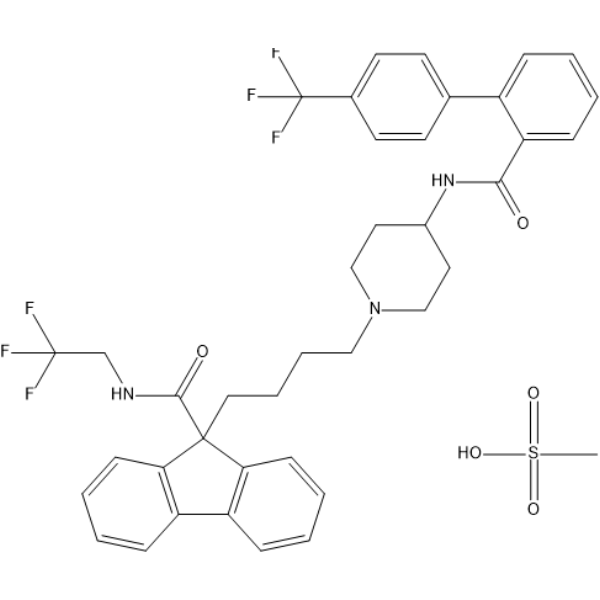
Lomitapide (AEGR-733; BMS-201038) mesylate is an orally active microsomal triglyceride transfer protein (MTP) inhibitor and a selective mTORC1 inhibitor with lipid-lowering activity and BBB permeability. Lomitapide mesylate significantly reduces plasma LDL levels by blocking the assembly and secretion of very-low-density lipoprotein (VLDL). Lomitapide mesylate inhibits mTORC1 in an ATP-dependent manner, thereby inducing AMPK-independent autophagic cell death and suppressing cancer cell growth and apoptosis. Lomitapide mesylate also enhances tumor infiltration of CD8 + T cells. In addition, Lomitapide mesylate inhibits HDAC, improves endothelial function, effectively alleviates vascular inflammation and oxidative stress, and exerts neuroprotective effects in a cerebral ischemia/reperfusion injury model. Lomitapide mesylate can be used in research on related diseases such as colorectal cancer, breast cancer, melanoma, ischemic stroke, and familial hypercholesterolemia .
loading...
    loading...
5
5 Cited Publications
Cat. No.: HY-112540
CAS No.: 541-50-4
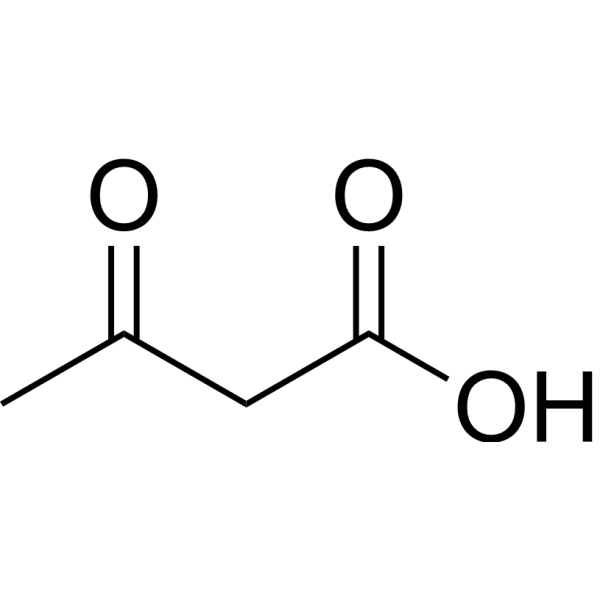
Acetoacetic acid is an oxidative stress inducer that affects the antioxidant enzyme system and lipoprotein metabolism. Acetoacetic acid induces oxidative stress by decreasing the mRNA expression and activity of superoxide dismutase (SOD), catalase (CAT), and glutathione peroxidase (GSH-Px), increasing MDA content, and inhibiting very low density lipoprotein (VLDL) assembly by downregulating apolipoprotein ApoB100, ApoE, and low density lipoprotein receptor (LDLR), leading to triglyceride (TG) accumulation in hepatocytes. Acetoacetic acid can be used to study metabolic diseases .
loading...
    loading...
5
5 Cited Publications
Cat. No.: HY-112540A
CAS No.: 3483-11-2
Purity:  ≥98.0%
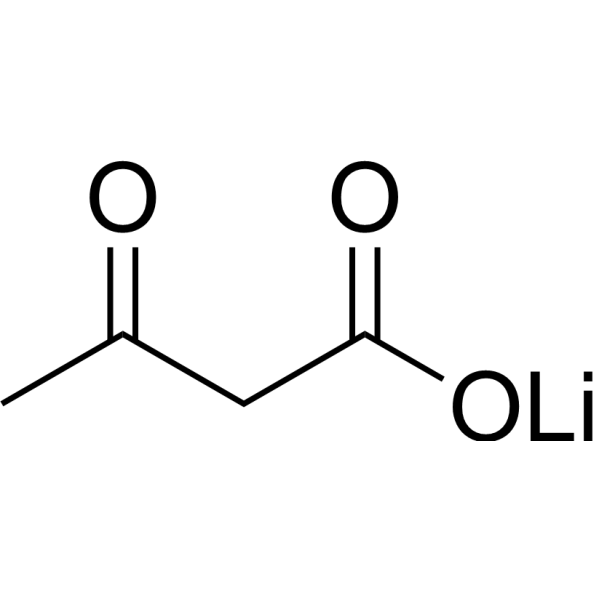
Acetoacetic acid lithium is an oxidative stress inducer that affects the antioxidant enzyme system and lipoprotein metabolism. Acetoacetic acid lithium induces oxidative stress by decreasing the mRNA expression and activity of superoxide dismutase (SOD), catalase (CAT), and glutathione peroxidase (GSH-Px), increasing MDA content, and inhibiting very low density lipoprotein (VLDL) assembly by downregulating apolipoprotein ApoB100, ApoE, and low density lipoprotein receptor (LDLR), leading to triglyceride (TG) accumulation in hepatocytes. Acetoacetic acid lithium can be used to study metabolic diseases .
loading...
    loading...
Cat. No.: HY-112540B
CAS No.: 623-58-5
Purity:  ≥98.0%
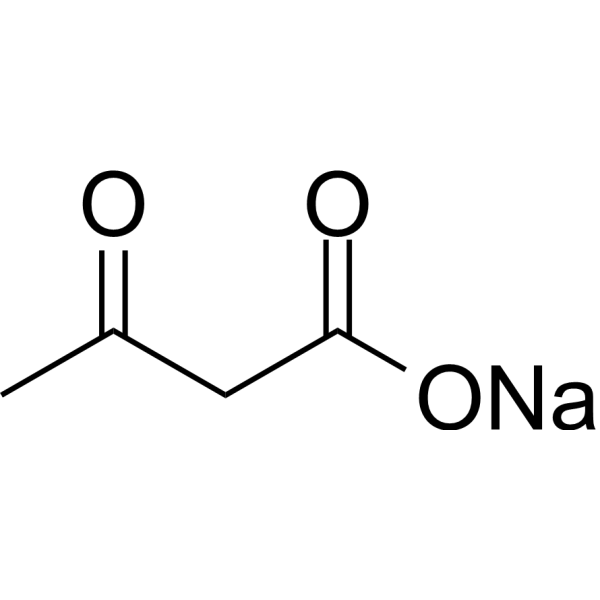
Acetoacetic acid sodium is an oxidative stress inducer that affects the antioxidant enzyme system and lipoprotein metabolism. Acetoacetic acid sodium induces oxidative stress by decreasing the mRNA expression and activity of superoxide dismutase (SOD), catalase (CAT), and glutathione peroxidase (GSH-Px), increasing MDA content, and inhibiting very low density lipoprotein (VLDL) assembly by downregulating apolipoprotein ApoB100, ApoE, and low density lipoprotein receptor (LDLR), leading to triglyceride (TG) accumulation in hepatocytes. Acetoacetic acid sodium can be used to study metabolic diseases .
loading...
    loading...
Cat. No.: HY-P1123
CAS No.: 87272-20-6
MEDICA16 is an orally active acetyl-CoA carboxylase and ATP-citrate lyase inhibitor. MEDICA16 limits the acetyl-CoA supply for acetyl-CoA carboxylase, inhibits acetyl-CoA carboxylase activity, exerts citrate-competitive inhibitory effects on ATP-citrate lyase, and reduces hepatic AMPK activity. MEDICA16 can be used in research related to insulin resistance, hyperlipidemia, and obesity .
loading...
    loading...
Cat. No.: HY-12089
CAS No.: 262352-17-0
Purity:  99.88%
Synonyms: CP-529414
Target:  

CETP

Research Areas:  

Endocrinology

Torcetrapib (CP-529414) is a selective, potent cholesteryl ester transfer protein (CETP) inhibitor. A typical inhibition curve for whole human plasma, having a CETP concentration of 37 nM .
loading...
    loading...
Cat. No.: HY-101529
CAS No.: 75689-93-9
Purity:  99.03%
Synonyms: HOE-402free base
Target:  

LDLR

Research Areas:  

Cardiovascular Disease

Imanixil (HOE-402 free base) is an orally active LDL receptor (LDLR) inducer. Imanixil can reduce cholesterol levels by inhibiting VLDL-lipid production. Imanixil can delay atherosclerosis profession. Imanixil can be used for the research of cardiovascular disease, such as atherosclerosis .
loading...
    loading...
Cat. No.: HY-P990143

Target:  

LDLR

Research Areas:  

Others

Anti-Mouse/Rat/Bovine VLDL-R Antibody (IgG-6A6) is an anti-mouse/rat/bovine VLDL-R IgG1 monoclonal antibody. Anti-Mouse/Rat/Bovine VLDL-R Antibody (IgG-6A6) can specifically recognize VLDLR type-I and type-II expressed in CHO cells. Anti-Mouse/Rat/Bovine VLDL-R Antibody (IgG-6A6) can be used to detect the expression of VLDLR in different cells and tissues. Anti-Mouse/Rat/Bovine VLDL-R Antibody (IgG-6A6) often used in western blot experiments .
loading...
    loading...
Cat. No.: HY-RS17653
Research Areas:  

Others

Cd320 Mouse Pre-designed siRNA Set A contains three designed siRNAs for Cd320 gene (Mouse), as well as a negative control, a positive control, and a FAM-labeled negative control.

loading...
    loading...
Cat. No.: HY-106278A
CAS No.: 343322-50-9
Target:  

PPAR

Research Areas:  

Metabolic Disease

GW 590735 sodium is a potent and selective PPARα agonist with activity in regulating lipid metabolism. GW 590735 significantly increased high-density lipoprotein (HDL) cholesterol, decreased low-density lipoprotein (LDL) and very low-density lipoprotein (VLDL) cholesterol, and significantly reduced triglycerides. The maximum increases in HDL cholesterol for GW 590735 were 37%, 53% and 84%, respectively, compared with bezafibrate, torcetrapib and GW 590735 .
loading...
    loading...
Cat. No.: HY-112540AR
CAS No.: 3483-11-2
Acetoacetic acid (lithium) (Standard) is the analytical standard of Acetoacetic acid (lithium). This product is intended for research and analytical applications. Acetoacetic acid lithium is an oxidative stress inducer that affects the antioxidant enzyme system and lipoprotein metabolism. Acetoacetic acid lithium induces oxidative stress by decreasing the mRNA expression and activity of superoxide dismutase (SOD), catalase (CAT), and glutathione peroxidase (GSH-Px), increasing MDA content, and inhibiting very low density lipoprotein (VLDL) assembly by downregulating apolipoprotein ApoB100, ApoE, and low density lipoprotein receptor (LDLR), leading to triglyceride (TG) accumulation in hepatocytes. Acetoacetic acid lithium can be used to study metabolic diseases .
loading...
    loading...
Cat. No.: HY-101529R
CAS No.: 75689-93-9
Synonyms: HOE-402free base (Standard)
Research Areas:  

Cardiovascular Disease

Imanixil (Standard) is the analytical standard of Imanixil (HY-101529). This product is intended for research and analytical applications. Imanixil (HOE-402 free base) is an orally active LDL receptor (LDLR) inducer. Imanixil can reduce cholesterol levels by inhibiting VLDL-lipid production. Imanixil can delay atherosclerosis profession. Imanixil can be used for the research of cardiovascular disease, such as atherosclerosis .
loading...
    loading...
Cat. No.: HY-N8353
CAS No.: 149598-71-0
Target:  

Others

Stachybotramide is a natural fungal metabolite with the property of modulating the activity of cholesteryl ester transfer protein (CETP). Stachybotramide stimulates the transfer of cholesteryl esters (CE) from high-density lipoprotein (HDL) to very-low-density lipoprotein (VLDL) and low-density lipoprotein (LDL), increasing the transfer efficiency by 1.3- to 1.5-fold. Stachybotramide slightly reduced the transfer of cholesteryl esters from LDL and VLDL to HDL at 0.5 mM. The effect of Stachybotramide on the transfer of triglycerides (TG) from HDL was not significant. By these results, Stachybotramide was shown to preferentially stimulate the CETP-mediated transfer of cholesteryl esters from HDL to VLDL and LDL .
loading...
    loading...
Cat. No.: HY-18778C
CAS No.: 866399-89-5
Synonyms: TA-8995 hemicalcium; DEZ-001 hemicalcium; AMG-899 hemicalcium
Target:  

CETP PCSK9 LDLR

Research Areas:  

Inflammation/Immunology

Obicetrapib hemicalcium (TA-8995 hemicalcium) is an orally active cholesteryl ester transfer protein (CETP) inhibitor. Obicetrapib hemicalcium shifts the plasma lipoprotein profile toward more HDL-C particles, reduces circulating PCSK9 levels, increases hepatic LDLR expression and LDLR mRNA levels, and promotes hepatic clearance of VLDL remnants. Obicetrapib hemicalcium increases the number of large HDL particles, reduces the number and area of atherosclerotic lesions and alleviates lesion severity, increases the proportion of unaffected arterial segments, improves lesion stability, and promotes regression of aortic root lesions. Obicetrapib hemicalcium also exerts a synergistic effect with Ezetimibe (HY-17376) to reduce non-HDL-C levels and improve atherosclerosis. Obicetrapib hemicalcium can be used in studies related to atherosclerosis and dyslipidemia .
loading...
    loading...
Cat. No.: HY-P76125
Purity:  ≥ 95%, as determined by Bis-Tris PAGE.
Synonyms: Very low-density lipoprotein receptor; VLDL-R
Species:  
Source:  
loading...
    loading...
Cat. No.: HY-P84902
Synonyms: Lipid droplet-regulating VLDL assembly factor AUP1, Ancient ubiquitous protein 1, AUP1

Host:  

Mouse

Application:  

WB, ELISA

Reactivity:  

Human, Mouse

loading...
    loading...
Cat. No.: HY-P78049
Purity:  ≥ 95%, as determined by Bis-Tris PAGE.
Synonyms: VLDL-R; VLDLR; RP11-320E16.1; CHRMQ1; FLJ35024; VLDLRCH
Species:  
Source:  
loading...
    loading...
Cat. No.: HY-P84902A
Synonyms: Lipid droplet-regulating VLDL assembly factor AUP1, Ancient ubiquitous protein 1, AUP1

Host:  

Mouse

Application:  

WB, ELISA

Reactivity:  

Human, Mouse

loading...
    loading...
Cat. No.: HY-P2752A
Target:  

Endogenous Metabolite

Research Areas:  

Metabolic Disease

Lipoprotein lipase, Bovine (EC 3.1.1.34) belongs to the lipase gene family and is a water-soluble enzyme that hydrolyzes triglycerides in lipoproteins (such as those in chylomicrons and very low-density lipoproteins (VLDL)) into two free fatty acid molecules and one monoacylglycerol molecule. Lipoprotein also participates in promoting cellular uptake of chylomicron remnants, cholesterol-rich lipoproteins, and free fatty acids. Lipoprotein requires ApoC-II as a cofactor. Lipoprotein attaches to the luminal surface of capillary endothelial cells via glycosylphosphatidylinositol high-density lipoprotein-binding protein 1 (GPIHBP1) and heparan sulfate proteoglycan.
loading...
    loading...
Cat. No.: HY-P2752B
Target:  

Endogenous Metabolite

Research Areas:  

Metabolic Disease

Lipoprotein Lipase, Burkholderia sp. (EC 3.1.1.34) belongs to the lipase gene family and is a water-soluble enzyme that hydrolyzes triglycerides in lipoproteins (such as those in chylomicrons and very low-density lipoproteins (VLDL)) into two free fatty acid molecules and one monoacylglycerol molecule. Lipoprotein also participates in promoting cellular uptake of chylomicron remnants, cholesterol-rich lipoproteins, and free fatty acids. Lipoprotein requires ApoC-II as a cofactor. Lipoprotein attaches to the luminal surface of capillary endothelial cells via glycosylphosphatidylinositol high-density lipoprotein-binding protein 1 (GPIHBP1) and heparan sulfate proteoglycan.
loading...
    loading...
  • 1

