1. Search Result
Search Result
Results for "

afferent

" in MedChemExpress (MCE) Product Catalog:

20

Inhibitors & Agonists

1

Natural
Products

1

Isotope-Labeled Compounds

Cat. No. Product Name Target Research Areas Chemical Structure
  • HY-N2333
    Resiniferatoxin
    5+ Cited Publications

    (+)-Resiniferatoxin

    TRP Channel Cardiovascular Disease Cancer
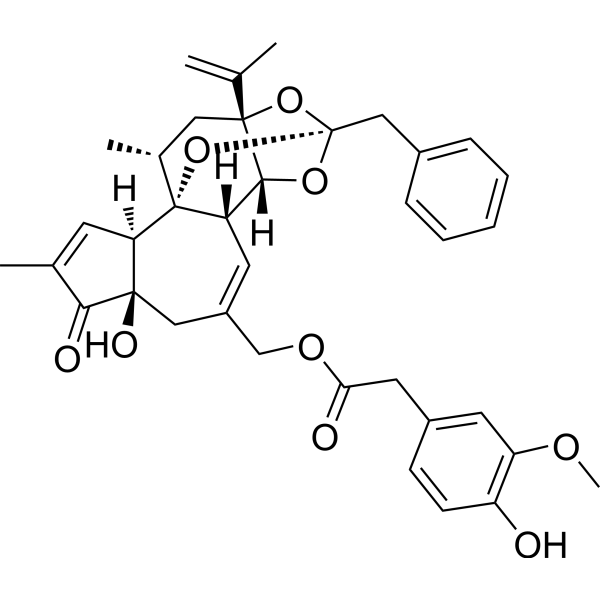
    Resiniferatoxin ((+)-Resiniferatoxin), is a selective agonist of transient receptor potential vanilloid 1 (TRPV1) receptor agonist. Resiniferatoxin can be isolated from the Euphorbia resinifera plant. Resiniferatoxin eliminates TRPV1+ primary sensory afferents and blunt cardiac sympathetic afferent reflex for a relatively long period .
    Resiniferatoxin
  • HY-16689
    VU 0240551
    1 Publications Verification

    Potassium Channel Others
    VU 0240551 is a potent neuronal K-Cl cotransporter KCC2 inhibitor (IC50=560 nM) and is selective versus NKCC1. VU 0240551 also inhibits hERG and L-type Ca 2+ channels. VU 0240551 attenuates GABA-induced hyperpolarization of P cells, produces a positive shift in the P cell GABA reversal potential and enhances P cell synaptic transmission .
    VU 0240551
  • HY-B1032

    (±)-Dropropizine; UCB-196

    Histamine Receptor Neurological Disease
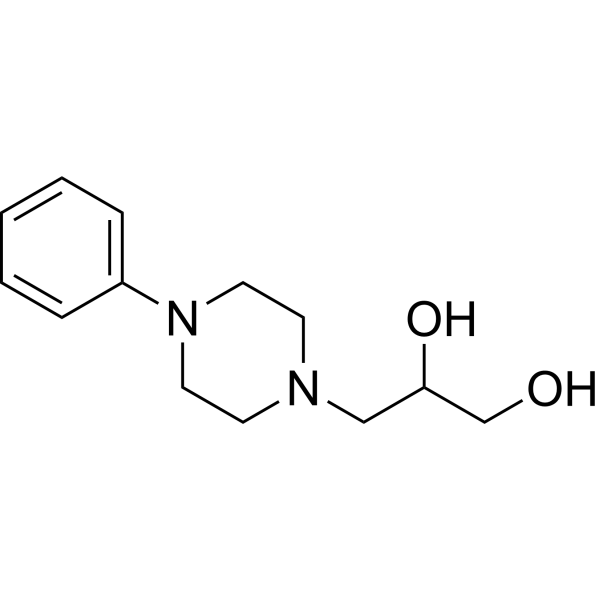
    Dropropizine ((±)-Dropropizine; UCB-196) is an orally effective, peripherally selective antitussive that inhibits the activity of peripheral receptors and afferent nerves in the respiratory tract. Dropropizine acts on the cough reflex pathway, does not pass the blood-brain barrier, and has no central nervous system side effects. Dropropizine mainly regulates the level of sensory neuropeptides and inhibits the afferent signal transmission of the cough reflex, thereby alleviating the symptoms of dry cough, and has both mild local anesthetic and antihistamine activity. Dropropizine is mainly used for symptomatic research on dry cough caused by respiratory diseases .
    Dropropizine
  • HY-168906

    Bradykinin Receptor PI3K Akt TNF Receptor ERK Neurological Disease Inflammation/Immunology
    BI-113823 is an orally active, blood-brain barrier-permeable bradykinin B1 receptor antagonist, with a Ki value of 5.3 nM for human receptors and 13.3 nM for rat receptors. BI-113823 reduces inflammation-induced mechanical hyperalgesia, as well as the mechanical sensitivity of peripheral afferent nerves and spinal nociceptive-specific neurons. BI-113823 alleviates liver fibrosis and portal hypertension, and improves survival in chronic liver disease models. BI-113823 inhibits the activities of monocytes, neutrophils and hepatic stellate cells, as well as the PI3K/Akt signaling pathway. BI-113823 can be used in research related to inflammatory pain, liver fibrosis and portal hypertension .
    BI-113823
  • HY-12143

    GR 205171A

    Neurokinin Receptor Neurological Disease
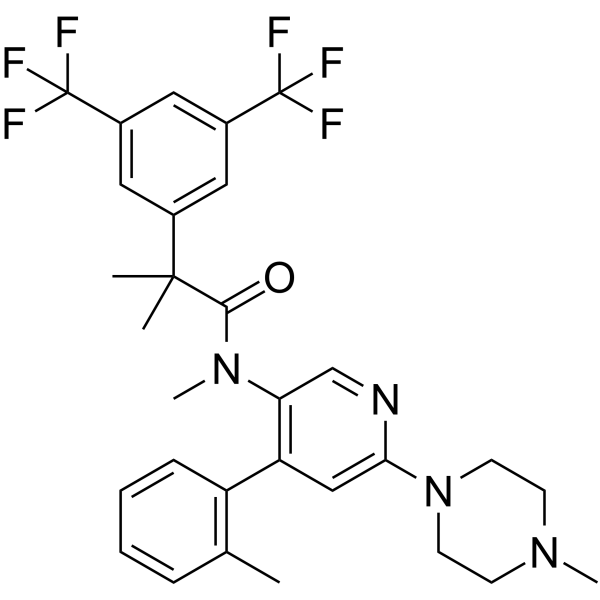
    Vofopitant dihydrochloride (GR 205171A) is a blood-brain barrier-permeable NK1 receptor inhibitor with a pKi of 9.02 in mice. Vofopitant dihydrochloride blocks vomiting-related responses and inhibits pseudoptyalism. Vofopitant dihydrochloride exerts anxiolytic effects, regulates 5-HT receptor function and increases central 5-HT release. Vofopitant dihydrochloride improves hyperarousal symptoms of post-traumatic stress disorder. Vofopitant dihydrochloride can be used in research related to depression, anxiety, vomiting and postoperative nausea and vomiting .
    Vofopitant dihydrochloride
  • HY-116927

    Nucleoside Transporters Apoptosis Neurological Disease
    KW-7158 is a putative afferent nerve inhibitor that can depress vesica-vascular reflexes in rats. KW-7158 is an inhibitor of nucleoside transporter-1 (ENT1/SLC29A1) and acts as an antagonist for overactive bladder (OAB) .
    KW-7158
  • HY-B1032R

    (±)-Dropropizine (Standard); UCB-196 (Standard)

    Others Reference Standards Neurological Disease
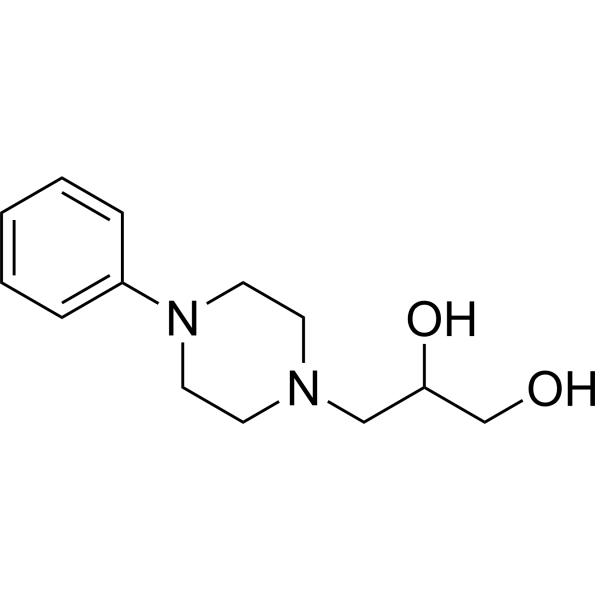
    Dropropizine (Standard) is the analytical standard of Dropropizine. This product is intended for research and analytical applications. Dropropizine ((±)-Dropropizine) is a peripheral antitussive agent that acts by inhibiting cough reflex through its action on the peripheral receptors and their afferent conductors .
    Dropropizine (Standard)
  • HY-Y1876

    Drug Derivative Others
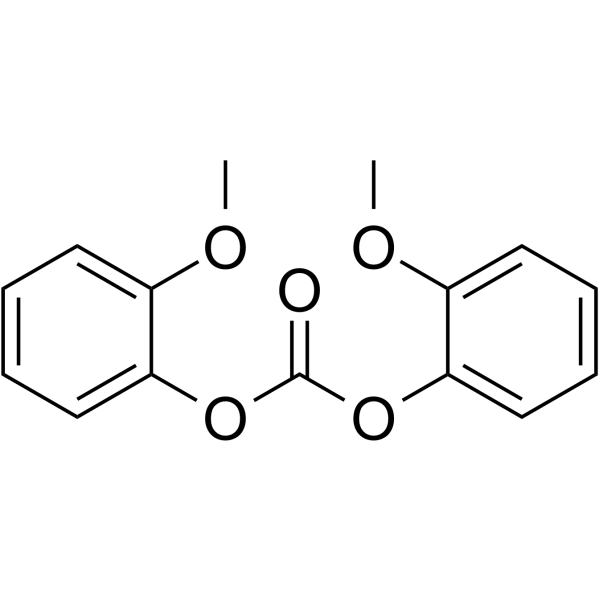
    Guaiacol Carbonate acts as an expectorant by virtue of a reflex from the stomach by way of the afferent gastric nerves to the medullary centres and thenperipherally again to the respiratory tract .
    Guaiacol Carbonate
  • HY-147383

    Potassium Channel Endocrinology
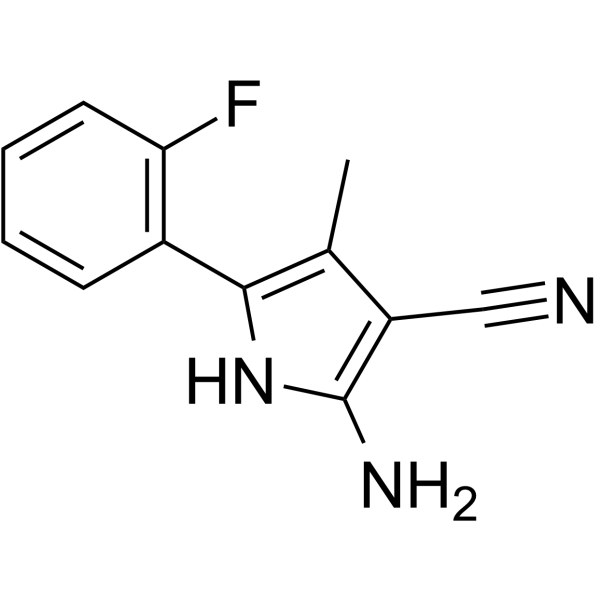
    NS-8, a pyrrole derivative, activates the Ca 2+-sensitive k +-channel. NS-8 can suppress the micturition reflex by decreasing afferent pelvic nerve activity. NS-8 can be used in the research of urinary frequency and incontinence .
    NS-8
  • HY-W767656

    (±)-Dropropizine-d4; UCB-196-d4

    Isotope-Labeled Compounds Others Neurological Disease
    Dropropizine-d4 ((±)-Dropropizine-d4) is deuterium labeled Dropropizine. Dropropizine ((±)-Dropropizine) belongs to the phenylpiperazine group of organic compounds. Dropropizine is a peripheral antitussive agent that acts by inhibiting cough reflex through its action on the peripheral receptors and their afferent conductors .
    Dropropizine-d4
  • HY-14828

    SMP-986

    mAChR Metabolic Disease
    Afacifenacin (SMP-986) is a potent and orally active muscarinic receptor antagonist. Afacifenacin inhibits the bladder afferent pathway through the sodium-channel blockade, increasing volume, and reducing the frequency of urination and incontinence. Afacifenacin has the potential for the research of overactive bladder (OAB) .
    Afacifenacin
  • HY-101077

    P2X Receptor Inflammation/Immunology
    Iso-PPADS tetrasodium is a P2X-purinoceptor antagonist. Iso-PPADS tetrasodium inhibits P2X1 and P2X3 receptor with IC50s of 43 nM and 84 nM. Iso-PPADS tetrasodium is protective against ventilator-induced brain injury (VIBI) .
    Iso-PPADS tetrasodium
  • HY-121406

    (Z)-FRG-8813

    Histamine Receptor Inflammation/Immunology
    (Z)-Lafutidine ((Z)-FRG-8813) is a potent histamine H2 receptor antagonist. (Z)-Lafutidine shows anti-secretory and gastroprotective activities .
    (Z)-Lafutidine
  • HY-111011

    JNJ 38488502 acetate; FE 200665 acetate

    Opioid Receptor Neurological Disease
    CR 665 (JNJ 38488502) acetate is a kappa-opioid agonist that may effectively treat visceral pain by activating receptors on afferent nerves within the gut. CR 665 acetate exhibits peripheral selectivity, differentiating its pharmacokinetic profile from that of non-selective opioids like oxycodone. CR 665 acetate has demonstrated a beneficial effect on visceral pain tolerance thresholds without the delayed analgesic response characteristic of opioids that penetrate the brain. CR 665 acetate is proposed for use in managing postoperative pain due to its pain-relieving properties.
    CR 665 acetate
  • HY-106909A

    KAE-393

    5-HT Receptor Cardiovascular Disease
    YM114 (KAE-393) is a highly potent and selective (5-HT)3-receptor antagonist that does not affect Veratridine (HY-N6691)- or electrical stimulation-induced bradycardia in anesthetized rats. YM114 inhibits 2-methyl-5-HT (HY-19358)-induced Bezold-Jarisch reflex, which originates from (5-HT)3-receptor located on the endings of vagal afferent nerves in the heart .
    YM114
  • HY-119820

    SR57746A free base

    Akt Dopamine Receptor Trk Receptor 5-HT Receptor PKC JNK ERK Neurological Disease
    Xaliproden (SR57746) free base is an orally active, highly selective 5-HT1A receptor agonist. Xaliproden free base activates pertussis toxin-sensitive G protein-coupled signaling cascades, as well as the PKC, ERK1/ERK2, Akt and p21 Ras/MEK-1 pathways. Xaliproden free base also downregulates the JNK/p66/c-Jun signaling pathway, induces phosphorylation of the shc adaptor protein, regulates extracellular dopamine and 5-HT levels, and induces [ 35S]GTPγS labeling in rat brain structures rich in 5-HT1A receptors. Xaliproden free base exerts neurotrophic, neuroprotective, renoprotective, anti-inflammatory, anti-apoptotic, anti-fibrotic and analgesic effects. Xaliproden free base also enhances NGF-induced neurite outgrowth, promotes motor neuron survival, attenuates renal tubular injury and inhibits chemotherapy-induced mechanical allodynia, without activating or altering NGF-induced TrkA receptor activation. Xaliproden free base can be used in the research of motor neuron disease, diabetic nephropathy, chemotherapy-induced peripheral neuropathy, amyotrophic lateral sclerosis, Alzheimer's disease, acute tonic nociceptive pain, inflammatory pain, depression and anxiety .
    Xaliproden free base
  • HY-120059

    Potassium Channel Neurological Disease
    NS4591 is a modulator of calcium-activated potassium channels with activity that enhances small (SK) and intermediate (IK) conductivity. NS4591 doubled IK-mediated currents in whole-cell patch-clamp experiments at a concentration of 45 +/- 6 nM, and doubled SK3-mediated currents at a concentration of 530 +/- 100 nM. NS4591 inhibits the number of action potentials generated by suprathreshold depolarizing pulses in acutely isolated bladder primary afferent neurons. NS4591 also reduced carbakol-induced detrusor ring contraction in the rat bladder, demonstrating sensitivity to apamin .
    NS4591
  • HY-182513

    Prostaglandin Receptor Others Inflammation/Immunology
    ONO-8539 is an orally active prostanoid EP1 receptor antagonist with competitive, insurmountable binding and slow receptor dissociation for long-duration inhibition. ONO-8539 modulates afferent nerve function related to bladder activity, inhibits detrusor overactivity-related contractions, decreases nonvoiding contractions and voiding duration, and increases uroflow rate with ATP (HY-B2176)-induced detrusor overactivity. ONO-8539 attenuates acid-induced heartburn symptoms, extends time to first heartburn sensation, and prevents primary hypersensitivity after distal esophageal acidification. ONO-8539 can be used for the research of overactive bladder and gastroesophageal reflux disease .
    ONO-8539
  • HY-108459

    TRP Channel Neurological Disease
    6-Iodonordihydrocapsaicin is a TRPV1 antagonist. 6-Iodonordihydrocapsaicin functionally blocks TRPV1-mediated responses, including capsaicin-induced ion currents in dorsal root ganglion neurons and distension-induced firing of jejunal spinal afferent fibers in mice. 6-Iodonordihydrocapsaicin can be used in the research of visceral pain and anxiety disorders .
    6-Iodonordihydrocapsaicin
  • HY-105203

    Others Neurological Disease
    MS-322 is an orally active centrally acting muscle relaxant. MS-322 can dose-dependently inhibit spinal reflex potentials, reduce neuronal excitability and muscle afferent discharges, and so on in rats. In addition, MS-322 has relatively weak inhibitory effects on other central nervous system pathways and no effect on the neuromuscular junction .
    MS-322

Inquiry Online

Your information is safe with us. * Required Fields.

Salutation


Country or Region *

Applicant Name *


Organization Name *

Department *


Email Address *


Product Name *

Cat. No.


Requested quantity *

Phone Number *


Remarks

Inquiry Online

Inquiry Information

Product Name:
Cat. No.:
Quantity:
MCE Japan Authorized Agent:

