Search Result
Results for "
antiallergic agent
" in MedChemExpress (MCE) Product Catalog:
2
Isotope-Labeled Compounds
| Cat. No. |
상품명 |
Target |
연구분야 |
Chemical Structure |
-
- HY-N0575
-
-
-
- HY-N0201
-
|
|
TNF Receptor
Toll-like Receptor (TLR)
JAK
STAT
|
Cancer
|
|
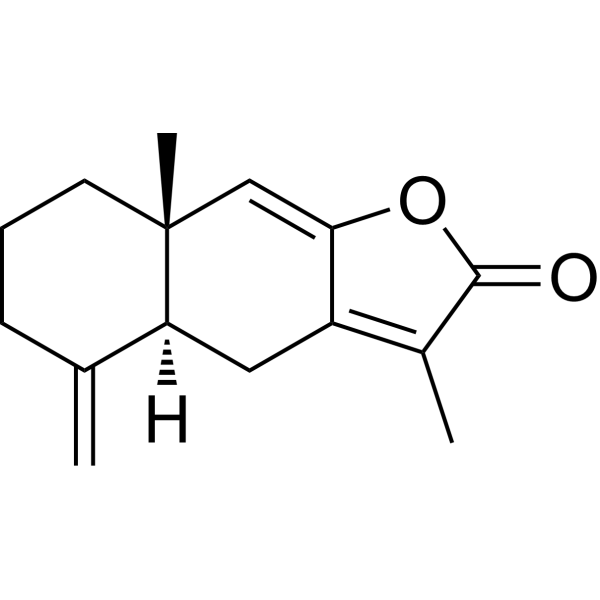
Atractylenolide I is a sesquiterpene derived from the rhizome of Atractylodes macrocephala, possesses diverse bioactivities, such as neuroprotective, anti-allergic, anti-inflammatory and anticancer properties. Atractylenolide I reduces protein levels of phosphorylated JAK2 and STAT3 in A375 cells, and acts as a TLR4-antagonizing agent.
|
-
-
- HY-13693
-
|
Sch32088
|
Glucocorticoid Receptor
|
Inflammation/Immunology
Endocrinology
Cancer
|
|
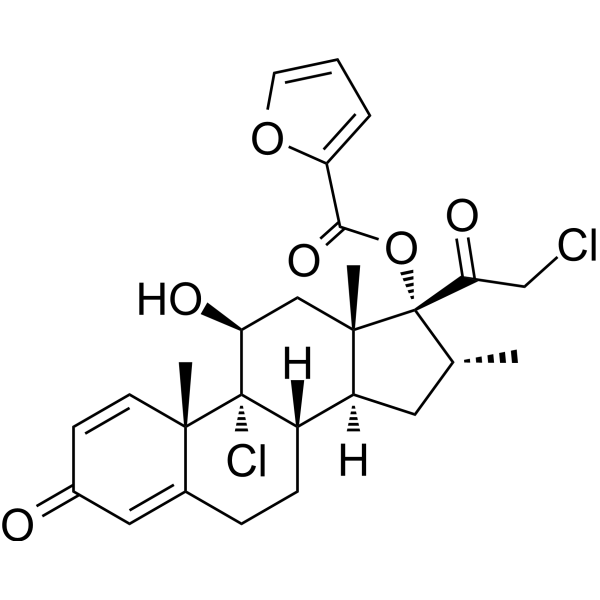
Mometasone furoate (Sch32088) is a glucocorticoid receptor agonist with anti-inflammatory and anti-allergic activity. Mometasone furoate acts as a corticosteroid agent and used for topical applications in chronic skin eczema and airway inflammation management of asthma in vivo
|
-
-
- HY-12642
-
|
|
Parasite
Bacterial
TNF Receptor
Interleukin Related
|
Infection
Metabolic Disease
Inflammation/Immunology
|
|
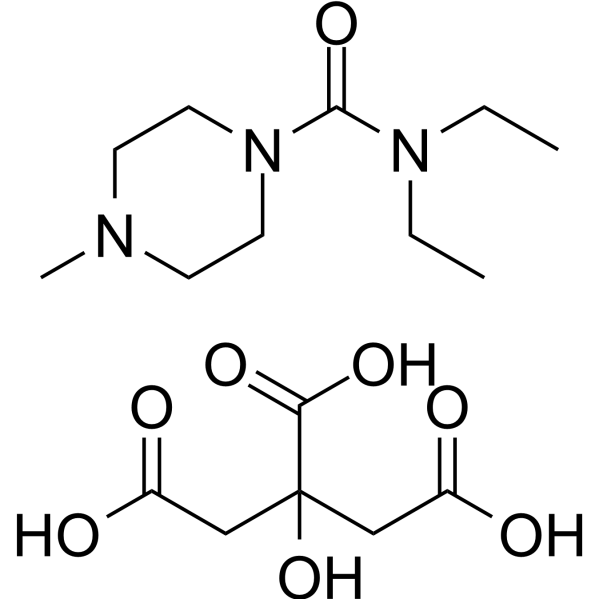
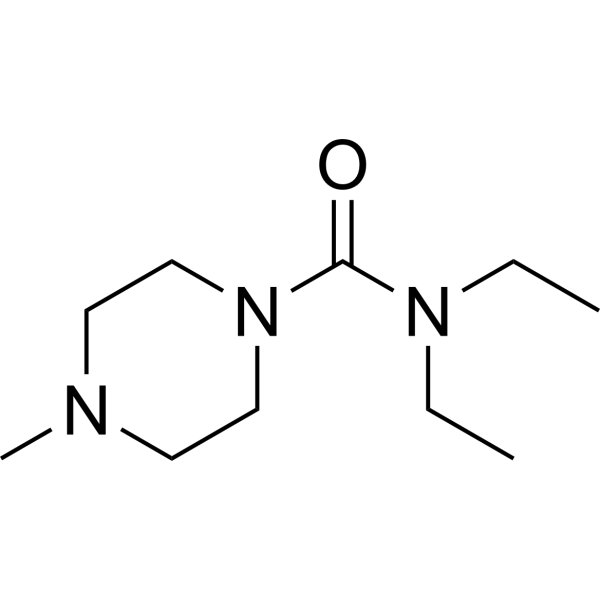
Diethylcarbamazine citrate is an orally active microfilaricidal agent used originally in onchocerciasis and lymphatic filiariasis. Diethylcarbamazine citrate reduces eosinophil trafficking to the lung tissue and exerts anti-allergic effects. Diethylcarbamazine citrate reduces serum levels of leptin, TNF-α, IL-6, MCP-1, glucose, insulin, and triglycerides, and ameliorates insulin resistance without altering body, liver, or adipose tissue weights. Diethylcarbamazine citrate enhances reactive oxygen intermediate expression by polymorphonuclear neutrophils, increases lymphocyte proliferation, and inhibits actinomycetoma lesion development. Diethylcarbamazine citrate can be used for the researches of bronchial asthma, insulin resistance and infection .
|
-
-
- HY-B0538A
-
-
-
- HY-B0970
-
|
4-Diphenylmethoxy-1-methylpiperidine hydrochloride
|
Histamine Receptor
|
Neurological Disease
Endocrinology
|
|
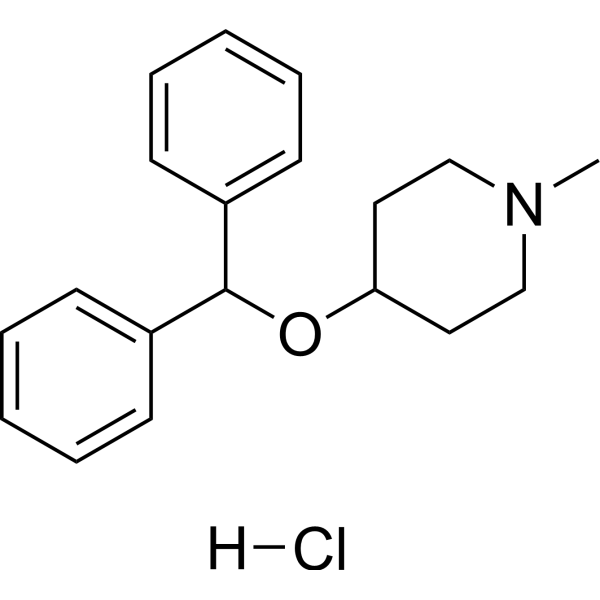
Diphenylpyraline hydrochloride is a potent histamine H1?receptor antagonist. Diphenylpyraline hydrochloride acts as an orally active antihistamine agent?with antimuscarinic and antiallergic effects. Diphenylpyraline hydrochloride can be used for the relief of allergic conditions including rhinitis and hay fever, and in pruritic skin disorders in vivo.
|
-
-
- HY-17002
-
|
IPD 1151T
|
Interleukin Related
|
Inflammation/Immunology
|
|
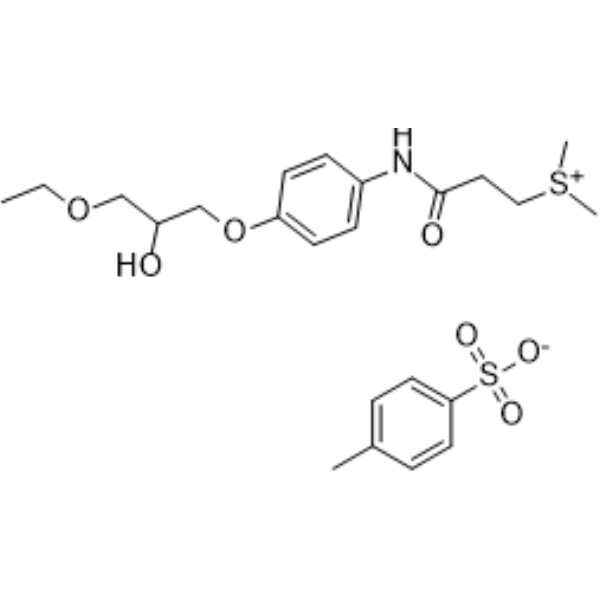
Suplatast Tosilate (IPD 1151T) is an orally active Th2 cytokine inhibitor which can inhibit both IL-4 and IL-5 production from Th2 cells and suppress IgE synthesis. Suplatast Tosilate is an anti-allergic agent. Suplatast Tosilate has antiasthmatic, anti-inflammatory and antifibrotic activity .
|
-
-
- HY-100657
-
|
meta-MDL-16455; meta-Terfenadine carboxylate
|
Drug Metabolite
|
Inflammation/Immunology
|
|
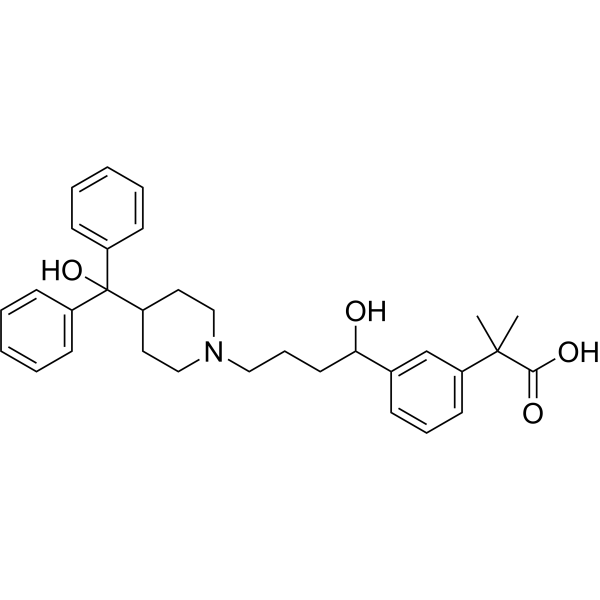
meta-Fexofenadine (meta-MDL-16455) is an impurity of Fexofenadine . Fexofenadine, a H1R antagonist, is an anti-allergic agent used in seasonal allergic rhinitis and chronic idiopathic urticarial .
|
-
-
- HY-108259
-
|
|
PGE synthase
|
Inflammation/Immunology
|
|
HQL-79, a potent, selective and orally active human hematopoietic prostaglandin D synthase (H-PGDS) inhibitor, highly selectively inhibits the synthesis of PGD2, and acts as an anti-allergic agent, with a Kd of 0.8 μM and an IC50 of 6 μM. Shows no obvious effect on COX-1, COX-2, m-PGES, or L-PGDS .
|
-
-
- HY-12642A
-
|
|
Parasite
Bacterial
TNF Receptor
Interleukin Related
|
Infection
Metabolic Disease
Inflammation/Immunology
|
|
Diethylcarbamazine is an orally active microfilaricidal agent used originally in onchocerciasis and lymphatic filiariasis. Diethylcarbamazine reduces eosinophil trafficking to the lung tissue and exerts anti-allergic effects. Diethylcarbamazine reduces serum levels of leptin, TNF-α, IL-6, MCP-1, glucose, insulin, and triglycerides, and ameliorates insulin resistance without altering body, liver, or adipose tissue weights. Diethylcarbamazine enhances reactive oxygen intermediate expression by polymorphonuclear neutrophils, increases lymphocyte proliferation, and inhibits actinomycetoma lesion development. Diethylcarbamazine can be used for the researches of bronchial asthma, insulin resistance and infection .
|
-
-
- HY-109544
-
|
MY-5116
|
Histamine Receptor
|
Inflammation/Immunology
|
|
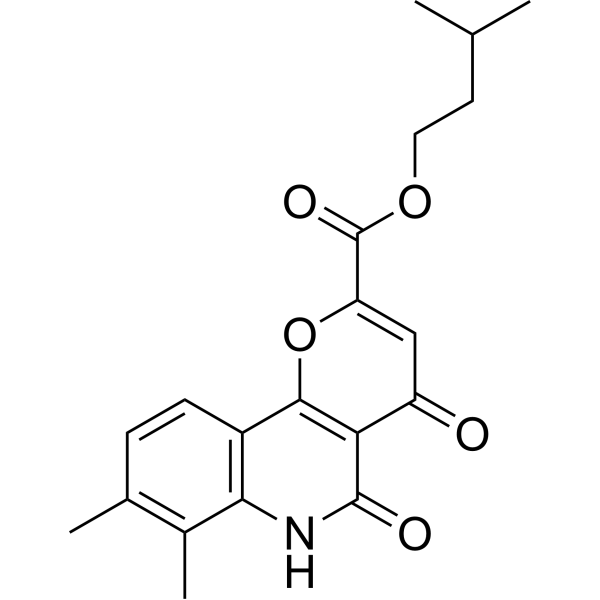
Repirinast (MY-5116) is an orally active anti-allergic agent. Repirinast inhibits histamine release. Repirinast can be used in the research of bronchial asthma .
|
-
-
- HY-N16579
-
|
|
Others
|
Inflammation/Immunology
|
|
(+)-Catechin 3-O-β-D-glucopyranoside (Compound 13) is an anti-allergic agent found in Edulis Superba. (+)-Catechin 3-O-β-D-glucopyranoside can be used for the research of inflammation and immunology .
|
-
-
- HY-N3007A
-
|
|
Others
|
Inflammation/Immunology
|
|
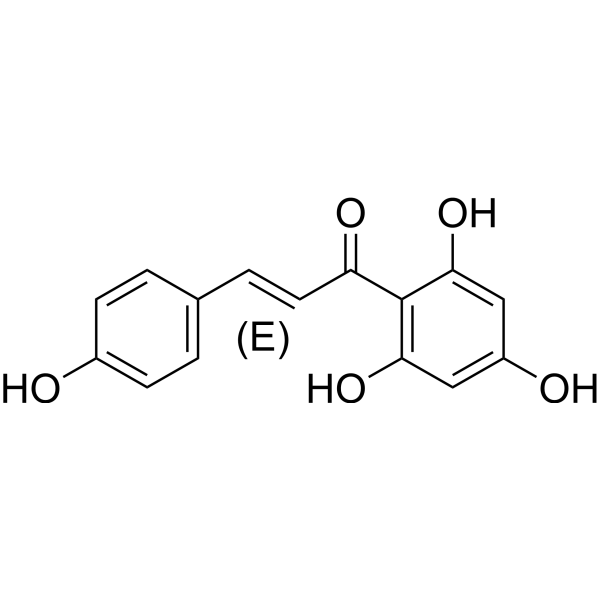
(E)-Naringenin chalcone is an orally active anti-allergic agent. (E)-Naringenin chalcone also has antioxidant, anti-inflammatory activities. (E)-Naringenin chalcone can improve adipocyte functions. (E)-Naringenin chalcone inhibits histamine release from rat peritoneal mast cell .
|
-
-
- HY-137941
-
|
|
Histamine Receptor
Caspase
NF-κB
p38 MAPK
|
Inflammation/Immunology
|
|
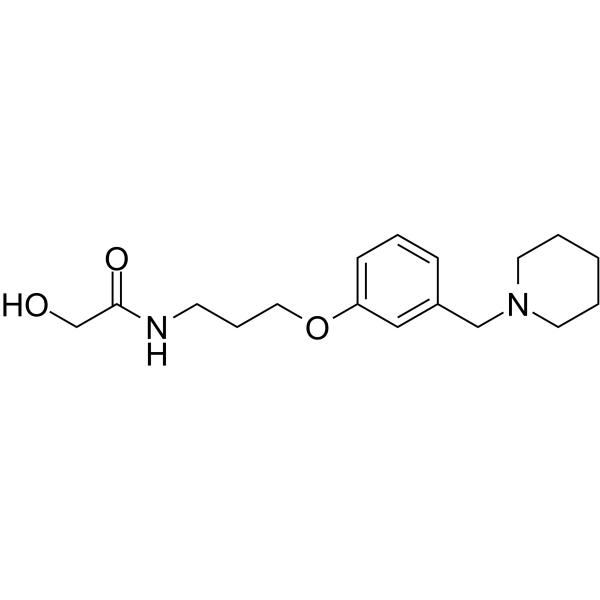
Roxatidine is an active metabolite of Roxatidine acetate hydrochloride, is an orally active histamine H2-receptor antagonist. Roxatidine, an anti-ulcer agent, suppresses histamine release (thus inhibiting proton secretion) and inhibits the production of VEGF-1, an important marker of inflammation and angiogenesis. Anti-allergic inflammatory effect. Roxatidine is promising for research of gastric and duodenal ulcers .
|
-
-
- HY-106481
-
|
|
GPR35
Histamine Receptor
|
Inflammation/Immunology
|
|
Bufrolin is a Cromoglycate (histamine release inhibitor) analog and a high potency agonist of GPR35. Bufrolin promotes interactions between β-arrestin-2 and either human GPR35a or rat GPR35. Bufrolin also serves as antiallergic mast cell stabilizer and inhibit an anti-inflammatory response inducible by the internalization peptide. Bufrolin acts as an anti-inflammatory agent to be used in research of delivering pharmacol linked with internalization peptide .
|
-
-
- HY-U00133
-
|
|
Drug Derivative
|
Inflammation/Immunology
|
|
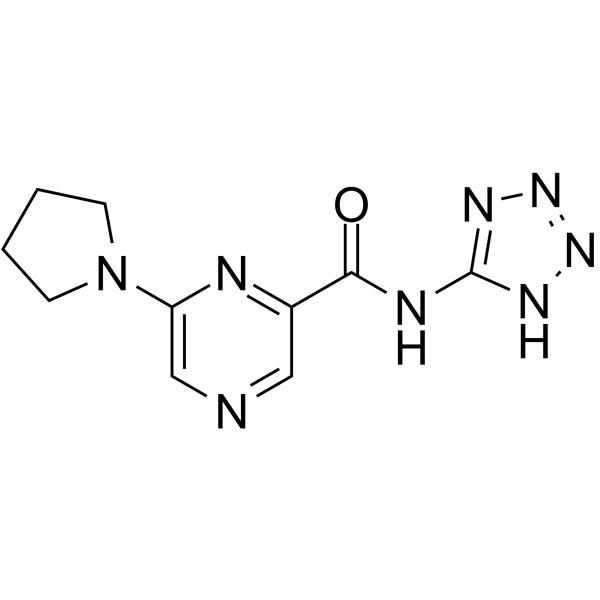
HSR6071, a pyrazinecarboxamide derivative, is an orally active and potent antiallergic agent. HSR6071 potently inhibits the experimental asthma in rat models .
|
-
-
- HY-106358
-
|
CR 2039 free base; Dizolast free base
|
Phosphodiesterase (PDE)
|
Inflammation/Immunology
|
|
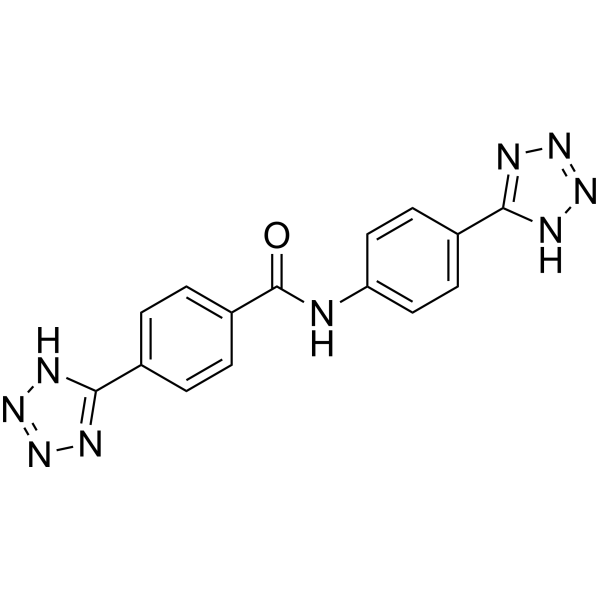
Andolast (CR 2039) (free base) is an anti-allergic agent. Andolast can inhibit cAMP-phosphodiesterase with an IC50 value of 50 μM. Andolast can be used for the research of asthma .
|
-
-
- HY-13218
-
|
WP-871
|
Histamine Receptor
|
Inflammation/Immunology
|
|
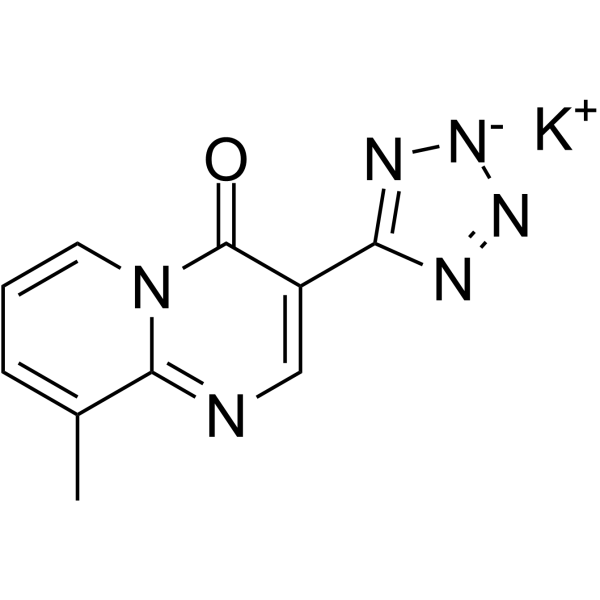
Acitazanolast is an orally active antiallergic agent, can inhibit histamine release. Acitazanolast can be used in study of type I anaphylaxis (immediate) caused by IgE antibodies .
|
-
-
- HY-106358A
-
|
CR 2039; Dizolast
|
Phosphodiesterase (PDE)
|
Inflammation/Immunology
|
|
Andolast (CR 2039) is an anti-allergic agent. Andolast can inhibit cAMP-phosphodiesterase with an IC50 value of 50 μM. Andolast can be used for the research of asthma .
|
-
-
- HY-13693R
-
|
Sch32088 (Standard)
|
Reference Standards
Glucocorticoid Receptor
|
Inflammation/Immunology
Endocrinology
Cancer
|
|
Mometasone furoate (Standard) is the analytical standard of Mometasone furoate. This product is intended for research and analytical applications. Mometasone furoate (Sch32088) is a glucocorticoid receptor agonist with anti-inflammatory and anti-allergic activity. Mometasone furoate acts as a corticosteroid agent and used for topical applications in chronic skin eczema and airway inflammation management of asthma in vivo
|
-
-
- HY-115723
-
|
|
Src
|
Inflammation/Immunology
|
|
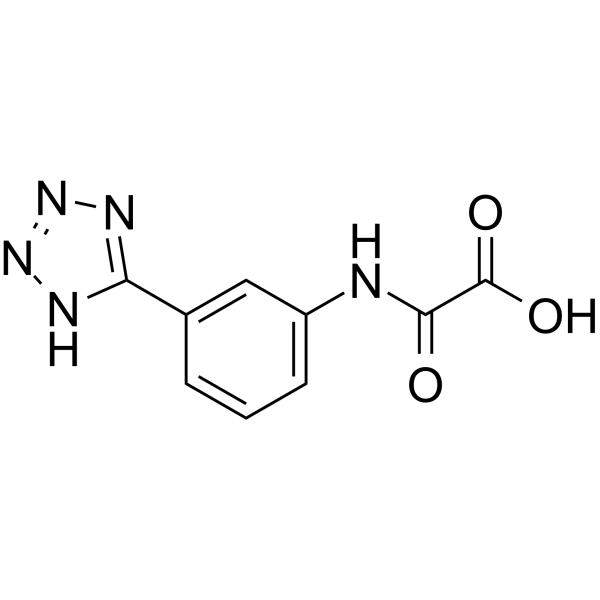
Antiallergic agent-1, a Src-family kinase inhibitor, may serve as a new valuable lead compound for future antiallergic agent discovery. Antiallergic agent-1 is a click chemistry reagent, it contains an Alkyne group and can undergo copper-catalyzed azide-alkyne cycloaddition (CuAAc) with molecules containing Azide groups.
|
-
-
- HY-13405
-
|
RHC 2592-A
|
Histamine Receptor
|
Inflammation/Immunology
|
|
Tiaramide (RHC 2592-A) hydrochloride is an analgesic agent with antiallergic activity, and is also a non-steroidal, anti-inflammatory compound. Tiaramide hydrochloride inhibits histamine release .
|
-
-
- HY-131274
-
|
|
Drug Metabolite
|
Others
|
|
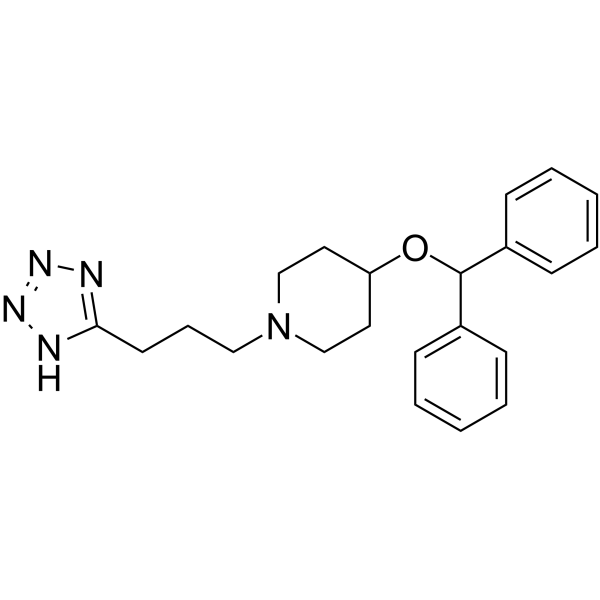
Fexofenadine Impurity F is the impurity of Fexofenadine. Fexofenadine, a H1R antagonist, is an anti-allergic agent used in seasonal allergic rhinitis and chronic idiopathic urticarial .
|
-
-
- HY-145891
-
-
-
- HY-105030
-
|
F 1865
|
Biochemical Assay Reagents
|
Inflammation/Immunology
|
|
Tioxamast is an anti-allergic agent. Tioxamast can inhibit the synthesis and release of allergy mediators. Tioxamast blocks passive pulmonary anaphylactic shock induced by antigen aerosol in guinea-pig model .
|
-
-
- HY-N0575R
-
|
(+)-Pinocoembrin (Standard); Dihydrochrysin (Standard); Galangin flavanone (Standard)
|
Reference Standards
Bacterial
Reactive Oxygen Species (ROS)
Autophagy
|
Infection
Inflammation/Immunology
Cancer
|
|
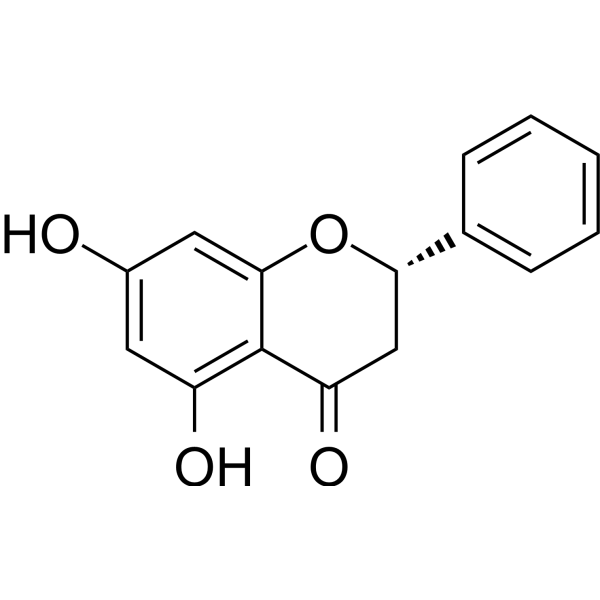
Pinocembrin (Standard) is the analytical standard of Pinocembrin. This product is intended for research and analytical applications. Pinocembrin ((+)-Pinocoembrin) is a flavonoid found in propolis, acts as a competitive inhibitor of histidine decarboxylase, and is an effective anti-allergic agent, with antioxidant, antimicrobial and anti-inflammatory properties .
|
-
-
- HY-N15718
-
|
|
Others
|
Inflammation/Immunology
|
|
Dichotomine D is a β-carboline alkaloid found in the roots of Stellaria dichotoma. Dichotomine D acts as an antiallergic agent. Dichotomine D is promising for research of type I allergic reactions .
|
-
-
- HY-106076
-
|
Eclazolast; CHBZ
|
Histamine Receptor
|
Inflammation/Immunology
|
|
REV 2871 (Eclazolast; CHBZ) is a potent and oral activity antiallergic agent. REV 2871 also is an irreversibility histamine release (HR) inhibitor .
|
-
-
- HY-180165
-
|
|
Calcium Channel
Interleukin Related
|
Cardiovascular Disease
Inflammation/Immunology
|
|
Antiallergic agent-5 (Compound 4f) is an antiallergic agent. Antiallergic agent-5 suppresses Ca 2+ influx. Antiallergic agent-5 suppresses IgE/Ag-induced release of both IL-6 and TNF-α. Antiallergic agent-5 inhibits mast cell degranulation. Antiallergic agent-5 attenuates passive cutaneous anaphylaxis in mice and reduces vascular leakage .
|
-
-
- HY-106924A
-
-
-
- HY-123013
-
-
-
- HY-U00168
-
-
-
- HY-125360
-
-
-
- HY-106645
-
-
-
- HY-137863
-
-
-
- HY-N1221
-
|
|
Others
|
Inflammation/Immunology
|
|
Stigmast-4-en-3,6-dione is an anti-inflammatory and anti-allergic agent which can be extracted from Hibiscus cannabinus and Piper betle .
|
-
-
- HY-B0801AS
-
|
MDL-16455-d10 hydrochloride; Terfenadine carboxylate-d10 hydrochloride
|
Isotope-Labeled Compounds
Histamine Receptor
|
Inflammation/Immunology
Endocrinology
|
|
Fexofenadine-d10 (hydrochloride) is deuterium labeled Fexofenadine (hydrochloride). Fexofenadine hydrochloride (MDL-16455 hydrochloride), a H1R antagonist, is an anti-allergic agent used in seasonal allergic rhinitis and chronic idiopathic urticarial (person aged ≥16 years) .
|
-
-
- HY-116609
-
|
|
Interleukin Related
|
Inflammation/Immunology
|
|
C6 L-threo Ceramide is a bioactive sphingolipid and cell-permeable analog of naturally occurring ceramides . C6 L-threo Ceramide significantly inhibits IL-4 production in T cells. Anti-allergic agents .
|
-
-
- HY-123432
-
|
|
Histamine Receptor
|
Inflammation/Immunology
|
|
AHR-13268D is an oral active antiallergic and antihistaminic agent, with bioavailable approximately 88%. AHR-13268D is a potent inhibitor of histamine release from rat peritoneal mast cells, with the IC50 of 0.51 nM .
|
-
-
- HY-107431
-
|
|
Histamine Receptor
|
Inflammation/Immunology
|
|
Diphenylpyraline is a potent histamine H1 receptor antagonist. Diphenylpyraline acts as an orally active antihistamine agent with antimuscarinic and antiallergic effects. Diphenylpyraline can be used for the research of allergic diseases, including rhinitis and hay fever, and pruritic skin disorders et.al .
|
-
-
- HY-119832
-
|
EGIS-2062 free acid; EGYT-2062 free acid
|
Histamine Receptor
|
Inflammation/Immunology
|
|
Setastine (EGIS-2062 (free acid); EGYT-2062 (free acid) is an orally effective, non-sedative and long acting anti-allergic agent. Setastine possesses potent histamine Hi-receptor blocking properties and can be used for allergies and rhinitis research [1]<.
|
-
-
- HY-114538
-
|
|
TNF Receptor
|
Cardiovascular Disease
Inflammation/Immunology
|
|
Asobamast is a potent, orally active antiallergic agent that inhibits ige mediated passive pulmonary allergic responses in rats (ED50=4.7 mg/kg) and inhibits antigen-induced mediator release from sensitized guinea pig lung fragments .
|
-
-
- HY-100657S
-
|
meta-MDL-16455-d6; meta-Terfenadine carboxylate-d6
|
Isotope-Labeled Compounds
|
Inflammation/Immunology
|
|
Meta-Fexofenadine-d6 is the deuterium labeled meta-Fexofenadine. meta-Fexofenadine (meta-MDL-16455) is an impurity of Fexofenadine . Fexofenadine, a H1R antagonist, is an anti-allergic agent used in seasonal allergic rhinitis and chronic idiopathic urticarial .
|
-
-
- HY-100657R
-
|
meta-MDL-16455 (Standard); meta-Terfenadine carboxylate (Standard)
|
Drug Metabolite
Reference Standards
|
Inflammation/Immunology
|
|
meta-Fexofenadine (Standard) is the analytical standard of meta-Fexofenadine. This product is intended for research and analytical applications. meta-Fexofenadine (meta-MDL-16455) is an impurity of Fexofenadine . Fexofenadine, a H1R antagonist, is an anti-allergic agent used in seasonal allergic rhinitis and chronic idiopathic urticarial .
|
-
-
- HY-106358R
-
|
CR 2039 free base (Standard); Dizolast free base (Standard)
|
Reference Standards
Phosphodiesterase (PDE)
|
Inflammation/Immunology
|
|
Andolast (free base) (Standard) is the analytical standard of Andolast (free base). This product is intended for research and analytical applications. Andolast (CR 2039) (free base) is an anti-allergic agent. Andolast can inhibit cAMP-phosphodiesterase with an IC50 value of 50 μM. Andolast can be used for the research of asthma .
|
-
-
- HY-107431R
-
|
|
Reference Standards
Histamine Receptor
|
Inflammation/Immunology
|
|
Diphenylpyraline (Standard) is the analytical standard of Diphenylpyraline. This product is intended for research and analytical applications. Diphenylpyraline is a potent histamine H1?receptor antagonist. Diphenylpyraline acts as an orally active antihistamine agent?with antimuscarinic and antiallergic effects. Diphenylpyraline can be used for the research of allergic diseases, including rhinitis and hay fever, and pruritic skin disorders et.al .
|
-
-
- HY-163061
-
|
|
Histamine Receptor
|
Inflammation/Immunology
|
|
Quinotolast is an orally active antiallergic agent. Quinotolast inhibits histamine release from rat peritoneal cells. Quinotolast inhibits cutaneous cromoglycate in guinea pig model. Quinotolast has inhibitory effect on histamine and peptide leukotrienes release from guinea pig lung fragments and mouse cultured mast cells. Quinotolast can be studied in allergy-related research .
|
-
-
- HY-114724
-
|
|
Histamine Receptor
|
Inflammation/Immunology
|
|
HSR-609 is an orally active amphoteric antiallergic agent. HSR-609 has a high affinity for histamine H1-receptor in the guinea pig cerebral cortex. HSR-609 inhibits allergic airway hyperresponsiveness to Acetylcholine. HSR-609 shows poor ability to penetrate into the CNS in mice and guinea pigs .
|
-
-
- HY-137941R
-
|
|
Reference Standards
Histamine Receptor
|
Inflammation/Immunology
|
|
Roxatidine (Standard) is the analytical standard of Roxatidine. This product is intended for research and analytical applications. Roxatidine is an active metabolite of Roxatidine acetate hydrochloride, is a histamine H2-receptor antagonist. Roxatidine, an anti-ulcer agent, suppresses histamine release (thus inhibiting proton secretion) and inhibits the production of VEGF-1, an important marker of inflammation and angiogenesis. Anti-allergic inflammatory effect .
|
-
-
- HY-N12708
-
|
|
Others
|
Others
|
|
23-O-β-D-Glucopyranosyl-20-isoveratramine is a potential anti-allergic agent extracted from nettles. A variety of COX-1, COX-2, 5-lipoxygenase and trypsin-like inhibitors and H1 antagonists are found in nettle extract, which can inhibit seasonal allergies, allergic rhinitis and other inflammatory diseases. and preventive effects .
|
-
- HY-N0201R
-
|
|
TNF Receptor
Reference Standards
Toll-like Receptor (TLR)
JAK
STAT
|
Cancer
|
|
Atractylenolide I (Standard) is the analytical standard of Atractylenolide I. This product is intended for research and analytical applications. Atractylenolide I is a sesquiterpene derived from the rhizome of Atractylodes macrocephala, possesses diverse bioactivities, such as neuroprotective, anti-allergic, anti-inflammatory and anticancer properties. Atractylenolide I reduces protein levels of phosphorylated JAK2 and STAT3 in A375 cells, and acts as a TLR4-antagonizing agent.
|
-
- HY-158316
-
|
|
Fc Receptor (FcR)
|
Others
|
|
BTL-MK (Compound 19) an orally active antiallergic agent, that inhibits degranulation of mast cells with an IC50 of 6.7 μM, through binding to the inhibitory receptor FcγRIIB. BTL-MK improves the metaboilic stability in human liver microsomes. BTL-MK ameliorates the allergic response in Ovalbumin, low endotoxin (HY-W250978A)-induced food allergy mice model. BTL-MK exhibits a good pharmacokinetic character with metabolic stability .
|
-
- HY-12642AR
-
|
|
Reference Standards
Parasite
Bacterial
TNF Receptor
Interleukin Related
|
Infection
Metabolic Disease
Inflammation/Immunology
|
|
Diethylcarbamazine (Standard) is the analytical standard of Diethylcarbamazine (HY-12642A). This product is intended for research and analytical applications. Diethylcarbamazine is an orally active microfilaricidal agent used originally in onchocerciasis and lymphatic filiariasis. Diethylcarbamazine reduces eosinophil trafficking to the lung tissue and exerts anti-allergic effects. Diethylcarbamazine reduces serum levels of leptin, TNF-α, IL-6, MCP-1, glucose, insulin, and triglycerides, and ameliorates insulin resistance without altering body, liver, or adipose tissue weights. Diethylcarbamazine enhances reactive oxygen intermediate expression by polymorphonuclear neutrophils, increases lymphocyte proliferation, and inhibits actinomycetoma lesion development. Diethylcarbamazine can be used for the researches of bronchial asthma, insulin resistance and infection .
|
-
- HY-12642R
-
|
|
Reference Standards
Parasite
Bacterial
TNF Receptor
Interleukin Related
|
Infection
Metabolic Disease
Inflammation/Immunology
|
|
Diethylcarbamazine citrate (Standard) is the analytical standard of Diethylcarbamazine citrate (HY-12642). This product is intended for research and analytical applications. Diethylcarbamazine citrate is an orally active microfilaricidal agent used originally in onchocerciasis and lymphatic filiariasis. Diethylcarbamazine citrate reduces eosinophil trafficking to the lung tissue and exerts anti-allergic effects. Diethylcarbamazine citrate reduces serum levels of leptin, TNF-α, IL-6, MCP-1, glucose, insulin, and triglycerides, and ameliorates insulin resistance without altering body, liver, or adipose tissue weights. Diethylcarbamazine citrate enhances reactive oxygen intermediate expression by polymorphonuclear neutrophils, increases lymphocyte proliferation, and inhibits actinomycetoma lesion development. Diethylcarbamazine citrate can be used for the researches of bronchial asthma, insulin resistance and infection .
|
-
- HY-156216
-
-
- HY-105594
-
|
BRL 10833 free base
|
Histamine Receptor
|
Inflammation/Immunology
|
|
Nivimedone (BRL 10833 free base) is an orally active antiallergic agent. Nivimedone inhibits IgE-mediated passive cutaneous anaphylaxis in rats. Nivimedone suppresses antigen-induced histamine release from lung tissues passively sensitized with atopic serum. Nivimedone can be used in research related to bronchial asthma .
|
-
- HY-29468
-
|
|
Others
|
Inflammation/Immunology
|
|
LCB-2183 is an orally active antiallergic agent. LCB-2183 can inhibit tracheal hyperreactivity and pulmonary inflammation in mouse airways .
|
-
- HY-116481
-
-
- HY-19055
-
-
- HY-181891
-
-
- HY-107062
-
|
|
Histamine Receptor
|
Inflammation/Immunology
|
|
AA 344 is an orally active antiallergic agent. AA 344 inhibits the IgE, IgGa, Concanavalin A (HY-P2149), Dextran -mediated release of histamine. AA 344 shows inhibitory effects on the homologous passive cutaneous anaphylaxis and the passive systemic anaphylaxis in guinea pigs. AA 344 selectively suppresses the type I allergic reaction .
|
-
- HY-182414
-
|
|
Ser/Thr Protease
|
Inflammation/Immunology
|
|
NCO-650 free base is an antiallergic agent that acts by inhibiting tryptase, a key trypsin-like protease in mast cells. NCO-650 free base inhibits mast cell histamine release, increases intracellular cAMP levels in mast cells, suppresses bronchoconstriction, and prevents decreases in perfusion pressure and systemic blood pressure. NCO-650 free base is applicable to the research of allergic diseases and bronchial asthma .
|
-
- HY-N18182
-
|
|
Glycosidase
|
Inflammation/Immunology
|
|
Mudanpioside E is an orally effective paeoniflorin-type monoterpene glycoside antiallergic agent, with an IC50 of 40.34 μM against IgE-mediated β-hexosaminidase release. Mudanpioside E reverses the inhibitory effect of the modified Xiaoqinglong Decoction extract (paeonia root component removed) on passive cutaneous anaphylaxis in mice. Mudanpioside E itself shows no activity against passive cutaneous anaphylaxis. Mudanpioside E can be used in research related to allergic diseases .
|
-
- HY-108259R
-
|
|
Reference Standards
PGE synthase
|
Inflammation/Immunology
|
|
HQL-79 (Standard) is the analytical standard of HQL-79 (HY-108259). This product is intended for research and analytical applications. HQL-79, a potent, selective and orally active human hematopoietic prostaglandin D synthase (H-PGDS) inhibitor, highly selectively inhibits the synthesis of PGD2, and acts as an anti-allergic agent, with a Kd of 0.8 μM and an IC50 of 6 μM. Shows no obvious effect on COX-1, COX-2, m-PGES, or L-PGDS .
|
-
- HY-165395
-
|
|
Phosphodiesterase (PDE)
|
Inflammation/Immunology
|
|
AY 25674 is an orally active antiallergic agent and a PDE inhibitor. AY 25674 inhibits the release of allergic histamine from mast cells. AY 25674 suppresses passive anaphylaxis induced by reaginic (IgE) antibodies. AY 25674 does not inhibit the increased vascular permeability caused by non-reaginic antibodies, serotonin or histamine. AY 25674 reaches its peak activity shortly after administration; rapid tolerance occurs at high doses. AY 25674 can be used in research related to passive anaphylaxis .
|
-
| Cat. No. |
상품명 |
Category |
Target |
Chemical Structure |
| Cat. No. |
상품명 |
Chemical Structure |
-
- HY-B0801AS
-
|
|
|
Fexofenadine-d10 (hydrochloride) is deuterium labeled Fexofenadine (hydrochloride). Fexofenadine hydrochloride (MDL-16455 hydrochloride), a H1R antagonist, is an anti-allergic agent used in seasonal allergic rhinitis and chronic idiopathic urticarial (person aged ≥16 years) .
|
-
-
- HY-100657S
-
|
|
|
Meta-Fexofenadine-d6 is the deuterium labeled meta-Fexofenadine. meta-Fexofenadine (meta-MDL-16455) is an impurity of Fexofenadine . Fexofenadine, a H1R antagonist, is an anti-allergic agent used in seasonal allergic rhinitis and chronic idiopathic urticarial .
|
-
| Cat. No. |
상품명 |
|
Classification |
-
- HY-13693
-
|
Sch32088
|
|
Cholesterol
|
|
Mometasone furoate (Sch32088) is a glucocorticoid receptor agonist with anti-inflammatory and anti-allergic activity. Mometasone furoate acts as a corticosteroid agent and used for topical applications in chronic skin eczema and airway inflammation management of asthma in vivo
|
Your information is safe with us. * Required Fields.
Inquiry Information
- 상품명:
- Cat. No.:
- 수량:
- MCE Japan Authorized Agent:

