



1. Search Result
Search Result
Results for "

autoimmune disease mouse model

" in MedChemExpress (MCE) Product Catalog:

20

Inhibitors & Agonists

4

Peptides

2

Inhibitory Antibodies

1

Oligonucleotides

Cat. No. Product Name Target Research Areas Chemical Structure
  • HY-P1240
    MOG (35-55) mouse, rat
    5+ Cited Publications

    Myelin Oligodendrocyte Glycoprotein Peptide (35-55), mouse, rat

    Endogenous Metabolite Neurological Disease Inflammation/Immunology
    MOG (35-55) mouse, rat (Myelin Oligodendrocyte Glycoprotein Peptide (35-55), mouse, rat) is a minor component of CNS myelin. MOG (35-55) mouse, rat has encephalitogenic activity and induces T cell proliferative. MOG (35-55) mouse, rat induces Th1 cytokine response as well as relatively high levels of IgG antibodies. MOG (35-55) mouse, rat produces a relapsing-remitting neurological disease with extensive plaque-like demyelination. MOG (35-55) mouse, rat (MOG (35-55)) can be used for experimental autoimmune encephalomyelitis (EAE) modeling .
    MOG (35-55)  mouse, rat
  • HY-168625

    Molecular Glues Inflammation/Immunology
    VAV1 degrader-3 (Example 185) is an orally active VAV1 molecular glue degrader (DC50: 7 nM). VAV1 degrader-3 reduces immune cell activation, immune cell proliferation and the production of various cytokines. VAV1 degrader-3 can be used for research of inflammatory or autoimmune disorder. VAV1 degrader-3 inhibits disease progression in experimntal autoimmune encephalomyelitis (EAE) mouse model, Collagen-induced arthritis (CIA) mouse model, etc. .
    VAV1 degrader-3
  • HY-154974

    Liposome Cancer
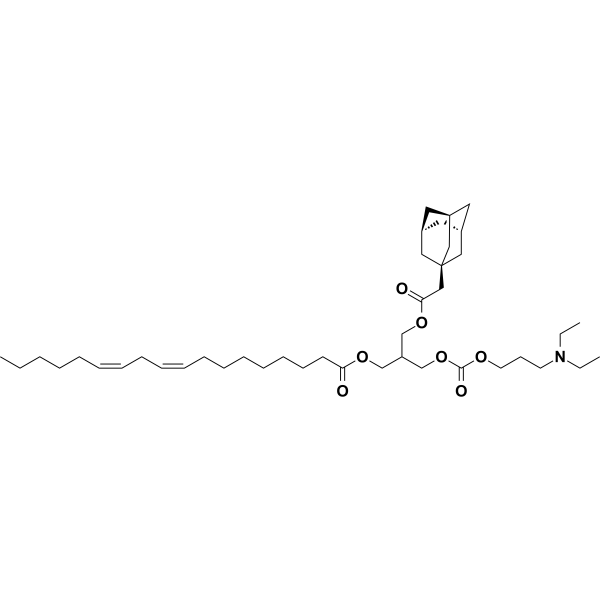
    LNP Lipid-8 (11-A-M) is an ionizable single-tail multi-head lipid that can be used as a lipid nanoparticle (LNP) to deliver siRNA to T cells without targeting ligands. LNP Lipid-8 is more selective for T cells than other cell types such as hepatocytes. LNP Lipid-8 selectively delivers siRNA/sgRNA to T cells (especially CD8+ T cells) through endogenous lipid transport pathways, and can enter cells and release RNA through endocytosis to achieve gene silencing. LNP Lipid-8 loaded with GFP siRNA (siGFP) significantly led to GFP gene silencing in mouse models. LNP Lipid-8 showed good efficacy and safety in both cells and animals, without obvious liver targeting and toxicity. LNP Lipid-8 can be used for RNA delivery research in the fields of tumor immunotherapy and T cell-mediated autoimmune diseases .
    LNP Lipid-8
  • HY-P10019

    NLY01

    GCGR Neurological Disease Inflammation/Immunology
    Pegsebrenatide (NLY01) is a blood-brain barrier-penetrant GLP-1R agonist. Pegsebrenatide alleviates retinal inflammation and neuronal death secondary to ocular hypertension . Pegsebrenatide significantly delays onset and reduces disease severity in experimental autoimmune encephalomyelitis . Pegsebrenatide inhibits the formation of A1 reactive astrocytes in nerve cells and reduces the loss of retinal ganglion cells and dopaminergic neurons. Pegsebrenatide exerts neuroprotective effects in a mouse model of Parkinson's disease by directly preventing microglia-mediated conversion of astrocytes to the A1 neurotoxic phenotype. Pegsebrenatide can be used for research on glaucoma, Parkinson's disease, and multiple sclerosis .
    Pegsebrenatide
  • HY-176553

    Toll-like Receptor (TLR) Interleukin Related IFNAR Inflammation/Immunology
    KBD4466 is an orally active potent TLR7 and TLR8 inhibitor with IC50s of 0.9 nM and 2.8 nM, respectively. KBD4466 inhibits the expression of inflammatory cytokines IL-6 and IFN-α. KBD4466 improves disease progression and survival in the BXSB/MpJ mouse model of Systemic Lupus Erythematosus (SLE). KBD4466 can be used in the study of autoimmune diseases .
    KBD4466
  • HY-156466

    STAT Interleukin Related IFNAR Inflammation/Immunology
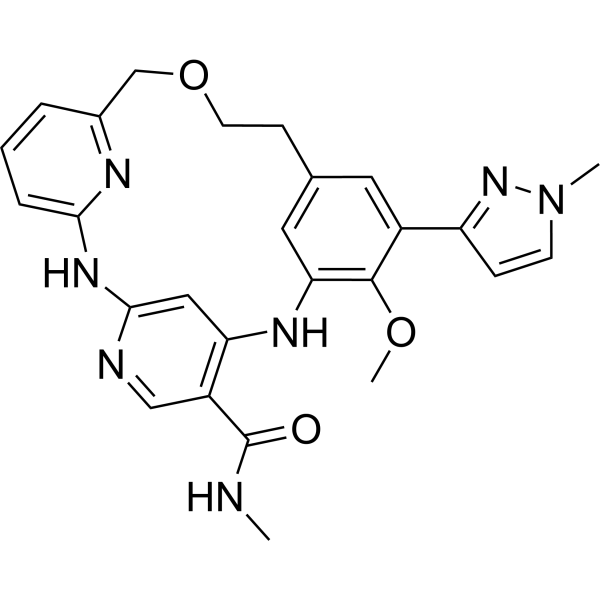
    QL-1200186 is a selective, orally active, allosteric inhibitor targeting the tyrosine kinase TYK2 pseudokinase domain JH2 (IC50=0.06 nM, TYK2 JH2), with 164-fold selectivity over TYK1 JH2 (IC50=9.85 nM,TYK1 JH2). QL-1200186 first stabilizes the TYK2 JH2 conformation, inhibits the activity of the JH1 catalytic domain, and blocks the IFNα, IL-12/IL-23-mediated JAK-STAT signaling pathway. QL-1200186 can inhibit the production of Th1/Th17 cell-related cytokines (such as IFNγ, IL-23), reduce immune cell activation, and has no significant effect on JAK1/2/3 kinase activity. QL-1200186 can significantly improve skin inflammation in the Imiquimod (HY-B0180)-induced psoriasis mouse model and reduce the Psoriasis Area and Severity Index (PASI) score. QL-1200186 can be used in the study of autoimmune diseases such as psoriasis and systemic lupus erythematosus (SLE) .
    QL-1200186
  • HY-174136

    STING IFNAR Inflammation/Immunology
    STING Degrader-2 is an orally active STING degrader that promotes proteasome-independent degradation of STING. STING Degrader-2 inhibits cGAMP-induced STING activation, suppresses STING oligomerization, and inhibits phosphorylation of STING and interferon regulatory factor 3 (IRF3). STING Degrader-2 reduces serum IFN-β and CXCL-10 levels in a cGAMP-induced autoimmune disease mouse model. STING Degrader-2 can be used for the research of autoimmune diseases .
    STING Degrader-2
  • HY-118917

    IMPDH Inflammation/Immunology
    VX-148 is an orally active immunosuppressant, which is a non-competitive inosine-5'-monophosphate dehydrogenase (IMPDH) inhibitor with Ki values for IMPDH Ⅱ and IMPDH Ⅰ of 6 and 14 nM respectively. VX-148 can significantly inhibit the proliferation of human peripheral blood mononuclear cells (PBMC) stimulated by T-cell mitogen (PHA) or B-cell mitogen (SPAS). VX-148 has high selectivity for lymphocytes (such as L1210, Jurkat T cells, and Raji B cells), but has no significant toxicity to non-lymphoid cells. VX-148 can inhibit antibody responses in mouse models and significantly prolong the survival time of transplanted skin in allogeneic skin transplantation models. VX-148 can be used in the research of autoimmune diseases (such as rheumatoid arthritis, psoriasis) and organ transplantation anti-rejection .
    VX-148
  • HY-178166

    Toll-like Receptor (TLR) p38 MAPK TNF Receptor ERK JNK NF-κB Interleukin Related Inflammation/Immunology
    ETI41 is an orally active, selective TLR inhibitor that targets the nucleoside-binding Site I on TLR7 (IC50 = 0.63 μM) and TLR9 (IC50 = 0.16 μM), sparing surface TLRs (including TLR1/TLR2, TLR2/TLR6, TLR4 and TLR5). ETI41 potently inhibits endosomal TLR-mediated pro-inflammatory signaling with nanomolar activity in cellular, biophysical and in vivo assays. ETI41 suppresses the expression of inflammation-associated genes and effectively ameliorates symptoms in mouse models of psoriasis, and systemic lupus erythematosus (SLE). ETI41 can be used for autoimmune and inflammatory diseases research .
    ETI41
  • HY-178169

    Toll-like Receptor (TLR) p38 MAPK TNF Receptor ERK JNK NF-κB Interleukin Related Inflammation/Immunology
    ETI60 is an orally active, selective TLR inhibitor that targets the nucleoside-binding Site I on TLR7 (IC50 = 0.68 μM) and TLR9 (IC50 = 0.12 μM), sparing surface TLRs (including TLR1/TLR2, TLR2/TLR6, TLR4 and TLR5). ETI60 potently inhibits endosomal TLR-mediated pro-inflammatory signaling with nanomolar activity in cellular, biophysical and in vivo assays. ETI60 modulates the expression of genes associated with inflammation. ETI60 effectively ameliorates symptoms in mouse models of psoriasis, and systemic lupus erythematosus (SLE). ETI60 can be used for autoimmune and inflammatory diseases research .
    ETI60
  • HY-175984

    LPL Receptor Inflammation/Immunology
    S1P1 agonist 7 is a potent, orally active, and β-arrestin-biased S1P1 agonist (EC50(G‑protein) = 12.7 nM and EC50(β‑arrestin) = 3.23 nM). S1P1 agonist 7 demonstrates potent immunomodulatory activity and a favorable safety profile. S1P1 agonist 7 exhibits excellent metabolic stability, minimal to moderate CYP inhibition, and S1P3-sparing selectivity. S1P1 agonist 7 shows pharmacokinetics, effectively reduces circulating lymphocytes, and significantly alleviates disease severity in experimental autoimmune encephalomyelitis (EAE) mouse models under both prophylactic and therapeutic regimens. S1P1 agonist 7 can be used for multiple sclerosis (MS) research .
    S1P1 agonist 7
  • HY-176793

    JAK Infection Inflammation/Immunology Cancer
    JAK1-IN-18 (Example 2) is a selective JAK1 inhibitor with an IC50 of 0.15  nM for JAK1 over JAK2 and JAK3. JAK1-IN-18 significantly reduces inflammation in DSS (HY-116282C)-induced ulcerative colitis (UC) mouse models and DNBS(HY-W324435)-induced Crohn's disease (CD) rat models. JAK1-IN-18 can be used for autoimmune diseases (such as inflammatory bowel disease), viral infections (such as HBV infection) and cancers (such as blood cancer) research .
    JAK1-IN-18
  • HY-175734

    PI3K Inflammation/Immunology
    PI3Kδ-IN-26 (Compound 58) is a selective and orally active PI3Kδ inhibitor with an IC50 of 14  nM. PI3Kδ-IN-26 significantly attenuates the inflammatory responses in house dust mite (HDM) induced chronic asthma mouse models. PI3Kδ-IN-26 can be used for inflammatory, autoimmune and hyperproliferative diseases research .
    PI3Kδ-IN-26
  • HY-169201

    Keap1-Nrf2 Cancer
    Nrf2 activator-12 (compund 10v) potently activates Nrf2 (EC50=83.5 nM) and exhibits promising pharmacological properties, reversing disease progression and alleviating demyelination in an experimental autoimmune encephalomyelitis mouse model .
    Nrf2 activator-12
  • HY-175782

    Toll-like Receptor (TLR) NF-κB p38 MAPK Inflammation/Immunology
    SMU-R39 is a TLR7 and TLR8 antagonist with IC50 values of 3.22 μM and 0.24 μM, respectively. SMU-R39 binds to recombinant mTLR7 protein (KD = 2.36 μM) and to recombinant hTLR8 protein (KD = 105 nM). SMU-R39 suppresses downstream NF-κB and MAPK signaling, and reduces secretion/transcription of pro-inflammatory cytokines (TNF-α, IL-1β, IL-6) in PBMCs and THP-1 cells. SMU-R39 demonstrates anti-inflammatory efficacy in Imiquimod (IMQ) (HY-B0180)-induced psoriasis mouse model. SMU-R39 can be used for the study of autoimmune diseases such as psoriasis .
    SMU-R39
  • HY-122023

    Integrin Inflammation/Immunology Cancer
    TBC3486 is a highly selective integrin α4β1 inhibitor. TBC3486 acts as a chemosensitizer to enhance the sensitivity of leukemia cells to chemotherapy. TBC3486 exhibits efficacy in preclinical models of integrin α4-dependent inflammatory and autoimmune diseases, including a mouse model of autoimmune encephalomyelitis. TBC3486 can be used for the research of precursor B-cell acute lymphoblastic leukemia .
    TBC3486
  • HY-182923

    STING Inflammation/Immunology
    UM-200 is a covalent STING inhibitor with an EC50 of 1.10 μM. UM-200 covalently modifies the cysteine residues C292 or C309 of STING, thereby blocking its oligomerization and downstream signal transduction. UM-200 inhibits STING-dependent phosphorylation of TBK1 and IRF3. UM-200 inhibits the STING signaling pathway in mouse models. UM-200 can be used for research on STING-driven inflammatory and autoimmune diseases .
    UM-200
  • HY-165564

    Drug Derivative Inflammation/Immunology
    SM-8849 is a thiazole derivative with anti-arthritis activity. SM-8849 specifically targets and inactivates T cells involved in delayed-type hypersensitivity (DTH) reactions, thereby inhibiting the core immunopathological process of arthritis, but has little effect on the humoral immune process such as antibody production. In a mouse arthritis model induced by Type II Collagen (HY-NP003), SM-8849 significantly alleviated clinical symptoms, reduced bone destruction and joint damage. SM-8849 can be used for the study of autoimmune diseases such as rheumatoid arthritis .
    SM-8849
  • HY-P992062

    PD-1/PD-L1 Inflammation/Immunology
    Anti-Mouse CD80 Antibody (TKMG48) is an antibody that targets mouse CD80. By specifically binding to and disrupting the CD80:PD-L1 complex to release PD-L1, Anti-Mouse CD80 Antibody (TKMG48) functions as an indirect PD-1 agonist without blocking CD28 co-stimulation or CD80-CTLA4 binding. Anti-Mouse CD80 Antibody (TKMG48) inhibits T cell activation, reduces T cell effector functions and antigen-specific CD8 + T cell populations, and does not interfere with the differentiation, migration, antigen presentation or surface marker expression of dendritic cells. Anti-Mouse CD80 Antibody (TKMG48) significantly attenuates disease severity in mouse models of arthritis, spondyloarthritis, multiple sclerosis and Sjögren's syndrome, and its activity depends on the expression of PD-1 and PD-L1 .
    Anti-Mouse CD80 Antibody (TKMG48)
  • HY-P992382

    Interleukin Related Neurological Disease Inflammation/Immunology
    IC 100 is a humanized IgG4κ monoclonal antibody targeting apoptosis-associated speck-like protein (ASC) with blood-brain barrier permeability. IC 100 specifically inhibits ASC after being endocytosed via its Fc segment, blocks ASC polymerization and inflammasome activation, suppresses IL-1β release, forms complexes with ASC and TRIM21, and evades TRIM21-mediated proteasomal degradation. IC 100 alleviates symptoms associated with autoimmune encephalomyelitis, reduces immune cell infiltration and microglial activation in the mouse EAE model. IC 100 is suitable for research on neuroinflammatory and inflammasome-related diseases such as multiple sclerosis. Isotype comparison: HY-P99003 .
    IC 100

Inquiry Online

Your information is safe with us. * Required Fields.

Salutation


Country or Region *

Applicant Name *


Organization Name *

Department *


Email Address *


Product Name *

Cat. No.


Requested quantity *

Phone Number *


Remarks

Inquiry Online

Inquiry Information

Product Name:
Cat. No.:
Quantity:
MCE Japan Authorized Agent:

