1. Search Result
Search Result
Results for "

bactericide

" in MedChemExpress (MCE) Product Catalog:

26

Inhibitors & Agonists

1

Fluorescent Dye

2

Biochemical Assay Reagents

3

Natural
Products

1

Isotope-Labeled Compounds

1

Oligonucleotides

Cat. No. Product Name Target Research Areas Chemical Structure
  • HY-Y1878C
    Copper sulfate anhydrous, 99%
    2 Publications Verification

    Cupric sulfate anhydrous, 99%

    Environmental Pollutants Bacterial Infection Metabolic Disease
    Anhydrous copper sulfate, 99% (Cupric sulfate anhydrous, 99%) is an orally administerable disinfectant. Anhydrous copper sulfate, 99% can be used as a biomaterial or organic compound related to life sciences research, and it can increase the Cu content in rat organs .
    Copper sulfate anhydrous, 99%
  • HY-D0203

    Malachite green

    Environmental Pollutants Fluorescent Dye Others
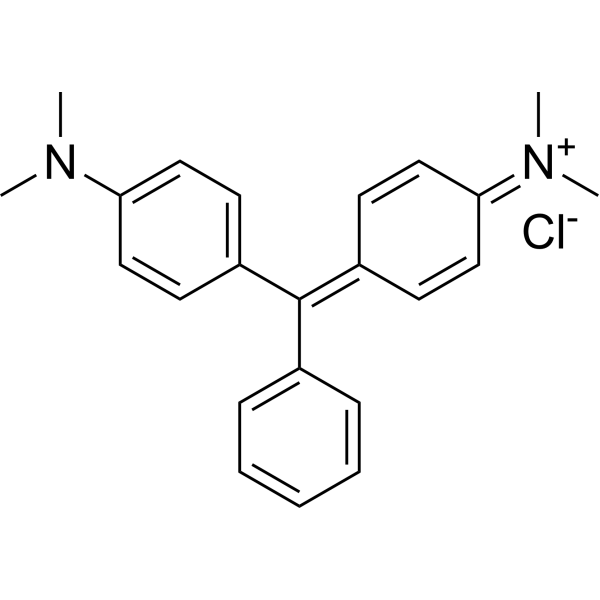
    Basic green 4 (Malachite green) is a cationic dye that is widely used as a bactericide in aquaculture and is also commonly used in laboratories for the determination of phosphates. Basic green 4 exhibits high cytotoxicity and carcinogenicity to mammalian cells, specifically shown by its IC50 values of 2.03 µM for HEp-2 human laryngeal cells and 13.8 µM for Caco-2 human colorectal adenocarcinoma cells, and it can promote the development of liver tumors. The maximum absorbance wavelength is 621 nm .
    Basic green 4
  • HY-B1978

    Environmental Pollutants Fungal Reactive Oxygen Species (ROS) Androgen Receptor Infection
    Iprodione is an orally active diformimide fungicide. Iprodione can specifically cause oxidative damage by producing free radicals (ROS). Iprodione is also an antiandrogen agent that delays adolescent development in rats and reduces sexual behavior and reproductive ability in rats .
    Iprodione
  • HY-157536

    Bacterial Infection Inflammation/Immunology
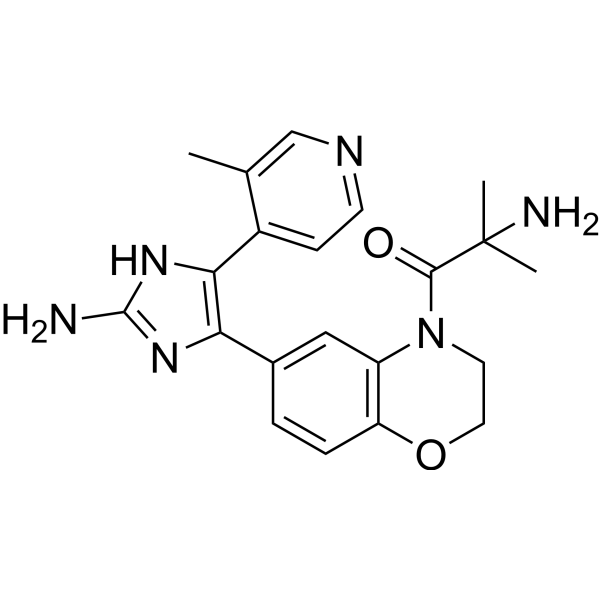
    SMT-738 is a bacterial bactericide. SMT-738 targets the small molecules responsible for lipoprotein transport in Enterobacteriaceae, causing abnormal lipoprotein localization and bacterial cell death. SMT-738 inhibits the growth of E. coli and K. pneumoniae. SMT-738 reduces bacterial loads in mouse models of urinary tract infection, bloodstream infection, and pulmonary infection caused by Enterobacterales. SMT-738 can be used in the research of Enterobacteriaceae infections, urinary tract infections, bloodstream infections, and pneumonia .
    SMT-738
  • HY-N9357

    Bacterial Fungal Infection
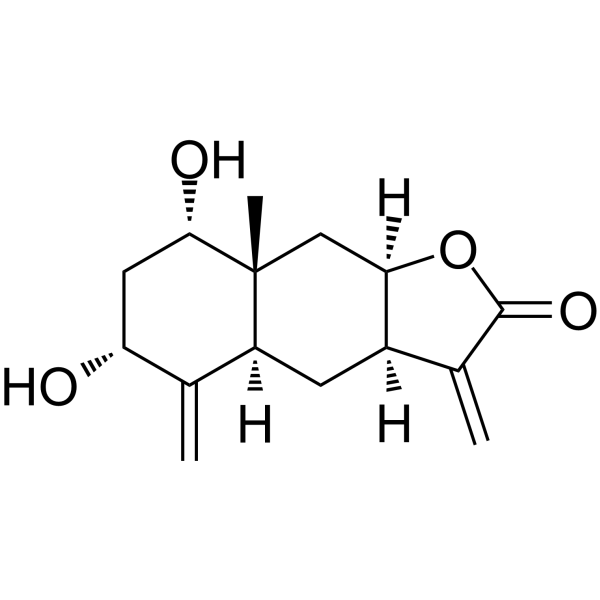
    Granilin, a sesquiterpene lactone, can be found in the flower buds of Carpesium triste. Granilin can be used as the bactericide and fungicide .
    Granilin
  • HY-158761

    PAPB

    Bacterial Infection
    Polyaminopropyl biguanide (PAPB), a propyl analogue of polyhexamethylene biguanide, is a broad spectrum, fast acting bactericide with antibacterial activity. Polyaminopropyl biguanide can be used as a preservative in cosmetic products .
    Polyaminopropyl biguanide
  • HY-123779

    Bacterial Fungal Infection
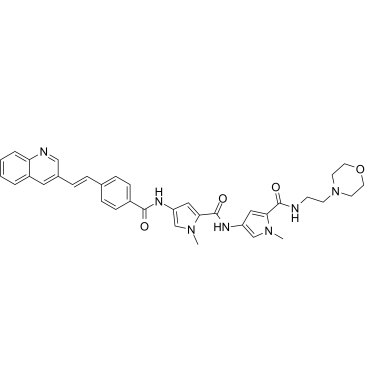
    RWJ-49815 is a histidine kinase inhibitor. RWJ-49815 inhibits the autokinase activity of purified GST-Sln1 and the autophosphorylation of KinA in vitro. RWJ-49815 acts as a fungal growth inhibitor . RWJ-49815 serves as a bactericide against Gram-positive pathogenic bacteria. RWJ-49815 is applicable to research related to fungal infections and Gram-positive bacterial infections .
    RWJ-49815
  • HY-Y1313

    m-Carboxynitrobenzene; m-Nitrobenzenecarboxylic acid; m-Nitrobenzoic acid

    Bacterial Fungal Infection
    3-Nitrobenzoic acid (m-Carboxynitrobenzene; m-Nitrobenzenecarboxylic acid; m-Nitrobenzoic acid) is an antioxidant and antibacterial agent that can kill bacteria and fungi. 3-Nitrobenzoic acid can be degraded or reduced by certain bacteria (such as Pseudomonas) and fungi (such as white rot fungi) into aldehydes and alcohols .
    3-Nitrobenzoic acid
  • HY-W099569

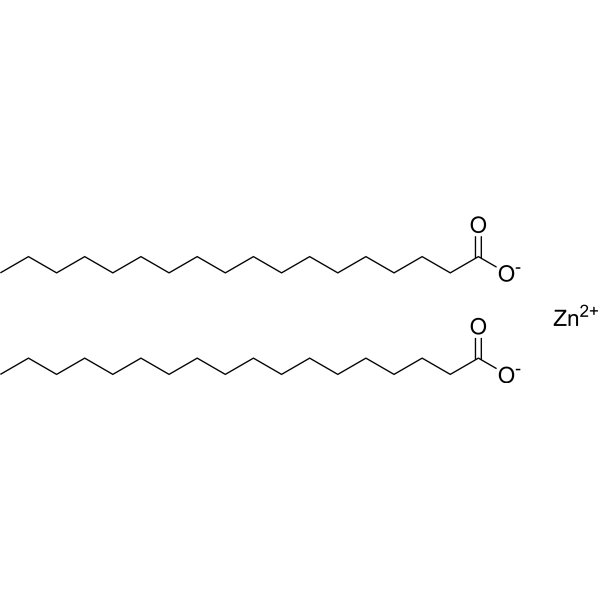
    Zinc octadecanoate

    Biochemical Assay Reagents Fungal Bacterial Parasite Infection
    Zinc stearate is a metal stearate that acts as a preservative, bactericide, fungicide, and larvicide. Zinc stearate inhibits larval reproduction in animal feces. Zinc stearate exhibits extremely low systemic toxicity. Zinc stearate is a common component of pharmaceutical excipients, lubricants, mold release agents, polymer stabilizers, and coating matting agents .
    Zinc stearate
  • HY-B1978R

    Reference Standards Fungal Reactive Oxygen Species (ROS) Androgen Receptor Infection
    Iprodione (Standard) is the analytical standard of Iprodione. This product is intended for research and analytical applications. Iprodione is an orally active diformimide fungicide. Iprodione can specifically cause oxidative damage by producing free radicals (ROS). Iprodione is also an antiandrogen agent that delays adolescent development in rats and reduces sexual behavior and reproductive ability in rats .
    Iprodione (Standard)
  • HY-N13149

    Antibiotic Bacterial Infection
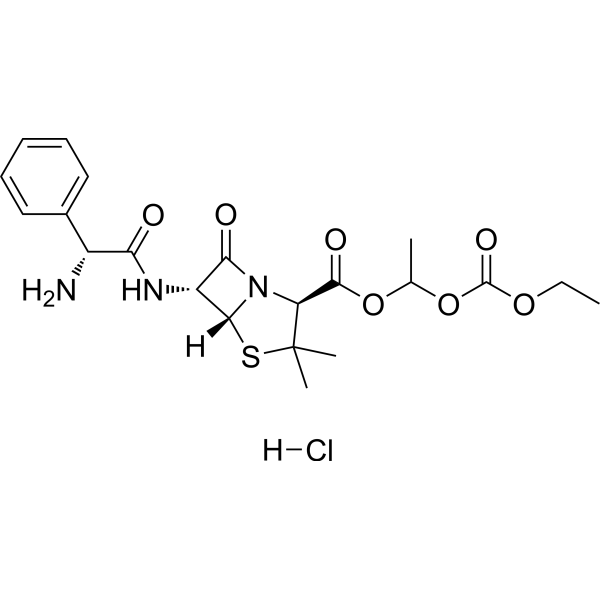
    Tetromycin C1 is an antibiotic bactericide isolated from Streptomyces sp. .
    Tetromycin C1
  • HY-121414

    Phenazine N-oxide; N-Oxyphenazine

    Fungal Infection
    Phenazine oxide (Phenazine N-oxide) is a novel and potent fungicide, bactericide, and wood preservative .
    Phenazine oxide
  • HY-W140799

    Environmental Pollutants Bacterial Infection Inflammation/Immunology
    Dichloroxylenol is a bactericide, preservative and deodorant. Dichloroxylenol can be used for the research of endometritis and cervicitis in Holstein cows .
    Dichloroxylenol
  • HY-136441

    Bacterial Infection
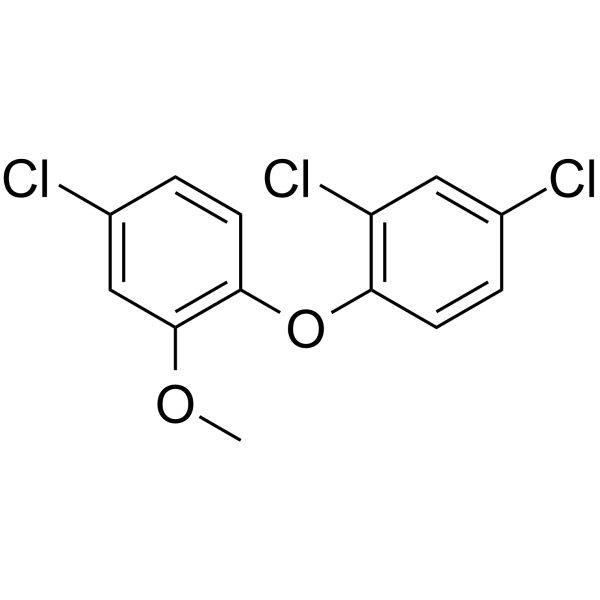
    Triclosan-methyl is a transformation product of triclosan. Triclosan is a bactericide in personal care products such as toothpaste, shampoos, and soaps. Triclosan is also a stabilizing agent in a multitude of detergents and cosmetics .
    Triclosan-methyl
  • HY-167669

    Bacterial Infection
    Tioxacin is an orally active bactericide agent. Tioxacin combined with aliphatic amines has activities against G(+) and G (-) bacteria, including Escherichia coli resistant to Nalidixic acid (HY-B0398) and Pseudomonas aeruginosa .
    Tioxacin
  • HY-124508

    Antibiotic Bacterial Fungal p38 MAPK NF-κB Infection Inflammation/Immunology
    Lambertellin is an effective antibiotic that can be used as a bactericide and as a fungicide. Lambertellin exerts its anti-inflammatory effect in LPS (HY-D1056)-stimulated RAW 264.7 macrophage cells by modulating the activation of the MAPK and NF-κB signaling pathways .
    Lambertellin
  • HY-145325

    Bacterial Infection
    Antibacterial agent 66 (Compound 6q), a trifluoromethylpyridine 1,3,4-oxadiazole derivative, shows activity against Xanthomonas oryzae pv. oryzae (Xoo) with an EC50 value of 7.2 μg/mL .
    Antibacterial agent 66
  • HY-130570

    Bacterial Infection Inflammation/Immunology
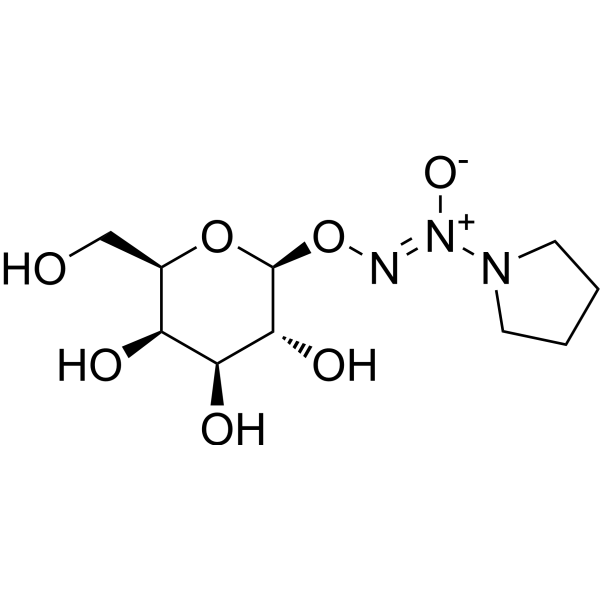
    Beta-gal-nonoate is a β-galactosidase dependent nitric oxide (NO) donor that releases NO once activated by β-galactosidase. β-Gal-NONOate has bactericidal activity and can be used as a bactericide .
    β-Gal-NONOate
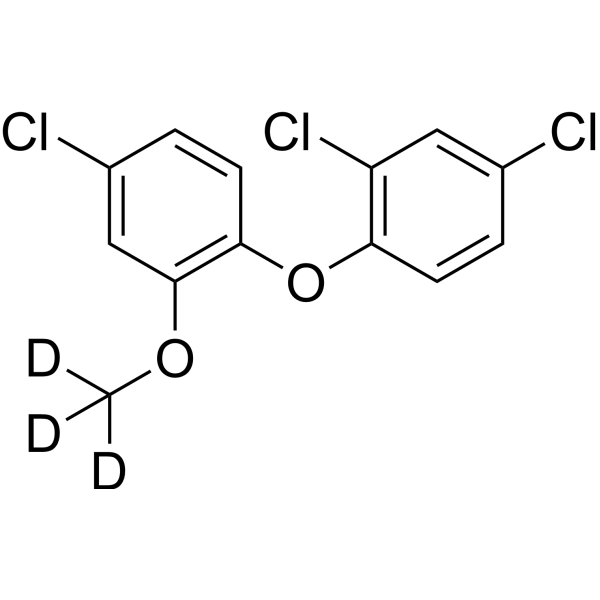
  • HY-136441S

    Bacterial Infection
    Triclosan-methyl-d3 is the deuterium labeled Triclosan-methyl. Triclosan-methyl is a transformation product of triclosan. Triclosan is a bactericide in personal care products such as toothpaste, shampoos, and soaps. Triclosan is also a stabilizing agent in a multitude of detergents and cosmetics .
    Triclosan-methyl-d3
  • HY-168844

    Bacterial Reactive Oxygen Species (ROS) Infection
    Antibacterial agent 259 (K3) is a bactericide, with EC50 values ​​of 1.5, 1.7 and 4.9 mg/L for Xoo, Xoc and Xac, respectively. Antibacterial agent 259 can induce pathogens to produce reactive oxygen species (ROS), leading to their death. Antibacterial agent 259 can be used in the prevention and control of plant bacterial diseases .
    Antibacterial agent 259
  • HY-125533

    Bacterial Infection
    TXA497 is a potent local topical bactericide. TXA497 exerts its bactericidal effect by interfering with the polymerization kinetics of the bacterial cell division protein FtsZ, rather than inhibiting it. TXA497 shows strong activity against various Staphylococcus aureus strains, including MRSA and MSSA, with an MIC value ranging from 1.0 to 2.0 μg/mL. TXA497 skin deposition is concentration-dependent in its formulation, consistent with Fick's first law. TXA497 has limited systemic permeability through the lipid pathway of the stratum corneum and is easily absorbed through this route. TXA497 can be used for research on topical bactericidal agents .
    TXA497
  • HY-181686

    Bacterial Reactive Oxygen Species (ROS) Infection
    Antibacterial agent 326 is a bactericide that inhibits the growth of various bacterial strains. Antibacterial agent 326 inhibits biofilm formation in Escherichia coli, disrupts bacterial cell membranes, induces oxidative stress and lipid peroxidation in Escherichia coli, increases ROS levels, and reduces GSH activity. Antibacterial agent 326 can be used in studies of bacterial infections, including those caused by Escherichia coli, Staphylococcus aureus, Enterococcus faecalis, Listeria spp., Bacillus subtilis, Serratia marcescens, Salmonella enteritidis and Acinetobacter calcoaceticus .
    Antibacterial agent 326
  • HY-19293

    Bacterial Infection
    HMR-3787 is a 2-fluoroketolide and bactericide. HMR 3787 is bactericidal against 12 H. influenzae strains .
    HMR-3787
  • HY-W342467

    D821

    Bacterial Infection
    Dioctyldimethylammonium chloride (D821), a quaternary ammonium salt, is a bactericide. Dioctyldimethylammonium chloride exerts bactericidal activity via disruption of membrane integrity, and intracellular lysate leakage. Dioctyldimethylammonium chloride also can be used as a petroleum additive, antistatic agent, softening agent, rare metal flotation agent, and corrosion inhibitor .
    Dioctyldimethylammonium chloride
  • HY-W093433

    Environmental Pollutants Bacterial Infection
    2,2-Dibromo-2-cyanoacetamide is a non-oxidizing bactericide. 2,2-Dibromo-2-cyanoacetamide enhances bactericidal activity by reacting with sulfhydryl groups on the cell walls of microorganisms in aquatic environments to release bromide ions. 2,2-Dibromo-2-cyanoacetamide effectively inactivates Legionella pneumophila, rendering it non-culturable, and exhibits significantly higher killing efficacy against this bacterium in reservoir biofilms than in aerosol biofilms. 2,2-Dibromo-2-cyanoacetamide is suitable for legionellosis prevention and control as well as related research .
    2,2-Dibromo-2-cyanoacetamide
  • HY-181286

    Cytochrome P450 Infection
    ETX1975-3 is an orally active inhibitor and bactericide targeting the bd cytochrome oxidase of Mycobacterium tuberculosis. ETX1975-3 disrupts electron transfer between the b-heme centers of the target enzyme, and in combination with Q203 (HY-101040), exerts bactericidal activity against both replicating and non-replicating Mycobacterium tuberculosis, and reduces bacterial loads in acute mouse models. ETX1975-3 retains activity against clinical isolates of multidrug-resistant/extensively drug-resistant Mycobacterium tuberculosis and non-tuberculous mycobacteria, while possessing favorable preclinical ADMET properties. ETX1975-3 can be used in studies related to tuberculosis and non-tuberculous mycobacterial infections .
    ETX1975-3

Inquiry Online

Your information is safe with us. * Required Fields.

Salutation


Country or Region *

Applicant Name *


Organization Name *

Department *


Email Address *


Product Name *

Cat. No.


Requested quantity *

Phone Number *


Remarks

Inquiry Online

Inquiry Information

Product Name:
Cat. No.:
Quantity:
MCE Japan Authorized Agent:

