1. Search Result
Search Result
Pathways Recommended: Stem Cell/Wnt Cell Cycle/DNA Damage
Results for "

cancer cell growth

" in MedChemExpress (MCE) Product Catalog:

1489

Inhibitors & Agonists

13

Screening Libraries

11

Fluorescent Dyes

14

Biochemical Assay Reagents

41

Peptides

64

Inhibitory Antibodies

210

Natural
Products

61

Isotope-Labeled Compounds

15

Click Chemistry

29

Oligonucleotides

3

GMP Molecules

Cat. No. Product Name Target Research Areas Chemical Structure
  • HY-50895
    Gefitinib
    195+ Cited Publications

    ZD1839

    EGFR Autophagy Apoptosis Cancer
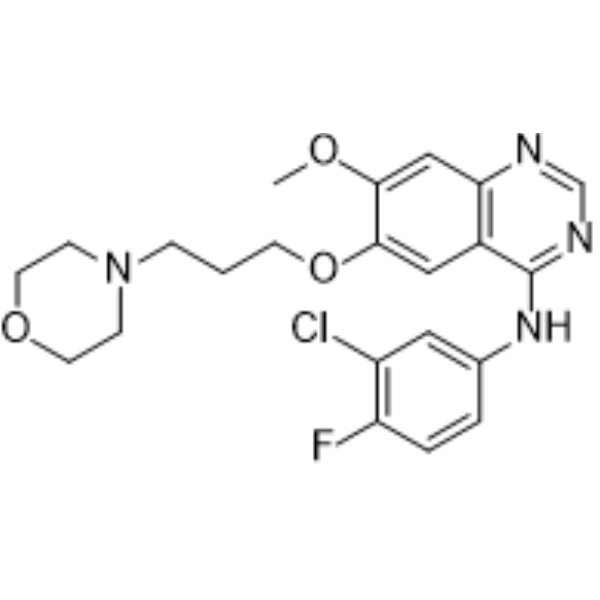
    Gefitinib (ZD1839) is a potent, selective and orally active EGFR tyrosine kinase inhibitor with an IC50 of 33 nM. Gefitinib selectively inhibits EGF-stimulated tumor cell growth (IC50 of 54 nM) and that blocks EGF-stimulated EGFR autophosphorylation in tumor cells. Gefitinib also induces autophagy and cell apoptosis, which can be used for cancer related research, such as Lung cancer and breast cancer .
    Gefitinib
  • HY-N0848
    Epibrassinolide
    15+ Cited Publications

    24-Epibrassinolide; B1105; BP55

    Environmental Pollutants Apoptosis Cancer
    Epibrassinolide (24-Epibrassinolide) is a ubiquitously occurring plant growth hormone which shows great potential to alleviate heavy metals and pesticide stress in plants . Epibrassinolide is a potential apoptotic inducer in various cancer cells without affecting the non-tumor cell growth .
    Epibrassinolide
  • HY-162307

    PROTACs Keap1-Nrf2 Cancer
    Nrf2 degrader 1 (compound 1) is a PROTAC Nrf2 degrader with a DC50 of 0.1-1 μM in huH1 cells. Nrf2 degrader 1 inhibits cancer cells growth for A549 and LK-2 cells with IC50 values of 100 nM and 40 nM, respectively. Nrf2 degrader 1 can be used for the study of liver cancer, non-small cell lung cancer (NSCLC) and squamous cell carcinoma of lung cancer .
    Nrf2 degrader 1
  • HY-10126
    Barasertib-HQPA
    5+ Cited Publications

    AZD2811; INH-34; AZD1152-HQPA

    Aurora Kinase Apoptosis Cancer
    Barasertib-HQPA (AZD2811) is a highly selective Aurora B inhibitor with an IC50 of 0.37 nM in a cell-free assay. Barasertib-HQPA (AZD2811) induces growth arrest and apoptosis in cancer cells .
    Barasertib-HQPA
  • HY-17473
    Embelin
    5+ Cited Publications

    Embelic acid; Emberine; NSC 91874

    IAP NF-κB Apoptosis Autophagy Cancer
    Embelin (Embelic acid), a potent, nonpeptidic XIAP inhibitor (IC50=4.1 μM), inhibits cell growth, induces apoptosis, and activates caspase-9 in prostate cancer cells with high levels of XIAP. Embelin blocks NF-kappaB signaling pathway leading to suppression of NF-kappaB-regulated antiapoptotic and metastatic gene products. Embelin also induces autophagic and apoptotic cell death in human oral squamous cell carcinoma cells .
    Embelin
  • HY-173158

    PROTACs Histone Acetyltransferase Cancer
    AUR1545 is a selective KAT2A/KAT2B ((GCN5/PCAF)) PROTAC degrader that induces monocyte differentiation and inhibits the growth of acute myeloid leukemia cells. AUR1545 inhibits cell growth, induces epithelial differentiation and suppresses tumor growth in small cell lung cancer models. AUR1545 inhibits cell growth and induces differentiation in neuroendocrine prostate cancer cells and primary patient-derived organoids. AUR1545 is applicable to research related to acute myeloid leukemia, small cell lung cancer and neuroendocrine prostate cancer .
    AUR1545
  • HY-19331
    WZB117
    20+ Cited Publications

    GLUT Cancer
    WZB117 is a glucose transporter 1 (Glut1) inhibitor, which downregulates glycolysis, induces cell-cycle arrest, and inhibits cancer cell growth in vitro and in vivo.
    WZB117
  • HY-115385
    Lumichrome
    2 Publications Verification

    Apoptosis MDM-2/p53 Akt β-catenin Nuclear Factor of activated T Cells (NFAT) NF-κB ERK p38 MAPK Metabolic Disease Cancer
    Lumichrome, a photodegradation product of Riboflavin, is an endogenous compound in humans. Lumichrome inhibits human lung cancer cell growth and induces apoptosis via a p53-dependent mechanism. Lumichrom is the inhibitor for AKT/β-catenin signaling pathway .
    Lumichrome
  • HY-144680

    ZL-2313

    EGFR Cancer
    BLU-945 is a potent, highly selective, reversible and orally active epidermal growth factor receptor (EGFR) tyrosine kinase inhibitor (TKIs). BLU-945 can effectively inhibit EGFR with L858R and/or exon 19 deletion mutation, T790M mutation and C797S mutation. BLU-945 can be used for the research of lung cancer including non-small cell lung cancer (NSCLC) .
    BLU-945
  • HY-14519B
    Methotrexate hydrate
    75+ Cited Publications

    Amethopterin hydrate; CL14377 hydrate; WR19039 hydrate

    Biochemical Assay Reagents Antibiotic Bacterial Others Cancer
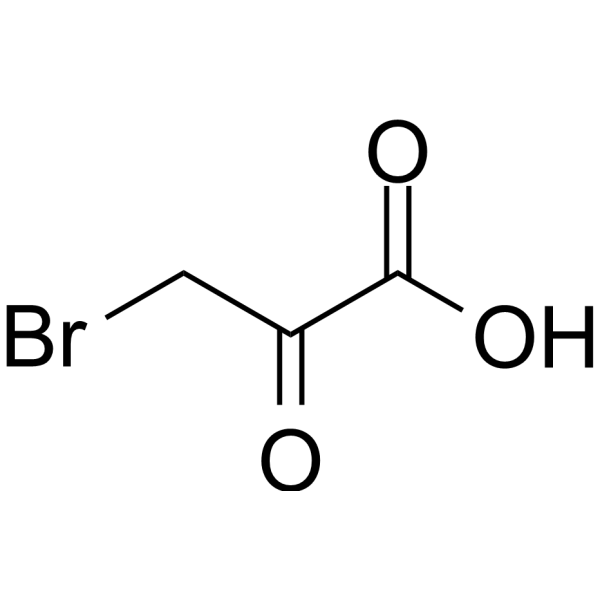
    Methotrexate hydrate is a substance that affects cell growth and division. It is commonly used to fight certain diseases, especially cancer and autoimmune diseases. It works by inhibiting the process by which cells synthesize DNA.
    Methotrexate hydrate
  • HY-N5074

    Apoptosis VEGFR Inflammation/Immunology Cancer
    Terrestrosin D is an orally active apoptosis inducer. Terrestrosin D induces cell cycle arrest at the G1 and S phases, reduces mitochondrial membrane potential, and inhibits the growth of cancer cells and endothelial cells. Terrestrosin D is studied in castration-resistant prostate cancer and pulmonary fibrosis .
    Terrestrosin D
  • HY-P99618

    IBI-315; BH2950

    EGFR PD-1/PD-L1 Cancer
    Fidasimtamab is a bispecific antibody targeting human epidermal growth factor receptor 2 (Her2) and programmed death protein 1 (PD-1), with a Ka of 3.55e-10 M for human Her2 and a Ka of 1.17e-9 M for human PD-1. Fidasimtamab cross-links Her2-positive tumor cells with PD-1-positive T cells to form immune synapses, blocks PD-1-ligand interactions, preserves antibody-dependent cellular cytotoxicity, induces gasdermin B (GSDMB)-mediated pyroptosis, and activates T cells. Fidasimtamab is applicable to relevant research on Her2-positive gastric cancer .
    Fidasimtamab
  • HY-P99270

    CS-1008; Anti-Human TRAIL-R2 Recombinant Antibody

    Apoptosis Cancer
    Tigatuzumab (CS-1008) is a humanized IgG1 monoclonal antibody targets death receptor 5 (DR5). Tigatuzumab induces cell apoptosis of cancer cells and inhibits tumor growth in vivo. Tigatuzumab can be used for the research of cancer .
    Tigatuzumab
  • HY-P9992

    BAY-2315497; PSMA-TTC

    PSMA Apoptosis Cancer
    Peligifatamab is a PSMA-targeted α-radioimmunoconjugate with an EC50 of 1.2 nM against human targets. Peligifatamab induces DNA damage, DNA double-strand breaks, cell cycle arrest and apoptosis (Apoptosis) in PSMA-positive prostate cancer cells. Peligifatamab reduces cell viability in a manner dependent on cellular PSMA expression levels. Peligifatamab inhibits tumor growth and tumor-induced abnormal bone growth in prostate cancer bone metastasis models. Peligifatamab exhibits antitumor efficacy in subcutaneous prostate cancer models and xenograft models. Peligifatamab can be used for the research of metastatic castration-resistant prostate cancer .
    Pelgifatamab
  • HY-115519
    (E/Z)-GO289
    2 Publications Verification

    Casein Kinase Cancer
    (E/Z)-GO289 is a potent and selective casein kinase 2 (CK2) inhibitor (IC50=7 nM). (E/Z)-GO289 strongly lengthens circadian period. (E/Z)-GO289 exhibits cell type–dependent inhibition of cancer cell growth that correlated with cellular clock function .
    (E/Z)-GO289
  • HY-P99667
    Ipafricept
    4 Publications Verification

    OMP-54F28; FZD8-Fc

    Wnt Cancer
    Ipafricept (OMP-54F28; FZD8-Fc) is a first class recombinant fusion protein with the extracellular part of the human frizzled-8 receptor fused to a human IgG1 Fc fragment that binds Wnt ligands, which blocks Wnt signaling. Ipafricept reduces tumor growth and results in a decrease in both liver and lung metastases combined with Gemcitabine (HY-17026) in pancreatic cancer mouse models. Ipafricept shows solid tumor inhibition activity with well tolerance, such as desmoid tumor, germ cell cancer, ovarian cancer .
    Ipafricept
  • HY-160215

    TGF-β Receptor p38 MAPK TGF-beta/Smad Interleukin Related Cancer
    GFH018 is an orally active, selective and ATP-competitive TGF-βR1 inhibitor with an IC50 of 40 nM. GFH018 reactivates the immune system by blocking the immunosuppression mediated by regulatory T cells and M2 macrophages. GFH018 inhibits tumor angiogenesis. GFH018 suppresses tumor growth in mouse tumor models. GFH018 can be used for the research of solid tumors, hepatocellular carcinoma, colorectal cancer, breast cancer, and relapsed/metastatic nasopharyngeal carcinoma .
    GFH018
  • HY-U00177
    GDP366
    2 Publications Verification

    Survivin Cancer
    GDP366, a dual inhibitor of survivin and Op18, induces cell growth inhibition, cellular senescence and mitotic catastrophe in human cancer cells.
    GDP366
  • HY-128553

    Endogenous Metabolite Apoptosis Bcl-2 Family MDM-2/p53 Cancer
    Antineoplaston A10 is an antineoplaston that inhibits the growth of human hepatoma cells by inducing apoptosis. Antineoplaston A10 can be used in the study of liver cancer and breast cancer .
    Antineoplaston A10
  • HY-153873

    Keap1-Nrf2 Reactive Oxygen Species (ROS) Cancer
    MSU38225 is an Nrf-2 inhibitor that increases levels of reactive oxygen species (ROS). MSU38225 inhibits the growth of human lung cancer cells and enhances the sensitivity of human lung cancer cells to chemotherapy in vitro and in vivo. MSU38225 can be used in cancer research .
    MSU38225
  • HY-153361

    PROTACs Epigenetic Reader Domain Inflammation/Immunology Cancer
    YD23 is a selective SMARCA2 PROTAC degrader with DC50 values of 64 nM and 297 nM in H1792 cells and H1975 cells. YD23 induces degradation of SMARCA2, which is synthetic lethal to SMARCA4. YD23 reduces chromatin accessibility only in SMARCA4 deficient cells, including cell cycle and cell growth regulatory genes. YD23 selectively inhibits growth of SMARCA4 mutant lung cancer cells. YD23 has potent tumor growth inhibitory activity in SMARCA4-mutant xenografts. YD23 can be used for the study of non-small cell lung cancer (NSCLC) .
    YD23
  • HY-156418

    DNA/RNA Synthesis Ferroptosis Apoptosis Reactive Oxygen Species (ROS) Cancer
    KY386 is a DHX33 helicase inhibitor with an IC50 of 0.019 μM. KY386 inhibits the cell viability of various cancer cells. KY386 induces ferroptosis in cancer cells, and induces apoptosis in some cancer cell lines. KY386 increases the intracellular levels of ROS, LPO and Fe 2+, and decreases the level of GSH in cancer cells . KY386 inhibits the growth of gastric cancer and colon cancer xenografts in nude mice. KY386 is applicable to the related research on liver cancer, lung cancer, pancreatic cancer, colorectal cancer, gastric cancer, breast cancer, leukemia, renal cancer, prostate cancer, esophageal cancer, cervical cancer, brain cancer (glioblastoma) and melanoma .
    KY386
  • HY-108638
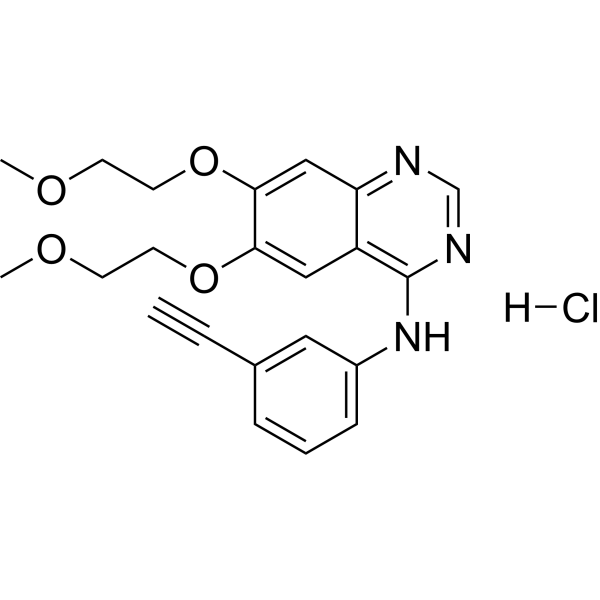
    NSC 146109 hydrochloride
    2 Publications Verification

    XI-011 hydrochloride

    MDM-2/p53 Apoptosis PARP Cancer
    NSC 146109 hydrochloride (XI-011 hydrochloride) is a p53 activator and MDMX inhibitor. NSC 146109 hydrochloride inhibits MDMX gene transcription, downregulates MDMX mRNA and protein levels, stabilizes p53 and activates the transcriptional activity of p53. NSC 146109 hydrochloride induces cancer cell apoptosis (apoptosis) and inhibits the growth of transformed cells. NSC 146109 hydrochloride inhibits the growth of xenograft tumors. NSC 146109 hydrochloride can be used in research related to breast cancer and cervical cancer .
    NSC 146109 hydrochloride
  • HY-42484

    Eribulin intermediate

    Microtubule/Tubulin Cancer
    ER-076349 (Eribulin intermediate) is an inhibitor of tubulin polymerization, induces G2-M cell cycle arrest, and disrupts mitotic spindles. ER-076349 inhibits cancer cell growth, and inhibits tumor growth in several human tumor xenografts. ER-076349 is an analog of Halichondrin B .
    ER-076349
  • HY-16999

    MDM-2/p53 E1/E2/E3 Enzyme Apoptosis Cancer
    RO8994 (Compound 4) is an orally active, highly potent and selective spiroindolinone p53-MDM2 inhibitor with an IC50 value of 5 nM (HTRF binding assays) and 20 nM (MTT proliferation assays). RO8994 induces up-regulation of p53 expression and Apoptosis in wild-type p53 cancer cells. RO8994 also inhibits tumor growth in the tumor xenograft model .
    RO8994
  • HY-149265

    Reactive Oxygen Species (ROS) TrxR Ferroptosis Apoptosis Caspase Bcl-2 Family Cancer
    ROS-generating agent 1 is a selective ROS-generating agent. ROS-generating agent 1 inhibits TrxR activity and expression in cancer cells. ROS-generating agent 1 induces ROS-dependent apoptosis and ferroptosis in cancer cells. ROS-generating agent 1 selectively kills lung cancer cells and inhibits the growth of cancer cell xenograft tumors in nude mice. ROS-generating agent 1 can be used for the research of non-small cell lung cancer .
    ROS-generating agent 1
  • HY-100395

    Apoptosis Cancer
    F16 is a potent growth inhibitor of the neu-overexpressing cells and also selectively inhibits proliferation of mammary epithelial as well as a variety of mouse mammary tumor and human breast cancer cell lines.
    F16
  • HY-N4317
    Ethoxysanguinarine
    1 Publications Verification

    Apoptosis Cancer
    Ethoxysanguinarine is a benzophenanthridine alkaloid natural product that is mainly found in Macleaya cordata. Ethoxysanguinarine is an inhibitor of protein phosphatase 2A (CIP2A). Ethoxysanguinarine induces cell apoptosis and inhibits colorectal cancer cells growth .
    Ethoxysanguinarine
  • HY-145722A
    Apatorsen
    1 Publications Verification

    OGX-427

    HSP Cancer
    Apatorsen is a 2'-methoxyethyl-modified antisense oligonucleotide and also a Hsp27 inhibitor. Apatorsen reduces Hsp27 mRNA and protein levels, impairs stress-induced cytoprotective functions, induces cell apoptosis, inhibits tumor growth and prevents metastasis. Apatorsen is applicable to research related to non-small cell lung cancer, castration-resistant prostate cancer, breast cancer, ovarian cancer and bladder cancer .
    Apatorsen
  • HY-W100287

    NF-κB p38 MAPK Interleukin Related IKK JNK β-catenin Wnt Neurological Disease Inflammation/Immunology Cancer
    Murrayafoline A is a carbazole alkaloid that can be extracted from Murraya tetramera. Murrayafoline A directly targets Specificity protein 1 (Sp1), thereby inhibiting NF-κB and MAPK signaling pathways. Murrayafoline a induces a G0/G1-phase arrest in platelet-derived growth factor (PDGF)-stimulated vascular smooth muscle cells. Murrayafoline A attenuates the Wnt/β-catenin pathway by promoting the degradation of intracellular β-catenin proteins. Murrayafoline A enhances the contraction of rat ventricular myocytes and L-type calcium current by activating protein kinase C. Murrayafoline A inhibits LPS (HY-D1056)-induced neuroinflammation in vivo. Murrayafoline A can be used for the study of inflammation, vascular complications and colon cancer .
    Murrayafoline A
  • HY-U00458
    K-80003
    1 Publications Verification

    TX-803

    Akt Cancer
    K-80003 is a potent inhibitor of tRXRα-dependent Akt activation and cancer cell growth.
    K-80003
  • HY-117102

    Aryl Hydrocarbon Receptor Checkpoint Kinase (Chk) Cancer
    ANI-7 is an activator of aryl hydrocarbon receptor (AhR) pathway. ANI-7 inhibits the growth of multiple cancer cells, and potently and selectively inhibits the growth of MCF-7 breast cancer cells with a GI50 of 0.56 μM. ANI-7 induces CYP1-metabolizing mono-oxygenases by activating AhR pathway, and also induces DNA damage, checkpoint Kinase 2 (Chk2) activation, S-phase cell cycle arrest, and cell death in sensitive breast cancer cell lines .
    ANI-7
  • HY-W011434

    TGIC

    MDM-2/p53 Apoptosis Inflammation/Immunology Cancer
    Triglycidyl isocyanurate (TGIC; Teroxirone) is a triazene triepoxide with antiangiogenic and antineoplastic activities. Triglycidyl isocyanurate inhibits the growth of non-small-cell-lung cancer cells via?p53 activation. Triglycidyl isocyanurate induces cell apoptosis. Triglycidyl isocyanurate can be used for cancer research .
    Triglycidyl isocyanurate
  • HY-P991358

    LFA-102; X213

    Estrogen Receptor/ERR STAT Akt Cancer
    XOMA-213 (LFA-102; X213) is a human monoclonal antibody (mAb) targeting the prolactin receptor (PRLR), with a Kd value of 2 nM against the human target. XOMA-213 blocks PRL-induced cell proliferation and inhibits the activation of multiple PRLR ligands, including PRL and human growth hormone (hGH). XOMA-213 suppresses PRL-induced phosphorylation of Stat5, Akt and ERK1/2 in cells. XOMA-213 induces tumor regression, delays disease progression, and inhibits PRLR signaling as well as tumor growth. XOMA-213 can be used in research related to breast cancer .
    XOMA-213
  • HY-N8389

    Bacterial Fungal PAK Akt STAT PD-1/PD-L1 Apoptosis CCR Infection Cancer
    Globulol is a terpenoid metabolite and Antimicrobial agent. Globulol can be isolated from Alpinia oxyphylla Miq. Globulol binds to PAK4, reduces the expression level of PAK4 in cancer cells, decreases the phosphorylation of AKT, and downregulates the expressions of STAT3, phosphorylated STAT3, and PD-L1. Globulol promotes the secretion of CCL4 by cancer cells. Globulol reduces the viability and proliferation ability of cancer cells, induces G0/G1 cell cycle arrest and Apoptosis in cancer cells, and inhibits cancer cell migration and the integrity of 3D tumor spheres. Globulol enhances the relevant effects of anti-PD-1 agents in the cancer cell microenvironment. Globulol exhibits anticancer activity against liver cancer. Globulol inhibits the mycelial growth of phytopathogenic fungi and the growth of phytopathogenic bacteria. Globulol can be used in studies related to hepatocellular carcinoma .
    Globulol
  • HY-U00002

    VEGFR EGFR Cancer
    ZD-4190 is a potent, orally available inhibitor of the vascular endothelial cell growth factor receptor 2 (VEGFR2) and of epidermal growth factor receptor (EGFR) signalling, used for the treatment of cancer.
    ZD-4190
  • HY-P991237

    HMBD-001

    EGFR Cancer
    Nezutatug (HMBD-001) is a humanized IgG1 monoclonal antibody inhibitor targeting HER3. Nezutatug inhibits the dimerization of HER3 and inhibits the growth, proliferation and other activities of tumor cells. Nezutatug is promising for research of cancers, such as pancreatic cancer and non-small cell lung cancer .
    Nezutatug
  • HY-N0848R

    24-Epibrassinolide (Standard); B1105 (Standard); BP55 (Standard)

    Reference Standards Apoptosis Cancer
    Epibrassinolide (Standard) is the analytical standard of Epibrassinolide. This product is intended for research and analytical applications. Epibrassinolide (24-Epibrassinolide) is a ubiquitously occurring plant growth hormone which shows great potential to alleviate heavy metals and pesticide stress in plants[1]. Epibrassinolide is a potential apoptotic inducer in various cancer cells without affecting the non-tumor cell growth[2].
    Epibrassinolide (Standard)
  • HY-148838

    c-Myc Cancer
    c-Myc inhibitor 8 (compound 56) is a c-Myc inhibitor. c-Myc inhibitor 8 effectively inhibits cell viability of a variety of cancer cells. c-Myc inhibitor 8 inhibits human prostate and lung cancer growth in mouse models. c-Myc inhibitor 8 can be used for cancer research .
    c-Myc inhibitor 8
  • HY-20559

    Drug Intermediate Cancer
    4-Chloro-3-nitrobenzoic acid is a benzoic acid derivative and an important intermediate for the synthesis of anticancer agents. 4-Chloro-3-nitrobenzoic acid shows low cytotoxicity against HepG2, A549 and HeLa cancer cells in vitro (>10,000 μM). 4-Chloro-3-nitrobenzoic acid can block thymidine uptake and inhibit lymphocyte growth. 4-Chloro-3-nitrobenzoic acid serves as a ligand for Cu (II) complexes and is used in the preparation of 10H-pyrazino[2,3-b][1,4]benzothiazine derivatives .
    4-Chloro-3-nitrobenzoic acid
  • HY-145388B

    Drug Isomer Cancer
    AU-16235 is an inactive epimer of AU-15330. AU-16235 has no effect on cancer cell survival and growth
    AU-16235
  • HY-122650

    Autophagy Cancer
    PHY34 is an inhibitor that inhibits ATP6V0A2 and CAS thereby inhibiting autophagy, and has a nanomolar effect. PHY34 inhibits cancer cell growth by inducing apoptosis and inhibits tumor growth in xenograft models. PHY34 can be used for research on high grade serous ovarian cancer .
    PHY34
  • HY-125135

    β-Peltatin

    Apoptosis Bcl-2 Family Caspase PARP Cancer
    (-)-β-Peltatin is an aryltetrahydronaphthalene lignan. (-)-β-Peltatin exhibits antitumor activity and cytotoxicity against pancreatic cancer cells. (-)-β-Peltatin induces G2/M cell cycle arrest and apoptosis in pancreatic cancer cells. (-)-β-Peltatin inhibits the growth of subcutaneous xenografts of pancreatic cancer cells in nude mice. (-)-β-Peltatin can be used in pancreatic cancer-related research .
    (-)-β-Peltatin
  • HY-145266

    PARP Cancer
    OM-1700 is a potent tankyrase inhibitor with IC50s of 127 and 14 nM for tankyrase 1 and tankyrase 2, respectively. OM-1700 reduces cell growth in the colon cancer cell line COLO 320DM (GI50=650 nM) .
    OM-1700
  • HY-17473R

    Embelic acid (Standard); Emberine (Standard); NSC 91874 (Standard)

    Reference Standards IAP NF-κB Apoptosis Autophagy Cancer
    Embelin (Standard) is the analytical standard of Embelin. This product is intended for research and analytical applications. Embelin (Embelic acid), a potent, nonpeptidic XIAP inhibitor (IC50=4.1 μM), inhibits cell growth, induces apoptosis, and activates caspase-9 in prostate cancer cells with high levels of XIAP. Embelin blocks NF-kappaB signaling pathway leading to suppression of NF-kappaB-regulated antiapoptotic and metastatic gene products. Embelin also induces autophagic and apoptotic cell death in human oral squamous cell carcinoma cells .
    Embelin (Standard)
  • HY-168895

    AP-1 ERK Apoptosis Cancer
    c-Fos-IN-1 (Compound P16) is a c-Jun inhibitor, and decreases mRNA levels and protein levels of c-Fos. c-Fos-IN-1 also inhibits the phosphorylation activity of ERK and the transcriptional activity of AP-1. c-Fos-IN-1 shows anticancer activity by inhibiting ERK/c-Fos/Jun pathway. c-Fos-IN-1 inhibits the proliferation and migration of gastric cancer cells (IC50: 2.31 μM for MGC-803 cell). c-Fos-IN-1 arrests cell cycle at G2/M phase and induces cancer cell apoptosis. c-Fos-IN-1 inhibits gastric cancer tumor growth .
    c-Fos-IN-1
  • HY-170946

    STAT Bcl-2 Family Cancer
    WR-S-462 is a STAT3 inhibitor. WR-S-462 effectively suppresses STAT3 phosphorylation and biological functions in vitro. WR-S-462 inhibits MDA-MB-231 cells with an IC50 of 0.03 μM. WR-S-462 displays a strong binding affinity towards the STAT3 protein with a Kd of 58 nM. WR-S-462 inhibits the nuclear translocation of p-STAT3, selectively inhibits the expression of p-STAT3 Tyr705 and downstream target genes regulated by STAT3 in MDA-MB-231 cells such as Cyclin D1, Bcl-2, and Bcl-xl. WR-S-462 inhibits TNBC (triple-negative breast cancer) growth and metastasis .
    WR-S-462
  • HY-113843

    MDM-2/p53 Cancer
    RETRA (hydrobromide) is a mutant p53-dependent activator of p73 that can inhibit cancer cells carrying mutant p53. RETRA (hydrobromide) increases the expression level of p73, induces transcriptional activation of several common to transcriptional targets p53 and p73, which leads to mutant p53- and p73-dependent inhibition of tumor growth, reduction of colony formation and induction of effector caspases .
    RETRA hydrobromide
  • HY-142677

    PI3K Inflammation/Immunology Cancer
    PI3K-IN-27 is a potent inhibitor of PI3K. PI3K belongs to a large family of lipid signaling kinase that plays key role in cellular process including cell growth, differentiation, migration and apoptosis. PI3K-IN-27 has the potential for the research of hyper-proliferative diseases like cancer and inflammation, or immune and autoimmune diseases (extracted from patent WO2021233227A1, compound 1) .
    PI3K-IN-27
  • HY-160215A

    TGF-β Receptor p38 MAPK TGF-beta/Smad Interleukin Related Cancer
    GFH018 is an orally active, selective and ATP-competitive TGF-βR1 inhibitor with an IC50 of 40 nM. GFH018 reactivates the immune system by blocking the immunosuppression mediated by regulatory T cells and M2 macrophages. GFH018 inhibits tumor angiogenesis. GFH018 suppresses tumor growth in mouse tumor models. GFH018 can be used for the research of solid tumors, hepatocellular carcinoma, colorectal cancer, breast cancer, and relapsed/metastatic nasopharyngeal carcinoma .
    GFH018 methylbenzenesulfonate

Inquiry Online

Your information is safe with us. * Required Fields.

Salutation


Country or Region *

Applicant Name *


Organization Name *

Department *


Email Address *


Product Name *

Cat. No.


Requested quantity *

Phone Number *


Remarks

Inquiry Online

Inquiry Information

Product Name:
Cat. No.:
Quantity:
MCE Japan Authorized Agent:

