


50 Results for "

cell encapsulation

" in MedChemExpress (MCE) Product Catalog:
Products (50)

50 Results for "cell encapsulation" in MCE Product Catalog:

11
11 Publications Verification
Cat. No.: HY-172202
Clodronate liposomes, a mixture of Clodronate encapsulated by phospholipids, is a macrophage scavenger. Clodronate liposomes is engulfed by macrophages in the body. Under the action of lysosomal phosphatases in macrophages, Clodronate dissolved in liposomes will be gradually released and accumulated in cells. When a certain concentration is reached, macrophages will be irreversibly damaged and apoptosis will be induced .
loading...
    loading...
2
2 Cited Publications
Cat. No.: HY-150724
CAS No.: 937402-51-2
Synonyms: 1018 ISS
Research Areas:  

Inflammation/Immunology

ODN 1018 (1018 ISS) is a TLR9 agonist and immune modulator. ODN 1018 exhibits adjuvant activity and augments CD8+ T cell responses with LNP-encapsulated OVA peptides. ODN 1018 triggers sustained suppression of allergic airway inflammation. ODN 1018 can be used for the research of allergic asthma and systemic lupus erythematosus .
loading...
    loading...
2
2 Cited Publications
Cat. No.: HY-150724C
Purity:  97.44%
Synonyms: 1018 ISS sodium
Research Areas:  

Inflammation/Immunology

ODN 1018 (1018 ISS) sodium is a TLR9 agonist and immune modulator. ODN 1018 sodium exhibits adjuvant activity and augments CD8+ T cell responses with LNP-encapsulated OVA peptides. ODN 1018 sodium triggers sustained suppression of allergic airway inflammation. ODN 1018 sodium can be used for the research of allergic asthma and systemic lupus erythematosus .
loading...
    loading...
1
1 Cited Publications
Cat. No.: HY-139200
CAS No.: 104872-42-6
Purity:  ≥98.0%
Target:  

Liposome

Research Areas:  

Cancer

DOTMA is a cationic lipid that has been used as a non-viral vector for gene therapy. DOTMA is used as a component of liposomes to encapsulate siRNA, microRNA, and oligonucleotides and for in vitro gene transfection. DOTMA promotes effective interaction between liposomes and cell membranes by inducing positive charge on the liposomes. DOTMA showed good gene transfection effect both in vitro and in vivo .
loading...
    loading...
Cat. No.: HY-W035129
CAS No.: 1426827-79-3
Research Areas:  

Others

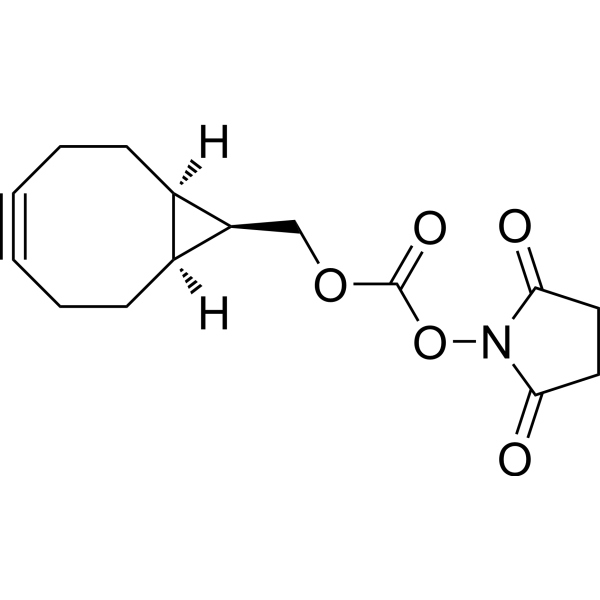
endo-BCN-NHS carbonate is an elastin-like protein (ELP) modification reagent. endo-BCN-NHS carbonate can react with lysine residues in ELP to make ELP carry BCN groups, and then cross-link ELP through strain-promoted azide-alkyne cycloaddition (SPAAC) reaction. endo-BCN-NHS carbonate promotes hydrogel formation. endo-BCN-NHS carbonate is mainly used in cell encapsulation related research .
loading...
    loading...
Cat. No.: HY-155882
CAS No.: 80506-64-5
Synonyms: mPEG750-NH2
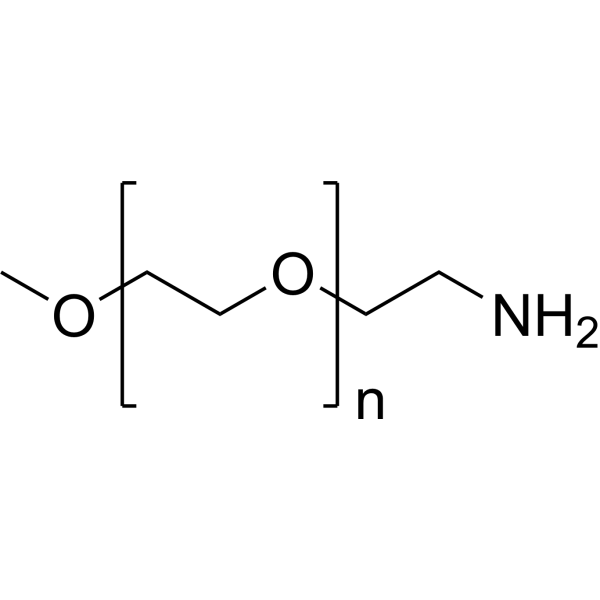
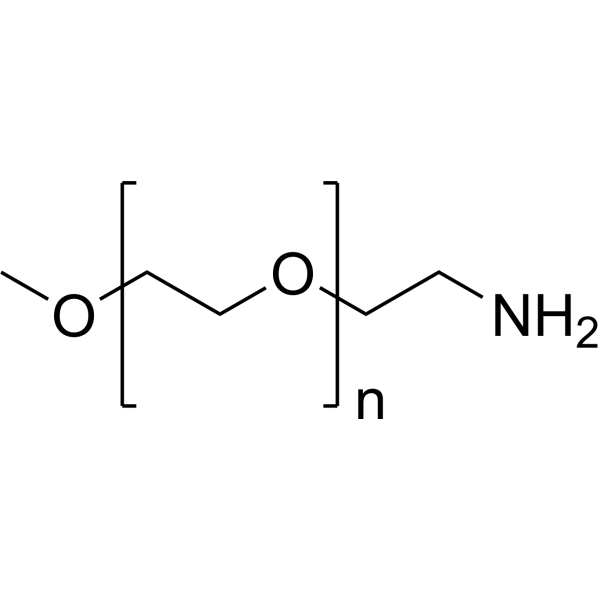
mPEG750-amine (mPEG750-NH2) is a chemical modification reagent for nanoparticles, capable of covalently binding to Ad-PVA to form Ad-PVA-PEG polymers. mPEG750-amine stabilizes gene delivery complexes by providing steric hindrance, reducing particle aggregation, while enhancing the water solubility and serum stability of the complex, reducing carrier cytotoxicity, and assisting in the efficient condensation of pDNA by cationic components to form nanoparticles that can be endocytosed by cells. mPEG750-amine can also be used to synthesize folate-conjugated polymer micelles for encapsulating the anticancer agent Camptothecin (HY-16560). Folate-conjugated polymer micelles are effective carriers for poorly soluble anticancer drugs, capable of avoiding macrophages and acting through folate receptor (FR)-mediated endocytosis to target tumor cells. mPEG750-amine can be applied to research in the field of non-viral gene delivery, as a component of gene delivery vectors, facilitating the safe and efficient delivery of nucleic acid drugs to target cells .
loading...
    loading...
Cat. No.: HY-154644
CAS No.: 8030-76-0
Research Areas:  

Cancer

Soya Lecithin is a phospholipid mixture that can be used as a drug delivery vehicle and is a pharmaceutical excipient. Soya Lecithin can form a lipid bilayer structure through self-assembly, and its binding properties are amphiphilic (hydrophilic head and hydrophobic tail), encapsulating hydrophobic drugs. Soya Lecithin forms stable nanoliposomes or microemulsions, improves the solubility and cellular uptake efficiency of poorly soluble drugs (such as Curcumin (HY-N0005)), and exerts activities such as enhancing drug delivery and regulating cell proliferation .
loading...
    loading...
Cat. No.: HY-149037A
Purity:  98.60%
Synonyms: N4-Spermine cholesteryl carbamate pentahydrochloride
Research Areas:  

Others

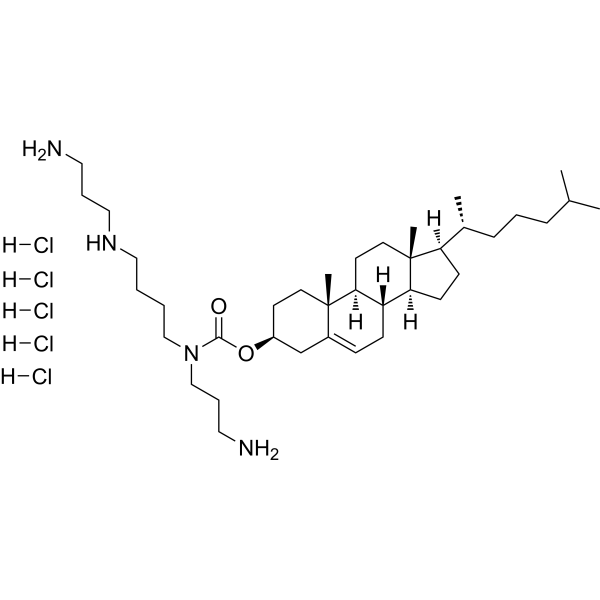
GL67 pentahydrochloride (N4-Spermine cholesteryl carbamate pentahydrochloride) is a cationic lipid that serves as a non-viral siRNA delivery vector and a non-viral gene transfer vector. GL67 pentahydrochloride enhances the encapsulation efficiency of siRNA in liposomal formulations and promotes the cellular uptake of siRNA across cancer cell membranes. GL67 pentahydrochloride mediates the transduction of plasmid DNA into cells. GL67 pentahydrochloride can be used in drug delivery-related research .
loading...
    loading...
Cat. No.: HY-170851
Target:  

Apoptosis

Research Areas:  

Inflammation/Immunology Cancer

GL392 is a senolytic agent that selectively delivers the potent senolytic compound Dasatinib (HY-10181) to senescent cells. GL392 targets lipofuscin in senescent cells via the LBD domain and is linked to Dasatinib through an ester bond. Upon internalization in senescent cells, Dasatinib is released, inducing apoptosis of the senescent cells. GL392 in micelle encapsulation (mGL392) enables selective delivery to senescent cells, achieving selective senescent cell elimination in vitro and in vivo. GL392 can be used for the research of melanoma .
loading...
    loading...
Cat. No.: HY-168943
PLGA nanoparticles, 100nm, are biodegradable tumor-targeting nanocarriers that can serve as drug delivery enhancers and multidrug resistance inhibitors. PLGA nanoparticles, 100nm, passively enriched through the EPR effect and actively targeted via ligand-mediated endocytosis, can encapsulate various antitumor active molecules. PLGA nanoparticles, 100nm can specifically recognize multiple types of tumor cells and improve cellular uptake, cytotoxicity and antiproliferative effects after modification with ligands such as transferrin, folic acid, and RGD. PLGA nanoparticles, 100nm can encapsulate various therapeutic drugs and can be surface modified to achieve targeting, imaging, and prolonged circulation time, making them suitable for cancer-related research .
loading...
    loading...
Cat. No.: HY-169474
CAS No.: 142986-44-5
Synonyms: PAMAM G1.0
Research Areas:  

Cancer

Starburst 1st Generation (PAMAM G1.0) is a Polyamidoamine (HY-164657; PAMAM) dendrimer with amine termini that has been used as a drug delivery system in vitro. Starburst 1st Generation conjugated to di-n-dodecylamine and encapsulating 5-Fluorouracil (HY-90006) increase the solubility of 5-Fluorouracil and are cytotoxic to AGS gastric adenocarcinoma cells .
loading...
    loading...
Cat. No.: HY-140696C
CAS No.: 9004-74-4
Synonyms: mPEG20000-Hydroxy; Polyethylene glycol monomethyl ether 20000
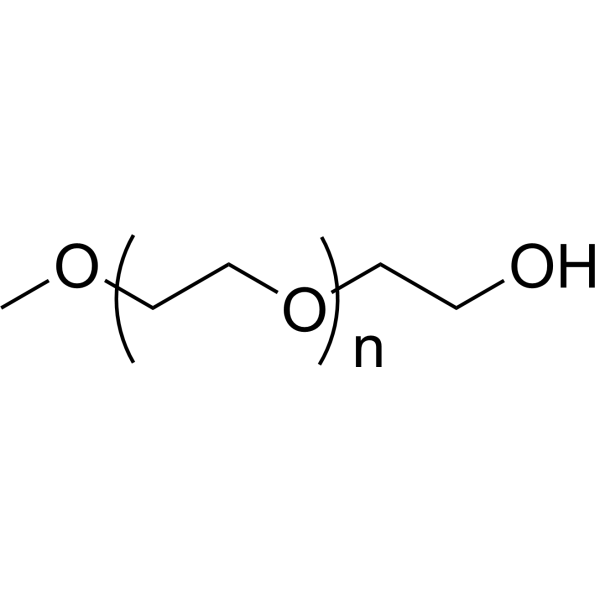
m-PEG20000-OH (mPEG20000-Hydroxy; Polyethylene glycol monomethyl ether 20000) can be used as a macroinitiator to participate in the synthesis of amphiphilic block copolymers. Nanoscale micelles can be prepared by using amphiphilic block copolymers to deliver active drugs. Paclitaxel (HY-B0015), a hydrophobic anticancer agent encapsulated in micelles, has stronger activity in killing cancer cells than free Paclitaxel. And it preferentially accumulates in tumor tissue with only limited distribution in healthy organs .
loading...
    loading...
Cat. No.: HY-158224
Synonyms: FibMA
Silk Fibroin Methacryloyl (FibMA) is methacrylated silk fibroin with excellent biocompatibility, stable mechanical properties and good processing properties, and was selected as the substrate for multifunctional microneedle (MN) patches. . MN patches made of Silk Fibroin Methacryloyl exhibit excellent biocompatibility, sustained drug release, pro-angiogenic, antioxidant and antibacterial properties depending on the specific drug encapsulated . Silk Fibroin Methacryloyl needs to self-assemble into fibrous hydrogel under the action of photoinitiator LAP (HY-44076), and target bioactive adhesion sites, play an inherent supporting role for tissue cells and biodegradable activity.
Application: cell culture, biological 3D printing, tissue engineering, etc.
loading...
    loading...
Cat. No.: HY-155884
CAS No.: 80506-64-5
Synonyms: mPEG4000-NH2
mPEG4000-amine can be used to synthesize folate-conjugated polymer micelles for encapsulating anticancer agent 9-nitrocamptothecin (HY-16560). folate-conjugated polymer micelles are effective carriers of insoluble anticancer drugs, which can avoid macrophages and play a role in endocytosis of tumor cells mediated by folate receptors (FR).
loading...
    loading...
Cat. No.: HY-149037
CAS No.: 179075-30-0
Synonyms: N4-Spermine cholesteryl carbamate
Research Areas:  

Others

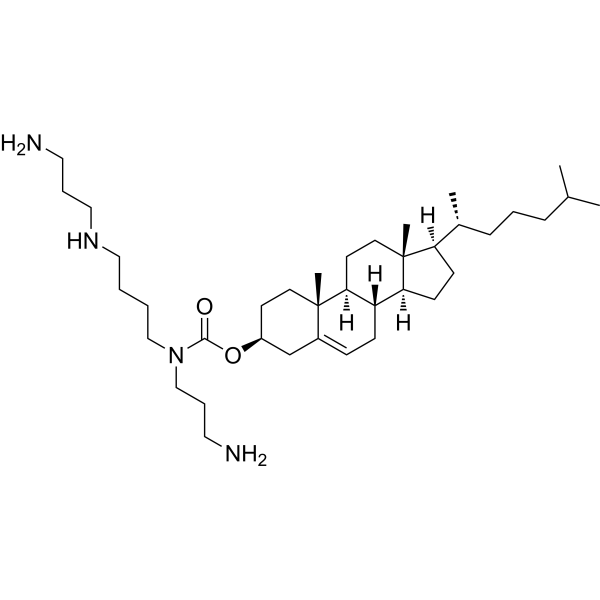
GL67 (N4-Spermine cholesteryl carbamate) is a cationic lipid that serves as a non-viral siRNA delivery vector and a non-viral gene transfer vector. GL67 enhances the encapsulation efficiency of siRNA in liposomal formulations and promotes the cellular uptake of siRNA across cancer cell membranes. GL67 mediates the transduction of plasmid DNA into cells. GL67 can be used in drug delivery-related research .
loading...
    loading...
Cat. No.: HY-P6299
CAS No.: 944792-75-0
Research Areas:  

Neurological Disease Cancer

MAX8 is a synthetic β-hairpin peptide that folds rapidly and self-assembles into a β-sheet-rich fibrous hydrogel network via non-covalent crosslinking. MAX8 hydrogel exhibits excellent shear-thinning and self-healing properties, enabling precise delivery via syringe and maintaining local retention after implantation. MAX8 hydrogel can uniformly encapsulate cells while preserving their viability and morphology, and protect growth factors (e.g., NGF) and chemotherapeutic drugs from degradation. MAX8 is applicable for spinal cord injury repair, medulloblastoma treatment, and three-dimensional high-throughput drug screening .
loading...
    loading...
Cat. No.: HY-P10675
Research Areas:  

Metabolic Disease

Peptide K is a self-assembling peptide fiber that can be used to prepare fibrous nanocomposite hydrogels. The fibrous nanocomposite hydrogels have a dynamic network that adapts to cells and enhances cell-matrix and cell-cell interactions, thus significantly promoting the mechanotransduction, metabolic energy, and osteogenesis of encapsulated stem cells .
loading...
    loading...
Cat. No.: HY-151508
CAS No.: 2939000-43-6
Target:  

Liposome

Research Areas:  

Cancer

Diamino lipid DAL4 is diamino lipid for the preparation of lipid nanoparticles (LNPs) encapsulated with mRNAs encoding cytokines including IL-12, IL-27 and GM-CSF. Diamino lipid DAL4 delivers mRNA to tumor cells to exert anti-tumor activity .
loading...
    loading...
Cat. No.: HY-P5033
CAS No.: 15266-88-3
Target:  

Bacterial

Research Areas:  

Cancer

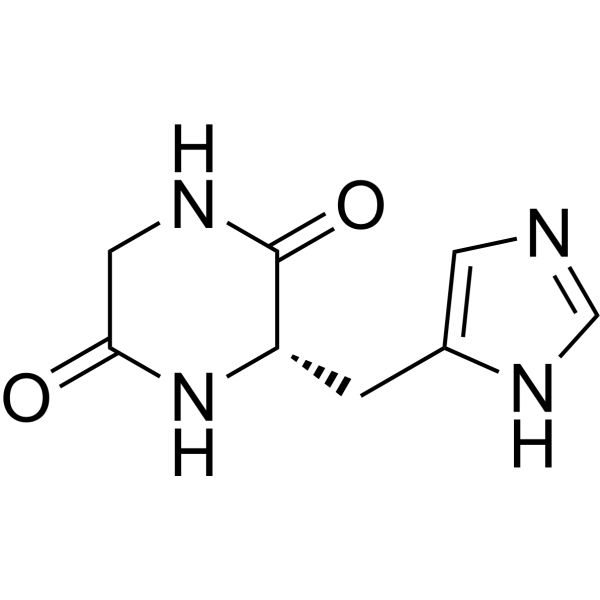
Cyclo(Gly-His) is a liposome-encapsulated cyclic dipeptide with antimicrobial and anticancer activity. Cyclo(Gly-His) has cytotoxicity for HeLa and MCF-7 cell with IC50 values of 1.699 mM and 0.358 mM, respectively. Cyclo(Gly-His) can be used for the research of drug delivery systems .
loading...
    loading...
Cat. No.: HY-P10699
CAS No.: 487036-63-5
Research Areas:  

Neurological Disease Cancer

MAX1 is a synthetic β-hairpin peptide that folds rapidly and self-assembles into a β-sheet-rich fibrous hydrogel network via non-covalent crosslinking. MAX1 hydrogel exhibits excellent shear-thinning and self-healing properties, enabling precise delivery via syringe and maintaining local retention after implantation. MAX1 hydrogel can uniformly encapsulate cells while preserving their viability and morphology, and protect growth factors (e.g., NGF) and chemotherapeutic drugs from degradation. MAX1 is applicable for spinal cord injury repair, medulloblastoma treatment, and three-dimensional high-throughput drug screening .
loading...
    loading...

