
1. Search Result
Search Result
Results for "

cellular systems

" in MedChemExpress (MCE) Product Catalog:

120

Inhibitors & Agonists

7

Screening Libraries

3

Fluorescent Dye

11

Biochemical Assay Reagents

3

Peptides

2

MCE Kits

3

Inhibitory Antibodies

9

Natural
Products

2

Isotope-Labeled Compounds

65

Oligonucleotides

Cat. No. Product Name Target Research Areas Chemical Structure
  • HY-113313
    Aldosterone
    5+ Cited Publications

    Endogenous Metabolite Cardiovascular Disease
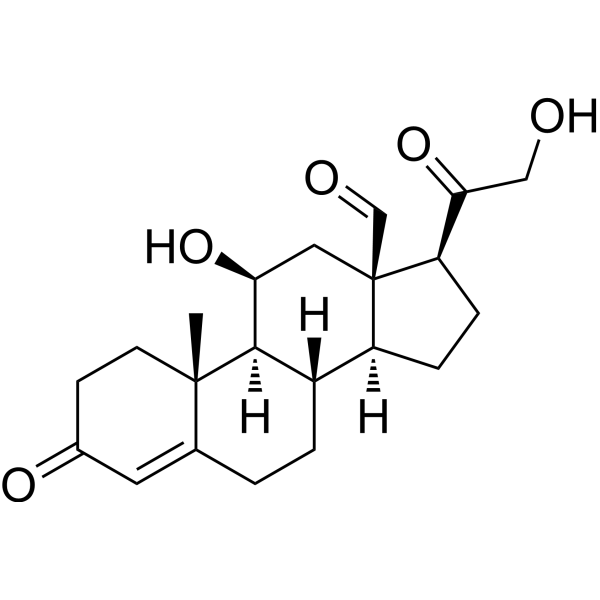
    Aldosterone is the primary mineralocorticoid. Aldosterone is a steroid hormone, and it is synthesized and secreted in response to renin-angiotensin system activation (RAS) or high dietary potassium by the zona glomerulosa (ZG) of the adrenal cortex. Aldosterone activity is dependent by the binding and activation of the cytoplasmic/nuclear mineralocorticoid receptor (MR) at cellular level .
    Aldosterone
  • HY-119977
    APF
    1 Publications Verification

    Fluorescent Dye Reactive Oxygen Species (ROS) Others
    APF is a cell-permeable fluorogenic probe to measure hydroxyly radical of ROS. APF is nonfluorescent and produces bright green fluorescence upon reaction with hydroxyl radical. APF can be used to detect intracellular reactive oxygen species (ROS) (Ex/Em=490/525 nm) .
    APF
  • HY-32343
    Secalciferol
    5+ Cited Publications

    (24R)-24,25-Dihydroxyvitamin D3

    Endogenous Metabolite VD/VDR Metabolic Disease Inflammation/Immunology
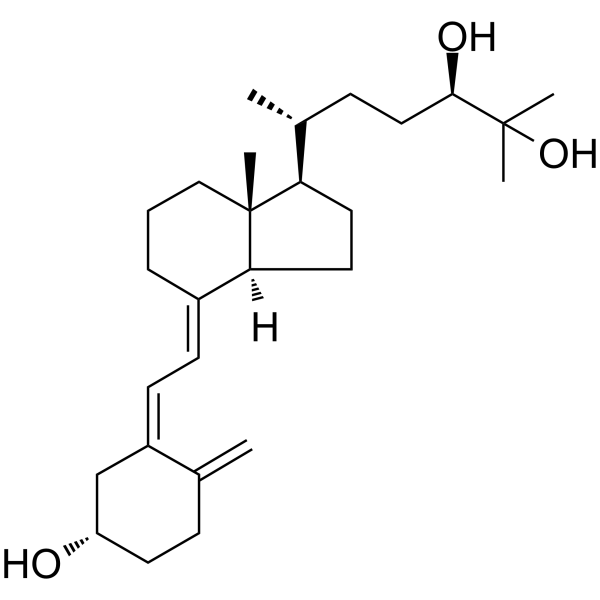
    Secalciferol ((24R)-24,25-Dihydroxyvitamin D3) is the major active metabolite of Vitamin D. Secalciferol activates vitamin D receptor (VDR) with an EC50 value of 150 nM. Secalciferol is involved in a wide range of biological functions such as calcium homeostasis, cellular differentiation and proliferation processes, as well as other functions related to the immune system, which is promising for research of rickets, osteomalacia, hypercalcemia and autoimmune disorders .
    Secalciferol
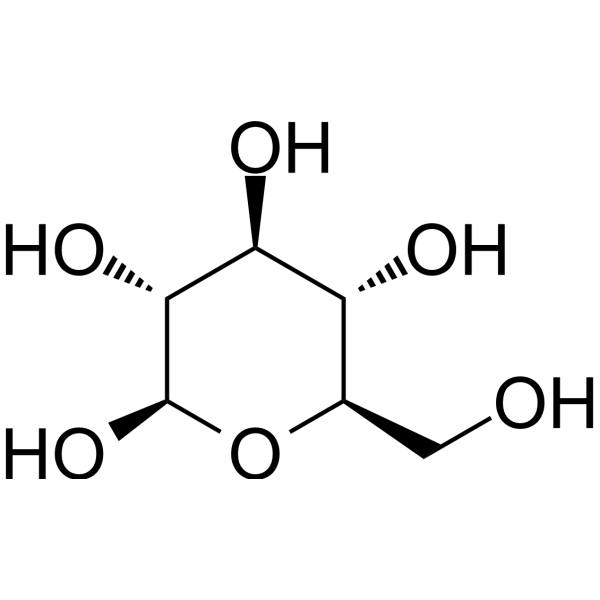
  • HY-121965

    Biochemical Assay Reagents Endogenous Metabolite Others
    β-D-Glucose, also known as glucose, is a monosaccharide, the most important carbohydrate in biological systems, the main energy source of cells, and plays a key role in various metabolic processes. β-D-Glucose has unique chemical properties that make it an abundant component in plant and animal tissues and is readily metabolized by organisms to produce cellular energy. It is commonly used to improve hypoglycemia and dehydration, and as a sweetener and preservative in food and beverage production.
    β-D-Glucose
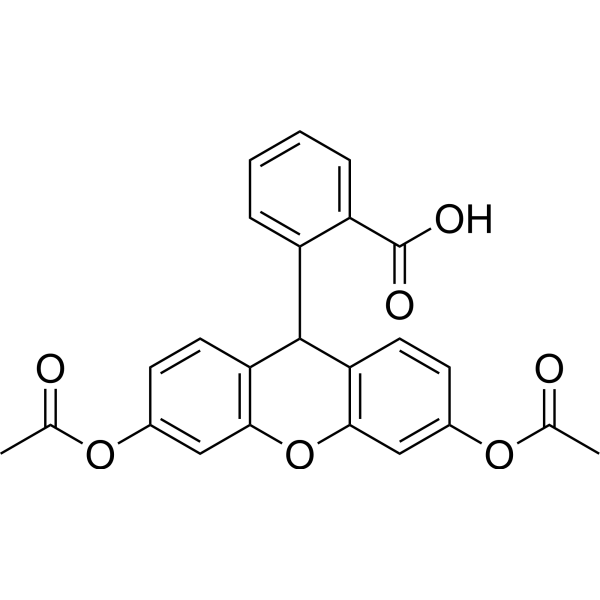
  • HY-101893

    Fluorescent Dye Others
    Dihydrofluorescein diacetate is a fluorimetric probe mainly used for oxidative stress measurements, in both cell-free systems and cellular models.
    Dihydrofluorescein diacetate
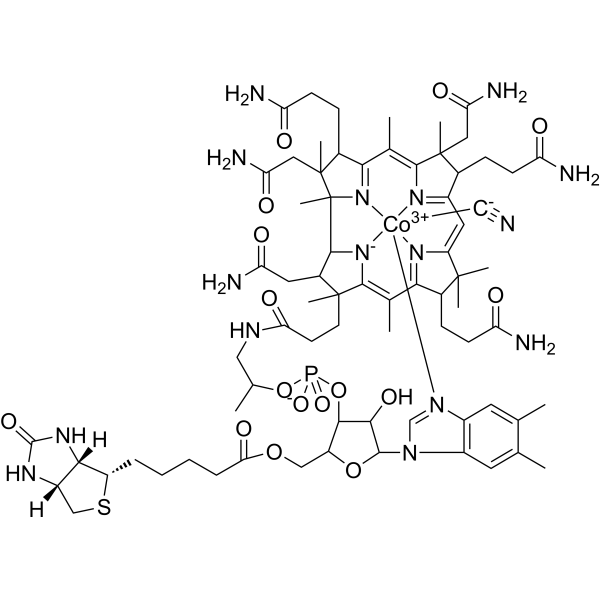
  • HY-B0315A

    Biotin-Cyanocobalamin B12

    Endogenous Metabolite Metabolic Disease
    Biotin-Vitamin B12 (Biotin-Cyanocobalamin B12) is the biotinylated Vitamin B12 (HY-B0315). Vitamin B12 is a vitamin that can pass through the blood-brain barrier. Vitamin B12 plays a key role in the normal functioning of the brain and nervous system, and for the formation of blood. Vitamin B12 is beneficial for many inflammatory diseases and also provides protection in oxidative-stress-associated pathologies. Biotin-Vitamin B12 can be used in researches on vitamin B12 transport, cellular uptake, targeted delivery, analytical detection, and other areas .
    Biotin-Vitamin B12
  • HY-162563

    STING Inflammation/Immunology Cancer
    AK59 is a STING degrader that works by leveraging HERC4, a hect domain E3 ligase. AK59 can be used in the study of autoimmune diseases and cancer .
    AK59
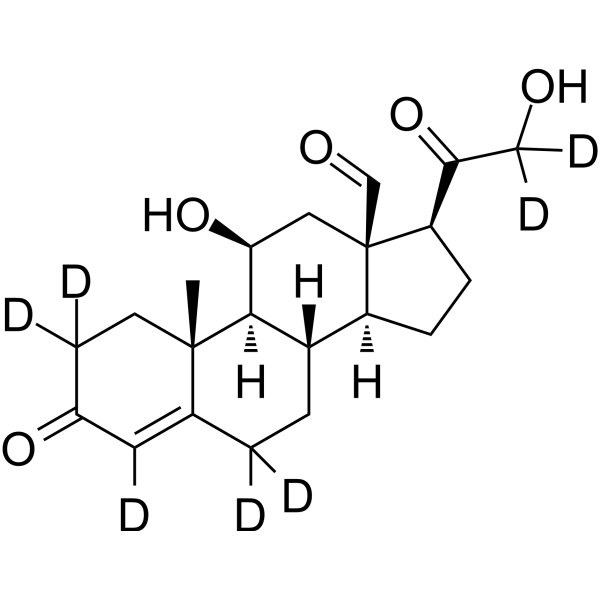
  • HY-113313S1

    Endogenous Metabolite Cardiovascular Disease
    Aldosterone-d7 is the deuterium labeled Aldosterone. Aldosterone is the primary mineralocorticoid. Aldosterone is a steroid hormone, and it is synthesized and secreted in response to renin-angiotensin system activation (RAS) or high dietary potassium by the zona glomerulosa (ZG) of the adrenal cortex. Aldosterone activity is dependent by the binding and activation of the cytoplasmic/nuclear mineralocorticoid receptor (MR) at cellular level .
    Aldosterone-d7
  • HY-150602

    Proteasome Neurological Disease
    20S Proteasome activator 1 is a potent 20S proteasome activator with EC200 values of 0.3 μM, 0.7 μM and 1.8 μM for trypsin-like site, chymotrypsin-like site and caspase-like site. 20S Proteasome activator 1 translates well in a cellular system, preventing the accumulation of the pathogenic A53T mutant of α-synuclein. 20S Proteasome activator 1 can be used for researching neurodegenerative diseases .
    20S Proteasome activator 1
  • HY-W040055S

    D-(+)-Neopterin-13C5; D-erythro-Neopterin-13C5

    Isotope-Labeled Compounds Endogenous Metabolite Others
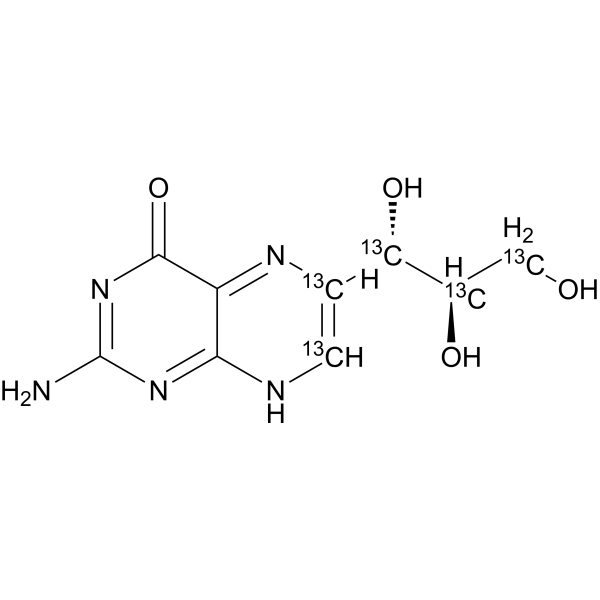
    Neopterin- 13C5 (D-(+)-Neopterin- 13C5; D-erythro-Neopterin- 13C5) is the deuterium labeled Neopterin (HY-W040055) . Neopterin (D-(+)-Neopterin), a catabolic product of guanosine triphosphate (GTM), serves as a marker of cellular immune system activation .
    Neopterin-13C5
  • HY-115435

    DMPS-Na; Dimyristoyl phosphatidylserine sodium

    Liposome Cancer
    1,2-Dimyristoyl-sn-glycero-3-phospho-L-serine sodium is an anionic phospholipid with myristic acid tails (14:0) and contains a carboxylic acid (COOH) and amine (NH2) in their head group. It has been used in the preparation of liposome.
    1,2-Dimyristoyl-sn-glycero-3-phospho-L-serine sodium
  • HY-W440719

    Liposome Cancer
    Cholesterol-PEG2000-MAL is a PEG derivative and can be used to prepare liposome or nanoparticle due to its ability to self-assemble in water. The maleimide moiety is reactive with thiol molecule to form a covalent thioether bond.
    Cholesterol-PEG2000-MAL
  • HY-148129

    TRPC6-IN-3

    TRP Channel Cardiovascular Disease
    Apecotrep (TRPC6-IN-3) (compound 17) is a potent, orally active transient receptor potential C6 ion channel (TRPC6) inhibitor. Apecotrep modulates not only intracellular calcium concentration, but also membrane potential by modulating the flux of cations including calcium and sodium ions. Apecotrep can be used in research of respiratory system .
    Apecotrep
  • HY-W440690

    Liposome Cancer
    Cholesterol-PEG2000-amine is a pegylated lipids which can be used for preparation of liposome or nanoparticle. The lipophilic moiety can encapsulate hydrophobic drugs whereas the hydrophilic PEG chain helps the overal water solubility of the micelles.
    Cholesterol-PEG2000-amine
  • HY-Y1004

    Decyl alcohol

    Environmental Pollutants Biochemical Assay Reagents Parasite Apoptosis Infection
    1-Decanol (Decyl alcohol) is a nematicidal agent derived from Houttuynia cordata, with an LC50 of 31.5 μg/mL against potato cyst nematodes (PCN). 1-decanol directly damages nematode surface structures, induces cellular apoptosis, and disrupts the oxidative stress regulation system, while also downregulating defense-related metabolic pathways in potato, thereby promoting the reallocation of metabolic resources from defense to growth. 1-Decanol can be used for the research of potato cyst nematode infestation .
    1-Decanol
  • HY-106031

    Topoisomerase DNA/RNA Synthesis Cancer
    F-14512 is an anticancer agent that utilizes the polyamine transport system (PTS) to selectively deliver polyamine-containing drugs to cancer cells. F-14512 enhances the affinity of polyamines for DNA, thereby inhibiting topoisomerase II and achieving selective cellular uptake. F-14512 exhibits significant cytotoxicity against cells with high PTS activity and induces DNA damage. F-14512 demonstrates potent antitumor activity in the MX1 breast tumor xenograft model. F-14512 can be used to study breast cancer .
    F-14512
  • HY-150743A

    Toll-like Receptor (TLR) Inflammation/Immunology
    Biotin-labeled ODN 2395 (sodium), a C class oligodeoxynucleotide, is a TLR9 agonist. Biotin-labeled ODN 2395 (sodium) can be used to evaluate CpG ODN cellular uptake and localization using a biotin detection system and light microscopy.
    Biotin-labeled ODN 2395 sodium
  • HY-146245A

    Toll-like Receptor (TLR) Inflammation/Immunology
    Biotin-labeled ODN 1826 (sodium), a class B CpG ODN (oligodeoxynucleotide), is a TLR9 agonist. Biotin-labeled ODN 1826 (sodium) can be used to evaluate CpG ODN cellular uptake and localization using a biotin detection system and light microscopy.
    Biotin-labeled ODN 1826 sodium
  • HY-W247098

    DHR 6G

    Reactive Oxygen Species (ROS) Cancer
    Dihydrorhodamine 6G (DHR 6G) is the reduced form of Rhodamine 6G, which is used as fluorescent mitochondrial dye. It is nonfluorescent, but it readily enters most of the cells and is oxidized by oxidative species or by cellular redox systems to the fluorescent rhodamine 6G that accumulates in mitochondrial membranes. Dihydrorhodamine 6G is useful for detecting reactive oxygen species (ROS) including superoxide .
    Dihydrorhodamine 6G
  • HY-W591461
    DSPE-PEG-COOH, MW 2000
    1 Publications Verification

    Liposome Cancer
    DSPE-PEG-COOH, MW 2000 is a phospholipid polyPEG which can be used to prepare liposomes or nanoparticles. The terminal carboxylic acid can react with primary amine groups to form a stable amide bond.
    DSPE-PEG-COOH, MW 2000
  • HY-W440711

    Liposome Cancer
    Cholesterol-PEG-Biotin (MW 2000) is a pegylated lipids which has strong binding to avidin or streptavidin.
    Cholesterol-PEG-Biotin (MW 2000)
  • HY-W440706

    Liposome Cancer
    Cholesterol-PEG2000-alcohol is a pegylated lipids which can be used for preparation of liposome or nanoparticle. The lipophilic moiety can encapsulate hydrophobic drugs whereas the hydrophilic PEG chain helps the overal water solubility of the micelles. The amine can react with an activated NHS ester to form a stable amide bond.
    Cholesterol-PEG2000-alcohol
  • HY-W800793

    1,2-dipalmitoyl-sn-glycero-3-phosphoethanolamine-N-(succinyl)

    Liposome Cancer
    16:0 Succinyl PE is a carboxylic acid-functionalized lipid with a two carbon linker to a phosphoethanolamine bound to two palmitic acid tails.
    16:0 Succinyl PE
  • HY-W800805

    Liposome Cancer
    DOPE-Mal is a synthetic analog of naturally-occurring PE containing 18:1 fatty acids at the sn-1 and sn-2 positions with a terminal maliemide group. The maleimide group will react with a thiol group to form a covalent bond. The hydrophilic PEG spacer increases solubility in aqueous media.
    DOPE-Mal
  • HY-W800797

    1,2-dipalmitoyl-sn-glycero-3-phosphoethanolamine-N-(biotinyl)

    Liposome Cancer
    16:0 Biotinyl PE is a biotin-functionalized lipid attached to a phosphoethanolamine linked to two palmitic acid groups.
    16:0 Biotinyl PE
  • HY-W440981

    1-Stearoyl-2-palmitoyl-sn-glycero-3-phosphocholine

    Liposome Cancer
    SPPC is a phospholipid with different length of fatty acid. The sn-1 position contains a stearic acid (18:0) while the sn-2 position is occupied by a palmitic acid (16:0).
    SPPC
  • HY-141615

    PDME; 16:0 Dimethyl PE

    Liposome Cancer
    1,2-Dipalmitoyl-sn-glycero-3-phospho-N,N-dimethylethanolamine has been used in the generation of liposomes and monolayers for use in the study of membrane permeability and monolayer viscosity, respectively.
    1,2-Dipalmitoyl-sn-glycero-3-phospho-N,N-dimethylethanolamine
  • HY-W339838

    14:0 Lyso PG

    Liposome Cancer
    1-Myristoyl-2-hydroxy-sn-glycero-3-PG sodium is a lysophospholipid containing myristic acid (14:0) at the sn-1 position. It has been used in the generation of micelles, liposomes, and other types of artificial membranes, including lipid-based drug carrier systems.
    1-Myristoyl-2-hydroxy-sn-glycero-3-PG sodium
  • HY-W040055R

    D-(+)-Neopterin (Standard); D-erythro-Neopterin (Standard)

    Reference Standards Endogenous Metabolite Inflammation/Immunology
    Neopterin (Standard) is the analytical standard of Neopterin. This product is intended for research and analytical applications. Neopterin (D-(+)-Neopterin), a catabolic product of guanosine triphosphate (GTM), serves as a marker of cellular immune system activation.
    Neopterin (Standard)
  • HY-146244A

    Toll-like Receptor (TLR) Inflammation/Immunology
    Biotin-labeled agatolimod (sodium), a class B CpG ODN (oligodeoxynucleotide), is a TLR9 agonist. Biotin-labeled agatolimod (sodium) can be used to evaluate CpG ODN cellular uptake and localization using a biotin detection system and light microscopy.
    Biotin-labeled agatolimod sodium
  • HY-113313R

    Reference Standards Endogenous Metabolite Cardiovascular Disease
    Aldosterone (Standard) is the analytical standard of Aldosterone. This product is intended for research and analytical applications. Aldosterone is the primary mineralocorticoid. Aldosterone is a steroid hormone, and it is synthesized and secreted in response to renin-angiotensin system activation (RAS) or high dietary potassium by the zona glomerulosa (ZG) of the adrenal cortex. Aldosterone activity is dependent by the binding and activation of the cytoplasmic/nuclear mineralocorticoid receptor (MR) at cellular level .
    Aldosterone (Standard)
  • HY-144874

    PARP Neurological Disease Cancer
    AZ3391 is a potent inhibitor of PARP. AZ3391 is a quinoxaline derivative. PARP family of enzymes play an important role in a number of cellular processes, such as replication, recombination, chromatin remodeling, and DNA damage repair. AZ3391 has the potential for the research of diseases and conditions occurring in tissues in the central nervous system, such as the brain and spinal cord (extracted from patent WO2021260092A1, compound 23) .
    AZ3391
  • HY-W440958

    PSPC; PC(16:0-18:0)

    Liposome Cancer
    1-Palmitoyl-2-stearoyl-sn-glycero-3-phosphocholine is an assymetrical phospholipid containing saturated palmitic and stearic acid at the sn-1 and sn-2 position respectively. The phosphate group is attached to choline.
    1-Palmitoyl-2-stearoyl-sn-glycero-3-phosphocholine
  • HY-W440995

    Liposome Cancer
    DOPE-PEG2000-Mal is a phospholipid polyPEG which can be used to prepare liposomes or nanoparticles. It is also reactive with thiol at pH 6.5 tp 7.5 to form a stable thioether bond.
    DOPE-PEG2000-Mal
  • HY-150741A

    Toll-like Receptor (TLR) Inflammation/Immunology
    Biotin-labeled ODN 2216 (sodium) is a human-specific TLR9 (toll-like receptor 9) ligand or agonist. Biotin-labeled ODN 2216 (sodium) can be used to evaluate CpG ODN cellular uptake and localization using a biotin detection system and light microscopy.
    Biotin-labeled ODN 2216 sodium
  • HY-W343736

    1,3-DPPE; 1,3-Dipalmitoyl-sn-glycero-2-PE

    Liposome Cancer
    1,3-Dipalmitoyl-glycero-2-phosphoethanolamine is a phospholipid containing the saturated long-chain (16:0) stearic acid inserted at the sn-1 and sn-3 positions and PE at the sn-2 site. It can be used in the generation of micelles, liposomes, and other types of artificial membranes.
    1,3-Dipalmitoyl-glycero-2-phosphoethanolamine
  • HY-W591449

    Liposome Cancer
    DOPE-PEG2000-Azide is a liposome to simulate biological phospholipid membrane. Liposomes are the main component of vesicles with concentric phospholipid bilayer membranes, which can be used to construct drug delivery systems for anti-cancer and anti-infection fields. Highly polar water-soluble payloads can be trapped in the internal aqueous space of liposomes, while lipophilic payloads can partition into and become part of the lipid bilayer. Especially for delivering antisense oligonucleotides, it can overcome problems such as inefficient cellular uptake and rapid loss in the body .
    DOPE-PEG2000-Azide
  • HY-P1803

    PKCε; PRKCE ; Peptide Epsilon

    PKC Neurological Disease Inflammation/Immunology Endocrinology
    Protein Kinase C Peptide Substrate is targeted to a specific cellular compartment in a manner dependent on second messengers and on specific adapter proteins in response to extracellular signals that activate G-protein-coupled receptors, tyrosine kinase receptors, or tyrosine kinase-coupled receptors. Protein Kinase C Peptide Substrate then regulates various physiological functions including the activation of nervous, endocrine, exocrine, inflammatory, and immune systems .
    Protein Kinase C Peptide Substrate
  • HY-W590536

    1-Palmitoyl-2-Lauroyl-sn-glycero-3-Phosphatidylcholine; 1-Palmitoyl-2-Lauroyl-sn-glycero-3-Phosphocholine

    Liposome Cancer
    1,2-PLPC is a phospholipid containing palmitoyl (16:0) and lauryl (12:0) acyl substituents at the sn-1 and sn-2 positions, respectively. It can be used in the generation of micelles, liposomes, and other types of artificial membranes.
    1,2-PLPC
  • HY-W591332

    Liposome Cancer
    mPEG2000-DMPE is a PEGylated 1,2-Dimyristoyl-sn-glycero-3-phosphoethanolamine (14:0 PE) compound with a methyl group at the other end of the PEG chain. The PEG polymer exhibits amphiphatic behavior and helps to form stable micelles in an aqueous solution. It can be used to prepare nanoparticles or liposomes for targeted drug delivery applications.
    mPEG2000-DMPE
  • HY-W440985

    1,2-dilauroyl-sn-glycero-3-phospho-L-serine

    Liposome Cancer
    DLPS is an anionic phospholipid with lauric acid tails (12:0) and contains a carboxylic acid (COOH) and amine (NH2) in their head group. It has been used in the preparation of lipid-mixing vesicles, liposome, or artificial membrane. Due to the medium size of fatty acid chain, DLPS is used to form thinner membranes/walls.
    DLPS
  • HY-W800794

    DPPE-NG; 1,2-dipalmitoyl-sn-glycero-3-phosphoethanolamine-N-(glutaryl)

    Liposome Cancer
    16:0 Glutaryl PE is is a carboxylic acid-functionalized lipid with a three carbon linker to a phosphoethanolamine bound to two palmitic acid tails.
    16:0 Glutaryl PE
  • HY-W440957

    PC(16:0/14:0); 1-palmitoyl-2-myristoyl-sn-glycero-3-phosphocholine

    Liposome Cancer
    PMPC is a phosphatidylcholine with asymmetrical fatty acid. Palmitic acid occupies sn-1 position while myristic acid is placed at the sn-2 position.
    PMPC
  • HY-W590555

    Liposome Cancer
    Thiol-PEG2000-DMG is a phospholipid polyPEG which can be used to prepare liposomes or nanoparticles. The terminal thiol group reacts with maleimide, OPSS, vinylsulfone and transition metal surfaces including gold, silver, etc.
    Thiol-PEG2000-DMG
  • HY-W800796

    1,2-dioleoyl-sn-glycero-3-phosphoethanolamine-N-(biotinyl)

    Liposome Cancer
    18:1 Biotinyl PE is a biotin-functionalized lipid attached to a phosphoethanolamine linked to two oleic acid groups.
    18:1 Biotinyl PE
  • HY-W800787

    Liposome Cancer
    18:1 PE MCC is a maleimide-functionalized thiol-reactive lipid with a phosphoethanolamine linked to two oleic acid tails and a maleimide group.
    18:1 PE MCC
  • HY-W800733

    1,2-Dilauroyl-sn-glycero-3-phosphorylglycerol; PG(12:0/12:0)

    Liposome Cancer
    DLPG is a phospholipid containing lauric acid (12 chain fatty acid) inserted at the sn-1 and sn-2 positions. Its phosphate group is attached to glycerol. It is used in the generation of micelles, liposomes, and other artificial membranes.
    DLPG
  • HY-40118

    Boc-L-proline methyl ester

    Liposome Others
    Boc-Pro-OMe (Boc-L-proline methyl ester) is a lipid compound that can be used for liposome preparation. Liposomes are the main component of vesicles with concentric phospholipid bilayer membranes, which can be used to construct drug delivery systems for anti-cancer and anti-infection fields. Highly polar water-soluble loads can be captured in the internal aqueous space of liposomes, while lipophilic loads can be distributed into the lipid bilayer and become part of the lipid bilayer. Especially for the delivery of antisense oligonucleotides, it can overcome the problems of inefficient cellular uptake and rapid loss in the body.
    Boc-Pro-OMe
  • HY-153725

    Liposome Cancer
    17:1 Lyso PC is a liposome to simulate biological phospholipid membrane. Liposomes are the main component of vesicles with concentric phospholipid bilayer membranes, which can be used to construct drug delivery systems for anti-cancer and anti-infection fields. Highly polar water-soluble payloads can be trapped in the internal aqueous space of liposomes, while lipophilic payloads can partition into and become part of the lipid bilayer. Especially for delivering antisense oligonucleotides, it can overcome problems such as inefficient cellular uptake and rapid loss in the body .
    17:1 Lyso PC
  • HY-150724A

    Toll-like Receptor (TLR) Inflammation/Immunology
    Biotin-labeled ODN 1018 (sodium), an oligodeoxynucleotide, is a TLR-9 agonist. Biotin-labeled ODN 1018 (sodium) can be used to evaluate CpG ODN cellular uptake and localization using a biotin detection system and light microscopy.
    Biotin-labeled ODN 1018 sodium

Inquiry Online

Your information is safe with us. * Required Fields.

Salutation


Country or Region *

Applicant Name *


Organization Name *

Department *


Email Address *


Product Name *

Cat. No.


Requested quantity *

Phone Number *


Remarks

Inquiry Online

Inquiry Information

Product Name:
Cat. No.:
Quantity:
MCE Japan Authorized Agent:

