8333 Results for "

competitive fluorescent probe displacement

" in MedChemExpress (MCE) Product Catalog:
Products (8333)

8333 Results for "competitive fluorescent probe displacement" in MCE Product Catalog:

1223
1223 Publications Verification
Cat. No.: HY-10108
CAS No.: 154447-36-6
Purity:  99.86%
Research Areas:  

Infection Cancer

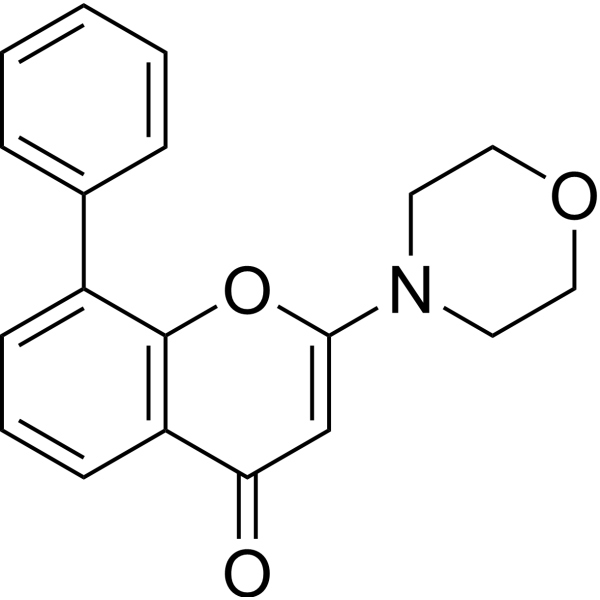
LY294002 is a broad-spectrum inhibitor of PI3K with IC50s of 0.5, 0.57, and 0.97 μM for PI3Kα, PI3Kδ and PI3Kβ, respectively . LY294002 also inhibits CK2 with an IC50 of 98 nM . LY294002 is a competitive DNA-PK inhibitor that binds reversibly to the kinase domain of DNA-PK with an IC50 of 1.4 μM. LY294002 is an apoptosis activator .
loading...
    loading...
846
846 Cited Publications
Cat. No.: HY-D0940
CAS No.: 4091-99-0
Synonyms: DCFH-DA; 2',7'-Dichlorodihydrofluorescein diacetate
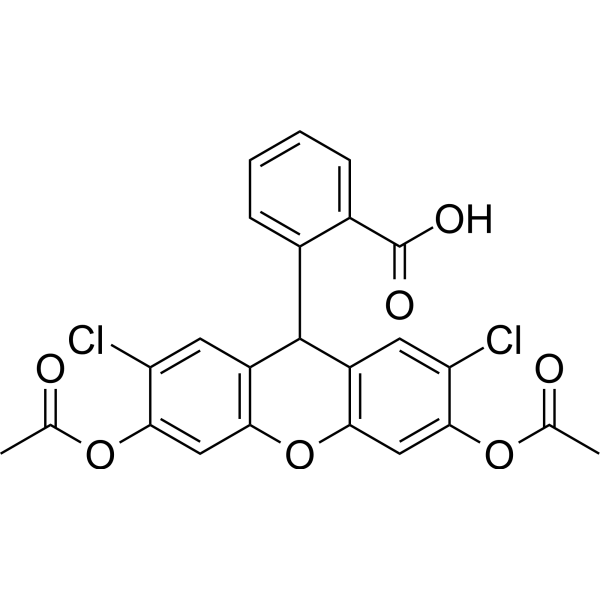
H2DCFDA (DCFH-DA) is a cell-permeable probe used to detect intracellular reactive oxygen species (ROS) (Ex/Em=488/525 nm) .
loading...
    loading...
823
823 Cited Publications
Cat. No.: HY-13418
CAS No.: 1219168-18-9
Purity:  99.7%
Synonyms: Compound C dihydrochloride; BML-275 dihydrochloride
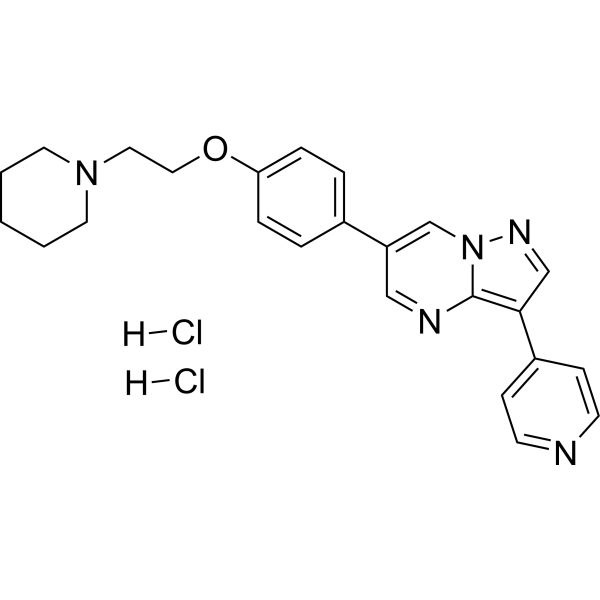
Dorsomorphin (Compound C) dihydrochloride is a potent, selective and ATP-competitive AMPK inhibitor, with a Ki of 109 nM. Dorsomorphin dihydrochloride inhibits BMP pathway by targeting the type I receptors ALK2, ALK3, and ALK6. Dorsomorphin dihydrochloride can reverse autophagy activation and anti-inflammatory effect of Urolithin A (HY-100599).
loading...
    loading...
823
823 Cited Publications
Cat. No.: HY-13418A
CAS No.: 866405-64-3
Purity:  99.10%
Synonyms: BML-275
Research Areas:  

Cancer

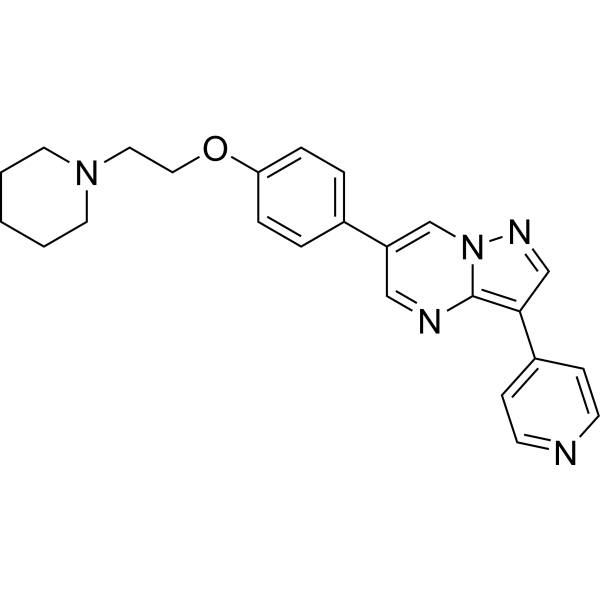
Dorsomorphin (BML-275) is a selective and ATP-competitive AMPK inhibitor (Ki=109 nM in the absence of AMP). Dorsomorphin (BML-275) selectively inhibits BMP type I receptors ALK2, ALK3, and ALK6. Dorsomorphin can reverse autophagy activation and anti-inflammatory effect of Urolithin A (HY-100599) .
loading...
    loading...
642
642 Cited Publications
Cat. No.: HY-10256A
CAS No.: 869185-85-3
Purity:  99.37%
Synonyms: SB 203580 hydrochloride; RWJ 64809 hydrochloride
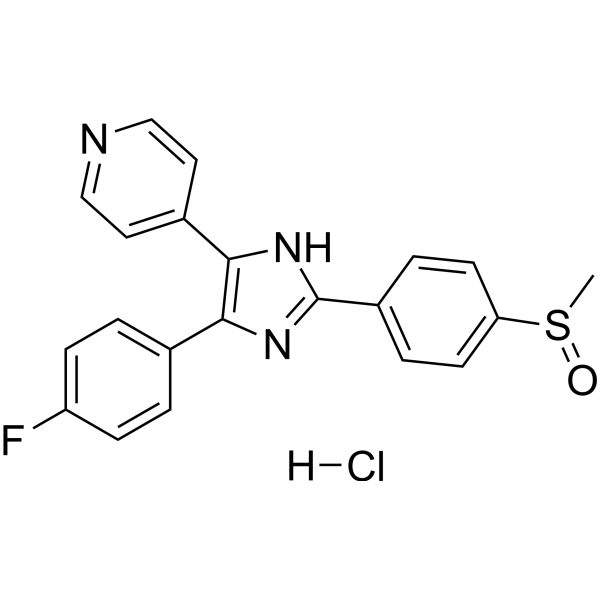
Adezmapimod (SB 203580; RWJ 64809) hydrochloride is a selective and ATP-competitive p38 MAPK inhibitor with IC50s of 50 nM and 500 nM for SAPK2a/p38 and SAPK2b/p38β2, respectively. Adezmapimod hydrochloride inhibits LCK, GSK3β and PKBα with IC50s of 100-500-fold higher than that for SAPK2a/p38. Adezmapimod hydrochloride does not disrupt JNK activity and is an autophagy and mitophagy activator .
loading...
    loading...
642
642 Cited Publications
Cat. No.: HY-10256
CAS No.: 152121-47-6
Purity:  99.92%
Synonyms: SB 203580; RWJ 64809
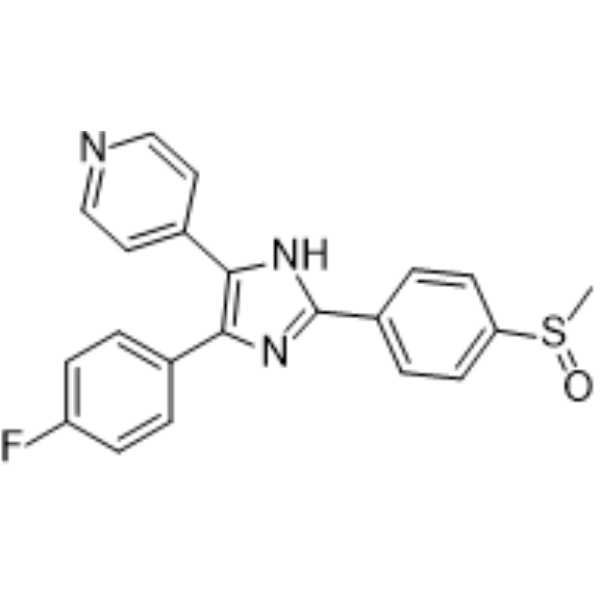
Adezmapimod (SB 203580) is a selective and ATP-competitive p38 MAPK inhibitor with IC50s of 50 nM and 500 nM for SAPK2a/p38 and SAPK2b/p38β2, respectively. Adezmapimod inhibits LCK, GSK3β and PKBα with IC50s of 100-500-fold higher than that for SAPK2a/p38. Adezmapimod can inhibit p38 MAPK and lead to the inhibition of downstream HSP27 phosphorylation. Adezmapimod does not disrupt JNK activity and is an autophagy and mitophagy activator .
loading...
    loading...
628
628 Cited Publications
Cat. No.: HY-12041
CAS No.: 129-56-6
Purity:  99.73%
Research Areas:  

Cancer

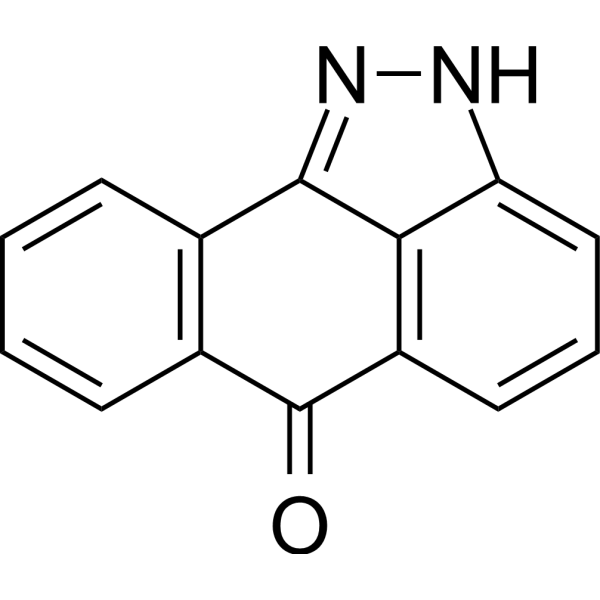
SP600125 is an orally active, reversible, and ATP-competitive JNK inhibitor with IC50s of 40, 40 and 90 nM for JNK1, JNK2 and JNK3, respectively. SP600125 is a potent ferroptosis inhibitor. SP600125 induces the transformation of bladder cancer cells from autophagy to apoptosis .
loading...
    loading...
607
607 Cited Publications
Cat. No.: HY-10583
CAS No.: 129830-38-2
Purity:  99.94%
Target:  

Organoid ROCK

Research Areas:  

Neurological Disease Cancer

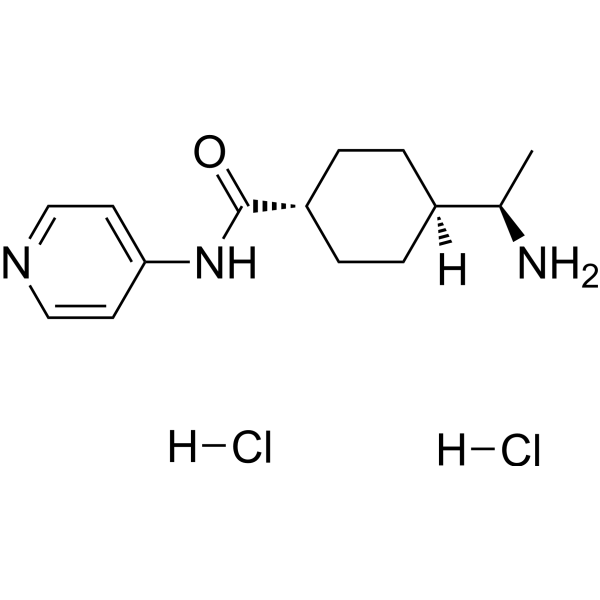
Y-27632 dihydrochloride is an orally active and ATP-competitive ROCK (Rho-kinase) inhibitor (ROCK-I Ki=220 nM; ROCK-II Ki=300 nM). Y-27632 dihydrochloride shows antiepileptic effects .
loading...
    loading...
491
491 Cited Publications
Cat. No.: HY-12031A
CAS No.: 109511-58-2
Purity:  98.57%
Research Areas:  

Cancer

U0126 is a potent, non-ATP competitive and selective MEK1 and MEK2 inhibitor, with IC50s of 72 nM and 58 nM, respectively. U0126 is an autophagy and mitophagy inhibitor .
loading...
    loading...
491
491 Cited Publications
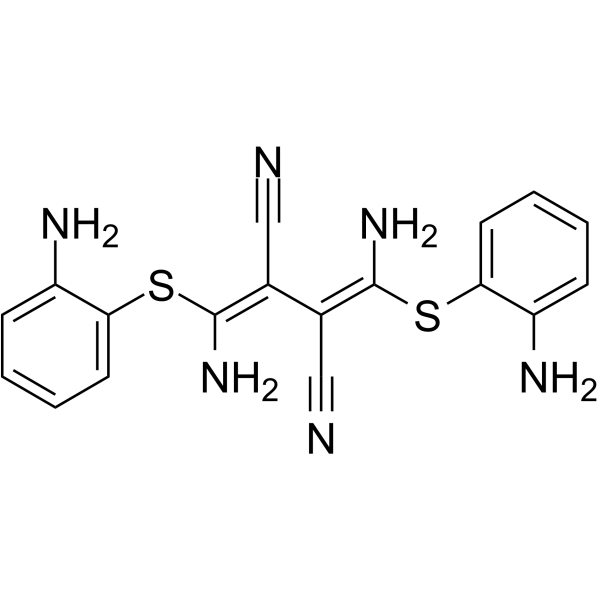
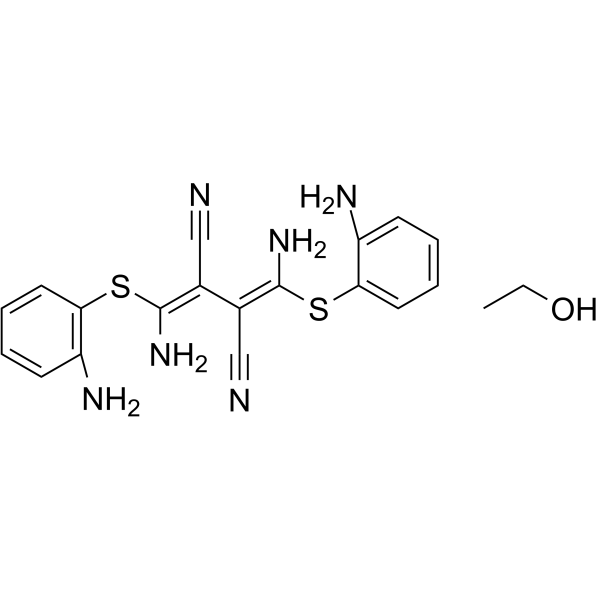
Cat. No.: HY-12031
CAS No.: 1173097-76-1
Purity:  98.92%
Research Areas:  

Cancer

U0126 (U0126-EtOH) is a potent, non-ATP competitive and selective MEK1 and MEK2 inhibitor, with IC50s of 72 nM and 58 nM, respectively. U0126 is an autophagy and mitophagy inhibitor .
loading...
    loading...
397
397 Cited Publications
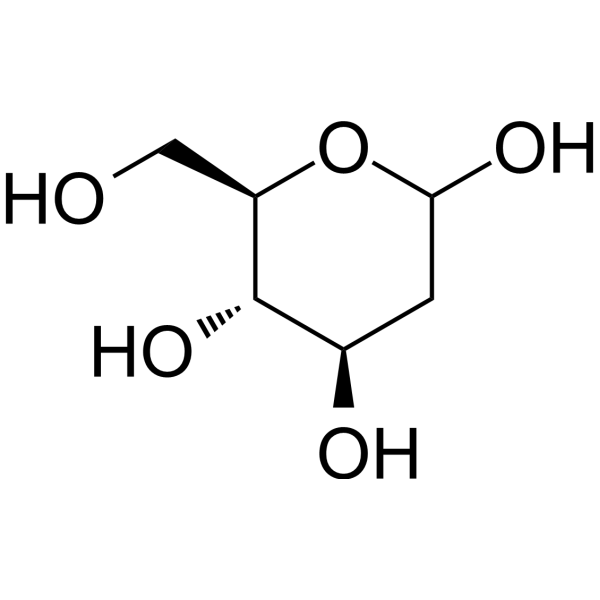
Cat. No.: HY-13966
CAS No.: 154-17-6
Purity:  99.93%
Synonyms: 2-DG; 2-Deoxy-D-arabino-hexose; D-Arabino-2-deoxyhexose
2-Deoxy-D-glucose is a glucose analog that acts as a competitive inhibitor of glucose metabolism, inhibiting glycolysis via its actions on hexokinase .
loading...
    loading...
331
331 Cited Publications
Cat. No.: HY-D1055
CAS No.: 1003197-00-9
MitoSOX Red is a live cell fluorescent probe that specifically targets mitochondria and is cell membrane permeable. MitoSOX Red enters mitochondria and is oxidized by superoxide but not by other ROS or RNS generating systems. The oxidized MitoSOX Red then binds to nucleic acids in mitochondria/nucleus, producing strong red fluorescence. MitoSOX Red can be used as a fluorescent indicator to specifically detect superoxide. In addition, superoxide dismutase (SOD) can prevent the oxidation of MitoSOX Red.
Excitation/emission wavelength: 510/580 nm.
loading...
    loading...
310
310 Cited Publications
Cat. No.: HY-13030
CAS No.: 1268524-70-4
Purity:  99.90%
Synonyms: JQ1
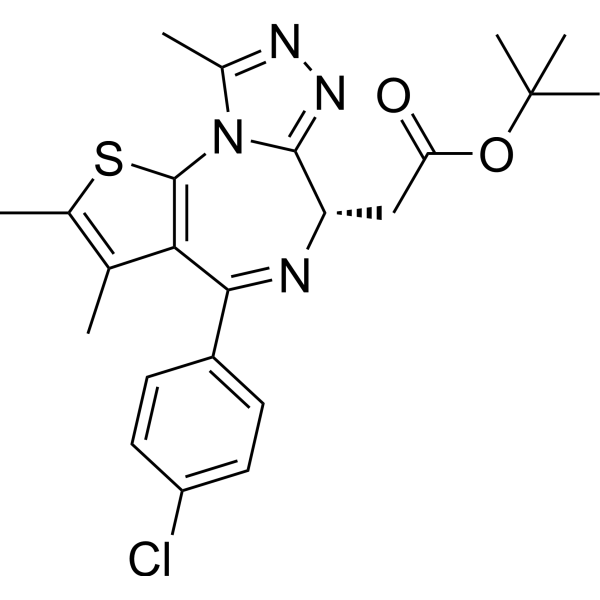
(+)-JQ-1 (JQ1), a chemical probe, is a potent, specific, CNS-penetrant and reversible BET bromodomain inhibitor, with IC50s of 77 and 33 nM for the first and second bromodomain (BRD4(1/2)) . (+)-JQ-1 also activates autophagy .
loading...
    loading...
247
247 Cited Publications
Cat. No.: HY-15534
CAS No.: 3520-43-2
Purity:  98.71%
Synonyms: CBIC2
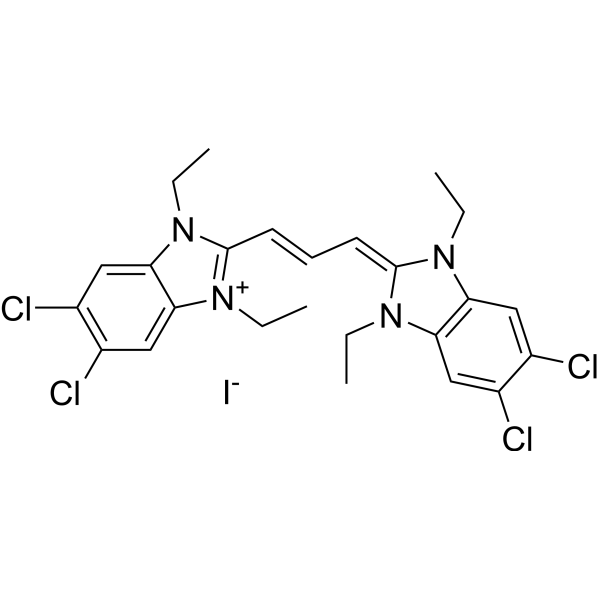
JC-1 (CBIC2) is an ideal fluorescent probe widely used to detect mitochondrial membrane potential. JC-1 accumulates in mitochondria in a potential dependent manner and can be used to detect the membrane potential of cells or purified mitochondria. In normal mitochondria, JC-1 aggregates in the mitochondrial matrix to form a polymer, which emits strong red fluorescence (Ex=585 nm, Em=590 nm); When the mitochondrial membrane potential is low, JC-1 cannot aggregate in the matrix of mitochondria and produce green fluorescence (ex=510 nm, em= 527 nm) .
loading...
    loading...
235
235 Cited Publications
Cat. No.: HY-15141
CAS No.: 62996-74-1
Purity:  99.52%
Synonyms: Antibiotic AM-2282; STS; AM-2282
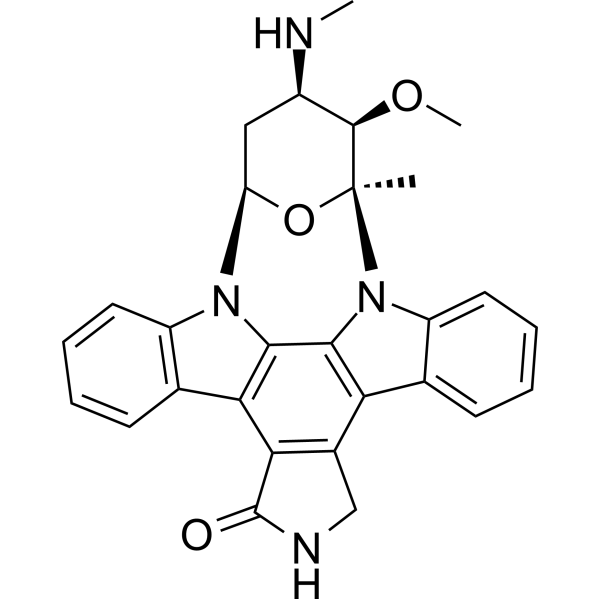
Staurosporine is a potent, ATP-competitive and non-selective inhibitor of protein kinases with IC50s of 6 nM, 15 nM, 2 nM, and 3 nM for PKC, PKA, c-Fgr, and Phosphorylase kinase respectively. Staurosporine also inhibits TAOK2 with an IC50 of 3 μM. Staurosporine is an apoptosis inducer .
loading...
    loading...
204
204 Cited Publications
Cat. No.: HY-50846
CAS No.: 942183-80-4
Target:  

ERK

Research Areas:  

Neurological Disease Cancer

SCH772984 is a highly selective and ATP-competitive ERK inhibitor, with IC50s of 4 and 1 nM for ERK1 and ERK2, respectively. SCH772984 has antitumor activity in MAPK inhibitor-naive and MAPK inhibitor-resistant cells containing BRAF or RAS mutations .
loading...
    loading...
196
196 Cited Publications
Cat. No.: HY-D0079
CAS No.: 104821-25-2
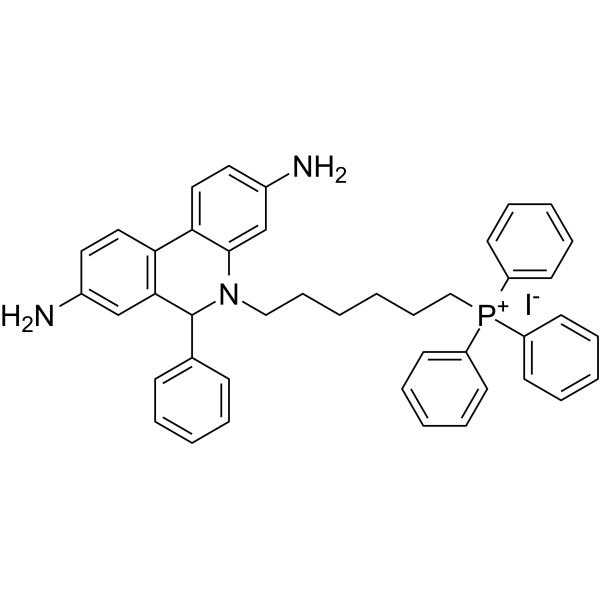
Synonyms: Hydroethidine; PD-MY 003
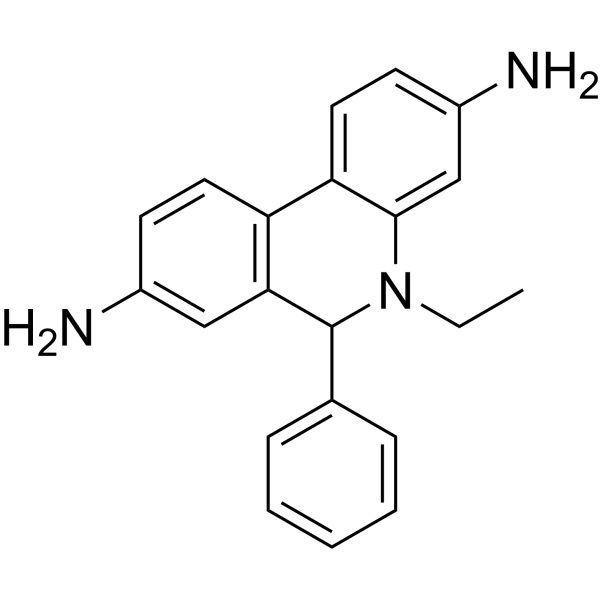
Dihydroethidium, also known as DHE, is a peroxide indicator. Dihydroethidium penetrates cell membranes to form a fluorescent protein complex with blue fluoresces. After entering the cells, Dihydroethidium is mainly localized in the cell membrane, cytoplasm and nucleus, and the staining effect is the strongest in the nucleus. Dihydroethidium produces inherent blue fluorescence with a maximum excitation wavelength of 370 nm and a maximum emission wavelength of 420 nm; after dehydrogenation, Dihydroethidium combines with RNA or DNA to produce red fluorescence with a maximum excitation wavelength of 300 nm and a maximum emission wavelength of 610 nm. 535 nm can also be used as the excitation wavelength for actual observation .
loading...
    loading...
186
186 Cited Publications
Cat. No.: HY-D0814
CAS No.: 28718-90-3
Synonyms: 4',6-Diamidino-2-phenylindole dihydrochloride
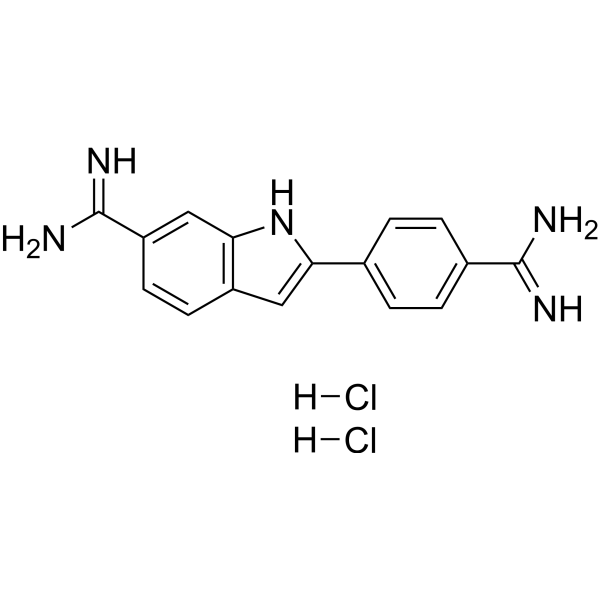
DAPI (4',6-Diamidino-2-phenylindole) dihydrochloride is a DAPI dye. DAPI is a fluorescent dye that binds strongly to DNA. It binds to the AT base pair of the double-stranded DNA minor groove, and one DAPI molecule can occupy three base pair positions. The fluorescence intensity of DAPI molecules bound to double-stranded DNA is increased by about 20 times, and it is commonly observed with fluorescence microscopy, and the amount of DNA can be determined based on the intensity of fluorescence. DAPI cannot penetrate intact cell membranes and is commonly used for staining damaged and fixed cells . DAPI (Compound 3) is an acid-sensing ion channel 3 (ASIC3) inhibitor. DAPI binds to ASIC3 and blocks the channel function. DAPI can be used in the study of chronic pain treatment (Ex/Em = 356/451 nm).
loading...
    loading...
186
186 Cited Publications
Cat. No.: HY-D2868
CAS No.: 47165-04-8
Synonyms: 4',6-Diamidino-2-phenylindole
DAPI (4',6-Diamidino-2-phenylindole) is a DAPI dye. DAPI is a fluorescent dye that binds strongly to DNA. It binds to the AT base pair of the double-stranded DNA minor groove, and one DAPI molecule can occupy three base pair positions. The fluorescence intensity of DAPI molecules bound to double-stranded DNA is increased by about 20 times, and it is commonly observed with fluorescence microscopy, and the amount of DNA can be determined based on the intensity of fluorescence. DAPI cannot penetrate intact cell membranes and is commonly used for staining damaged and fixed cells . DAPI (Compound 3) is an acid-sensing ion channel 3 (ASIC3) inhibitor. DAPI binds to ASIC3 and blocks the channel function. DAPI can be used in the study of chronic pain treatment (Ex/Em = 356/451 nm).
loading...
    loading...
184
184 Cited Publications
Cat. No.: HY-10181A
CAS No.: 854001-07-3
Purity:  98.86%
Synonyms: BMS-354825 hydrochloride
Research Areas:  

Cancer

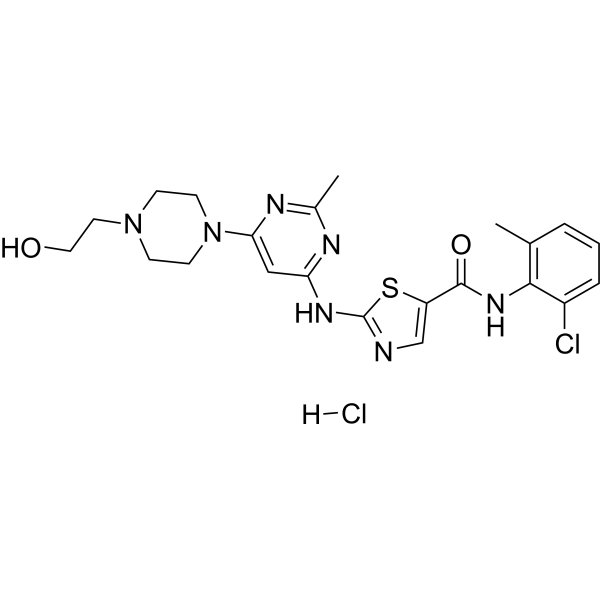
Dasatinib (BMS-354825) hydrochloride is a highly potent, ATP competitive, orally active dual Src/Bcr-Abl inhibitor with potent antitumor activity. The Kis are 16 pM and 30 pM for Src and Bcr-Abl, respectively. Dasatinib hydrochloride inhibits Bcr-Abl and Src with IC50s of <1.0 nM and 0.5 nM, respectively . Dasatinib hydrochloride also induces apoptosis and autophagy.
loading...
    loading...

