
24 Results for "

disaccharide sucrose

" in MedChemExpress (MCE) Product Catalog:
Products (24)

24 Results for "disaccharide sucrose" in MCE Product Catalog:

  • Categories Recommended:
    More
12
12 Publications Verification
Cat. No.: HY-B1779
CAS No.: 57-50-1
Synonyms: D-(+)-Saccharose
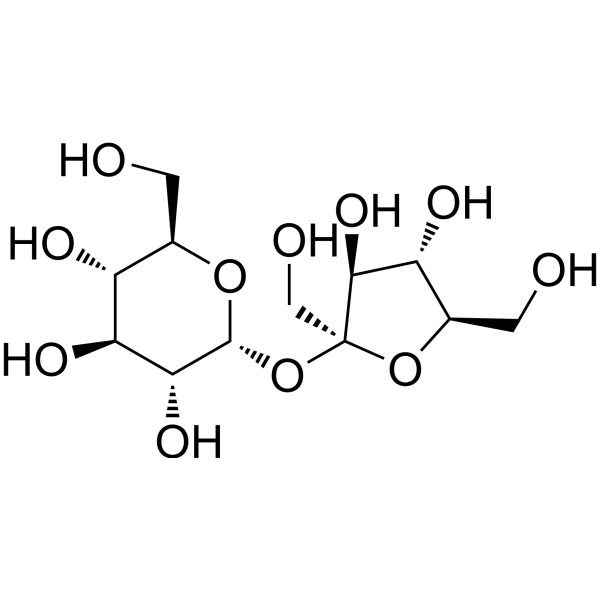
Sucrose (D-(+)-Saccharose) is a disaccharide which is composed of two monosaccharides, glucose and fructose. Sucrose can be applied in some animal models, including metabolic disease, obesity, diet on preference, and diabetes, et al .
loading...
    loading...
4
4 Cited Publications
Cat. No.: HY-N0395
CAS No.: 7660-25-5
Synonyms: beta-D-Fructopyranose
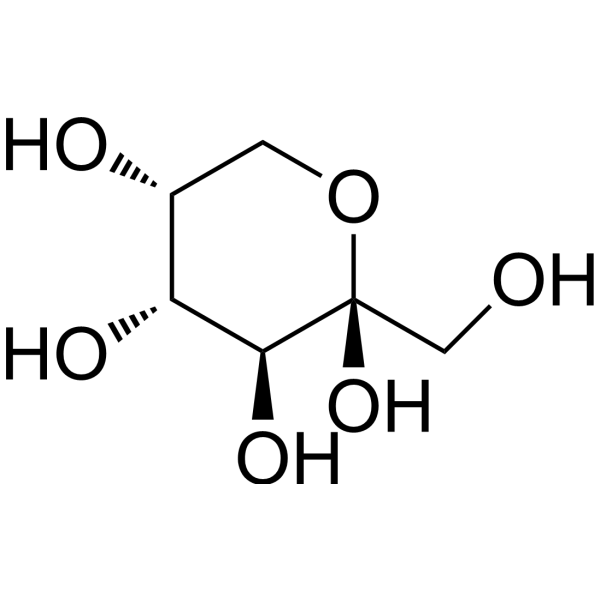
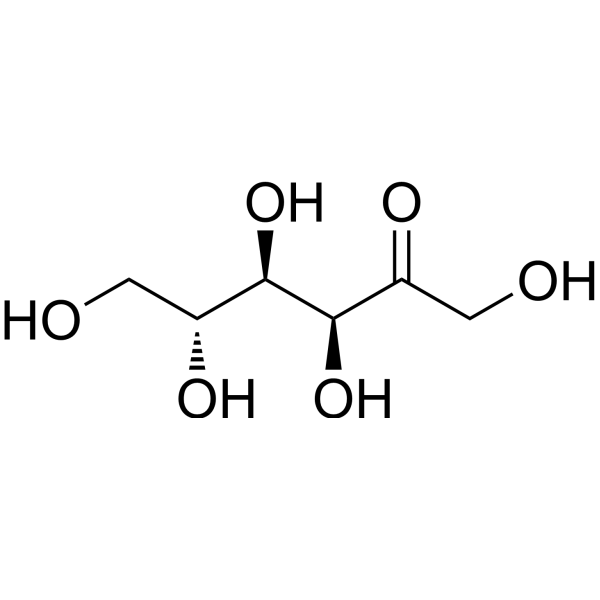
Fructose is a simple ketonic monosaccharide found in many plants, where it is often bonded to glucose to form the disaccharide sucrose.
loading...
    loading...
2
2 Cited Publications
Cat. No.: HY-N2024
CAS No.: 69-79-4
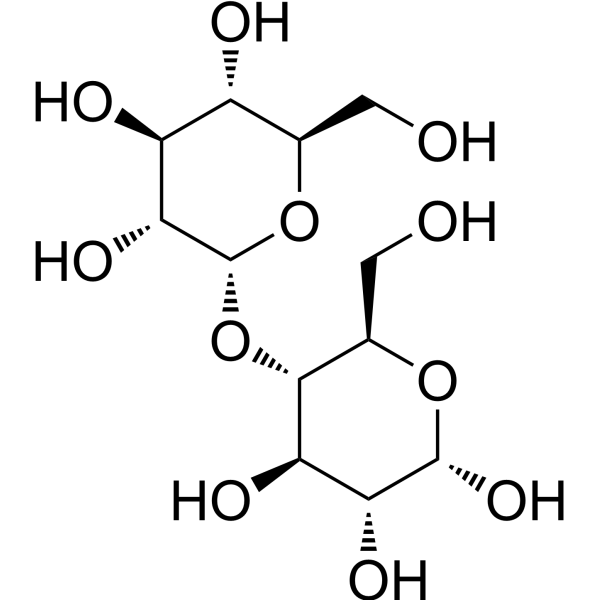
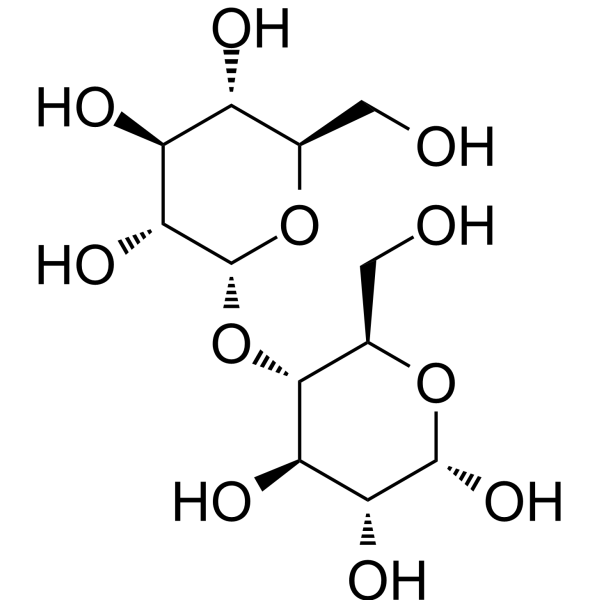
Maltose is a disaccharide composed of two glucose molecules linked together. Maltose is an endogenous metabolic product in plants, yeast, or bacteria, and it participates in carbon source storage and metabolism. Maltose is a key core metabolite and main transport form in the temporary starch degradation, carbon output, and subsequent sucrose synthesis metabolism of the night chloroplast. In X. dendrorhous, maltose can act as a sugar donor and is converted into isomaltulose by α-glucosidase). Maltose can act as a osmotic agent, supporting continuous capillary ultrafiltration and preventing severe metabolic disorders .
loading...
    loading...
2
2 Cited Publications
Cat. No.: HY-N2024A
CAS No.: 6363-53-7
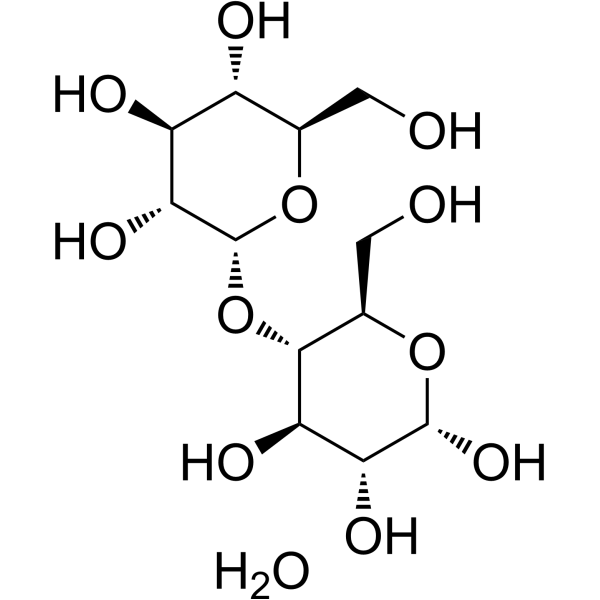
Maltose monohydrate is a disaccharide composed of two glucose molecules linked together. Maltose monohydrate is an endogenous metabolic product in plants, yeast, or bacteria, and it participates in carbon source storage and metabolism. Maltose monohydrate is a key core metabolite and main transport form in the temporary starch degradation, carbon output, and subsequent sucrose synthesis metabolism of the night chloroplast. In X. dendrorhous, maltose can act as a sugar donor and is converted into isomaltulose by α-glucosidase. Maltose monohydrate can act as a osmotic agent, supporting continuous capillary ultrafiltration and preventing severe metabolic disorders .
loading...
    loading...
1
1 Cited Publications
Cat. No.: HY-N7092
CAS No.: 57-48-7
Synonyms: D(-​)​-​Fructose
D-Fructose (D(-)-Fructose) is a monosaccharide found in honey, fruits, and other plants. Two D-Fructose molecules can combine to form a disaccharide, sucrose .
loading...
    loading...
1
1 Cited Publications
Cat. No.: HY-N0395R
CAS No.: 7660-25-5
Synonyms: beta-D-Fructopyranose (Standard)
Fructose (Standard) is the analytical standard of Fructose. This product is intended for research and analytical applications. Fructose is a simple ketonic monosaccharide found in many plants, where it is often bonded to glucose to form the disaccharide sucrose.
loading...
    loading...
Cat. No.: HY-P2979
CAS No.: 9001-57-4
Synonyms: β-D-Fructofuranosidase
Research Areas:  

Others

Invertase, baker's yeast (S. cerevisiae) is a major enzyme present in plants and microorganisms, is often used in biochemical studies. Invertase catalyzes the hydrolysis of the disaccharide sucrose into glucose and fructose .
loading...
    loading...
Cat. No.: HY-N2024AS1
Maltose monohydrate- 13C12 is the 13C labeled isotope of Maltose monohydrate. Maltose monohydrate is a disaccharide composed of two glucose molecules linked together. Maltose monohydrate is an endogenous metabolic product in plants, yeast, or bacteria, and it participates in carbon source storage and metabolism. Maltose monohydrate is a key core metabolite and main transport form in the temporary starch degradation, carbon output, and subsequent sucrose synthesis metabolism of the night chloroplast. In X. dendrorhous, maltose can act as a sugar donor and is converted into isomaltulose by α-glucosidase. Maltose monohydrate can act as a osmotic agent, supporting continuous capillary ultrafiltration and preventing severe metabolic disorders.
loading...
    loading...
Cat. No.: HY-B1779R
CAS No.: 57-50-1
Synonyms: D-(+)-Saccharose (Standard)
Sucrose (Standard) is the analytical standard of Sucrose. This product is intended for research and analytical applications. Sucrose (D-(+)-Saccharose) is a disaccharide which is composed of two monosaccharides, glucose and fructose. Sucrose?can be applied in some animal models, including metabolic disease, obesity,?diet on preference,?and diabetes, et al .
loading...
    loading...
Cat. No.: HY-B1779S3
Synonyms: D-(+)-Saccharose-d14
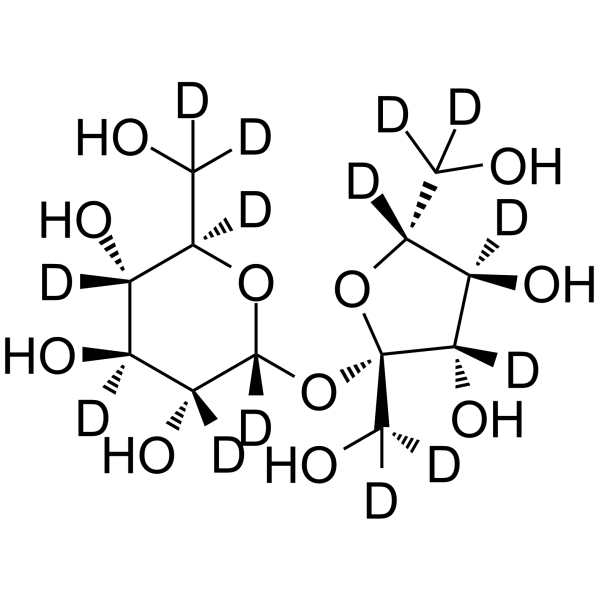
Sucrose-d14 is the deuterium labeled Sucrose. Sucrose (D-(+)-Saccharose) is a disaccharide which is composed of two monosaccharides, glucose and fructose. Sucrose can be applied in some animal models, including metabolic disease, obesity, diet on preferen
loading...
    loading...
Cat. No.: HY-W768338
Synonyms: D-(+)-Saccharose-13C
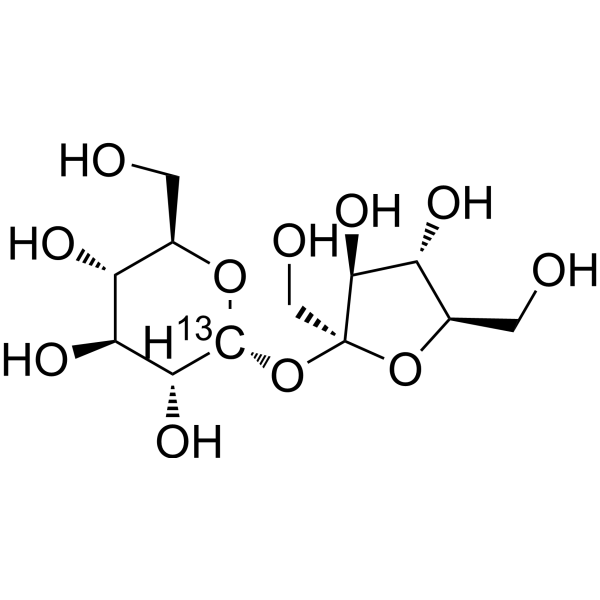
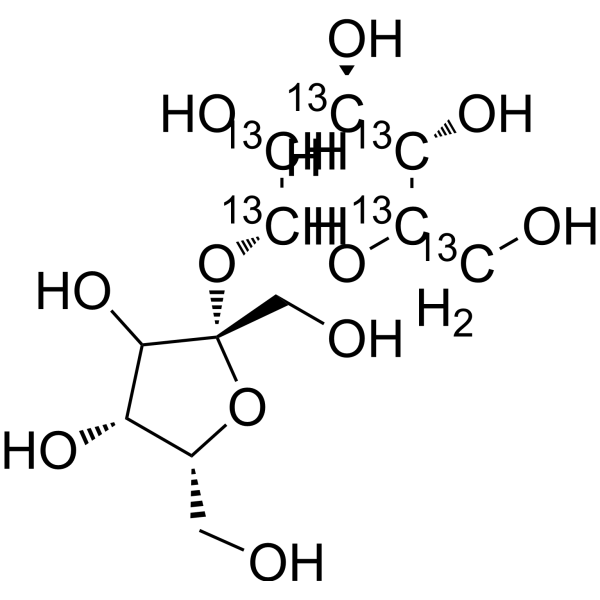
Sucrose- 13C is 13C labeled Sucrose. Sucrose (D-(+)-Saccharose) is a disaccharide which is composed of two monosaccharides, glucose and fructose. Sucrose can be applied in some animal models, including metabolic disease, obesity, diet on preference, and diabetes, et al .
loading...
    loading...
Cat. No.: HY-N2024R
CAS No.: 69-79-4
Maltose (Standard) is the analytical standard of Maltose. This product is intended for research and analytical applications. Maltose is a disaccharide composed of two glucose molecules linked together. Maltose is an endogenous metabolic product in plants, yeast, or bacteria, and it participates in carbon source storage and metabolism. Maltose is a key core metabolite and main transport form in the temporary starch degradation, carbon output, and subsequent sucrose synthesis metabolism of the night chloroplast. In X. dendrorhous, maltose can act as a sugar donor and is converted into isomaltulose by α-glucosidase (α-Glucosidase). Maltose can act as a osmotic agent, supporting continuous capillary ultrafiltration and preventing severe metabolic disorders.
loading...
    loading...
Cat. No.: HY-W768340
CAS No.: 1356354-37-4
Synonyms: D-(+)-Saccharose-13C6-1
Sucrose- 13C6-1 is 13C labeled Sucrose. Sucrose (D-(+)-Saccharose) is a disaccharide which is composed of two monosaccharides, glucose and fructose. Sucrose can be applied in some animal models, including metabolic disease, obesity, diet on preference, and diabetes, et al .
loading...
    loading...
Cat. No.: HY-B1779S5
CAS No.: 2140850-84-4
Synonyms: D-(+)-Saccharose-13C6
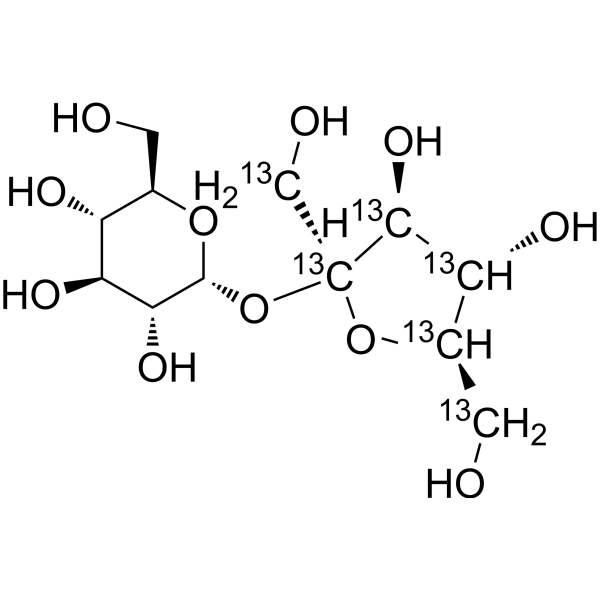
Sucrose- 13C6 is the 13C labeled Sucrose . Sucrose (D-(+)-Saccharose) is a disaccharide which is composed of two monosaccharides, glucose and fructose. Sucrose can be applied in some animal models, including metabolic disease, obesity, diet on preference, and diabetes, et al .
loading...
    loading...
Cat. No.: HY-N7092R
CAS No.: 57-48-7
Synonyms: D(-​)​-​Fructose (Standard)
D-Fructose (Standard) is the analytical standard of D-Fructose. This product is intended for research and analytical applications. D-Fructose (D(-)-Fructose) is a monosaccharide found in honey, fruits, and other plants. Two D-Fructose molecules can combine to form a disaccharide, sucrose .
loading...
    loading...
Cat. No.: HY-N2024AS
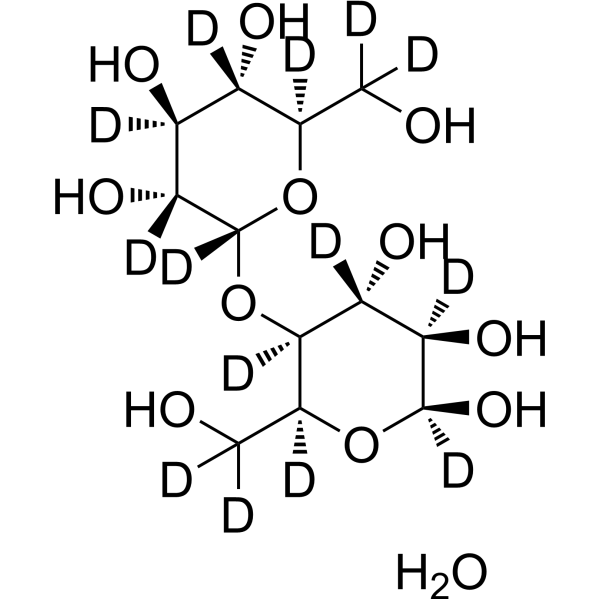
Maltose monohydrate-d14 is the deuterium labeled Maltose monohydrate. Maltose monohydrate is a disaccharide composed of two glucose molecules linked together. Maltose monohydrate is an endogenous metabolic product in plants, yeast, or bacteria, and it participates in carbon source storage and metabolism. Maltose monohydrate is a key core metabolite and main transport form in the temporary starch degradation, carbon output, and subsequent sucrose synthesis metabolism of the night chloroplast. In X. dendrorhous, maltose can act as a sugar donor and is converted into isomaltulose by α-glucosidase. Maltose monohydrate can act as a osmotic agent, supporting continuous capillary ultrafiltration and preventing severe metabolic disorders.
loading...
    loading...
Cat. No.: HY-N2024B
CAS No.: 69-79-4
Maltose solution, 20% in H2O is a 20% aqueous maltose solution. Maltose is a disaccharide composed of two glucose molecules linked together. Maltose is an endogenous metabolic product in plants, yeast, or bacteria, and it participates in carbon source storage and metabolism. Maltose is a key core metabolite and main transport form in the temporary starch degradation, carbon output, and subsequent sucrose synthesis metabolism of the night chloroplast. In X. dendrorhous, maltose can act as a sugar donor and is converted into isomaltulose by α-glucosidase. Maltose can act as a osmotic agent, supporting continuous capillary ultrafiltration and preventing severe metabolic disorders .
loading...
    loading...
Cat. No.: HY-P2979B
Research Areas:  

Others

Invertase, baker's yeast (S. cerevisiae), glucose/fructose/sucrose free is a major enzyme present in plants and microorganisms, is often used in biochemical studies. Invertase catalyzes the hydrolysis of the disaccharide sucrose into glucose and fructose .
loading...
    loading...
Cat. No.: HY-N2024AR
CAS No.: 6363-53-7
Maltose monohydrate (Standard) is the analytical standard of Maltose monohydrate. This product is intended for research and analytical applications. Maltose monohydrate is a disaccharide composed of two glucose molecules linked together. Maltose monohydrate is an endogenous metabolic product in plants, yeast, or bacteria, and it participates in carbon source storage and metabolism. Maltose monohydrate is a key core metabolite and main transport form in the temporary starch degradation, carbon output, and subsequent sucrose synthesis metabolism of the night chloroplast. In X. dendrorhous, maltose can act as a sugar donor and is converted into isomaltulose by α-glucosidase. Maltose monohydrate can act as a osmotic agent, supporting continuous capillary ultrafiltration and preventing severe metabolic disorders.
loading...
    loading...
Cat. No.: HY-116863R
CAS No.: 865285-47-8
Research Areas:  

Infection

Fructose (Standard) is the analytical standard of Fructose. This product is intended for research and analytical applications. Fructose is a simple ketonic monosaccharide found in many plants, where it is often bonded to glucose to form the disaccharide sucrose.
loading...
    loading...

