26 Results for "

fungal cell membrane integrity

" in MedChemExpress (MCE) Product Catalog:
Products (26)

26 Results for "fungal cell membrane integrity" in MCE Product Catalog:

32
32 Cited Publications
Cat. No.: HY-B0221
CAS No.: 1397-89-3
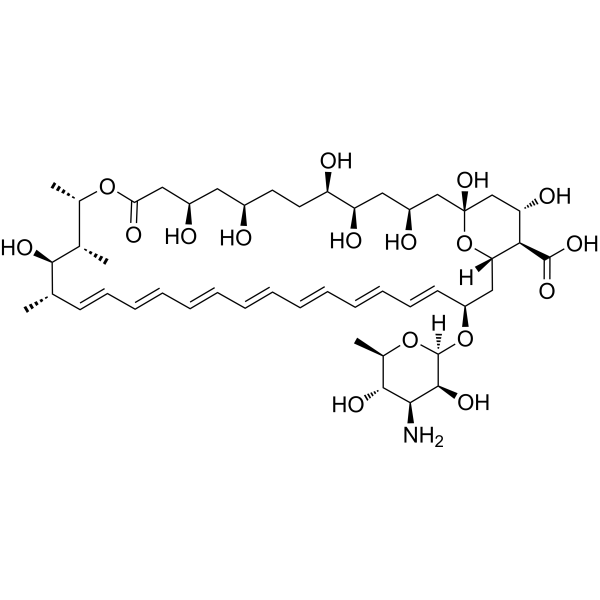
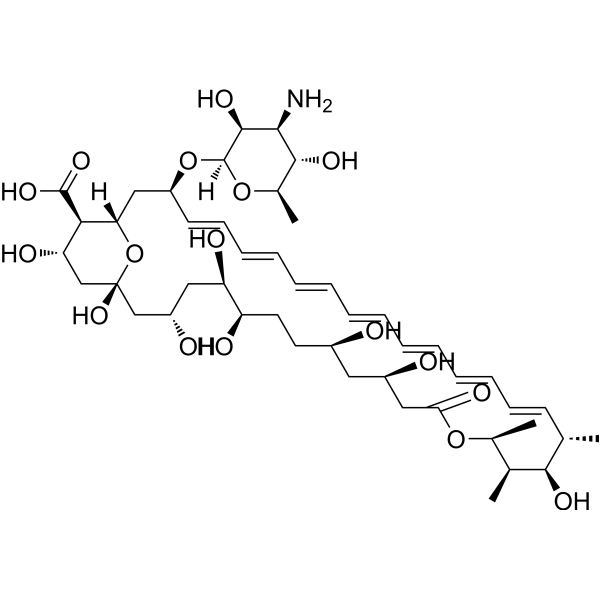
Amphotericin B is a polyene antifungal agent against a wide variety of fungal pathogens. It binds irreversibly to ergosterol, resulting in disruption of membrane integrity and ultimately cell death.
loading...
    loading...
Cat. No.: HY-119847
CAS No.: 129639-79-8
Purity:  99.10%
Synonyms: BAY-W-6341
Target:  

Fungal

Research Areas:  

Infection

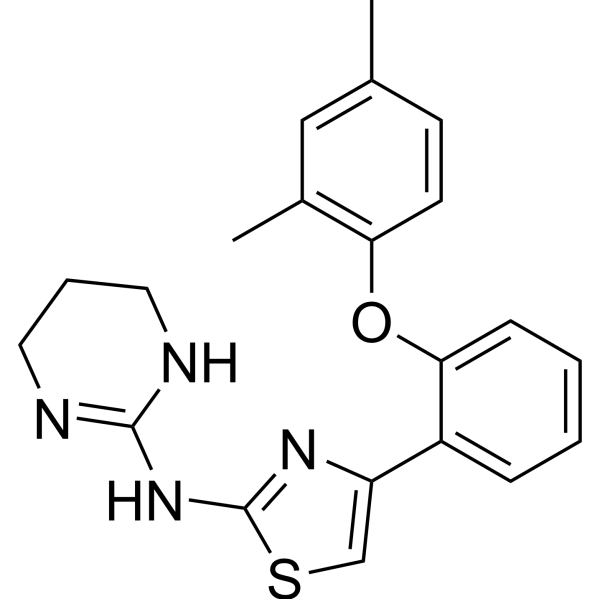
Abafungin (BAY-W-6341) is a broad-spectrum fungicidal arylguanidine compound and a selective inhibitor of sterol-C-24-methyltransferase. Abafungin blocks the transmethylation reaction at the C-24 position of the sterol side chain during the ergosterol biosynthesis pathway. Abafungin directly disrupts fungal cell membrane integrity, and diminishes fungal viability independent of the fungal growth state. Abafungin can be applied to the research of fungal infections, particularly dermatomycoses .
loading...
    loading...
Cat. No.: HY-N125722
CAS No.: 33538-71-5
Synonyms: Aabomycin A1
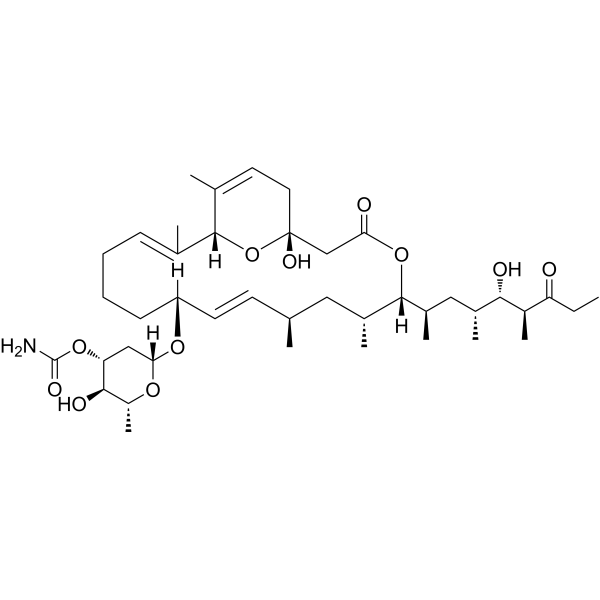
Venturicidin A (Aabomycin A1) is a natural product derived from Streptomyces, possessing antifungal, anti-Trypanosoma brucei, anti-Leishmania donovani, and ATP synthase inhibitory activities. Venturicidin A acts as an antibiotic adjuvant, promoting the uptake of aminoglycoside antibiotics and enhancing bactericidal efficacy. Venturicidin A inhibits ATP synthesis by blocking proton translocation through the FO subunit. In bloodstream-form Trypanosoma brucei, Venturicidin A causes collapse of the mitochondrial membrane potential; in fungi, it disrupts cell membrane integrity, induces leakage of cytoplasmic contents, elevates ROS levels, and downregulates the expression of fungal pathogenicity-related genes. Venturicidin A exhibits antifungal activity against Botrytis cinerea. Venturicidin A is used in research on bacterial infections, trypanosome/leishmania infections, and gray mold disease .
loading...
    loading...
Cat. No.: HY-N2558
CAS No.: 19668-69-0
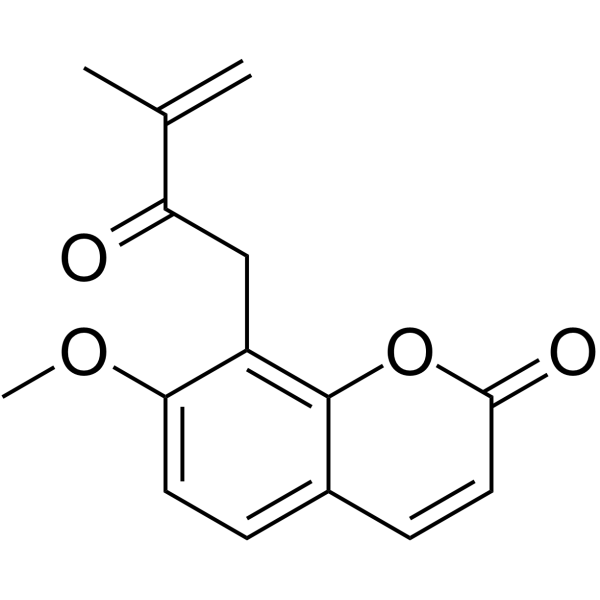
Murrayone is a coumarin compound with antifungal and antiplatelet activities. Murrayone disrupts fungal redox homeostasis, impairs cell membrane integrity, inhibits sporulation, spore germination and hyphal growth, and causes morphological damage to fungal cells. Murrayone reduces the disease severity of blueberry fruits infected with Botrytis cinerea. Murrayone can be used in studies related to fungal infections and vascular diseases .
loading...
    loading...
Cat. No.: HY-171796
CAS No.: 101023-71-6
Target:  

Fungal

Research Areas:  

Infection

Bromomonilicin is a selective fungal cell membrane inhibitor. Bromomonilicin exerts antifungal activity by disrupting fungal cell membrane integrity. Bromomonilicin is promising for research of plant pathogenic fungal infections (e.g., Monilinia fructicola-induced brown rot) and superficial mycoses (e.g., dermatophyte infections) .
loading...
    loading...
Cat. No.: HY-B0221R
CAS No.: 1397-89-3
Amphotericin B (Standard) is the analytical standard of Amphotericin B. This product is intended for research and analytical applications. Amphotericin B is a polyene antifungal agent against a wide variety of fungal pathogens. It binds irreversibly to ergosterol, resulting in disruption of membrane integrity and ultimately cell death.
loading...
    loading...
Cat. No.: HY-179250
Target:  

Fungal

Research Areas:  

Infection

LEX-SQ01 (Compound D10) is an antifungal agent. LEX-SQ01 shows an EC50 of 1.6 μM for C. capsici. LEX-SQ01 can disrupt the cell membrane integrity of fungal. LEX-SQ01 can be used for the research of infection in crops .
loading...
    loading...
Cat. No.: HY-174394S
CYP51-IN-25 is a orally active broad spectrum antifungal agent with the MIC80 of 0.00625-0.05 μg/mL. is a CYP51-IN-25 is a deuterated compound with antibiotic properties. CYP51-IN-25 can inhibit the fungal CYP51 enzyme, block ergosterol synthesis, and disrupt cell membrane integrity. CYP51-IN-25 can be used for research on fungal infections.
loading...
    loading...
Cat. No.: HY-144632
CAS No.: 2640054-39-1
Target:  

Fungal

Research Areas:  

Infection

Antifungal agent 22 (compound D16) is a potential and orally active antifungal agent for CM (cryptococcal meningitis), with an IC50 of 0.5 μg/mL. Antifungal agent 22 can penetrate the blood-brain barrier and kill the C. neoformans H99 cells by destroying the integrity of fungal cell membranes. Antifungal agent 22 shows selective anti-Cryptococcus activity with good metabolic stability and low cytotoxicity .
loading...
    loading...
Cat. No.: HY-172804
Research Areas:  

Infection

SDH-IN-26 (Compound C3) is a succinate dehydrogenase (SDH) inhibitor. SDH-IN-26 exhibits significant inhibitory activity against multiple phytopathogenic fungi, such as Rhizoctonia solani and Botrytis cinerea, with an EC50 value of 0.270 μg/mL against Rhizoctonia solani. SDH-IN-26 damages the integrity of the fungal cell membrane, increases membrane permeability, disrupts cell structure, and reduces the number of mitochondria, thus affecting the normal growth of mycelia. SDH-IN-26 leads to a decrease in mitochondrial membrane potential, and induces cell apoptosis. SDH-IN-26 is promising for research of plant diseases caused by fungi .
loading...
    loading...
Cat. No.: HY-178340
CAS No.: 3032062-22-6
Antifungal agent 137 (Compound 4S) is an antifungal agent. Antifungal agent 137 inhibits Phomopsis sp. (PS), with an EC50 of 0.15 μg/mL. Antifungal agent 137 inhibits lanosterol 14α-demethylase (CYP51), with an IC50 of 5.00 μg/mL. Antifungal agent 137 disrupts the morphology of PS mycelia, impairs cell membrane integrity, and induces an increase in intracellular ROS levels, triggering oxidative stress. Antifungal agent 137 can be used for the study of fungal infection .
loading...
    loading...
Cat. No.: HY-W160358
CAS No.: 3809-32-3
2,5-Dimethylcyclohexanol, a volatile organic compound, is a fatty acid that can be isolated from Amphora sp.. 2,5-Dimethylcyclohexanol has significant antineoplastic and antiviral activities with inhibition of SARS-CoV-2 Mpro. 2,5-Dimethylcyclohexanol also has potent antifungal activity against Pseudogymnoascus destructans. 2,5-Dimethylcyclohexanol compromises cell wall and membrane integrity while perturbing energy metabolism, increases the levels of ROS, ATP, Superoxide anion and GSH, and decreases CAT and SOD activities. And 2,5-Dimethylcyclohexanol alters virulence ribosomal genes expression, and disrupts the MAPK signaling pathways, inducing fungal cell apoptosis .
loading...
    loading...
Cat. No.: HY-189257
CAS No.: 848488-07-3
Target:  

Fungal

Research Areas:  

Infection

Antifungal agent 178 is an indole-oxazole alkaloid analog and a fungal cell membrane disruptor that exhibits low phytotoxicity toward plants. Antifungal agent 178 disrupts the integrity of hyphal cell membranes, leading to cytoplasmic leakage and inhibition of hyphal growth, and induces morphological changes in hyphae. Antifungal agent 178 can be used in research related to fungal plant diseases .
loading...
    loading...
Cat. No.: HY-184308
CAS No.: 3123321-73-0
Research Areas:  

Infection

Antifungal agent-165 is an antifungal agent with in vitro activity against Rhizoctonia solani. Antifungal agent-165 inhibits catalase (CAT) activity, drives intracellular ROS accumulation, and induces oxidative damage. Antifungal agent-165 disrupts fungal hyphal morphology, compromises cell membrane integrity, and triggers cellular content leakage in Rhizoctonia solani. Antifungal agent-165 can be used for the research of potato black scurf disease .
loading...
    loading...
Cat. No.: HY-189372
CAS No.: 3117572-66-1
Target:  

Drug Derivative Fungal

Research Areas:  

Infection

Antifungal agent 180 is a pyrazole-oxadiazole-linked 1,2,4-triazole derivative and a broad-spectrum antifungal agent. Antifungal agent 180 disrupts fungal cellular homeostasis through multiple pathways, damaging the integrity of fungal hyphal cell membranes, increasing membrane permeability, and causing leakage of intracellular nucleic acids and proteins; it induces hyphal shrinkage, collapse, and organelle disintegration; and it causes widespread dysregulation of sterol/lipid metabolism, carbohydrate utilization, mitochondrial respiration, and stress response pathways at both the transcriptomic and proteomic levels. Antifungal agent 180 exhibits protective and curative efficacy against rice blast in vivo. Antifungal agent 180 can be used in research on rice blast and gray mold .
loading...
    loading...
Cat. No.: HY-167081
CAS No.: 70161-09-0
Target:  

Fungal Cytochrome P450

Research Areas:  

Infection

Democonazole is an imidazole antifungal agent that blocks ergosterol synthesis by inhibiting CYP450 14α-lanosterol demethylase (CYP51), thereby disrupting the integrity and fluidity of fungal cell membranes. Democonazole is lipophilic, which enhances its ability to penetrate fungal cell membranes and inhibit ergosterol synthesis. Democonazole can be used in studies related to fungal infections .
loading...
    loading...
Cat. No.: HY-181492
Target:  

Fungal

Research Areas:  

Infection Inflammation/Immunology

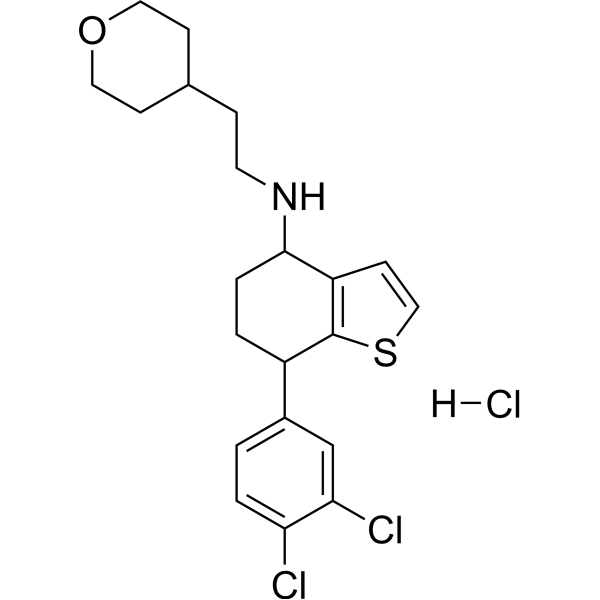
Antifungal agent 155 hydrochloride is an antifungal agent. Antifungal agent 155 hydrochloride induces bent, twisted, abnormally swollen hyphae, compromises fungal hyphal plasma membrane integrity, and triggers fungal cell death. Antifungal agent 155 hydrochloride can be used for the research of fusarium keratitis .
loading...
    loading...
Cat. No.: HY-Y0492
CAS No.: 7357-70-2
Target:  

Bacterial Fungal

Research Areas:  

Infection

2-Cyanothioacetamide is an antimicrobial agent with activity against Gram-positive bacteria, Gram-negative bacteria, and fungi. 2-Cyanothioacetamide inhibits essential microbial enzymes and disrupts microbial cell membrane integrity.2-Cyanothioacetamide can be used for the research of bacterial infections and fungal infections .
loading...
    loading...
Cat. No.: HY-126443A
CAS No.: 1352296-65-1
Target:  

Fungal

Research Areas:  

Infection

Antifungal agent 173 is an orally active antifungal (fungal) agent. Antifungal agent 173 disrupts fungal cell membrane integrity, inhibits yeast-hypha transition in Candida species, and suppresses biofilms. Antifungal agent 173 prevents mouse mortality in a mouse model of systemic candidiasis and reduces tongue lesions in a mouse model of oropharyngeal candidiasis. Antifungal agent 173 is applicable to research related to candidiasis .
loading...
    loading...
Cat. No.: HY-189259
CAS No.: 3105221-19-7
Target:  

Fungal

Research Areas:  

Infection

Antifungal agent 179 is an indole-oxazole alkaloid analog with broad-spectrum antifungal activity against plant pathogenic fungi. Antifungal agent 179 disrupts the integrity of fungal hyphal cell membranes, increases membrane permeability, and causes leakage of intracellular electrolytes and cytoplasm. Antifungal agent 179 exhibits protective and curative activity in a tomato in vivo model infected with Botrytis cinerea, with low toxicity to mung bean plants. Antifungal agent 179 can be used for research on crop fungal infections .
loading...
    loading...

