1. Search Result
Search Result
Results for "

hM3

" in MedChemExpress (MCE) Product Catalog:

24

Inhibitors & Agonists

1

Peptides

2

Natural
Products

1

Isotope-Labeled Compounds

3

Antibodies

1

Click Chemistry

1

Oligonucleotides

Cat. No. Product Name Target Research Areas Chemical Structure
  • HY-17366
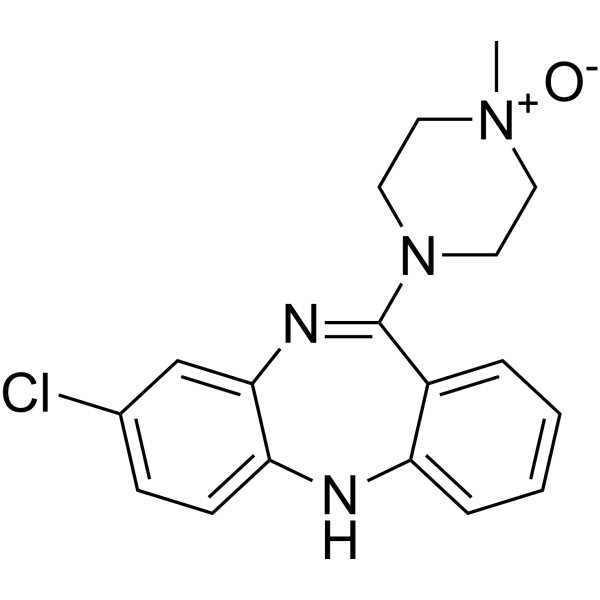
    Clozapine N-oxide
    Maximum Cited Publications
    145 Publications Verification

    Drug Metabolite mAChR Dopamine Receptor Neurological Disease
    Clozapine N-oxide is a major metabolite of Clozapine and a human muscarinic designer receptors (DREADDs) agonist. Clozapine N-oxide activates the DREADD receptor hM3Dq and hM4Di. Clozapine N-oxide can't cross the blood-brain barrier [3] . Clozapine is a potent dopamine antagonist and also a potent and selective muscarinic M4 receptor (EC50=11 nM) agonist .
    Clozapine N-oxide
  • HY-42110
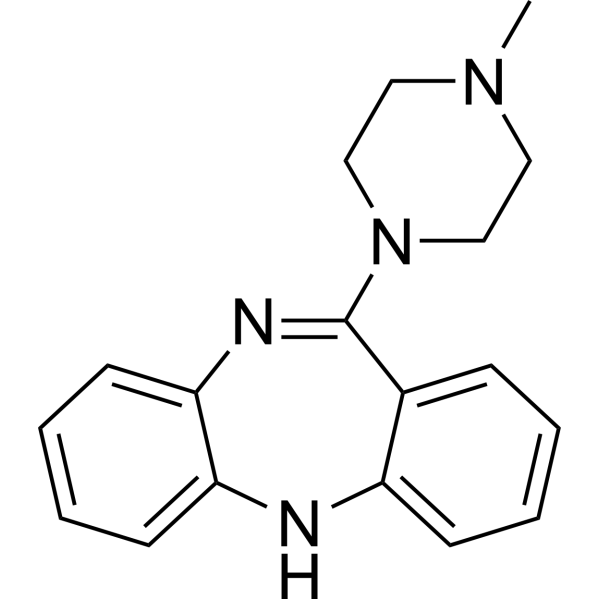
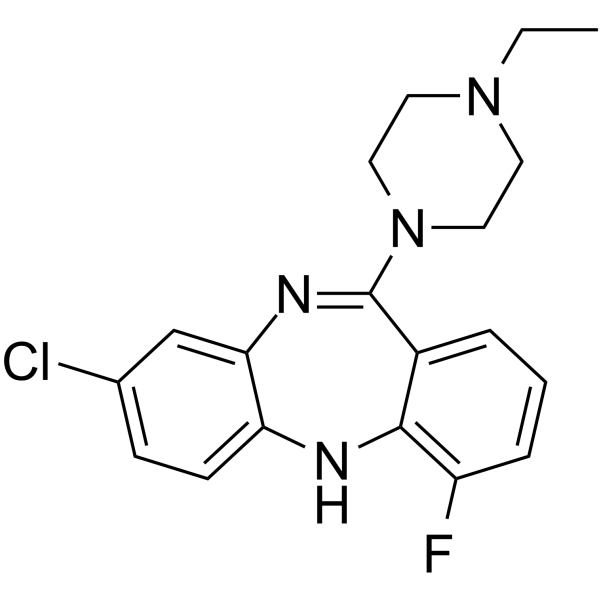
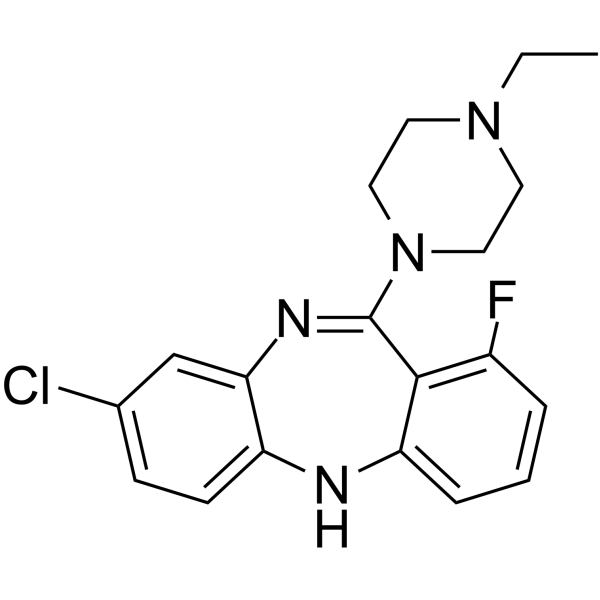
    Deschloroclozapine
    80+ Cited Publications

    mAChR Neurological Disease
    Deschloroclozapine, a metabolite of Clozapine, is a highly potent muscarinic DREADDs agonist, with blood-brain barrier permeability. Deschloroclozapine binds to DREADD receptor subtypes hM3Dq and hM4Di with Ki of 6.3 and 4.2 nM, respectively. [ 11C]-Deschloroclozapine is developed as a promising PET tracer for DREADD imaging [3].
    Deschloroclozapine
  • HY-17366A
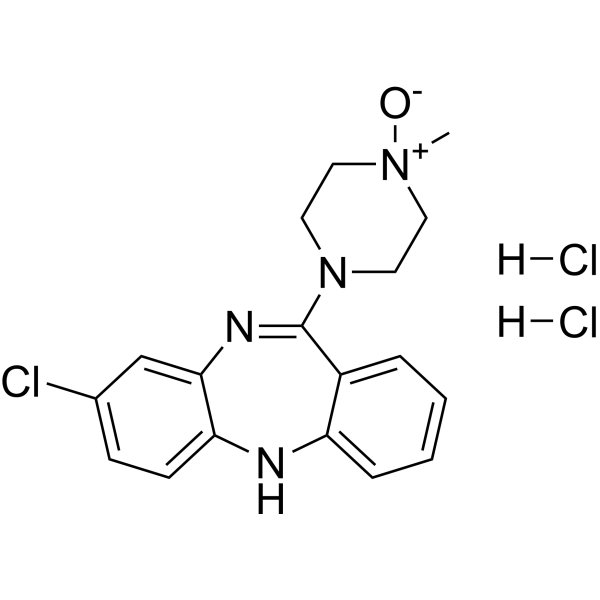
    Clozapine N-oxide dihydrochloride
    Maximum Cited Publications
    145 Publications Verification

    mAChR Dopamine Receptor Drug Metabolite Neurological Disease
    Clozapine N-oxide dihydrochloride is a major metabolite of Clozapine and a human muscarinic designer receptors (DREADDs) agonist. Clozapine N-oxide dihydrochloride activates the DREADD receptor hM3Dq and hM4Di. Clozapine N-oxide dihydrochloride cannot cross the blood-brain barrier [3] . Clozapine is a potent dopamine antagonist and also a potent and selective muscarinic M4 receptor (EC50=11 nM) agonist .
    Clozapine N-oxide dihydrochloride
  • HY-17585
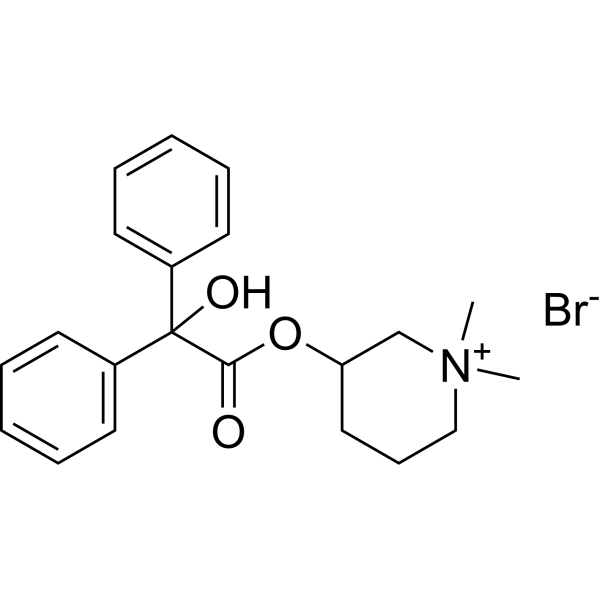
    Mepenzolate bromide
    5+ Cited Publications

    mAChR GPR109A Others Inflammation/Immunology
    Mepenzolate bromide is an orally administered muscarinic receptor antagonist with Kis of 0.68 and 2.6 nM for hM2R and hM3R, respectively. Mepenzolate bromide can be used to suppress the gastrointestinal hypermotility associated with irritable bowel syndrome .Mepenzolate bromide is a GPR109A inhibitor .
    Mepenzolate bromide
  • HY-100234
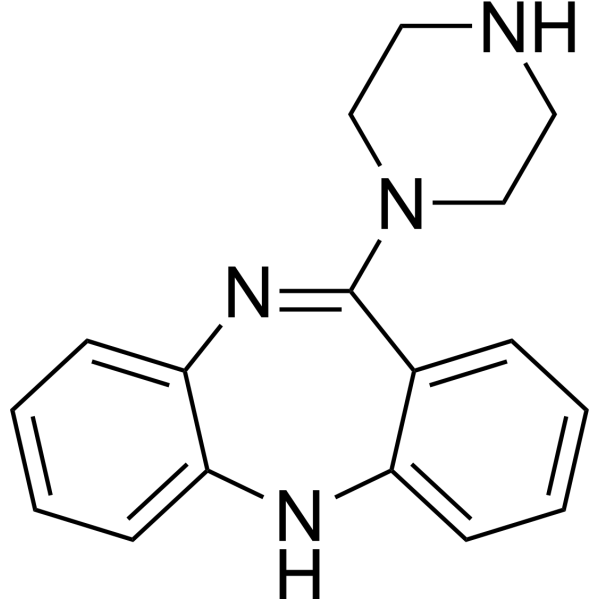
    DREADD agonist 21
    2 Publications Verification

    mAChR Neurological Disease
    DREADD agonist 21 is a potent human muscarinic acetylcholine M3 receptors (hM3Dq) agonist (EC50=1.7 nM) .
    DREADD agonist 21
  • HY-N0340
    Scopolamine butylbromide
    1 Publications Verification

    Hyoscine butylbromide; (-)-Scopolamine butylbromide; Butylscopolamine bromide

    mAChR Neurological Disease Inflammation/Immunology
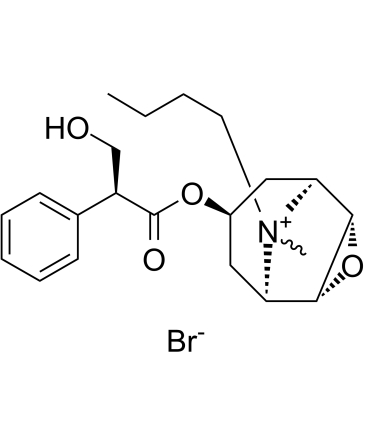
    Scopolamine butylbromide (Hyoscine butylbromide) is an orally active anticholinergic agent and spasmolytic. Scopolamine butylbromide binds with high affinity to rat cardiac M2 (Ki 83 nmol/L), hM2 (Ki 233 nmol/L), rat intestinal M3 (Ki 290 nmol/L) and hM3 (Ki 643 nmol/L) muscarinic receptors. Scopolamine butylbromide exerts a dose-dependent antagonistic effect on Carbachol-induced gastrointestinal smooth muscle spasm. Scopolamine butylbromide can be used for the research of abdominal colic and pain associated with gastrointestinal spasm, functional abdominal pain, chronic gastropathy and gastric ulcer .
    Scopolamine butylbromide
  • HY-42110A

    mAChR Neurological Disease
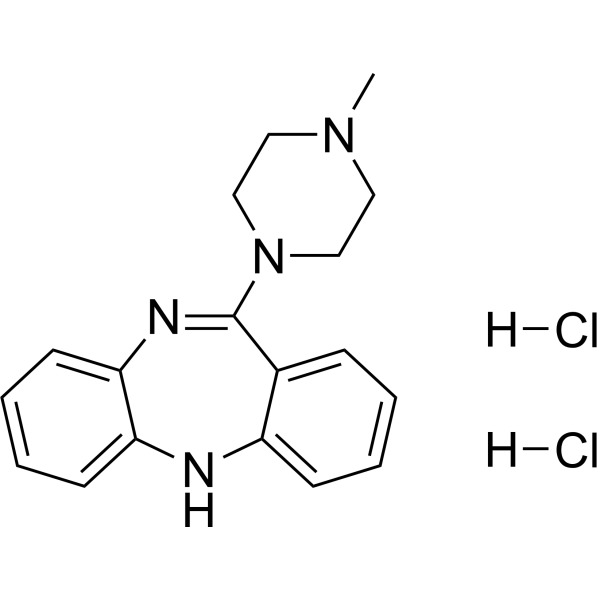
    Deschloroclozapine dihydrochloride, a metabolite of Clozapine, is a highly potent muscarinic DREADDs agonist. Deschloroclozapine binds to DREADD receptor subtypes hM3Dq and hM4Di with Ki of 6.3 and 4.2 nM, respectively. [ 11C]-Deschloroclozapine is developed as a promising PET tracer for DREADD imaging [3].
    Deschloroclozapine dihydrochloride
  • HY-100234A
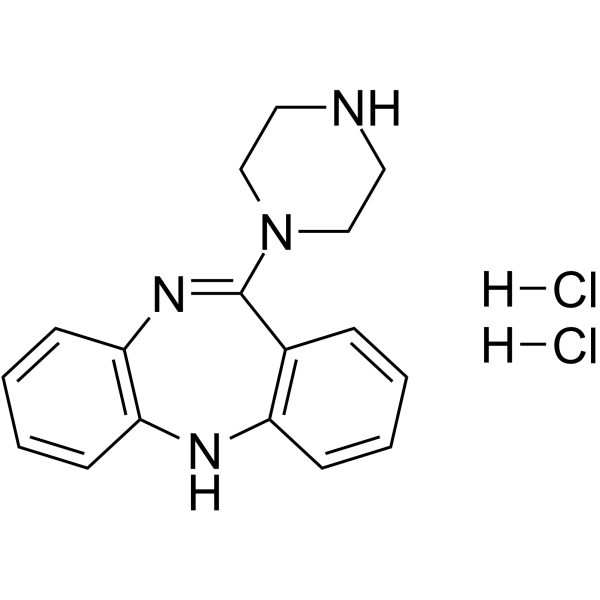
    DREADD agonist 21 dihydrochloride
    2 Publications Verification

    mAChR Neurological Disease
    DREADD agonist 21 dihydrochloride is a potent human muscarinic acetylcholine M3 receptors (hM3Dq) agonist (EC50=1.7 nM) .
    DREADD agonist 21 dihydrochloride
  • HY-12980

    GSK961081; TD-5959

    Adrenergic Receptor mAChR Inflammation/Immunology Endocrinology
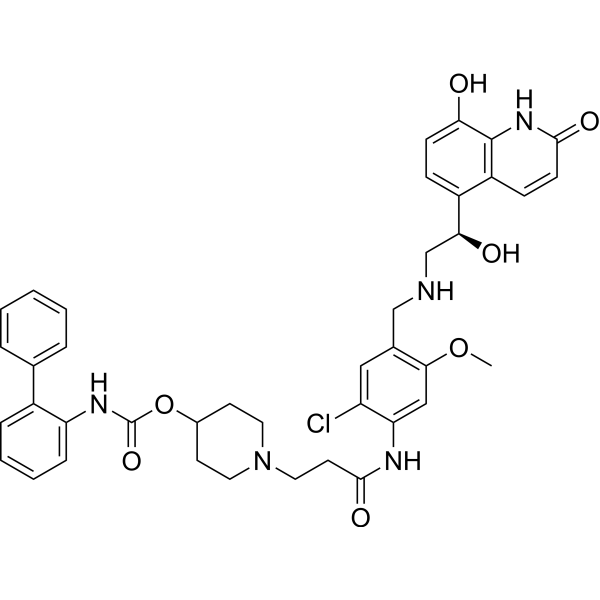
    Batefenterol (GSK961081;TD-5959) is a novel muscarinic receptor antagonist and β2-adrenoceptor agonist; displays high affinity for hM2, hM3 muscarinic and hβ2-adrenoceptor with Ki values of 1.4, 1.3 and 3.7 nM, respectively.
    Batefenterol
  • HY-131881
    JHU37160
    2 Publications Verification

    mAChR Neurological Disease
    JHU37160 is a potent and brain-penetrant DREADD agonist, with EC50s of 18.5 nM and 0.2 nM for hM3Dq and hM4Di DREADDs in HEK-293 cells, respectively. JHU37160 exhibits selective [ 3H]Clozapine displacement from DREADDs and not from other Clozapine-binding sites in mice brain tissue .
    JHU37160
  • HY-106432A

    SB-202026 hydrochloride; Memric hydrochloride

    mAChR Dopamine Receptor Neurological Disease
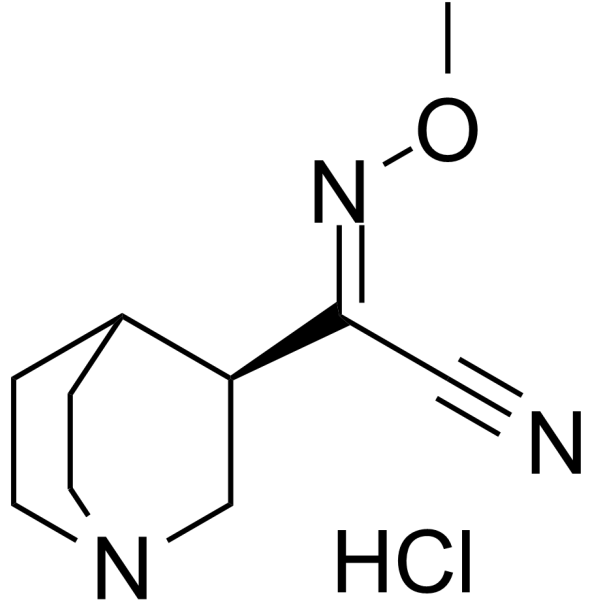
    Sabcomeline (SB-202026; Memric) hydrochloride is a muscarinic receptor agonist capable of crossing the blood-brain barrier. Sabcomeline hydrochloride exhibits affinity for all hM1 to hM5 subtypes (pKi=6.72-7.23), and shows near-full agonism at the hM3 receptor, inducing extracellular acidification. Sabcomeline hydrochloride alters the binding kinetics of dopamine D2 receptors through neural network regulation. Sabcomeline hydrochloride also causes minimal cardiovascular changes, effectively reverses spatial memory deficits in rodents and induces conditioned taste aversion. Sabcomeline hydrochloride is an important tool compound in studies of Alzheimer's disease and related neurodegenerative diseases [3].
    Sabcomeline hydrochloride
  • HY-110239

    MP-11

    mAChR Neurological Disease
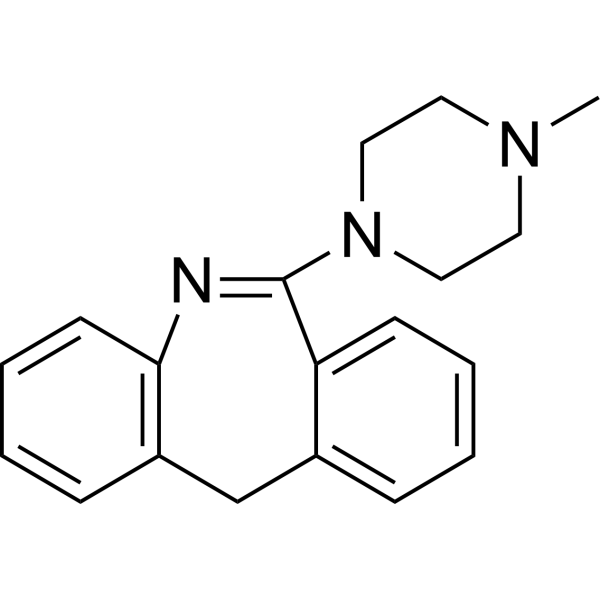
    Perlapine is a potent muscarinic DREADD (Designer Receptors Exclusively Activated by Designer agents) agonist Perlapine exhibits >10000-fold selectivity for hM3Dq over hM3 receptors .
    Perlapine
  • HY-131891

    mAChR Neurological Disease
    JHU37152 is a potent and brain-penetrant DREADD agonist, with EC50s of 5 nM and 0.5 nM for hM3Dq and hM4Di DREADDs in HEK-293 cells, respectively. JHU37152 exhibits selective [ 3H]Clozapine displacement from DREADDs and not from other Clozapine-binding sites in mice brain tissue .
    JHU37152
  • HY-17366R

    Reference Standards mAChR Dopamine Receptor Drug Metabolite Neurological Disease
    Clozapine N-oxide (Standard) is the analytical standard of Clozapine N-oxide. This product is intended for research and analytical applications. Clozapine N-oxide is a major metabolite of Clozapine and a human muscarinic designer receptors (DREADDs) agonist. Clozapine N-oxide activates the DREADD receptor hM3Dq and hM4Di. Clozapine N-oxide cannot cross the blood-brain barrier[1][2][3][4]. Clozapine is a potent dopamine antagonist and also a potent and selective muscarinic M4 receptor (EC50=11 nM) agonist[5][6].
    Clozapine N-oxide (Standard)
  • HY-U00302

    mAChR Inflammation/Immunology
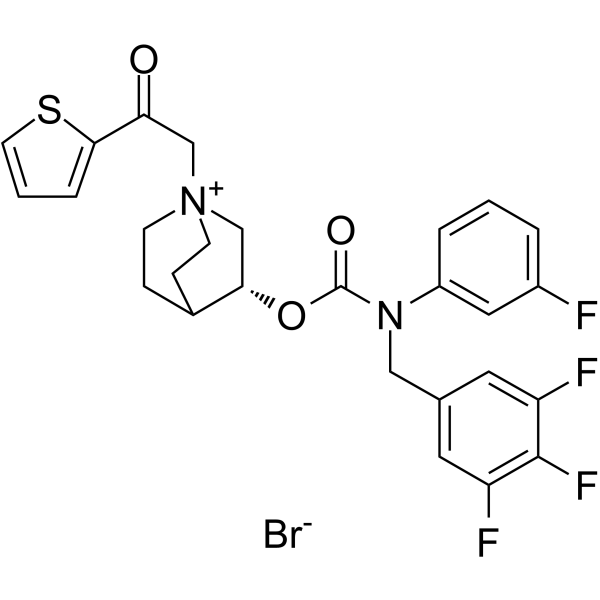
    CHF5407 is a selective, long-acting and competitive muscarinic M3 receptor antagonist. CHF5407 shows subnanomolar affinities for human muscarinic M1 (hM1), M2 (hM2) and M3 (hM3) receptors. CHF5407 shows a prolonged antibronchospastic activity .
    CHF5407
  • HY-12980R

    GSK961081 (Standard); TD-5959 (Standard)

    Adrenergic Receptor mAChR Reference Standards Inflammation/Immunology Endocrinology
    Batefenterol (Standard) is the analytical standard of Batefenterol. This product is intended for research and analytical applications. Batefenterol (GSK961081;TD-5959) is a novel muscarinic receptor antagonist and β2-adrenoceptor agonist; displays high affinity for hM2, hM3 muscarinic and hβ2-adrenoceptor with Ki values of 1.4, 1.3 and 3.7 nM, respectively.
    Batefenterol (Standard)
  • HY-14845

    (S)-Mequitazine

    Drug Isomer Histamine Receptor Inflammation/Immunology
    Levomequitazine (Compound V0114) ((S)-Mequitazine), the levorotatory enantiomer of Mequitazine (HY-B2168), is an orally active, inverse H4 receptor agonist (IC50s: 94 nM (hM2), 17 nM (hM3)). Levomequitazine strongly binds to human histamine H4 receptor. Levomequitazine antagonizes the activating action induced by histamine on H4 receptor. Levomequitazine induces a powerful and statistically significant anti-inflammatory effect. Levomequitazine can be used for research on inflammatory diseases .
    Levomequitazine
  • HY-N0340R

    Hyoscine butylbromide (Standard); (-)-Scopolamine butylbromide (Standard); Butylscopolamine bromide (Standard)

    Reference Standards mAChR Neurological Disease Inflammation/Immunology
    Scopolamine butylbromide (Standard) is the analytical standard of Scopolamine butylbromide (HY-N0340). This product is intended for research and analytical applications. Scopolamine butylbromide (Hyoscine butylbromide) is an orally active anticholinergic agent and spasmolytic. Scopolamine butylbromide binds with high affinity to rat cardiac M2 (Ki 83 nmol/L), hM2 (Ki 233 nmol/L), rat intestinal M3 (Ki 290 nmol/L) and hM3 (Ki 643 nmol/L) muscarinic receptors. Scopolamine butylbromide exerts a dose-dependent antagonistic effect on Carbachol-induced gastrointestinal smooth muscle spasm. Scopolamine butylbromide can be used for the research of abdominal colic and pain associated with gastrointestinal spasm, functional abdominal pain, chronic gastropathy and gastric ulcer .
    Scopolamine butylbromide (Standard)
  • HY-P5780

    Sodium Channel Neurological Disease
    π-TRTX-Hm3a is a 37-amino acid peptide isolated from Togo starburst tarantula (Heteroscodra maculata) venom. π-TRTX-Hm3a pH-dependently inhibits acid-sensing ion channel 1a (ASIC1a) with an IC50 of 1-2 nM and potentiates ASIC1b with an EC50 of 46.5 nM .
    π-TRTX-Hm3a
  • HY-183853

    mAChR Reactive Oxygen Species (ROS) DNA/RNA Synthesis Apoptosis SOD Sirtuin Cardiovascular Disease Neurological Disease Cancer
    Arecaidine-propargyl ester is a selective M2 muscarinic receptor agonist with blood-brain barrier permeability, with a pKi of 5.91 for hm1, 7.06 for hm2, 6.07 for hm3, 6.01 for hm4, and 6.03 for hm5. Arecaidine-propargyl ester stimulates central and peripheral muscarinic receptors. Arecaidine-propargyl ester increases intracellular ROS, induces DNA damage and Apoptosis, and upregulates the expression of MnSOD and SIRT1. Arecaidine-propargyl ester reduces sympathetic nerve outflow, induces dose-dependent hypotension, and triggers negative chronotropic effects at high peripheral doses. Arecaidine-propargyl ester can be used in research related to Alzheimer's disease and glioblastoma [3].
    Arecaidine-propargyl ester
  • HY-RS02662

    Small Interfering RNA (siRNA) Others

    CHRM3 Human Pre-designed siRNA Set A contains three designed siRNAs for CHRM3 gene (Human), as well as a negative control, a positive control, and a FAM-labeled negative control.

    CHRM3 Human Pre-designed siRNA Set A
    CHRM3 Human Pre-designed siRNA Set A
  • HY-W748582

    Isotope-Labeled Compounds Dopamine Receptor mAChR Drug Metabolite Neurological Disease
    Clozapine N-oxide-d8 is the deuterium labeled Clozapine N-oxide (HY-17366). Clozapine N-oxide is a major metabolite of Clozapine and a human muscarinic designer receptors (DREADDs) agonist. Clozapine N-oxide activates the DREADD receptor hM3Dq and hM4Di. Clozapine N-oxide can't cross the blood-brain barrier [3] . Clozapine is a potent dopamine antagonist and also a potent and selective muscarinic M4 receptor (EC50=11 nM) agonist .
    Clozapine N-oxide-d8
  • HY-17366AR

    Reference Standards mAChR Dopamine Receptor Drug Metabolite Neurological Disease
    Clozapine N-oxide (dihydrochloride) (Standard) is the analytical standard of Clozapine N-oxide (dihydrochloride). This product is intended for research and analytical applications. Clozapine N-oxide dihydrochloride is a major metabolite of Clozapine and a human muscarinic designer receptors (DREADDs) agonist. Clozapine N-oxide dihydrochloride activates the DREADD receptor hM3Dq and hM4Di. Clozapine N-oxide dihydrochloride can cross the blood-brain barrier[1][2][3][4]. Clozapine is a potent dopamine antagonist and also a potent and selective muscarinic M4 receptor (EC50=11 nM) agonist[5][6].
    Clozapine N-oxide dihydrochloride (Standard)
  • HY-100234AR

    mAChR Reference Standards Neurological Disease
    DREADD agonist 21 (dihydrochloride) (Standard) is the analytical standard of DREADD agonist 21 (dihydrochloride) (HY-100234A). This product is intended for research and analytical applications. DREADD agonist 21 dihydrochloride is a potent human muscarinic acetylcholine M3 receptors (hM3Dq) agonist (EC50=1.7 nM) .
    DREADD agonist 21 dihydrochloride (Standard)

Inquiry Online

Your information is safe with us. * Required Fields.

Salutation


Country or Region *

Applicant Name *


Organization Name *

Department *


Email Address *


Product Name *

Cat. No.


Requested quantity *

Phone Number *


Remarks

Inquiry Online

Inquiry Information

Product Name:
Cat. No.:
Quantity:
MCE Japan Authorized Agent:

