
25 Results for "

human RANKL

" in MedChemExpress (MCE) Product Catalog:
Products (25)

25 Results for "human RANKL" in MCE Product Catalog:

10
10 Publications Verification
Cat. No.: HY-P7424
Pureté:  ≥ 90%, as determined by reducing SDS-PAGE.
Synonyms: rHuRANK L/TNFSF11; TRANCE; CD254
Species:  
Source:  
loading...
    loading...
6
6 Cited Publications
Cat. No.: HY-N0762
CAS No.: 31524-62-6
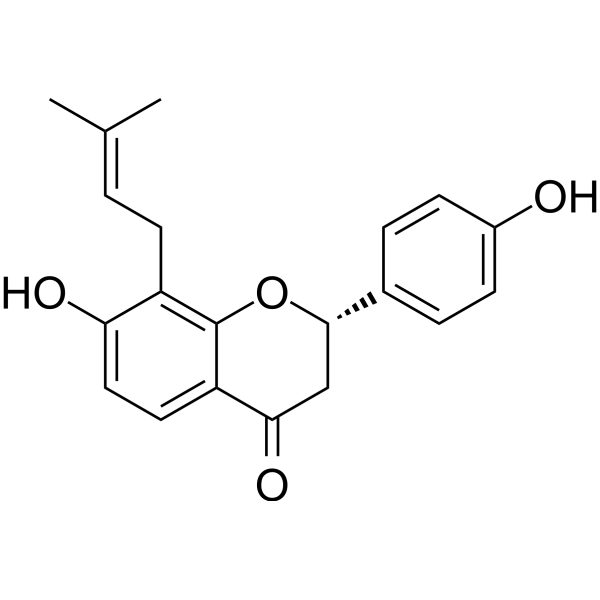
Isobavachin is an orally active, blood-brain barrier-penetrating prenylated flavonoid present in Psoralea corylifolia. Isobavachin inhibits human CYP2B6, CYP2C9, CYP2C19, UGT1A1, UGT1A9, and UGT2B7. Isobavachin suppresses MAPK activation, NF-κB nuclear translocation, overexpression of iNOS/COX-2, FcεRI-mediated signaling pathways, and RANKL-induced osteoclastogenesis. Isobavachin induces autophagy, cytotoxicity, neuronal differentiation, and NRF2 activation; it alleviates oxidative damage, inflammatory responses, apoptosis, iron accumulation, mitochondrial biogenesis, and mast cell degranulation. Isobavachin is applicable to research related to liver injury, inflammatory diseases, osteoporosis, liver cancer, prostate cancer, glioma, periodontitis-induced bone loss, and Alzheimer's disease .
loading...
    loading...
4
4 Cited Publications
Cat. No.: HY-P73386
Pureté:  ≥ 90%, as determined by reducing SDS-PAGE.
Synonyms: Tumor necrosis factor ligand superfamily member 11; RANKL; CD254; ODF; OPGL; TNFSF11; TRANCE
Species:  
Source:  
loading...
    loading...
3
3 Cited Publications
Cat. No.: HY-P9958
CAS No.: 615258-40-7
Synonyms: AMG-162

Domaines de recherche:  

Endocrinology Cancer

Denosumab is a human monoclonal antibody that targets the protein RANKL. Denosumab binds to the receptor activator of nuclear factor kappa-B ligand (RANKL) and prevents its binding to the RANK receptor (KD of 0.003 nM for human RANKL). Denosumab promotes proliferation and spermatogenesis. Denosumab prevents bone resorption through inhibition of the NF-κB pathway. Denosumab can be used in bone-related studies .
loading...
    loading...
3
3 Cited Publications
Cat. No.: HY-P9958A
CAS No.: 615258-40-7

Domaines de recherche:  

Neurological Disease Endocrinology Cancer

Denosumab (anti-TNFSF11) is a human monoclonal antibody that targets the protein RANKL. Denosumab binds to the receptor activator of nuclear factor kappa-B ligand (RANKL) and prevents its binding to the RANK receptor (KD of 0.003 nM for human RANKL). Denosumab promotes proliferation and spermatogenesis. Denosumab prevents bone resorption through inhibition of the NF-κB pathway. Denosumab can be used in bone-related studies .
loading...
    loading...
1
1 Cited Publications
Cat. No.: HY-N6973
CAS No.: 476-70-0
Boldine is an apomorphine isoquinoline alkaloid extracted from the root of the pheasant pepper (Litsea cubeba). Boldine is an oral effective antioxidant, anti-inflammatory, antitumor agent, and can inhibit osteoclast formation. Boldine induces apoptosis of human bladder cancer cells by regulating ERK, AKT and GSK-3β. Boldine ameliorates bone destruction by down-regulating the OPG/RANKL/RANK signaling pathway. It can be used in rheumatoid arthritis research .
loading...
    loading...
1
1 Cited Publications
Cat. No.: HY-N0481
CAS No.: 6812-81-3
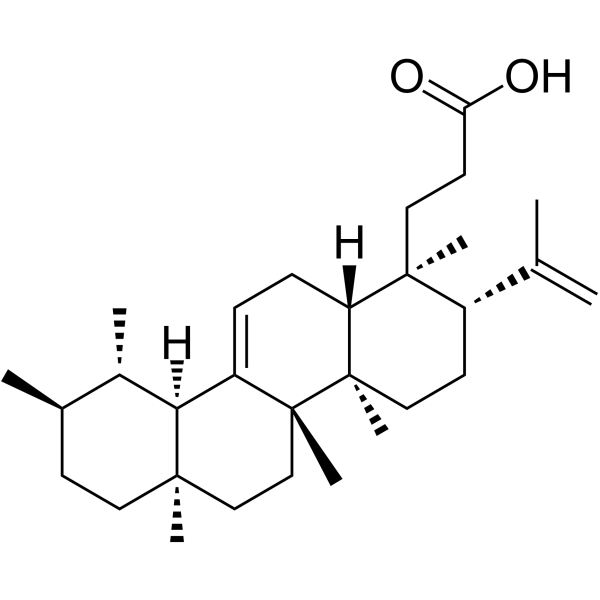
Roburic acid acts as an anti-inflammatory, anti-tumor and osteoclastogenesis inhibitor, with a Ki of 7.066 μM against human TNF, an IC50 of 9 μM against human COX-2, and an IC50 of 5 μM against ovine COX-1. Roburic acid reduces the production of inflammatory mediators such as NO and IL-6 in macrophages by inhibiting the NF-κB and MAPK (p38/JNK) pathways. By competitively inhibiting the TNF-TNF-R1 interaction, Roburic acid blocks the downstream NF-κB signaling pathway, thereby inducing cell cycle arrest and apoptosis in cancer cells. Roburic acid specifically inhibits osteoclastogenesis and bone resorption by suppressing the RANKL/TRAF6/NF-κB/NFATc1 axis. Roburic acid can be used in research related to osteolytic diseases such as osteoporosis, colorectal cancer and inflammatory diseases .
loading...
    loading...
1
1 Cited Publications
Cat. No.: HY-N0805A
CAS No.: 18649-93-9
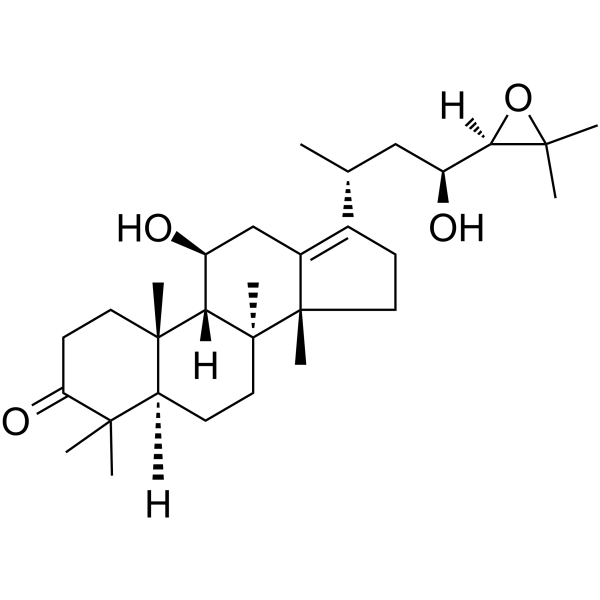
Alisol B is a triterpene with diverse biological activities. Alisol B binds human soluble epoxide hydrolase (sEH) with a Ki of 5.97 μM and reduces sEH activity. Alisol B inhibits RANKL-induced JNK phosphorylation, NFATc1 and c-Fos expression, osteoclast formation, mature osteoclast pit-forming and actin ring activity, and SERCA pump activity. Alisol B induces calcium mobilization, CaMKK-AMPK-mTOR pathway activation, autophagic flux, autophagosome formation, G1 phase cell cycle arrest, endoplasmic reticulum stress, unfolded protein responses, and cancer cell apoptosis. Alisol B can be used for the research of hypercalcemia, osteoporosis, rheumatoid arthritis, periodontitis, acute kidney injury, and breast cancer .
loading...
    loading...
1
1 Cited Publications
Cat. No.: HY-P81124
Synonyms: OPGL; CD254; hRANKL2; ODF; OPGL; Osteoclast differentiation factor; Osteoprotegerin ligand; RANKL; Receptor activator of nuclear factor kappa B ligand; sOdf; SOFA; TNF related activation induced cytokine; TNFSF 11; TNFSF11; TRANCE; Tumor necrosis factor ligand superfamily member 11; Osteoprotegerin Ligand; TNF11_human.

Host:  

Rabbit

Application:  

WB, IHC-P, ELISA

Reactivity:  

Human, Mouse, Rat

loading...
    loading...
Cat. No.: HY-N5048
CAS No.: 122965-41-7
Synonyms: 6'-O-Galloyl paeoniflorin
Galloylpaeoniflorin (6'-O-Galloyl paeoniflorin) is an orally active galloylated derivative of Paeoniflorin (HY-N0293) found in peony roots with various anti-inflammatory and antioxidant activities. Galloylpaeoniflorin suppresses RANKL-induced activation of ERK, JNK, c-Fos, c-Jun, and NFATc1, and reduces osteoclast-specific gene expression. Galloylpaeoniflorin activates Nrf2 and PI3K/Akt pathways, inhibits NF-κB activation, and scavenges ROS to reduce oxidative DNA, lipid, and protein damage. Galloylpaeoniflorin attenuates neuroinflammation, inhibits apoptosis, reduces Helicobacter pylori-induced gastric mucosa injury and UVB-induced cell damage. Galloylpaeoniflorin can be used for the research of osteoporosis, gastritis, ischemic stroke and skin diseases .
loading...
    loading...
Cat. No.: HY-N1746
CAS No.: 270249-38-2
Synonyms: 2'-O-Methylkurarinone
(2S)-2'-Methoxykurarinone, a compound isolated from the roots of Sophora flavescens, has anti-inflammatory, antipyretic, antidiabetic, and antineoplastic effects. (2S)-2'-Methoxykurarinone (MK) inhibits osteoclastogenesis and bone resorption through down-regulation of RANKL signaling. (2S)-2'-Methoxykurarinone (MK) displays cytotoxic activity against human myeloid leukemia HL-60 cells .
loading...
    loading...
Cat. No.: HY-P2612
CAS No.: 199999-60-5
Domaines de recherche:  

Inflammation/Immunology

WP9QY is an inhibitor targeting TNFα and RANKL, which blocks the TNFα-TNFR1 interaction and inhibits TNFα-mediated apoptosis, cytotoxicity and bone destruction. WP9QY inhibits osteoclastogenesis and promotes osteoblast differentiation, induces chondrocyte proliferation and glycosaminoglycan production, and synergizes with TGF-β3 to promote chondrogenesis. WP9QY effectively repairs full-thickness articular cartilage defects in rabbits via intra-articular injection, and inhibits methylmercury-induced reduction of NeuN-positive cells in mouse brain slices. WP9QY can be applied to the research of diseases related to methylmercury-induced neuronal death, cartilage injury, osteoarthritis and bone loss .
loading...
    loading...
Cat. No.: HY-124478
CAS No.: 3943-91-7
Pureté:  ≥98.0%
Synonyms: Ethyl 2,5-dihydroxybenzoate
Target:  

Phosphatase

Domaines de recherche:  

Metabolic Disease

Ethyl gentisate (Ethyl 2,5-dihydroxybenzoate) is a dual modulator for cell differentiation, that enhances the osteogenic differentiation of human mesenchymal stem cells (hMSCs) and alkaline phosphatase activity, inhibits RANKL-activated osteoclastogenesis in RAW264.7 cells, and balances the bone remodeling process .
loading...
    loading...
Cat. No.: HY-P991362

Target:  

TNF Receptor

Domaines de recherche:  

Cancer

GB-223 is a human monoclonal antibody (mAb) targeting TNFSF11/RANKL/CD254. GB-223 can be used in Giant cell tumour of bone and Postmenopausal osteoporosis research .
loading...
    loading...
Cat. No.: HY-N0481R
CAS No.: 6812-81-3
Roburic acid (Standard) is the analytical standard of Roburic acid. This product is intended for research and analytical applications. Roburic acid acts as an anti-inflammatory, anti-tumor and osteoclastogenesis inhibitor, with a Ki of 7.066 μM against human TNF, an IC50 of 9 μM against human COX-2, and an IC50 of 5 μM against ovine COX-1. Roburic acid reduces the production of inflammatory mediators such as NO and IL-6 in macrophages by inhibiting the NF-κB and MAPK (p38/JNK) pathways. By competitively inhibiting the TNF-TNF-R1 interaction, Roburic acid blocks the downstream NF-κB signaling pathway, thereby inducing cell cycle arrest and apoptosis in cancer cells. Roburic acid specifically inhibits osteoclastogenesis and bone resorption by suppressing the RANKL/TRAF6/NF-κB/NFATc1 axis. Roburic acid can be used in research related to osteolytic diseases such as osteoporosis, colorectal cancer and inflammatory diseases.
loading...
    loading...
Cat. No.: HY-N0805AR
CAS No.: 18649-93-9
Alisol B (Standard) is the analytical standard of Alisol B (HY-N0805A). This product is intended for research and analytical applications. Alisol B is a triterpene with diverse biological activities. Alisol B binds human soluble epoxide hydrolase (sEH) with a Ki of 5.97 μM and reduces sEH activity. Alisol B inhibits RANKL-induced JNK phosphorylation, NFATc1 and c-Fos expression, osteoclast formation, mature osteoclast pit-forming and actin ring activity, and SERCA pump activity. Alisol B induces calcium mobilization, CaMKK-AMPK-mTOR pathway activation, autophagic flux, autophagosome formation, G1 phase cell cycle arrest, endoplasmic reticulum stress, unfolded protein responses, and cancer cell apoptosis. Alisol B can be used for the research of hypercalcemia, osteoporosis, rheumatoid arthritis, periodontitis, acute kidney injury, and breast cancer.
loading...
    loading...
Cat. No.: HY-106884
CAS No.: 519-55-1
Cyrtominetin is a RANKL inhibitor with favorable ADMET properties. Cyrtominetin competitively blocks the binding of RANKL-RANK and increases the compactness of RANKL . Cyrtominetin can be used in studies related to osteoporosis .
loading...
    loading...
Cat. No.: HY-P78817
Pureté:  ≥ 90%, as determined by reducing SDS-PAGE.
Synonyms: RANKL; CD254; TRANCE; OPGL; ODF
Species:  
Source:  
loading...
    loading...
Cat. No.: HY-P78376
Pureté:  ≥ 90%, as determined by Bis-Tris PAGE.
Synonyms: ODF; OPGL; RANKL; TRANCE; CD254; sOdf; TNFSF11; OPTB2
Species:  
Source:  
loading...
    loading...
Cat. No.: HY-P73682
Pureté:  ≥ 95%, as determined by reducing SDS-PAGE.
Synonyms: Tumor necrosis factor ligand superfamily member 11; ODF; RANKL; CD254; TNFSF11
Species:  
Source:  
loading...
    loading...

